The Gate of Hell (Abandon All Hope)
Gustave Doré, 1861
The Gate of Hell is Gustave Doré's 1861 wood engraving for Dante's Inferno, Canto III, where the gate bears the words “Abandon all hope, ye who enter here.” Dante and Virgil stand small before a black archway cut into a cliff.
- Artist
- Gustave Doré
- Date
- 1861
- Medium
- Wood engraving
- Movement
- Romanticism
- Themes
- Literature & Poetry, The Macabre, Death & Memento Mori, Architecture & Ruins, Dark Academia
What you're looking at
This is one of the emptiest plates in Doré's Inferno, and one of the most unsettling. A rocky valley falls away from the viewer toward a sheer wall of cliff. Cut into its base, at the left, is a low, rounded arch that opens onto absolute blackness. Two tiny robed figures stand on a patch of lit ground to the right of it, both wearing laurel wreaths. The nearer one raises a hand toward the opening, as if pointing or reading.
Above the arch, set into the rock, is a pale rectangular tablet. Look closely and you will see that its letters are only suggested, a smudge of marks rather than words. Doré does not spell out the inscription. He trusts you to know it.
The upper half of the plate is sky. Heavy bands of cloud press down from the top; beneath them a strip of cold light breaks out along the horizon, behind a jagged line of distant peaks. It is one of the last open skies the poets will see for a long time; most of the plates that follow take place under rock, smoke or darkness.
The engraving is built almost entirely from long, parallel horizontal cuts. Their spacing does the work of tone: tight and dark in the clouds and the cliff face, opening up into pale gray where the light catches the valley floor around the two poets. Boulders in the foreground are modeled with short curved strokes that make the stone look rounded and heavy.
The passage it illustrates
The plate illustrates the opening of Canto III, the inscription Dante reads over the entrance to Hell. Its last line (line 9) is the most famous sentence in the poem. In Longfellow's translation:
Through me the way is to the city dolent; Through me the way is to eternal dole; Through me the way among the people lost.
...
All hope abandon, ye who enter in!
The more familiar English wording, “Abandon all hope, ye who enter here,” is a popular variant of Henry Cary's “All hope abandon ye who enter here.” Dante sees the words “in sombre colour ... / Written upon the summit of a gate” and turns to Virgil: “Their sense is, Master, hard to me!” Virgil tells him to leave all suspicion and cowardice behind and leads him through.
How Doré staged it
Dante's gate is a gate; the poem says so. Doré's is not a built door at all but a cave mouth, almost a natural feature, with only the tablet to show that someone made it. That choice changes the meaning. Hell in this plate is not a fortress with a portal you could storm. It is a hole in the earth.
Doré also leaves out the sound. In the poem, the moment the poets pass through, the air fills with “sighs, complaints, and ululations loud.” None of that is visible here. The plate freezes the moment before, when the two men are still outside under the sky and Dante is still reading. The silence is the drama.
The scale is the other choice. The arch is many times the poets' height, yet it is small inside the enormous landscape, and the landscape is small under the sky. Doré builds the image as a Romantic landscape first and a narrative second. It continues the logic of the first plate, Dante Lost in the Dark Wood: a pair of pale figures against a world too large for them.
How it was made and published
Doré drew the design on a whitened boxwood block, and a professional wood engraver cut away everything that was to print white. Only Doré's own signature, “G. Doré,” appears at lower left; the engraver did not sign this block. The plate was published in 1861 in L'Enfer de Dante Alighieri, the large folio that Hachette brought out in Paris and that Doré paid for himself. The same plates went into later editions in several languages; the scan shown here comes from a Berlin edition of 1870, where it is plate 8.
Meaning and legacy
The inscription is the hinge of the whole Inferno: after it, there is no return for the damned. Doré turns that idea into geography. The light behind the mountains is the world being left behind, and the arch is the point after which the sky never comes back.
The gate became one of the most repeated images of the nineteenth century. In 1880, nineteen years after Doré's plate, the French state commissioned Auguste Rodin to make a bronze portal for a planned museum of decorative arts. Rodin took Dante's gate as his subject, and the seated figure at its top became The Thinker. Rodin's door is crowded with bodies where Doré's is empty, but both artists understood the gate as the place where Dante's poem begins in earnest.
For what waits immediately beyond the arch, see the next plates in the sequence, Charon herding the souls into his boat and Minos, judge of the damned. Doré's other work returns to the same pairing of tiny figures and vast stone again and again, which is why the plate sits so naturally among Gothic and Romantic images of dread.
Questions & answers
What does “Abandon all hope, ye who enter here” mean, and where is it in Dante?
It is the last line of the inscription over the gate of Hell, Inferno Canto III, line 9 (“Lasciate ogne speranza, voi ch'intrate”). Longfellow translates it “All hope abandon, ye who enter in!” It warns that the souls who pass through are damned forever, with no hope of release.
What does Doré's Gate of Hell engraving show?
It shows Dante and Virgil, tiny and laurel-crowned, standing before a dark archway cut into a cliff at the bottom of a rocky valley, under a heavy sky. A pale tablet above the arch stands for the inscription, but Doré leaves its letters unreadable.
When was Doré's Gate of Hell published?
It was published in 1861 in L'Enfer de Dante Alighieri, the folio edition of the Inferno that Hachette issued in Paris and Doré financed himself. It is the eighth plate in the sequence and was reused in later editions, including English translations by Cary and Longfellow.
Who engraved Doré's Gate of Hell?
Doré drew the design directly on the woodblock and a professional engraver cut it, as with all his book plates. This block carries only Doré's signature, “G. Doré,” at lower left, so the engraver is not identified on the print itself.
Is Doré's Gate of Hell related to Rodin's Gates of Hell?
Both illustrate the same passage in Dante, but they are separate works. Doré's engraving appeared in 1861; Rodin received the commission for his bronze portal in 1880. Rodin filled his door with figures, while Doré shows an empty cave mouth in a vast landscape.
More by Gustave Doré
All works →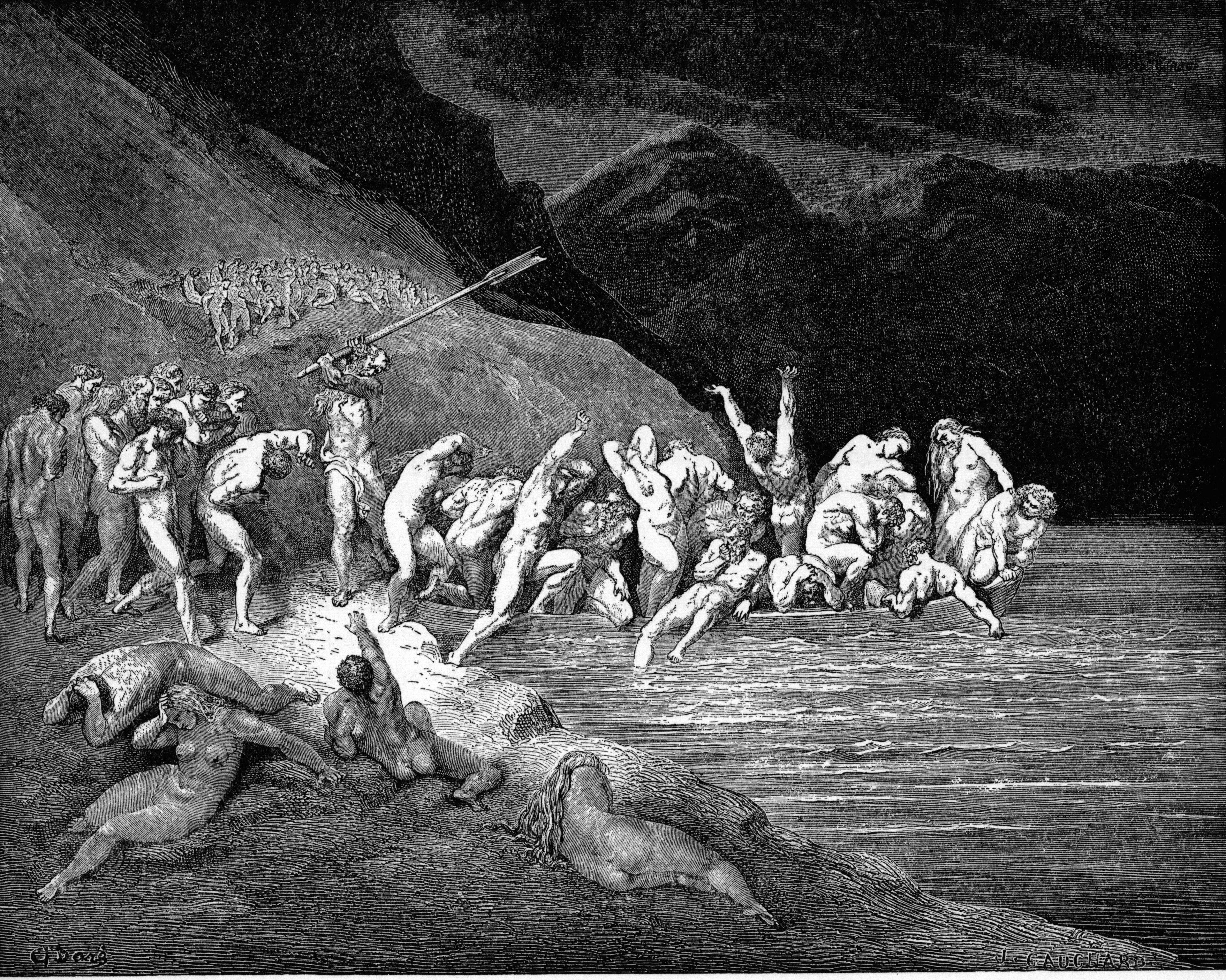
Charon, Ferryman of the Dead
Gustave Doré · 1861
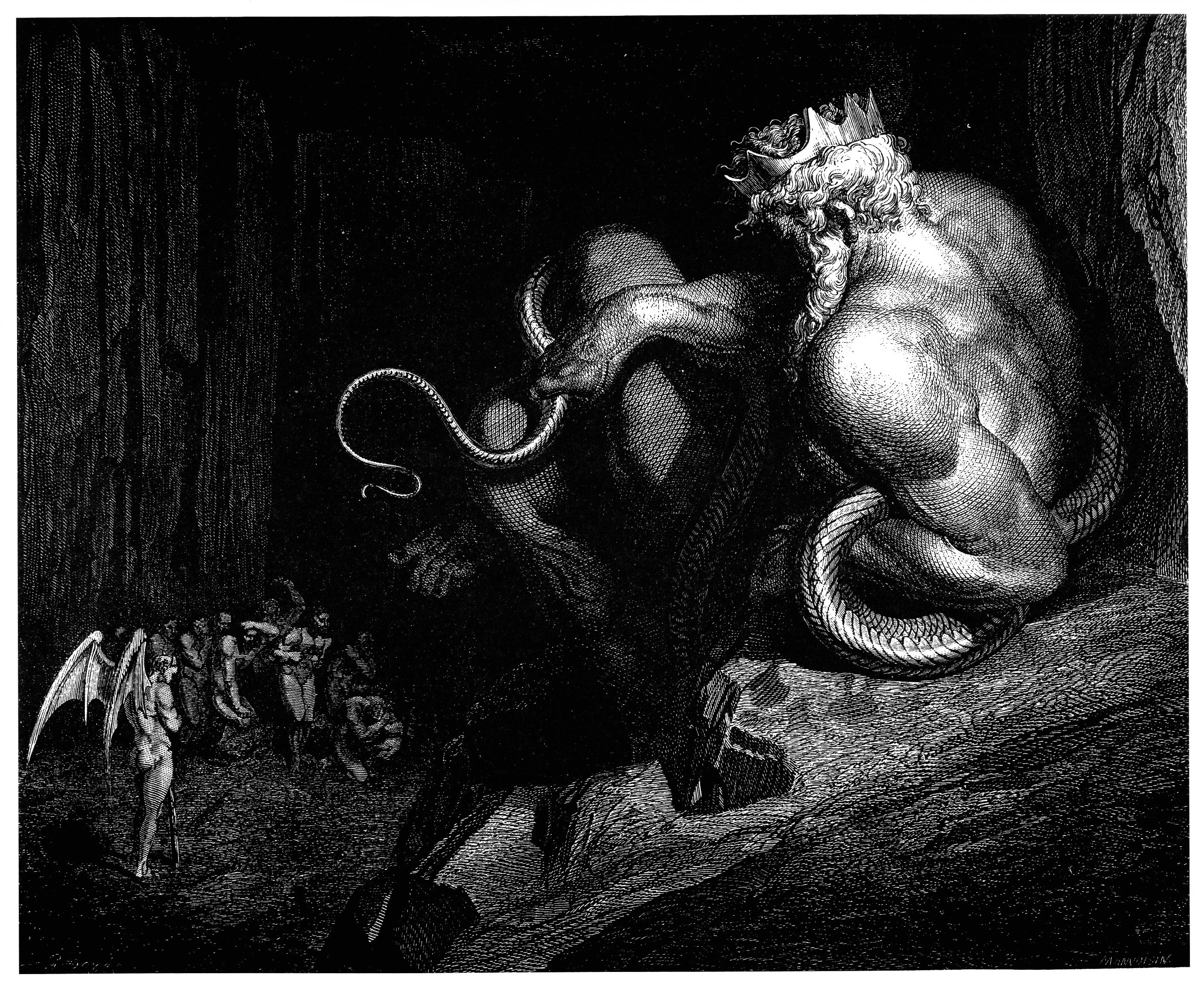
Minos, Judge of the Damned
Gustave Doré · 1861
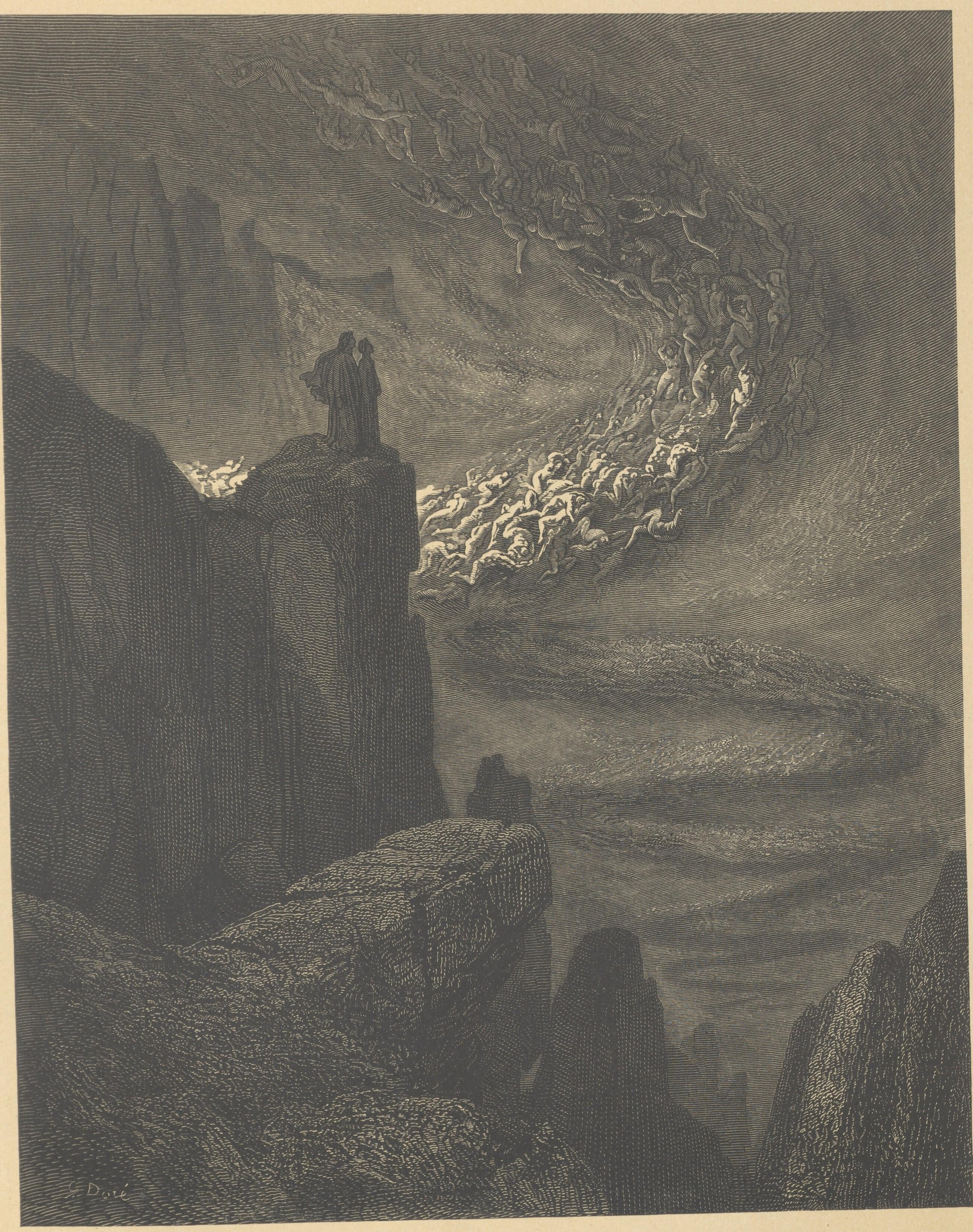
The Whirlwind of the Lustful
Gustave Doré · 1861
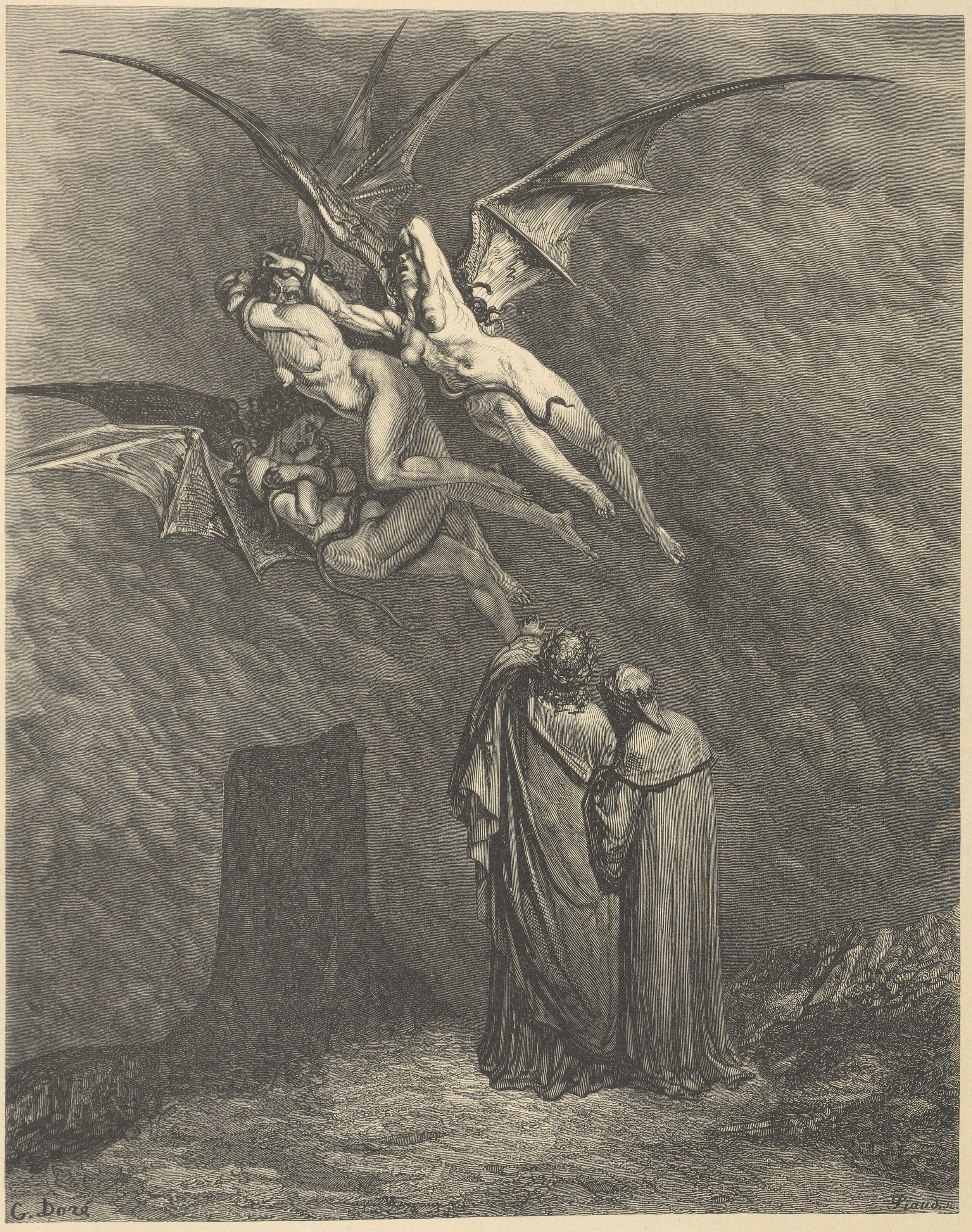
The Furies at the Gates of Dis
Gustave Doré · 1861
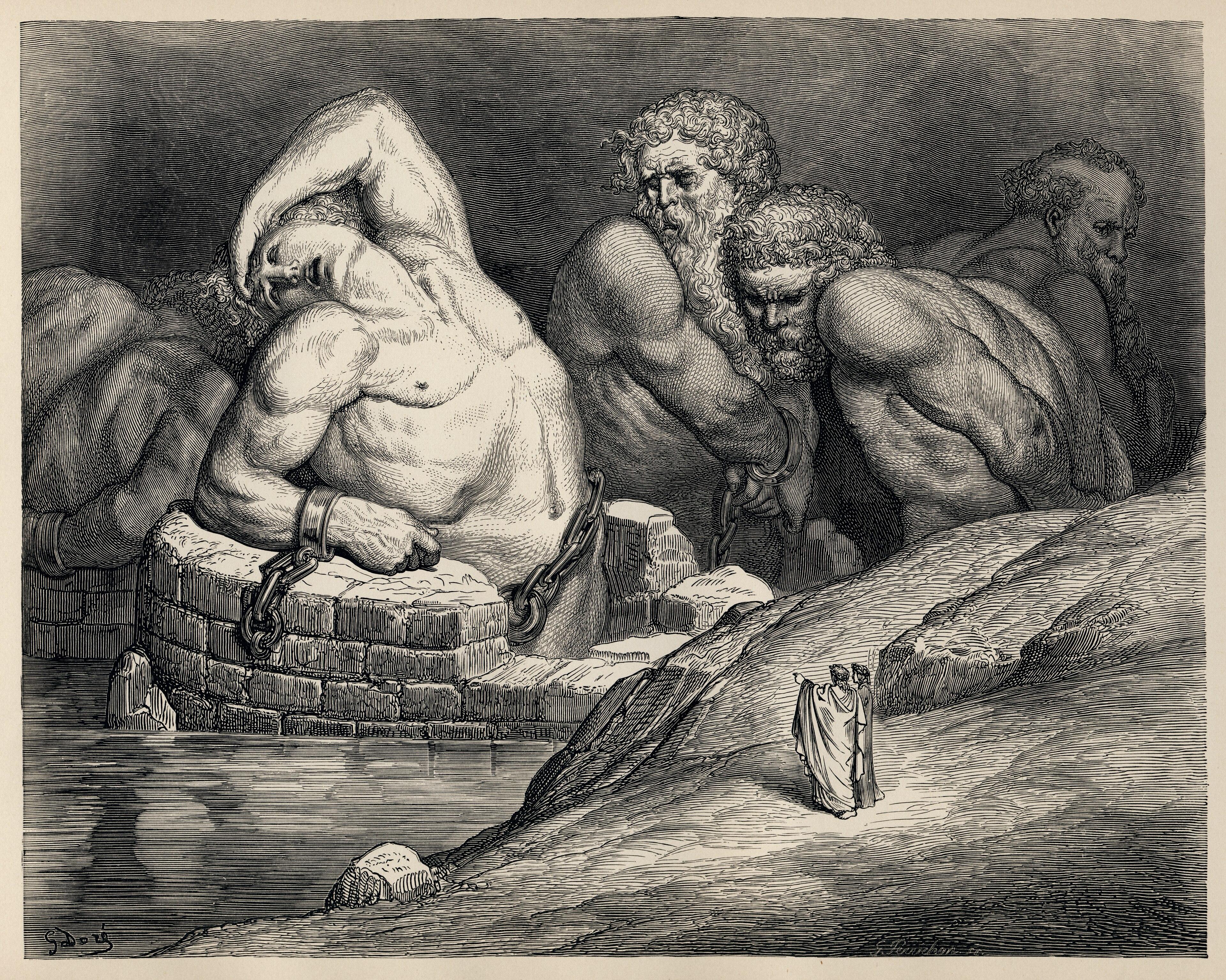
The Giants
Gustave Doré · 1861
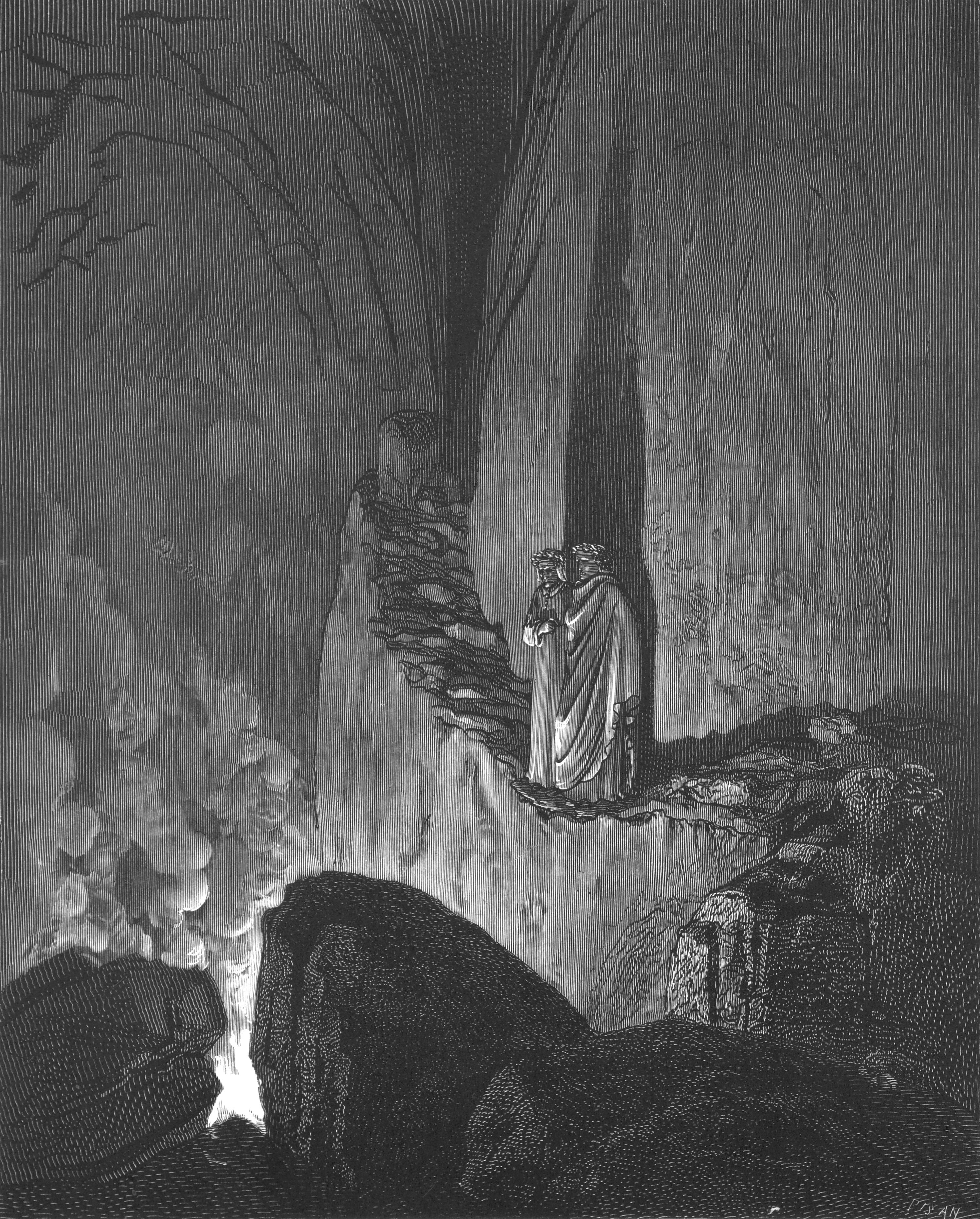
Ulysses and Diomedes
Gustave Doré · 1861
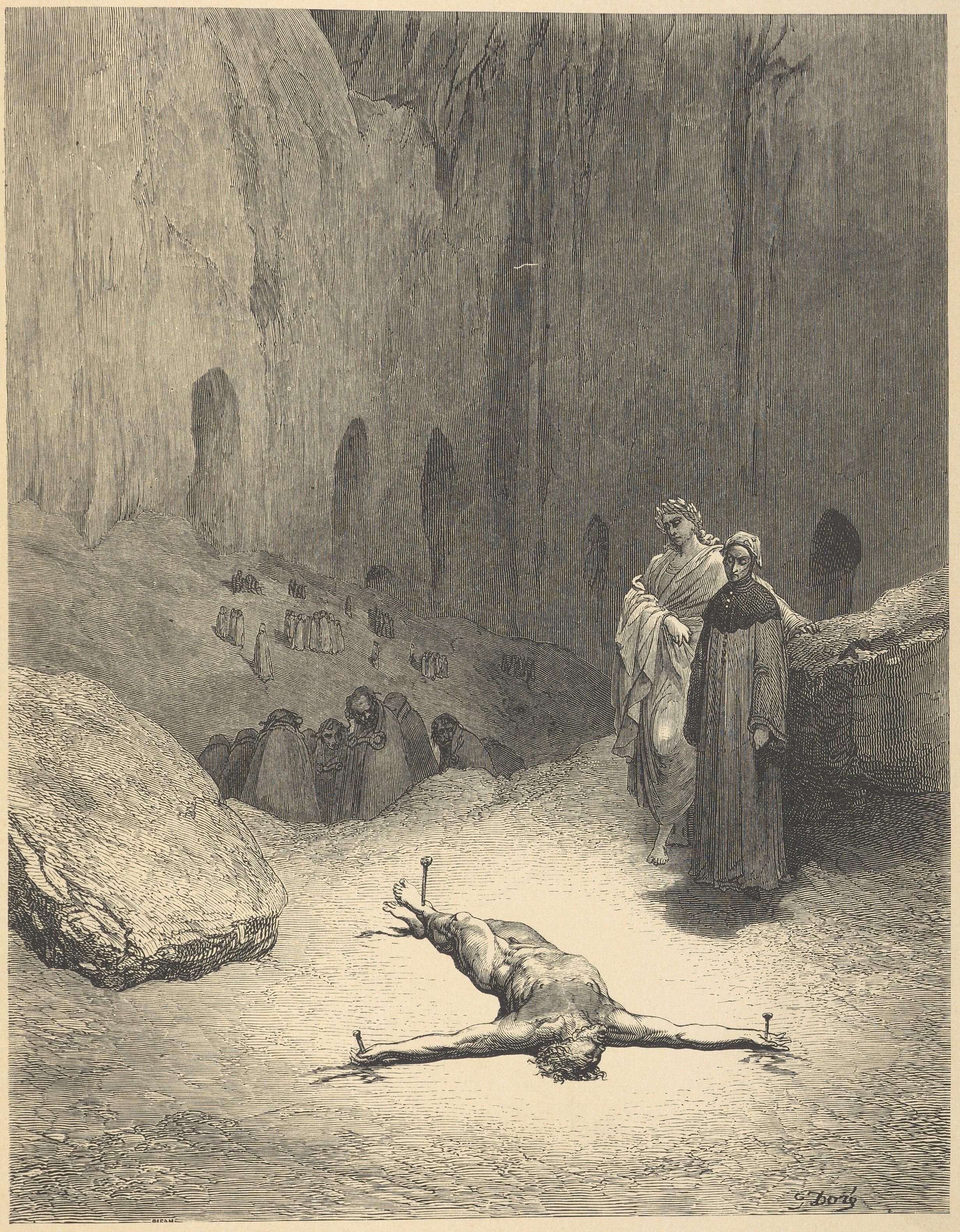
Caiaphas Crucified
Gustave Doré · 1861
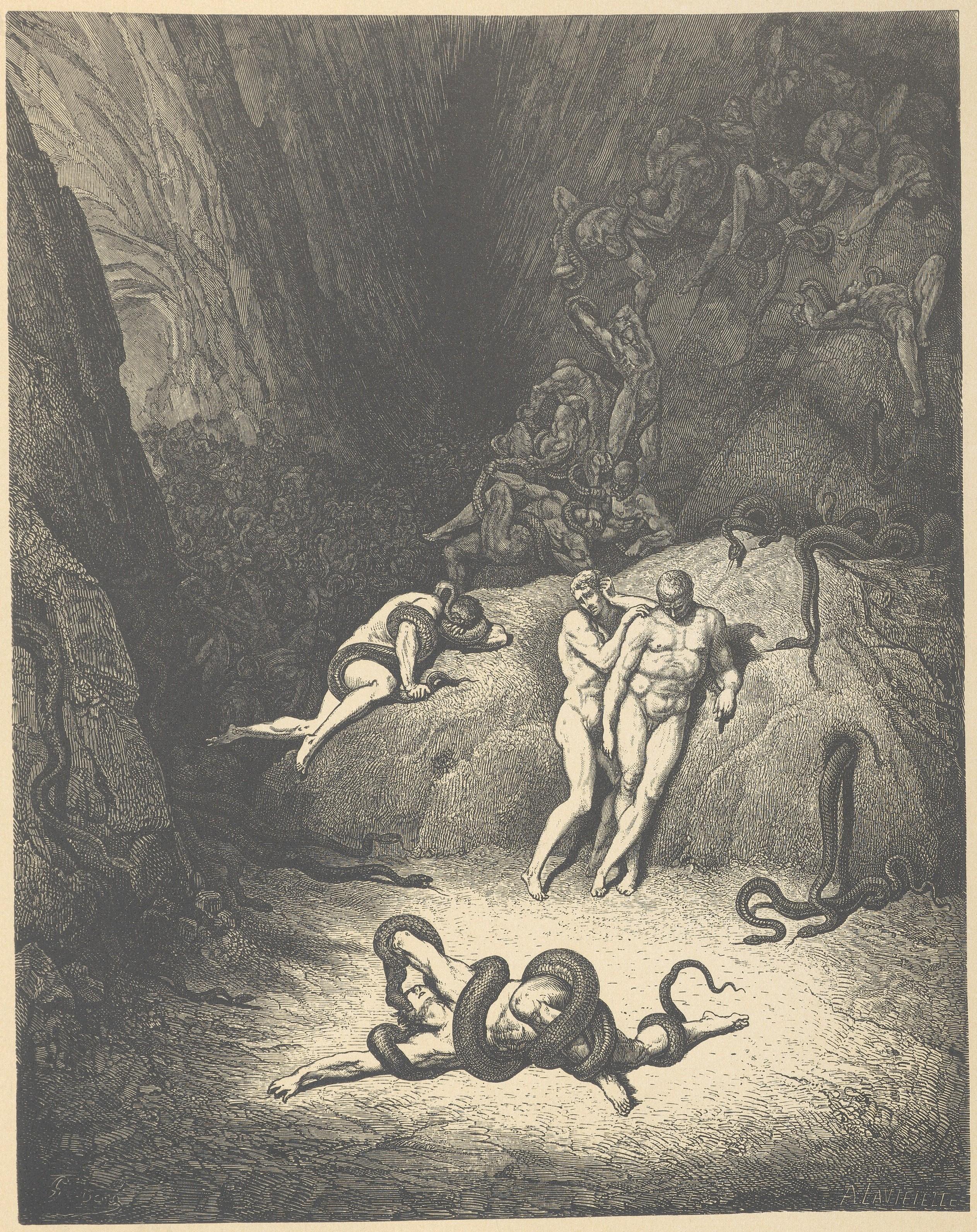
The Thieves and the Serpents
Gustave Doré · 1861
Also from 1861
Dante and Virgil in the Ninth Circle of Hell
Gustave Doré · 1861
Bertran de Born Holding His Head
Gustave Doré · 1861
Crossing the Styx (Filippo Argenti)
Gustave Doré · 1861
Cerberus
Gustave Doré · 1861
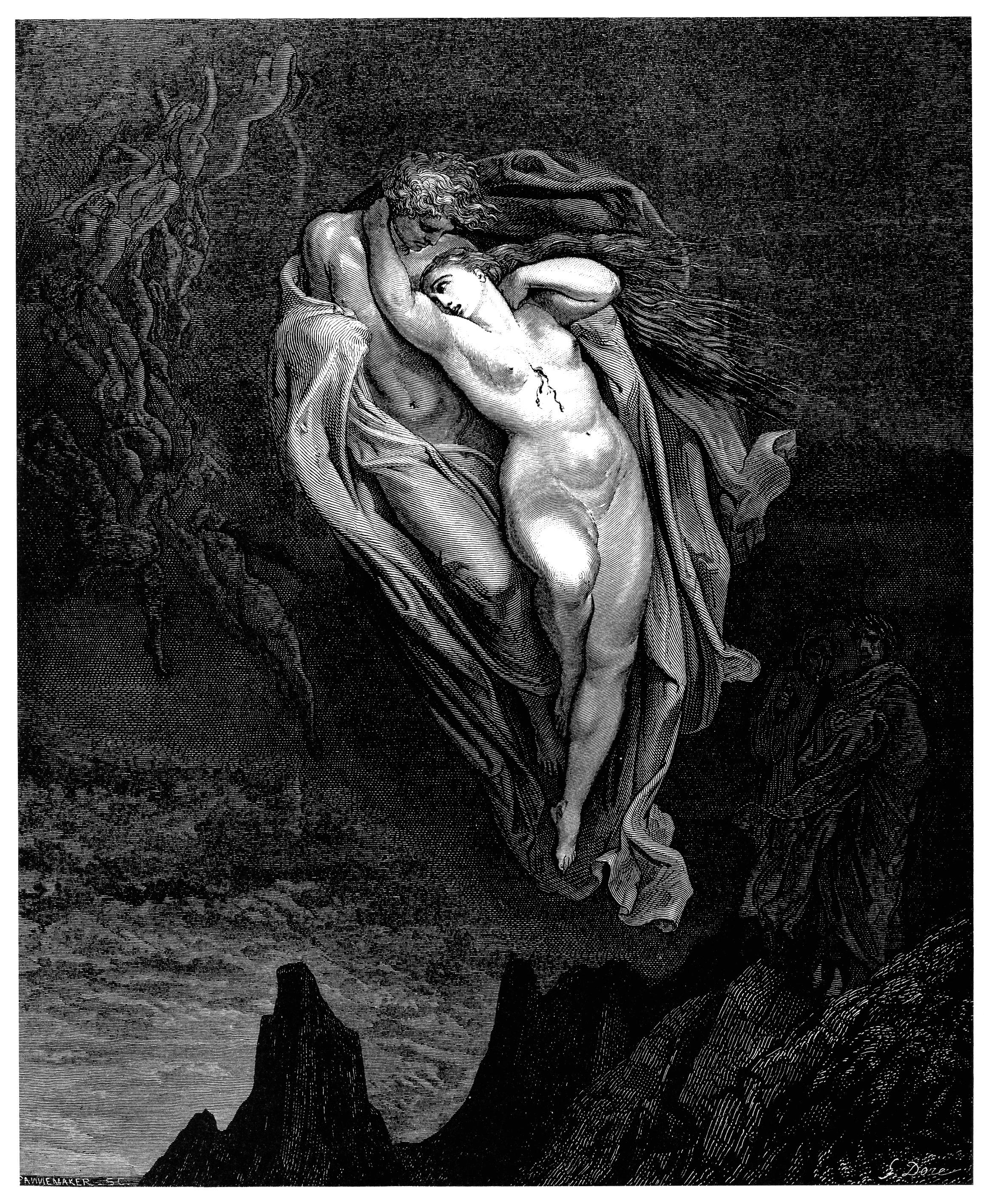
Paolo and Francesca
Gustave Doré · 1861
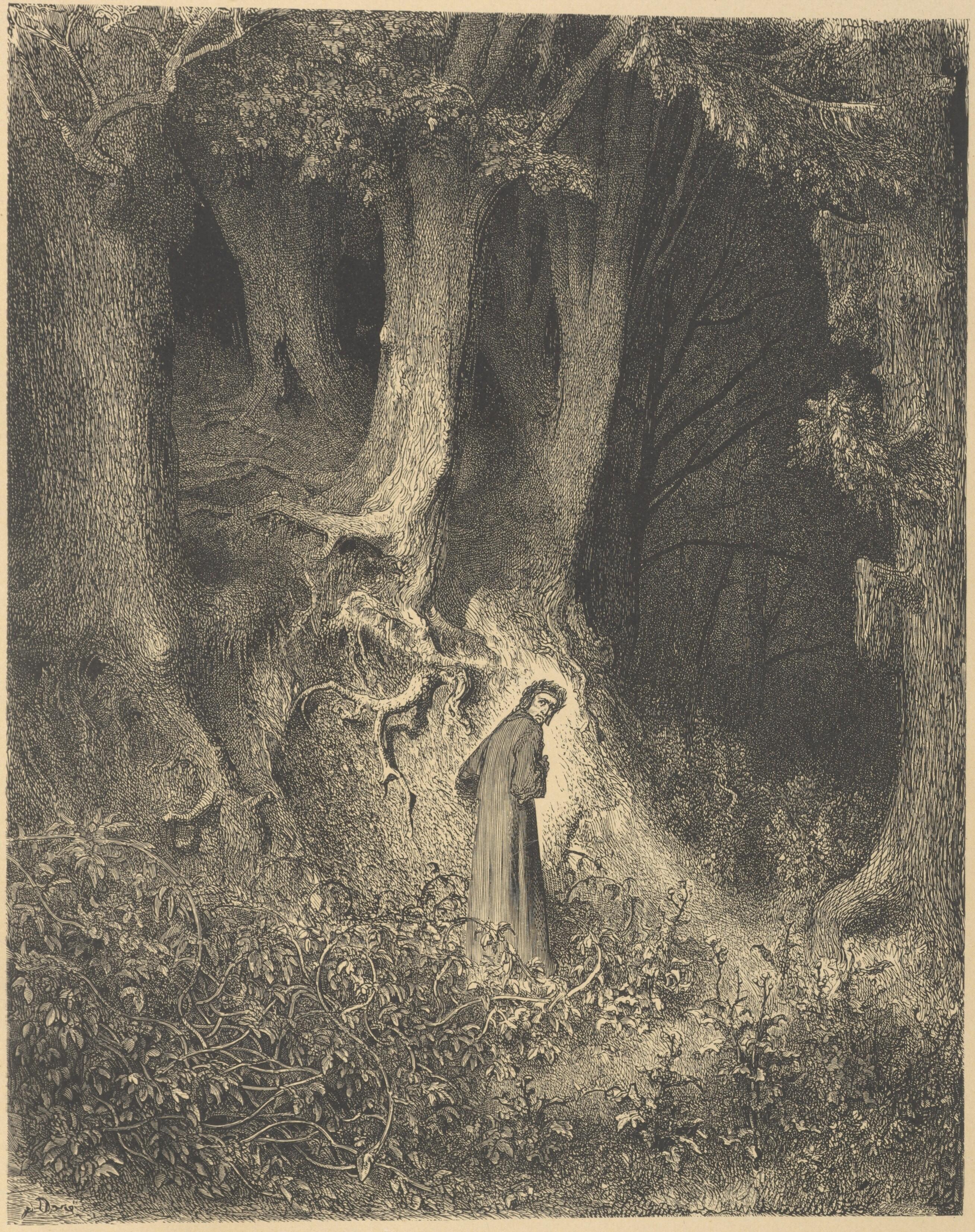
Dante Lost in the Dark Wood
Gustave Doré · 1861
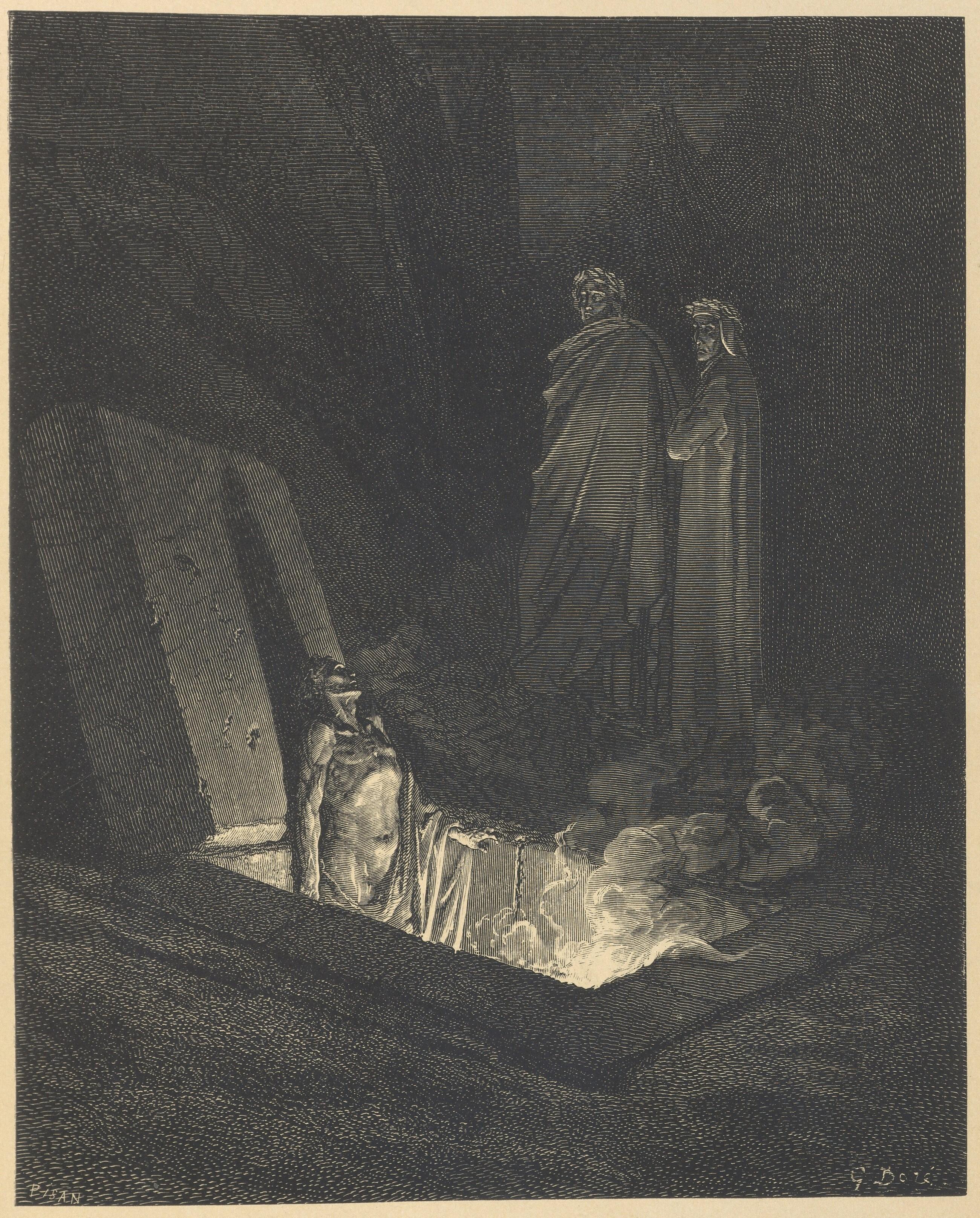
Farinata degli Uberti
Gustave Doré · 1861
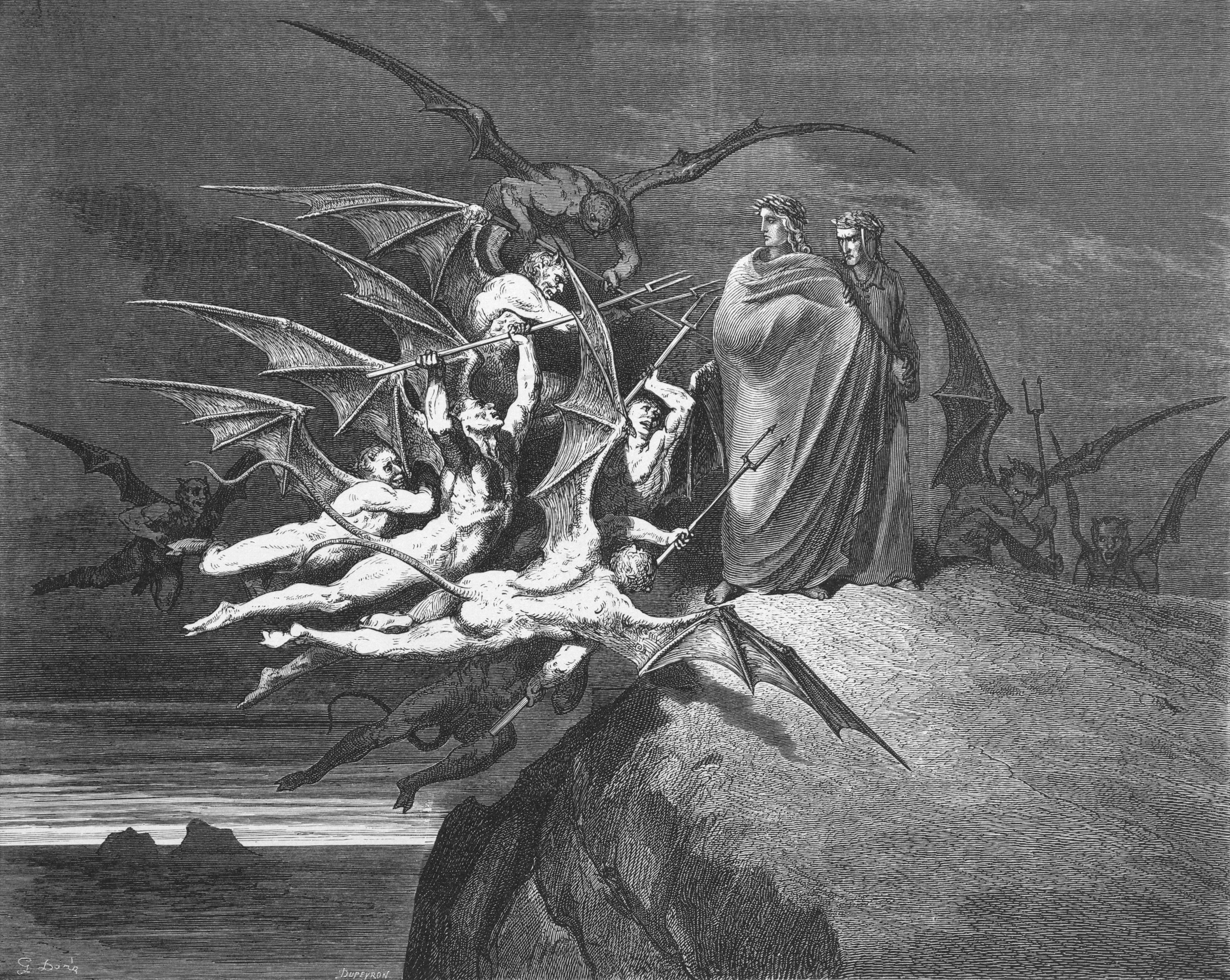
The Malebranche Demons
Gustave Doré · 1861
Related works
Dante Lost in the Dark Wood
Gustave Doré · 1861
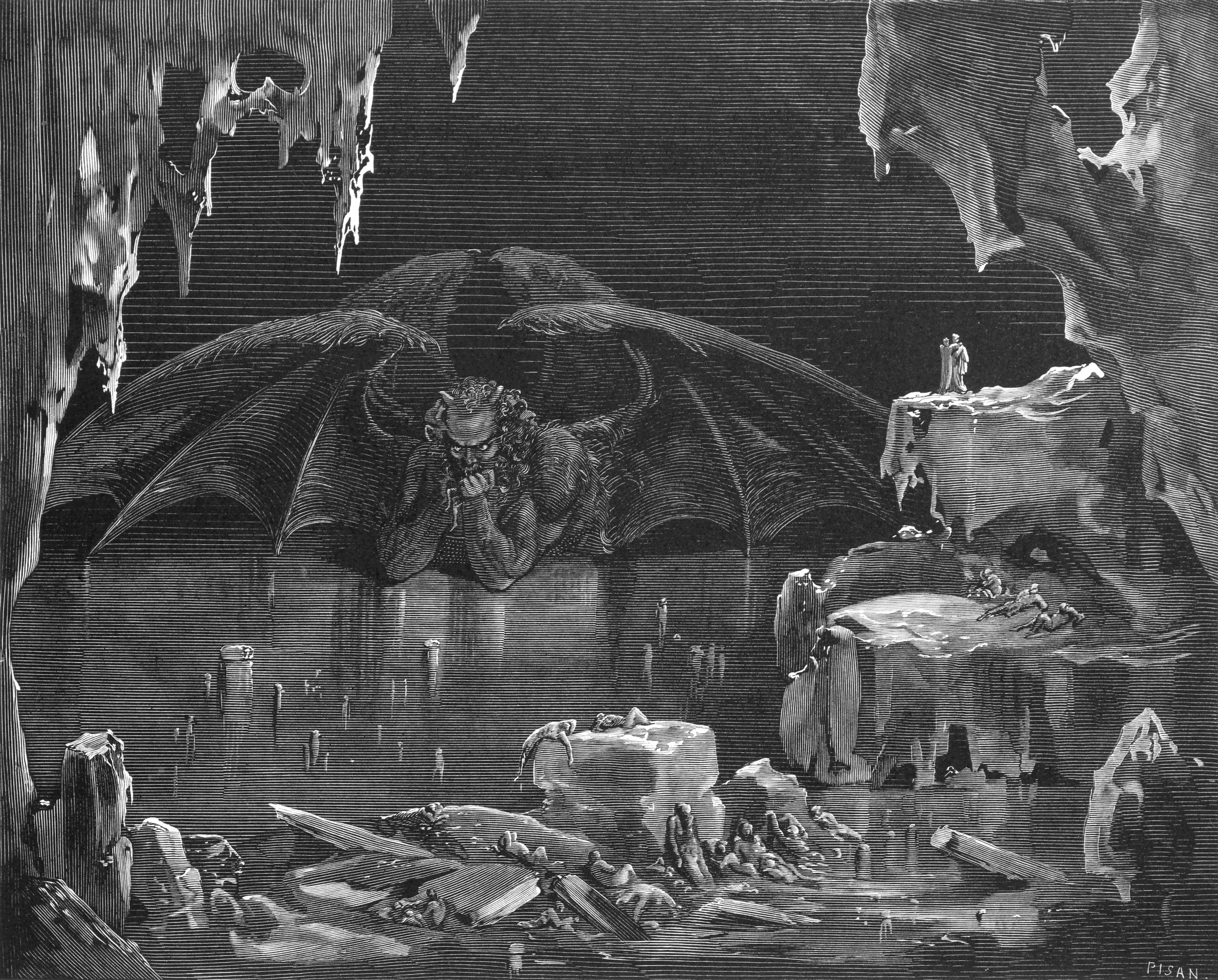
Lucifer, King of Hell
Gustave Doré · 1861
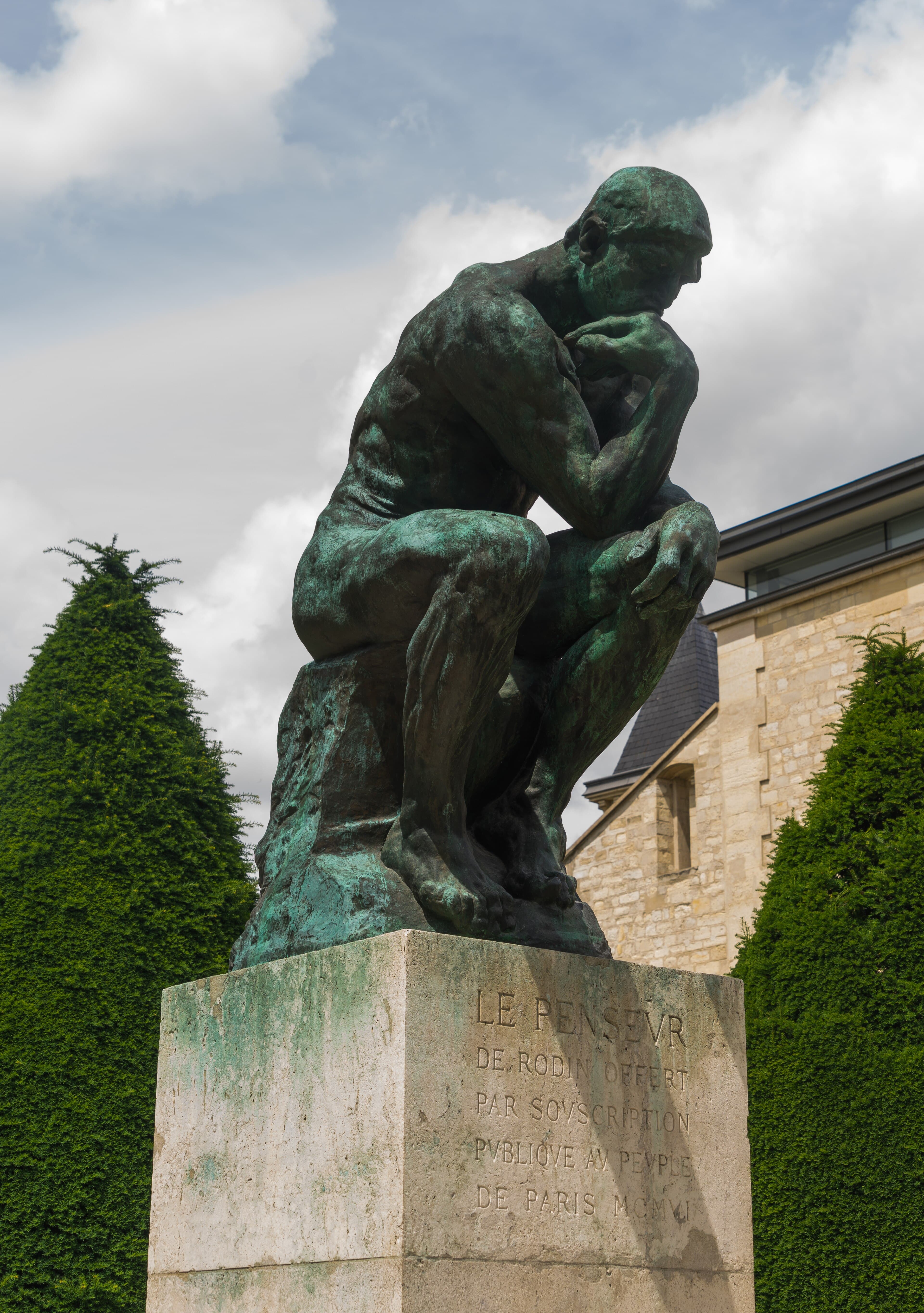
The Thinker
Auguste Rodin · Modeled 1880–82; enlarged 1902–03; this cast 1904
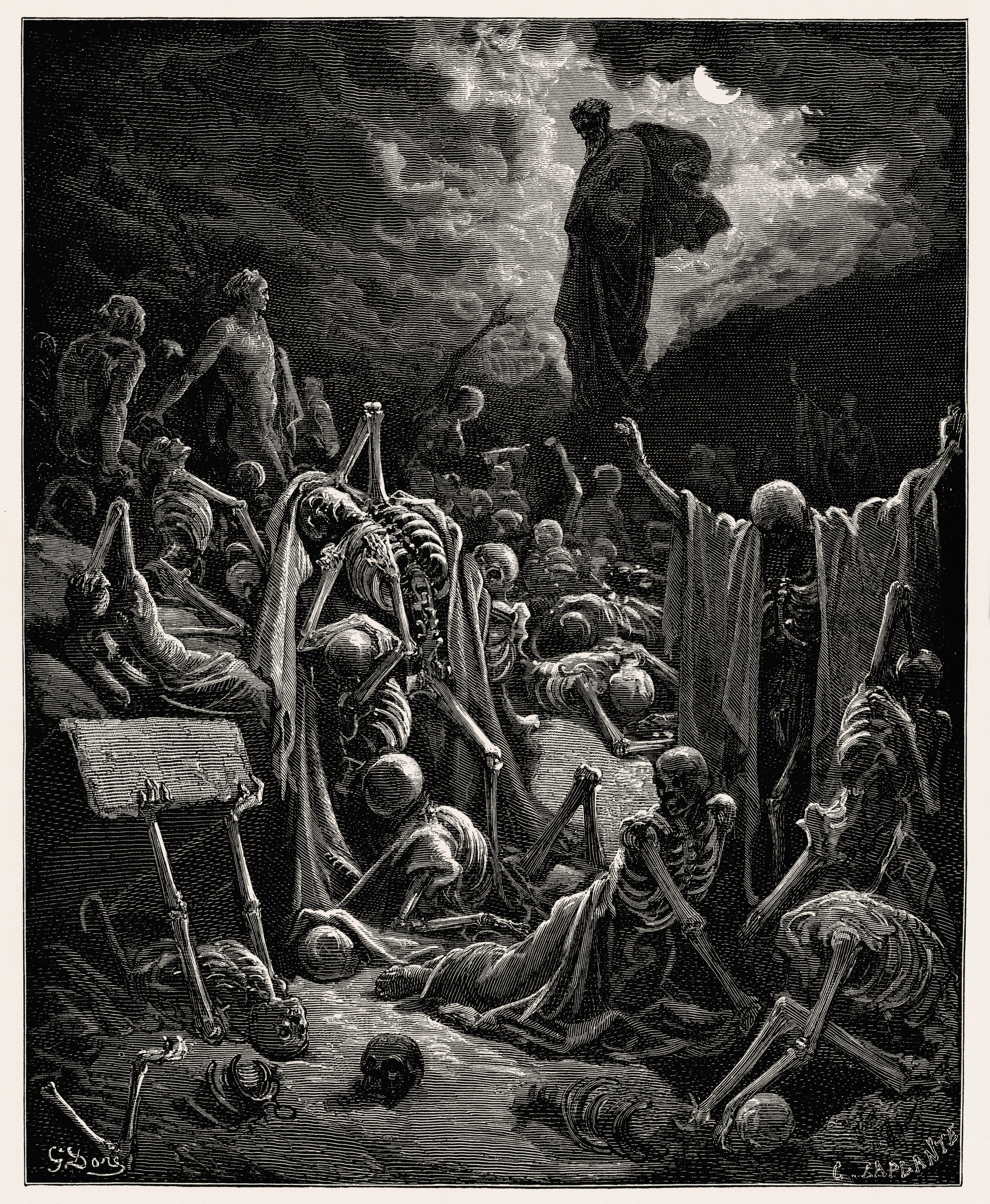
The Vision of the Valley of Dry Bones
Gustave Doré · 1866
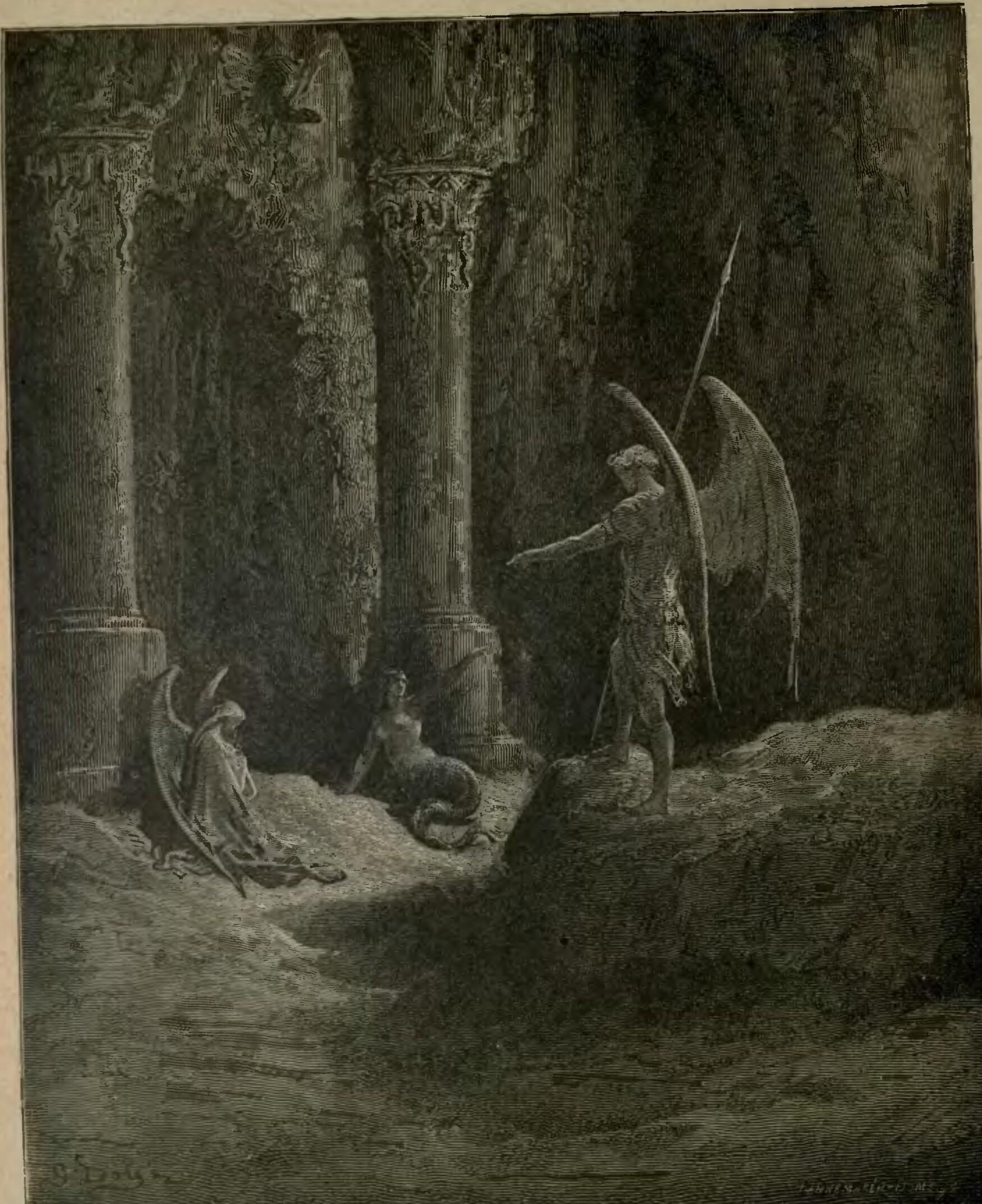
Satan, Sin and Death at the Gates of Hell
Gustave Doré · 1866
Two Old Men
Francisco Goya · c. 1819–1823
Two Old Men Eating Soup
Francisco Goya · c. 1819–1823
The Wood of the Suicides
Gustave Doré · 1861