Theme
Greek Mythology Paintings and Sculpture: The Myths in Art
Venus rising from the sea, Icarus falling, Saturn eating his children: how painters and sculptors have retold the Greek myths for two and a half thousand years.
Greek mythology paintings retell the stories of the Greek gods and heroes, from the birth of Venus and the fall of Icarus to Persephone's abduction to the underworld, and they are among the most famous images in Western art. Botticelli's The Birth of Venus, Waterhouse's Hylas and the Nymphs, Goya's Saturn Devouring His Son and Bernini's Apollo and Daphne all come from the same small set of ancient texts, above all Ovid's Metamorphoses.
The myths have survived because they are endlessly adaptable. A Renaissance prince could use them to display learning, a Victorian painter to show the nude under a classical alibi, and a modern artist to talk about desire, power or grief. This collection gathers paintings and sculptures of the Greek myths from the Renaissance to the twentieth century, with a guide to the stories and how to recognize them.
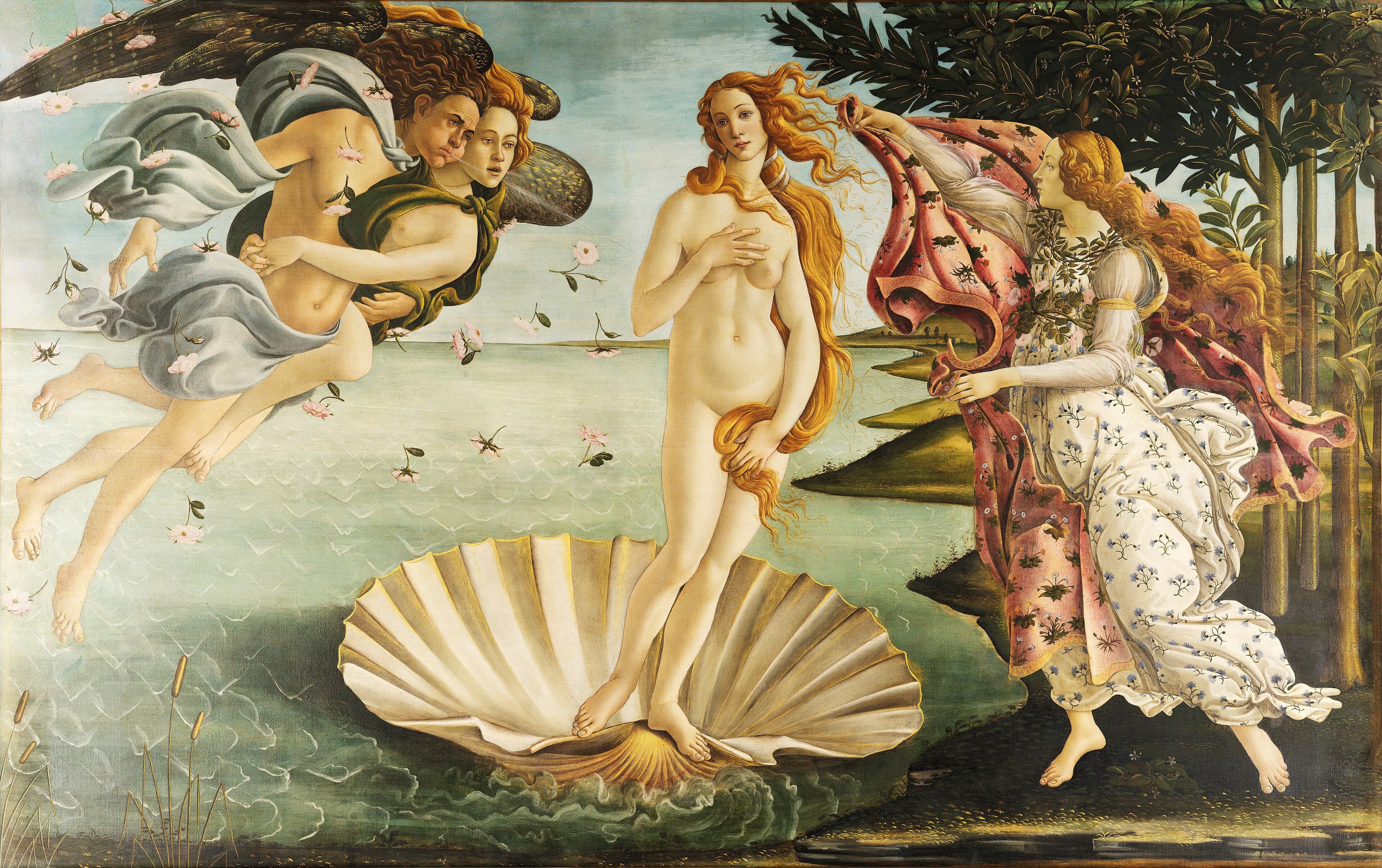
The Birth of Venus
Sandro Botticelli · c. 1484–1486
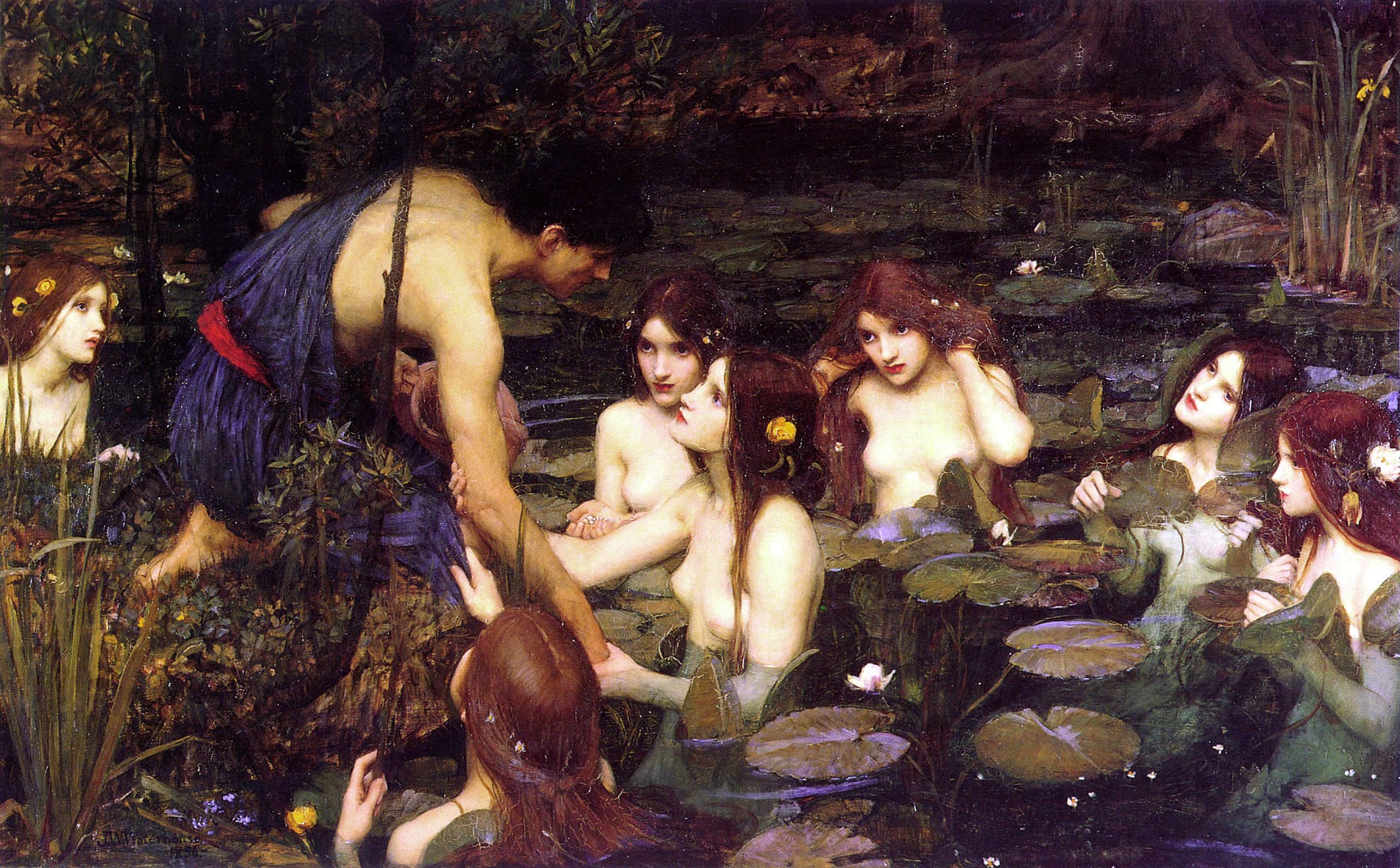
Hylas and the Nymphs
John William Waterhouse · 1896

Saturn Devouring His Son
Francisco Goya · c. 1819–1823
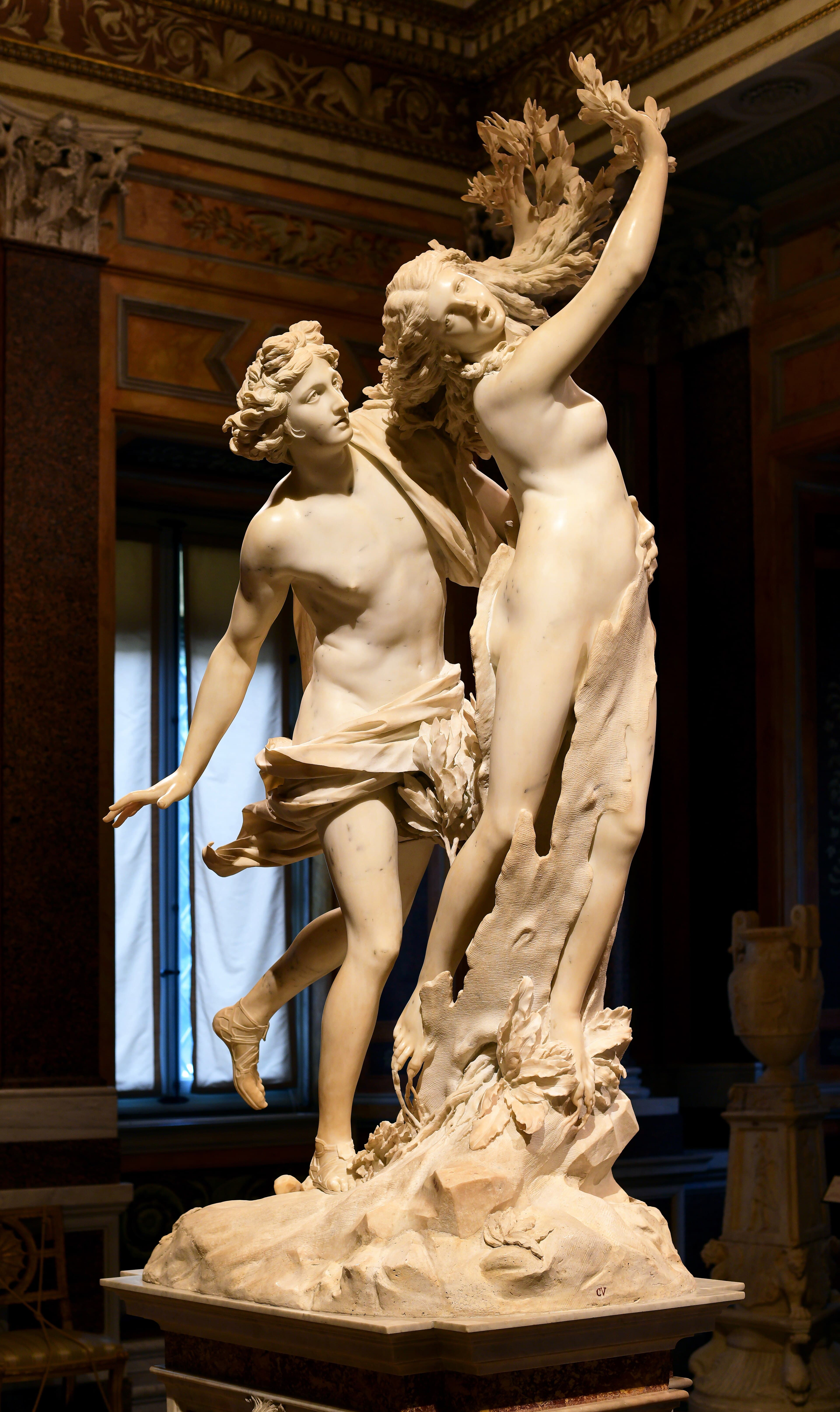
Apollo and Daphne
Gian Lorenzo Bernini · 1622–1625
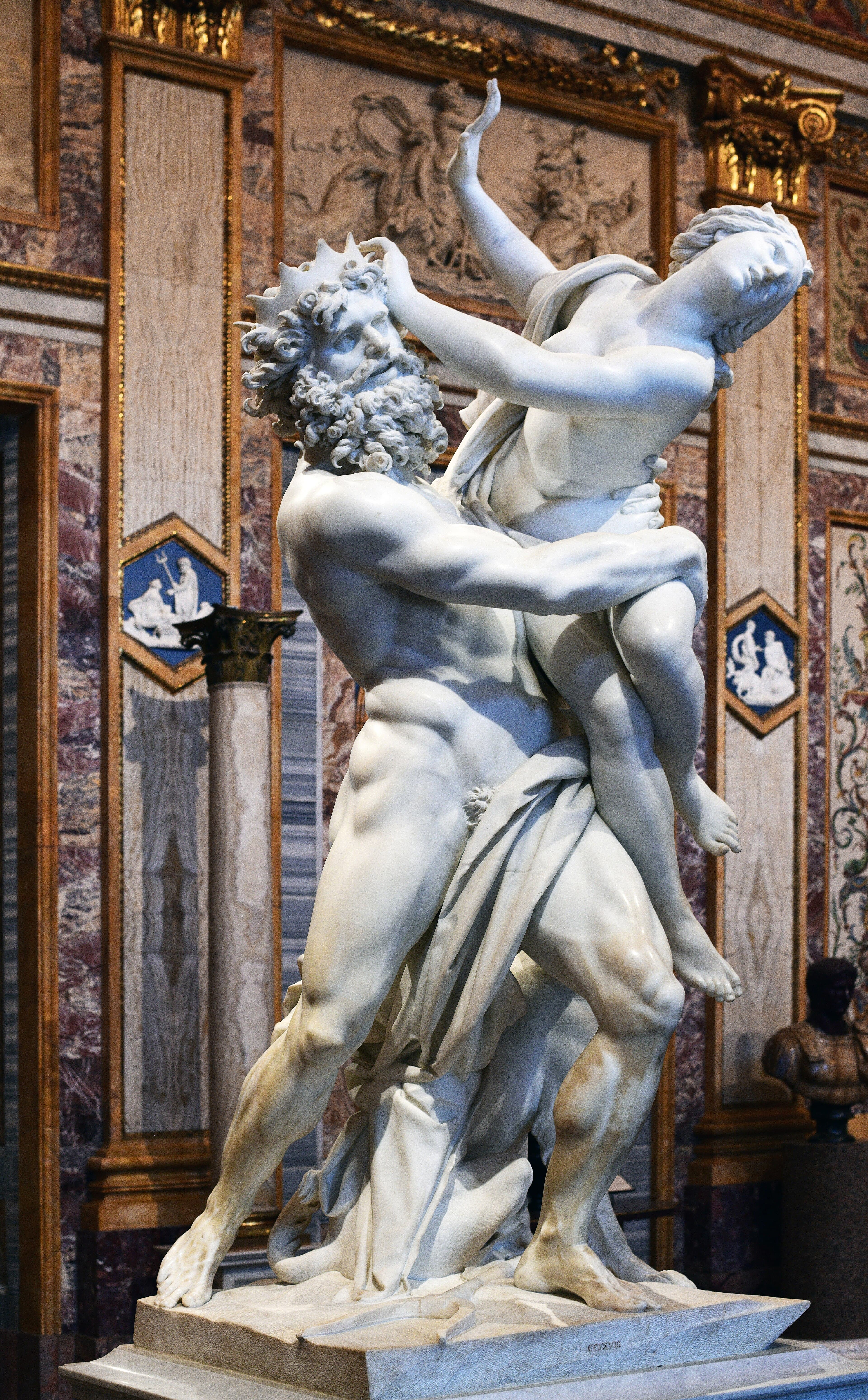
The Rape of Proserpina
Gian Lorenzo Bernini · 1621–1622
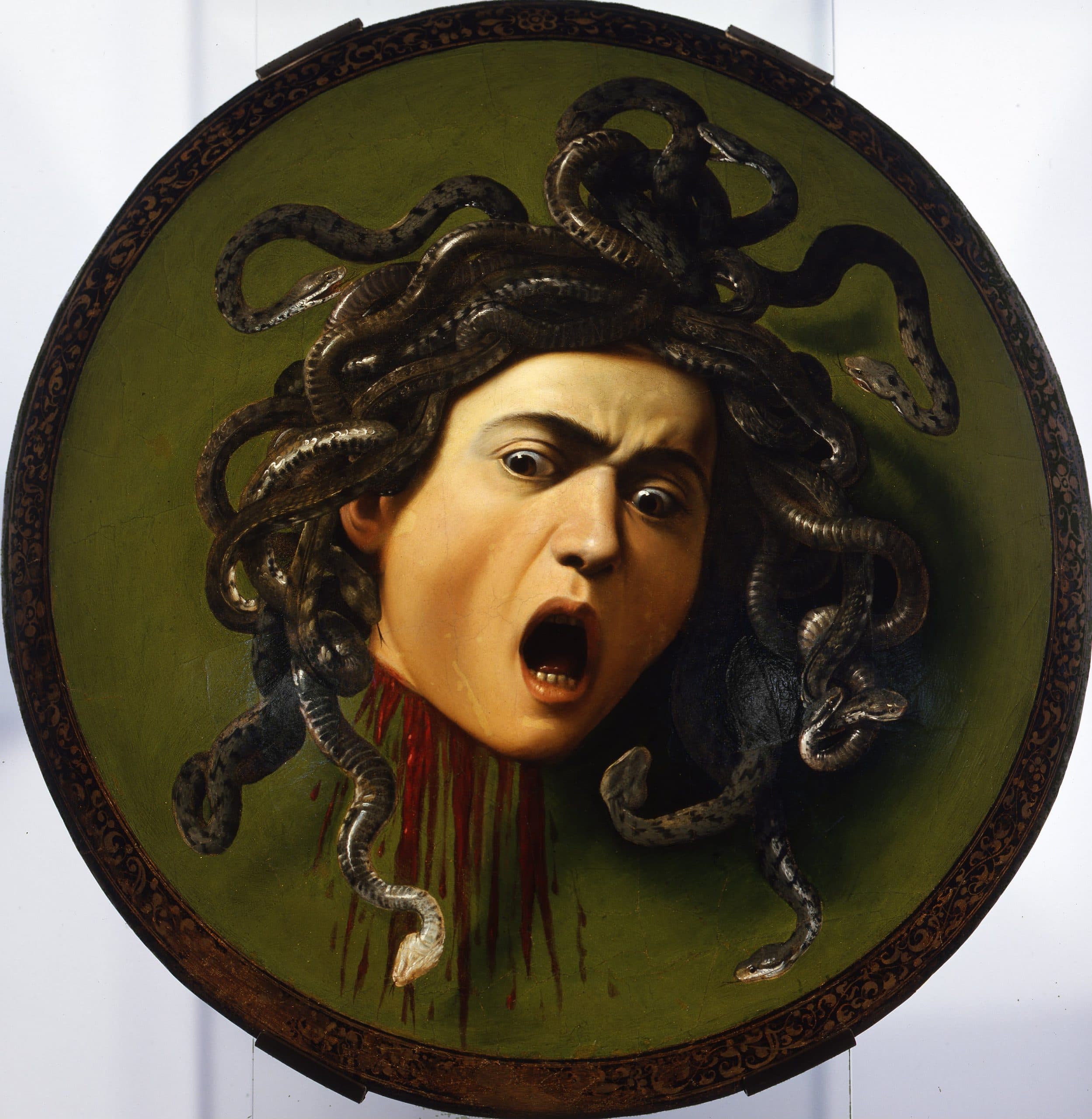
Medusa
Caravaggio · c. 1597–98
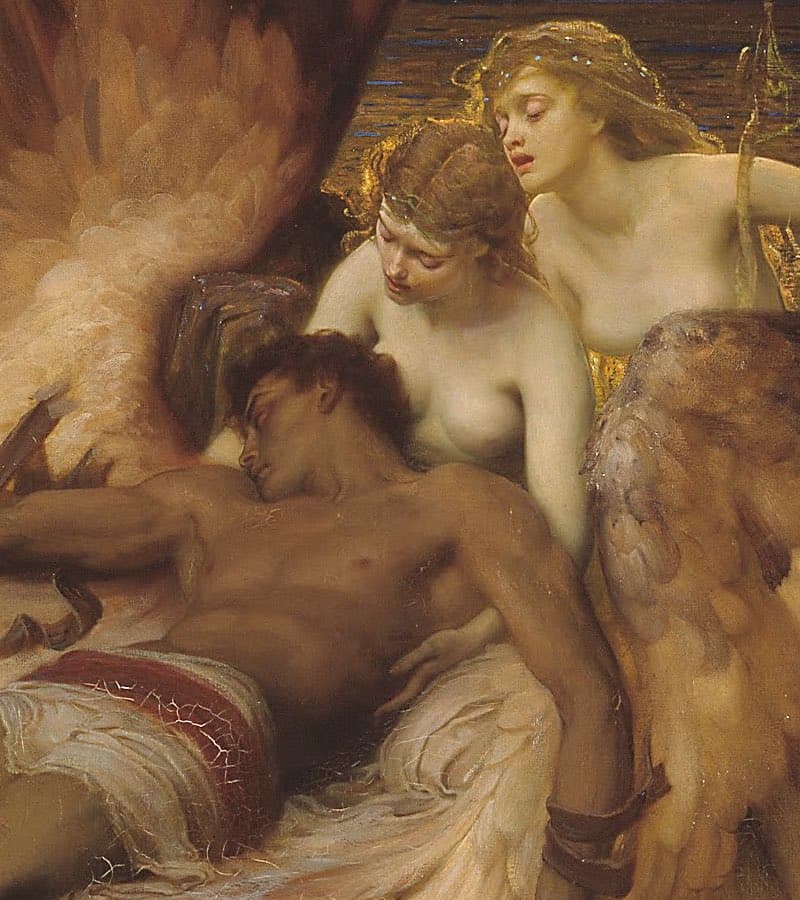
The Lament for Icarus
Herbert James Draper · 1898
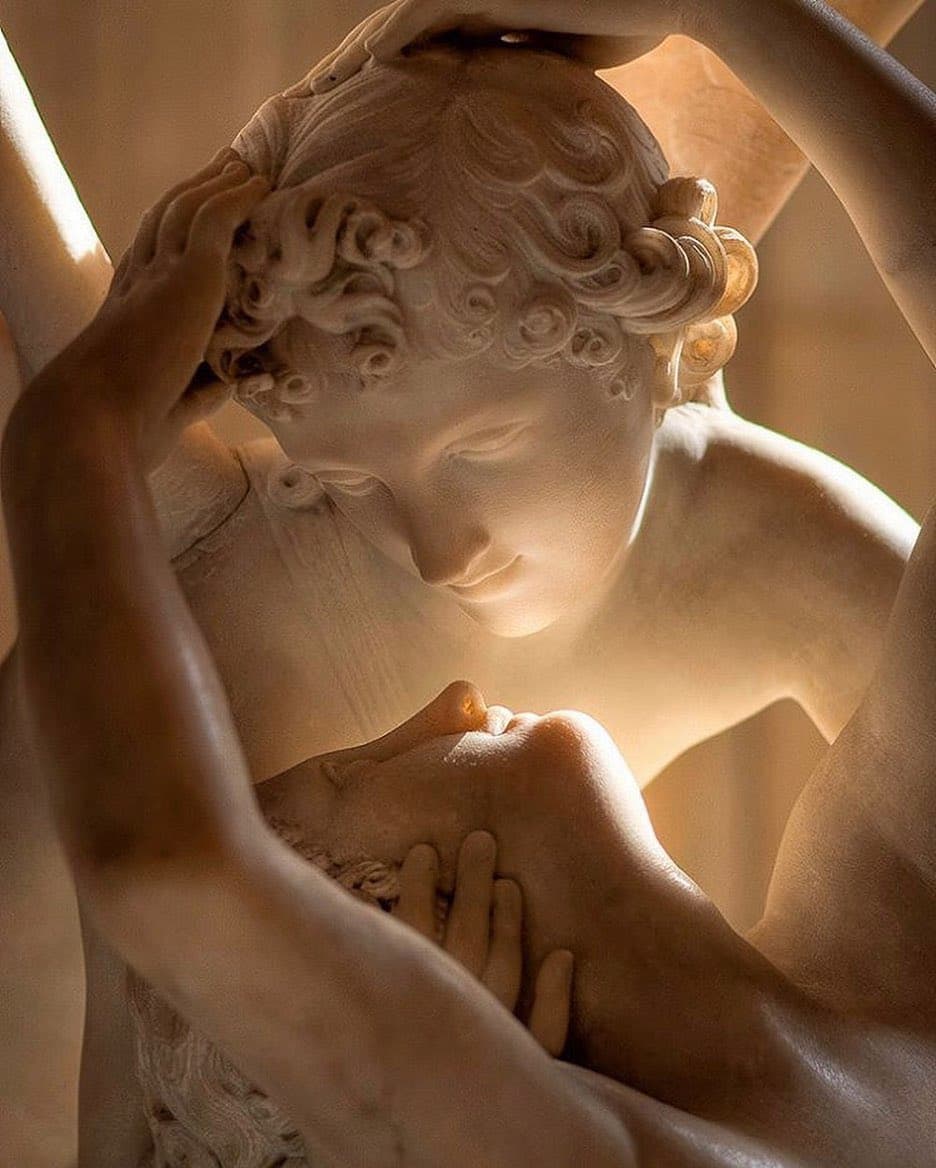
Psyche Revived by Cupid's Kiss
Antonio Canova · 1787–1793
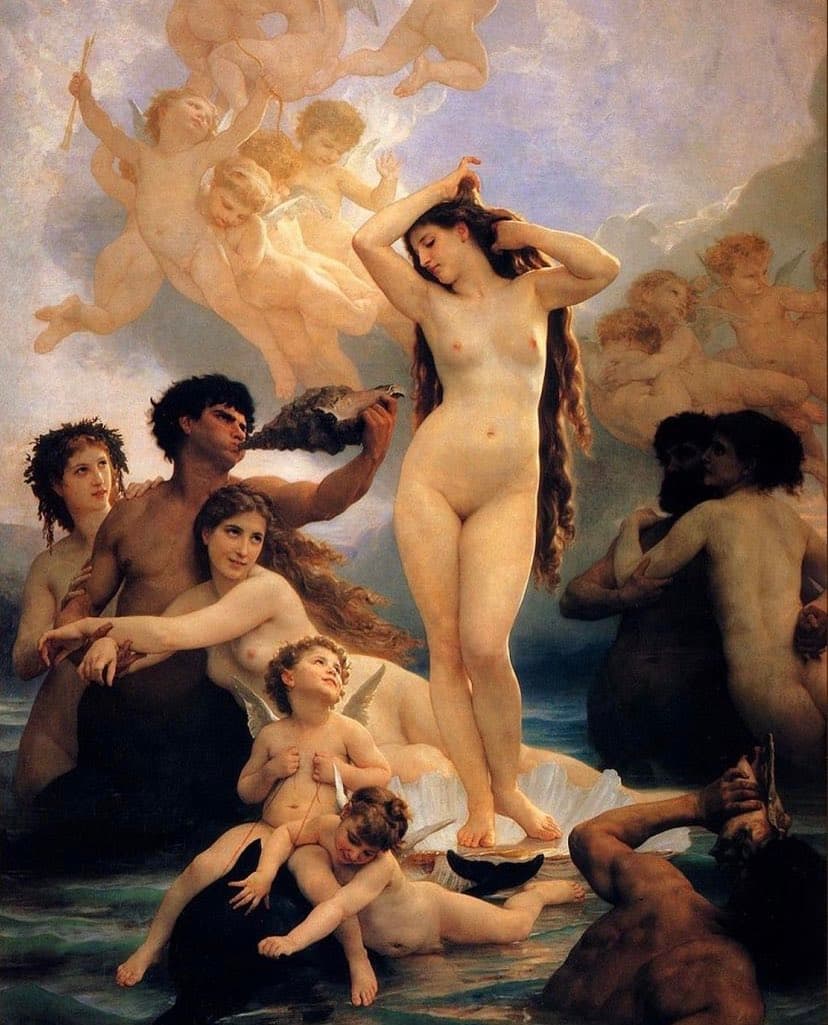
The Birth of Venus
William-Adolphe Bouguereau · 1879
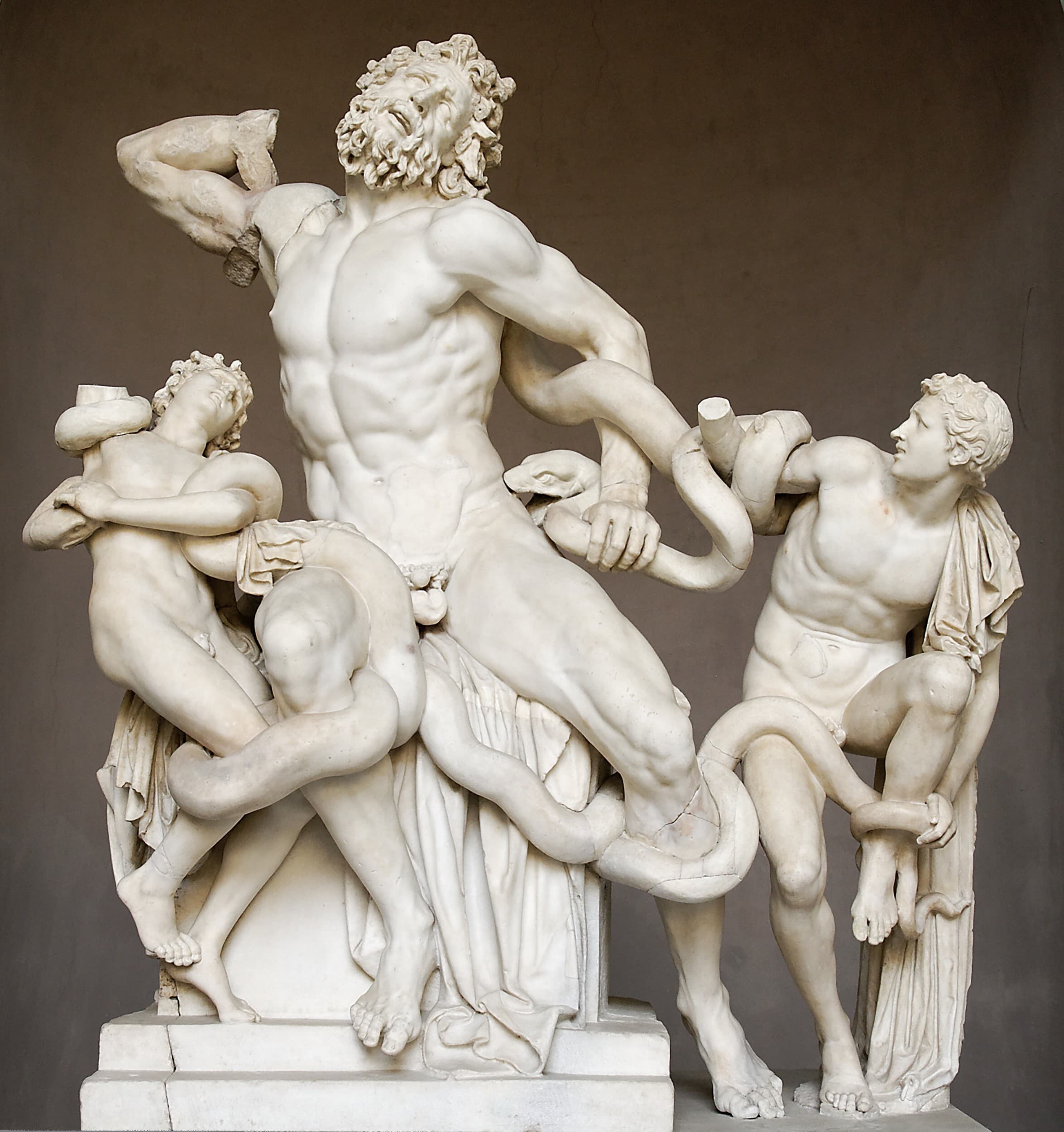
Laocoön and His Sons
Agesander of Rhodes & Athenodoros of Rhodes & Polydorus of Rhodes · c. 200 BC – AD 70 (date debated); excavated 1506

Venus de Milo
Alexandros of Antioch · c. 150–125 BC
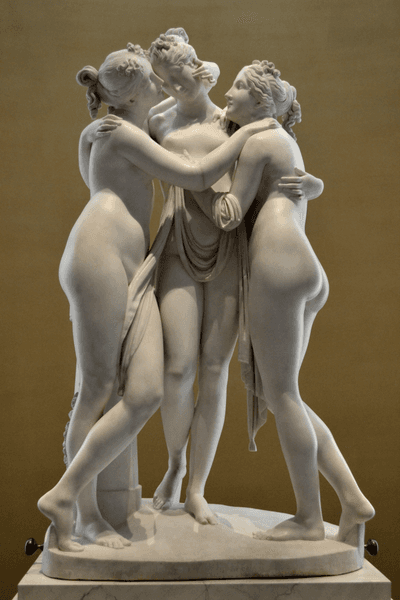
The Three Graces
Antonio Canova · 1814–17
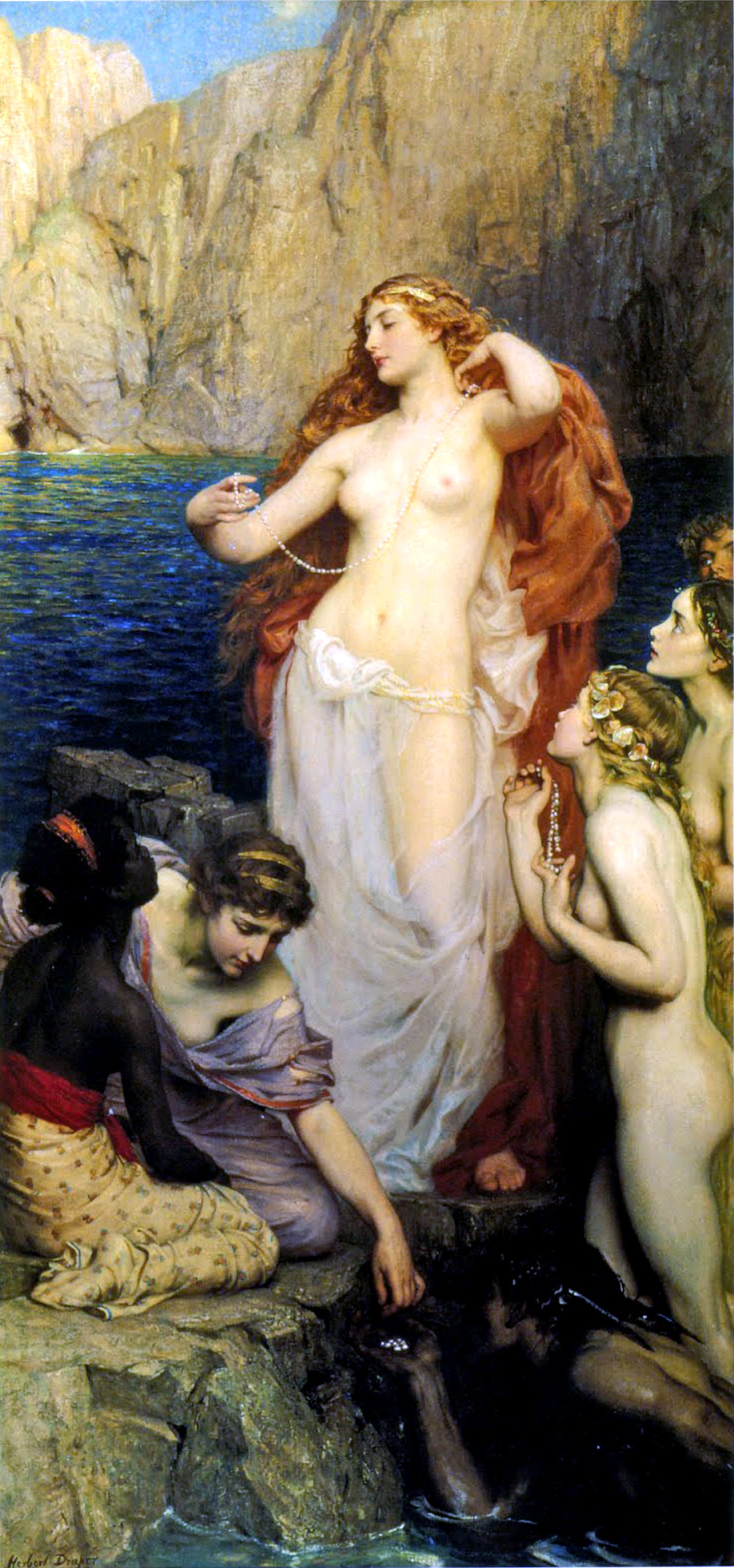
The Pearls of Aphrodite
Herbert James Draper · 1907
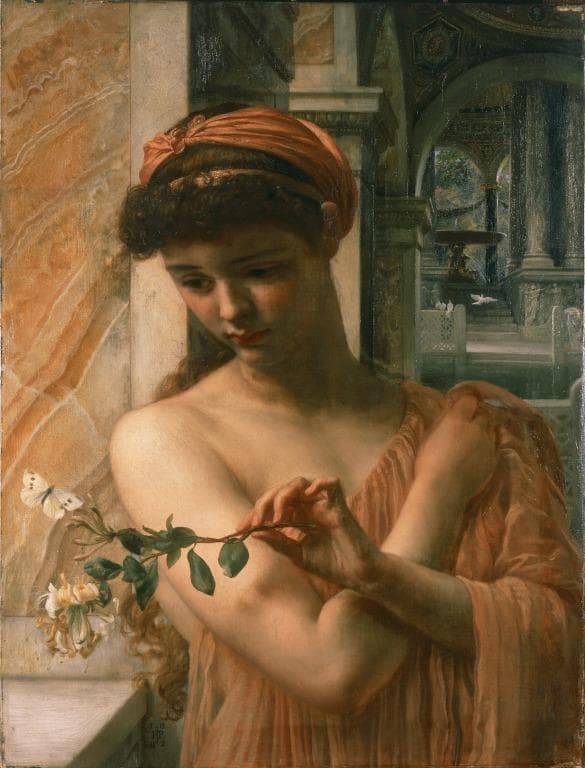
Psyche in the Temple of Love
Edward John Poynter · 1882
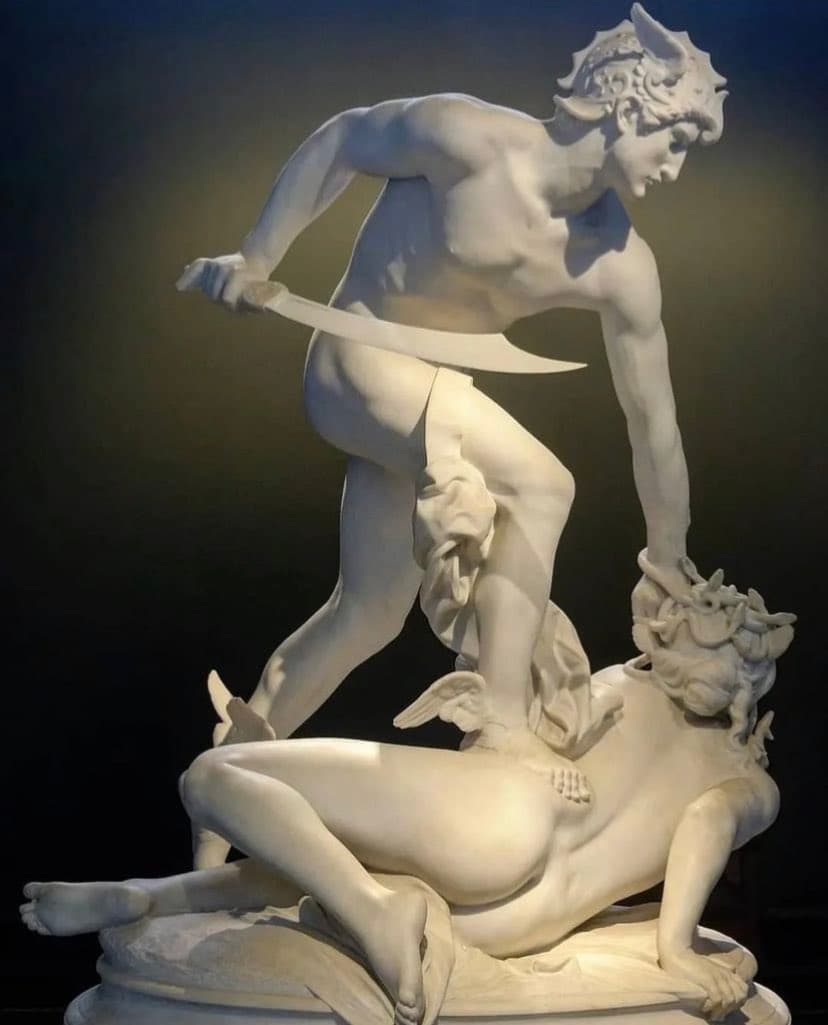
Perseus and the Gorgon
Laurent Marqueste · 1875–1903 (series); marbles 1890 and 1903
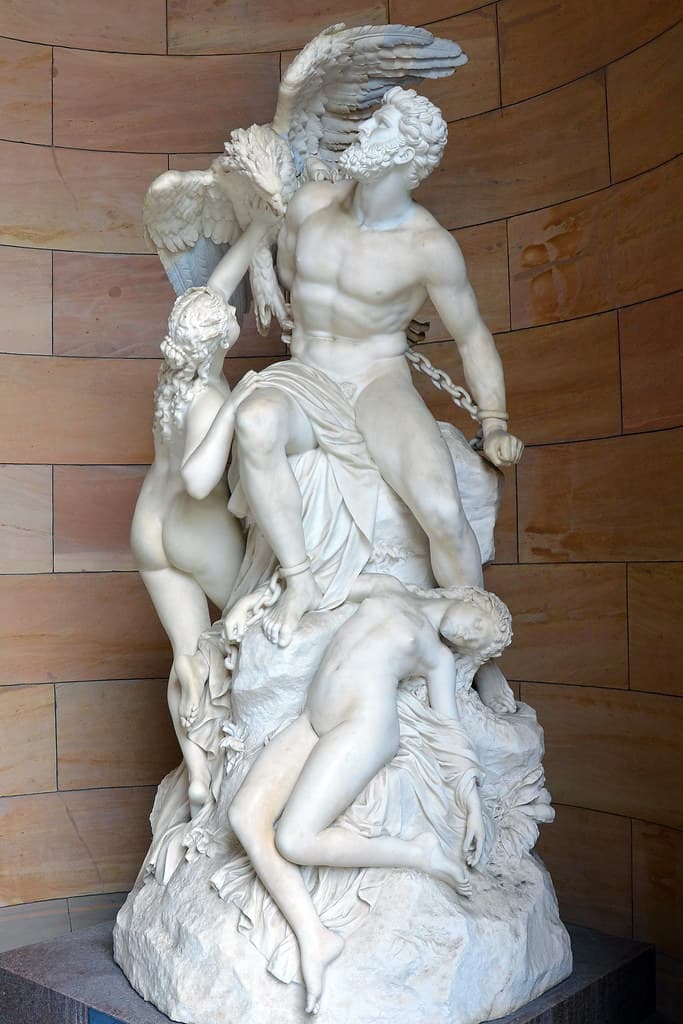
Prometheus Bound and the Oceanids
Eduard Müller · 1872–79
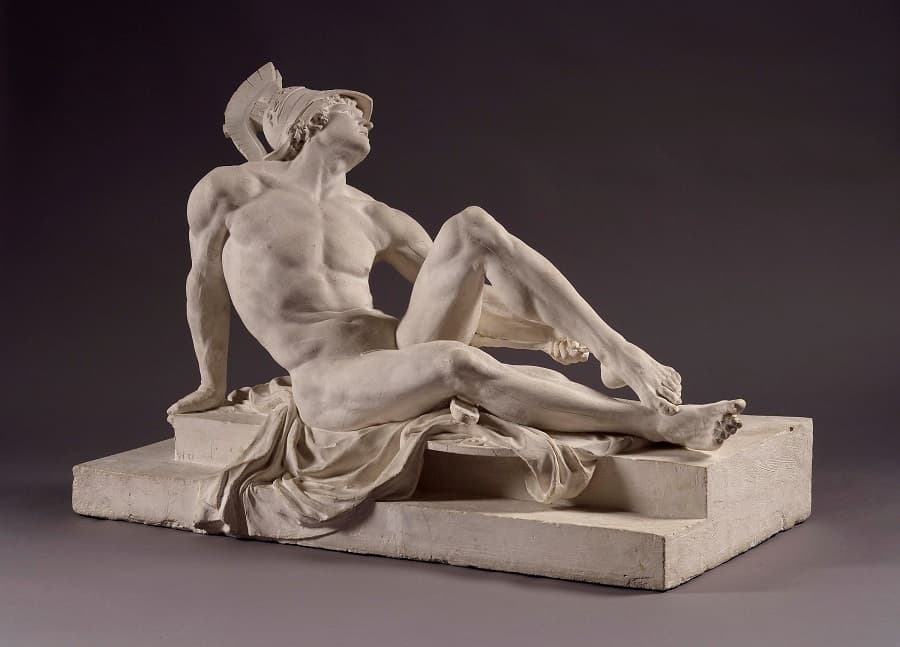
Dying Achilles
Jean-Baptiste Giraud · c. 1788–89

Nymphs Dancing to Pan's Flute
Joseph Tomanek
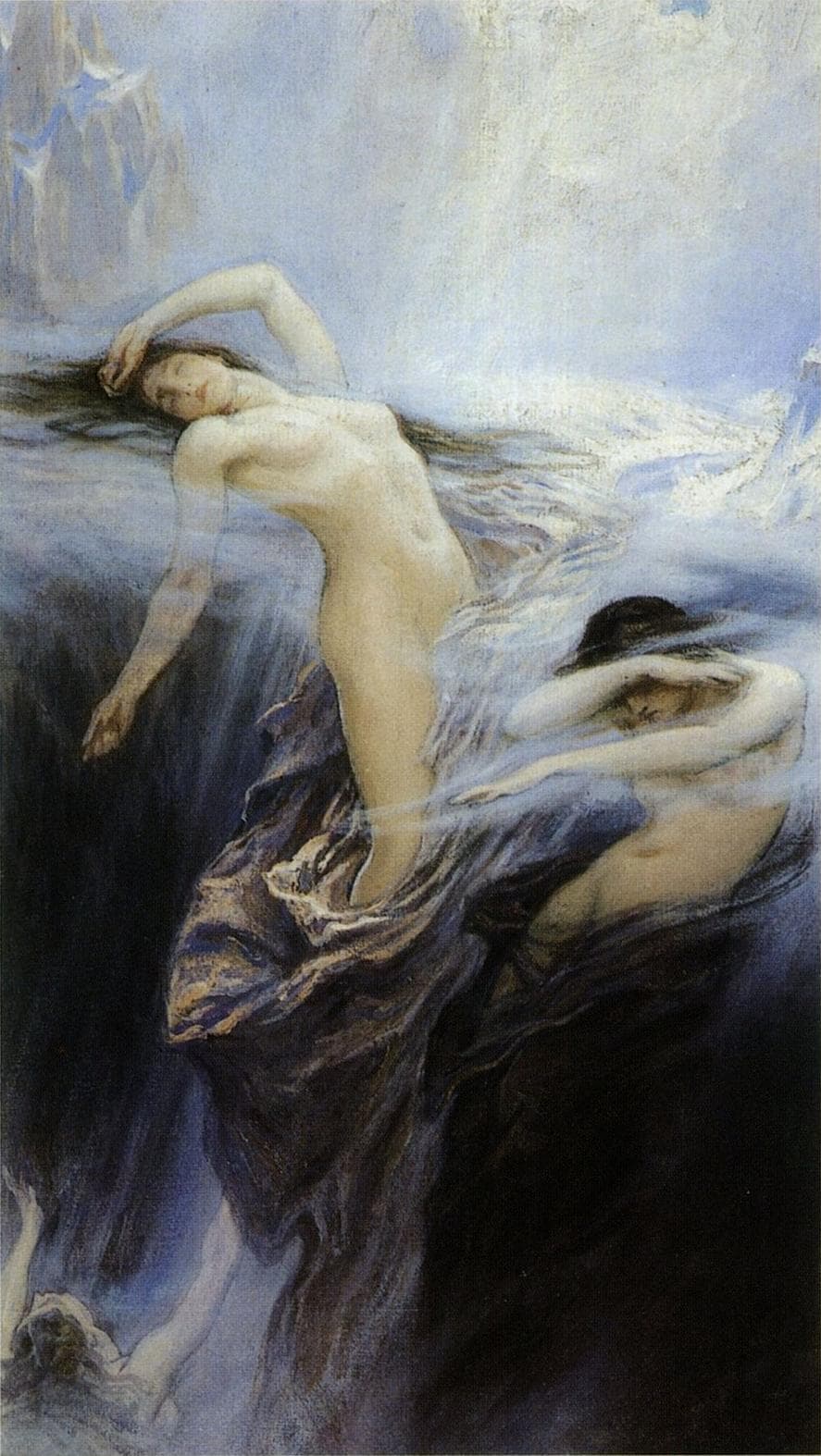
Clyties of the Mist
Herbert James Draper · 1912
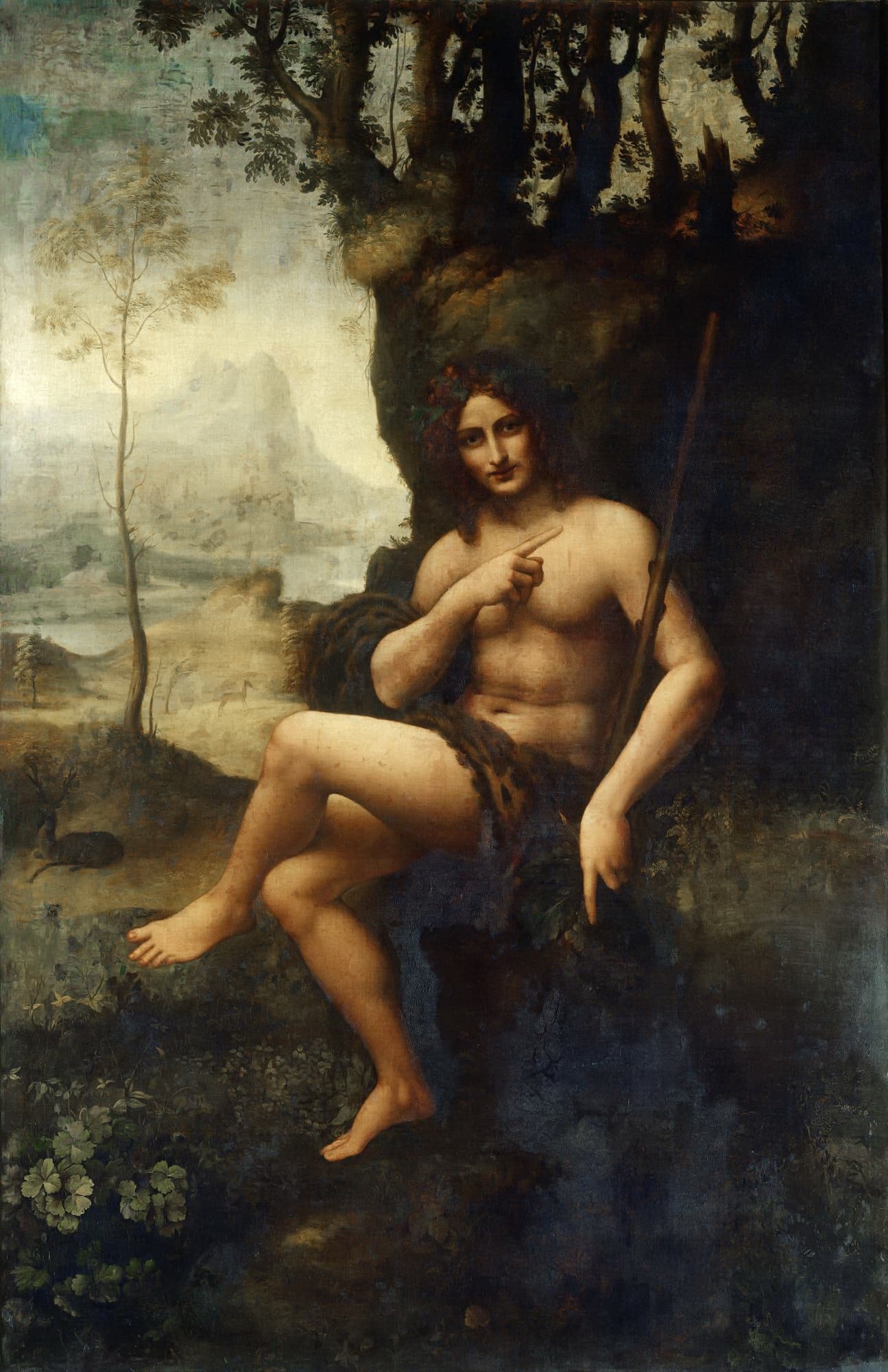
Bacchus (Saint John the Baptist)
Leonardo da Vinci · c. 1510–15; altered 1683–93
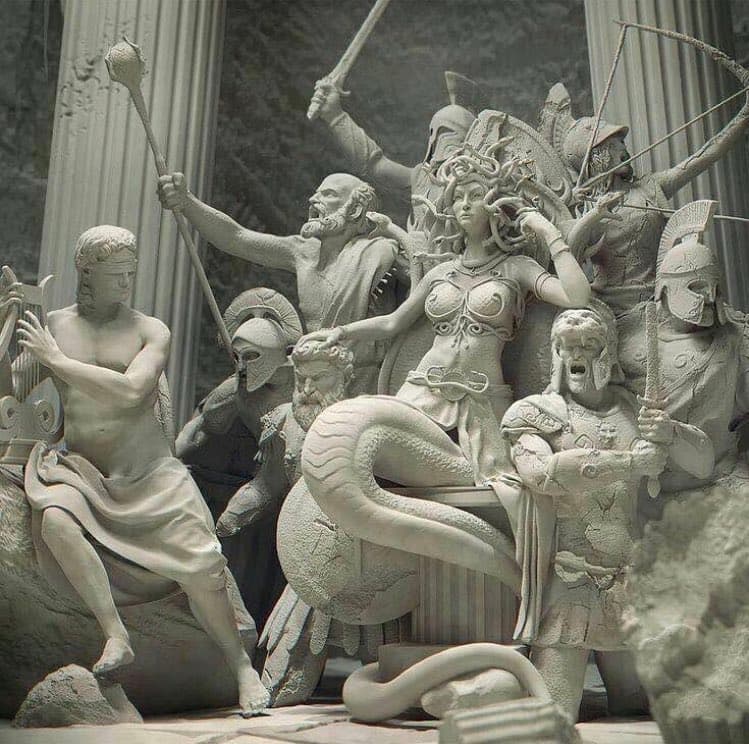
Medusa on Her Throne
Reza Sedghi · 2021
Where artists found the myths
Very few artists read Homer in Greek. Most knew the myths through Latin, especially Ovid's Metamorphoses (completed around AD 8), a sequence of some 250 stories of transformation that became the painter's handbook from the Middle Ages onward. Hesiod's Theogony supplied the origins of the gods, the Homeric epics the Trojan War and the wanderings of Odysseus, and Apuleius's Golden Ass the tale of Cupid and Psyche. Renaissance handbooks such as Vincenzo Cartari's Images of the Gods (1556) told artists what each deity should look like and hold.
Because most artists learned the myths through Rome, the gods in paintings usually carry their Roman names: Venus for Aphrodite, Jupiter for Zeus, Saturn for Cronus, Proserpina for Persephone, Cupid for Eros.
The Renaissance: the gods return
In the Middle Ages the gods survived mostly in astrology and moralized allegory. In fifteenth-century Florence they returned as beautiful bodies.
Botticelli's Birth of Venus (c. 1484–86, Uffizi), the first large-scale painting of a nude goddess since antiquity, shows Venus arriving on a scallop shell, blown to shore by the winds Zephyr and Aura while a Hora of spring hurries to cover her. Her pose, one hand at her breast and one at her lap, comes straight from ancient statues of the modest Venus. For the Neoplatonist scholars around the Medici, she could stand for divine love and beauty as much as for the pagan goddess.
In Venice, Titian painted a series of mythologies he called poesie for Philip II of Spain in the 1550s and 1560s, among them Diana and Actaeon and The Rape of Europa. Their loose, glowing paint and frank sensuality set the standard for centuries.
The Baroque: myth as drama
Seventeenth-century artists chose the most violent or decisive moment of each story. Caravaggio's Medusa paints the Gorgon's severed head on a shield at the instant of death, still screaming. Bernini's Apollo and Daphne catches the nymph mid-transformation into a laurel tree, and his Rape of Proserpina shows Pluto seizing Ceres's daughter as she pushes against his face. Rubens filled huge canvases with the gods' battles and loves, and in 1636 painted Saturn devouring one of his children for Philip IV's hunting lodge.
Goya answered Rubens two centuries later with Saturn Devouring His Son, one of his Black Paintings. The myth, from Hesiod, tells how Cronus swallowed each of his children at birth to stop a prophecy that one would overthrow him. Goya turned it into an image of madness, appetite and perhaps of Spain consuming its own.
Neoclassicism: the cool ideal
In the late eighteenth century, the rediscovery of Pompeii and Herculaneum and the writings of Johann Joachim Winckelmann sent artists back to Greek sculpture for a calmer, purer ideal. Antonio Canova's Psyche Revived by Cupid's Kiss (1787–93, Louvre) tells the end of Apuleius's story: Psyche, who opened a forbidden jar and fell into a deathlike sleep, is woken by Cupid. Canova makes the scene a single embrace, the lovers' arms forming a circle around the almost-kiss.
The nineteenth century: myth and the nude
The Paris Salon and the Royal Academy in London loved mythology, partly because it allowed nudity under a respectable classical cover. William-Adolphe Bouguereau's The Birth of Venus (1879, Musée d'Orsay) restages Botticelli's subject with a swirl of nymphs, tritons and cupids around a porcelain-smooth goddess.
In Britain, a late flowering of mythological painting followed the Pre-Raphaelites. John William Waterhouse's Hylas and the Nymphs (1896, Manchester Art Gallery) shows the young Argonaut, sent to fetch water, drawn into a pool by seven identical water nymphs. Herbert James Draper's The Lament for Icarus (1898, Tate Britain) breaks with the usual image of the boy falling from the sky. Icarus lies dead on a rock, his huge brown wings spread out beneath him, while sea nymphs mourn; it won a gold medal at the Paris Exposition Universelle of 1900.
Abduction, desire and the modern viewer
Many mythological works carry the word "rape" in their titles: The Rape of Proserpina, The Rape of Europa, The Rape of the Sabine Women. In older English the word followed the Latin raptus, a seizing or carrying off, so the titles describe abduction. The stories themselves, though, are often about sexual violence by gods against women and nymphs, and artists frequently presented them as beautiful or erotic spectacles for male patrons.
Modern viewers and museums increasingly read these pictures from the women's side. Look at Proserpina's face in Bernini's group, wet with carved tears, or at Daphne's open mouth as she flees Apollo, and the works tell their own story of terror and resistance. In 2018 Manchester Art Gallery briefly took Hylas and the Nymphs off the wall as part of an artist's project to prompt exactly this debate, and the reaction showed how much these images still matter.
How to recognize the myths in a painting
Gods and heroes are identified by attributes, objects that work like name tags:
- Venus: a scallop shell, doves, roses, often with Cupid.
- Cupid: a winged boy with bow and arrows, sometimes blindfolded.
- Jupiter: an eagle, a thunderbolt, or one of his disguises: a bull (Europa), a swan (Leda), a shower of gold (Danaë).
- Apollo: a lyre, a laurel wreath, a bow, radiant light.
- Diana: a crescent moon in her hair, hunting dogs, a bow.
- Bacchus: grapes, vine leaves, a leopard skin, a staff topped with a pine cone.
- Medusa: snakes for hair, usually with Perseus, who holds her head or a mirrored shield.
- Psyche: butterfly wings, an oil lamp.
Transformation stories are easy to spot because the change is shown in progress: fingers becoming leaves, a body becoming a flower, a man growing antlers.
Why the myths still matter
The Greek myths give artists stories about the things that do not change: love and jealousy, ambition and its punishment, the death of the young, the cruelty of the powerful. Icarus is every young person who ignores advice; Psyche is the soul searching for love; Saturn is time and power devouring their children. Each generation has found itself in them.
For the sculptural side of the story, see Greek statues.
Questions & answers
What is the most famous Greek mythology painting?
Sandro Botticelli's The Birth of Venus (c. 1484–86), in the Uffizi Gallery in Florence, is the most famous painting of a Greek myth. Titian's poesie for Philip II, Waterhouse's Hylas and the Nymphs and Goya's Saturn Devouring His Son are other celebrated examples.
Why do paintings of Greek gods use Roman names?
Most European artists learned the myths through Latin authors, especially Ovid's Metamorphoses, and through Roman sculpture. So Aphrodite appears as Venus, Zeus as Jupiter, Cronus as Saturn and Persephone as Proserpina in titles from the Renaissance onward.
Which book inspired the most mythological paintings?
Ovid's Metamorphoses, a Latin poem of around 250 transformation myths completed about AD 8, is the single most important source. It supplied the stories of Apollo and Daphne, Icarus, Narcissus, Diana and Actaeon, Perseus and Medusa and many more.
Where can I see famous Greek mythology paintings?
The Uffizi in Florence (Botticelli), the Galleria Borghese in Rome (Bernini, Titian), the Prado in Madrid (Titian, Rubens, Goya), the Louvre and Musée d'Orsay in Paris, the National Gallery and Tate Britain in London, and Manchester Art Gallery (Waterhouse) hold the major works.
How can you identify a Greek god in a painting?
Look for attributes. Venus has a shell, doves or Cupid; Jupiter an eagle or thunderbolt; Apollo a lyre and laurel; Diana a crescent moon and hunting dogs; Bacchus grapes and vine leaves; Medusa snakes for hair; Psyche butterfly wings or an oil lamp.