Image: Museo del Prado, Madrid · Public domain · via Wikimedia Commons
Romanticism
Witches' Sabbath (The Great He-Goat)
Francisco Goya, c. 1819–1823
Witches' Sabbath (The Great He-Goat) is a Black Painting by Francisco Goya, painted on a wall of his house near Madrid around 1819–1823. A goat-headed devil preaches to a crowd of terrified women at night. It is now in the Prado.
- Artist
- Francisco Goya
- Date
- c. 1819–1823
- Medium
- Oil mural transferred to canvas
- Dimensions
- 140.5 × 435.7 cm
- Collection
- Museo del Prado, Madrid, Spain
- Movement
- Romanticism
What you're looking at
A crowd of women sits on bare ground at night, packed so tightly that their faces merge into one mass. At the far left, outlined against a muddy sky, looms a huge black silhouette: a goat with curving horns, wrapped in what looks like a monk's habit, seen from behind as it addresses the crowd. The faces turned toward it are gaunt, wide-eyed and slack-mouthed, some rapt, some terrified, some simply vacant.
In the middle foreground a figure in a white hood and robe sits with its back to us, a pale shape that pulls the eye into the center. At the far right, set slightly apart from the coven, a young woman sits alone on a chair in dark clothes, her hands tucked into a muff. She does not look at the goat. She is the one figure in the scene who seems untouched by the spell.
The canvas is enormous, about 140 by 436 cm, and painted almost entirely in black, brown, ocher and a few dirty whites. Goya builds the faces from quick, broken strokes, so that close up they dissolve into marks and from a distance resolve into a crowd of grimaces.
What does Witches' Sabbath (The Great He-Goat) mean?
The scene is a witches' sabbath, or aquelarre, the night gathering where, according to Spanish and Basque witch lore, witches met to worship the Devil in the form of a he-goat. The word comes from the Basque akelarre, "the field of the he-goat." The title El gran cabrón, "The Great He-Goat," was given by Goya's friend the painter Antonio Brugada after Goya's death; Goya himself named none of the Black Paintings.
Most scholars read the picture as satire, not belief. Goya was a man of the Spanish Enlightenment, and he had attacked superstition before, most famously in the Caprichos prints of 1799, where witches fly, cast spells and plot under the eye of credulous Spain. His friend the playwright Leandro Fernández de Moratín published a mocking annotated edition of the records of the 1610 Logroño witch trial. In this light the coven is not a gathering of real witches but a picture of credulity: ordinary people hypnotized by a dark figure dressed like a cleric.
That reading takes on a political edge in the years Goya painted it. After 1814 Ferdinand VII abolished the liberal constitution and restored the Inquisition. A mass of frightened people kneeling before a robed preacher reads easily as an image of a country in the grip of fear and fanaticism.
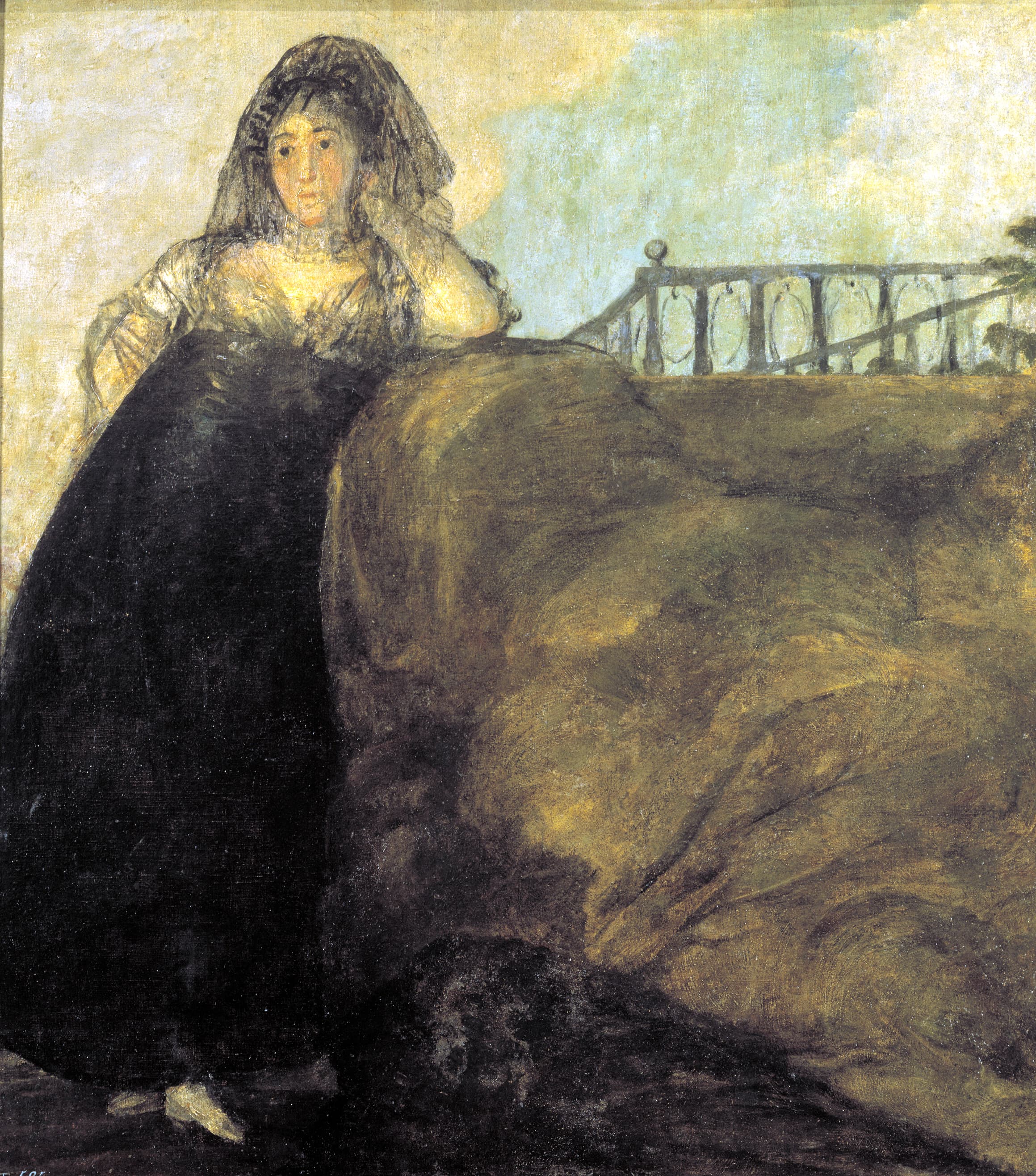
The young woman at the right is a separate puzzle. Some writers see her as a novice or postulant about to join the coven; others have suggested she is Leocadia Weiss, Goya's companion, who lived with him at the house and who is probably the subject of La Leocadia.
An earlier witches' sabbath
Goya had painted this subject before. In 1797–98 he made a small, bright Witches' Sabbath for the Duke and Duchess of Osuna, now in the Museo Lázaro Galdiano in Madrid. There a garlanded goat sits among women offering him babies under a moonlit sky, and the tone is close to theatrical comedy. Twenty years later, on his own wall, the goat has become a faceless silhouette, the crowd has swollen and the joke has gone.
Where it hung, and what was lost
The mural was painted in oil on a long wall of the ground-floor room of the Quinta del Sordo, Goya's house outside Madrid, facing A Pilgrimage to San Isidro. The two friezes answer each other: a nocturnal coven on one wall, a nocturnal pilgrimage on the other, both crowds of gaping faces led by something they do not understand. The same room held Saturn Devouring His Son and Judith and Holofernes.
When the murals were transferred to canvas in 1873–74 under the Prado restorer Salvador Martínez Cubells, for the banker Baron Émile d'Erlanger, a long strip of about 140 cm was cut from the right side of this composition. That is why the seated young woman now sits so close to the edge, and why the picture's weight seems to slide toward the goat. D'Erlanger showed the canvases in Paris in 1878 and gave them to the Spanish state, which accepted them in 1881.
What to notice
Find the goat's face. You can't. Goya shows the Devil only from behind, as a black cut-out with horns, so every expression in the picture belongs to the people looking at him. The real subject is the audience. Then find the one face in profile at the right, the young woman with the muff: she is lit more softly than anyone else, and she looks away.
Where to see Witches' Sabbath today
The painting is in the Museo del Prado in Madrid, which catalogues it as El aquelarre or El gran cabrón. It hangs with the other Black Paintings in a single room on the ground floor, usually opposite A Pilgrimage to San Isidro, as it was in Goya's house.
Questions & answers
What is the meaning of Goya's Witches' Sabbath (The Great He-Goat)?
Most scholars read it as satire of superstition and fear rather than a belief in witches. A crowd of gaping women kneels before a goat-devil dressed like a cleric, which has been read as a comment on credulity, the restored Inquisition and the repression of Ferdinand VII's Spain.
Where is Witches' Sabbath (The Great He-Goat)?
It is in the Museo del Prado in Madrid, displayed with the other Black Paintings. Goya painted it on a ground-floor wall of his house, the Quinta del Sordo, opposite A Pilgrimage to San Isidro. It was transferred to canvas in 1873–74 and entered the Spanish state collection in 1881.
What is an aquelarre?
Aquelarre is the Spanish word for a witches' sabbath, borrowed from the Basque akelarre, meaning the field of the he-goat. In Spanish witch lore it was the night meeting at which witches worshipped the Devil in the form of a goat, the scene Goya paints here.
Who is the woman sitting alone on the right?
Nobody knows. She sits apart from the coven with her hands in a muff and does not look at the goat. Some writers see her as a novice about to be initiated; others suggest she is Leocadia Weiss, Goya's companion at the house. The right side of the mural was cropped during its transfer to canvas.
Did Goya paint more than one Witches' Sabbath?
Yes. An earlier, much smaller Witches' Sabbath of 1797–98, painted for the Duke and Duchess of Osuna, is in the Museo Lázaro Galdiano in Madrid. It shows a garlanded goat among women offering him children, in a lighter, more theatrical mood.
More by the artist
Francisco Goya

Saturn Devouring His Son
Francisco Goya · c. 1819–1823
The Third of May 1808
Francisco Goya · 1814
The Sleep of Reason Produces Monsters
Francisco Goya · 1797–99 (published 1799)
Fantastic Vision (Asmodea)
Francisco Goya · c. 1819–1823
La Leocadia
Francisco Goya · c. 1819–1823
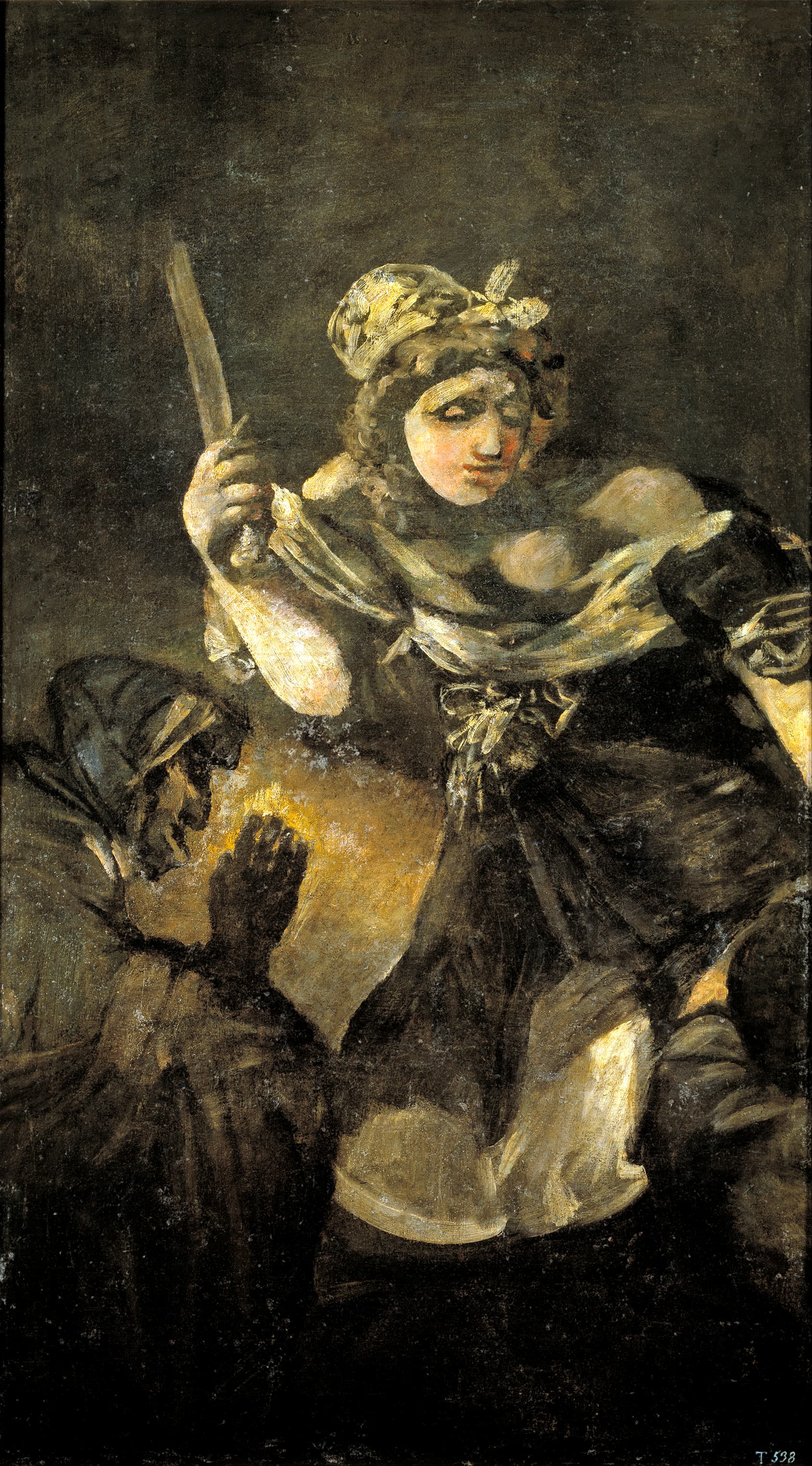
Judith and Holofernes
Francisco Goya · c. 1819–1823
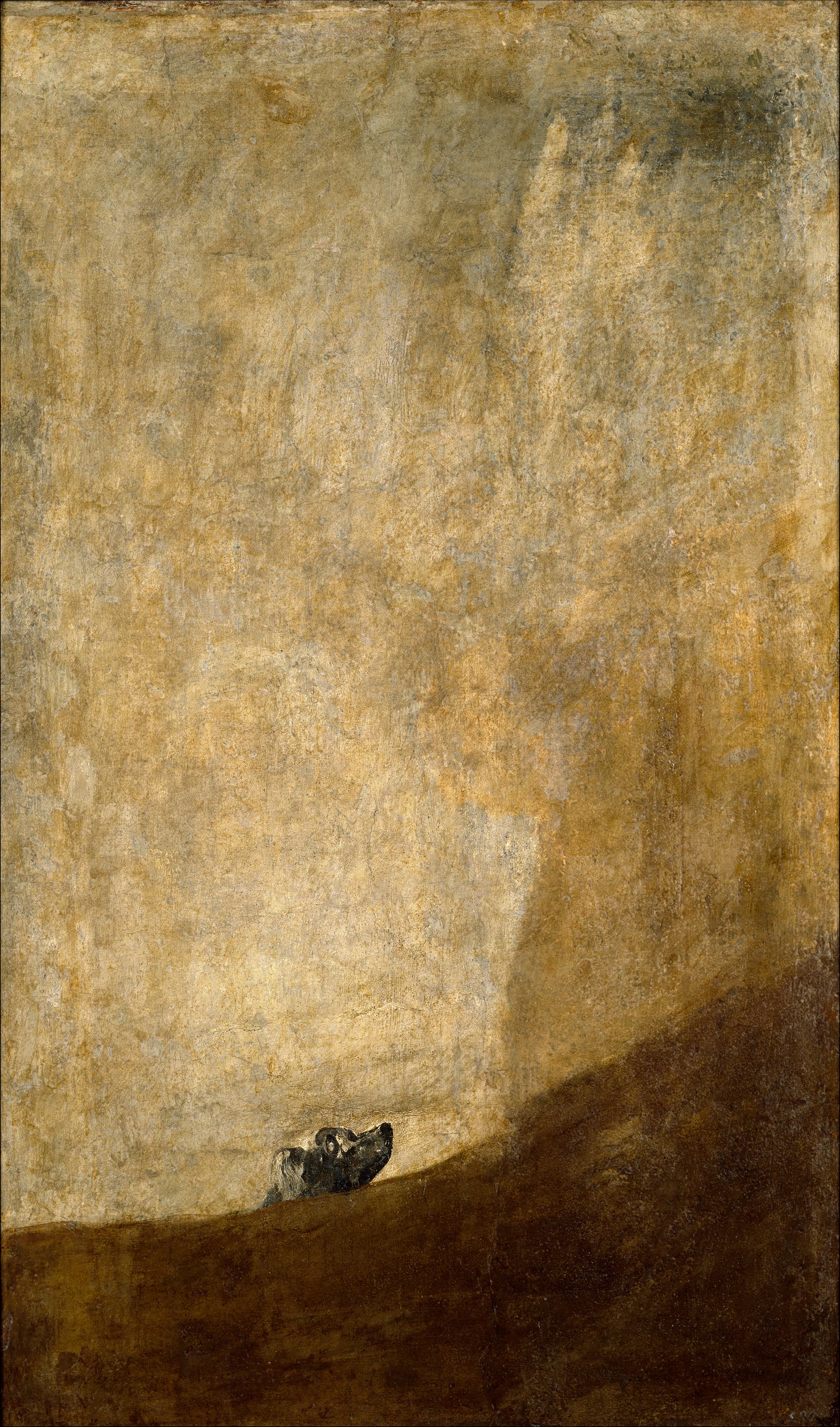
The Dog
Francisco Goya · c. 1819–1823
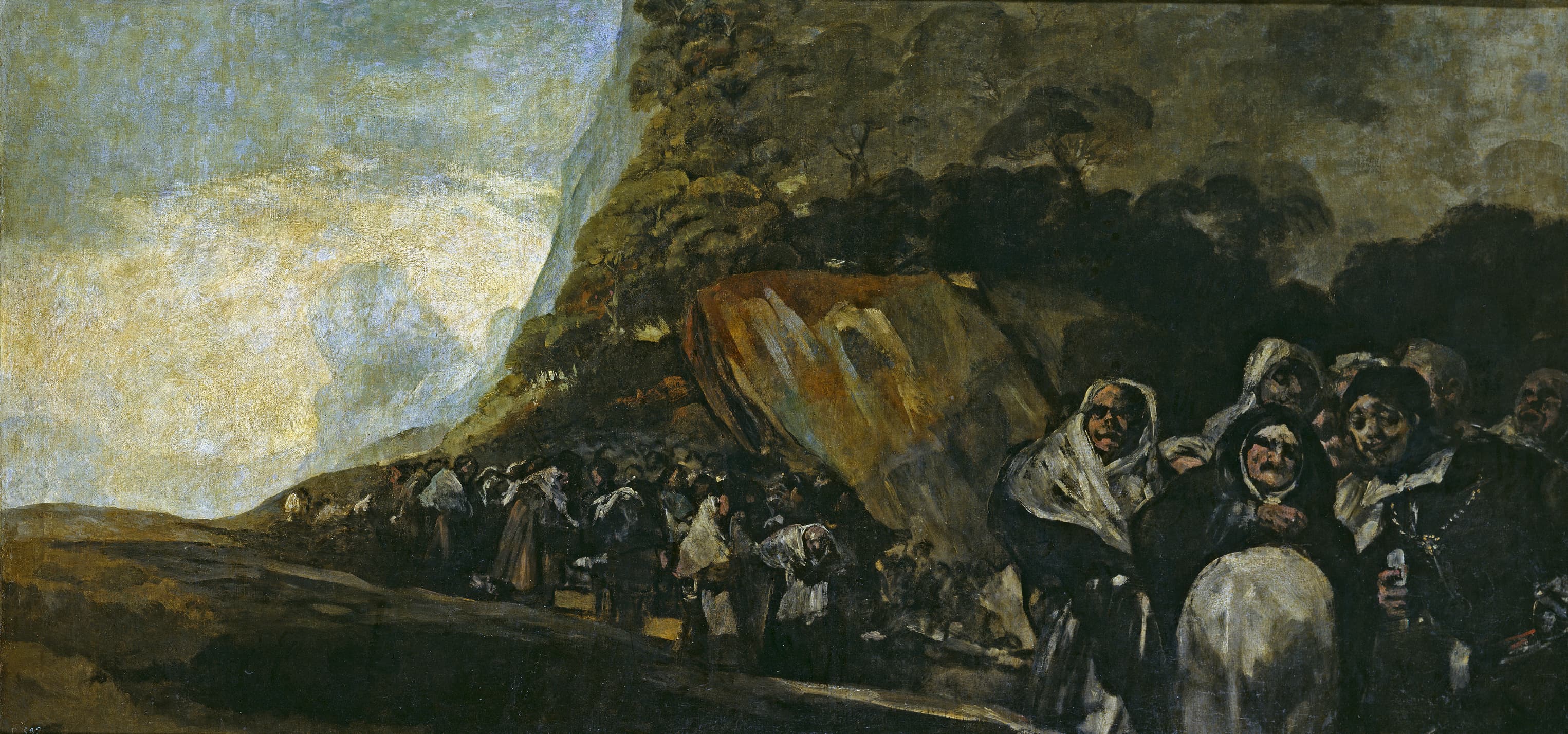
The Holy Office (Pilgrimage to the Fountain of San Isidro)
Francisco Goya · c. 1819–1823
Also painted in 1820
The same year
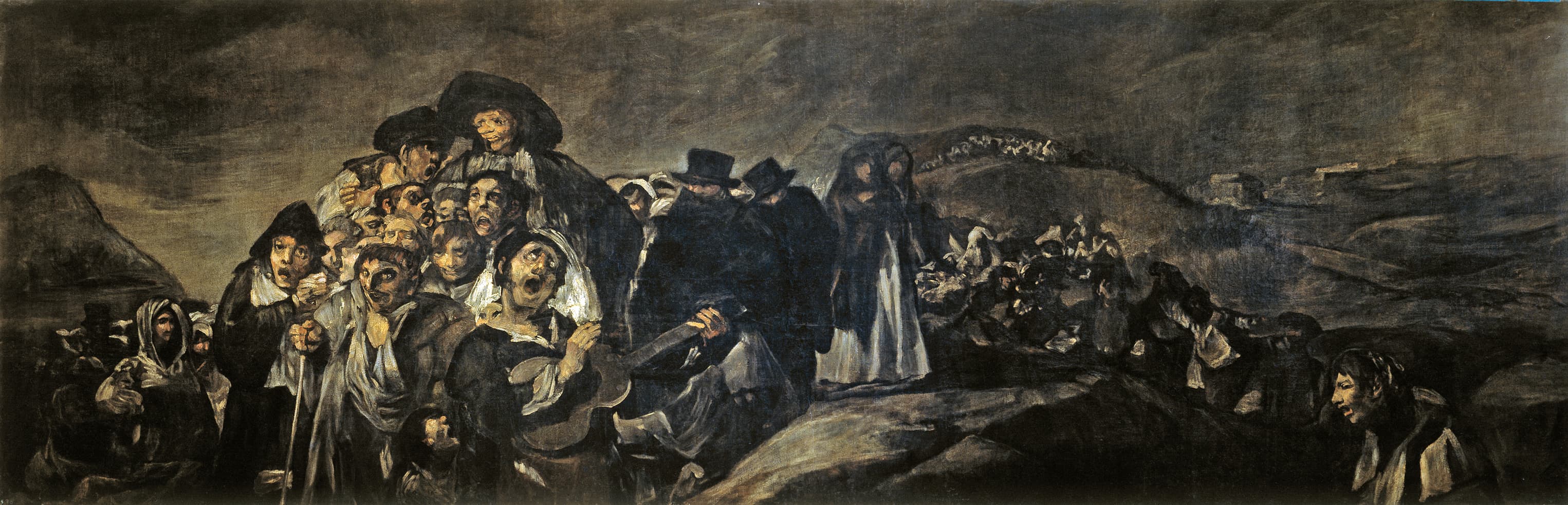
A Pilgrimage to San Isidro
Francisco Goya · c. 1819–1823
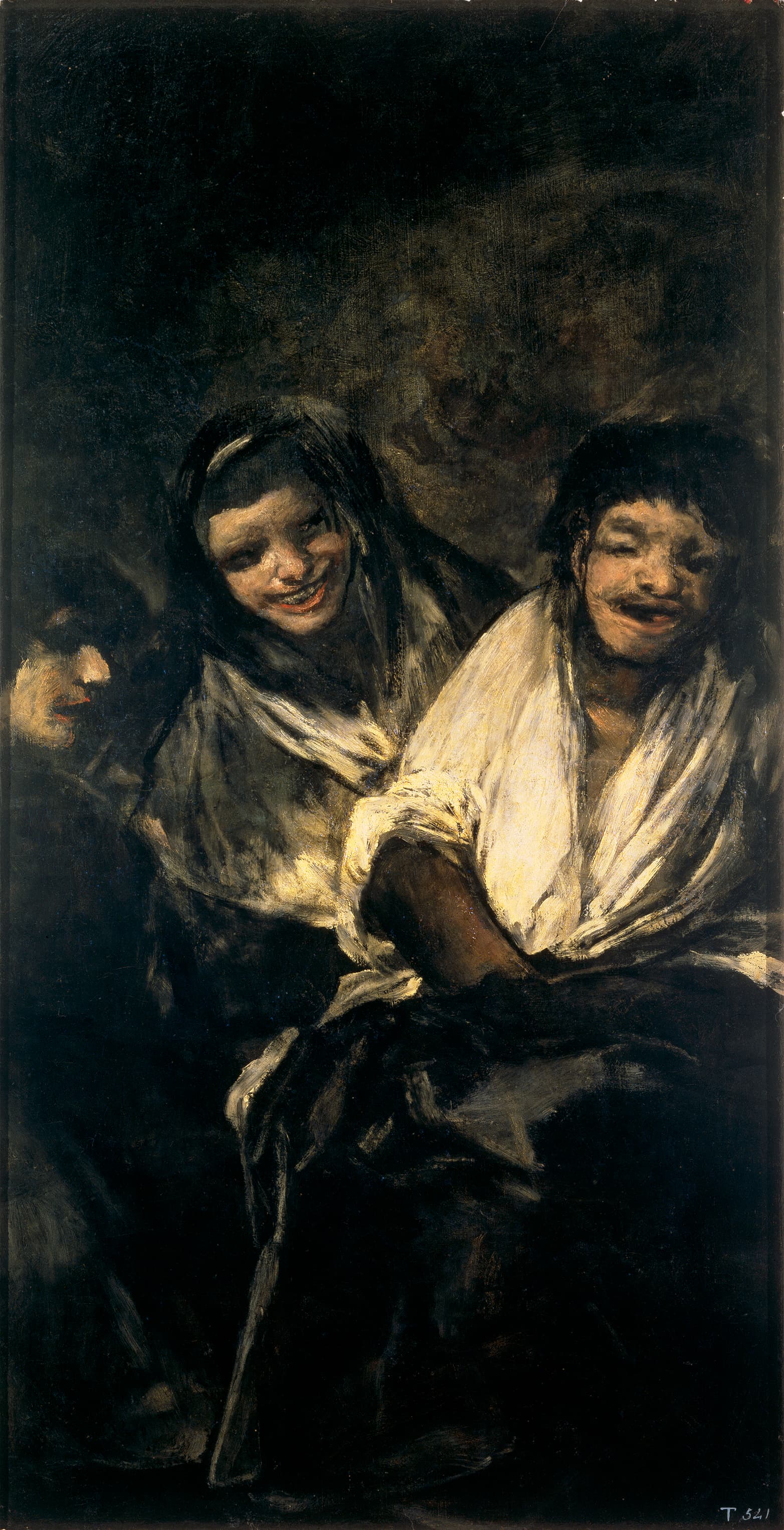
Women Laughing
Francisco Goya · c. 1819–1823
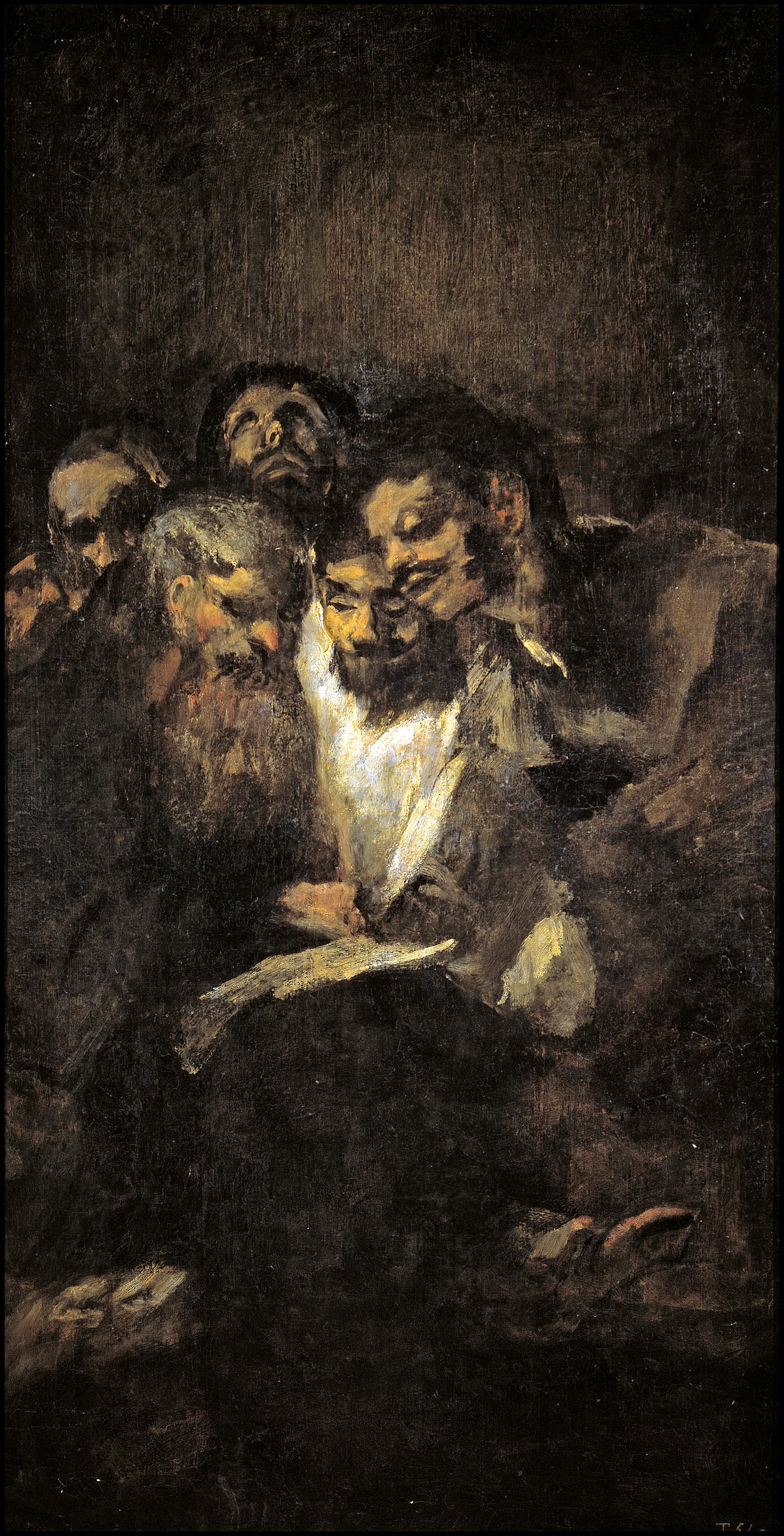
Men Reading
Francisco Goya · c. 1819–1823
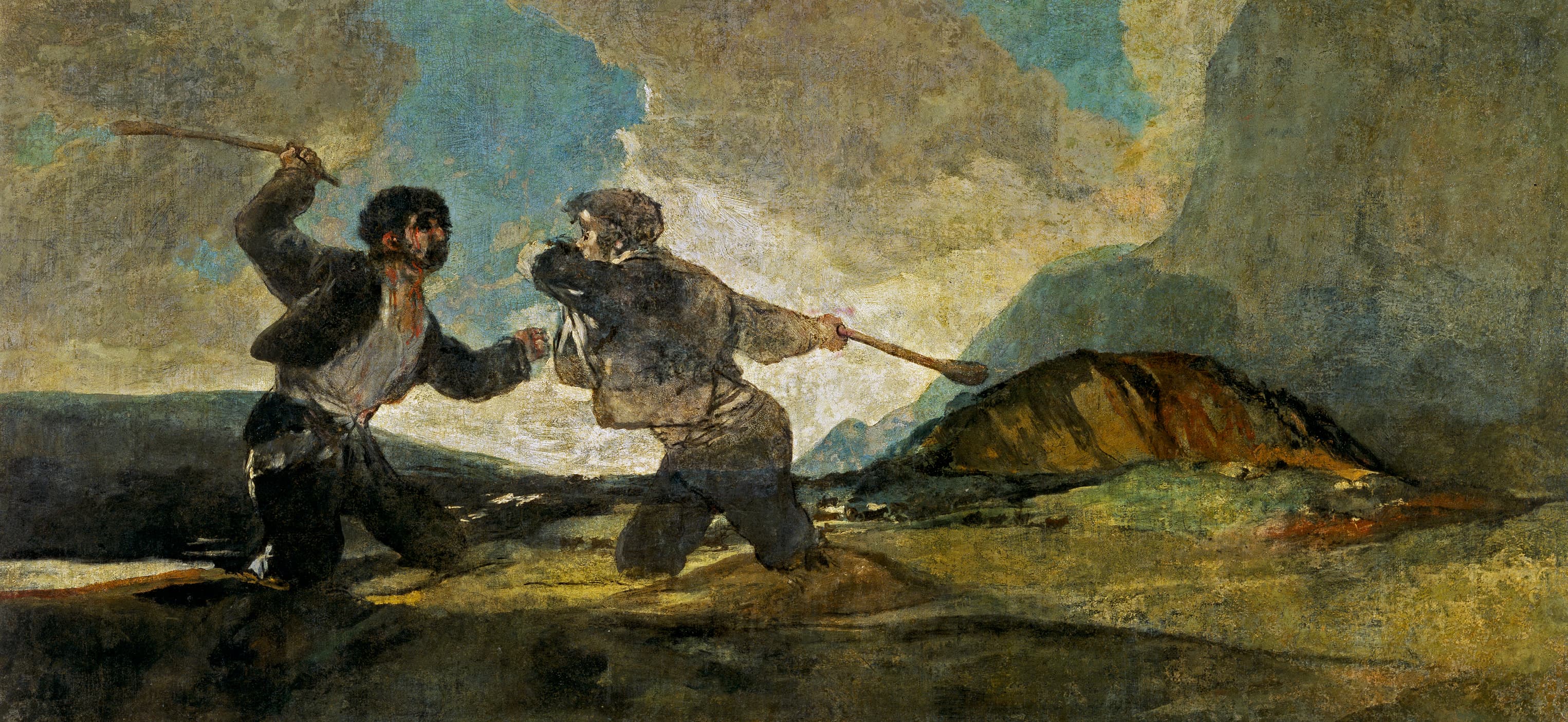
Fight with Cudgels
Francisco Goya · c. 1819–1823
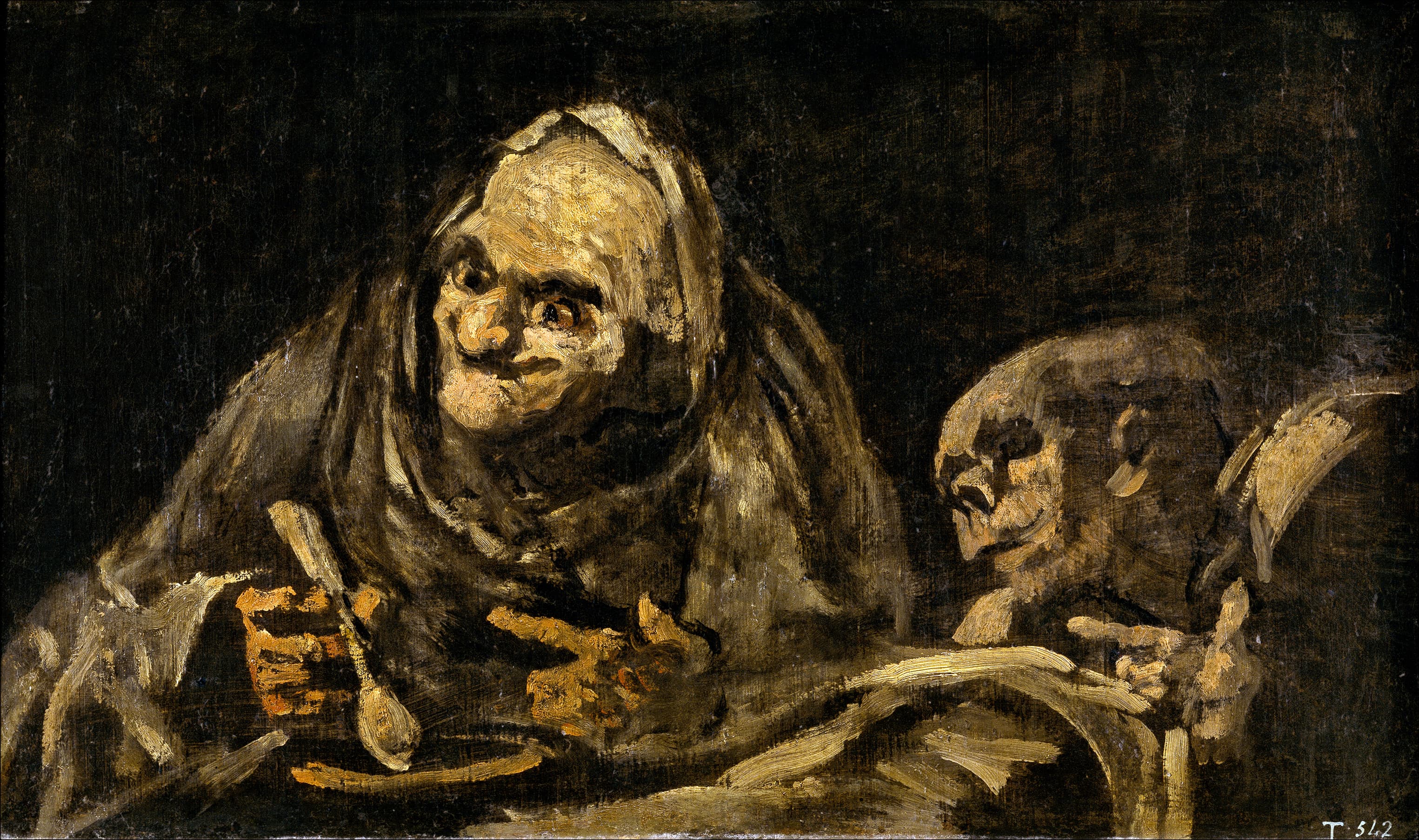
Two Old Men Eating Soup
Francisco Goya · c. 1819–1823
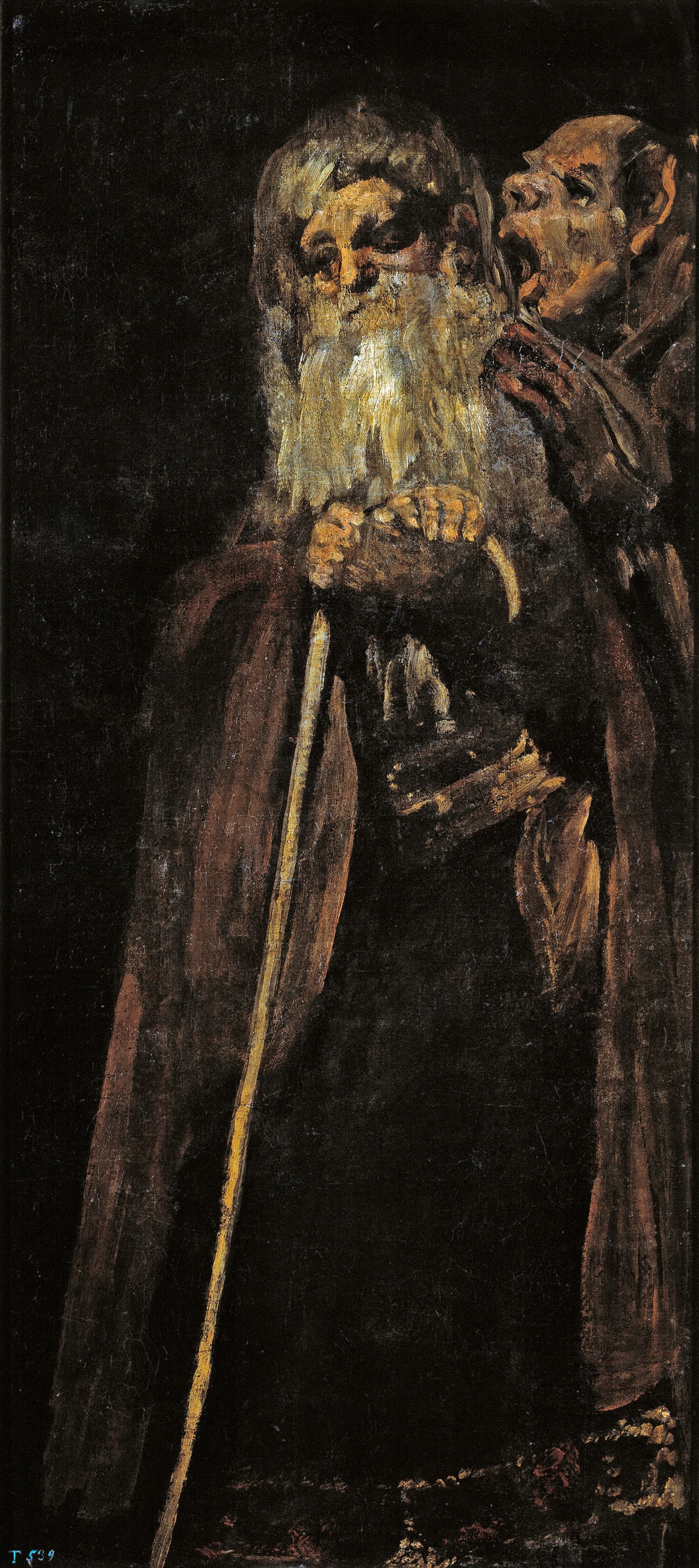
Two Old Men
Francisco Goya · c. 1819–1823
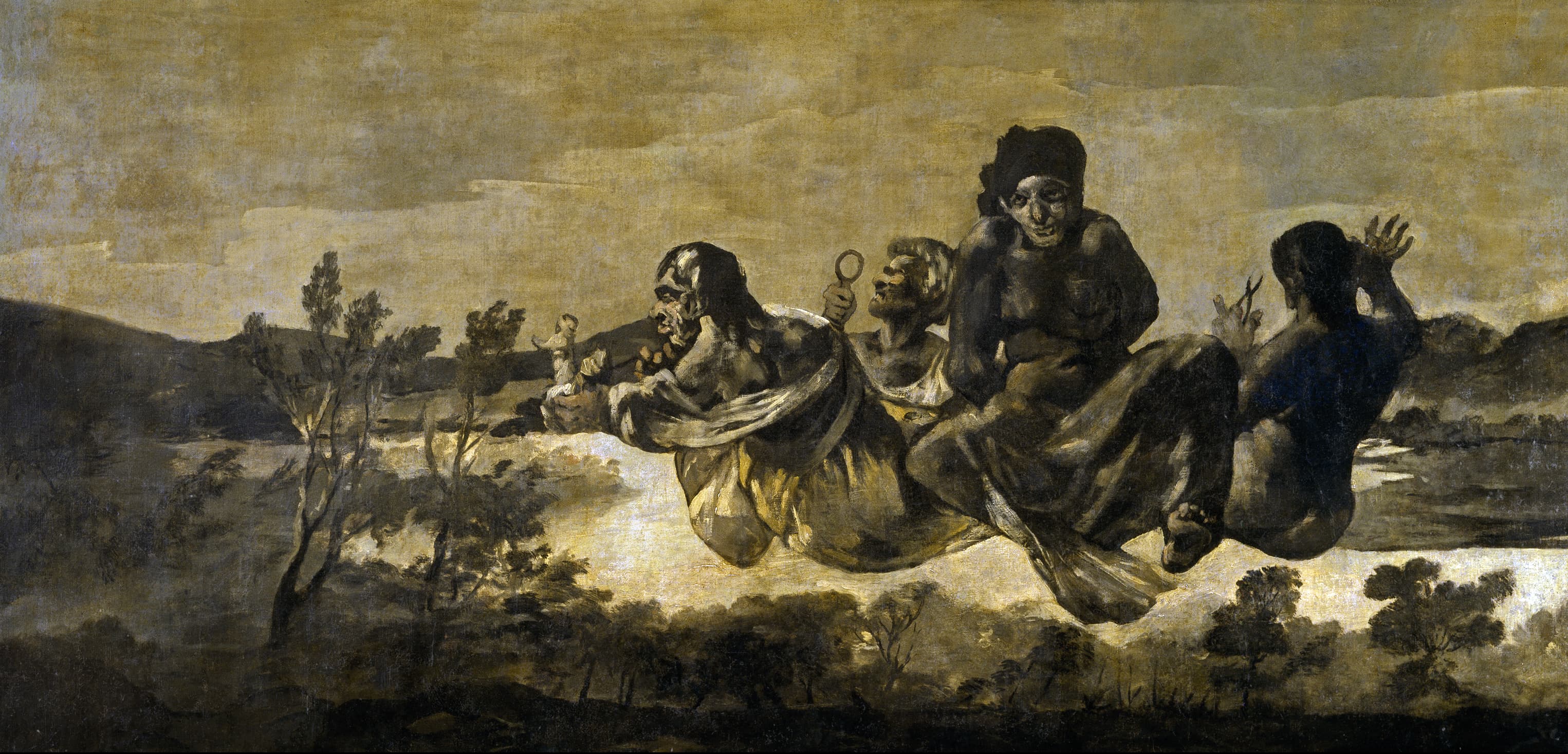
Atropos (The Fates)
Francisco Goya · c. 1819–1823
Kindred works
You may also study
A Pilgrimage to San Isidro
Francisco Goya · c. 1819–1823

Nymphs Dancing to Pan's Flute
Joseph Tomanek

The Scream
Edvard Munch · 1893
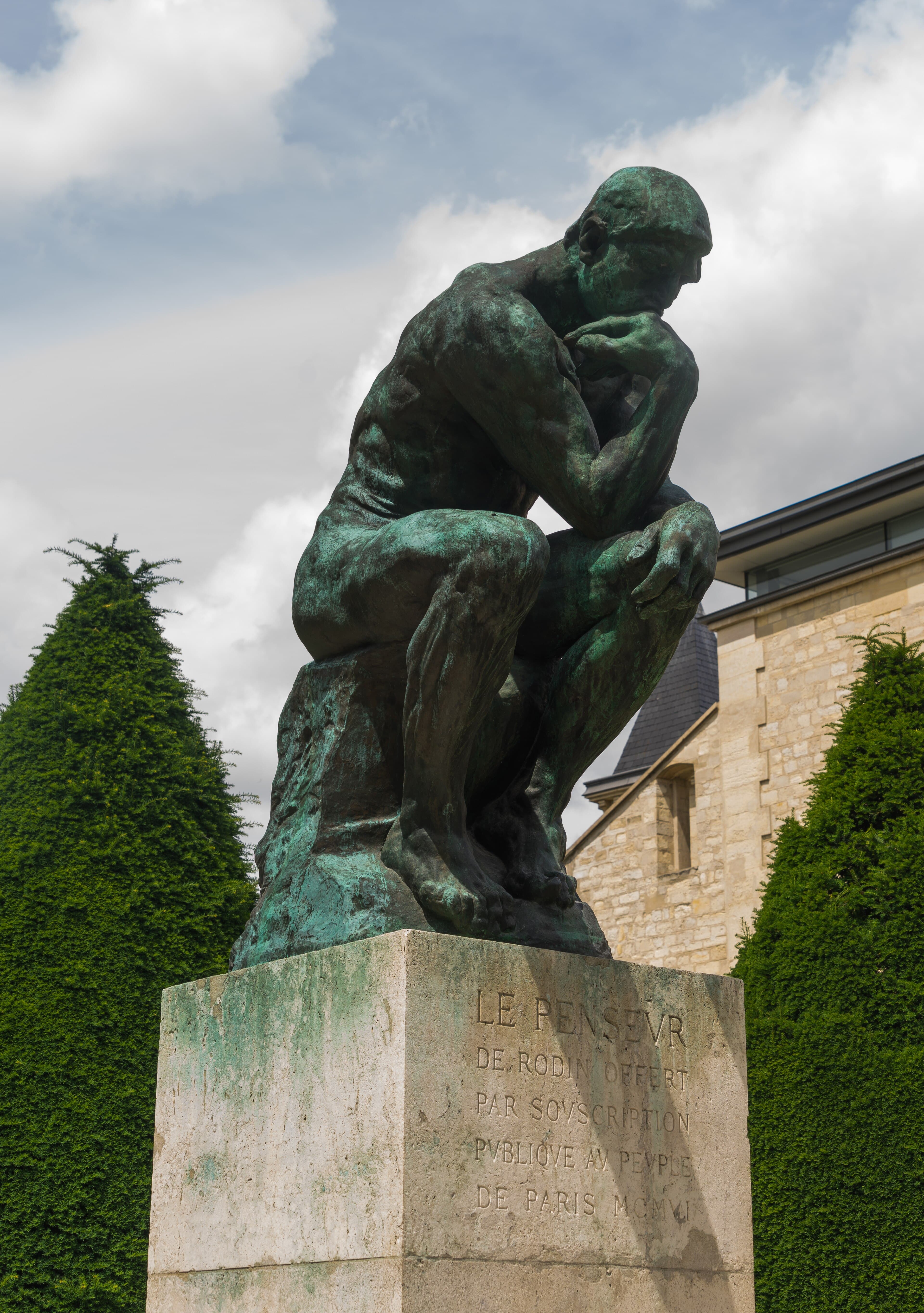
The Thinker
Auguste Rodin · Modeled 1880–82; enlarged 1902–03; this cast 1904
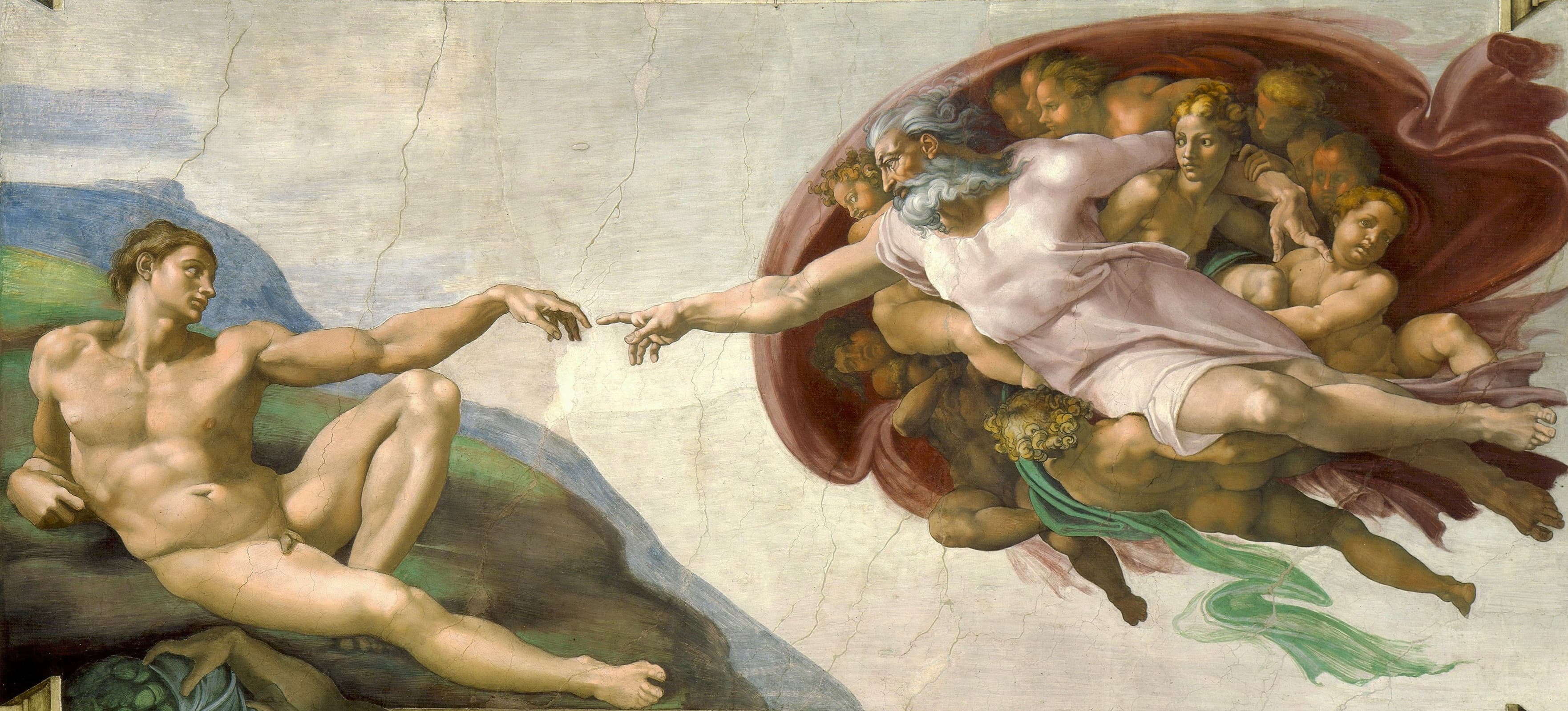
The Creation of Adam
Michelangelo · c. 1511–12

Ophelia
John Everett Millais · 1851–52
Lucifer
Franz von Stuck · 1890
Head of a Skeleton with a Burning Cigarette
Vincent van Gogh · 1886