The Malebranche Demons
Gustave Doré, 1861
The Malebranche Demons is Gustave Doré's 1861 wood engraving for Inferno, Canto XXI: a swarm of winged devils with forks and hooks charges Virgil on a rocky bridge above the lake of boiling pitch, while Dante shelters behind him.
- Artist
- Gustave Doré
- Date
- 1861
- Medium
- Wood engraving
- Movement
- Romanticism
- Themes
- Angels & Demons, Literature & Poetry, The Macabre, Dark Academia
Appears in
The Malebranche Demons is Gustave Doré's wood engraving of the devils of the fifth ditch of Malebolge rushing at Virgil, from Canto XXI of Dante's Inferno, published in Paris in 1861. A swarm of winged demons armed with forks and hooks bursts out at the poets on a rocky bridgehead, and Virgil stands his ground. Of all Doré's Inferno illustrations, it is the one that best shows his demons as a crowd.
What you are looking at
The plate is wide. On the right, Virgil stands on the crown of a rock in a heavy mantle that falls almost to his feet, his face calm and turned toward the attack. Dante is pressed so close behind him that only his face, his laurel and a strip of his gown show.
From the left comes the swarm. A tangle of naked, pale bodies flies at Virgil almost horizontally, wings spread like a fan of ribbed sails. One demon raises a long fork over his head in both hands; another, with pointed ears, shoves forward above him; a third, below, aims a trident at Virgil's chest. A darker devil swoops overhead with ragged wings, more lurk in shadow at the far left, and on the right, behind the poets, others crouch with their forks raised.
Below the crag, at the lower left, a flat grey surface stretches to a low horizon with a couple of dark lumps on it: the lake of boiling pitch. Doré leaves it calm and almost empty, so that the violence stays in the air. The block is signed "G. Doré" at lower left and "Dupeyron" a little to the right.
The passage: Canto XXI
In the fifth ditch, or bolgia, of the eighth circle, the barrators, people who sold public office and justice for money, are sunk in boiling pitch, and demons with grappling hooks keep them under. Dante's name for these devils is the Malebranche, roughly "evil claws". Virgil hides Dante behind a jag of rock and goes ahead alone. The demons come out:
With the same fury, and the same uproar, As dogs leap out upon a mendicant ... They issued from beneath the little bridge, And turned against him all their grappling-irons; But he cried out: "Be none of you malignant!" (XXI.67–72, Longfellow's translation)
Their leader, Malacoda, lets the poets pass, and Dante comes out of hiding. When the devils crowd forward again, he writes: "Close did I press myself with all my person / Beside my Leader" (XXI.97–98). Doré's plate fuses the two moments: the charge of the demons and Dante tucked against Virgil's back.
How Doré staged it
Dante's first devil is black and quick, "With open wings and light upon his feet" (XXI.33), and the cantos that follow turn into rough comedy: they bicker, play tricks, and end with a famous rude signal from their captain. Doré takes a different route. His demons are muscular, almost classical nudes with bat wings and tails, more like fallen athletes than gargoyles, and their charge has the energy of a battle painting.
He also invents the weapons. Dante gives the devils hooks and grapnels for dragging sinners out of the pitch; Doré mixes these with tridents and long forks, the standard tools of nineteenth-century devils. The contrast he cares about is between the whirl of pale bodies at left and the one vertical, unmoving figure at right. Virgil does not lift a hand.
How it was made and published
Doré drew the composition on the woodblock and the engraver who signed "Dupeyron" cut it. Notice how the sky is a fine horizontal tint, the demons' bodies are cut almost to white with only a few contour lines, and the wing membranes are hatched in fine parallel strokes between bright ribs. The plate was first published in 1861 in Hachette's folio L'Enfer de Dante Alighieri, which Doré financed himself. The scan shown here comes from the Berlin edition of 1870, digitized by the National Library of Poland.
Doré gave this episode several plates: a sinner hauled from the pitch on a hundred hooks, the demons Calcabrina and Alichino brawling above the pitch in Canto XXII, and the poets' escape in Canto XXIII, which leads directly to Caiaphas Crucified.
What it means
The episode had a personal edge for Dante. In 1302 Florence condemned him in absentia on charges that included barratry, the very sin punished here, and he never returned to the city. Writing the barrators into a farce of sticky pitch and squabbling devils was partly an answer to that charge.
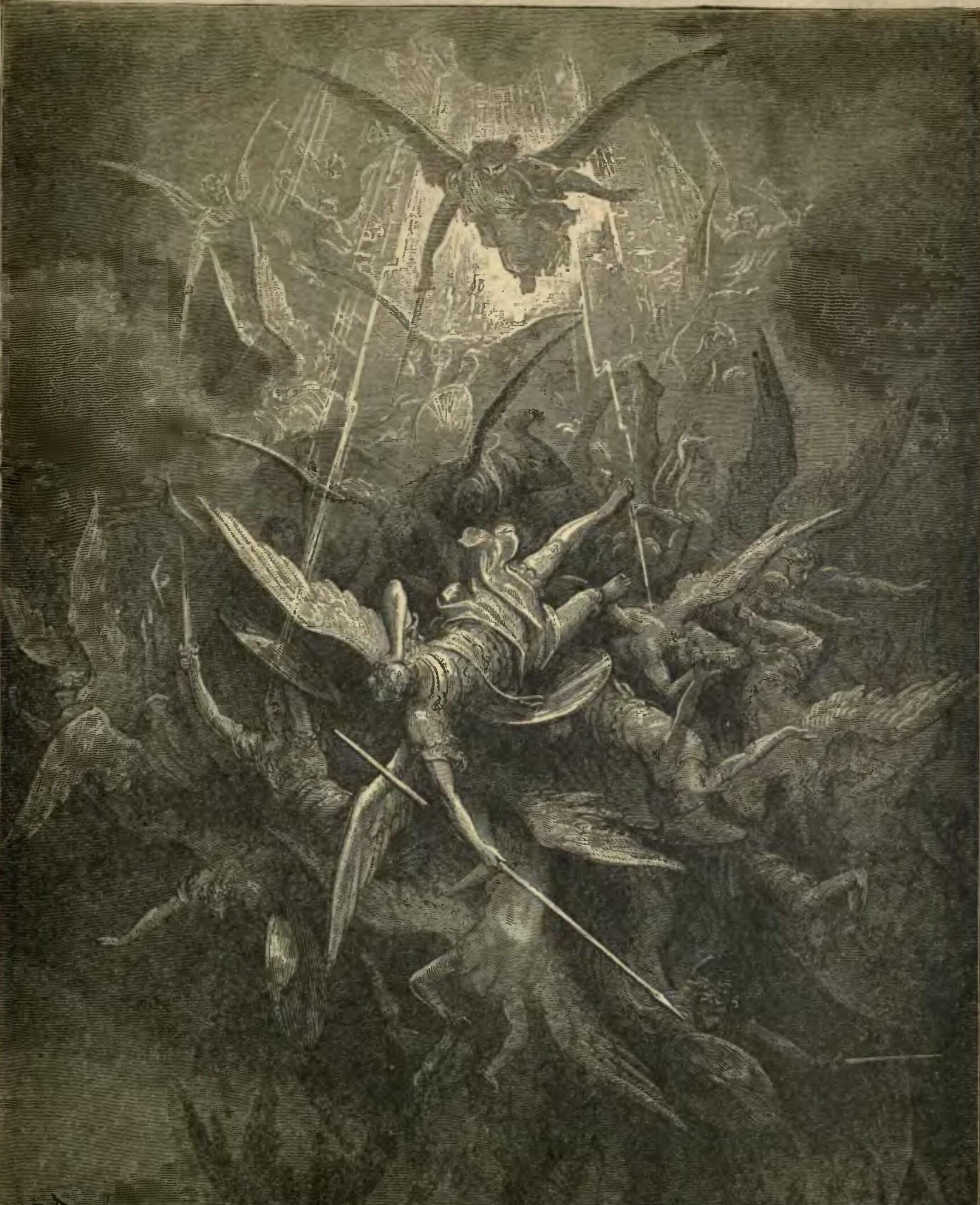
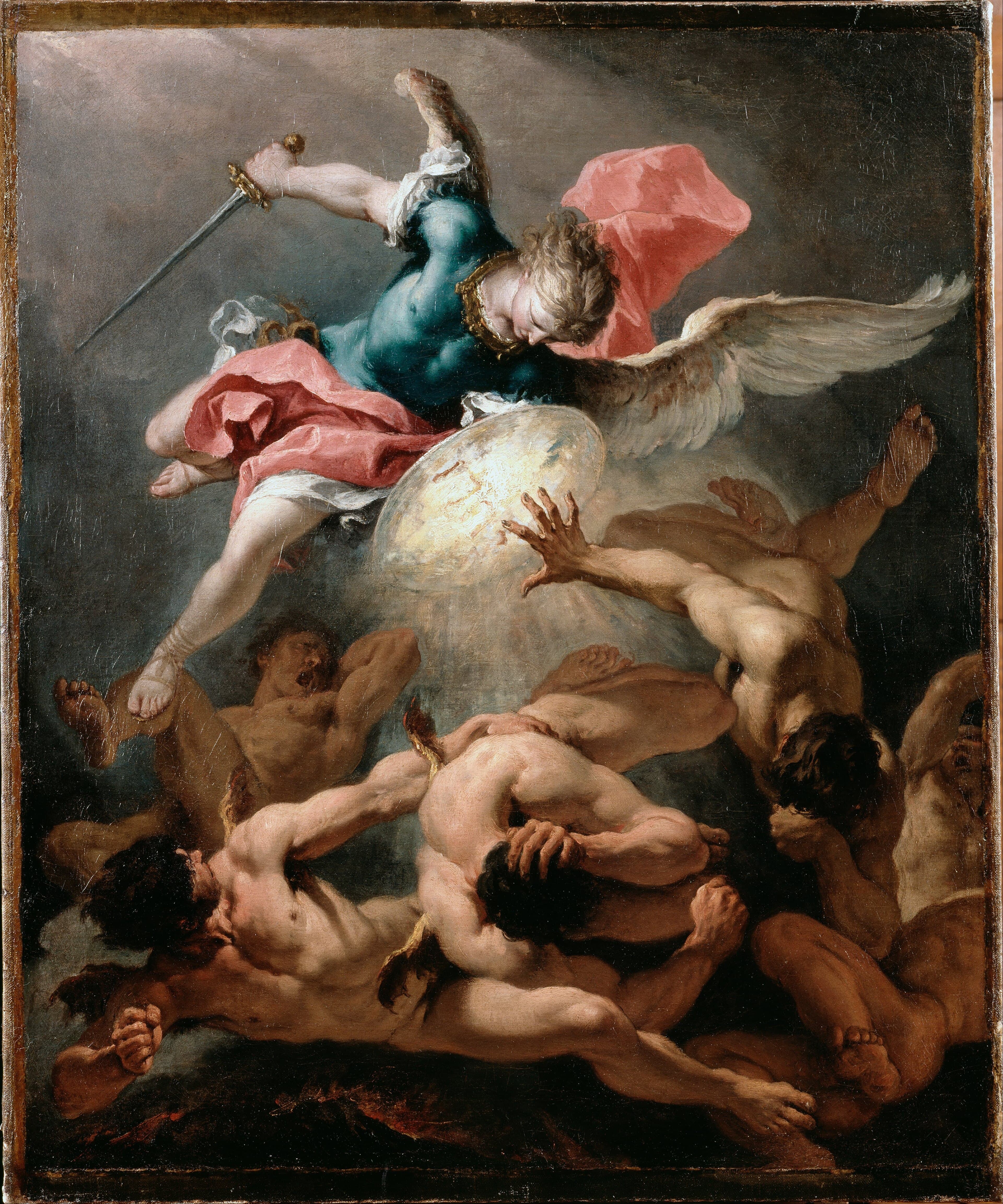
Doré's reading is less personal and more theatrical: reason, in the person of Virgil, facing down a mob of the damned. His Malebranche belong with the winged rebels of Satan Cast Out of Heaven and with older visions such as Sebastiano Ricci's The Fall of the Rebel Angels. Their road begins on Geryon's back. The tradition that Gustave Doré drew on is gathered in angels and demons in art.
Questions & answers
What does Doré's Malebranche plate show?
It shows the demons of the fifth bolgia rushing at Virgil in Inferno Canto XXI, with Dante pressed behind him. It illustrates the lines "They issued from beneath the little bridge, / And turned against him all their grappling-irons; / But he cried out: 'Be none of you malignant!'" (XXI.70–72, Longfellow).
Who are the Malebranche in Dante's Inferno?
They are the devils who guard the barrators, corrupt officials sunk in boiling pitch in the fifth ditch of the eighth circle. The name means roughly "evil claws". Dante names a dozen of them, including their leader Malacoda, Barbariccia, Alichino, Calcabrina and Farfarello, across Cantos XXI and XXII.
When was this Doré engraving published?
It first appeared in 1861 in L'Enfer de Dante Alighieri, the folio edition of the Inferno published in Paris by Hachette and financed by Doré himself. The plates were reprinted across Europe; the scan shown here is from the Berlin edition of 1870.
Who engraved the Malebranche plate?
It is signed "Dupeyron" at the bottom, beside Doré's own signature. Doré drew the design on the woodblock, and the engraver cut away the wood around his lines, leaving the demons' bodies almost white and building the grey sky from fine horizontal strokes.
Why is Dante's canto of the demons comic?
Cantos XXI and XXII are deliberately low and grotesque, full of jokes, tricks and crude gestures, matching the grubby sin of barratry. Dante himself had been condemned for barratry by Florence in 1302. Doré, by contrast, plays the scene straight, as a dramatic standoff between Virgil and the mob.
More by Gustave Doré
All works →
Lucifer, King of Hell
Gustave Doré · 1861
Dante Lost in the Dark Wood
Gustave Doré · 1861
The Thieves and the Serpents
Gustave Doré · 1861
The Giants
Gustave Doré · 1861
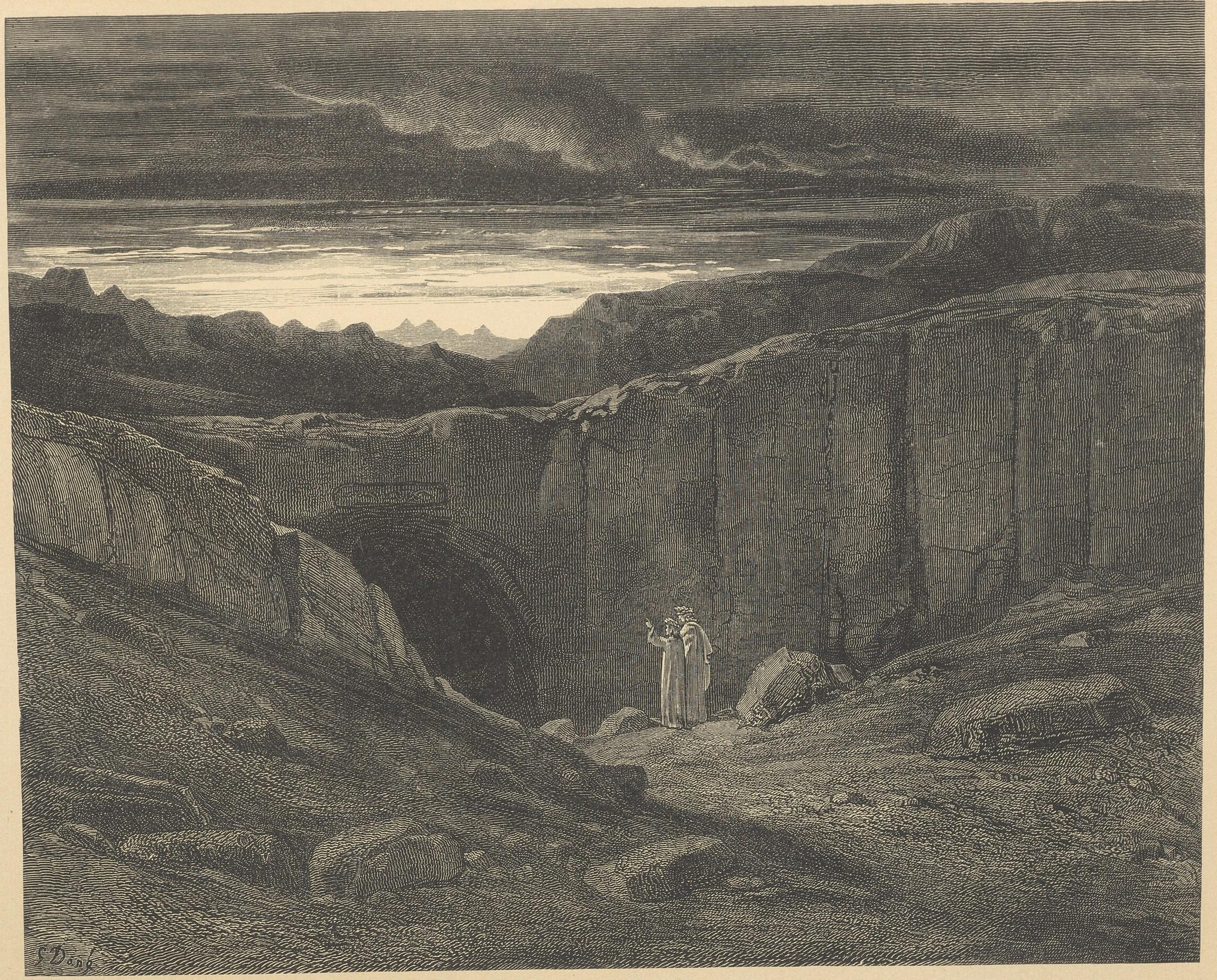
The Gate of Hell (Abandon All Hope)
Gustave Doré · 1861
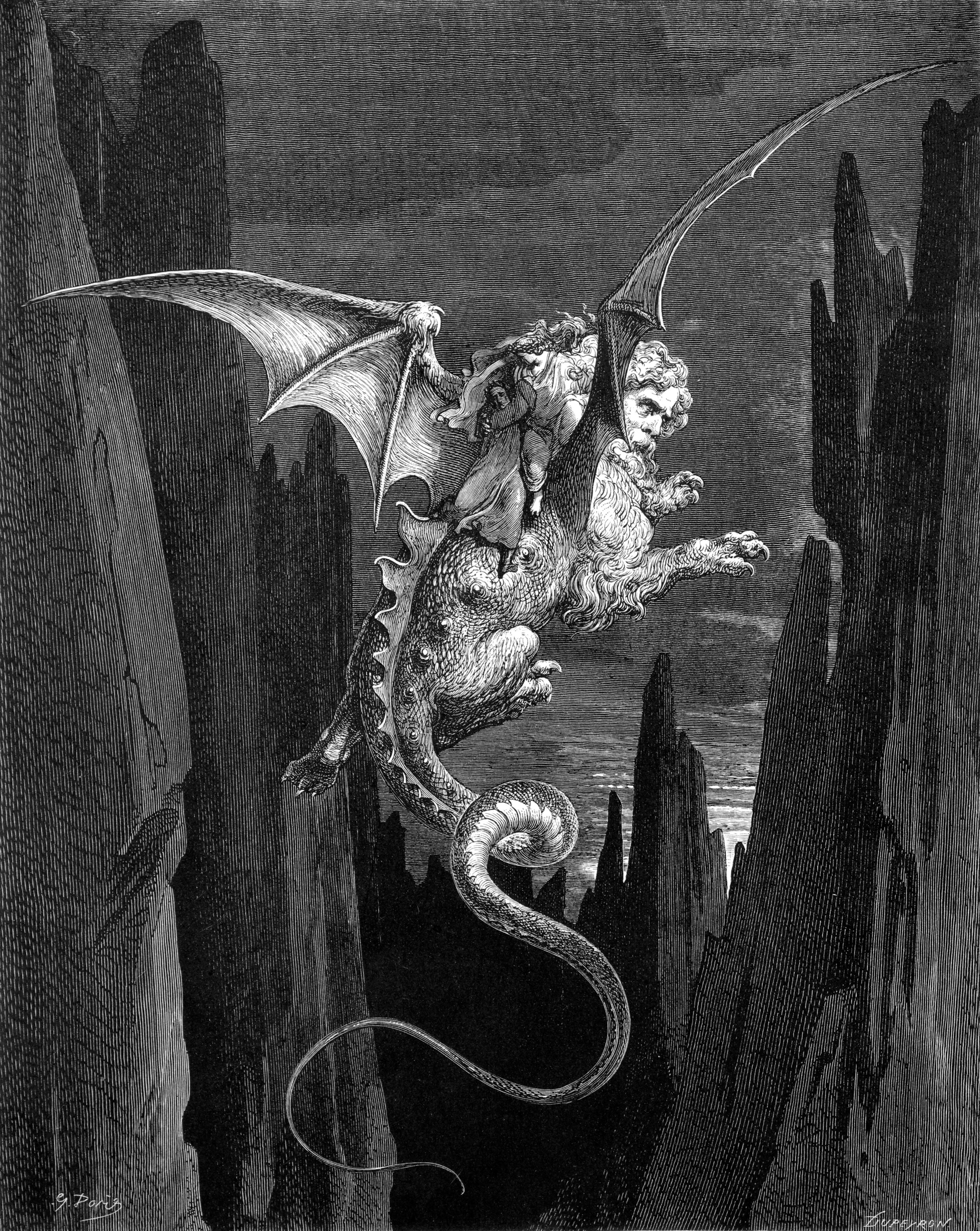
Geryon
Gustave Doré · 1861
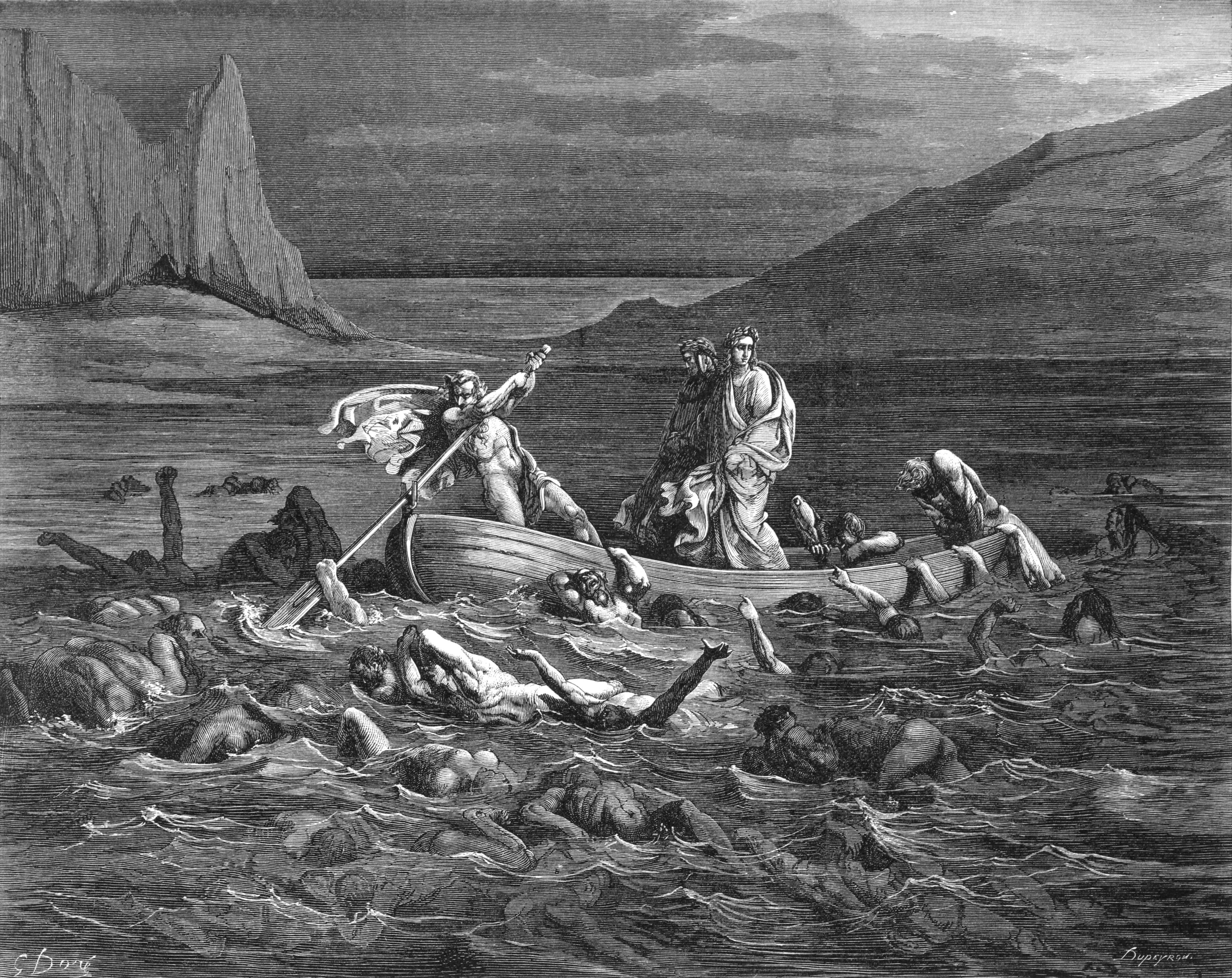
Crossing the Styx (Filippo Argenti)
Gustave Doré · 1861
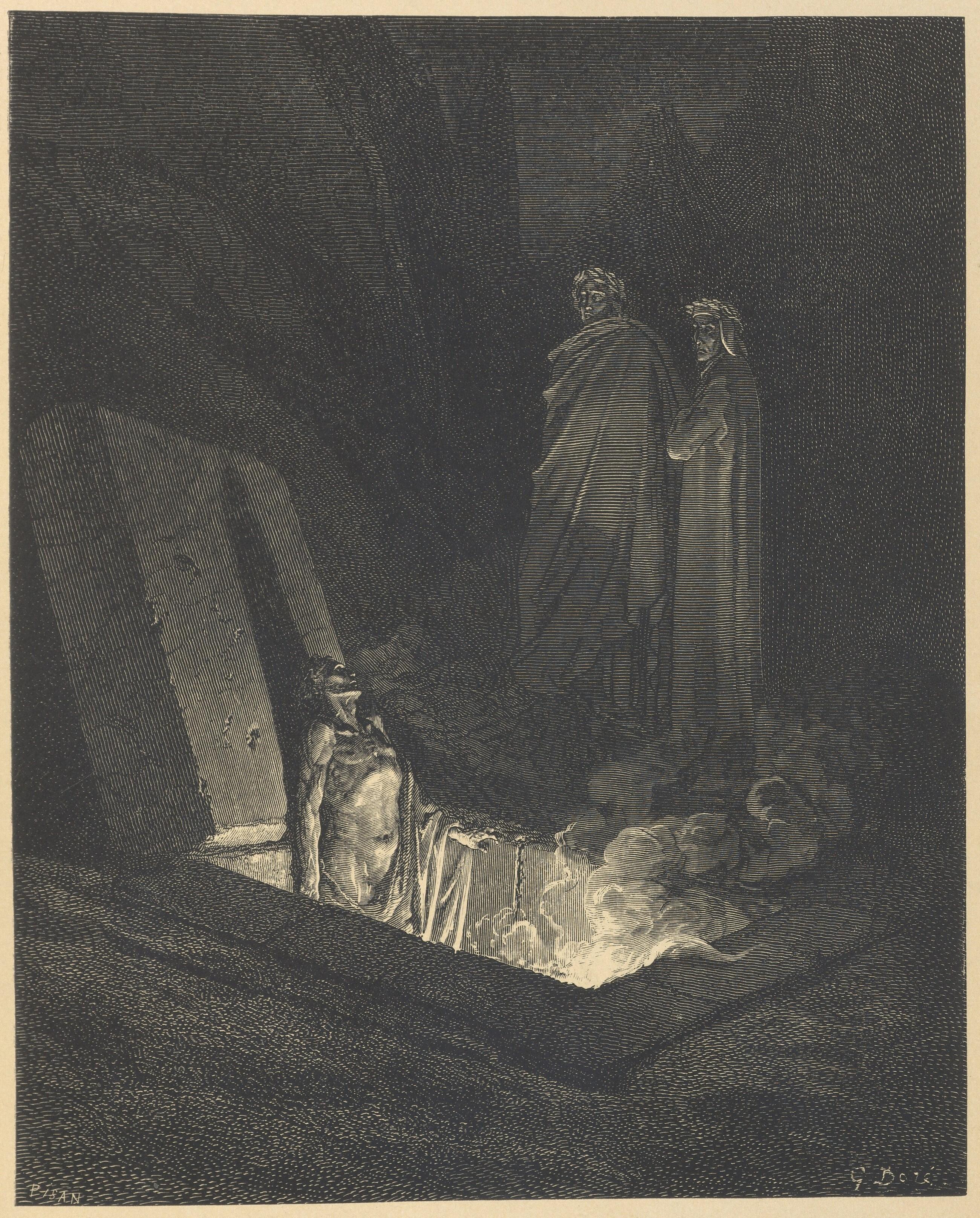
Farinata degli Uberti
Gustave Doré · 1861
Also from 1861
Dante and Virgil in the Ninth Circle of Hell
Gustave Doré · 1861
Bertran de Born Holding His Head
Gustave Doré · 1861
Ulysses and Diomedes
Gustave Doré · 1861
Caiaphas Crucified
Gustave Doré · 1861
Cerberus
Gustave Doré · 1861
Paolo and Francesca
Gustave Doré · 1861
The Whirlwind of the Lustful
Gustave Doré · 1861
Minos, Judge of the Damned
Gustave Doré · 1861
Related works
Caiaphas Crucified
Gustave Doré · 1861
Satan Cast Out of Heaven
Gustave Doré · 1866
The Fall of the Rebel Angels
Sebastiano Ricci · c. 1720
Satan, Sin and Death at the Gates of Hell
Gustave Doré · 1866
Cerberus
Gustave Doré · 1861
Satan’s Flight Through Chaos
Gustave Doré · 1866
The Furies at the Gates of Dis
Gustave Doré · 1861
Satan Approaching the Confines of the Earth
Gustave Doré · 1866