Charon, Ferryman of the Dead
Gustave Doré, 1861
Charon, Ferryman of the Dead is Gustave Doré's 1861 wood engraving for Dante's Inferno, Canto III. On the bank of the Acheron the old ferryman swings his oar over his head and drives the naked, terrified souls into his boat.
- Artist
- Gustave Doré
- Date
- 1861
- Medium
- Wood engraving
- Movement
- Romanticism
- Themes
- Literature & Poetry, Death & Memento Mori, Mythology, The Macabre, The Nude, Water & Sea
What you're looking at
A crowd of naked men and women pours down a dark slope to the edge of a river and crams itself into a long, low boat. At the center of the shore, a little left of middle, stands Charon: an old man with a long beard and streaming hair, naked except for a cloth at his hips. He holds his oar in both hands and swings it back over his head like a club, ready to bring it down on whoever is slowest.
The souls react with their whole bodies. Some shield their heads with their arms; one bends double as if already struck; others clamber over the gunwale or reach back for a companion. At the far end of the boat a woman with long hair sits upright and still, while a man near her leans out to trail a hand in the water. In the foreground, on a pale tongue of rock, more figures lie face down or crawl, one woman with her hair spread over her back, another clutching her head. They have not yet been driven aboard.
Behind Charon, high on the slope, a second column of pale figures is already winding down toward the shore. It is a small detail, but it carries the meaning of the plate: the boat will leave, and another crowd will be waiting.
The river itself is engraved in long, even horizontal cuts with a broken white shimmer along the ripples, and the mountains behind are cut almost to black. Light falls from the left onto the bodies and the shore, so the crowd reads as a frieze of pale flesh against the dark.
The passage it illustrates
The plate illustrates Inferno III, lines 109–117, when the souls of the damned reach the bank of the Acheron and board the ferry. In Longfellow's translation:
Charon the demon, with the eyes of glede, Beckoning to them, collects them all together, Beats with his oar whoever lags behind.
As in the autumn-time the leaves fall off, First one and then another, till the branch Unto the earth surrenders all its spoils;
In similar wise the evil seed of Adam Throw themselves from that margin one by one,
A “glede” is a glowing coal. Dante has already described Charon as “an old man, hoary with the hair of eld,” who “round about his eyes had wheels of flame,” and who shouts at the souls, “Woe unto you, ye souls depraved!” The falling-leaves simile comes from Virgil's Aeneid, Book VI, where the dead crowd the same shore.
How Doré staged it
Doré leaves Dante and Virgil out of this plate entirely. The poets watch the scene in the poem; here we stand in their place on the shore. That makes the viewer the witness, close enough to be caught up in the crowd.
He also moves Charon. In the poem Charon comes to the shore in his boat; Doré plants him on land among the souls, so the oar can rise above the heads of the crowd and become the focal point of the composition. The raised oar runs on a diagonal from Charon's hands up toward the procession on the hill, linking the punishment in the foreground to the endless supply of the damned behind.
The bodies owe a debt to Michelangelo's Last Judgment in the Sistine Chapel, where Charon also beats the damned out of his boat with an oar. Doré reverses the action, from unloading to loading, but the muscular, twisting nudes and the stunned, covering gestures belong to the same tradition.
Doré drew Charon twice for this canto. The plate before this one, number 9, shows the ferryman alone in his boat, rowing across the water. This second plate, number 10, is the crowded one.
How it was made and published
Like every plate in the book, it began as a drawing Doré made directly on a boxwood block. A professional engraver then cut the lines, and signed his work at lower right: “J. Gauchard.” Doré's “G. Doré” is at lower left. Gauchard's cutting is unusually linear and crisp, with long continuous strokes in the water and short, curved hatching that models the muscles of the bodies.
The plate appeared in L'Enfer de Dante Alighieri, published by Hachette in Paris in 1861, which Doré financed himself after publishers balked at the cost. It was reprinted in many later editions, including Cary's English Vision of Hell (London, 1866) and Longfellow's translation.
Meaning
Charon comes from Greek myth, where he ferries the dead across the Acheron or the Styx for a coin. Dante makes him a demon in the service of divine justice, and Doré makes him a slave driver. The leaf simile, with its sense of a whole generation falling from the branch, is turned into a picture of numbers: too many bodies for the boat, and more on the hill.
The plate is often paired with Arnold Böcklin's Isle of the Dead, the other great nineteenth-century image of the final crossing, which is silent where Doré's is loud. Within the Inferno series it leads directly to Minos, judge of the damned, and its later counterpart on the Styx is Phlegyas ferrying the poets. For more of Gustave Doré's mythological guardians, see Cerberus, and for the wider theme, Death in Art.
Questions & answers
What does Doré's Charon engraving show?
It shows Charon, the old ferryman of Hell, standing on the bank of the Acheron and swinging his oar over his head as he drives a crowd of naked souls into his boat. It illustrates Inferno III, 109–111: “Charon the demon, with the eyes of glede, / Beckoning to them, collects them all together, / Beats with his oar whoever lags behind.”
When was Doré's Charon made?
It was published in 1861 in L'Enfer de Dante Alighieri, the folio Inferno issued by Hachette in Paris and paid for by Doré himself. It is the tenth plate in the sequence; the ninth shows Charon rowing alone across the water.
Who engraved Doré's Charon?
Doré drew the design on the woodblock and a professional engraver cut it. This block is signed “G. Doré” at lower left and “J. Gauchard” at lower right, so Gauchard was the engraver.
Who is Charon in Dante's Inferno?
Charon is the ferryman of the dead from Greek and Roman myth, borrowed by Dante from Virgil's Aeneid. In the Inferno he carries the damned across the river Acheron into Hell. Dante describes him as an old man with white hair and wheels of flame around his eyes.
What does the scene mean?
Dante compares the souls to autumn leaves dropping one by one from a branch, a simile taken from the Aeneid. Doré turns it into an image of sheer numbers: an overfull boat, a ferryman beating the stragglers, and another column of the dead already descending the hill behind.
More by Gustave Doré
All works →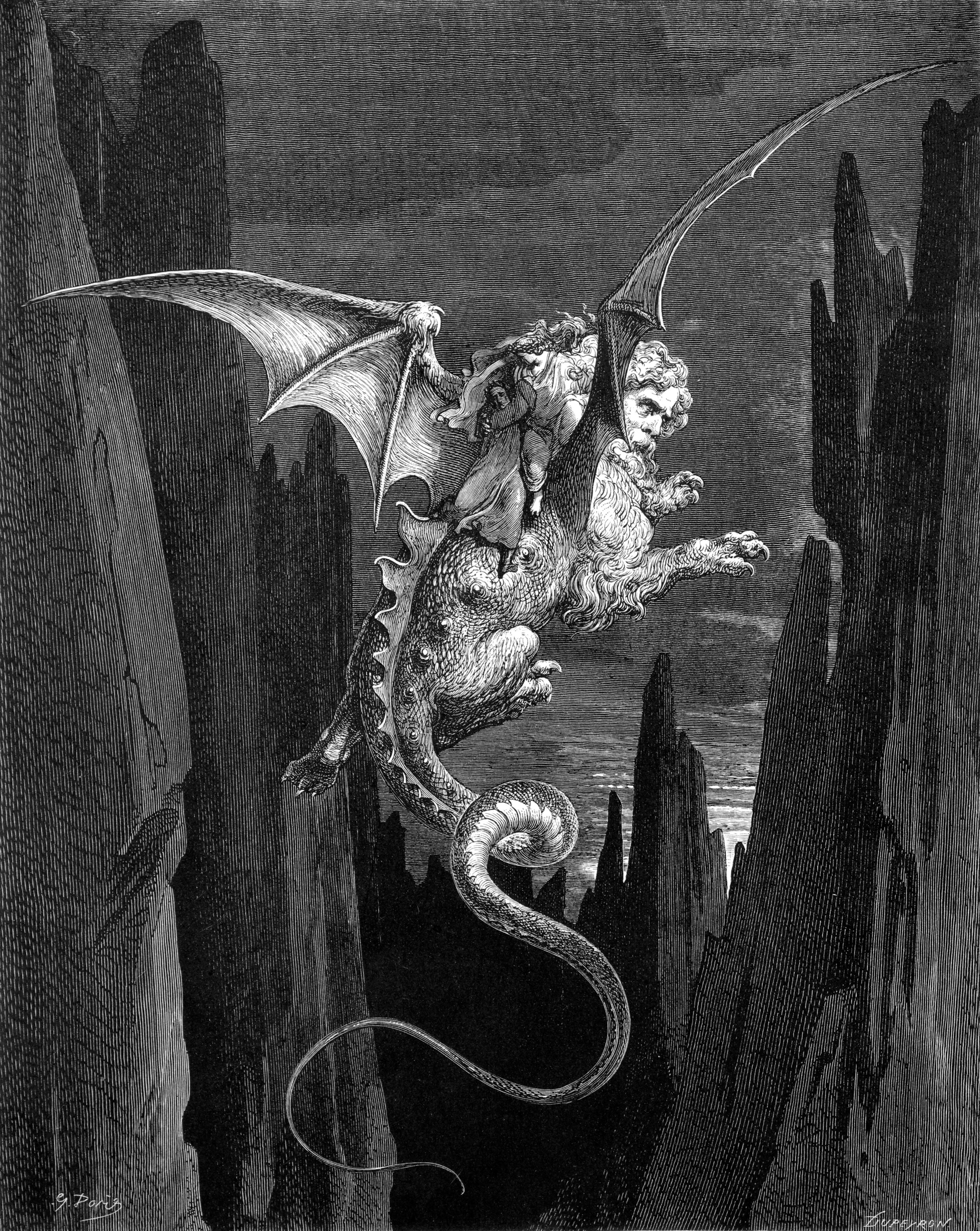
Geryon
Gustave Doré · 1861
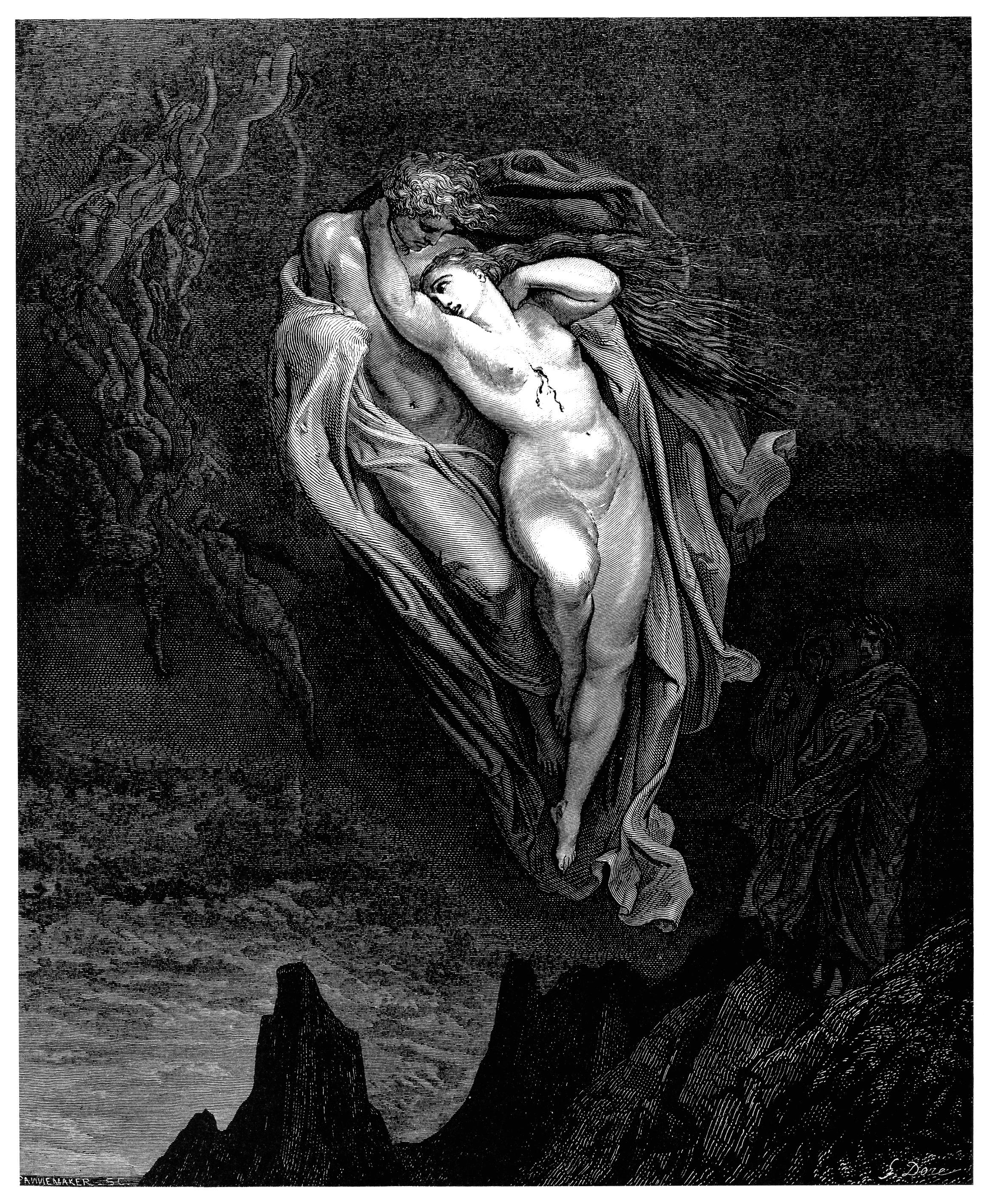
Paolo and Francesca
Gustave Doré · 1861
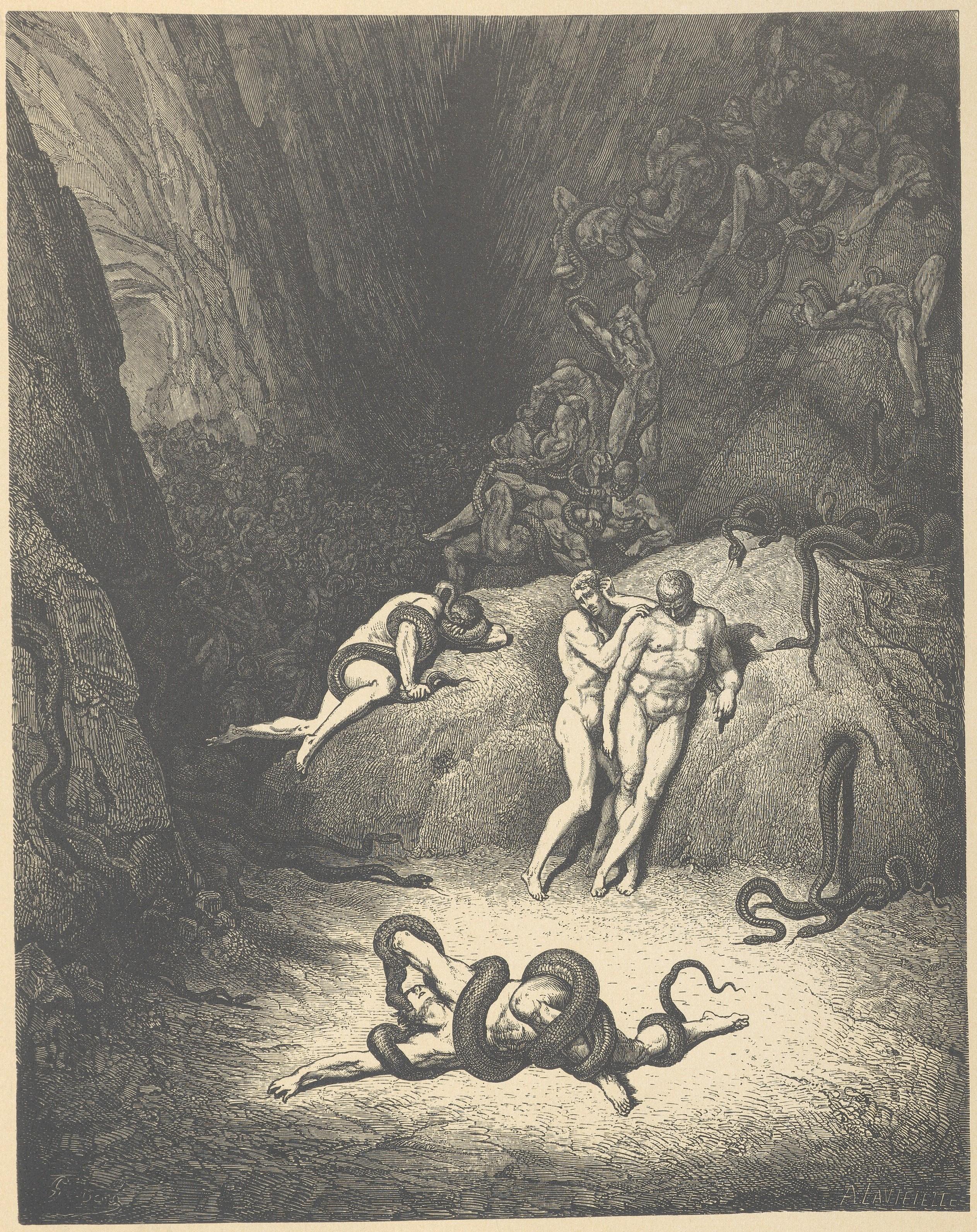
The Thieves and the Serpents
Gustave Doré · 1861
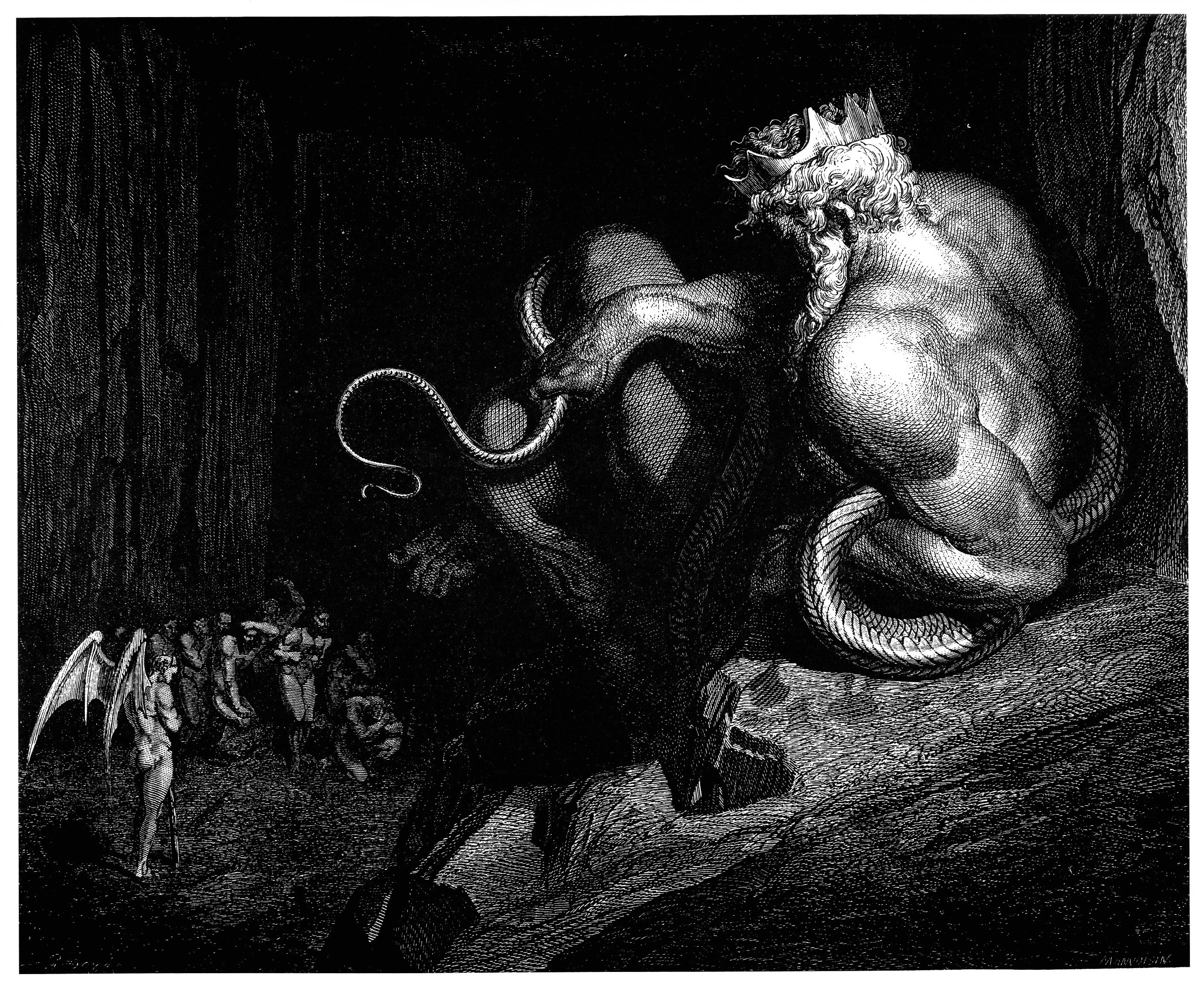
Minos, Judge of the Damned
Gustave Doré · 1861
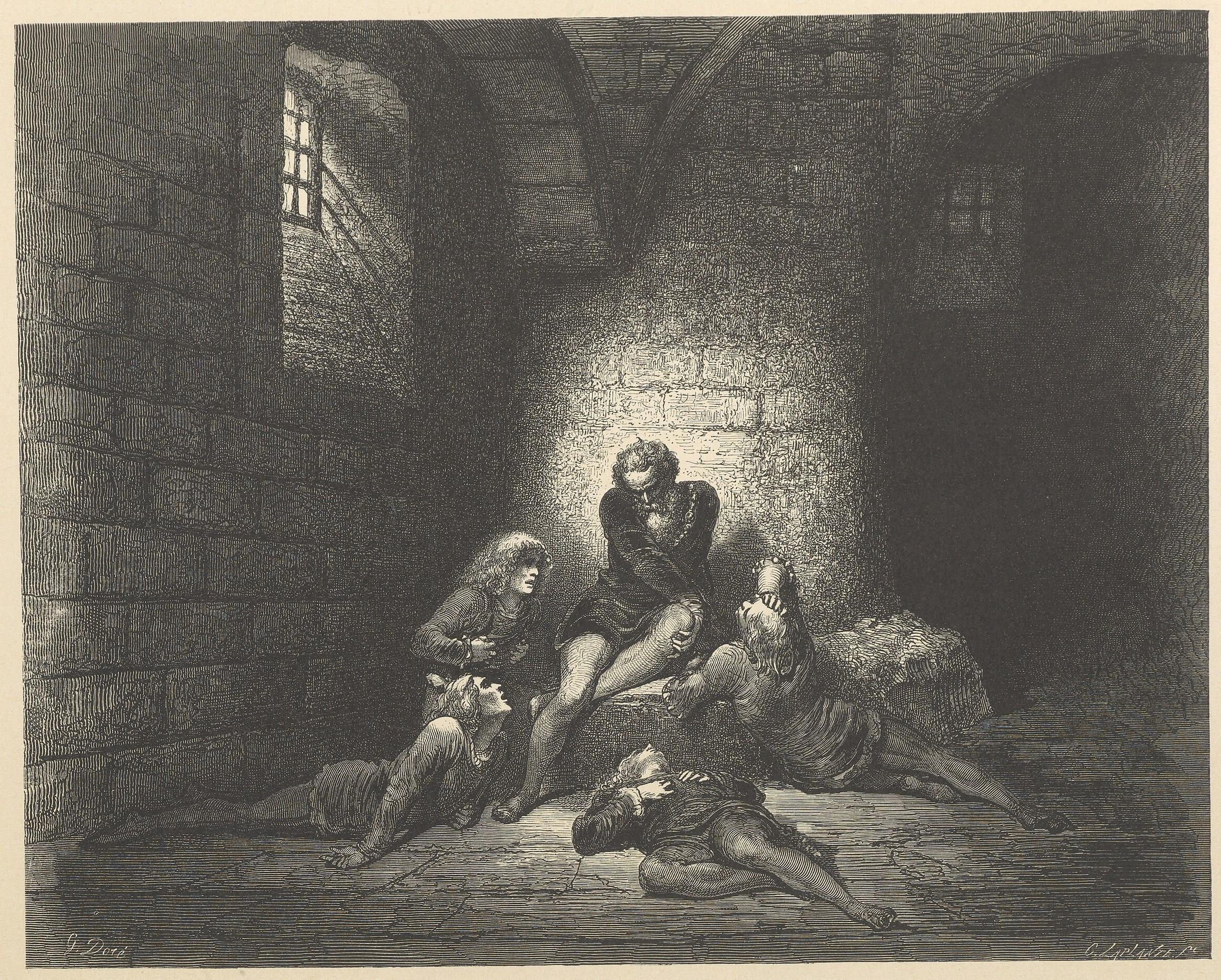
Count Ugolino and His Sons
Gustave Doré · 1861
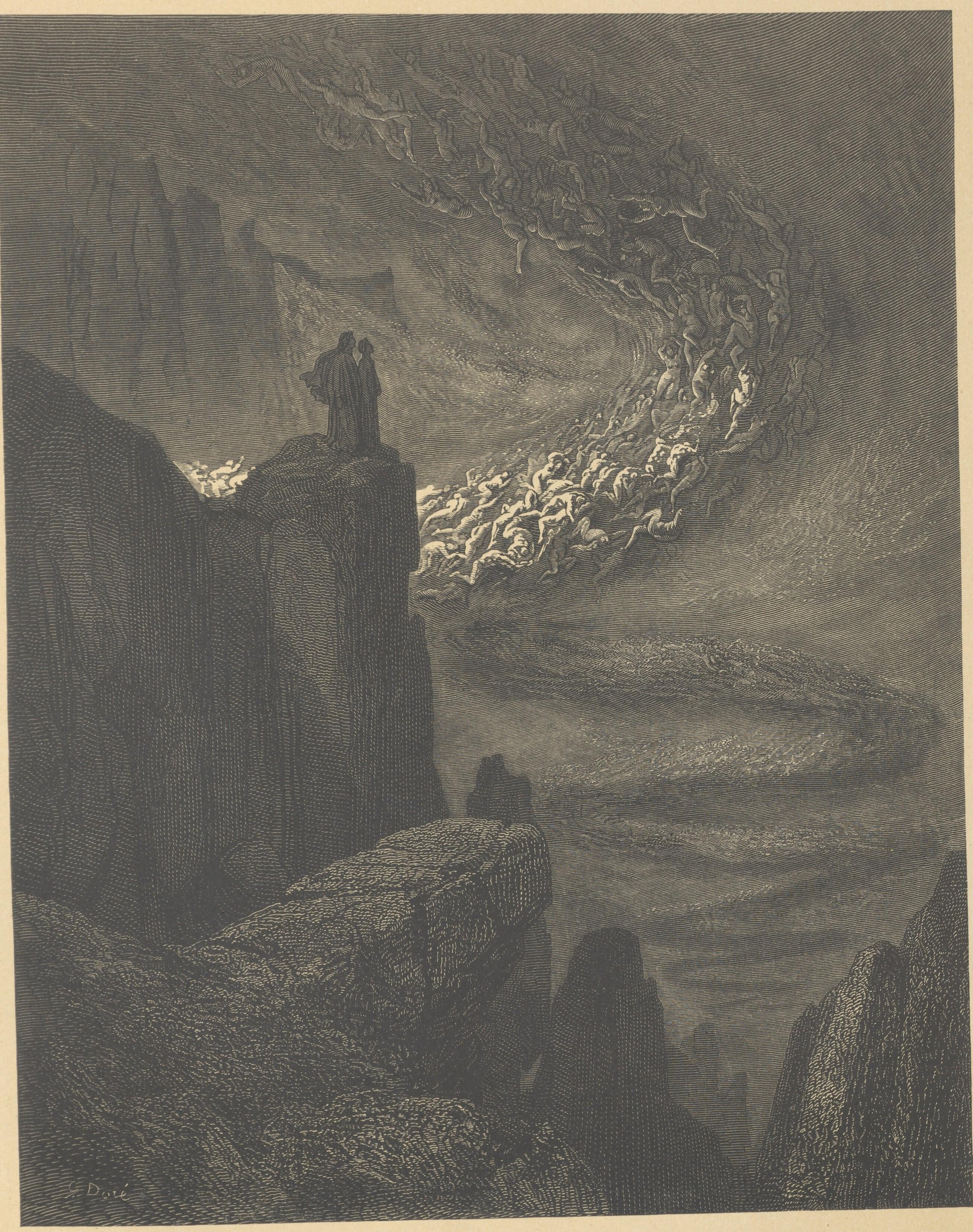
The Whirlwind of the Lustful
Gustave Doré · 1861
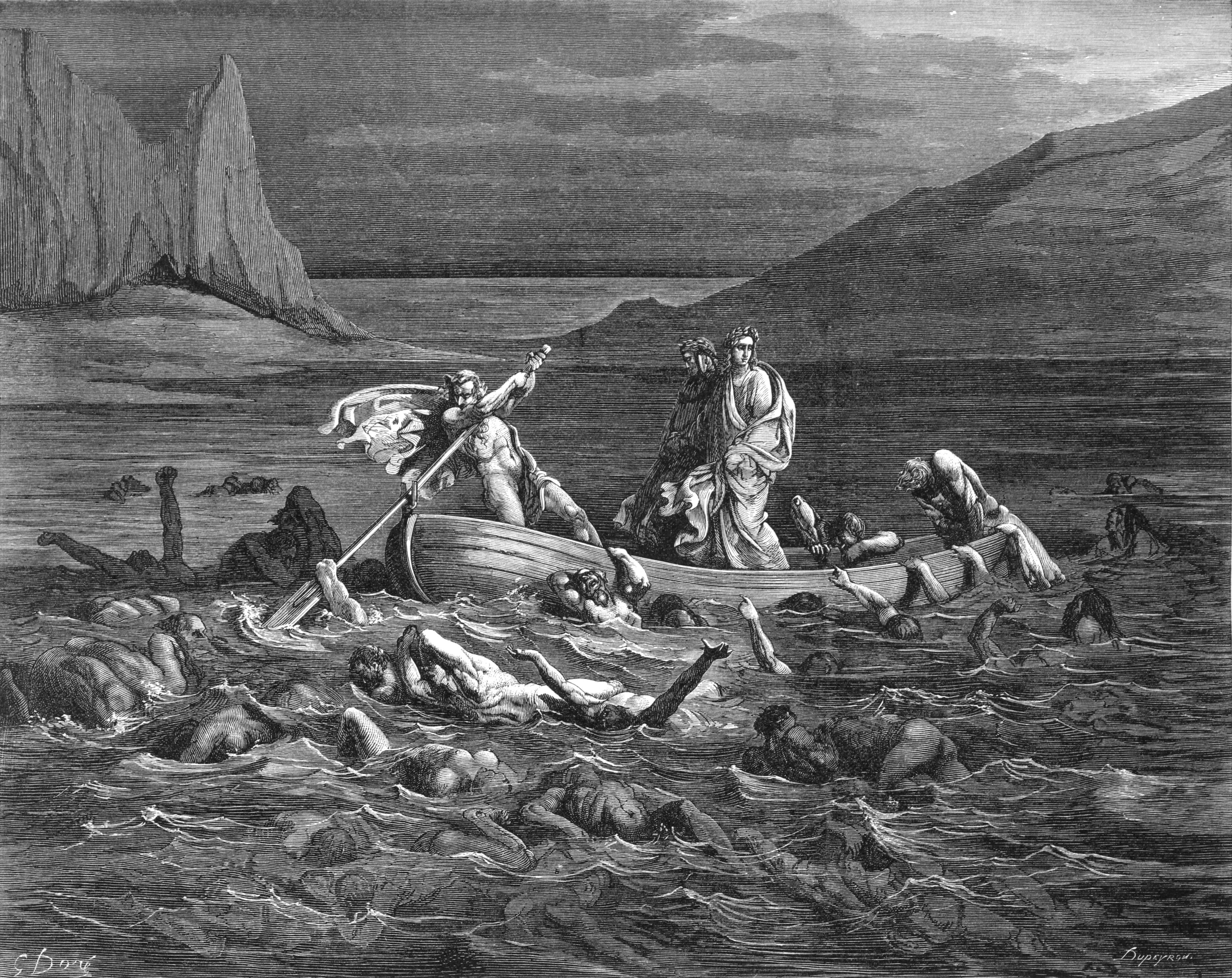
Crossing the Styx (Filippo Argenti)
Gustave Doré · 1861
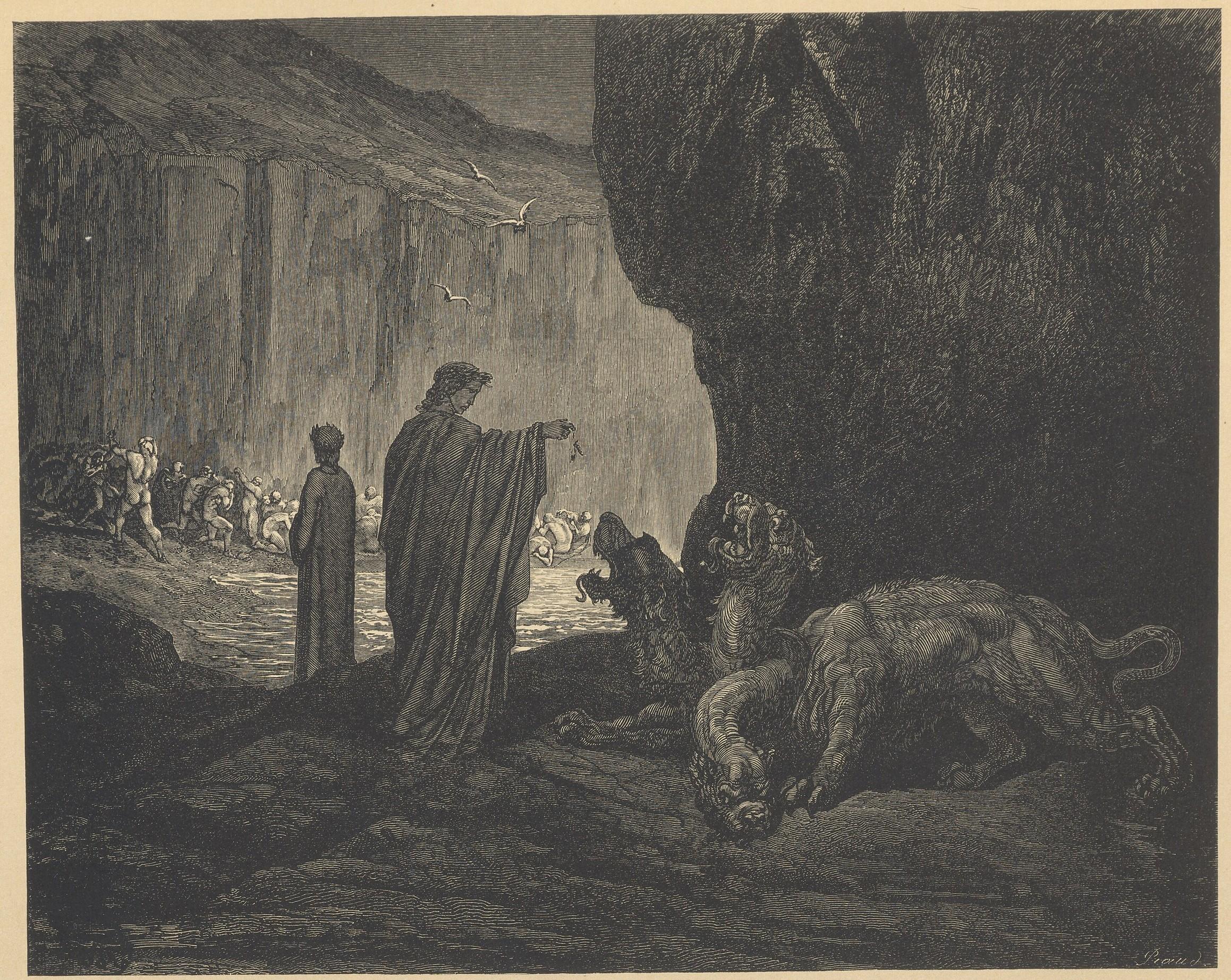
Cerberus
Gustave Doré · 1861
Also from 1861
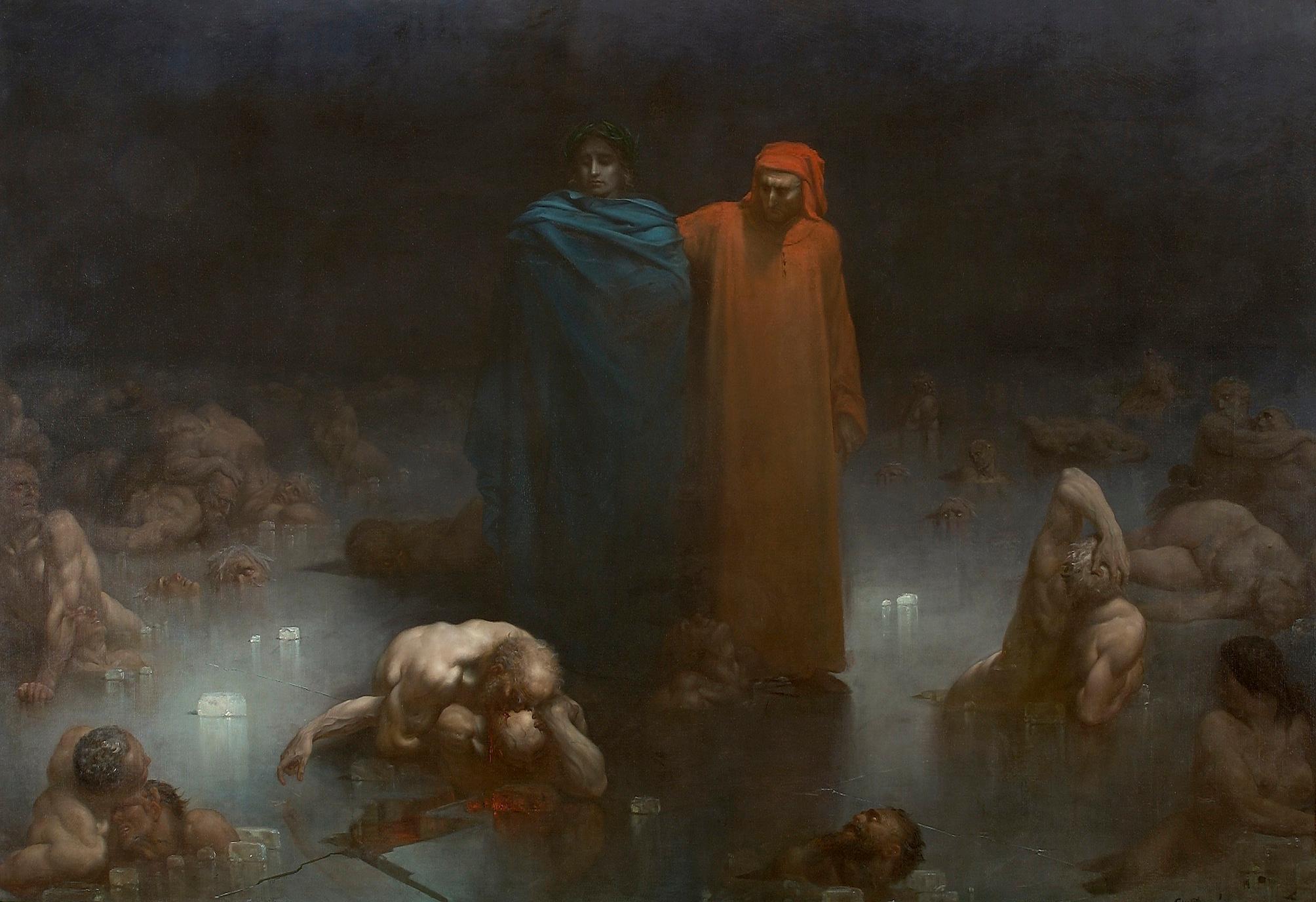
Dante and Virgil in the Ninth Circle of Hell
Gustave Doré · 1861
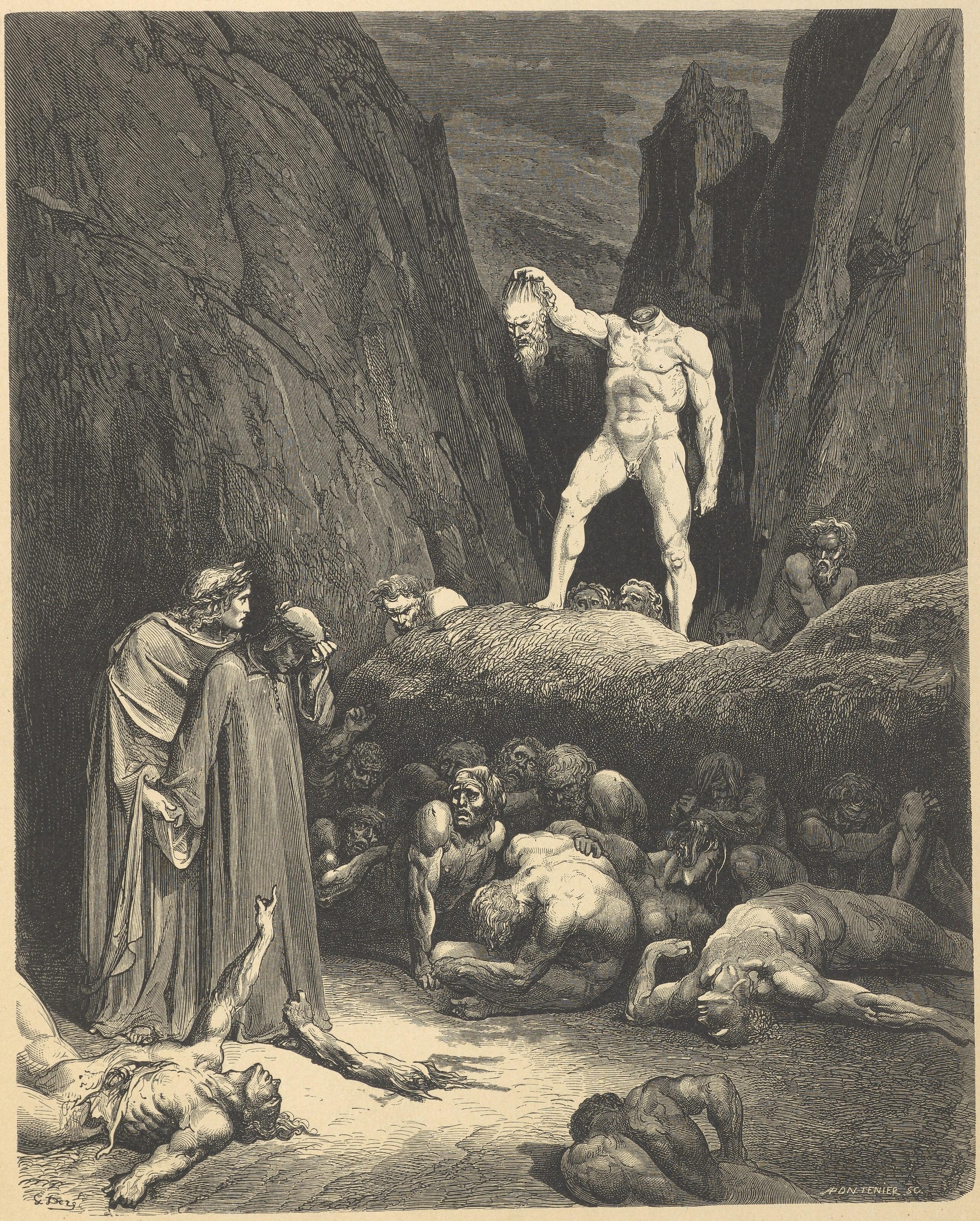
Bertran de Born Holding His Head
Gustave Doré · 1861
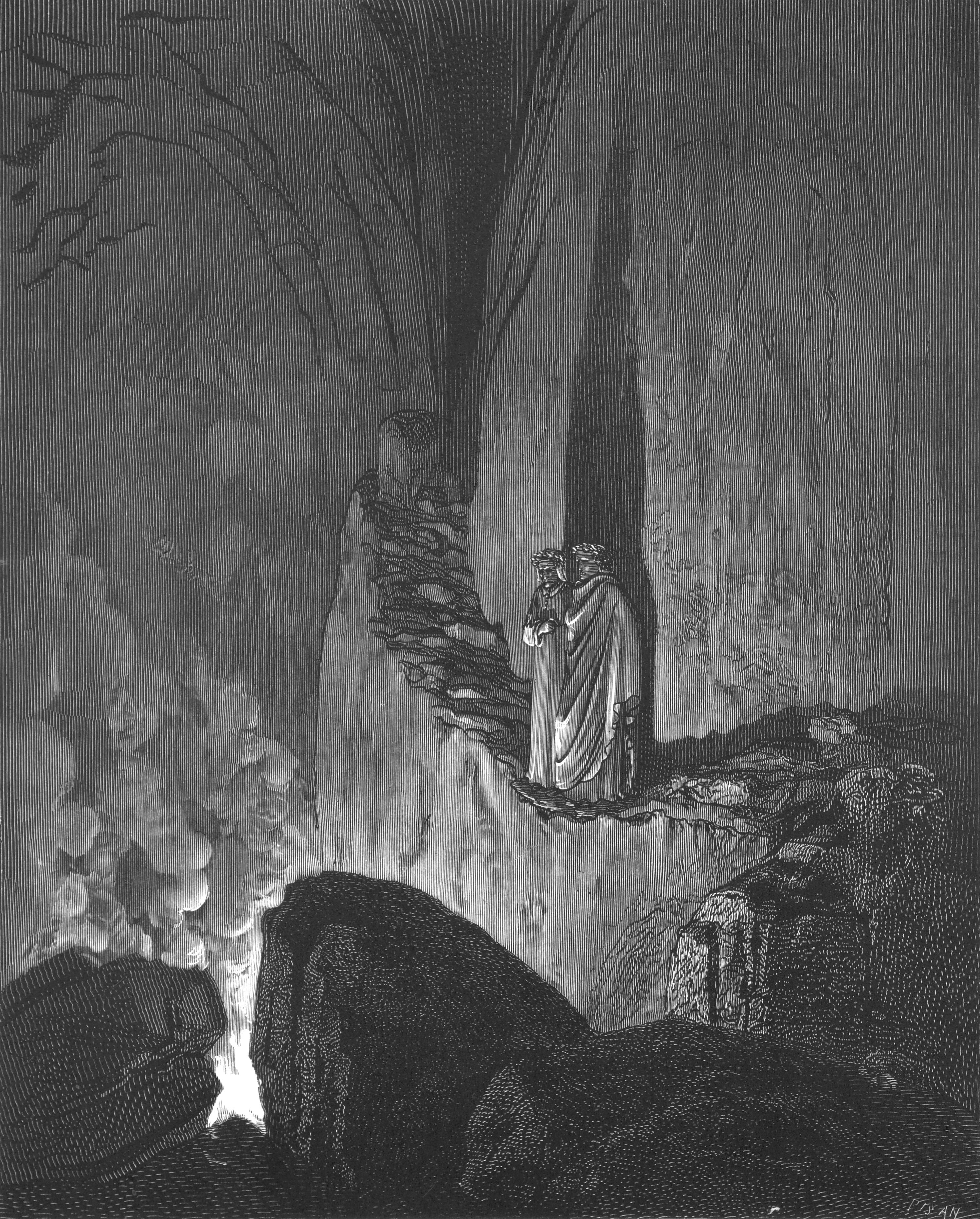
Ulysses and Diomedes
Gustave Doré · 1861
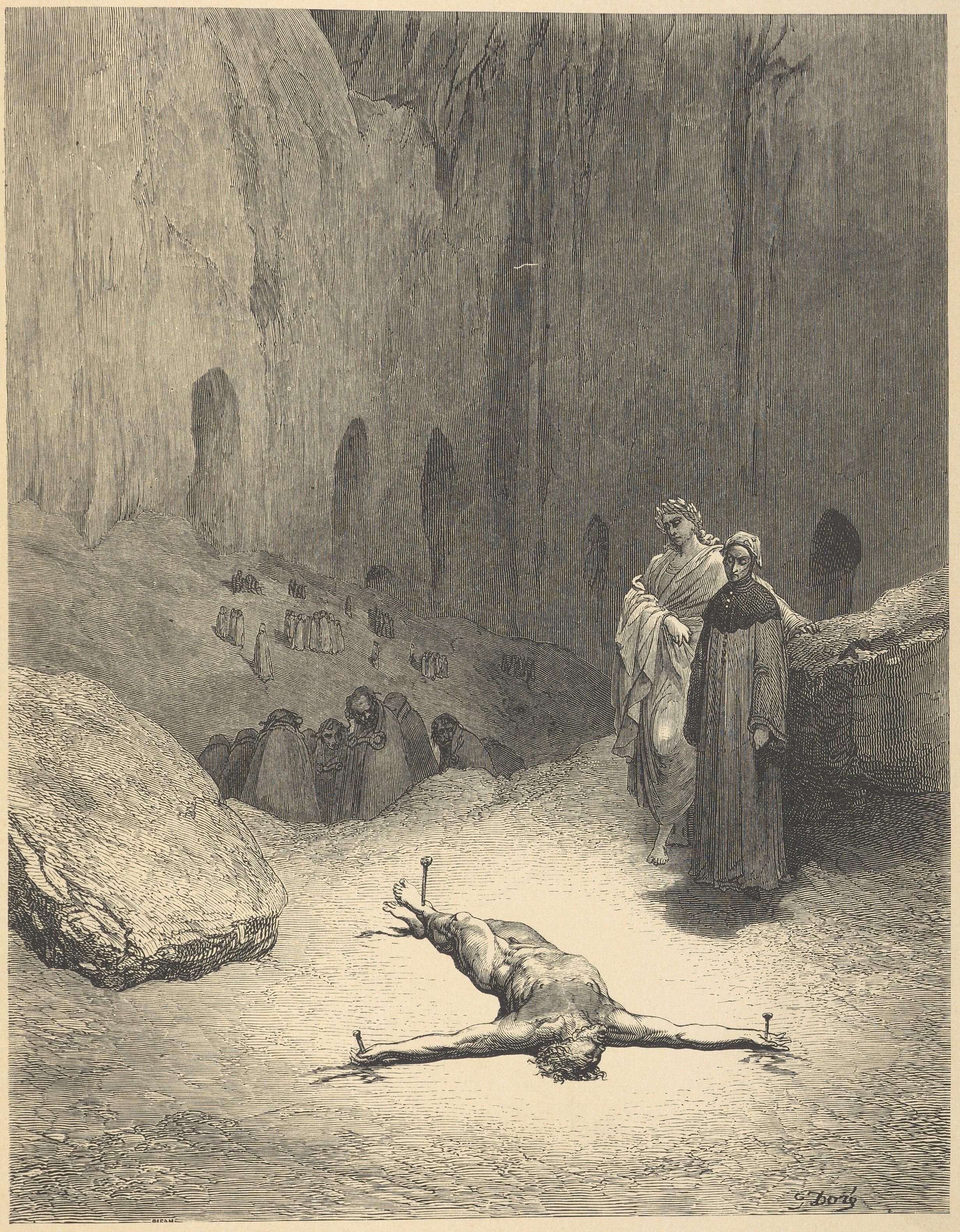
Caiaphas Crucified
Gustave Doré · 1861
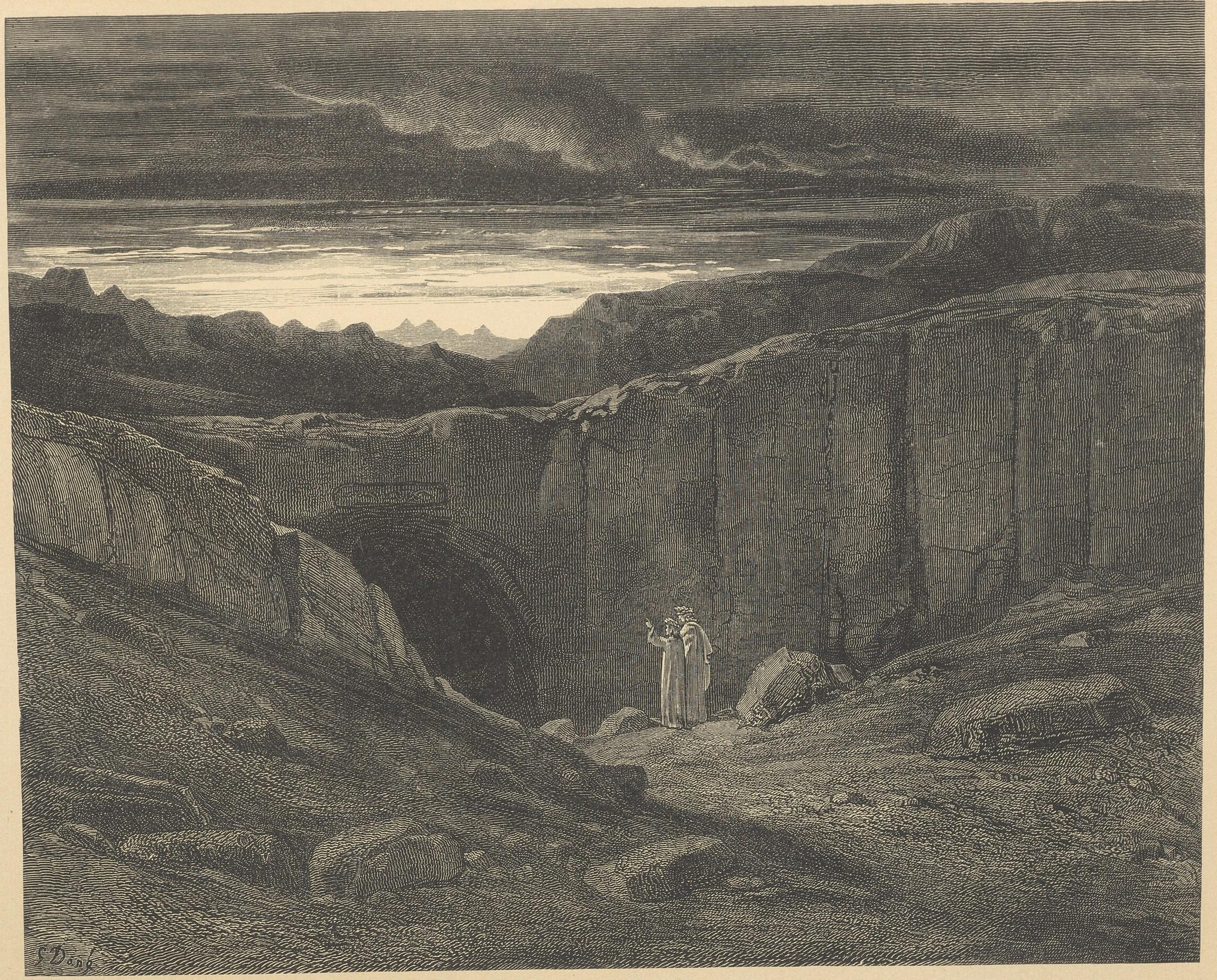
The Gate of Hell (Abandon All Hope)
Gustave Doré · 1861
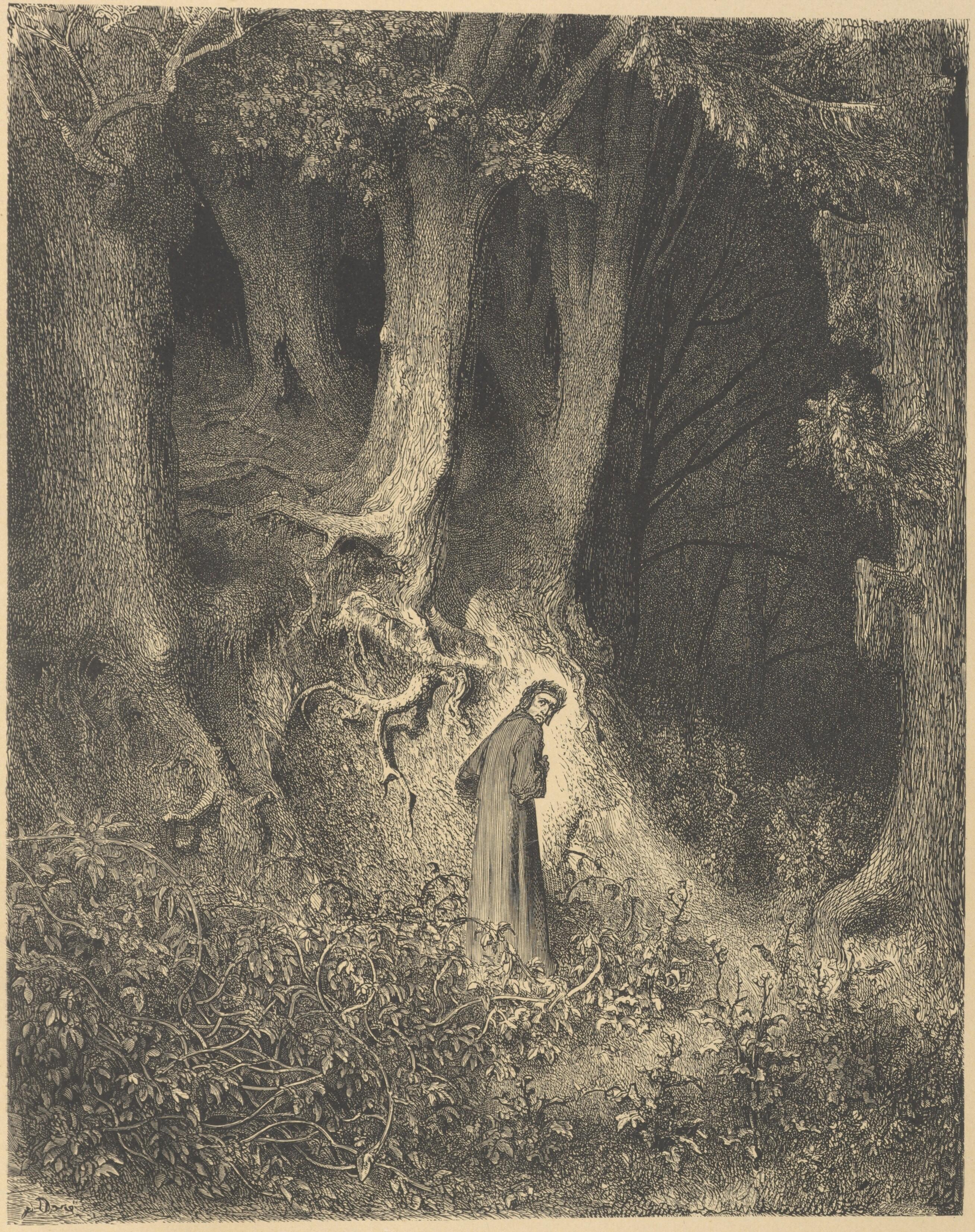
Dante Lost in the Dark Wood
Gustave Doré · 1861
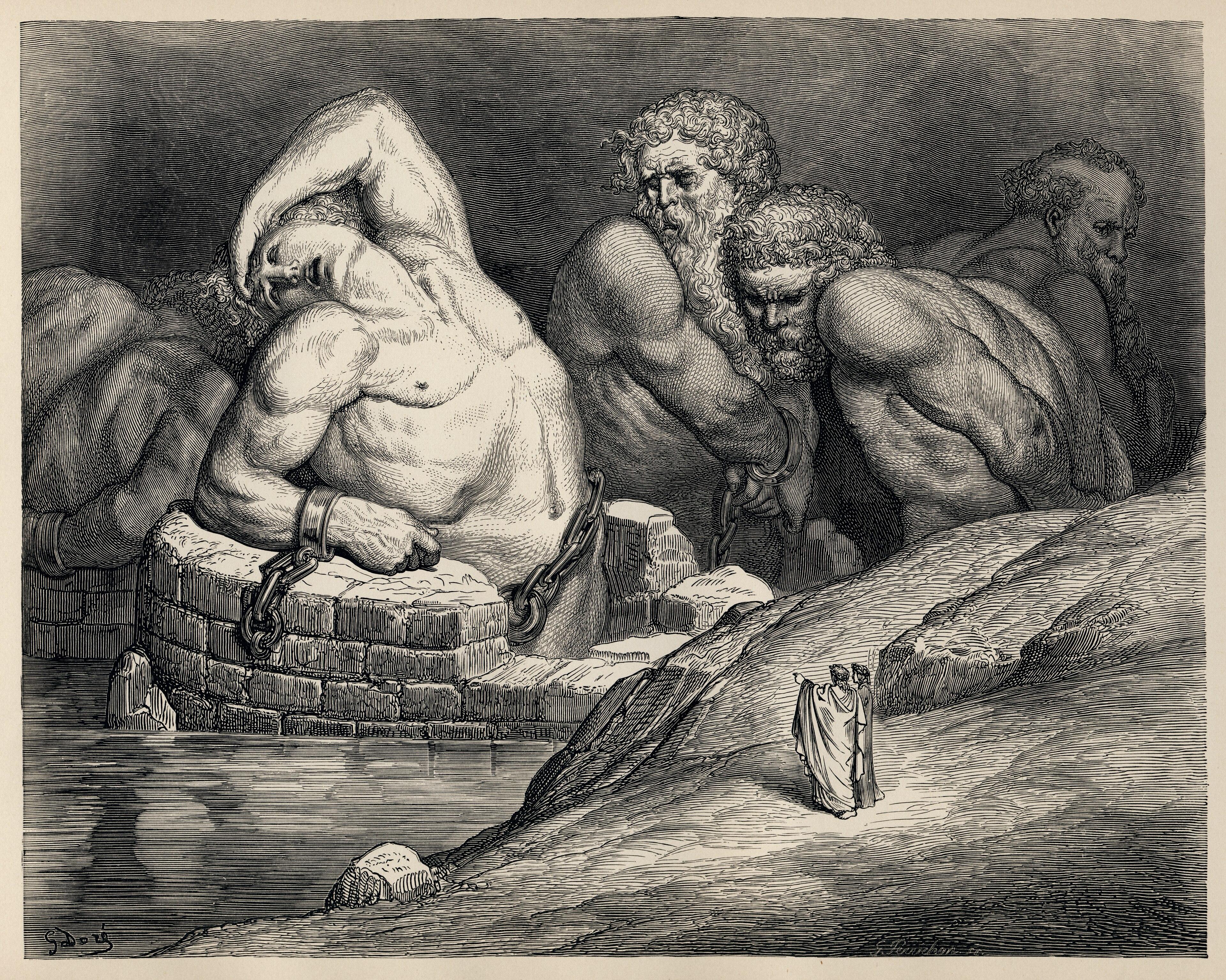
The Giants
Gustave Doré · 1861
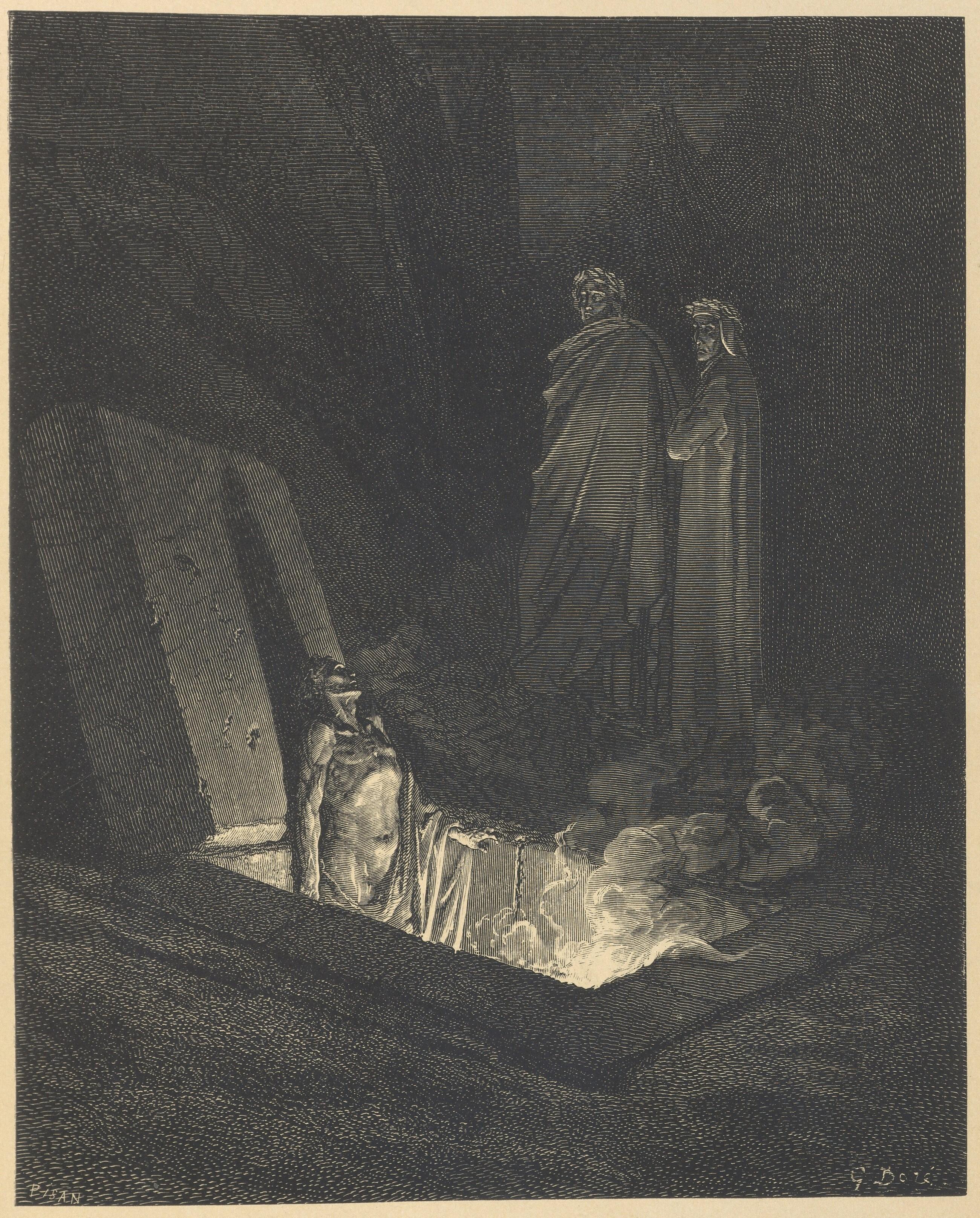
Farinata degli Uberti
Gustave Doré · 1861
Related works
The Gate of Hell (Abandon All Hope)
Gustave Doré · 1861
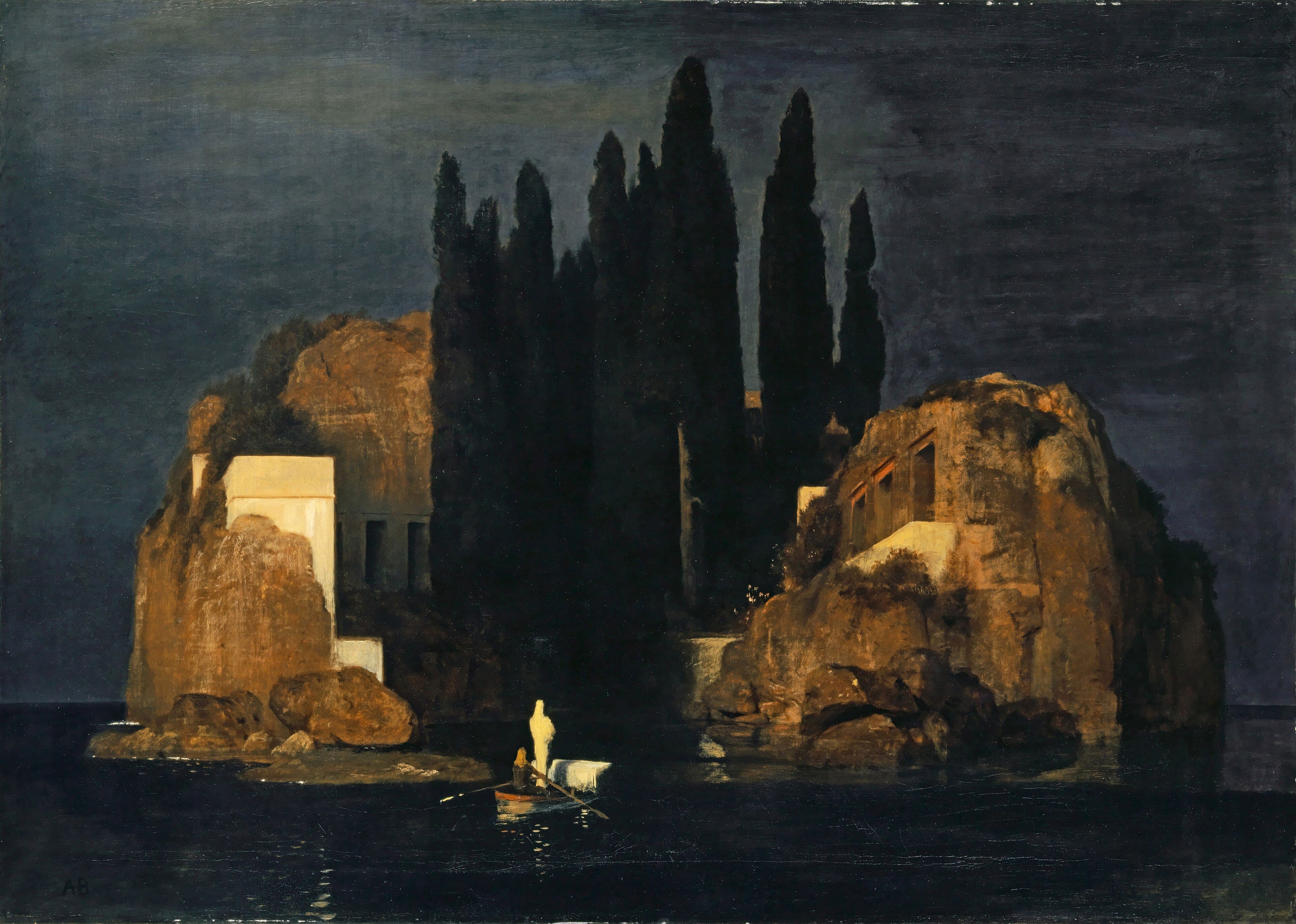
Isle of the Dead
Arnold Böcklin · 1880 (first version); five versions 1880–86
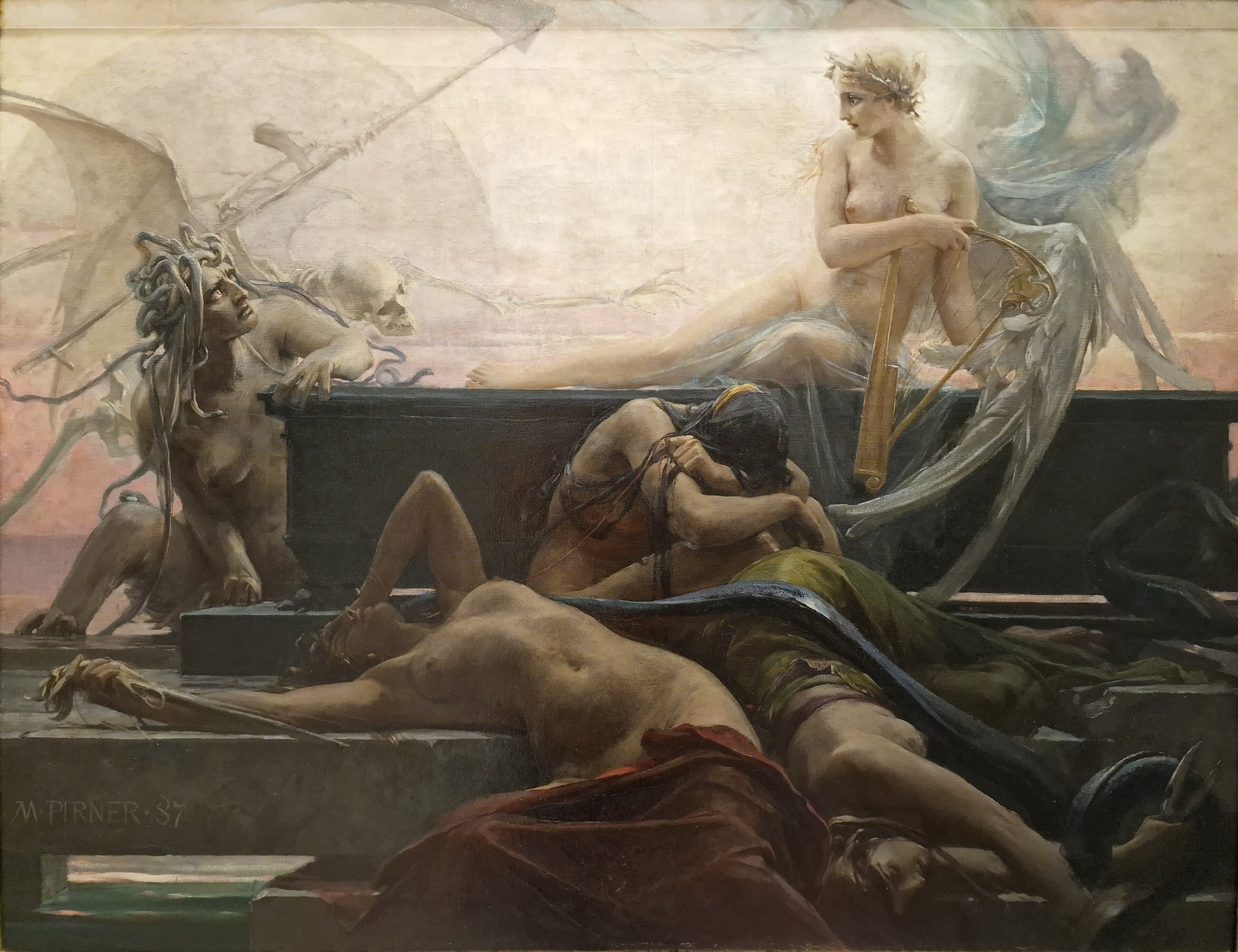
Finis (The End of All Things)
Maximilian Pirner · 1887
Dante and Virgil in the Ninth Circle of Hell
Gustave Doré · 1861
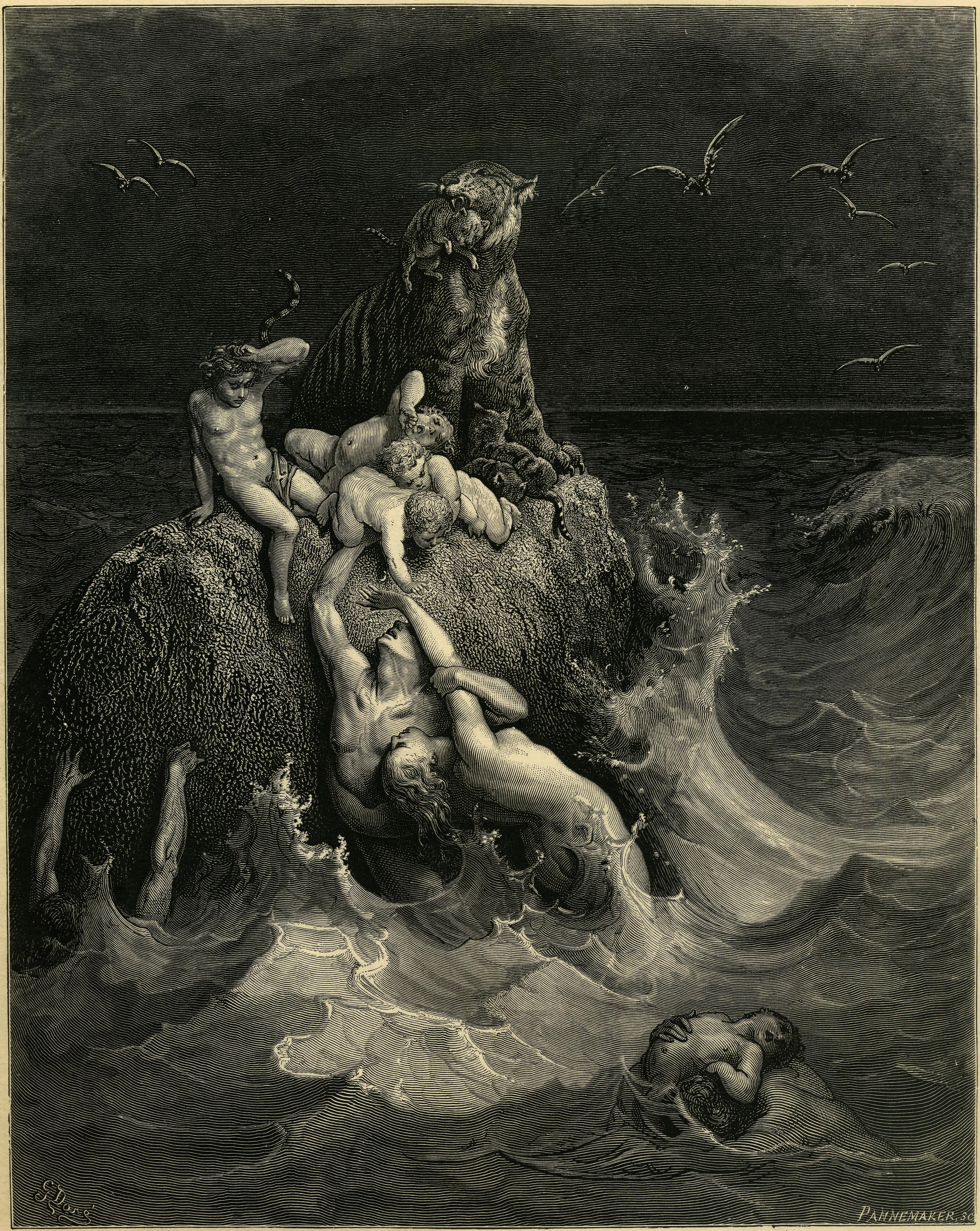
The Deluge
Gustave Doré · 1866
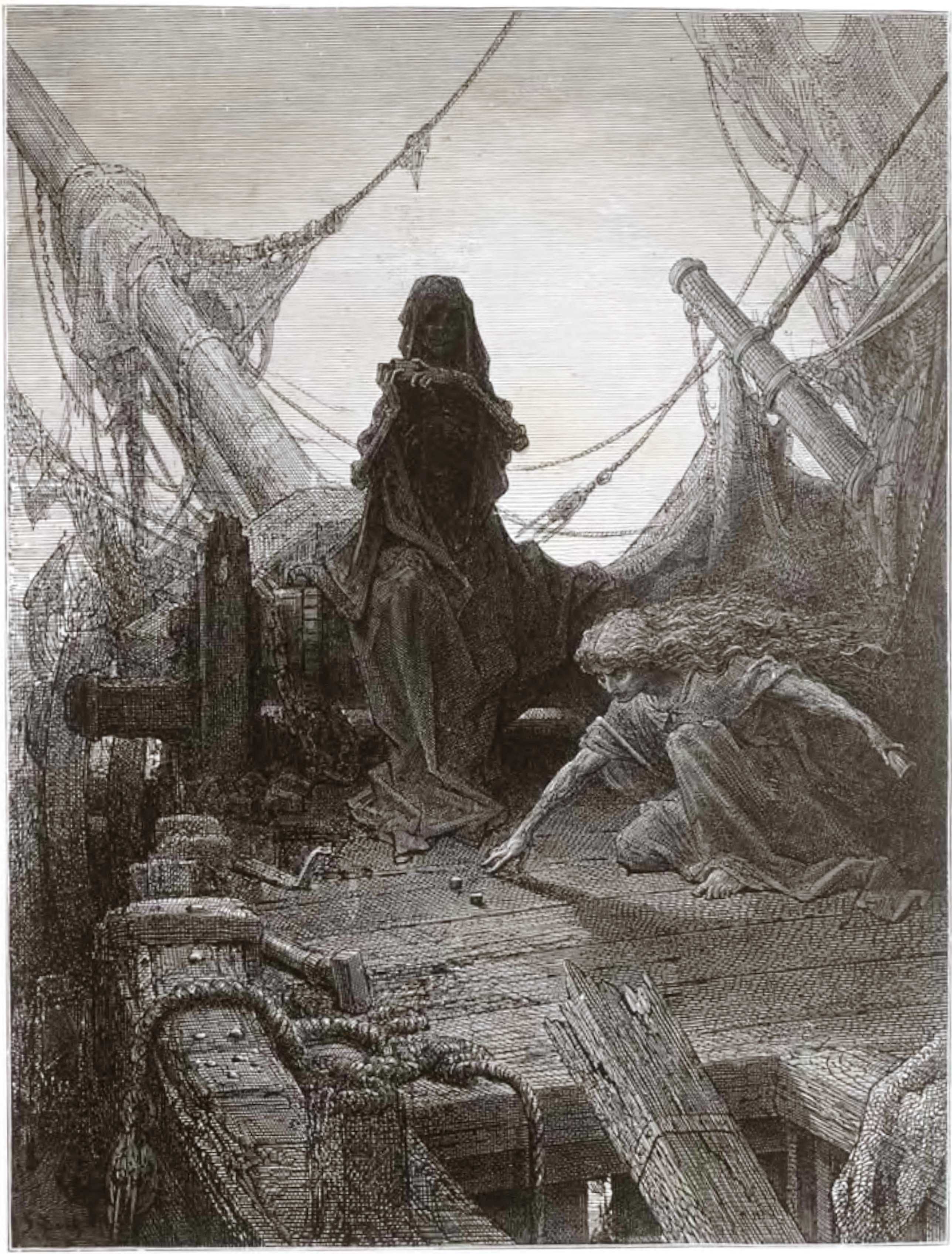
Death and Life-in-Death
Gustave Doré · 1876
The Wood of the Suicides
Gustave Doré · 1861
Death on the Pale Horse
Gustave Doré · 1866