Geryon
Gustave Doré, 1861
Geryon is Gustave Doré's 1861 wood engraving for Inferno, Canto XVII: the winged monster of fraud, with a just man's face and a serpent's body, carries Dante and Virgil down through spires of rock into the eighth circle of Hell.
- Artist
- Gustave Doré
- Date
- 1861
- Medium
- Wood engraving
- Movement
- Romanticism
- Themes
- Angels & Demons, Mythology, Literature & Poetry, The Macabre, Dark Academia
Geryon is Gustave Doré's wood engraving of the monster of fraud carrying Dante and Virgil down into the eighth circle of Hell, from Canto XVII of Dante's Inferno, published in Paris in 1861. The plate catches the creature in mid-flight between needles of rock, the two poets clinging to its back. It is the most acrobatic image among Doré's Inferno illustrations.
What you are looking at
The picture is built on one long diagonal. A bat-like wing stretches across the upper left, a second wing rises to a point at the upper right, and between them the creature's body twists down and away through a gap in the cliffs. Its tail coils once, then trails off the bottom edge in a thin, whip-like curve.
Look at the head. Geryon has the face of a bearded, curly-haired man, frowning and glancing sideways, set on a body that is anything but human: thick, shaggy forelegs ending in lion's claws, a swollen scaly trunk studded with round bosses like rivets, and a ragged crest running down the spine. Just behind its shoulders the two poets cling together, one bent protectively over the other, robes and hair streaming back in the wind.
The landscape is reduced to black spires of rock in the foreground and paler ones behind, with a band of dull light low on the right where the abyss opens. The sky is ruled in fine horizontal lines that make it read as moving air. Doré's signature is at lower left; the engraver's, "Dupeyron", at lower right.
The passage: Canto XVII
At the end of the seventh circle the poets reach the edge of a vast drop. Virgil summons a creature up from the depths, and Dante describes it with the care of a naturalist:
The face was as the face of a just man, Its semblance outwardly was so benign, And of a serpent all the trunk beside. Two paws it had, hairy unto the armpits; The back, and breast, and both the sides it had Depicted o'er with nooses and with shields. (XVII.10–15, Longfellow's translation)
Its tail ends in "the envenomed fork, / That in the guise of scorpion armed its point" (XVII.26–27). Virgil climbs on, puts Dante in front of him "So that the tail may have no power to harm thee" (XVII.84), and holds him. Then the monster pushes off backward "like an eel" and "with his paws drew to himself the air" (XVII.104–105). Dante, terrified, compares himself to Phaethon and Icarus: "Then was I still more fearful of the abyss; / Because I fires beheld, and heard laments" (XVII.121–122).
How Doré staged it
Two changes stand out. First, Dante's Geryon has no wings: it swims through the air, turning slow circles like a falcon descending. Doré gives it huge membranous wings, the same equipment he gives his devils, which makes the flight easier to believe at a glance but turns Dante's strange swimming beast into something closer to a dragon.
Second, he leaves out the scorpion sting. The tail, so important in the poem that Virgil sits between it and Dante, simply thins away and leaves the frame. Doré keeps instead what makes Geryon an image of fraud: the honest, almost noble face on a body of scales and claws. His Geryon looks back over its shoulder, as if checking whether we believe it.
How it was made and published
Doré drew the composition directly on a boxwood block, and the engraver who signed "Dupeyron" cut it, leaving the bright wings and body almost as bare paper and building the darks out of close parallel lines. The plate was published in 1861 in L'Enfer de Dante Alighieri by Hachette, an expensive folio that Doré financed himself; the impression shown is from the Berlin edition of 1870, digitized by the National Library of Poland. A second plate for this canto, signed by the engraver Pannemaker, shows Geryon lying at the cliff's edge with the poets on the slope above.
What it means
In Greek myth Geryon was a three-bodied giant of the far west, killed by Heracles. Dante kept the name and invented a new monster, the "uncleanly image of deceit" (XVII.7). Its fair face and patterned hide, compared to the finest Tartar and Turkish weaving, describe how fraud works: it looks trustworthy and is beautifully made, and the poison is at the back.
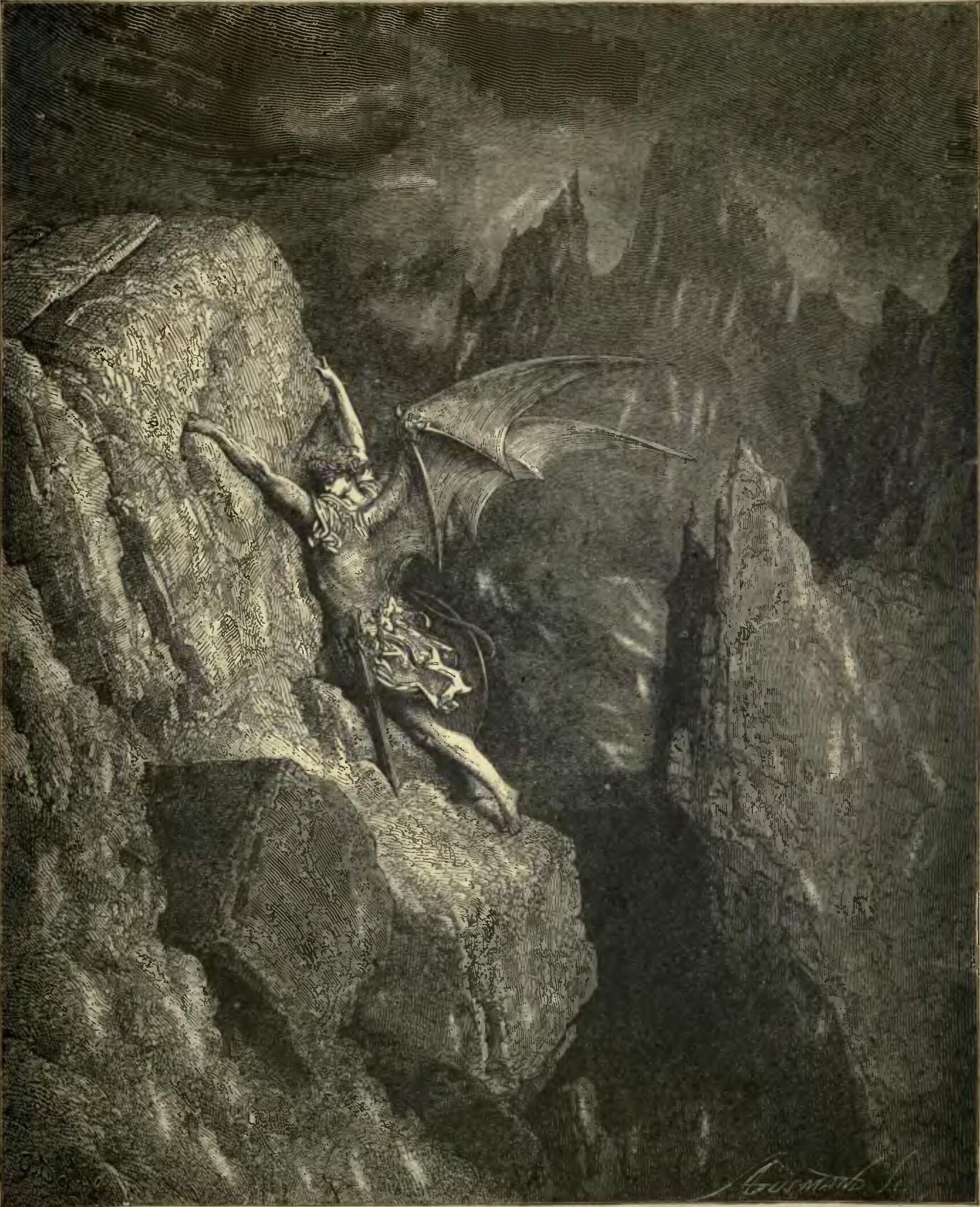
The flight is also a threshold. Below lies Malebolge, the ten ditches of the fraudulent, where Dante will meet the Malebranche demons and the thieves among the serpents. Doré returned to the image of a winged body crossing an abyss in Milton's Paradise Lost, in Satan's Flight Through Chaos. The classical monsters that Gustave Doré and Dante both reworked are gathered in Greek mythology in art.
Questions & answers
What does Doré's Geryon plate show?
It shows Dante and Virgil riding Geryon, the monster of fraud, down the great cliff between the seventh and eighth circles in Inferno Canto XVII. It matches Dante's terror in mid-flight: "Then was I still more fearful of the abyss; / Because I fires beheld, and heard laments" (XVII.121–122, Longfellow).
Why does Geryon have a man's face?
Dante made Geryon the image of fraud: "The face was as the face of a just man" on a serpent's body with hairy paws and a scorpion's tail (XVII.10–27). The honest face is the lure, and the danger is behind it. Doré keeps the bearded, almost noble face as the key to the monster.
Did Dante's Geryon have wings?
No. In the poem Geryon swims through the air like an eel, drawing the air to itself with its paws. Doré added large bat-like wings, the same kind he gives his devils, and left out the scorpion sting at the tip of the tail, which simply trails out of the picture.
When was the Geryon engraving made and who cut it?
Doré designed it for his illustrated Inferno, published in Paris by Hachette in 1861, an edition he paid for himself. He drew on the woodblock and the engraver who signed "Dupeyron" at lower right cut it. The image shown comes from the 1870 Berlin reprint of the same plates.
More by Gustave Doré
All works →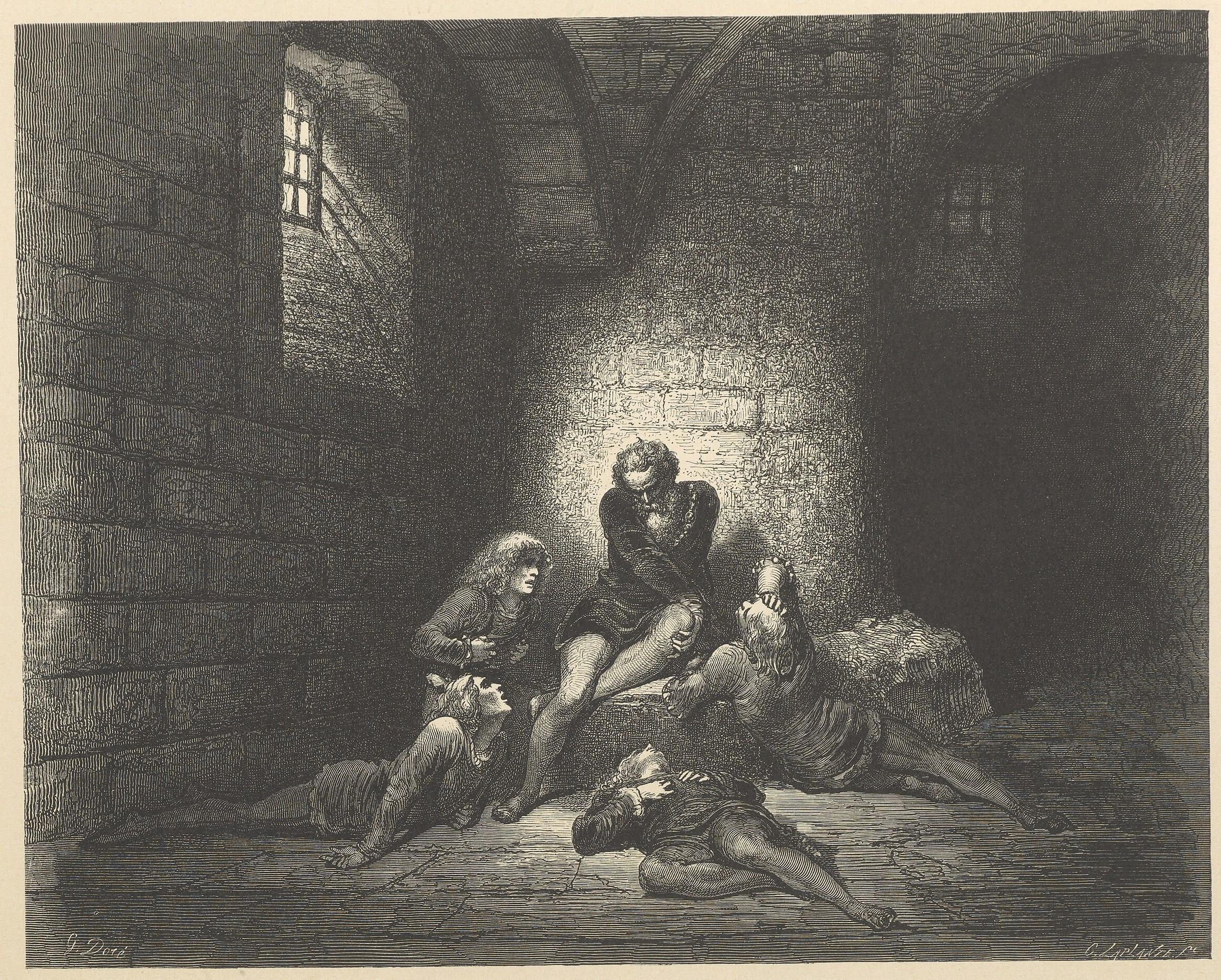
Count Ugolino and His Sons
Gustave Doré · 1861
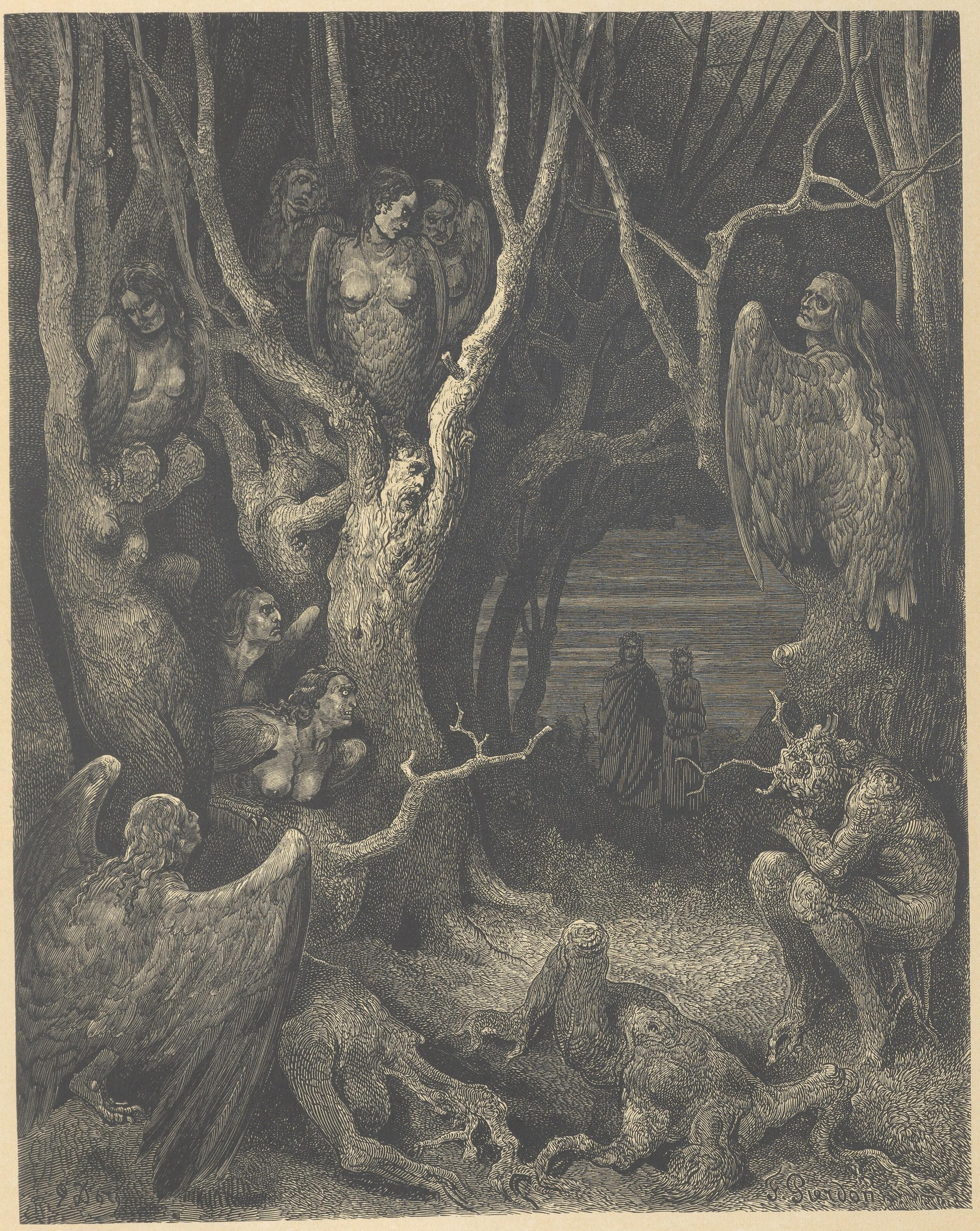
The Wood of the Suicides
Gustave Doré · 1861
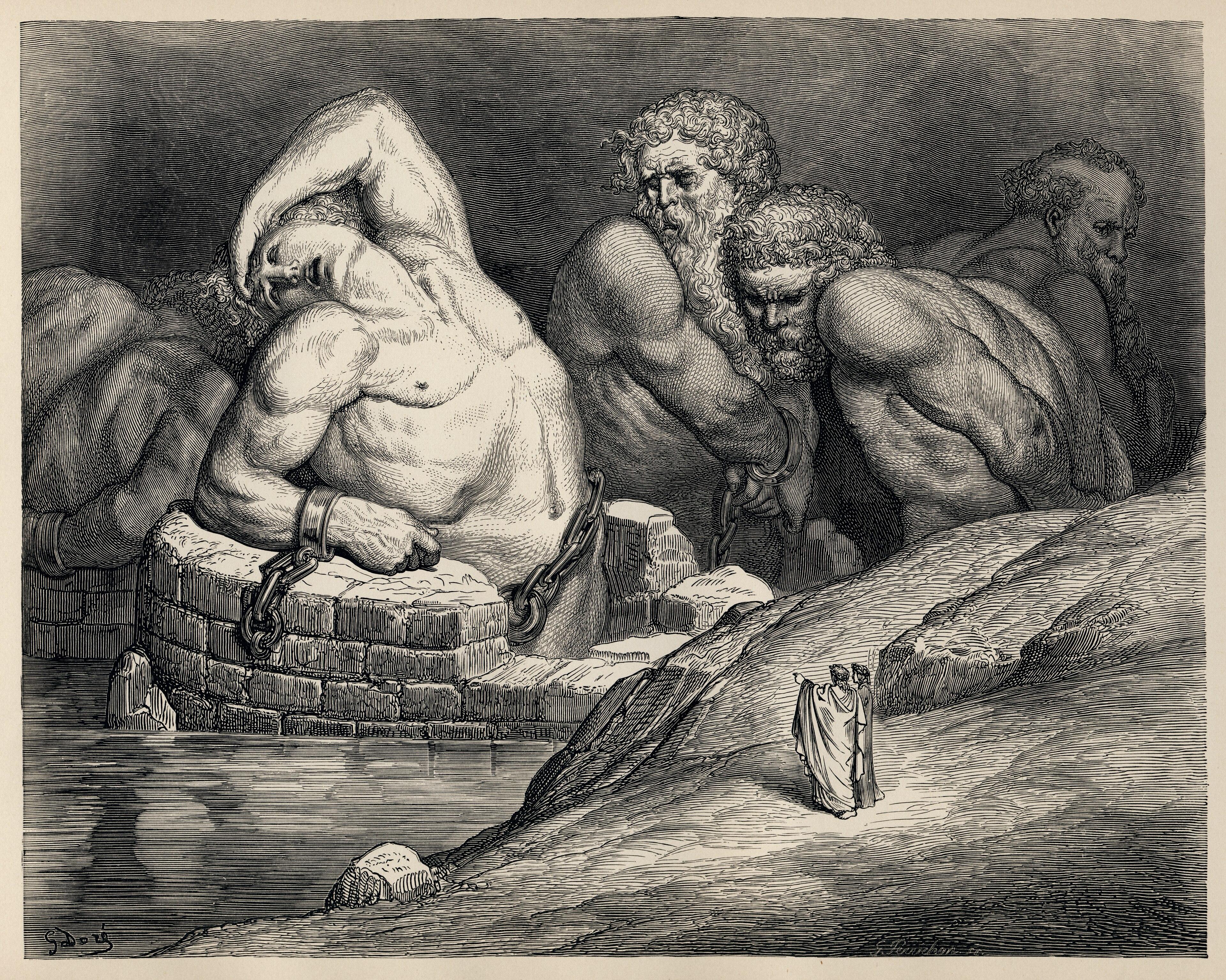
The Giants
Gustave Doré · 1861
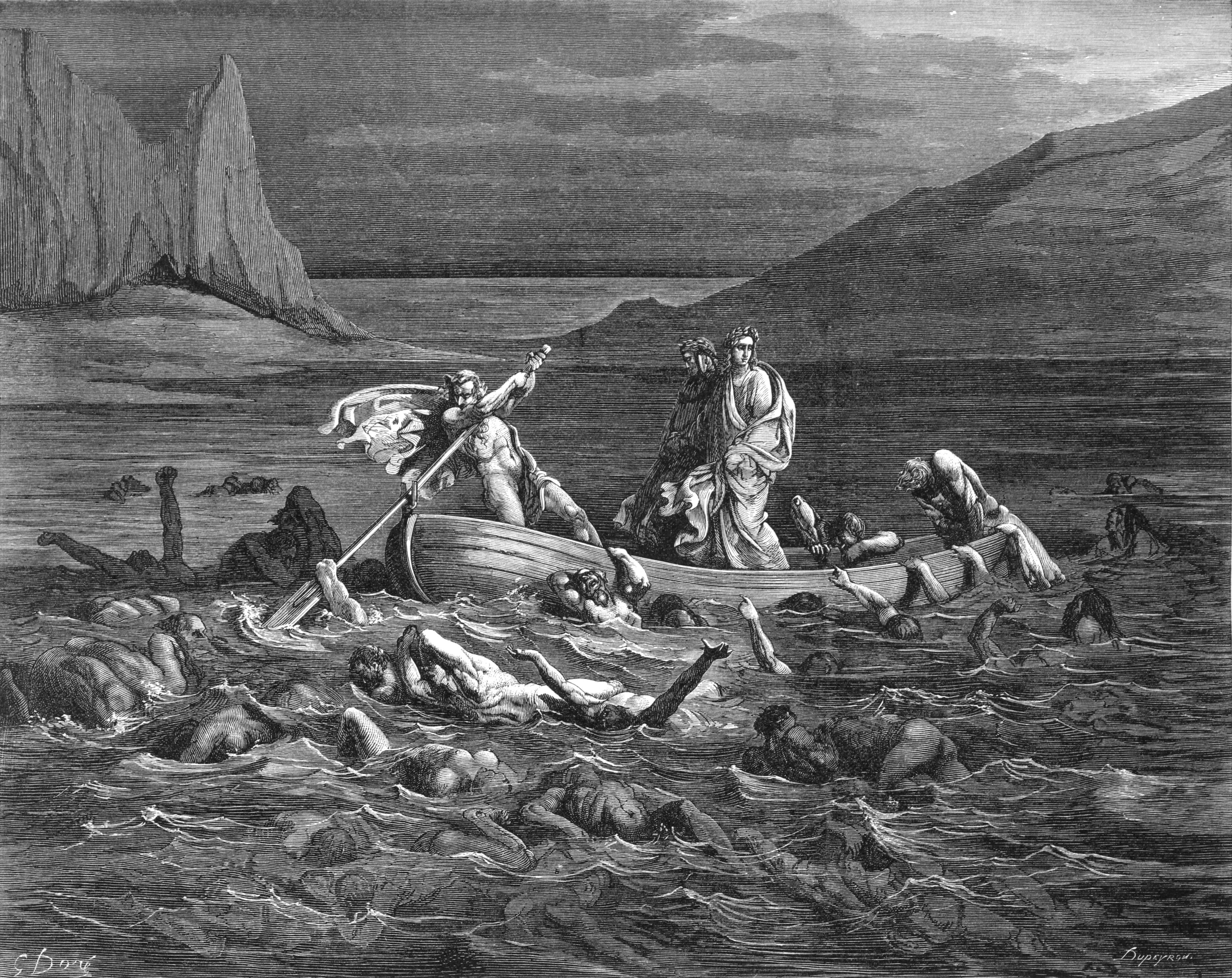
Crossing the Styx (Filippo Argenti)
Gustave Doré · 1861
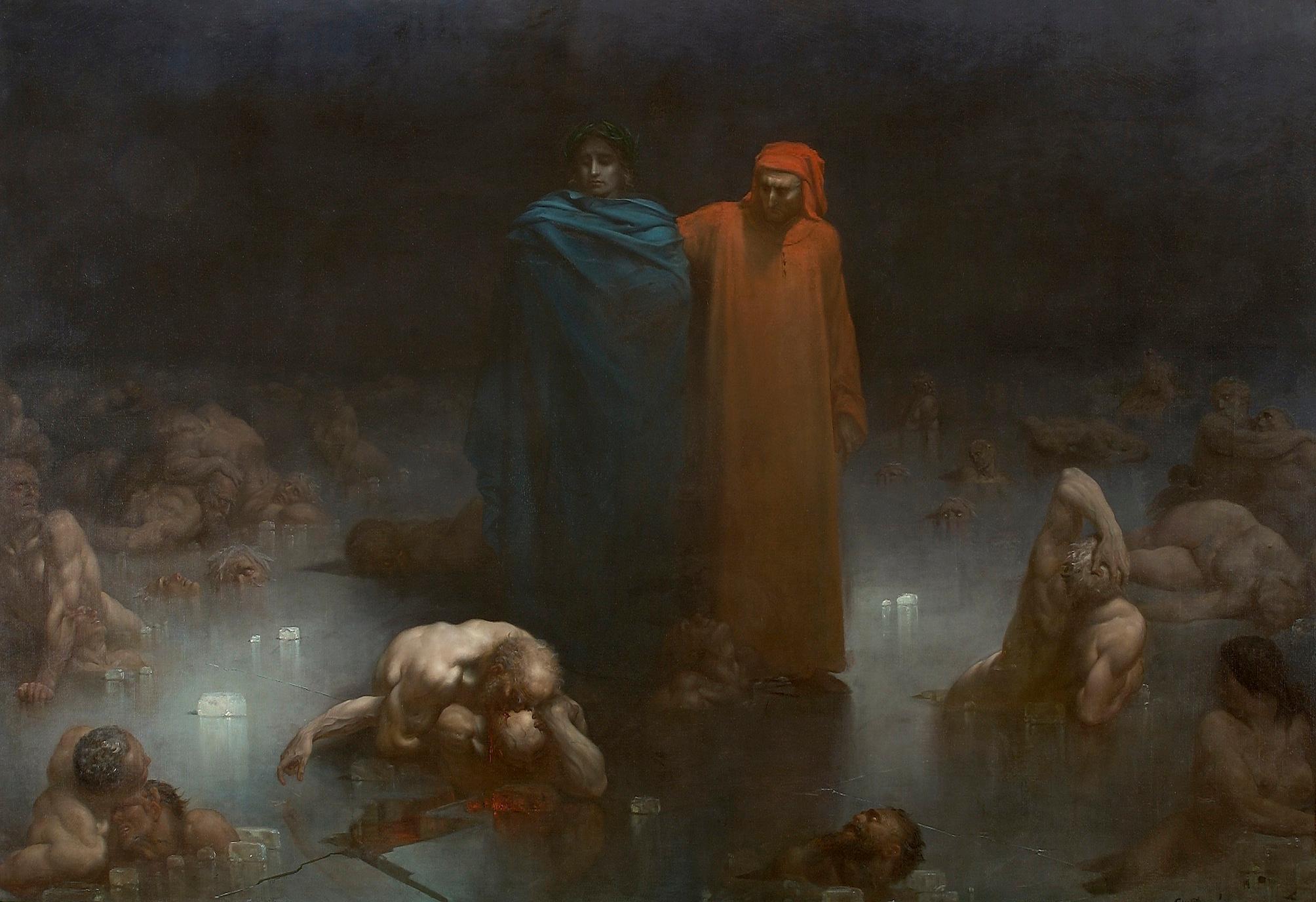
Dante and Virgil in the Ninth Circle of Hell
Gustave Doré · 1861
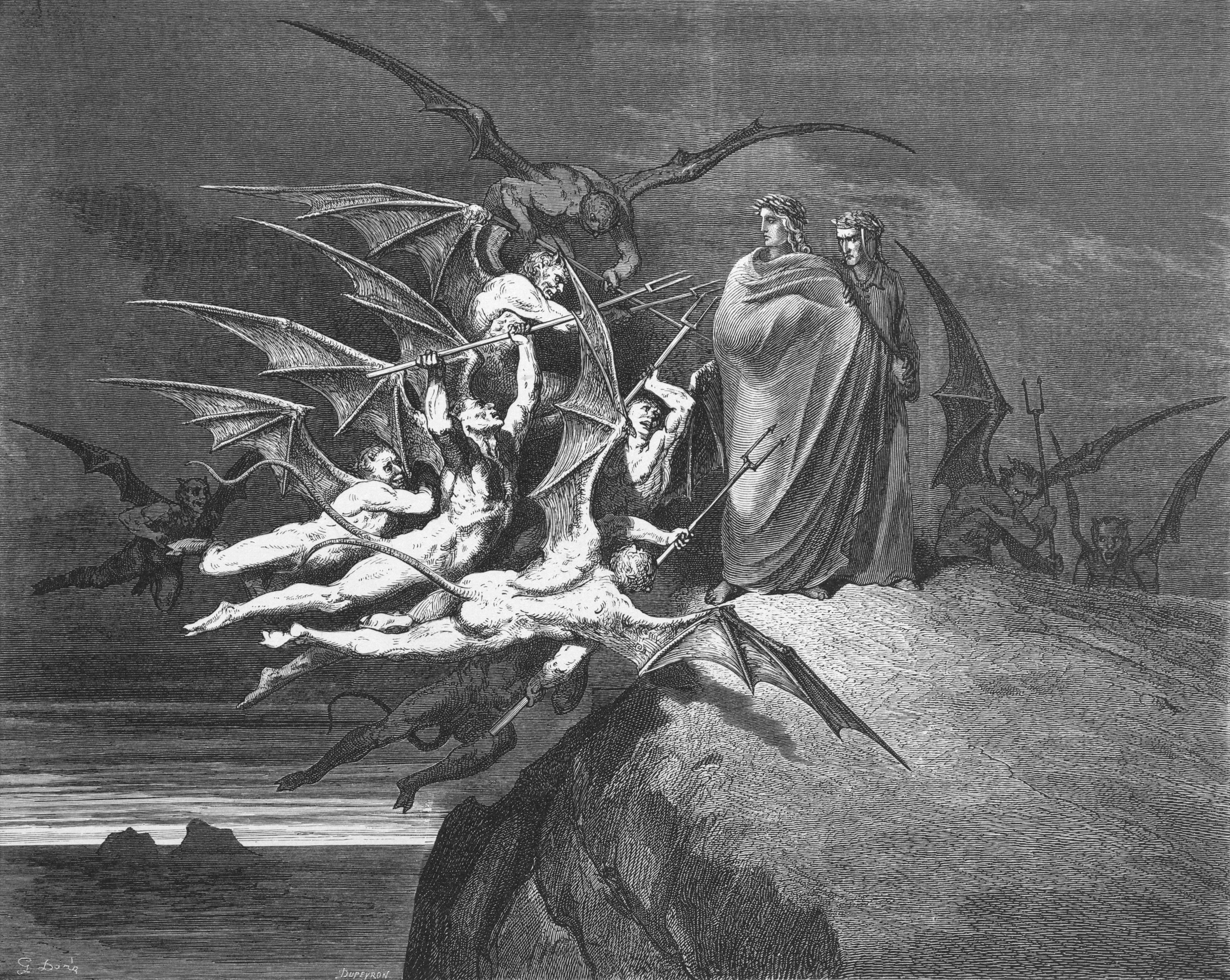
The Malebranche Demons
Gustave Doré · 1861
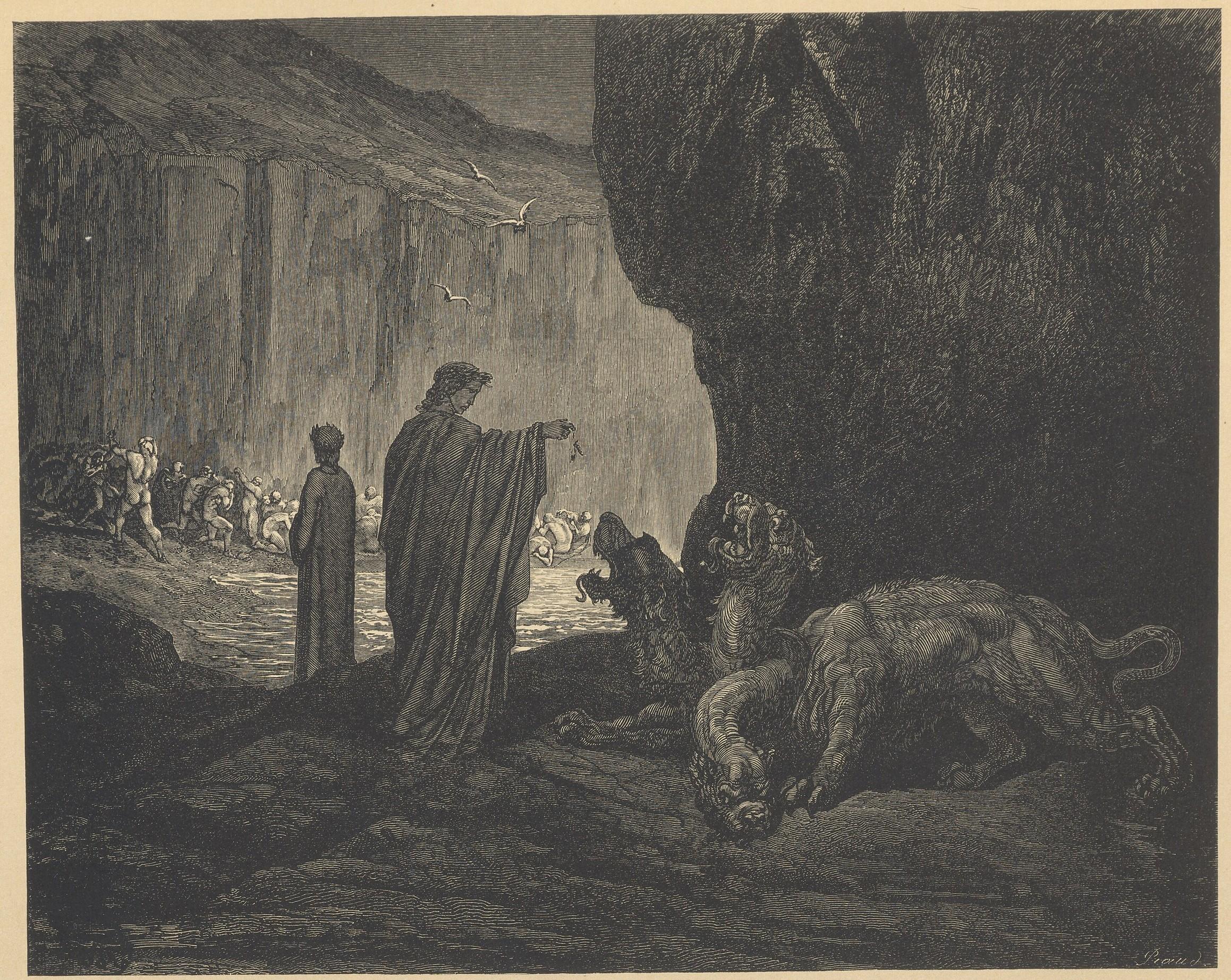
Cerberus
Gustave Doré · 1861
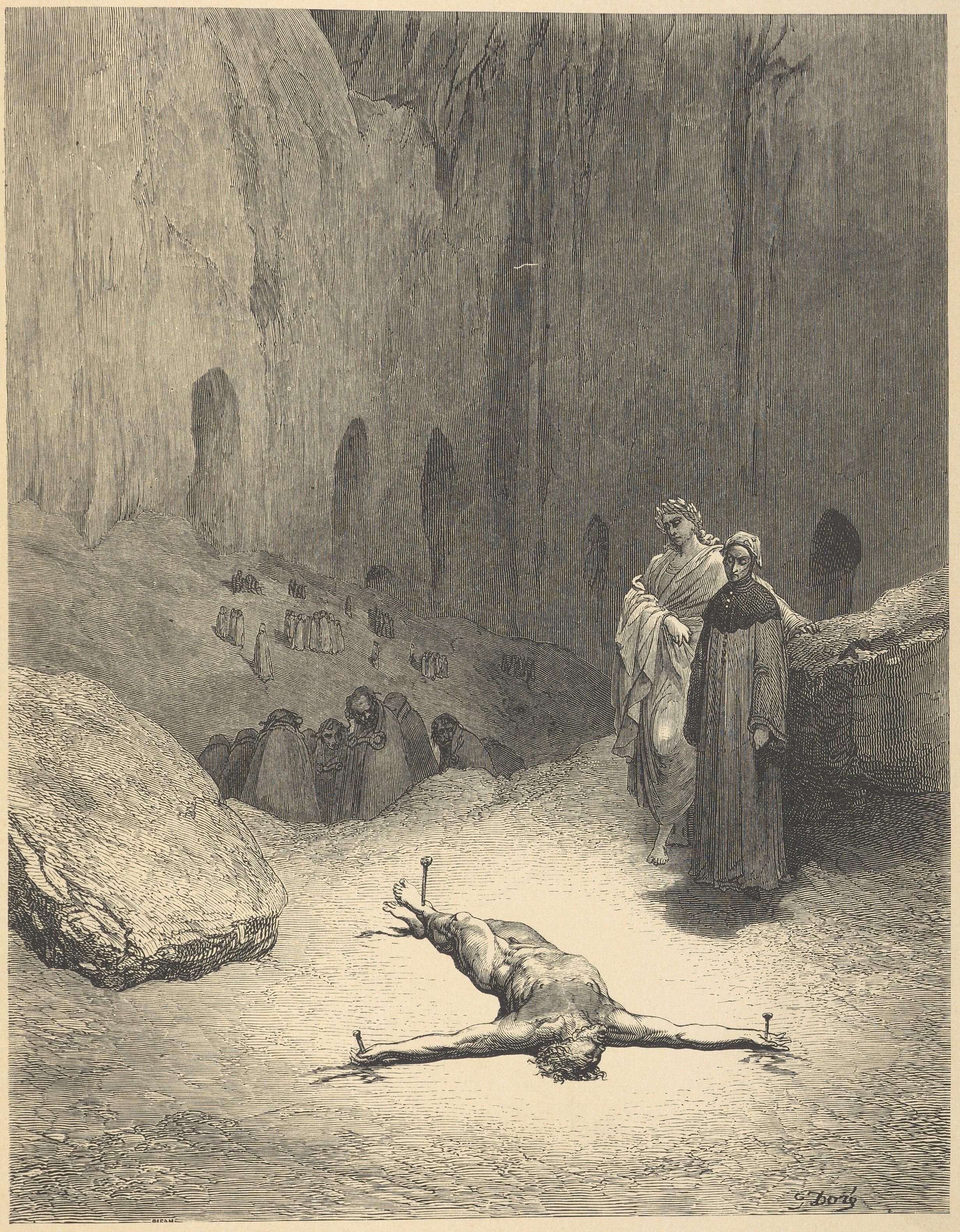
Caiaphas Crucified
Gustave Doré · 1861
Also from 1861
Bertran de Born Holding His Head
Gustave Doré · 1861
Ulysses and Diomedes
Gustave Doré · 1861
The Thieves and the Serpents
Gustave Doré · 1861
Paolo and Francesca
Gustave Doré · 1861
The Whirlwind of the Lustful
Gustave Doré · 1861
Minos, Judge of the Damned
Gustave Doré · 1861
Charon, Ferryman of the Dead
Gustave Doré · 1861
The Gate of Hell (Abandon All Hope)
Gustave Doré · 1861
Related works
The Thieves and the Serpents
Gustave Doré · 1861
Satan’s Flight Through Chaos
Gustave Doré · 1866
Lucifer, King of Hell
Gustave Doré · 1861
The Furies at the Gates of Dis
Gustave Doré · 1861
Perched Upon a Bust of Pallas
Gustave Doré · 1884
Ulysses and Diomedes
Gustave Doré · 1861
Witches' Sabbath (The Great He-Goat)
Francisco Goya · c. 1819–1823
Minos, Judge of the Damned
Gustave Doré · 1861