Minos, Judge of the Damned
Gustave Doré, 1861
Minos, Judge of the Damned is Gustave Doré's 1861 wood engraving for Dante's Inferno, Canto V, line 4: “There standeth Minos horribly, and snarls.” The crowned giant, seen from behind, coils his tail as a demon brings souls to judgment.
- Artist
- Gustave Doré
- Date
- 1861
- Medium
- Wood engraving
- Movement
- Romanticism
- Themes
- Literature & Poetry, Mythology, Angels & Demons, The Macabre, Power & History
What you're looking at
We see Minos from behind. He fills the right half of the plate: a colossal, naked old man perched on a sloping ledge of rock, his broad, muscular back lit as if by a lamp, a jagged crown set on a mass of white curls. He leans forward over his knees toward the dark space at the left, so his face is turned away from us. We see only the edge of a beard, and that is enough.
Wrapped around him is a thick, scaly tail. It loops around his waist, crosses over his shoulder and knee, and ends in a thin, whip-like tip that curls out into the darkness in an S-shape. The engraver has given the tail a fine lattice of diamond-shaped cuts, so it glints like snakeskin against the black.
Far below and to the left, small and pale, a winged demon with bat-like wings and a staff at his side drives a cluster of naked souls toward the judge. They stand bowed, hands covering their faces or clasped in front of them; one crouches on the ground. The contrast in scale is extreme. The souls are hardly taller than Minos's hand, which seems to reach down toward them out of the shadow at the center of the plate.
The background is almost pure black: a vertical cave wall at the left, built from close vertical cuts, and a void everywhere else. Only Minos's back, the coils of the tail, the demon's wings and the souls catch light.
The passage it illustrates
The plate illustrates the opening of Inferno V, as Dante and Virgil descend from Limbo into the second circle. In Longfellow's translation:
There standeth Minos horribly, and snarls; Examines the transgressions at the entrance; Judges, and sends according as he girds him.
Dante then explains how the judgment works. Each soul confesses everything, and Minos, the “discriminator of transgressions,” “girds himself with his tail as many times / As grades he wishes it should be thrust down.” The number of coils is the sentence: two coils, the second circle; seven, the seventh.
How Doré staged it
Dante's Minos stands at the entrance and snarls. Doré seats him, turns him away from us and gives him no visible face at all. It is a bold choice. A monster seen head-on can be measured; a monster seen from behind, with its attention fixed on someone else, is more frightening because we are left to imagine its expression.
The tail is Doré taking Dante literally. It is not a decorative attribute but the instrument of judgment, wound visibly around the body in the act of counting. The flicking end looks as if it is still moving.
Doré also adds the demon. Dante mentions “many” souls standing before Minos and going “by turns each one unto the judgment,” but no guard. The bat-winged figure, seen from behind like Minos himself, gives the scene a hierarchy: soul, warder, judge. Dante and Virgil are not shown, so we look at the tribunal with the souls' own sense of distance.
How it was made and published
Doré drew the design on a boxwood block for a professional wood engraver to cut. Here the engraver signed at lower right, “Monvoisin,” identified as Gaston Monvoisin; Doré's “G. Doré” is faint at lower left. Monvoisin's cutting is a lesson in what wood engraving can do with black. The dark areas are not flat ink but fields of fine, regular white flecks, so the shadow seems to have depth and texture.
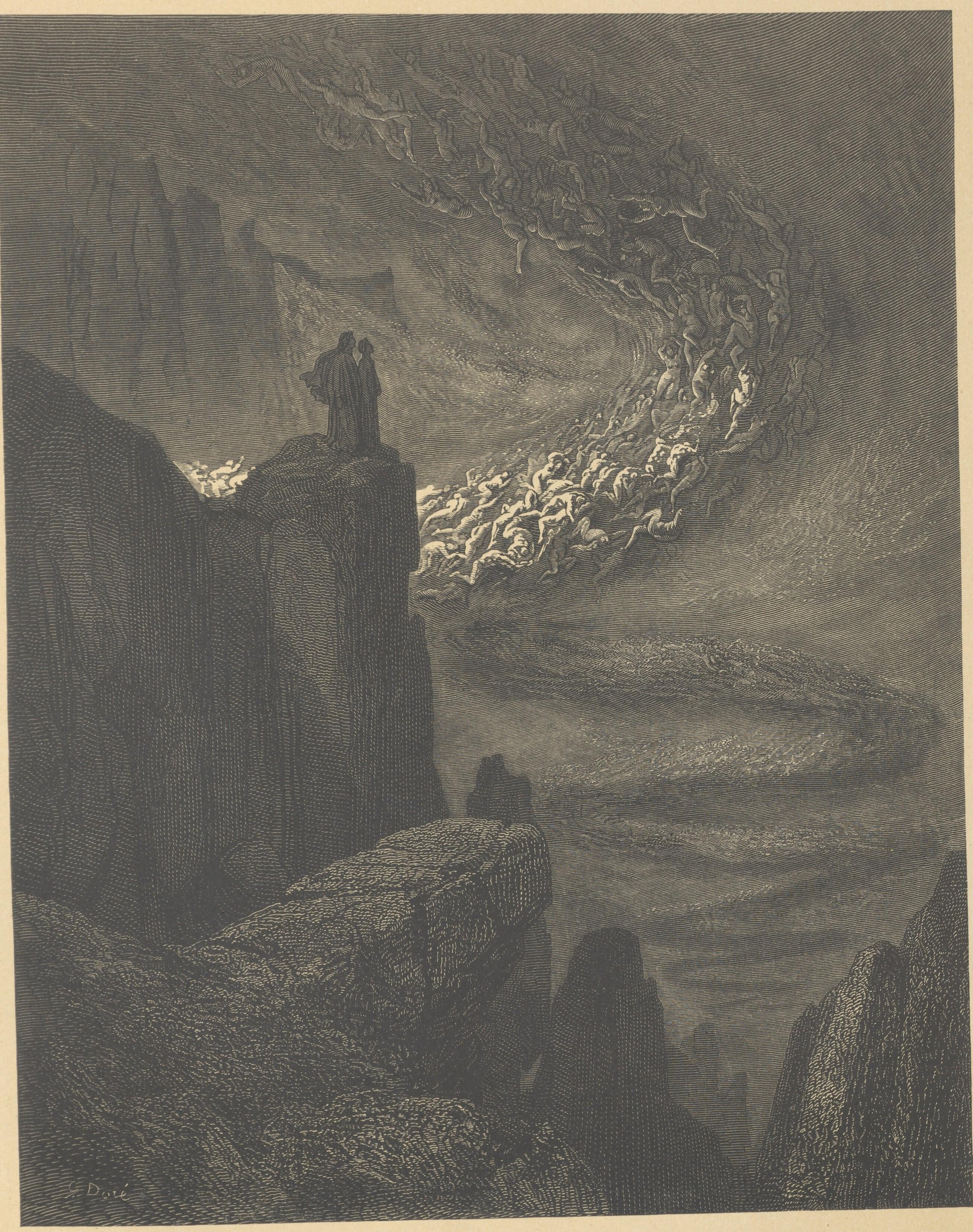
The plate was first published in 1861 in L'Enfer de Dante Alighieri (Hachette, Paris), a large folio that Doré paid for himself. It is the thirteenth plate in the sequence and opens Doré's long run of illustrations to Canto V, followed by the infernal whirlwind and Paolo and Francesca.
Meaning
Minos was a legendary king of Crete, the son of Zeus and Europa and, in Greek myth, one of the judges of the dead. Homer's Odysseus sees him in the underworld holding a golden scepter and giving judgment, and Virgil places him in the Aeneid, Book VI, shaking the urn of the dead. Dante keeps the job but strips the dignity. His Minos is a snarling, tailed demon, a pagan figure absorbed into a Christian Hell and made to serve its justice.
Doré preserves both sides. The crown and the sculptural, almost classical back recall the king; the tail and the darkness belong to the demon. The result is one of the most striking of all demonic figures in nineteenth-century art and a key image for anyone following the Greek myths into Dante's poem.
Within the Inferno series, Minos is the first of the great guardians, followed by Cerberus in the next circle, and Doré returns to the same device, the vast figure dwarfing the damned, all the way down to Lucifer.
Questions & answers
What does Doré's Minos engraving show?
It shows Minos, the crowned judge of Hell, seen from behind as a colossal naked giant on a rock ledge, his scaly tail coiled around his body. A bat-winged demon herds small, bowed souls toward him. It illustrates Inferno V, 4: “There standeth Minos horribly, and snarls” (Longfellow).
Why does Minos have a tail in Dante's Inferno?
Dante uses the tail to pass sentence. Each soul confesses, and Minos wraps his tail around himself as many times as the number of the circle the sinner must go down to. Doré shows the tail looped around the body with its tip still flicking.
When was Doré's Minos published?
It was published in 1861 in L'Enfer de Dante Alighieri, Doré's illustrated Inferno issued by Hachette in Paris and financed by the artist. It is the thirteenth plate in the sequence and was reused in later English, German and other editions.
Who engraved Doré's Minos?
Doré drew the design on the woodblock and the engraver Gaston Monvoisin cut it; the block is signed “Monvoisin” at lower right and “G. Doré” at lower left. Monvoisin's fine white flecks give the black background its depth.
Who was Minos in mythology?
Minos was a legendary king of Crete, son of Zeus and Europa, who after death became a judge of the dead in Homer's Odyssey and Virgil's Aeneid. Dante turns him into a snarling demon who assigns the damned to their circles.
More by Gustave Doré
All works →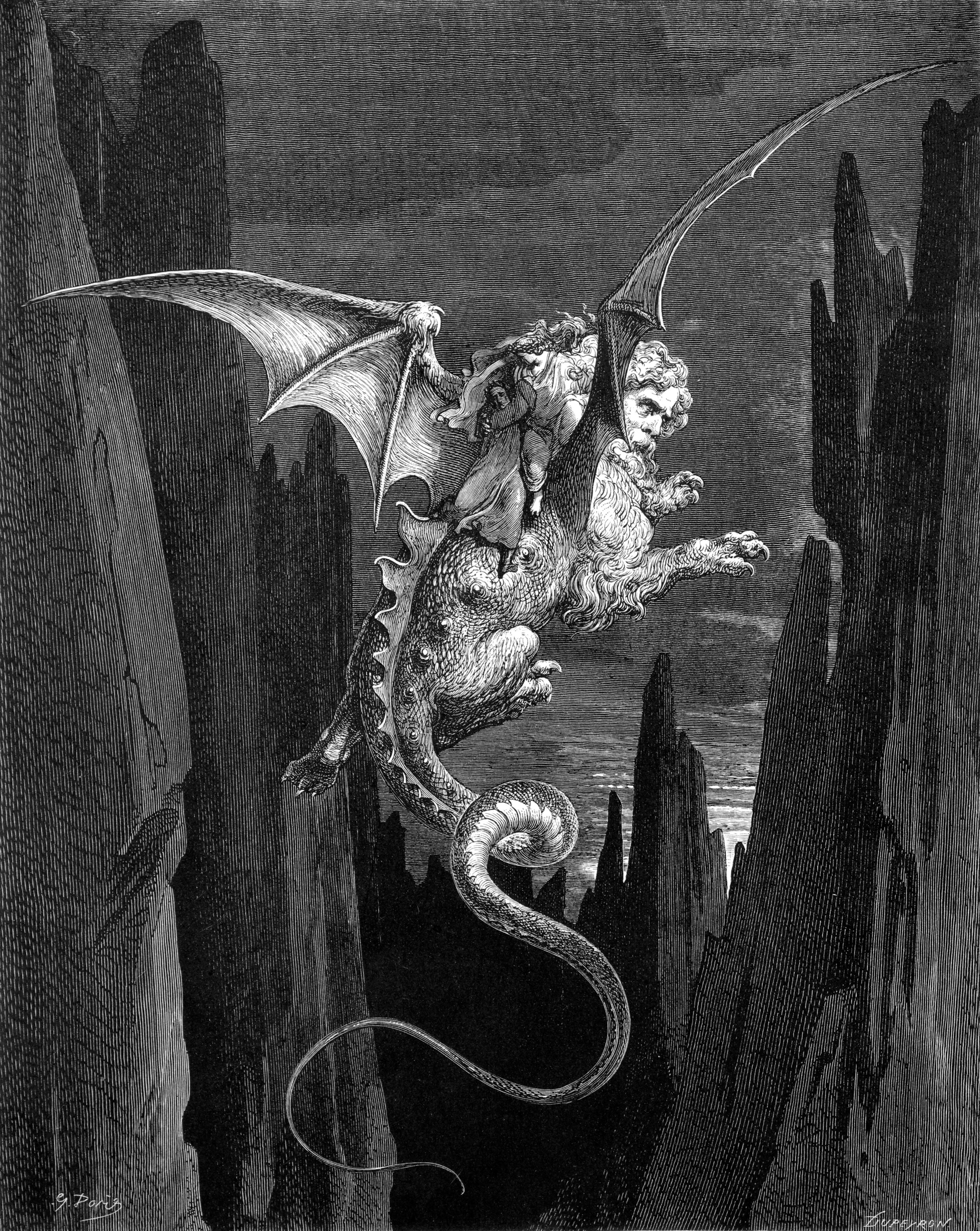
Geryon
Gustave Doré · 1861
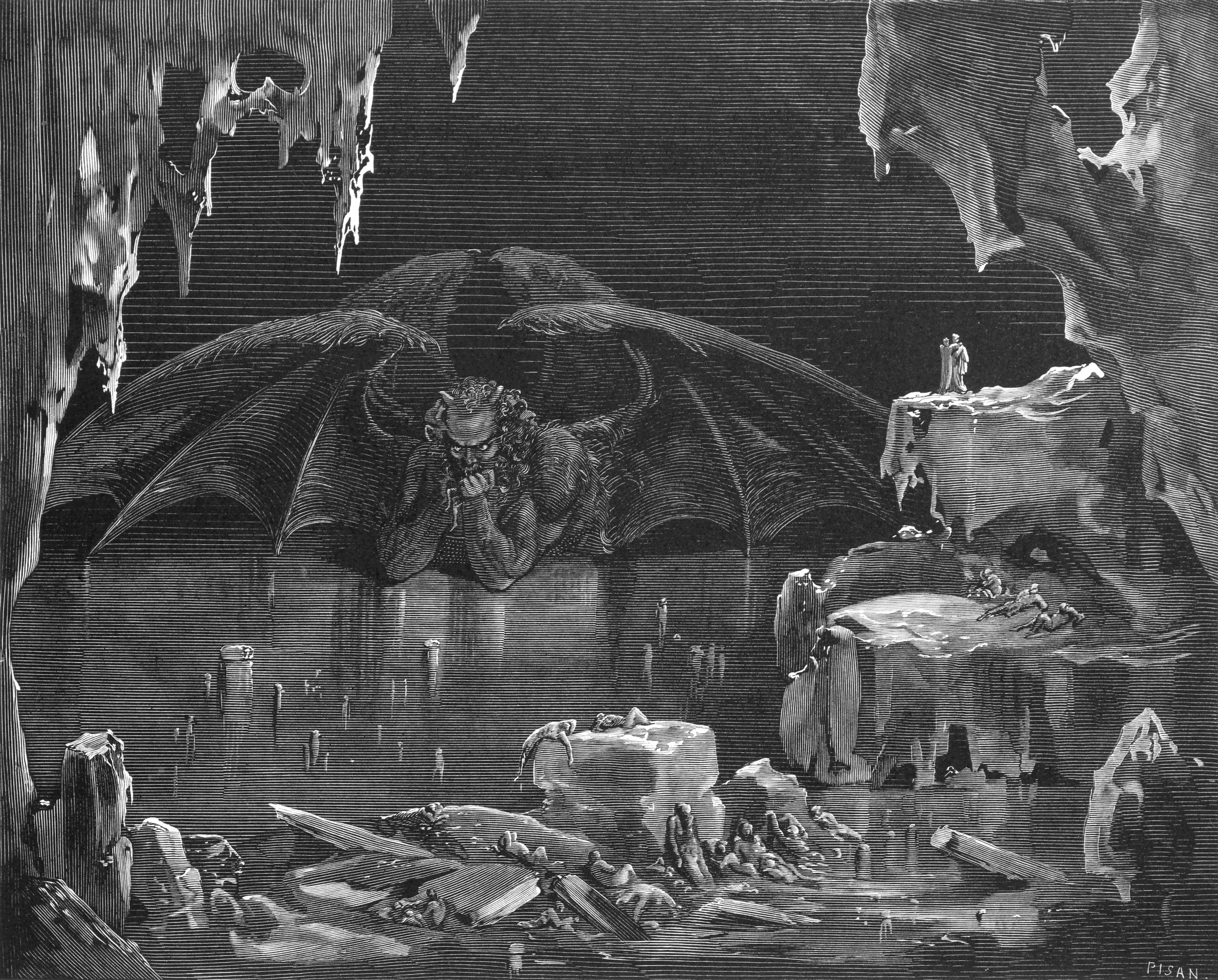
Lucifer, King of Hell
Gustave Doré · 1861
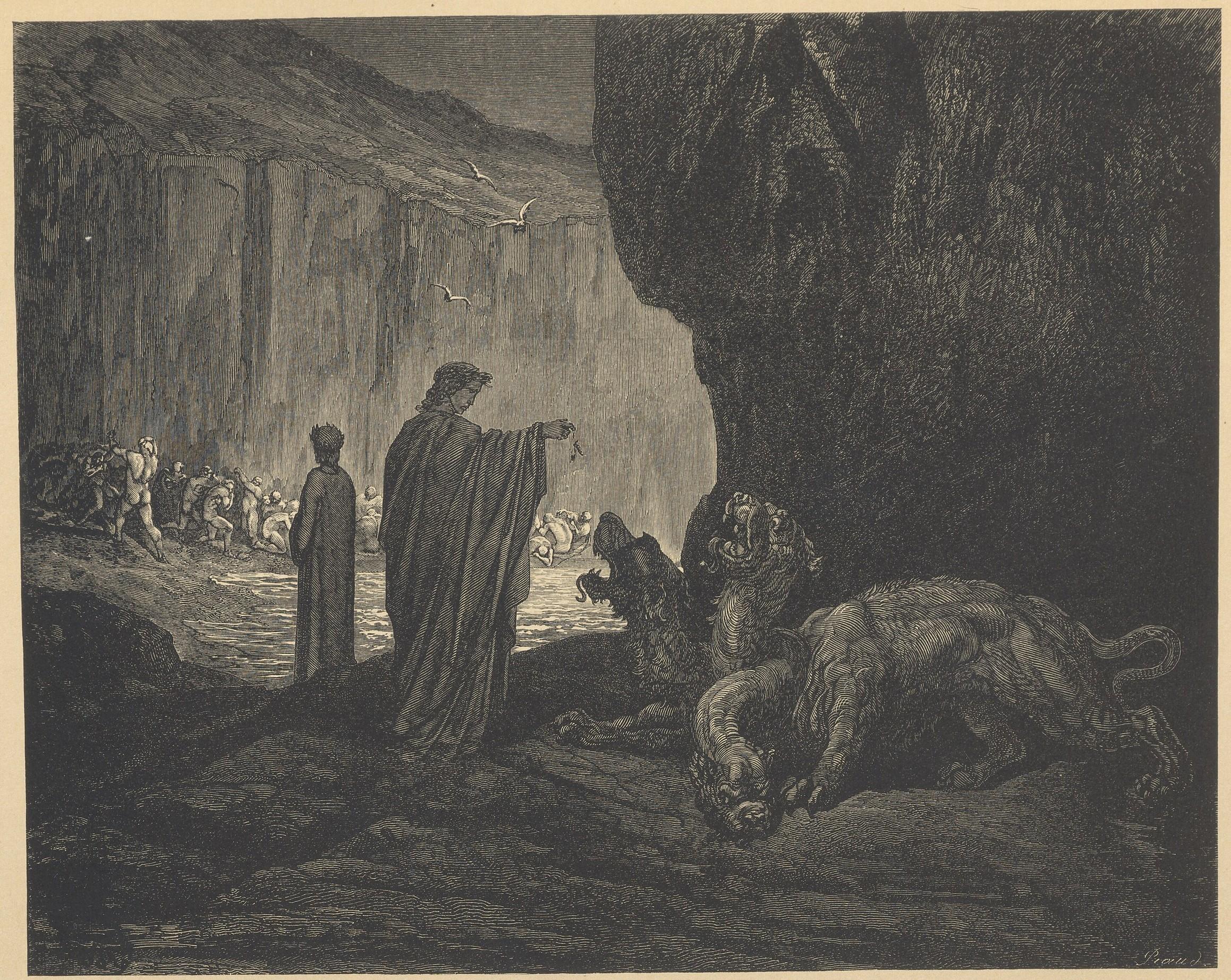
Cerberus
Gustave Doré · 1861
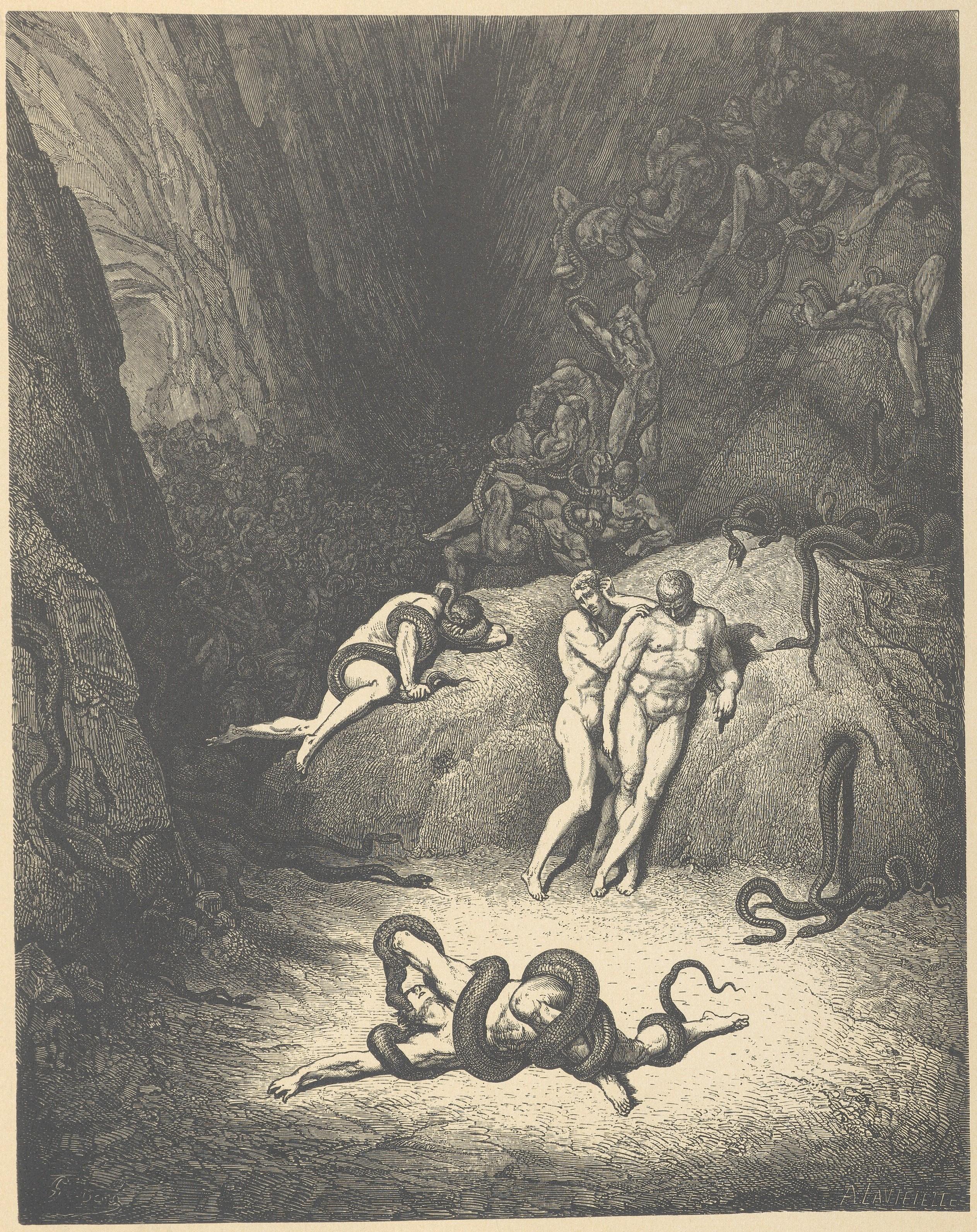
The Thieves and the Serpents
Gustave Doré · 1861
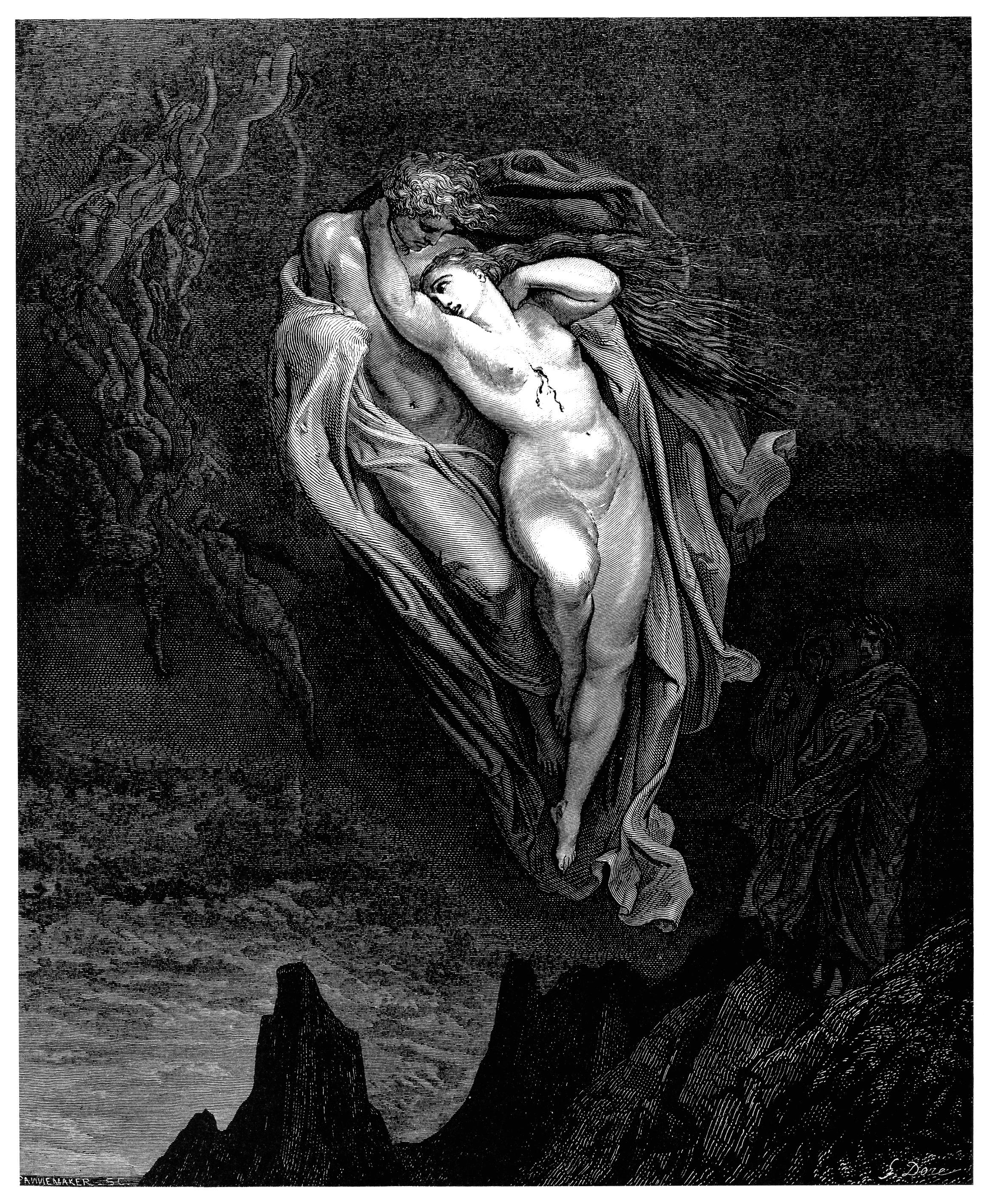
Paolo and Francesca
Gustave Doré · 1861
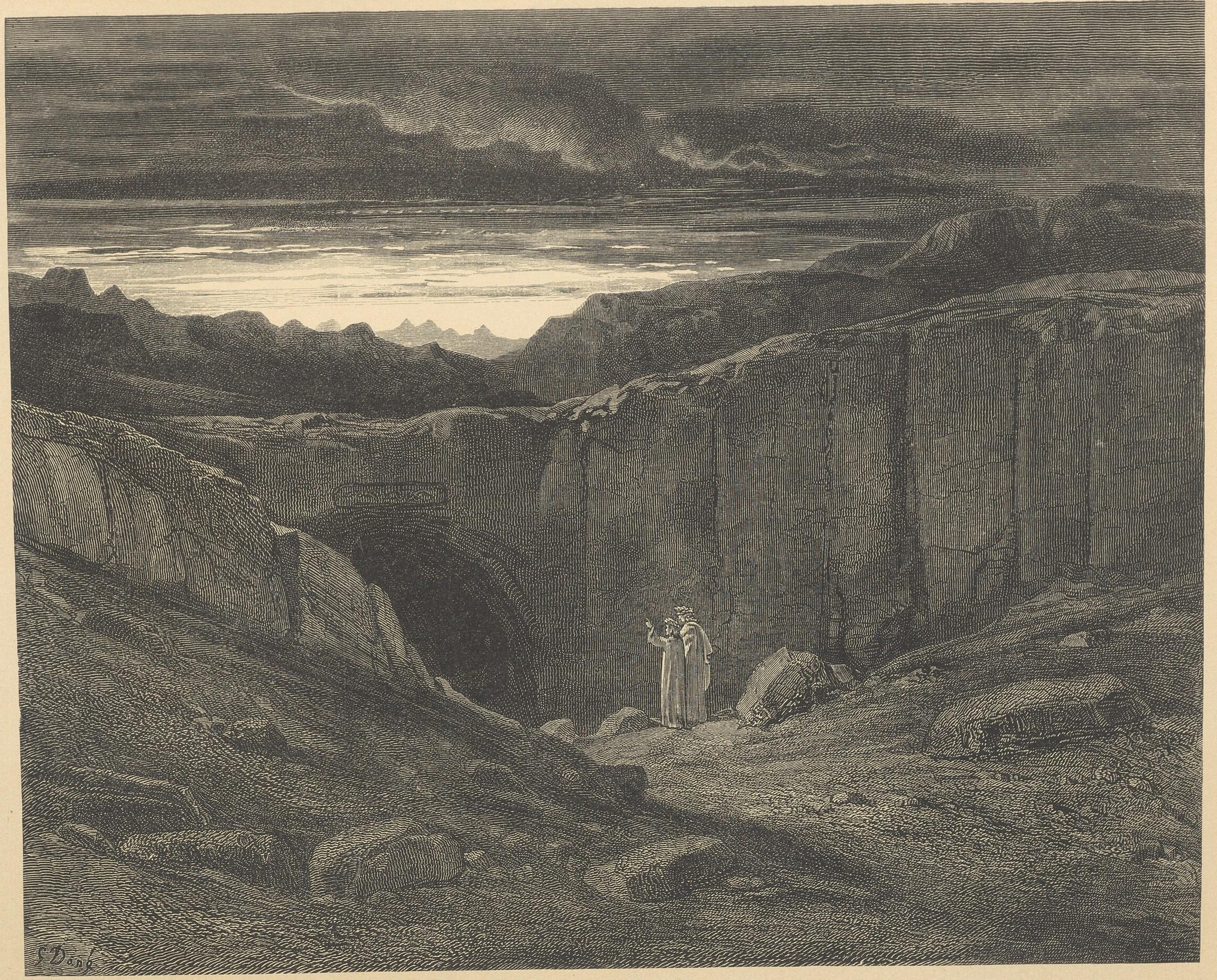
The Gate of Hell (Abandon All Hope)
Gustave Doré · 1861
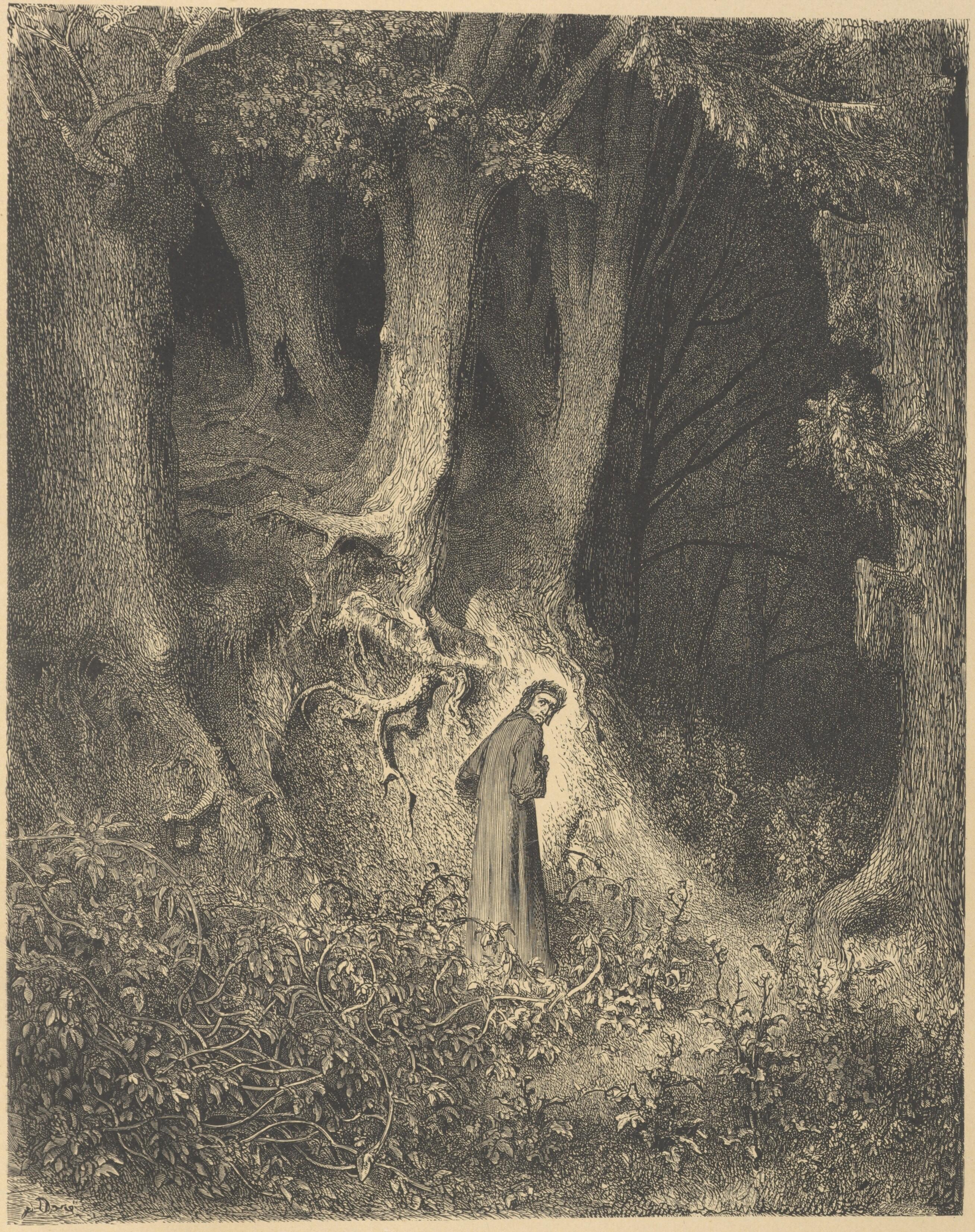
Dante Lost in the Dark Wood
Gustave Doré · 1861
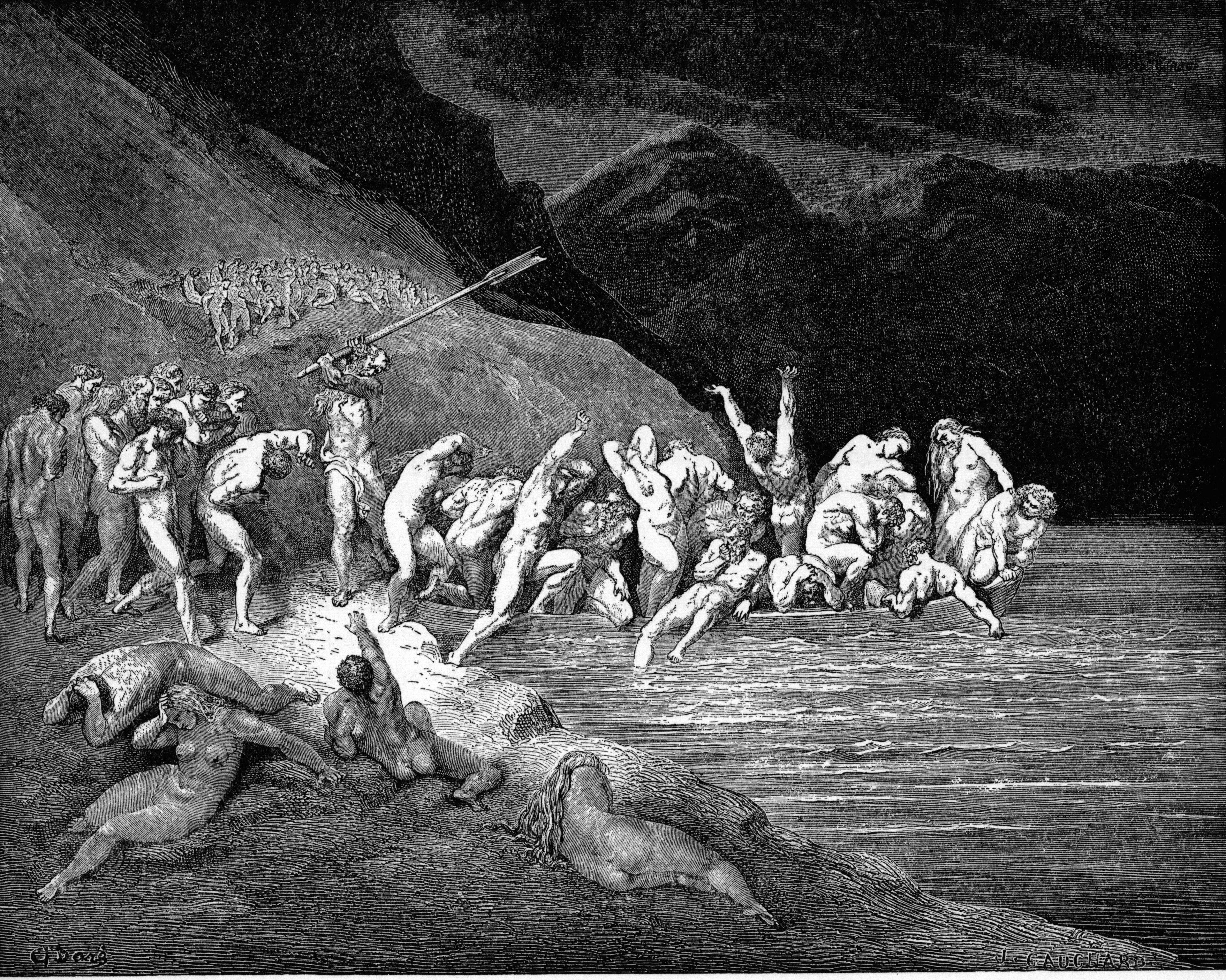
Charon, Ferryman of the Dead
Gustave Doré · 1861
Also from 1861
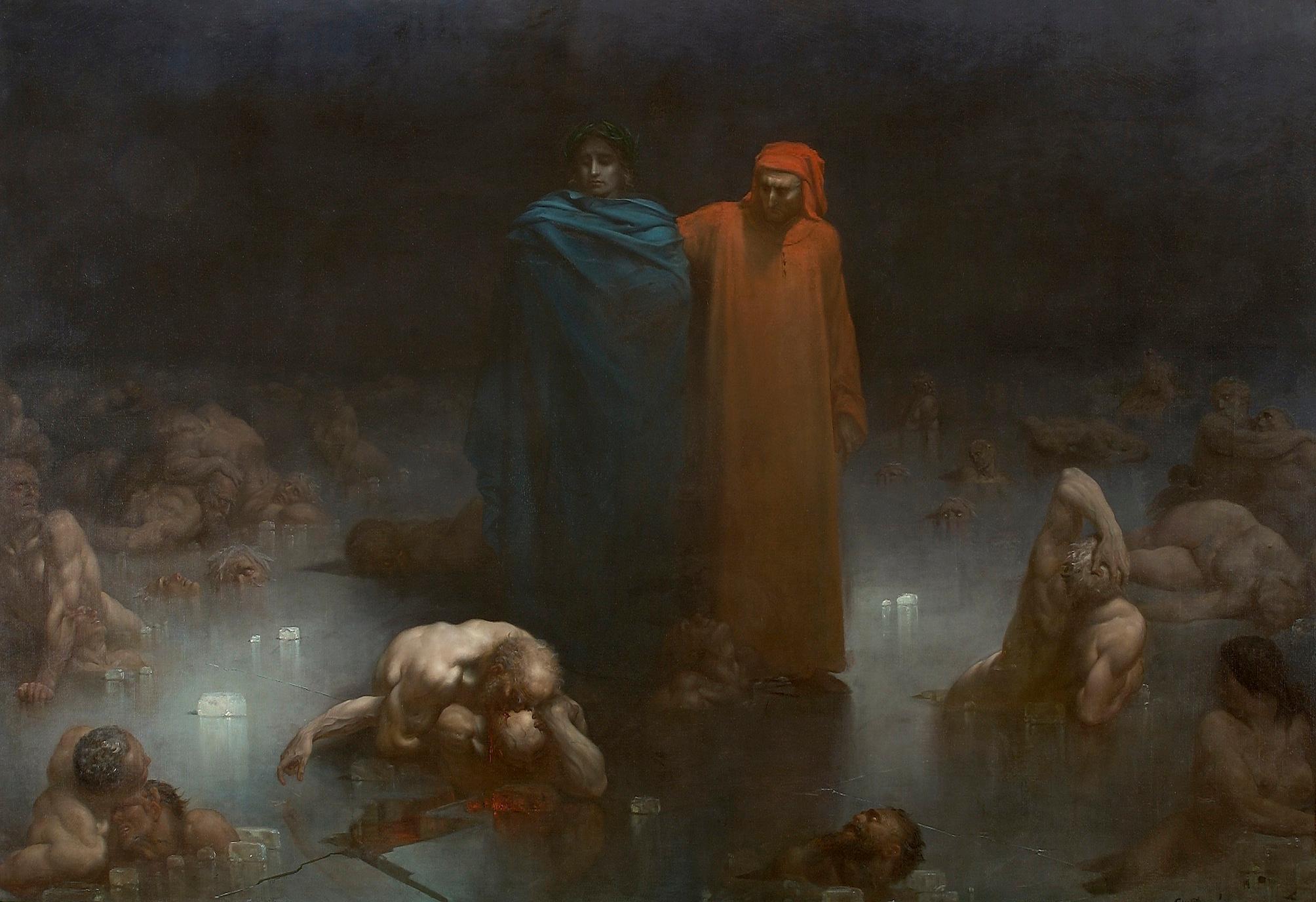
Dante and Virgil in the Ninth Circle of Hell
Gustave Doré · 1861
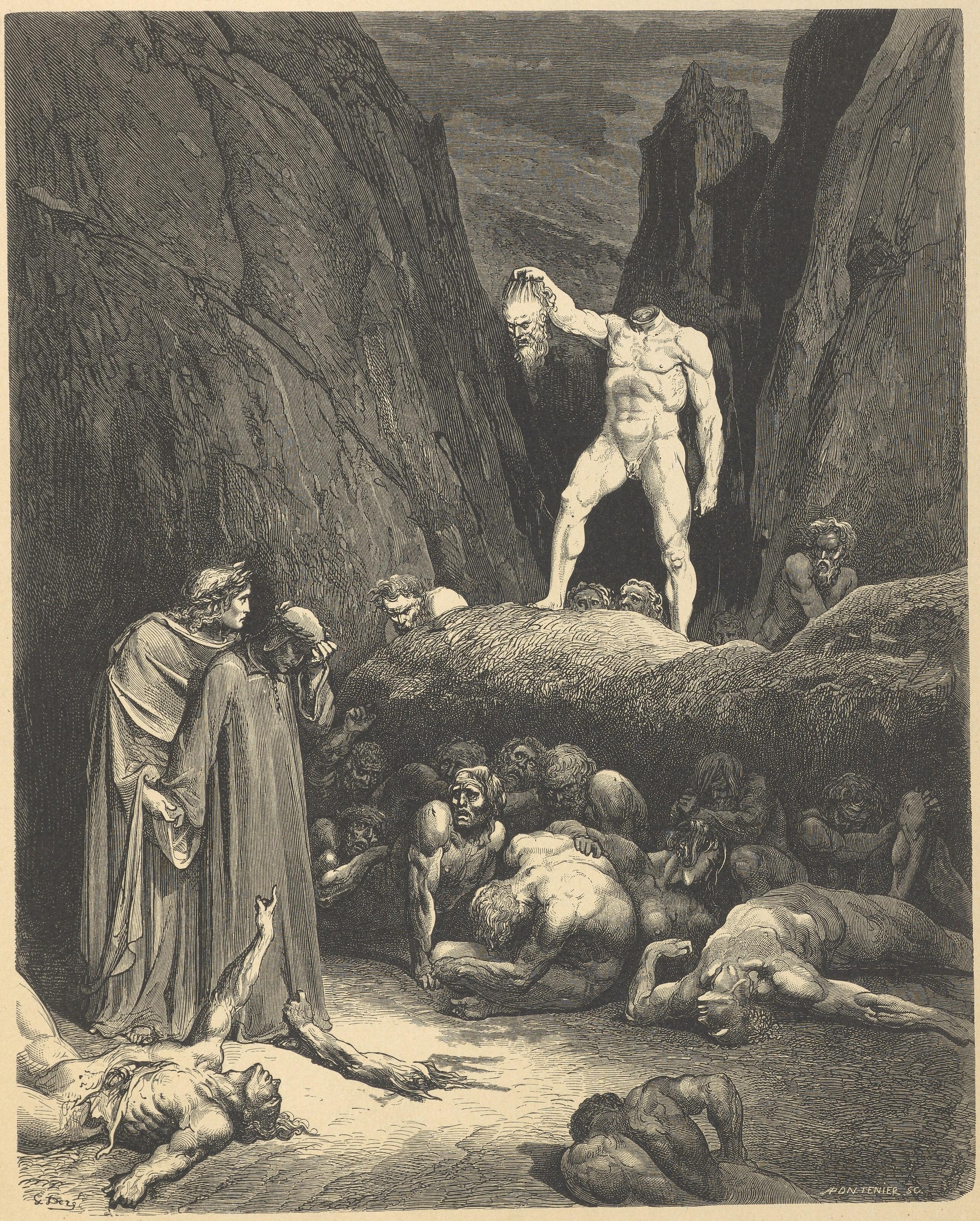
Bertran de Born Holding His Head
Gustave Doré · 1861
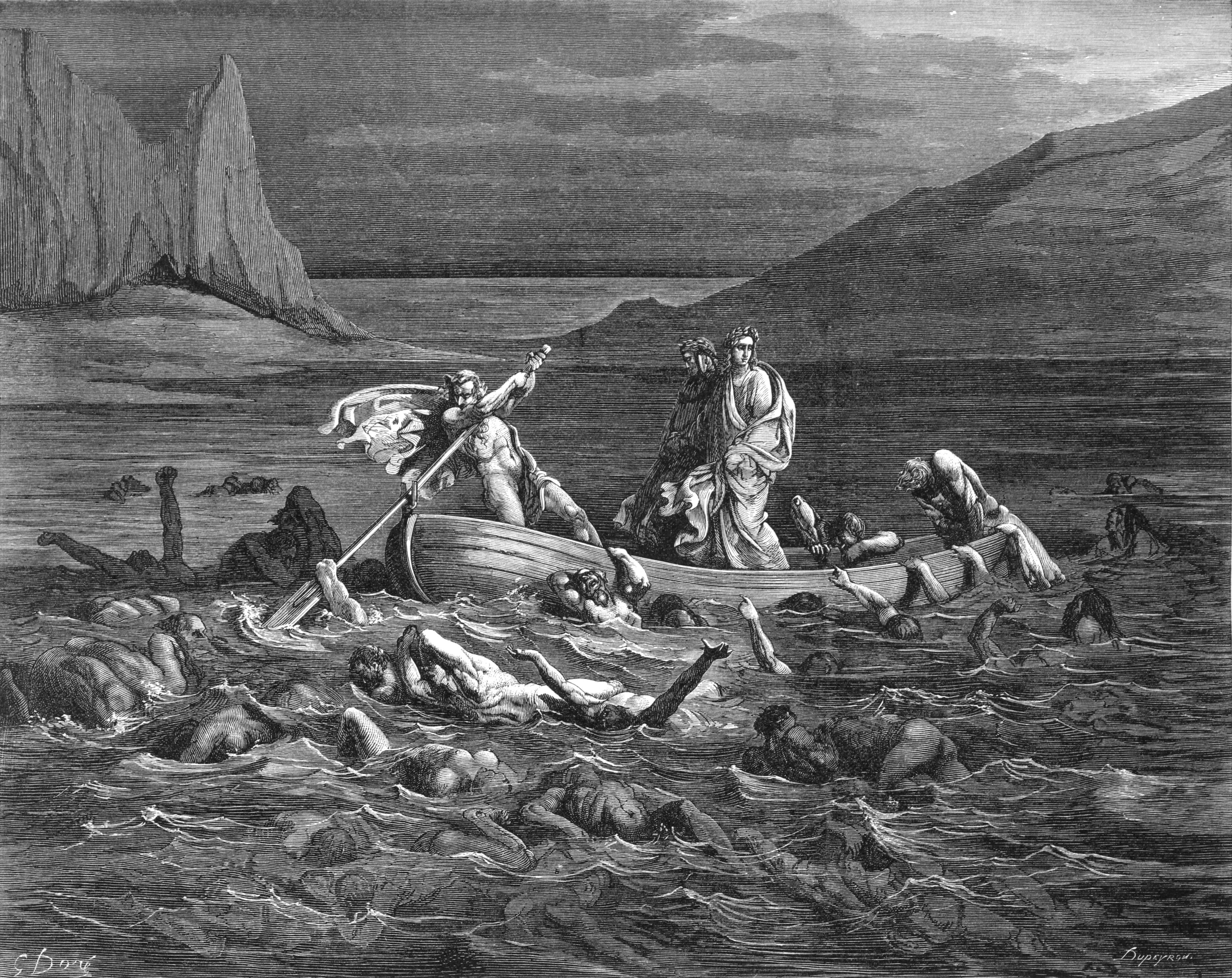
Crossing the Styx (Filippo Argenti)
Gustave Doré · 1861
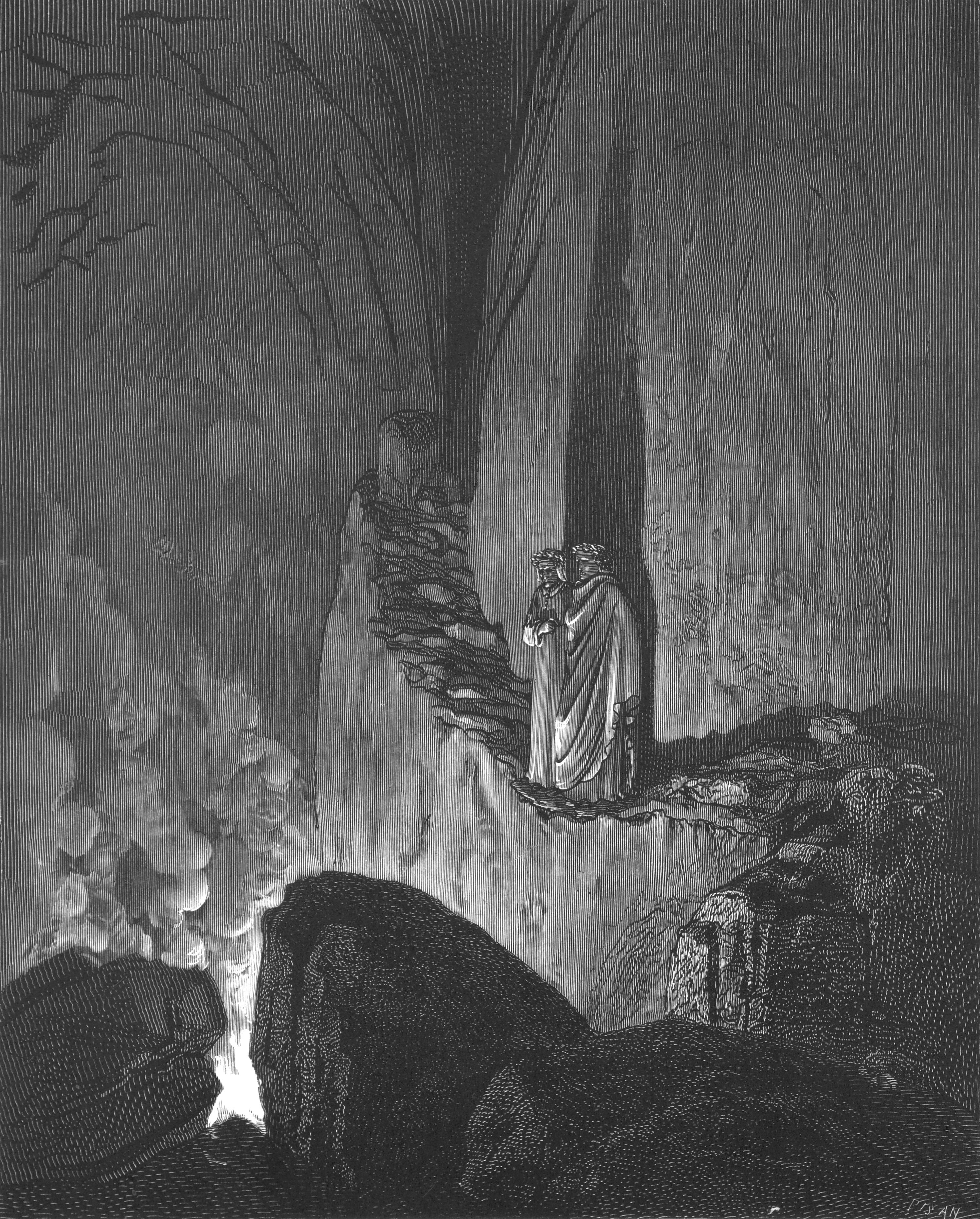
Ulysses and Diomedes
Gustave Doré · 1861
Caiaphas Crucified
Gustave Doré · 1861
The Whirlwind of the Lustful
Gustave Doré · 1861
The Giants
Gustave Doré · 1861
Farinata degli Uberti
Gustave Doré · 1861
Related works
The Whirlwind of the Lustful
Gustave Doré · 1861
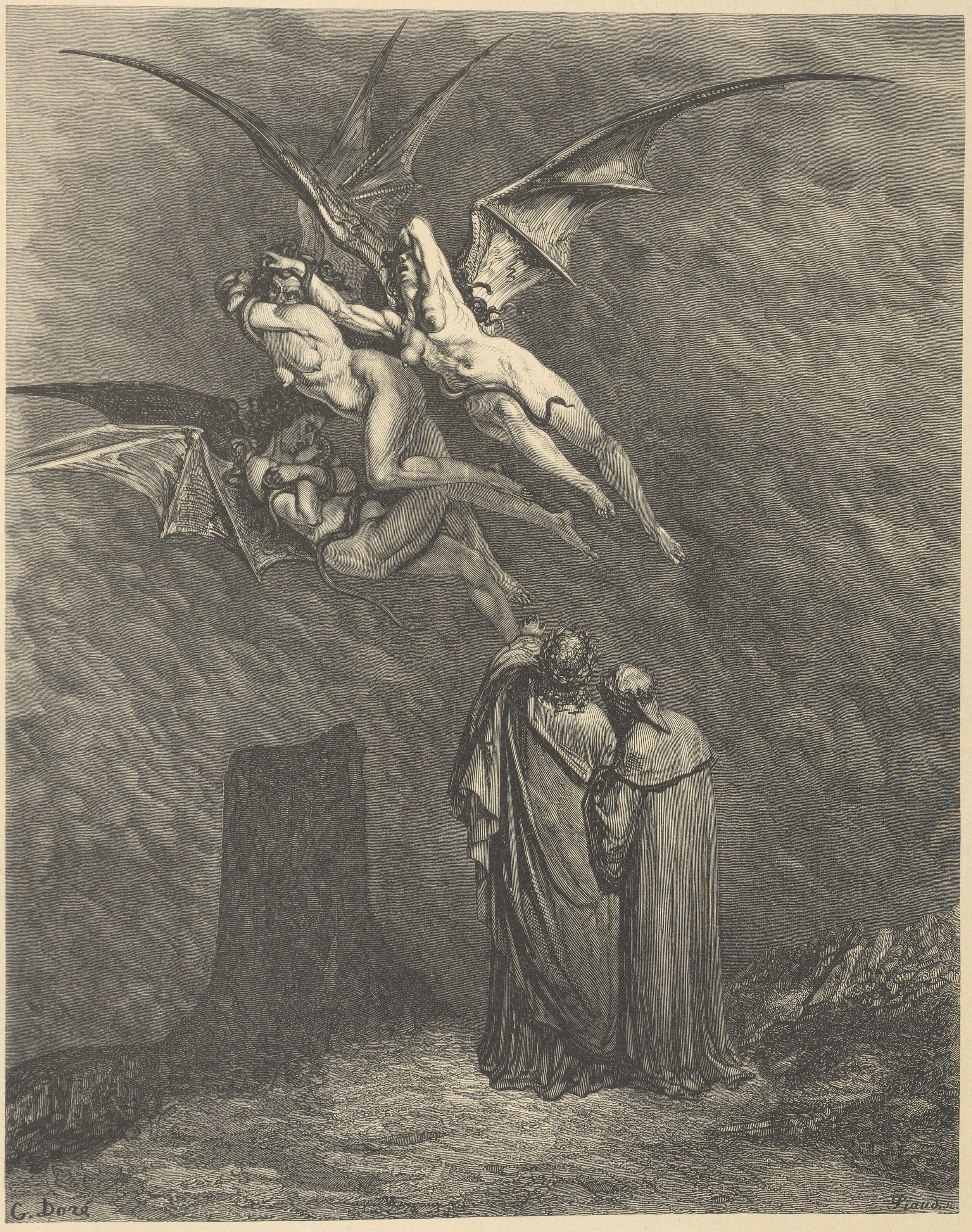
The Furies at the Gates of Dis
Gustave Doré · 1861
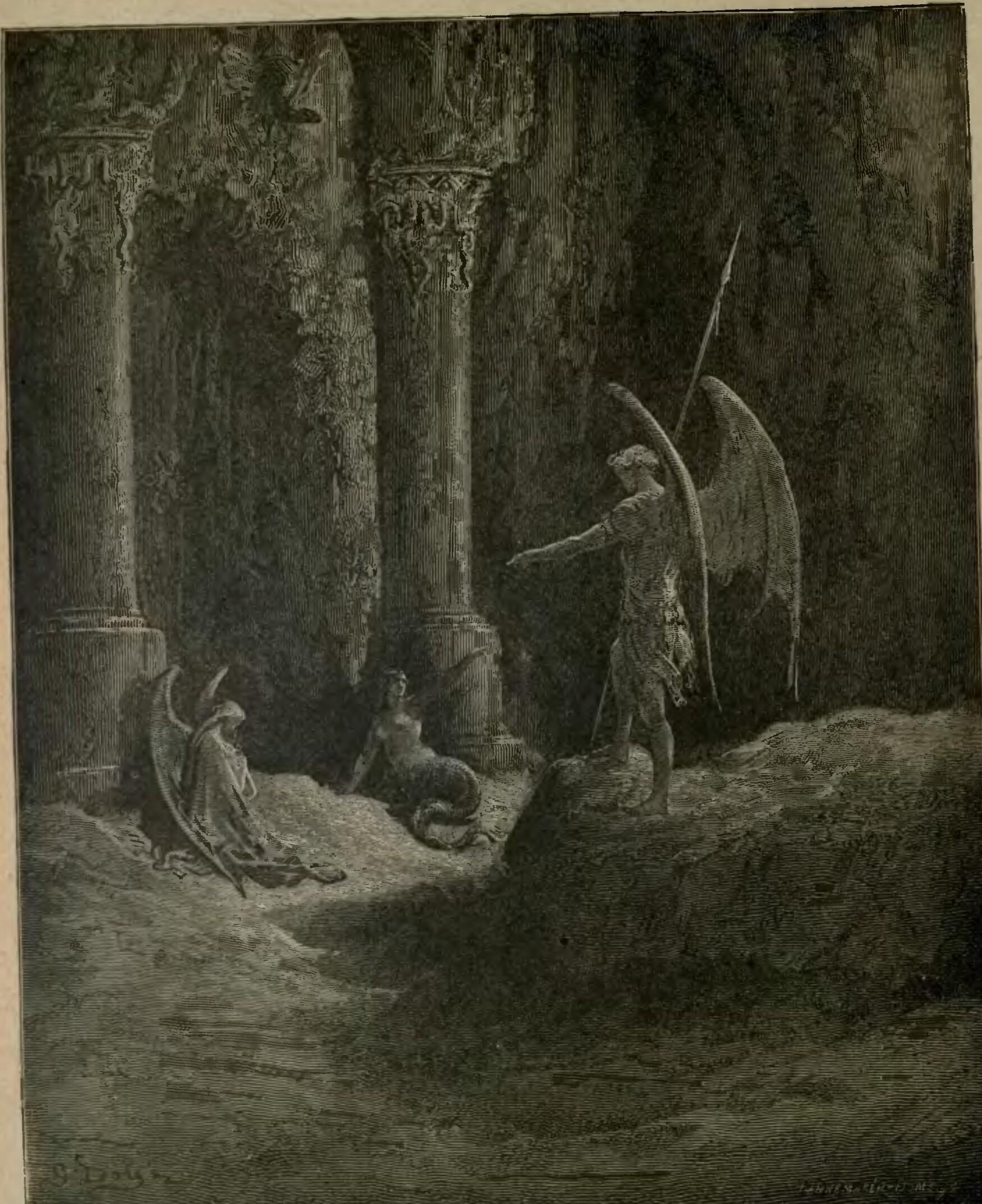
Satan, Sin and Death at the Gates of Hell
Gustave Doré · 1866
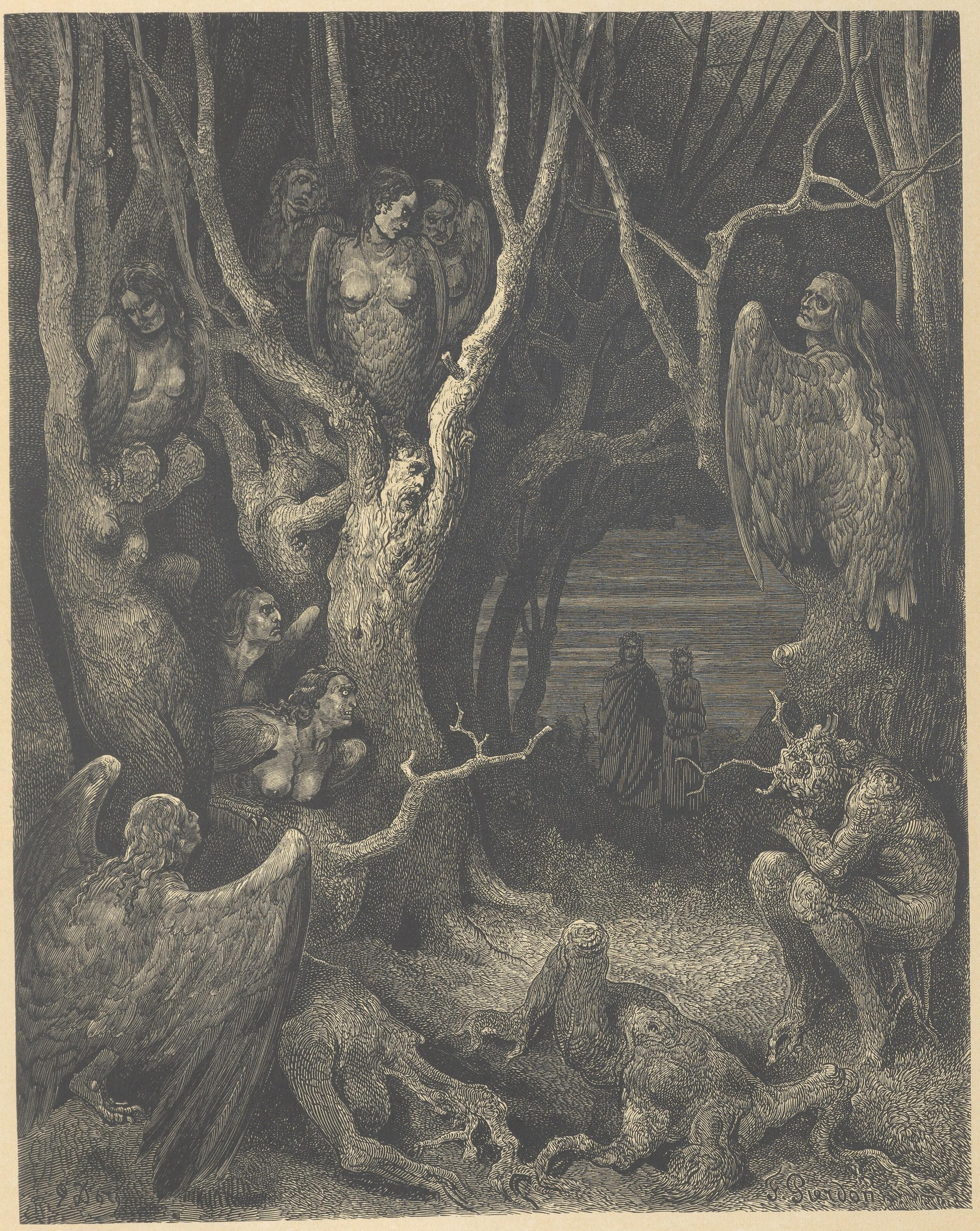
The Wood of the Suicides
Gustave Doré · 1861
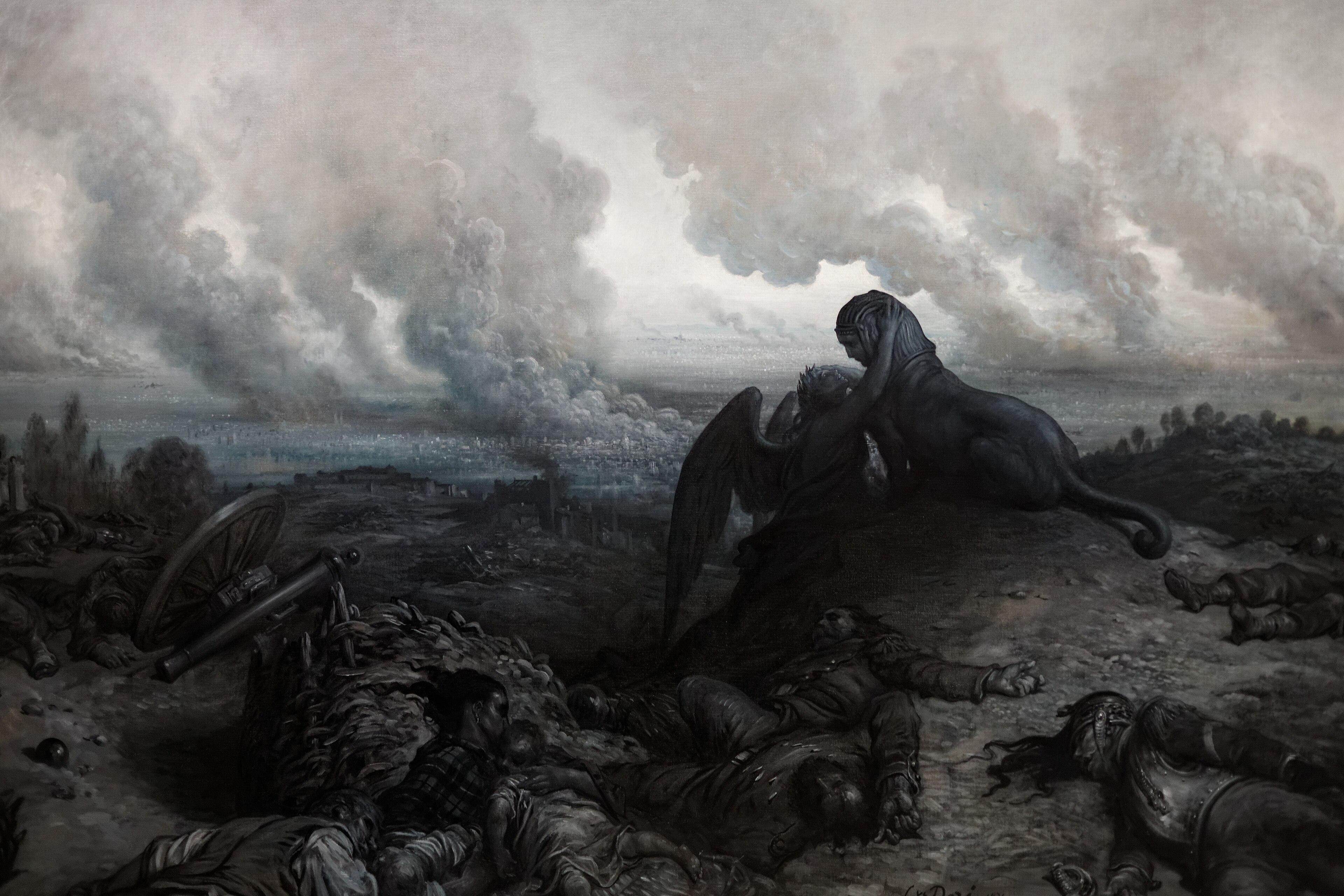
The Enigma
Gustave Doré · 1871
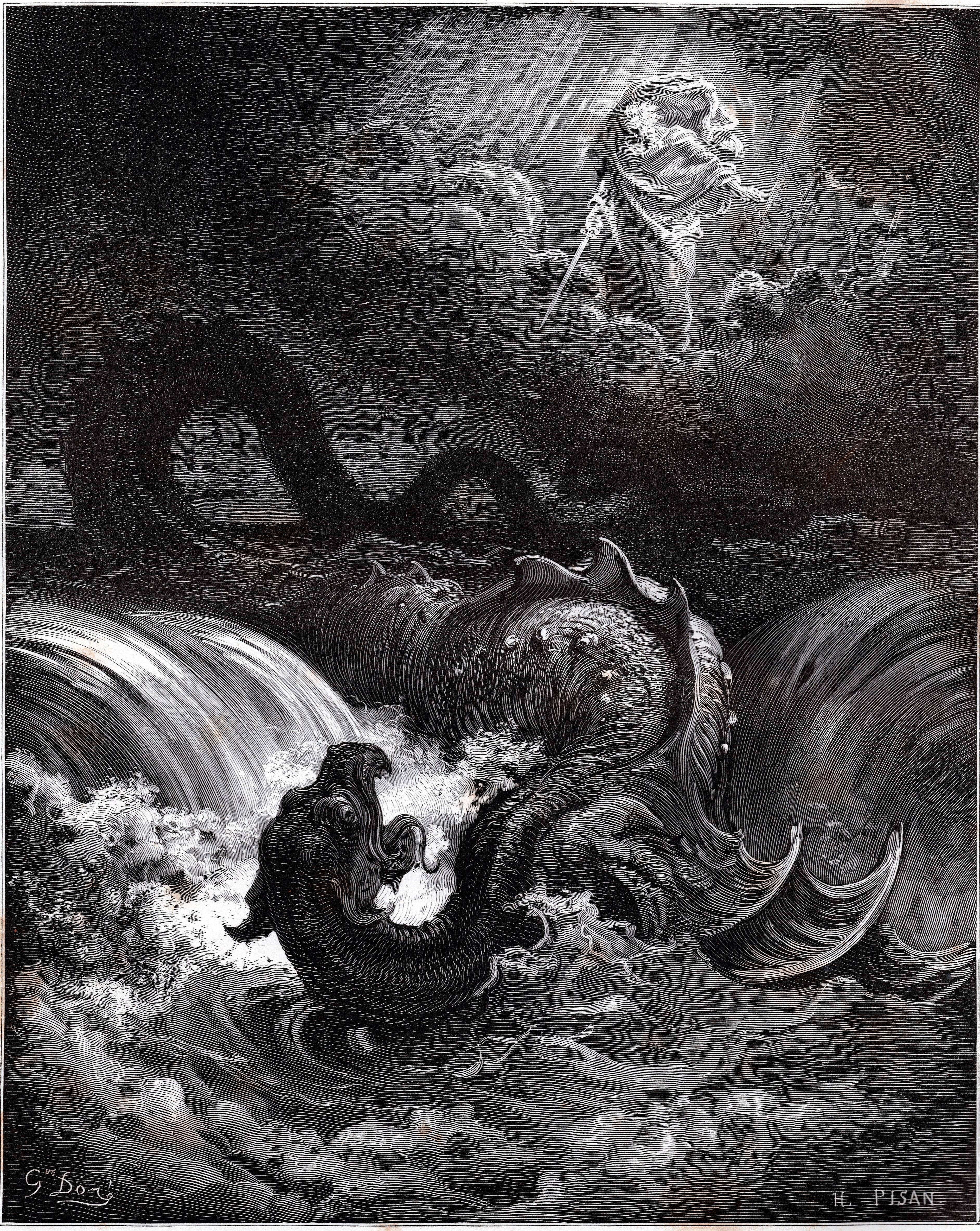
The Destruction of Leviathan
Gustave Doré · 1866
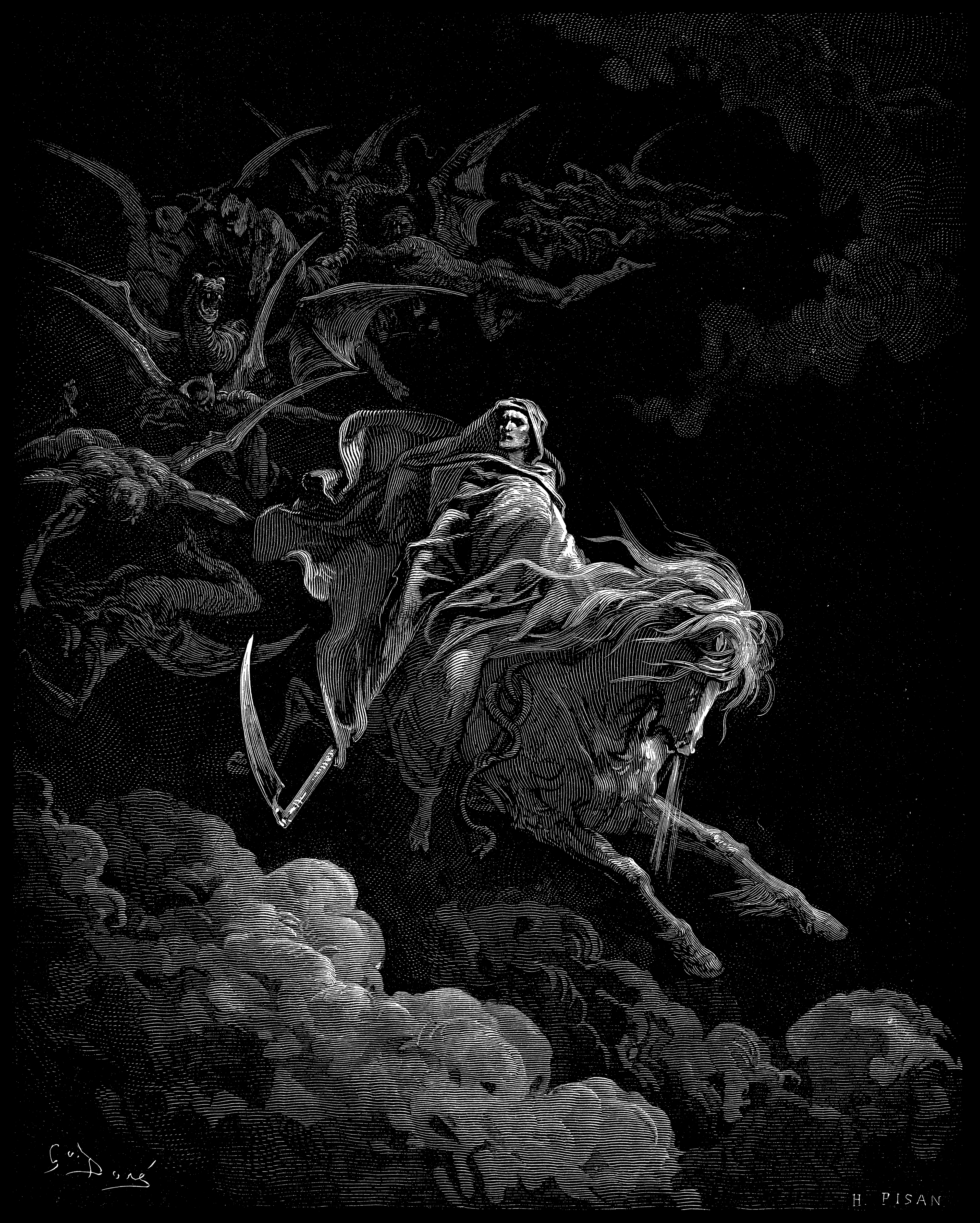
Death on the Pale Horse
Gustave Doré · 1866
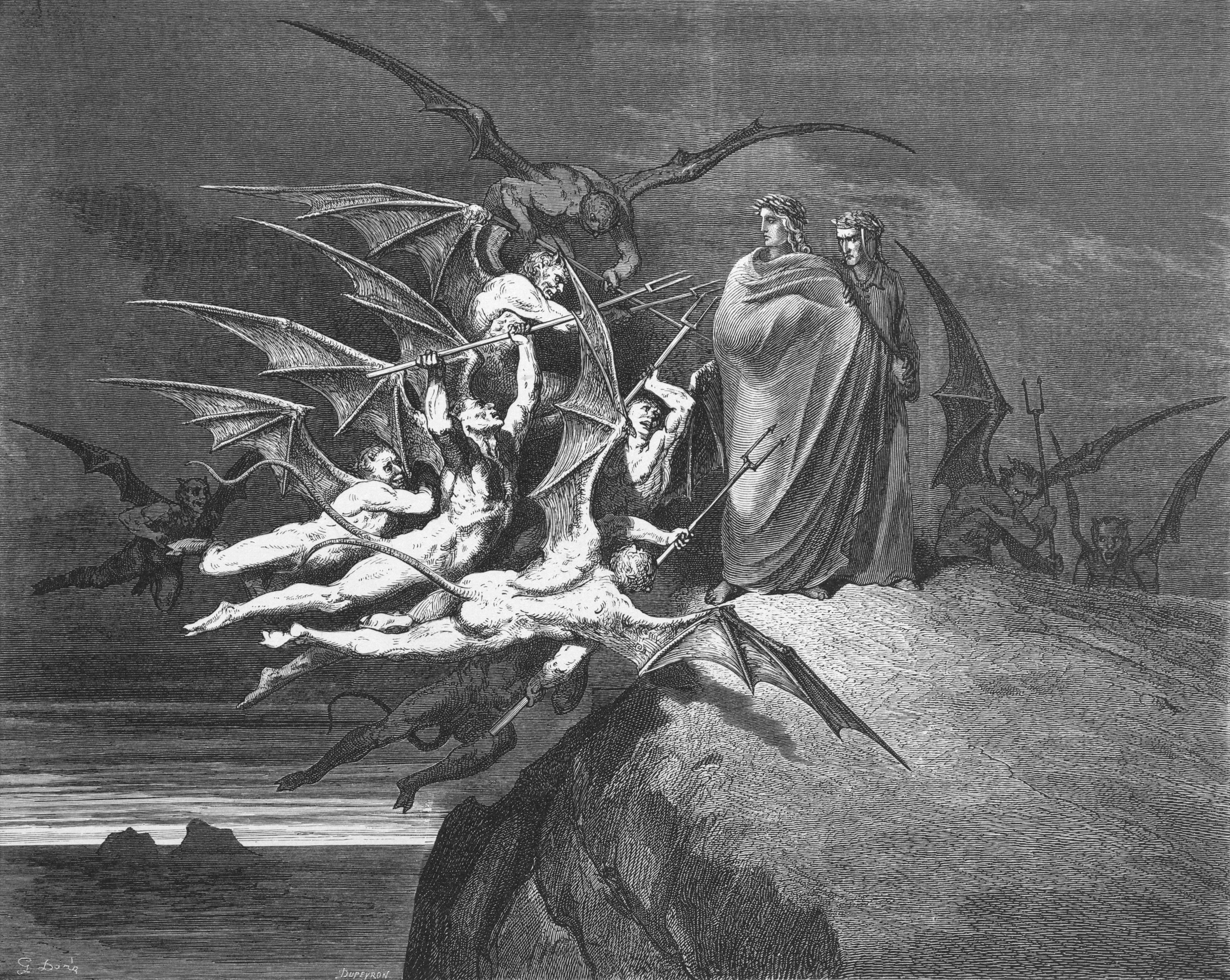
The Malebranche Demons
Gustave Doré · 1861