The Giants
Gustave Doré, 1861
The Giants is Gustave Doré's 1861 wood engraving for Inferno, Canto XXXI: chained giants rise from the waist up out of the well at the bottom of Hell, while Dante and Virgil stand tiny on the slope below.
- Artist
- Gustave Doré
- Date
- 1861
- Medium
- Wood engraving
- Movement
- Romanticism
- Themes
- Mythology, Literature & Poetry, The Nude, Power & History, Dark Academia
The Giants is Gustave Doré's wood engraving of the chained giants standing in the well at the bottom of Hell, from Canto XXXI of Dante's Inferno, published in Paris in 1861. Huge naked figures rise from the waist up out of a circular masonry well, their wrists in iron manacles, while Dante and Virgil, tiny on a slope below, gaze up at them. It is one of the great demonstrations of scale in Doré's Inferno illustrations, and later English editions captioned it with Cary's lines on Ephialtes, the giant who "Would of his strength against almighty Jove / Make trial".
What you are looking at
The plate is wide, and the giants fill almost all of it. At the left, a young, beardless giant leans on the brick rim of the well with his eyes closed and his head thrown back, one arm flung over his head and the other wrist locked in a heavy iron cuff whose chain hangs over the stones. He looks less fierce than exhausted, like a sleeper or a captive after a beating. Behind him, at the far left edge, the shoulder and back of another giant are just visible.
To the right, two bearded giants with thick curling hair lean forward over the slope, their arms pinned behind their backs, the chains running down from their wrists. One stares down with a worried frown; the other bows his head. At the far right, a fifth, older giant is seen in profile, gazing away. Their muscles are drawn in fine curving lines that follow every swell of the flesh, and the light falls across them from the left.
The rest is landscape. The masonry curb of the well sits in dark water at the lower left, and a long pale slope rises to the right. On it stand Virgil and Dante, perhaps a tenth the height of the giants' torsos, Virgil pointing up. Doré's signature is at lower left, and the engraver's, "G. Perrichon sc.", at lower right.
The passage: Canto XXXI
As the poets approach the last circle, Dante thinks he sees the towers of a city. Virgil corrects him: "know that these are not towers, but giants, / And they are in the well, around the bank, / From navel downward, one and all of them" (XXXI.31–33, Longfellow's translation). Dante compares the ring of giants to the towered walls of Montereggione, a castle near Siena.
They pass Nimrod, the builder of Babel, who can only babble a meaningless phrase, and then reach a giant "far more fierce and large", bound with a chain that coils five times around his body (XXXI.84–90). Virgil names him:
"This proud one wished to make experiment Of his own power against the Supreme Jove," My Leader said, "whence he has such a guerdon. Ephialtes is his name; he showed great prowess. What time the giants terrified the gods; The arms he wielded never more he moves." (XXXI.91–96)
Finally they come to Antaeus, who is unchained, and Virgil persuades him to lift them down to the frozen lake of Cocytus.
How Doré staged it
Dante's giants are fixed in the well like towers in a wall, mostly speechless, each with a single trait: Nimrod's horn, Ephialtes's chains, Antaeus's freedom. Doré makes a group portrait instead. He gives no giant an attribute that would let us name him with certainty, and he pulls them together so that they crowd the picture like a frieze.
He also builds the well literally, as a round brick curb of the kind found in any village, which turns Dante's image into something homely and therefore stranger. The young giant with his arm over his head, cuffed to the bricks, carries the sense of Ephialtes's line, "The arms he wielded never more he moves", whatever his name. Doré drew two more plates for this canto: Nimrod alone, and Antaeus bending down to set the poets in the pit.
How it was made and published
As with the rest of the book, Doré drew the design on a boxwood block and a professional engraver cut it; here the signature is that of Georges Perrichon. The plate was first published in 1861 in Hachette's large folio L'Enfer de Dante Alighieri, which Doré financed himself. The scan shown here comes from a later English edition with Henry Francis Cary's translation, published by Cassell, Petter, Galpin & Co. and printed around 1890, in which the plate is numbered LXV.
What it means
The giants are the last image of pride before Dante reaches the traitors at the bottom of Hell. In classical myth they warred against the Olympian gods; in the Bible Nimrod built the tower meant to reach heaven, which Doré illustrated in his Bible as The Confusion of Tongues. Dante puts both traditions in one well and chains them.
Doré's giants recall a chained Titan, Prometheus, as in Eduard Müller's Prometheus Bound and the Oceanids, and they prepare for Lucifer, the greatest rebel of all, frozen at the center below. For the myths behind them and more by Gustave Doré, see Greek mythology in art.
Questions & answers
What does Doré's The Giants show?
It shows the giants of Inferno Canto XXXI standing in the well around the pit of Hell, chained at the wrists, with Dante and Virgil small on a slope below. English editions captioned it with Virgil's words on Ephialtes: "This proud one wished to make experiment / Of his own power against the Supreme Jove" (XXXI.91–92).
Who are the giants in Dante's Inferno?
Dante names Nimrod, the builder of Babel, and the mythical giants Ephialtes, Briareus and Antaeus, along with others who fought the Olympian gods. They stand in the well from the navel down, like towers around a castle wall. Antaeus, who is unchained, lowers the poets to the frozen lake of Cocytus.
When was the giants plate made and published?
Doré designed it for his illustrated Inferno, published in Paris by Hachette in 1861 as L'Enfer de Dante Alighieri, an edition he financed himself. The scan shown is from a later Cassell edition with Henry Francis Cary's English translation, printed around 1890, where it is plate LXV.
Who engraved Doré's The Giants?
It is signed "G. Perrichon sc." for the wood engraver Georges Perrichon; "sc." means sculpsit, "cut it". Doré drew the design on the boxwood block and Perrichon cut it, shaping the giants' muscles with fine curving lines and the background with even horizontal strokes.
What do the giants symbolize in the Inferno?
They stand for pride and brute force turned against God: classical giants who attacked Jove and Nimrod who built the tower of Babel. Placed at the edge of the traitors' circle, they are chained and powerless. Doré's sleeping, cuffed giant makes that helplessness visible.
More by Gustave Doré
All works →
The Gate of Hell (Abandon All Hope)
Gustave Doré · 1861
Minos, Judge of the Damned
Gustave Doré · 1861
Count Ugolino and His Sons
Gustave Doré · 1861
Paolo and Francesca
Gustave Doré · 1861
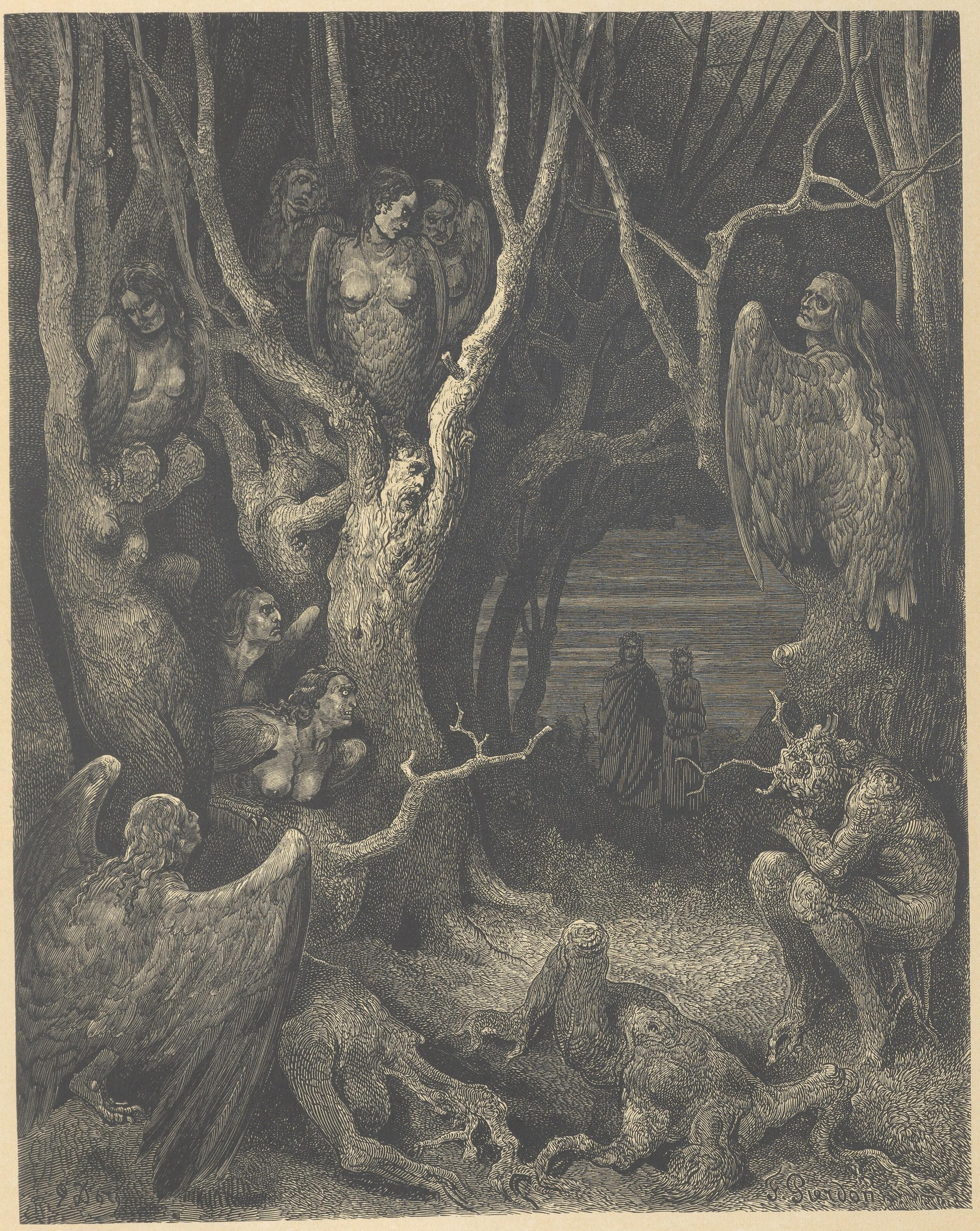
The Wood of the Suicides
Gustave Doré · 1861
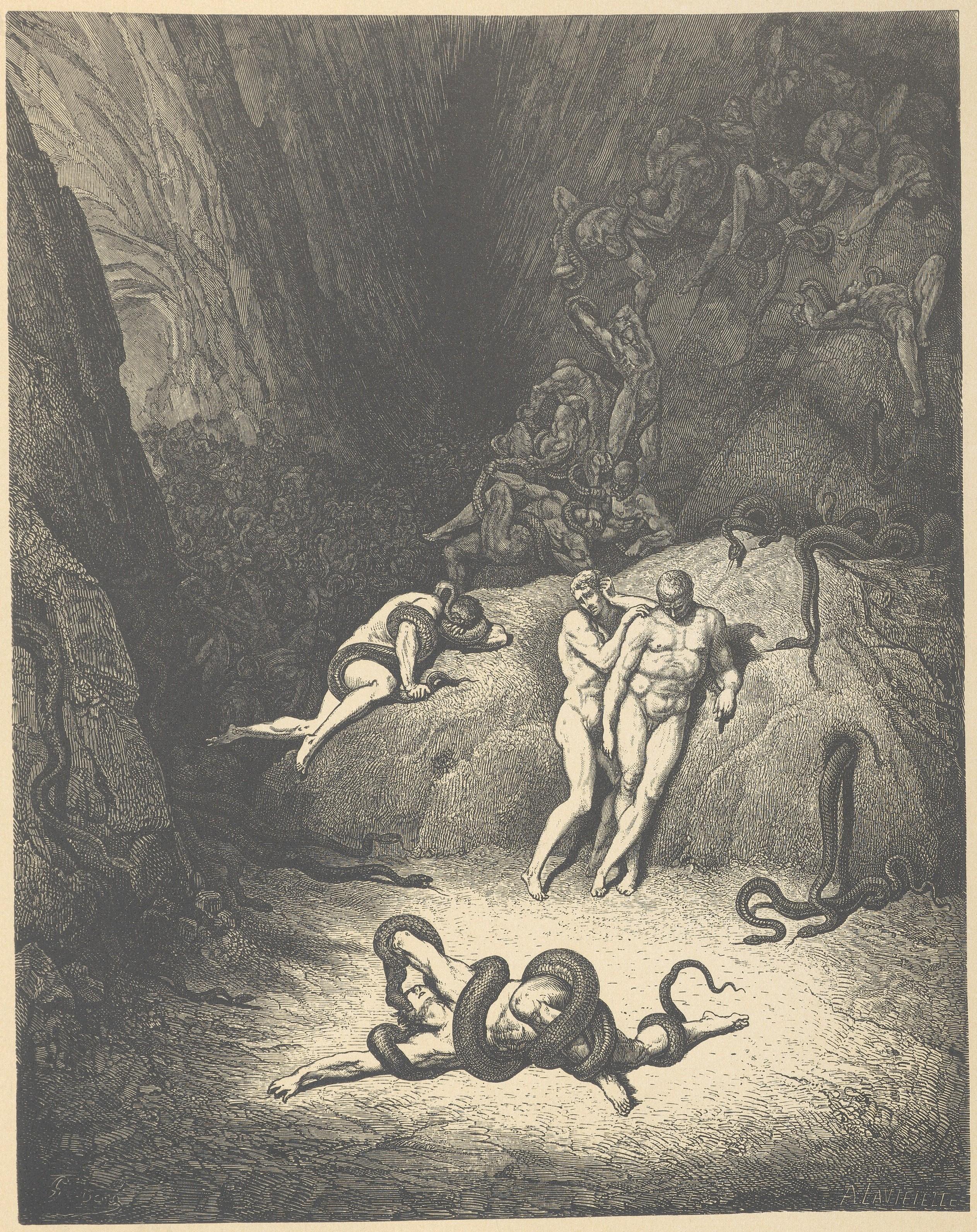
The Thieves and the Serpents
Gustave Doré · 1861
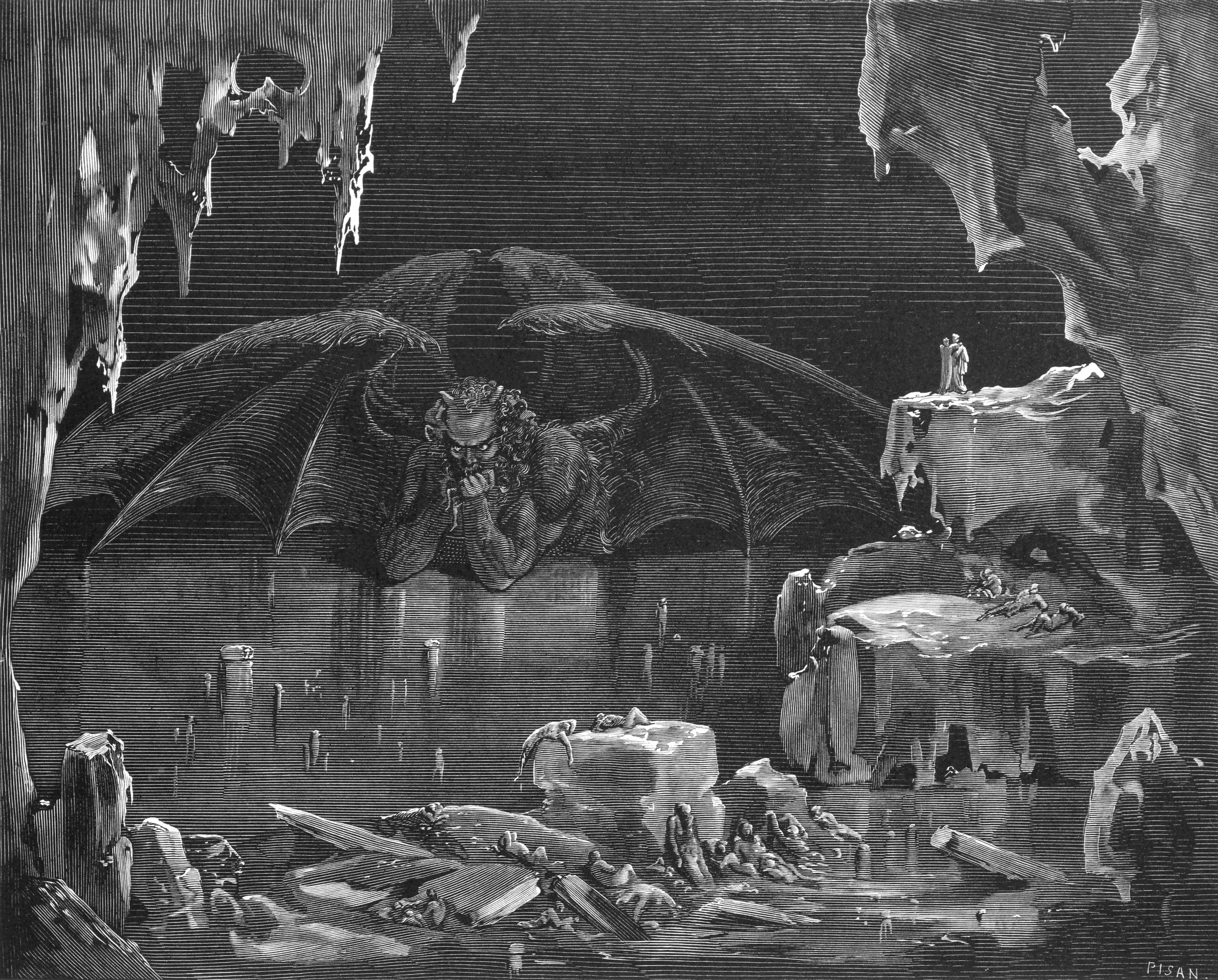
Lucifer, King of Hell
Gustave Doré · 1861
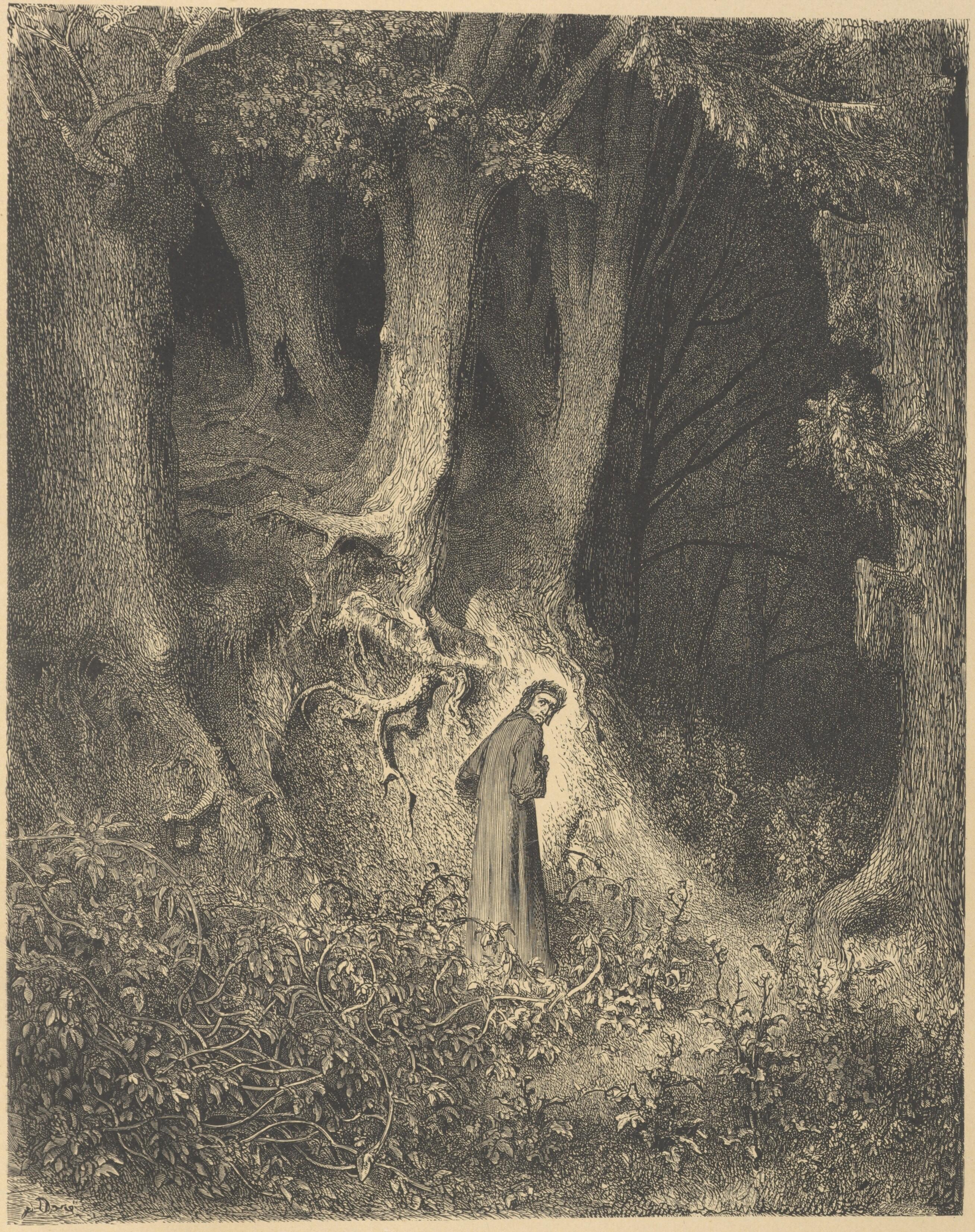
Dante Lost in the Dark Wood
Gustave Doré · 1861
Also from 1861
Dante and Virgil in the Ninth Circle of Hell
Gustave Doré · 1861
Bertran de Born Holding His Head
Gustave Doré · 1861
Crossing the Styx (Filippo Argenti)
Gustave Doré · 1861
Ulysses and Diomedes
Gustave Doré · 1861
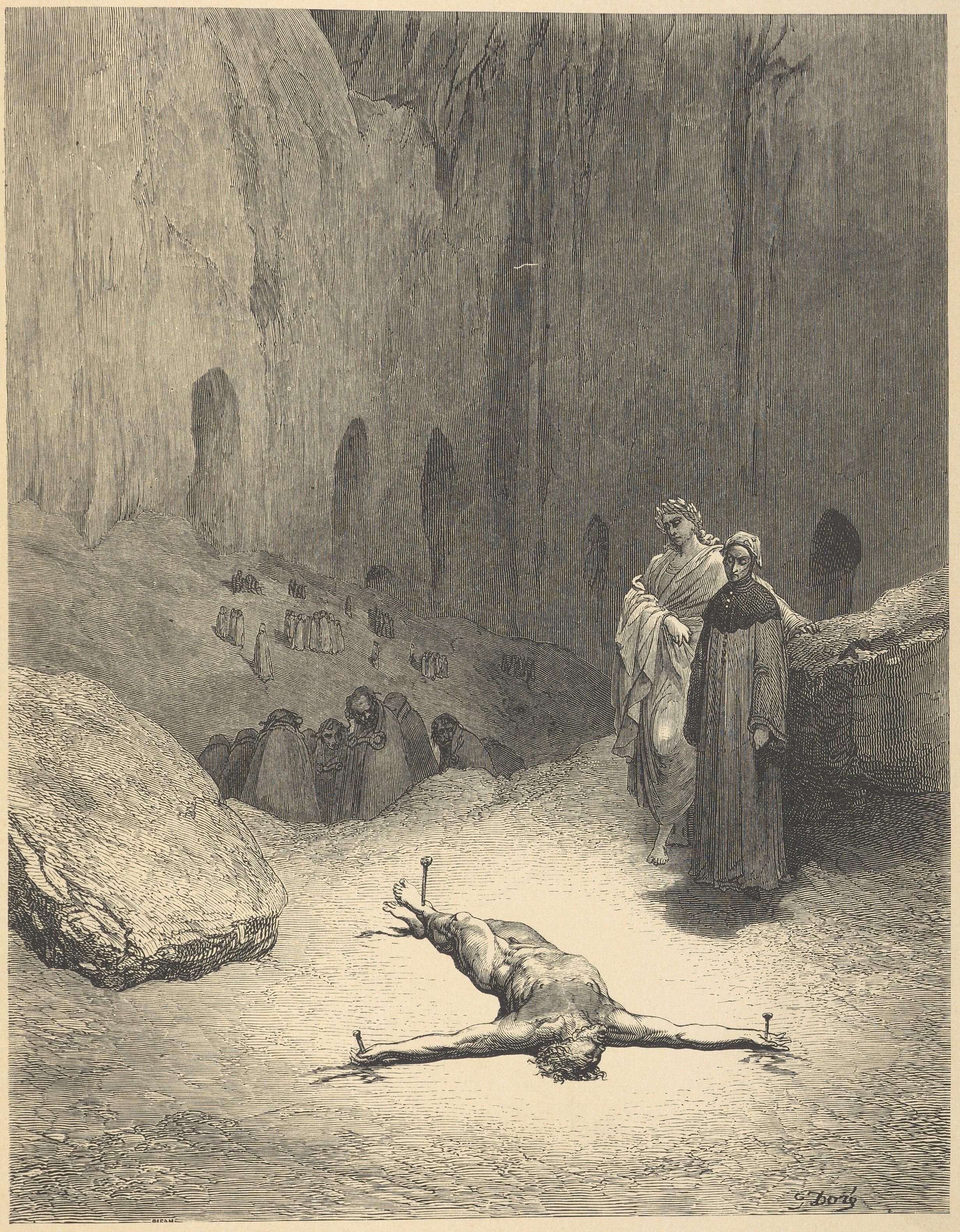
Caiaphas Crucified
Gustave Doré · 1861
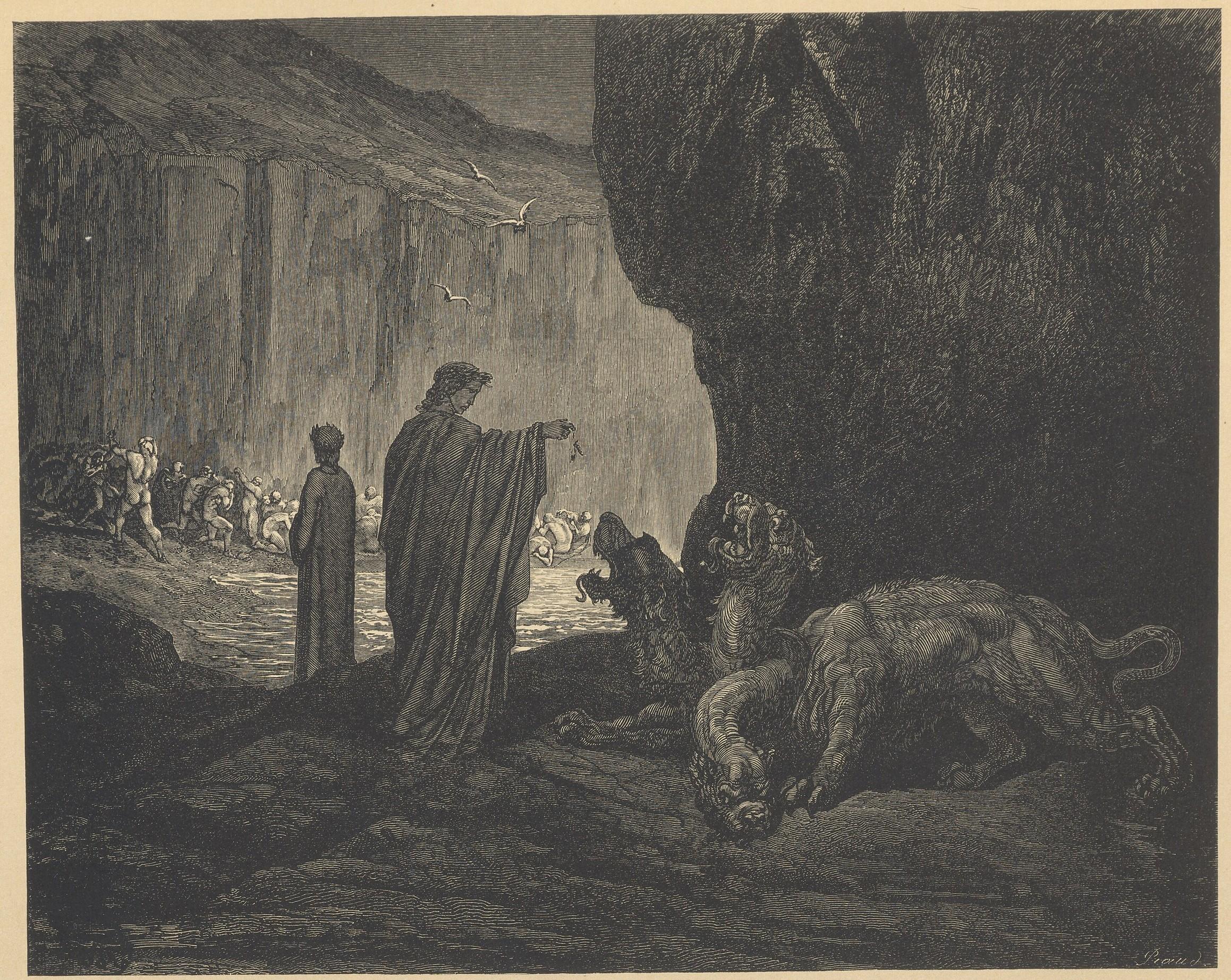
Cerberus
Gustave Doré · 1861
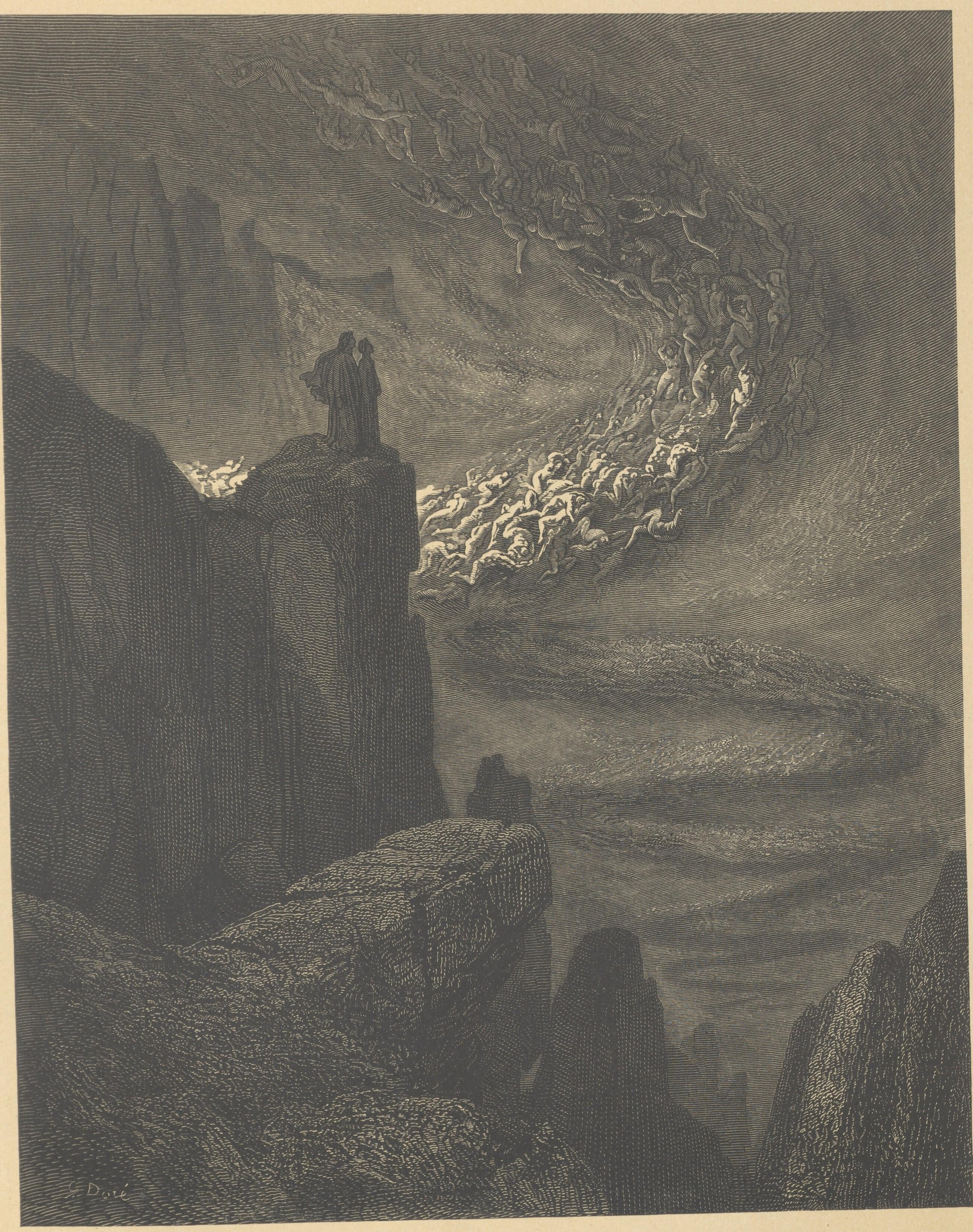
The Whirlwind of the Lustful
Gustave Doré · 1861
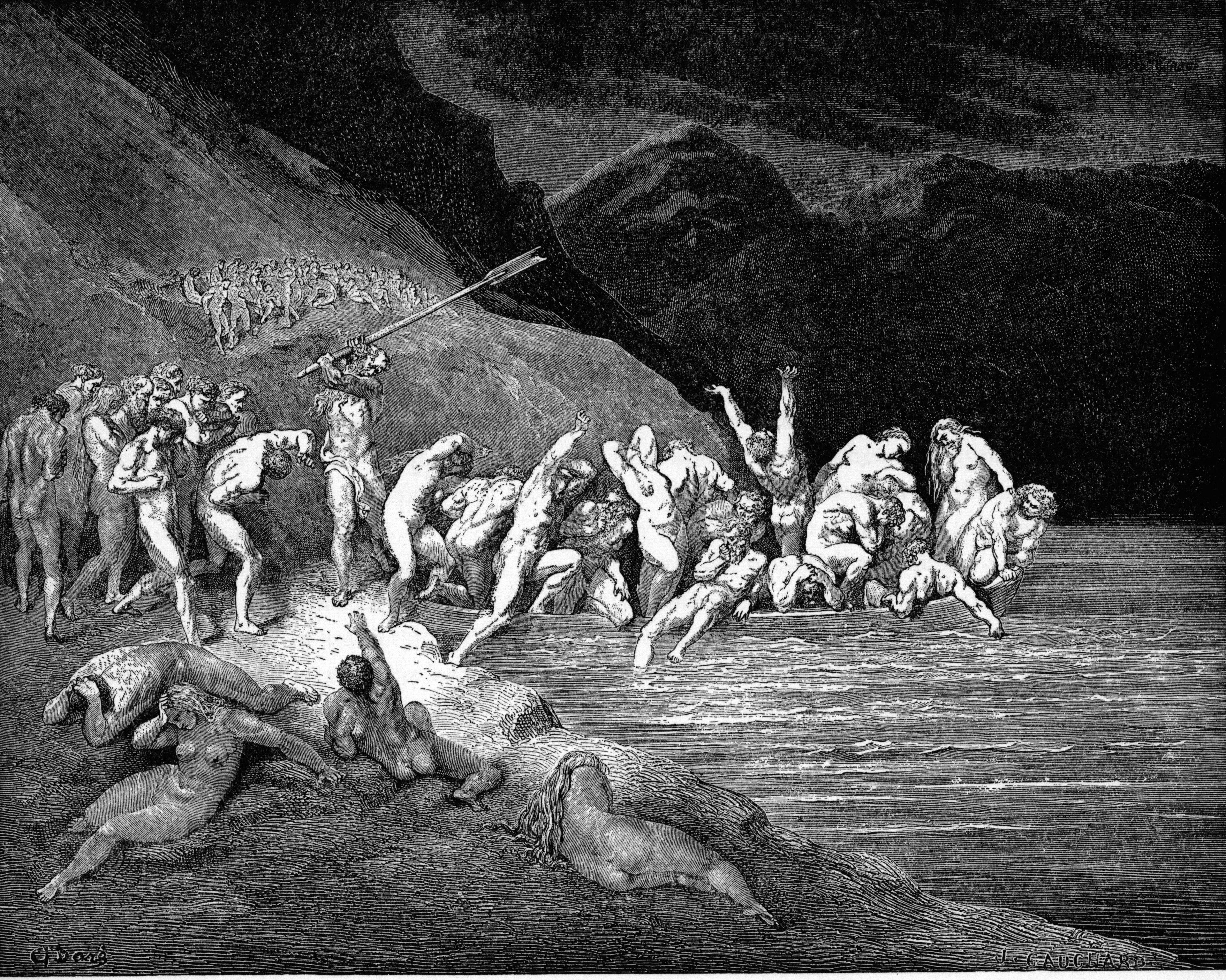
Charon, Ferryman of the Dead
Gustave Doré · 1861
Related works
Bertran de Born Holding His Head
Gustave Doré · 1861
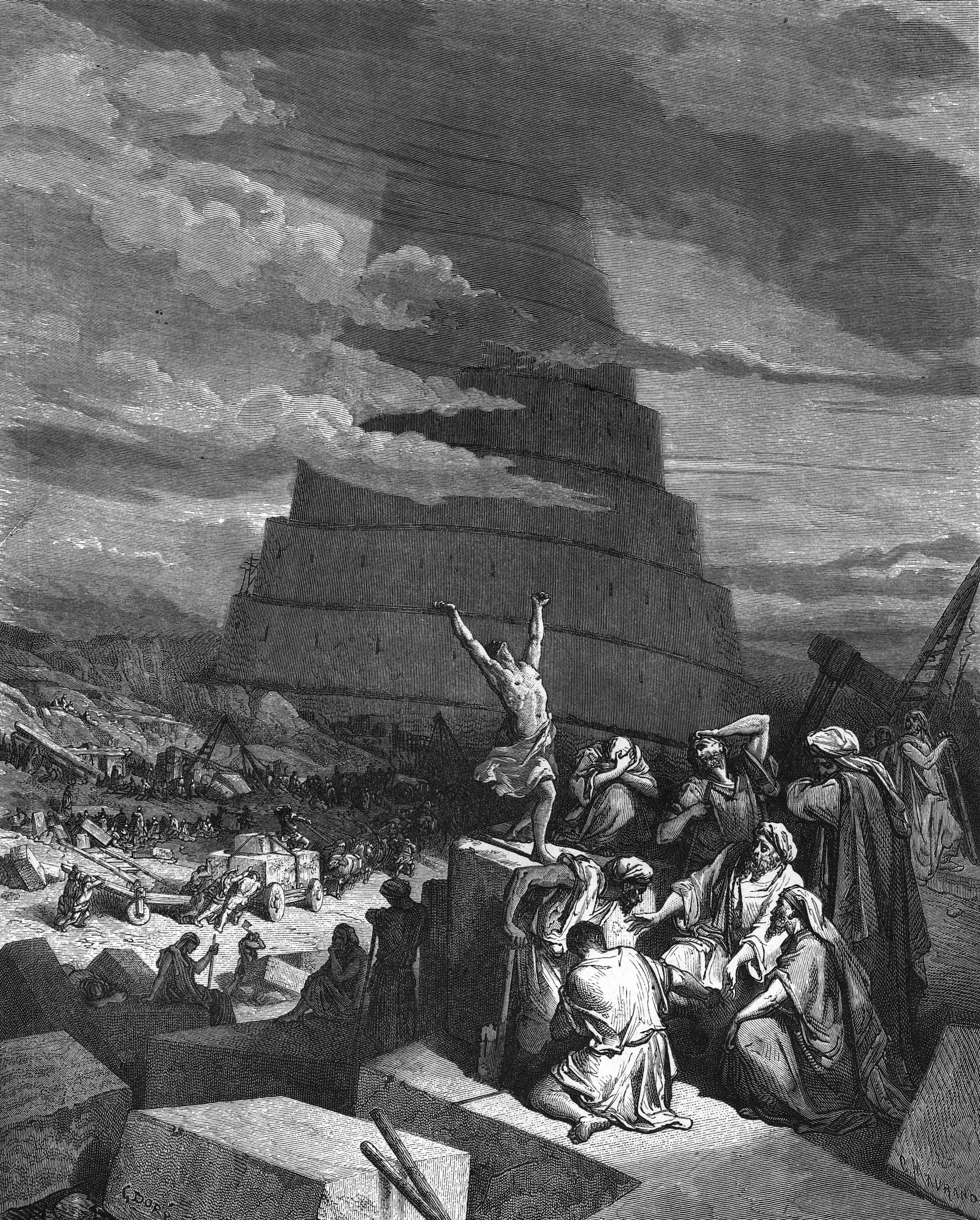
The Confusion of Tongues
Gustave Doré · 1866
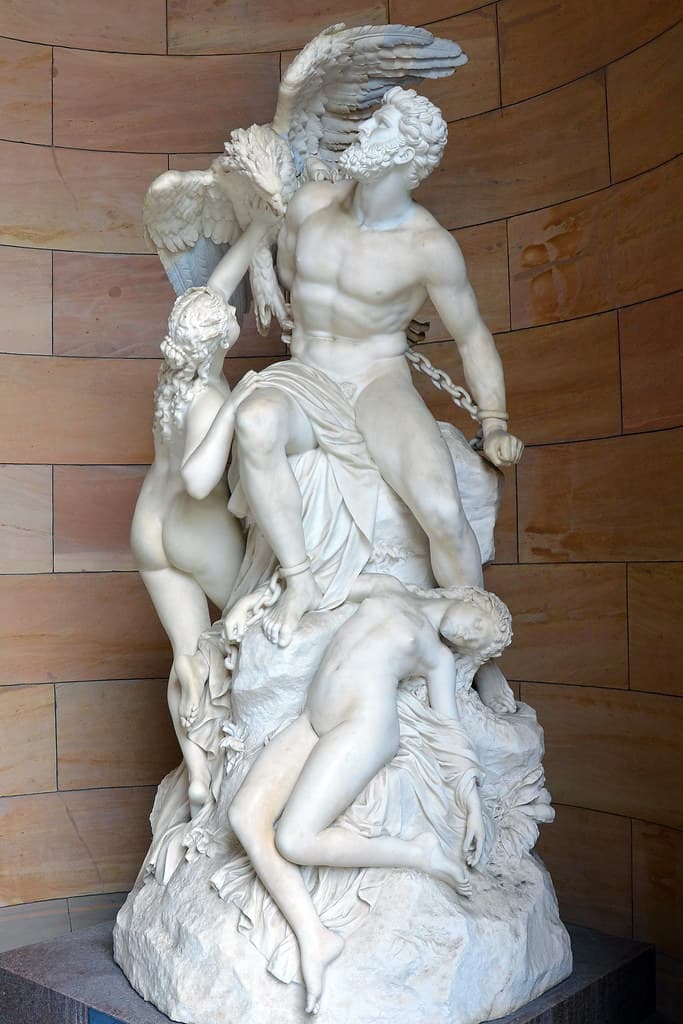
Prometheus Bound and the Oceanids
Eduard Müller · 1872–79
Men Reading
Francisco Goya · c. 1819–1823
Fallen Angel
Alexandre Cabanel · 1847
Perched Upon a Bust of Pallas
Gustave Doré · 1884
Berenice's Tresses (La Chioma di Berenice)
Ambrogio Borghi · 1878
Charon, Ferryman of the Dead
Gustave Doré · 1861