Perched Upon a Bust of Pallas
Gustave Doré, 1884
Perched Upon a Bust of Pallas is Gustave Doré's plate for Poe's The Raven, published after his death in 1883–84: the black bird sits on the helmeted head of Athena above the chamber door, framed by a fan of pale ghostly faces.
- Artist
- Gustave Doré
- Date
- 1884
- Medium
- Wood engraving
- Movement
- Romanticism
- Themes
- Literature & Poetry, Dark Academia, Mythology, Night & Dreams, The Macabre
What you are looking at
The whole plate is given to one object seen close up. A sculpted bust of a young woman in a crested helmet stands on a stepped pedestal, set on the curved pediment above a doorway; the two arcs of the broken pediment frame it left and right. Her face is smooth and blank, her eyes wide and empty, as classical busts are. On the very top of her helmet, where a plume would be, sits the raven, black, hunched and upright, its beak turned down.
Behind the bust opens a great half-circle of light, like a folding fan or a window of pale glass panes radiating from the center. Look closely at the panes and you will find faces in them: young women with long hair, some looking up, some looking down, a few half-dissolved into the light. Above the fan a faint dome or arch hovers in the gray. The bust is the darkest form in the picture except the bird, and the bird is the only thing that seems alive.
The lines it illustrates
The book's list of illustrations pairs the plate with the end of the seventh stanza of Poe's poem. The narrator has flung open the shutter and the raven has walked in:
But, with mien of lord or lady, perched above my chamber door— Perched upon a bust of Pallas just above my chamber door— Perched, and sat, and nothing more.
Pallas is Pallas Athena, the Greek goddess of wisdom, which is why Doré gives the bust a helmet: Athena was a warrior as well as a thinker. Poe explained his choice himself in his 1846 essay "The Philosophy of Composition": the bust suited the scholarship of the lover, and he liked the sound of the word Pallas. The bird stays on that bust to the end of the poem, "still is sitting, still is sitting / On the pallid bust of Pallas just above my chamber door."
How Doré staged it
Poe's narrator sees the bird from across the room. Doré brings us right up to it, at the height of the door frame, and gives the scene the symmetry of an altar: a central figure on a pedestal, a radiant halo behind, a frame of architecture. The effect is half shrine, half joke. The raven has occupied the head of Wisdom like a crown, which is the poem's irony made visible: the scholar's learning is about to be overruled by a bird with one word.
The fan of faces is Doré's invention. Poe mentions angels and seraphim several times, and the "rare and radiant maiden whom the angels name Lenore"; Doré seems to fold them all into this glory of half-seen women, as though the bird has brought the narrator's memories into the room with it. Whether the faces are Lenore, angels or both, they are the first sign that what the narrator sees is not quite real.
How it was made and published
Doré drew the Raven designs in the last years of his life, and he died in Paris in January 1883 before the book came out. It was published in London by Sampson Low, Marston, Searle and Rivington (title page dated 1883) and in New York by Harper and Brothers (1884), with an essay by Edmund Clarence Stedman and 26 illustrations. The list of illustrations credits this plate to the engraver R. G. Tietze, who also cut the final plate; "G. Doré" is signed at lower right.
The Raven blocks were cut by American engravers in a tonal manner, meant to reproduce the washes of Doré's drawings rather than translate them into crisp line. The translucent fan, built up from pale, broken strokes, shows how far that method could go. This reproduction is from the London edition in the Bibliothèque nationale de France, digitized on Gallica; the scan softens the finest strokes.
Meaning
The raven and the bust make a pairing of opposites: black and white, living and carved, omen and reason. Poe's narrator is a man of books who tries to reason with grief, and the bird perched on Wisdom's head answers every question with "Nevermore." Doré's composition puts that contest at the center of the page and makes the bird the victor.
The same bust and halo return, seen from far below, in the last plate, Nevermore, where the raven's shadow falls down the door onto the man stretched on the floor. Start the sequence with Once Upon a Midnight Dreary, or see all the plates in Doré's The Raven. For classical figures put to Gothic use, see Gothic Art; for more of Gustave Doré, compare the sphinx of The Enigma, another silent creature who will not give the answer.
Questions & answers
What does Doré's "Perched upon a bust of Pallas" show?
It shows the raven from Poe's poem sitting on top of a helmeted bust of Pallas Athena above the narrator's chamber door. Behind the bust spreads a fan of pale light filled with faint faces of young women, which Doré added to suggest the angels and the lost Lenore.
Which lines of The Raven does the plate illustrate?
The end of the seventh stanza: "But, with mien of lord or lady, perched above my chamber door— / Perched upon a bust of Pallas just above my chamber door— / Perched, and sat, and nothing more." The bird stays on the bust until the poem's last stanza.
Why is the raven on a bust of Pallas?
Pallas Athena is the Greek goddess of wisdom. In "The Philosophy of Composition" (1846) Poe said he chose the bust because it suited the scholarship of the lover and because of the sound of the word Pallas. The bird of ill omen perched on Wisdom's head is the poem's central irony.
When was the plate published, and who engraved it?
It appeared in Doré's illustrated Raven, published after his death in January 1883: in London by Sampson Low (dated 1883) and in New York by Harper and Brothers (1884). The book's list of illustrations credits the American wood engraver R. G. Tietze.
More by Gustave Doré
All works →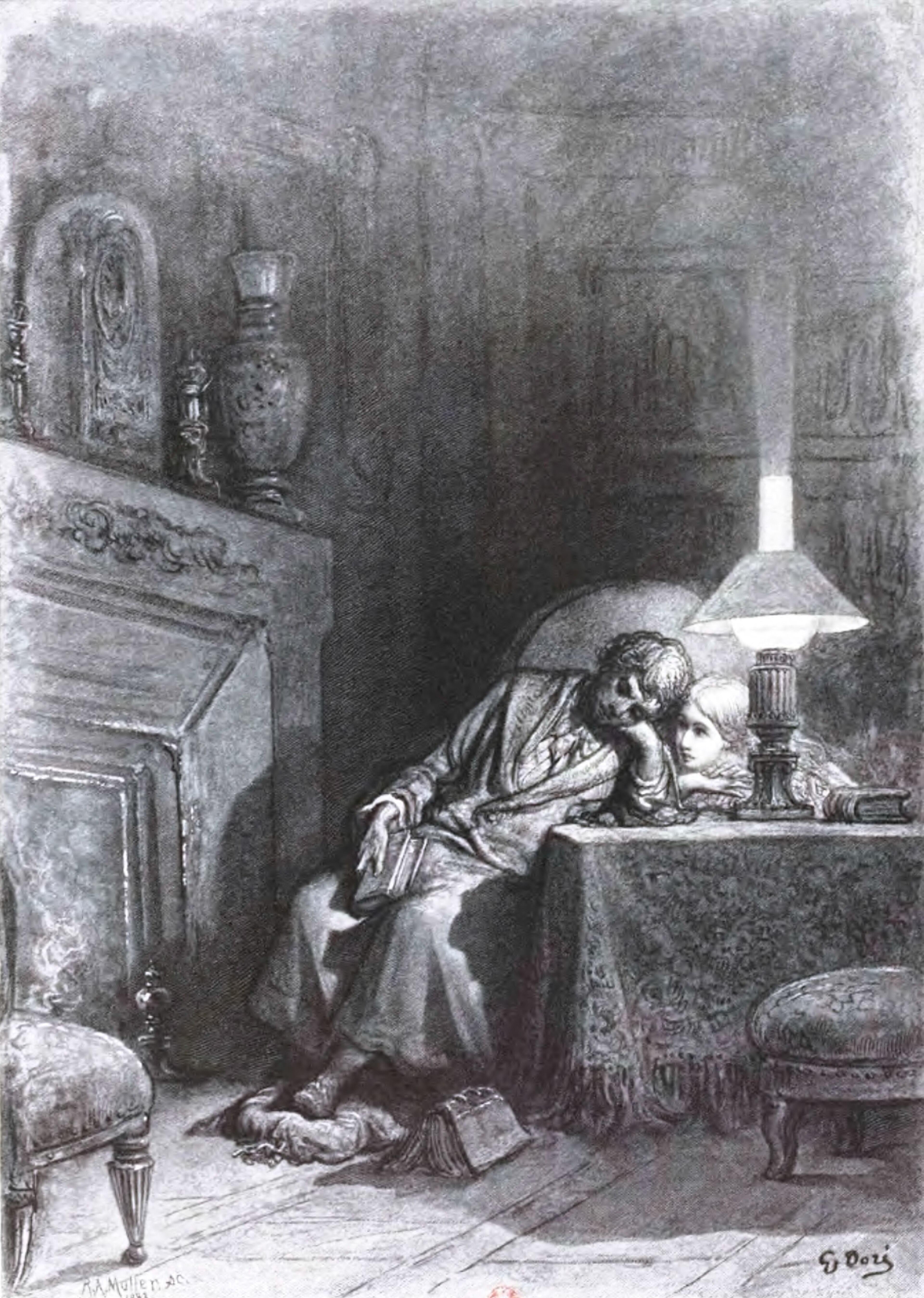
Once Upon a Midnight Dreary
Gustave Doré · 1884
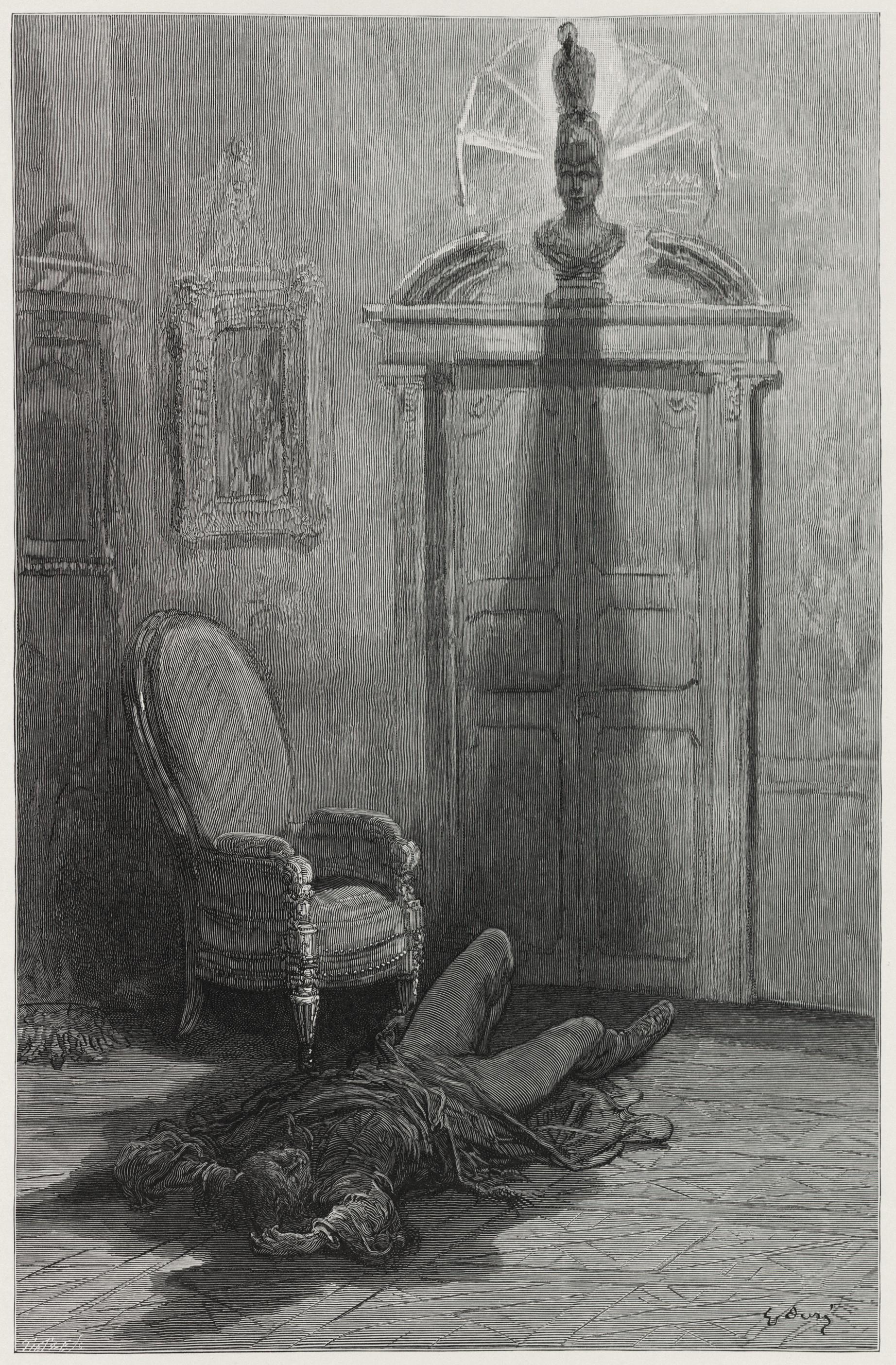
Nevermore (The Raven's Shadow)
Gustave Doré · 1884
The Ship in the Ice
Gustave Doré · 1876
Death and Life-in-Death
Gustave Doré · 1876
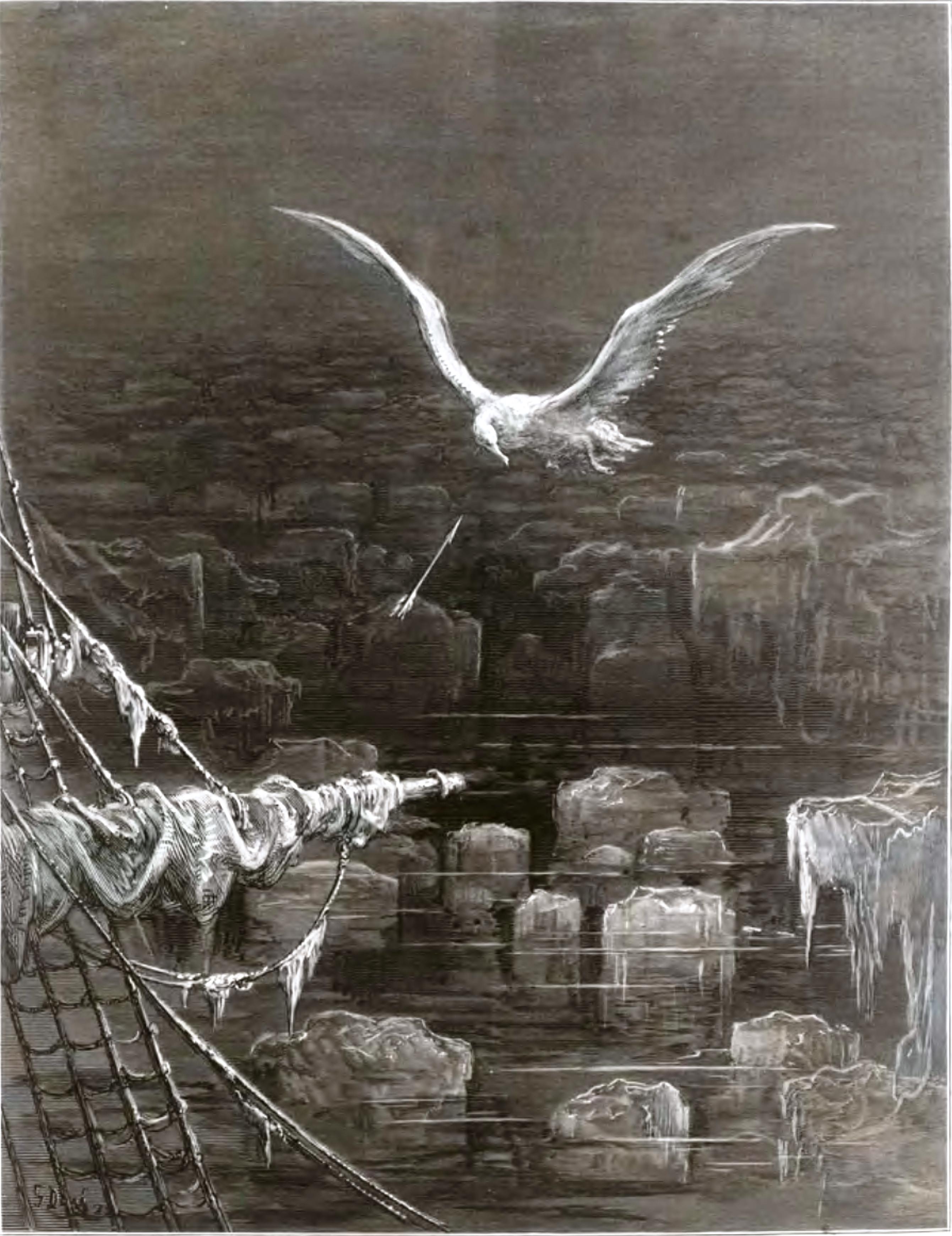
The Albatross
Gustave Doré · 1876
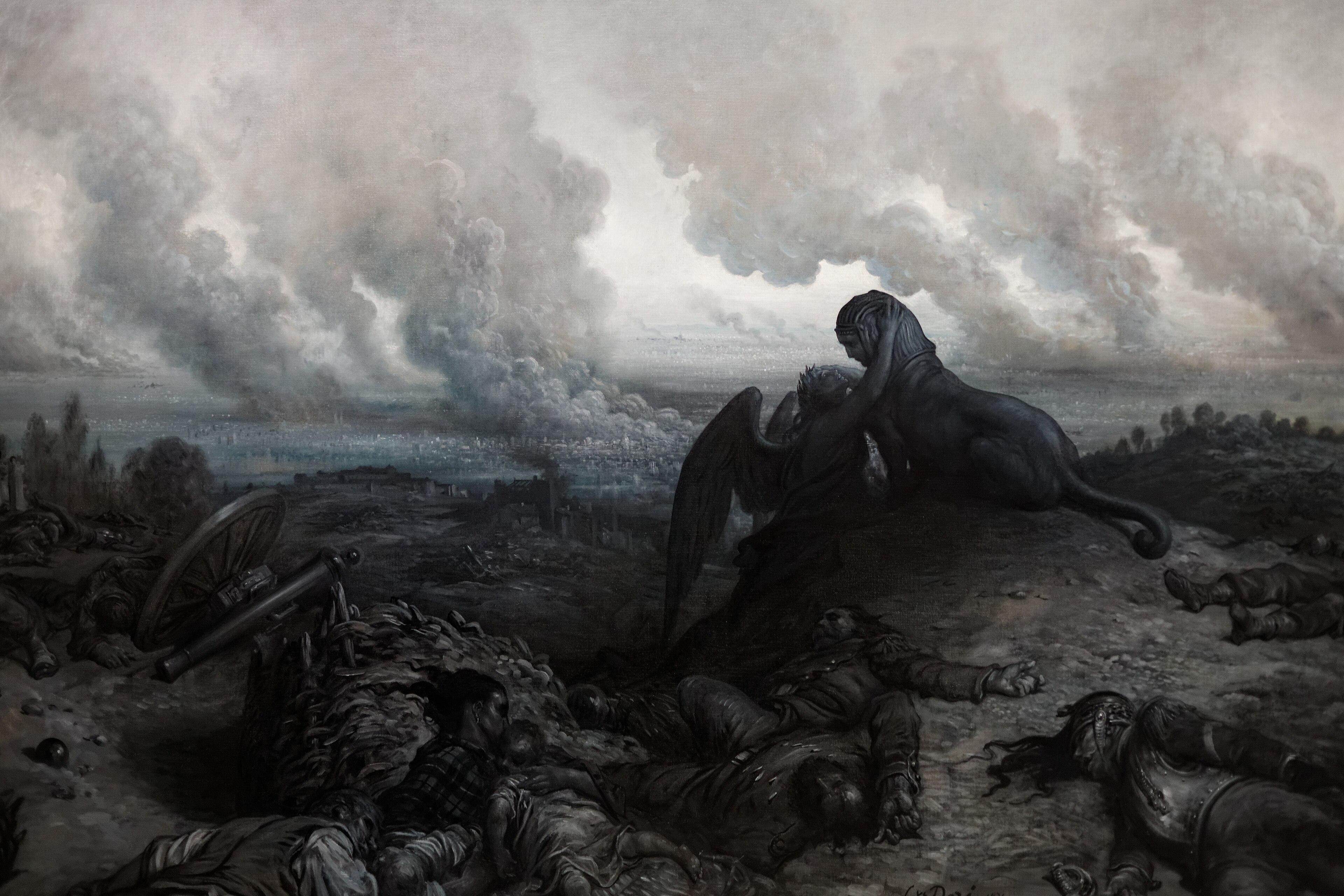
The Enigma
Gustave Doré · 1871
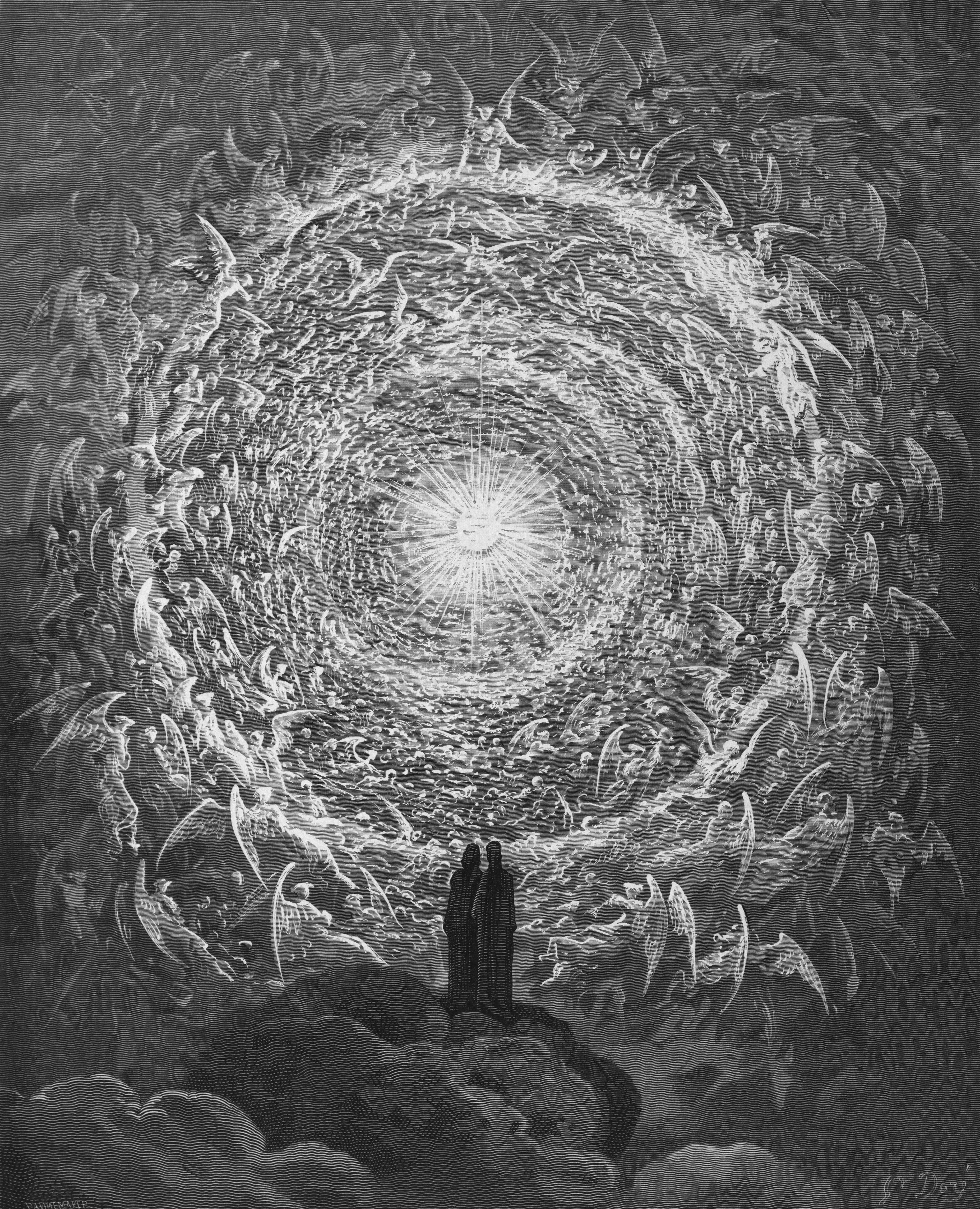
The Empyrean (Rosa Celeste)
Gustave Doré · 1868
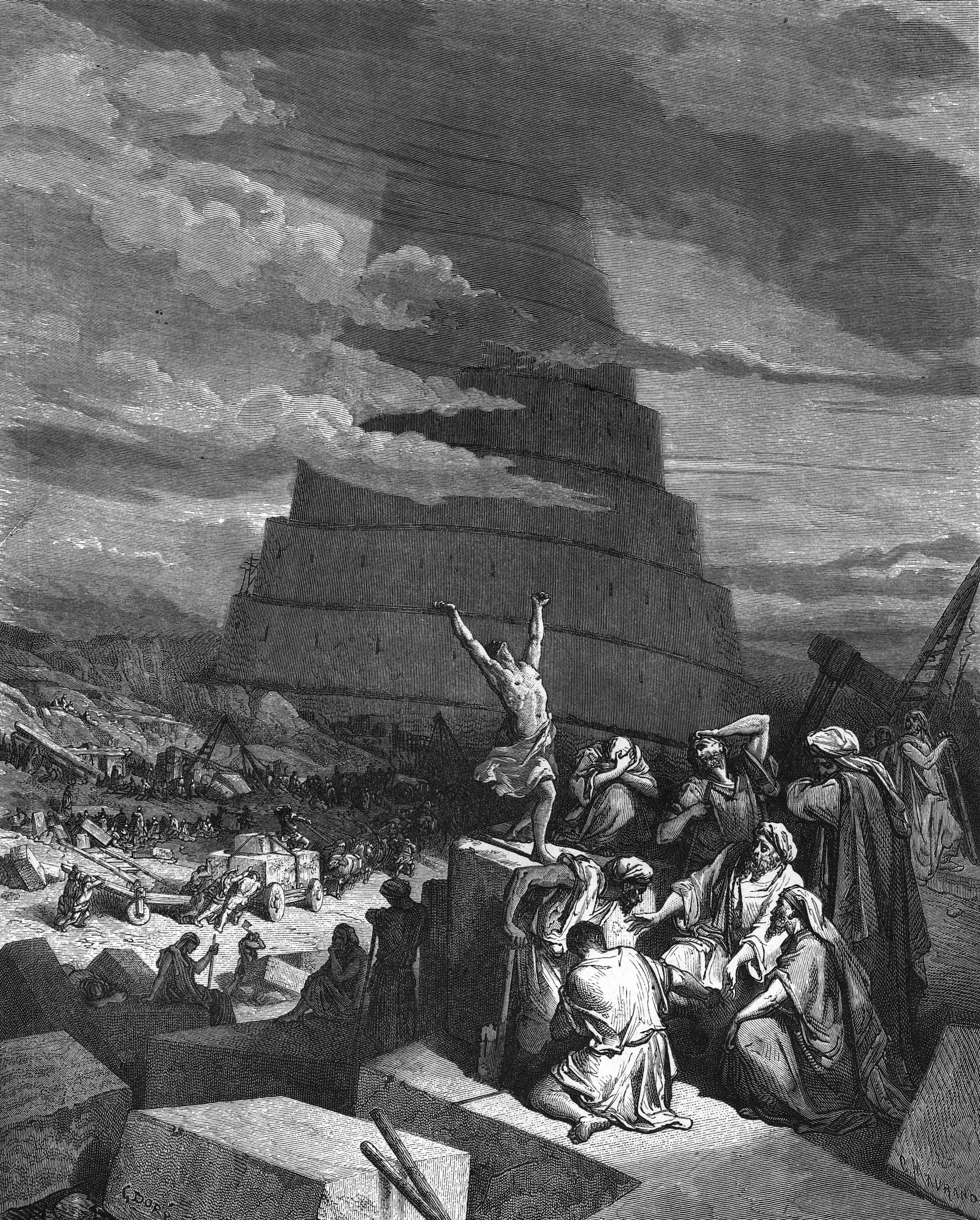
The Confusion of Tongues
Gustave Doré · 1866
Related works
Atropos (The Fates)
Francisco Goya · c. 1819–1823
Ulysses and Diomedes
Gustave Doré · 1861
Witches' Sabbath (The Great He-Goat)
Francisco Goya · c. 1819–1823
The Vision of the Valley of Dry Bones
Gustave Doré · 1866
Ghost in the Mirror
Michael Locascio · c. 2019
Geryon
Gustave Doré · 1861
The Nightmare
Henry Fuseli · 1781
The Dog
Francisco Goya · c. 1819–1823