Collection
Famous Paintings of Women: Portraits, Goddesses and Heroines
The Mona Lisa, Ophelia, Liberty and the Lady of Shalott: the women of art history, who painted them, and who they really were.
The most famous paintings of women include Leonardo da Vinci's Mona Lisa, Botticelli's The Birth of Venus, Millais's Ophelia, Vermeer's Girl with a Pearl Earring, Waterhouse's The Lady of Shalott, Delacroix's Liberty Leading the People, Leighton's Flaming June and Picasso's portraits of Marie-Thérèse Walter and Dora Maar. Together they span five centuries and almost every way a painter can look at a woman: as a sitter, a goddess, a saint, a symbol, a lover or a victim.
Most of these pictures were painted by men, and the women in them were often real people whose names were forgotten while the paintings became famous. This list orders the works in the catalogue by fame and, in the essay below, brings back the women behind them, alongside the women artists, such as Artemisia Gentileschi, who painted from the other side of the easel.
01
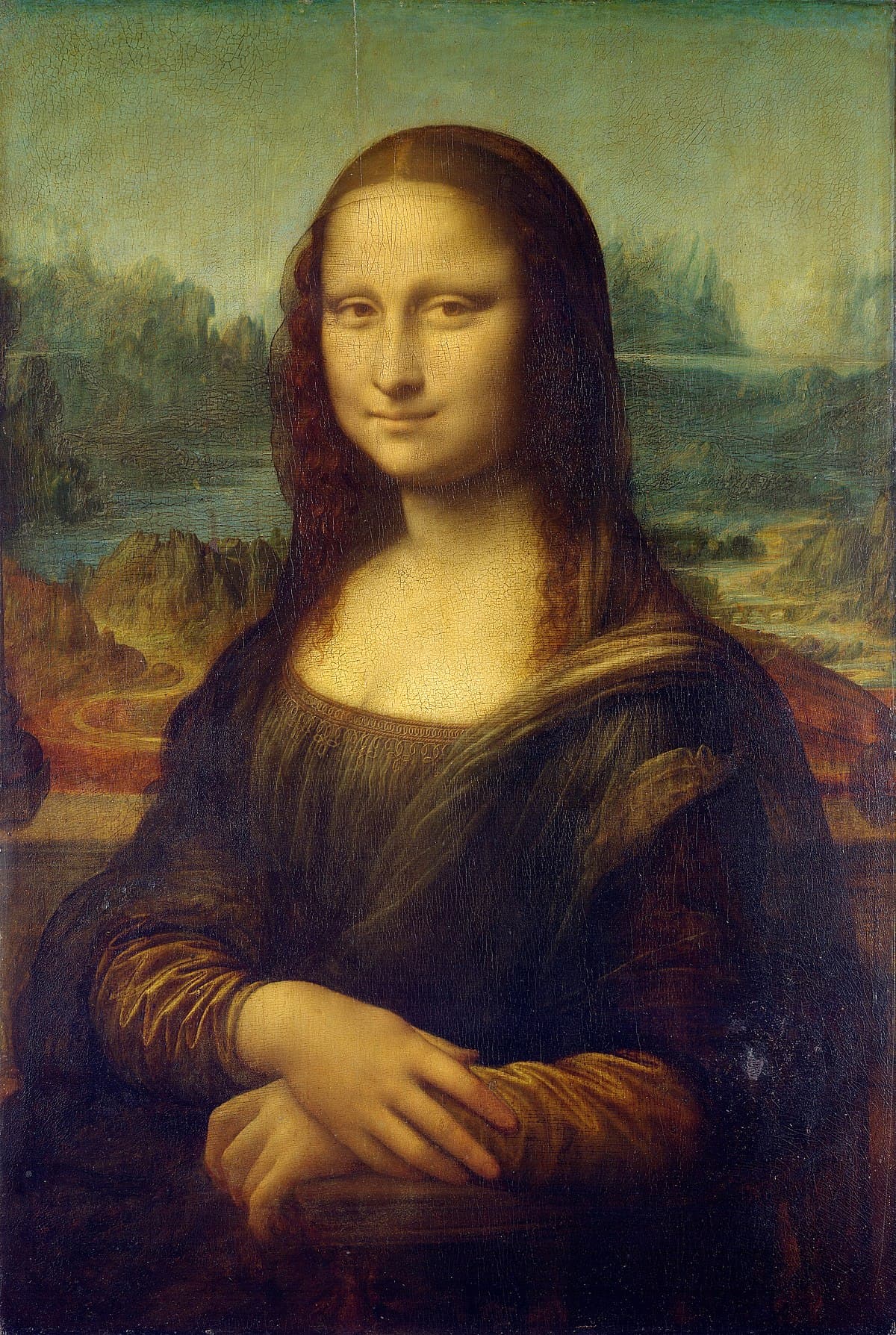
Mona Lisa
Leonardo da Vinci · c. 1503–1519
The Mona Lisa is Leonardo da Vinci's portrait of the Florentine Lisa Gherardini, begun around 1503 and worked on for years afterward. Painted in oil on a poplar panel, it hangs in the Louvre, Paris, the most famous painting in the world.
02
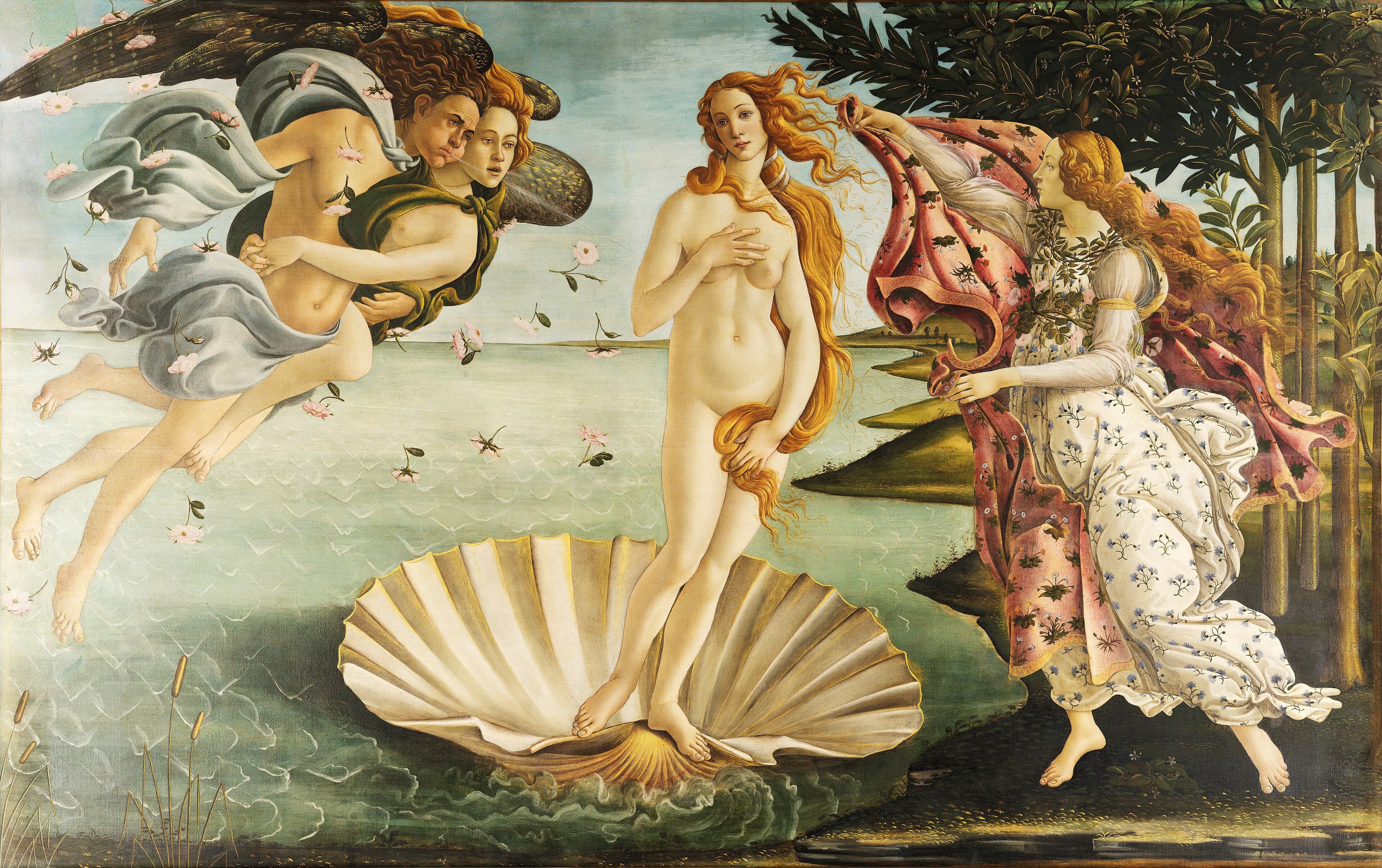
The Birth of Venus
Sandro Botticelli · c. 1484–1486
The Birth of Venus is Sandro Botticelli's painting of the goddess Venus arriving on a scallop shell, blown ashore by the winds, made in Florence around 1484–1486. It hangs in the Uffizi Gallery in Florence.
03

Ophelia
John Everett Millais · 1851–52
The Ophelia painting by John Everett Millais (1851–52) shows Shakespeare's Ophelia floating in a stream moments before she drowns. Modeled by Elizabeth Siddal, it hangs in Tate Britain in London.
04
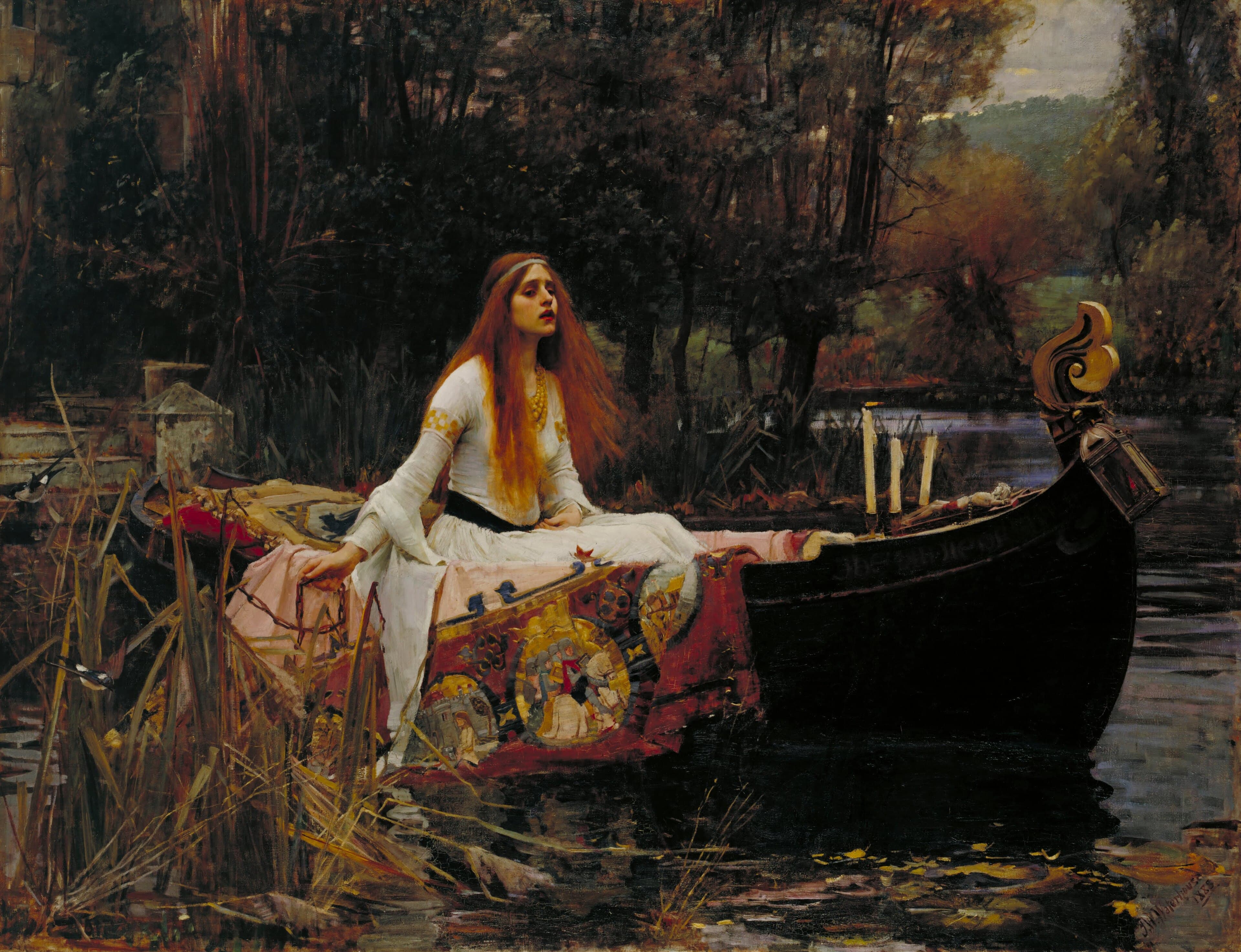
The Lady of Shalott
John William Waterhouse · 1888
The Lady of Shalott is John William Waterhouse's 1888 painting of Tennyson's doomed heroine drifting downriver toward Camelot in a boat, a woven cloth trailing in the water. It is in Tate Britain, London, and is one of the most loved Victorian paintings.
05

Woman with a Parasol – Madame Monet and Her Son
Claude Monet · 1875
Woman with a Parasol – Madame Monet and Her Son is an 1875 painting by Claude Monet of his wife Camille and their son Jean on a windy hillside at Argenteuil. It is in the National Gallery of Art, Washington, D.C.
06
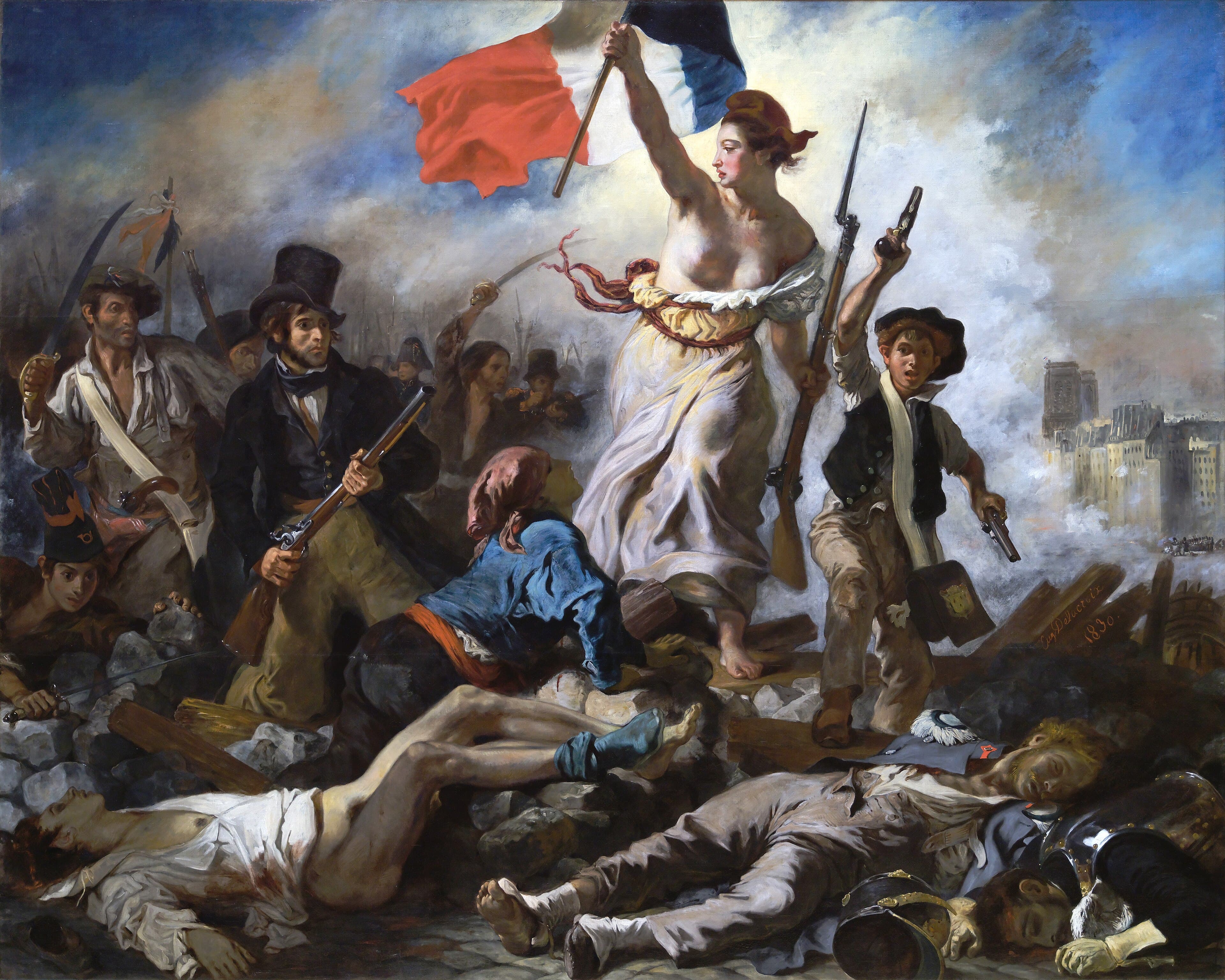
Liberty Leading the People
Eugène Delacroix · 1830
Liberty Leading the People is Eugène Delacroix's 1830 painting of the July Revolution in Paris, with Liberty as a bare-breasted woman raising the tricolor over a barricade. It hangs in the Louvre in Paris.
07
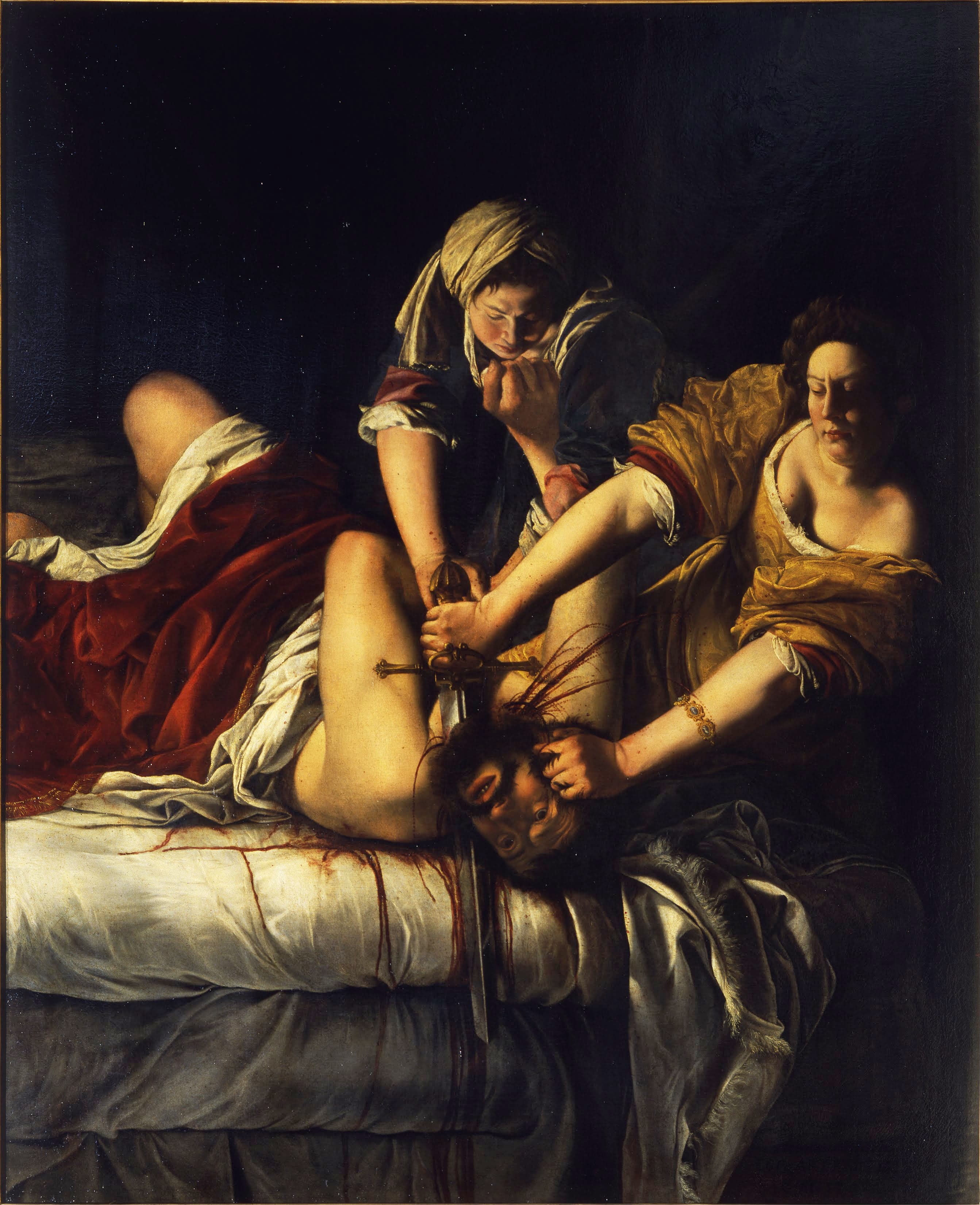
Judith Slaying Holofernes
Artemisia Gentileschi · c. 1620
Judith Beheading Holofernes (Judith Slaying Holofernes) is Artemisia Gentileschi's painting of about 1620, showing the biblical widow and her maid holding down the Assyrian general as Judith saws through his neck. This version is in the Uffizi, Florence; an earlier one is in Naples.
08
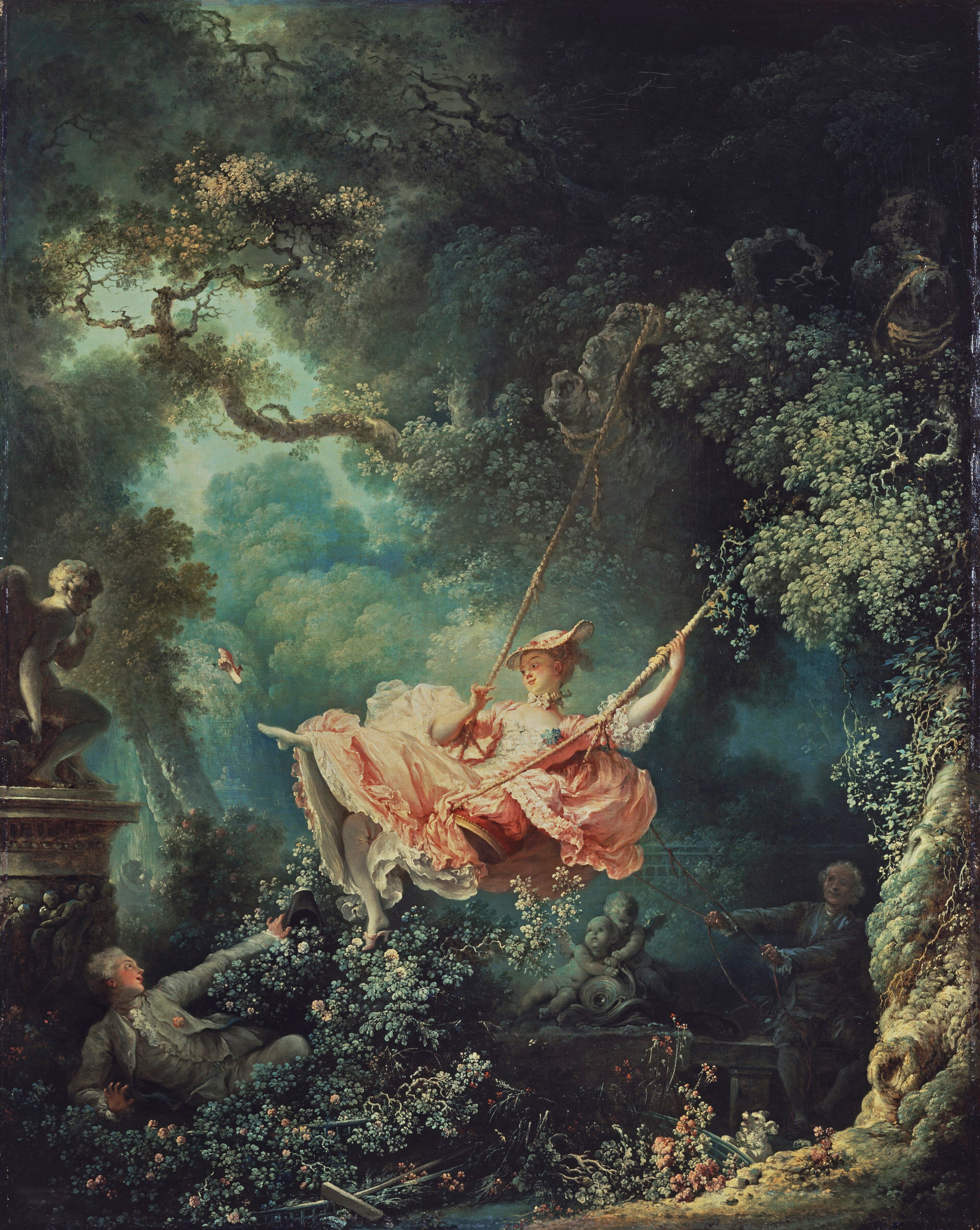
The Swing
Jean-Honoré Fragonard · c. 1767
The Swing painting by Jean-Honoré Fragonard (c. 1767) shows a young woman in pink soaring on a swing while a hidden lover gazes up her skirts. The Rococo masterpiece hangs in the Wallace Collection in London.
09
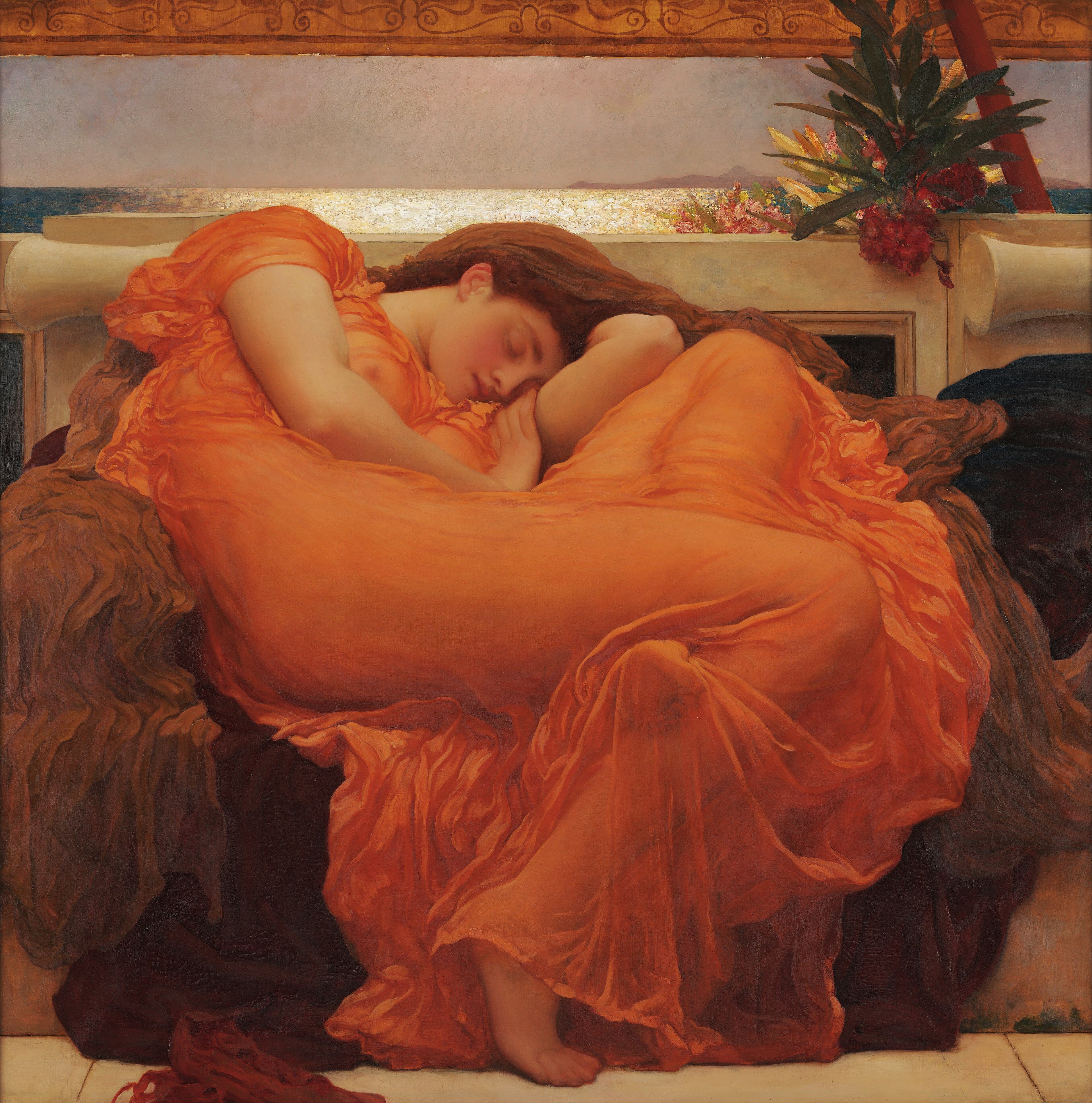
Flaming June
Frederic Leighton · 1895
Flaming June is Frederic Leighton's 1895 painting of a woman asleep in a sheer orange dress on a marble terrace above a glittering sea. It belongs to the Museo de Arte de Ponce in Puerto Rico and is the most famous image of Victorian Aestheticism.
10
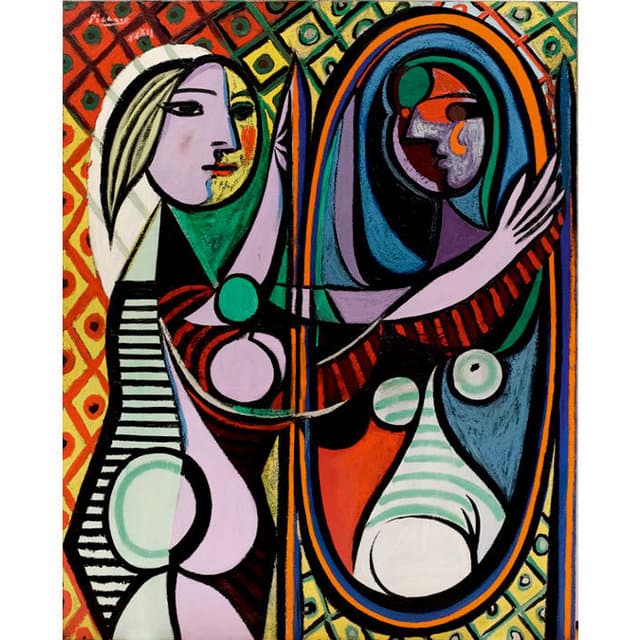
Girl before a Mirror
Pablo Picasso · 1932
Girl before a Mirror is a 1932 painting by Pablo Picasso of his young lover Marie-Thérèse Walter gazing into a tall mirror. Painted in March 1932 in Boisgeloup, it is in the Museum of Modern Art, New York.
11
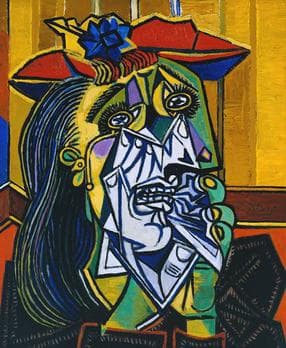
The Weeping Woman
Pablo Picasso · 1937
The Weeping Woman is a 1937 painting by Pablo Picasso of a woman in a red hat crying into a handkerchief, modeled on the photographer Dora Maar and made in the aftermath of Guernica. It is in the Tate, London.
12
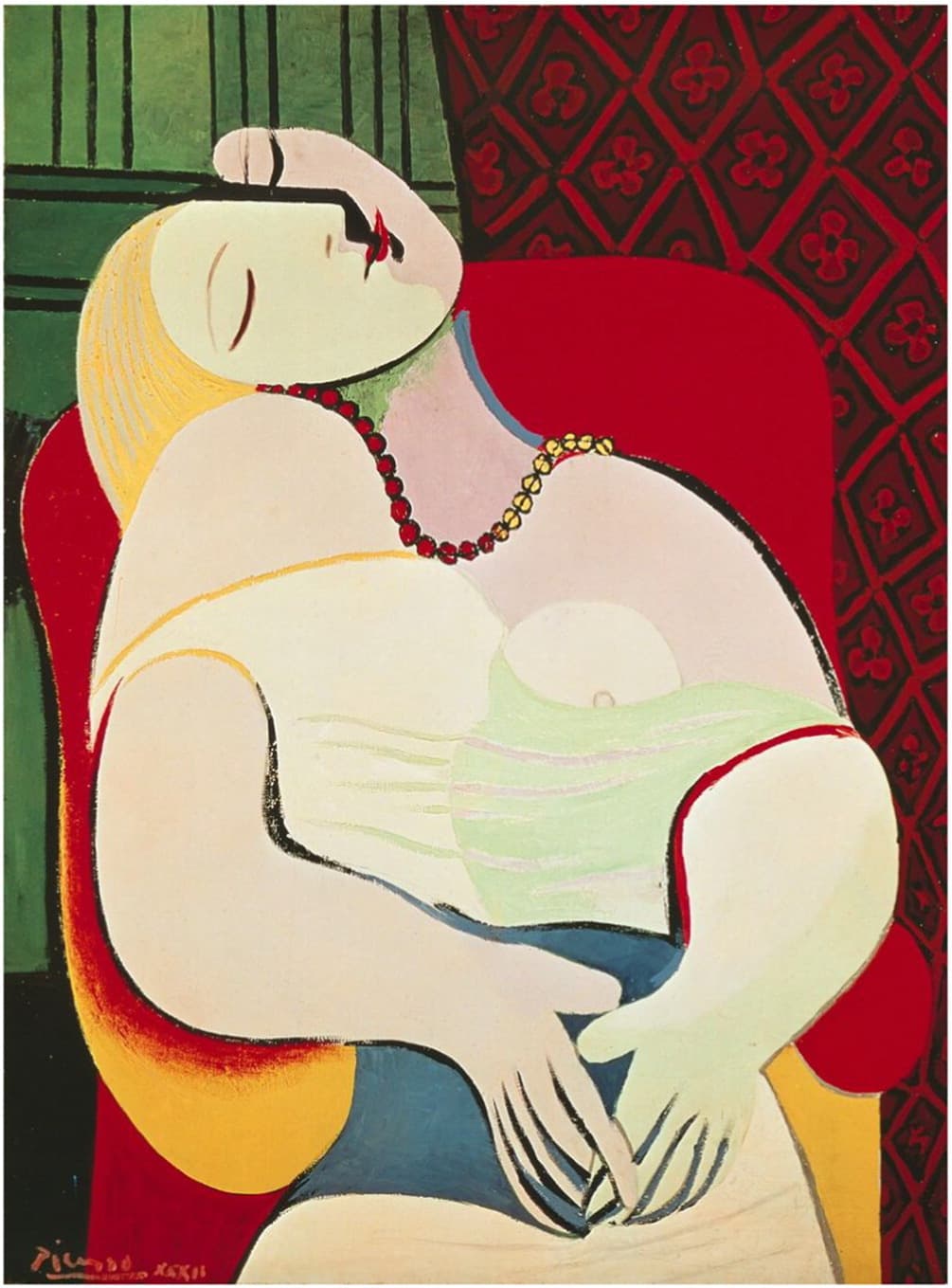
Le Rêve (The Dream)
Pablo Picasso · 1932
Le Rêve (The Dream) is Pablo Picasso's 1932 painting of his lover Marie-Thérèse Walter asleep in a red armchair, reportedly painted in one afternoon on 24 January. It is in a private collection.
13
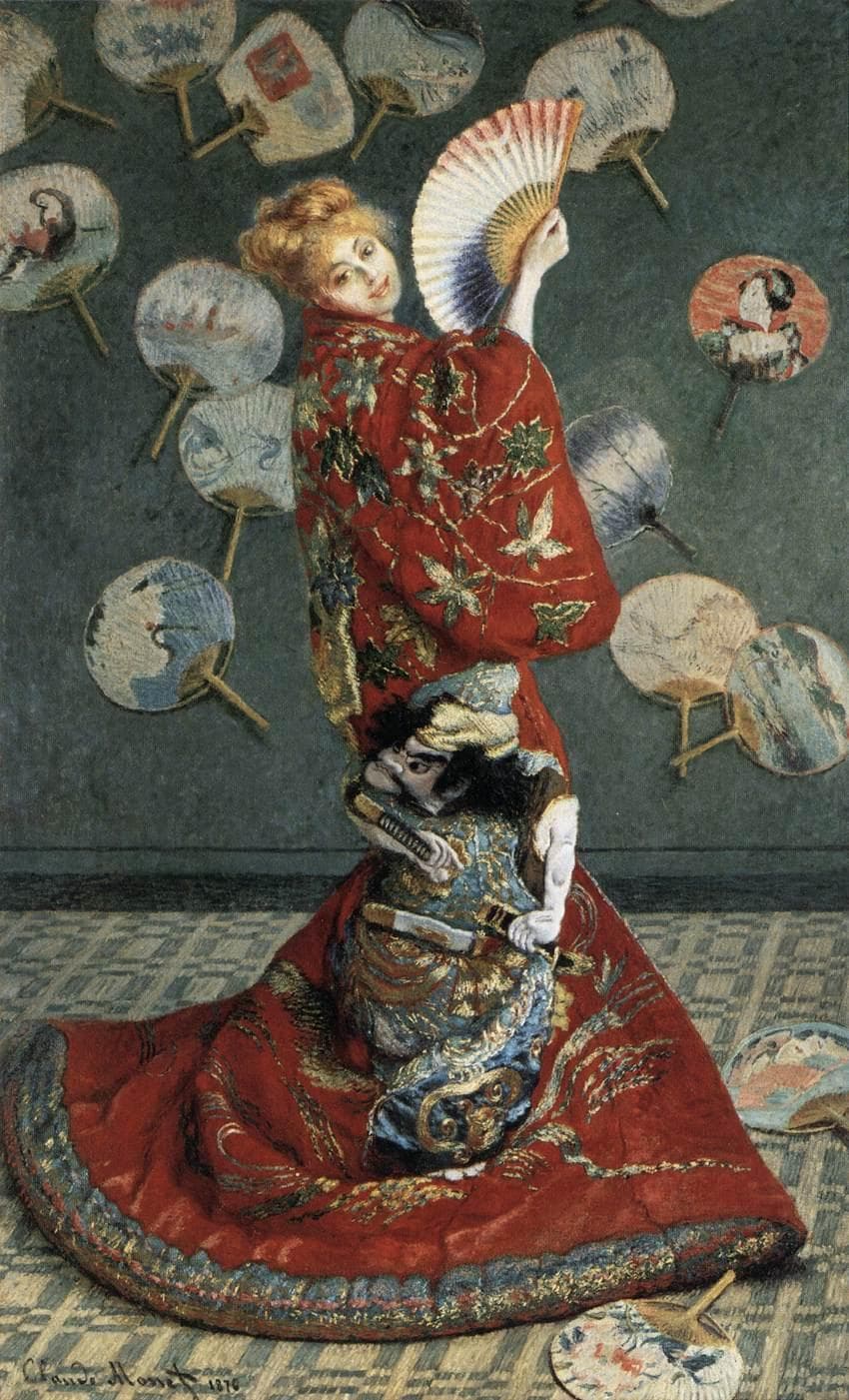
La Japonaise (Camille Monet in Japanese Costume)
Claude Monet · 1876
La Japonaise is Claude Monet's life-size 1876 portrait of his wife Camille in a red Japanese kimono, holding a fan against a wall of Japanese fans. It is in the Museum of Fine Arts, Boston.
14
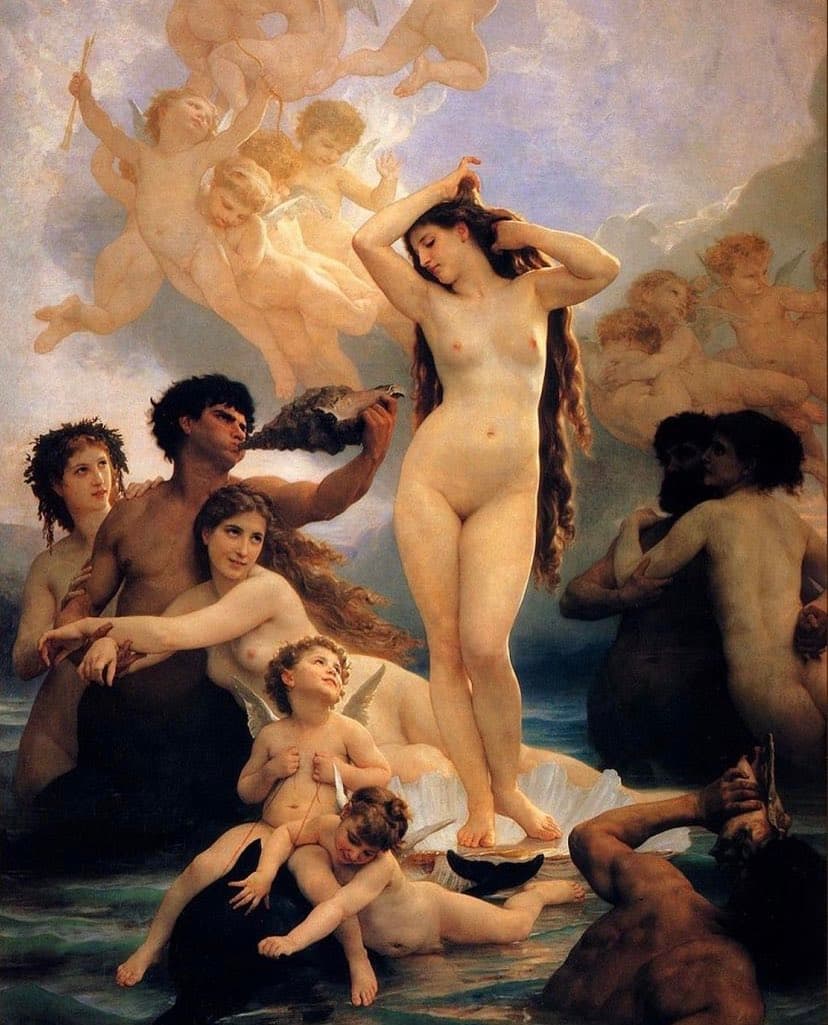
The Birth of Venus
William-Adolphe Bouguereau · 1879
The Birth of Venus (La Naissance de Vénus) is William-Adolphe Bouguereau's 1879 Salon painting of the goddess standing on a scallop shell amid sea nymphs, tritons and cupids. It hangs in the Musée d'Orsay, Paris.
15
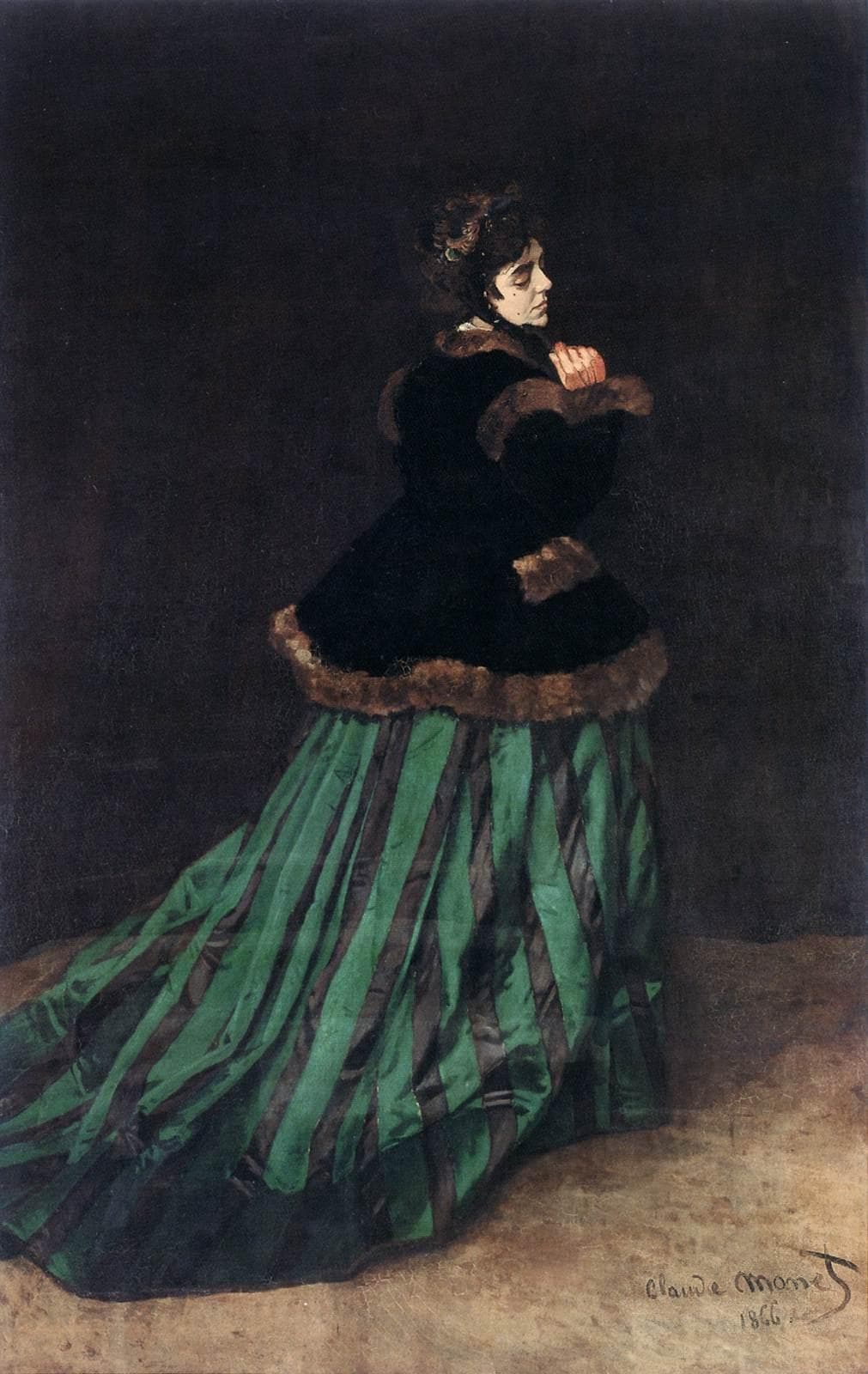
Camille (The Woman in the Green Dress)
Claude Monet · 1866
Camille, or The Woman in the Green Dress, is Claude Monet's life-size 1866 portrait of Camille Doncieux in a striped green silk gown, his first success at the Paris Salon. It is in the Kunsthalle Bremen, Germany.
16
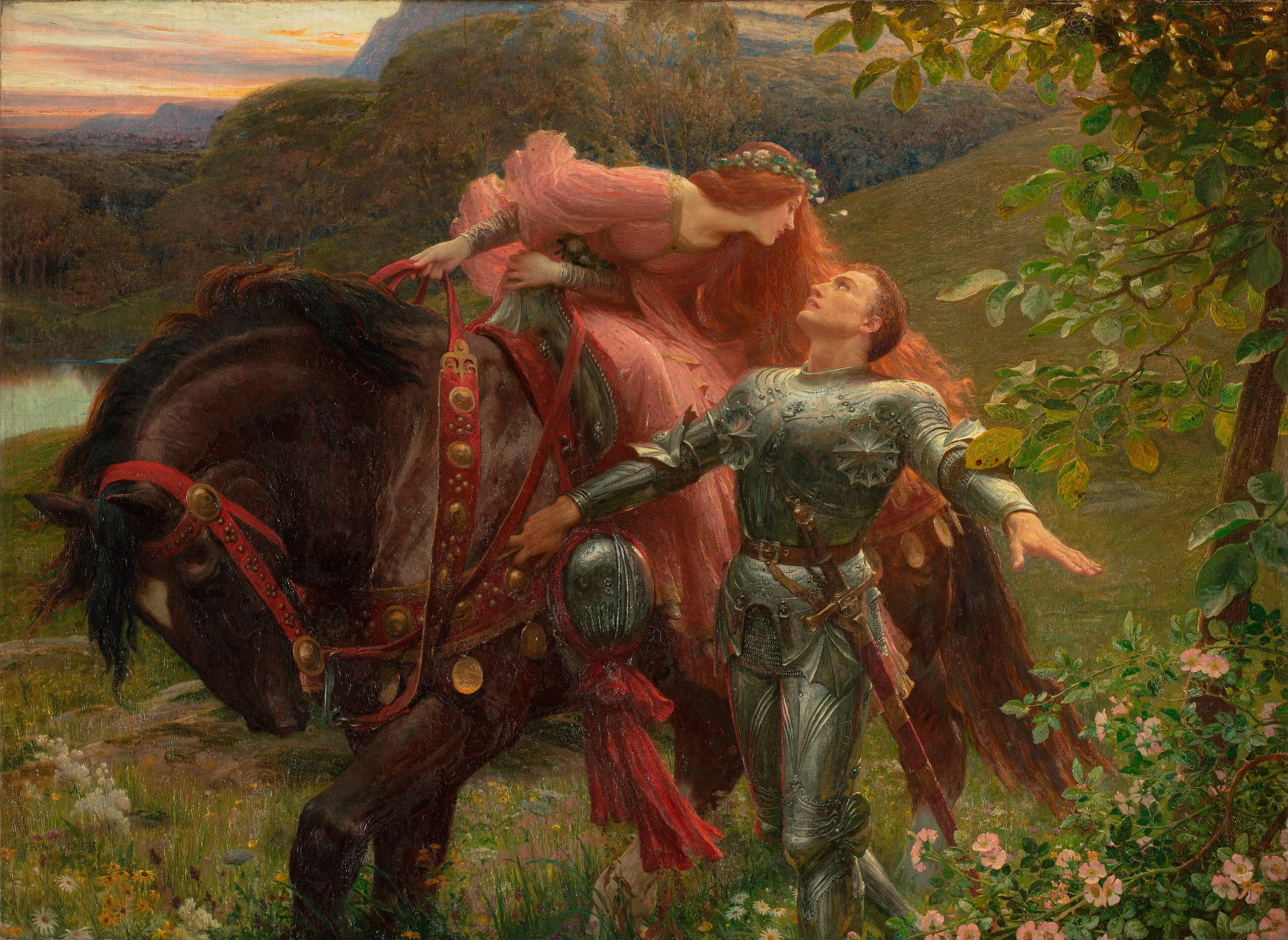
La Belle Dame sans Merci
Sir Frank Dicksee · 1901
La Belle Dame sans Merci is Frank Dicksee's 1901 painting of John Keats's ballad: an armored knight gazes up, spellbound, at a red-haired woman leaning down to him from his horse at sunset. It belongs to Bristol Museum & Art Gallery.
17
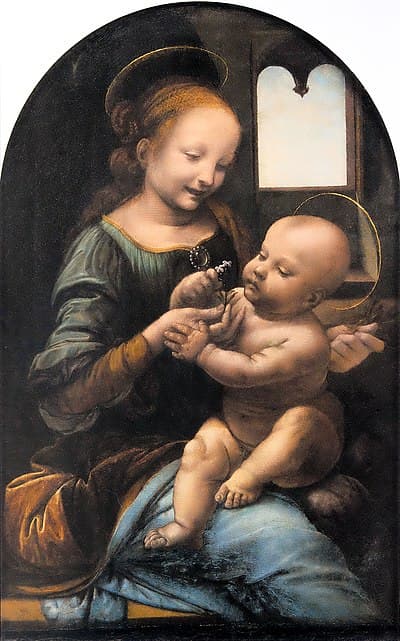
Benois Madonna
Leonardo da Vinci · c. 1478–80
The Benois Madonna, or Madonna and Child with Flowers, is an early painting by Leonardo da Vinci of about 1478–80 showing a young Virgin playing with the Christ Child and a small flower. It is in the State Hermitage Museum, Saint Petersburg.
18
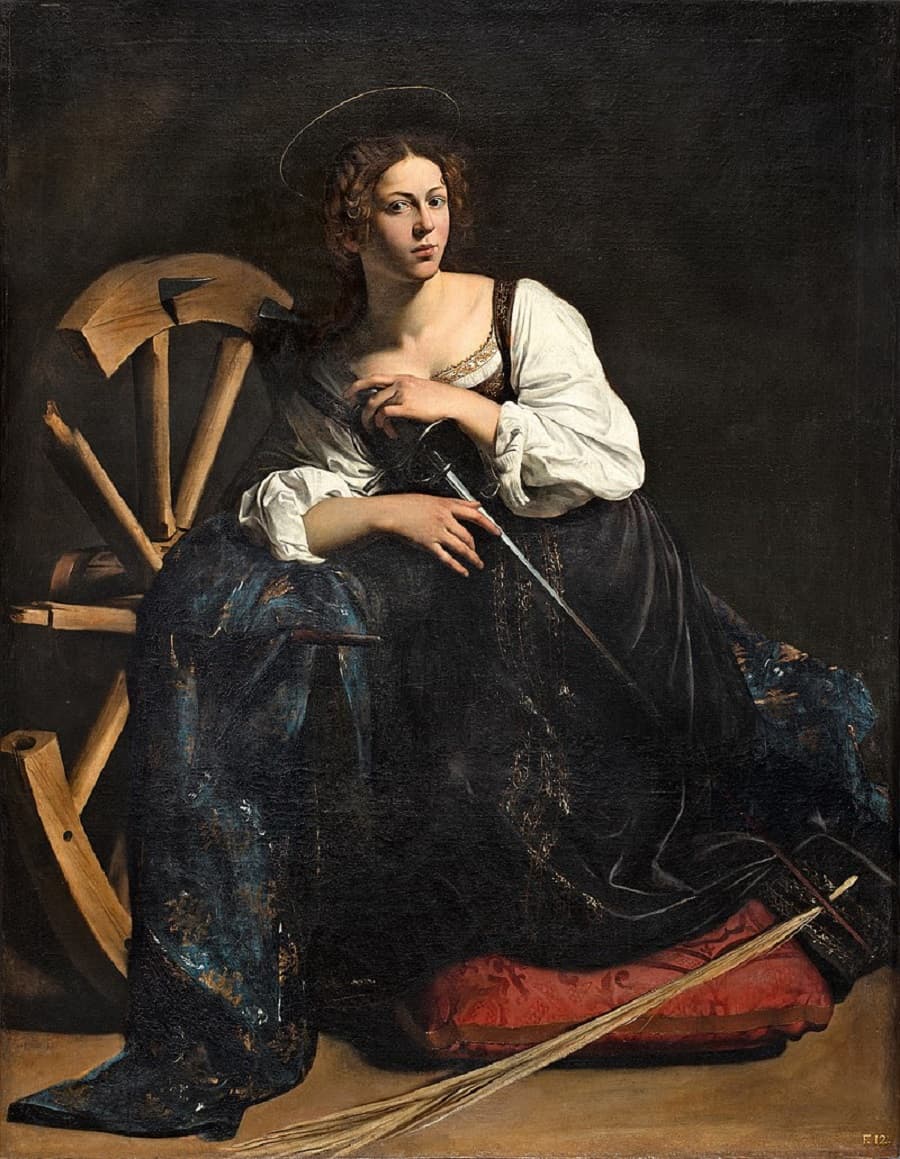
Saint Catherine of Alexandria
Caravaggio · c. 1598
Saint Catherine of Alexandria is a painting by Caravaggio, c. 1598, showing the virgin martyr kneeling beside the broken spiked wheel and the sword of her execution. Painted for Cardinal Francesco Maria del Monte, it is in the Museo Nacional Thyssen-Bornemisza, Madrid.
19
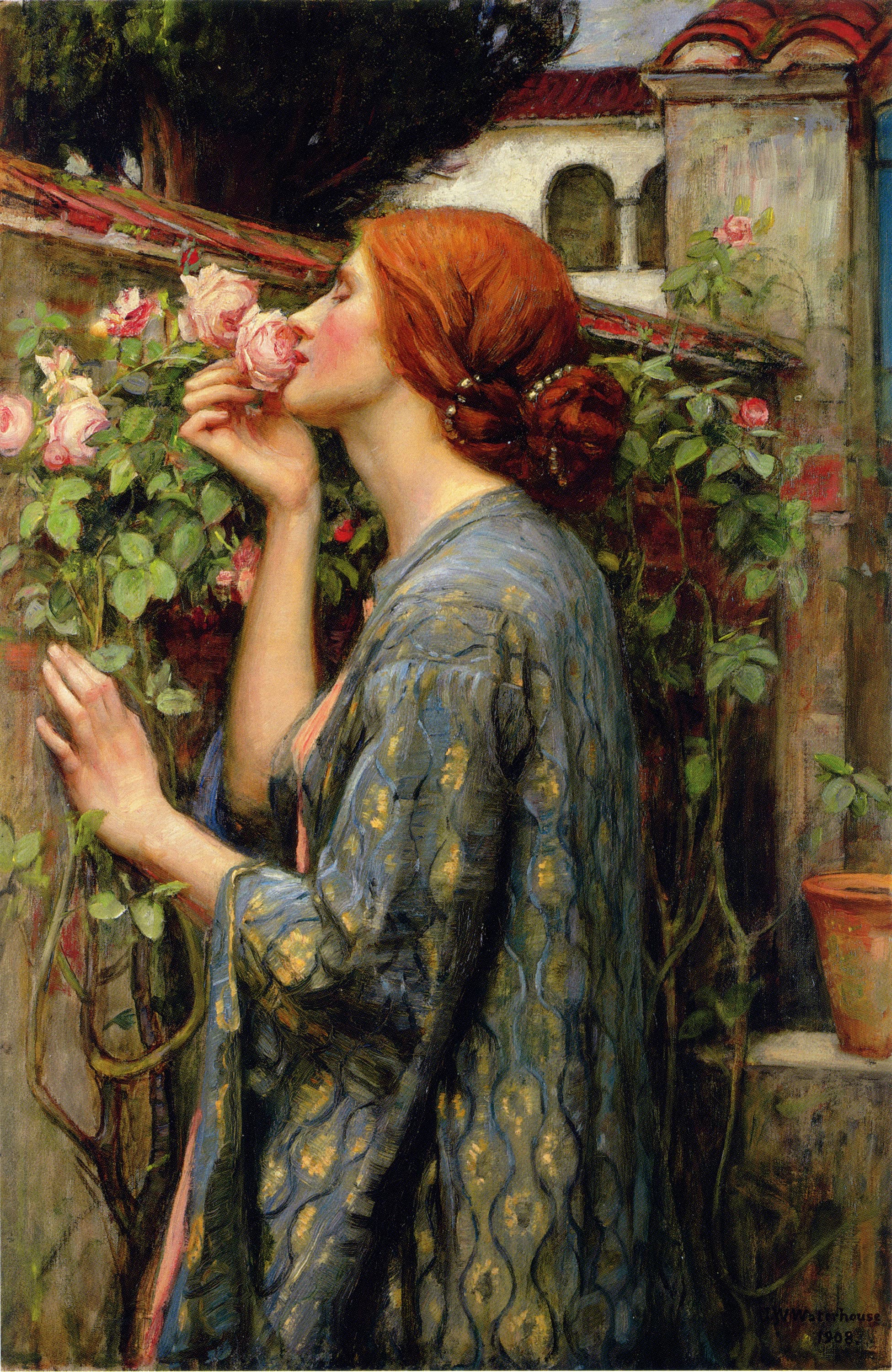
The Soul of the Rose
John William Waterhouse · 1908
The Soul of the Rose, also called My Sweet Rose, is John William Waterhouse's 1908 painting of a red-haired woman in a sunlit walled garden, eyes closed, breathing in the scent of a pink rose. Its title is generally linked to Tennyson's poem Maud. It is in a private collection.
20
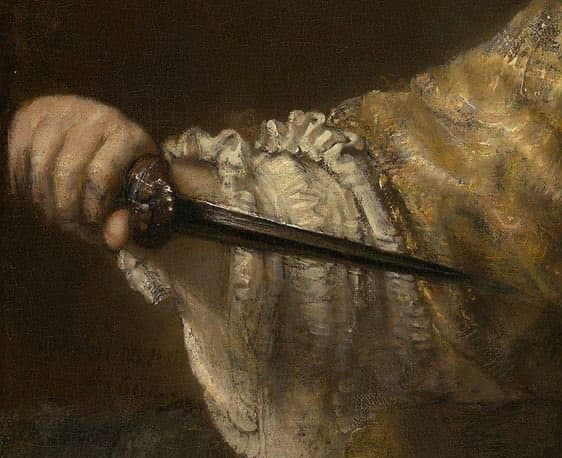
Lucretia
Rembrandt · 1664
Lucretia, often called The Suicide of Lucretia, is a 1664 painting by Rembrandt of the Roman noblewoman about to stab herself after her rape by Sextus Tarquinius. It is in the National Gallery of Art, Washington.
21
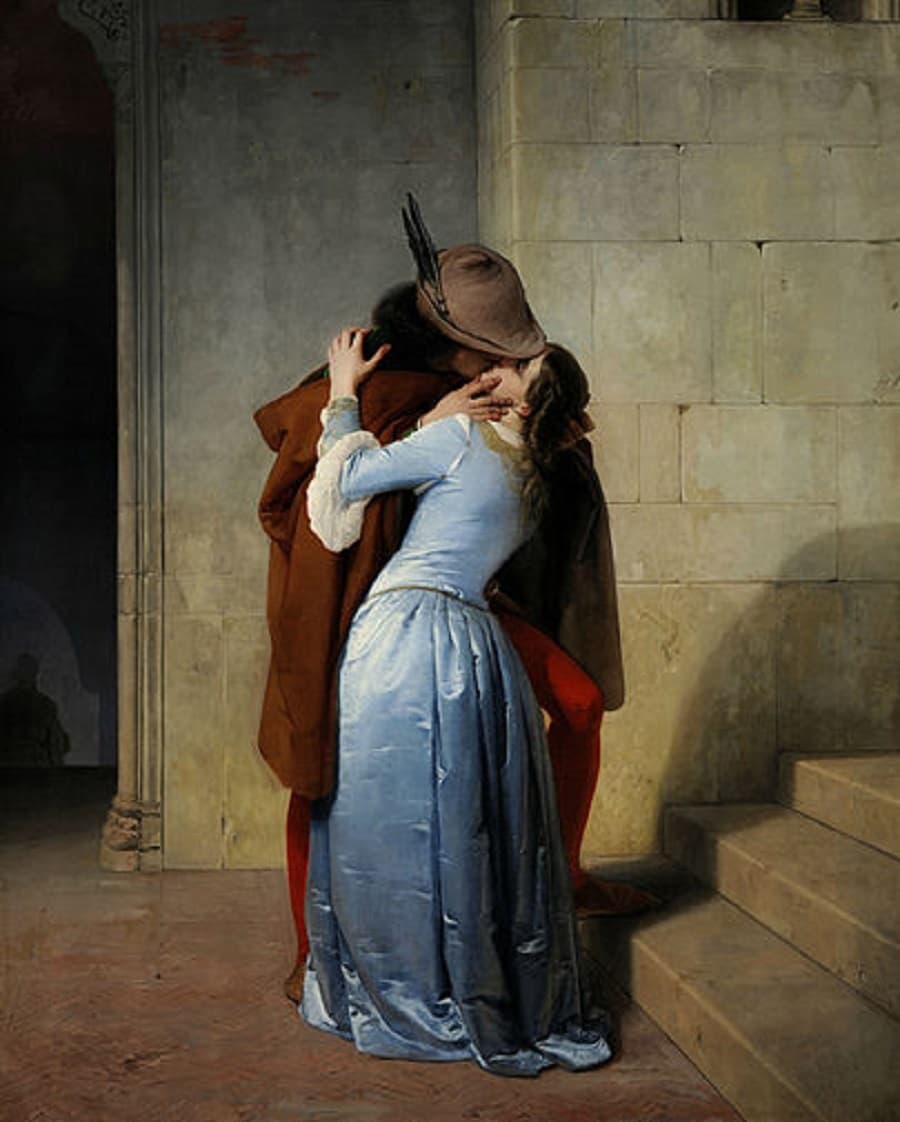
The Kiss
Francesco Hayez · 1859
The Kiss (Il bacio) is an 1859 oil painting by the Italian Romantic Francesco Hayez, showing a young couple in medieval dress locked in an embrace at the foot of a stone staircase. It hangs in the Pinacoteca di Brera in Milan.
22
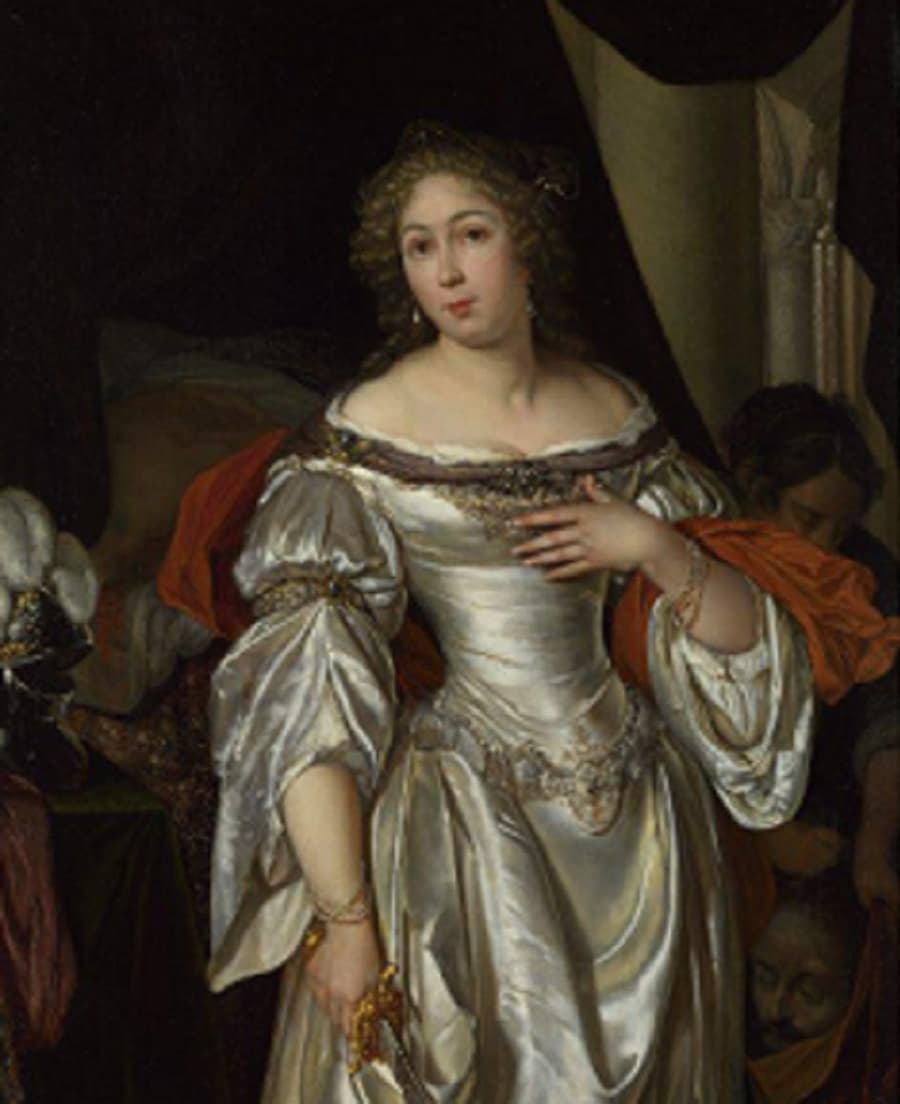
Judith
Eglon van der Neer · c. 1678
Judith is a small oil on panel painted around 1678 by the Dutch artist Eglon van der Neer. A young woman in silk and pearls poses as the biblical heroine Judith while her maid bags Holofernes' head. It belongs to the National Gallery, London.
23
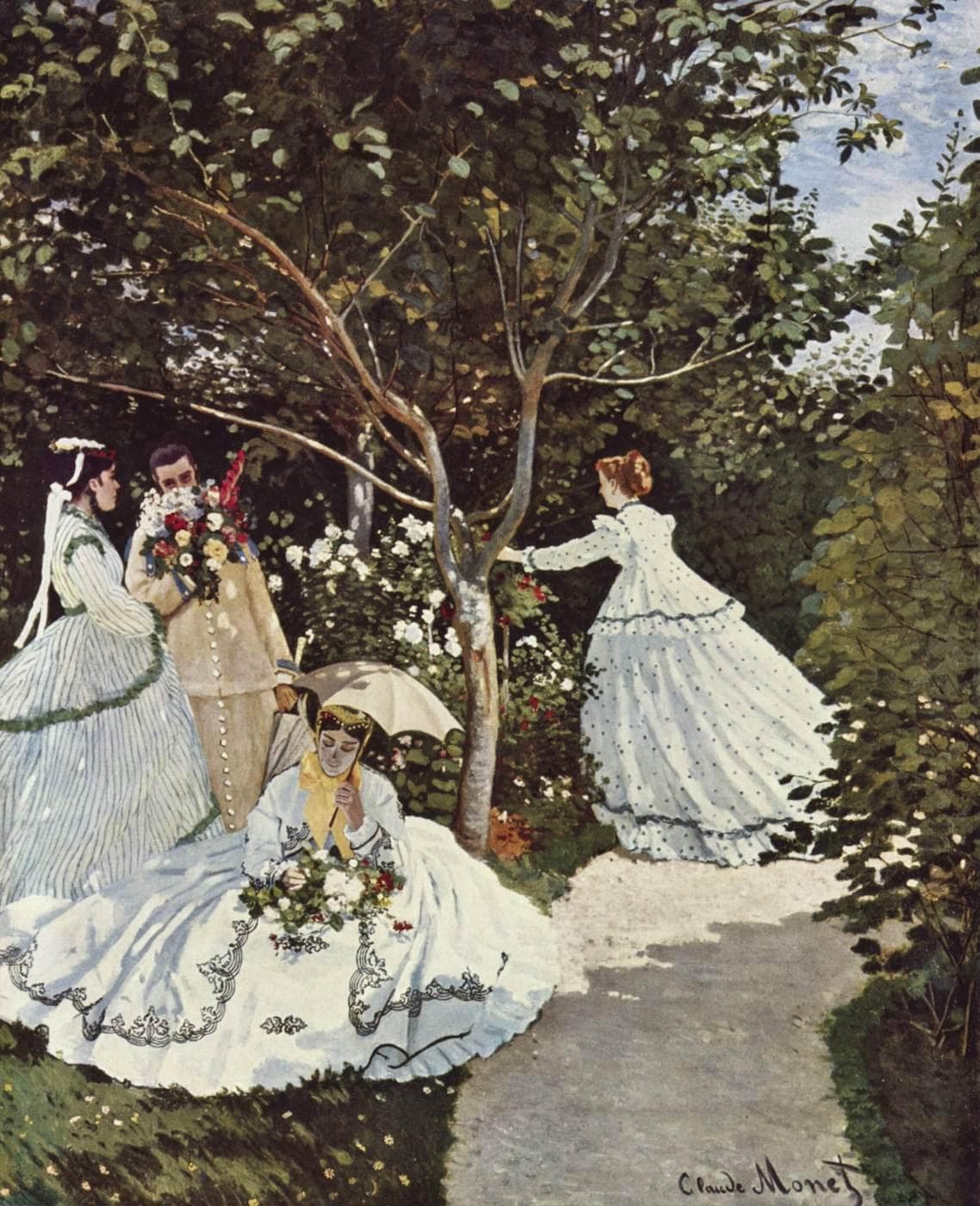
Women in the Garden
Claude Monet · 1866–67
Women in the Garden (Femmes au jardin) is a monumental 1866–67 painting by Claude Monet of four women in summer dresses in a sunlit garden, painted largely outdoors at Ville-d'Avray. Rejected by the 1867 Salon, it is now in the Musée d'Orsay in Paris.
How we chose these paintings
A painting of a woman becomes famous in several different ways. Some, like the Mona Lisa, are celebrated as portraits of one person. Some are images of goddesses or heroines from myth, literature and the Bible, in which a model stands in for an idea. Some turn a woman into a symbol of a nation or a cause. The list mixes all three, starting with the icons and moving toward works that repay a closer look.
The portrait: real women, named and unnamed
The Mona Lisa (begun c. 1503, Louvre) is a portrait of Lisa Gherardini, the wife of the Florentine silk merchant Francesco del Giocondo, which is why it is also called La Gioconda. Leonardo never delivered it, and worked on it for more than a decade. Its fame grew slowly and then exploded after it was stolen from the Louvre in 1911 by Vincenzo Peruggia and recovered in Florence in 1913. What most viewers miss is the landscape: the horizon on the left is lower than the one on the right, which helps make her seem to shift as you look.
Other famous portraits have lost their sitters. The girl in Vermeer's Girl with a Pearl Earring (c. 1665, Mauritshuis, The Hague) is not a portrait but a tronie, a study of a face in exotic costume, and her identity is unknown. Monet's paintings of Camille Doncieux, from Camille (The Woman in the Green Dress, 1866) to Woman with a Parasol (1875), record the woman who was his model, his wife and the mother of his sons, until her death at 32.
Goddesses and the nude
For centuries the most respectable way to paint a naked woman was to call her Venus. Botticelli's The Birth of Venus (c. 1484–86, Uffizi) revived the large-scale female nude; Titian's Venus of Urbino (1538) brought her indoors onto a bed; and nineteenth-century Salon painters such as William-Adolphe Bouguereau made her porcelain-smooth. Édouard Manet's Olympia (1863, Musée d'Orsay) caused a scandal by painting a recognizable Parisian courtesan in Venus's pose, looking straight back at the viewer.
Frederic Leighton's Flaming June (1895, Museo de Arte de Ponce, Puerto Rico) shows a sleeping woman curled in translucent orange drapery. The pose comes from Michelangelo's sculptures for the Medici tombs. It fell so far out of fashion that in the early 1960s it failed to sell in London and was bought by the museum in Ponce, where it remains.
Heroines of literature
The Victorian painters loved tragic women from books. John Everett Millais's Ophelia (1851–52, Tate Britain) shows Shakespeare's heroine floating in a stream moments before she drowns, painted from Elizabeth Siddal posing in a bathtub in Millais's studio; she reportedly caught a severe cold when the lamps warming the water went out. John William Waterhouse's The Lady of Shalott (1888, Tate Britain) illustrates Tennyson's poem: the cursed lady drifts toward Camelot and death, candles guttering at the prow of her boat. Frank Dicksee's La Belle Dame sans Merci takes Keats's fairy temptress and turns her on a knight. In these pictures the woman is usually beautiful, doomed and silent, and she is almost always alone, which tells us as much about the Victorian imagination as about the poems.
Heroines of the Bible and history
Judith, the widow who saved her city by beheading the Assyrian general Holofernes, was painted by Caravaggio, Cristofano Allori, Klimt and many others. The most powerful version is by a woman. Artemisia Gentileschi's Judith Slaying Holofernes shows Judith and her maid pinning the general to the bed as they cut, their sleeves pushed up like butchers'. Artemisia had been raped by the painter Agostino Tassi in 1611 and endured a public trial in which she was tortured to test her testimony; many scholars read the painting in light of that experience, though she painted Judith throughout her long career.
Women also became symbols of the state. Eugène Delacroix's Liberty Leading the People (1830, Louvre), painted to commemorate the July Revolution, shows Liberty as a bare-breasted woman of the people in a Phrygian cap, holding the tricolor flag over the barricades. She became Marianne, the emblem of the French Republic.
The Rococo and the pleasure of looking
Jean-Honoré Fragonard's The Swing (1767, Wallace Collection, London) is the most famous Rococo painting of a woman. She flies upward on a swing pushed by an older man in the shadows, kicking off a pink slipper toward her young lover hidden in the bushes below, who looks straight up her skirts. A statue of Cupid holds a finger to his lips. The picture is a joke about watching and being watched, and every detail of the garden plays along.
The twentieth century: Picasso's women
Pablo Picasso painted the women in his life obsessively, and each became a style. Girl Before a Mirror (1932, Museum of Modern Art) and Le Rêve (1932) show Marie-Thérèse Walter in curving forms and bright colors, often read as images of desire and the divided self. The Weeping Woman (1937, Tate Modern), painted in the aftermath of Guernica, uses the face of the photographer Dora Maar to stand for all the grief of the Spanish Civil War. Maar was a major artist in her own right, a Surrealist photographer whose work was shown alongside Man Ray's, a fact the painting's fame long obscured.
Women behind the easel
For most of history women were excluded from academies and from life drawing, which made large figure painting almost impossible for them. A few broke through: Sofonisba Anguissola at the Spanish court, Artemisia Gentileschi, Élisabeth Vigée Le Brun in pre-revolutionary France, and later Berthe Morisot and Mary Cassatt among the Impressionists. In 1989 the activist artists known as the Guerrilla Girls pointed out that at the Metropolitan Museum fewer than five percent of the artists in the modern art sections were women, while most of the nudes were female. The gap between painting women and women painting remains one of the central questions of art history.
For more, see The Pre-Raphaelites.
Questions & answers
What is the most famous painting of a woman?
Leonardo da Vinci's Mona Lisa, begun around 1503 and now in the Louvre, is the most famous painting of a woman and probably the most famous painting in the world. Vermeer's Girl with a Pearl Earring and Botticelli's The Birth of Venus are close behind.
Who was the woman in the Mona Lisa?
She was Lisa Gherardini (1479–1542), wife of the Florentine silk merchant Francesco del Giocondo, which is why the painting is also called La Gioconda. Leonardo began the portrait around 1503 but never delivered it, and it stayed with him until his death in France.
Who is the most famous female painter?
Frida Kahlo is the most widely known today. Among the old masters, Artemisia Gentileschi, Sofonisba Anguissola and Élisabeth Vigée Le Brun are the best known, followed by the Impressionists Berthe Morisot and Mary Cassatt and modern artists such as Georgia O'Keeffe.
Where is Liberty Leading the People?
Eugène Delacroix's Liberty Leading the People (1830) is in the Louvre in Paris. It commemorates the July Revolution of 1830, and its bare-breasted figure of Liberty, holding the French tricolor, later became a model for Marianne, the symbol of the French Republic.
Who modeled for Millais's Ophelia?
Elizabeth Siddal, a model and later a painter and poet herself, posed in a bathtub of water in Millais's London studio in 1852. She later married Dante Gabriel Rossetti. The painting is in Tate Britain.