Movement
Romanticism Paintings: Storm, Sublime and the Self
Shipwrecks, barricades, fog-filled valleys and nightmares: how painters between 1780 and 1850 put feeling above reason and nature above everything.
Romanticism paintings are the works of the movement that swept European and American art from about 1780 to 1850, putting emotion, imagination and the power of nature above the cool reason of the Enlightenment. Its signature images are some of the most famous in art: Caspar David Friedrich's Wanderer above the Sea of Fog, Théodore Géricault's Raft of the Medusa, Eugène Delacroix's Liberty Leading the People, Francisco Goya's Third of May 1808 and the stormy skies of J. M. W. Turner.
Romantic painters had no single style. Friedrich's still, glassy landscapes look nothing like Delacroix's churning color. What united them was a set of convictions: that a painting should make you feel something overwhelming, that the individual imagination is sacred, and that nature, history and the irrational are more interesting than polite order. This page explains the movement, its key ideas and painters, how to recognize a Romantic painting, and where the masterpieces hang.
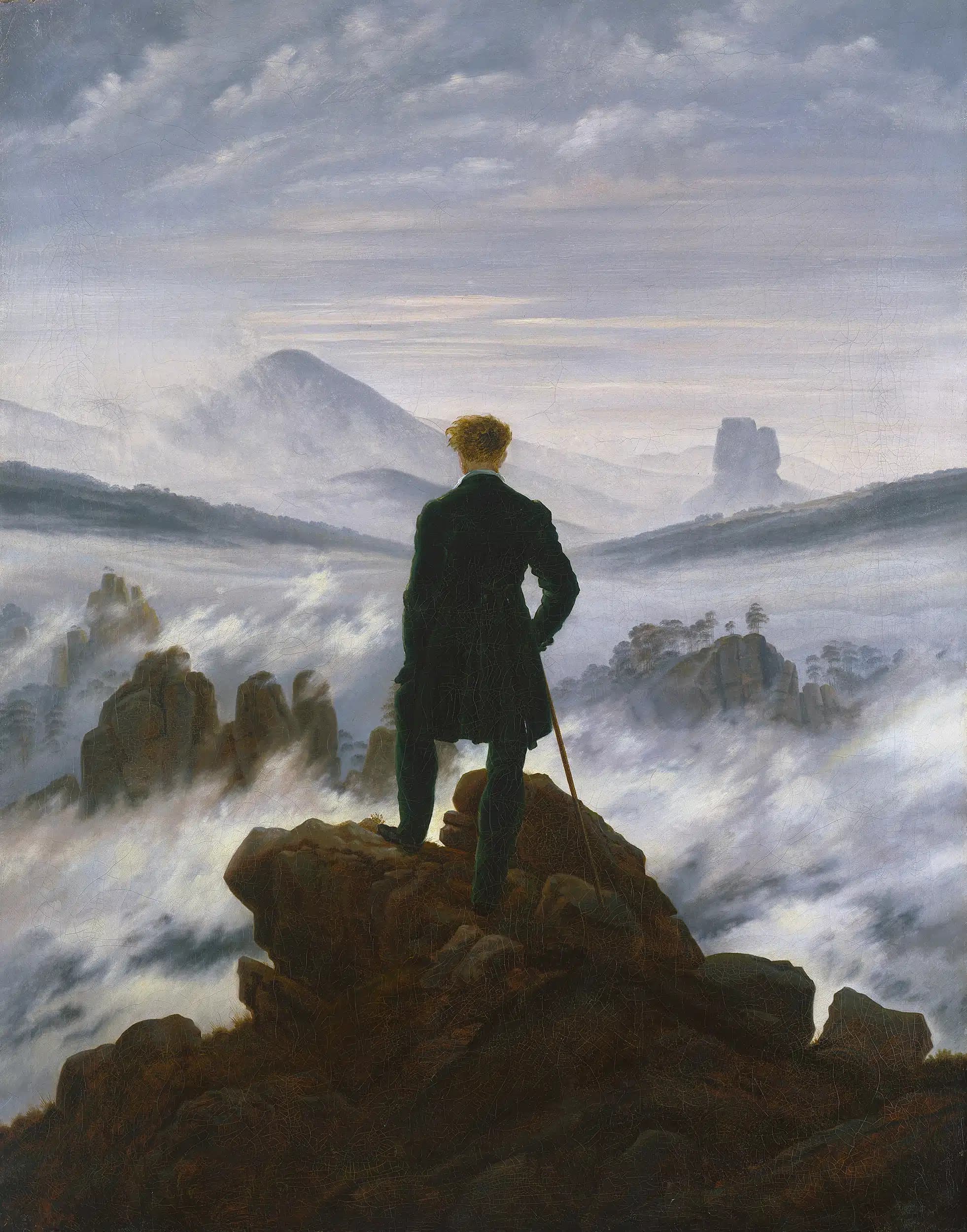
Wanderer above the Sea of Fog
Caspar David Friedrich · c. 1817
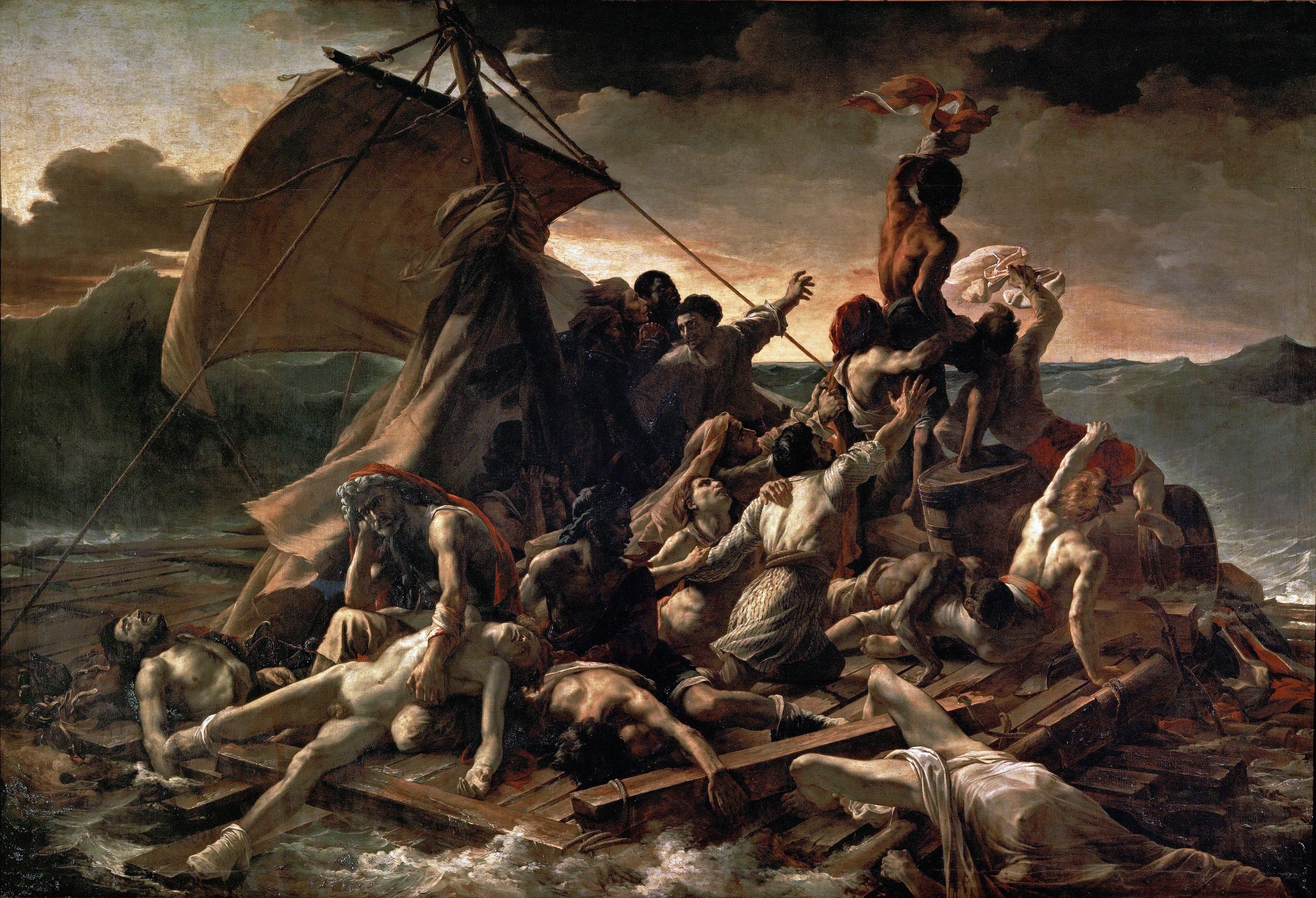
The Raft of the Medusa
Théodore Géricault · 1818–1819
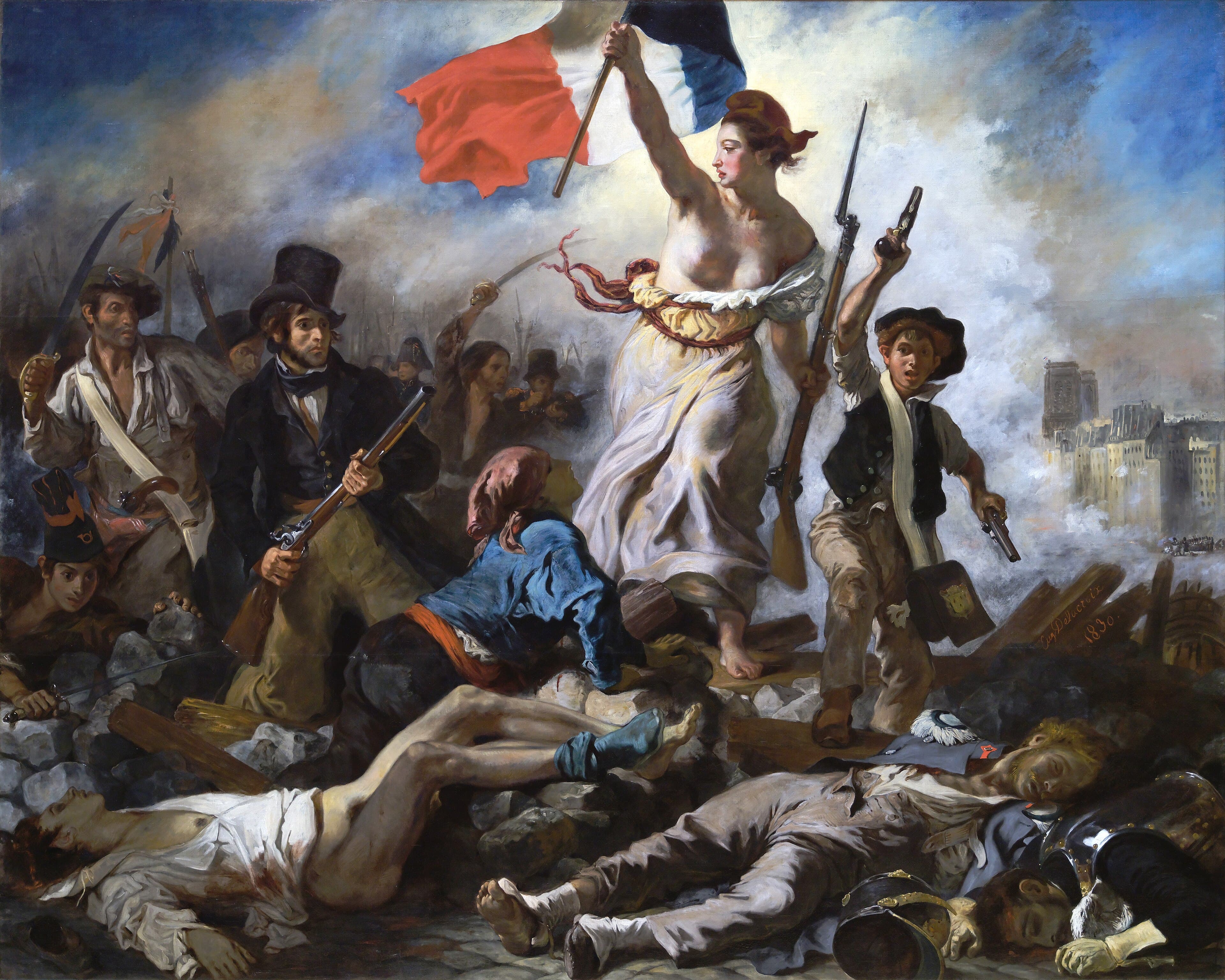
Liberty Leading the People
Eugène Delacroix · 1830
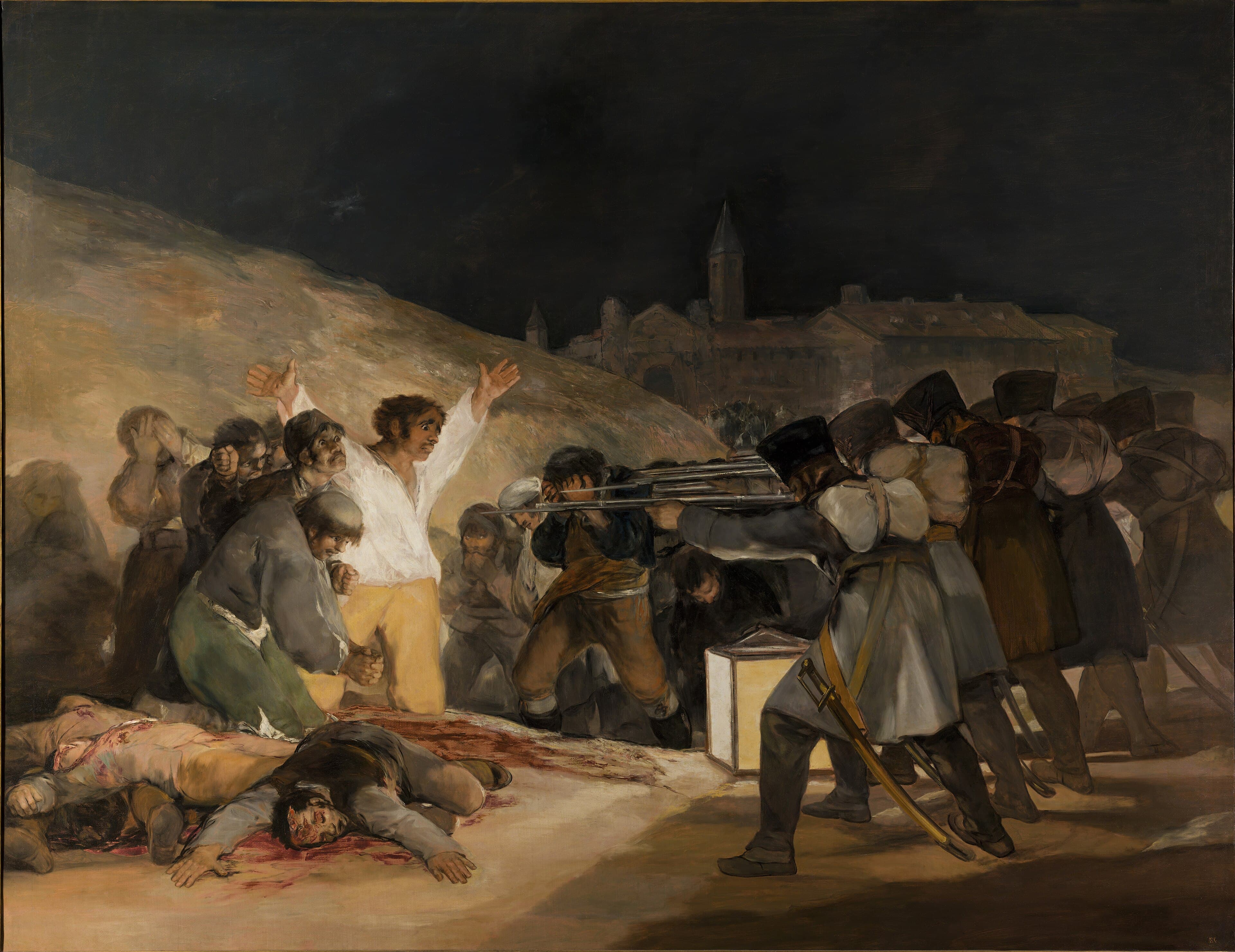
The Third of May 1808
Francisco Goya · 1814
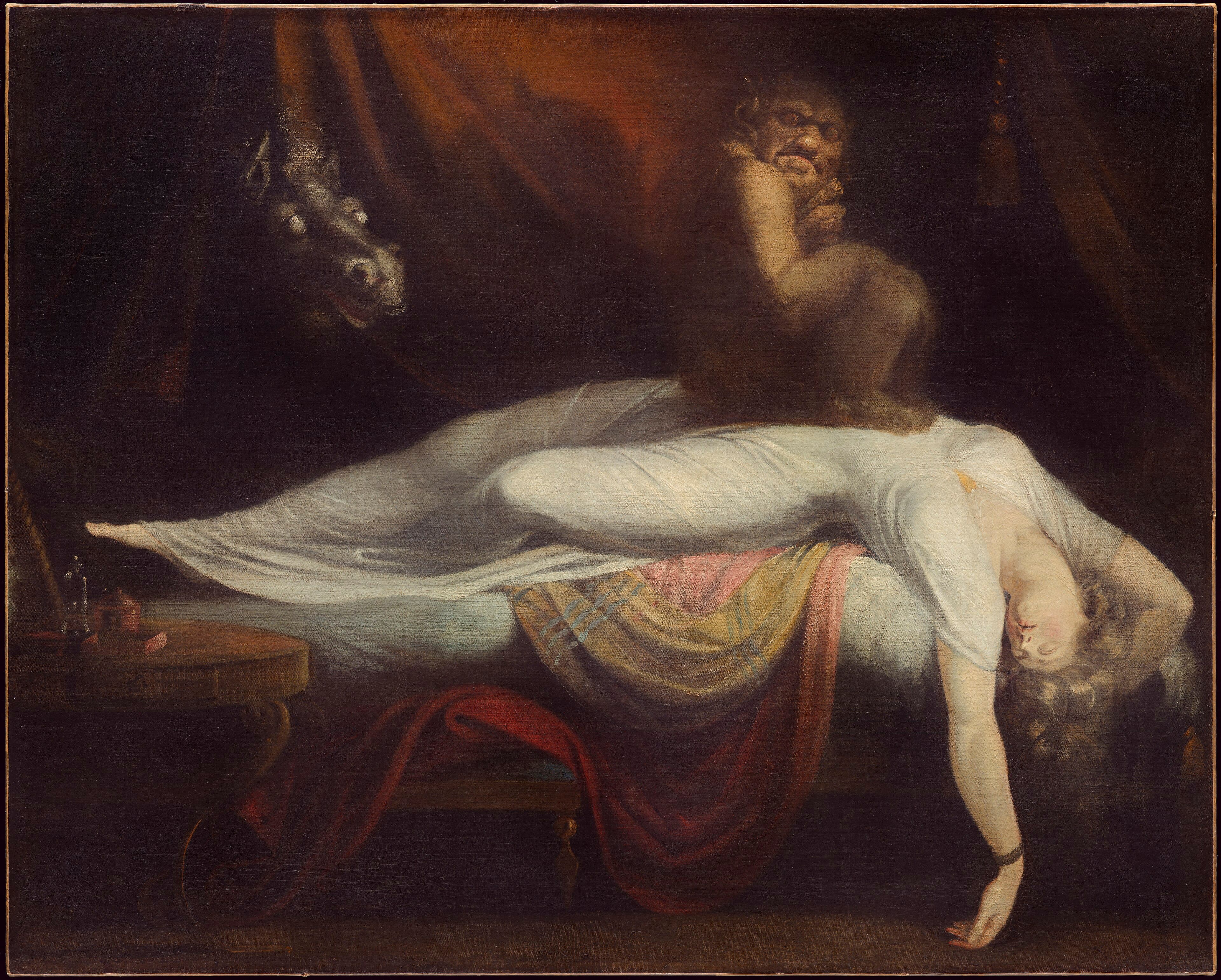
The Nightmare
Henry Fuseli · 1781

Saturn Devouring His Son
Francisco Goya · c. 1819–1823
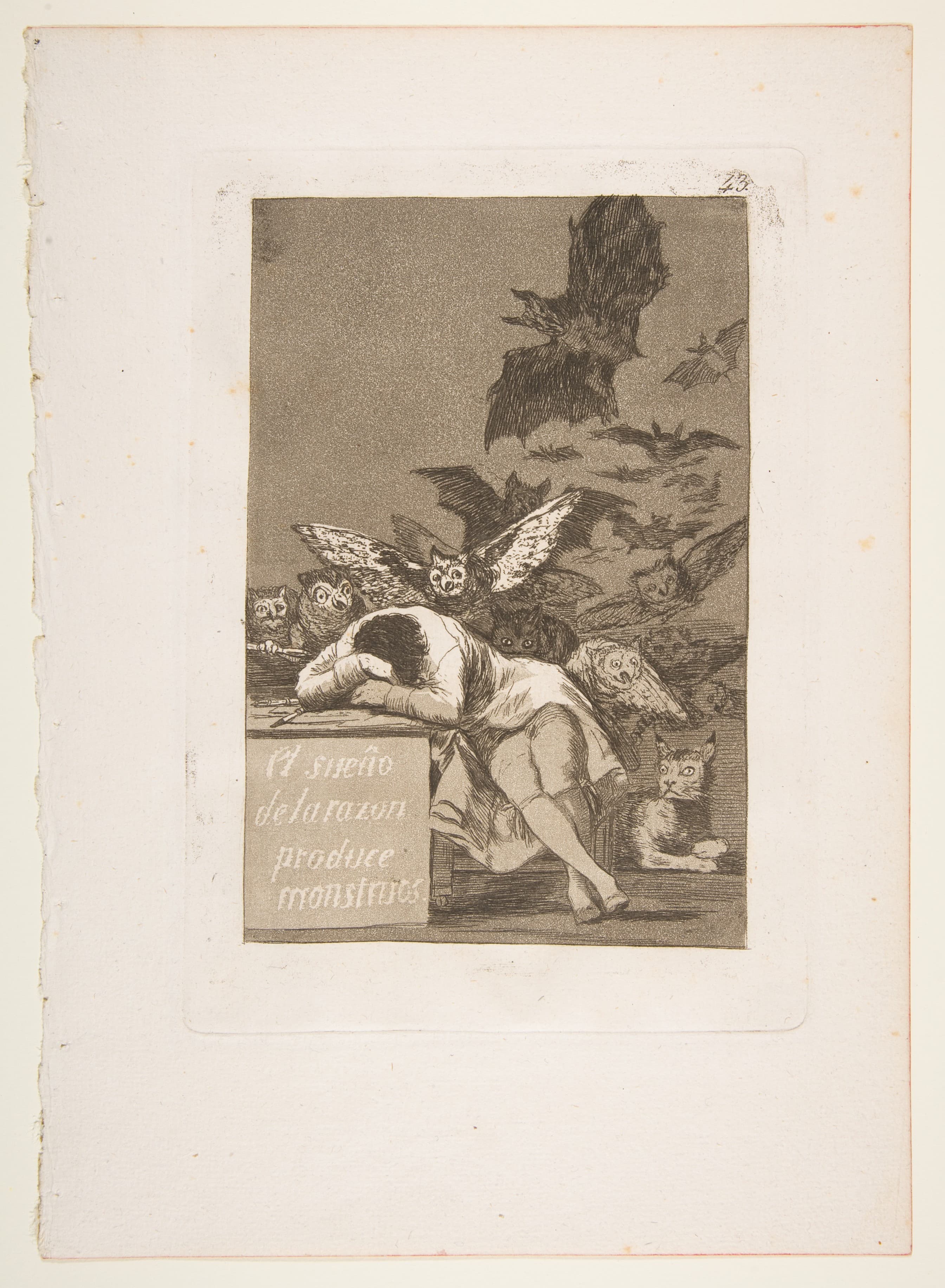
The Sleep of Reason Produces Monsters
Francisco Goya · 1797–99 (published 1799)
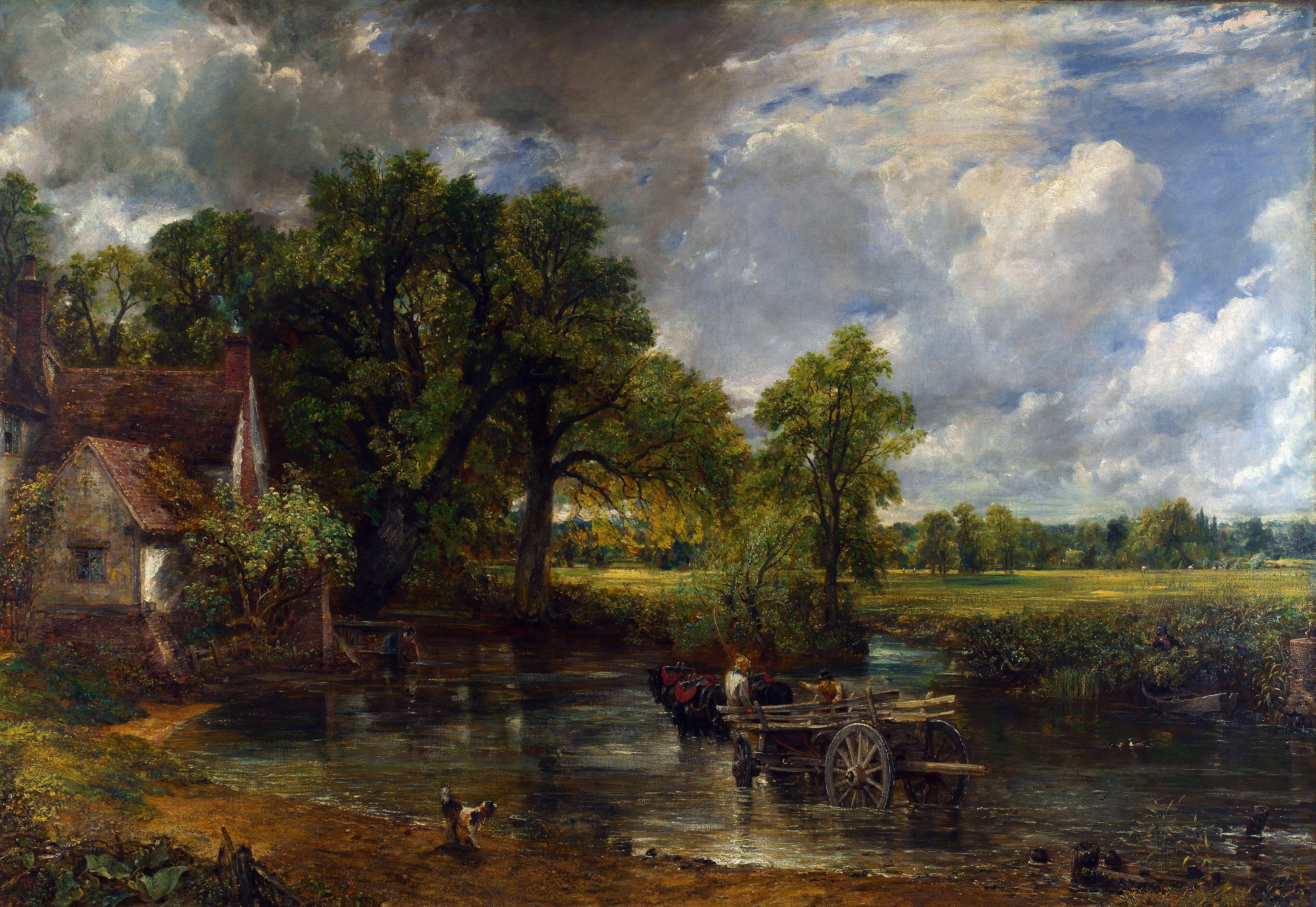
The Hay Wain
John Constable · 1821
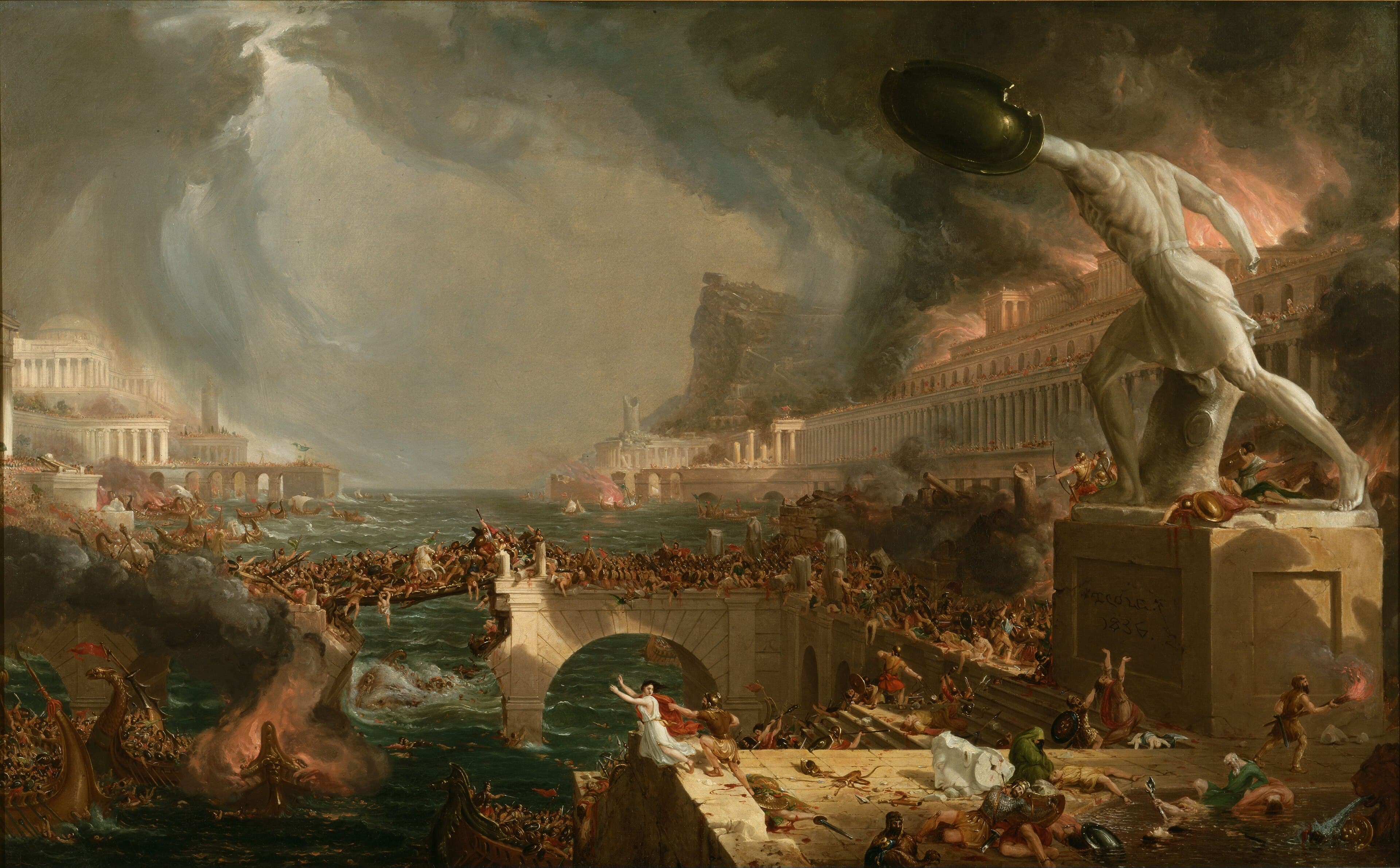
The Course of Empire: Destruction
Thomas Cole · 1836
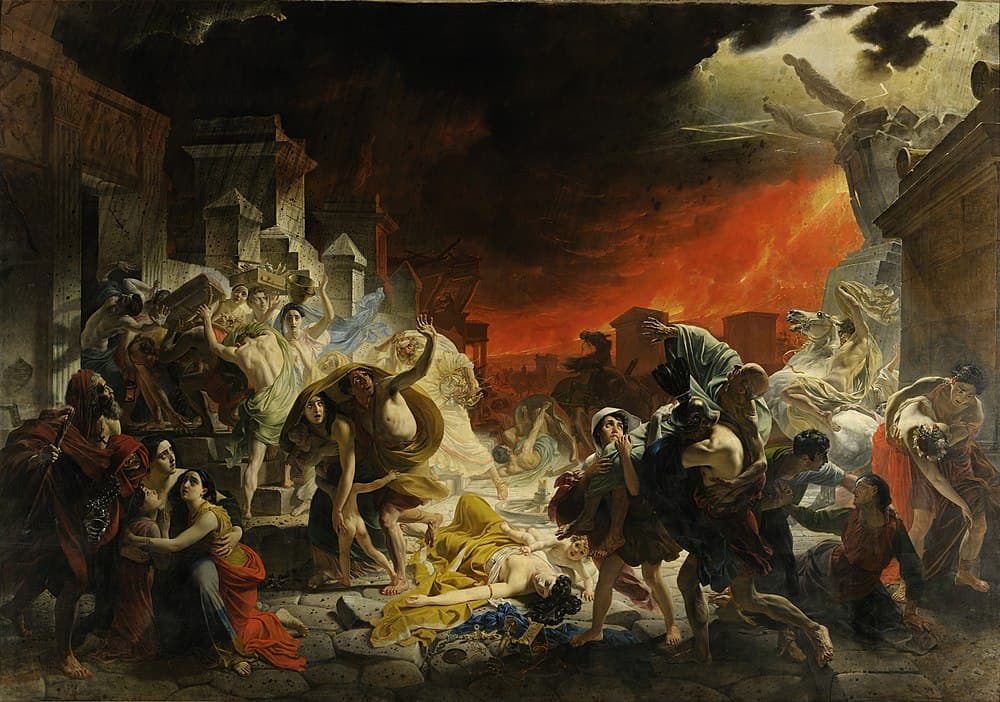
The Last Day of Pompeii
Karl Bryullov · 1830–33
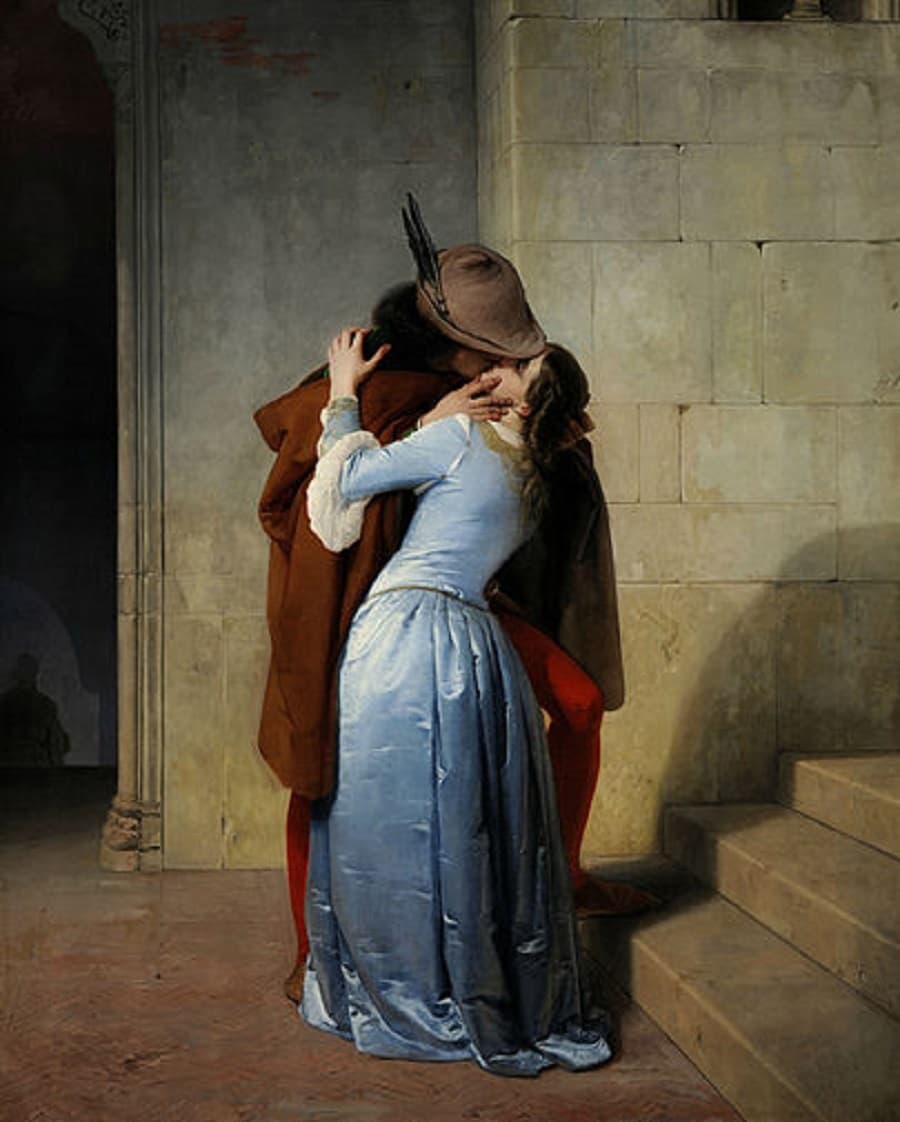
The Kiss
Francesco Hayez · 1859
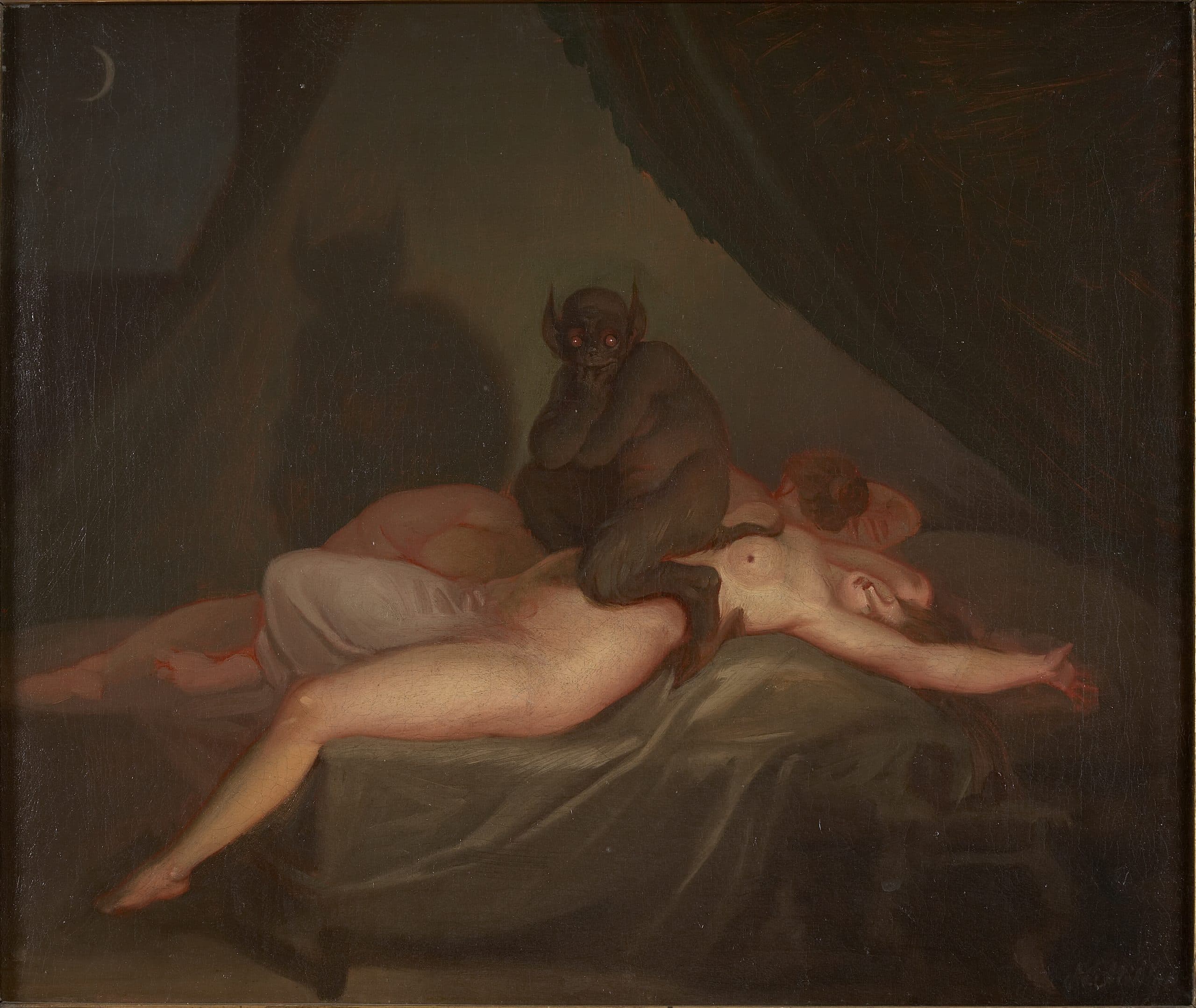
Nightmare
Nicolai Abraham Abildgaard · 1800
What was Romanticism?
Romanticism began as a literary and philosophical movement in Germany and Britain in the late eighteenth century and spread to painting, music and politics across Europe and the Americas. It was a reaction against two things at once. The first was the Enlightenment, with its faith in reason, rules and progress. The second was the Industrial Revolution, which was filling cities with smoke and factories. Against both, the Romantics championed feeling, intuition, wild nature, the distant past and the inner life of the individual.
The movement was shaped by upheaval. The French Revolution of 1789 and the Napoleonic Wars that followed tore Europe apart, and many Romantic paintings respond directly to that violence. Others turn away from it entirely, toward mountains, moonlight and the Middle Ages.
The key ideas behind Romantic painting
The sublime. In 1757 the Irish philosopher Edmund Burke distinguished beauty, which pleases, from the sublime, which overwhelms: storms, abysses, vast mountains, anything that fills us with awe touched by terror. The sublime became Romanticism's central experience.
Nature as a mirror of the soul. Landscape, once a minor genre, became a vehicle for spiritual and emotional meaning.
The individual and the genius. The artist was no longer a craftsman serving a patron but a visionary following his or her own imagination.
History, revolution and the nation. Painters took on contemporary events and national struggles with an urgency the old history painting rarely had.
The irrational. Dreams, nightmares, madness, the supernatural and the Gothic fascinated a generation that had seen reason's limits.
Caspar David Friedrich and the German sublime
No painter is more closely identified with Romanticism than Caspar David Friedrich. In Wanderer above the Sea of Fog (c. 1818, Hamburger Kunsthalle), a man in a dark green overcoat stands with his back to us on a rocky summit, his hair blown by the wind, looking out over peaks emerging from a sea of mist. Friedrich often used this figure, the Rückenfigur or figure seen from behind, so that the viewer stands in the subject's place. His Monk by the Sea (1808–10, Alte Nationalgalerie, Berlin) goes further: a tiny figure on a strip of sand before an almost empty expanse of dark water and sky. Contemporaries were startled by how little was in it.
Goya: reason's nightmare
Francisco Goya was court painter to the Spanish crown and the darkest of the Romantics. His etching The Sleep of Reason Produces Monsters (published 1799 in the series Los Caprichos) shows a man asleep at his desk while owls and bats swarm behind him. After French troops occupied Spain, he painted The Third of May 1808 (1814, Prado), commemorating the executions of Madrid civilians by Napoleon's soldiers.
A man in a white shirt flings up his arms before the faceless firing squad, lit by a single square lantern on the ground. Look at his right palm: Goya painted a small wound there, like the stigmata of Christ. Late in life, deaf and isolated, he covered the walls of his house outside Madrid with the Black Paintings, including Saturn Devouring His Son (1819–23), which were transferred to canvas only after his death.
Géricault, Delacroix and French Romanticism
In 1816 the French naval frigate Méduse ran aground off West Africa. Its captain and officers took the lifeboats, and about 150 people were set adrift on a makeshift raft; after nearly two weeks of starvation, madness and cannibalism, only fifteen were picked up alive. Théodore Géricault interviewed survivors, built a model of the raft and studied corpses in a Paris hospital. The Raft of the Medusa (1818–19, Louvre) builds the composition as a pyramid of bodies rising from the dead in the foreground to a man waving a cloth at a ship almost invisible on the horizon. At more than seven meters wide, it was a scandal and a political accusation at the Salon of 1819.
Eugène Delacroix, who had posed for one of the figures on the raft, became the leader of French Romanticism. Liberty Leading the People (1830, Louvre) commemorates the July Revolution that toppled Charles X. Liberty, bare-breasted and wearing a Phrygian cap, strides over a barricade with the tricolor in one hand and a bayoneted musket in the other, flanked by a top-hatted man with a gun and a boy brandishing pistols. Delacroix's loose, vibrant color and his love of exotic subjects drawn from North Africa and literature made him the counterweight to Ingres and the Neoclassical tradition.
British Romanticism: Turner, Constable and the visionaries
Britain produced two of the greatest landscape painters in history. J. M. W. Turner dissolved ships, trains and cities in vortexes of light and weather, in works such as The Fighting Temeraire (1839) and Rain, Steam and Speed (1844), both at the National Gallery, London. John Constable painted the river valleys of Suffolk with a new freshness, sketching clouds outdoors and flecking his canvases with white to catch the light on wet leaves. The Hay Wain (1821, National Gallery) failed to sell when first shown in London but won a gold medal at the Paris Salon of 1824, where it impressed Delacroix and a generation of French landscape painters.
The visionary strand runs through Henry Fuseli, a Swiss painter working in London, whose The Nightmare (1781) became a sensation, and William Blake, poet and painter of private mythologies. In Denmark, Nicolai Abraham Abildgaard took up Fuseli's subject in his own Nightmare.
Romanticism beyond France and Britain
In America, Thomas Cole founded the Hudson River School and painted the wilderness as God's own country. His five-part series The Course of Empire (1833–36, New-York Historical Society) traces a civilization from savage state to ruin; the fourth canvas, Destruction, shows a classical city sacked and burning while a headless statue strides forward amid the chaos. In Russia, Karl Bryullov's The Last Day of Pompeii (1830–33, State Russian Museum, St. Petersburg) stages the eruption of Vesuvius as a vast drama of families fleeing falling statues; Bryullov included himself among the crowd, carrying a box of painting materials on his head. In Italy, Francesco Hayez's The Kiss (1859, Pinacoteca di Brera, Milan) shows two lovers in medieval dress in a passionate embrace on a staircase. Painted the year of Italy's war with Austria, it has long been read as an allegory of the Risorgimento, the struggle for Italian unity.
How to recognize a Romantic painting
- Nature at its most extreme: storms, shipwrecks, mountains, avalanches, moonlight, fog, ruins.
- Tiny human figures dwarfed by landscape, or a lone figure seen from behind.
- Dramatic, often contemporary events painted with emotional urgency.
- Visible, energetic brushwork and rich color, especially in Delacroix and Turner, though Friedrich's surfaces are smooth.
- Themes of death, dreams and the supernatural, and a fascination with the medieval and the exotic.
- A strong mood that matters more than a clear story.
Romanticism's legacy
Romanticism never really ended. Its love of landscape fed directly into Realism and Impressionism; its literary dreams flowed into the Pre-Raphaelites and Symbolism; its cult of the solitary genius shaped how we still think about artists. The internet aesthetics of today, especially dark academia, are full of Romantic paintings, because they still deliver what they promised: a feeling too large for words.
Where to see Romantic paintings
Paris's Louvre holds Géricault and Delacroix. Madrid's Prado has Goya's war pictures and Black Paintings. London's National Gallery and Tate Britain have Turner and Constable. Berlin's Alte Nationalgalerie and Hamburg's Kunsthalle have the essential Friedrichs, and New York's New-York Historical Society has The Course of Empire.
Questions & answers
What are the most famous Romanticism paintings?
The best-known Romantic paintings include Friedrich's Wanderer above the Sea of Fog, Géricault's The Raft of the Medusa, Delacroix's Liberty Leading the People, Goya's The Third of May 1808, Turner's The Fighting Temeraire, Constable's The Hay Wain and Fuseli's The Nightmare.
What are the characteristics of Romanticism in art?
Romantic art emphasizes emotion over reason, the sublime power of nature, the individual imagination, dramatic historical and contemporary events, and the irrational world of dreams and the supernatural. It favors storms, ruins, moonlit landscapes, rich color and expressive brushwork.
When was the Romantic period in art?
Romanticism in painting flourished from roughly 1780 to 1850, peaking between about 1800 and 1840. It overlapped with Neoclassicism, which it partly reacted against, and was gradually succeeded by Realism in the mid-nineteenth century, though its influence lasted much longer.
Who were the main Romantic painters?
The leading Romantic painters were Caspar David Friedrich in Germany, Francisco Goya in Spain, Théodore Géricault and Eugène Delacroix in France, J. M. W. Turner, John Constable, William Blake and Henry Fuseli in Britain, Thomas Cole in America and Karl Bryullov in Russia.
What is the difference between Romanticism and Neoclassicism?
Neoclassicism, led by Jacques-Louis David, valued clarity, order, crisp outline and moral lessons drawn from ancient Greece and Rome. Romanticism valued feeling, movement, color, the sublime and subjects from nature, the Middle Ages and contemporary life. Delacroix and Ingres embodied the rivalry in France.