Impressionism
Water Lilies, Evening Effect
Claude Monet, 1897
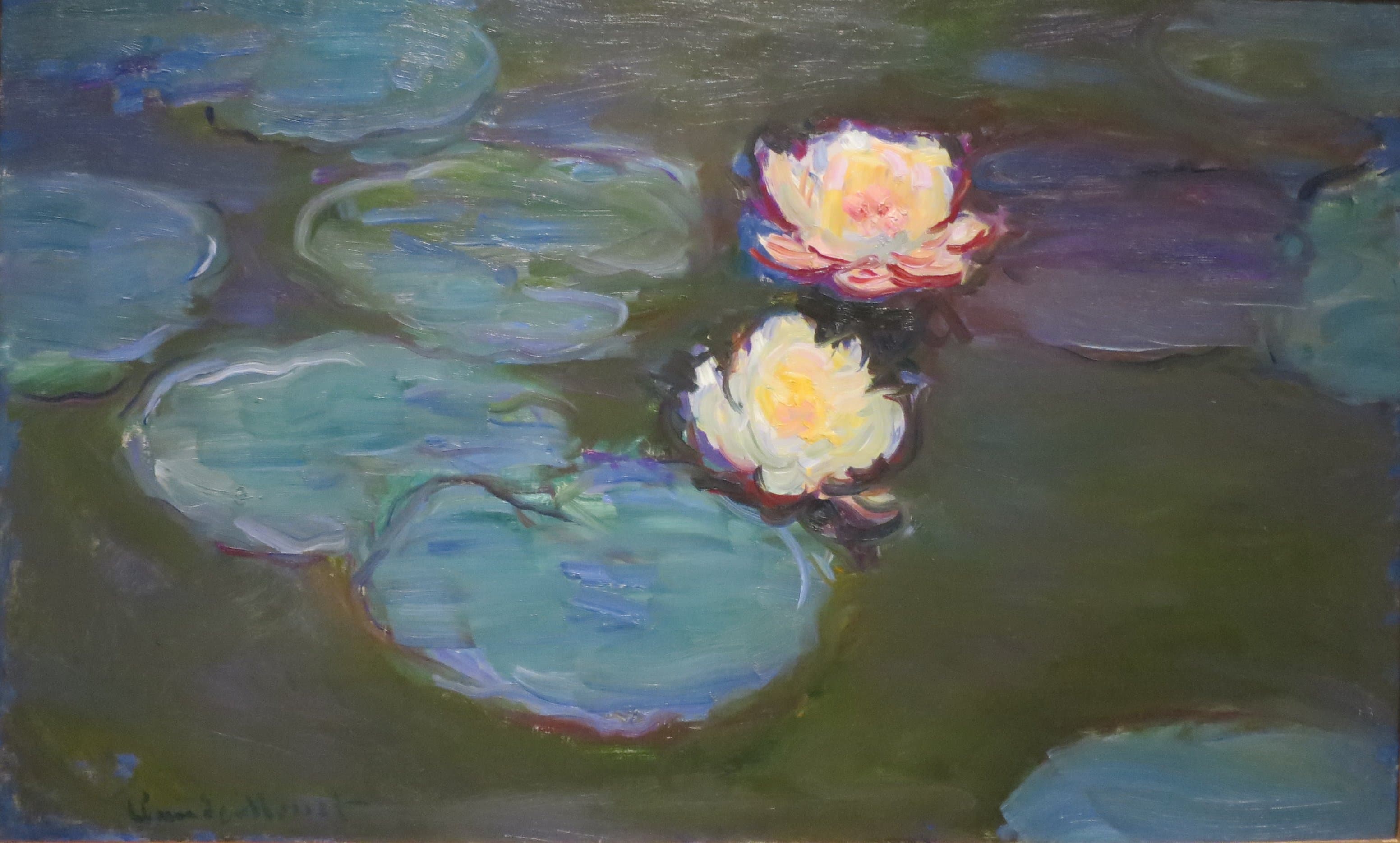
Water Lilies, Evening Effect (Nymphéas, effet du soir) is an 1897 painting by Claude Monet in the Musée Marmottan Monet, Paris. It is one of his first close-up studies of the lily pond at Giverny: a few pads and two white blooms floating on blue-violet water at dusk.
- Artist
- Claude Monet
- Date
- 1897
- Medium
- Oil on canvas
- Dimensions
- 73 × 100 cm
- Collection
- Musée Marmottan Monet, Paris, France
- Movement
- Impressionism
- Catalogue
- Wildenstein 1504
More at Musée Marmottan Monet
Water Lilies, Evening Effect (Nymphéas, effet du soir) belongs to the very first group of paintings Claude Monet made of the lily pond he had created in his garden at Giverny. Dated 1897 by the Musée Marmottan Monet in Paris, which owns it, the canvas measures 73 × 100 cm and came to the museum in 1966 with the bequest of the artist's younger son, Michel Monet. It is stamped "Claude Monet" at the lower left with the studio stamp used on works left in the artist's possession at his death, a sign that Monet never sold or exhibited it.
What you're looking at
There is no bank, no sky, no bridge, nothing but the surface of the water seen from above at close range. A loose cluster of round lily pads drifts across the center and lower half of the canvas, and in the middle of them two water lilies have opened, their petals white touched with pink and their centers a soft yellow. A smaller pink bud rises just above them, and at the far right, cut off by the edge, a pad is rimmed with rust-red.
The water fills everything else. Monet paints it in long, diagonal strokes of blue, violet and gray-green, laid down quickly, as if dragged across the surface by the evening breeze. At upper left the strokes lighten into a pale lilac haze, the reflection of the sky at dusk. Toward the bottom the water darkens to blue-green. The pads are brushed in flatter, denser paint, pale green with white highlights, and their edges are softened so they seem to sit just under rather than on the surface.
The detail most viewers miss is the absence of a horizon. Without it, there is no up or down in the usual sense: the canvas is a horizontal slice of water viewed from above, and the reflected evening light, rather than any object, gives the picture its mood. Monet would build on that idea for the rest of his life.
A first step toward the great Water Lilies
Monet bought land beside his Giverny property in 1893, diverted a branch of the river Epte, and dug a pond that he planted with hybrid water lilies. For several years he painted the garden mainly from the bank, with the footbridge as the anchor, as in Bridge over a Pond of Water Lilies of 1899. Water Lilies, Evening Effect and a few related canvases of the late 1890s are different: they drop the bridge and the banks and focus on the water's surface alone.
These were experiments, and Monet kept them. A decade later he began exhibiting large, horizonless views of the pond, and after 1914 he embarked on the huge decorative panels now installed in the Musée de l'Orangerie in Paris. Seen from that perspective, this modest canvas is one of the seeds of the whole Water Lilies project.
How it was painted
The brushwork is broad and rapid, consistent with a study made in a single session or a few short ones as the light faded. Monet's interest in "effects," such as morning, evening, frost or fog, was central to his work from the 1880s; the phrase effet du soir tells us that the subject is not the flowers themselves but how they look at a particular hour. Evening light lowers the contrast and pushes the whole palette toward blue and violet, which is exactly what we see here.
Meaning
There is no symbolism in the traditional sense. The painting is about looking slowly: about how water, flowers, reflected sky and changing light merge into a single surface. In his last decades the water garden became almost his only subject, and later writers have often described the lily paintings as meditative, even spiritual, an effect that begins in quiet works like this one.
Not to be confused with
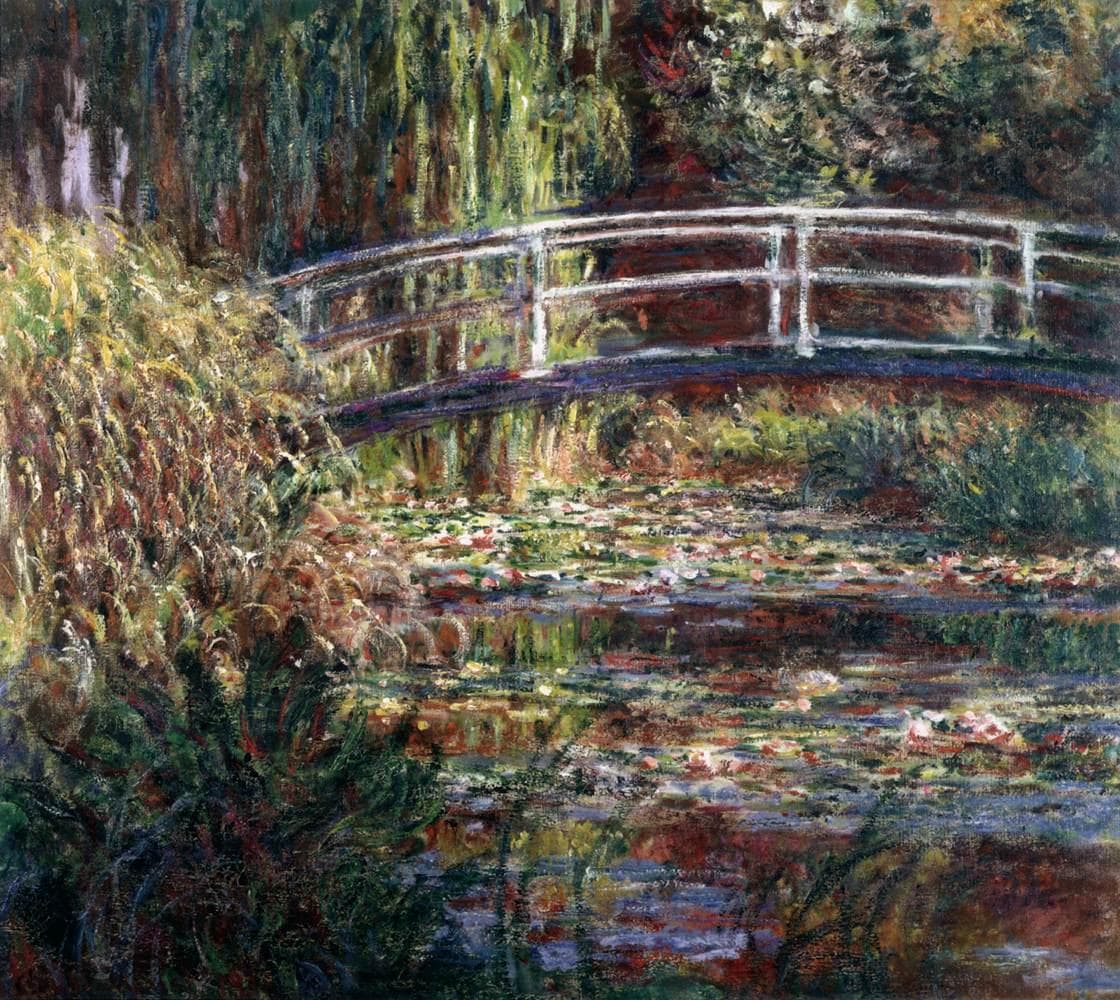
Searches for this painting often turn up Monet's bridge pictures of 1899, which show the same pond from the bank. For those, see Bridge over a Pond of Water Lilies, The Japanese Footbridge and Water Lily Pond, Harmony in Rose. Monet also painted a later Water Lilies, Sunset. For the full story, see Famous Monet Paintings.
Where to see it
The Musée Marmottan Monet, 2 rue Louis-Boilly, Paris (16th arrondissement), which holds the world's largest collection of Monet's work, much of it from Michel Monet's bequest. The painting is in the public domain.
Questions & answers
Where is Water Lilies, Evening Effect by Monet?
It is in the Musée Marmottan Monet in Paris (inventory 5167). The painting came to the museum in 1966 with the bequest of Michel Monet, the artist's younger son, and bears the studio stamp applied to works still in Monet's possession when he died in 1926.
When did Monet paint Water Lilies, Evening Effect?
The Musée Marmottan Monet dates it to 1897, which places it among the very first paintings Monet made of the surface of his lily pond at Giverny, a few years after he created the pond in 1893 and before his bridge series of 1899.
What does 'evening effect' mean in Monet's titles?
An 'effet' was the particular appearance of a scene under certain light or weather: morning, frost, fog or evening. Water Lilies, Evening Effect records how the pond looked at dusk, when the light turned the water blue and violet and softened the contrast between the pads and the surface.
Is Water Lilies, Evening Effect the same as Bridge over a Pond of Water Lilies?
No. Bridge over a Pond of Water Lilies (1899, Metropolitan Museum of Art) shows the green footbridge over the pond seen from the bank. Water Lilies, Evening Effect (1897, Musée Marmottan Monet) is a close-up of the water's surface, with no bridge, bank or sky.
More by the artist
Claude Monet

Bridge over a Pond of Water Lilies
Claude Monet · 1899

Woman with a Parasol – Madame Monet and Her Son
Claude Monet · 1875

Sunset in Venice
Claude Monet · 1908–12

La Grenouillère
Claude Monet · 1869

Beach in Pourville
Claude Monet · 1882

Springtime
Claude Monet · 1872

Boating on the River Epte
Claude Monet · 1890

The Seine at Asnières (Hermitage)
Claude Monet · 1873
Also painted in 1897
The same year
Kindred works
You may also study
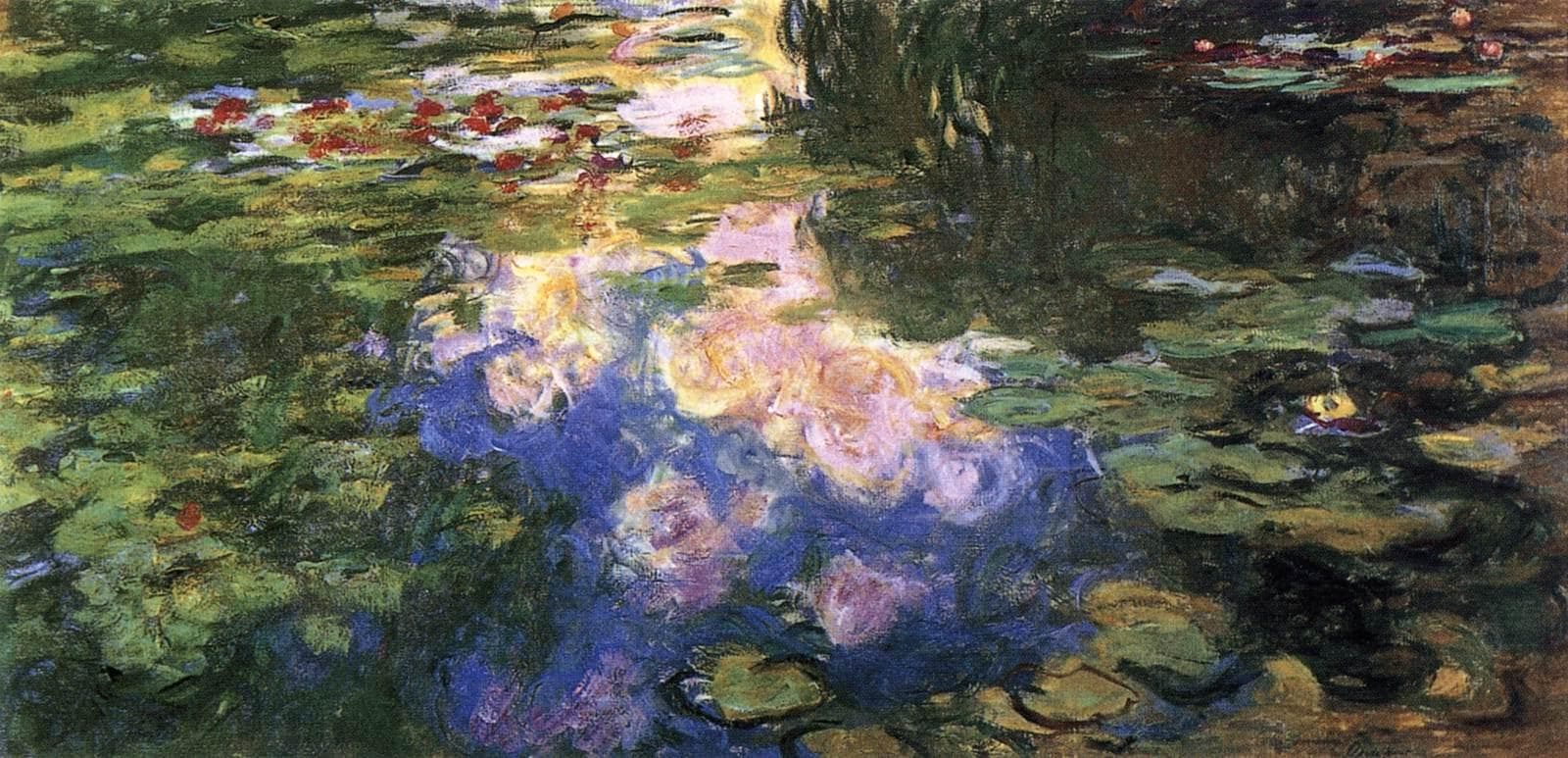
Water-Lily Pond (Le Bassin aux nymphéas), 1917–19
Claude Monet · 1917–19
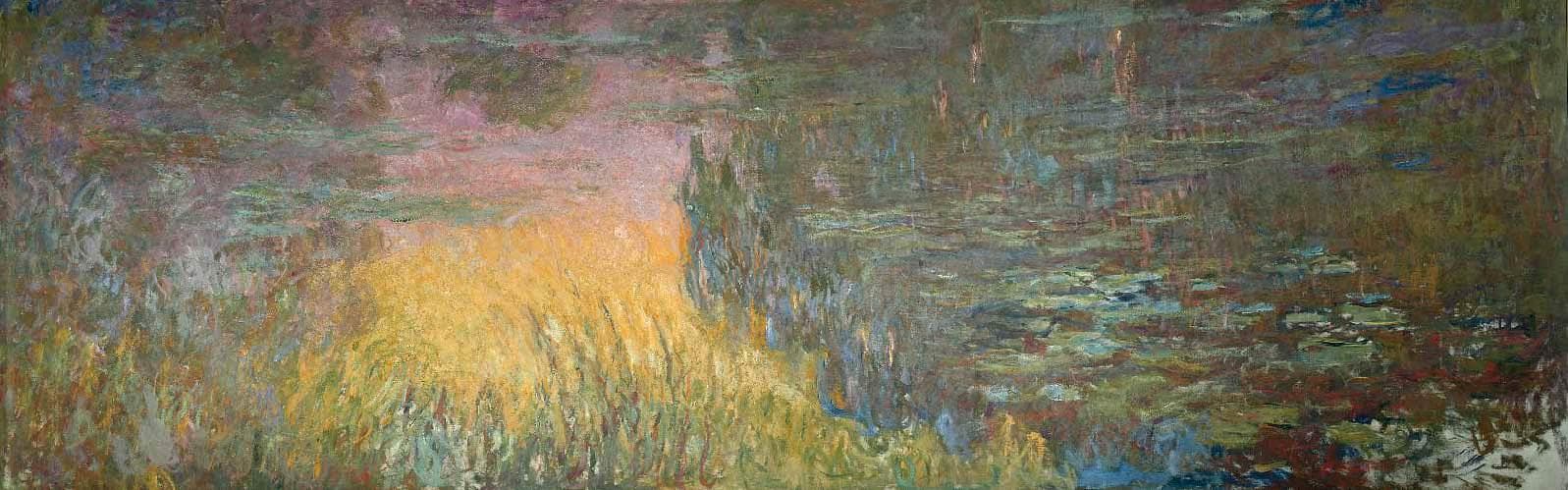
Water Lilies: Setting Sun
Claude Monet · 1914–26
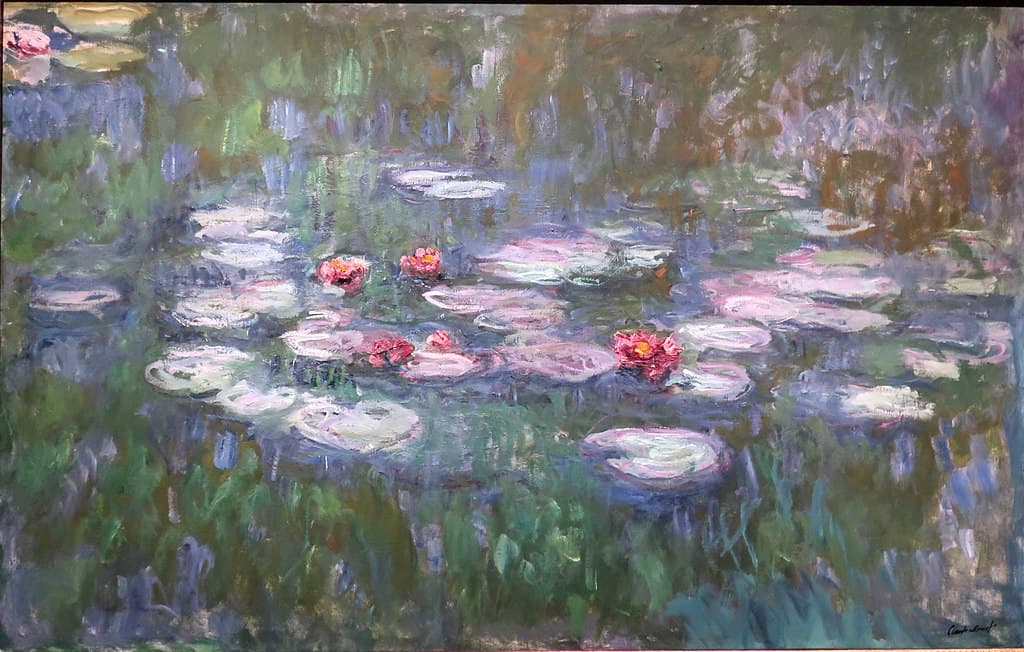
Nymphéas (Water Lilies)
Claude Monet · c. 1914–1919
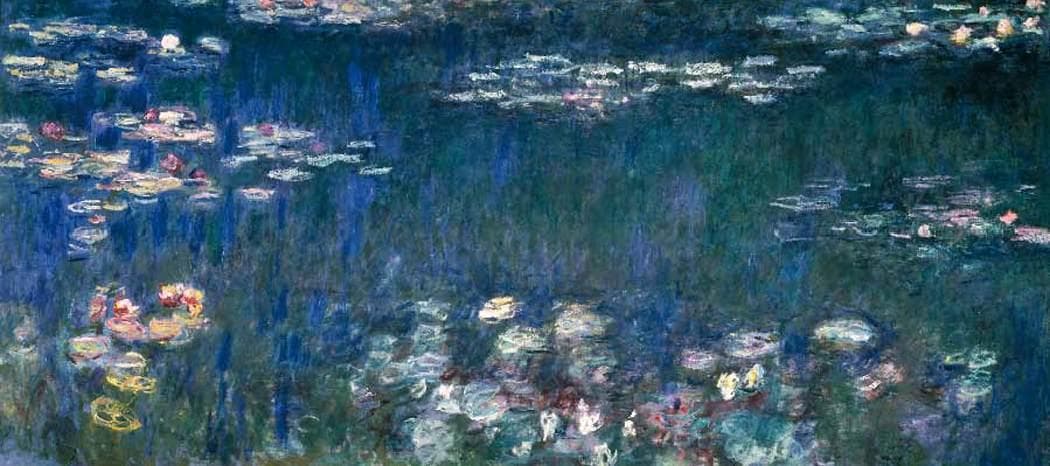
Water Lilies: Green Reflections
Claude Monet · 1914–26
The Water Lily Pond, Harmony in Rose
Claude Monet · 1900

Nymphs Dancing to Pan's Flute
Joseph Tomanek

The Scream
Edvard Munch · 1893

Ophelia
John Everett Millais · 1851–52