Impressionism
Water Lilies: Setting Sun
Claude Monet, 1914–26
Water Lilies: Setting Sun (Soleil couchant) is one of Claude Monet's giant water-lily panels of 1914–26, showing the low sun's gold and violet reflected in his Giverny pond. It hangs in the first room of the Musée de l'Orangerie, Paris.
- Artist
- Claude Monet
- Date
- 1914–26
- Medium
- Oil on canvas
- Dimensions
- 200 × 600 cm
- Collection
- Musée de l'Orangerie, Paris, France
- Movement
- Impressionism
What you are looking at
A six-meter canvas of water at evening. In the lower left, a blaze of yellow and orange rises from the bottom edge in a dense mass of upright strokes: the reflection of the setting sun, broken by reeds and grasses growing at the edge of the pond. Above it the water turns pink and mauve, the reflection of the sky. To the right, the surface darkens to brown, plum and deep blue, crossed by the vertical reflections of trees and scattered with gray-green rafts of lily pads. A dark, slanting shape cuts through the center, perhaps the reflection of a willow or of the bank itself.
There is no horizon and no sun in the sky. Everything we see is on, or in, the water. At the far right edge, a few pale pads catch the last light, so the panel ends as it began, with a glint.
Part of the Grandes Décorations
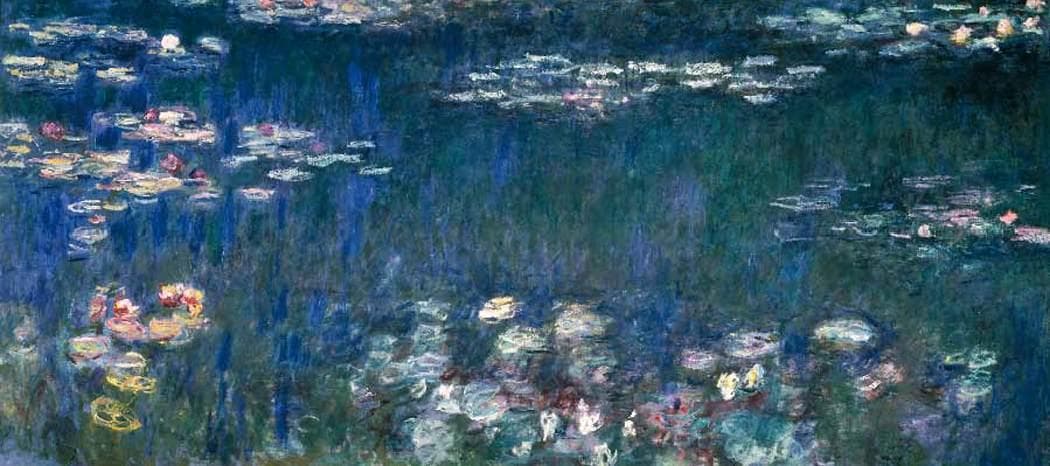
This panel belongs to the cycle of water-lily paintings that Claude Monet offered to the French state after the armistice of 1918 and worked on until his death in 1926. The cycle was installed in two oval rooms in the Orangerie of the Tuileries, which opened in May 1927. Setting Sun is the only single-panel composition in the first room, which also holds Morning, Clouds and Green Reflections; taken together, the four follow the light of a day from morning to dusk. The building runs east to west, and the cycle's morning and evening scenes are oriented accordingly. The full project is described on The Water Lilies at the Musée de l'Orangerie.
How it was painted
The heart of the painting is the patch of gold. Up close it is not smooth but a thicket of short, upward strokes of yellow, ocher and orange, with streaks of green and blue between them. These are reeds catching the last light, and also the brushwork of a painter in his late seventies working with a large brush and failing eyesight. Monet had cataracts in these years, and his perception of color shifted toward yellows and reds before his operation in 1923.
Look at the transition from gold to violet above it. It happens over a short distance, with pink scrubbed thinly over yellow so the canvas shows through. On the right side, the lily pads are no longer flowers at all, just flat gray-green ovals floating on dark water. The panel moves from warm to cold, left to right, the way the last light leaves a pond.
The surface is uneven in a way reproductions hide. Some areas are thin and almost stained, others built up in ridges where Monet returned again and again. Seen from the center of the room, those differences read as depth and glare; seen close, they are a record of years of work.
Setting Sun and the other late evening pictures
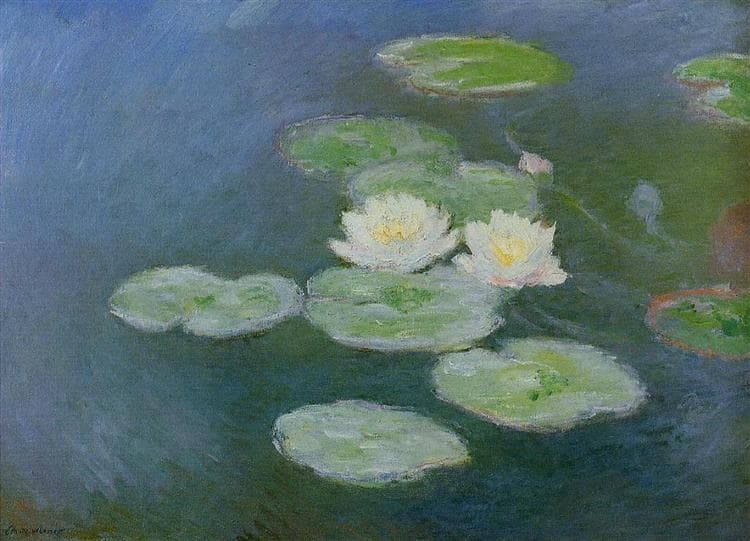
Evening light on water was a lifelong subject for Monet, from the harbor of Impression, Sunrise in 1872 to the lily pond. In Water Lilies, Evening Effect of 1897, a much smaller canvas in the Marmottan, the same idea is already there: no sky, only its colored reflection among the pads. Setting Sun takes that idea to the scale of architecture.
Within the Orangerie cycle, it is the shortest panel and the most concentrated in color. Where Green Reflections is cool and shaded and Clouds is an open mirror of sky, Setting Sun gathers almost all its intensity into one corner. The whole history of Monet's lily pictures is traced in Water Lilies (Nymphéas), and the garden that produced them on Giverny.
Where to see it
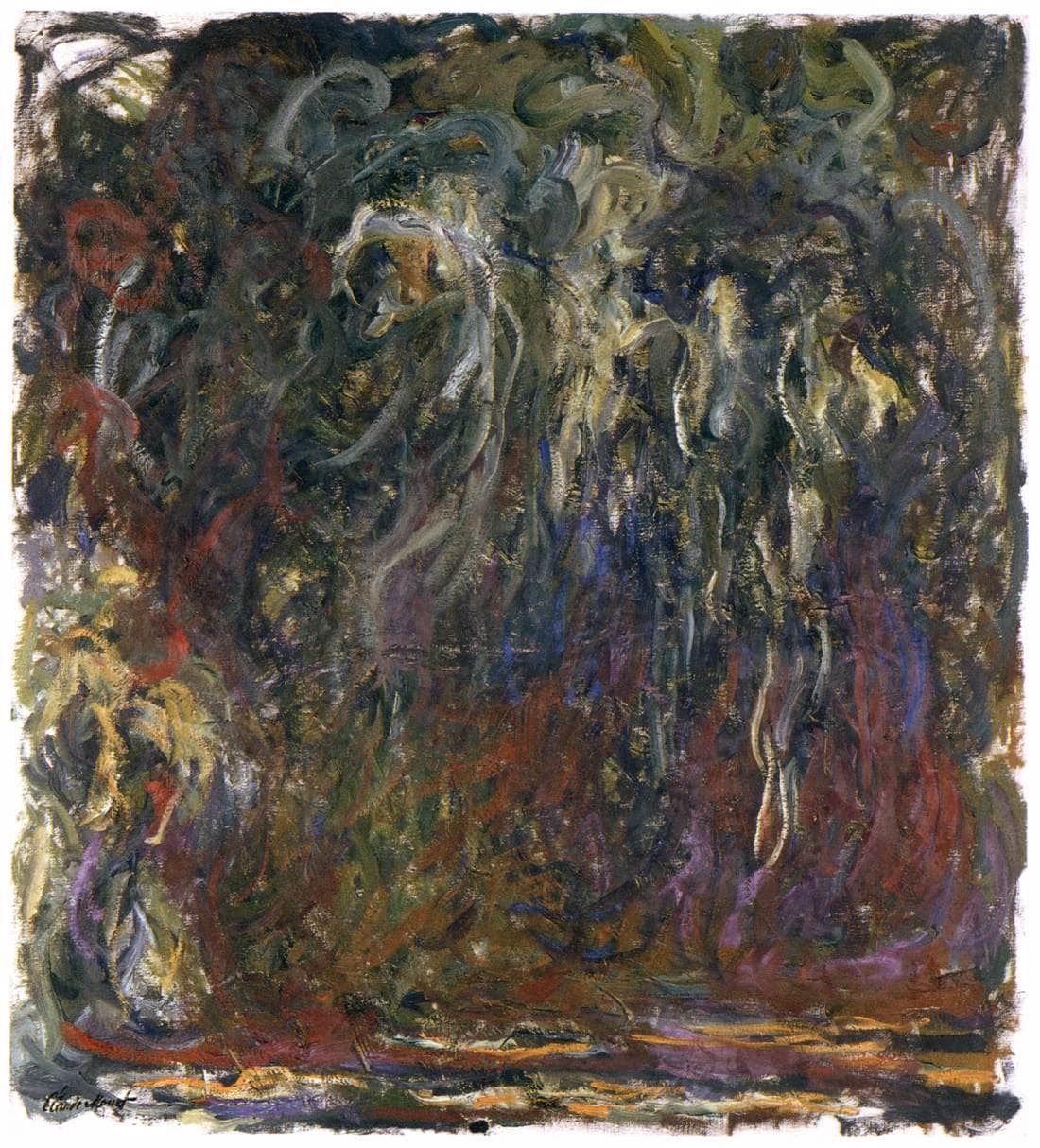
Setting Sun is in Room 1 of the Musée de l'Orangerie, Paris, lit, as Monet wanted, by daylight from above. Compare the late easel picture Water-Lily Pond (1917–19) and the Weeping Willow canvases painted in the same years.
Questions & answers
Where is Monet's Water Lilies, Setting Sun?
It is in the first oval room of the Musée de l'Orangerie in the Tuileries Garden, Paris. It is the only single-panel composition in that room, about 2 by 6 meters, hung with Morning, Clouds and Green Reflections. The rooms opened to the public in May 1927.
When was Water Lilies, Setting Sun painted?
Monet worked on the Orangerie panels at Giverny from about 1914 until his death in December 1926, revising them repeatedly, so they are dated 1914–26. He offered the cycle to the French state after the 1918 armistice and signed the formal gift in 1922.
What does Setting Sun show?
The surface of Monet's lily pond at dusk. The gold at lower left is the reflection of the low sun broken by reeds; above it the water turns pink with reflected sky, and to the right it darkens to plum and blue, scattered with lily pads. No sky or horizon appears.
Why does the sunset look so yellow and rough?
The gold is the reflection of the low sun, painted with thick, upright strokes that also stand for reeds. In these years Monet suffered from cataracts, which shifted his perception of color toward yellows and reds until his eye operation in 1923.
More by the artist
Claude Monet

Bridge over a Pond of Water Lilies
Claude Monet · 1899

Woman with a Parasol – Madame Monet and Her Son
Claude Monet · 1875

Sunset in Venice
Claude Monet · 1908–12

La Grenouillère
Claude Monet · 1869

Beach in Pourville
Claude Monet · 1882

Springtime
Claude Monet · 1872

Boating on the River Epte
Claude Monet · 1890

The Seine at Asnières (Hermitage)
Claude Monet · 1873
Also painted in 1920
The same year
Kindred works
You may also study
Water Lilies: Green Reflections
Claude Monet · 1914–26
Water Lilies, Evening Effect
Claude Monet · 1897
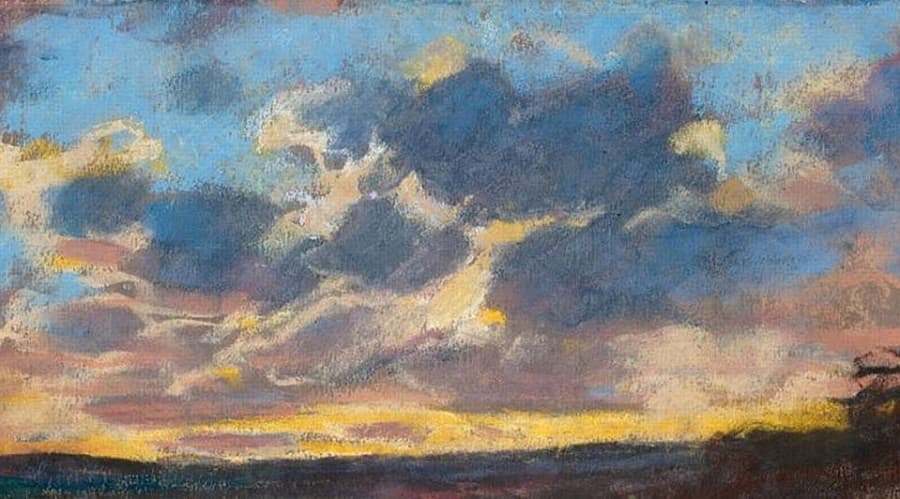
Setting Sun (Nightfall)
Claude Monet · c. 1865
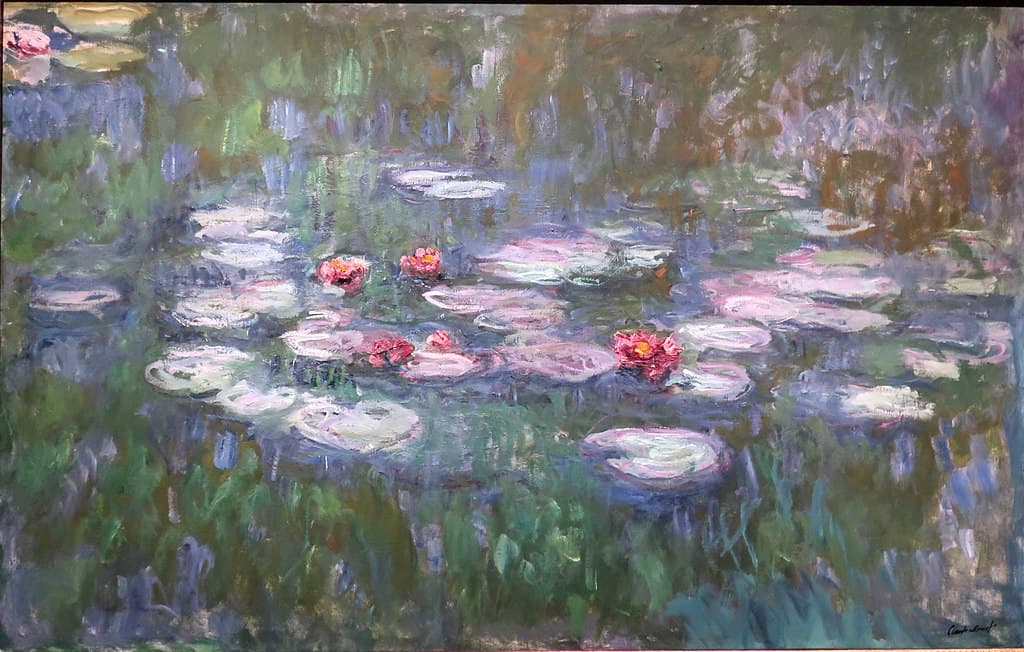
Nymphéas (Water Lilies)
Claude Monet · c. 1914–1919
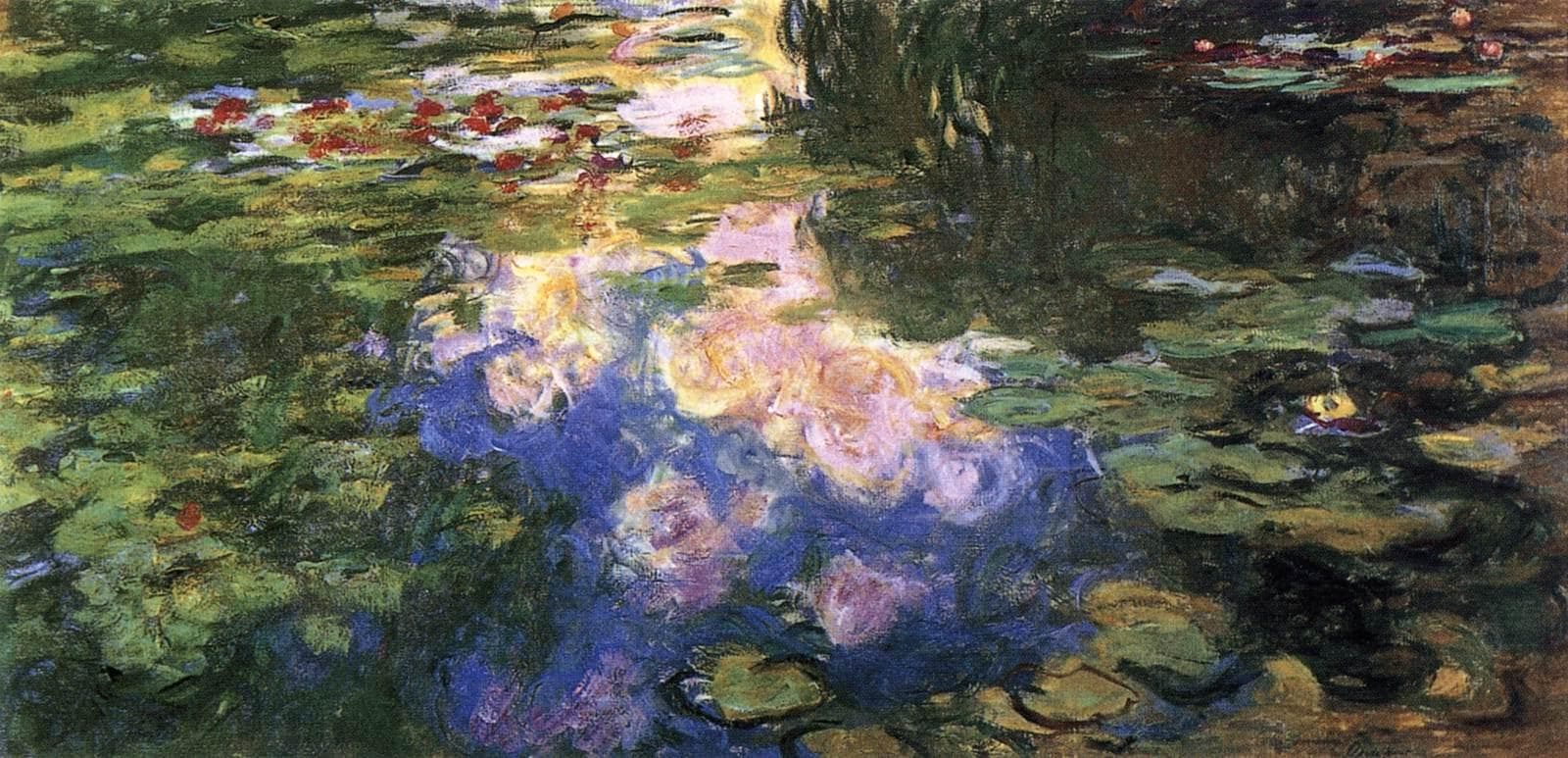
Water-Lily Pond (Le Bassin aux nymphéas), 1917–19
Claude Monet · 1917–19
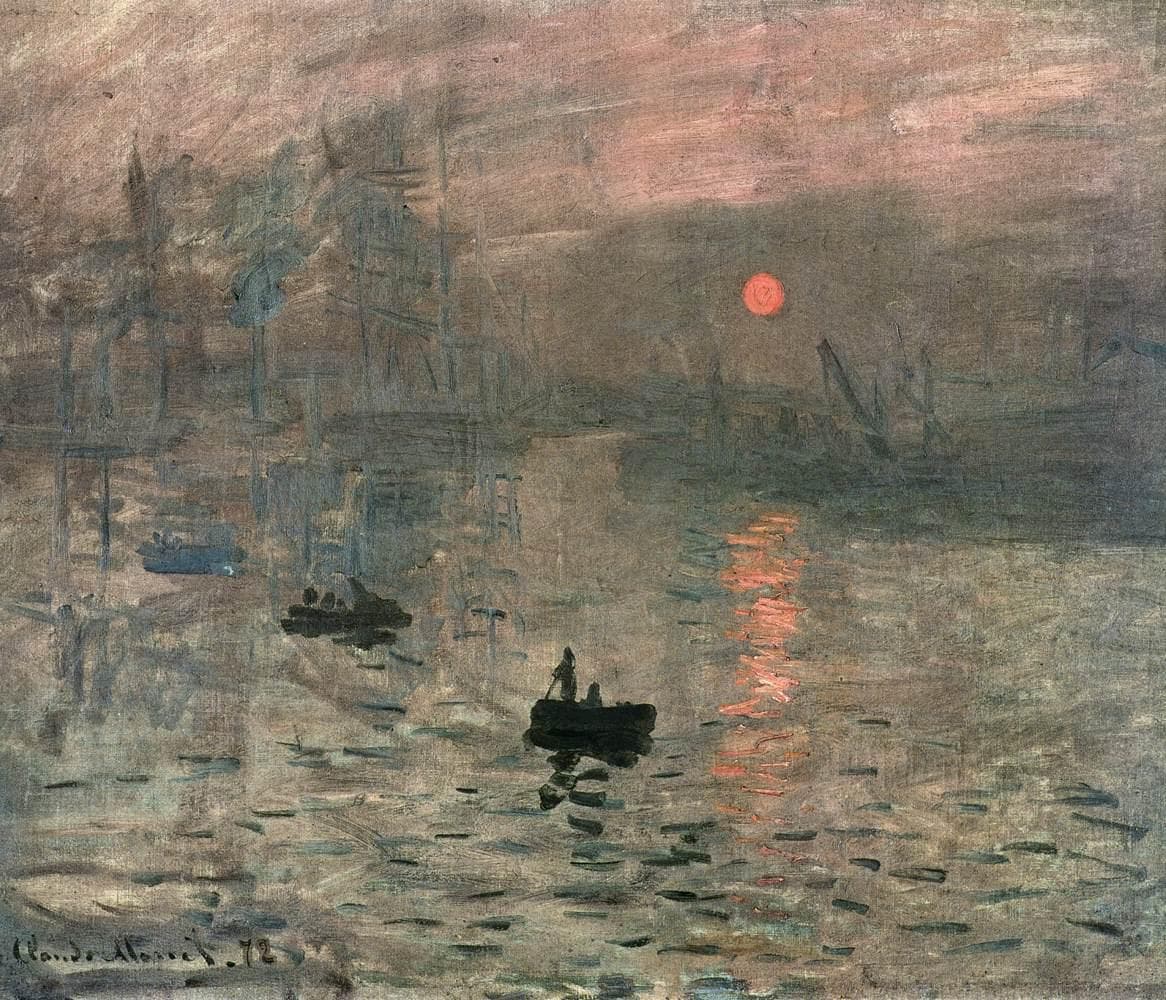
Impression, Sunrise
Claude Monet · 1872

Nymphs Dancing to Pan's Flute
Joseph Tomanek

The Scream
Edvard Munch · 1893