Impressionism
Bridge over a Pond of Water Lilies
Claude Monet, 1899
Bridge over a Pond of Water Lilies is an 1899 oil painting by Claude Monet showing the green footbridge over the lily pond in his garden at Giverny. It is in The Metropolitan Museum of Art, New York.
- Artist
- Claude Monet
- Date
- 1899
- Medium
- Oil on canvas
- Dimensions
- 92.7 × 73.7 cm
- Collection
- The Metropolitan Museum of Art, New York, United States
- Movement
- Impressionism
- Catalogue
- Wildenstein 1518
More at Monet at the Met
Bridge over a Pond of Water Lilies is one of about a dozen views of the same motif that Claude Monet painted in the summer of 1899: the arched wooden footbridge he had built over the lily pond at his home in Giverny, northwest of Paris. The canvas, 92.7 × 73.7 cm, came to The Metropolitan Museum of Art in 1929 with the bequest of Louisine Havemeyer, and it hangs in the Met's galleries of nineteenth-century European painting.
What you're looking at
The picture is taller than it is wide, and Monet uses that format to press the scene flat against the surface. There is no sky, no bank and no horizon. The bridge runs straight across the canvas a third of the way down and is cut off by both edges, so we never see where it begins or ends. It reads less as a structure in space than as a single pale arc laid over a wall of greenery.
Below it, the pond fills more than half the picture. Monet builds the water from two kinds of mark that cross each other. The lily pads are short horizontal dabs, flecked with white, pink and a few points of yellow where flowers open. Between them run longer vertical strokes of green, brown and dull violet, the reflections of the willow and reeds on the far bank. Look closely and the floating leaves and the reflected trees occupy the same strip of paint: the eye has to decide, moment to moment, whether it is looking at the surface of the water or into it.
The bridge itself is not a uniform green. Its railings are picked out with lilac and almost-white highlights where the light catches the upper edges, while the underside of the arch sinks into a darker blue-green that merges with its own reflection. At upper left, the long drooping strokes of a weeping willow fall like rain. The only flat, still passages are tiny: a few untouched stretches of dark water near the bottom edge.
How it was made
Monet painted the 1899 bridge pictures outdoors, standing on the bank at roughly the same spot, and the series varies mainly in light and weather rather than viewpoint. His surface here is dense and worked over, with paint dragged across earlier, half-dry layers so that colors mix on the canvas rather than on the palette. This layering is why the picture looks luminous rather than bright: the greens are made of many greens, with blues, yellows and mauves showing through.
The vertical format is unusual for the group. Several other 1899 versions, including those in the National Gallery, London, and the Musée d'Orsay, are close to square. The Met's canvas gives more room to the water, which hints at where Monet's attention was moving.
The garden at Giverny
Monet rented the house at Giverny from 1883 and bought it in 1890. In 1893 he acquired a strip of marshy land across the road and railway line and obtained permission to divert water from a small branch of the river Epte to make a pond. He stocked it with hybrid water lilies and built the footbridge over its narrow end. Visitors and later writers called it "the Japanese bridge," because its shallow arch recalls the bridges in the Japanese woodblock prints Monet collected and hung throughout his house.
Monet treated the water garden as a motif he could design, plant and then paint. He employed gardeners to tend it, including one whose job was to keep the lily pads clean. Bridge over a Pond of Water Lilies belongs to the first full campaign of paintings he made there, a few years after the garden was established.
Meaning and influences
There is no hidden narrative here. The subject is perception itself: how light, water and reflection combine at a particular hour. Monet had already spent the 1890s painting series of haystacks, poplars and Rouen Cathedral to show a single motif changing over time. The bridge pictures carry that idea into his own garden.
The Japanese connection is real but should not be overstated. The motif of an arched bridge seen frontally over water, and the high, cropped viewpoint, are often compared with prints by Hiroshige and Hokusai of the kind Monet owned. What he took from them was a way of composing (flat bands, cut-off forms, no deep perspective) rather than any Japanese subject matter.
Reception and legacy
Monet showed a group of the 1899 bridge paintings at the Galerie Durand-Ruel in Paris in 1900, and they found buyers quickly. The Havemeyers, among the most important American collectors of Impressionism, acquired this one, and it entered the Met through Louisine Havemeyer's bequest.
The 1899 series also marks a turning point. Monet returned to the bridge again and again, and by the late 1910s and early 1920s, as his eyesight failed from cataracts, his views of it dissolved into thick, near-abstract tangles of red, orange and green. Seen beside those late canvases, the Met picture is the calm beginning of a twenty-year conversation with one small structure. The pond beneath it became the subject of the vast Water Lilies paintings that occupied the last decades of his life.
Related versions
Other 1899 views of the bridge include The Japanese Footbridge, Water Lily Pond, Harmony in Green and The Water Lily Pond; compare them with the close-up lily studies such as Water Lilies, Evening Effect. For the wider story, see Famous Monet Paintings and Impressionism.
Where to see it
The painting is in The Metropolitan Museum of Art, Fifth Avenue, New York (accession number 29.100.113), and is normally on view in the European paintings galleries. It is in the public domain, and the Met publishes a high-resolution image. Monet's house and garden at Giverny, including a reconstruction of the footbridge, are open to visitors from spring to autumn.
Questions & answers
Where is Bridge over a Pond of Water Lilies by Monet?
The painting is in The Metropolitan Museum of Art in New York (accession number 29.100.113). It came to the museum in 1929 as part of the H. O. Havemeyer Collection, the bequest of Louisine Havemeyer, and is normally displayed in the Met's galleries of nineteenth-century European painting.
When did Monet paint Bridge over a Pond of Water Lilies?
Monet painted it in 1899, during a summer in which he made about a dozen views of the footbridge over his lily pond at Giverny. He had built the pond and bridge only a few years earlier, after buying extra land in 1893. A group of these bridge pictures was exhibited at the Galerie Durand-Ruel in Paris in 1900.
What does Bridge over a Pond of Water Lilies mean?
It has no hidden story. Monet's subject is the way light and reflection merge on the surface of water: the lily pads and the reflected trees share the same strokes, so the eye moves between surface and depth. The arched bridge and cropped, flat composition also reflect his interest in the Japanese prints he collected.
How big is Monet's Bridge over a Pond of Water Lilies?
The Met's canvas measures 92.7 × 73.7 cm (36 1/2 × 29 in). It is taller than it is wide, unlike several of the other 1899 versions of the bridge, such as those in London and Paris, which are closer to square.
Is the bridge in Monet's painting real?
Yes. Monet built the wooden footbridge over the narrow end of his water-lily pond at Giverny in the 1890s and painted it green. A reconstruction stands in the garden today, which is open to visitors from spring to autumn as part of the Fondation Claude Monet.
More by the artist
Claude Monet

Woman with a Parasol – Madame Monet and Her Son
Claude Monet · 1875

Sunset in Venice
Claude Monet · 1908–12

La Grenouillère
Claude Monet · 1869

Beach in Pourville
Claude Monet · 1882

Springtime
Claude Monet · 1872

Boating on the River Epte
Claude Monet · 1890

The Seine at Asnières (Hermitage)
Claude Monet · 1873
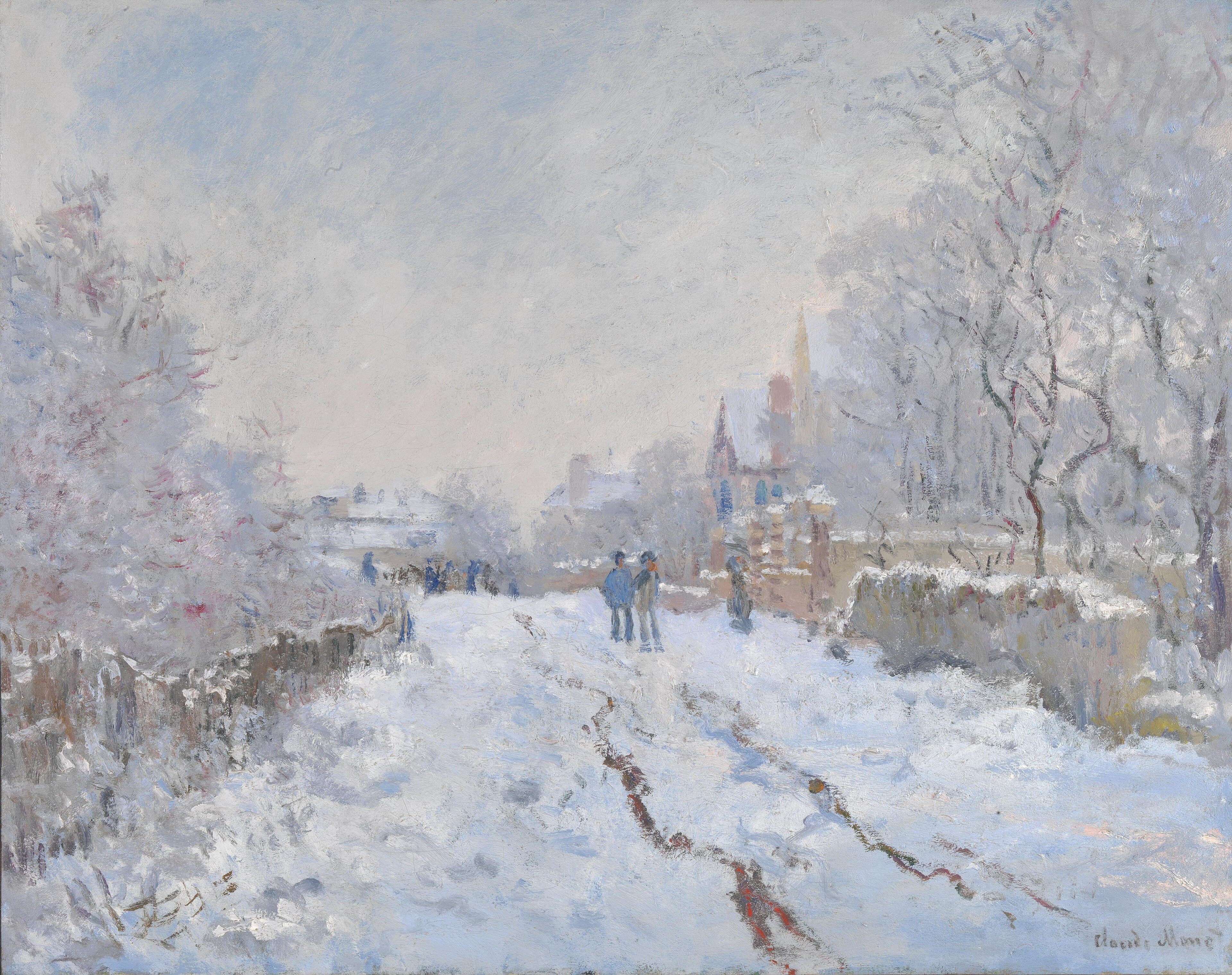
Snow Scene at Argenteuil
Claude Monet · 1875
Also painted in 1899
The same year
Kindred works
You may also study
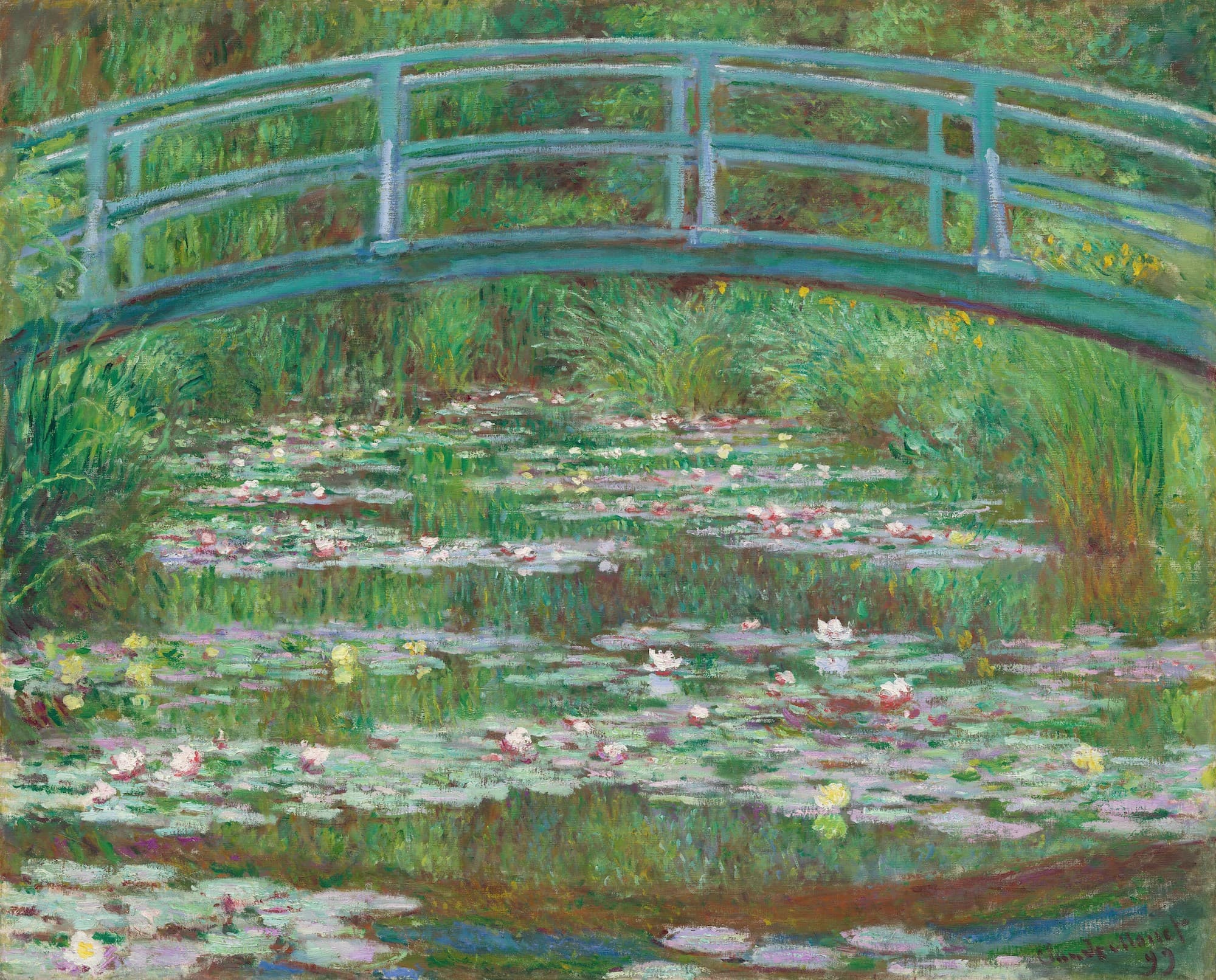
The Japanese Footbridge
Claude Monet · 1899
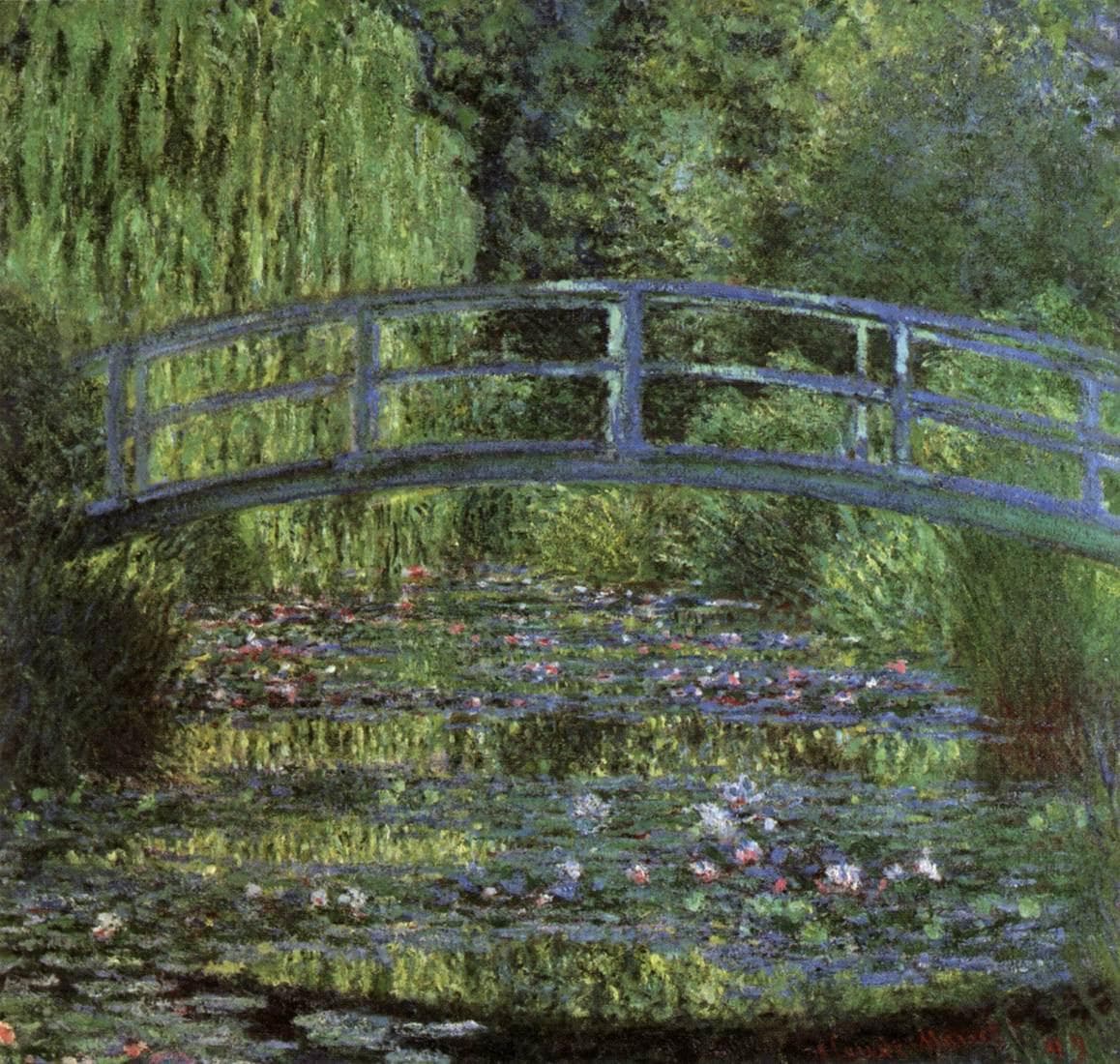
Water Lily Pond, Green Harmony
Claude Monet · 1899
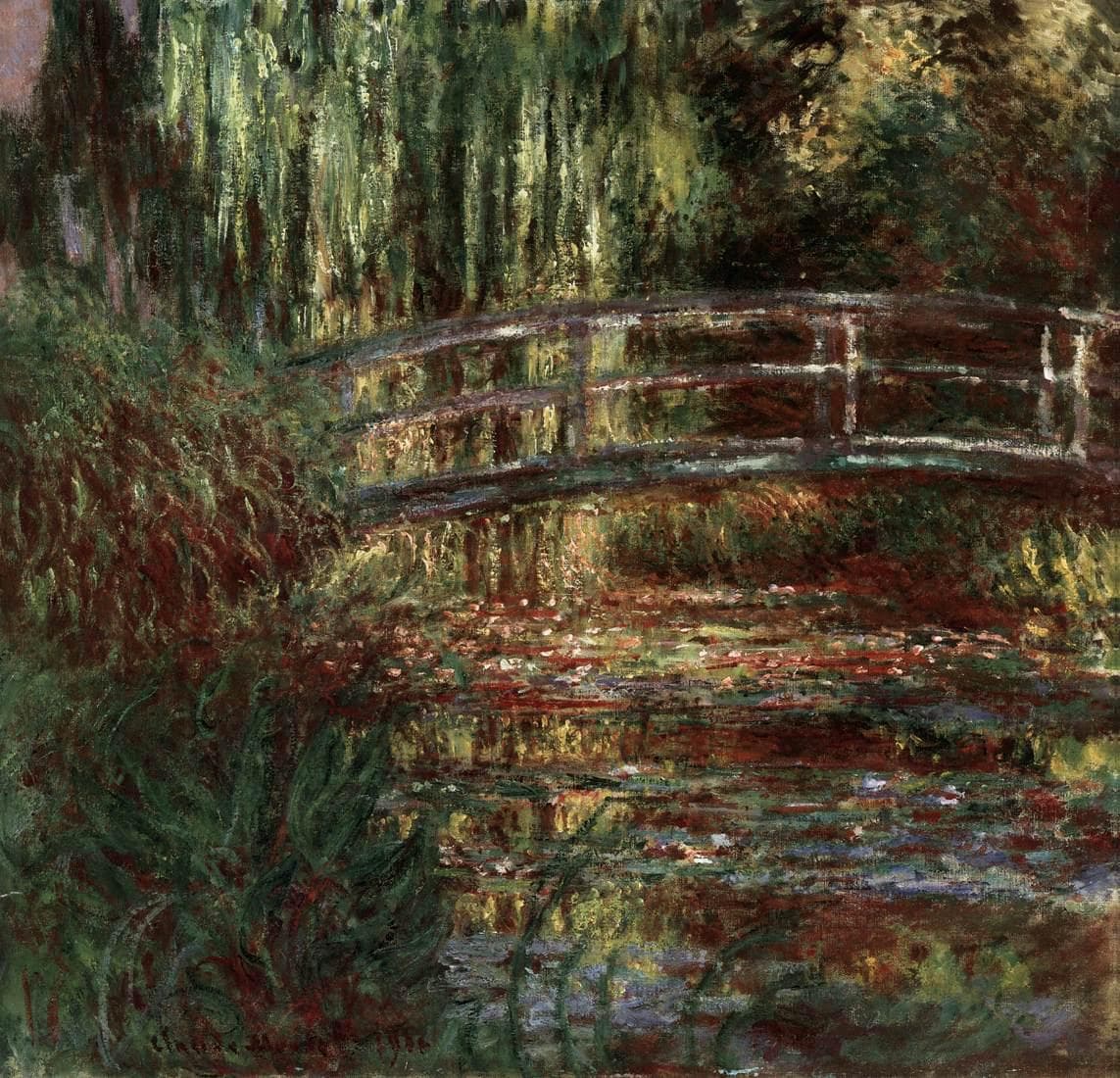
The Water Lily Pond
Claude Monet · 1900
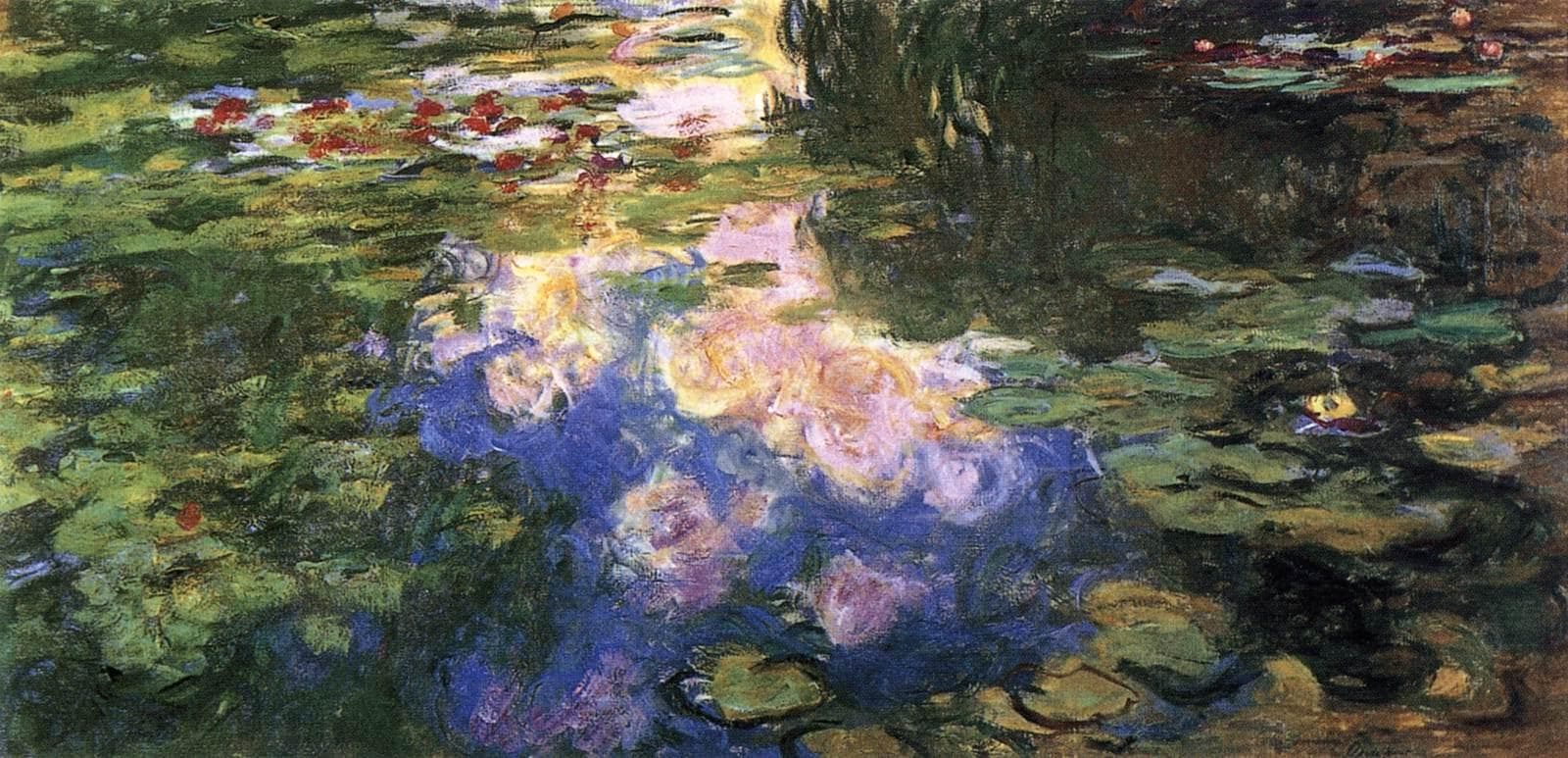
Water-Lily Pond (Le Bassin aux nymphéas), 1917–19
Claude Monet · 1917–19
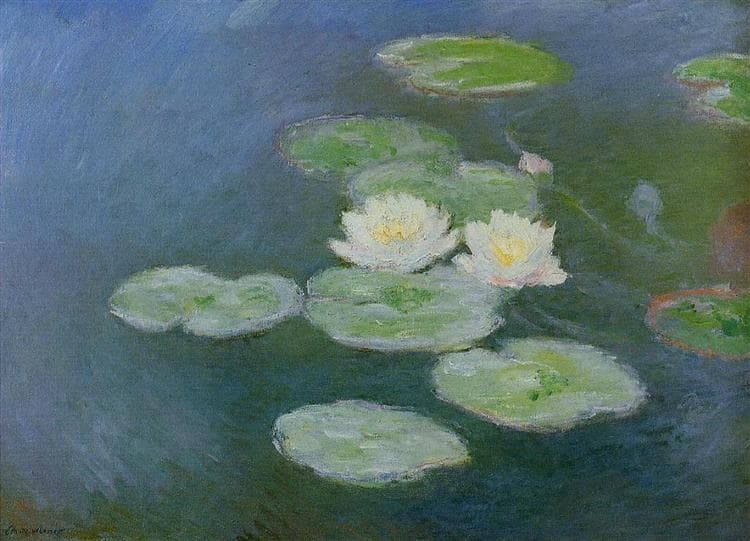
Water Lilies, Evening Effect
Claude Monet · 1897
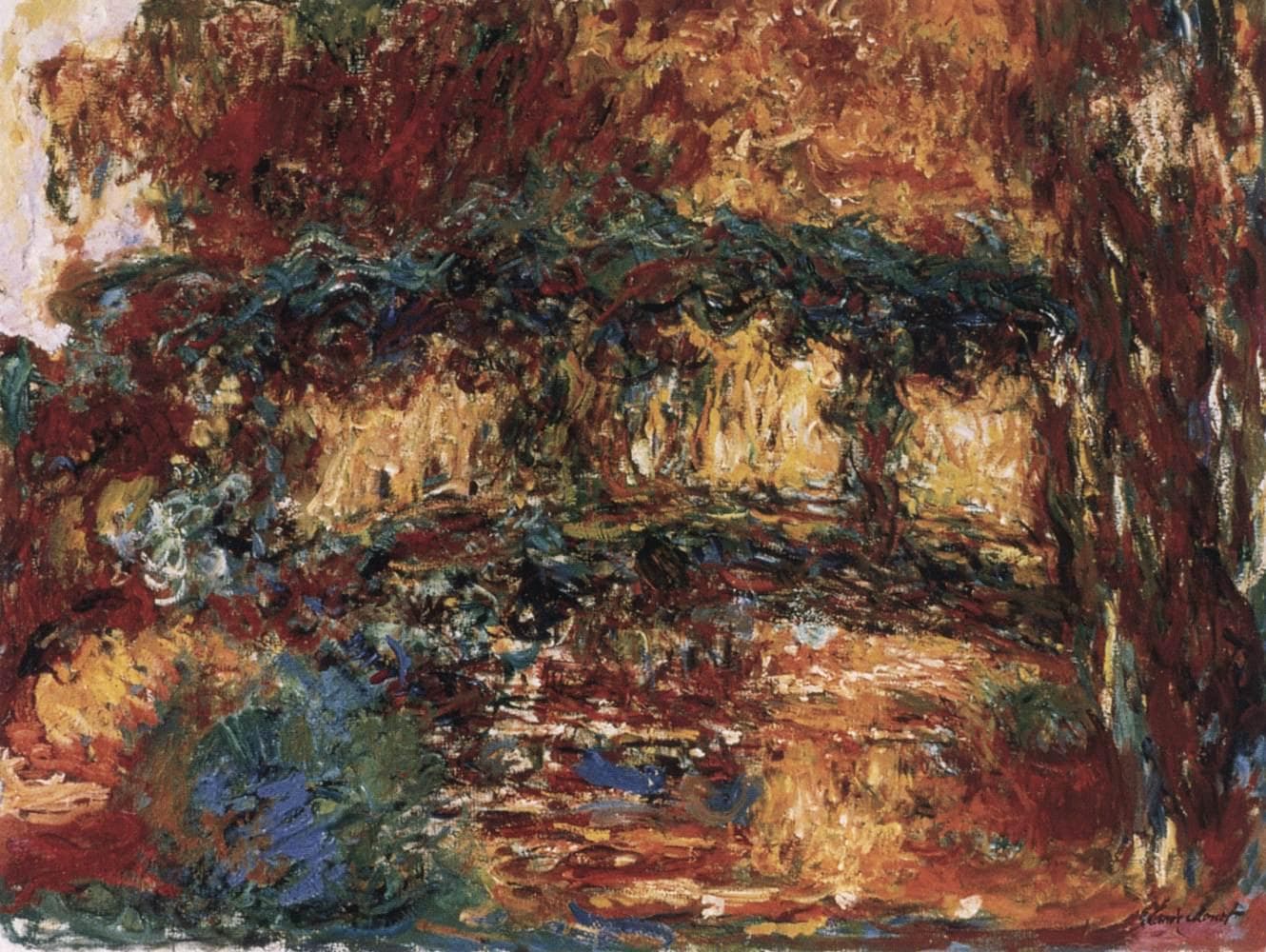
The Japanese Bridge
Claude Monet · c. 1923–25

Venus de Milo
Alexandros of Antioch · c. 150–125 BC

The Scream
Edvard Munch · 1893