Image: Photograph by Wikipedia Loves Art participant; The Metropolitan Museum of Art, New York · CC BY-SA 2.5 · via Wikimedia Commons
Impressionism
Water Lilies (1919, Metropolitan Museum)
Claude Monet, 1919
Water Lilies is a wide 1919 canvas by Claude Monet of his lily pond at Giverny, pink-flowering pads drifting on water that mirrors sky and willows. Part of the Annenberg Collection, it is in the Metropolitan Museum of Art, New York.
- Artist
- Claude Monet
- Date
- 1919
- Medium
- Oil on canvas
- Dimensions
- 101 × 200 cm
- Collection
- The Metropolitan Museum of Art, New York, United States
- Movement
- Impressionism
- Catalogue
- Wildenstein 1891
More at Monet at the Met
This Water Lilies is a broad, two-meter-wide view of the pond in Claude Monet's water garden at Giverny, painted in 1919 when he was 78. Clumps of lily pads with pink and red flowers float across the surface. Between them the water holds a reflected sky of lilac and pink and the long dark-green reflections of willows on the bank. Signed and dated 1919 at lower left, it came to the Metropolitan Museum of Art from the collection of Walter and Leonore Annenberg.
What you're looking at
There is no bank, no horizon and no sky above. As in most of his late water-lily paintings, Monet looks straight down at the pond, and the canvas is entirely water. Groups of round lily pads, painted in yellow-green, olive and cream with darker undersides, drift in loose islands: a large group across the top left, another down the right side, a scattering along the bottom edge. Flowers sit on them as dabs of rose, coral and red, with a few white highlights.
The open water between the pads is the real subject. Down the middle runs a wide band of pale lilac and pink, the reflection of clouds in the sky above. At the top right, dense vertical strokes of dark green and olive are the reflections of the willows and other trees overhanging the pond, so the top of the picture is in effect upside down. At the bottom right, the pads are larger and closer, their edges drawn in red and mauve. The eye moves between surface and depth, pads that float on the water and sky that lies inside it.
The pond in 1919
Monet had dug his water garden in the 1890s, diverting a branch of the Epte to feed it, and planted it with hardy and tropical water lilies. From 1897 onward it became his main subject. By the late 1910s he was working on the vast decorative panels later installed in the Musée de l'Orangerie; see the Water Lilies at the Orangerie. At the same time he continued to paint independent easel pictures like this one. At 101 by 200 centimeters, it is large for an easel painting but small beside the Orangerie panels, some of which run past four meters.
The year 1919 came after the First World War and the deaths of his wife Alice (1911) and son Jean (1914), and his eyesight was failing from cataracts. Compare the Columbus Weeping Willow of 1918, with its harsher yellows. This canvas is gentler in color, with more blue, pink and green. For the whole series, see the Water Lilies series, and for the garden, Giverny: Monet's House and Garden.
How it was painted
The surface is worked in long, loose, fluid strokes, with paint dragged over earlier layers so that underlying colors show through. The pads are made with short horizontal touches, round in shape, while the reflections are long vertical strokes; the difference in direction is how Monet tells floating things from reflected ones. The colors are softer and cooler than in many of his works of these years, and the composition is open, with a wide band of empty water down the center.
The Met's picture is sometimes described as one of a pair of canvases of the same size and date. Wide, horizontal formats like this one led directly to the panoramic panels Monet gave to the French state.
Ownership and where to see it
The painting belonged in the 1920s and 1930s to Henri Canonne, a French collector. It was later acquired by Walter H. and Leonore Annenberg, whose collection of Impressionist and Post-Impressionist paintings was promised to the Met in 1991. It came to the museum as a gift in 1998, with Walter Annenberg's bequest completed in 2002. It usually hangs in the museum's nineteenth-century European paintings galleries. For other Monet works at the museum, such as Bridge over a Pond of Water Lilies, see Monet at the Met.
Questions & answers
Where is Monet's 1919 Water Lilies?
It is in the Metropolitan Museum of Art in New York, part of the Walter H. and Leonore Annenberg Collection, given in 1998 and completed by bequest in 2002. It usually hangs in the museum's nineteenth-century European paintings galleries.
When and where was this Water Lilies painted?
Monet painted it in 1919 at his water garden in Giverny, Normandy, when he was 78. It is signed and dated 1919 at lower left.
What does Monet's Water Lilies (1919) show?
It shows the surface of his lily pond seen from above: islands of green pads with pink and red flowers, a band of lilac and pink sky reflected in the water, and dark reflections of willows at the top right.
How many Water Lilies paintings did Monet make?
About 250, from 1897 until his death in 1926, including the huge panels in the Musée de l'Orangerie. This 1919 canvas is one of the independent easel pictures he made alongside them.
More by the artist
Claude Monet

Bridge over a Pond of Water Lilies
Claude Monet · 1899

Woman with a Parasol – Madame Monet and Her Son
Claude Monet · 1875

Sunset in Venice
Claude Monet · 1908–12

La Grenouillère
Claude Monet · 1869

Beach in Pourville
Claude Monet · 1882

Springtime
Claude Monet · 1872

Boating on the River Epte
Claude Monet · 1890

The Seine at Asnières (Hermitage)
Claude Monet · 1873
Kindred works
You may also study
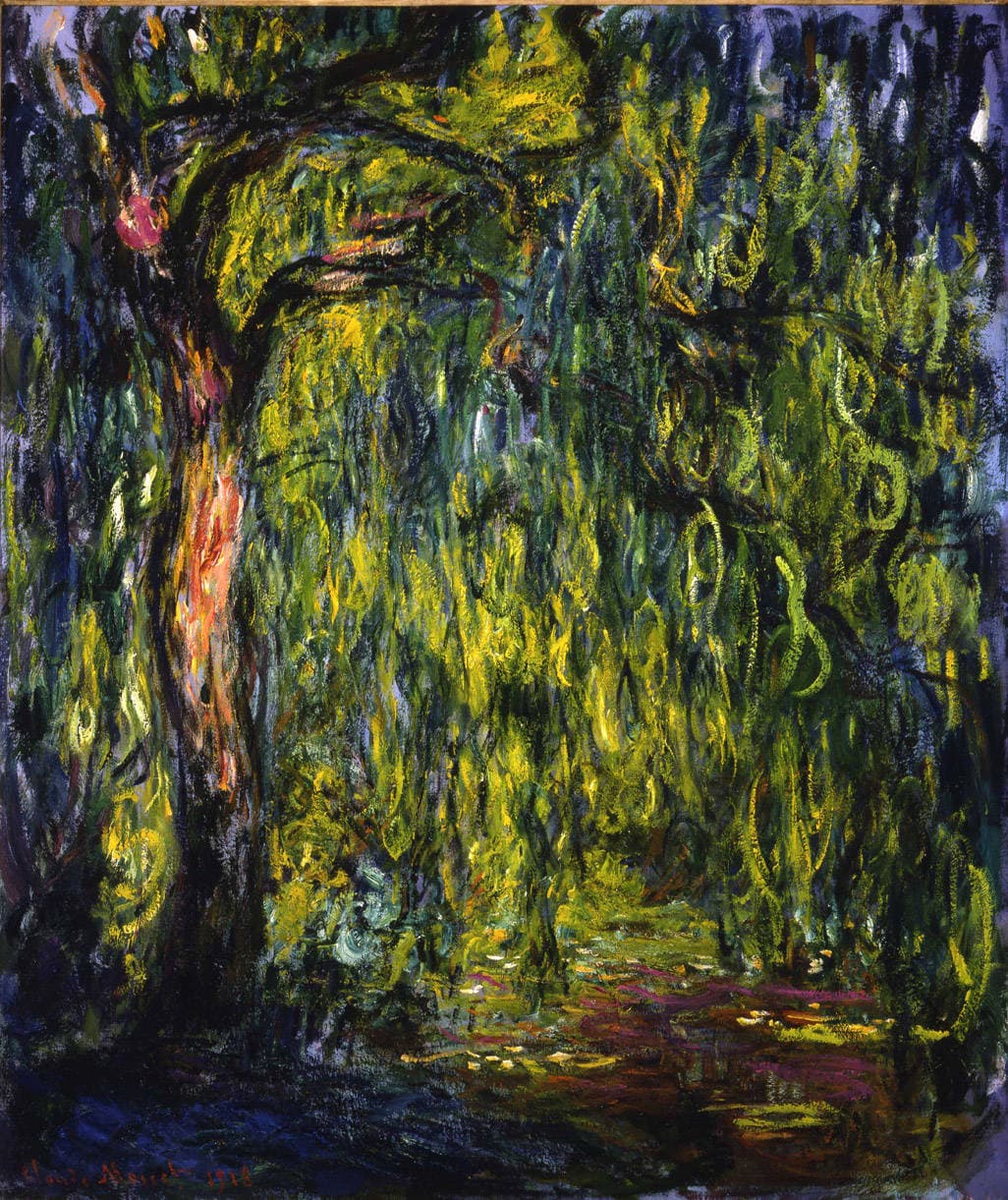
Weeping Willow (Columbus)
Claude Monet · 1918
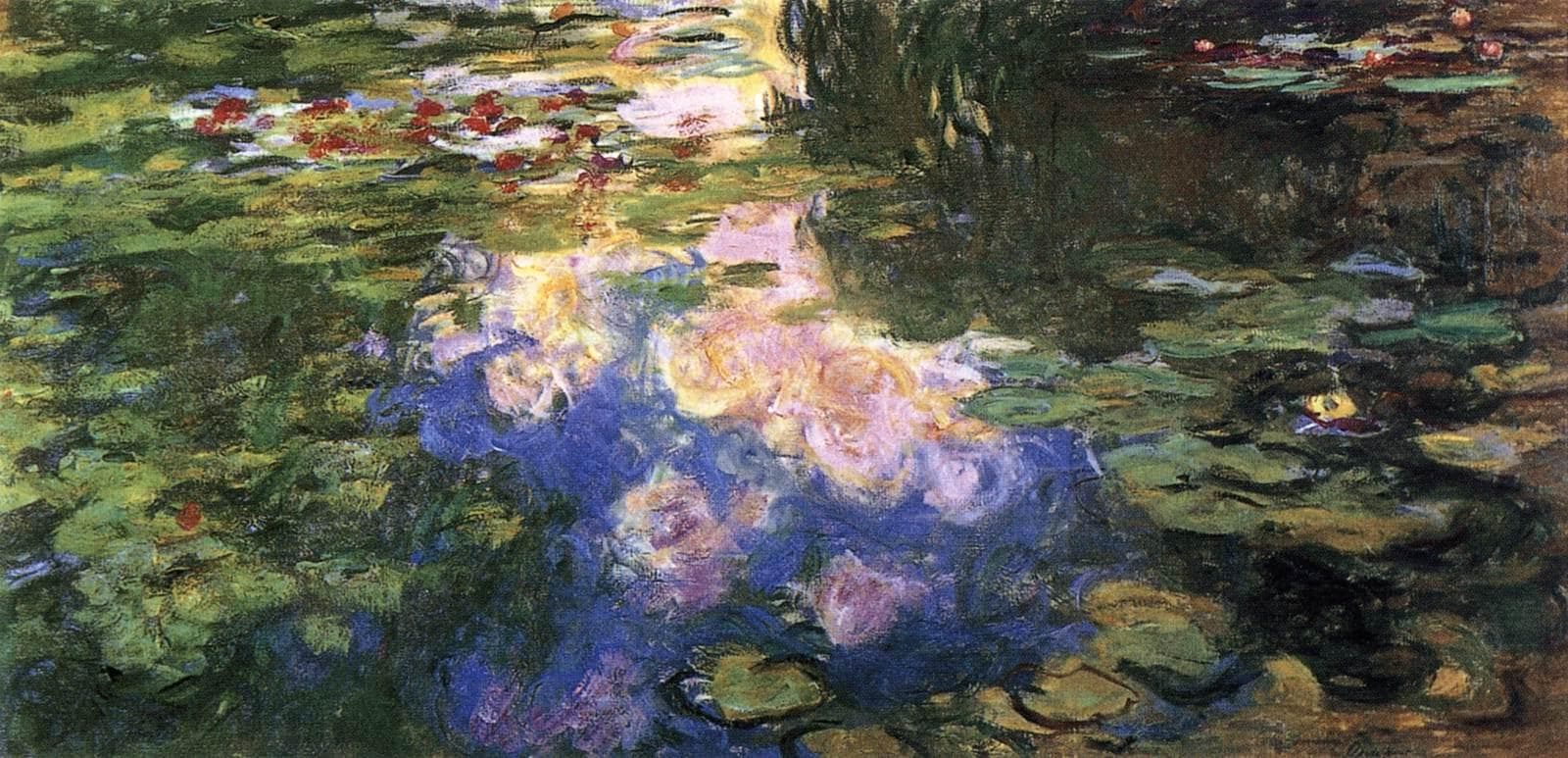
Water-Lily Pond (Le Bassin aux nymphéas), 1917–19
Claude Monet · 1917–19
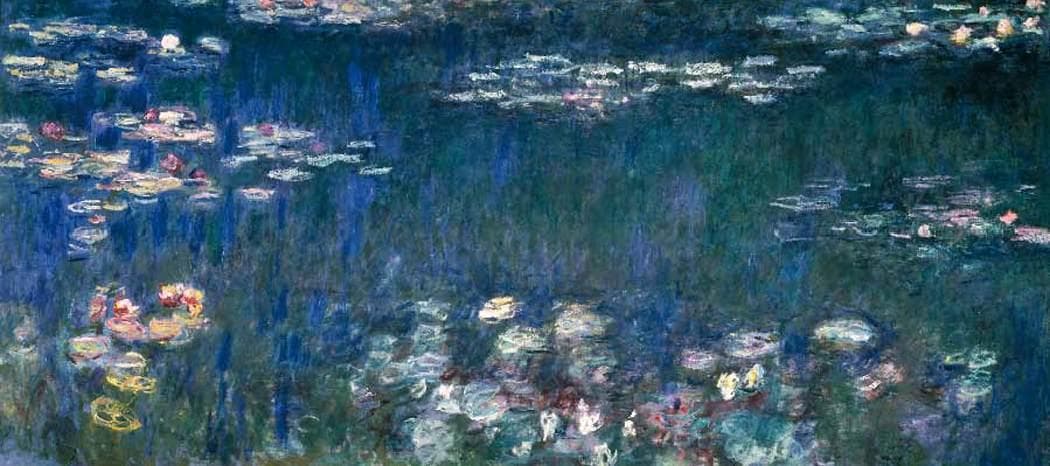
Water Lilies: Green Reflections
Claude Monet · 1914–26

Water Lilies: Setting Sun
Claude Monet · 1914–26

The Scream
Edvard Munch · 1893

Ophelia
John Everett Millais · 1851–52

The Great Wave off Kanagawa
Katsushika Hokusai · c. 1830–32
The Birth of Venus
Sandro Botticelli · c. 1484–1486