Impressionism
The Japanese Footbridge
Claude Monet, 1899
The Japanese Footbridge is an 1899 painting by Claude Monet of the arched green bridge over the water lily pond in his garden at Giverny. It is in the National Gallery of Art, Washington, D.C.
- Artist
- Claude Monet
- Date
- 1899
- Medium
- Oil on canvas
- Dimensions
- 81.3 × 101.6 cm
- Collection
- National Gallery of Art, Washington, D.C., United States
- Movement
- Impressionism
- Catalogue
- Wildenstein 1517
What you are looking at
A pale blue-green footbridge arches across the top of the canvas, its rails cut off at both edges, so it seems to span more than the picture can hold. Behind and above it is a wall of foliage, grasses and reeds in yellow-green and olive, with a few touches of yellow flowers at right. Below it, the water lily pond fills everything else: floating pads in horizontal bands of green and lilac, flecked with white, pink and yellow blossoms, receding toward the reeds under the bridge.
There is no sky. The only openings are the dark reflections between the lily pads, where the water mirrors the shade of the trees in deep green and violet. At the very bottom, a band of dark water with pale blue and violet pads runs along the lower edge, and the signature and date, "Claude Monet 99," are at lower right.
Claude Monet painted this view of his water garden at Giverny in 1899. The canvas measures 81.3 by 101.6 centimeters, is number 1517 in Wildenstein's catalogue, and is in the National Gallery of Art in Washington, D.C., which received it in 1992.
Where and when
Monet had rented the house at Giverny, about 75 kilometers northwest of Paris, since 1883 and bought it in 1890. In 1893 he bought a plot of land across the road and railway line and, against the objections of neighbors worried about their water, dug a pond fed by a channel from the little river Ru, a branch of the Epte. He planted it with water lilies from the Latour-Marliac nursery, which was breeding new colored hybrids, and built an arched wooden footbridge inspired by the bridges in the Japanese prints he collected. See Giverny: Monet's House and Garden.
He painted the bridge in a group of about a dozen canvases in the summer of 1899, and more in 1900. When Durand-Ruel showed the water garden pictures in Paris at the end of 1900, critics noted that the garden itself had become the picture: Monet had designed a landscape in order to paint it.
How it was painted
The composition is wider than it is tall but feels almost symmetrical, with the bridge as a frame at the top. Look at how the lily pads are arranged. They lie in horizontal bands that get smaller and closer together as they recede, the main device in the picture that gives depth. Between them the reflected shadows are painted in dark green and violet, and the flowers are single dabs of thick white, pink and yellow, raised slightly from the surface.
Notice the color of the bridge. The real bridge was painted green, and Monet makes it a cool blue-green that sets it apart from the yellow-greens of the foliage; the same color runs through the reflections below. The whole canvas is a study of green in dozens of shades, with the pink and white flowers as accents. The handling is fresh and even, done largely outdoors in summer light, and very different from the thick, reworked surfaces of his London and late garden pictures.
The series and how this version differs
The 1899 bridge pictures are close siblings: same viewpoint, similar formats, different light. See the Japanese Footbridge series. Compare Bridge over a Pond of Water Lilies at the Metropolitan Museum and Water Lily Pond, Harmony in Green in the Musée d'Orsay; in 1900 the palette warmed, as in Harmony in Rose. Two decades later the same bridge became the fierce, red-orange The Japanese Bridge in Minneapolis. The pond itself, without the bridge, became the Water Lilies.
Where to see it
The painting is in the National Gallery of Art, Washington, given in 1992 by Victoria Nebeker Coberly, in memory of her son John W. Mudd, and by Walter H. and Leonore Annenberg. For other museums, see where to see Monet's paintings, and for the artist, Claude Monet.
Questions & answers
Where is Monet's The Japanese Footbridge?
This 1899 version is in the National Gallery of Art in Washington, D.C., which received it in 1992. It measures 81.3 by 101.6 centimeters and is catalogued by Wildenstein as number 1517.
When and where was The Japanese Footbridge painted?
In the summer of 1899 in Monet's water garden at Giverny, the pond he had dug in 1893 across the road from his house. He painted about a dozen views of the bridge that year.
What does The Japanese Footbridge show?
An arched, blue-green wooden footbridge across the top of the canvas, over a pond covered with lily pads and white, pink and yellow water lilies, with reeds and foliage behind and no sky.
Is the Japanese bridge at Giverny real?
Yes. Monet built the arched wooden footbridge over his lily pond in the 1890s, inspired by Japanese prints. The bridge in the garden today is a reconstruction, painted green, and visitors to the Fondation Claude Monet can walk across it.
More by the artist
Claude Monet

Bridge over a Pond of Water Lilies
Claude Monet · 1899

Woman with a Parasol – Madame Monet and Her Son
Claude Monet · 1875

Sunset in Venice
Claude Monet · 1908–12

La Grenouillère
Claude Monet · 1869

Beach in Pourville
Claude Monet · 1882

Springtime
Claude Monet · 1872

Boating on the River Epte
Claude Monet · 1890

The Seine at Asnières (Hermitage)
Claude Monet · 1873
Also painted in 1899
The same year
Kindred works
You may also study
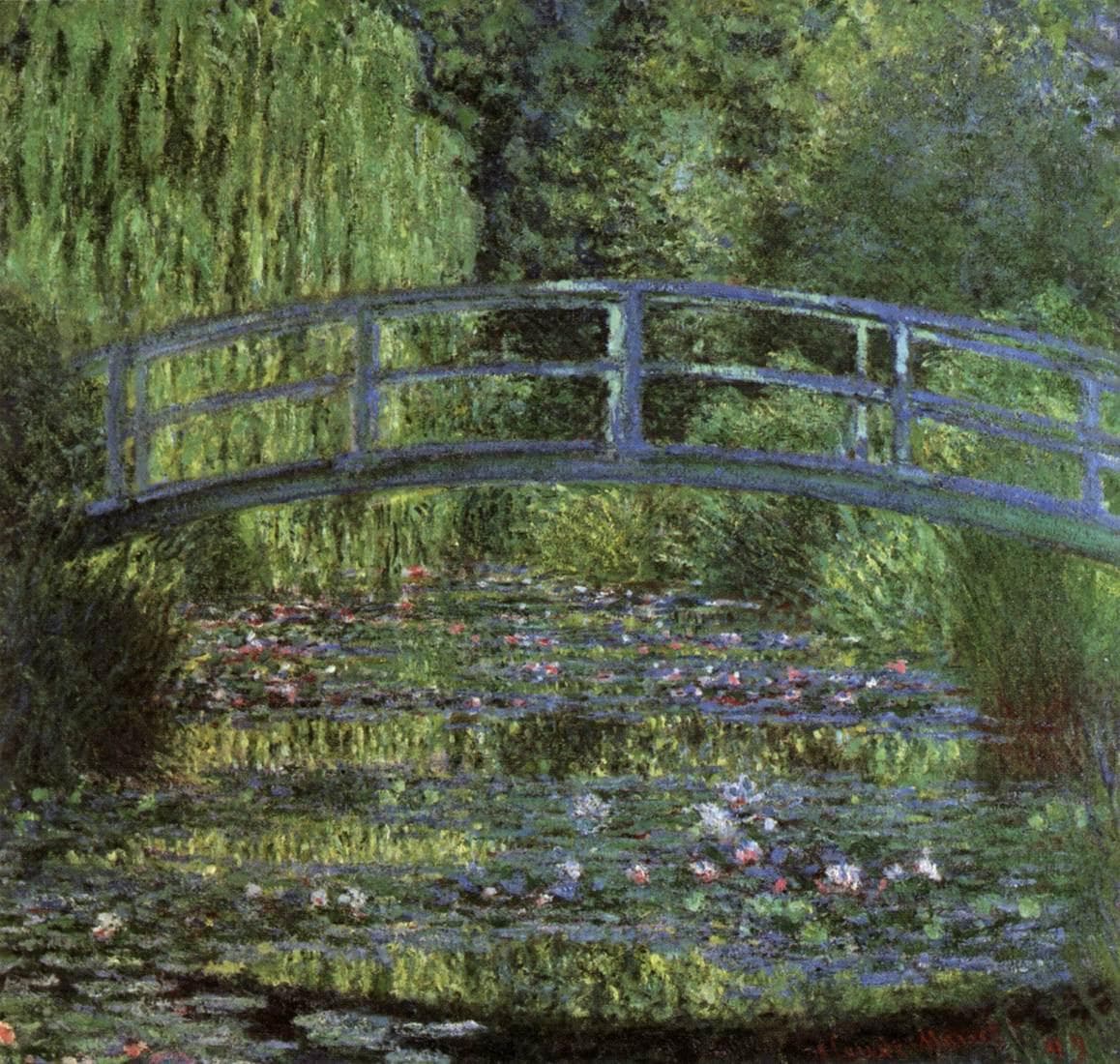
Water Lily Pond, Green Harmony
Claude Monet · 1899
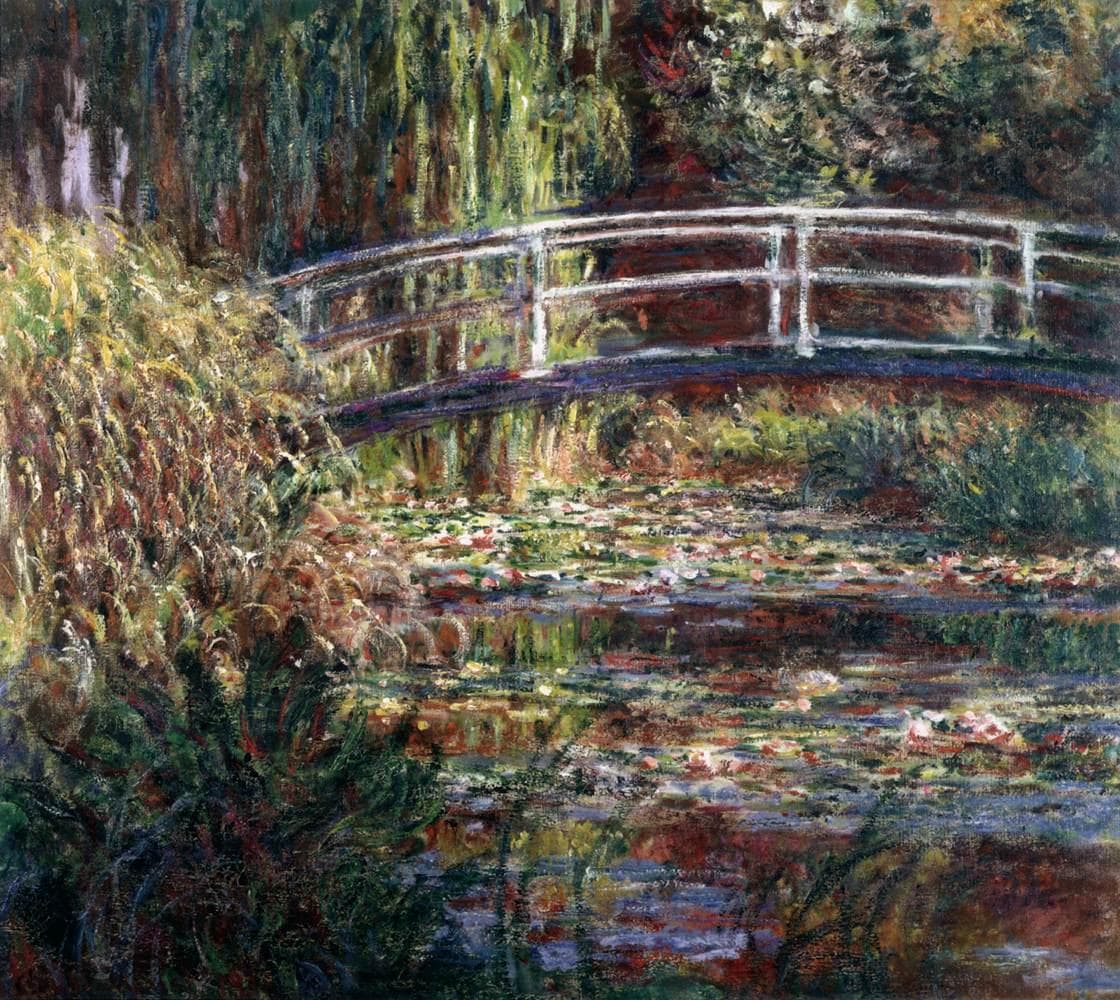
The Water Lily Pond, Harmony in Rose
Claude Monet · 1900
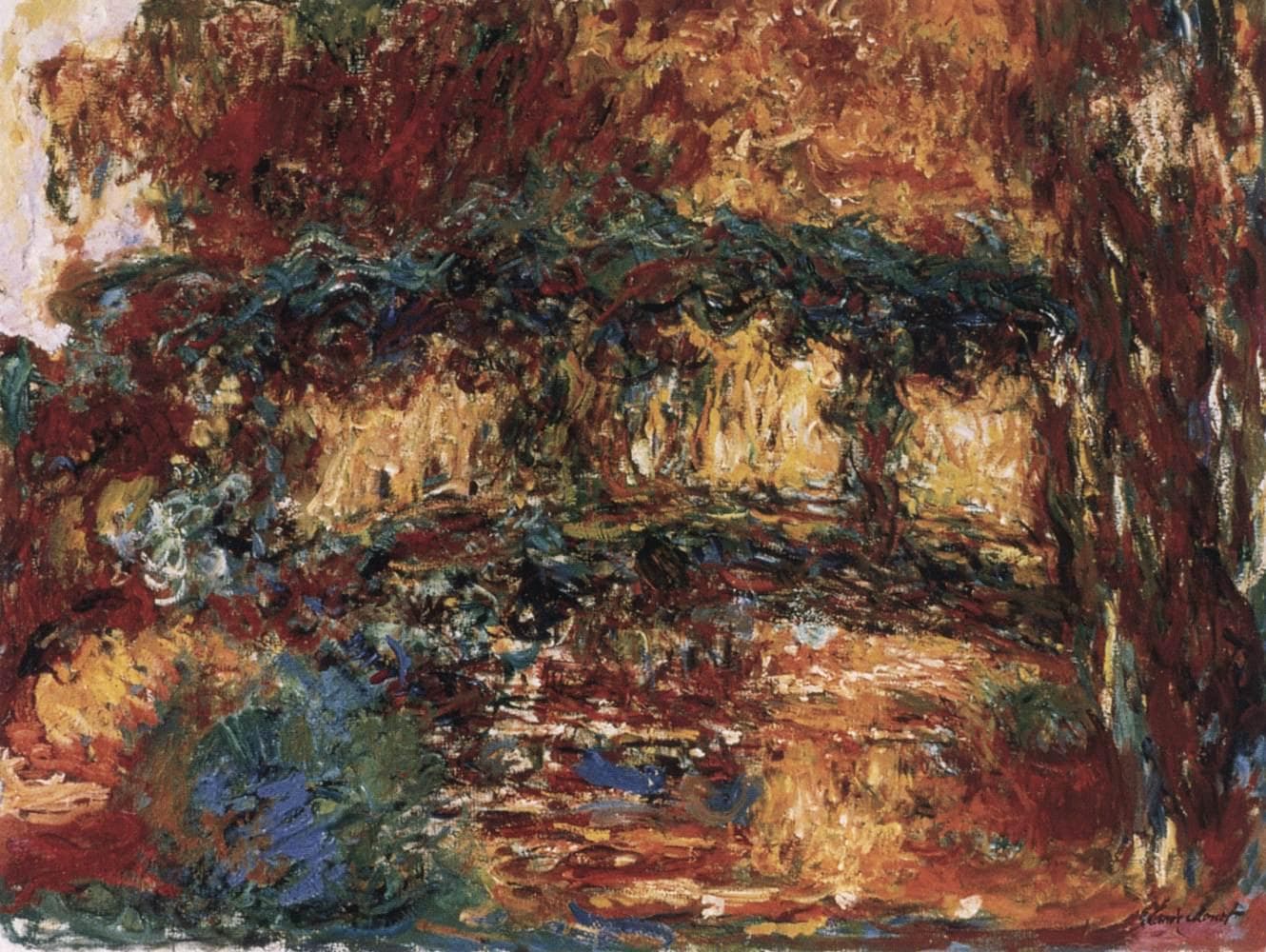
The Japanese Bridge
Claude Monet · c. 1923–25
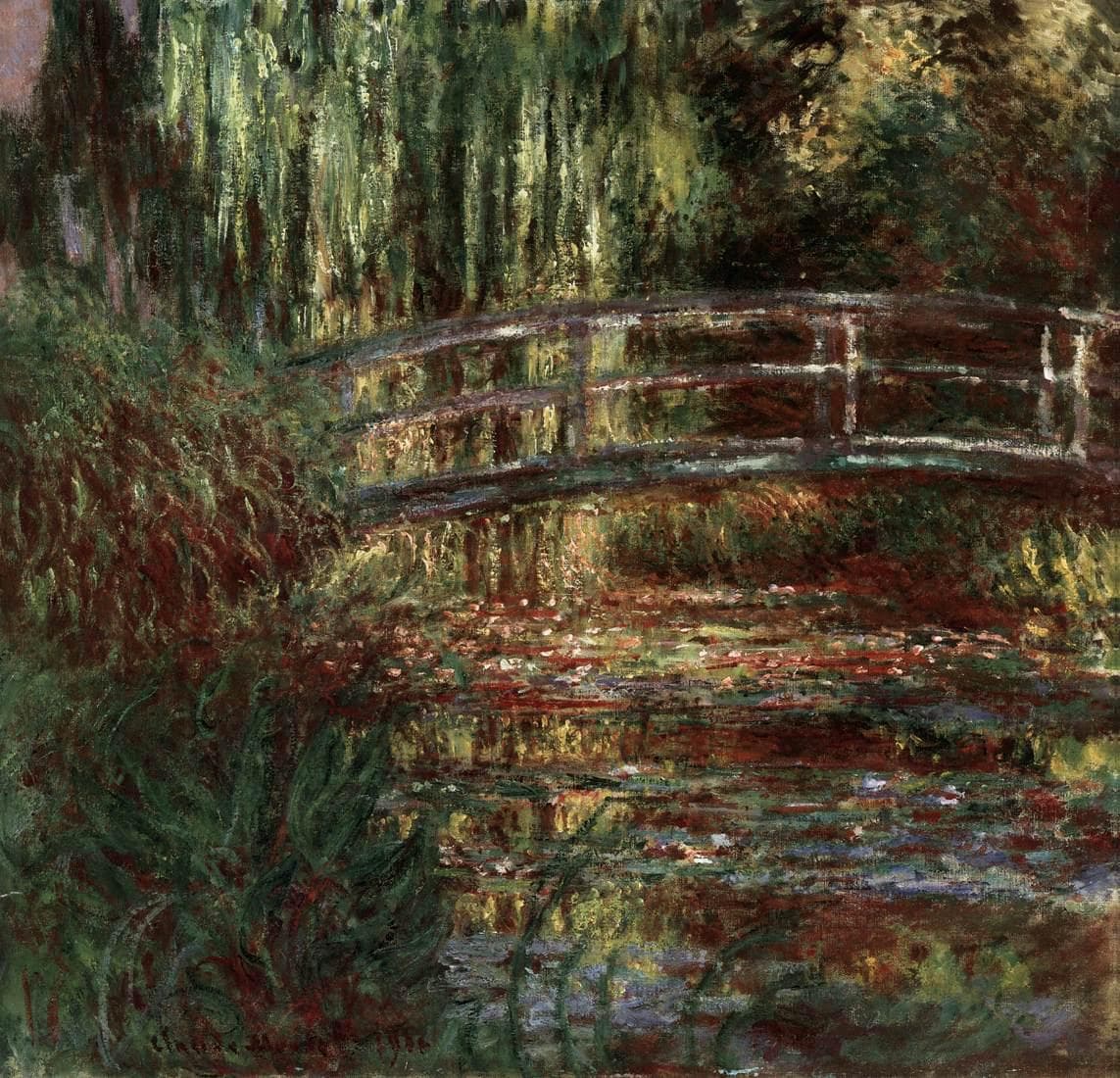
The Water Lily Pond
Claude Monet · 1900

The Scream
Edvard Munch · 1893

Ophelia
John Everett Millais · 1851–52

The Great Wave off Kanagawa
Katsushika Hokusai · c. 1830–32
The Birth of Venus
Sandro Botticelli · c. 1484–1486