Guide
How Monet Painted: Style, Technique, Cataracts and the Late Works
Light grounds, pure color, no black, many canvases at once, and in the end a painter going blind in front of a pond: a close look at Monet's methods.
Monet's style is the purest form of Impressionism: Claude Monet painted the changing effects of light and atmosphere, usually outdoors and in front of the subject, using bright, unmixed colors laid on in short, separate strokes over pale grounds, so that the picture builds up as a mosaic of colored touches that merge at a distance. From the 1890s he painted the same motif in series under different conditions, and in his last decade, troubled by cataracts, he worked on vast canvases with a looser, more gestural brush that later painters saw as a step toward abstraction.
This guide explains how Monet actually worked, from his first lessons on the beach at Le Havre to the late paintings at Giverny, with the canvases in the archive that show each method most clearly, in roughly the order he developed them.
The Beach at Trouville
Claude Monet · 1870
The Magpie
Claude Monet · 1868–69
Bathers at La Grenouillère
Claude Monet · 1869
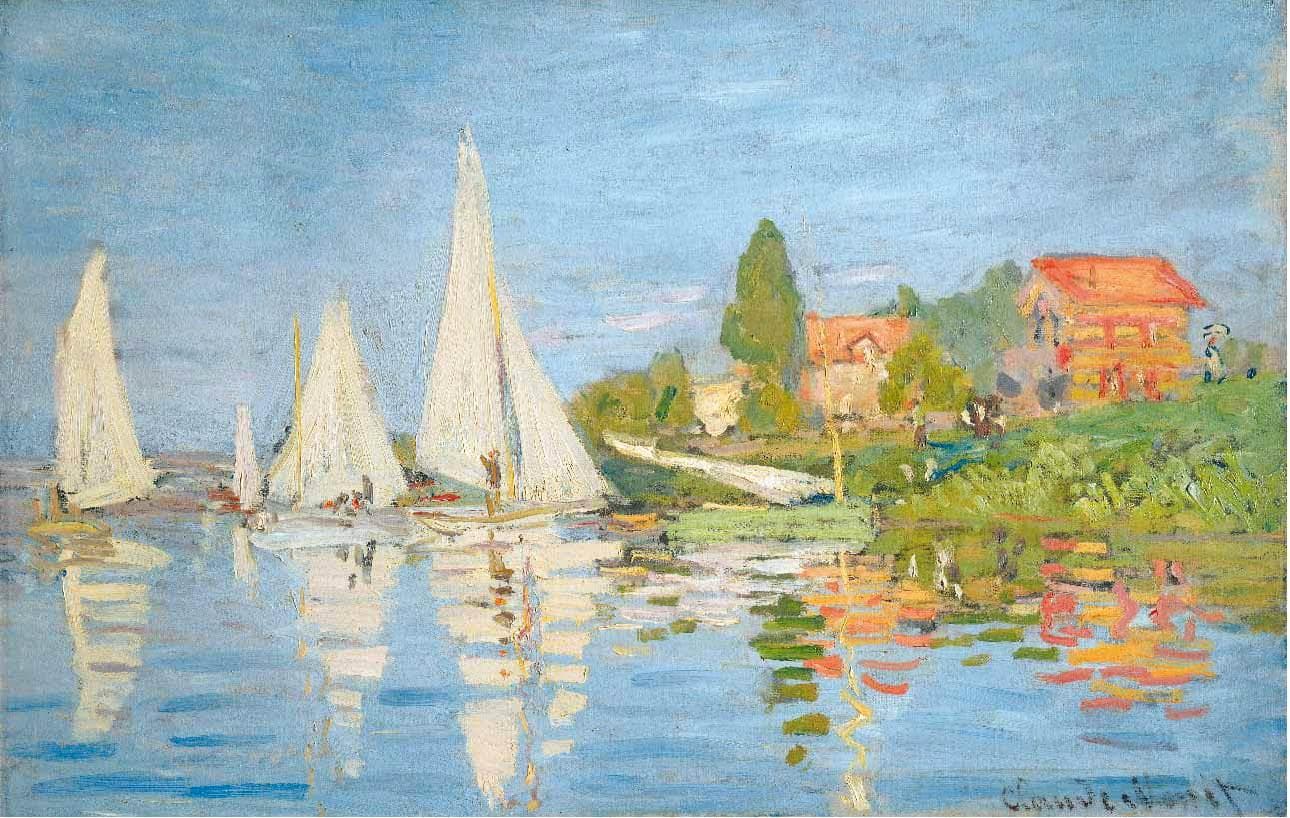
Regatta at Argenteuil
Claude Monet · c. 1872
Impression, Sunrise
Claude Monet · 1872
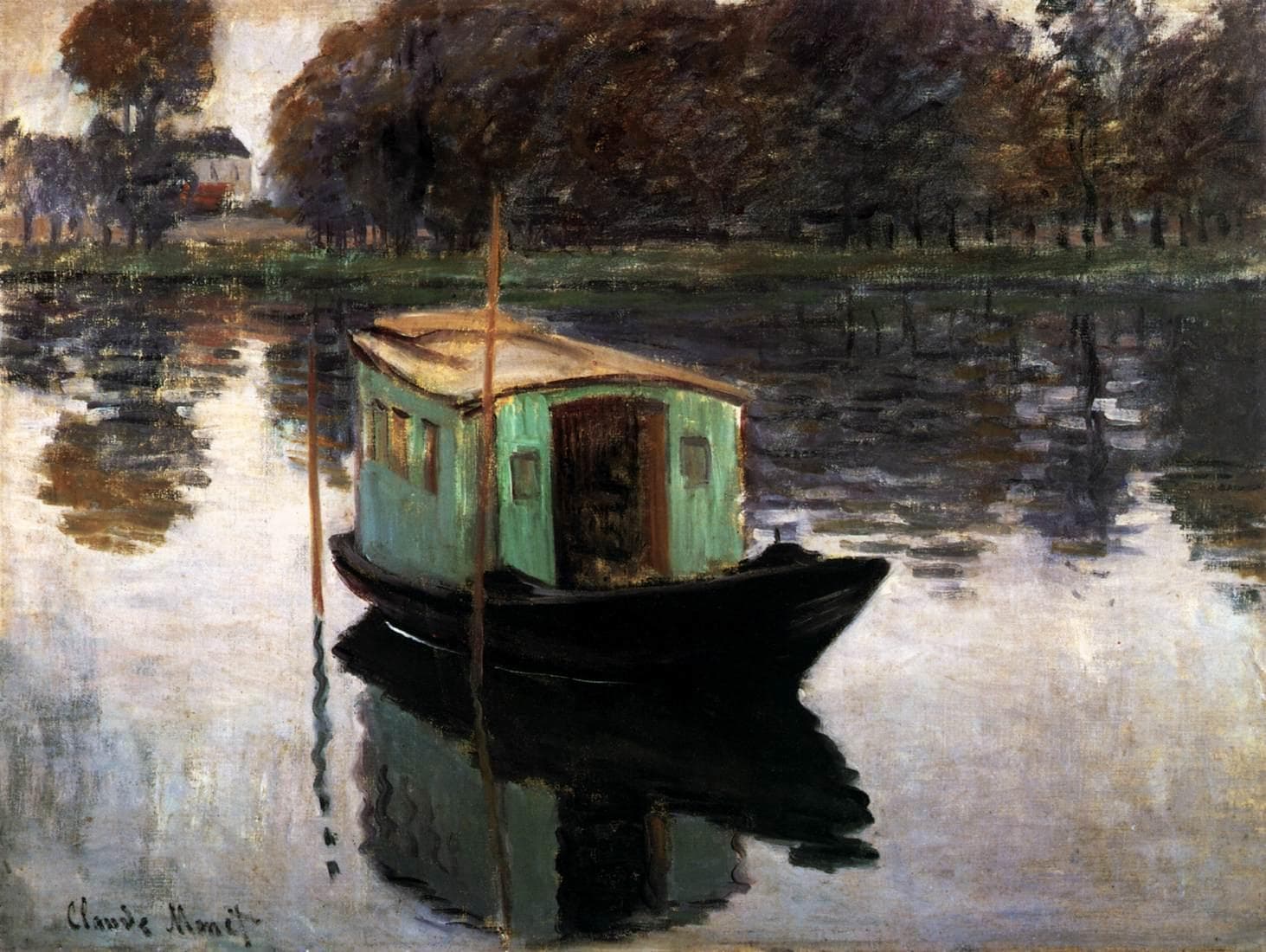
The Studio Boat
Claude Monet · 1874
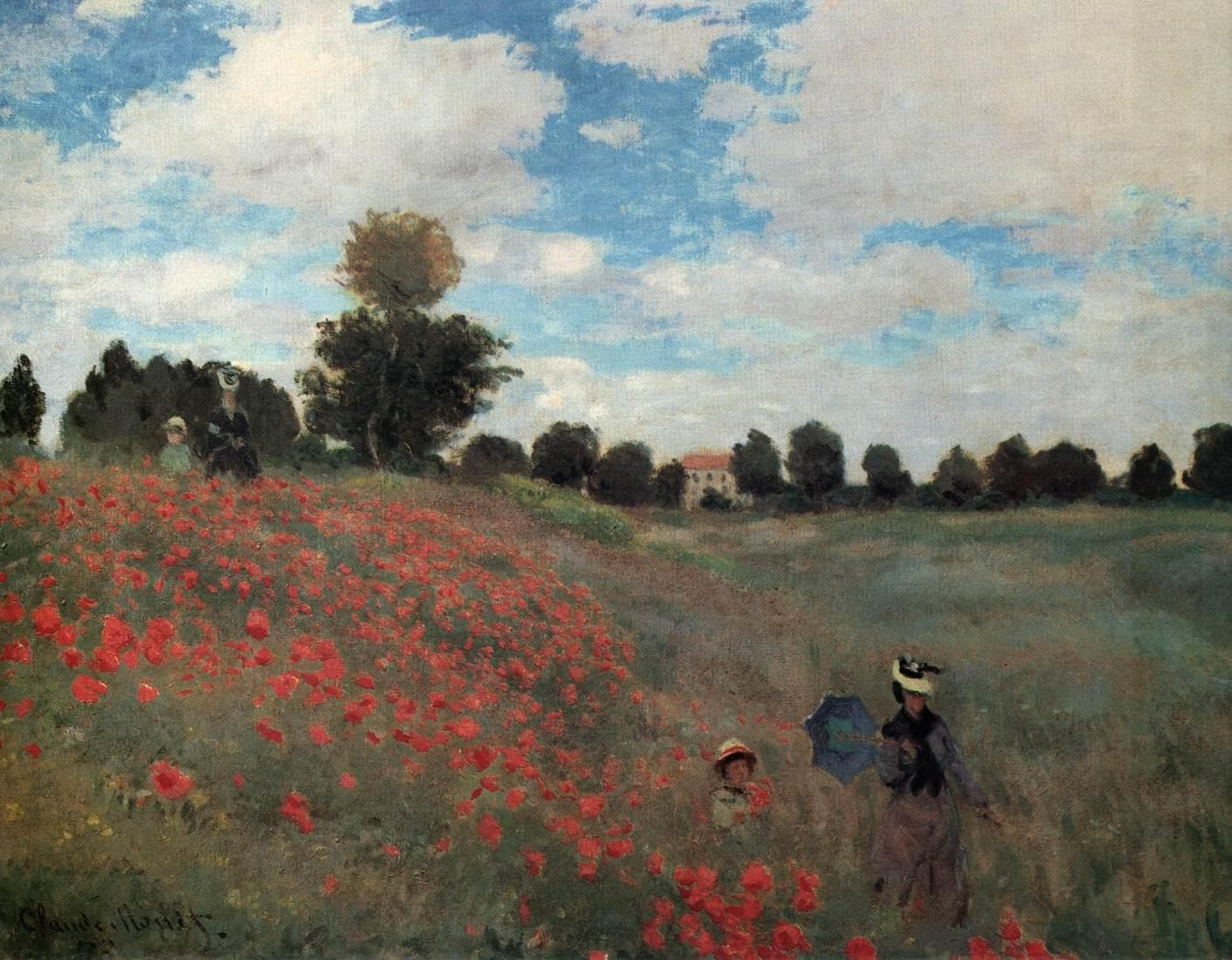
Poppy Field (Poppies at Argenteuil)
Claude Monet · 1873
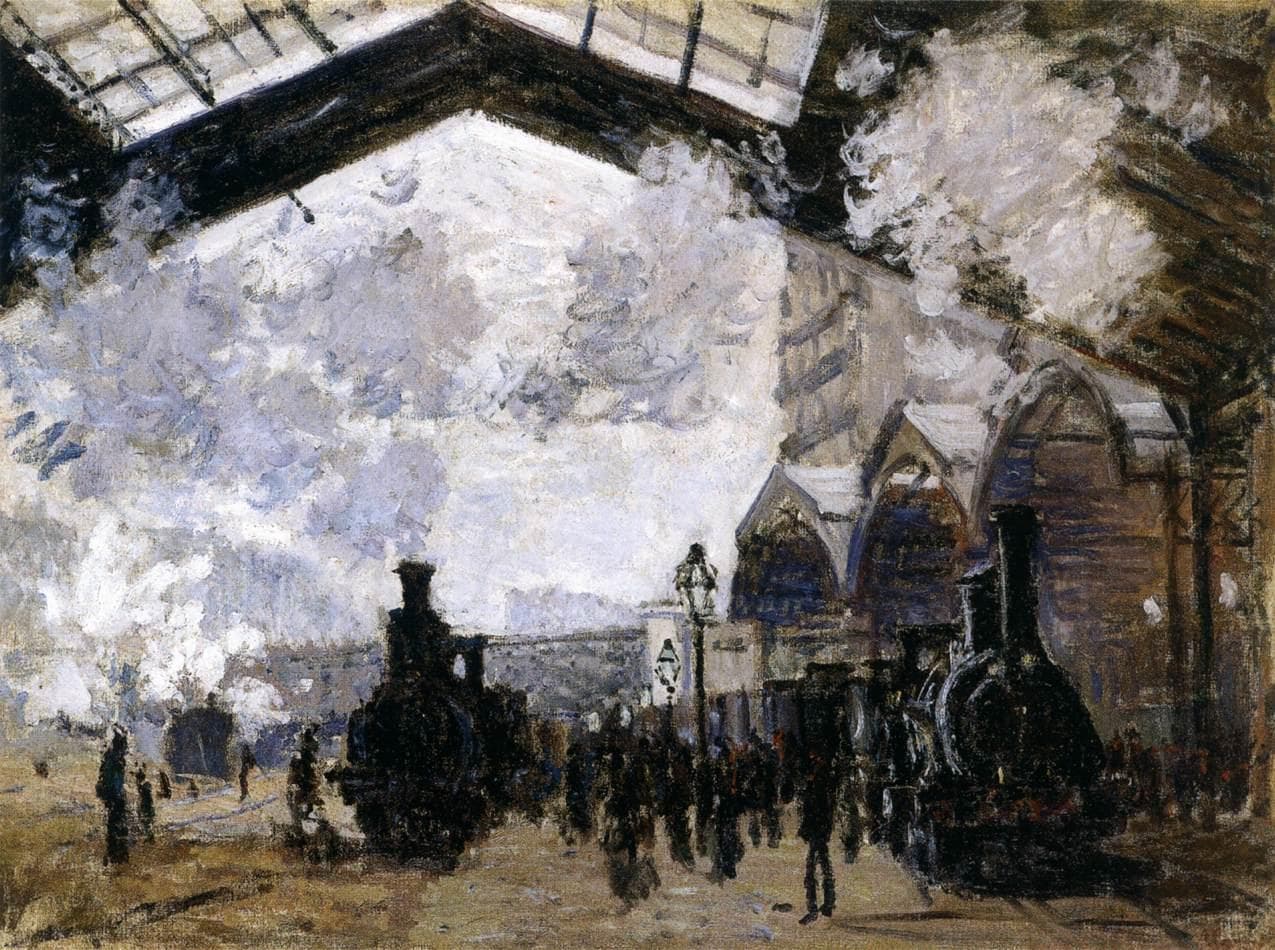
The Gare Saint-Lazare
Claude Monet · 1877
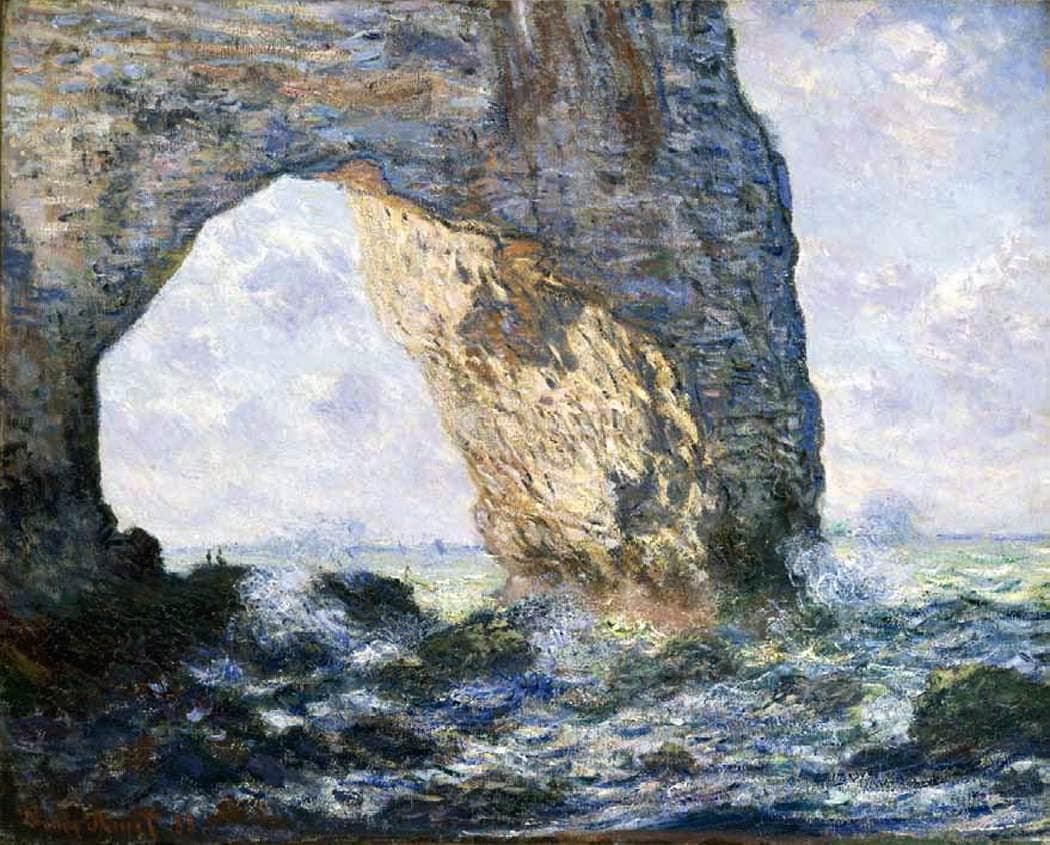
The Manneporte (Étretat)
Claude Monet · 1883
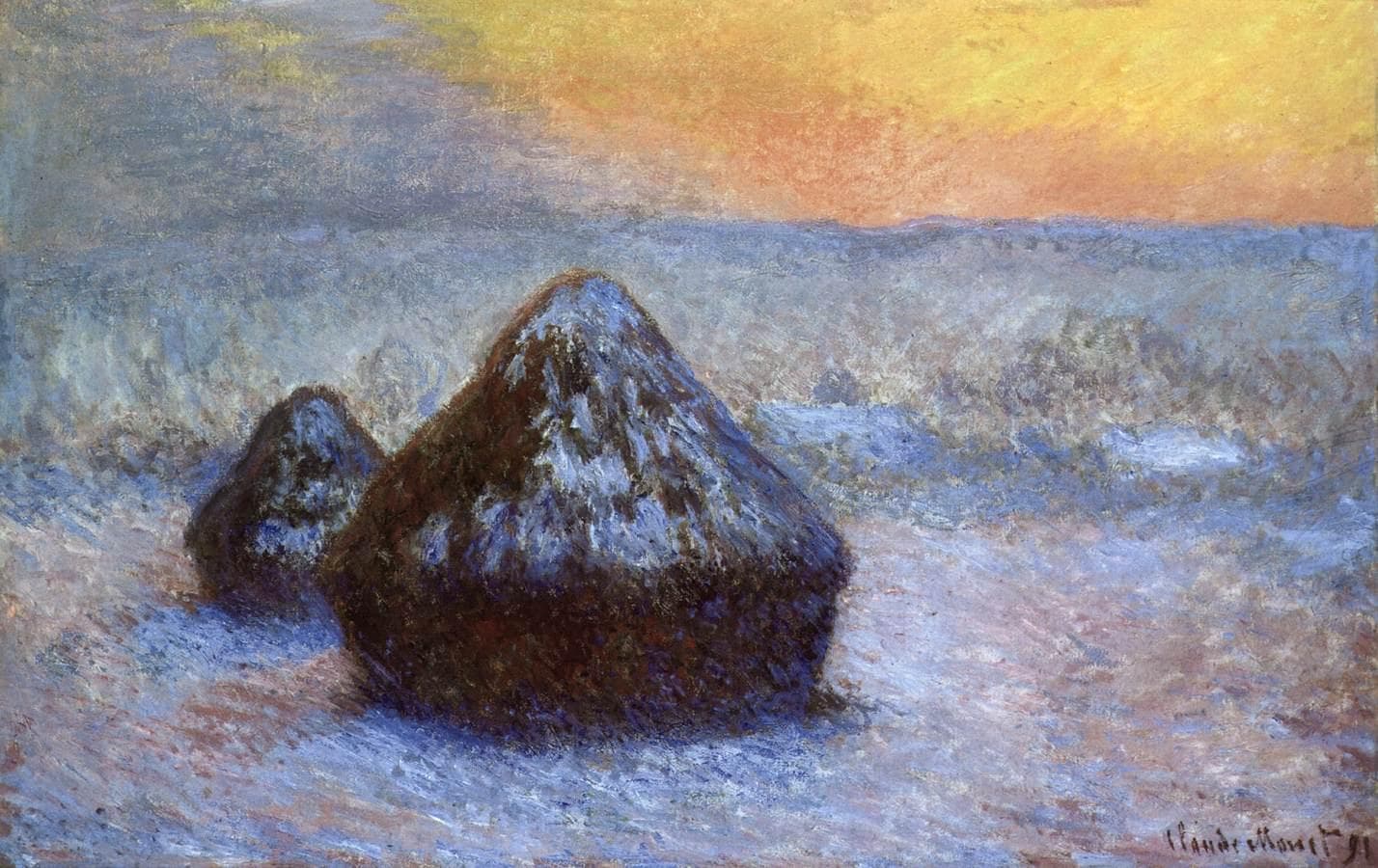
Stacks of Wheat, Sunset, Snow Effect
Claude Monet · 1890–91
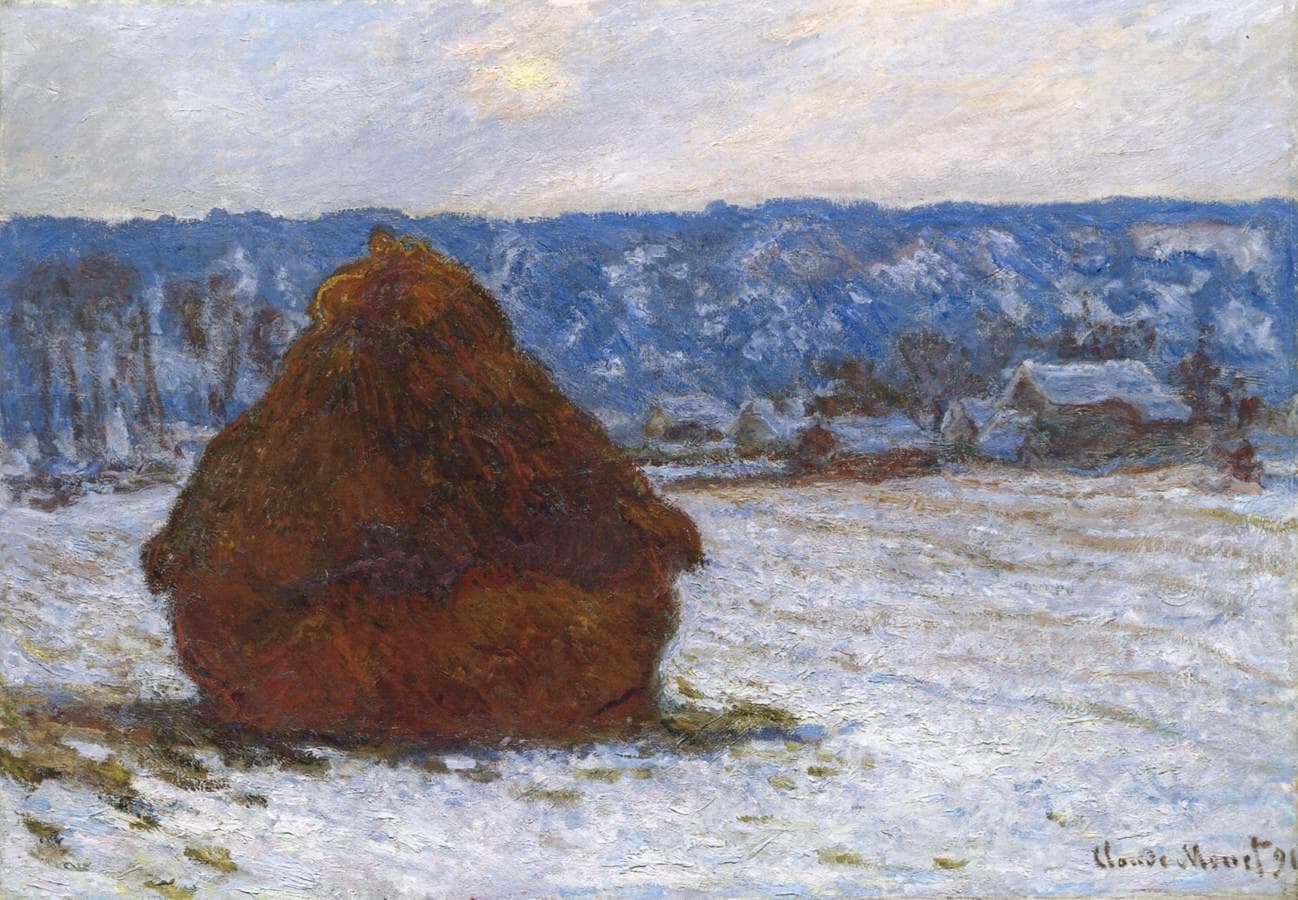
Stack of Wheat, Snow Effect, Overcast Day
Claude Monet · 1890–91
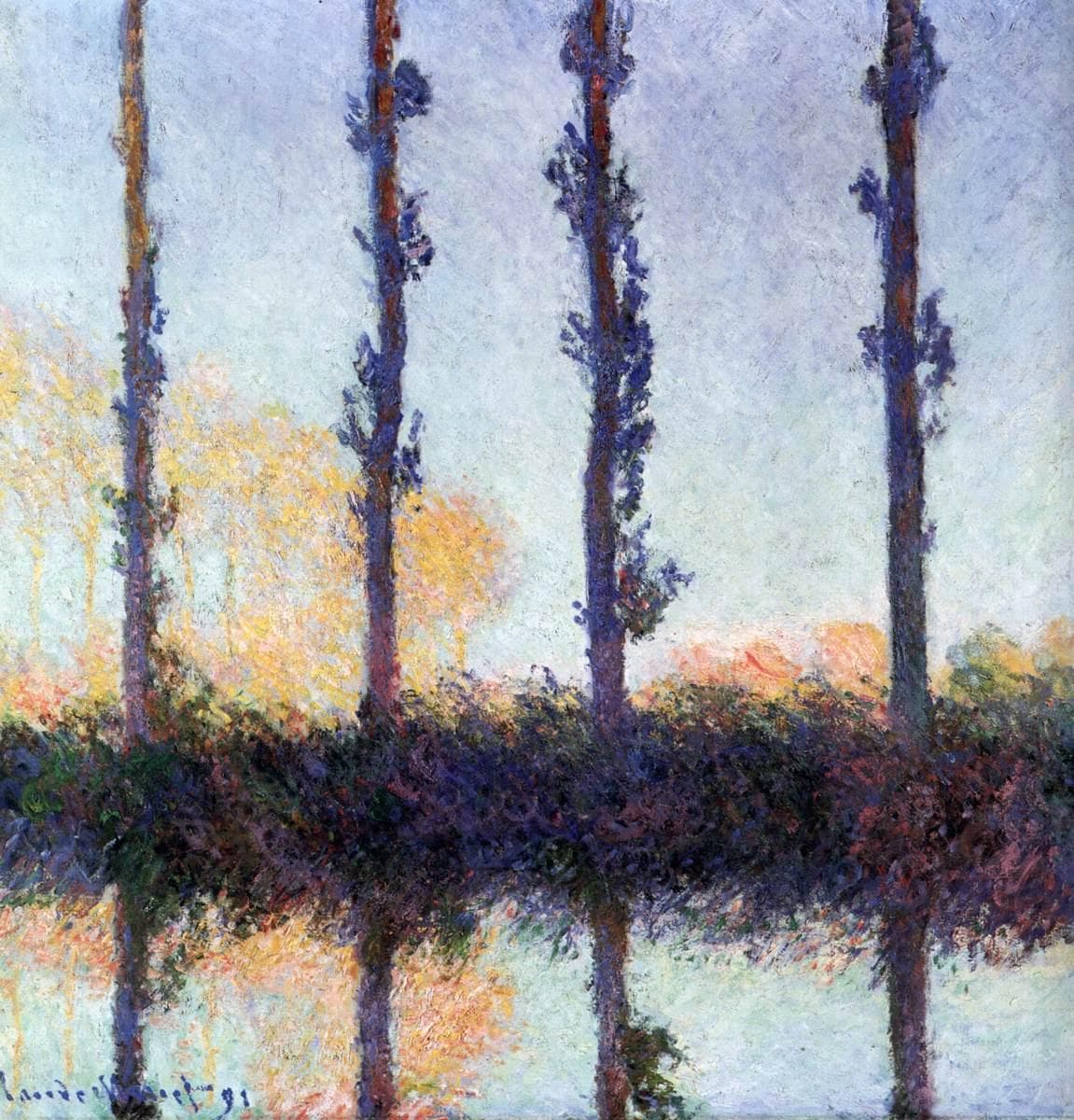
The Four Trees
Claude Monet · 1891
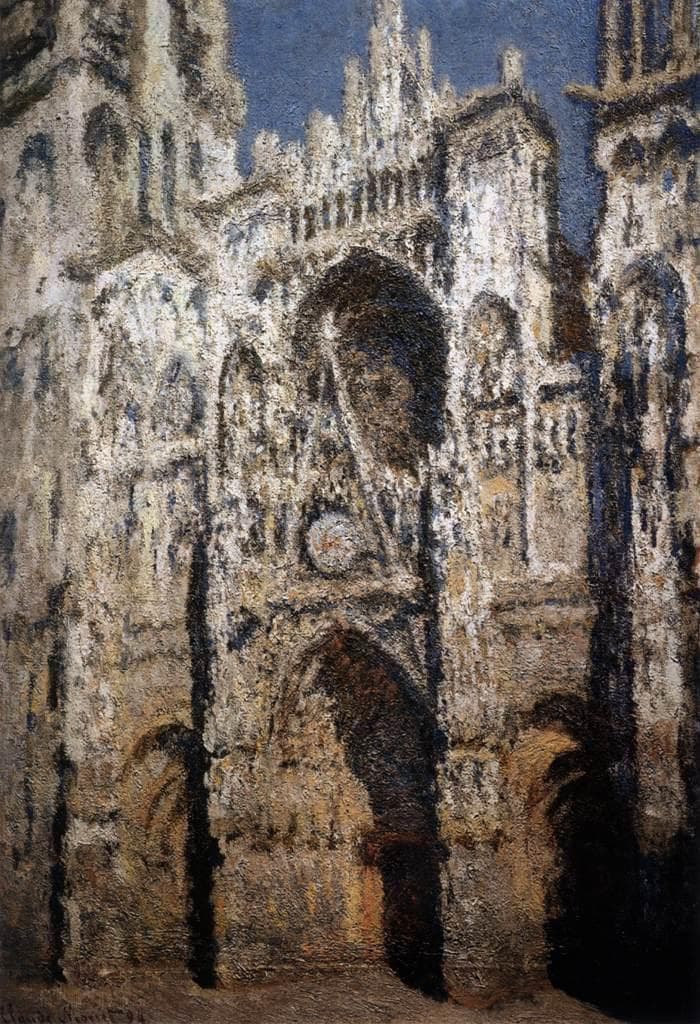
Rouen Cathedral in Full Sunlight
Claude Monet · 1893
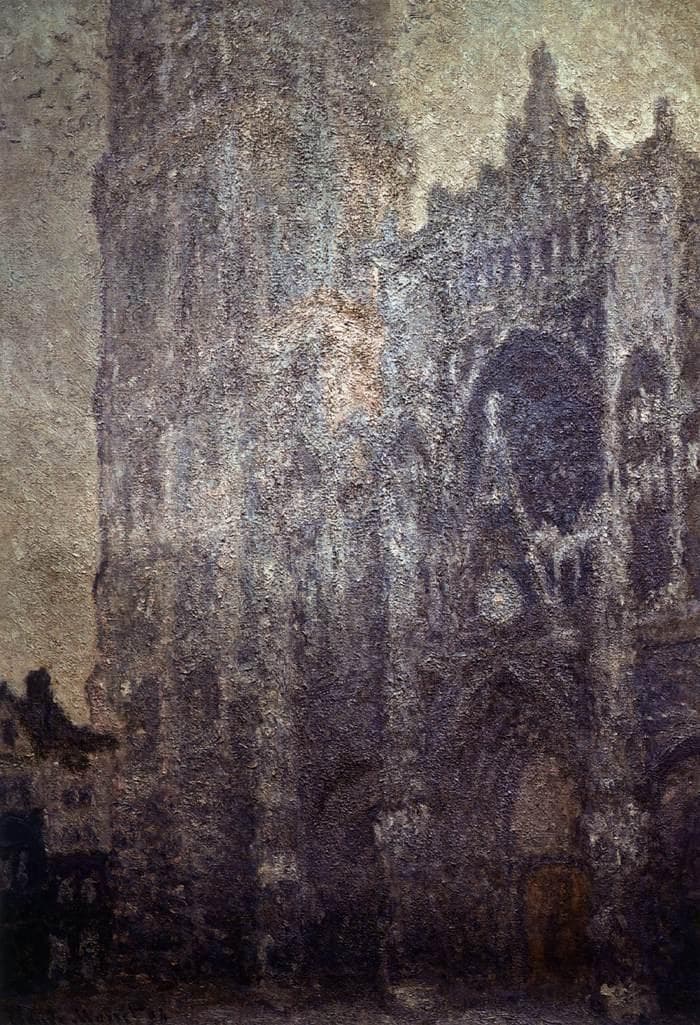
Rouen Cathedral, Effects of Morning Light
Claude Monet · 1893
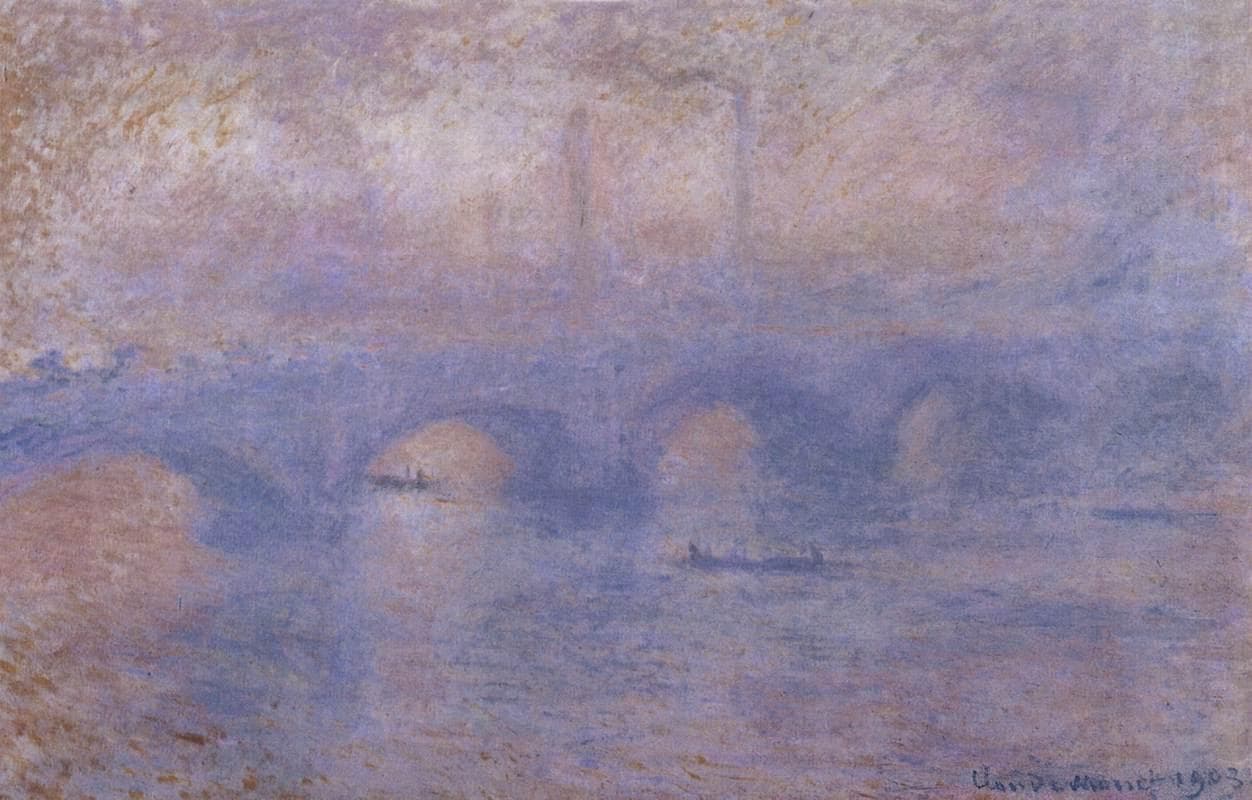
Waterloo Bridge, Effect of Fog
Claude Monet · 1903
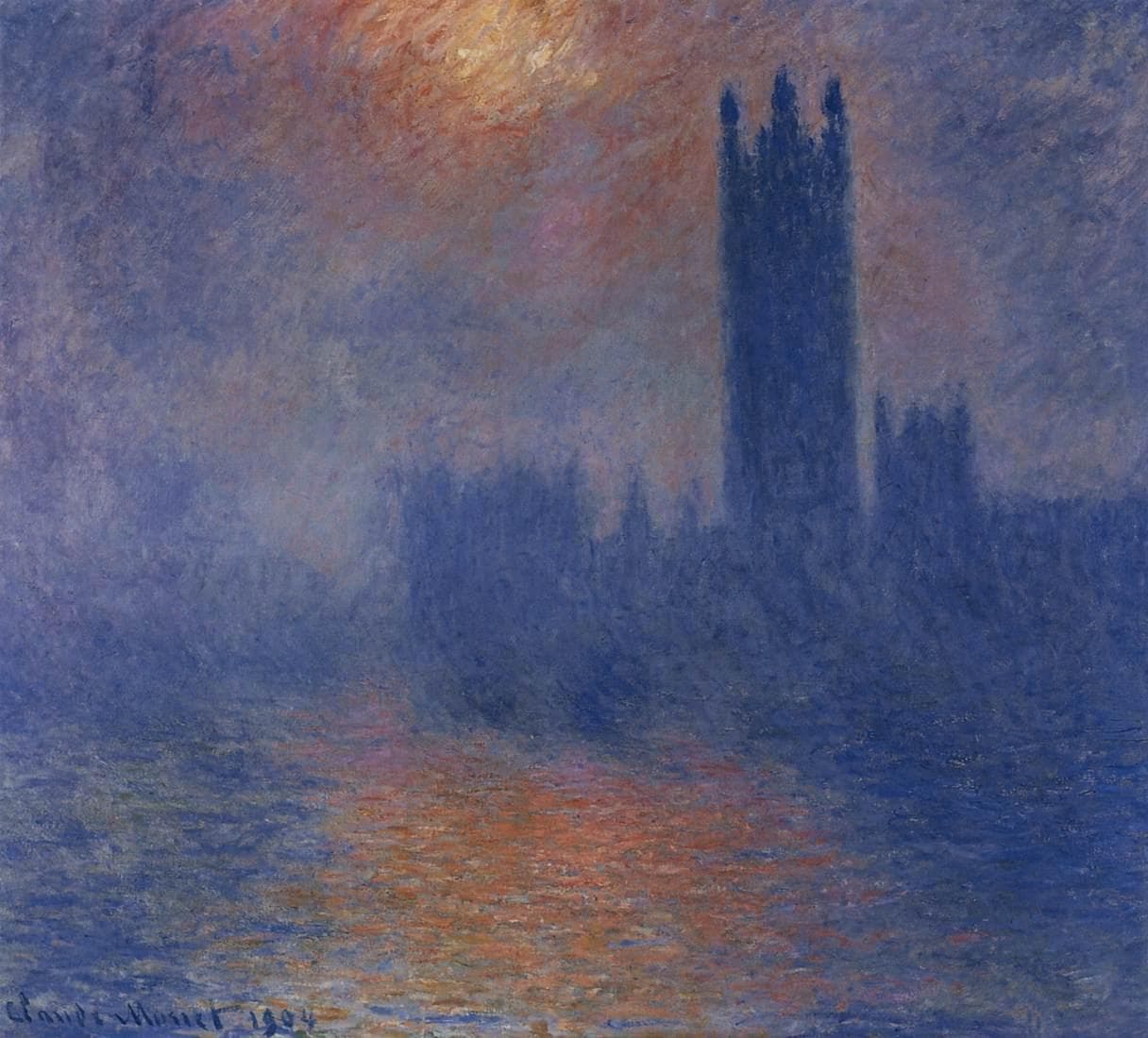
The Houses of Parliament in London
Claude Monet · 1904

Bridge over a Pond of Water Lilies
Claude Monet · 1899
Water Lilies, Evening Effect
Claude Monet · 1897
Water Lilies and Agapanthus
Claude Monet · 1914–17
The Japanese Bridge
Claude Monet · c. 1923–25
The Japanese Footbridge (MoMA)
Claude Monet · c. 1920–22
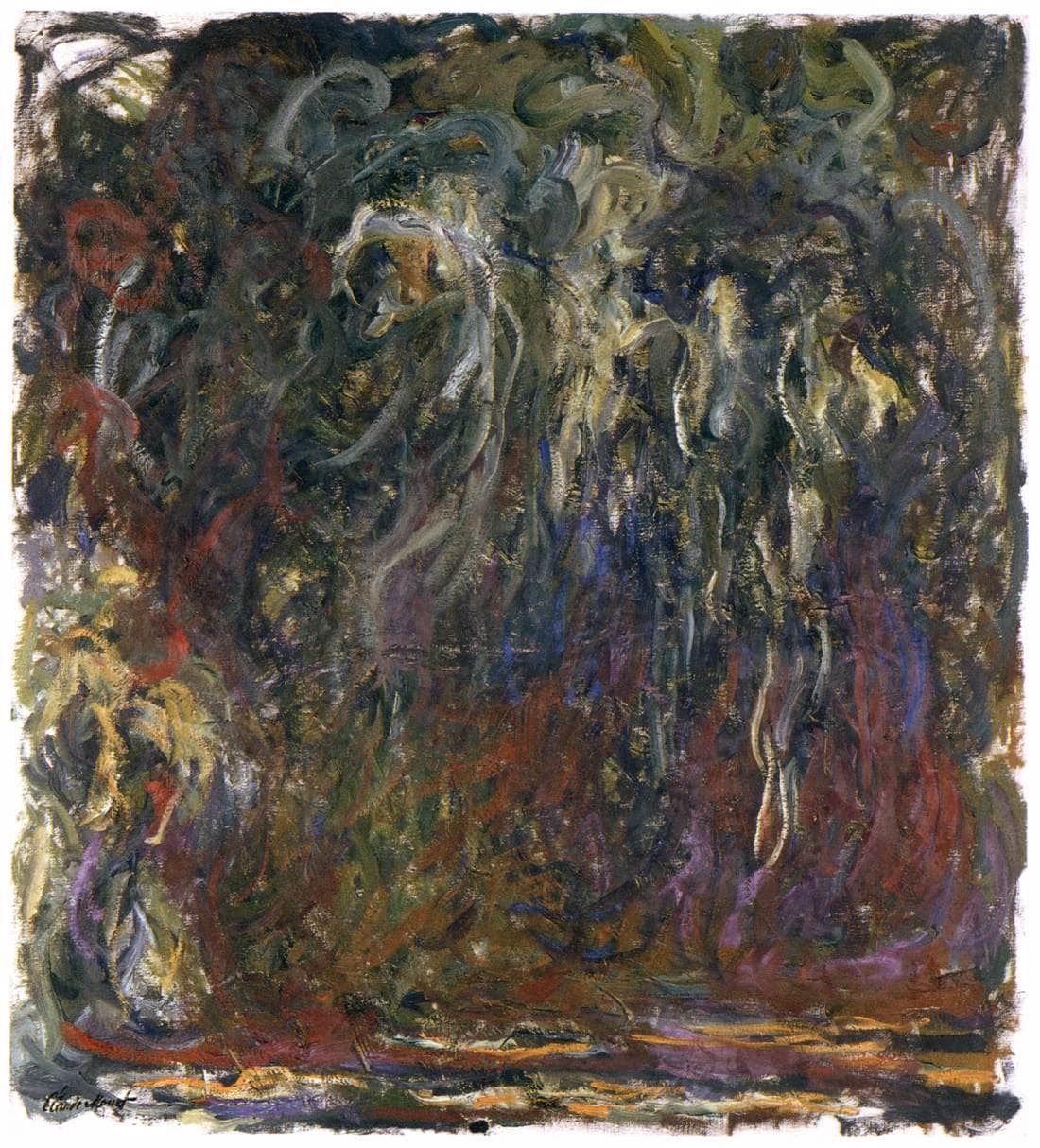
Weeping Willow
Claude Monet · 1920–22
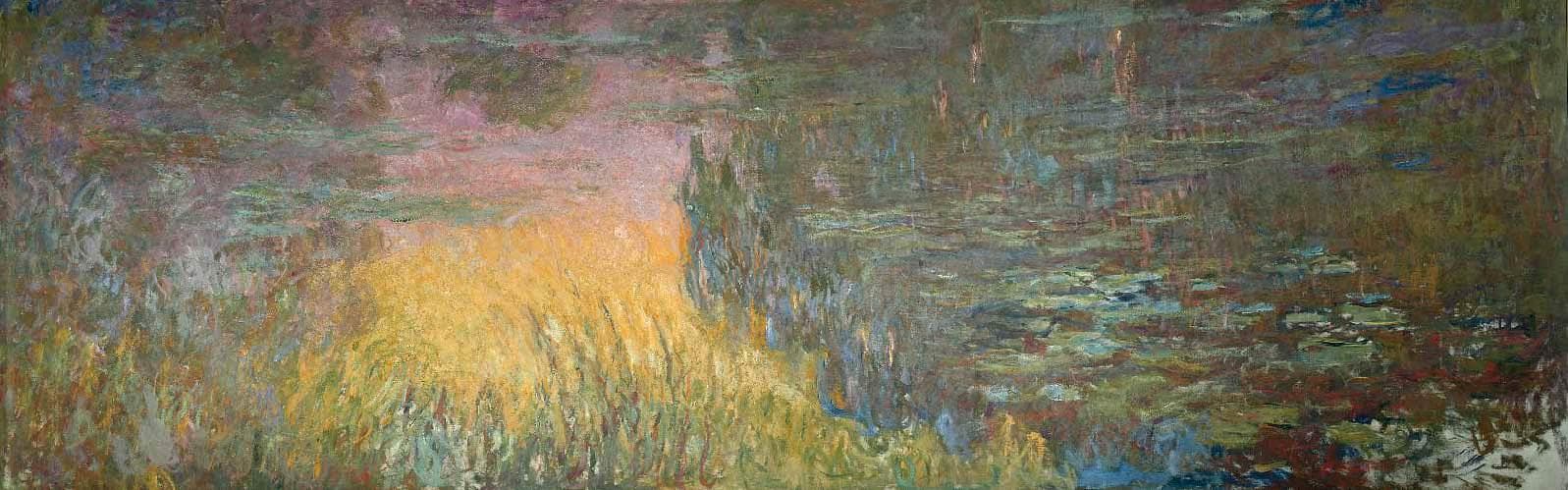
Water Lilies: Setting Sun
Claude Monet · 1914–26
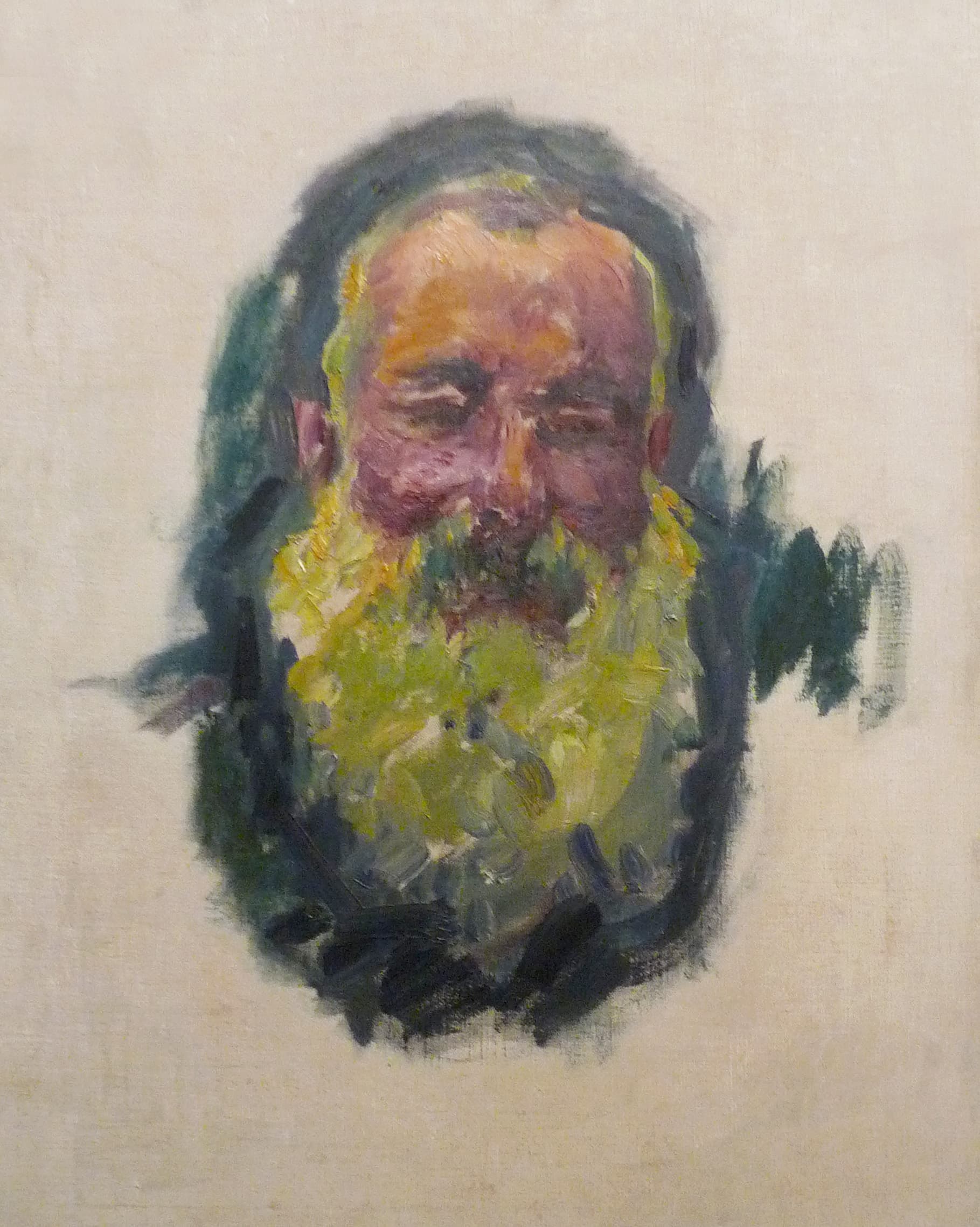
Self-Portrait (1917)
Claude Monet · 1917
Painting outdoors
Monet learned to paint in the open air from Eugène Boudin on the Normandy coast in the late 1850s, and he never stopped. Two nineteenth-century inventions made it practical. Oil paint sold in collapsible metal tubes, available from the 1840s, could be carried into the field and kept fresh, and the new railways put the coast and the Seine within a few hours of Paris. Monet worked with a portable easel, a box of tubes and a parasol to keep the sun off the canvas.
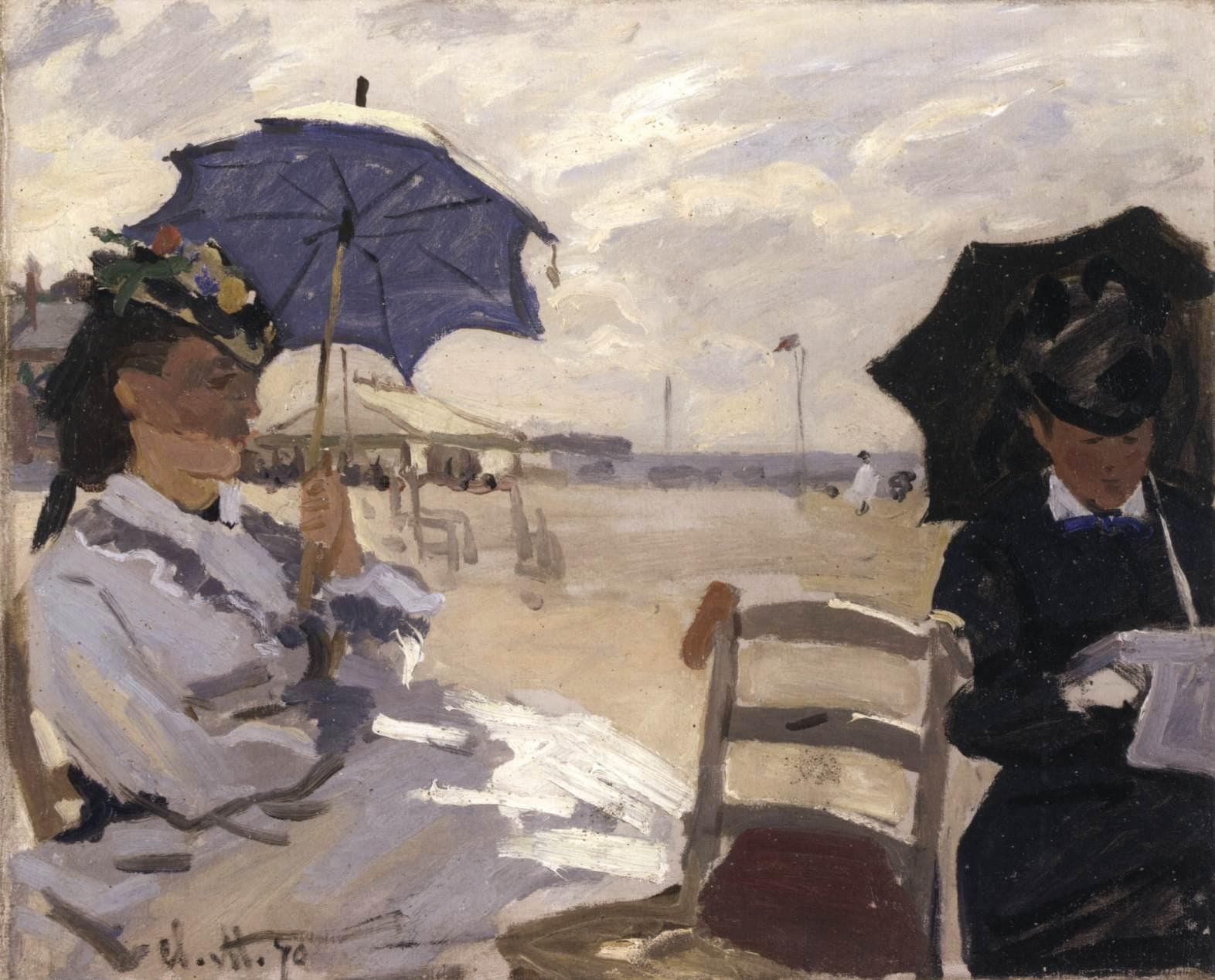
Painting on the spot left traces. In The Beach at Trouville (1870), a small seaside sketch of Camille and a friend under parasols, grains of sand are still embedded in the paint. At Argenteuil in the 1870s Monet fitted out a boat as a floating studio, with a cabin and an awning, so he could paint the river from the middle of the water; he painted the boat itself in The Studio Boat (1874).
He also exaggerated the legend. Visitors and photographers liked to show him at the easel in a field, and he encouraged the idea that everything was done from nature. In fact, from the 1880s onward, many pictures were begun outdoors and finished, sometimes over years, in the studio.
Light grounds and pure color
Academic painters of Monet's youth worked on canvases primed in brown or dark red and built up their pictures from dark to light. Monet used commercially prepared canvases with a white, cream or pale gray ground, which reflected light back up through the layers of color and gave his pictures their brightness.
On that ground he laid colors mostly unmixed, or mixed only lightly with white. Technical studies of his pictures, notably by the National Gallery in London, find a small modern palette: lead white, chrome and later cadmium yellows, vermilion, madder lakes, cobalt blue, French ultramarine, emerald green and viridian. When asked about his colors late in life, he reportedly listed little more than white, cadmium yellow, vermilion, deep madder, cobalt blue and emerald green. From the 1880s he largely gave up black and earth browns. Darks are made of deep blues, violets, greens and reds.
Colored shadows and broken strokes
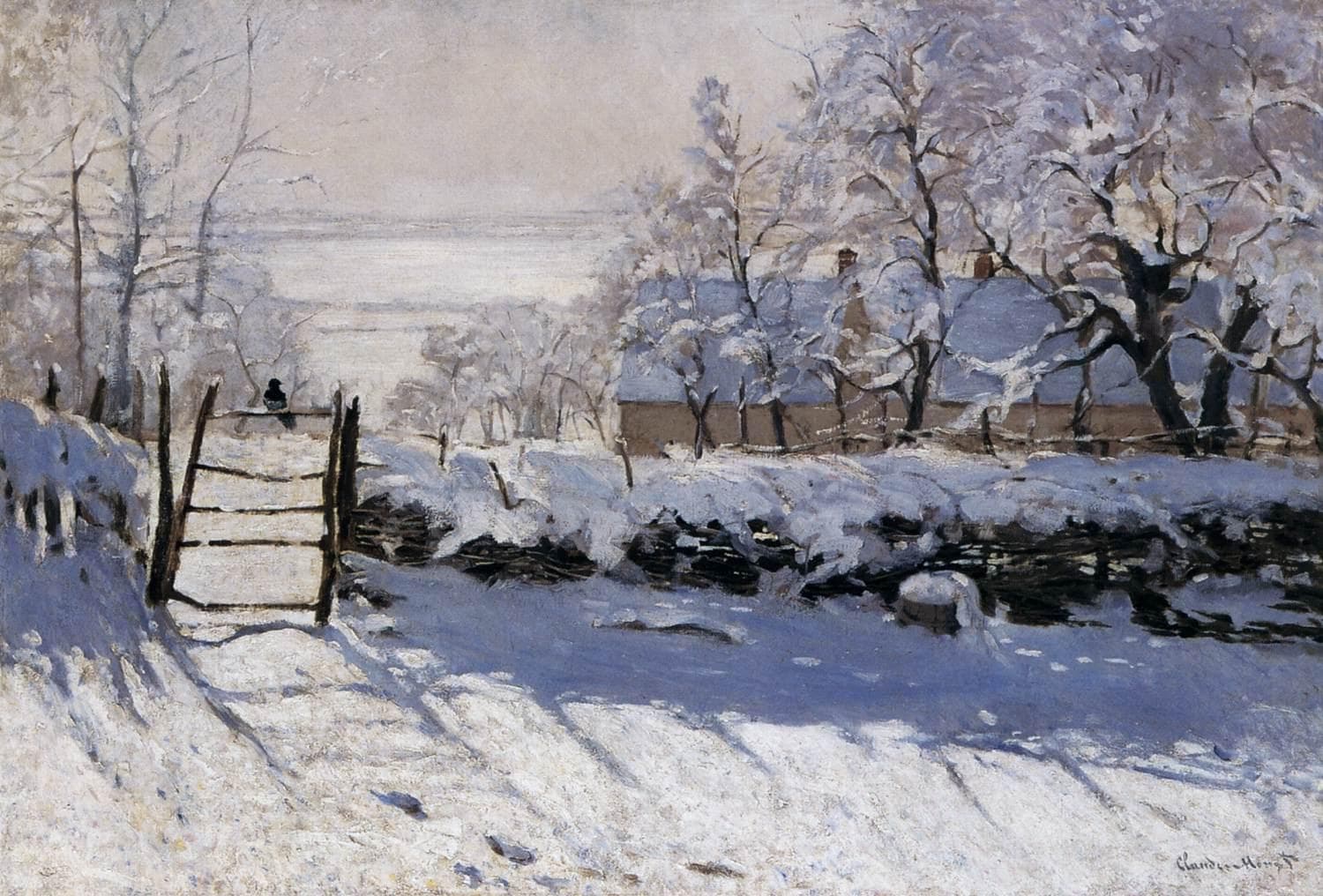
The great discovery of Monet and his friends was that shadows are not brown or gray but colored, usually by the light of the sky. In The Magpie (1868–69) the shadows of a fence across a snowfield are blue and lilac, and the snow in sunlight is cream and pale yellow. The whole picture is a study in how many colors make up white.
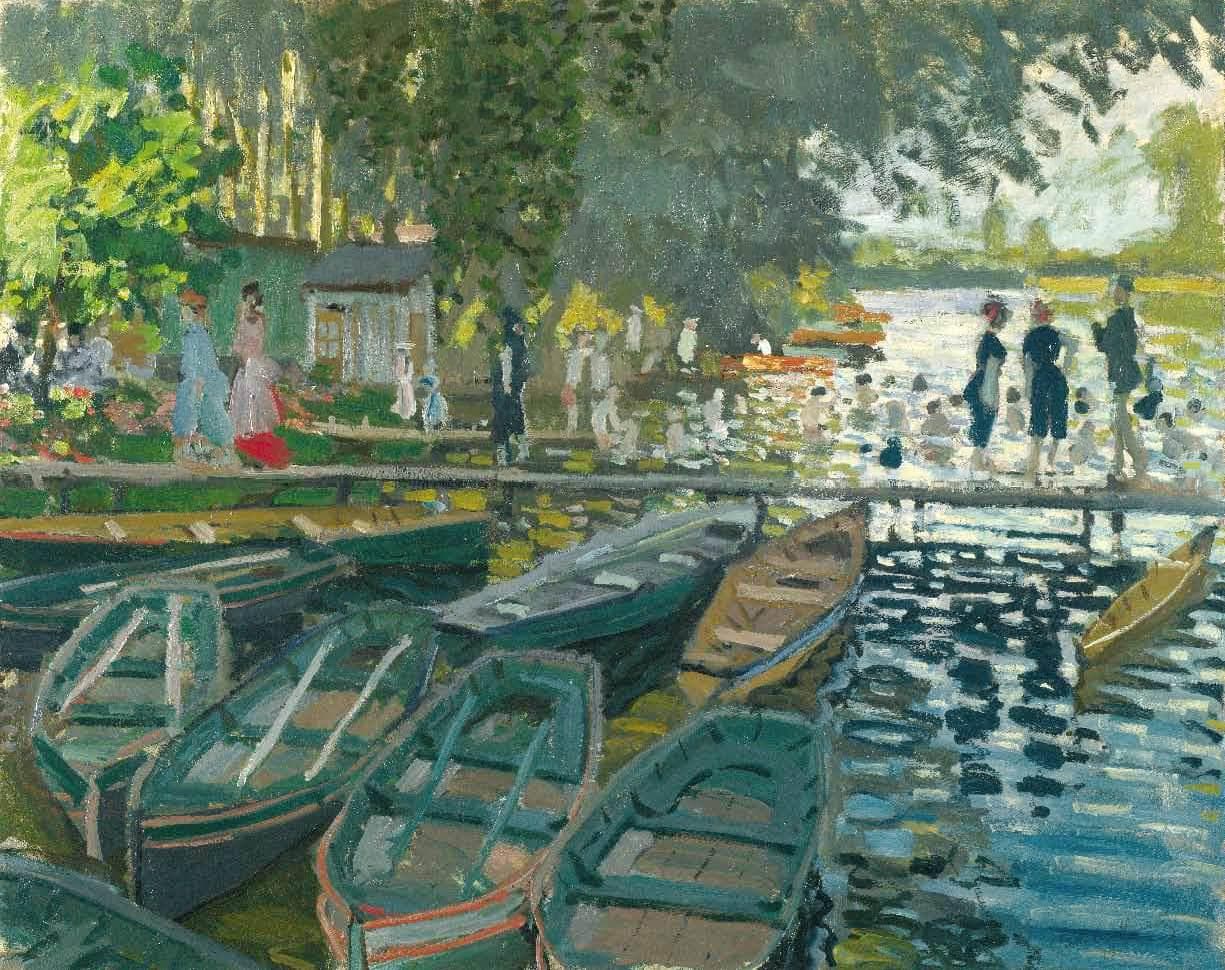
Monet's brushwork changed over time, but its principle stayed the same: separate touches of color, placed side by side rather than blended, so that they vibrate when seen from a distance. In Bathers at La Grenouillère (1869), painted beside Renoir, the water is made of thick horizontal dashes of blue, black and white, each one a ripple. In Regatta at Argenteuil (c. 1872) the reflections of sails and houses are blocks of almost pure white, red and green, laid on wet into wet in a few minutes.
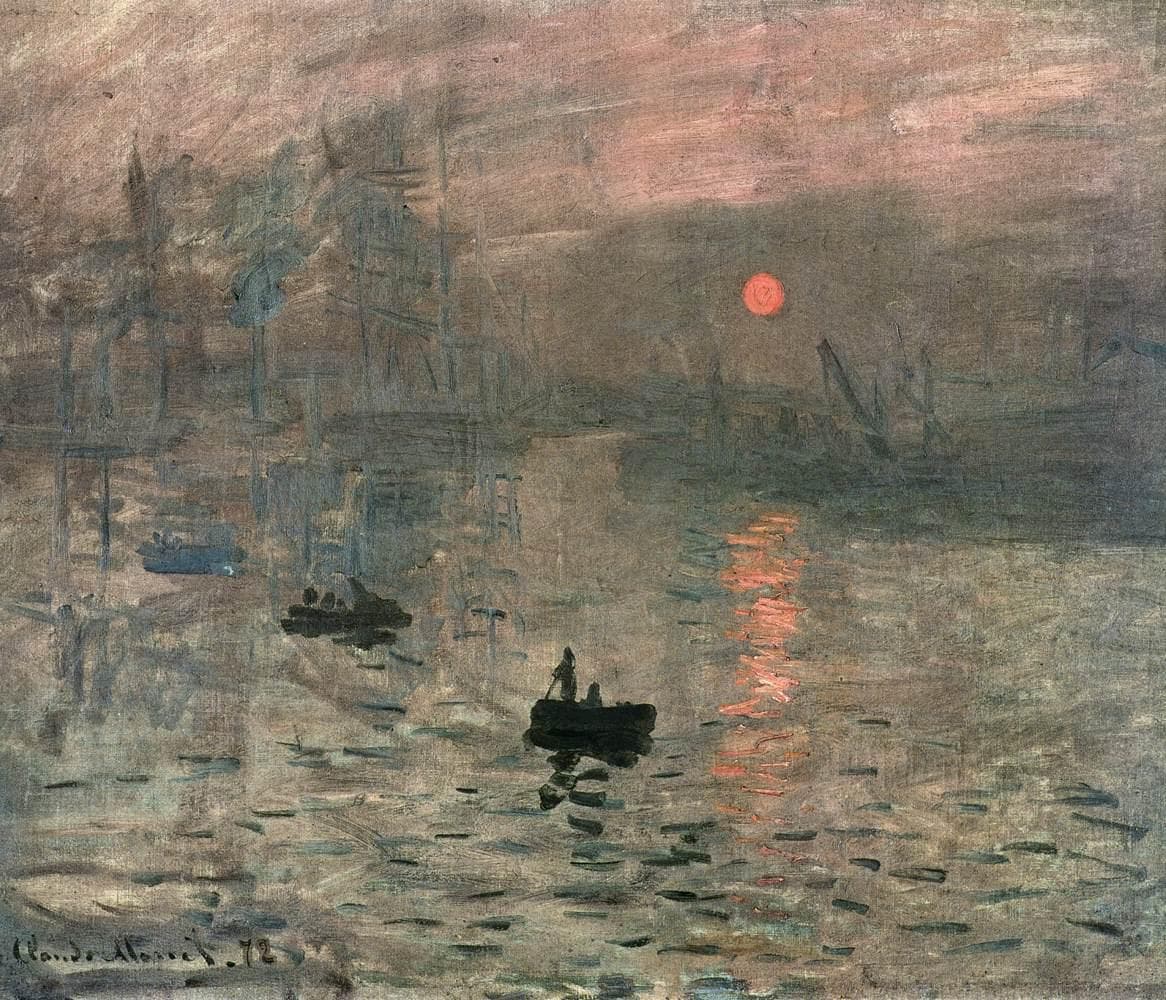
Impression, Sunrise (1872) shows how much depends on color relationships rather than drawing. The orange sun is hardly brighter than the gray-blue sky around it; the neuroscientist Margaret Livingstone has pointed out that the two are nearly equal in luminance, which is why the sun seems to shimmer and float. Monet probably found this effect by eye, not by theory.
Many canvases at once: the series method
From the late 1880s Monet's subject was less a place than a moment: one particular light on one particular day. The light changed too fast for a single canvas, so he worked on many at once, switching from one to the next as the sun moved or the clouds came over. During the Haystacks campaign of 1890–91, his stepdaughter brought canvases out to the field in a wheelbarrow. He wrote to the critic Gustave Geffroy that he was after instantaneity, and above all the envelope, the same light spread over everything.
The method shows in the paint. Compare Stacks of Wheat (Sunset, Snow Effect) with Stack of Wheat (Snow Effect, Overcast Day): the same motif, transformed by its light. The Art Institute of Chicago's technical study of its Stacks of Wheat found evidence that Monet changed each canvas over several working sessions, harmonizing them as a set. The surfaces grew thick and crusty, layer over layer, especially in the Rouen Cathedral façades, where paint seems to imitate the texture of stone. In Rouen Cathedral in Full Sunlight the portal is a relief of creamy yellow and orange impasto; in Morning Light it is blue and cool.
The studio and memory
The London and Venice pictures were all finished at Giverny, sometimes years after the trip. When Durand-Ruel worried about this, Monet replied that whether his cathedrals and his London pictures were painted from nature or not was nobody's business, and of no importance. In Waterloo Bridge, Effect of Fog (1903) the fog is a field of pink and lilac strokes that could only have been made by remembering, then inventing, the London air. See Monet in London.
Japanese prints and the flat picture
Monet collected Japanese woodblock prints, by Hokusai, Hiroshige, Utamaro and others, and the collection of more than two hundred prints is still displayed in his house at Giverny. Their high viewpoints, cropped motifs, flat bands of color and decorative trees reshaped his compositions, from the terrace of Garden at Sainte-Adresse (1867) to the poplars of The Four Trees (1891), where four trunks run straight off the top of the canvas, and the arched footbridge he built over his own pond.
Cataracts and color
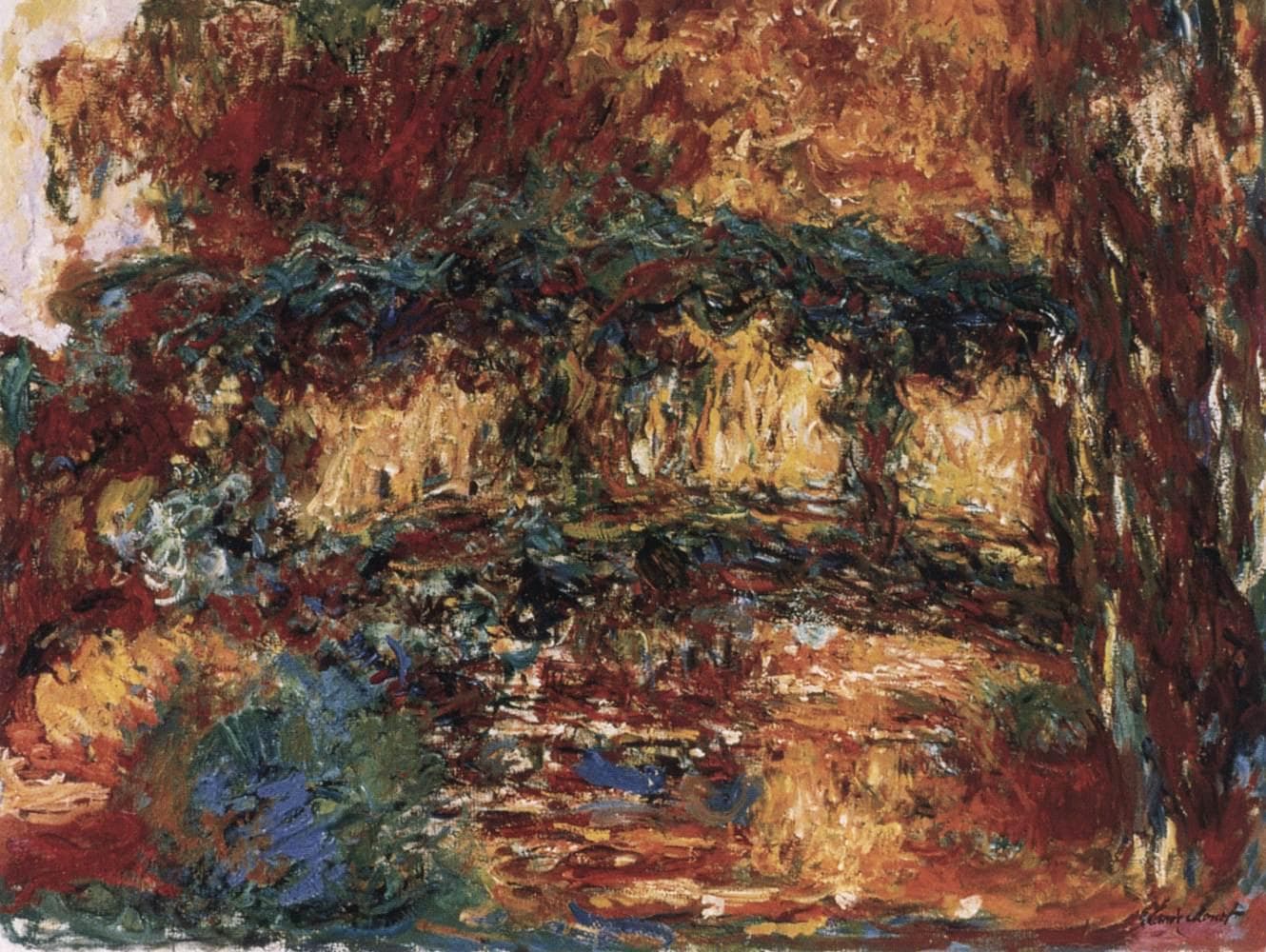
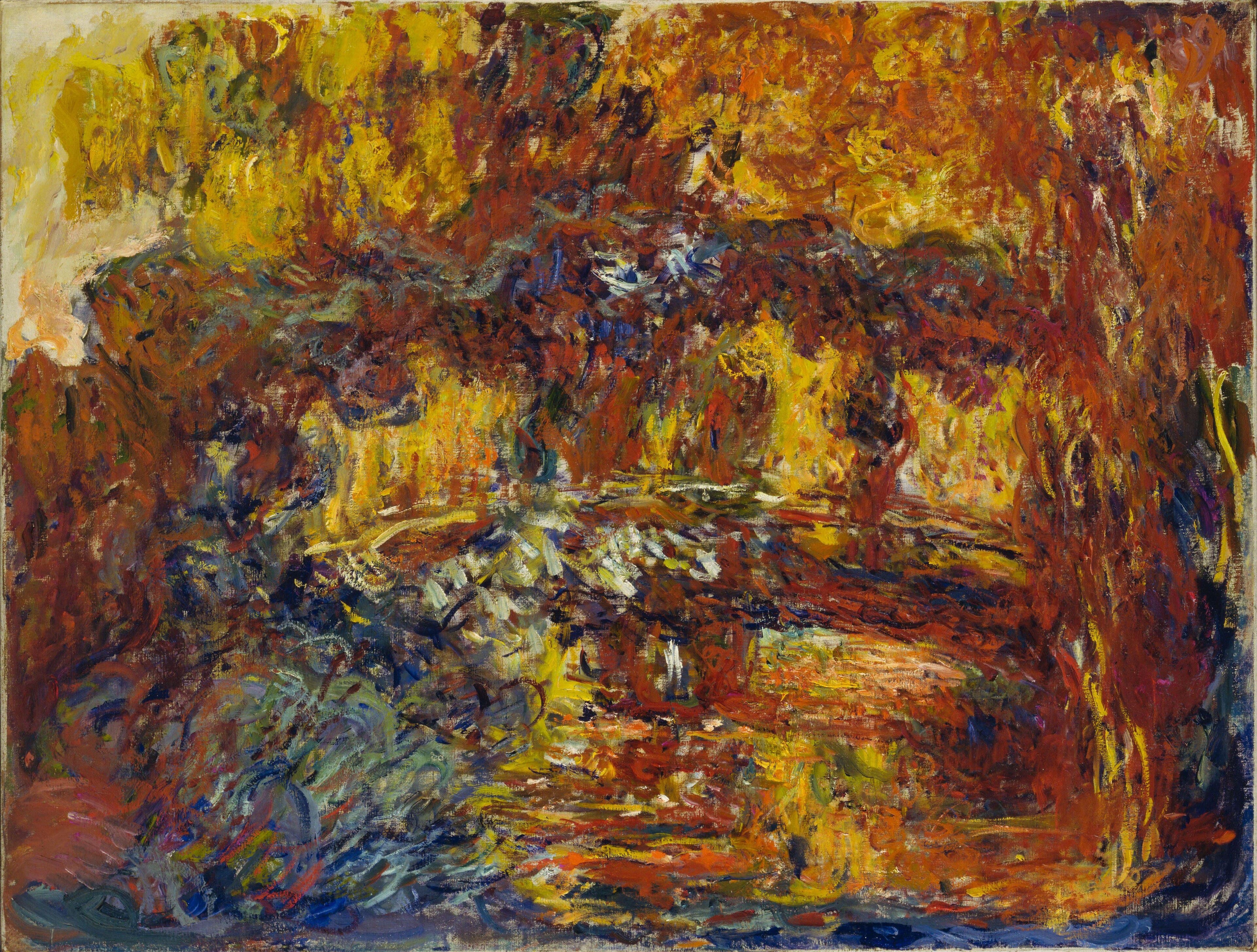
In 1912 Monet was diagnosed with cataracts in both eyes. Over the next decade his vision clouded and yellowed. A yellowing lens absorbs blue light, so blues and violets grew dim to him while reds, oranges and browns grew stronger. He told visitors that he could no longer tell colors apart with confidence and that he relied on the labels on his tubes and the fixed order of colors on his palette.
The late Japanese Footbridge pictures of about 1918–24 show the change. In The Japanese Bridge (Minneapolis Institute of Art) the bridge is a tangle of red, orange and brownish green strokes, barely legible as a structure. Some scholars and ophthalmologists read these pictures as a direct record of failing sight; others stress that Monet was also choosing to paint more expressively, and that he could still produce subtle blues when he wanted. Both factors were probably at work.
In 1923 he had surgery on his right eye. Afterward he was fitted with tinted glasses to correct the color imbalance, and he went back over some of the canvases he had painted half-blind; by some accounts he destroyed others.
The late style
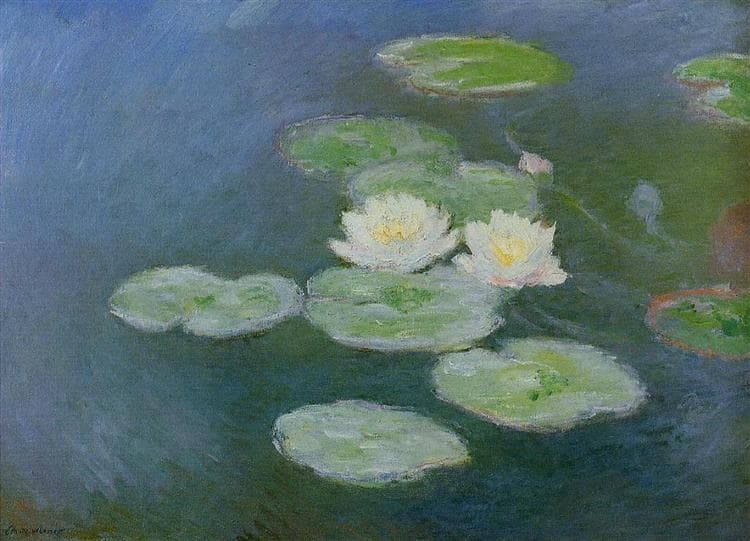
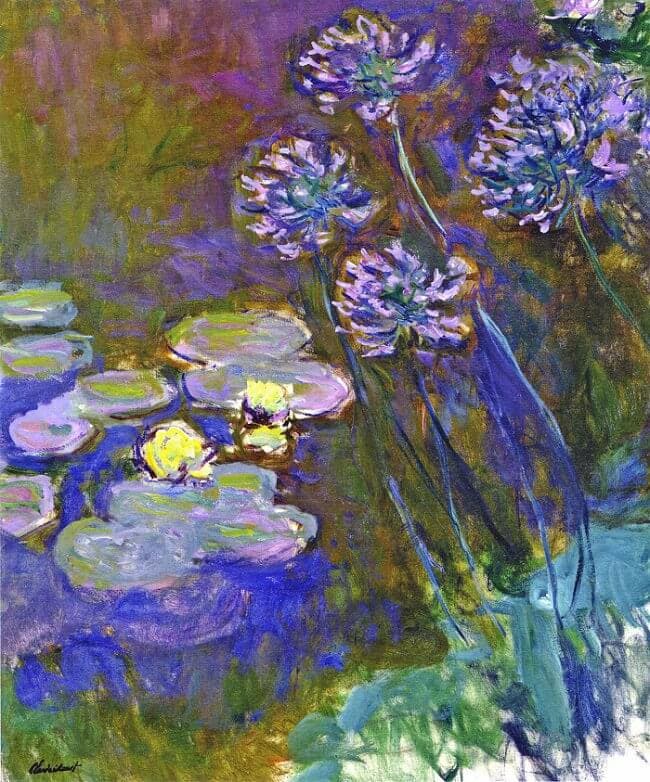
The paintings of Monet's last decade, painted in the vast studio he built at Giverny in 1915–16, are huge, fast and physical. In Weeping Willow (1920–22) violet, red and green strokes swirl across the canvas with little regard for edges. The great Water Lilies panels drop the horizon altogether: the water is the whole picture, the sky only a reflection in it.
For decades after his death these works seemed like the eccentricities of an old man. In the 1950s they were rediscovered by American painters and critics, who saw in their scale, all-over surface and freedom of gesture a precedent for Abstract Expressionism. The Museum of Modern Art in New York began buying late water lilies in that decade. See the Orangerie Water Lilies for the cycle Monet designed as his final statement.
Questions & answers
What is Monet's style of painting?
Monet's style is Impressionism in its purest form: he painted light and atmosphere rather than the solid form of objects, working outdoors in bright, unmixed colors applied in short, separate strokes over pale grounds. From the 1890s he painted series of one motif under changing light, and his late works became large and gestural.
Did Monet have cataracts?
Yes. Monet was diagnosed with cataracts in both eyes in 1912. His vision grew cloudy and yellowed, dulling blues and strengthening reds and browns, which is visible in some late Japanese Footbridge pictures. He had surgery on his right eye in 1923 and then wore tinted corrective glasses.
Did Monet use black paint?
Rarely after the 1870s. Early works such as Bathers at La Grenouillère use black, but from the 1880s Monet largely banished black and earth browns from his palette, building his darkest tones from deep blues, violets, greens and reds.
Why did Monet paint the same subject many times?
Because his real subject was light, which changes by the minute and the season. By painting haystacks, poplars or Rouen Cathedral on many canvases, switching as the light changed, he could record each effect and show the series together, as variations on a theme.
What are Monet's late paintings like?
Monet's late paintings, made at Giverny from about 1914 to 1926, are large, freely brushed views of his water garden: water lilies, weeping willows, the Japanese footbridge and the rose arches. Horizons disappear and color takes over, which is why they influenced abstract painters after 1945.