Image: Musée d'Orsay, Paris · Public domain · via Wikimedia Commons
Impressionism
Arm of the Seine near Giverny
Claude Monet, 1897
Arm of the Seine near Giverny (Bras de Seine près de Giverny) is an 1897 painting from Claude Monet's Mornings on the Seine series, showing a backwater of the river at dawn between banks of blue trees. It is in the Musée d'Orsay, Paris.
- Artist
- Claude Monet
- Date
- 1897
- Medium
- Oil on canvas
- Dimensions
- 73.2 × 93 cm
- Collection
- Musée d'Orsay, Paris, France
- Movement
- Impressionism
- Catalogue
- Wildenstein 1487
What you are looking at
A quiet arm of the river runs away from us between two masses of trees. On the left a great dark bank of foliage leans over the water, painted in blue, violet and blue-green; on the right a lighter, rounder clump catches the first light in pale green and lilac. Between them, at the center, the sky opens in a soft wedge of pink and pearl. The water fills the lower half of the canvas, reflecting both banks and the bright gap of sky, broken into small horizontal touches of blue, white and rose.
It is very early morning. The air is full of mist, the contours of the trees are soft, and nothing has a hard edge. There are no figures and no boats, only water, trees and light.
Look at the reflections. The trees in the water are not upside-down copies of the trees on the bank but darker, bluer and more blurred, and the line where bank meets water is almost invisible. Monet makes the whole scene hinge on that lost edge.
Where and when it was painted
In the summers of 1896 and 1897 Monet got up before dawn, around three-thirty or four in the morning, and rowed out to a backwater of the Seine near the point where the Epte flows into it, a short distance from his house at Giverny. Working from his boat, he painted the same view of overhanging trees and still water again and again as the mist lifted and the light grew. The result was the series called Mornings on the Seine, about twenty canvases, many of them exhibited in Paris at the Galerie Georges Petit in 1898.
This canvas is one of the 1897 group. Its companions are in museums across the world, and the Orsay picture is among the clearest examples of the series' formula: two banks, a central gap of sky, and water doubling everything. For the series, see Mornings on the Seine; for the place, Giverny: Monet's house and garden.
How it was painted
Monet seems to have prepared the canvases with a ground and laid in the main masses in thin, blended paint, then worked over them with small strokes. The surface is softer and more evenly brushed than in the Poplars or Haystacks; the color is limited almost entirely to blue, violet, green and rose. He kept many canvases going at once and returned to the same canvas on the same kind of morning.
The Mornings sit between the series of the early 1890s and the water garden. The same summer of 1897 he painted his first close-up studies of water lilies, such as Nymphéas in Los Angeles and Water Lilies, Evening Effect at the Marmottan, and that winter and spring he was on the Normandy coast painting the cliffs at Pourville, as in Steep Cliffs near Dieppe. In all of them the motif is reduced and the atmosphere takes over. An earlier view of the same reach of river appears in Landscape in Port-Villez.
The series also marks a change in how Monet worked. Earlier he chased weather across Normandy, Brittany and the Mediterranean. Now, in his late fifties, he found everything he needed within a short row of his own house, and the motif could be as plain as a few trees over a quiet backwater. The subject was the hour, and he could return to it every morning.
Ownership and where to see it
The painting belonged to the banker and collector Isaac de Camondo, who bequeathed his collection, including several Monets, to the Louvre; it entered the national museums with that bequest in the early twentieth century (inventory RF 2003) and moved to the Musée d'Orsay when it opened in 1986. See Monet at the Musée d'Orsay and the Claude Monet page.
Questions & answers
Where is Monet's Arm of the Seine near Giverny?
It is in the Musée d'Orsay in Paris (inventory RF 2003). It came to the French national museums with the bequest of the collector Isaac de Camondo and moved to the Orsay when it opened in 1986.
When and where was Arm of the Seine near Giverny painted?
In 1897, on a backwater of the Seine near Giverny where the Epte joins the river. Monet painted it from his boat at dawn, rising around three-thirty or four in the morning, during the summers of 1896 and 1897.
What does the painting show?
An arm of the Seine at dawn, with a dark bank of blue-violet trees on the left, a lighter clump on the right, a pink gap of sky in the center and the whole scene reflected in misty, still water.
What is the Mornings on the Seine series?
A group of about twenty canvases painted in 1896–97 of the same backwater near Giverny at dawn, as mist lifted and light grew. Many were exhibited at the Galerie Georges Petit in Paris in 1898.
More by the artist
Claude Monet

Bridge over a Pond of Water Lilies
Claude Monet · 1899

Woman with a Parasol – Madame Monet and Her Son
Claude Monet · 1875

Sunset in Venice
Claude Monet · 1908–12

La Grenouillère
Claude Monet · 1869

Beach in Pourville
Claude Monet · 1882

Springtime
Claude Monet · 1872

Boating on the River Epte
Claude Monet · 1890

The Seine at Asnières (Hermitage)
Claude Monet · 1873
Also painted in 1897
The same year
Kindred works
You may also study
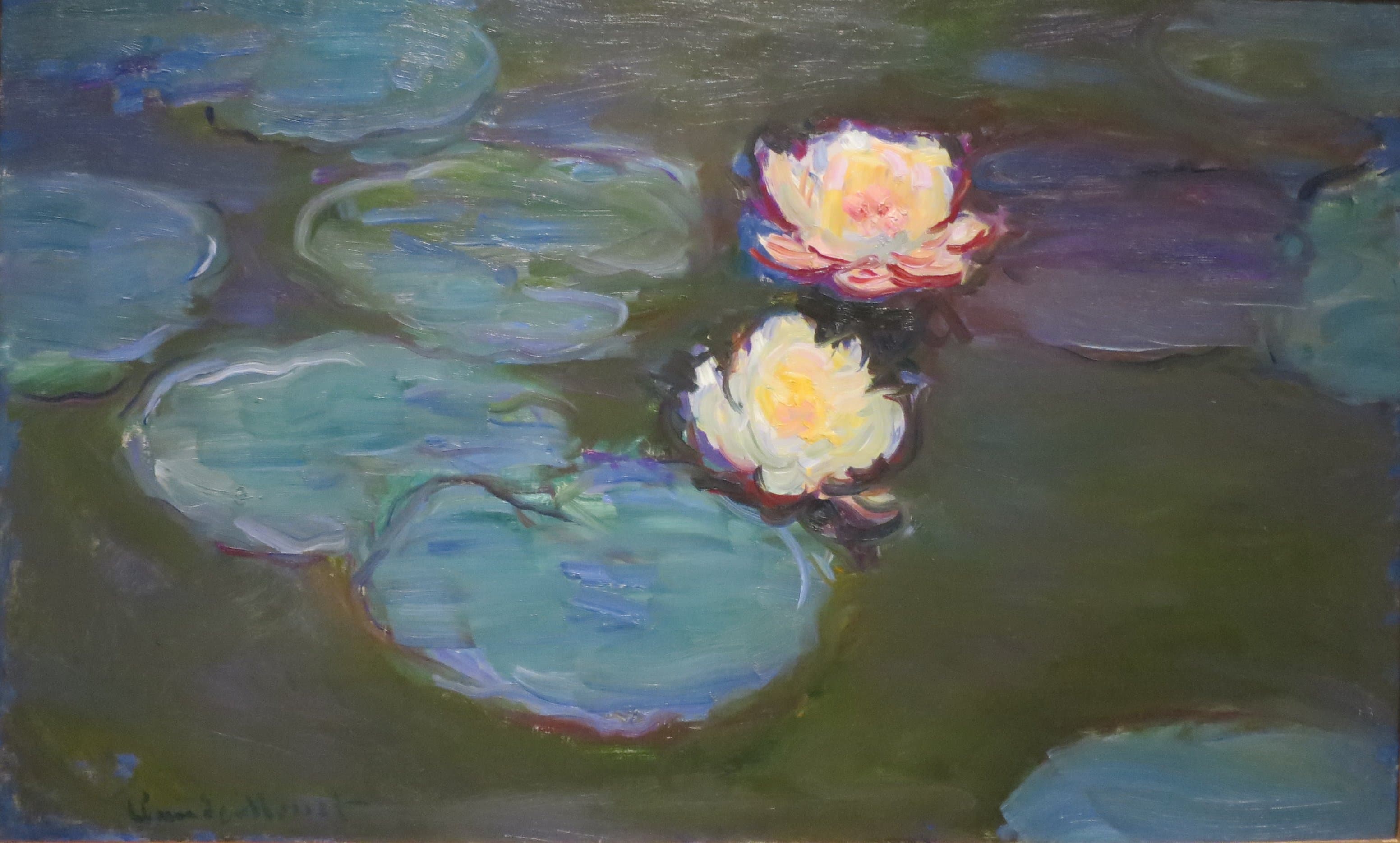
Nymphéas (Water Lilies), c. 1897–98
Claude Monet · c. 1897–98
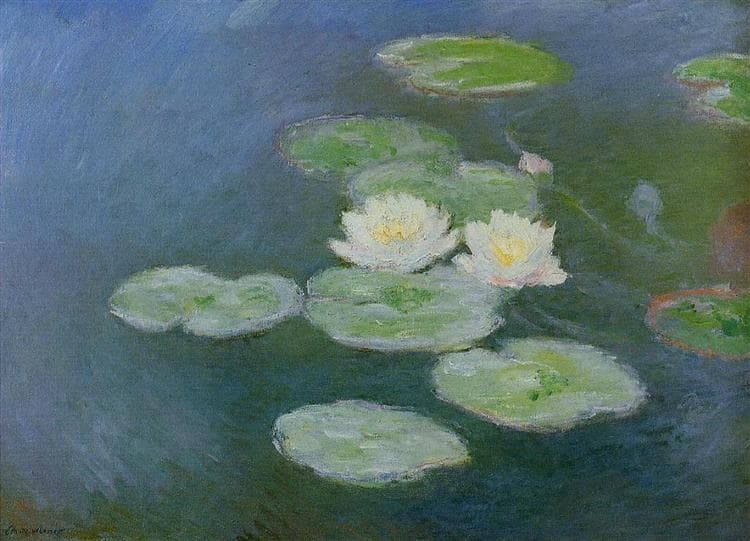
Water Lilies, Evening Effect
Claude Monet · 1897
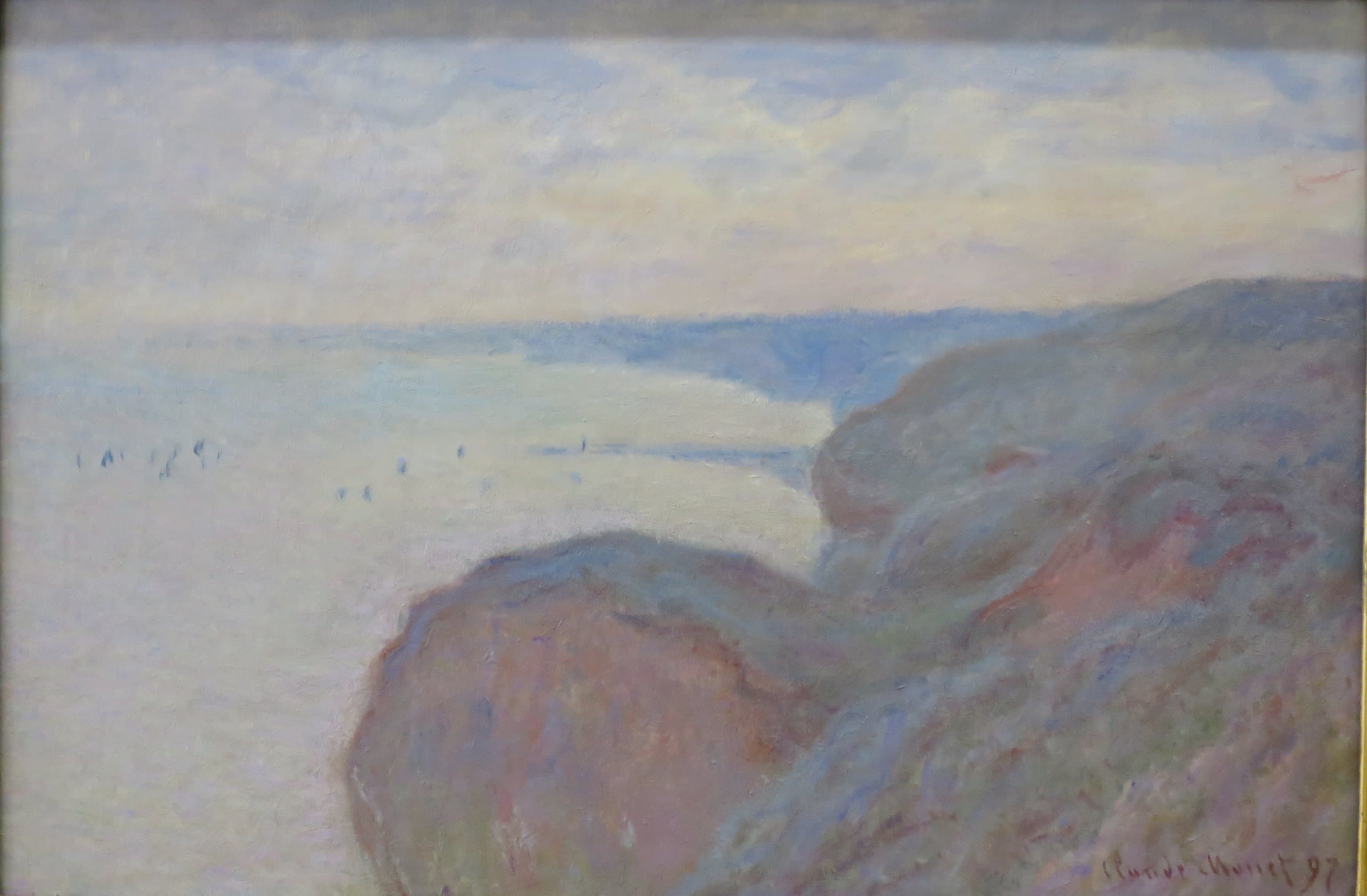
Steep Cliffs near Dieppe
Claude Monet · 1897
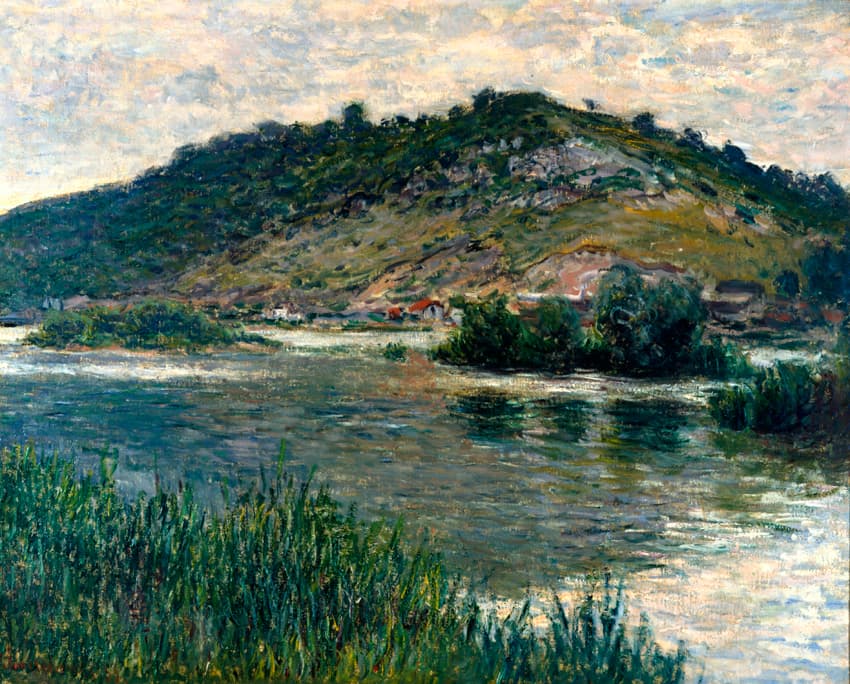
Landscape in Port-Villez
Claude Monet · 1883
Sur la falaise de Dieppe
Claude Monet · 1897

The Scream
Edvard Munch · 1893

Ophelia
John Everett Millais · 1851–52

The Great Wave off Kanagawa
Katsushika Hokusai · c. 1830–32