Impressionism
Water Lilies and Agapanthus
Claude Monet, 1914–17
Water Lilies and Agapanthus is a late painting by Claude Monet, made at Giverny in 1914–17, in which blue agapanthus flowers lean over his water lily pond. It is in the Musée Marmottan Monet, Paris.
- Artist
- Claude Monet
- Date
- 1914–17
- Medium
- Oil on canvas
- Dimensions
- 140 × 120 cm
- Collection
- Musée Marmottan Monet, Paris, France
- Movement
- Impressionism
- Catalogue
- Wildenstein 1821
More at Musée Marmottan Monet
Water Lilies and Agapanthus (Nymphéas et agapanthes) is one of the large studies Claude Monet painted at Giverny between 1914 and 1917, while he was preparing the vast water lily decorations he later gave to the French state. The vertical canvas, about 140 by 120 centimeters and number 1821 in Wildenstein's catalogue, is in the Musée Marmottan Monet in Paris, which received the contents of Monet's studio from his son Michel in 1966.
What you are looking at
The picture is split into two worlds. On the left, the surface of the pond tilts up toward us, crowded with lily pads painted as flat ovals of lilac, gray and pale green, each edged with a darker rim. Two blossoms burn yellow among them, the brightest notes in the canvas. On the right, tall stems of agapanthus rise from the bank, each topped by a burst of violet-blue florets that Monet draws with quick radiating strokes, almost like fireworks. Four flower heads hang in the upper right, at different heights, and their stems cross the canvas in long, thin, blue lines.
There is no horizon and no sky, only the reflection of sky in the water: a smoky mix of ultramarine, purple and olive across the top of the picture. The bank at lower right is a tangle of turquoise and blue-green strokes. Monet signed the canvas at lower left.
How it was painted
Everything here is painted wet into wet, with large brushes and a great deal of medium, so strokes drag through one another and leave streaks of mixed color. In places, especially along the lower edge, the bare weave of the canvas shows through, a sign that this was a working picture kept in the studio rather than a finished piece for exhibition. The lily pads are almost the only shapes that are closed and solid; around them, color is laid on as open, sweeping gestures.
The color scheme is narrow and unusual: violet, blue and olive, with yellow used only twice. That restriction gives the picture its mood, close to dusk, and makes the two yellow flowers glow.
Why agapanthus?
Agapanthus, the African lily, grew around the water garden at Giverny, and Monet tried it as a vertical counterpoint to the horizontal lily pads. The idea went further than this canvas. A huge three-part composition known as the Agapanthus triptych was planned with these flowers along its edge; Monet later painted them out, and the three panels, now in the Cleveland Museum of Art, the Saint Louis Art Museum and the Nelson-Atkins Museum in Kansas City, show only the pond. This Marmottan picture preserves the earlier plan, and with it a glimpse of how Monet worked in these years: trying an idea at large scale on a separate canvas, keeping or abandoning it, and only then committing it to the great panels. Dozens of such studies stayed in his studio until his death, which is why so many of them are now at the Marmottan. It belongs to the great Water Lilies project, which ended in the panels at the Musée de l'Orangerie, such as Water Lilies, Green Harmony.
A late style
By 1914 Monet was in his mid-seventies. His son Jean had died that year, the war began in August, and his eyesight was failing from cataracts, which dulled his perception of blues and made colors appear yellower and muddier. The heavy violets here are sometimes linked to that condition, though the choice was also deliberate: he was pushing color toward pure mood. Compare the crisp daylight of The Water Lily Pond, Harmony in Green of 1899 with this purple dusk, or with the earlier Water Lilies, Evening Effect. Our guide to how Monet painted explains the cataracts and the late style.
Where to see it
The Musée Marmottan Monet, in Paris's 16th arrondissement, shows it in the lower-level gallery devoted to the Giverny years, alongside other late Nymphéas and Japanese bridge paintings; see our hub on the Musée Marmottan Monet. The pond and the bank where the agapanthus grew can still be visited at Giverny. More on Claude Monet.
Questions & answers
Where is Monet's Water Lilies and Agapanthus?
It is in the Musée Marmottan Monet in Paris. The museum received it in 1966 with the bequest of Michel Monet, the painter's son, which brought the largest single group of Monet's late Giverny paintings into a public collection. It is usually shown in the museum's lower-level Monet gallery.
When and where was Water Lilies and Agapanthus painted?
Monet painted it in his water garden at Giverny, Normandy, between about 1914 and 1917, the years when he began the huge water lily decorations later installed at the Musée de l'Orangerie. Wildenstein catalogues it as number 1821.
What does Water Lilies and Agapanthus show?
The left side shows lily pads and two yellow blossoms floating on a pond that reflects a violet sky. On the right, tall stems of blue-violet agapanthus rise from the bank. There is no horizon; the pond surface fills the canvas, and color is used to create a dusky mood.
Is this painting part of the Agapanthus triptych?
No. The Agapanthus triptych is a separate, much larger three-panel water lily composition now divided between Cleveland, Saint Louis and Kansas City. This smaller Marmottan canvas belongs to the same years and shows the agapanthus flowers Monet first planned to include in that larger scheme.
More by the artist
Claude Monet

Bridge over a Pond of Water Lilies
Claude Monet · 1899

Woman with a Parasol – Madame Monet and Her Son
Claude Monet · 1875

Sunset in Venice
Claude Monet · 1908–12

La Grenouillère
Claude Monet · 1869

Beach in Pourville
Claude Monet · 1882

Springtime
Claude Monet · 1872

Boating on the River Epte
Claude Monet · 1890

The Seine at Asnières (Hermitage)
Claude Monet · 1873
Also painted in 1914
The same year

Kindred works
You may also study
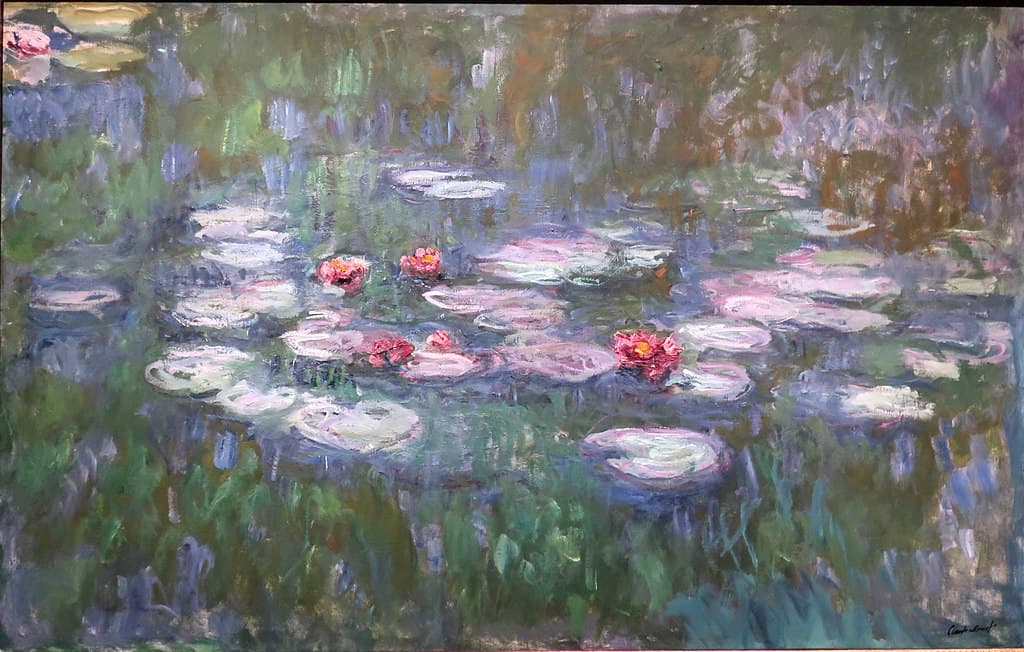
Nymphéas (Water Lilies)
Claude Monet · c. 1914–1919
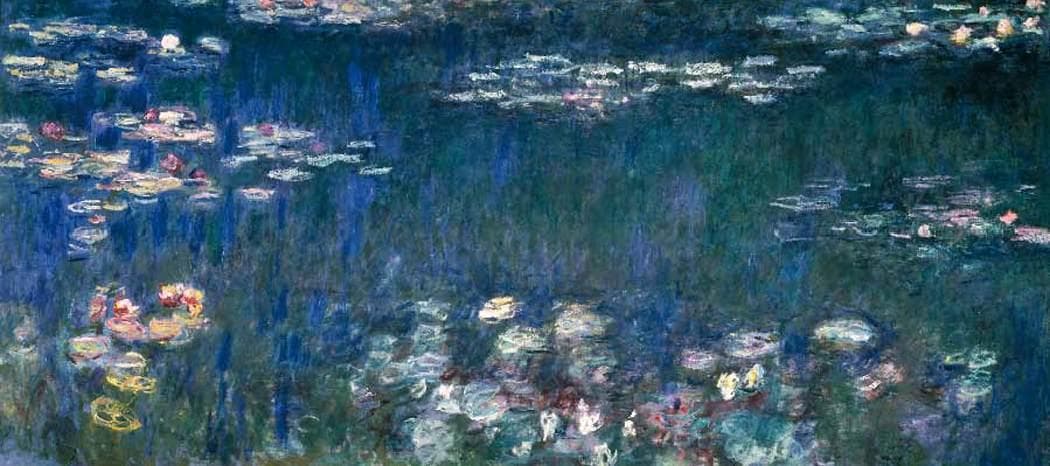
Water Lilies: Green Reflections
Claude Monet · 1914–26
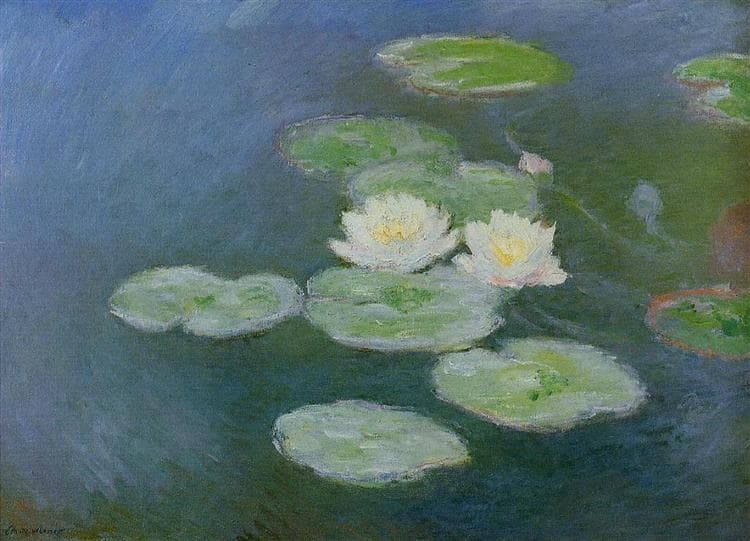
Water Lilies, Evening Effect
Claude Monet · 1897
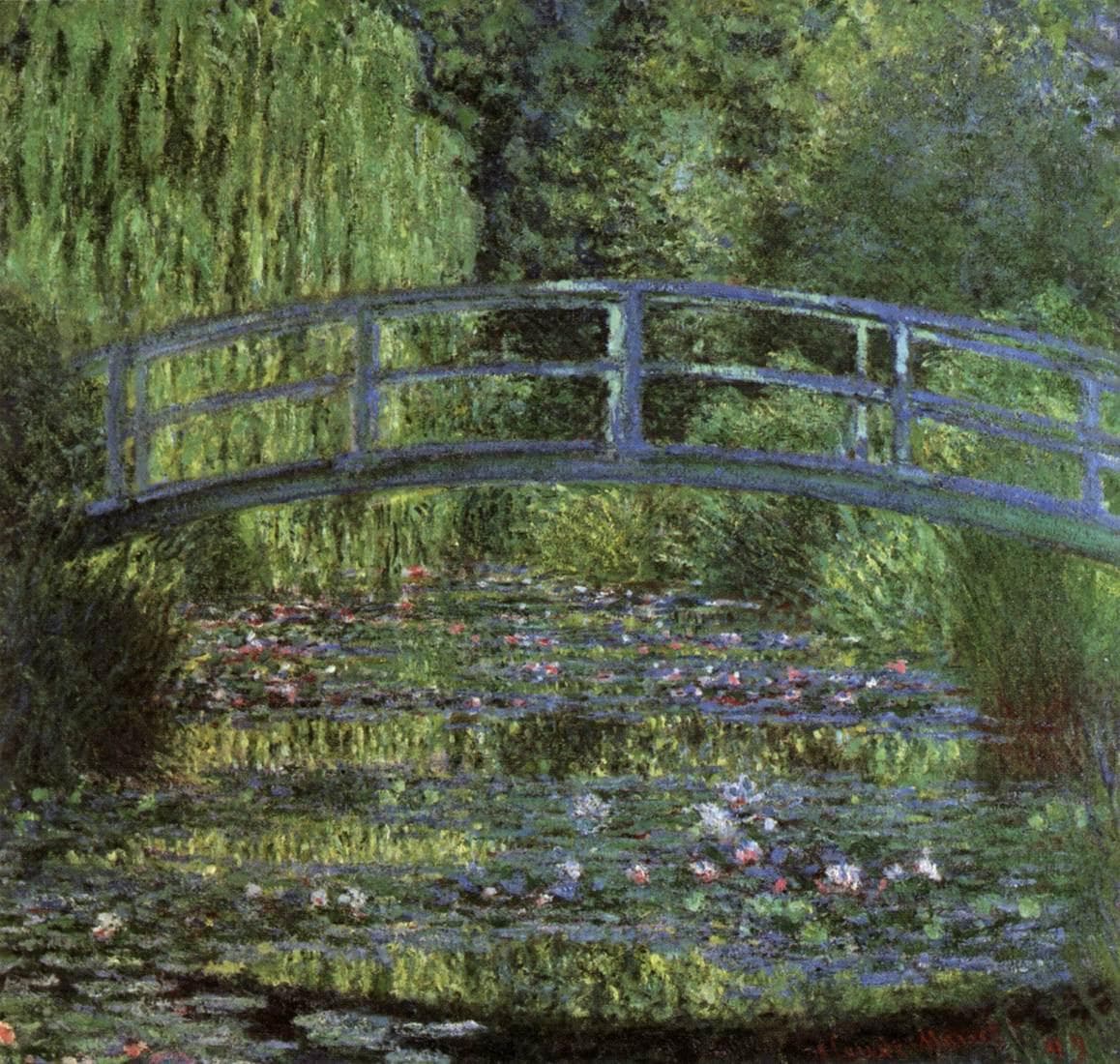
Water Lily Pond, Green Harmony
Claude Monet · 1899
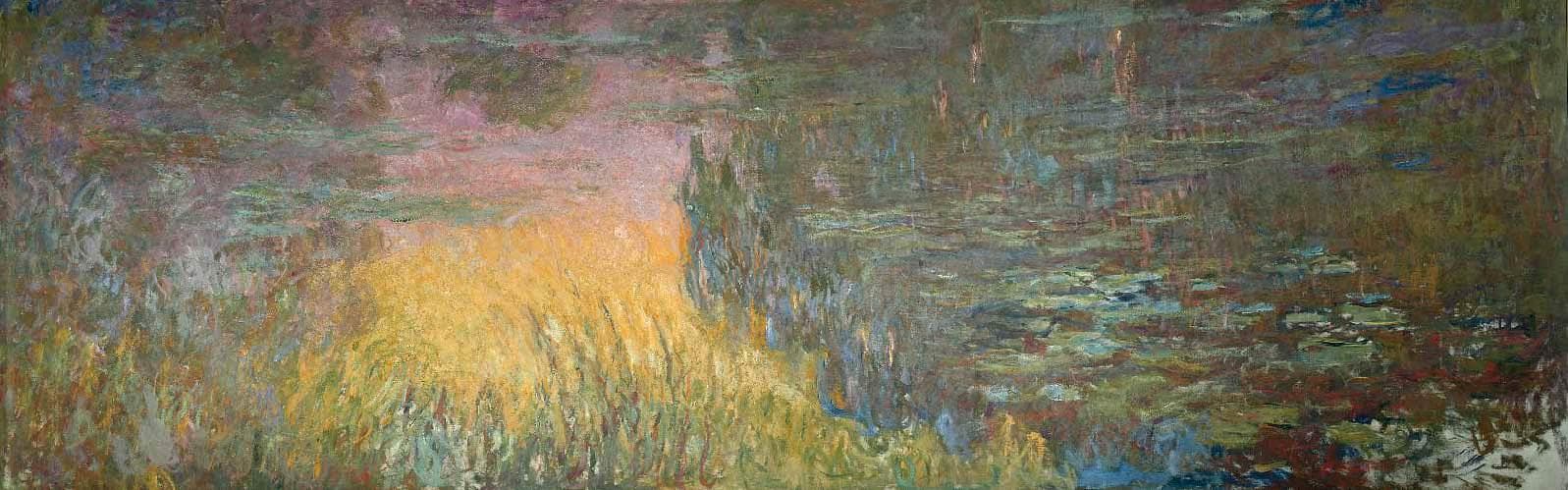
Water Lilies: Setting Sun
Claude Monet · 1914–26
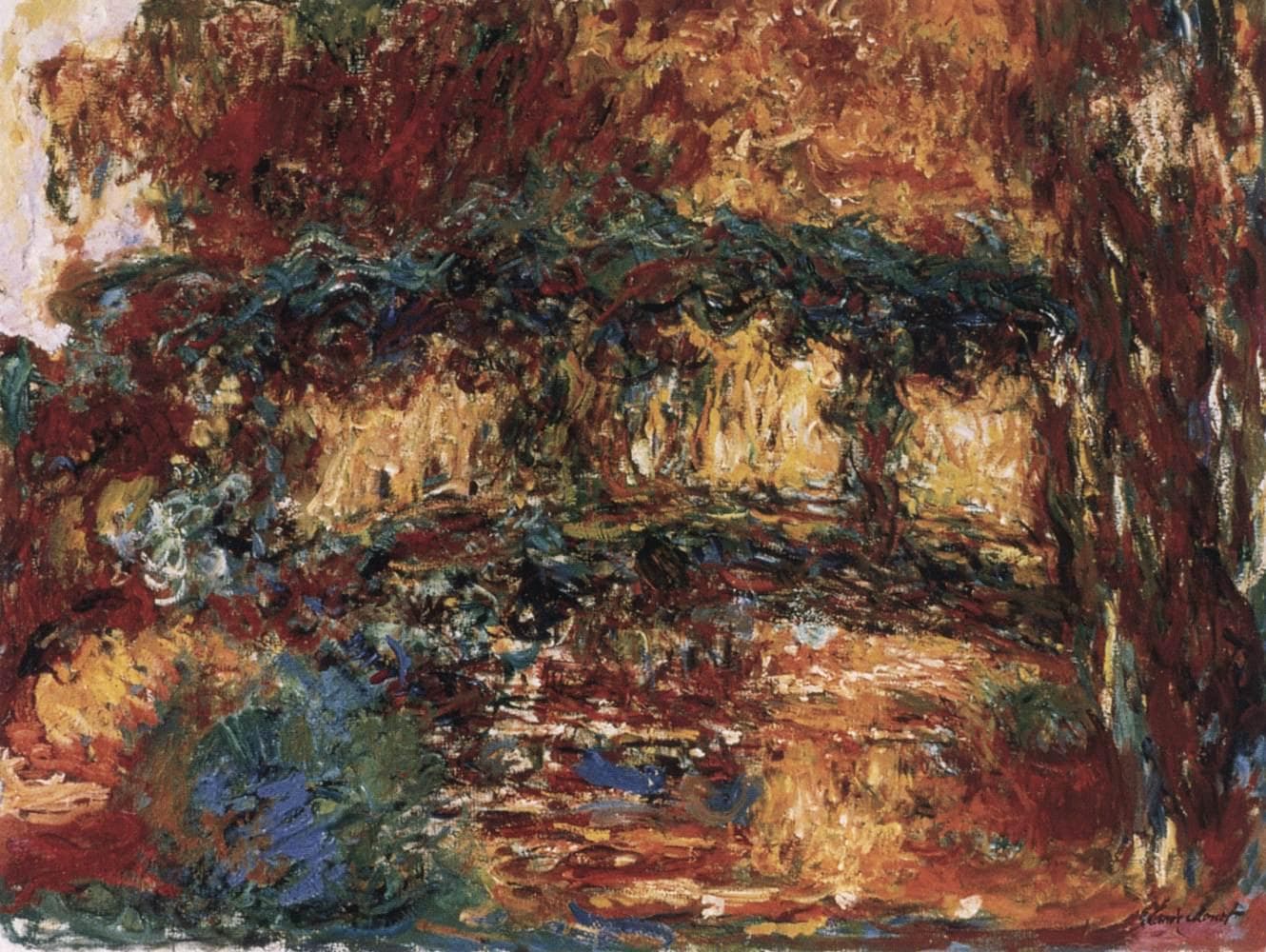
The Japanese Bridge
Claude Monet · c. 1923–25

The Scream
Edvard Munch · 1893

Ophelia
John Everett Millais · 1851–52