Collection
Famous Monet Paintings: From Impression, Sunrise to the Water Lilies
Sixty years of light on water, snow, stone and his own garden: Claude Monet's most famous paintings and why they matter.
The most famous Monet paintings are Impression, Sunrise (1872), the picture that gave Impressionism its name; the Water Lilies he painted at Giverny for the last thirty years of his life; Woman with a Parasol (1875); the Japanese footbridge over his lily pond; and his great series of haystacks, poplars, Rouen Cathedral and the Houses of Parliament. Claude Monet (1840–1926) painted some 2,000 pictures, and his work hangs in nearly every major museum in the world.
This list orders his paintings by fame, from the icons to the early masterpieces that made his name and the lesser-known canvases that show how he worked. Below, a short guide follows his career from Le Havre to Giverny and explains what to look for in a Monet.
01
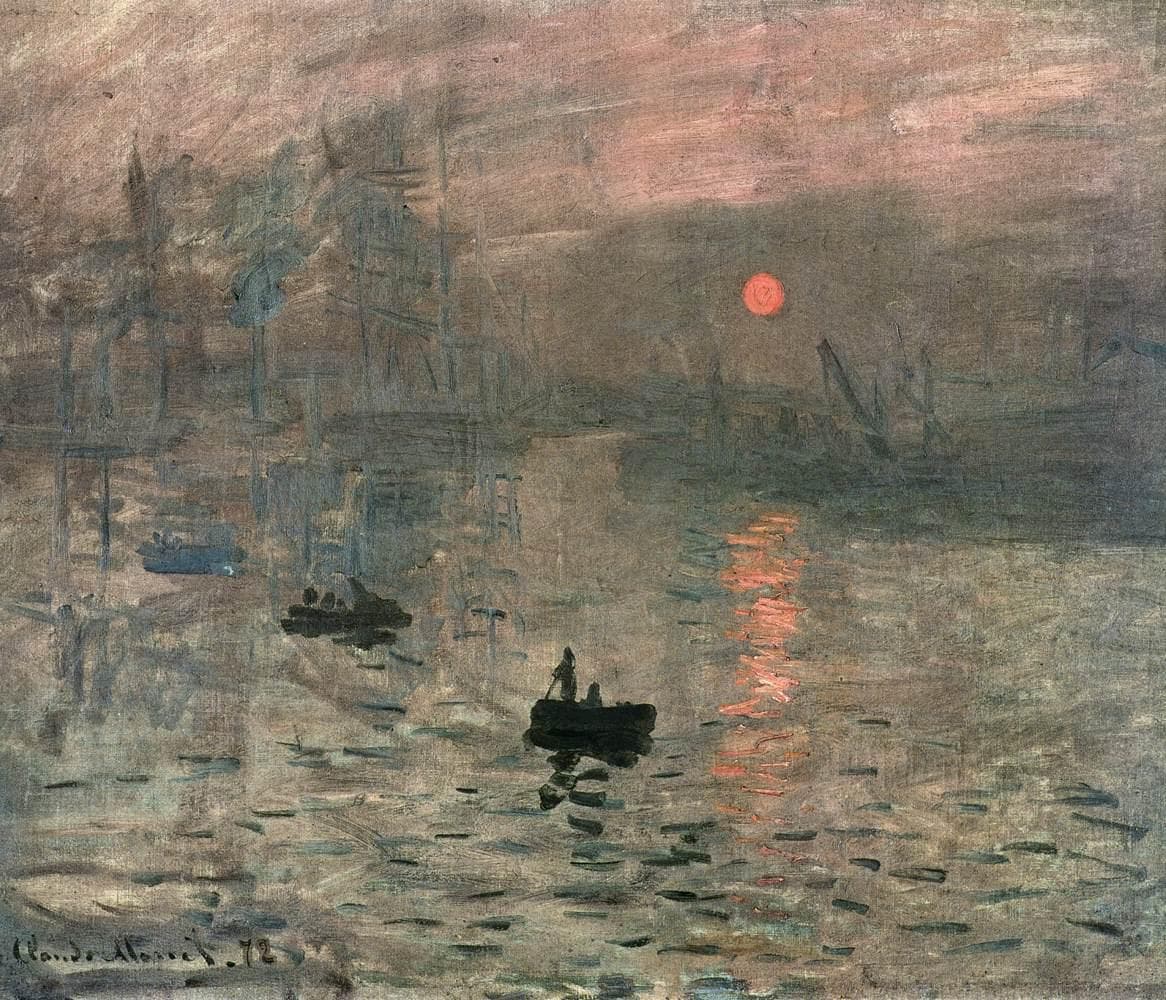
Impression, Sunrise
Claude Monet · 1872
Impression, Sunrise is Claude Monet's 1872 view of the port of Le Havre at dawn, an orange sun over blue-gray haze. Its title gave Impressionism its name in 1874. It hangs in the Musée Marmottan Monet in Paris.
02
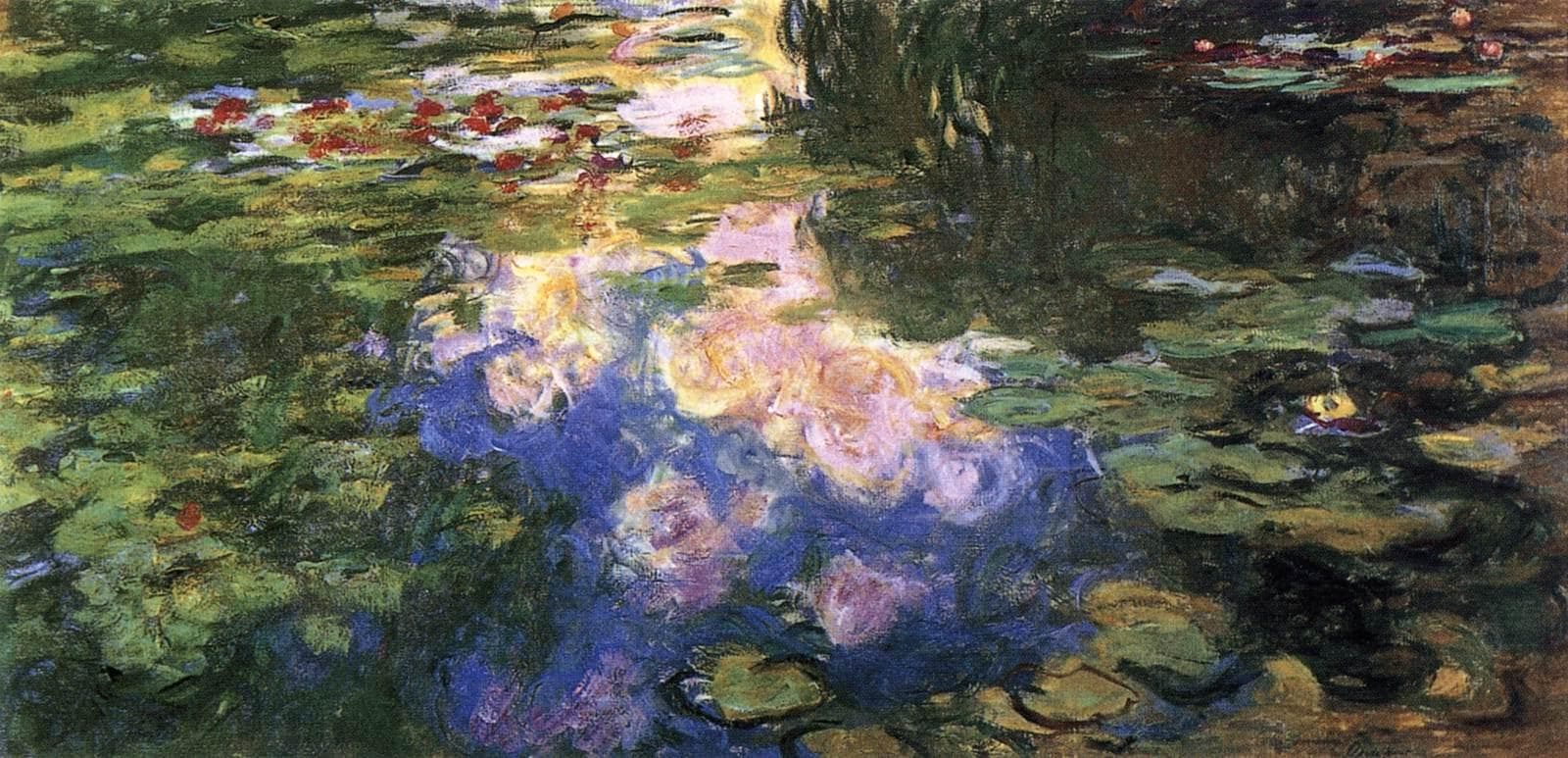
Water-Lily Pond (Le Bassin aux nymphéas), 1917–19
Claude Monet · 1917–19
This Water Lilies is Le Bassin aux nymphéas of 1917–19 by Claude Monet, a wide canvas of red lilies and blue sky reflected in his Giverny pond. It is privately owned and sold at Sotheby's New York in 2021.
03

Woman with a Parasol – Madame Monet and Her Son
Claude Monet · 1875
Woman with a Parasol – Madame Monet and Her Son is an 1875 painting by Claude Monet of his wife Camille and their son Jean on a windy hillside at Argenteuil. It is in the National Gallery of Art, Washington, D.C.
04

Bridge over a Pond of Water Lilies
Claude Monet · 1899
Bridge over a Pond of Water Lilies is an 1899 oil painting by Claude Monet showing the green footbridge over the lily pond in his garden at Giverny. It is in The Metropolitan Museum of Art, New York.
05
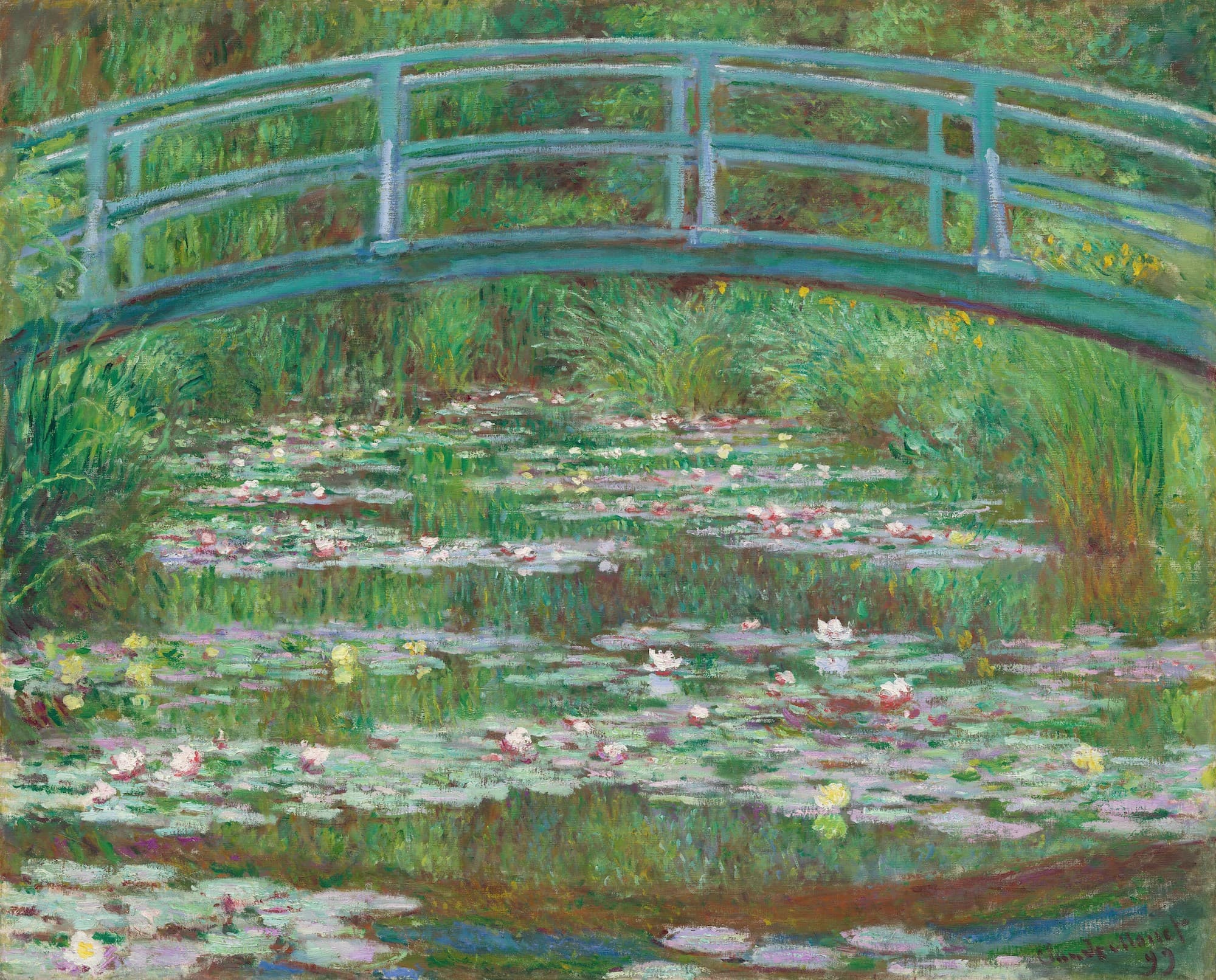
The Japanese Footbridge
Claude Monet · 1899
The Japanese Footbridge is an 1899 painting by Claude Monet of the arched green bridge over the water lily pond in his garden at Giverny. It is in the National Gallery of Art, Washington, D.C.
06
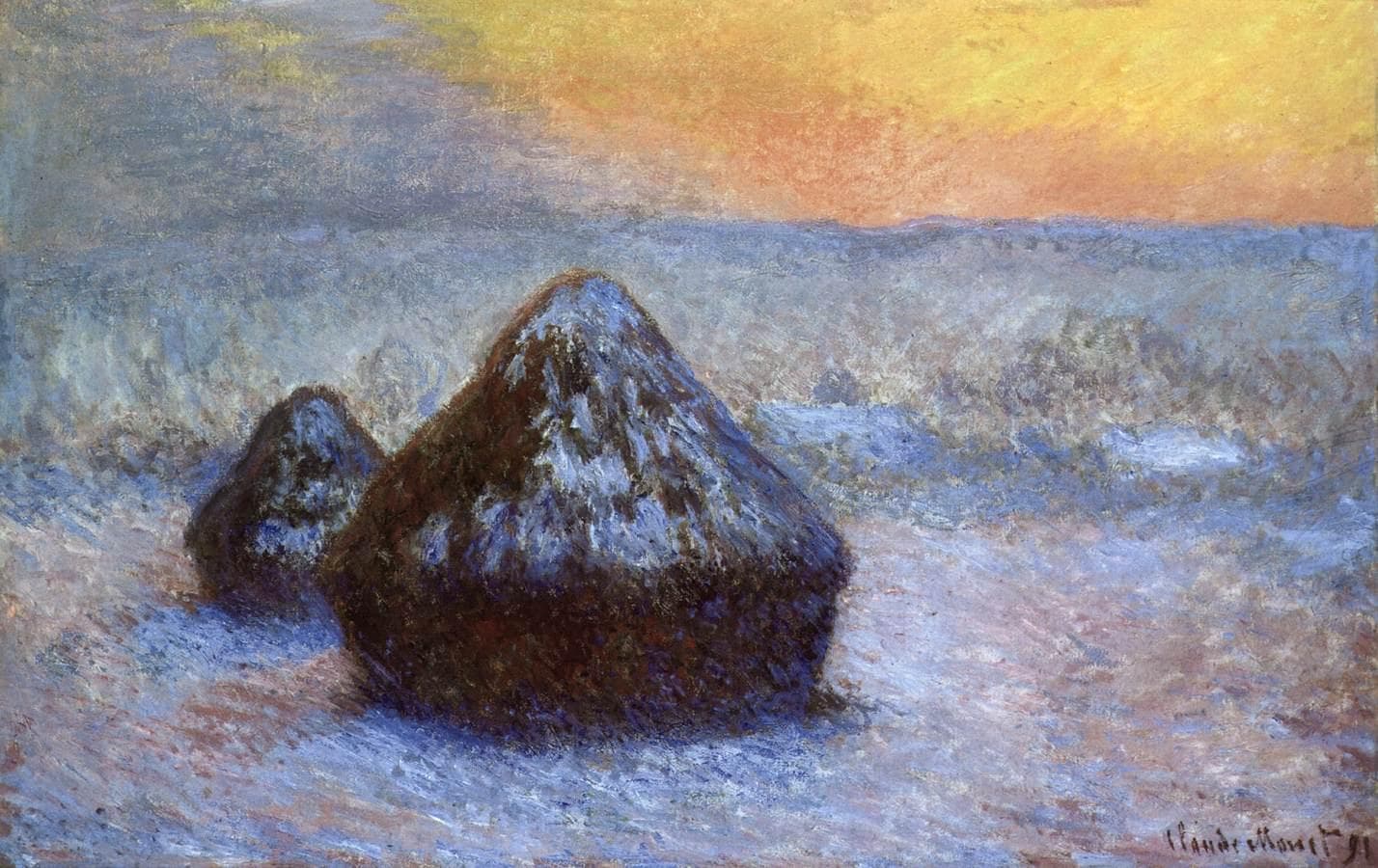
Stacks of Wheat, Sunset, Snow Effect
Claude Monet · 1890–91
Stacks of Wheat (Sunset, Snow Effect) is a painting by Claude Monet from his 1890–91 wheat stacks series: two snow-capped stacks in a frozen field under an orange winter sunset at Giverny. The 65.3 × 100.4 cm canvas (Wildenstein 1278) is in the Art Institute of Chicago.
07
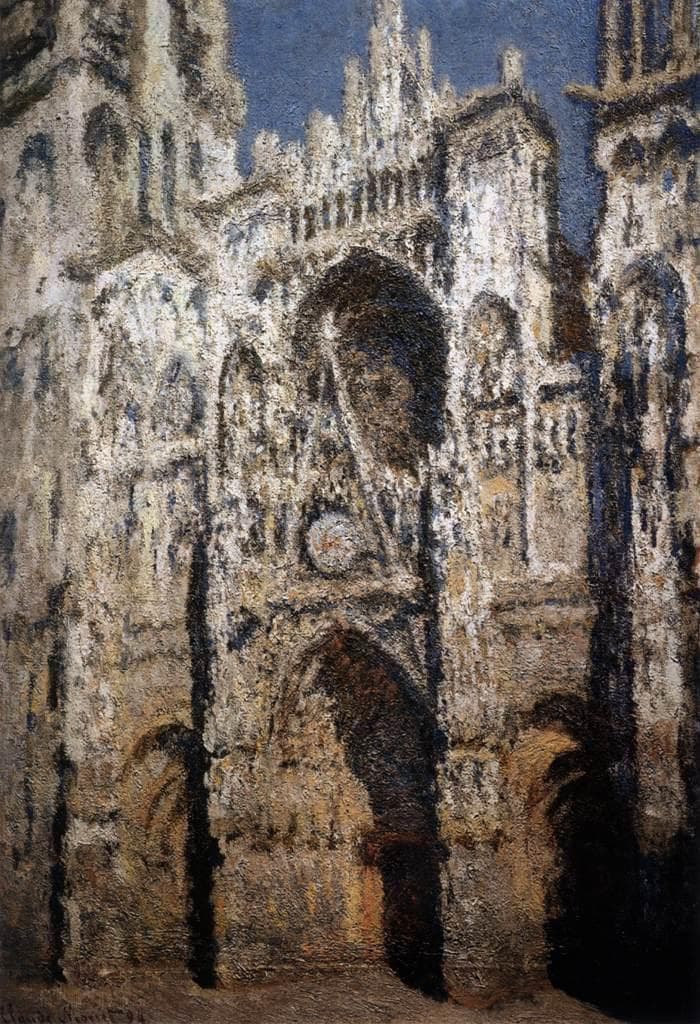
Rouen Cathedral in Full Sunlight
Claude Monet · 1893
Rouen Cathedral in Full Sunlight (Harmonie bleue et or) is an 1893 painting by Claude Monet of the cathedral's west portal blazing in midday sun against a blue sky. It measures 107 × 73.5 cm (Wildenstein 1360) and is in the Musée d'Orsay, Paris.
08
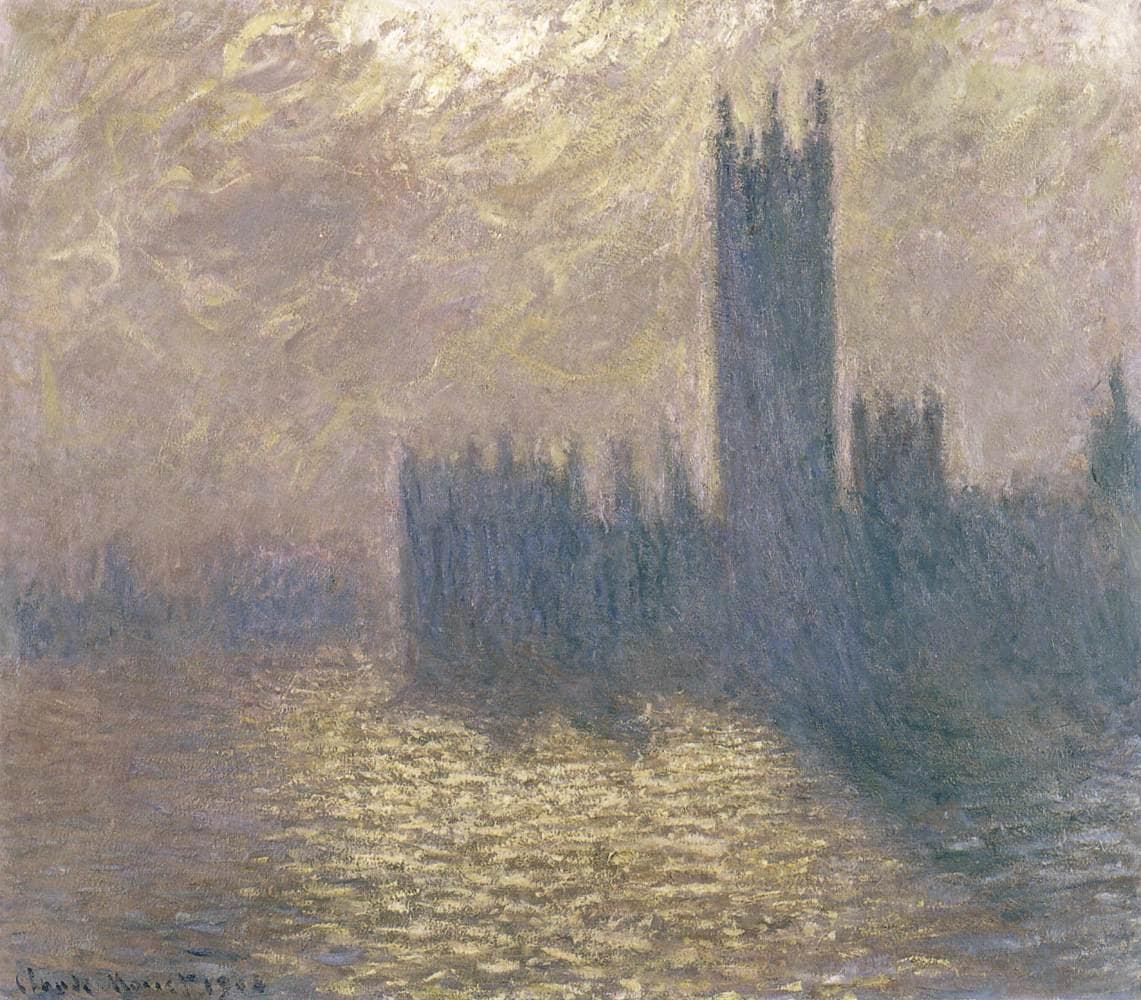
The Houses of Parliament, London
Claude Monet · 1904
The Houses of Parliament, Stormy Sky (Le Parlement de Londres, ciel orageux) is a 1904 painting by Claude Monet of Westminster beneath a churning yellow-grey sky over a glittering Thames. It is in the Palais des Beaux-Arts, Lille.
09
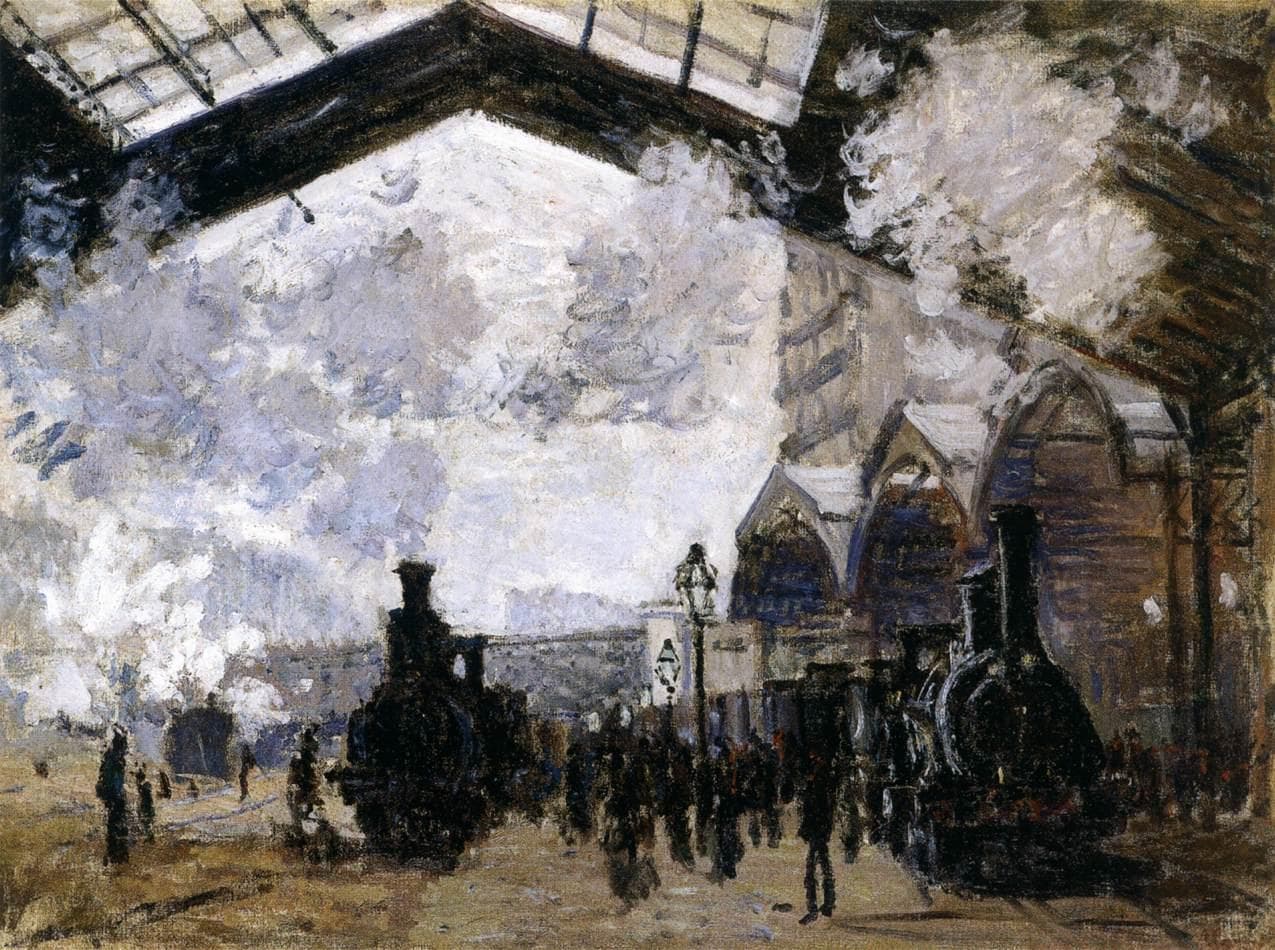
The Gare Saint-Lazare
Claude Monet · 1877
The Gare Saint-Lazare is a painting of steam locomotives under the glass roof of the Paris station by Claude Monet, made in early 1877. This version, one of about a dozen he painted there, is in the National Gallery, London.
10
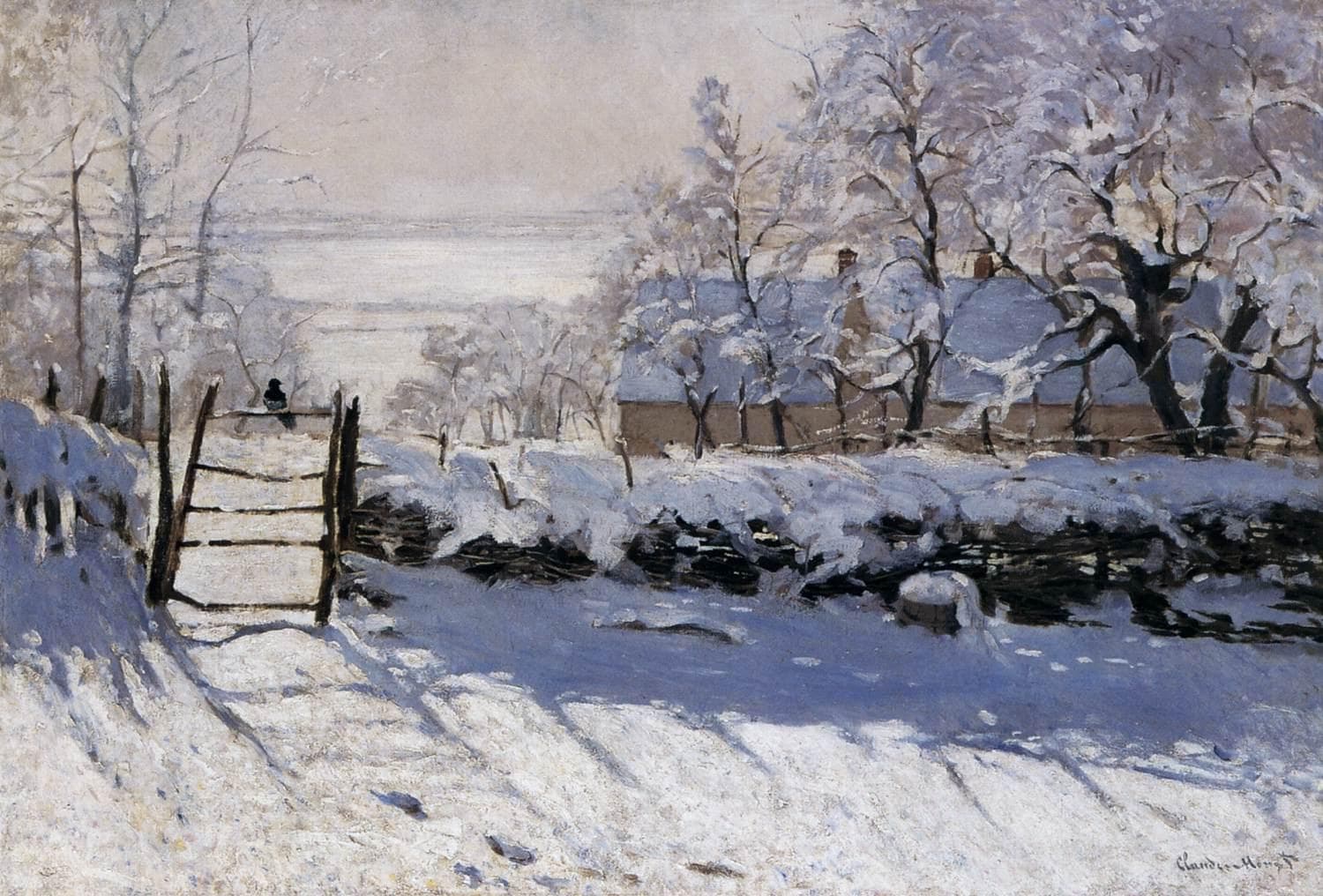
The Magpie
Claude Monet · 1868–69
The Magpie (La Pie) is a snow landscape painted by Claude Monet in the winter of 1868–69 near Étretat, with a single black magpie on a gate and blue shadows across the snow. It is in the Musée d'Orsay, Paris.
11
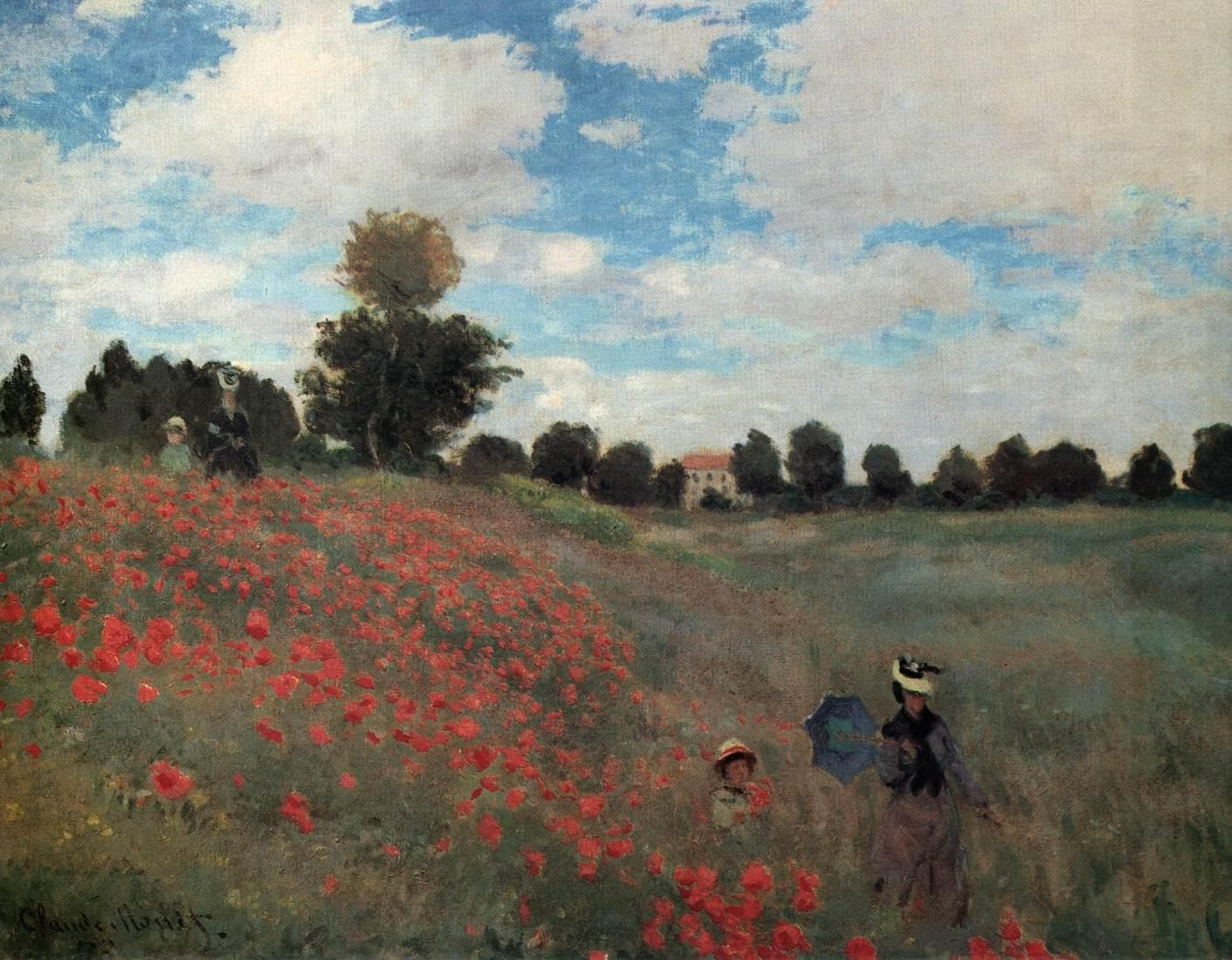
Poppy Field (Poppies at Argenteuil)
Claude Monet · 1873
Poppy Field, also called Poppies at Argenteuil, is an 1873 painting by Claude Monet showing Camille and Jean Monet walking through a field of red poppies near Argenteuil. It is in the Musée d'Orsay, Paris.
12
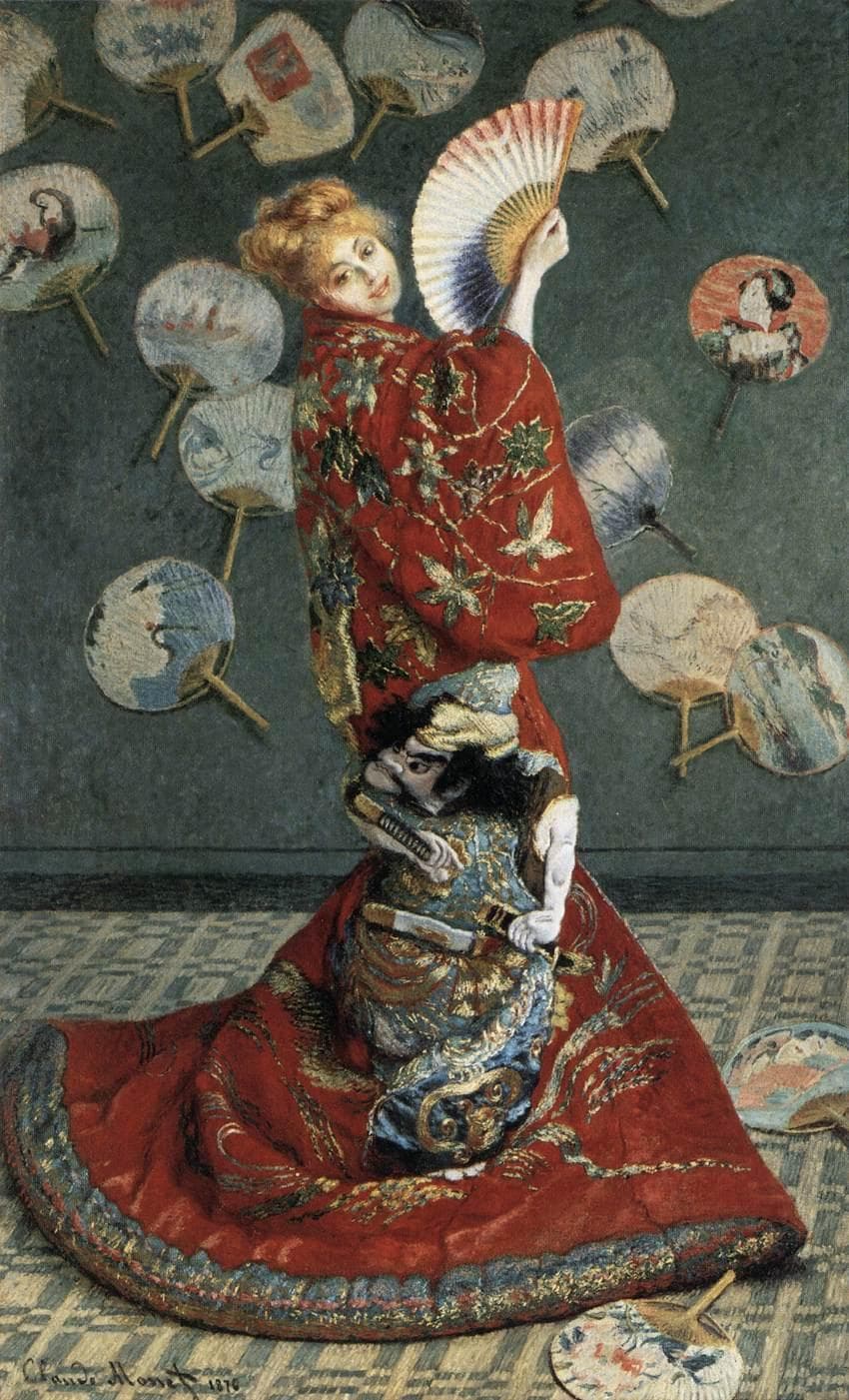
La Japonaise (Camille Monet in Japanese Costume)
Claude Monet · 1876
La Japonaise is Claude Monet's life-size 1876 portrait of his wife Camille in a red Japanese kimono, holding a fan against a wall of Japanese fans. It is in the Museum of Fine Arts, Boston.
13
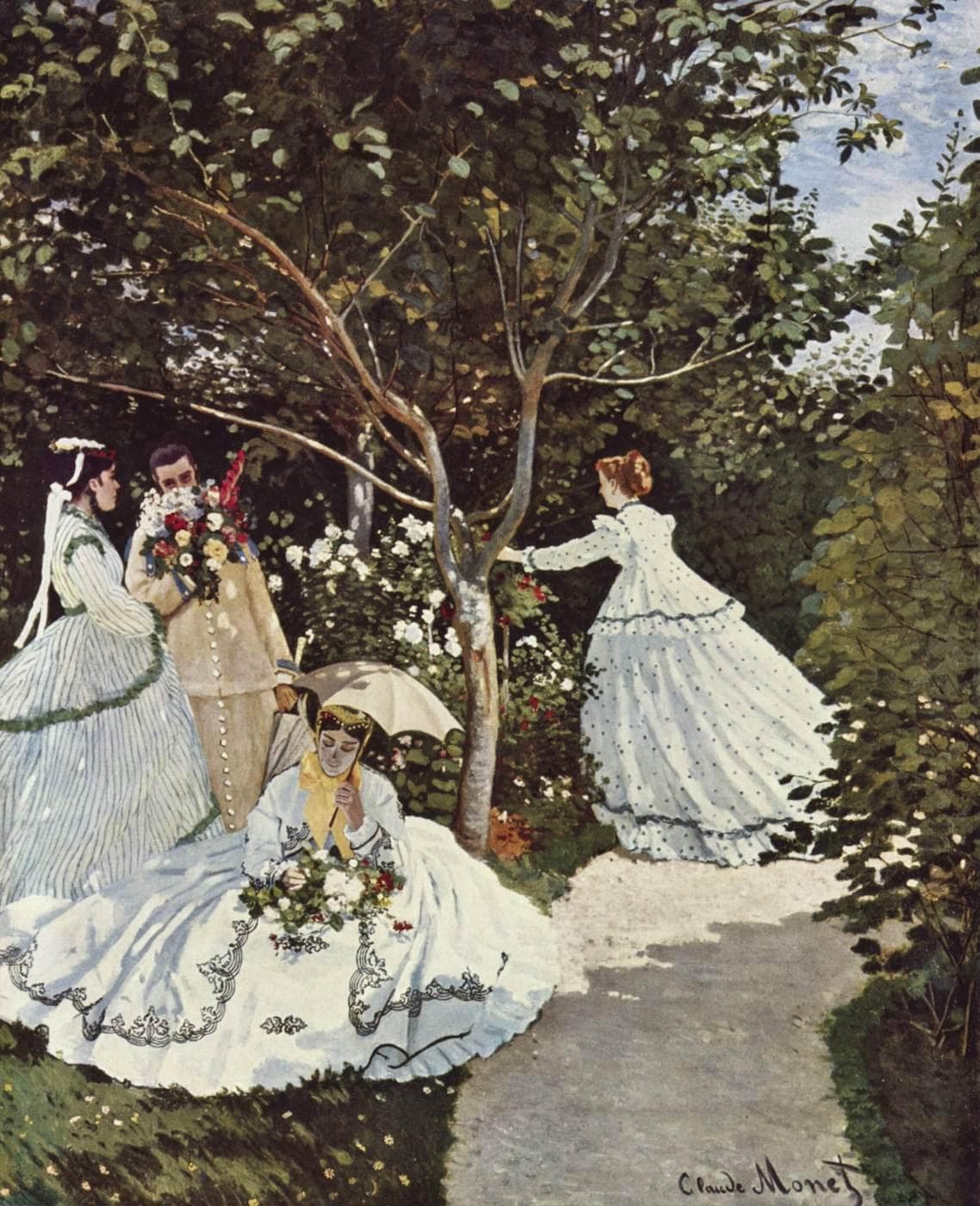
Women in the Garden
Claude Monet · 1866–67
Women in the Garden (Femmes au jardin) is a monumental 1866–67 painting by Claude Monet of four women in summer dresses in a sunlit garden, painted largely outdoors at Ville-d'Avray. Rejected by the 1867 Salon, it is now in the Musée d'Orsay in Paris.
14
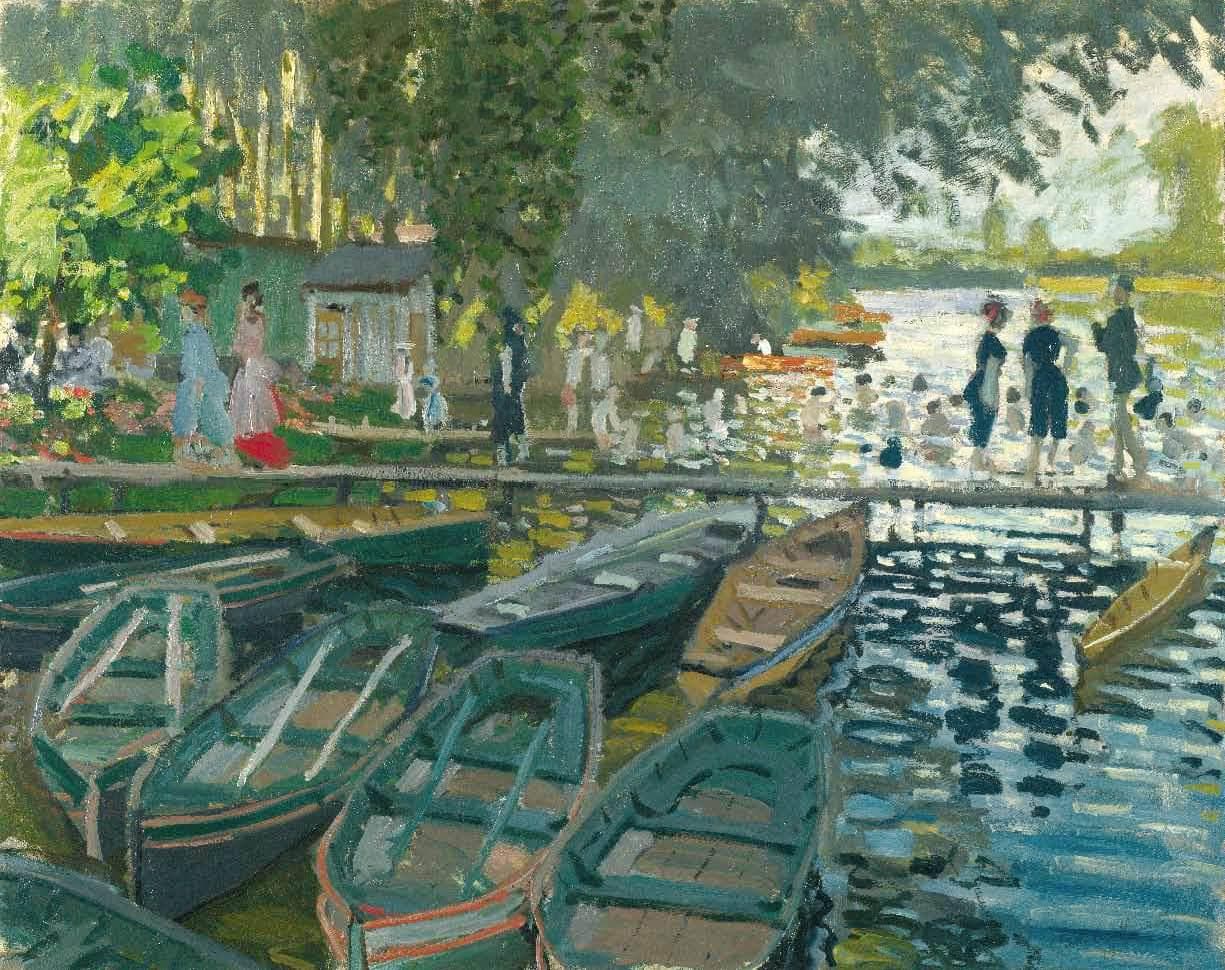
Bathers at La Grenouillère
Claude Monet · 1869
Bathers at La Grenouillère is Claude Monet's 1869 painting of rowing boats and swimmers at a Seine bathing place near Bougival, painted beside Renoir. This version is in the National Gallery, London; another is in the Metropolitan Museum of Art.
15
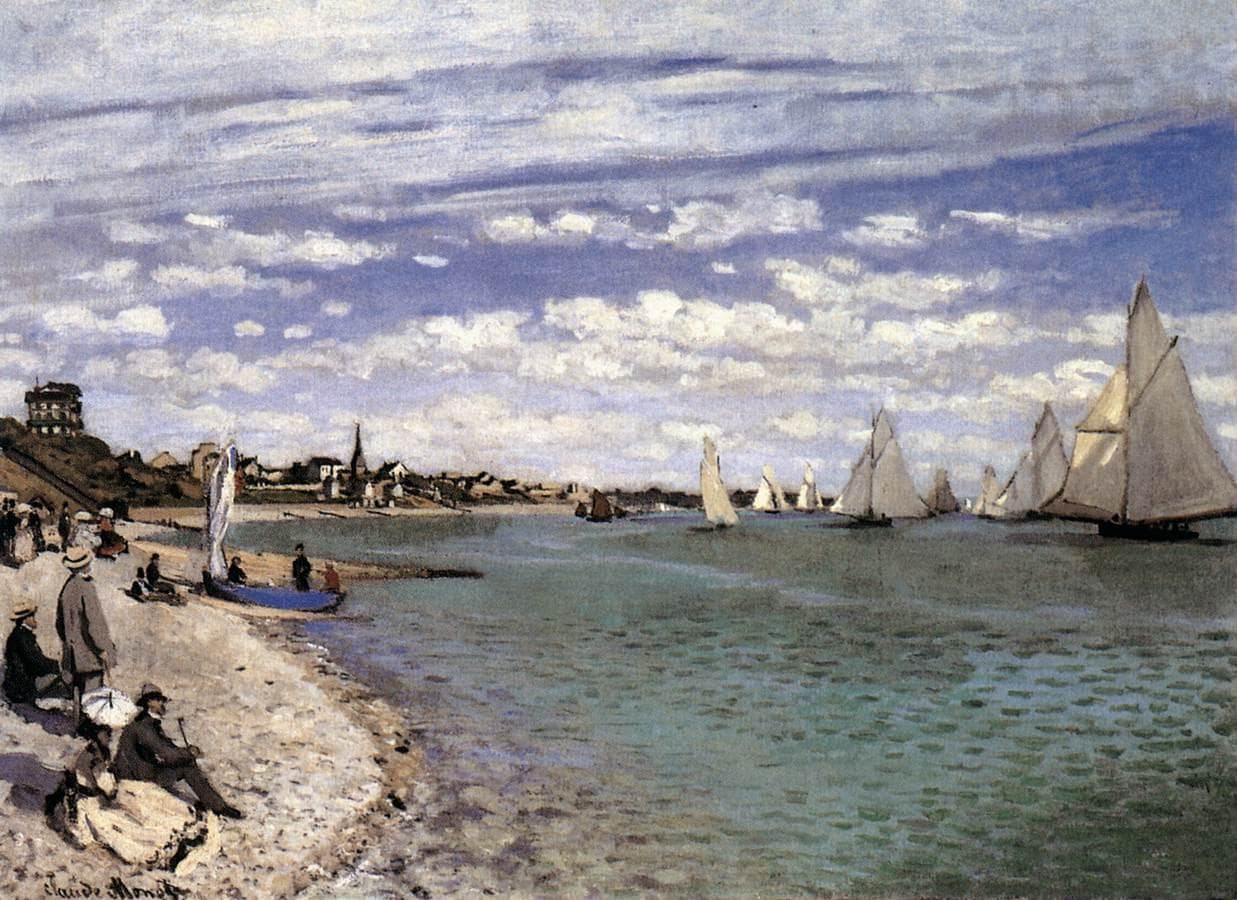
Regatta at Sainte-Adresse
Claude Monet · 1867
Regatta at Sainte-Adresse is an 1867 oil painting by Claude Monet showing sailing boats racing off a sunny Normandy beach near Le Havre. It is in The Metropolitan Museum of Art, New York.
16
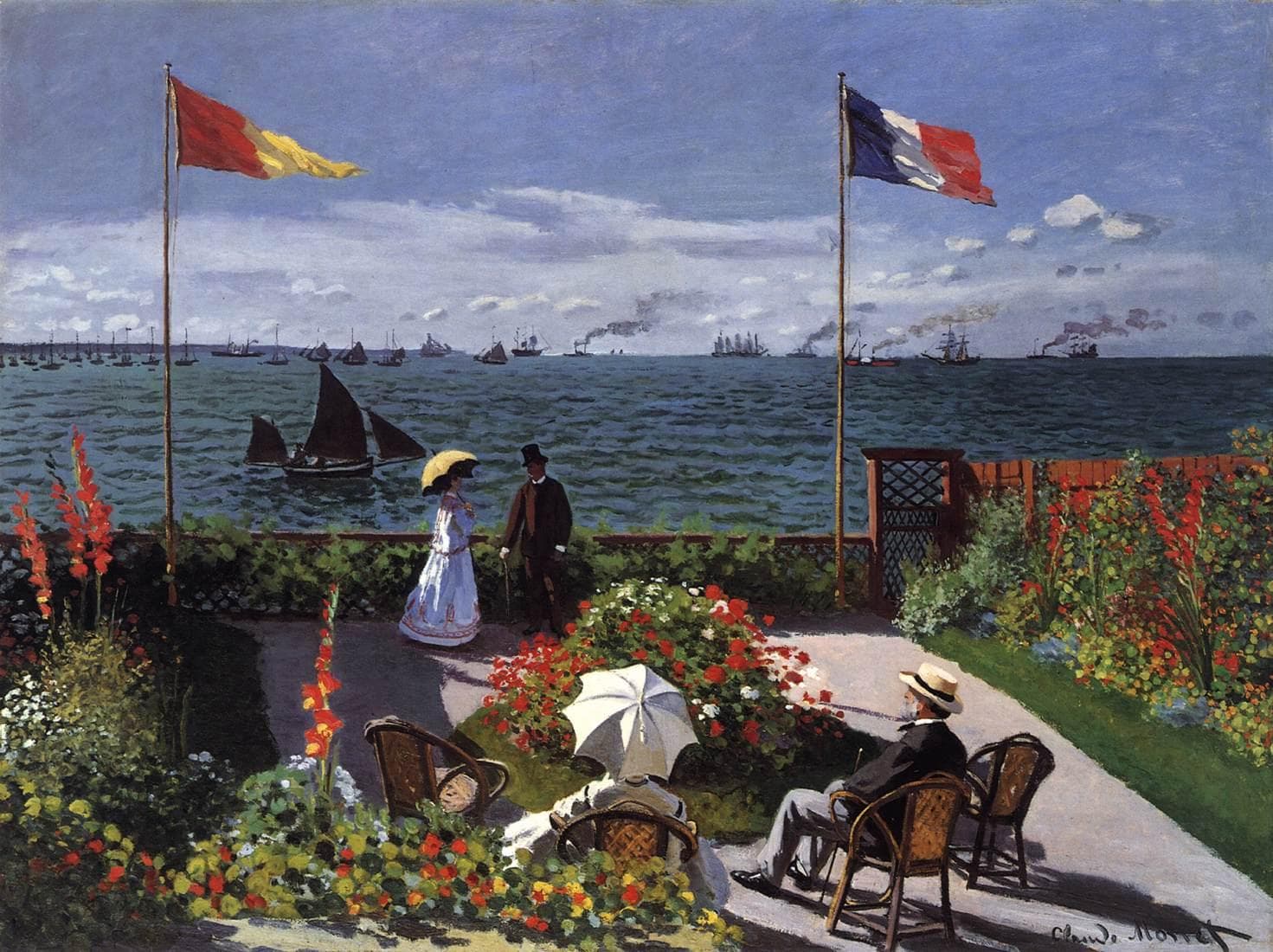
Garden at Sainte-Adresse
Claude Monet · 1867
Garden at Sainte-Adresse is Claude Monet's 1867 painting of a flower-filled terrace above the sea near Le Havre, with two flags and his family in the sun. Also called Terrace at Sainte-Adresse, it is in the Metropolitan Museum of Art, New York.
17
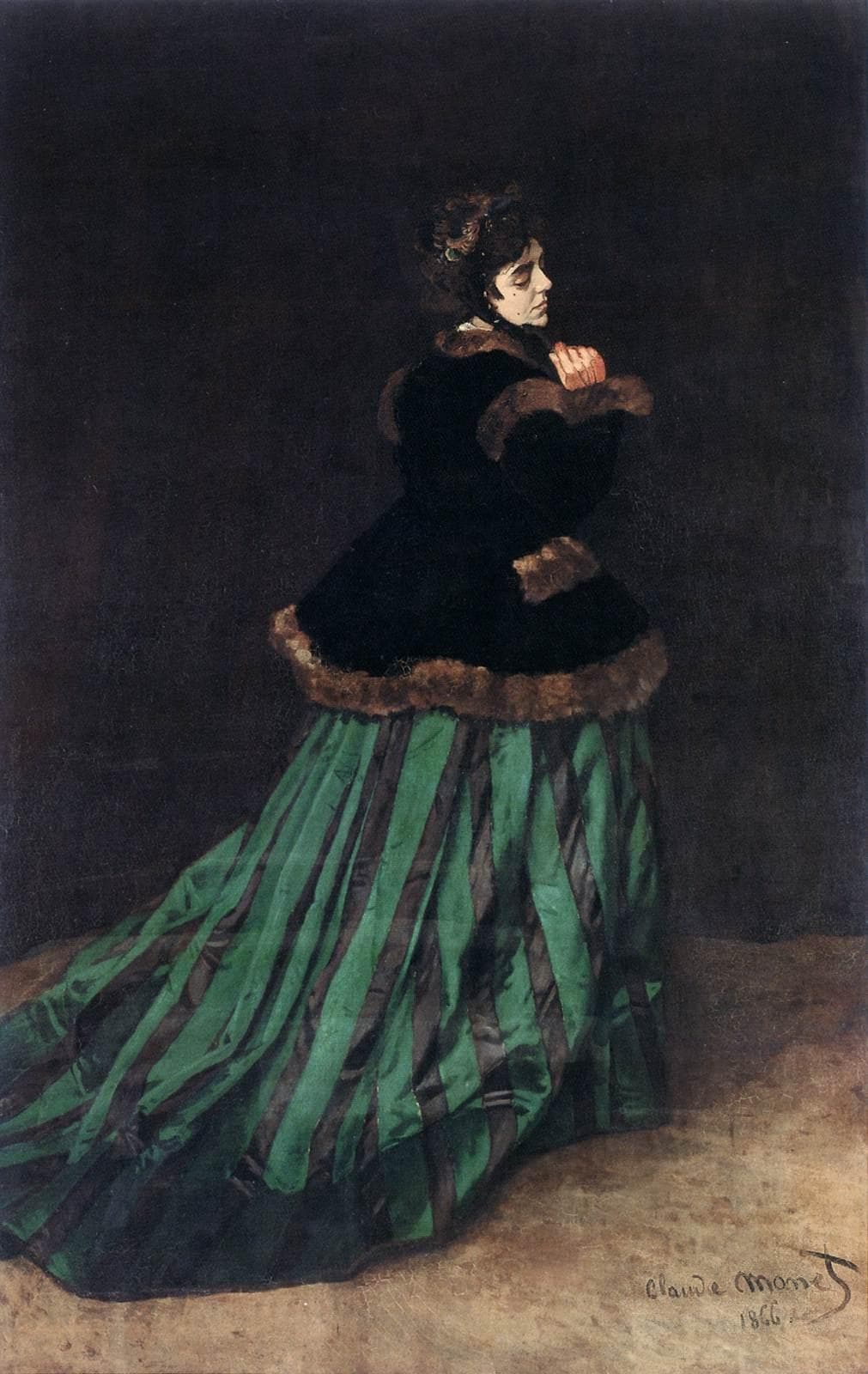
Camille (The Woman in the Green Dress)
Claude Monet · 1866
Camille, or The Woman in the Green Dress, is Claude Monet's life-size 1866 portrait of Camille Doncieux in a striped green silk gown, his first success at the Paris Salon. It is in the Kunsthalle Bremen, Germany.
18
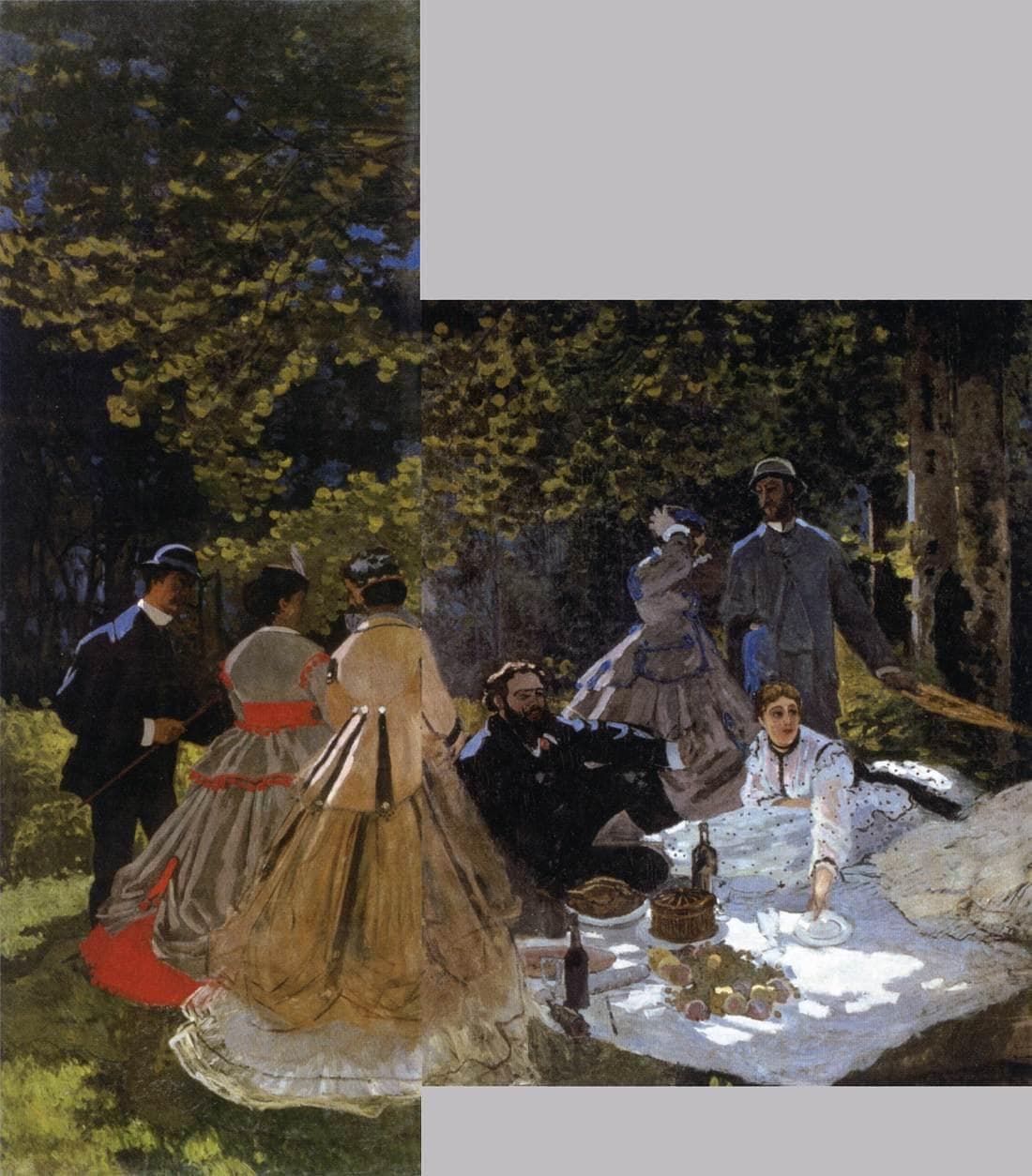
Le Déjeuner sur l'Herbe (two surviving fragments)
Claude Monet · 1865–66
Claude Monet's Le Déjeuner sur l'herbe (1865–66) was a huge outdoor picnic scene he never finished. Damaged by damp, he cut it up; two fragments, the left (418 × 150 cm) and central (248 × 217 cm) parts, are in the Musée d'Orsay, Paris.
19
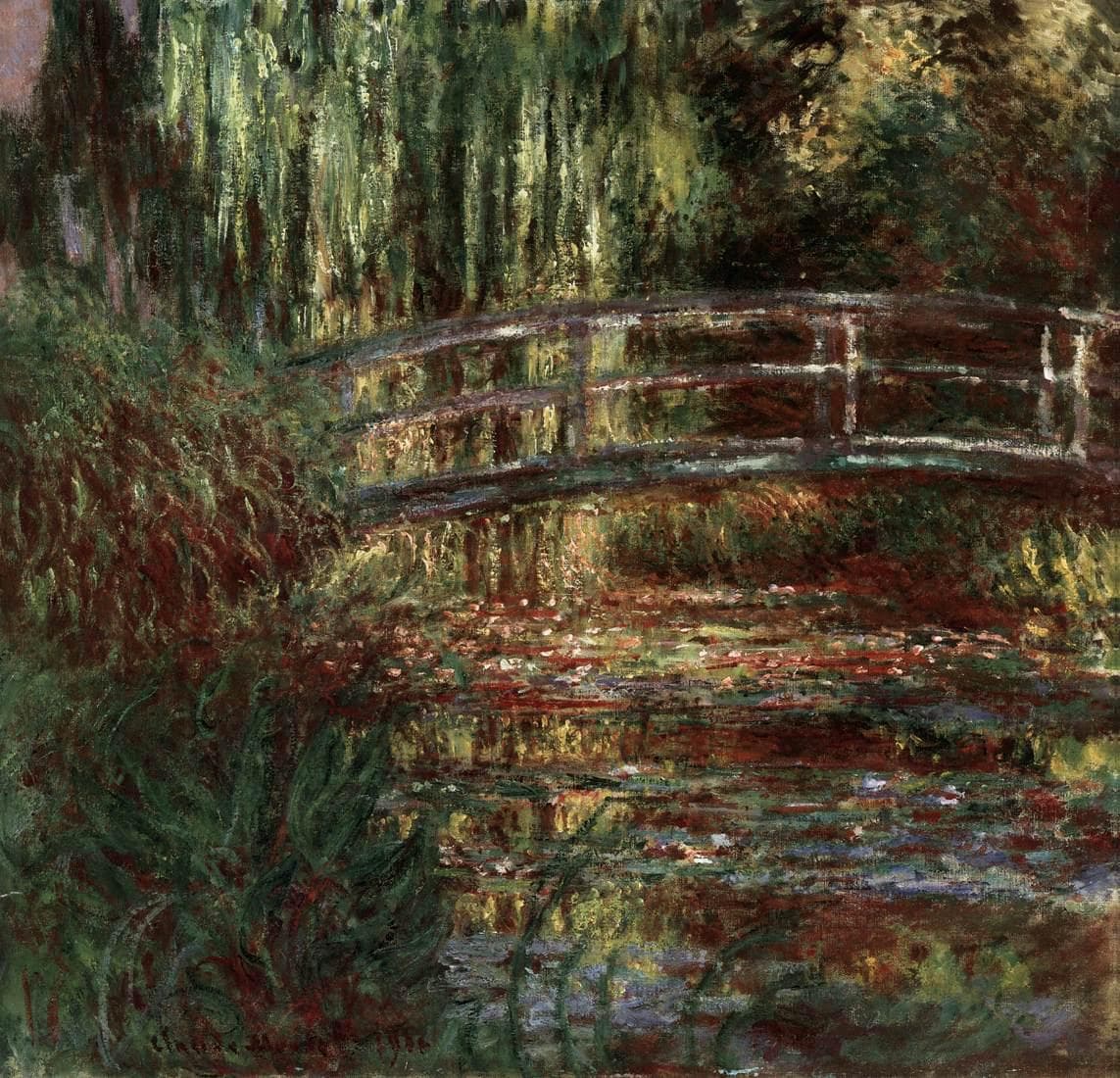
The Water Lily Pond
Claude Monet · 1900
The Water Lily Pond is a 1900 painting by Claude Monet of the Japanese footbridge over his lily pond at Giverny, in deep reds, greens and violets. It is in the Museum of Fine Arts, Boston.
20
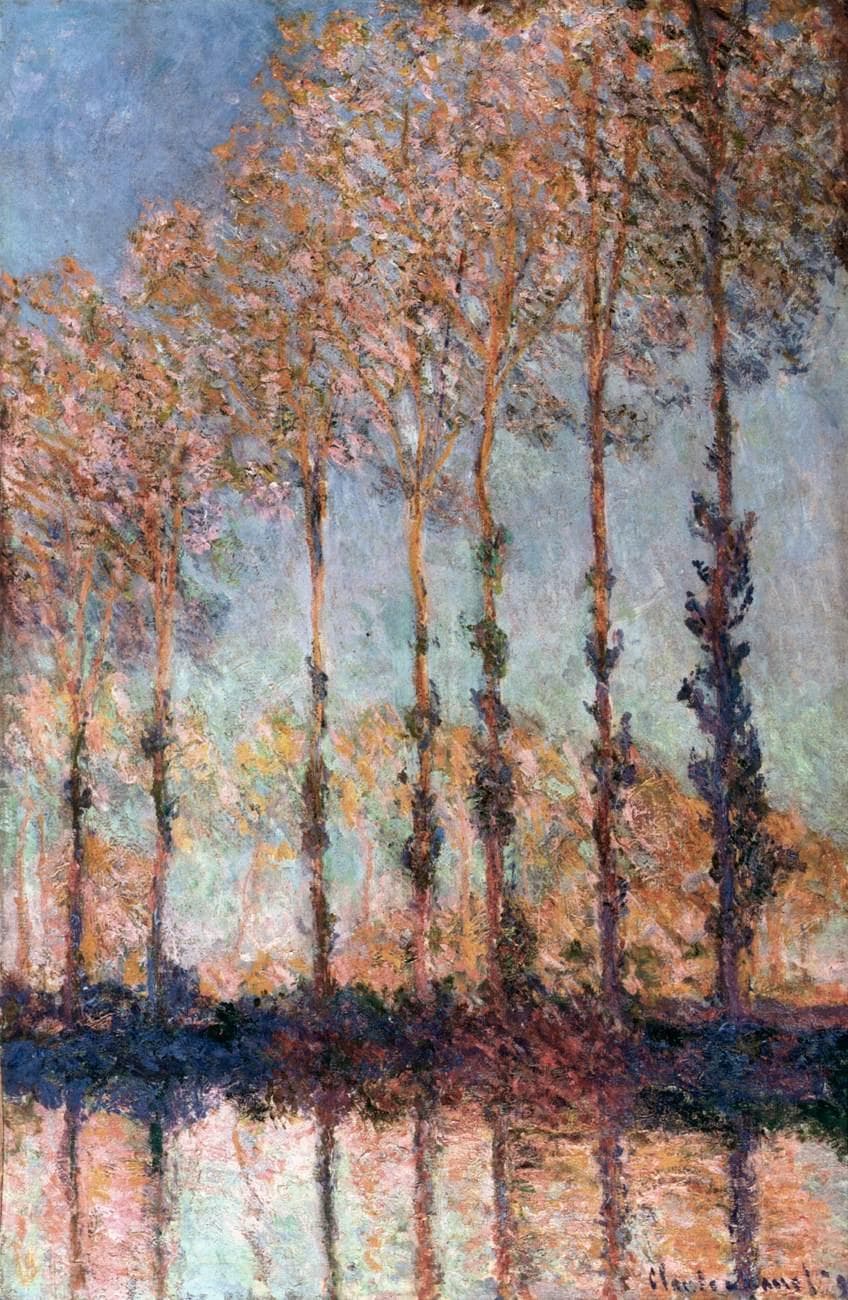
Poplars on the Banks of the River Epte
Claude Monet · 1891
Poplars on the Banks of the River Epte is an 1891 painting by Claude Monet of a row of autumn poplars and their reflections, from his Poplars series painted near Giverny. The tall canvas, 100.3 × 65.2 cm (Wildenstein 1298), is in the Philadelphia Museum of Art.
21
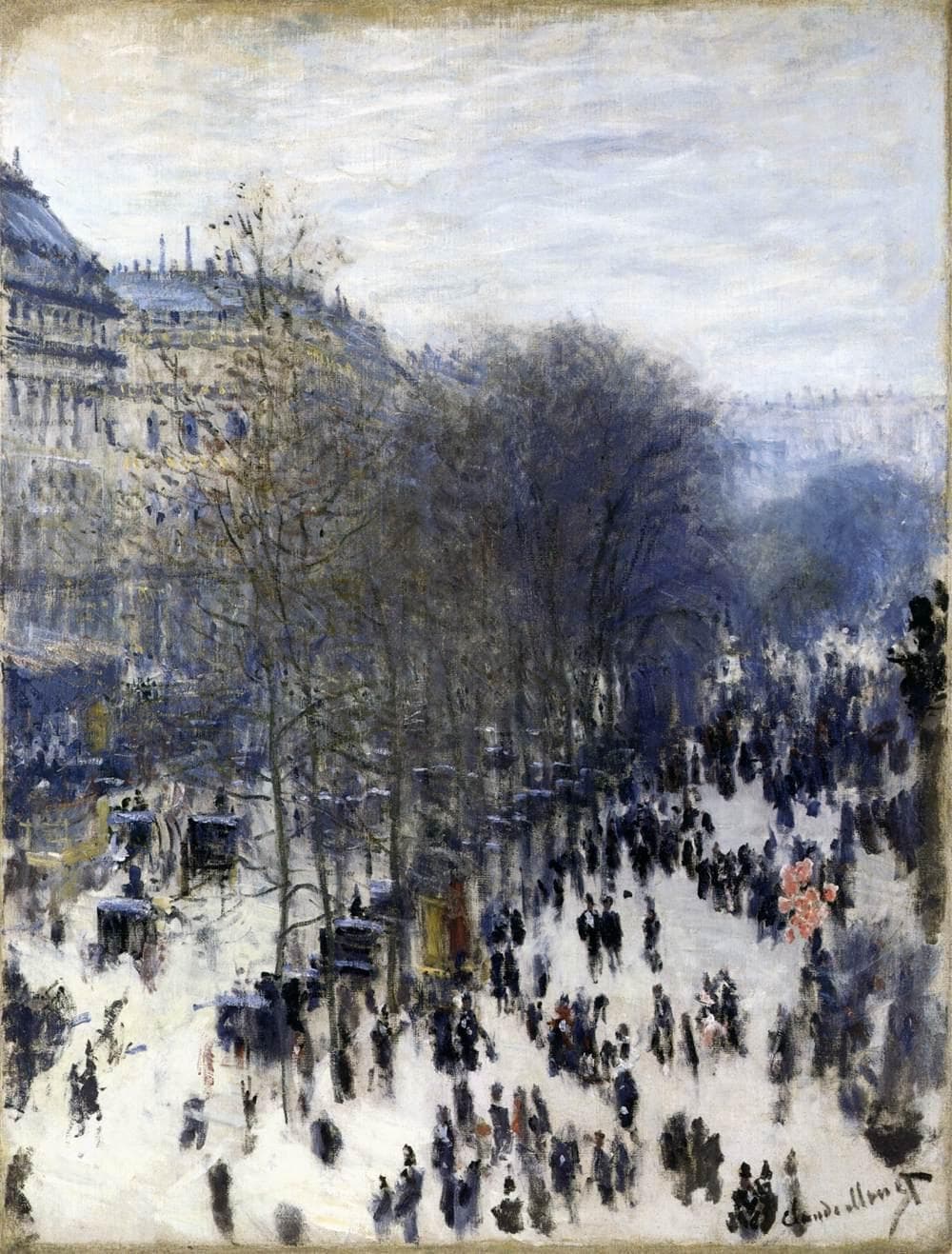
Boulevard des Capucines
Claude Monet · 1873–74
Boulevard des Capucines is a winter street scene of Paris painted by Claude Monet in 1873–74 from a high window on the boulevard. This version is in the Nelson-Atkins Museum of Art, Kansas City; a second is in Moscow.
22
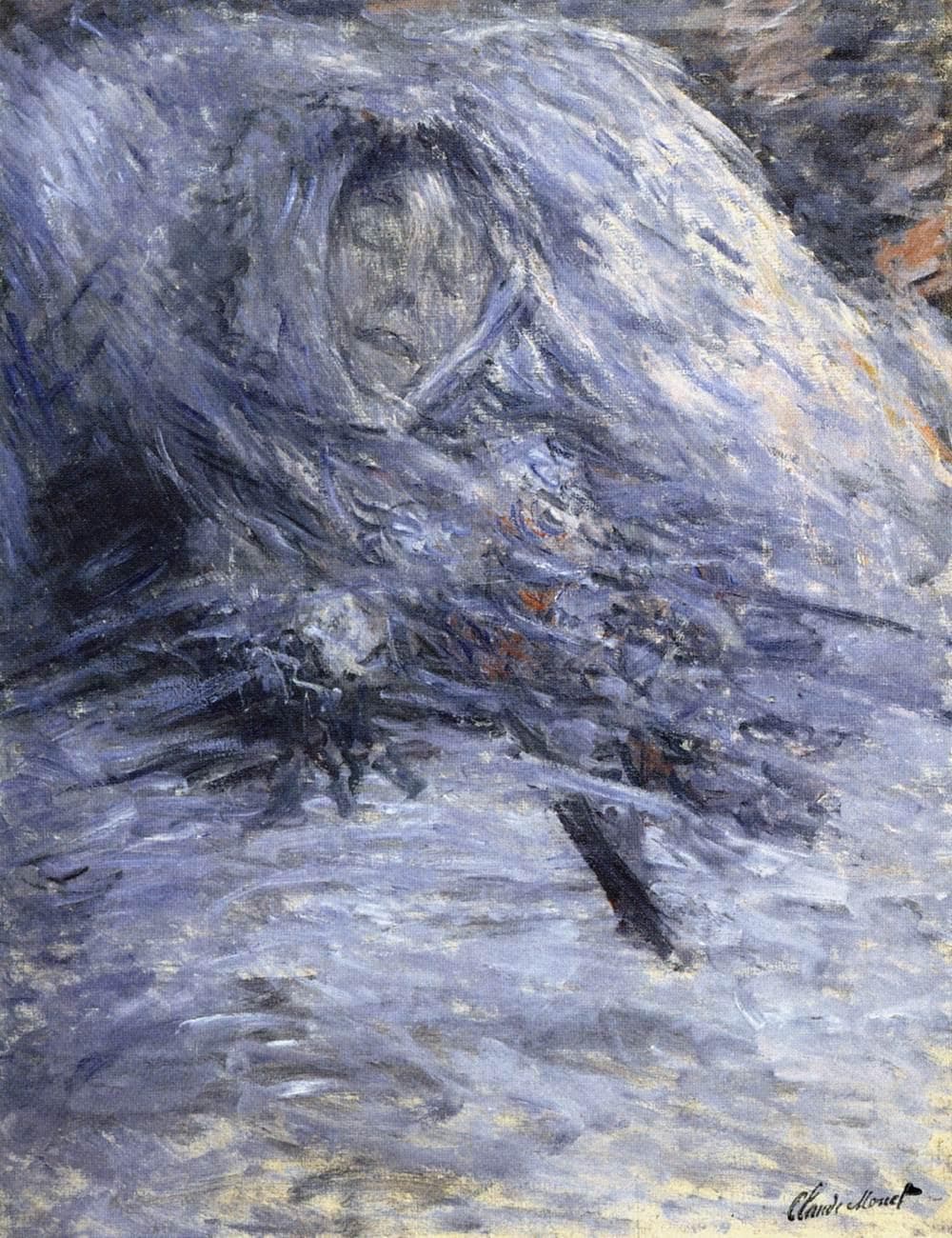
Camille Monet on Her Deathbed
Claude Monet · 1879
Camille Monet on Her Deathbed is Claude Monet's 1879 portrait of his wife Camille, painted at Vétheuil on the day she died aged 32. The oil on canvas is in the Musée d'Orsay, Paris.
23
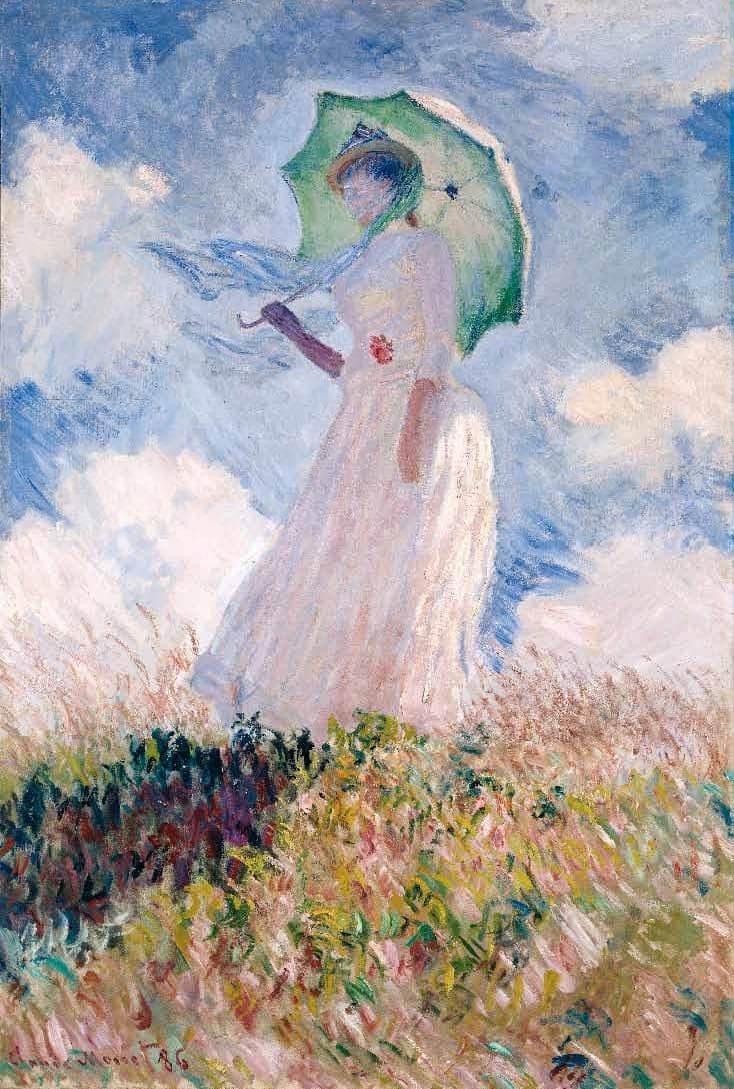
Woman with a Parasol, Facing Left
Claude Monet · 1886
Woman with a Parasol, Facing Left is an 1886 painting by Claude Monet of Suzanne Hoschedé on a grassy rise, her white dress and green parasol caught by the wind. It is in the Musée d'Orsay, Paris, with its companion facing right.
24
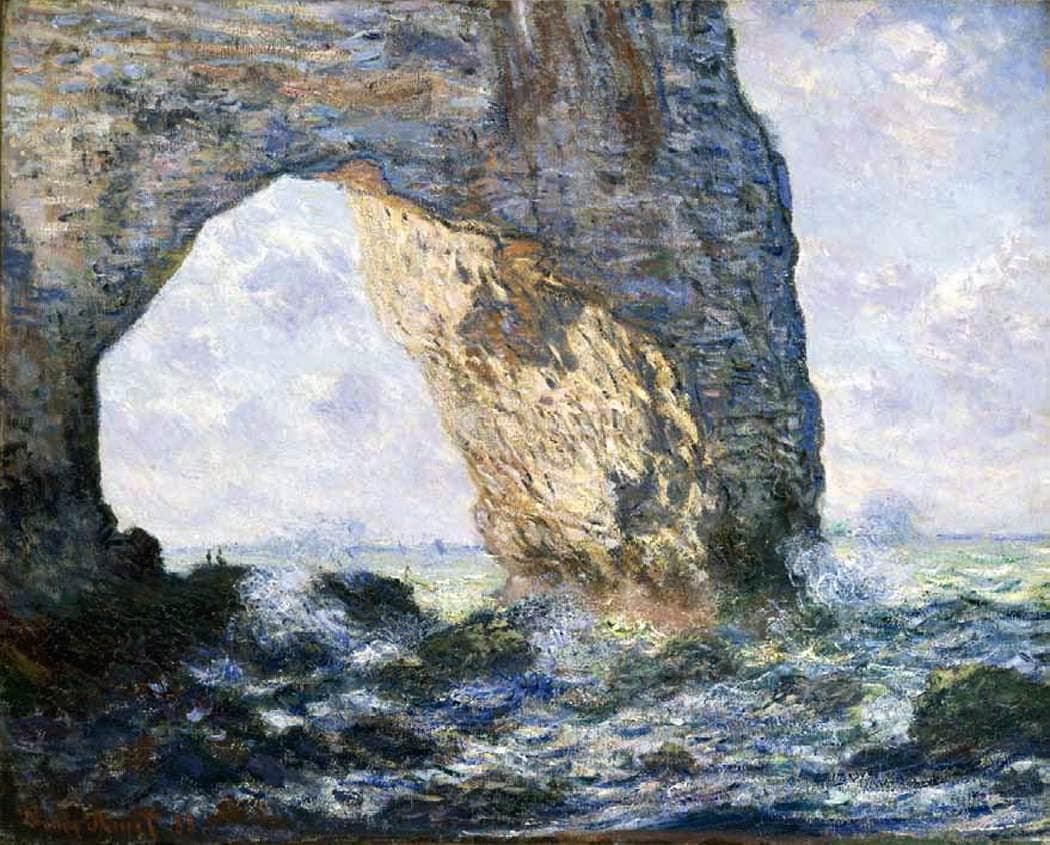
The Manneporte (Étretat)
Claude Monet · 1883
The Manneporte (Étretat) is an 1883 painting by Claude Monet of the colossal rock arch west of Étretat, seen from below with surf breaking at its foot. It is in the Metropolitan Museum of Art, New York.
25
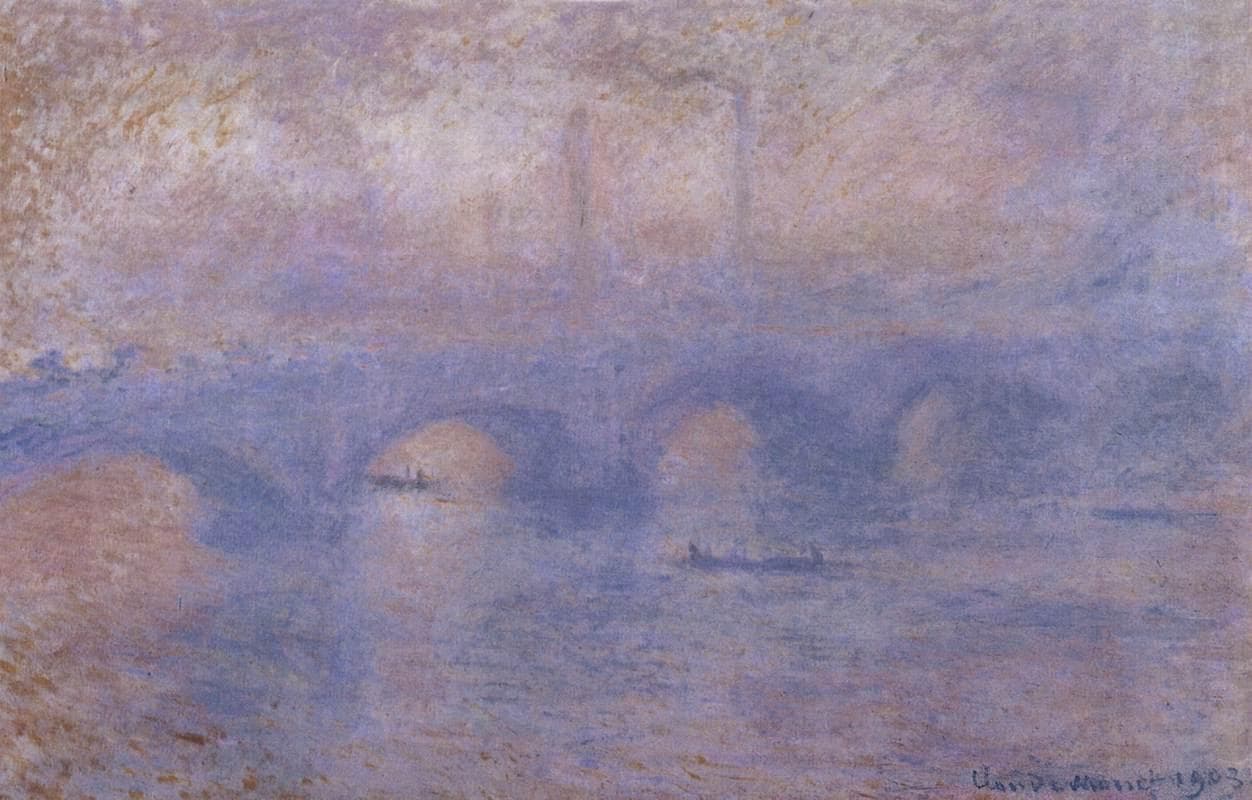
Waterloo Bridge, Effect of Fog
Claude Monet · 1903
Waterloo Bridge, Effect of Fog is a 1903 painting by Claude Monet of London's Waterloo Bridge veiled in pink and lilac fog, part of his London series. It is in the State Hermitage Museum, Saint Petersburg.
26
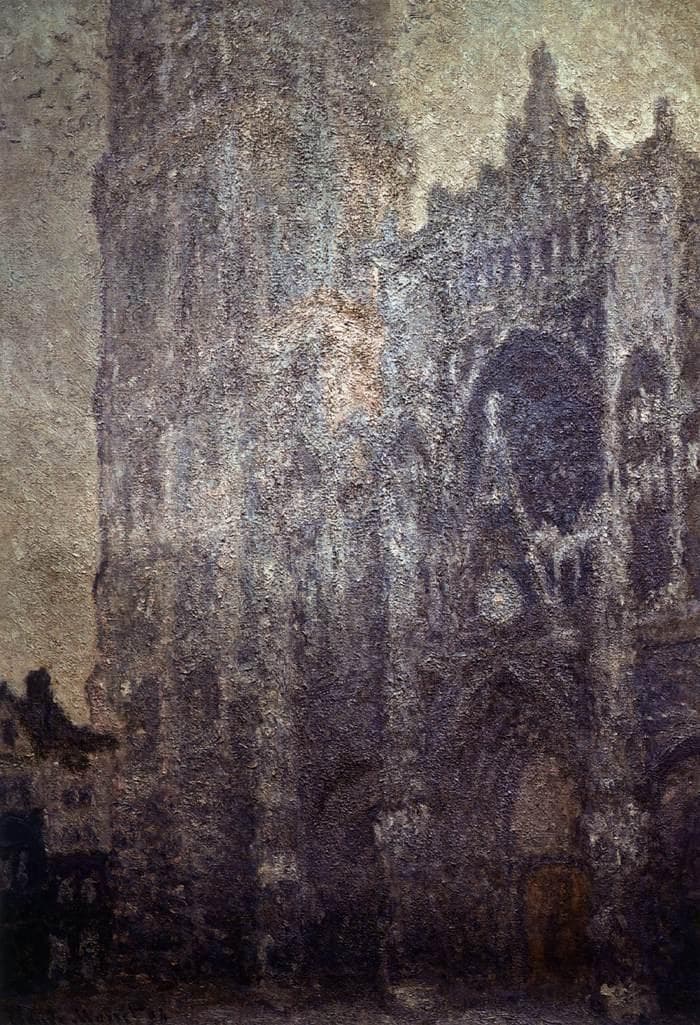
Rouen Cathedral, Effects of Morning Light
Claude Monet · 1893
Rouen Cathedral, Effects of Morning Light (Harmonie blanche) is an 1893 painting by Claude Monet of the cathedral's west portal and the Tour Saint-Romain in pale early light, from his Rouen Cathedral series. It measures 106 × 73 cm (Wildenstein 1346) and is in the Musée d'Orsay, Paris.
27
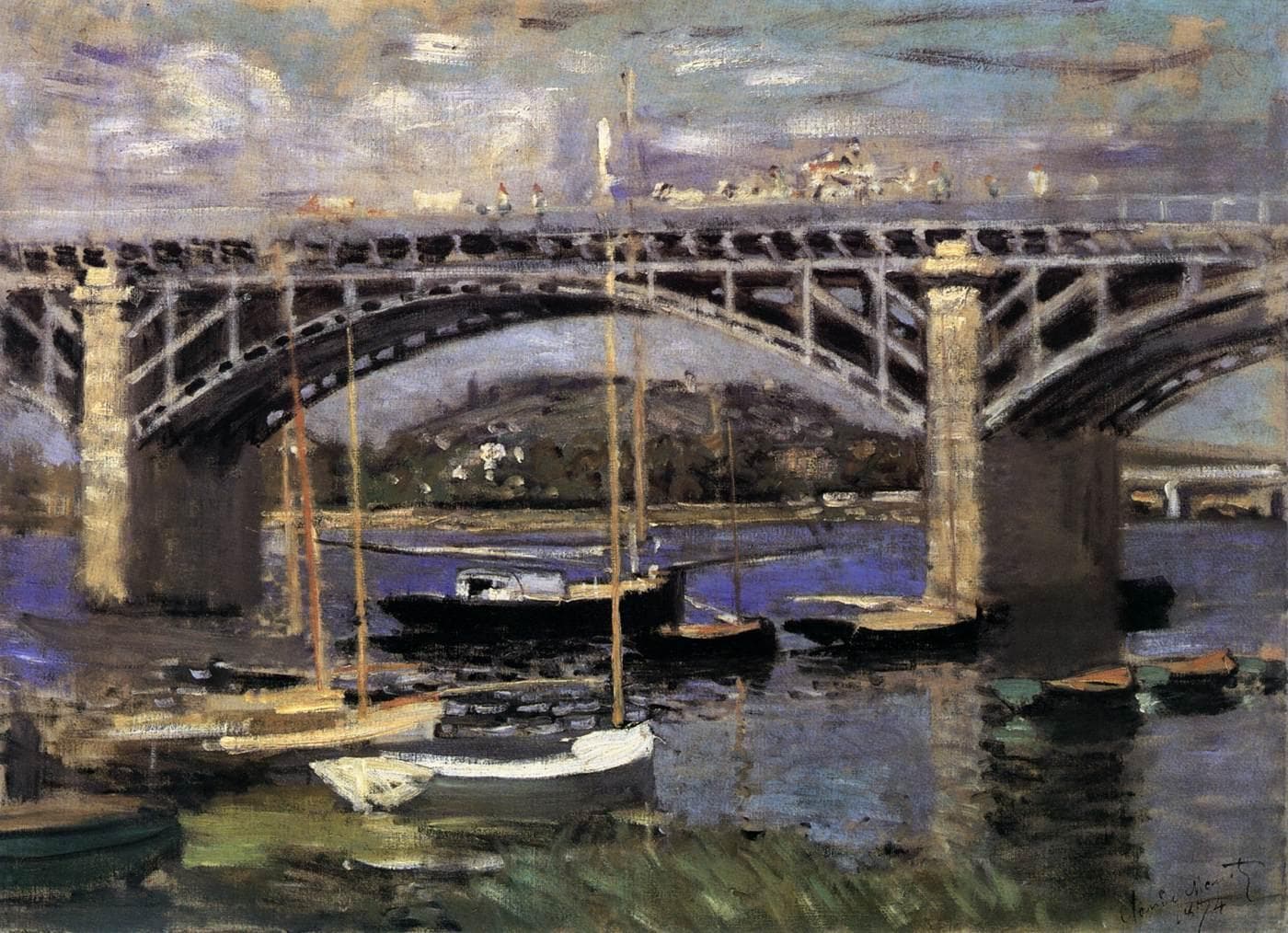
The Bridge at Argenteuil
Claude Monet · 1874
The Bridge at Argenteuil (Le Pont sur la Seine à Argenteuil) is an 1874 painting by Claude Monet of the rebuilt road bridge over the Seine with sailboats moored beneath it. It belongs to the Bavarian State Painting Collections, Neue Pinakothek, Munich.
28
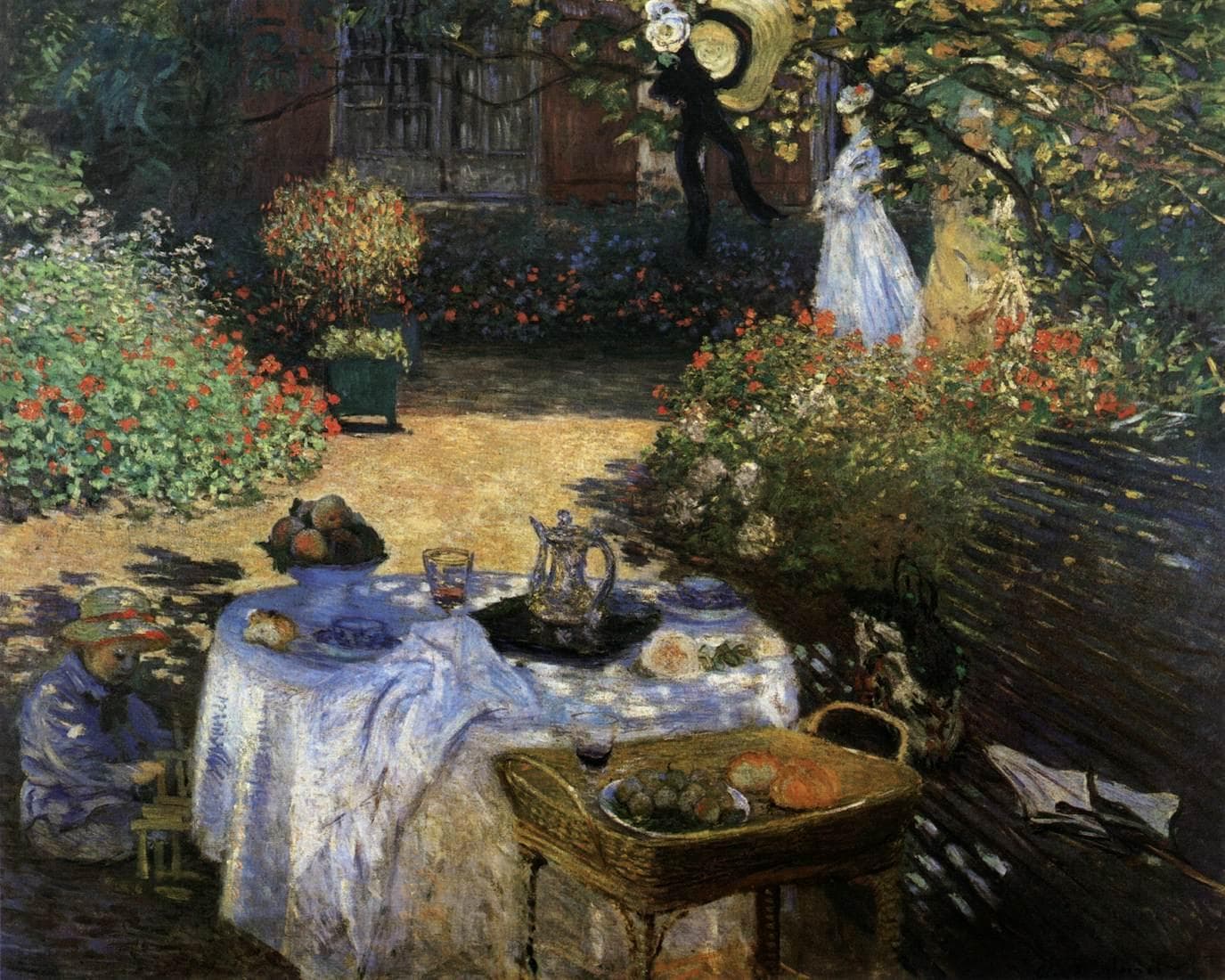
The Luncheon (Monet's Garden at Argenteuil)
Claude Monet · c. 1873
The Luncheon (Le Déjeuner) is a large painting of about 1873 by Claude Monet showing the end of a summer lunch in his garden at Argenteuil, with his son Jean playing in the shade. It is in the Musée d'Orsay, Paris.
29
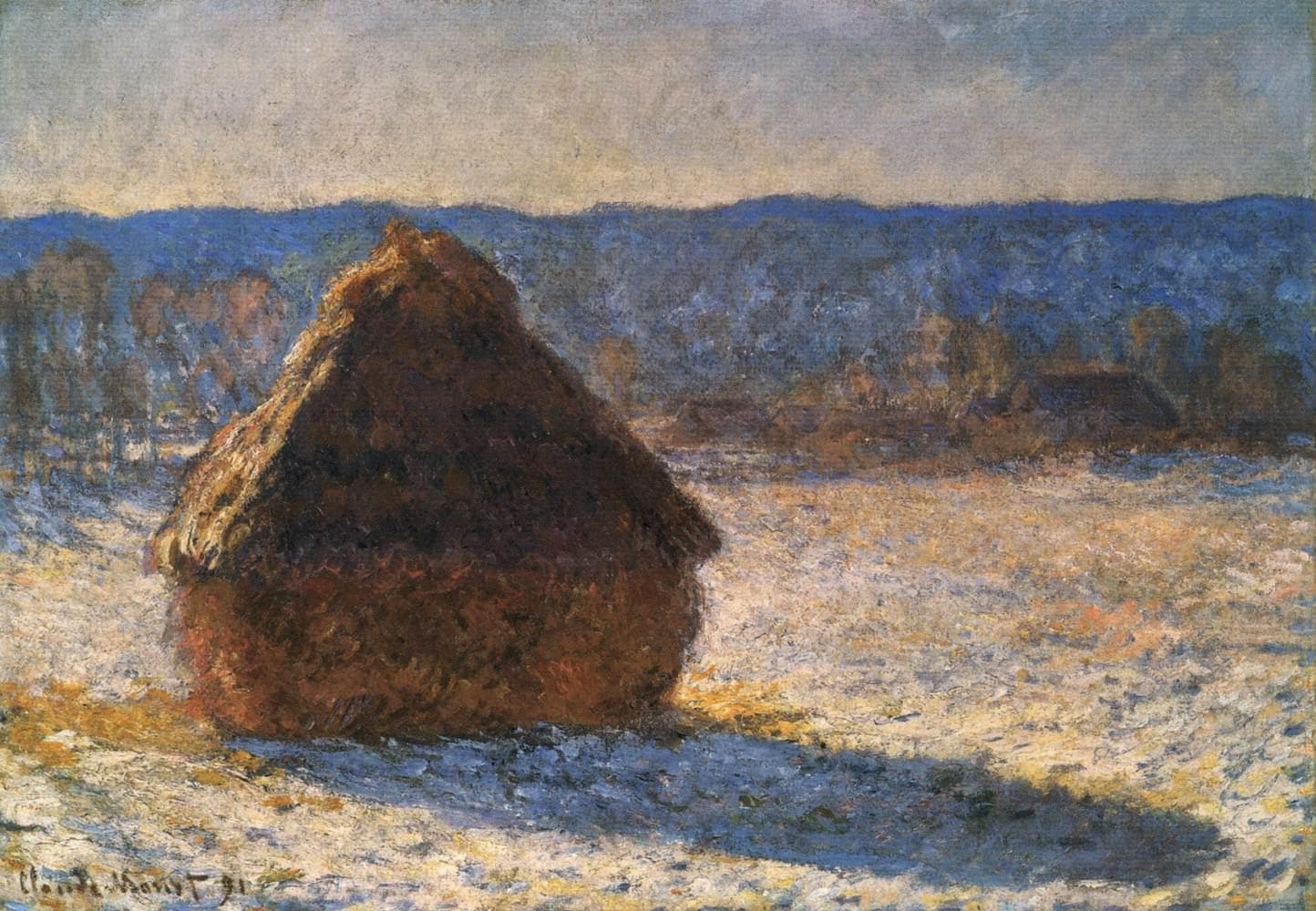
Grainstack (Snow Effect)
Claude Monet · 1891
Grainstack (Snow Effect), also called Haystack in the Snow, Morning, is a painting by Claude Monet of a single wheat stack in a thinly snowed field at Giverny, dated 1891. It is in the Museum of Fine Arts, Boston.
30
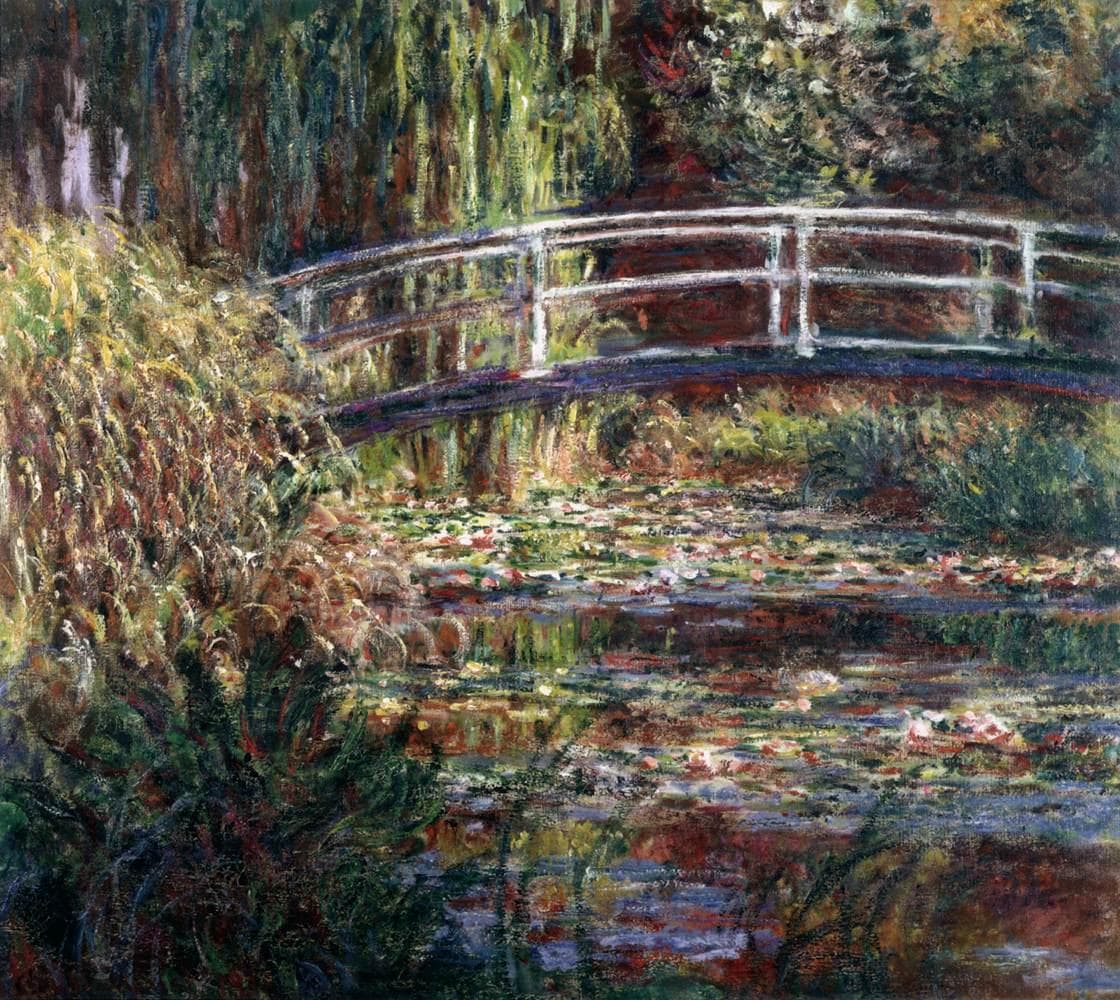
The Water Lily Pond, Harmony in Rose
Claude Monet · 1900
The Water Lily Pond, Harmony in Rose is a 1900 oil painting by Claude Monet of the Japanese footbridge over his lily pond at Giverny, bathed in warm pink and orange light. It is in the Musée d'Orsay, Paris.
31
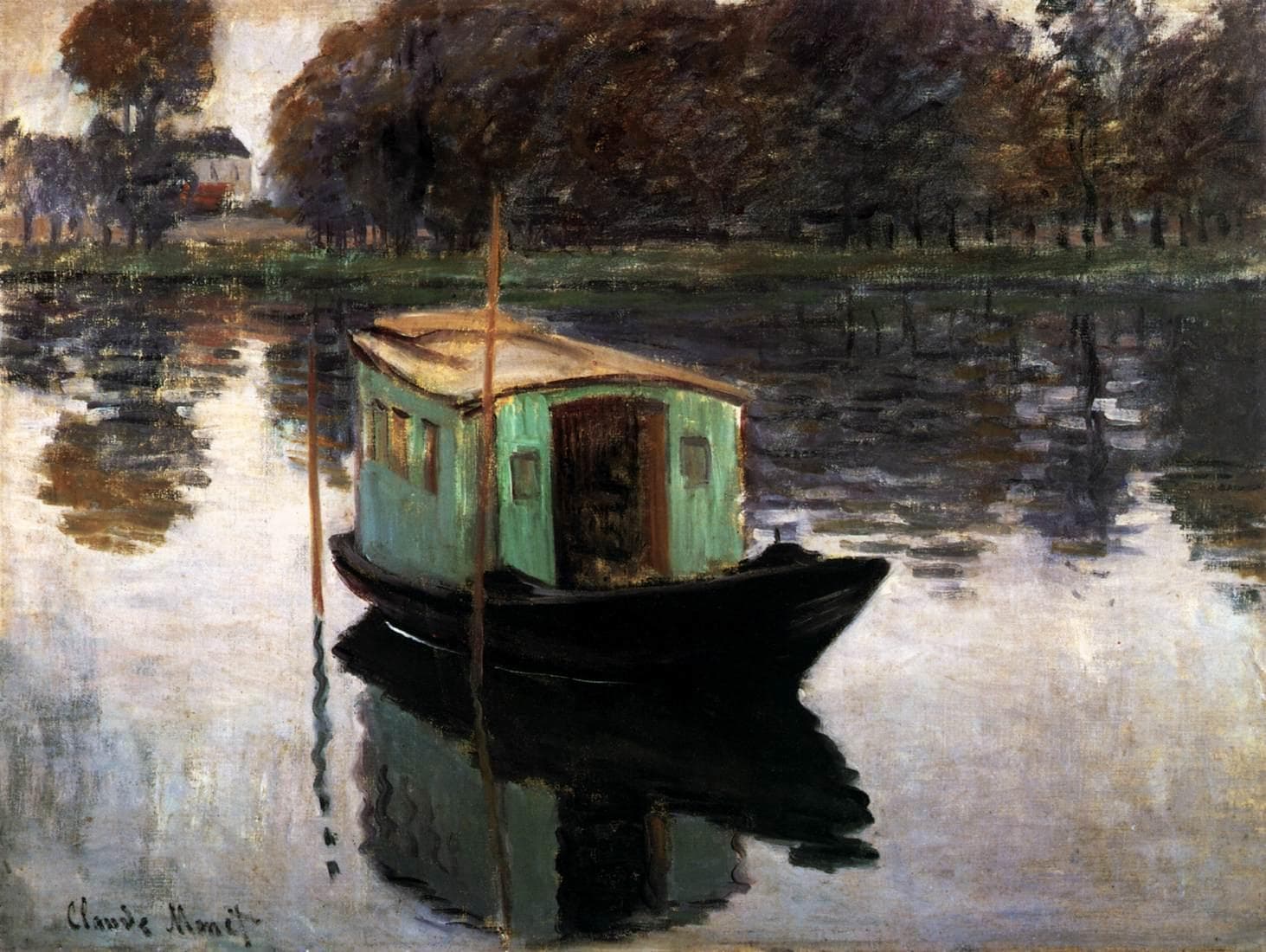
The Studio Boat
Claude Monet · 1874
The Studio Boat (Le Bateau-atelier) is an 1874 painting by Claude Monet of the floating studio he used on the Seine at Argenteuil, moored on still water at dusk. It is in the Kröller-Müller Museum, Otterlo.
32
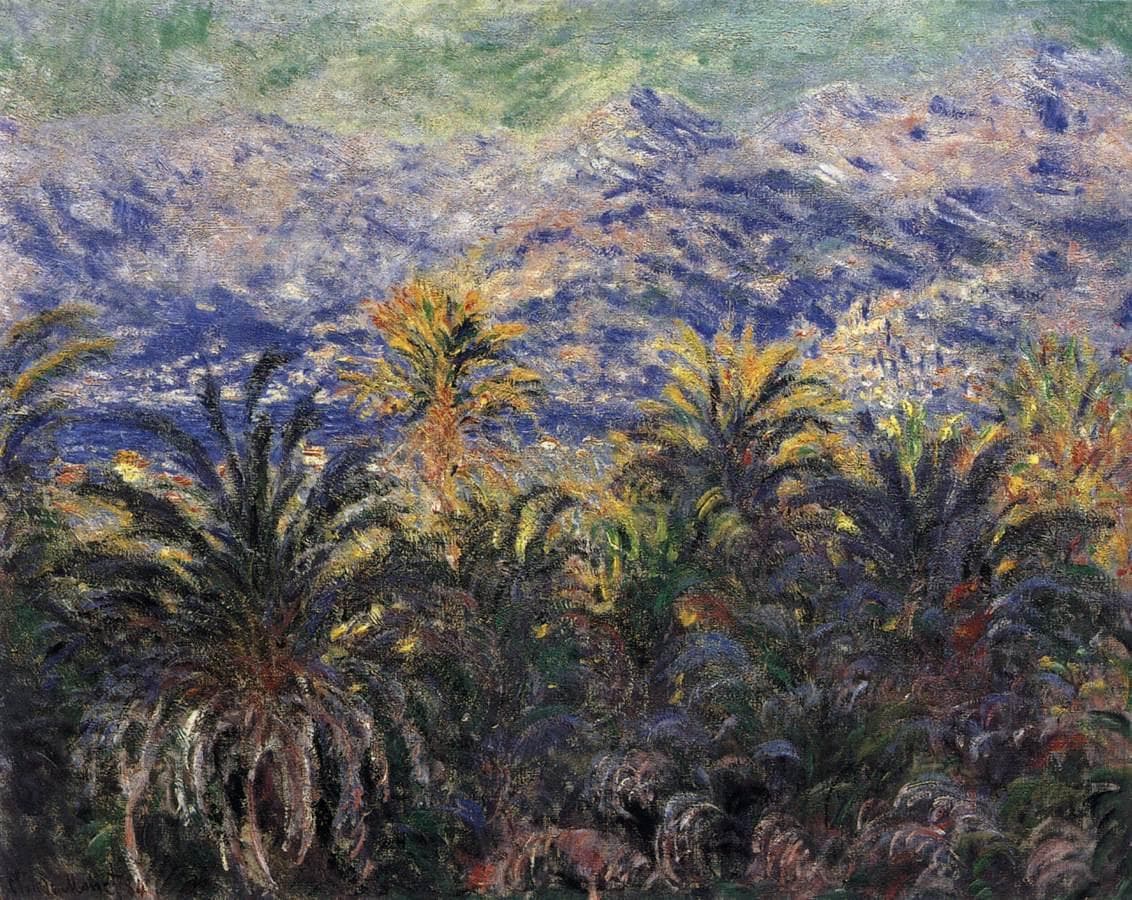
Palm Trees at Bordighera
Claude Monet · 1884
Palm Trees at Bordighera is an 1884 oil painting by Claude Monet, made on the Italian Riviera during a three-month stay. It shows a thicket of palms beneath lilac mountains and belongs to The Metropolitan Museum of Art in New York.
How we ordered the list
Monet is unusual among great painters in that his most famous images are often not single paintings but whole groups. There are about 250 Water Lilies, some 25 Haystacks and more than 30 views of Rouen Cathedral. Where the catalogue holds several versions, we have placed the best known first and kept the others further down. The rest of the list runs from the icons that every visitor recognizes to the early figure paintings, river scenes and snowscapes that specialists love.
Le Havre and the beginning (1856–1870)
Monet grew up in Le Havre on the Normandy coast and started as a teenage caricaturist. The landscape painter Eugène Boudin persuaded him to paint outdoors, in front of the motif, and the habit shaped everything that followed. In Paris in the 1860s he met Renoir, Sisley, Bazille and Pissarro.
His early ambitions were large. Women in the Garden (1866–67, Musée d'Orsay), painted outdoors on a canvas so tall he dug a trench to lower it, used his future wife Camille Doncieux as the model for several of the figures. The Salon rejected it. It had accepted Camille (The Woman in the Green Dress, 1866, Kunsthalle Bremen), a life-size portrait praised for its shimmering striped silk. The Magpie (1868–69, Musée d'Orsay), a winter field with a single black bird on a gate, is a study of how many colors there are in snow, blue, lilac, cream and gold, and the Salon rejected it too.
In 1869 Monet and Renoir painted side by side at La Grenouillère, a bathing place on the Seine. Their quick, broken strokes on the moving water are often seen as the birth of the Impressionist technique.
Impressionism (1872–1880)
In 1872 Monet painted the harbor at Le Havre at dawn: an orange sun, its reflection in a few strokes, gray-blue shapes of boats and cranes. When he showed it in 1874 at the first independent exhibition of the group, he titled it Impression, Sunrise. The critic Louis Leroy mocked the title and called the painters "Impressionists", and the name stuck. The painting is in the Musée Marmottan Monet in Paris; it was stolen in 1985 and recovered in 1990.
The 1870s at Argenteuil, on the Seine near Paris, produced his sunniest pictures: regattas, bridges, poppy fields and the garden at home. Woman with a Parasol (1875, National Gallery of Art, Washington) shows Camille and their son Jean on a hill, seen from below against a windy sky, her veil and skirt blowing. In 1877 he set up his easel inside the Gare Saint-Lazare in Paris and painted the steam and glass of the station a dozen times.
That decade ended in grief. Camille died in 1879, and Monet painted Camille Monet on Her Deathbed, one of the most private pictures in the history of Impressionism.
Travels: cliffs, storms and southern light (1880s)
Through the 1880s Monet kept traveling in search of motifs that would push his painting further. On the Normandy coast at Étretat he painted the great natural arches of the chalk cliffs, the Porte d'Aval and the Manneporte, from the beach, from the cliff tops and in storms. On Belle-Île off Brittany, in 1886, he painted dark, churning seas against black rocks, pictures far rougher than anything from Argenteuil. In 1884 he went south to Bordighera on the Italian Riviera, where the palms and intense light pushed his color toward turquoise, pink and orange; he wrote that he would need a palette of diamonds and jewels. Those campaigns taught him to return to the same spot again and again, which led directly to the series.
Series painting (1890–1904)
From 1883 Monet lived at Giverny, in Normandy, with Alice Hoschedé and their combined family. Around 1890 he began painting the same subject at different times of day and in different weather, working on several canvases at once and switching as the light changed. His Haystacks (1890–91), shown together in 1891 at the gallery of his dealer Paul Durand-Ruel, sold out within days. The Poplars (1891), the Rouen Cathedral façades (1892–94) and the views of the Thames (1899–1904), including The Houses of Parliament, London, painted from a balcony of St Thomas' Hospital, followed.
The series changed what a painting could be about. The subject became the light and air between the painter and the object, and the true work became the group.
Giverny and the Water Lilies (1893–1926)
In 1893 Monet bought land across the road from his house, diverted a stream and built a water garden with a Japanese-style footbridge. Bridge over a Pond of Water Lilies (1899, Metropolitan Museum of Art) is one of a dozen views of the bridge from that year. Gradually the bridge and banks disappeared, and the Water Lilies became pictures of the water's surface alone, with clouds, sky and willows seen only in reflection.
Monet's eyesight failed from about 1912 because of cataracts, and his late paintings of the bridge and the lily pond turn red, orange and violet, their brushwork thick and almost abstract. After an operation in 1923 he repainted some of them. His final project, the vast Water Lilies panels he donated to the French state, was installed in two oval rooms of the Musée de l'Orangerie in Paris in 1927, a few months after his death.
What to look for in a Monet
Stand back, then go close. From a distance the scene holds together; close up it falls into separate strokes of unmixed color laid side by side. Look at the shadows, which Monet paints in blue and violet rather than brown or black. And look at how little drawing there is: edges are made by one color meeting another, not by lines.
Where to see Monet's paintings
Paris has the deepest holdings: the Musée d'Orsay, the Musée Marmottan Monet (with Impression, Sunrise and many late Giverny works) and the Orangerie. In the United States, the Art Institute of Chicago, the Museum of Fine Arts in Boston, the Metropolitan Museum and the National Gallery of Art in Washington have major groups. His house and gardens at Giverny are open from spring to autumn. For the movement around him, see Impressionism.
Questions & answers
What is Monet's most famous painting?
Impression, Sunrise (1872), in the Musée Marmottan Monet in Paris, is his most famous single painting because it gave Impressionism its name. His Water Lilies series, especially the panels in the Musée de l'Orangerie, is the best-known body of work.
How many paintings did Monet paint?
Monet painted roughly 2,000 works over about seventy years, including some 250 paintings of water lilies. The standard catalogue raisonné by Daniel Wildenstein lists around 2,000 paintings, plus drawings and pastels.
Where can I see Monet's Water Lilies?
The largest are the eight panels in two oval rooms of the Musée de l'Orangerie in Paris, installed in 1927. Other Water Lilies are in the Musée Marmottan Monet, the Museum of Modern Art in New York, the National Gallery in London and many other museums.
Why did Monet paint the same subject so many times?
Monet wanted to record how light and weather changed a scene from hour to hour. From around 1890 he worked on many canvases of one motif at once, such as haystacks, poplars or Rouen Cathedral, switching canvases as the light moved, so each painting captures one moment.
Why did Monet's late paintings change color?
From around 1912 Monet developed cataracts, which distorted his color vision toward reds and yellows and blurred detail. His late paintings of the Japanese bridge are dominated by reds and browns. After surgery in 1923 his vision improved and he reworked some canvases.