Impressionism
Nymphéas (Water Lilies)
Claude Monet, c. 1914–1919
Nymphéas (Water Lilies) is a late Claude Monet canvas, probably of the 1910s, showing rose-red water lilies and pale pink pads on his Giverny pond, with no bank or sky. The owner of this particular canvas has not been identified.
- Artist
- Claude Monet
- Date
- c. 1914–1919
- Medium
- Oil on canvas
- Movement
- Impressionism
Nymphéas (Water Lilies) here is a late canvas by Claude Monet showing the surface of the lily pond in his garden at Giverny, with rose-red flowers and pale pink pads floating on water full of blue and green reflections. It probably dates from the 1910s, when Monet was painting the pond at large scale. We have not been able to identify which museum or collection owns this particular canvas, so its size and present location are not given here.
What you are looking at
There is no bank, no sky and no horizon. The canvas, a wide horizontal, is filled edge to edge with the surface of the pond, seen from slightly above. The photograph was taken in a gallery, and a sliver of the frame shows at the edges.
Across the middle runs a loose band of lily pads. Monet paints them as flattened ovals of pale pink, lilac and cream, each with a brighter rim where the light catches the edge and a slightly darker inner patch. Toward the bottom and the left they grow larger and more open, toward the top they shrink and crowd together, which is the only clue to depth in the whole picture.
Five or six flowers open among the pads, in deep rose and crimson, each touched with a dab of yellow at the heart. They are the most saturated color on the canvas and sit just above the center, in a loose diagonal from left to right. Another, paler flower appears at the very top left, half cut by the frame.
How the water is painted
The real subject is the water. Between the pads Monet lays long vertical strokes of cobalt, violet, gray-green and turquoise. These verticals are reflections: tall plants, willows and sky on the far bank, mirrored upside down. At the top right the reflections warm into olive and rust, as if catching sunlit foliage, while the lower third turns to dense strokes of grass green, perhaps weeds seen through the surface or reflected irises.
So the eye reads three layers at once: the flowers on the surface, the world above reflected in it, and the depths below. Monet does not separate them with outlines. The pads have no drawn edges, only changes of color, and in places a pink pad dissolves into a pink reflection. The brushwork is fast and fairly thin, with the weave of the canvas visible between strokes.
A signature, Claude Monet, appears at lower right. Many late water lily canvases left the studio only after his death with a printed studio stamp instead of a hand-written signature; from a photograph alone it is hard to say which this is.
The pond at Giverny
Monet bought the land across the road from his house at Giverny in 1893, diverted a branch of the Epte to make a pond, and planted it with hybrid water lilies, irises and willows, with a Japanese-style footbridge. At first he painted the pond with its banks and bridge, as in Bridge over a Pond of Water Lilies of 1899. Over the next decade he moved closer and closer, until the shore and sky disappeared and only water remained, as here.
From 1914, in a huge new studio, he worked on the decorative cycle he gave to France after the First World War, installed in the Musée de l'Orangerie in 1927. Around it he painted dozens of large independent canvases with the same motifs, such as Water Lilies at MoMA, Water Lilies in Tokyo and Water Lilies at the Met. This canvas, with its wide format and red flowers, belongs to that family.
Where does it fit in the series?
The Water Lilies series runs to about 250 paintings made between the late 1890s and Monet's death in 1926. This one is closest to the canvases of about 1914–19: no horizon, flowers as small accents of strong color, and reflections doing most of the work. Compared with Water Lilies and Agapanthus at the Marmottan, it is lighter and more evenly spread, with pink rather than blue as the dominant key.
For Claude Monet, these pictures were not records of flowers but of a moment of light on water. He said the pond offered a refuge for peaceful meditation. Critics after 1945 saw the late water lilies, with their all-over surfaces, as forerunners of abstract painting.
Where to see Monet's Water Lilies
The largest groups are in Paris, at the Orangerie and the Musée Marmottan Monet, and many more hang in museums worldwide. Our guide to where to see Monet's paintings lists them.
Questions & answers
Where is this Monet Nymphéas painting?
We have not been able to identify the collection that owns this particular canvas. The photograph shows it framed in a gallery. Monet's late water lily paintings are spread across many museums; the largest groups are in Paris, at the Musée de l'Orangerie and the Musée Marmottan Monet, with others in New York, Tokyo, Chicago and elsewhere.
When and where was this Water Lilies painted?
It was painted at Giverny, in Normandy, from the water lily pond Monet created in his garden after 1893. Its wide format, missing horizon and loose handling suggest a date in the 1910s, around the years 1914–19 when he painted large canvases of the pond, but without a firm identification the date remains an estimate.
What does Monet's Nymphéas mean?
Nymphéas is French for water lilies, from the botanical name Nymphaea. The picture shows the pond surface only: flowers floating on top, reflections of sky and plants mirrored in it, and weeds glimpsed below. Monet described the pond as a place for peaceful meditation, and later critics read these canvases as early steps toward abstraction.
How many Water Lilies paintings did Monet make?
About 250, painted from the late 1890s until his death in 1926. They range from small easel pictures to the eight monumental panels in the two oval rooms of the Musée de l'Orangerie in Paris, installed in 1927. This canvas belongs to the large, horizon-less pictures of his last period.
More by the artist
Claude Monet

Bridge over a Pond of Water Lilies
Claude Monet · 1899

Woman with a Parasol – Madame Monet and Her Son
Claude Monet · 1875

Sunset in Venice
Claude Monet · 1908–12

La Grenouillère
Claude Monet · 1869

Beach in Pourville
Claude Monet · 1882

Springtime
Claude Monet · 1872

Boating on the River Epte
Claude Monet · 1890

The Seine at Asnières (Hermitage)
Claude Monet · 1873
Also painted in 1916
The same year
Kindred works
You may also study

Water Lilies (MoMA triptych)
Claude Monet · 1914–26
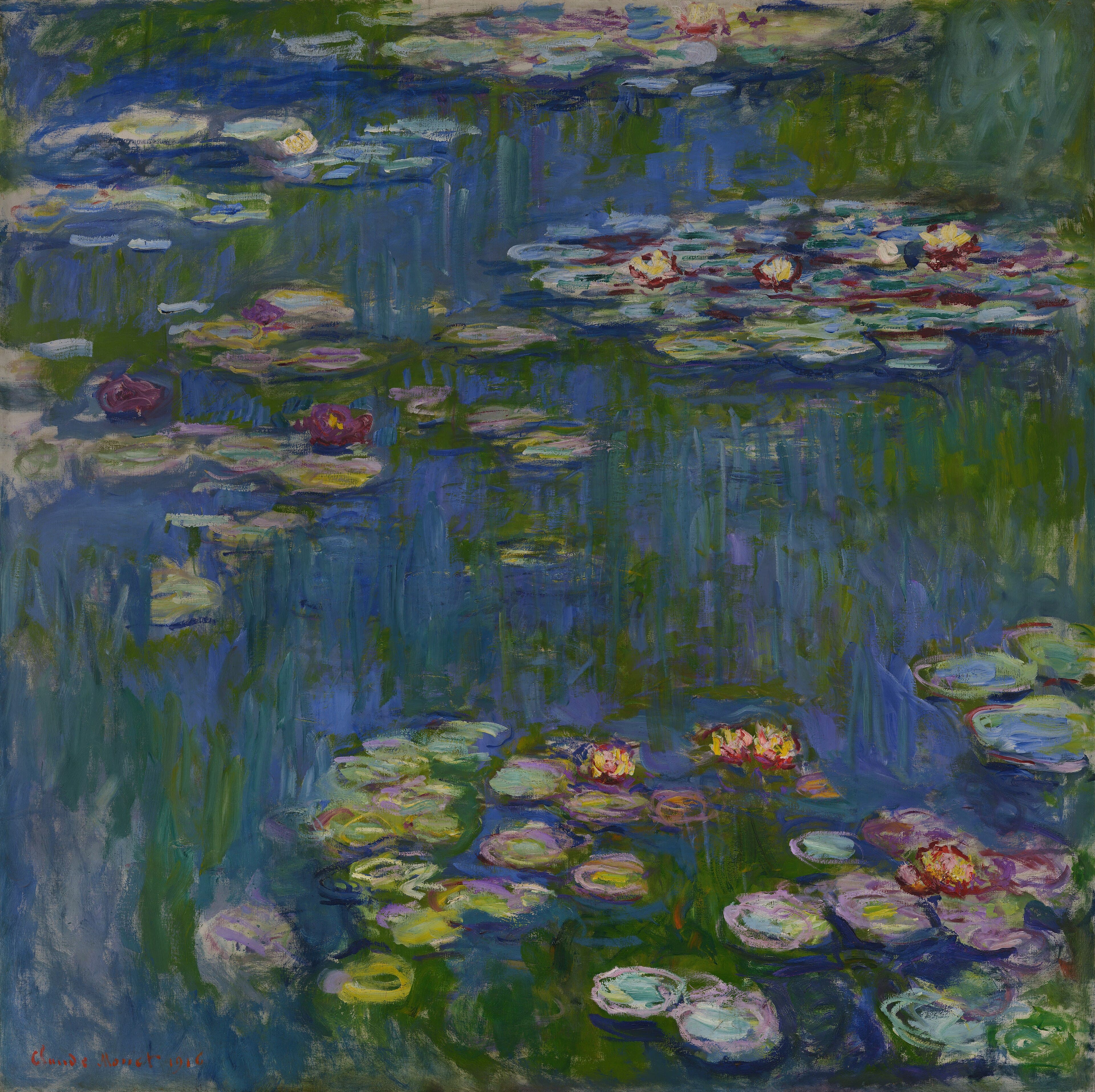
Water Lilies (1916, Tokyo)
Claude Monet · 1916
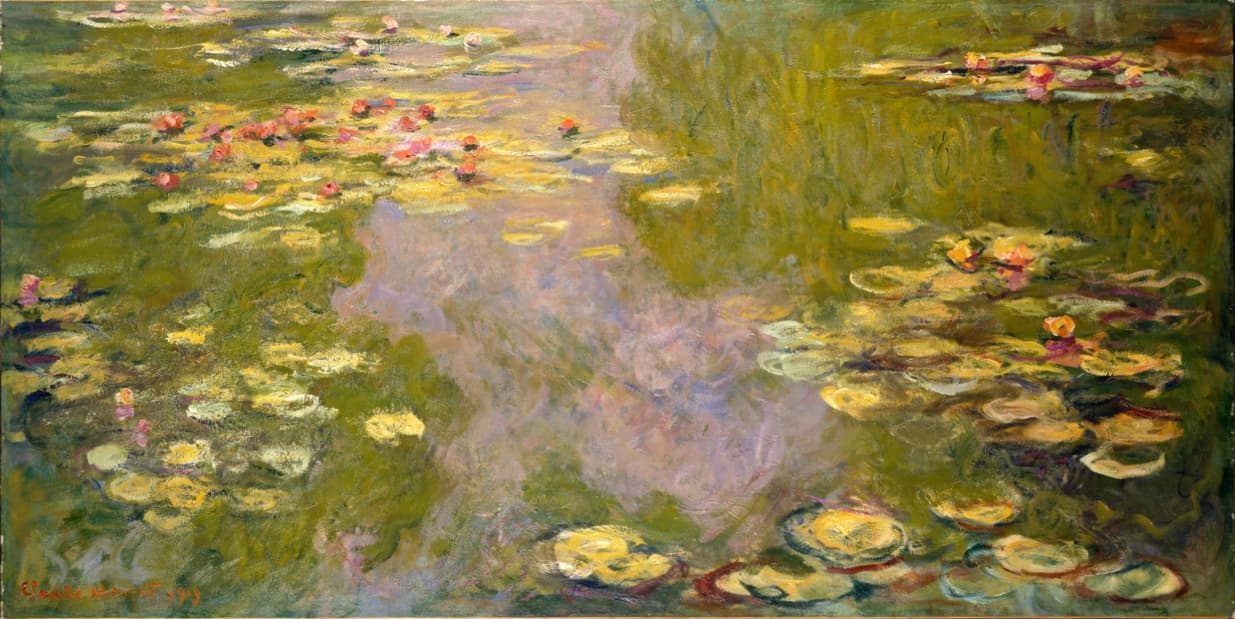
Water Lilies (1919, Metropolitan Museum)
Claude Monet · 1919
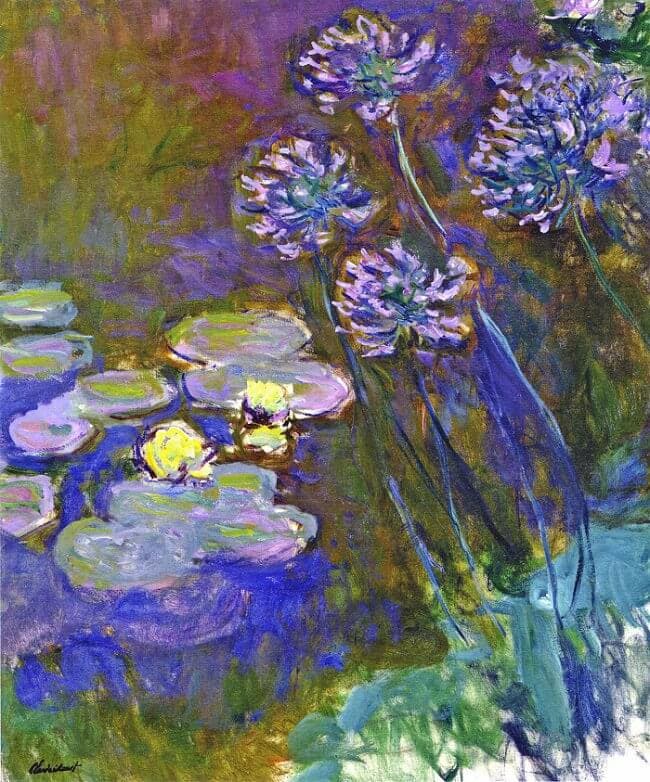
Water Lilies and Agapanthus
Claude Monet · 1914–17
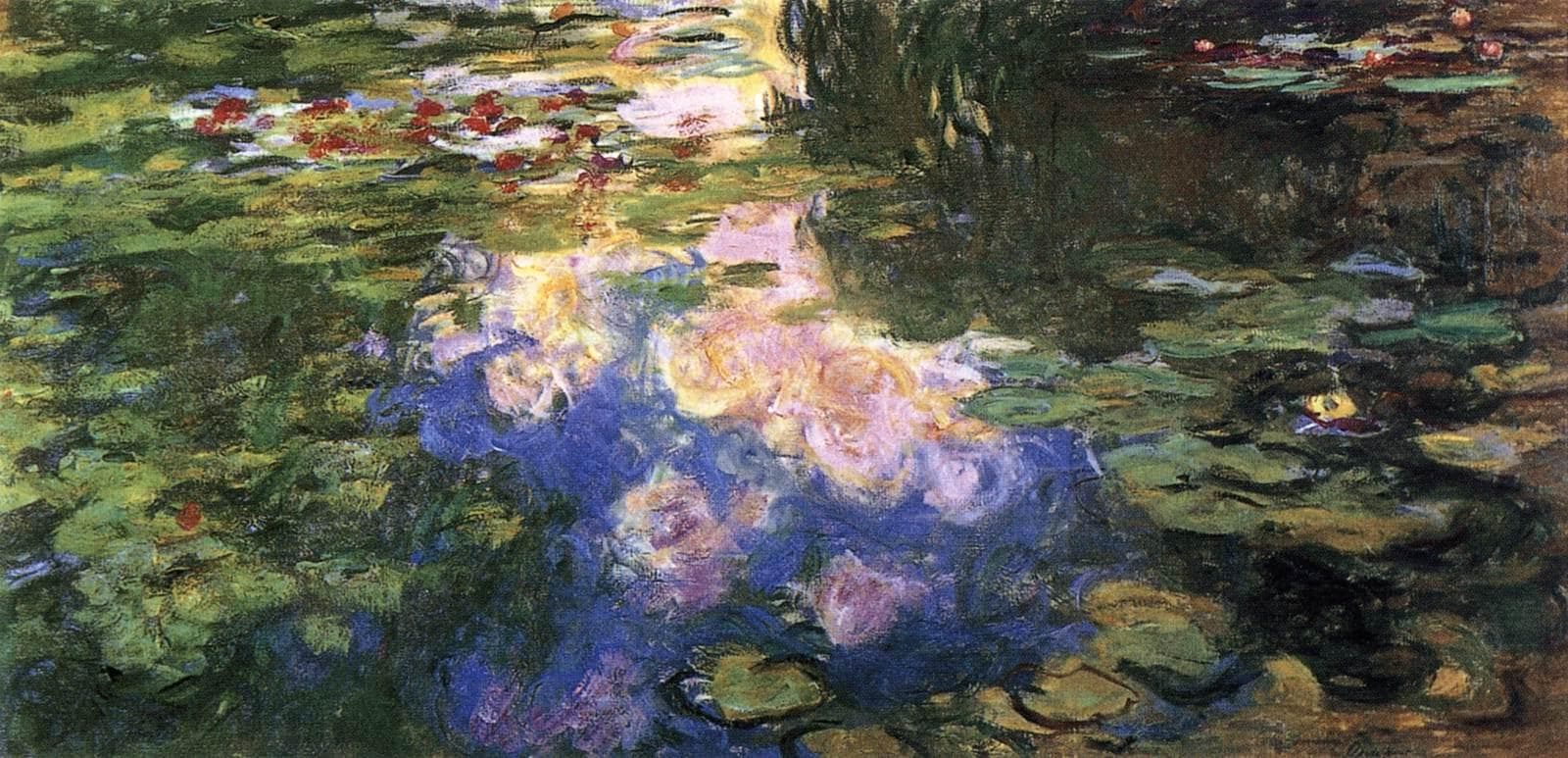
Water-Lily Pond (Le Bassin aux nymphéas), 1917–19
Claude Monet · 1917–19

The Scream
Edvard Munch · 1893

Ophelia
John Everett Millais · 1851–52

The Great Wave off Kanagawa
Katsushika Hokusai · c. 1830–32