Impressionism (early)
Setting Sun (Nightfall)
Claude Monet, c. 1865
Setting Sun (Nightfall) is a small sky study attributed to Claude Monet and traditionally dated around 1865, showing banks of blue-grey cloud lit gold and pink above a dark strip of land at sunset. Its medium and current collection have not been confirmed.
- Artist
- Claude Monet
- Date
- c. 1865
- Movement
- Impressionism (early)
What you are looking at
Almost the whole picture is sky. A low, dark band of land runs along the bottom edge, flat at left and rising slightly at right, where a few darker shapes, perhaps a tree or a roofline, break the horizon. Above it the sun has just gone down. A strip of bright yellow light lies along the horizon, and above that heavy masses of cloud pile up in blue-grey and slate, their edges caught in cream, gold and pink. Patches of clear, bright blue sky show through at the top and to the left. The sheet is wide and shallow, close to a two-to-one format, like a band torn from a panorama.
The handling is quick and soft. The clouds are made with broad, smudged strokes that blend into one another, with crisp highlights laid on top along their lit edges, a technique that suggests pastel rather than oil. The colors are set off against each other in pairs: warm gold against cool blue, pink against slate. Look at the lower clouds just above the yellow band: they are tinged with rose and violet, the reflected glow of a sun already below the horizon, while the higher clouds stay cold and grey.
Monet and the study of skies
As a teenager in Le Havre, Monet was taught by Eugène Boudin, who sketched skies and clouds on the Normandy coast constantly, in pastel and in oil, to train his eye for weather. Monet learned the habit from him. In the 1860s he made many small sky and beach studies around Le Havre, Honfleur and Sainte-Adresse, the coast gathered in our Normandy coast hub, some of them in pastel, as exercises rather than finished pictures for sale.
A closely comparable sheet is the pastel Sunset (Coucher de soleil) of about 1868, with the same low strip of land, yellow seam of light and heavy violet clouds. Set side by side, the two look like notes from the same habit of watching the evening sky, perhaps from the same stretch of coast.
How it was made
If, as it appears, this is a pastel, the method is straightforward. The broad masses of cloud are laid in with the side of the stick and rubbed or smudged with a finger; the bright edges are drawn on top with the point, pressed hard so that the pigment sits thickly on the paper. The dark band of land is a single dragged stroke. Pastel needs no drying time, which made it ideal for a sky that changes from minute to minute.
The seed of later work
A study like this, made in the few minutes when the light changes after sunset, is the seed of what Claude Monet would do for the next sixty years: paint a specific moment of light. The best-known descendant is Impression, Sunrise of 1872, painted in the harbor at Le Havre, but the same interest runs through Sunset on the Seine in Winter and, much later, the evening effects of the haystacks and the London series.
Dating and attribution
The date of about 1865 comes from older catalogue information and has not been independently confirmed for this sheet. The medium, dimensions and present owner are not recorded in the sources we could check, and we have not been able to match it to a number in Daniel Wildenstein's catalogue raisonné, which lists Monet's pastels separately from his paintings. Until it can be identified, it is best treated as a sky study attributed to Monet. For his early Normandy pictures in public collections, see where to see Monet's paintings.
Questions & answers
When did Monet paint Setting Sun (Nightfall)?
The work is traditionally dated around 1865, early in Monet's career, when he was making many small studies of skies and the sea around Le Havre and Honfleur. That date has not been firmly confirmed, and the picture's medium and current owner are not recorded in our sources.
Where is Setting Sun (Nightfall) today?
Its present location has not been confirmed. It appears to be a small pastel sky study, and like most of Monet's early pastels it is probably privately owned rather than in a public museum. We have not been able to match it to an entry in the Wildenstein catalogue raisonné.
What does Setting Sun (Nightfall) show?
A sky just after sunset: a dark strip of land at the bottom, a bright yellow band of light on the horizon, and heavy blue-grey clouds above with their edges lit gold and pink. There is no other subject; the changing light of the evening sky is the whole picture.
Is Setting Sun related to Impression, Sunrise?
Not directly, but they share a subject: a low sun and colored cloud over flat land or water, painted fast to catch a passing moment. Impression, Sunrise, painted at Le Havre in 1872, is the more famous and finished descendant of studies like this one.
More by the artist
Claude Monet

Bridge over a Pond of Water Lilies
Claude Monet · 1899

Woman with a Parasol – Madame Monet and Her Son
Claude Monet · 1875

Sunset in Venice
Claude Monet · 1908–12

La Grenouillère
Claude Monet · 1869

Beach in Pourville
Claude Monet · 1882

Springtime
Claude Monet · 1872

Boating on the River Epte
Claude Monet · 1890

The Seine at Asnières (Hermitage)
Claude Monet · 1873
Also painted in 1865
The same year
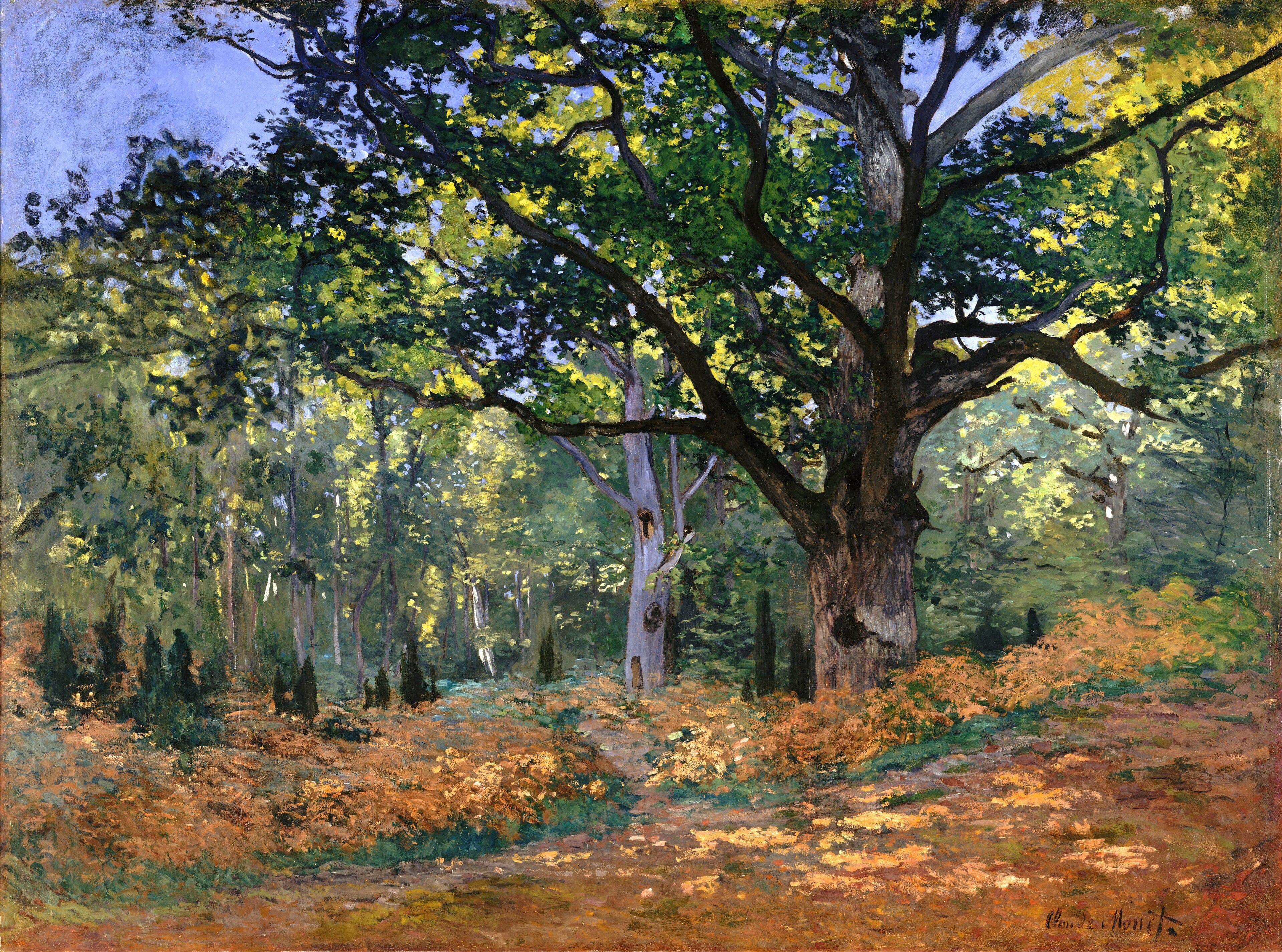
The Bodmer Oak, Fontainebleau Forest
Claude Monet · 1865
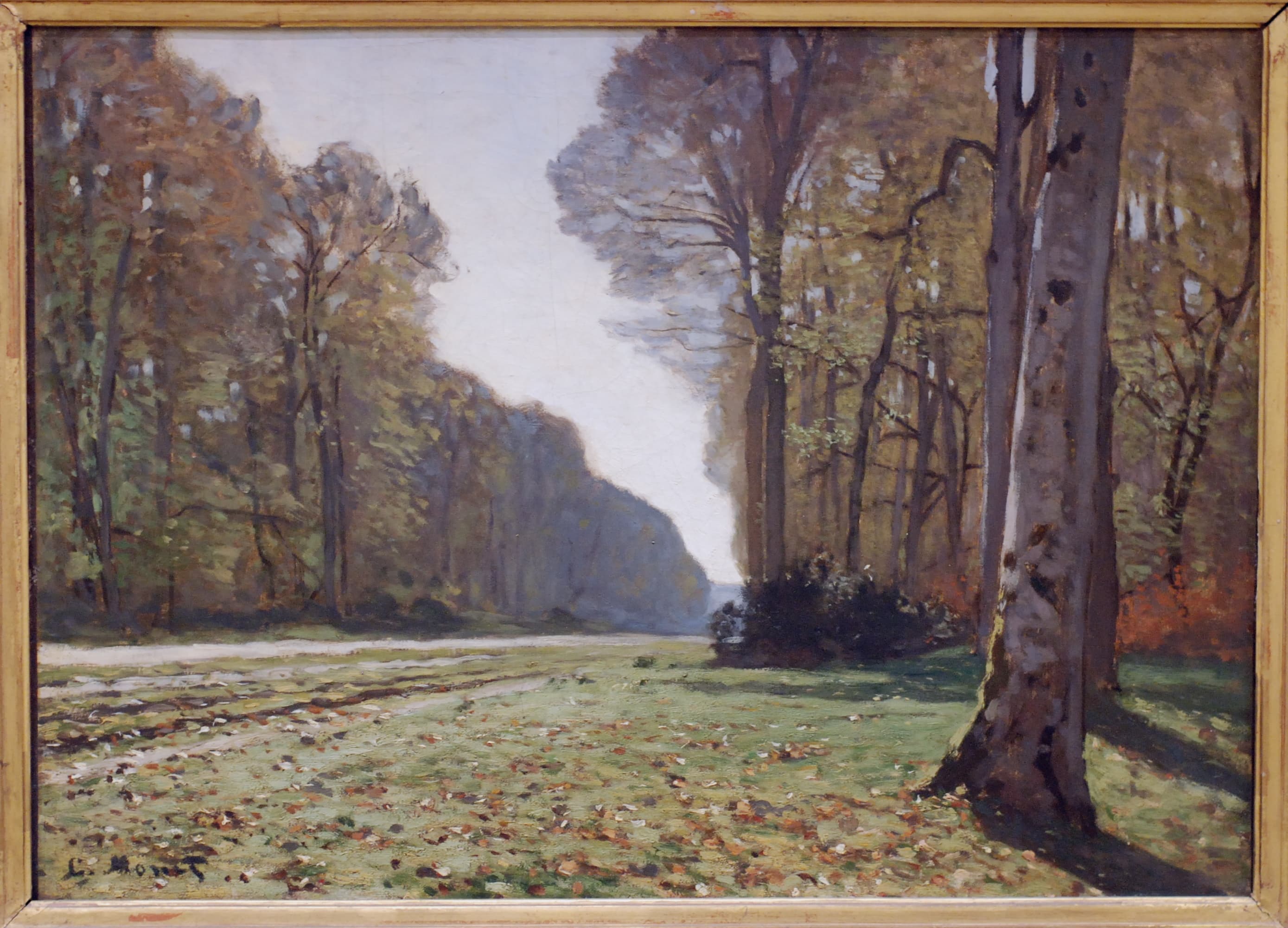
Le Pavé de Chailly
Claude Monet · c. 1865
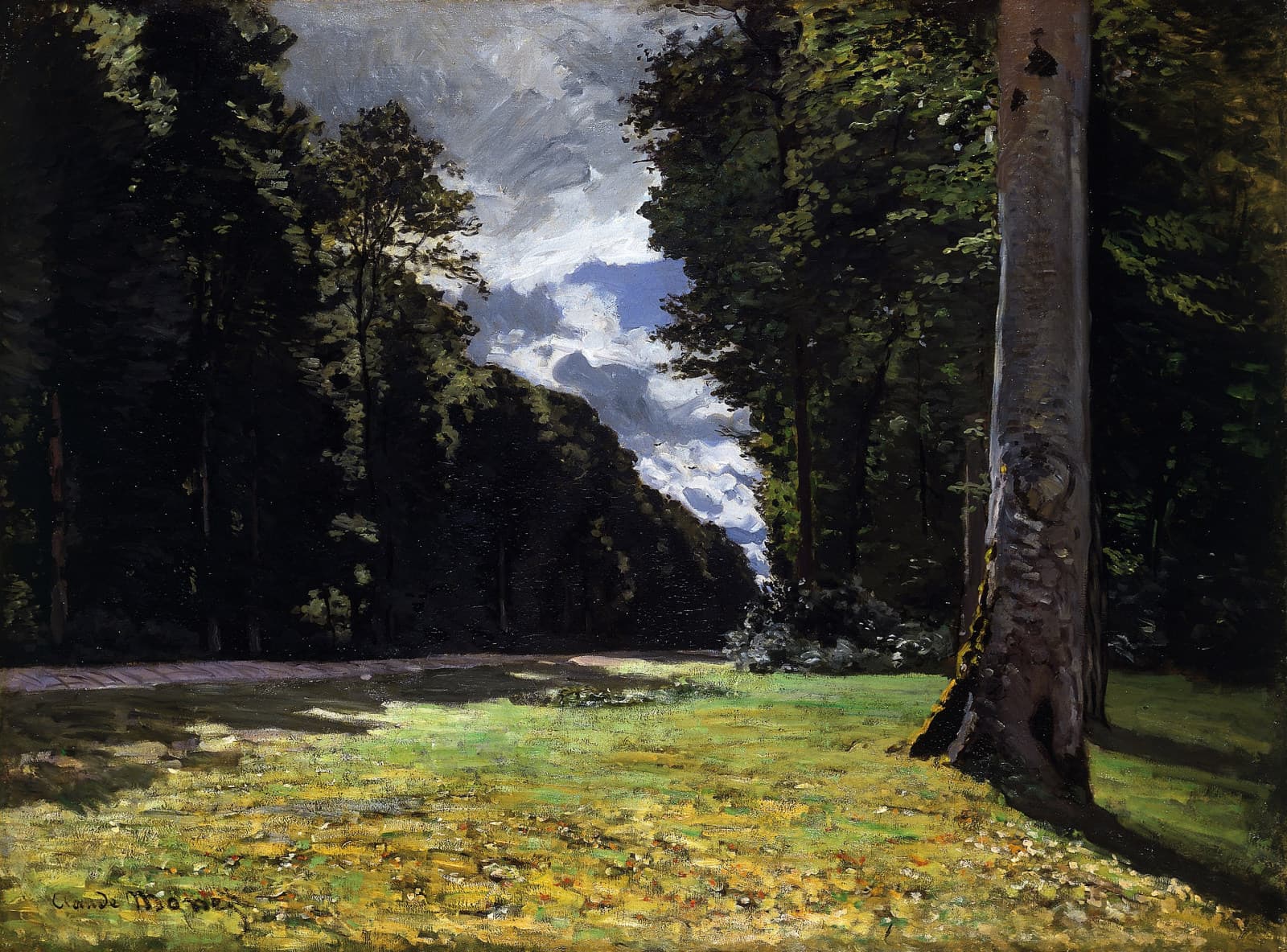
The Pavé de Chailly in the Forest of Fontainebleau
Claude Monet · 1865
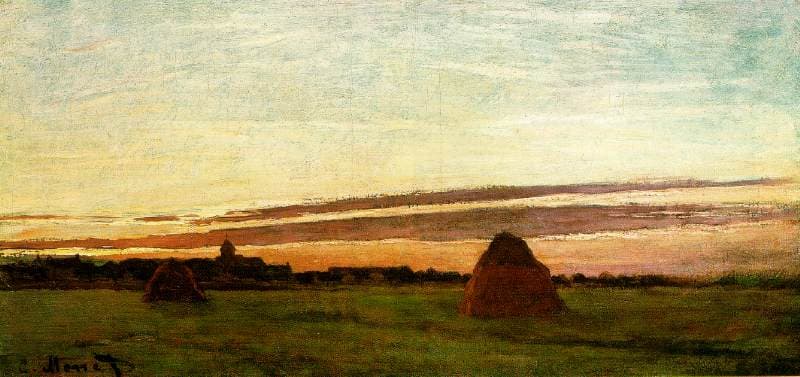
Haystacks at Chailly at Sunrise
Claude Monet · 1865
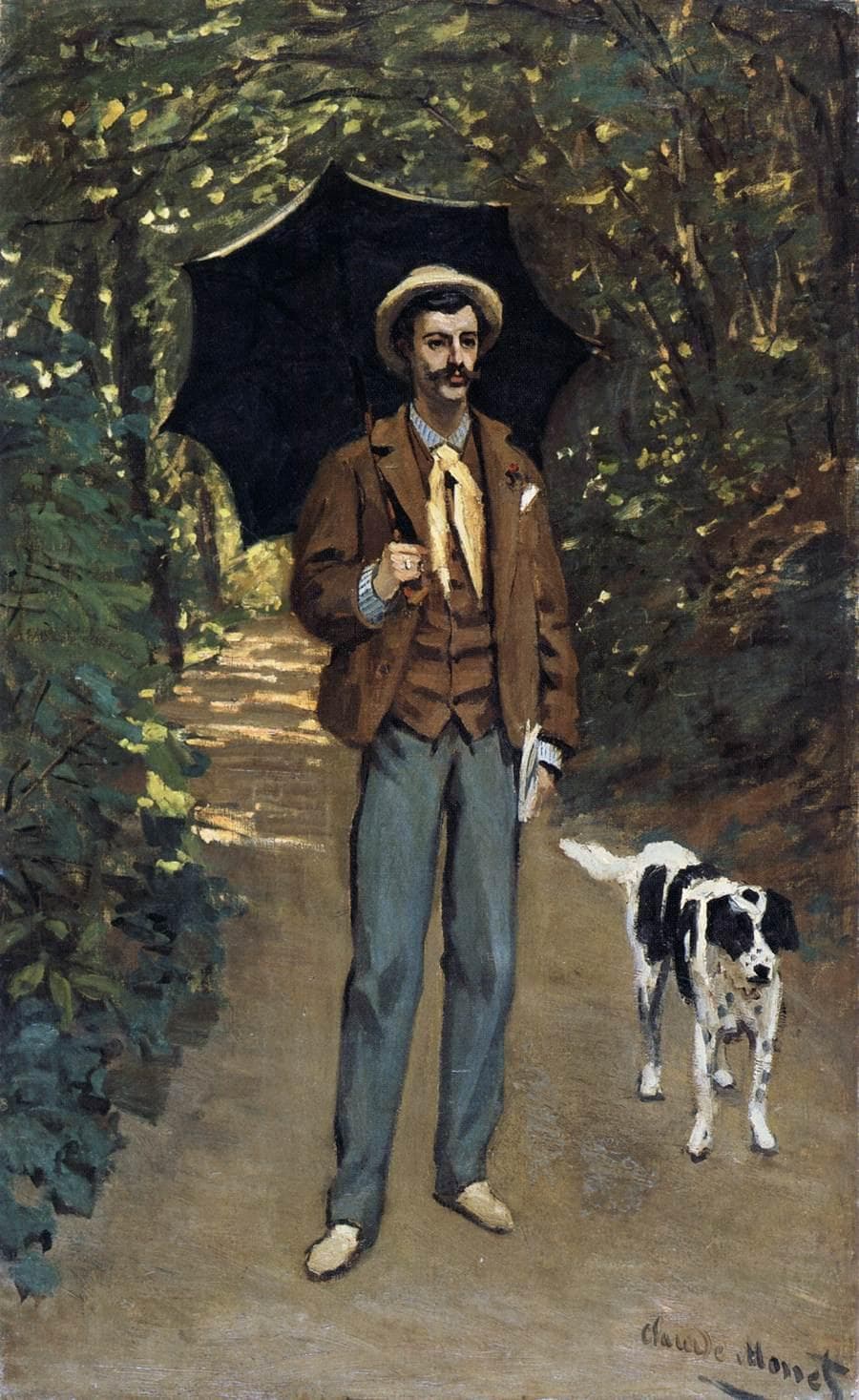
Man with a Parasol (Portrait of Victor Jacquemont)
Claude Monet · 1865–67
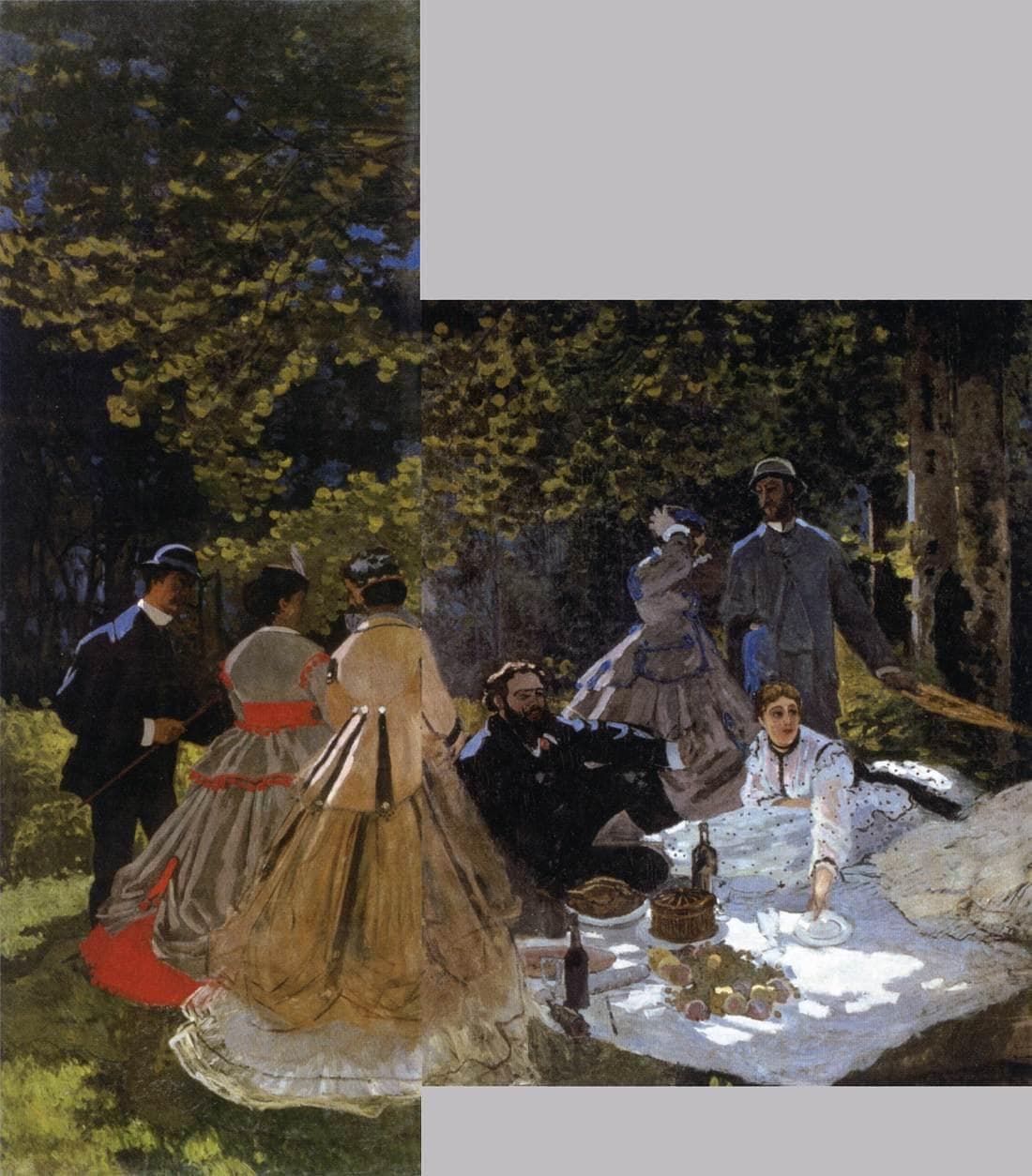
Le Déjeuner sur l'Herbe (two surviving fragments)
Claude Monet · 1865–66
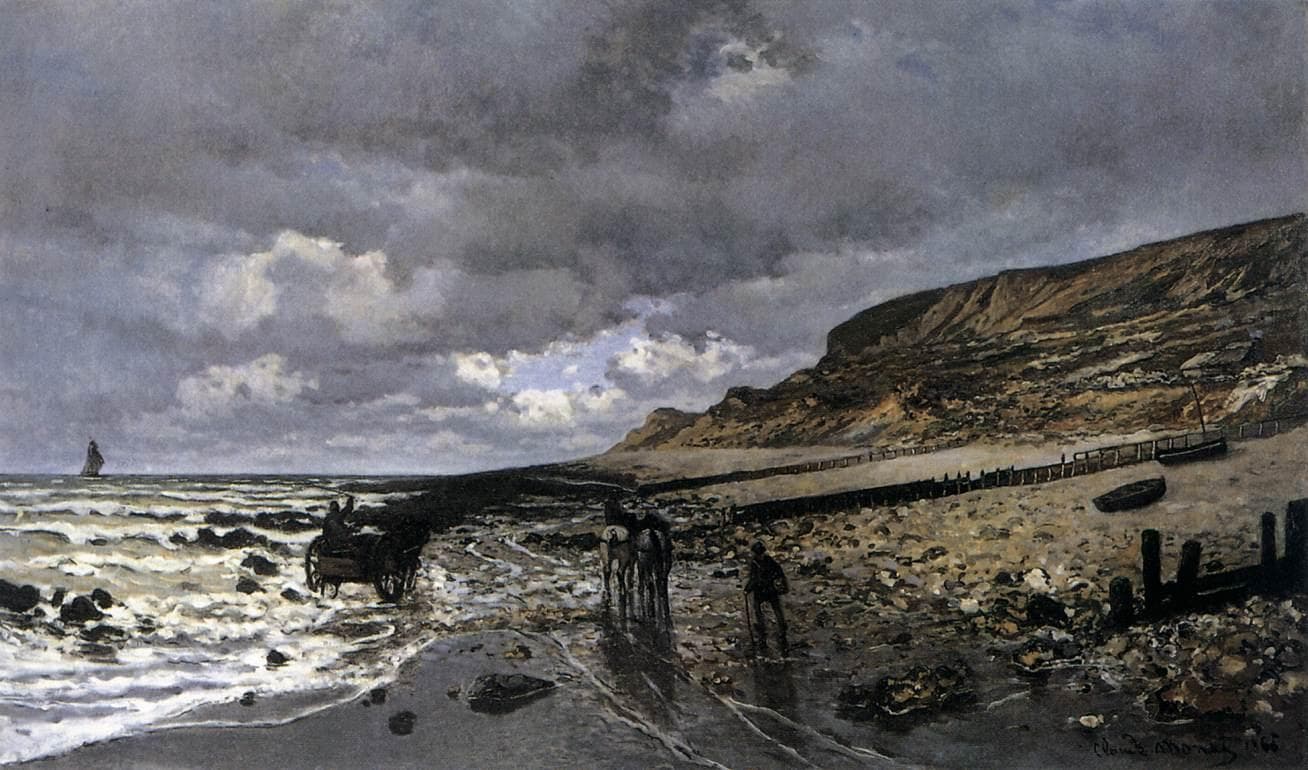
La Pointe de la Hève at Low Tide
Claude Monet · 1865
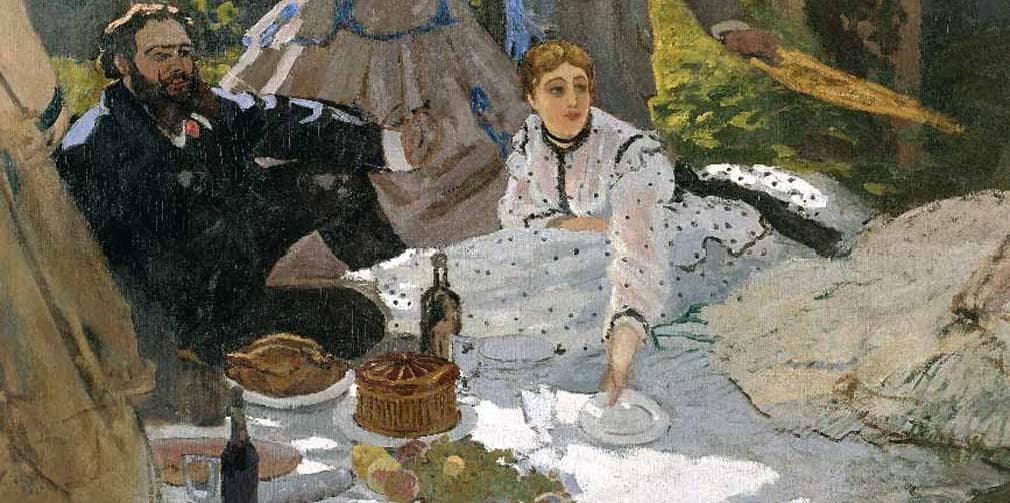
Picnic (detail)
Claude Monet · 1865–66
Kindred works
You may also study
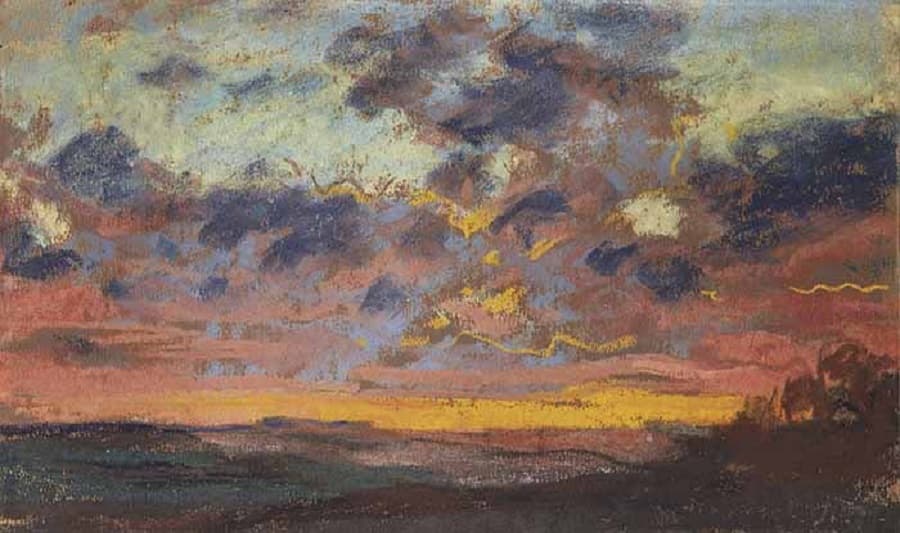
Sunset (Coucher de soleil)
Claude Monet · c. 1868
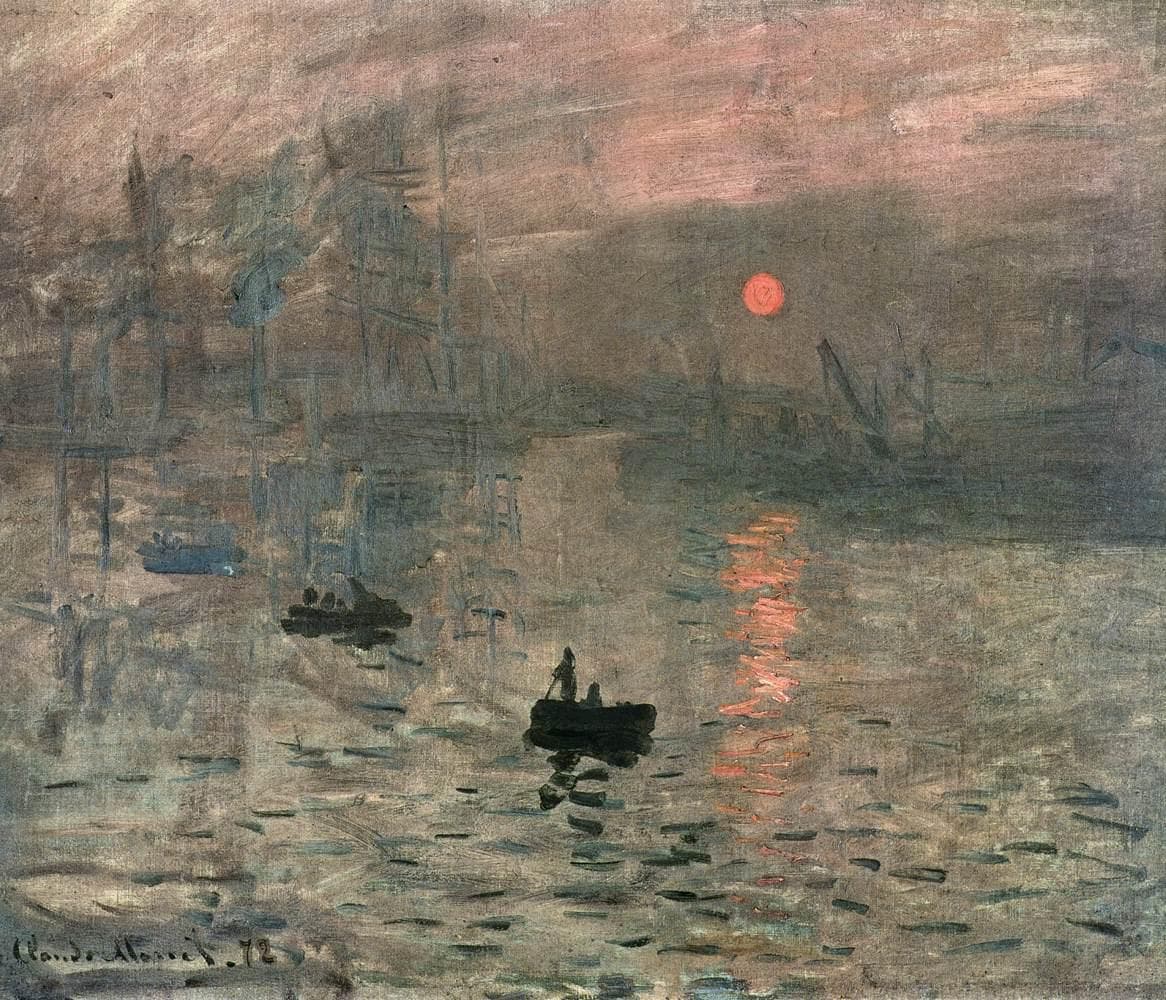
Impression, Sunrise
Claude Monet · 1872
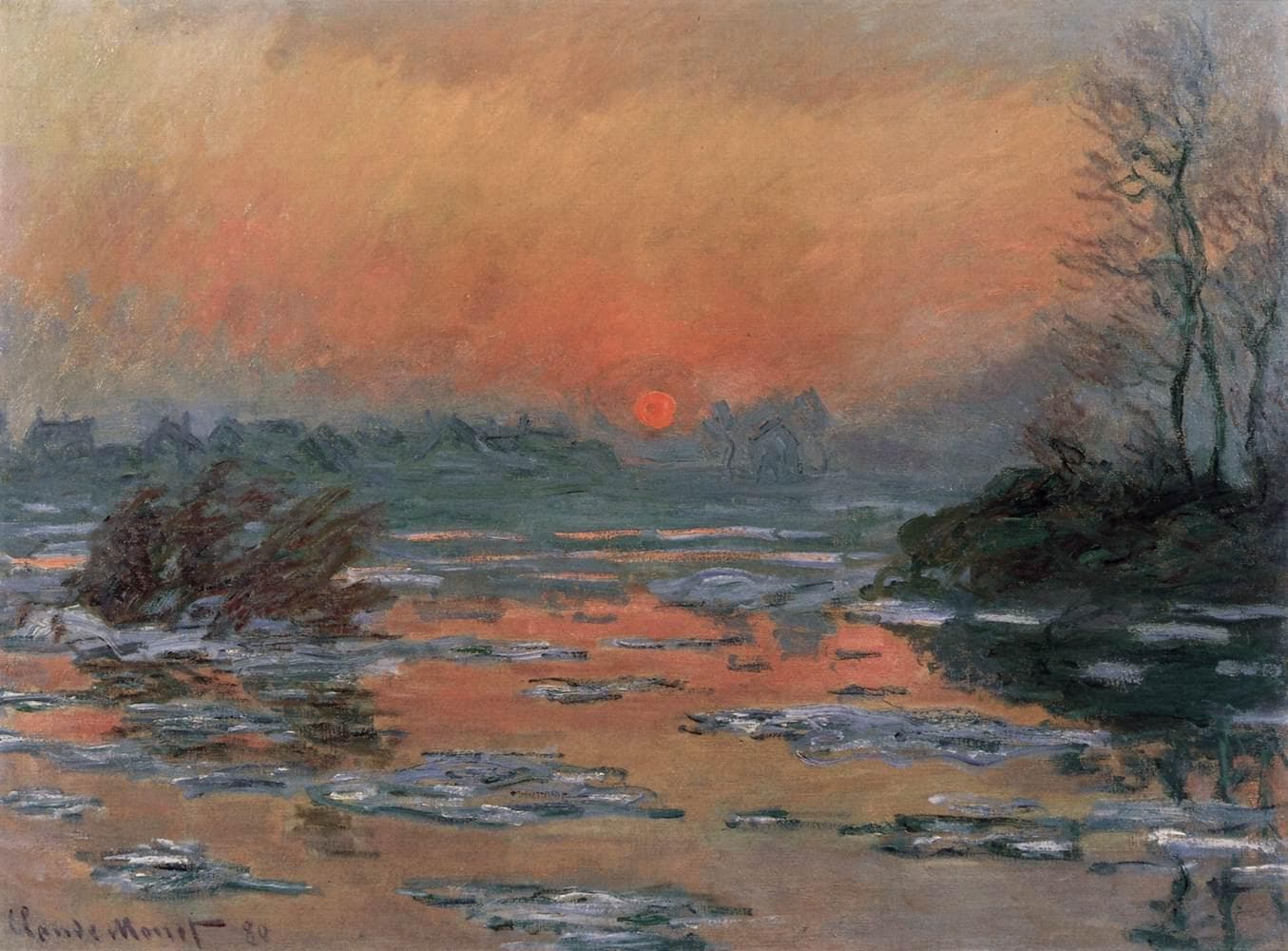
Sunset on the Seine in Winter
Claude Monet · 1880
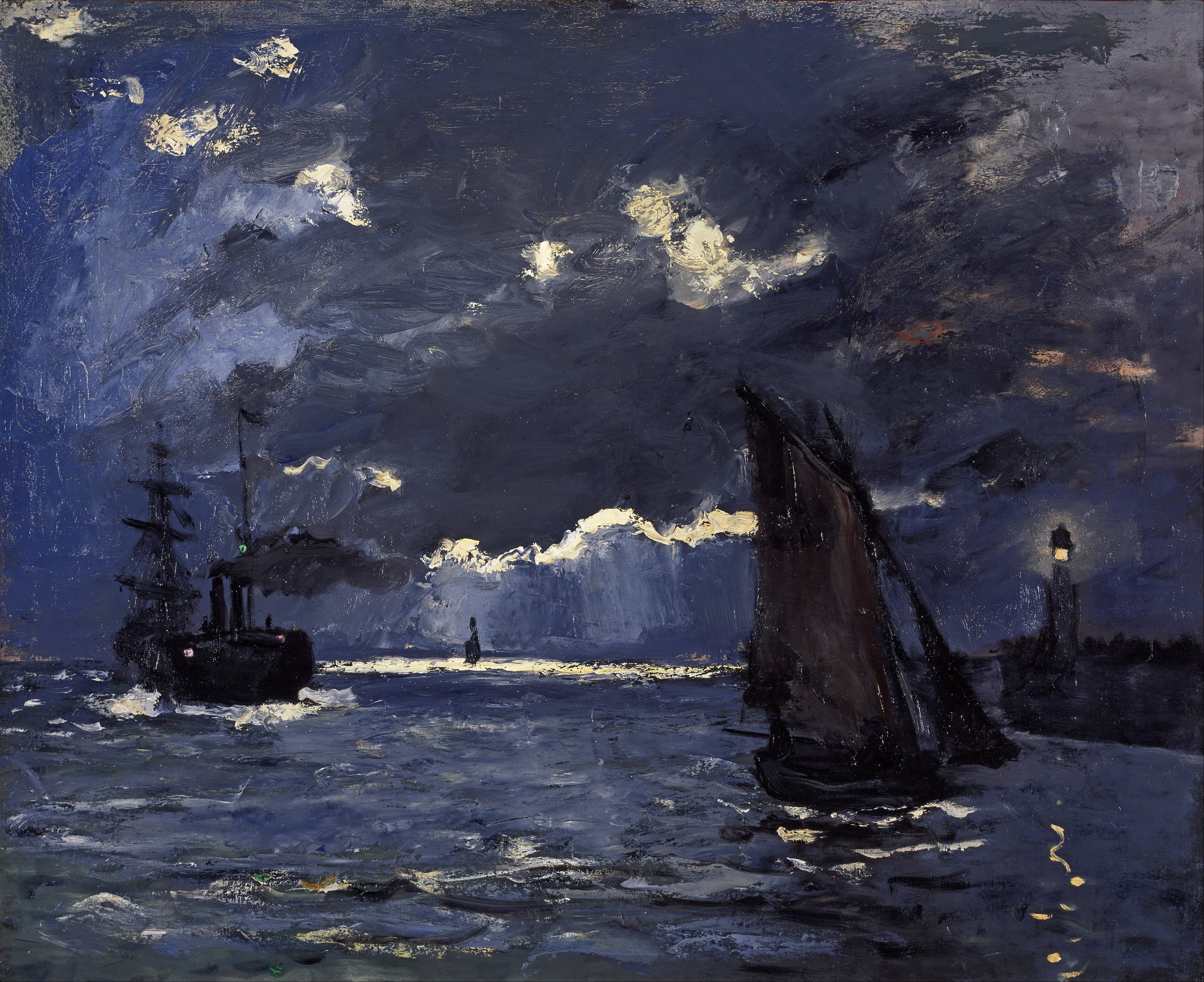
A Seascape, Shipping by Moonlight
Claude Monet · c. 1864
La Pointe de la Hève, Sainte-Adresse
Claude Monet · 1864

Nymphs Dancing to Pan's Flute
Joseph Tomanek

The Scream
Edvard Munch · 1893

Ophelia
John Everett Millais · 1851–52