Academic art
Fallen Angel
Alexandre Cabanel, 1847
Fallen Angel (L'Ange déchu) is an 1847 painting by Alexandre Cabanel showing Lucifer after his fall from Heaven, glaring over his folded arms with tears in his eyes. Painted in Rome when Cabanel was 24, it is in the Musée Fabre, Montpellier.
- Artist
- Alexandre Cabanel
- Date
- 1847
- Medium
- Oil on canvas
- Dimensions
- 121 × 189.7 cm
- Collection
- Musée Fabre, Montpellier, France
- Movement
- Academic art
What you are looking at
A young man with a mass of copper-red hair lies sprawled on a rock, naked, enormous dark wings folded behind him. His legs stretch across the width of the canvas; his arms are raised and crossed in front of his face, hands clasped, so that only his eyes and brow show above them. Those eyes are the center of the painting. They glare out at us, furious, wet with tears. Behind him, in a pale blue sky, a cloud of angels sweeps away toward the light, oblivious.
This is L'Ange déchu, painted in 1847 by the French artist Alexandre Cabanel, then 24 years old. The figure is Lucifer, the angel cast out of Heaven for his rebellion against God. The canvas measures about 121 by 190 centimeters and is in the Musée Fabre in Montpellier, Cabanel's home town.
Looking closely
Cabanel builds the picture on a long horizontal: the body stretches almost from edge to edge, like an antique river god or a reclining figure on a sarcophagus. The anatomy is idealized and precise, as the academy demanded, with smooth, even modeling of the torso and the long muscles of the legs. The skin is warm and golden against the cool blue and grey of the sky.
The wings are worth a long look. Instead of the white of an angel, they are a deep, iridescent mixture of blue-black, gold and green, with paler feathers near the shoulder. They are the plumage of a creature halfway between heaven and something darker.
Then the face. The crossed arms hide the mouth and nose, a device that concentrates all the expression in the eyes and the furrowed brow. Look carefully and you will see a tear in each eye. The emotion is not one thing: it is wounded pride, resentment and grief at once. At the lower right, a bramble trails across the rock beside his feet, a thorny reminder of the fallen world he now inhabits.
The angels in the sky are painted in a paler, almost translucent key, a celestial procession sweeping toward the upper right. They form a deliberate contrast: a crowd in harmony, flying away from the solitary figure below.
How it was painted
Cabanel won the second Grand Prix de Rome in 1845, which gave him a place at the French Academy in Rome, the Villa Medici. Students there were required to send works home to Paris, known as envois, so that the Academy could judge their progress. L'Ange déchu was Cabanel's second envoi.
The choice of subject was bold. Satan was rarely painted as a heroic nude in French art, and the Academy in Paris was not impressed. According to the Musée Fabre, the envoi was criticized as too "romantic," too far from the classical ideal of beauty expected of a pensionnaire. Cabanel had written to his patron, the Montpellier collector Alfred Bruyas, about his choice of the Satan subject in 1847.
What does the Fallen Angel mean?
The main literary source is John Milton's Paradise Lost (1667), which made Satan a tragic figure: proud, defiant, magnificent even in defeat. In the poem the fallen angel declares it "better to reign in Hell, than serve in Heaven." That Romantic reading of Satan, as rebel and outsider rather than mere villain, was popular among nineteenth-century artists and poets, from William Blake to Charles Baudelaire. Cabanel's Lucifer belongs to this tradition.
The tears are what make the picture unusual. Cabanel does not show triumph or monstrosity, but the first moment of exile, when rage and loss are still mixed. Viewers today often read the figure as an image of wounded pride or depression, and the painting has become hugely popular online for that reason.
Reception and legacy
Cabanel went on to a glittering official career. His Birth of Venus (1863) was bought by Napoleon III, and he became one of the most powerful teachers in Paris. The Impressionists and their supporters later made him a symbol of everything they rejected. Yet Fallen Angel has outlived that reputation; it is now among the most reproduced French paintings of its century.
It sits within a long line of images of the fall, collected in our guide to fallen angels in art. Compare the Baroque turmoil of Sebastiano Ricci's The Fall of the Rebel Angels, the Symbolist menace of Franz von Stuck's Lucifer, and Guy Head's The Fall of the Damned. Contemporary painters continue the theme: the Roman artist Roberto Ferri, whose dark, Caravaggesque nudes include works such as The Angel, the Death, and the Devil, is often searched alongside Cabanel.
Where to see it
The painting has been in the Musée Fabre in Montpellier since the late nineteenth century and is one of the museum's star works. Montpellier also holds other works by Cabanel, who was born in the city in 1823. See more in our Angels & Demons collection.
Questions & answers
Where is Cabanel's Fallen Angel painting?
It is in the Musée Fabre in Montpellier, in the south of France, which has held it since the late nineteenth century. Montpellier was Alexandre Cabanel's birthplace, and the museum owns several of his works. The canvas measures about 121 by 190 centimeters.
Who is the Fallen Angel in Cabanel's painting?
The figure is Lucifer, the angel cast out of Heaven for rebelling against God, who became Satan. Cabanel's interpretation draws on John Milton's Paradise Lost, which presented Satan as a proud, tragic figure rather than a simple monster.
Why is the Fallen Angel crying?
Cabanel paints a tear in each of Lucifer's eyes to show the moment just after the fall, when fury and grief are mixed. The hidden mouth and the glaring, wet eyes express wounded pride and loss rather than triumph.
When did Cabanel paint Fallen Angel?
He painted it in 1847, aged 24, at the French Academy in Rome (Villa Medici), as his second required envoi to Paris. The Academy criticized it as too romantic, but it is now one of his most famous works.
Did Roberto Ferri paint the Fallen Angel?
No. Fallen Angel (1847) is by Alexandre Cabanel. Roberto Ferri is a contemporary Italian painter whose dark, classical nudes of angels and demons are often compared with Cabanel's, which is why the two names are frequently searched together.
Kindred works
You may also study
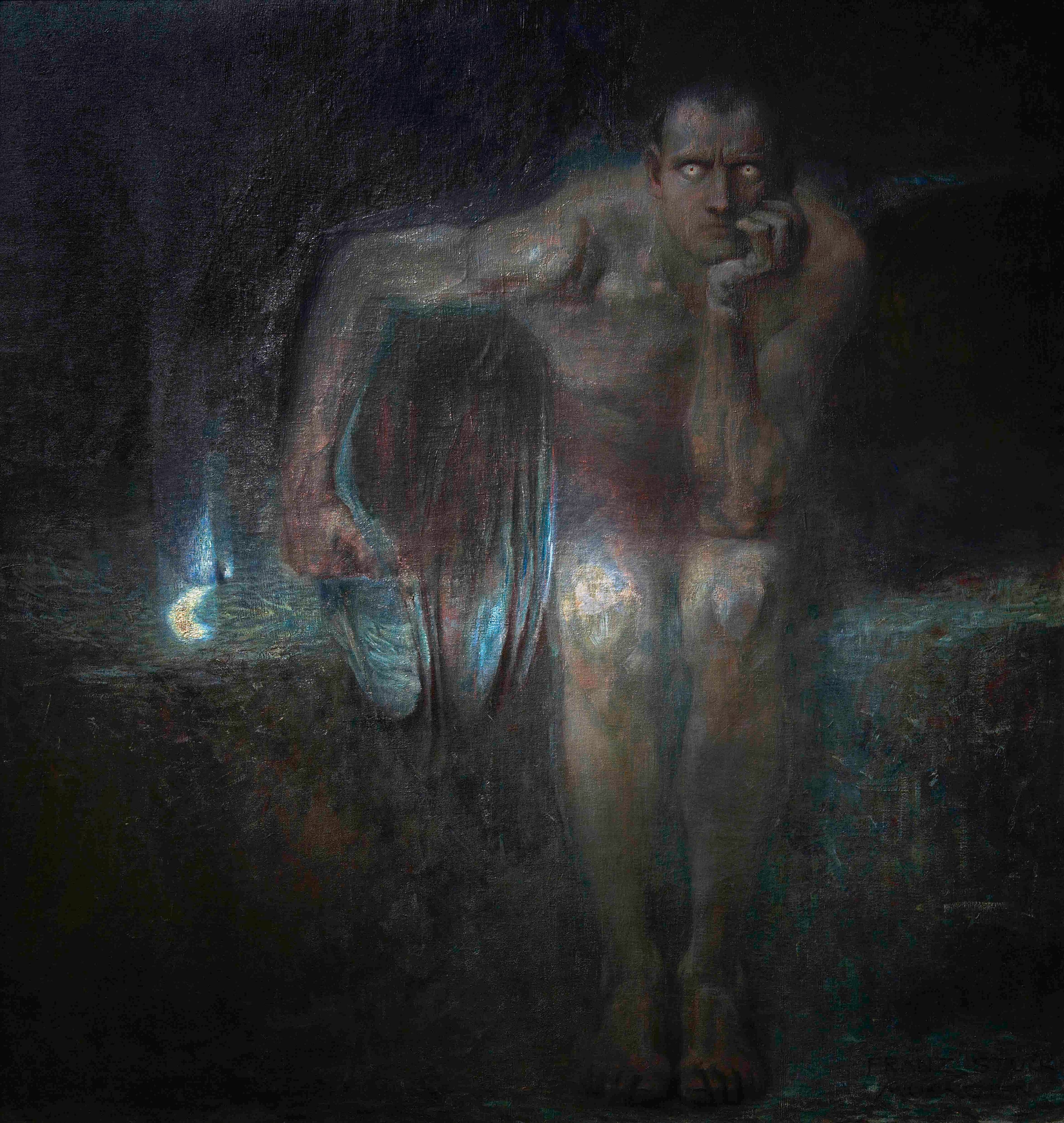
Lucifer
Franz von Stuck · 1890
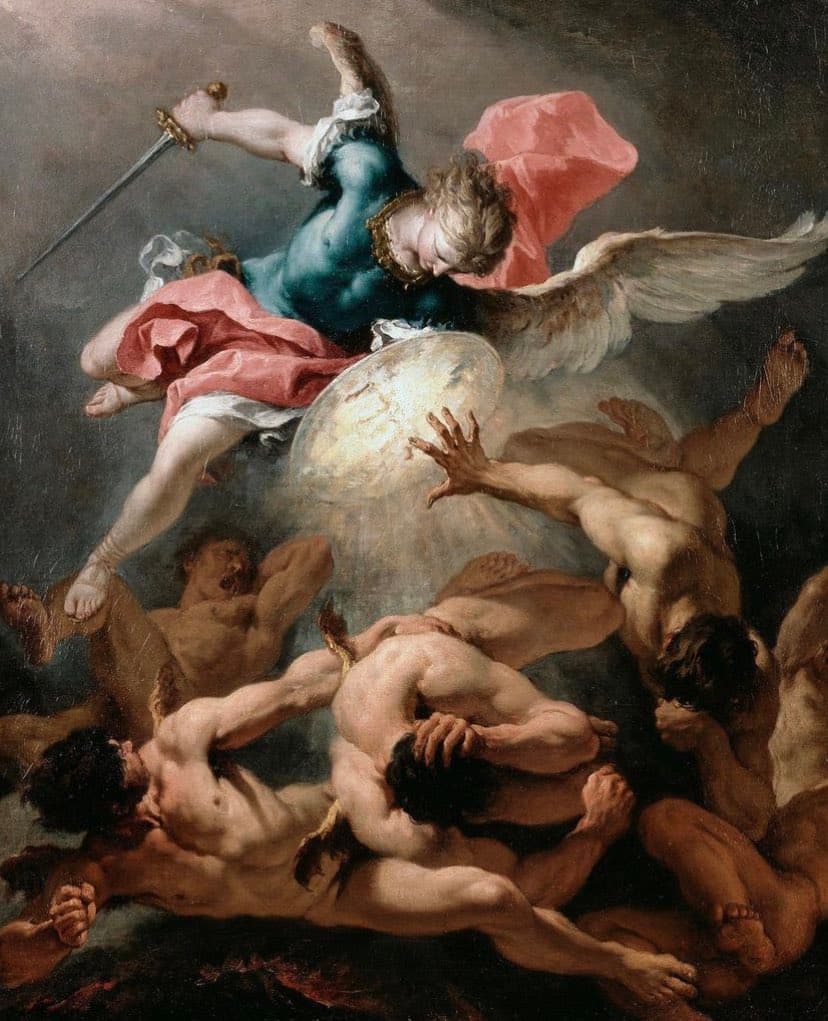
The Fall of the Rebel Angels
Sebastiano Ricci · c. 1720
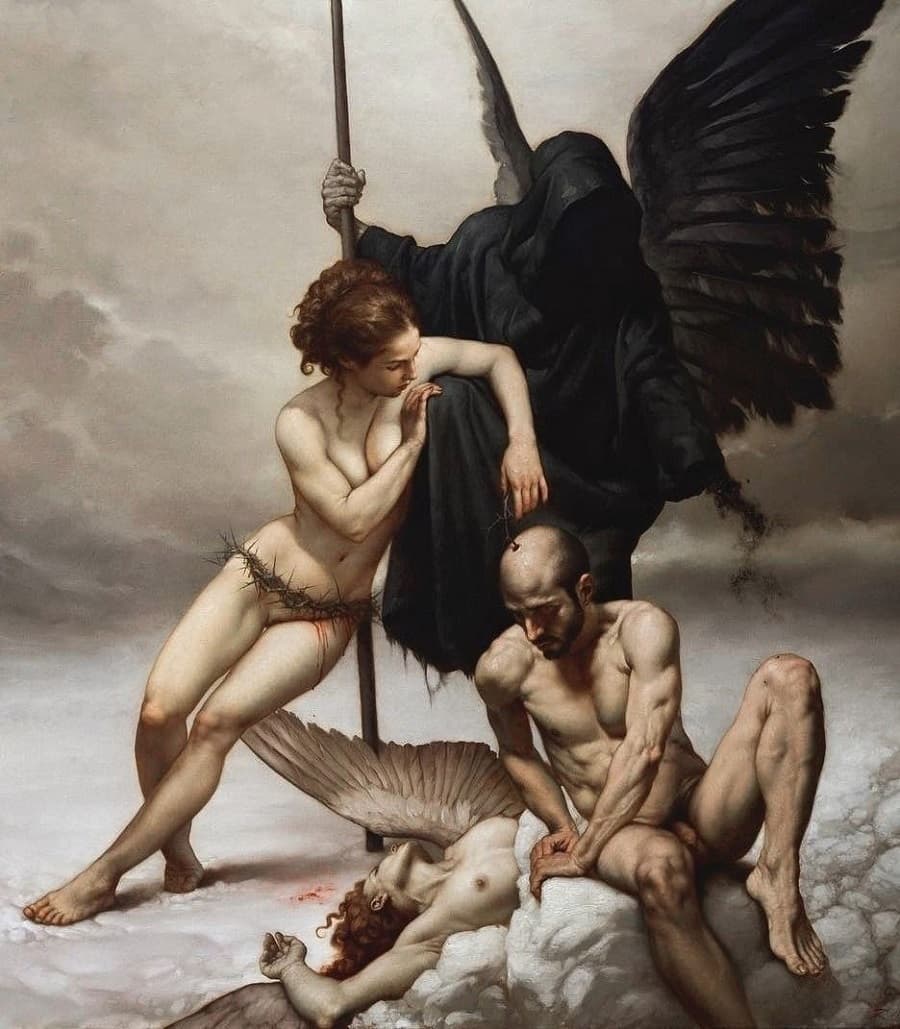
The Angel, the Death, and the Devil
Roberto Ferri · 2018
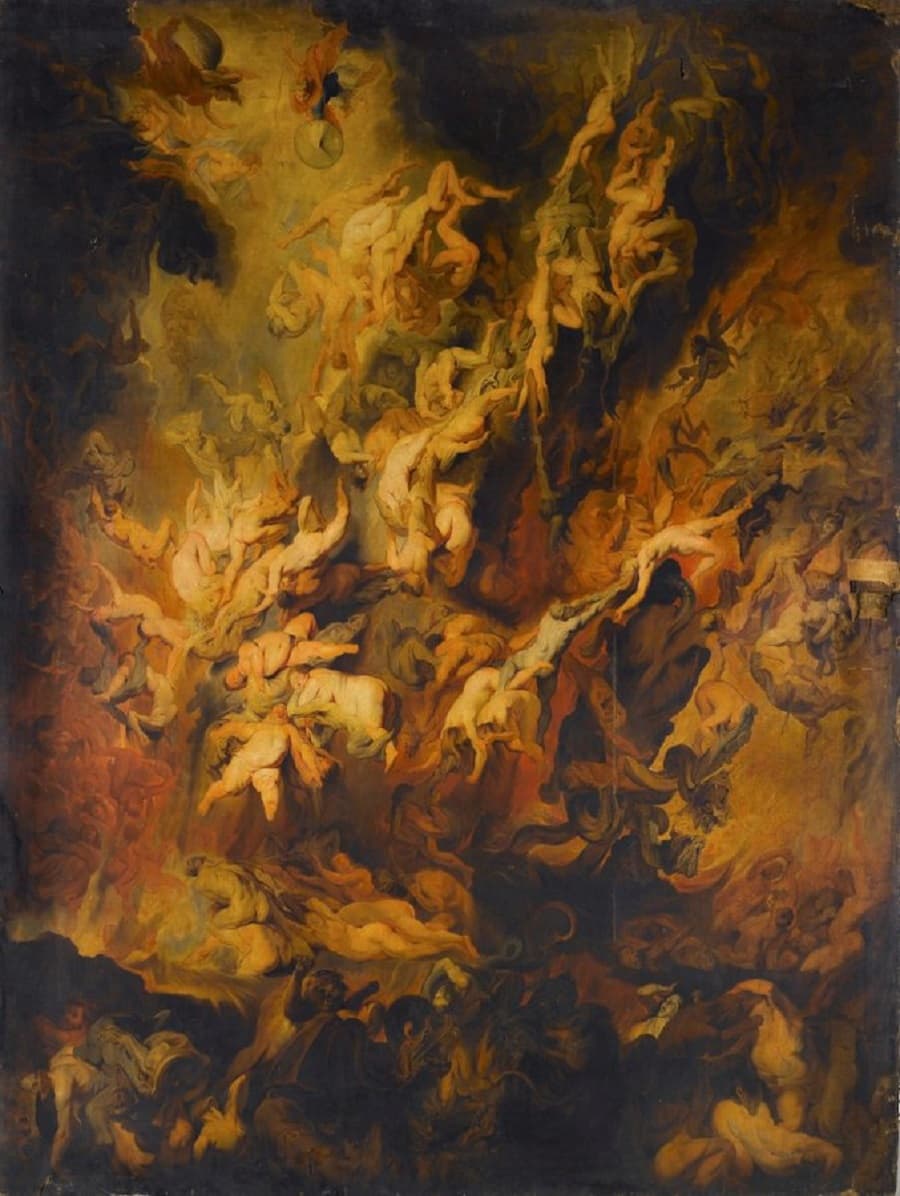
The Fall of the Damned
Guy Head · before 1799
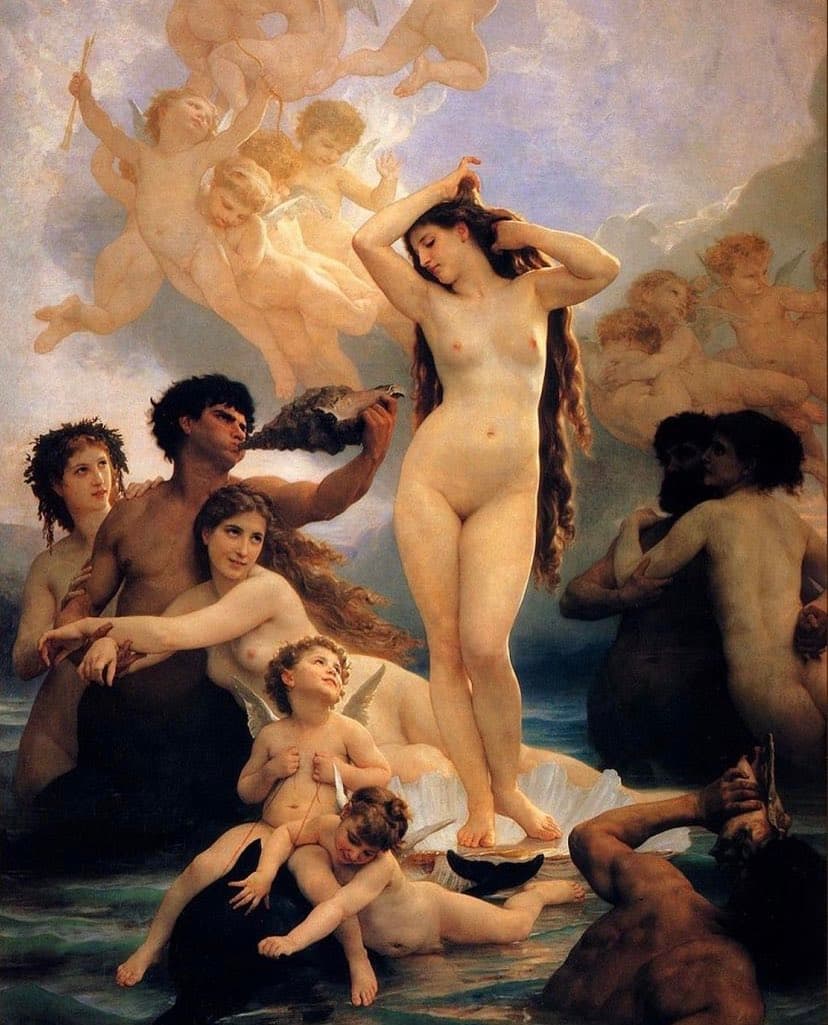
The Birth of Venus
William-Adolphe Bouguereau · 1879
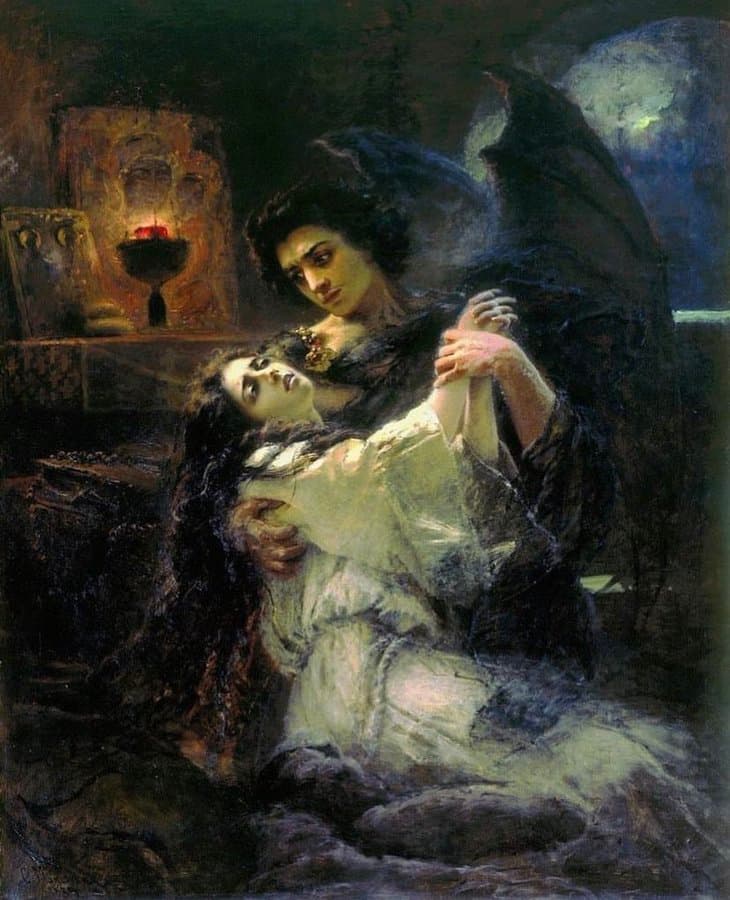
Tamara and Demon
Konstantin Makovsky · 1889

Venus de Milo
Alexandros of Antioch · c. 150–125 BC

Nymphs Dancing to Pan's Flute
Joseph Tomanek