Image: Museo del Prado, Madrid · Public domain · via Wikimedia Commons
Romanticism
Men Reading
Francisco Goya, c. 1819–1823
Men Reading is a Black Painting by Francisco Goya, painted on a wall of his house near Madrid around 1819–1823. Six men crowd in the dark around a page held by a bearded reader. It is now in the Museo del Prado.
- Artist
- Francisco Goya
- Date
- c. 1819–1823
- Medium
- Oil mural transferred to canvas
- Dimensions
- 126 × 66 cm
- Collection
- Museo del Prado, Madrid, Spain
- Movement
- Romanticism
What you're looking at
A knot of men crowds around a single sheet of paper. At the center, a bearded man in a white shirt sits with the page open on his lap, his head bent over it. Around and behind him, five more heads press in: an old, gray-bearded man at the left peering down, a younger man at the right leaning his cheek almost onto the reader's shoulder, and further back faces lifted, turned aside or half swallowed by shadow. One man at the top tips his head right back, eyes up, as if he has stopped reading to think, or to listen.
Everything else is darkness. There is no room, no table, no window. The light comes from the upper left and falls on the reader's white shirt, the page and a few foreheads and beards, leaving the rest to dissolve into brown and black. The canvas is tall and narrow, 126 by 66 cm, and the figures fill only its middle band, so that the black above them presses down like a low ceiling.
What does Men Reading mean?
As with all the Black Paintings, Goya left no title or explanation. The picture has been called Hombres leyendo (Men Reading), La lectura (The Reading) and Politicians, and that last name points to the most common interpretation: a group of men absorbed in a newspaper or pamphlet, perhaps reading about themselves, in the years when political news in Spain could change lives.
Goya painted the walls of his house in about 1819–1823. In 1820 a liberal revolt forced Ferdinand VII to restore the Constitution of 1812, and for three years Spain had a free press, political clubs and furious public debate, before French troops restored absolute monarchy in 1823. Goya, a liberal sympathizer, would have watched men exactly like these huddled over the latest broadsheet. Whether the scene is sympathetic, satirical or both is open to question. The faces show concentration, but also a kind of conspiratorial closeness, and the man looking upward seems lost.
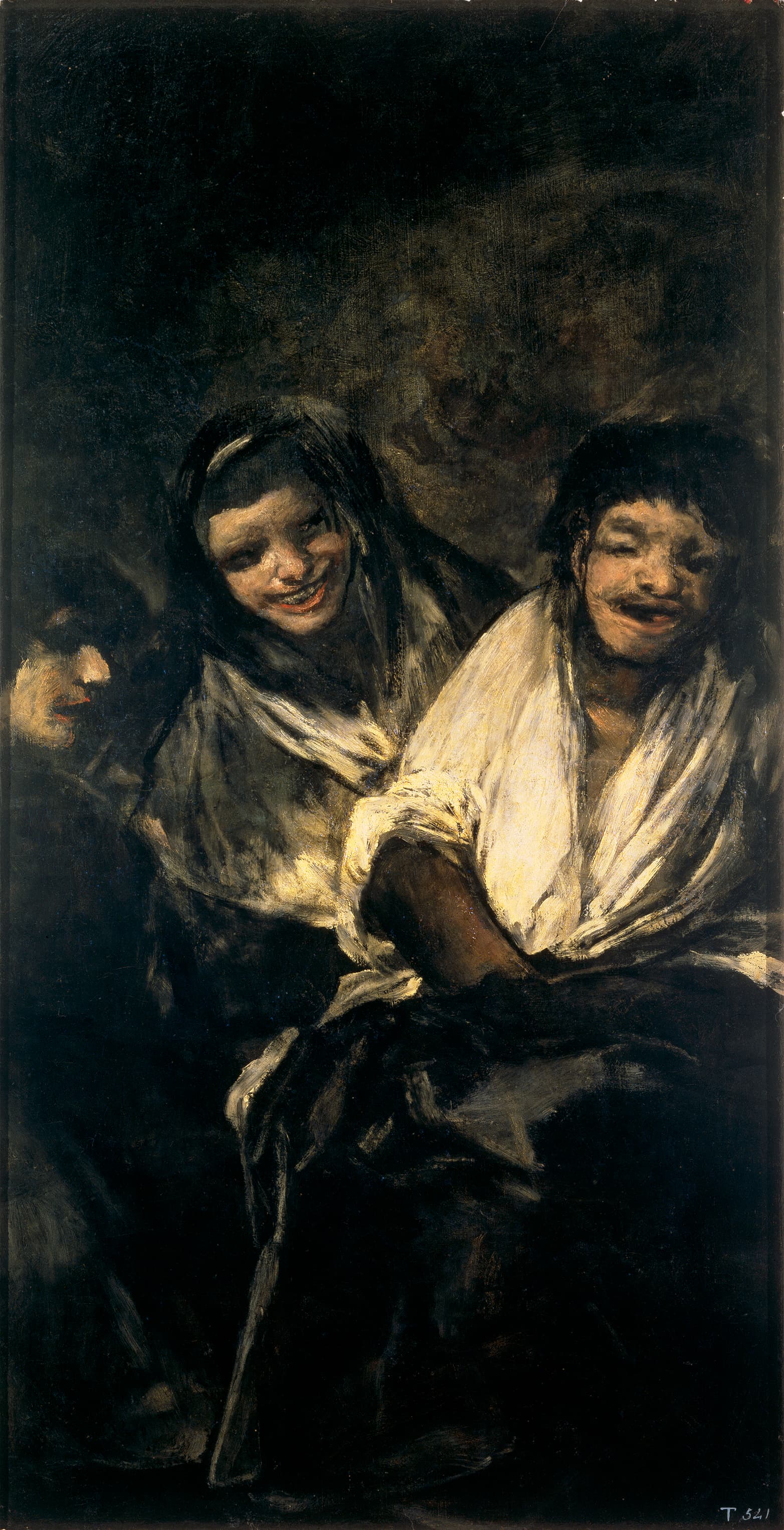
The historian Francisco-Xavier de Salas Bosch went further, reading the picture together with its companion piece, Women Laughing, in which two women leer at a man engaged in a solitary sexual act. On this reading, Goya saw the politicians' endless talk as just as sterile.
A pair of paintings
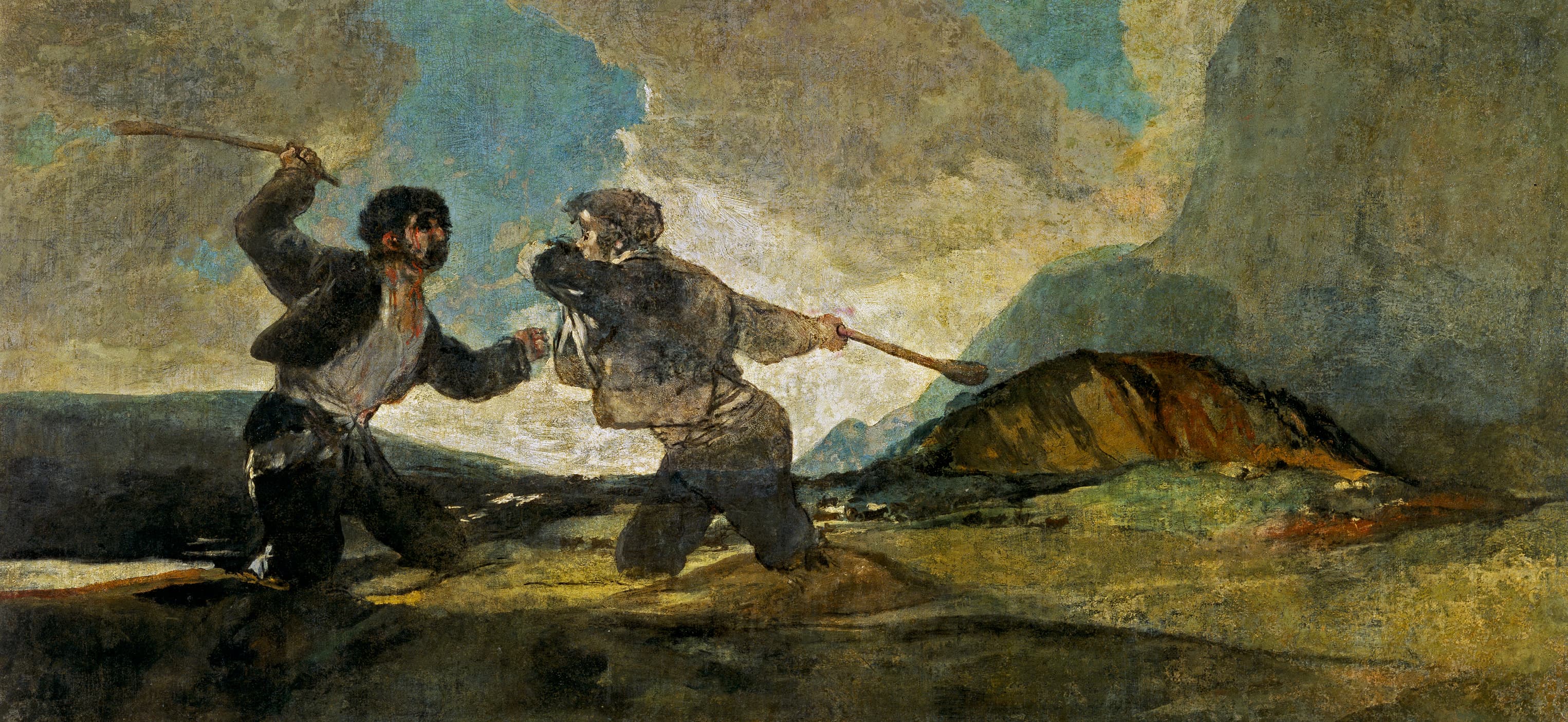
Men Reading and Women Laughing are usually treated as a pair. Both are tall and narrow, smaller than most of the series, lit identically from the upper left and set against unbroken black. They are thematically lighter than the scenes of witches and devouring gods, yet darker in color than almost anything else in the house. The inventory drawn up by Goya's friend Antonio Brugada around 1828–1830 places both in the upper room of the Quinta del Sordo, Goya's farmhouse across the Manzanares from Madrid, which also held The Dog, Atropos (The Fates) and Fight with Cudgels.
What the X-rays show
Technical examination, including X-radiography, has shown how much Goya changed his mind. Under the black background is an earlier landscape that included a figure on horseback, painted over when Goya turned the wall into this dark interior. The central figure in white also seems at one stage to have had horns or wings, which would have made the scene far stranger. The conservator Carmen Garrido also identified a thick lead-white impasto on the head of the man looking upward that she judged not to be Goya's own work, a reminder that the Black Paintings were heavily restored.
That restoration happened in 1873–74, when the banker Baron Émile d'Erlanger had the murals transferred from the walls to canvas under the Prado restorer Salvador Martínez Cubells. D'Erlanger showed them in Paris in 1878 and gave them to the Spanish state, which accepted them in 1881.
What to notice
Look at where the light lands. It falls on the paper and on the reader's white shirt, and the other men are lit only as far as they lean in. Those who pull back go dark.
Goya makes the text the light source of the picture, as if knowledge and news were the only illumination in the room. Compare that with Saturn Devouring His Son downstairs, where the light falls on a body being eaten. Here it falls on reading. In a house full of nightmares, this is about as hopeful as Goya gets, and even here the hope is crowded and uncertain.
Where to see Men Reading today
Men Reading is in the Museo del Prado in Madrid, where the fourteen Black Paintings hang together in a single room. It is usually displayed near Women Laughing, which lets you see the two narrow canvases as the pair they once were. Stand back far enough to take both in at once and the parallel lighting, falling from the same upper left corner, becomes obvious.
Questions & answers
What is Goya's Men Reading about?
Goya left no explanation. The men are usually read as politicians or citizens poring over a newspaper or pamphlet, which fits the years 1820–1823, when Spain briefly had a liberal government and a free press. Some scholars see satire in it, especially when it is paired with Women Laughing.
Where is Men Reading by Goya?
It is in the Museo del Prado in Madrid, displayed with the other Black Paintings. Goya painted it on a wall of the upper room of his house, the Quinta del Sordo; it was transferred to canvas in 1873–74 and entered the Spanish state collection in 1881.
What painting is Men Reading paired with?
It is usually paired with Women Laughing (also called Man Mocked by Two Women). Both are tall, narrow canvases lit from the upper left against black backgrounds, and both hung in the upper room of Goya's house.
What did X-rays reveal under Men Reading?
Technical study showed an earlier landscape beneath the dark background, including a horseman, and suggested that the central figure once had horns or wings. A thick white impasto on the head of the upward-looking man has been judged a later restorer's addition.
More by the artist
Francisco Goya

Saturn Devouring His Son
Francisco Goya · c. 1819–1823
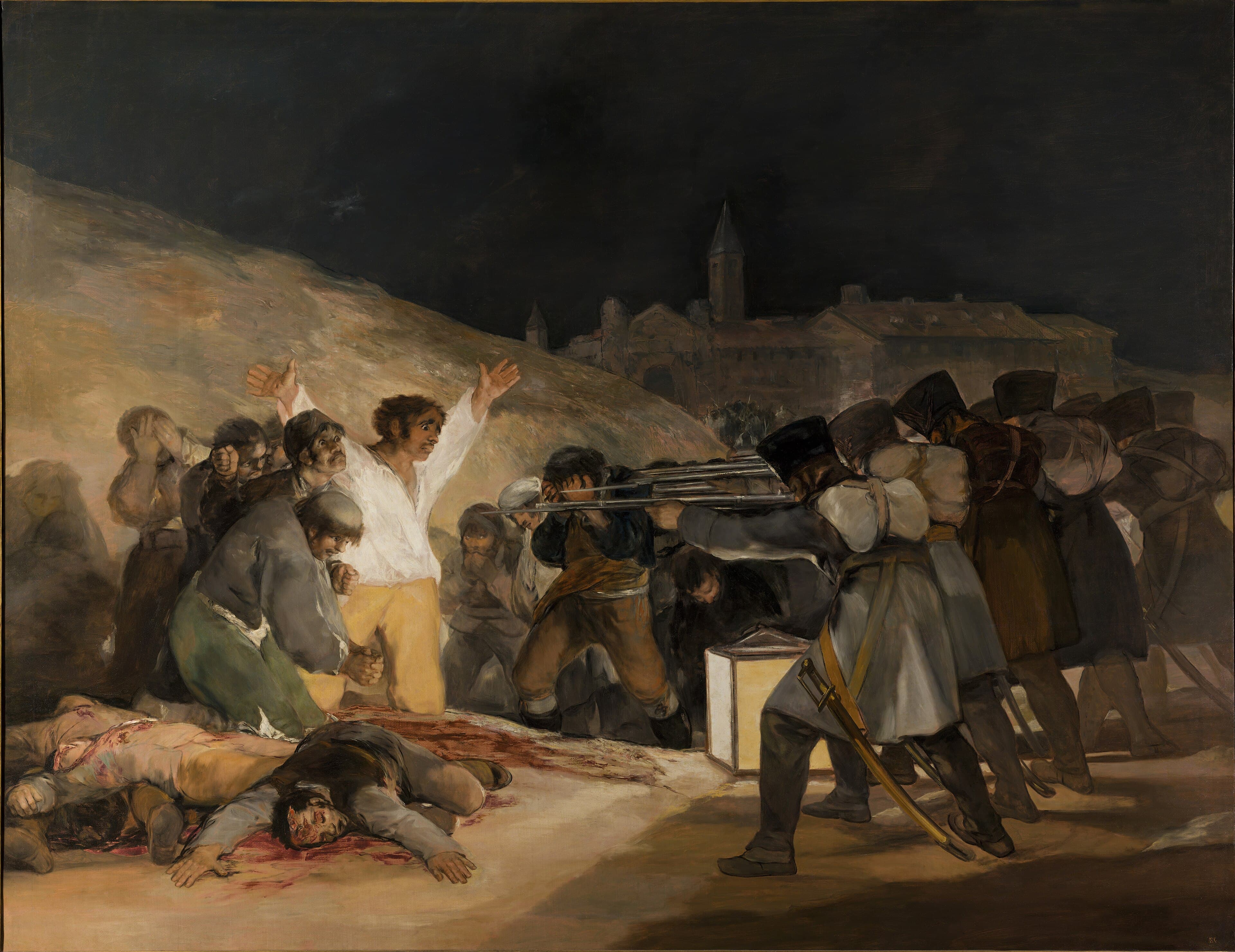
The Third of May 1808
Francisco Goya · 1814
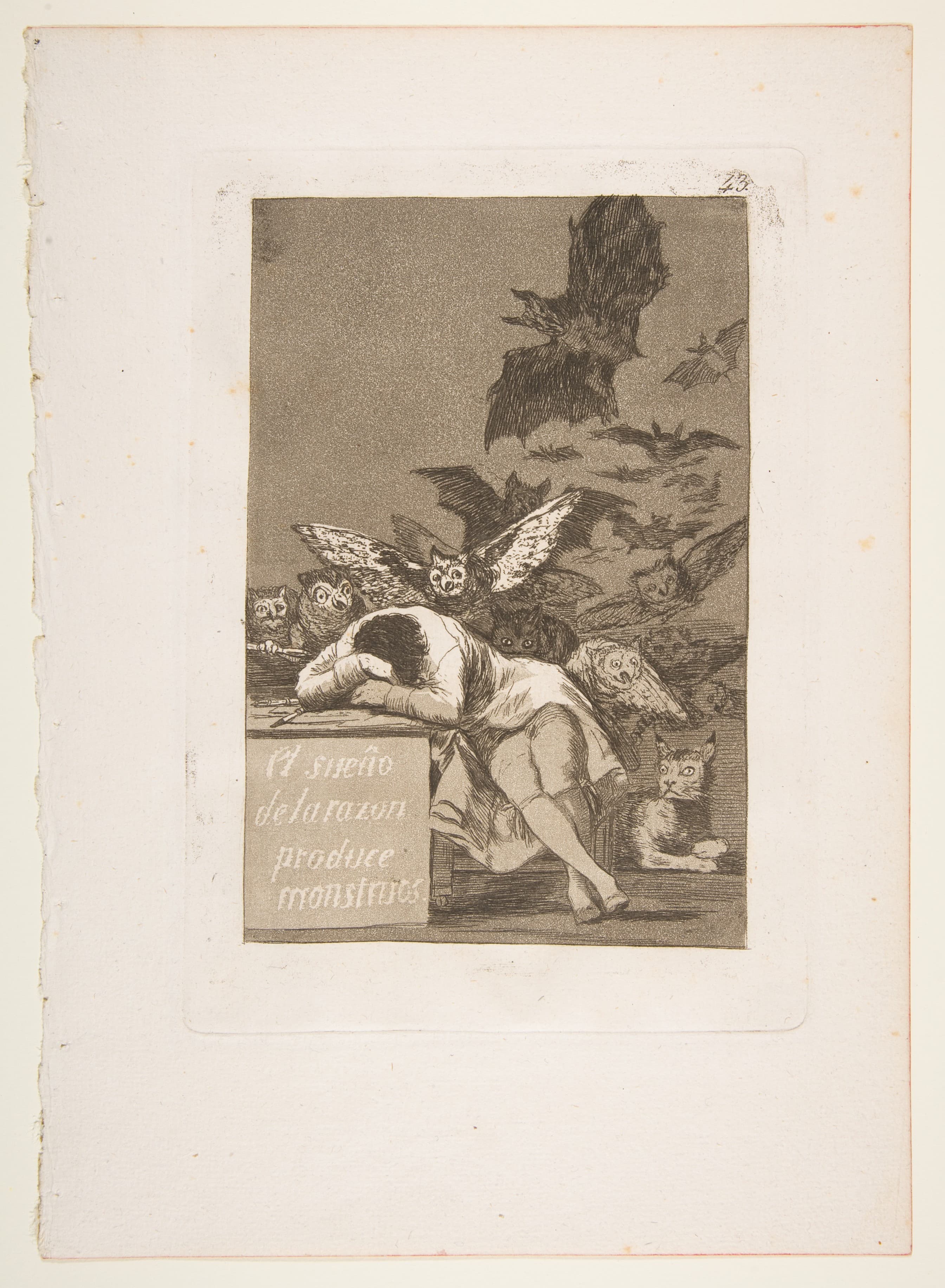
The Sleep of Reason Produces Monsters
Francisco Goya · 1797–99 (published 1799)
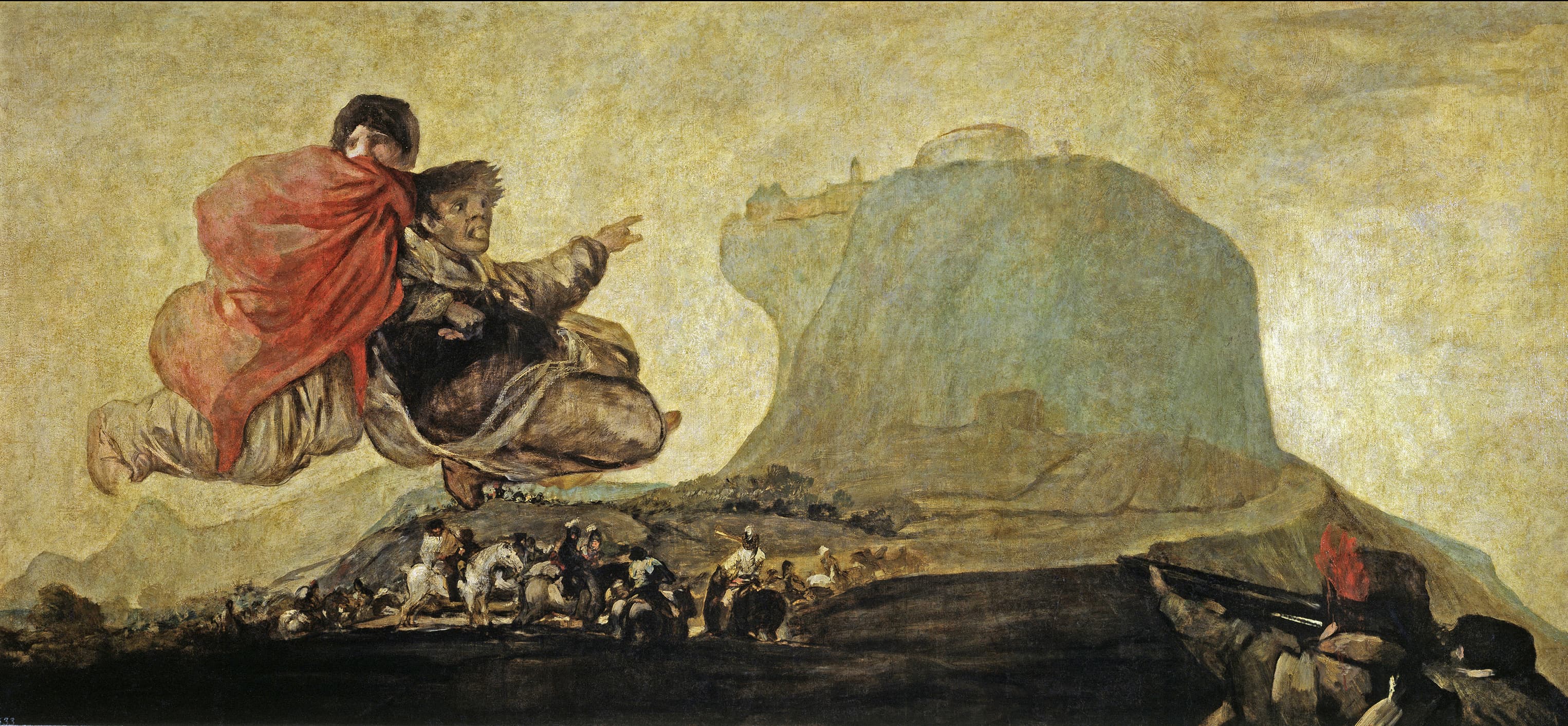
Fantastic Vision (Asmodea)
Francisco Goya · c. 1819–1823
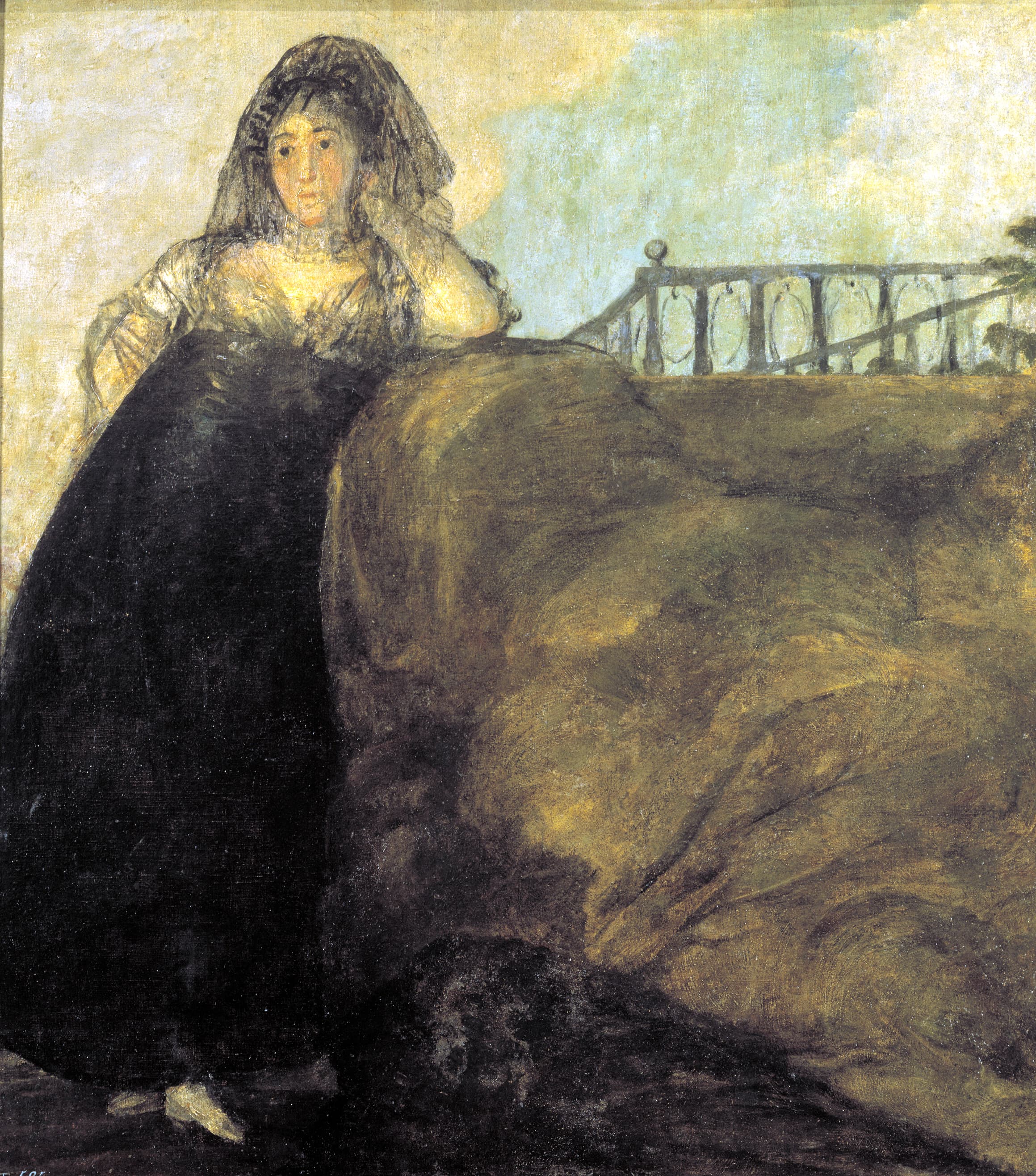
La Leocadia
Francisco Goya · c. 1819–1823
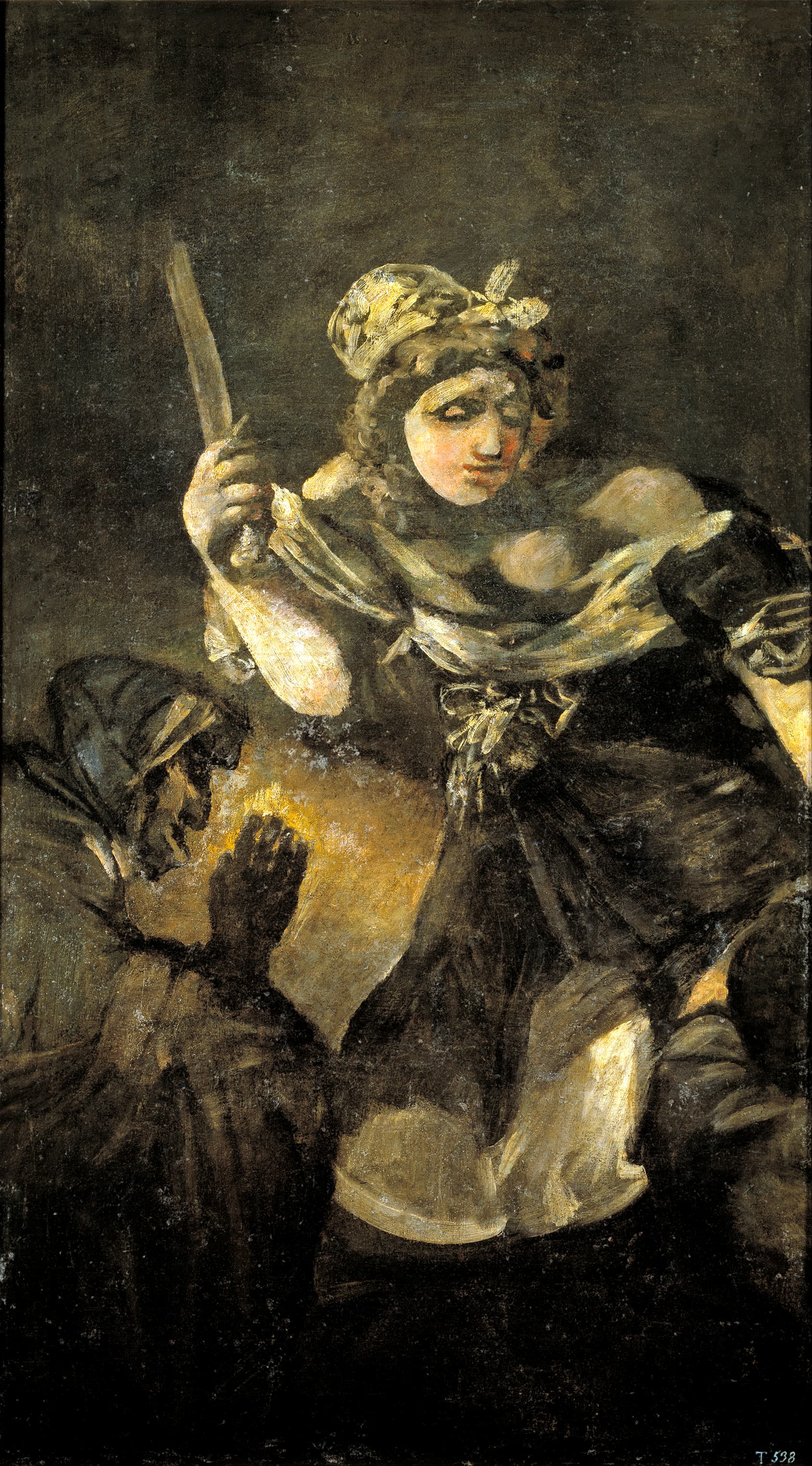
Judith and Holofernes
Francisco Goya · c. 1819–1823
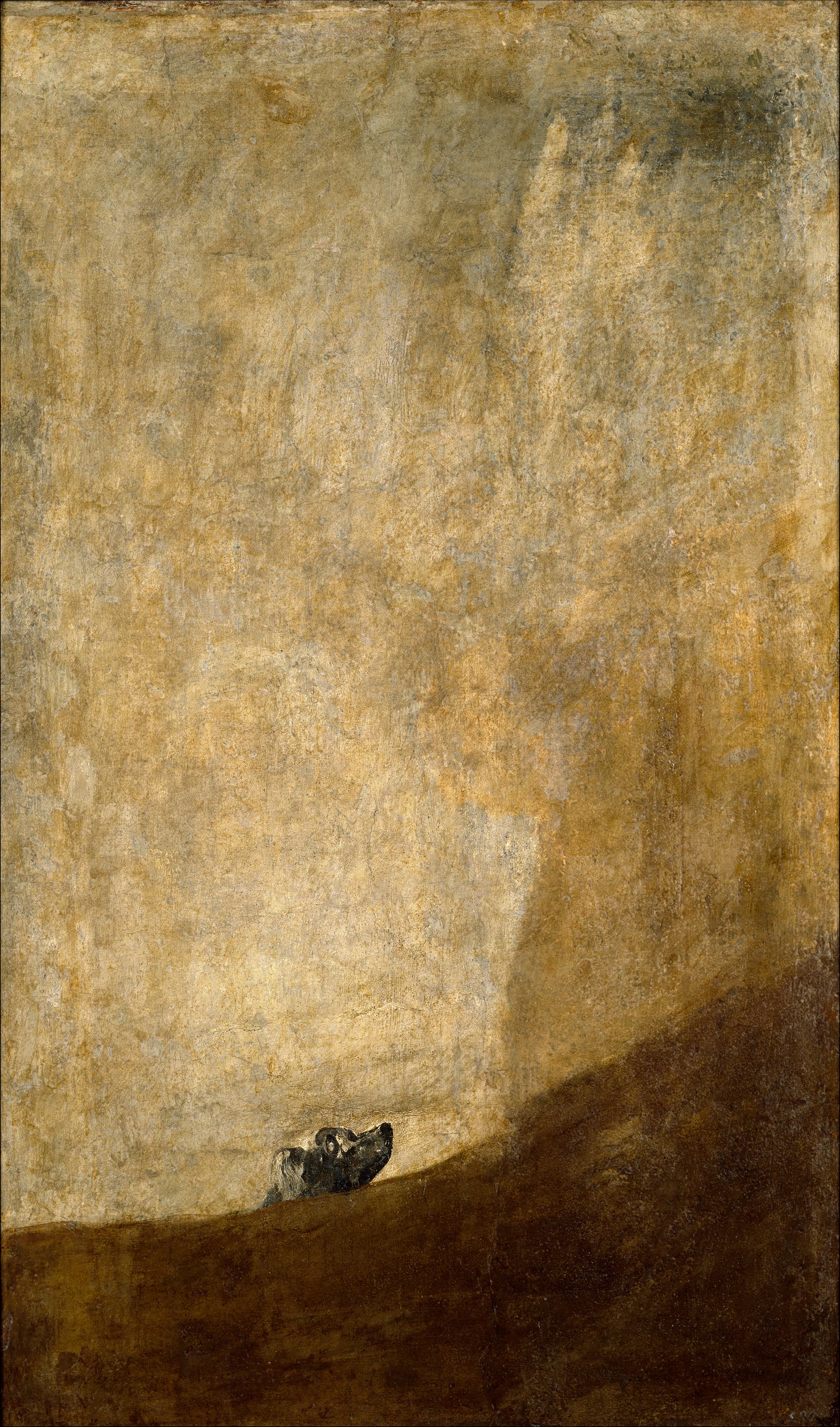
The Dog
Francisco Goya · c. 1819–1823
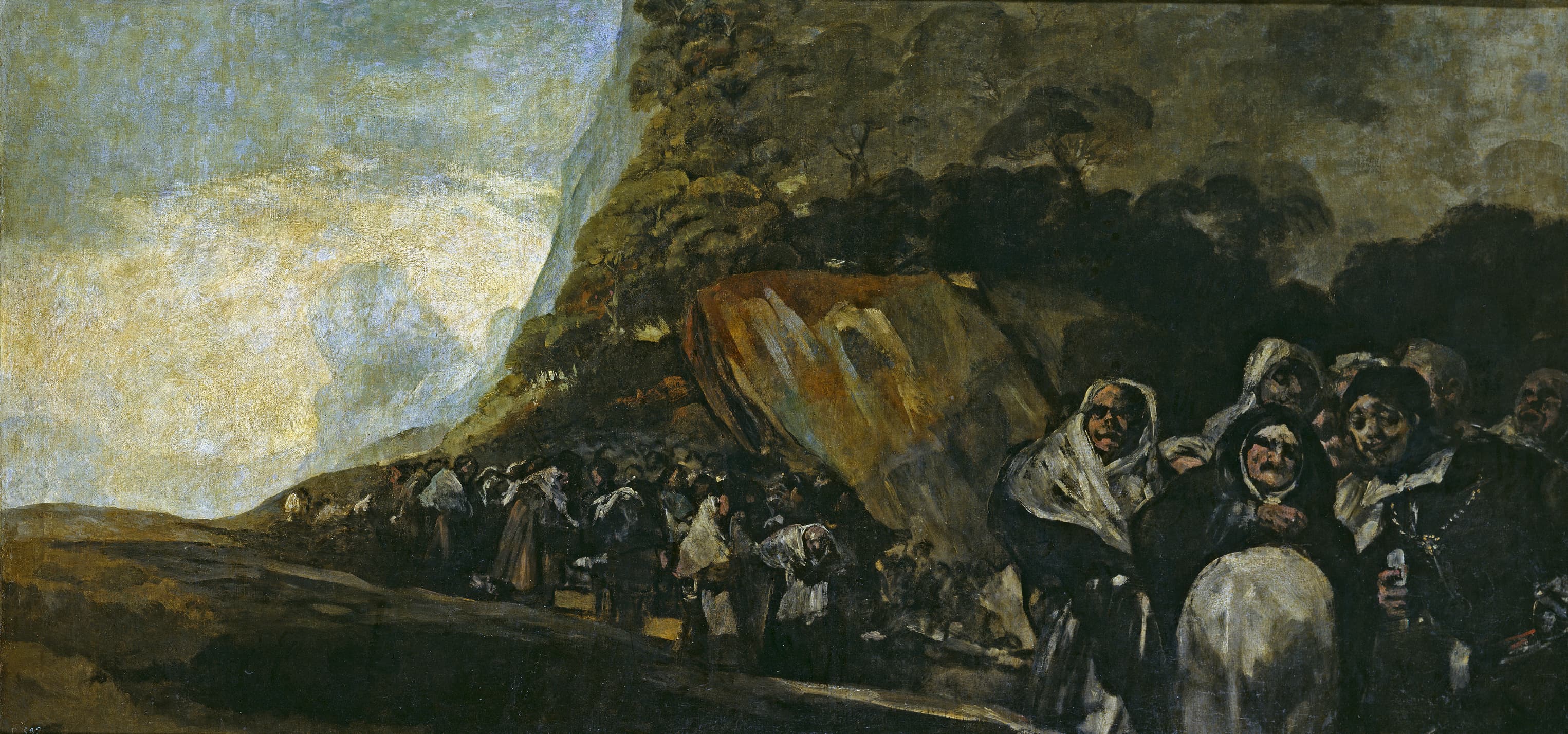
The Holy Office (Pilgrimage to the Fountain of San Isidro)
Francisco Goya · c. 1819–1823
Also painted in 1820
The same year
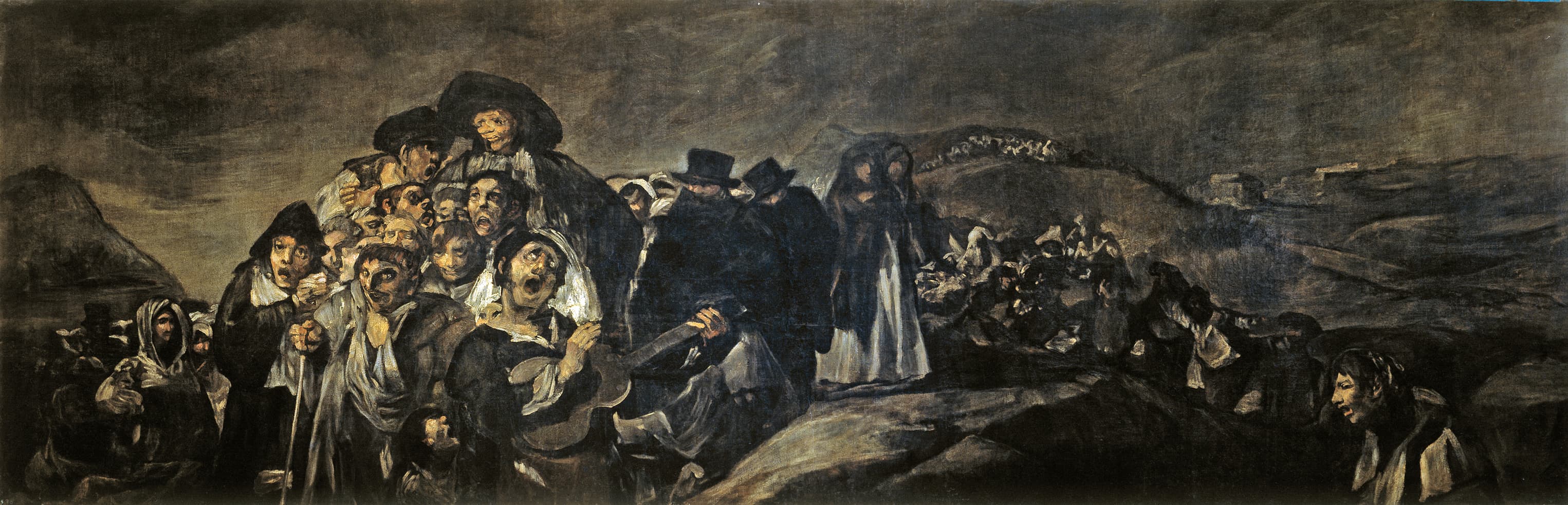
A Pilgrimage to San Isidro
Francisco Goya · c. 1819–1823
Women Laughing
Francisco Goya · c. 1819–1823
Witches' Sabbath (The Great He-Goat)
Francisco Goya · c. 1819–1823
Fight with Cudgels
Francisco Goya · c. 1819–1823
Two Old Men Eating Soup
Francisco Goya · c. 1819–1823
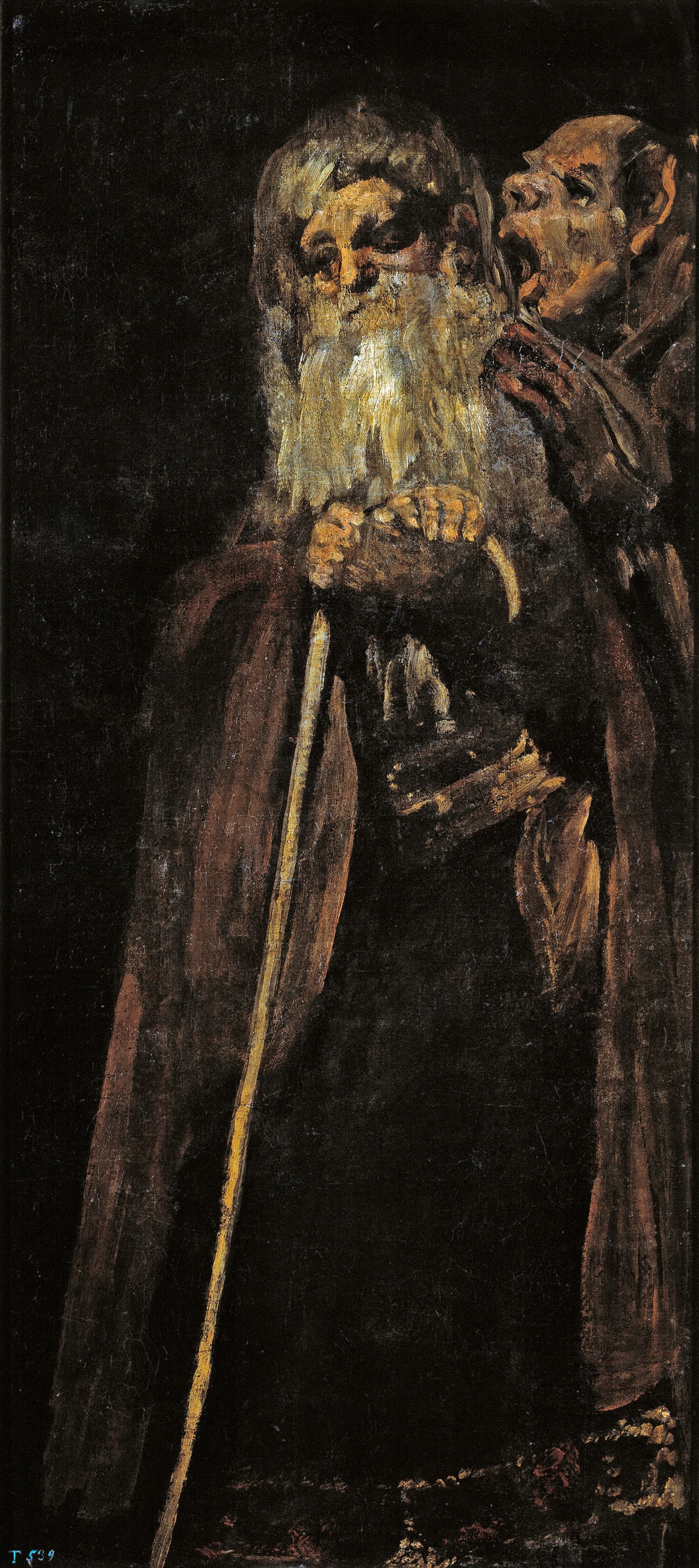
Two Old Men
Francisco Goya · c. 1819–1823
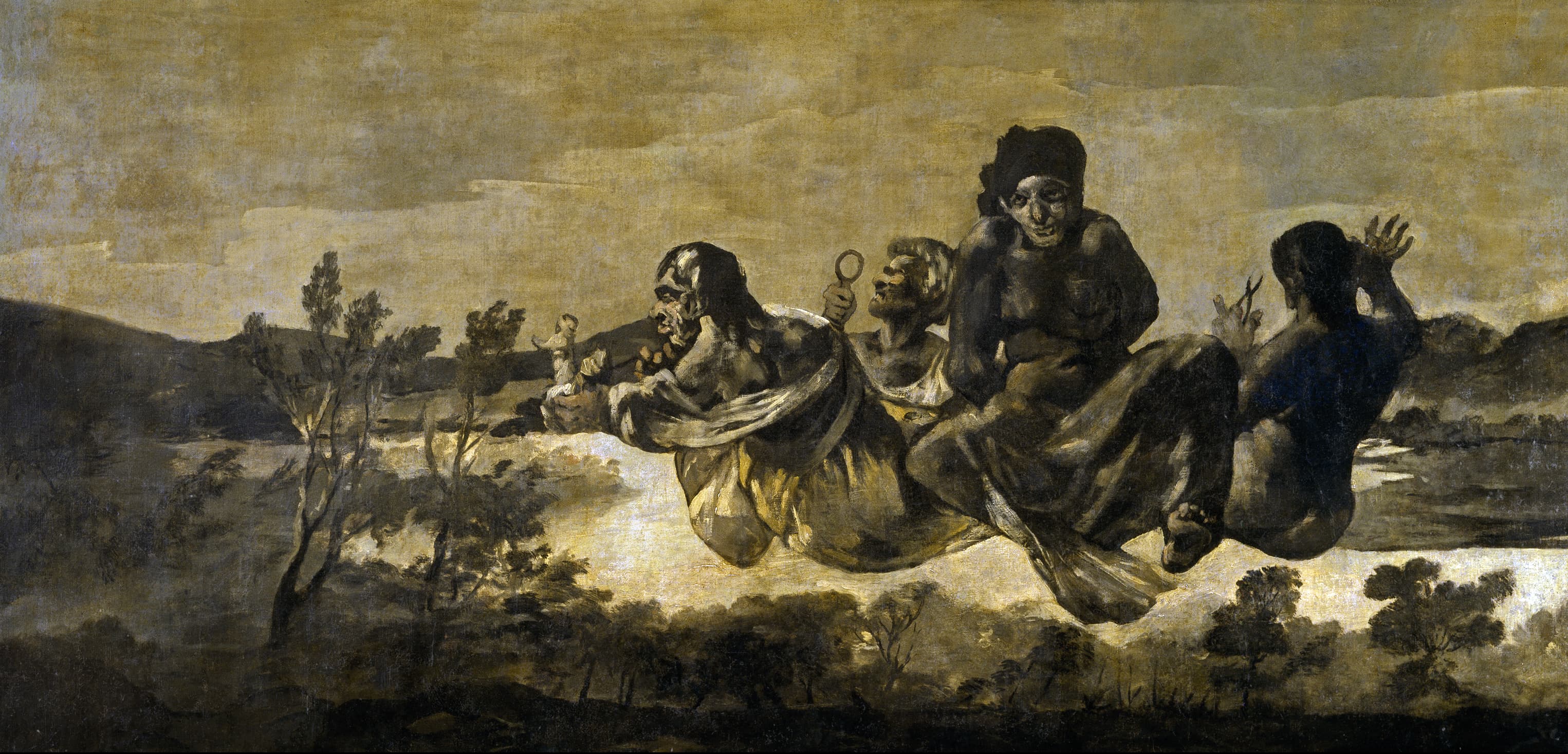
Atropos (The Fates)
Francisco Goya · c. 1819–1823
Kindred works
You may also study
Women Laughing
Francisco Goya · c. 1819–1823
Fight with Cudgels
Francisco Goya · c. 1819–1823
Atropos (The Fates)
Francisco Goya · c. 1819–1823

The Scream
Edvard Munch · 1893
The Thinker
Auguste Rodin · Modeled 1880–82; enlarged 1902–03; this cast 1904

Ophelia
John Everett Millais · 1851–52

Woman with a Parasol – Madame Monet and Her Son
Claude Monet · 1875
Las Meninas
Diego Velázquez · 1656