Death and Life-in-Death
Gustave Doré, 1876
Death and Life-in-Death is Gustave Doré’s wood-engraved plate for Coleridge’s The Rime of the Ancient Mariner (London, 1876): on the deck of the spectre-ship, veiled Death and the wild-haired Life-in-Death throw dice for the crew, “The game is done! I’ve won! I’ve won!”
- Artist
- Gustave Doré
- Date
- 1876
- Medium
- Wood engraving
- Movement
- Romanticism
- Themes
- Death & Memento Mori, Literature & Poetry, The Macabre, Water & Sea, Dark Academia
Appears in
What you are looking at
The scene is the deck of a wrecked ship seen from low down, among its timbers. Torn sails and slack rigging hang from the spars like cobwebs, and in the gap between them the sky is pale and empty. In the middle sits Death, a tall shape wrapped in a black hooded cloak, the face under the veil a skull. One bony hand rests on the edge of the cloak at the chest; the other is lost in the folds. He does not move.
To the right, Life-in-Death crouches on bare feet, leaning far forward. Her long hair streams behind her, her face is thin and intent, and her right hand reaches toward the deck, where two dice have just come to rest on the planks. She has thrown last. In the foreground the ship falls apart: a heavy rail, a coil of rope, a split beam, everything engraved in short, nervous strokes that make the wood look rotten.
The composition is a simple triangle, the dark seated figure at the apex and the crouching one at the right corner, but Doré tilts the deck and fills the edges with wreckage so that it reads as unstable. The two figures are on the same level as us; we are aboard.
The lines it illustrates
The plate belongs to Part III. Becalmed and dying of thirst after the killing of the albatross, the crew sight a ship that moves without wind or tide. As it crosses the setting sun they see that it is a skeleton ship with two passengers. In the 1834 text (lines 188–198):
Is that a DEATH? and are there two? Is DEATH that woman’s mate?
Her lips were red, her looks were free, Her locks were yellow as gold: Her skin was as white as leprosy, The Night-Mare LIFE-IN-DEATH was she, Who thicks man’s blood with cold.
The naked hulk alongside came, And the twain were casting dice; “The game is done! I’ve won! I’ve won!” Quoth she, and whistles thrice.
Death wins the two hundred sailors, who drop dead one by one under the rising moon. Life-in-Death wins the Mariner, who must go on living among the corpses.
How Doré staged it
Coleridge’s Life-in-Death is a terrible beauty, red-lipped and golden-haired, her whiteness the whiteness of disease. Doré keeps the free-flowing hair and the pallor but drops the allure: his figure is gaunt and hungry, closer to a harpy than a seductress, and she wins by sheer eagerness. Death, whom the poem barely describes in its final text, he makes a cloaked, veiled skeleton, the familiar figure of the danse macabre, stiller and darker than anything else in the picture.
He also moves the viewpoint. In the poem the crew watch the spectre-bark from their own deck as it comes alongside. Doré puts us on the phantom ship itself, close enough to see the dice, which turns a distant apparition into a scene of private bargaining. The ragged sails are his reading of the Mariner’s question, “Are those her sails that glance in the Sun, / Like restless gossameres?”
How it was made and published
As with all of Doré’s book plates, he drew the design onto a boxwood block and a professional engraver cut it. The Bibliothèque nationale de France holds a fumé, a smoke proof taken from the block during cutting, catalogued under its caption “The game is done! I’ve won, I’ve won” and credited to Doré and the engraver Pannemaker. No signature is visible along the lower edge of this impression.
The plate is the fifteenth in Doré’s Rime of the Ancient Mariner, published as a large folio in London in 1876 by the Doré Gallery with Hamilton, Adams & Co., followed by American and French editions in 1877. The image here comes from the Bibliothèque nationale de France’s copy of Hachette’s French edition, La Chanson du vieux marin, in Auguste Barbier’s translation.
What the plate means
Coleridge’s dice game is the poem’s answer to the albatross. The crew had first condemned the Mariner, then approved the killing when the fog lifted, and now chance decides their fate. The Mariner’s sentence is worse than theirs: to stay alive, alone, until he learns to bless the water-snakes. Doré’s choice to show the moment of the throw, not its result, keeps the arbitrariness at the center.
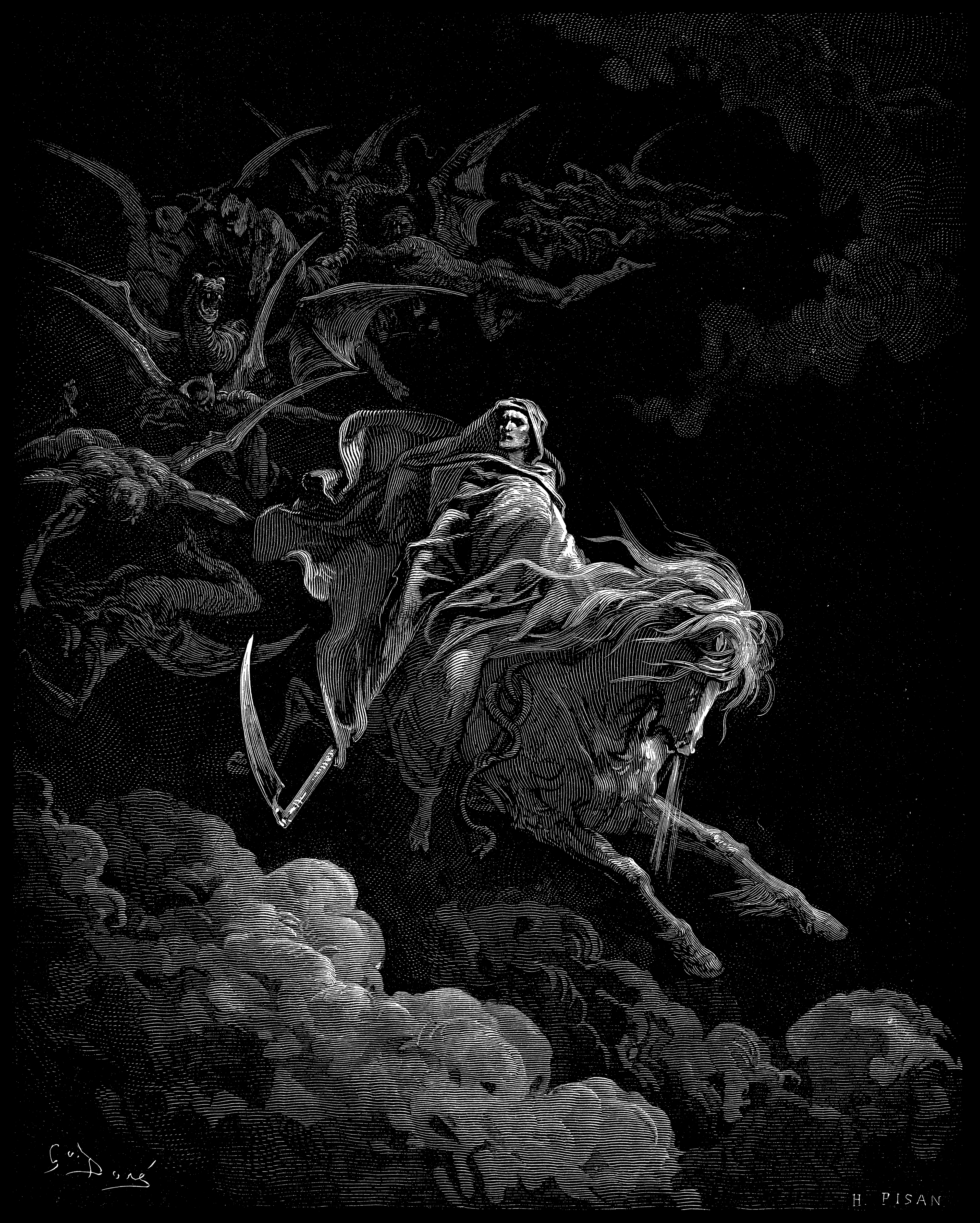
The plate sits in a long line of images of Death at play, from the medieval danse macabre to Bruegel’s Triumph of Death, and Coleridge’s word “Night-Mare” points to Henry Fuseli’s The Nightmare of 1781, still notorious when the poem was written. Within Doré’s own work its partner is the skeletal rider of Death on the Pale Horse from his 1866 Bible. For more on the theme see Death in Art; for the full sequence, Doré’s Rime of the Ancient Mariner illustrations, which begins with the crime itself in The Albatross. Gustave Doré gives Death the stillness and Life-in-Death the motion, and that contrast is the whole meaning of the scene.
Questions & answers
What does Doré’s Death and Life-in-Death show?
Two figures on the deck of a ruined phantom ship hung with cobweb-like sails. Death, a veiled skeleton in a black cloak, sits motionless at center; Life-in-Death, barefoot with long streaming hair, crouches at right and reaches toward two dice that have just landed on the planks.
Which lines of The Rime of the Ancient Mariner does it illustrate?
Part III, lines 195–198: “The naked hulk alongside came, / And the twain were casting dice; / ‘The game is done! I’ve won! I’ve won!’ / Quoth she, and whistles thrice.” Death wins the crew, who die; Life-in-Death wins the Mariner, who is left alive among them.
When was this plate made and published?
It appeared in Doré’s illustrated Rime of the Ancient Mariner, published as a large folio in London in 1876 by the Doré Gallery with Hamilton, Adams & Co. American and French editions followed in 1877. It is the fifteenth plate in the sequence.
Who engraved Death and Life-in-Death?
Doré drew the design on a boxwood block for a professional wood engraver to cut. A proof of the block in the Bibliothèque nationale de France is credited to Doré and the engraver Pannemaker. No engraver’s signature is legible along the lower edge of the impression shown here.
Who is Life-in-Death in the Ancient Mariner?
A female spectre Coleridge calls “The Night-Mare LIFE-IN-DEATH,” with red lips, golden hair and skin “as white as leprosy.” She wins the Mariner at dice, condemning him to live on in guilt rather than die. Doré makes her gaunt and avid instead of beautiful.
More by Gustave Doré
All works →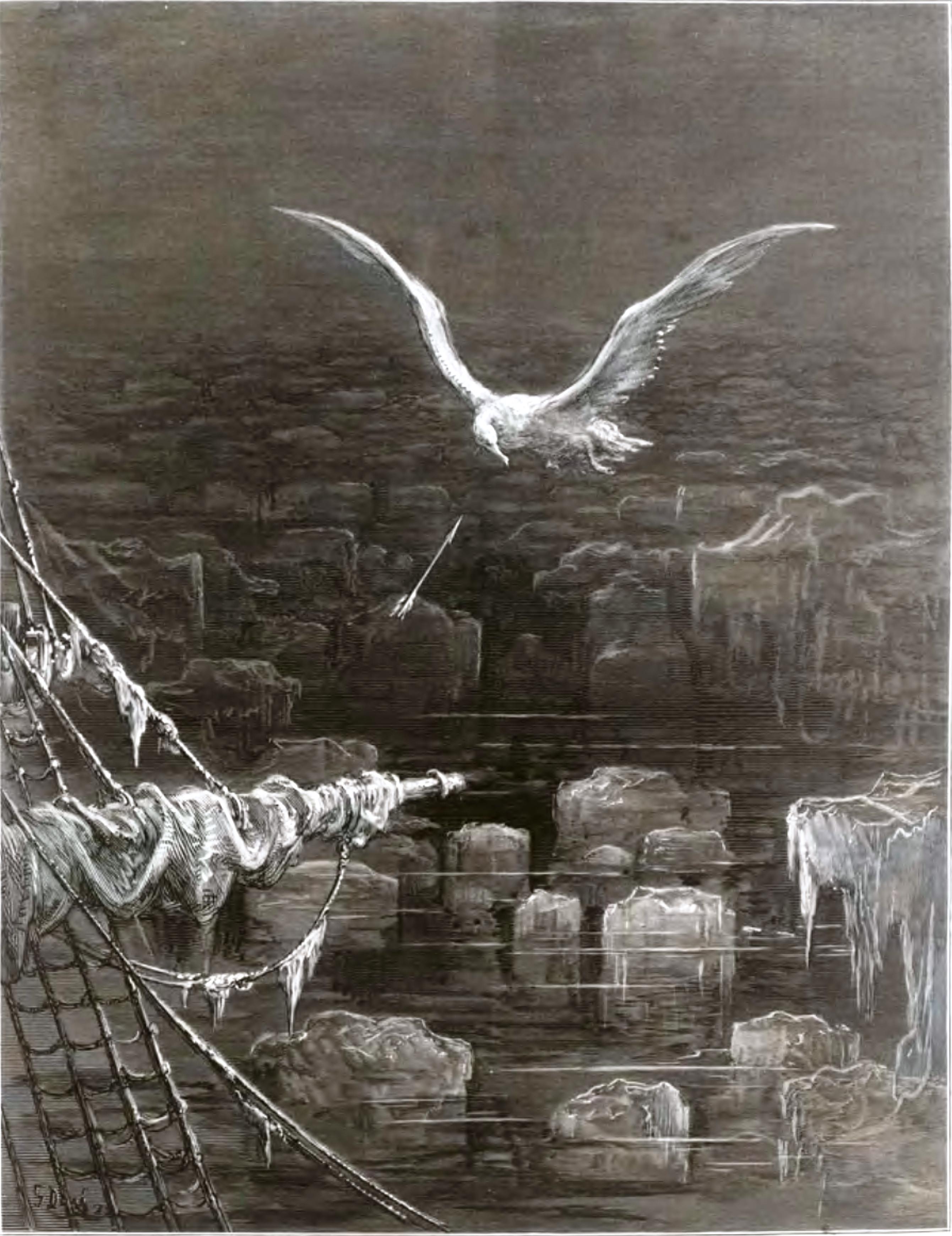
The Albatross
Gustave Doré · 1876
The Ship in the Ice
Gustave Doré · 1876
Death on the Pale Horse
Gustave Doré · 1866
The Death of Abel
Gustave Doré · 1866
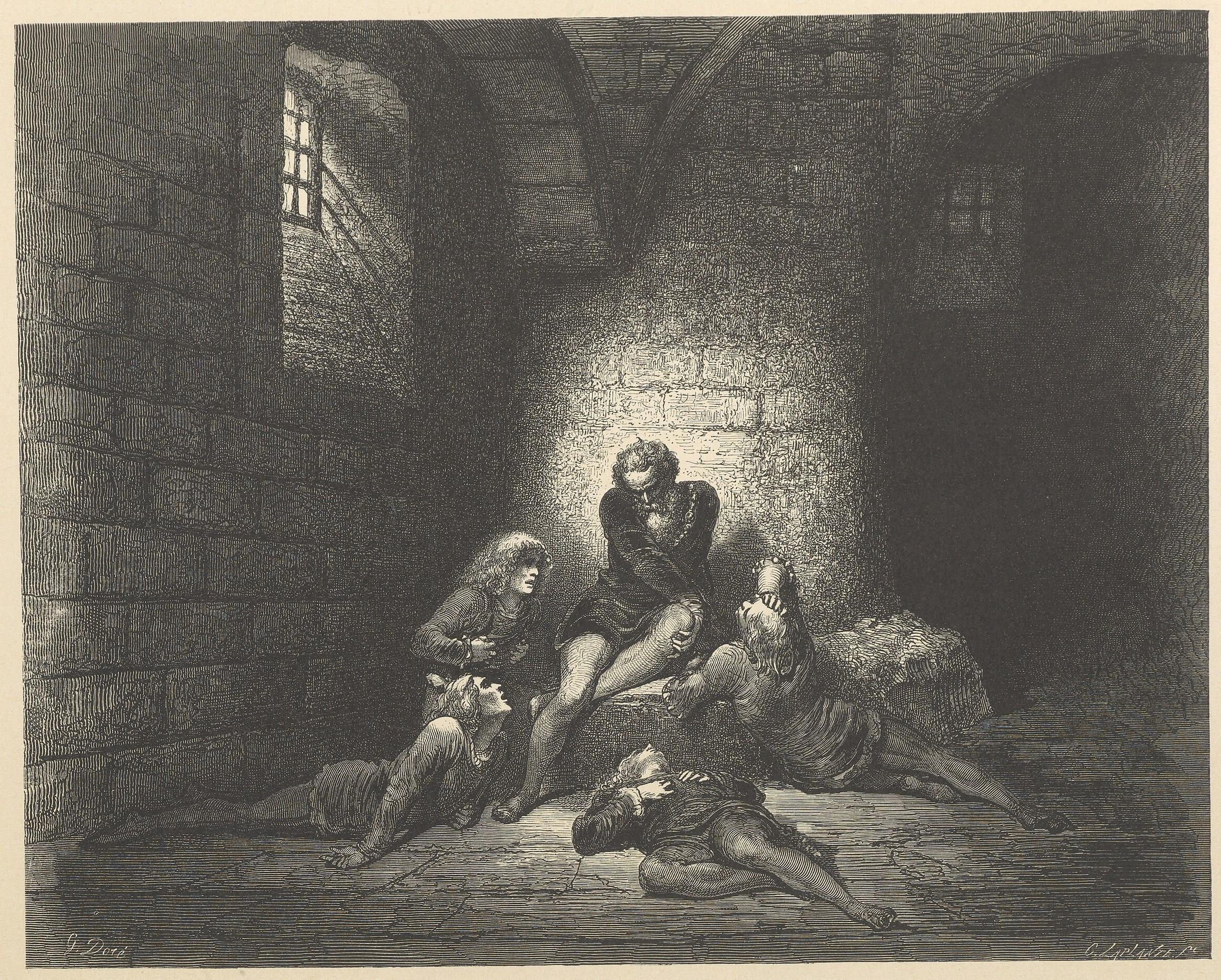
Count Ugolino and His Sons
Gustave Doré · 1861
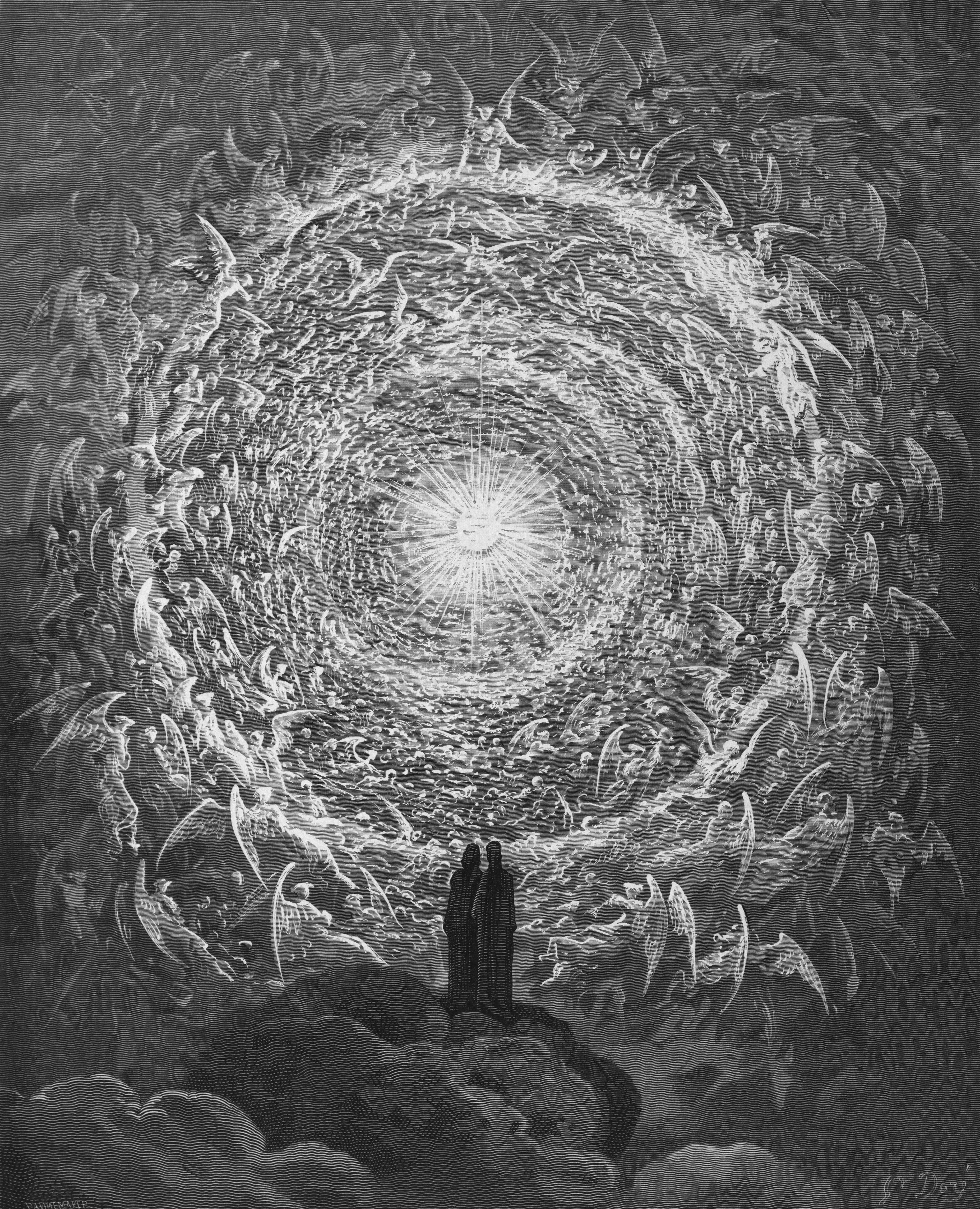
The Empyrean (Rosa Celeste)
Gustave Doré · 1868
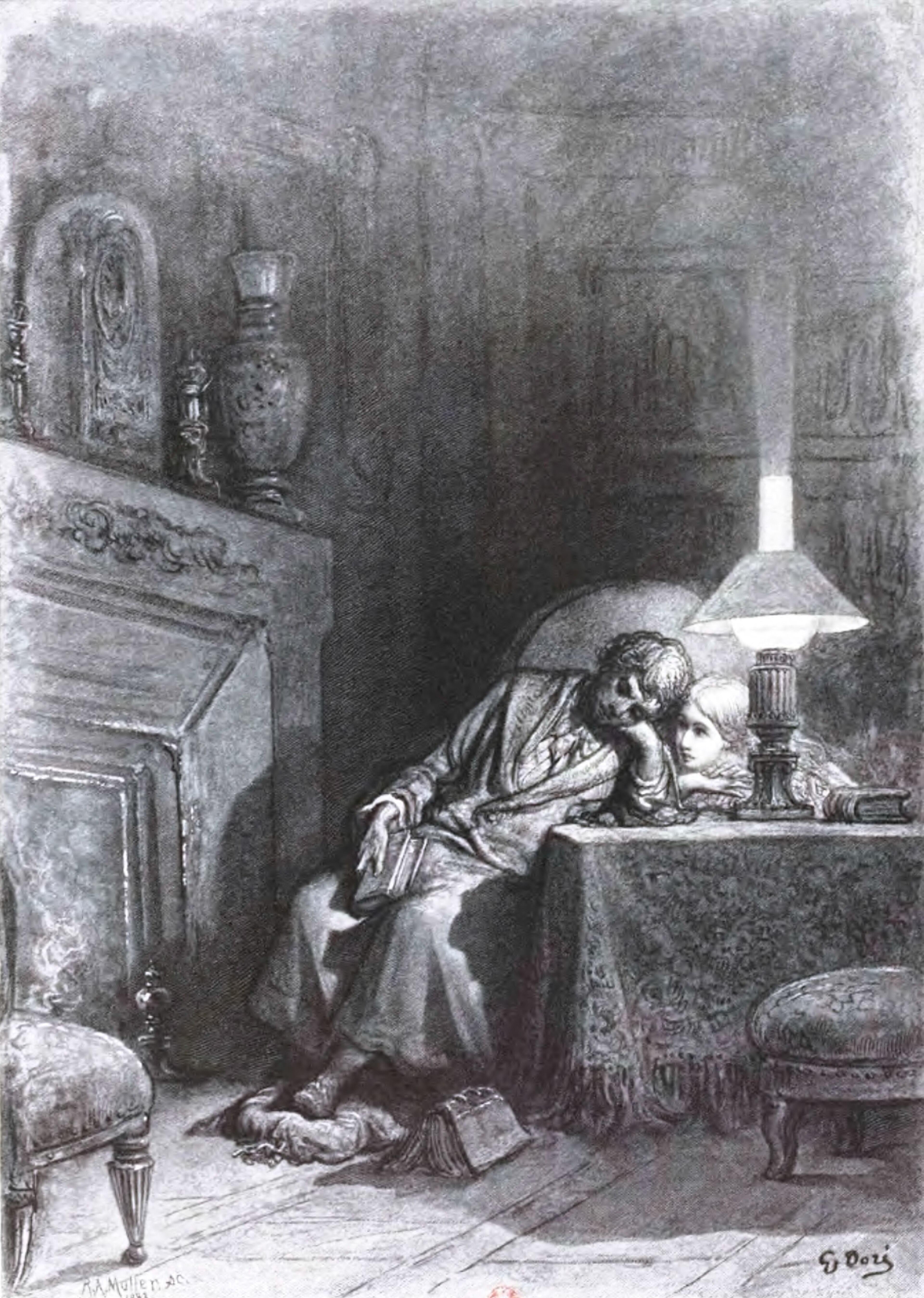
Once Upon a Midnight Dreary
Gustave Doré · 1884
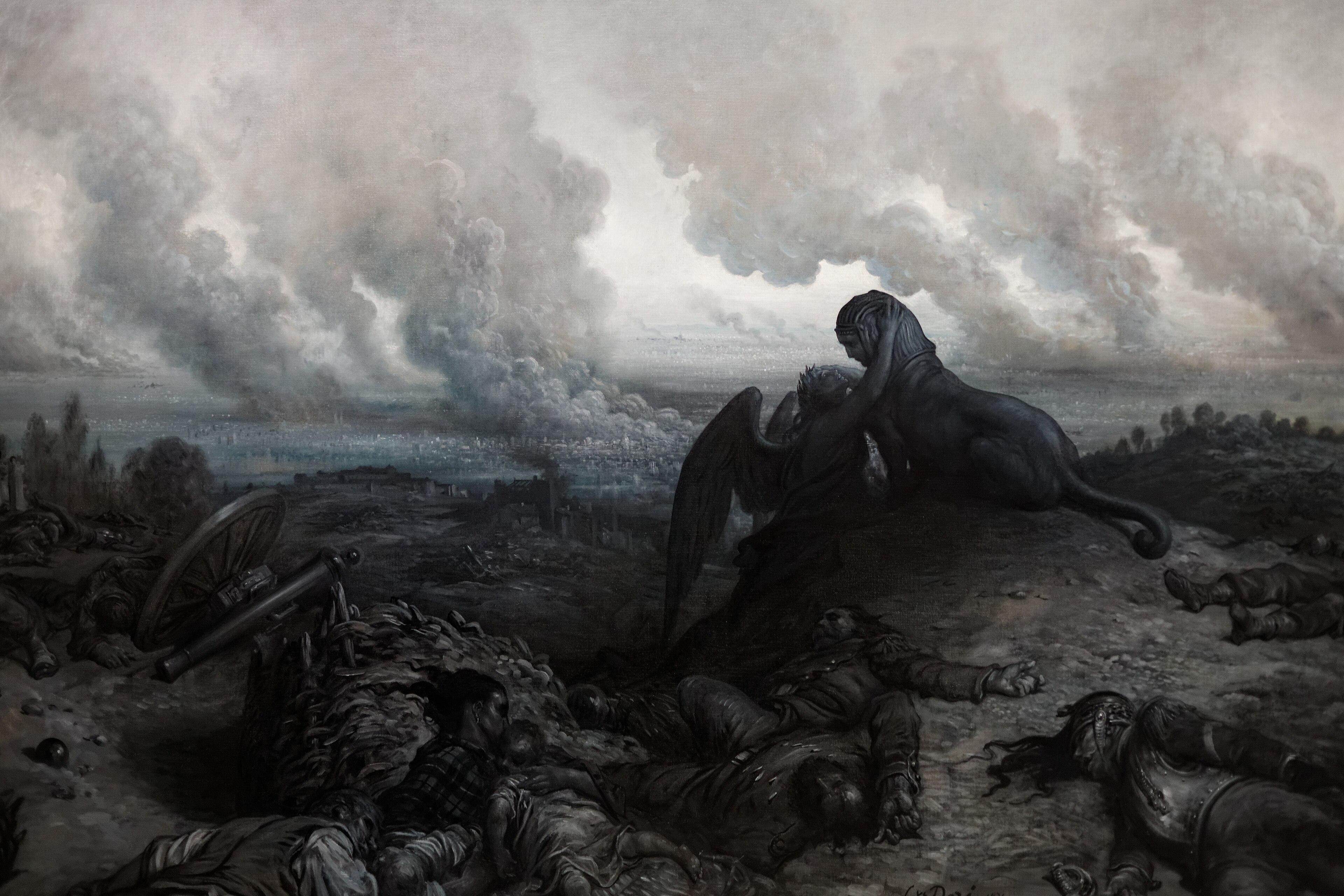
The Enigma
Gustave Doré · 1871
Related works
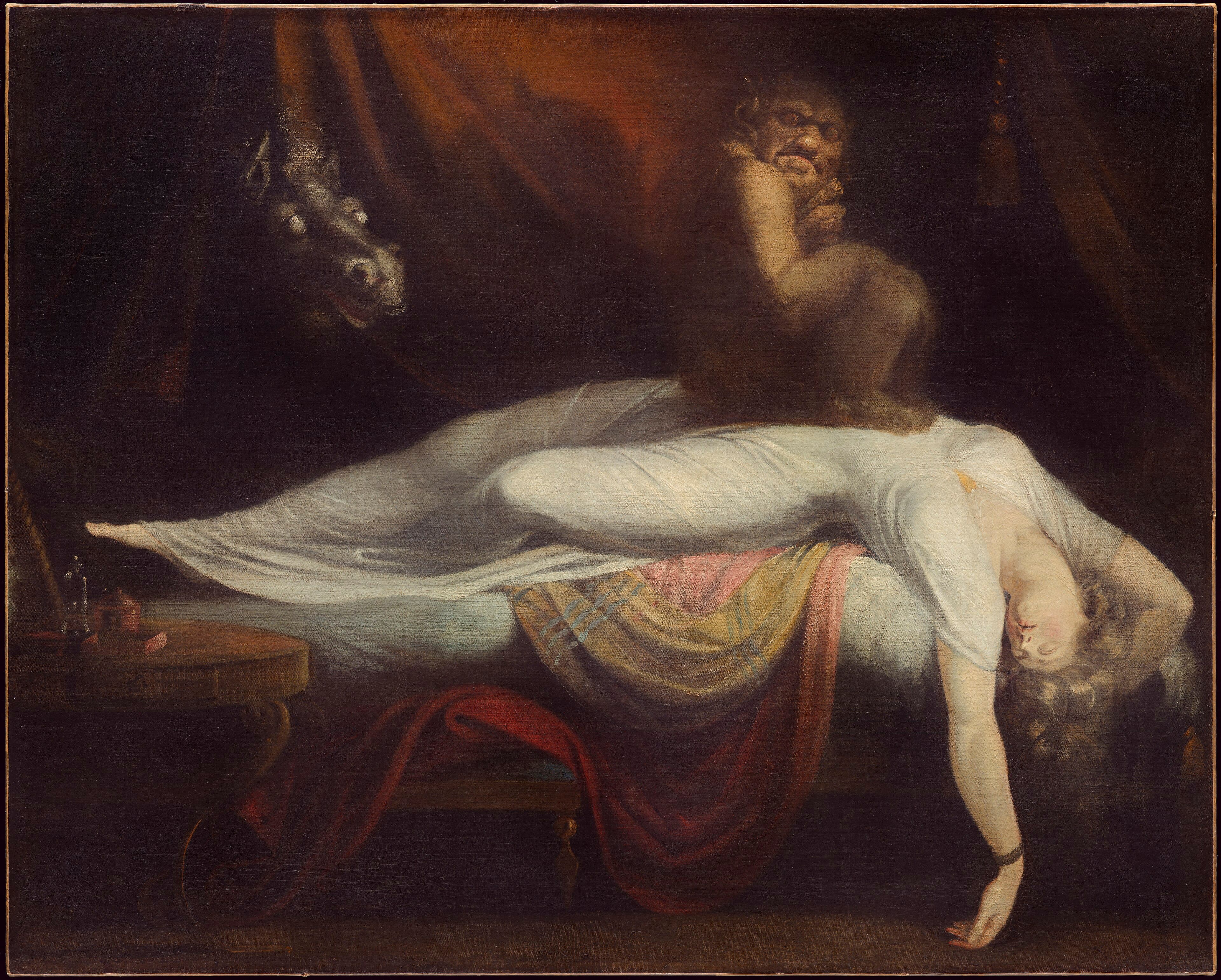
The Nightmare
Henry Fuseli · 1781
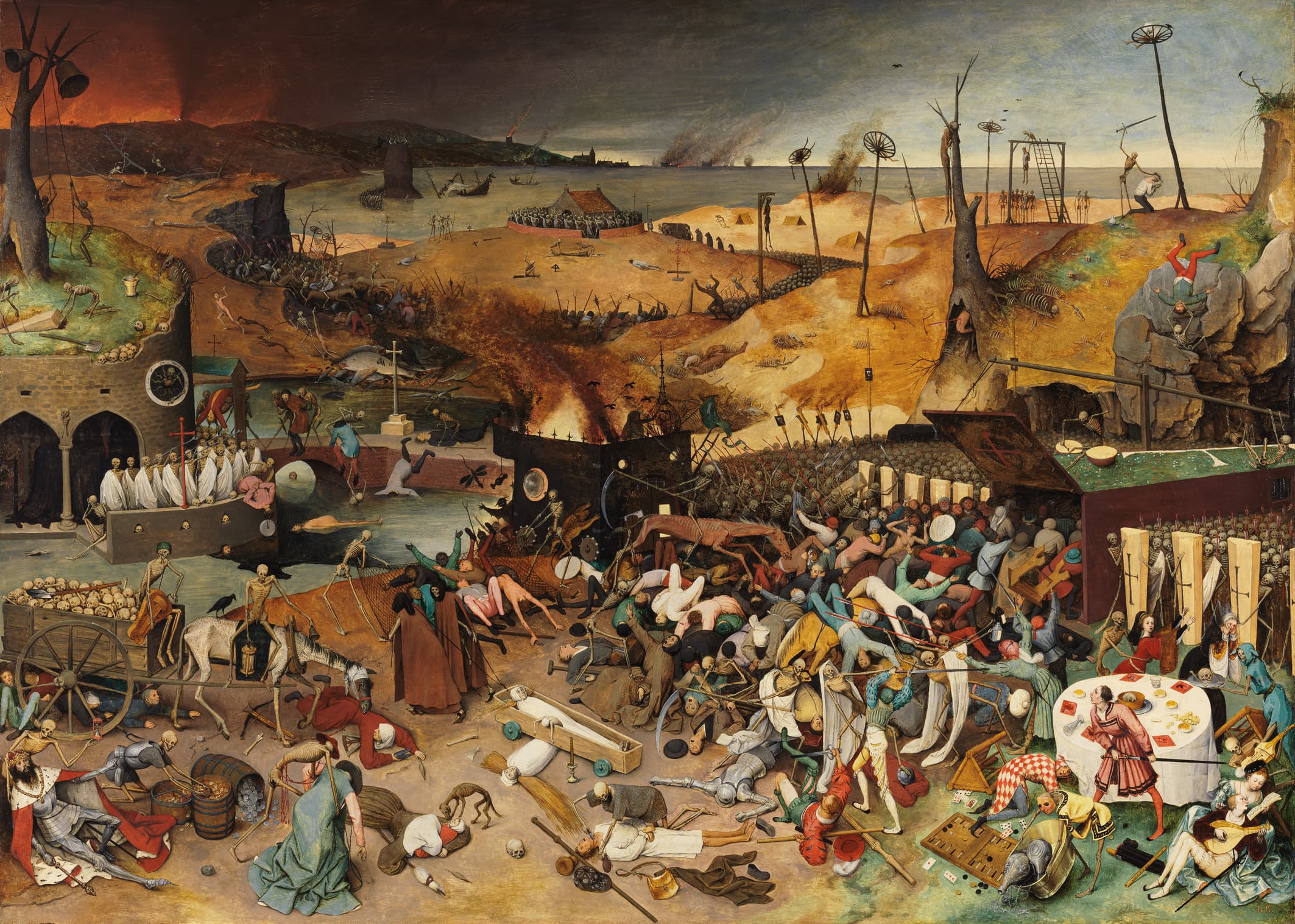
The Triumph of Death
Pieter Bruegel the Elder · c. 1562
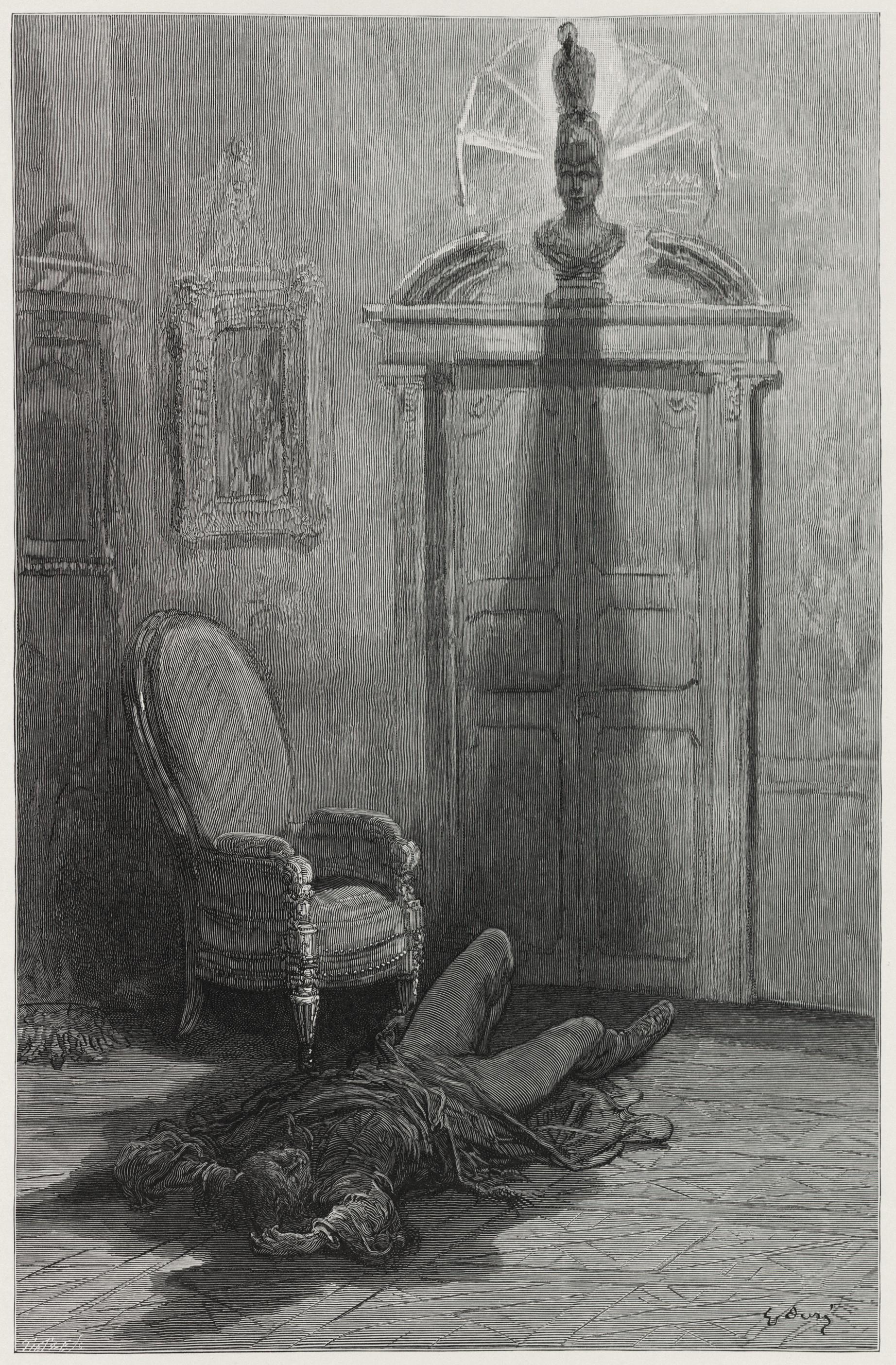
Nevermore (The Raven's Shadow)
Gustave Doré · 1884
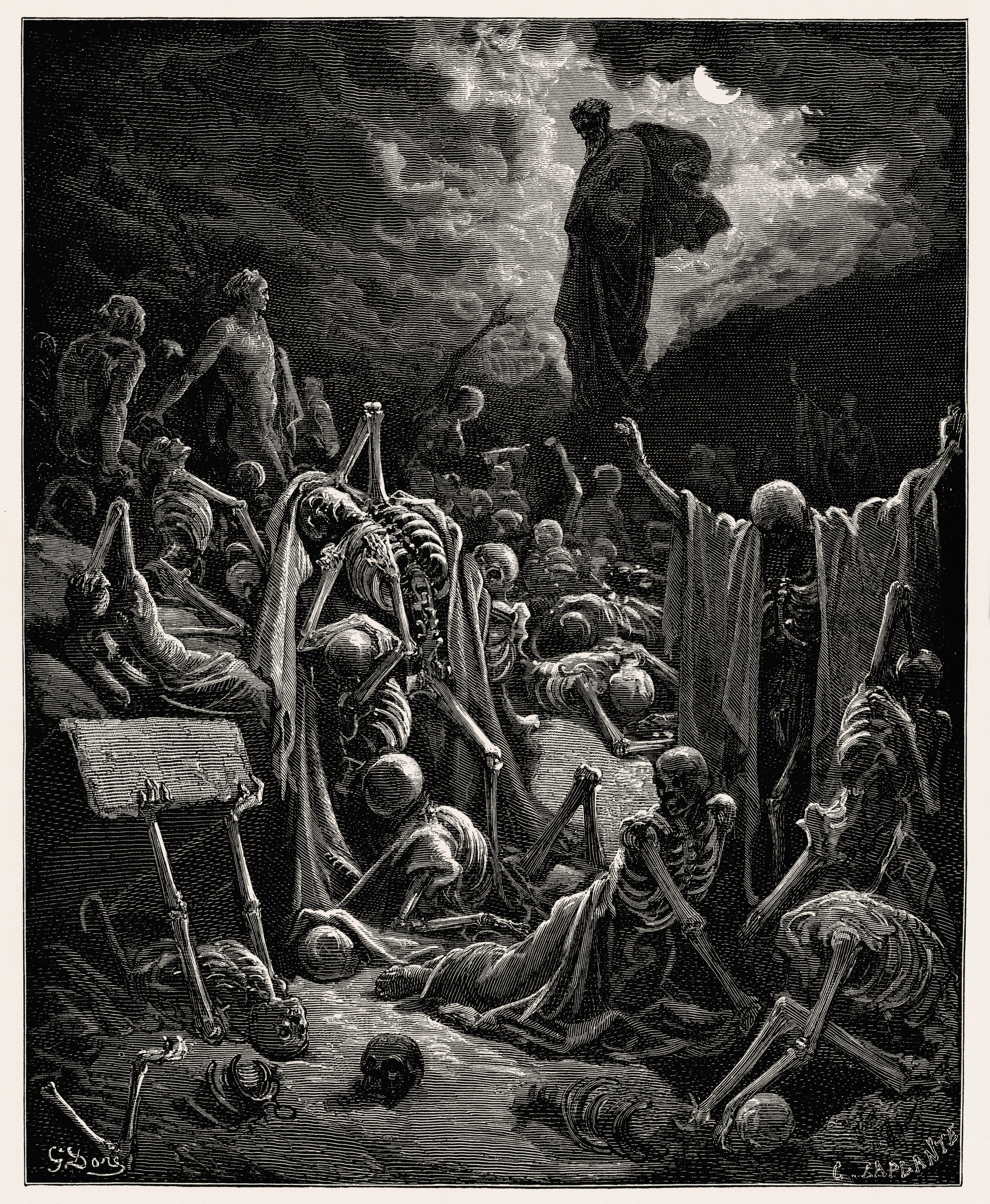
The Vision of the Valley of Dry Bones
Gustave Doré · 1866
Dante and Virgil in the Ninth Circle of Hell
Gustave Doré · 1861
Two Old Men
Francisco Goya · c. 1819–1823
Farinata degli Uberti
Gustave Doré · 1861
The Deluge
Gustave Doré · 1866