Satan Approaching the Confines of the Earth
Gustave Doré, 1866
Satan Approaching the Confines of the Earth is Gustave Doré’s 1866 wood-engraved plate for Paradise Lost, Book III, lines 739–742: Satan plunges head-first through starry space toward the cloud-wrapped globe of the Earth, “Down from th’ ecliptic, sped with hoped success.”
- Artist
- Gustave Doré
- Date
- 1866
- Medium
- Wood engraving
- Movement
- Romanticism
- Themes
- Angels & Demons, Literature & Poetry, Night & Dreams, Dark Academia
What you are looking at
The plate is almost empty. Its lower half is a curve of cloud, the top of a vast globe seen from above, its surface banked with soft, layered vapor and catching a pale light near the center. Above it is night: a dark sky scattered with a few large, spiky stars, and down through it, from the upper right, slant broad parallel shafts of light.
In the middle of the plate, between the stars and the clouds, Satan is diving. He falls head-first and slightly twisted, his body foreshortened so that we see more of his back and legs than his face, his legs bent up behind him. His wings are spread wide and sharply pointed, the dark membranes of a bat rather than the feathers of an angel. He is small, and very much alone.
The engraver worked the sky in close horizontal lines, leaving the stars and the shafts of light as cuts of bare white, and turned to looser, curling strokes for the clouds. Doré’s signature, “G. Doré,” is at lower left and the engraver’s, “Jonnard,” at lower right.
The lines it illustrates
After crossing Chaos, Satan reaches the outside of the created universe, finds the stair to Heaven and the opening down into the world, and lands on the sun. There, disguised as a young cherub, he tricks the archangel Uriel, regent of the sun, into pointing out the way to Paradise. Book III ends with his departure, lines 739–742:
Took leave, and toward the coast of Earth beneath, Down from th’ ecliptic, sped with hoped success, Throws his steep flight in many an aery wheel, Nor stayed till on Niphates’ top he lights.
The ecliptic is the sun’s apparent path through the sky; Niphates is a mountain in Armenia, near where Milton places Eden. Satan is on the last leg of his journey from Hell.
How Doré staged it
Doré has dropped the disguise. Milton’s Satan descends in the shape of a “stripling Cherub,” with “wings / Of many a coloured plume sprinkled with gold,” so as to fool Uriel. Doré shows him in his own fallen form, dark-winged and headlong, as if the plate could see through the mask.
He also chose the cosmic view over the narrative one. Rather than Satan meeting Uriel, or alighting on the mountain, we see the gulf between the stars and the Earth, with the planet as a sleeping cloud-world below. The beams of light from the upper right suggest the sun he has just left, and the Earth glows faintly where it catches them. The steep “aery wheel” of Milton’s line becomes a dive, the body turning as it drops.
The plate is the companion of Satan Cast Out of Heaven, which opens the book: both show Satan falling head-first. In the first he falls in defeat with an army; here he plunges alone, by choice, toward his target.
How it was made and published
Doré drew the design directly onto a boxwood block, and the engraver Jonnard, who also cut the opening plate, carved it. It is the twelfth of the fifty plates in Milton’s Paradise Lost, published in London and New York by Cassell, Petter & Galpin in 1866. The scan shown here comes from a later American reprint by J. W. Lovell of New York, whose caption gives lines 739–741; the tones are softer than in a first-edition impression.
In the sequence it follows Satan’s Flight Through Chaos. For all the plates see Doré’s Paradise Lost illustrations.
What the plate means
This is the last moment before the story of Satan becomes the story of mankind. Everything so far has happened in Heaven, Hell and the spaces between; from here on the poem is set in Eden. Doré shows the Earth before the Fall as Milton imagined it, wrapped, quiet and unaware, and the shape that falls toward it is the only dark thing in the sky besides the night itself.
The image of a dark angel crossing the heavens to reach a sleeping world has had a long life. Within Doré’s own work it rhymes with his Dante, where Lucifer is fixed forever at the center of the Earth in Lucifer, King of Hell: Milton’s Satan reaches the world from above, Dante’s is trapped inside it. For the wider tradition see Angels and Demons in Art. Gustave Doré puts the whole of the coming tragedy into the distance between a small dark figure and a pale curve of cloud.
Questions & answers
What does Doré’s Satan Approaching the Confines of the Earth show?
Satan diving head-first through a dark, starry sky with sharp bat-like wings spread wide, shafts of light slanting down from the upper right, toward the curved, cloud-covered globe of the Earth that fills the bottom half of the plate.
Which lines of Paradise Lost does it illustrate?
The end of Book III, lines 739–742: “Took leave, and toward the coast of Earth beneath, / Down from th’ ecliptic, sped with hoped success, / Throws his steep flight in many an aery wheel, / Nor stayed till on Niphates’ top he lights.”
When was the plate published?
In 1866, in Milton’s Paradise Lost, published by Cassell, Petter & Galpin in London and New York with fifty full-page plates by Doré. This is the twelfth plate, at the close of Book III.
Who engraved Satan Approaching the Confines of the Earth?
Doré drew the design on a boxwood block and Jonnard engraved it; his signature is at lower right, with “G. Doré” at lower left. Jonnard cut the night sky in fine horizontal lines and left the stars and beams of light as bare white.
Why does Satan have bat wings when Milton disguises him as a cherub?
In Book III Satan takes the form of a “stripling Cherub” with gold-sprinkled plumes to deceive the archangel Uriel. Doré ignores the disguise and shows Satan’s true, fallen form, as if the picture could see what Uriel could not.
More by Gustave Doré
All works →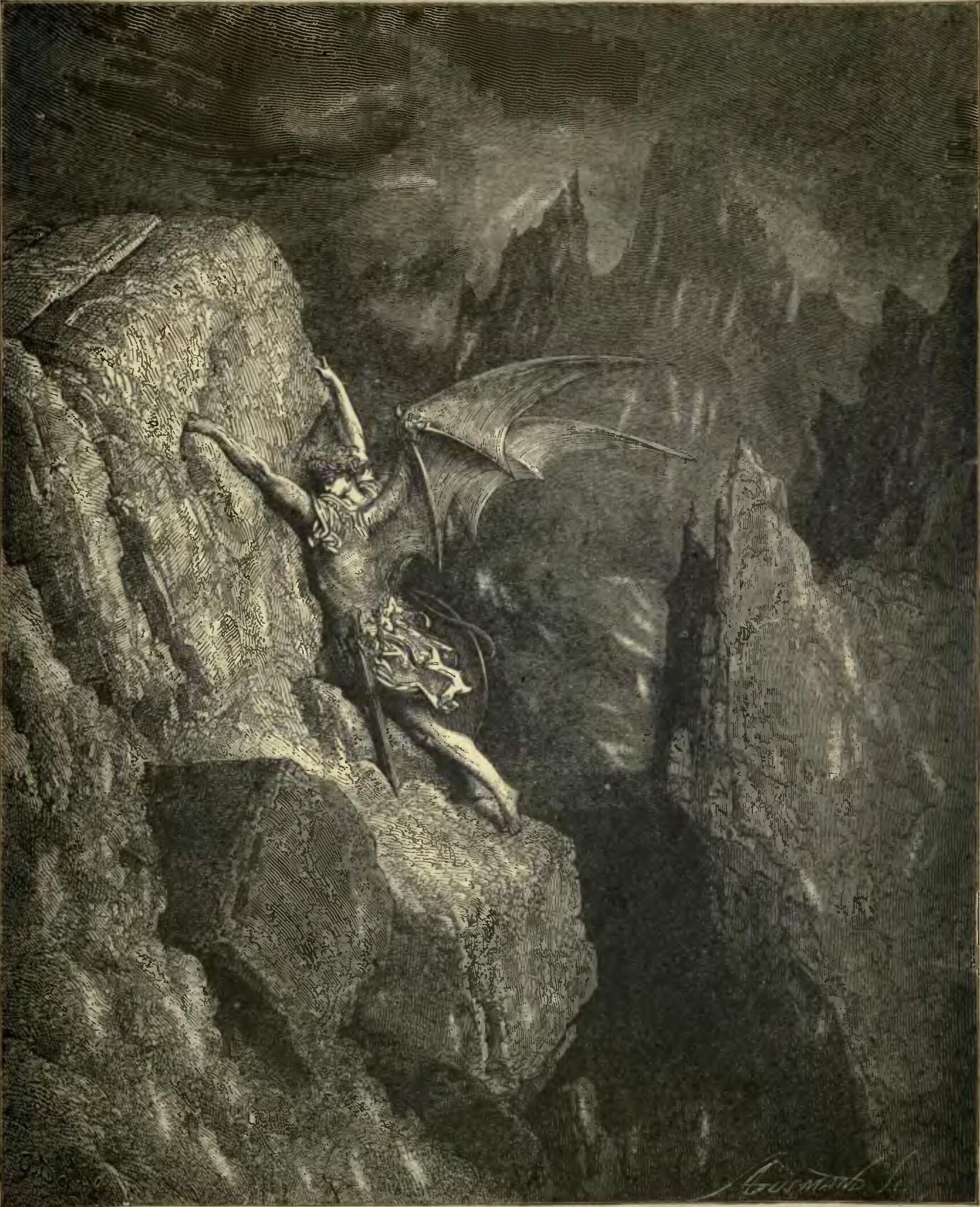
Satan’s Flight Through Chaos
Gustave Doré · 1866
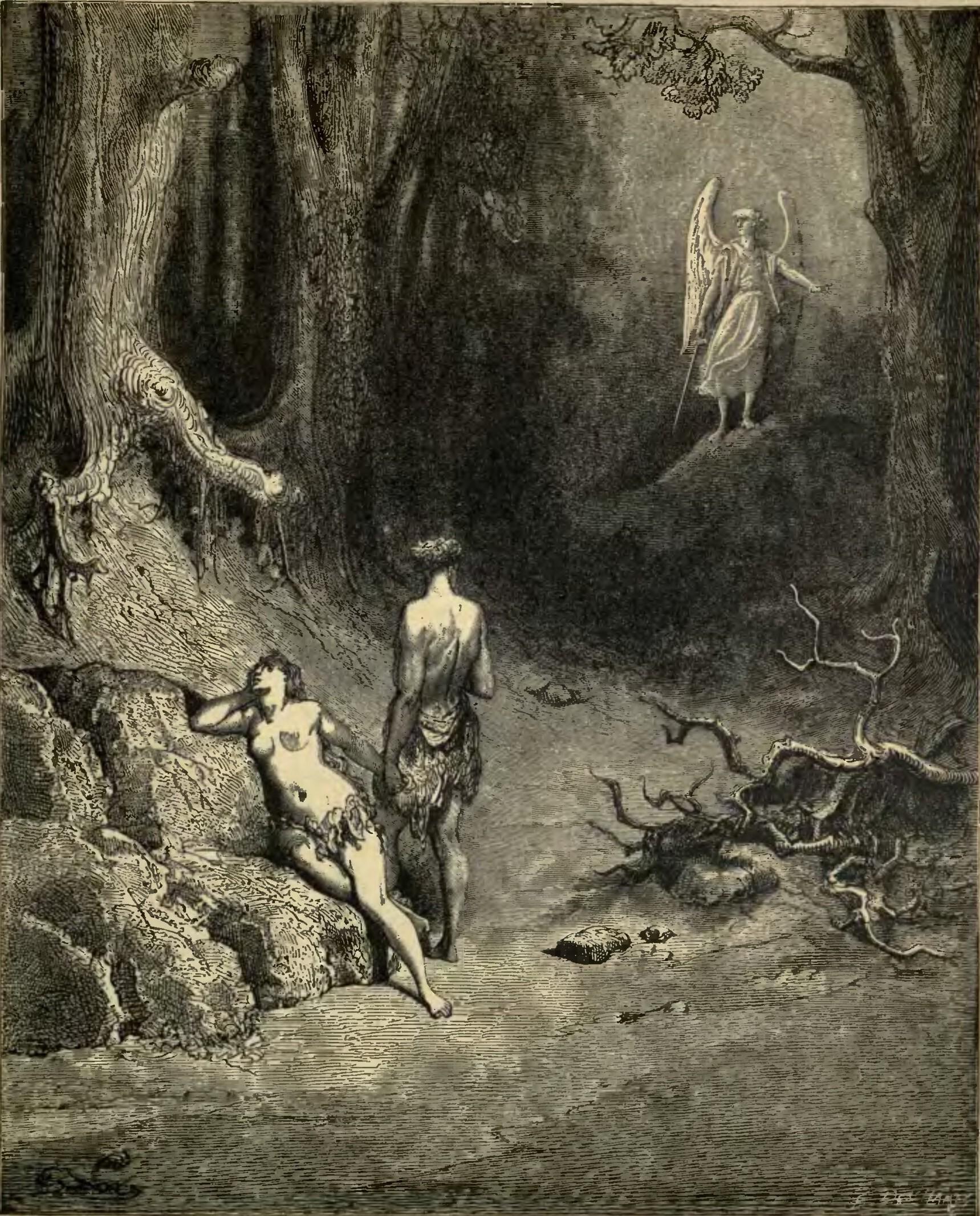
Adam and Eve Expelled from Paradise
Gustave Doré · 1866
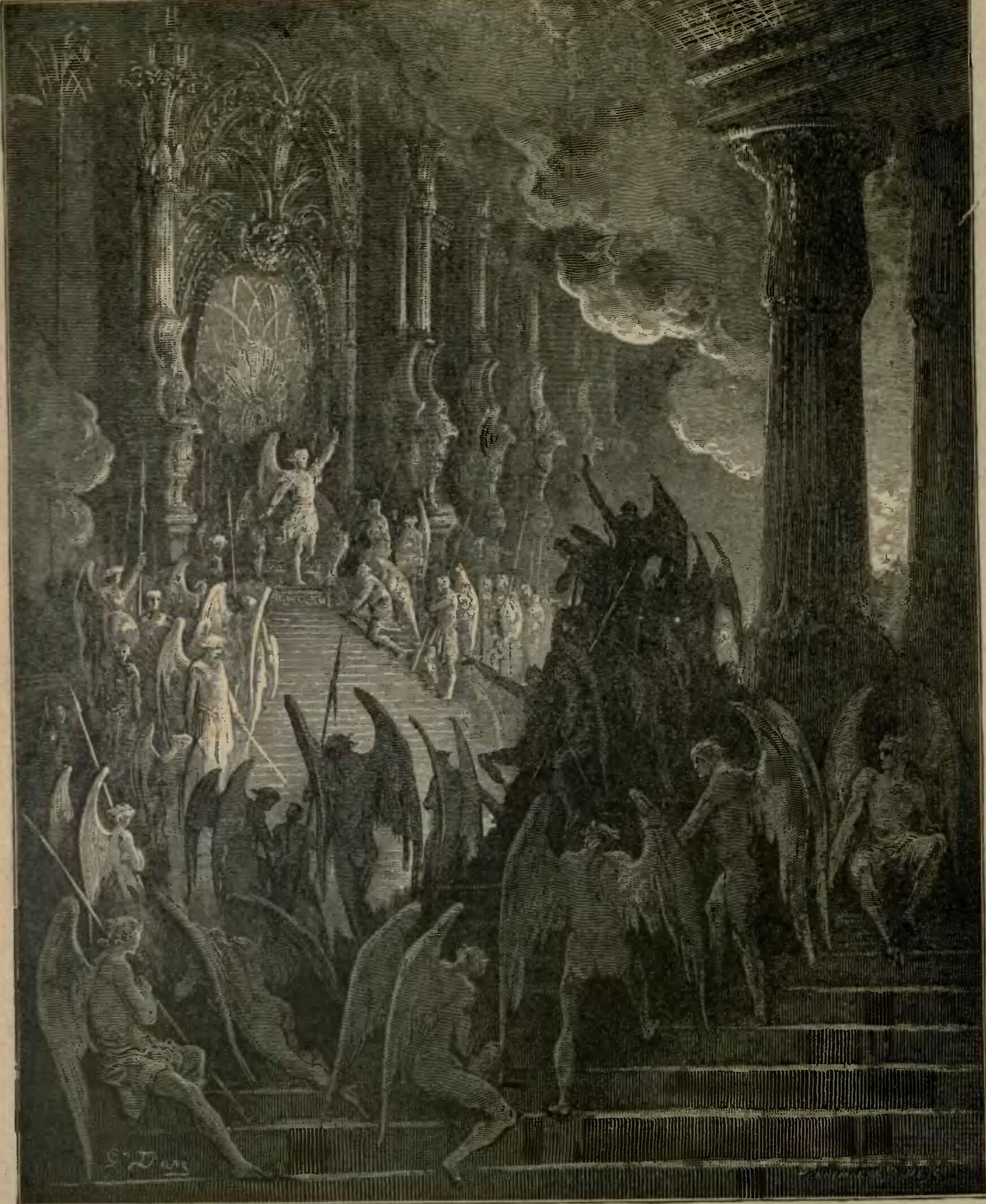
Satan in Council
Gustave Doré · 1866
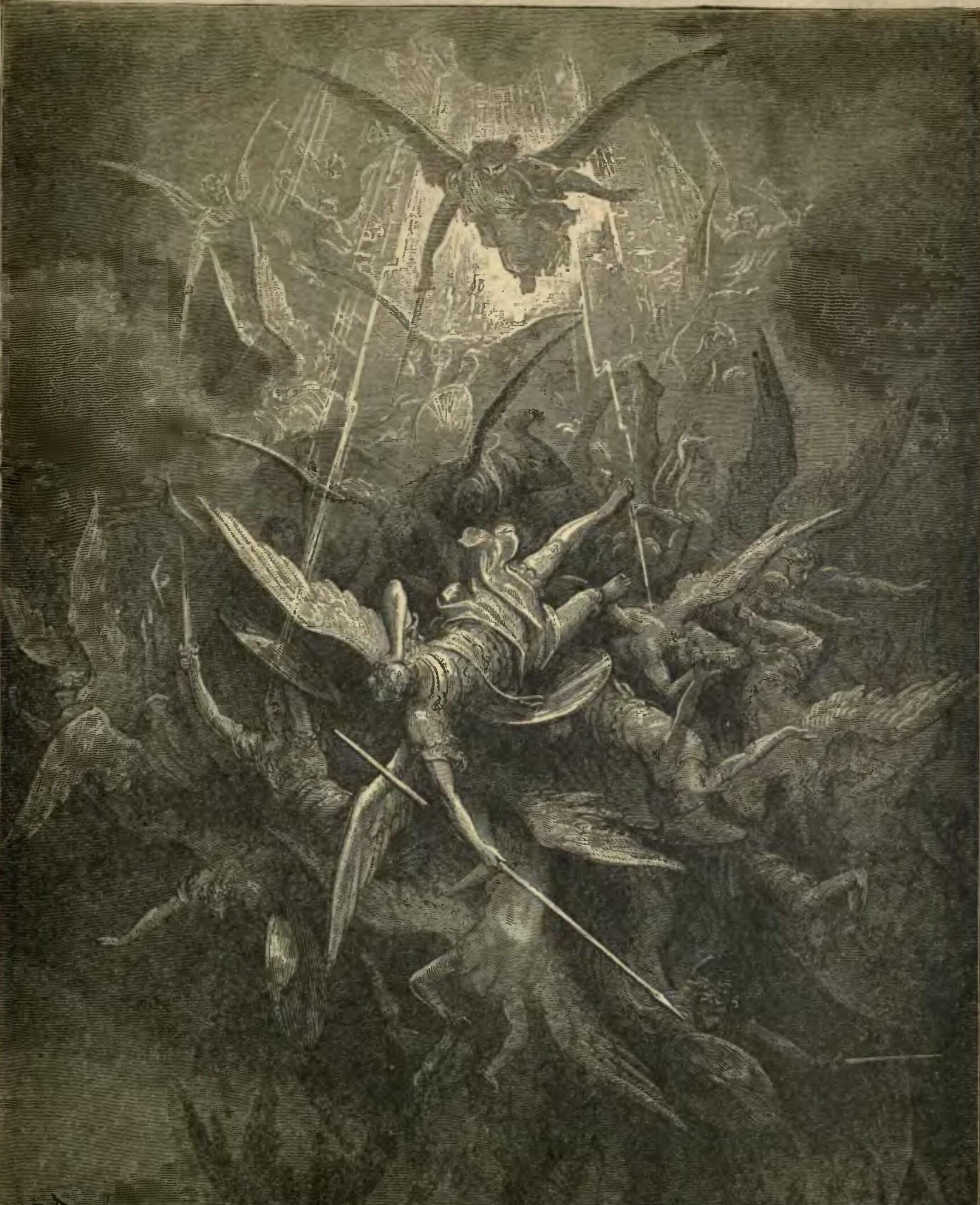
Satan Cast Out of Heaven
Gustave Doré · 1866
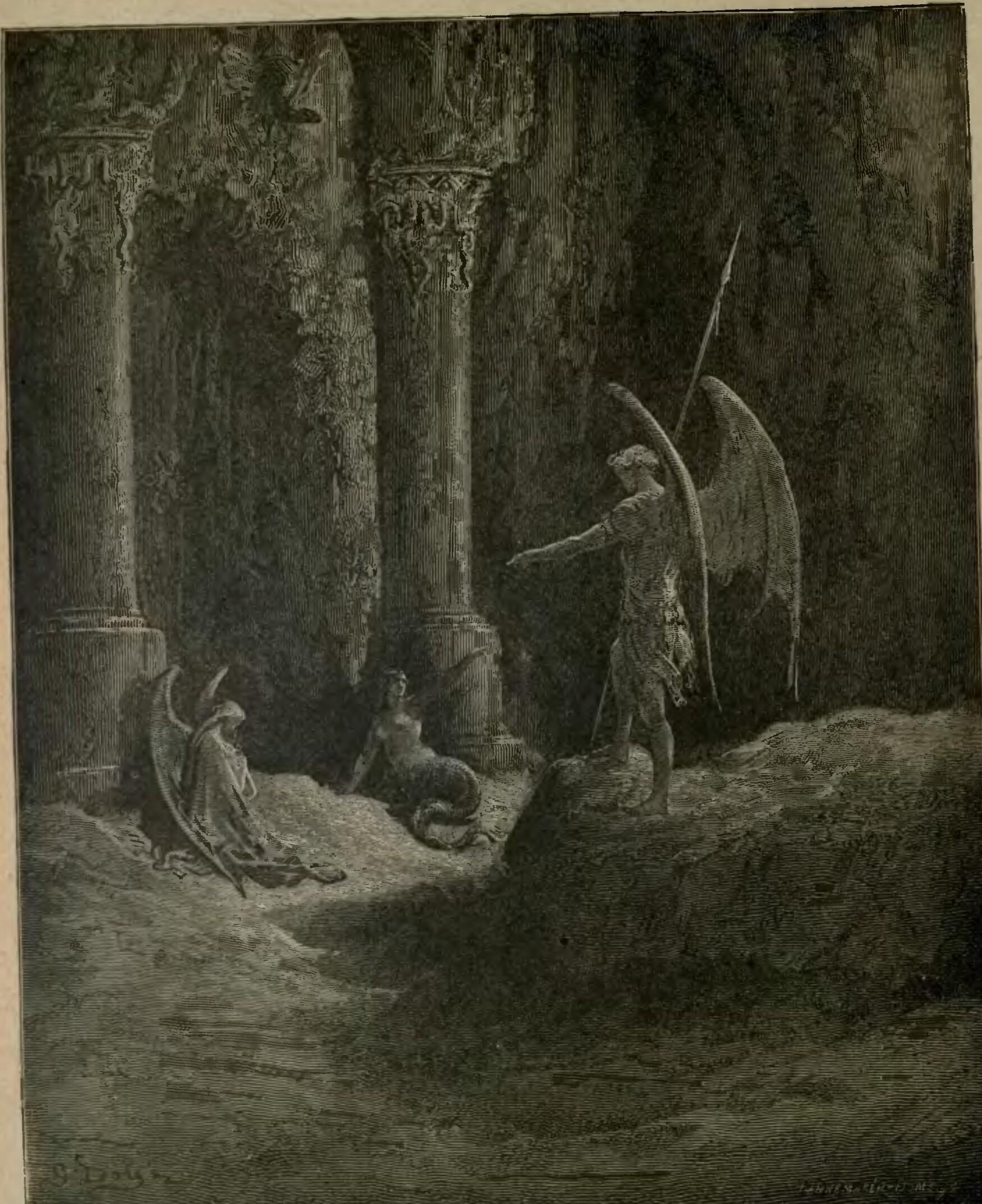
Satan, Sin and Death at the Gates of Hell
Gustave Doré · 1866
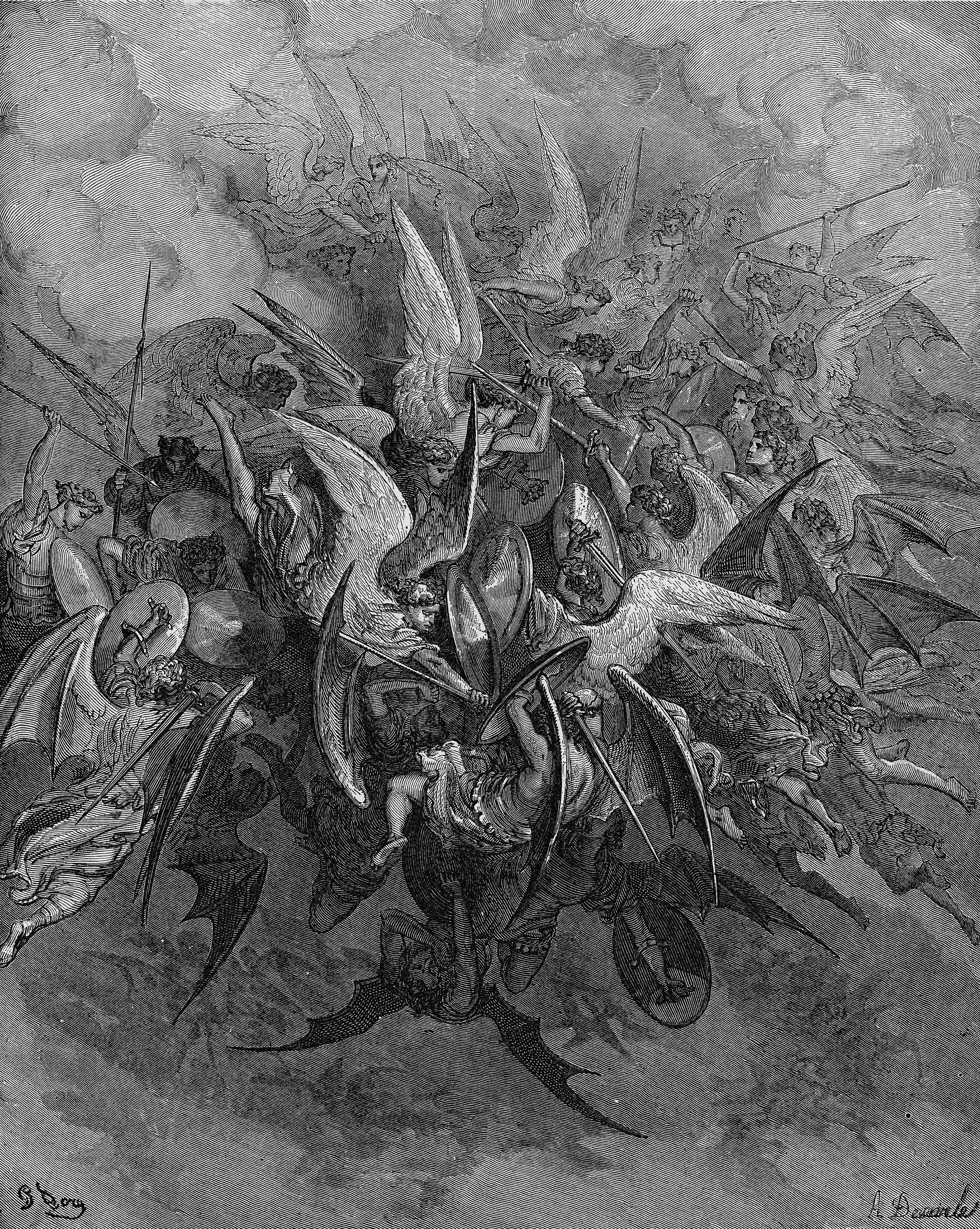
The War in Heaven
Gustave Doré · 1866
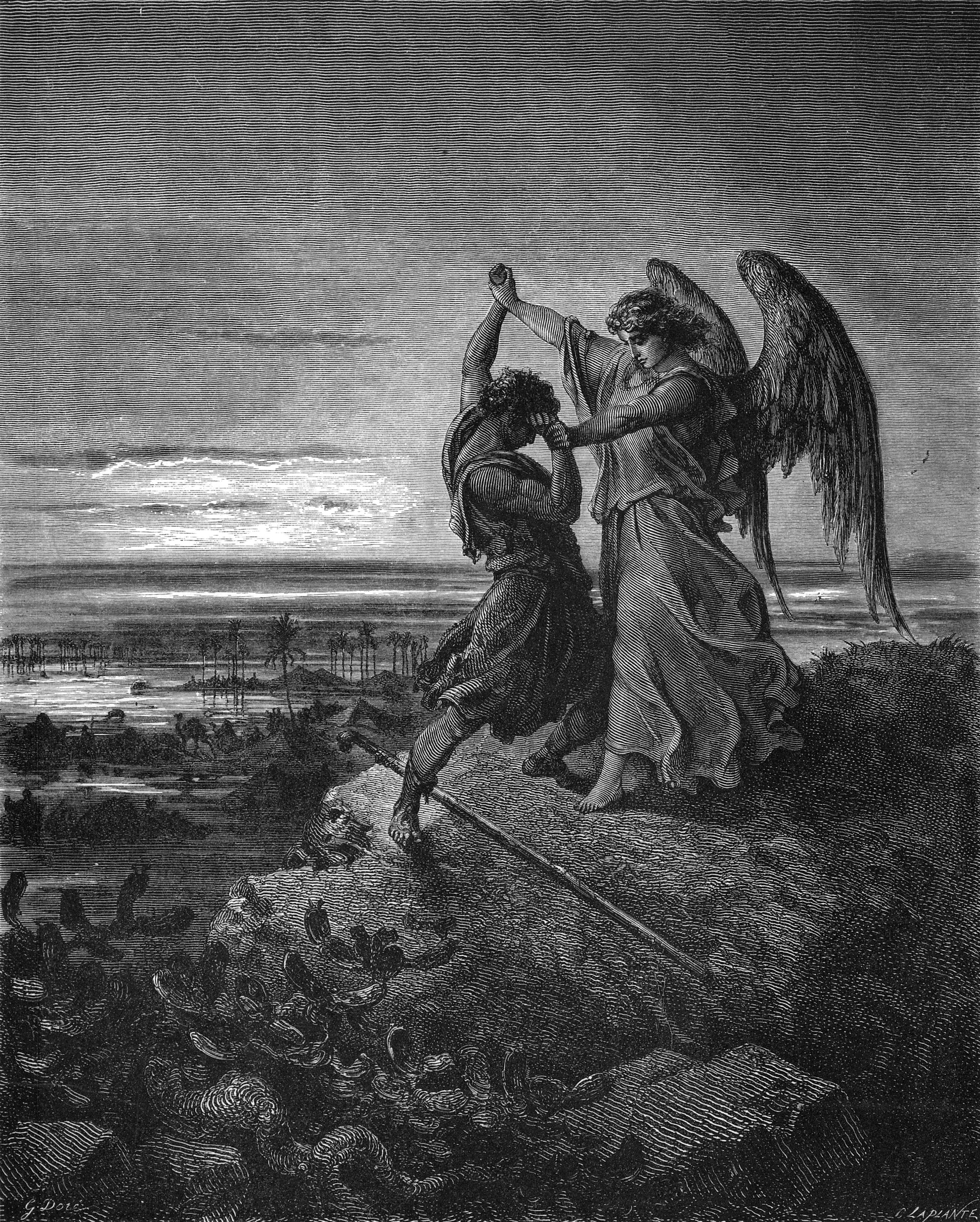
Jacob Wrestling with the Angel
Gustave Doré · 1866
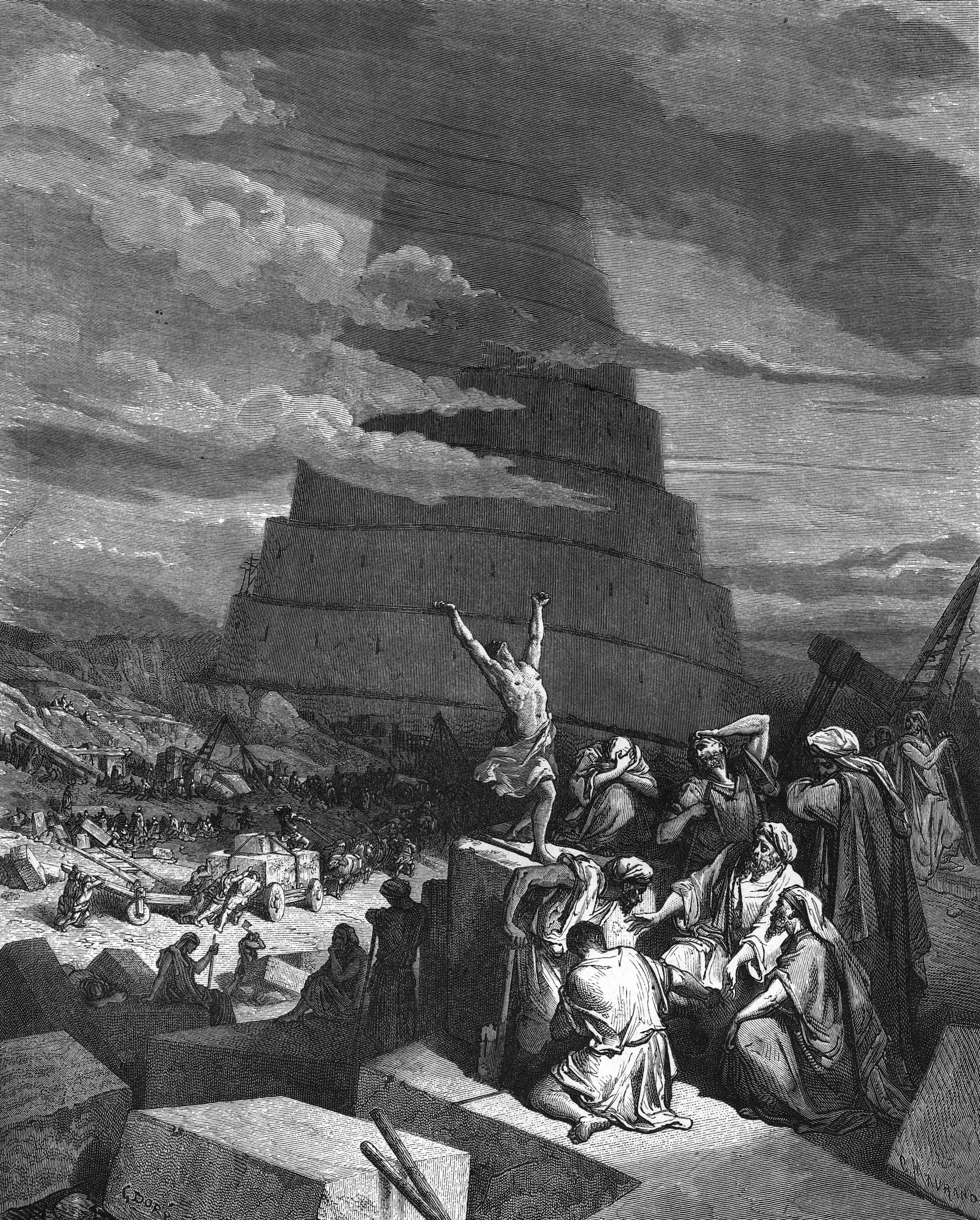
The Confusion of Tongues
Gustave Doré · 1866
Also from 1866
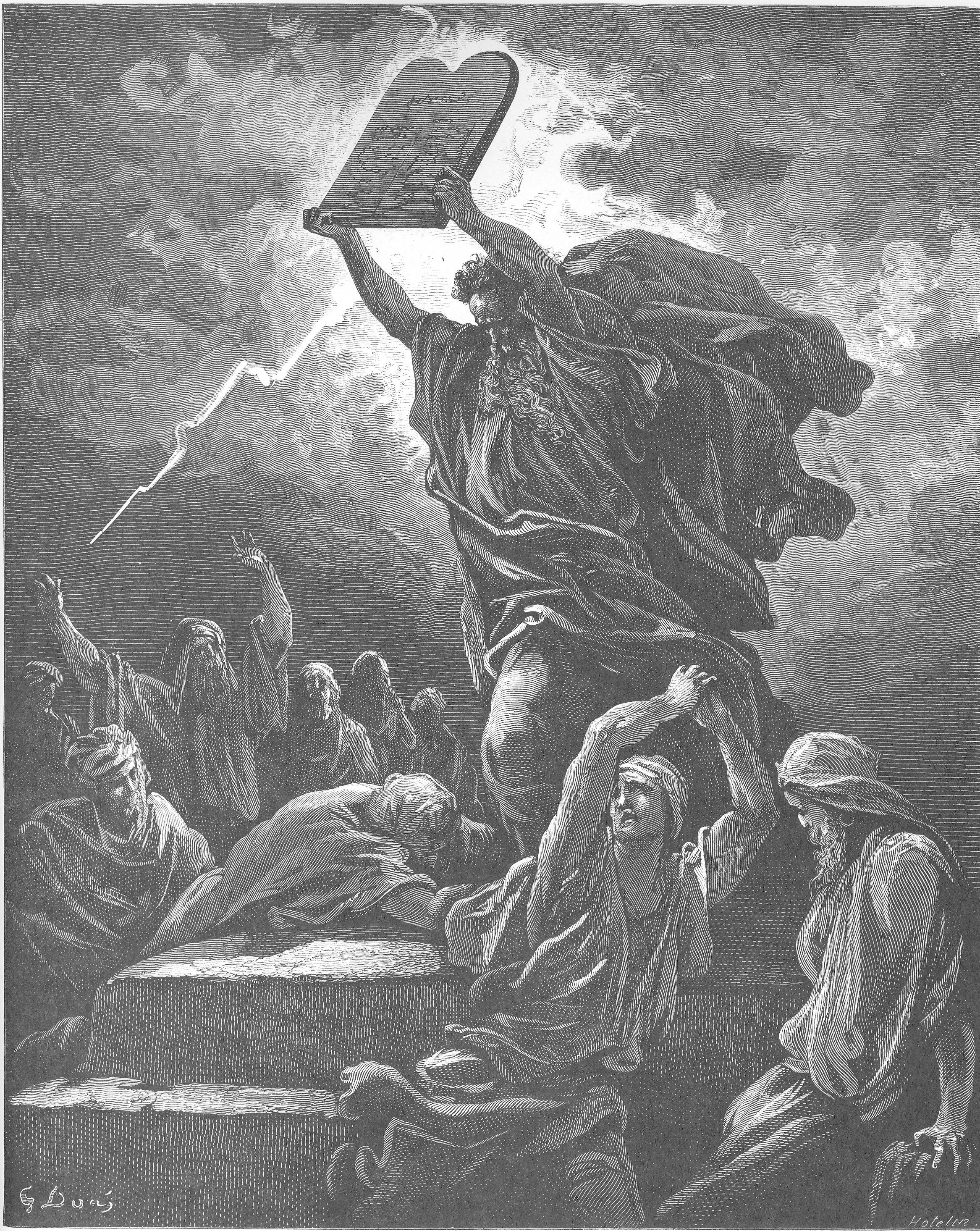
Moses Breaking the Tables of the Law
Gustave Doré · 1866
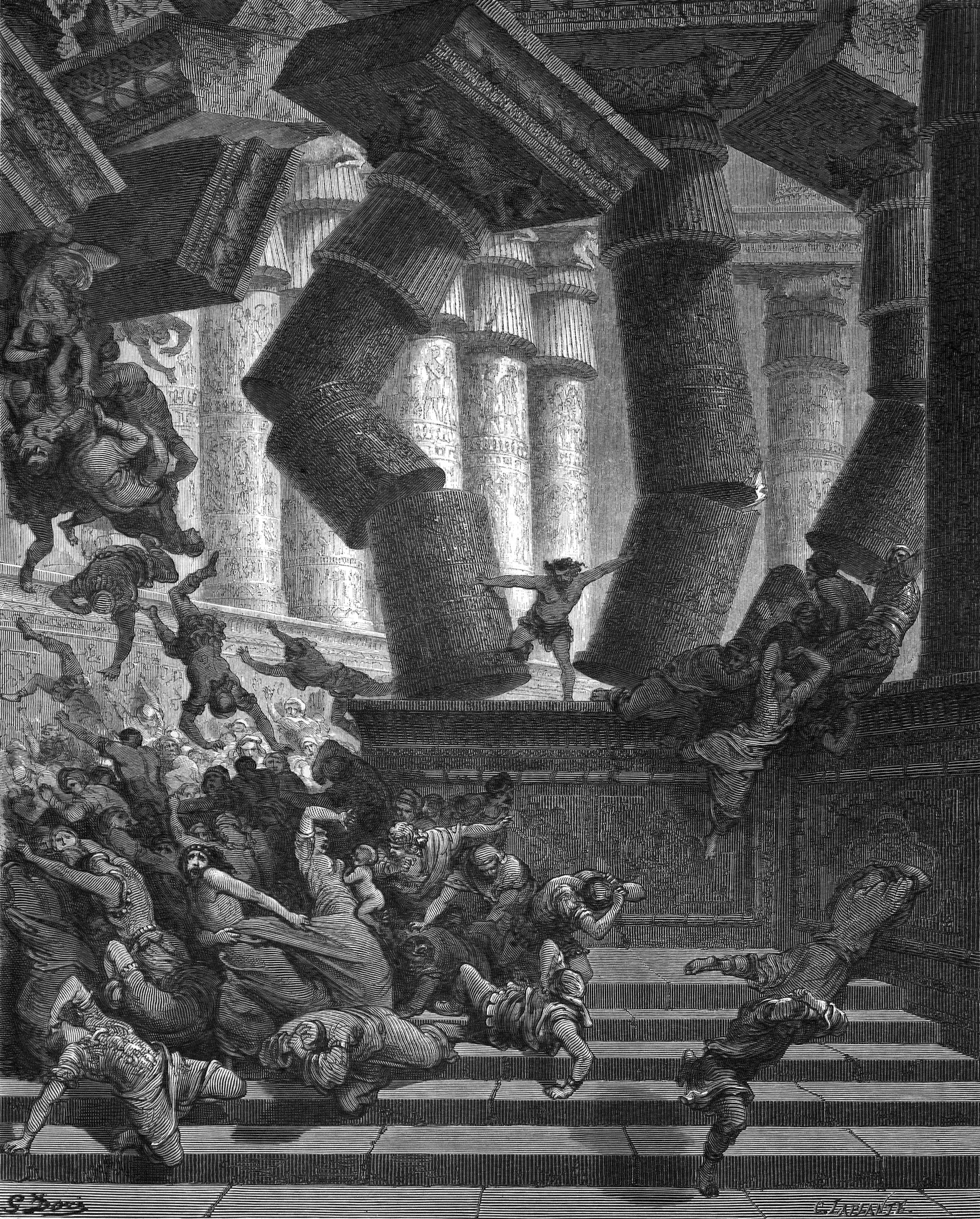
Samson Destroying the Temple
Gustave Doré · 1866
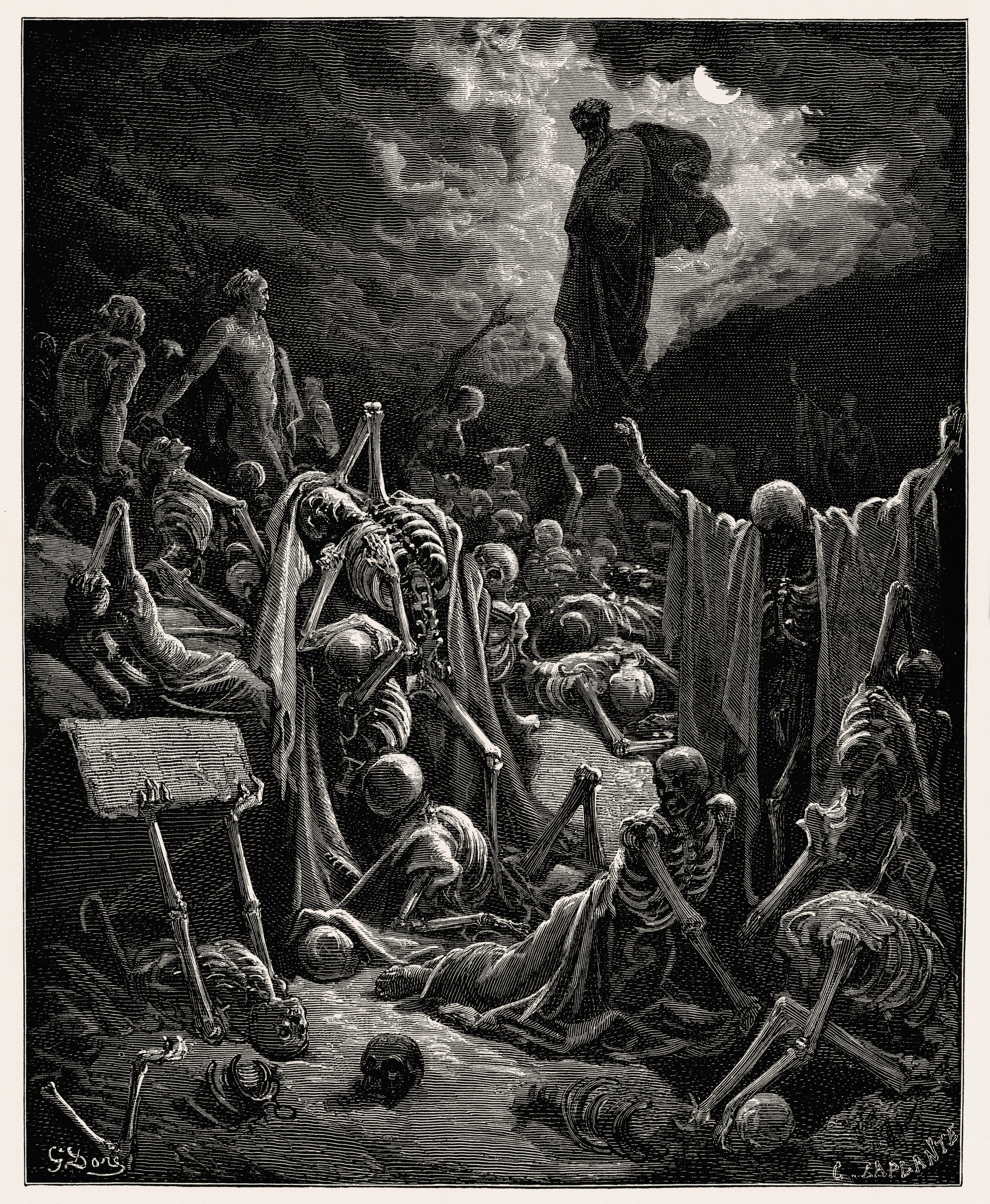
The Vision of the Valley of Dry Bones
Gustave Doré · 1866
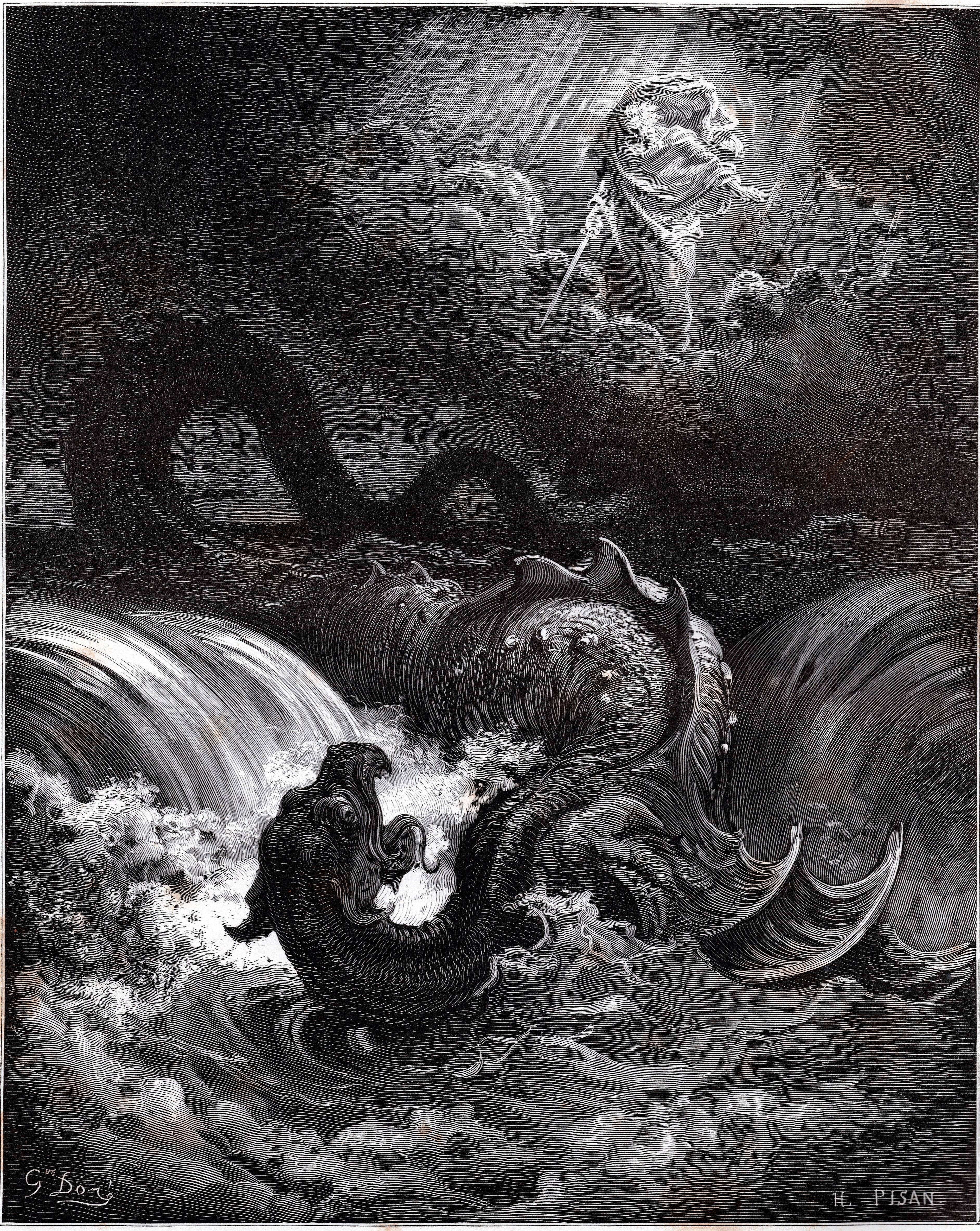
The Destruction of Leviathan
Gustave Doré · 1866
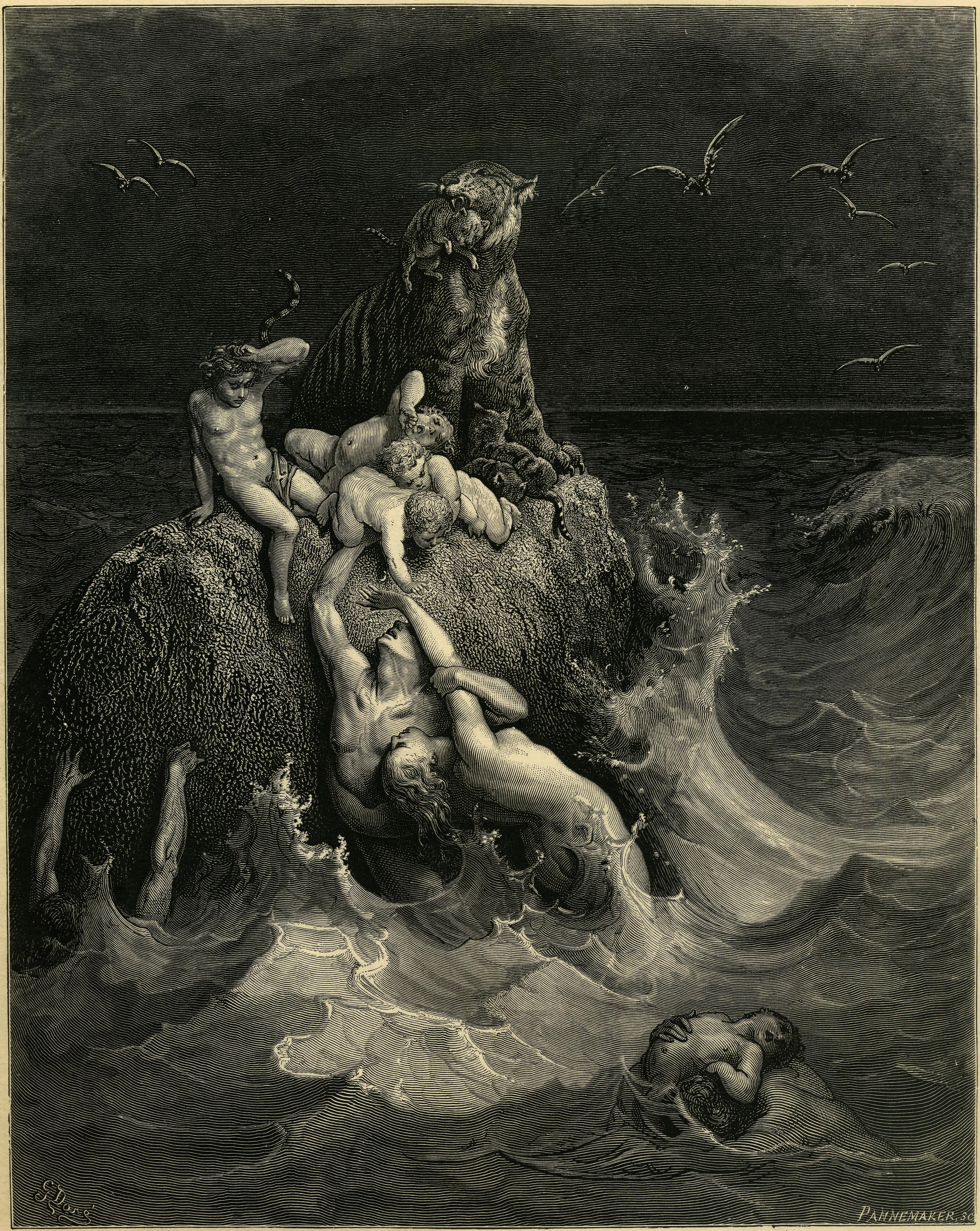
The Deluge
Gustave Doré · 1866
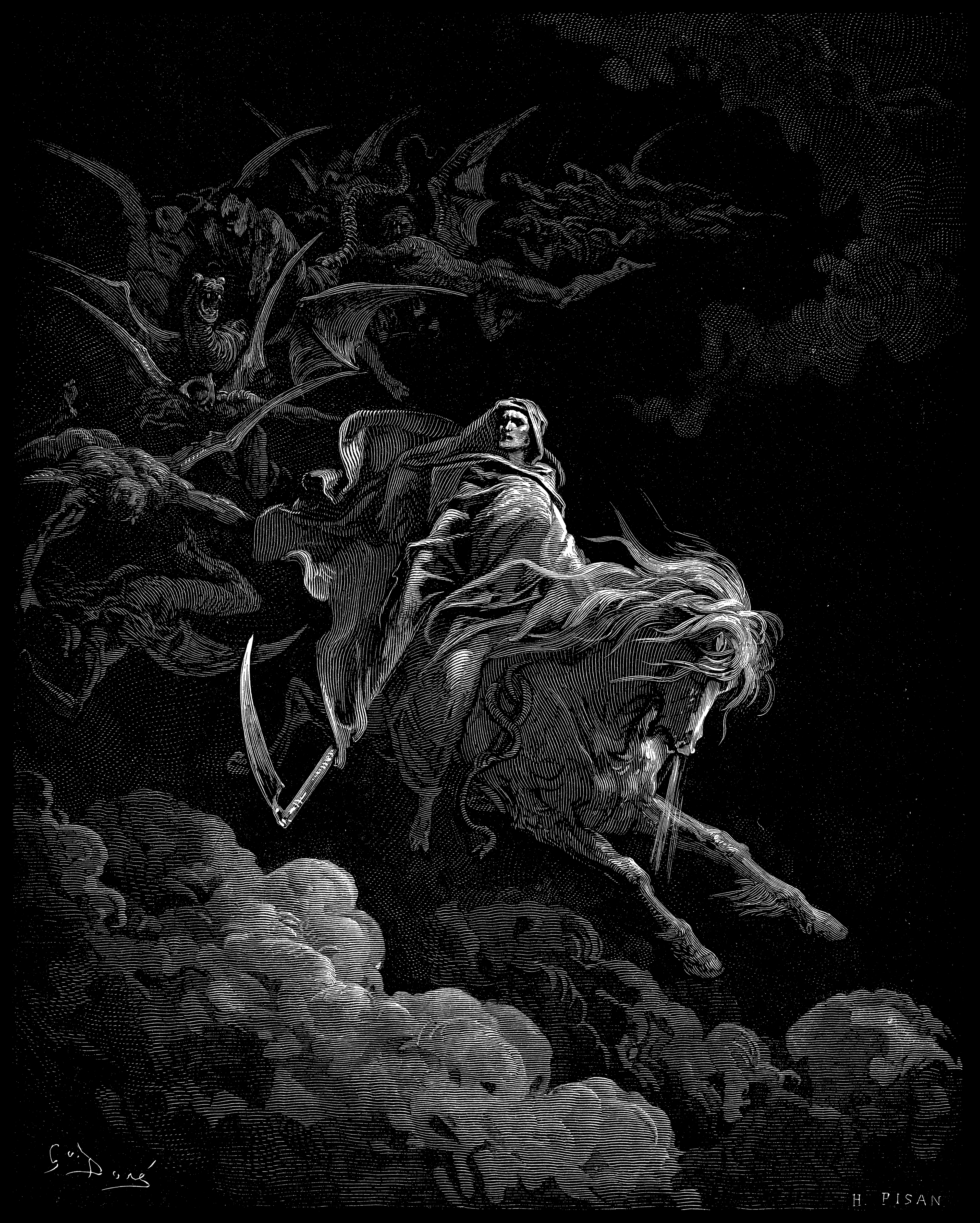
Death on the Pale Horse
Gustave Doré · 1866
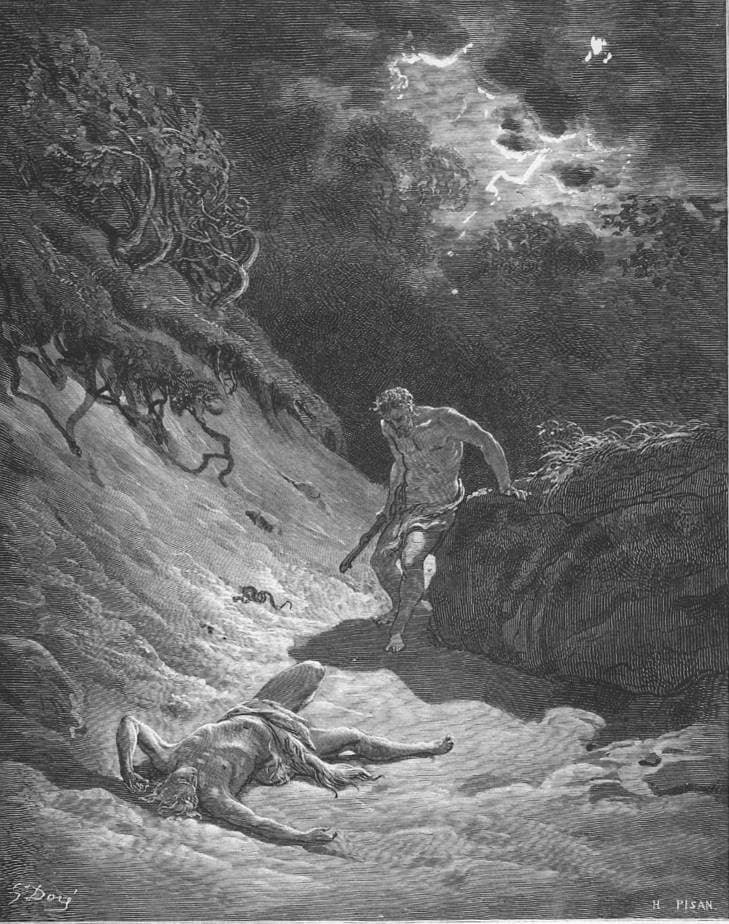
The Death of Abel
Gustave Doré · 1866
Related works
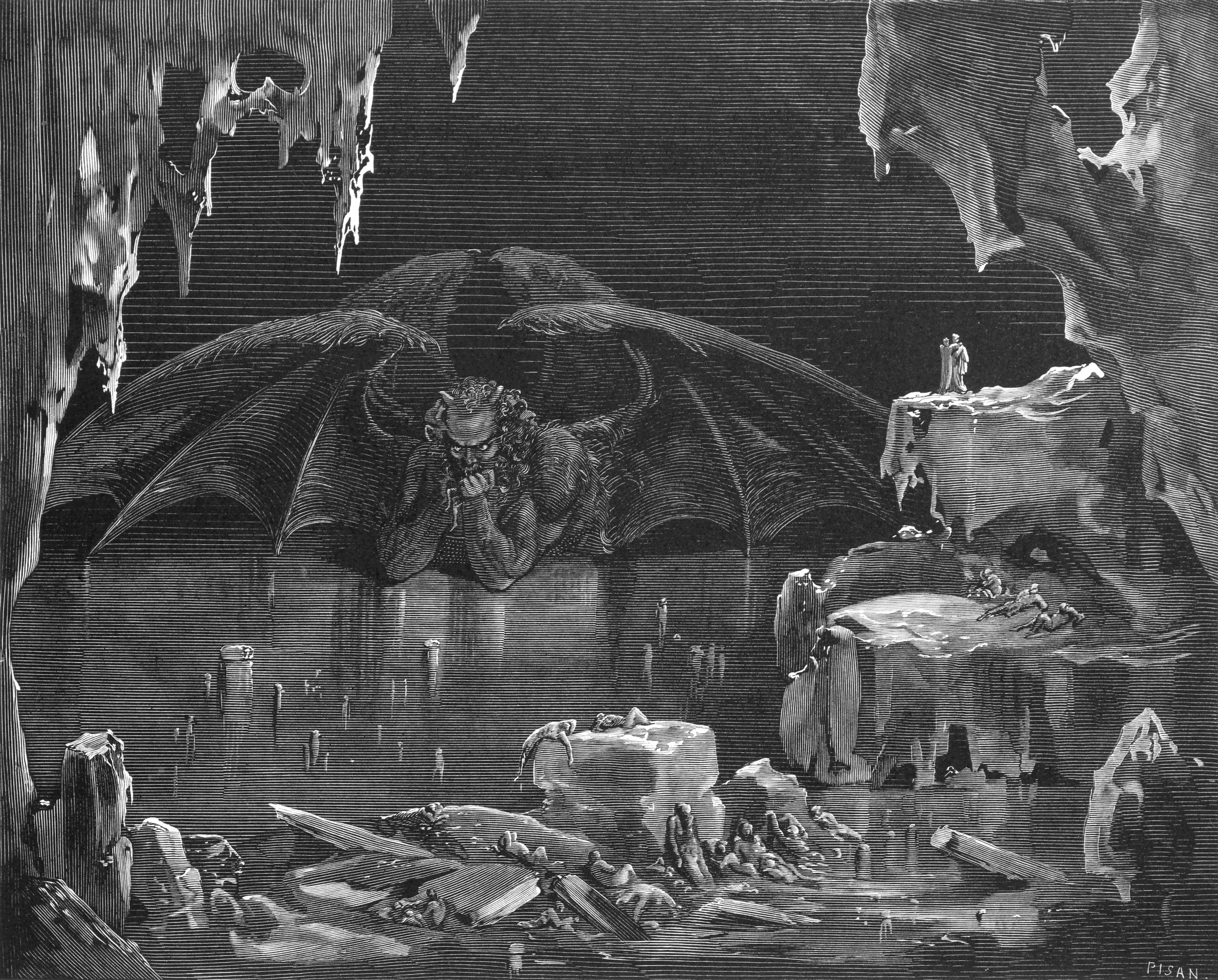
Lucifer, King of Hell
Gustave Doré · 1861
The Empyrean (Rosa Celeste)
Gustave Doré · 1868
Witches' Sabbath (The Great He-Goat)
Francisco Goya · c. 1819–1823
The Nightmare
Henry Fuseli · 1781
Nevermore (The Raven's Shadow)
Gustave Doré · 1884
The Malebranche Demons
Gustave Doré · 1861
The Albatross
Gustave Doré · 1876
The Sleep of Reason Produces Monsters
Francisco Goya · 1797–99 (published 1799)