Neoclassicism / Academic sculpture
Prometheus Bound and the Oceanids
Eduard Müller, 1872–79
Prometheus Bound and the Oceanids is a marble group by the German sculptor Eduard Müller, completed in 1879, showing the chained Titan Prometheus with the sea nymphs who mourn him. Carved from a single block, it belongs to the Alte Nationalgalerie in Berlin.
- Artist
- Eduard Müller
- Date
- 1872–79
- Medium
- Marble
- Collection
- Alte Nationalgalerie, Berlin, Germany
- Movement
- Neoclassicism / Academic sculpture
What you are looking at
Prometheus sits chained to a rock, his massive bearded head thrown back and his torso twisted, one wrist shackled behind him and the chain running down the stone. Directly above him the eagle sent by Zeus spreads its wings and bends toward his body. Below and around him are the Oceanids, the daughters of Ocean. At left one nymph, seen from behind, stretches up on her toes and reaches toward the bird as if to push it away. A second lies collapsed across the base at his feet, head dropped back and arms limp, overcome by grief.
The group reads as a rising spiral of bodies, from the fallen nymph at the bottom, through the Titan's bent legs and straining chest, to the eagle's wingtips at the top. Müller contrasts surfaces throughout: the rough, broken rock, the soft folds of drapery under Prometheus, the polished skin of the nymphs and the carefully feathered wings.
How it was made
Eduard Müller, born in Hildburghausen in 1828, began working life as a cook in the ducal kitchens at Coburg before training as a sculptor in Antwerp and Brussels. He settled in Rome in 1857 and stayed there for the rest of his life, producing marble mythological groups for German and British patrons. This was his largest and most ambitious work, made over several years in his Roman studio and finished in 1879. Contemporary accounts stress that the whole group, eagle and all, was cut from a single block of marble, a technical feat for a composition with so many projecting limbs.
The story
The subject comes from Prometheus Bound, the Greek tragedy traditionally attributed to Aeschylus. Prometheus has stolen fire from the gods and given it to humankind; as punishment Zeus has him chained to a crag at the edge of the world, where an eagle comes to devour his liver, which grows back each night. In the play a chorus of Oceanids arrives to sympathize with him. Müller's sculpture stages that chorus: compassion meeting divine punishment. In the 19th century Prometheus was a hero of defiance and human progress, which helps explain why a Berlin museum wanted the group.
Where to see it
The sculpture belongs to the Alte Nationalgalerie on Berlin's Museum Island. For other mythological groups in the catalogue, see Bernini's Rape of Proserpina, Canova's Psyche Revived by Cupid's Kiss and the Greek statues collection.
Questions & answers
Where is Prometheus Bound and the Oceanids?
The marble group belongs to the Alte Nationalgalerie on Museum Island in Berlin, Germany. It was completed by Eduard Müller in Rome in 1879 and is often described as having been carved from a single block of marble, eagle included.
What story does the sculpture show?
It illustrates the Greek tragedy Prometheus Bound. Prometheus, punished by Zeus for giving fire to humanity, is chained to a rock where an eagle feeds on his liver. The Oceanids, sea nymphs, come to comfort him; one tries to drive the eagle away while another collapses in grief.
Who was Eduard Müller?
A German sculptor (1828–1895) from Hildburghausen who first worked as a cook before studying sculpture in Antwerp and Brussels. He settled in Rome in 1857 and made marble mythological groups for German and British clients. Prometheus Bound and the Oceanids is considered his masterpiece.
Kindred works
You may also study
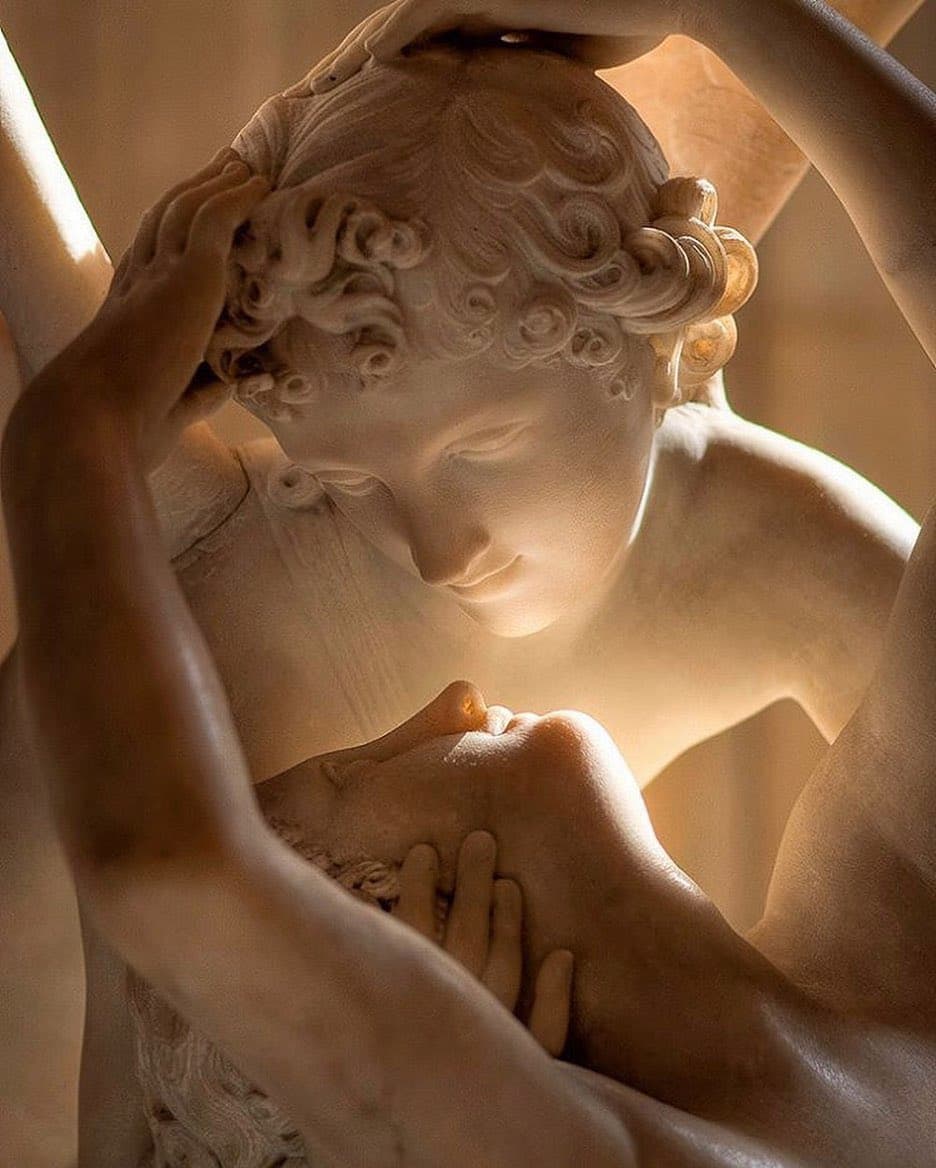
Psyche Revived by Cupid's Kiss
Antonio Canova · 1787–1793
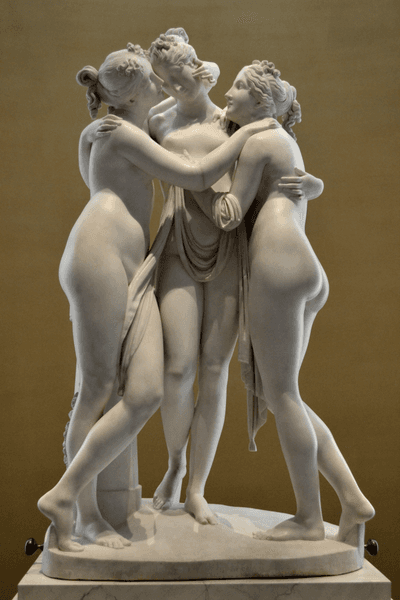
The Three Graces
Antonio Canova · 1814–17
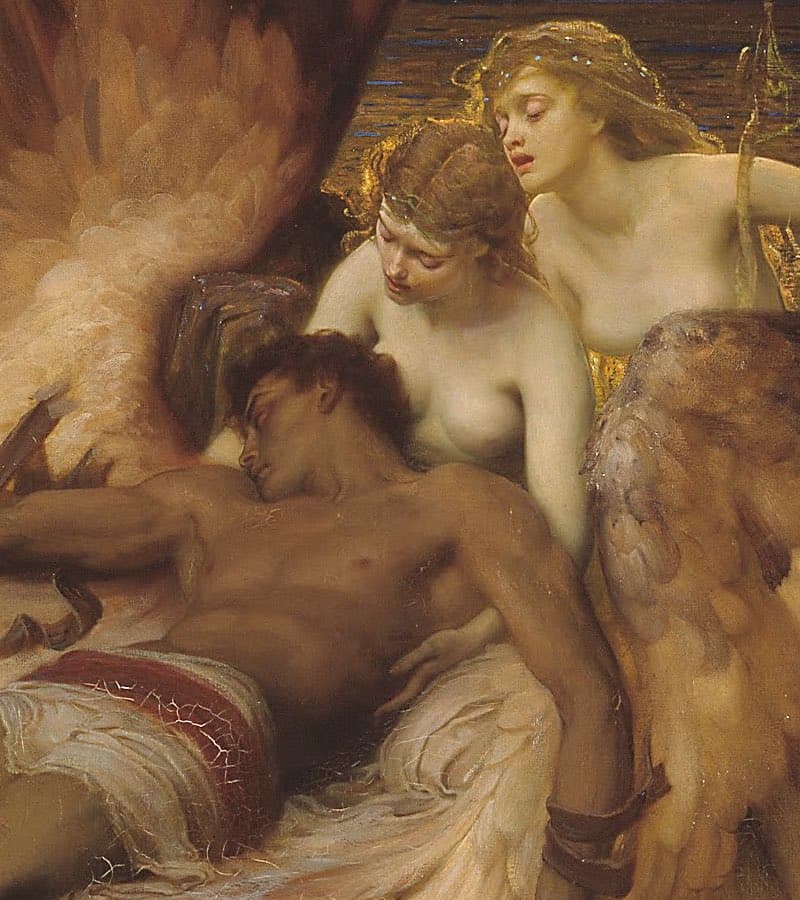
The Lament for Icarus
Herbert James Draper · 1898

Venus de Milo
Alexandros of Antioch · c. 150–125 BC

Nymphs Dancing to Pan's Flute
Joseph Tomanek

The Thinker
Auguste Rodin · Modeled 1880–82; enlarged 1902–03; this cast 1904

Saturn Devouring His Son
Francisco Goya · c. 1819–1823
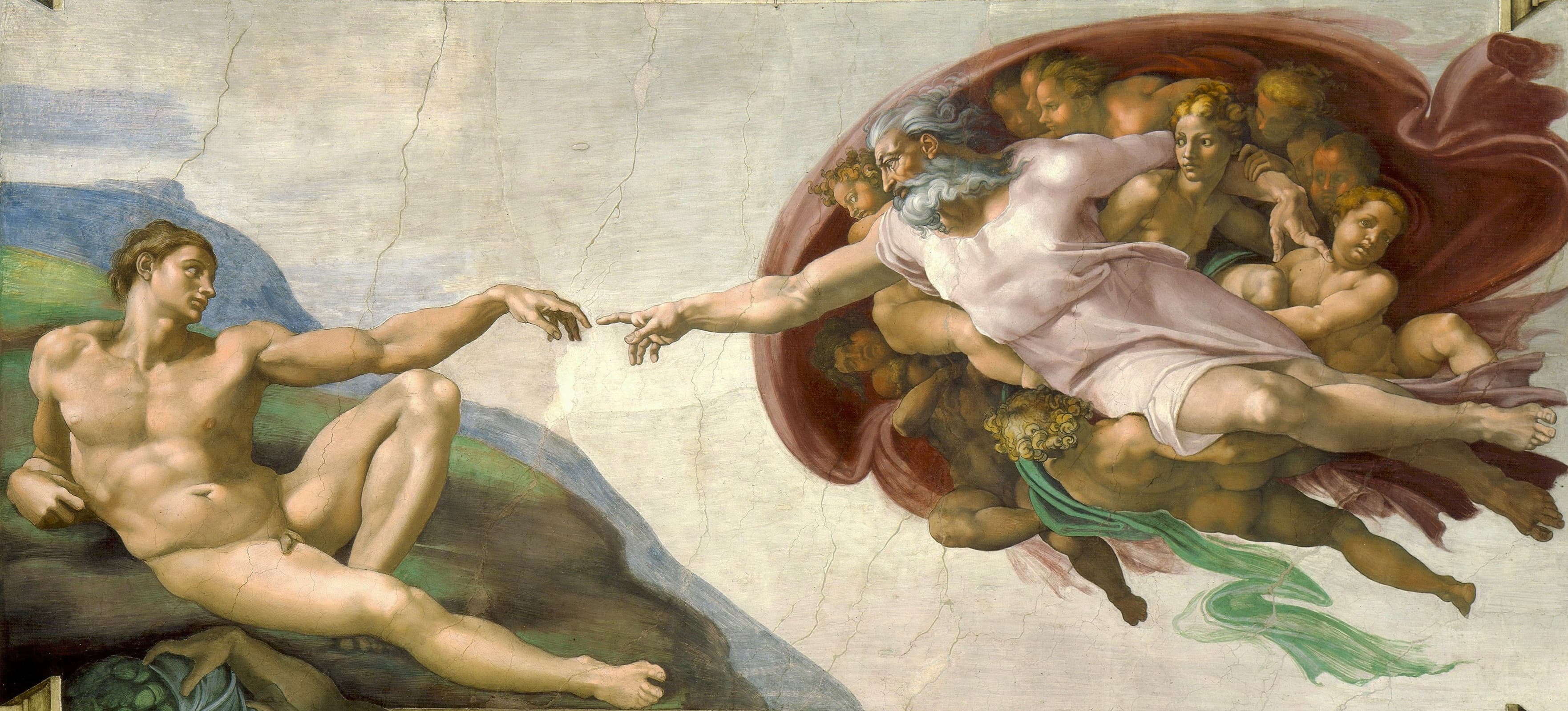
The Creation of Adam
Michelangelo · c. 1511–12