The Confusion of Tongues
Gustave Doré, 1866
The Confusion of Tongues is Gustave Doré's Tower of Babel, a wood engraving for his 1866 illustrated Bible (La Grande Bible de Tours). Builders sit in despair below the vast stepped tower as God confounds their language in Genesis 11.
- Artist
- Gustave Doré
- Date
- 1866
- Medium
- Wood engraving
- Movement
- Romanticism
- Themes
- Religion & Saints, Architecture & Ruins, Power & History, Literature & Poetry, Dark Academia
What you are looking at
The Tower of Babel fills the middle of the picture: a huge round stepped mass, ring upon ring of plain masonry, rising out of a plain of quarried blocks. Look at the top. The upper stories are engraved so faintly, in the same grey horizontal lines as the sky, that they seem to dissolve into the clouds. The tower is unfinished, or perhaps it simply goes up further than the eye can follow.
On the ground the work has stopped mid-motion. At left a gang of men still strains against a wagon loaded with squared stone, a team of horses at the traces, and wooden derricks stand over the quarry. Further off, crowds of tiny figures are scattered across the slope. Nothing about them says panic. They look stalled.
The real drama is in the right foreground, on a raised ledge of cut stone. One nearly naked man has climbed onto a block and flings both arms up at the sky, fists clenched. Around him sits a group of builders in robes and turbans who have given up: one buries his face in his hands, one clutches his head, one gestures helplessly to a neighbor who does not seem to follow. A man in the foreground kneels with his back to us. Nobody in the group is looking at anybody else.
Doré's signature is cut into the stone at lower left. The engraver's, "C. Maurand", is scratched into the face of a block at lower right.
The passage: Genesis 11
The story takes nine verses. After the Flood, "the whole earth was of one language, and of one speech." Settling in the plain of Shinar, people say: "Go to, let us build us a city and a tower, whose top may reach unto heaven; and let us make us a name, lest we be scattered abroad upon the face of the whole earth" (Genesis 11:4, King James Version).
God comes down to see the tower and decides: "Go to, let us go down, and there confound their language, that they may not understand one another's speech. So the LORD scattered them abroad from thence upon the face of all the earth: and they left off to build the city" (11:7–8). The place is called Babel, the text explains, "because the LORD did there confound the language of all the earth."
How Doré staged it
The challenge is that the miracle is invisible. Nothing falls; Genesis never says the tower is destroyed, only that the builders "left off." Doré's solution was to show the confusion as a breakdown between people. His foreground group is a study in failed communication: gestures that go nowhere, a man who seems to be speaking to someone who has turned away, a figure who has stopped trying and covers his face.
The man with raised fists can be read two ways, as defiance hurled at heaven or as a builder still calling down to the others in a tongue they can no longer understand. Either way he is the hinge of the picture, the one figure whose gesture connects the ground to the sky the tower was meant to reach.
Doré also departs from the most famous painted version. Pieter Bruegel the Elder's Tower of Babel (1563, Kunsthistorisches Museum, Vienna) is a crowded, cut-open marvel of engineering. Doré's tower is plainer and more remote, nearer in shape to the stepped temple-towers, or ziggurats, of ancient Mesopotamia. He keeps it at a distance, and puts the human cost up close.
How it was made
The plate is a wood engraving. Doré drew on the surface of a boxwood block, and Charles Maurand, one of the engravers who worked on the Bible, cut it. The sky shows the method well. Almost all of it is ruled with long, very regular horizontal lines; the clouds are made by thickening and interrupting them, and the faint upper tower by barely changing their weight. That evenness of tone is what lets the tower melt into the weather.
Publication
The engraving belongs to Doré's illustrated Bible, published by Alfred Mame et Fils in Tours in 1866 and known as La Grande Bible de Tours, with an English edition from Cassell, Petter & Galpin in London. It comes early in the Genesis sequence, after The Death of Abel and the Flood plates, among them The Deluge. The scan shown here comes from the Polish edition, Pismo Święte Starego i Nowego Testamentu (1873), digitized by the National Library of Poland. The whole cycle is collected in the Doré Bible.
Meaning
The Babel story has been read as a lesson against pride, the attempt to "make us a name" and reach heaven by human effort, and as an explanation of why the world speaks so many languages. Doré's plate keeps both readings in play. The tower is the pride, rising out of sight; the despairing, mutually baffled people at its foot are the price.
That gives the plate a modern edge. It is less about a punishment from above than about what happens to any great collective project when people can no longer understand one another. The theme of heaven punishing those who reach too high runs through Doré's other books, from The Giants in Dante's Inferno to Milton's rebels in Satan Cast Out of Heaven. More of the artist's work is on the Gustave Doré page.
Questions & answers
What does Doré's Tower of Babel engraving show?
It shows the moment in Genesis 11 when God confounds the builders' language. The vast, unfinished tower rises into the clouds while work stalls on the plain. In the foreground one man raises his fists to the sky and a group of builders sits in despair, gesturing at one another without understanding.
Which Bible verse does The Confusion of Tongues illustrate?
Genesis 11:1–9. The key lines in the King James Version are 11:7–8: "let us go down, and there confound their language, that they may not understand one another's speech. So the LORD scattered them abroad from thence upon the face of all the earth: and they left off to build the city."
When was Doré's Tower of Babel made?
Doré designed it for his illustrated Bible, published by Mame in Tours in 1866 as La Sainte Bible selon la Vulgate, known as La Grande Bible de Tours. An English edition with the King James text came from Cassell, Petter & Galpin in London, and the plates were soon reprinted in Polish, German and other editions.
Who engraved The Confusion of Tongues?
Doré drew the design on a boxwood block and the wood engraver Charles Maurand cut it. His signature, "C. Maurand", is cut into a stone block at lower right; Doré's signature is at lower left. Maurand translated Doré's drawing into the fine ruled lines that make the sky and the fading top of the tower.
What is the meaning of the Tower of Babel in Doré's plate?
Genesis presents Babel as human pride, an attempt to reach heaven and "make us a name," punished by the scattering of languages. Doré shows that punishment as a breakdown between people: the tower still stands, but the builders can no longer understand one another, and the work stops.
More by Gustave Doré
All works →
Death on the Pale Horse
Gustave Doré · 1866
Moses Breaking the Tables of the Law
Gustave Doré · 1866
The Destruction of Leviathan
Gustave Doré · 1866
The Death of Abel
Gustave Doré · 1866
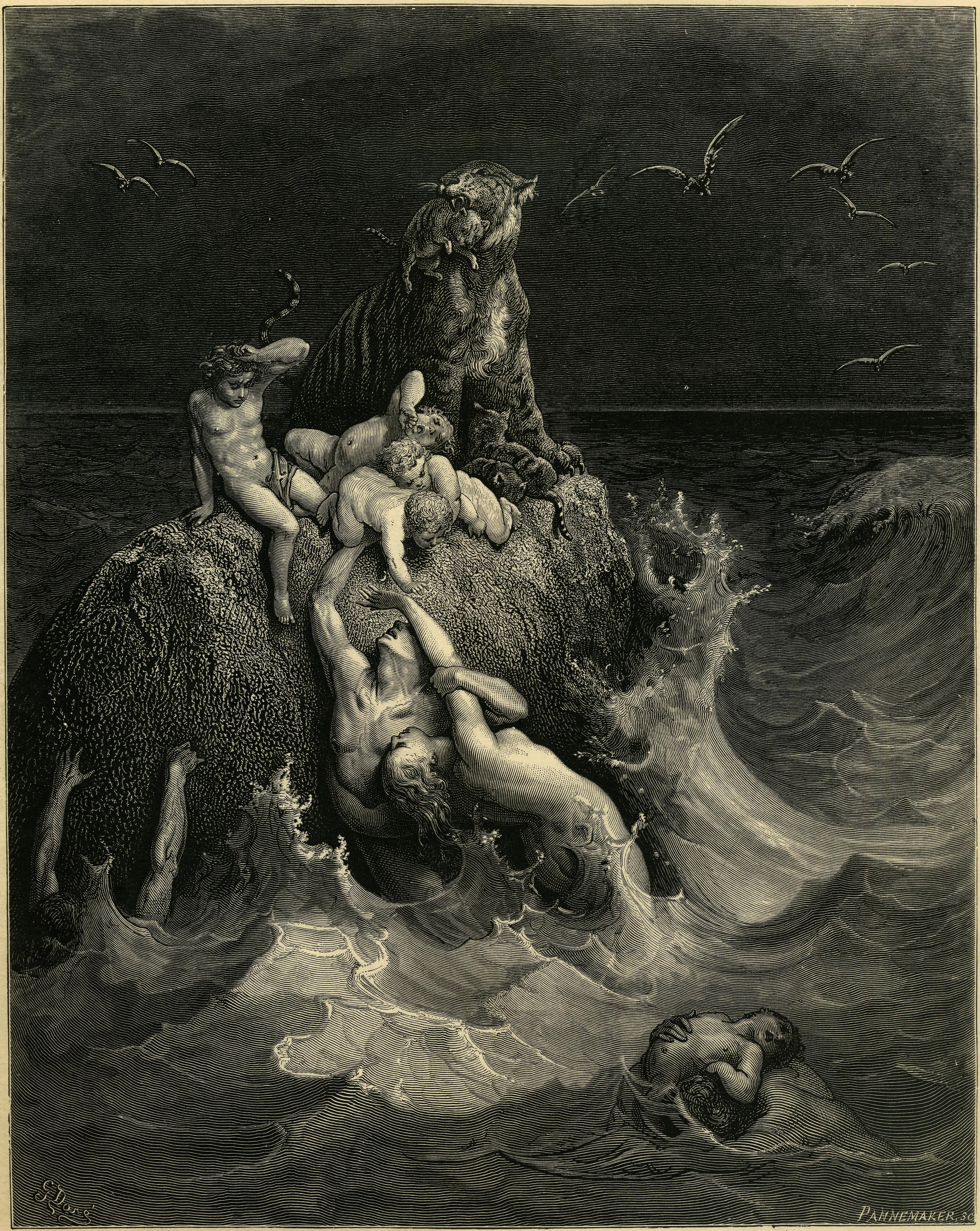
The Deluge
Gustave Doré · 1866
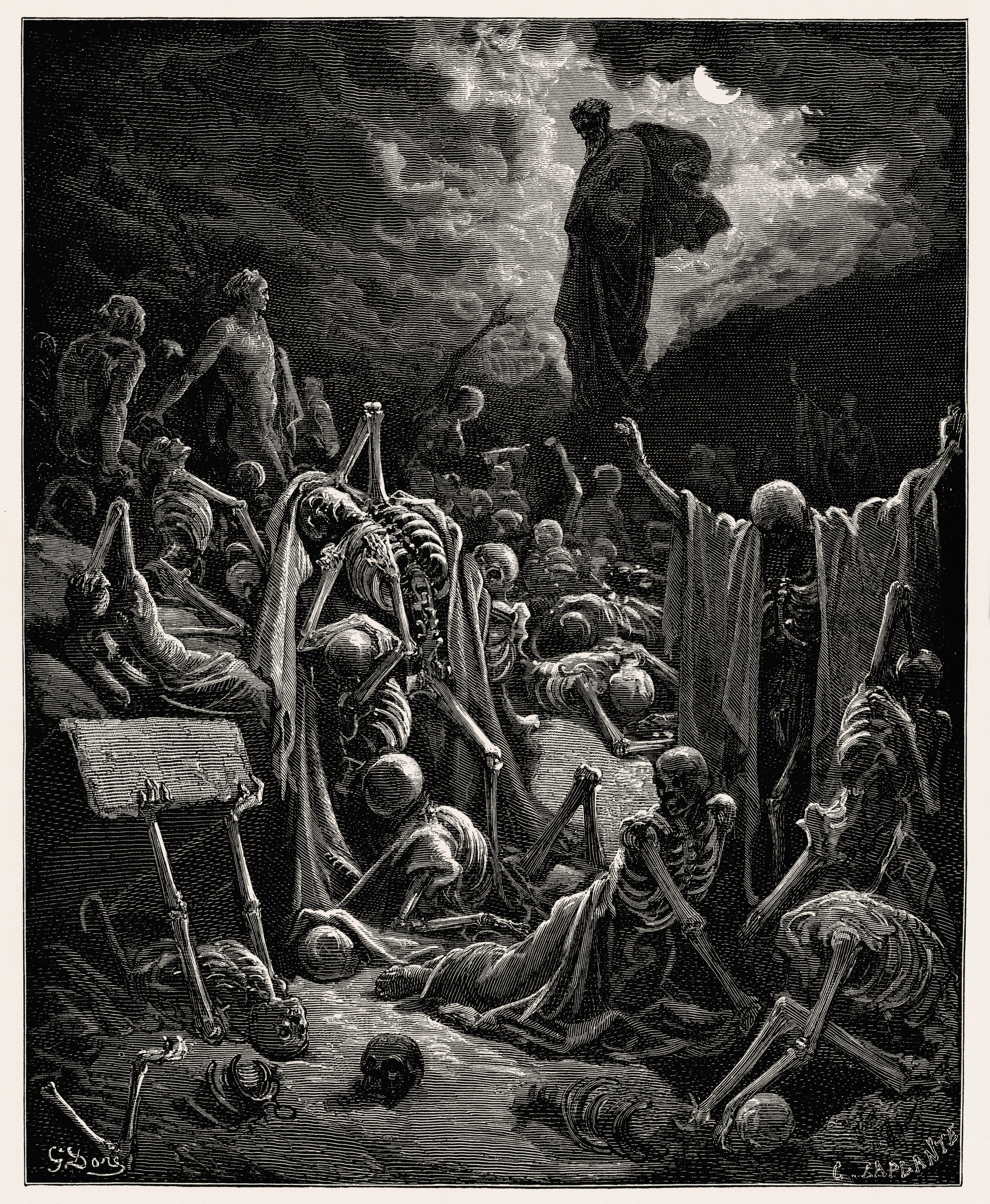
The Vision of the Valley of Dry Bones
Gustave Doré · 1866
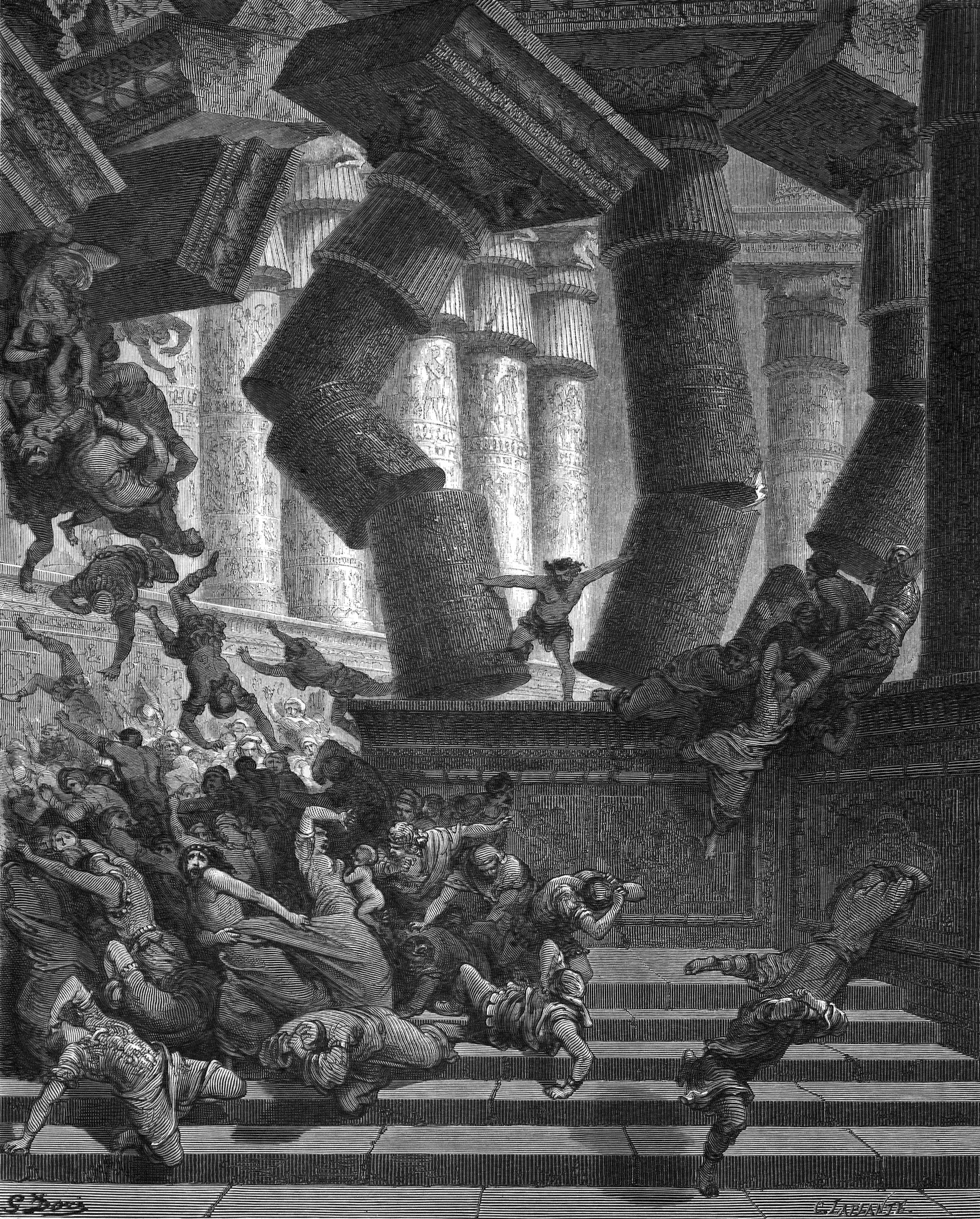
Samson Destroying the Temple
Gustave Doré · 1866
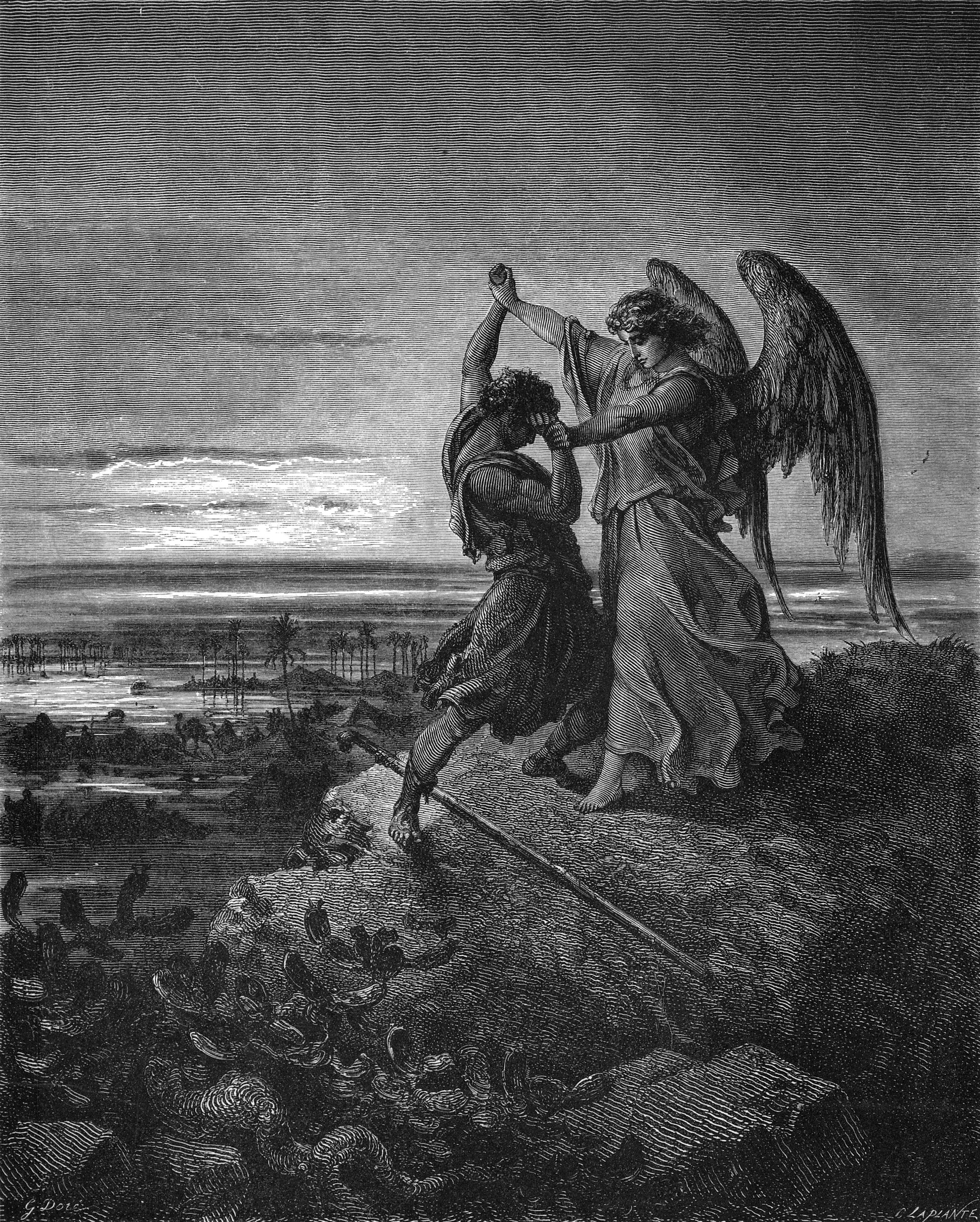
Jacob Wrestling with the Angel
Gustave Doré · 1866
Also from 1866
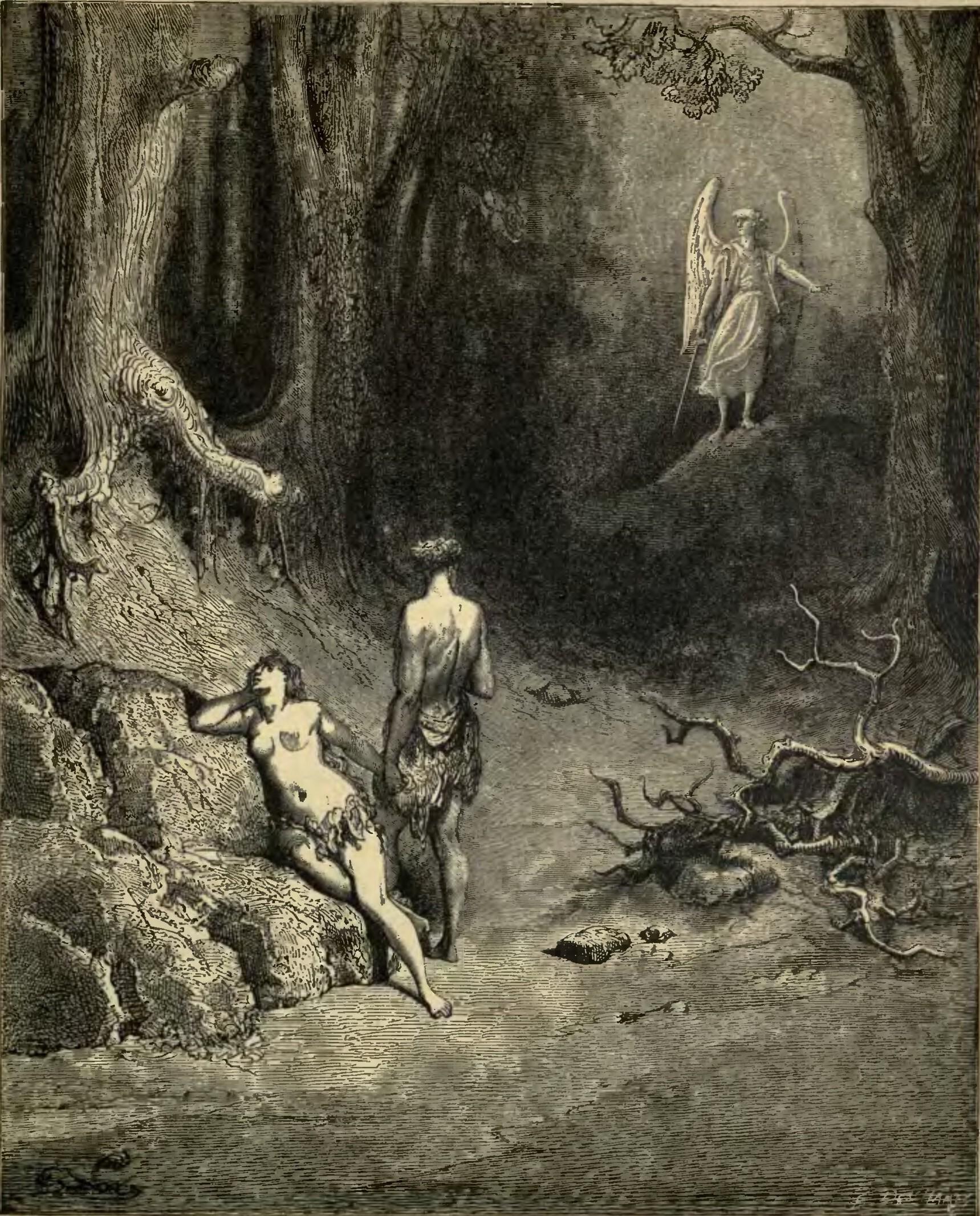
Adam and Eve Expelled from Paradise
Gustave Doré · 1866
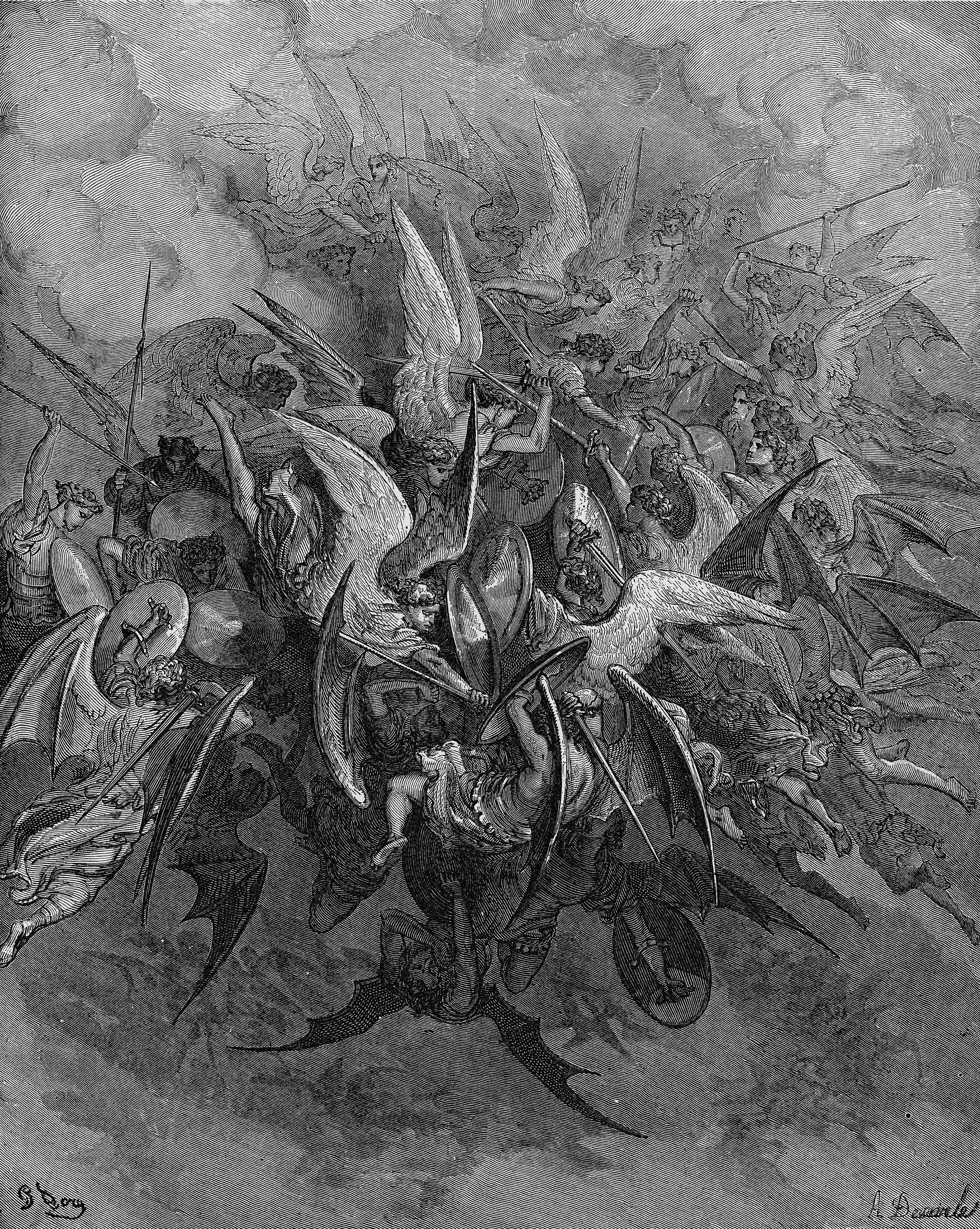
The War in Heaven
Gustave Doré · 1866
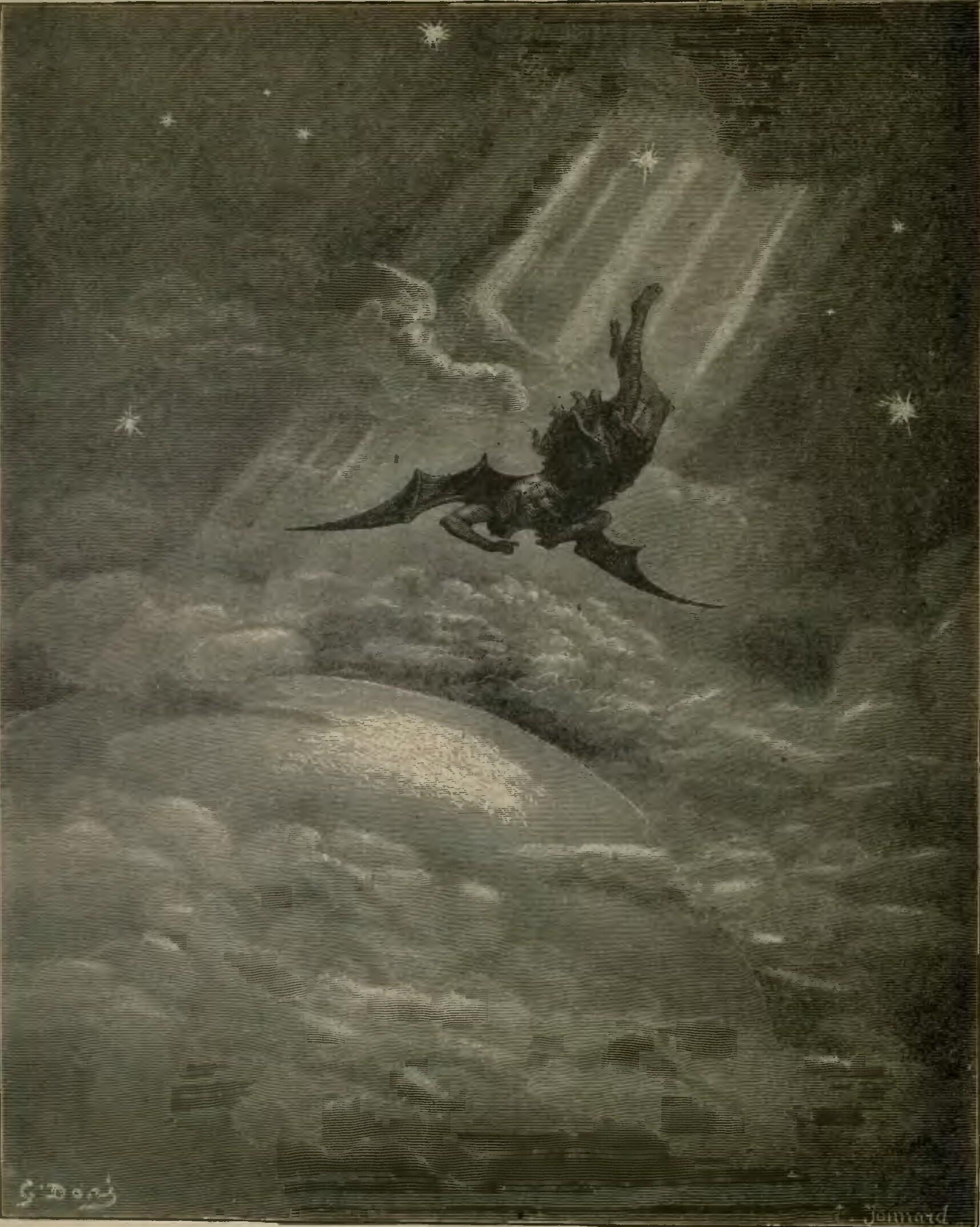
Satan Approaching the Confines of the Earth
Gustave Doré · 1866
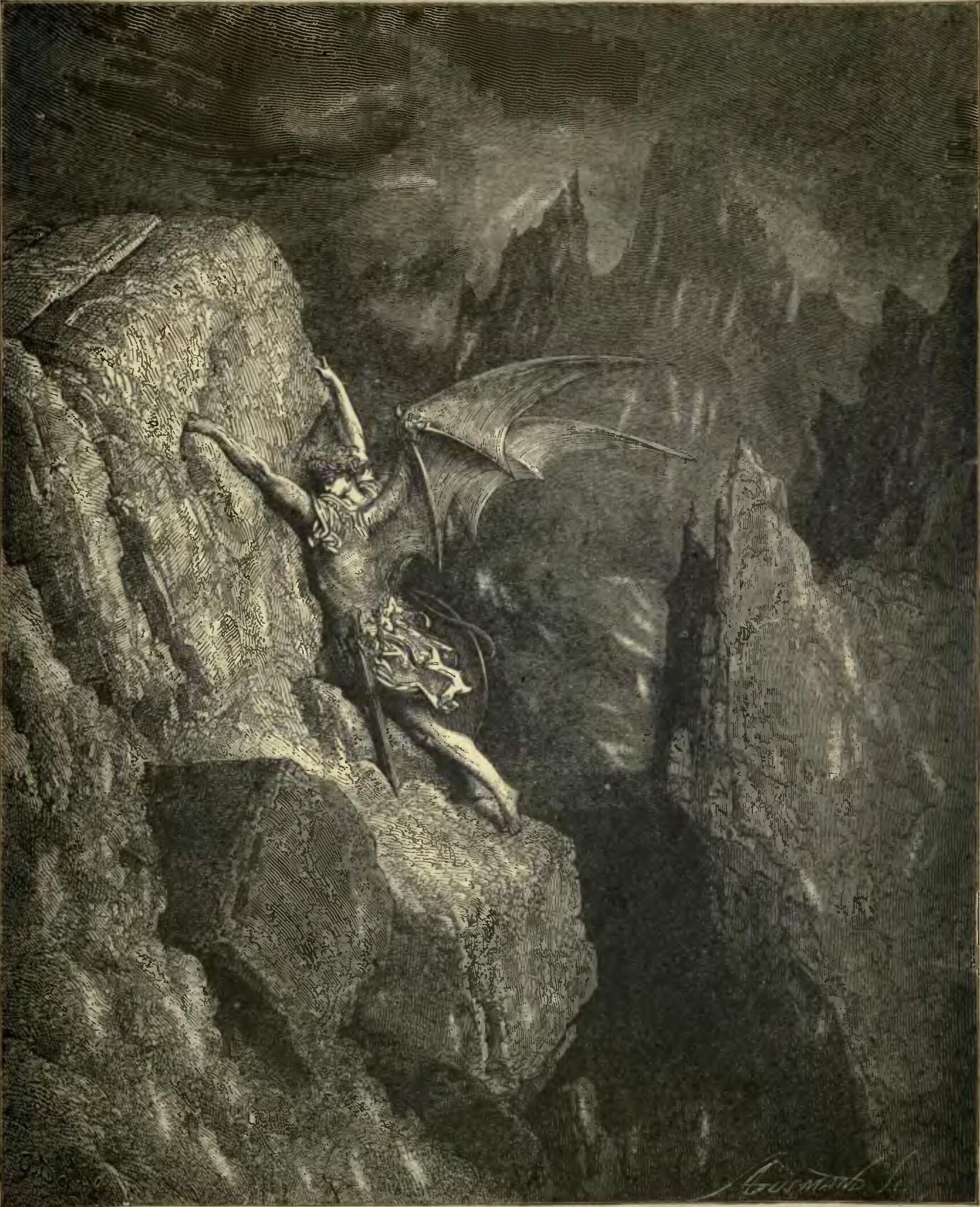
Satan’s Flight Through Chaos
Gustave Doré · 1866
Satan, Sin and Death at the Gates of Hell
Gustave Doré · 1866
Satan in Council
Gustave Doré · 1866
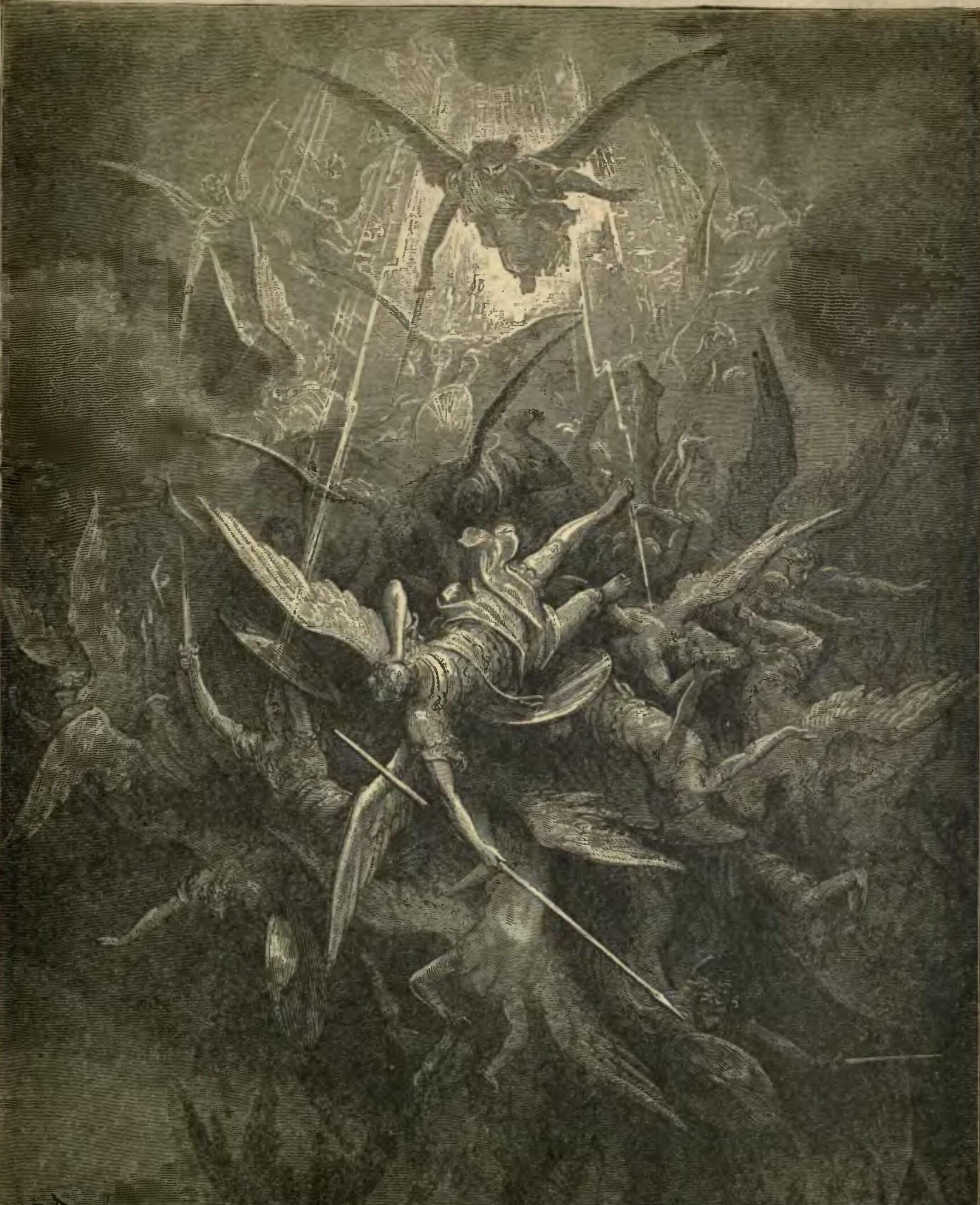
Satan Cast Out of Heaven
Gustave Doré · 1866
Related works
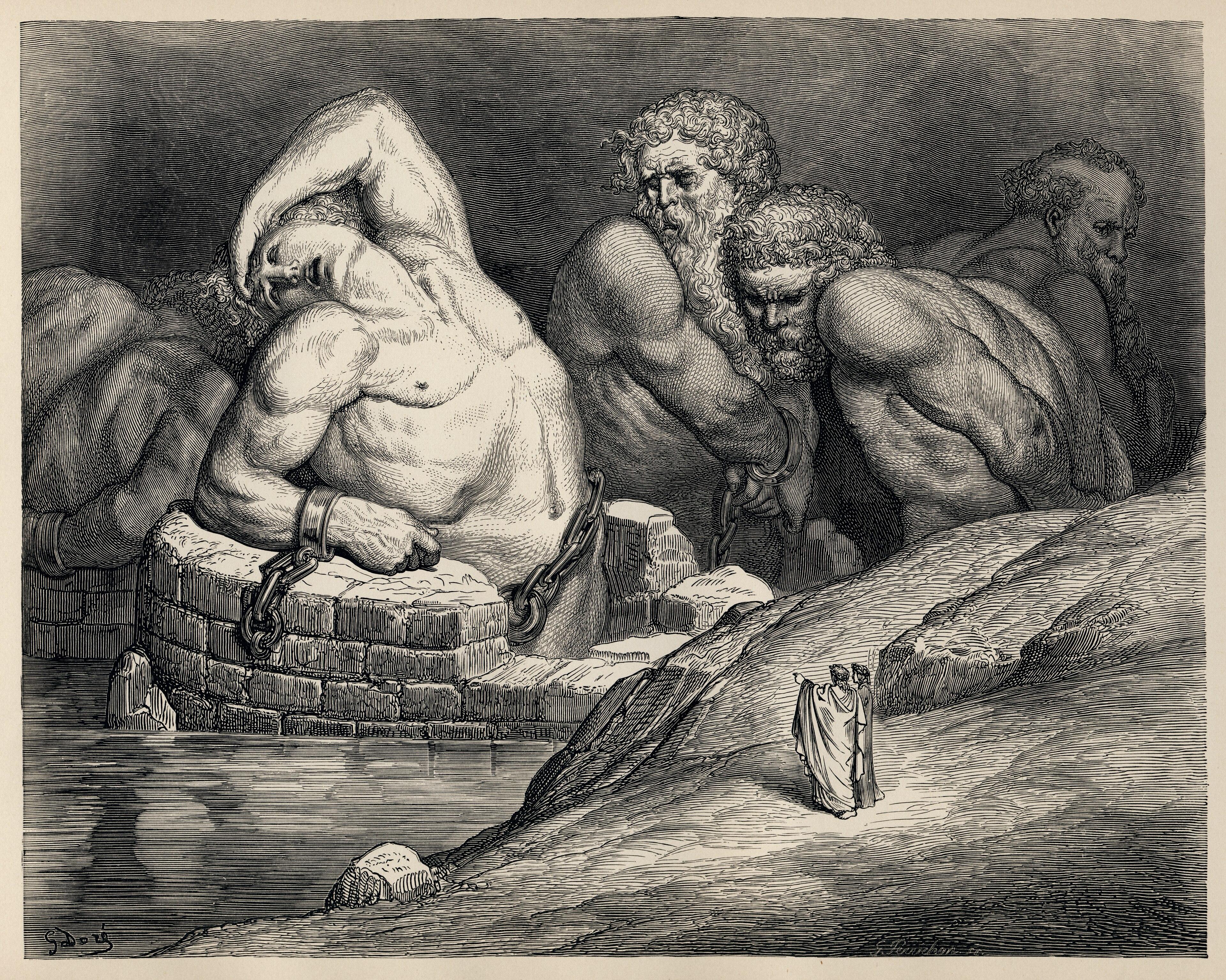
The Giants
Gustave Doré · 1861
Satan Cast Out of Heaven
Gustave Doré · 1866
Satan in Council
Gustave Doré · 1866
Men Reading
Francisco Goya · c. 1819–1823
The Holy Office (Pilgrimage to the Fountain of San Isidro)
Francisco Goya · c. 1819–1823
Fallen Angel
Alexandre Cabanel · 1847
Caiaphas Crucified
Gustave Doré · 1861
Count Ugolino and His Sons
Gustave Doré · 1861