Academic art
Berenice's Tresses (La Chioma di Berenice)
Ambrogio Borghi, 1878
Berenice's Tresses (La Chioma di Berenice) is a life-size marble nude of Queen Berenice II by the Milanese sculptor Ambrogio Borghi, shown at the 1878 Paris Exposition Universelle. The marble is in a private collection; the full-size plaster is in the Musei Civici di Monza.
- Artist
- Ambrogio Borghi
- Date
- 1878
- Medium
- White Carrara marble, on a revolving veined-marble column with wood base
- Dimensions
- Figure c. 190 cm high; column and base c. 90 cm
- Collection
- Private collection
- Movement
- Academic art
What you're looking at
A young woman stands naked on a low rocky base, caught in the act of stepping forward. Her arms rise above her head and her fingers interlace, lifting a heavy mass of hair away from her neck. She wears almost nothing: a necklace close at the throat and a headdress of Egyptian type, the sculptor's shorthand for a Ptolemaic queen. At her feet a small brazier of incense smokes. The pose is an offering, and the thing being offered is the hair itself.
Borghi carved the figure from a single block of white Carrara marble and set it on a tall column of veined marble with a turning mechanism, so that a viewer could rotate the statue and study it from every side. The figure alone stands about 190 centimeters; with its column and wooden base the whole ensemble rises to just under three meters. Raised arms are a technical risk in marble, since the stone must carry its own weight through thin forearms and joined hands, and the success of that bridge of stone over the head was part of what made the piece famous.
Look closely at the surface and the contrast of textures is deliberate: polished, almost waxy skin against the deeply drilled locks of hair, which Borghi undercut so they catch shadow. The step forward, with weight shifting onto one leg, keeps the long body from reading as a column of its own.
Who was Berenice?
Berenice II (c. 267–221 BC) was the daughter of Magas, king of Cyrene, and the wife of Ptolemy III Euergetes, king of Egypt. When her husband marched against the Seleucid kingdom in Syria in the Third Syrian War, she vowed her hair to the goddess Aphrodite in return for his safe return, and dedicated it in the goddess's temple when he came home.
The story became famous because the hair then vanished from the temple. The court astronomer Conon of Samos announced that it had been taken up into the sky, and named a faint cluster of stars near the tail of Leo Coma Berenices, Berenice's Hair, a constellation that still carries the name. The court poet Callimachus turned the episode into an elegy, The Lock of Berenice, and the Roman poet Catullus translated it into Latin as his Poem 66, in which the severed lock itself speaks. Borghi's base is inscribed BERENICES CRINIS, the Latin phrase for the queen's hair.
How Borghi made it
Ambrogio Borghi (1848–1887) trained at the Brera Academy in Milan and became professor of modeling there at about thirty-two, one of the rising names of Lombard sculpture before his early death at thirty-eight. Berenice occupied him for several years. A smaller clay sketch dated 1876–77 is in a private collection in Monza, and a full-size plaster model (174 centimeters, now missing its arms) belongs to the Musei Civici di Monza. Borghi's daughter Ada gave that plaster, with other models from his studio, to the city in 1937.
Scholars of Milanese sculpture have connected the figure with Borghi's study of Mannerist bronzes by Giambologna and Benvenuto Cellini, whose elongated, upward-twisting nudes it recalls, and with a nearer model: Francesco Hayez's painted nude Archangel Michael, also shown with raised arms.
The 1878 Paris Exposition
Borghi sent the finished marble to the Exposition Universelle in Paris in 1878, where it won a silver medal and earned him the Legion of Honor. Its frank sensuality divided critics. Some found the nude too fleshly for a historical subject; others were overwhelmed by the carving. Charles Blanc, the founding editor of the Gazette des Beaux-Arts, called it the most beautiful body of a young woman ever to come alive from a block of Carrara marble.
That tension is the key to the work. Italian sculptors of the 1870s used ancient and exotic subjects (queens, slaves, nymphs) as a respectable frame for the nude, and Borghi's Berenice belongs with the tradition seen in Canova's Psyche and the virtuoso veiled marbles of Naples and Milan. What sets her apart is that the subject is genuinely about the body: the sacrifice is of her beauty, and the sculptor makes us see what she gives up.
Where is Berenice's Tresses today?
The marble was sold after the exhibition. In 1904 it was sold again in Brussels, at the sale of the Somzée collection, and remained for more than a century in a Brussels house, in a room built to hold it. It returned to the market at Sotheby's in London in 2011 and is now in a private collection, so it cannot be visited. The best place to see Borghi's design in person is the Musei Civici di Monza, which displays the full-size plaster.
For more nineteenth-century marble, see our selection of famous sculptures and the essay on academic art.
Questions & answers
Where is Borghi's Berenice's Tresses today?
The marble statue is in a private collection. After the 1878 Paris Exposition it was sold, then bought in Brussels in 1904 and kept there for over a century before reappearing at Sotheby's London in 2011. Borghi's full-size plaster model, without its arms, can be seen at the Musei Civici di Monza in Italy.
What is the story of Berenice's hair?
Queen Berenice II of Egypt vowed her hair to Aphrodite if her husband, Ptolemy III, returned safely from war in Syria. When he did, she cut it and placed it in the temple. The lock disappeared, and the astronomer Conon declared it had become a constellation, still called Coma Berenices.
How tall is Berenice's Tresses?
The marble figure is about 190 centimeters high, roughly life size. It stands on a revolving column of veined marble and a wooden base that add about 90 centimeters, so the whole ensemble is just under three meters tall. The revolving column let viewers turn the statue to see it from all sides.
Who was Ambrogio Borghi?
Ambrogio Borghi (1848–1887) was a Milanese sculptor trained at the Brera Academy, where he became professor of modeling in his early thirties. Berenice, shown in Paris in 1878, won him a silver medal and the Legion of Honor. He died at thirty-eight, before his career fully developed.
What does Chioma di Berenice mean?
Chioma di Berenice is Italian for Berenice's hair or tresses. It translates the Latin Coma Berenices, the name of the constellation, and echoes Catullus's poem on the lock of Berenice. Borghi's base carries the Latin inscription BERENICES CRINIS, also meaning Berenice's hair.
Kindred works
You may also study
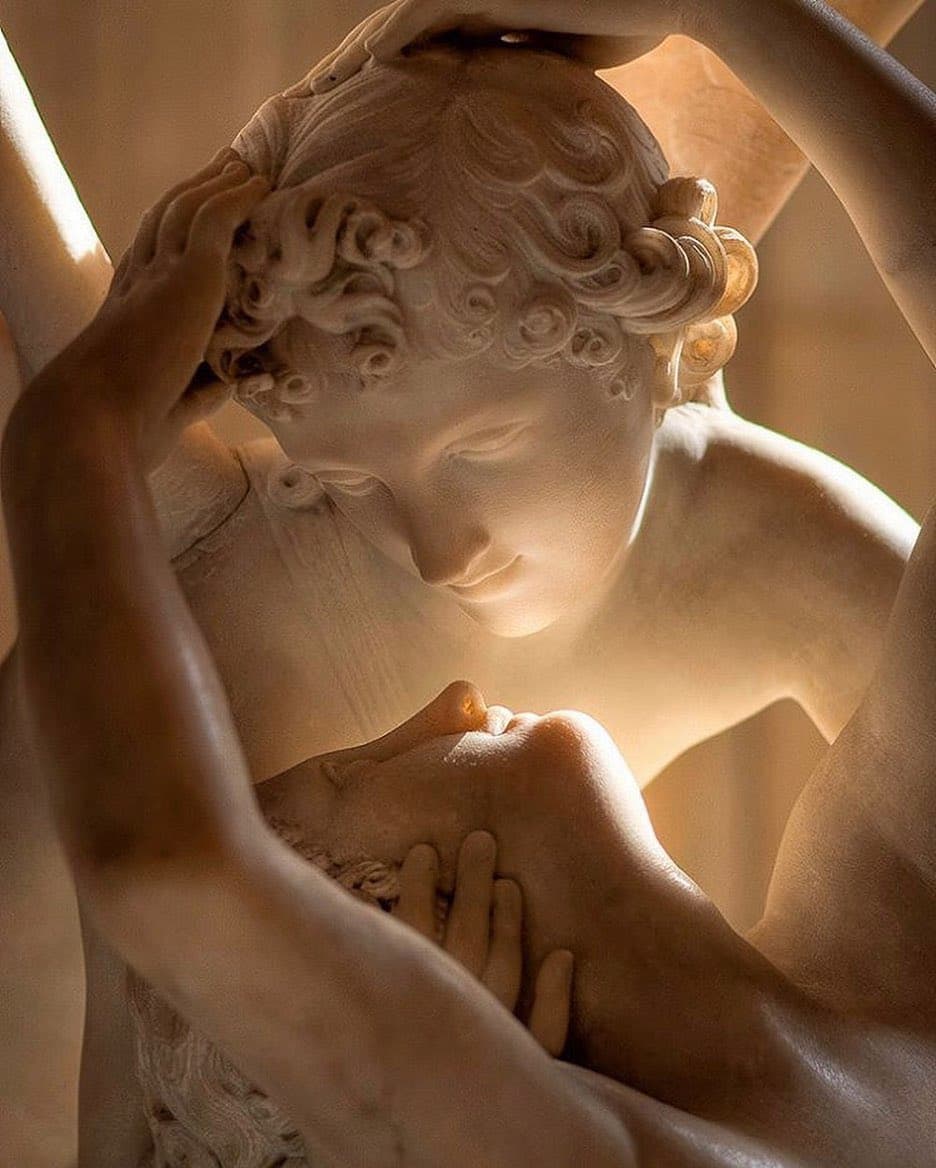
Psyche Revived by Cupid's Kiss
Antonio Canova · 1787–1793
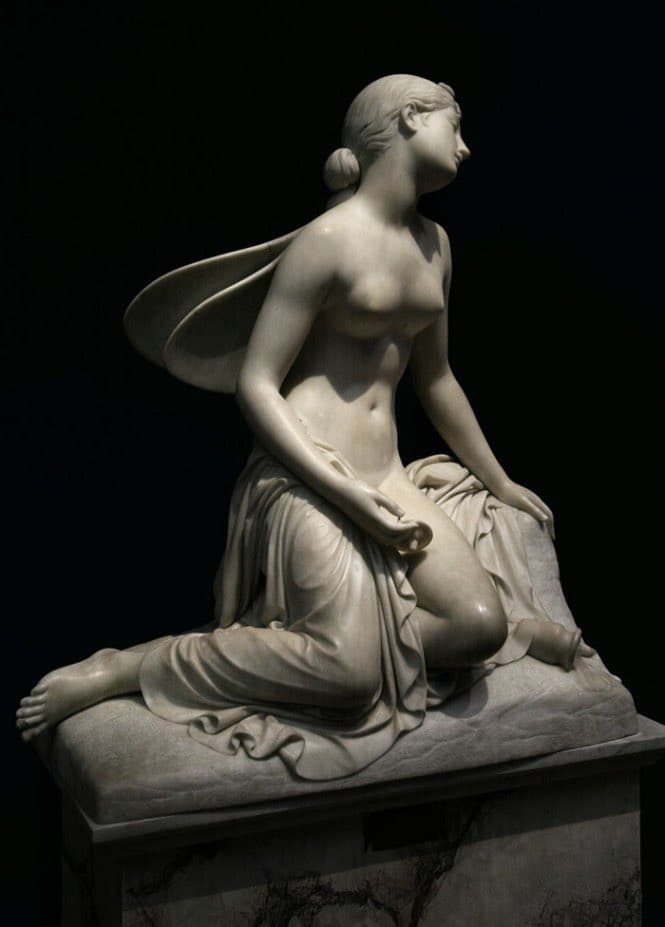
Psyche in a Faint
Pietro Tenerani · composition c. 1822
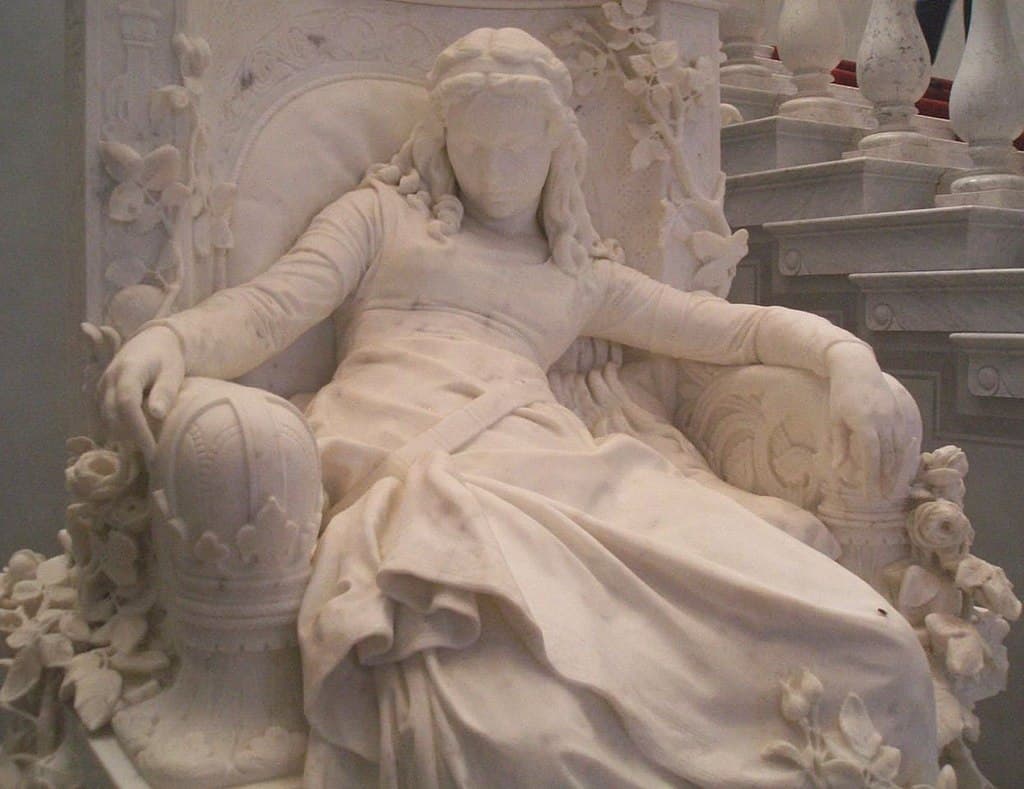
Sleeping Beauty (Dornröschen)
Louis Sussmann-Hellborn · 1878
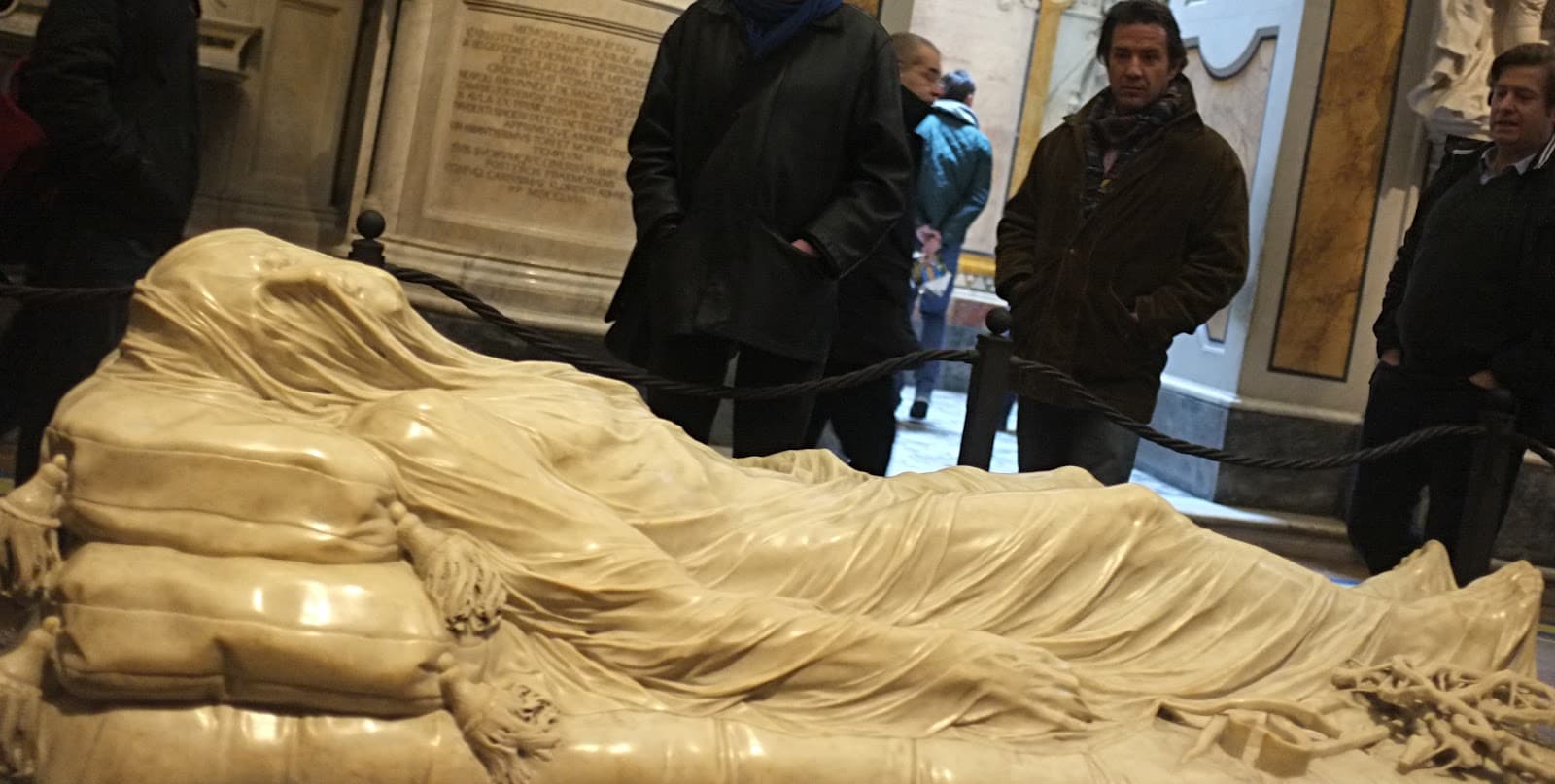
Veiled Christ
Giuseppe Sanmartino · 1753

Venus de Milo
Alexandros of Antioch · c. 150–125 BC

Nymphs Dancing to Pan's Flute
Joseph Tomanek
The Thinker
Auguste Rodin · Modeled 1880–82; enlarged 1902–03; this cast 1904
The Creation of Adam
Michelangelo · c. 1511–12