Image: Museo del Prado, Madrid · Public domain · via Wikimedia Commons
Romanticism
Two Old Men Eating Soup
Francisco Goya, c. 1819–1823
Two Old Men Eating Soup is a small Black Painting by Francisco Goya, painted on a wall of his house near Madrid around 1819–1823. Two toothless, skull-like figures lean over a bowl in the dark. It is now in the Prado.
- Artist
- Francisco Goya
- Date
- c. 1819–1823
- Medium
- Oil mural transferred to canvas
- Dimensions
- 49.3 × 83.4 cm
- Collection
- Museo del Prado, Madrid, Spain
- Movement
- Romanticism
What you're looking at
Two heads lean in out of the dark over a bowl. The figure on the left is wrapped in a hood or shawl that falls in loose gray folds around a face of startling ugliness: deep-set eyes, a hooked nose, and a mouth stretched into a wide, toothless grin. A bony hand grips a spoon over the bowl. To the right, lower down and further back, a second head is little more than a skull with skin on it, with two black hollows for eyes, a sharp nose and a gaping jaw. A thin hand reaches toward the bowl or points at it.
There is no table to speak of, no room, no light source. The background is solid black and the figures are built from a few colors: gray, ocher, dirty white and the brown-black of the ground. Goya worked fast and in places used a palette knife, dragging paint across the surface so that the hood, the hands and the spoon catch the light in rough, broken ridges.
The canvas is small, only 49.3 by 83.4 cm, much smaller than the big wall scenes in the same series. That intimacy makes the faces harder to look away from.
What does Two Old Men Eating Soup mean?
Goya gave the Black Paintings no titles. This one has been called Dos viejos comiendo sopa (Two Old Men Eating Soup), Dos viejos comiendo and Dos brujas (Two Witches), and the uncertainty is telling: the sex of the figures is not obvious, and the hooded figure on the left could as easily be an old woman as an old man.
Most readings center on old age and death. The left figure is still eating, still grinning; the right one already looks like a corpse. Placed side by side over the same bowl, they look like two stages of the same decline, or like a person sharing a meal with Death. That is the sense in which the picture is often linked to the memento mori tradition, the reminder that everyone will die, which Goya had seen in Spanish still lifes and vanitas paintings since his youth.
There is also a strand of grim comedy. Goya had spent decades drawing old women primping, witches flying and old men behaving foolishly in his albums and in the Caprichos prints of 1799. The two eaters belong to that cast. If they are witches, as the alternative title suggests, the bowl might hold something worse than soup, though nothing in the paint tells us so.
How it relates to the other Black Paintings
This is one of the fourteen Black Paintings Goya painted in oil on the plaster walls of the Quinta del Sordo, the house outside Madrid he bought in 1819 and left in 1823. Its original position is uncertain. Its small, horizontal format suggests a strip of wall over a door, and one widely repeated reconstruction places it above a doorway on the ground floor, between La Leocadia and Two Old Men, but this is a hypothesis rather than a documented fact.
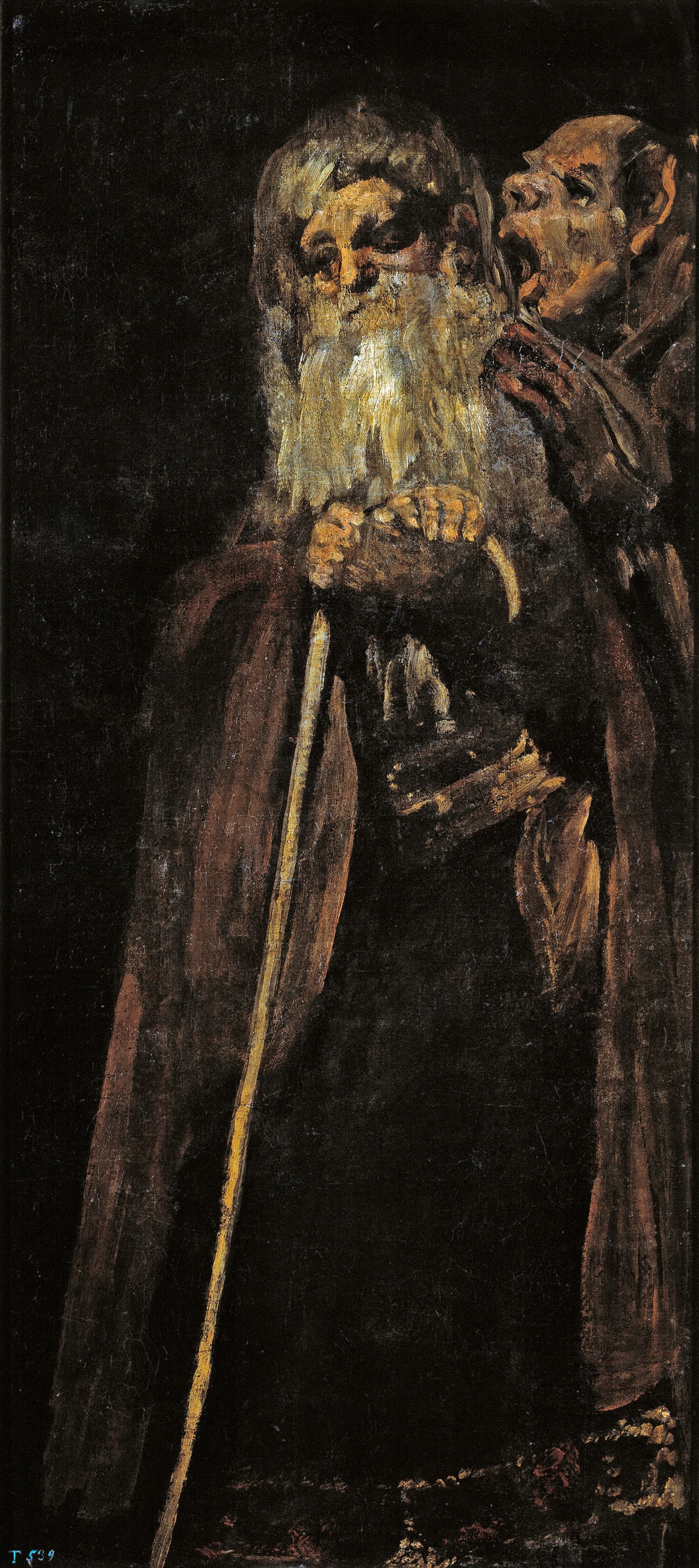
The skull-faced figure on the right is a near twin of the open-mouthed figure who leans over the bearded man's shoulder in Two Old Men. Both works echo the most famous image from the house, Saturn Devouring His Son. There a god eats his children; here two decrepit people spoon food into toothless mouths. Eating, in the Black Paintings, is never comfortable.
Condition
The murals were removed from the walls and transferred to canvas in 1873–74, under the direction of the Prado restorer Salvador Martínez Cubells, for the banker Baron Émile d'Erlanger, who then owned the property. He exhibited them in Paris in 1878 and gave them to the Spanish state, which accepted the gift in 1881. All the Black Paintings lost some paint and gained some retouching in the process, and the black backgrounds in particular have darkened and flattened over time.
The detail most people miss
Look at the hands. Goya gives each figure one, and they tell the story the faces start. The left hand closes around the spoon with surprising force, knuckles picked out in thick paint. The right hand is a few thin, almost transparent strokes, more like a gesture than a body part. One figure still holds on; the other has nearly let go.
Then look for the soup. There is almost none to see: the bowl is a smear of gray and ocher at the bottom edge of the canvas, cut off by the frame. The title promises a meal, but Goya paints only appetite, the reaching hands and open mouths, and leaves the food itself out of the picture.
Where to see Two Old Men Eating Soup today
The painting is in the Museo del Prado in Madrid, where all fourteen Black Paintings hang together in one room. It is one of the smallest works in the group, and it is easy to walk past on the way to the larger scenes.
Questions & answers
What is the meaning of Two Old Men Eating Soup?
Goya left no explanation. The picture is usually read as an image of old age and approaching death: one figure still grinning and eating, the other already skull-like. It also belongs to Goya's long satirical tradition of witches and grotesque old people, which is why it is sometimes called Two Witches.
Where is Two Old Men Eating Soup by Goya?
It is in the Museo del Prado in Madrid, displayed with the other Black Paintings. Goya painted it directly on a wall of his house, the Quinta del Sordo; it was transferred to canvas in 1873–74 and entered the Spanish state collection in 1881.
Are the figures in Two Old Men Eating Soup men or women?
It is not clear. The traditional title calls them old men, but the hooded figure on the left could be a woman, and the alternative title Dos brujas (Two Witches) assumes they are female. Goya did not title the picture, so the question cannot be settled.
How big is Two Old Men Eating Soup?
It measures 49.3 by 83.4 cm, making it one of the smallest of the fourteen Black Paintings. Its narrow horizontal shape suggests it was painted on a strip of wall above a door, though its exact original position is uncertain.
More by the artist
Francisco Goya

Saturn Devouring His Son
Francisco Goya · c. 1819–1823
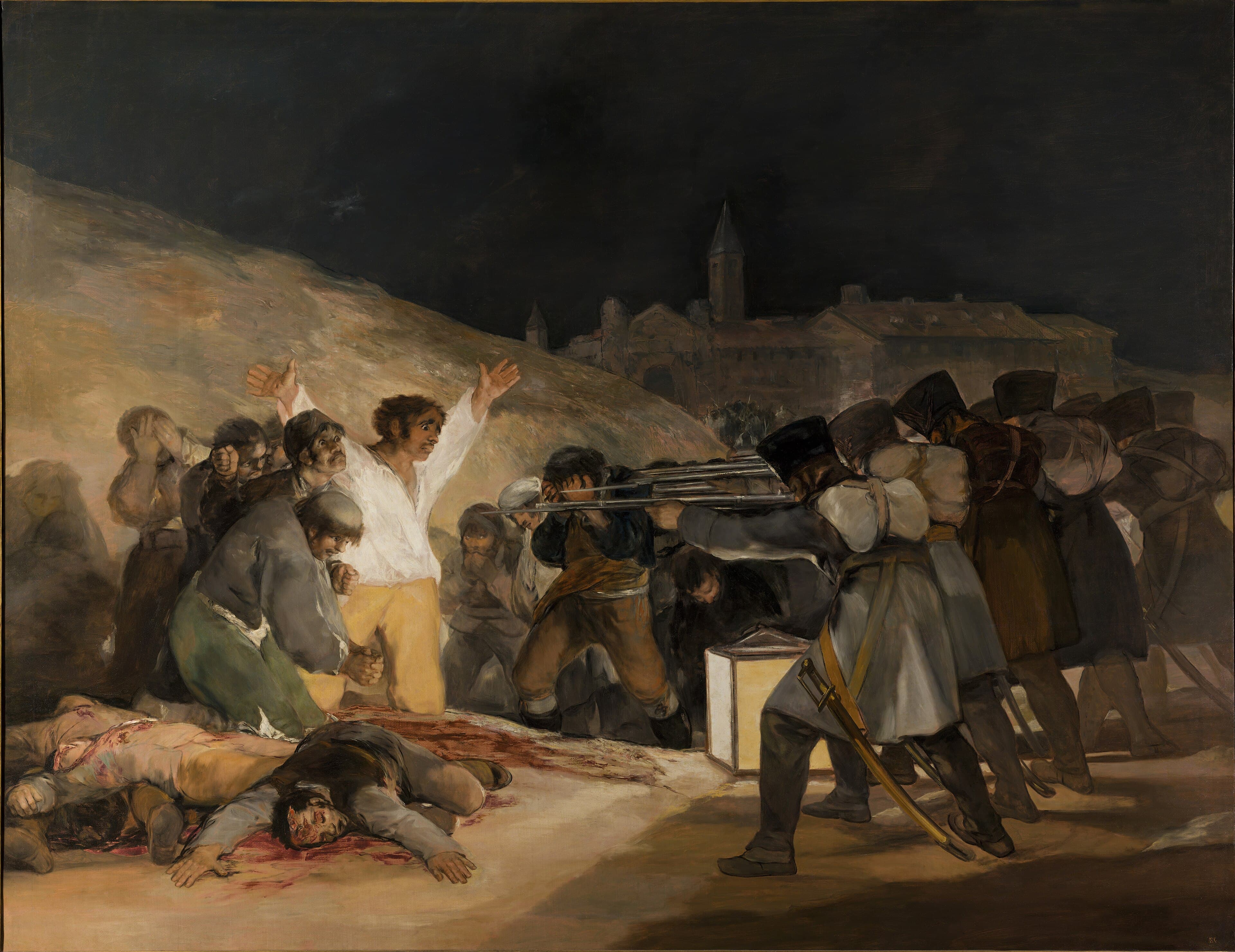
The Third of May 1808
Francisco Goya · 1814
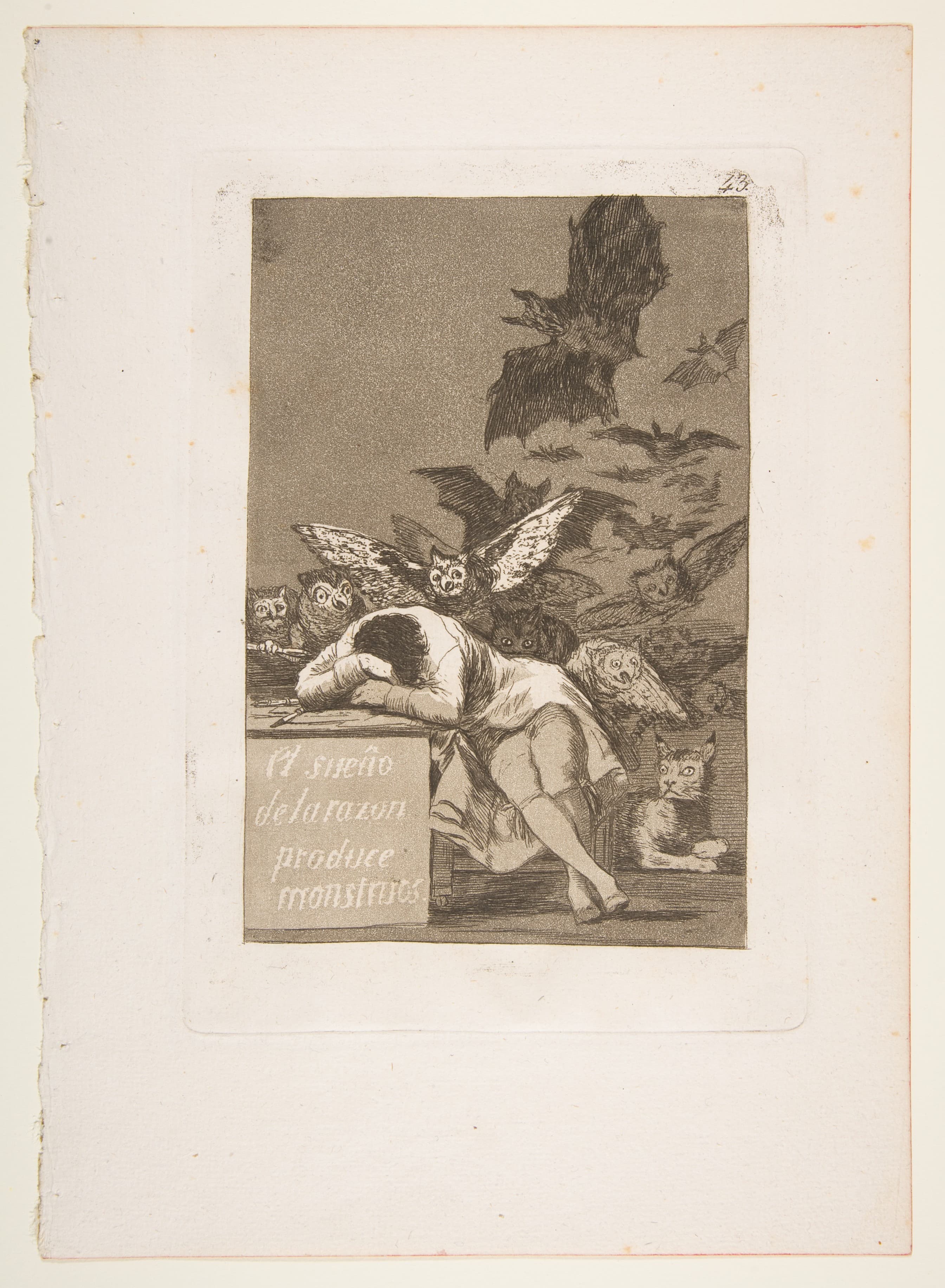
The Sleep of Reason Produces Monsters
Francisco Goya · 1797–99 (published 1799)
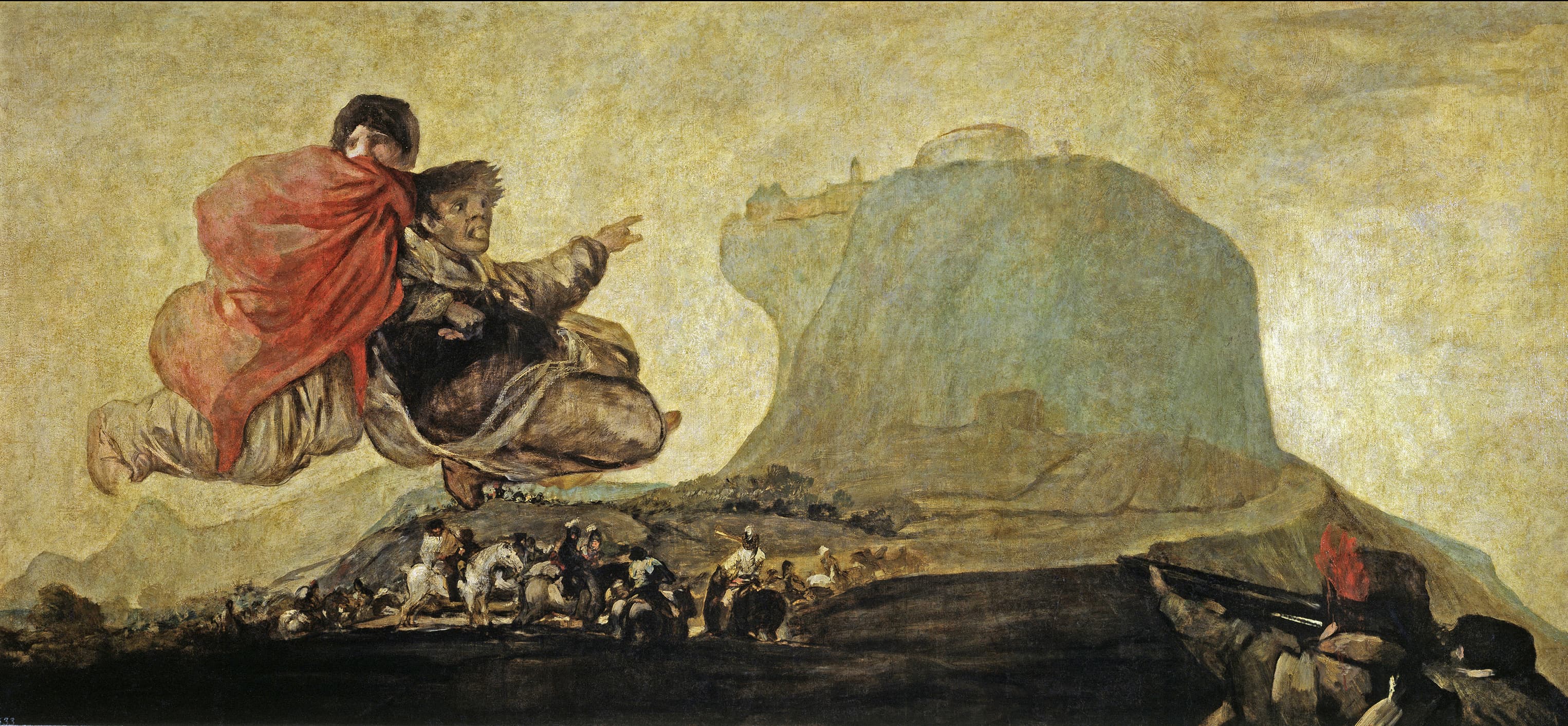
Fantastic Vision (Asmodea)
Francisco Goya · c. 1819–1823
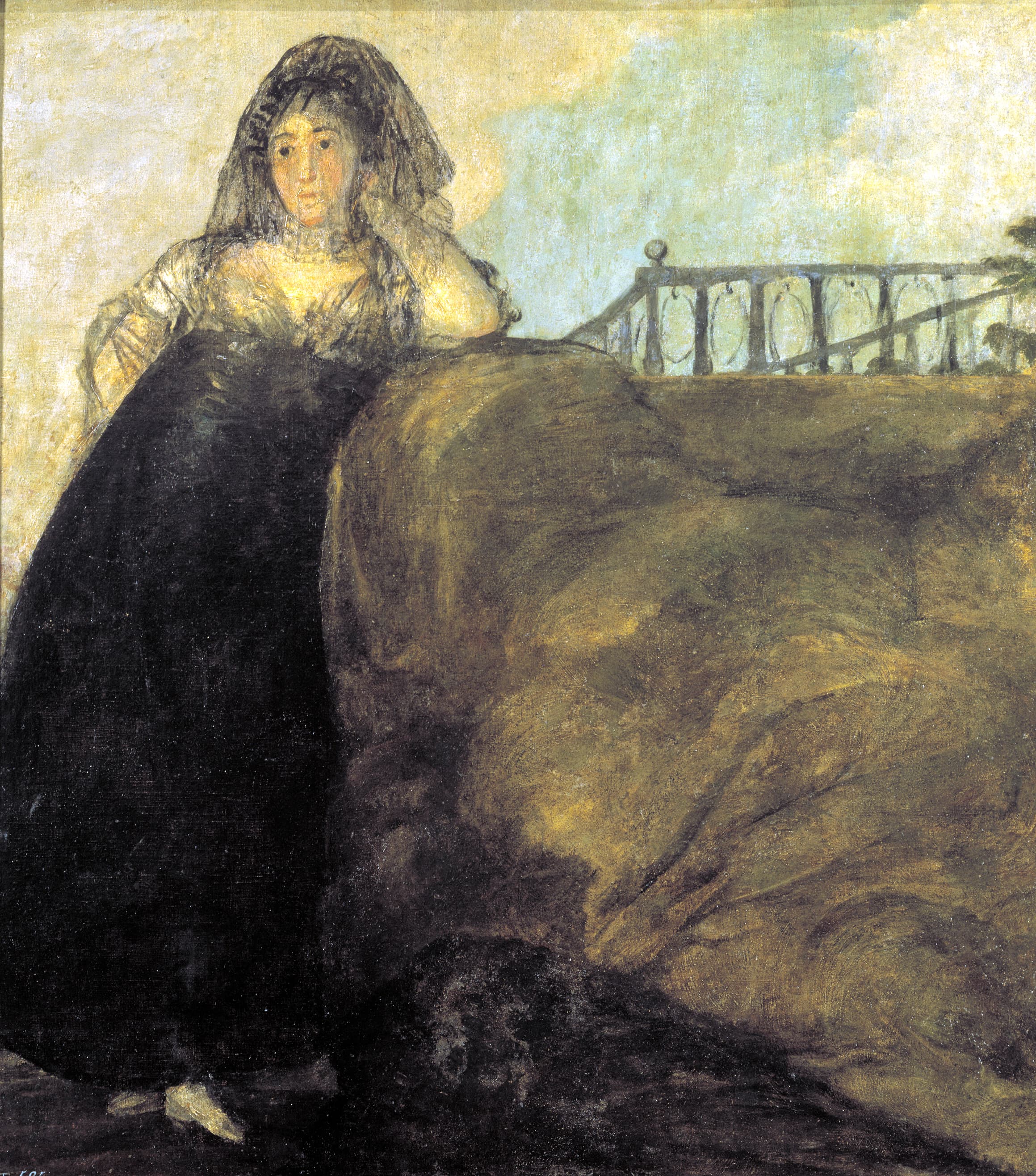
La Leocadia
Francisco Goya · c. 1819–1823
Judith and Holofernes
Francisco Goya · c. 1819–1823
The Dog
Francisco Goya · c. 1819–1823
The Holy Office (Pilgrimage to the Fountain of San Isidro)
Francisco Goya · c. 1819–1823
Also painted in 1820
The same year
A Pilgrimage to San Isidro
Francisco Goya · c. 1819–1823
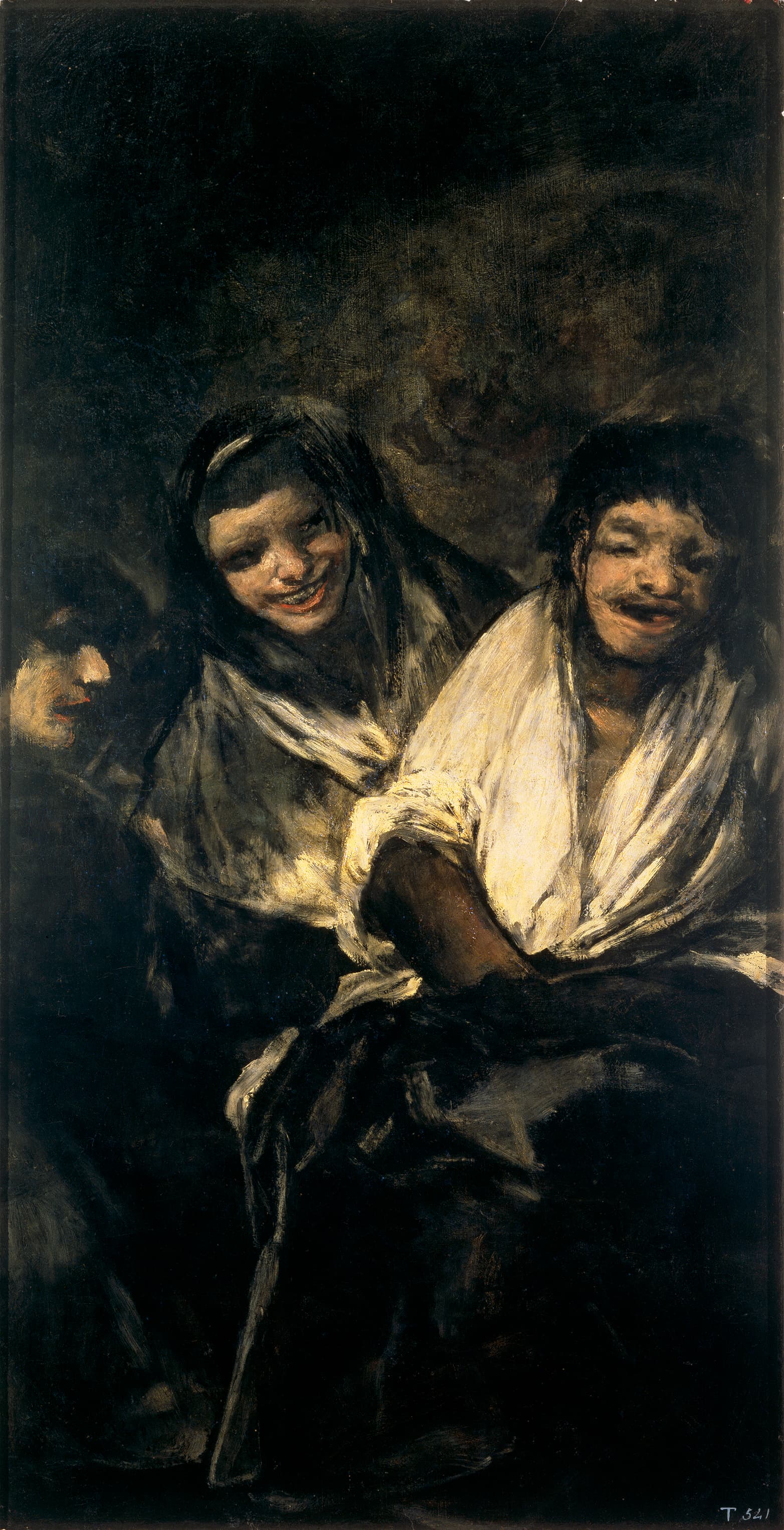
Women Laughing
Francisco Goya · c. 1819–1823
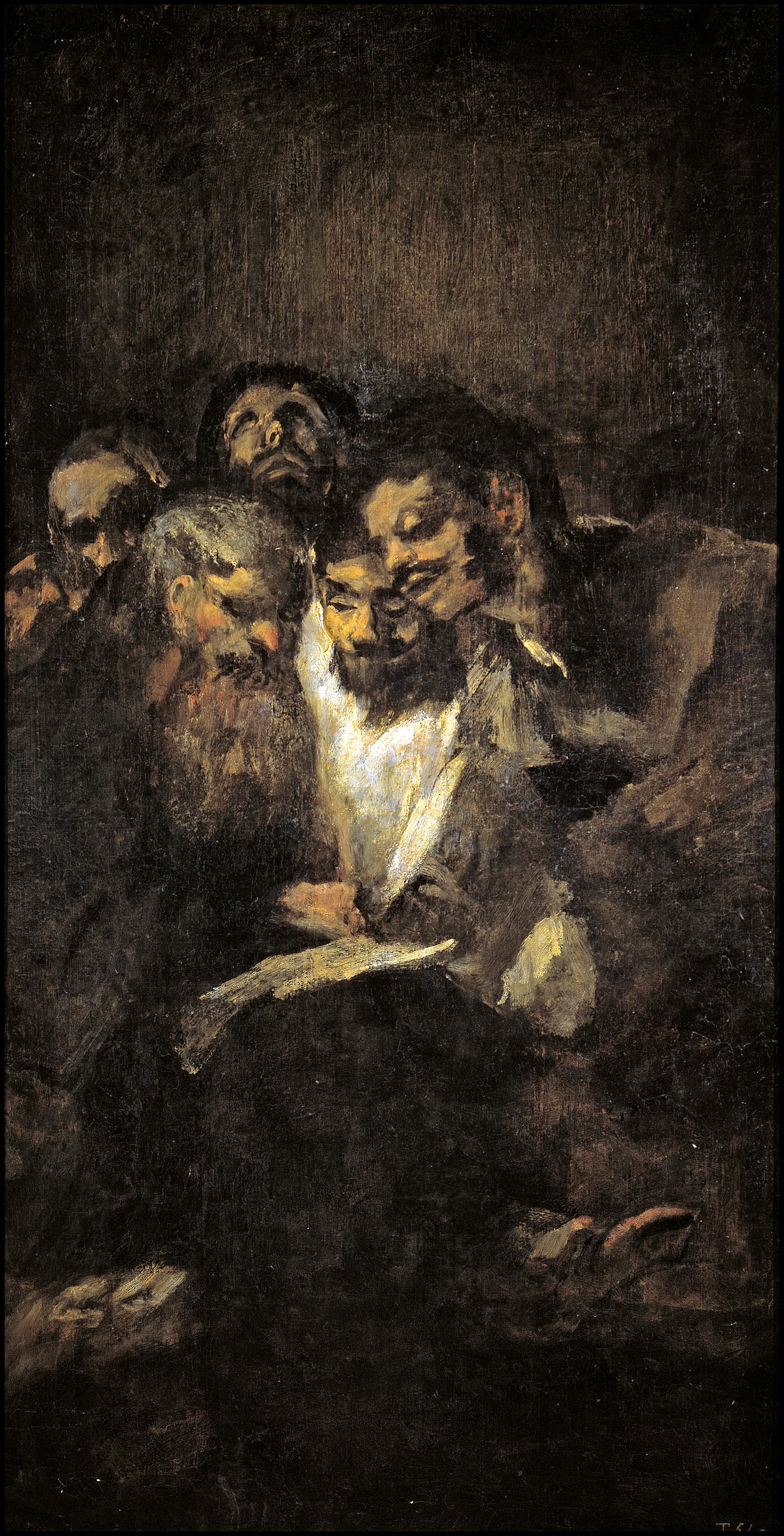
Men Reading
Francisco Goya · c. 1819–1823
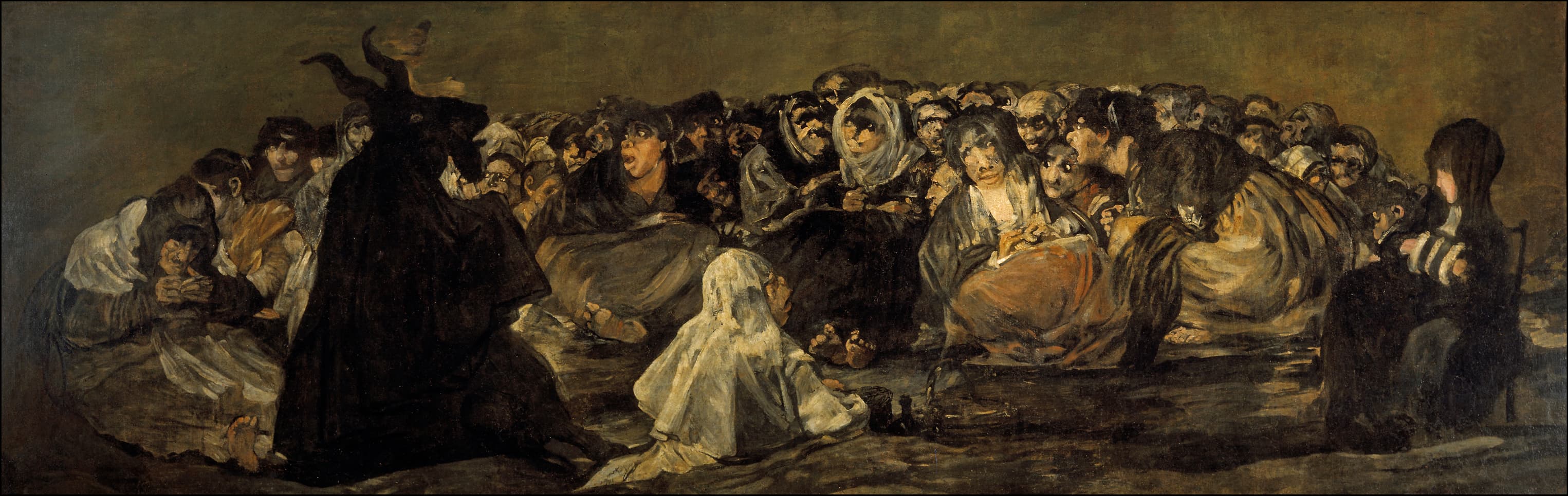
Witches' Sabbath (The Great He-Goat)
Francisco Goya · c. 1819–1823
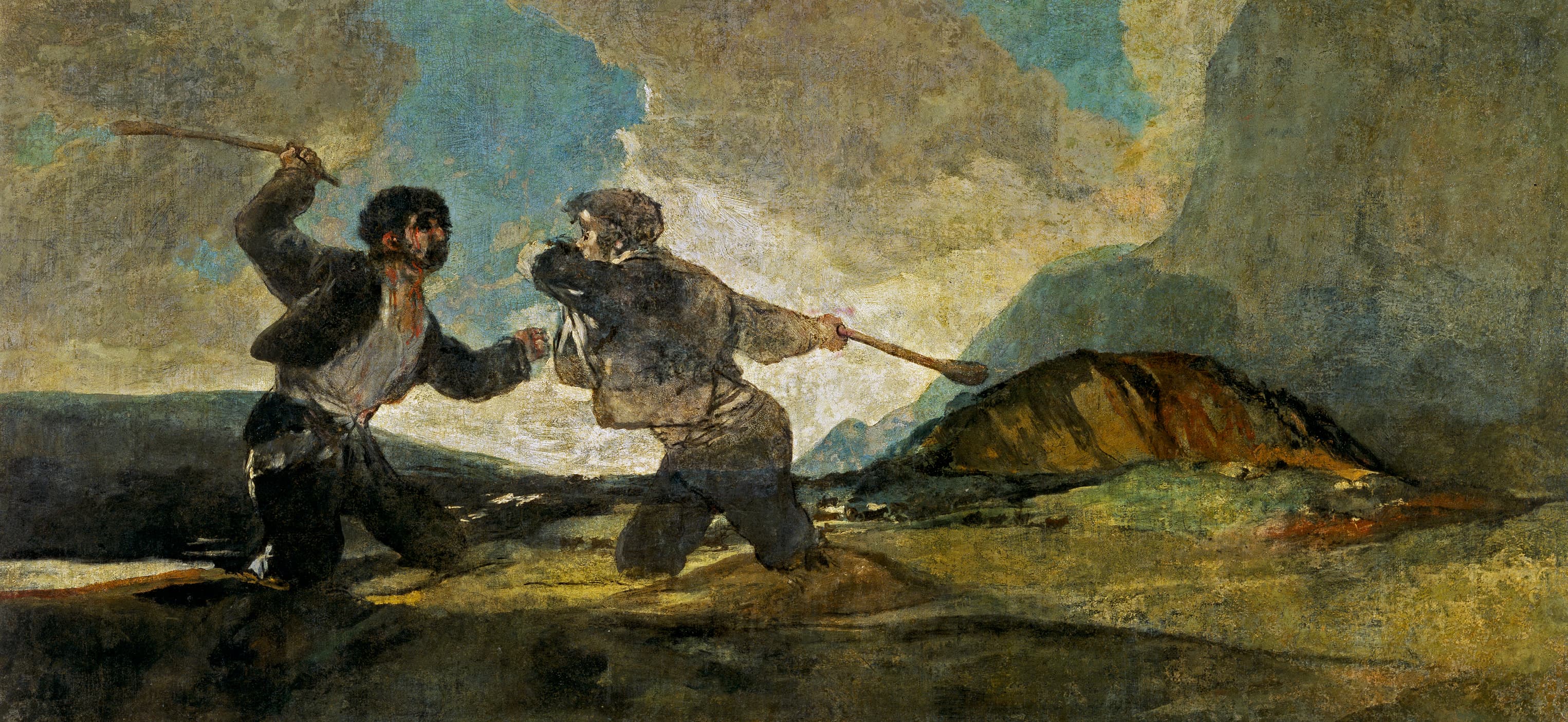
Fight with Cudgels
Francisco Goya · c. 1819–1823
Two Old Men
Francisco Goya · c. 1819–1823
Atropos (The Fates)
Francisco Goya · c. 1819–1823
Kindred works
You may also study
Two Old Men
Francisco Goya · c. 1819–1823
Atropos (The Fates)
Francisco Goya · c. 1819–1823
Women Laughing
Francisco Goya · c. 1819–1823

The Scream
Edvard Munch · 1893
The Thinker
Auguste Rodin · Modeled 1880–82; enlarged 1902–03; this cast 1904

Ophelia
John Everett Millais · 1851–52
Lucifer
Franz von Stuck · 1890
Head of a Skeleton with a Burning Cigarette
Vincent van Gogh · 1886