Image: Museo del Prado, Madrid · Public domain · via Wikimedia Commons
Romanticism
Two Old Men
Francisco Goya, c. 1819–1823
Two Old Men is a Black Painting by Francisco Goya, painted on a wall of his house near Madrid around 1819–1823. A bearded old man leans on a staff while a grotesque figure shouts in his ear. It is now in the Prado.
- Artist
- Francisco Goya
- Date
- c. 1819–1823
- Medium
- Oil mural transferred to canvas
- Dimensions
- 142.5 × 65.6 cm
- Collection
- Museo del Prado, Madrid, Spain
- Movement
- Romanticism
What you're looking at
A tall, narrow canvas, almost entirely black. Out of the darkness steps an old man with a long white beard and a mane of gray hair, wrapped in a brown habit or cloak. Both his hands rest on the crook of a long staff, which runs diagonally down to the bottom left corner like a single pale stroke. His eyes look out and slightly down, calm and a little tired.
Pressed close behind his right shoulder is a second figure, and it belongs to a different world. Its face is in profile, bald and lumpy, with a jutting jaw and a mouth wide open, pushed right up against the bearded man's ear. Whether it is shouting, whispering or simply gaping, the effect is of a noise the old man does not seem to hear. One of its hands, little more than a few strokes of ocher, appears in the shadows below.
Goya keeps the color to brown, black, ocher and the yellowish white of the beard. The light falls on the beard, the hands and the head of the staff, and almost nowhere else.
What does Two Old Men mean?
Goya never explained the picture, and the title was supplied after his death. Inventories and later writers have called it Dos viejos (Two Old Men), Dos frailes (Two Friars) and Un viejo y un fraile (An Old Man and a Friar), because both figures wear something like a monk's habit.
The most common reading starts from biography. A serious illness in 1792–93 left Goya completely deaf, and by the time he painted the walls of his house he had lived in silence for more than a quarter of a century. A grotesque figure yelling into the ear of a dignified old man who stands unmoved reads easily as a picture of deafness: the world shouting, the old man elsewhere.
Other readings sit alongside that one. The second figure is so bestial that some writers connect it with Goya's long fascination with madness, which he had explored in asylum scenes and prints. The bearded man, with his staff and his look of patient thought, has been compared with the ragged philosophers that Velázquez painted, which Goya knew and had copied as etchings. A less favored reading makes the old man Chronos, the god of time, with his companion as a memento mori whispering that the end is near.
None of these needs to exclude the others. The picture works as a portrait of old age in which wisdom and decay, the serene and the monstrous, travel together.
How it fits the Black Paintings
Two Old Men is one of the fourteen Black Paintings that Goya painted in oil directly onto the plaster walls of the Quinta del Sordo, his country house across the Manzanares from Madrid, between about 1819 and 1823. It belonged to the ground-floor room, where it is usually placed across from Judith and Holofernes. In the same room hung Saturn Devouring His Son, La Leocadia and the two great frieze-like crowd scenes, the Witches' Sabbath and A Pilgrimage to San Isidro.
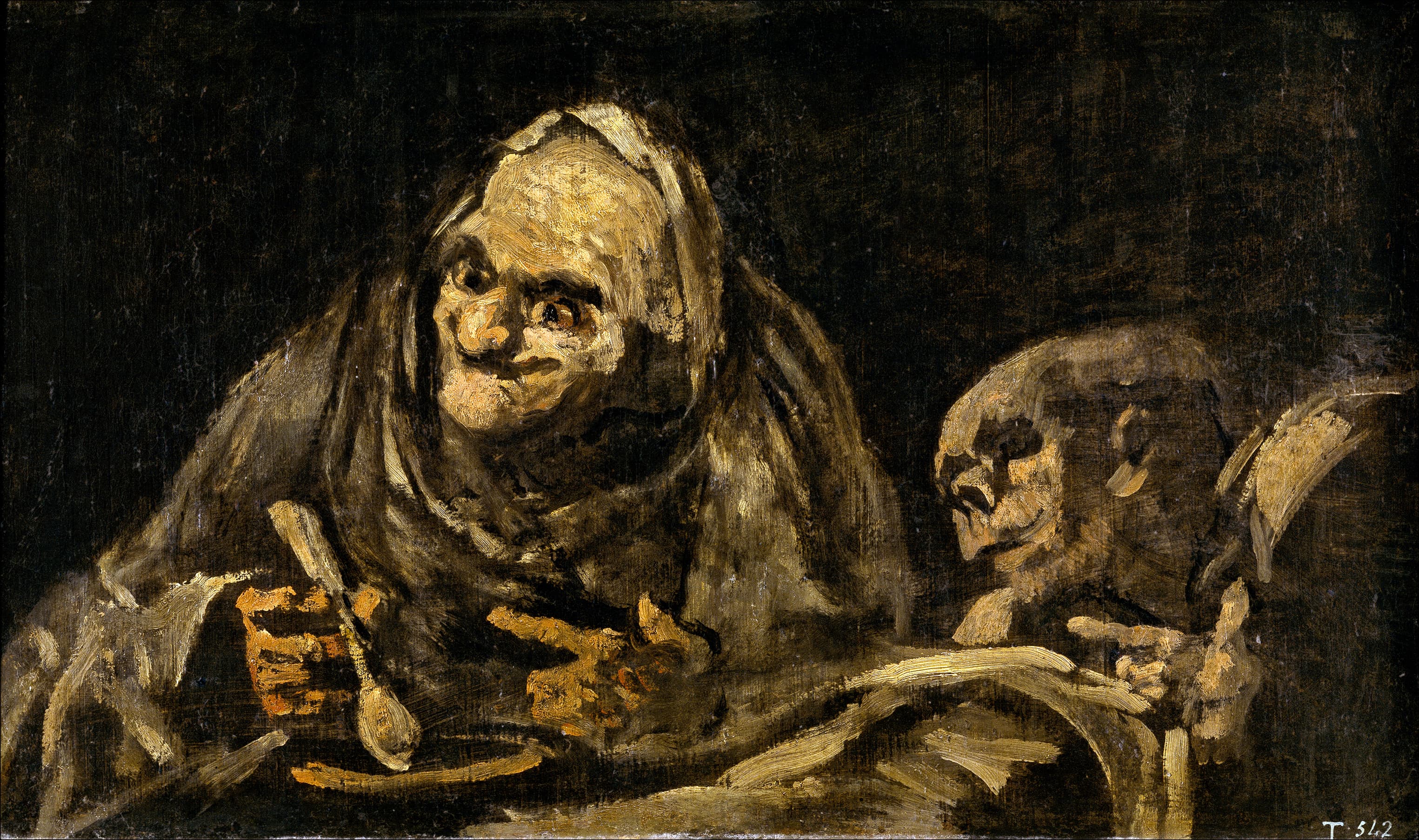
The open mouth links it to the rest of the series. Robert Hughes noticed that a "gaping void," an open mouth, recurs throughout the Black Paintings: Saturn's jaws, the singing pilgrims, the leering women. Here the open mouth belongs to a figure close kin to the skull-like eater in Two Old Men Eating Soup, whose face is very similar.
Condition and restoration
The murals were lifted from the walls and transferred to canvas in 1873–74, under the Prado restorer Salvador Martínez Cubells, for the banker Baron Émile d'Erlanger, who then owned the house. The process damaged them. In this picture the restorers added highlights to the main figure and reworked parts of his face and hands, softening contrasts that were probably harsher in Goya's original. That is worth remembering when the old man looks gentler than the rest of the series: some of that gentleness may belong to the nineteenth century.
D'Erlanger exhibited the canvases at the Paris Exposition Universelle of 1878 and gave them to the Spanish state, which accepted the gift in 1881.
What to notice
Look at the staff. It is the longest single line in the composition, and it does structural work: it props up the old man, cuts the black field in two and leads the eye from his hands down to the floor. Then look at the second figure's ear-level mouth. Goya has painted it on the same plane as the old man's ear, so close that the two heads almost merge. Painted on the wall of a house where its owner could not hear, the effect is stranger than any caption.
Where to see Two Old Men today
Two Old Men is in the Museo del Prado in Madrid, where the Black Paintings hang together in a single room on the ground floor. The canvas measures 142.5 by 65.6 cm, a tall format that comes from the narrow strip of wall it was painted for.
Questions & answers
What does Goya's Two Old Men represent?
Goya left no explanation. The most common reading links it to his deafness: a monstrous figure shouts into the ear of a calm old man who does not seem to hear. Other writers see an image of old age and madness, compare the bearded man to Velázquez's philosophers, or read the pair as Time accompanied by a reminder of death.
Where is Two Old Men by Goya?
It is in the Museo del Prado in Madrid, displayed with the other Black Paintings. Goya painted it on a ground-floor wall of his house, the Quinta del Sordo, and it was transferred to canvas in 1873–74 before entering the Spanish state collection in 1881.
Is Two Old Men the same as Two Old Men Eating Soup?
No. They are separate Black Paintings. Two Old Men is a tall canvas of a bearded man with a staff and a shouting companion. Two Old Men Eating Soup is a small horizontal picture of two toothless figures with spoons. The shouting figure in the first closely resembles one of the eaters.
Why are the figures dressed like monks?
Both wear what look like brown habits, which is why the picture is also called Dos frailes (Two Friars). Goya did not title it, so we cannot be sure he meant them as clergy; the habit may simply be the shapeless clothing of poor, old men.
More by the artist
Francisco Goya

Saturn Devouring His Son
Francisco Goya · c. 1819–1823
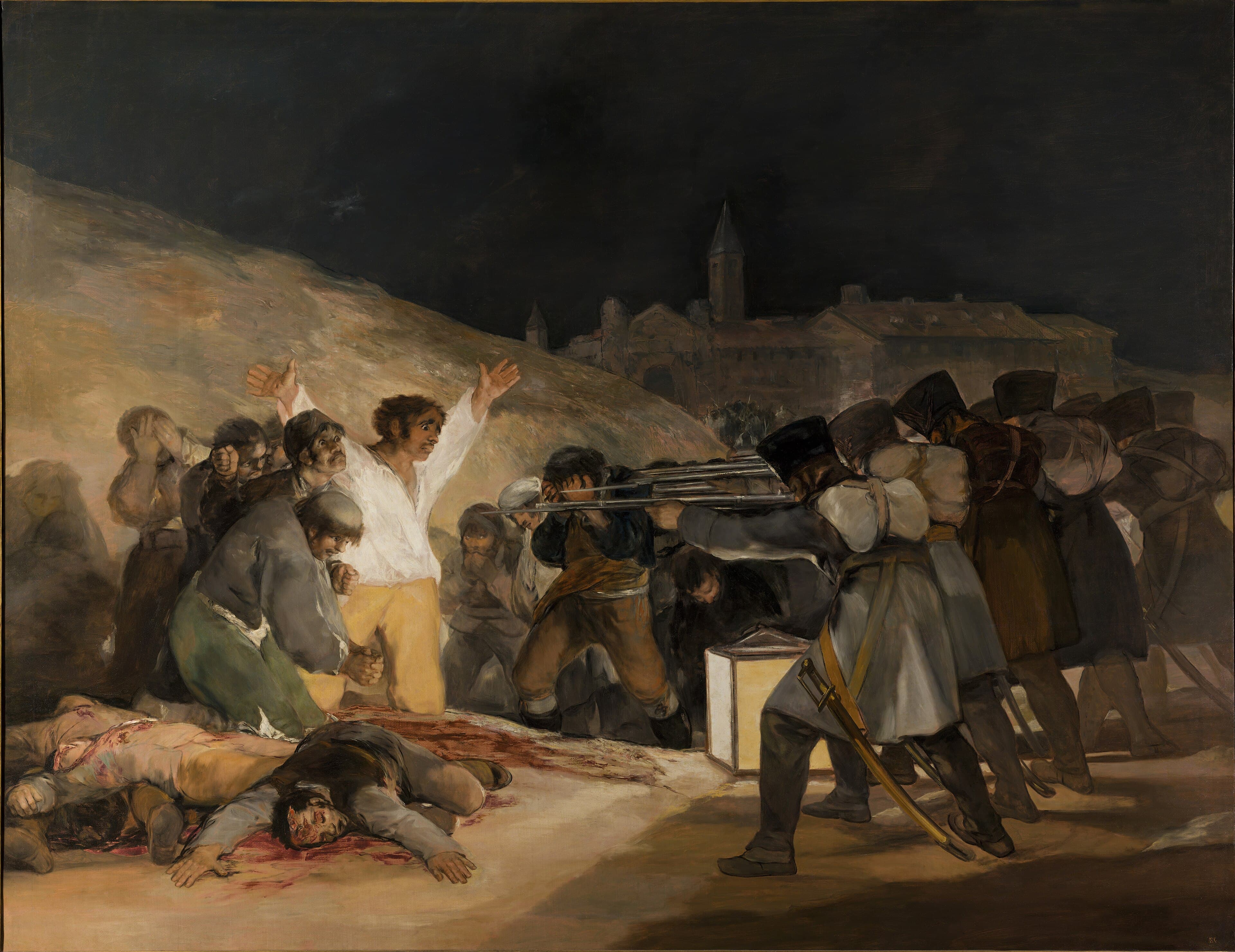
The Third of May 1808
Francisco Goya · 1814
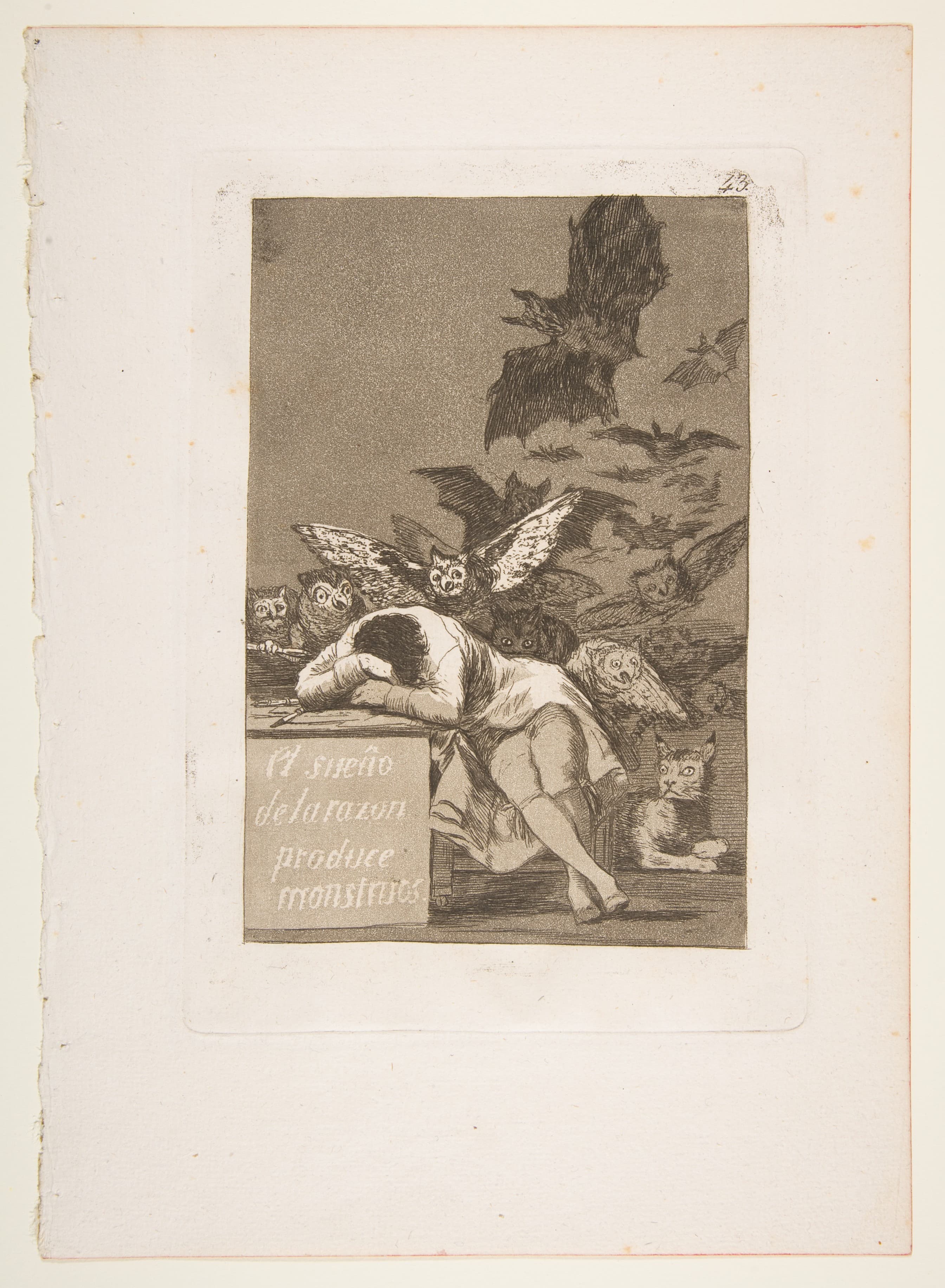
The Sleep of Reason Produces Monsters
Francisco Goya · 1797–99 (published 1799)
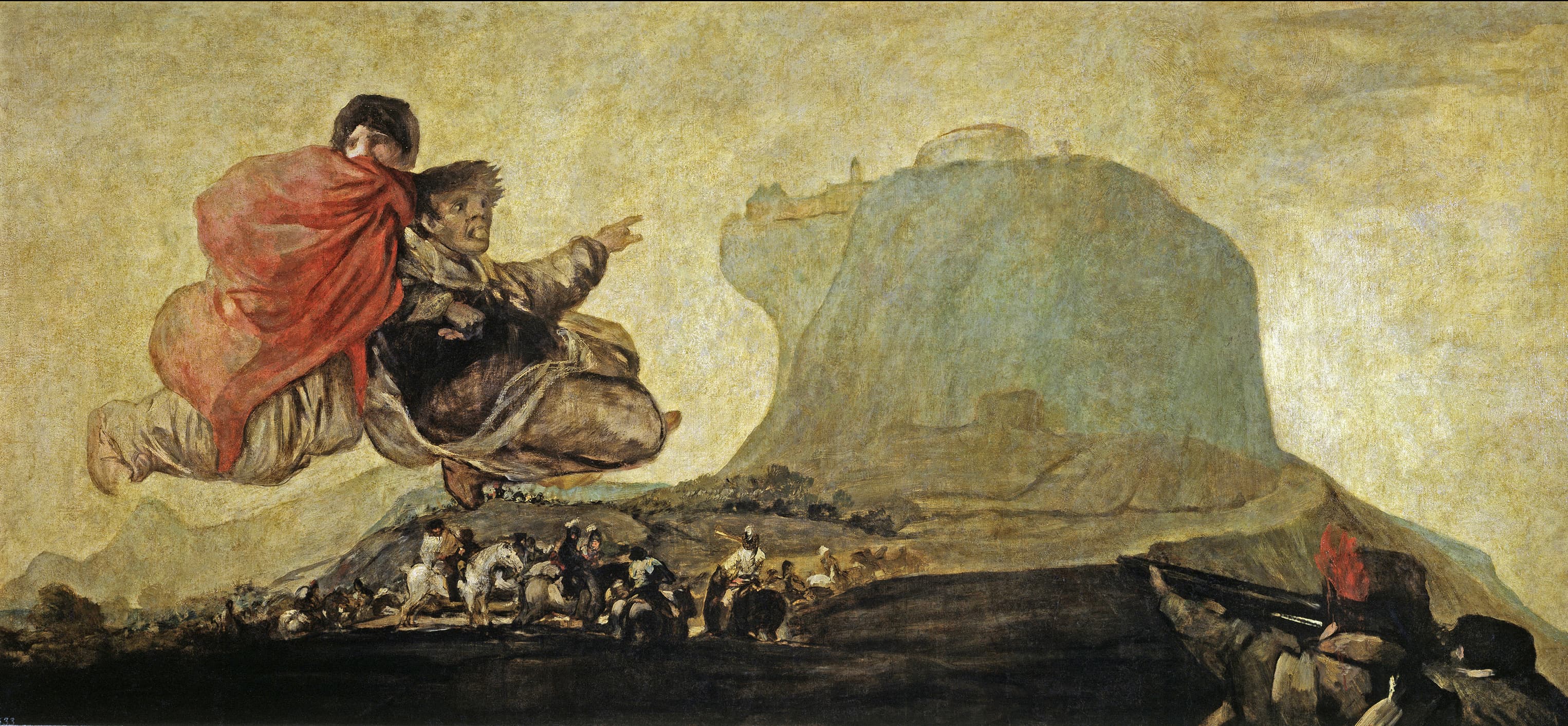
Fantastic Vision (Asmodea)
Francisco Goya · c. 1819–1823
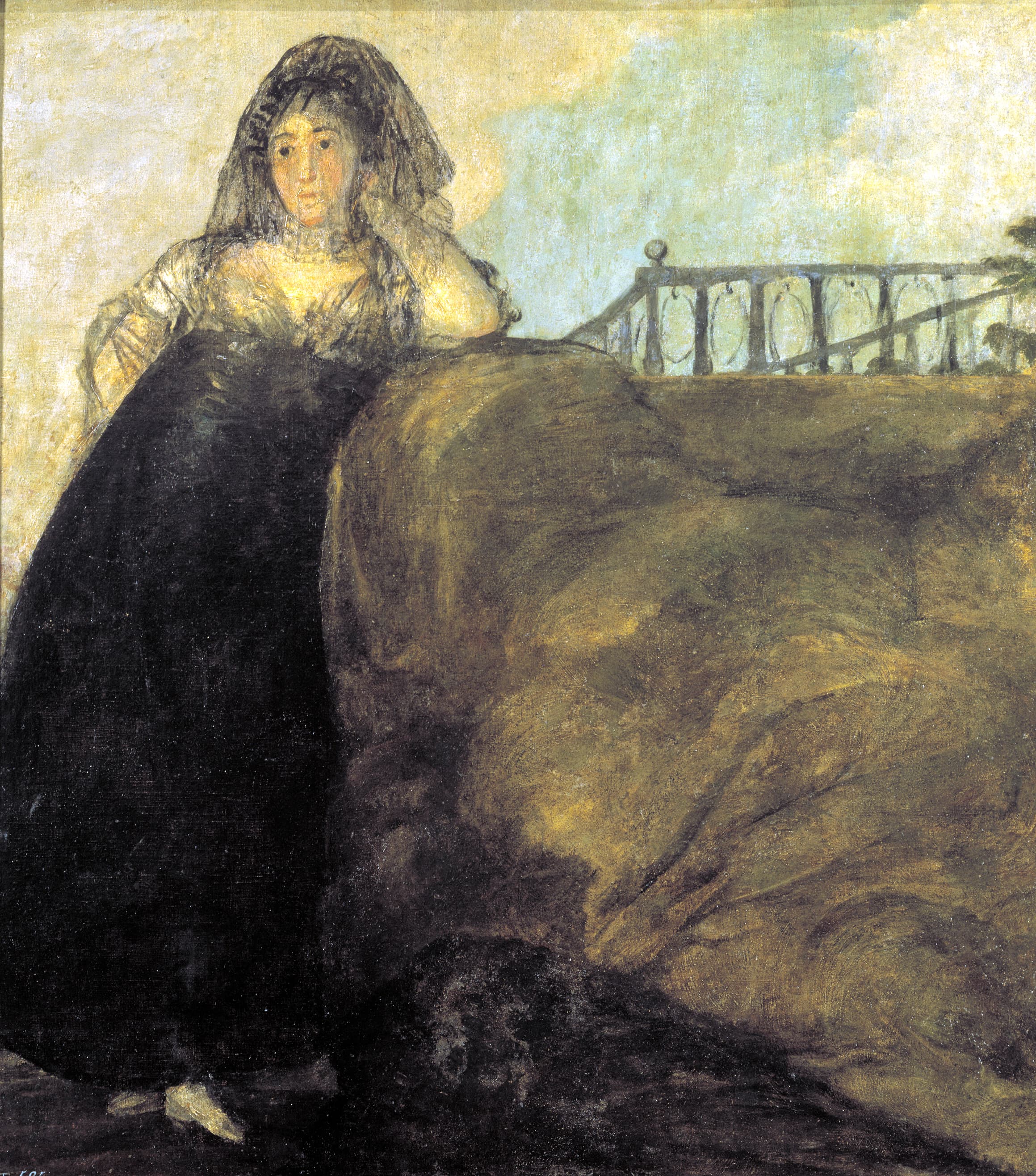
La Leocadia
Francisco Goya · c. 1819–1823
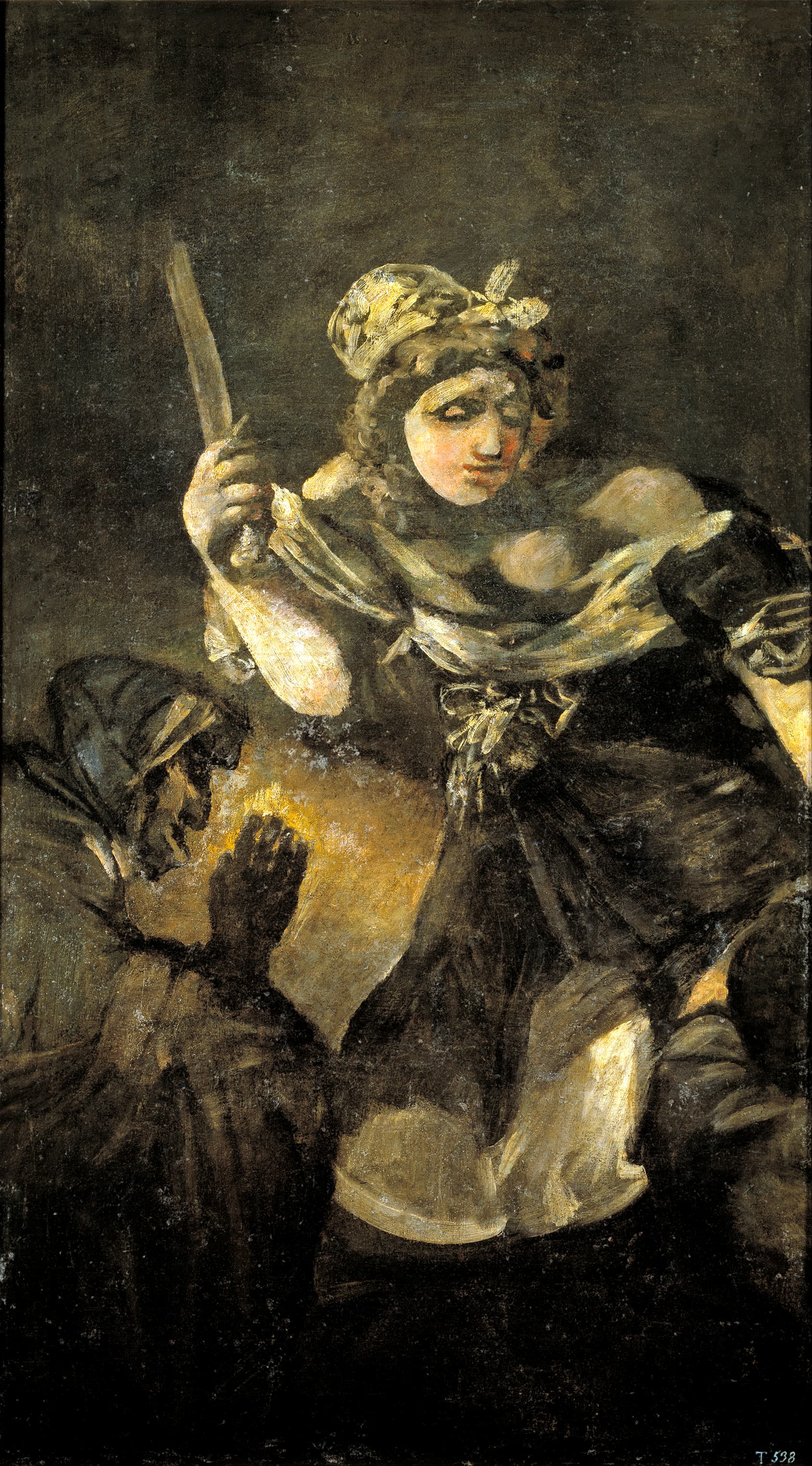
Judith and Holofernes
Francisco Goya · c. 1819–1823
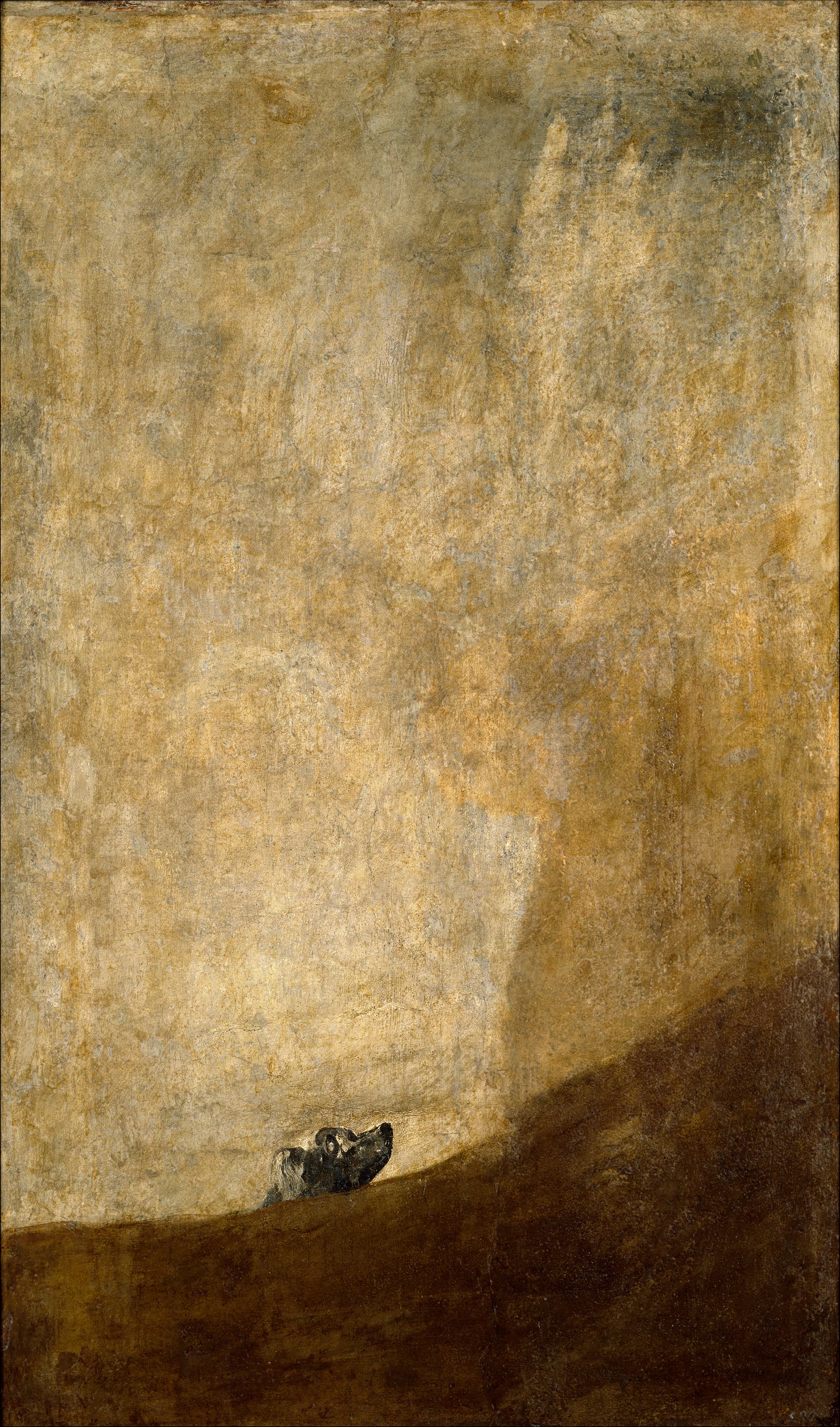
The Dog
Francisco Goya · c. 1819–1823
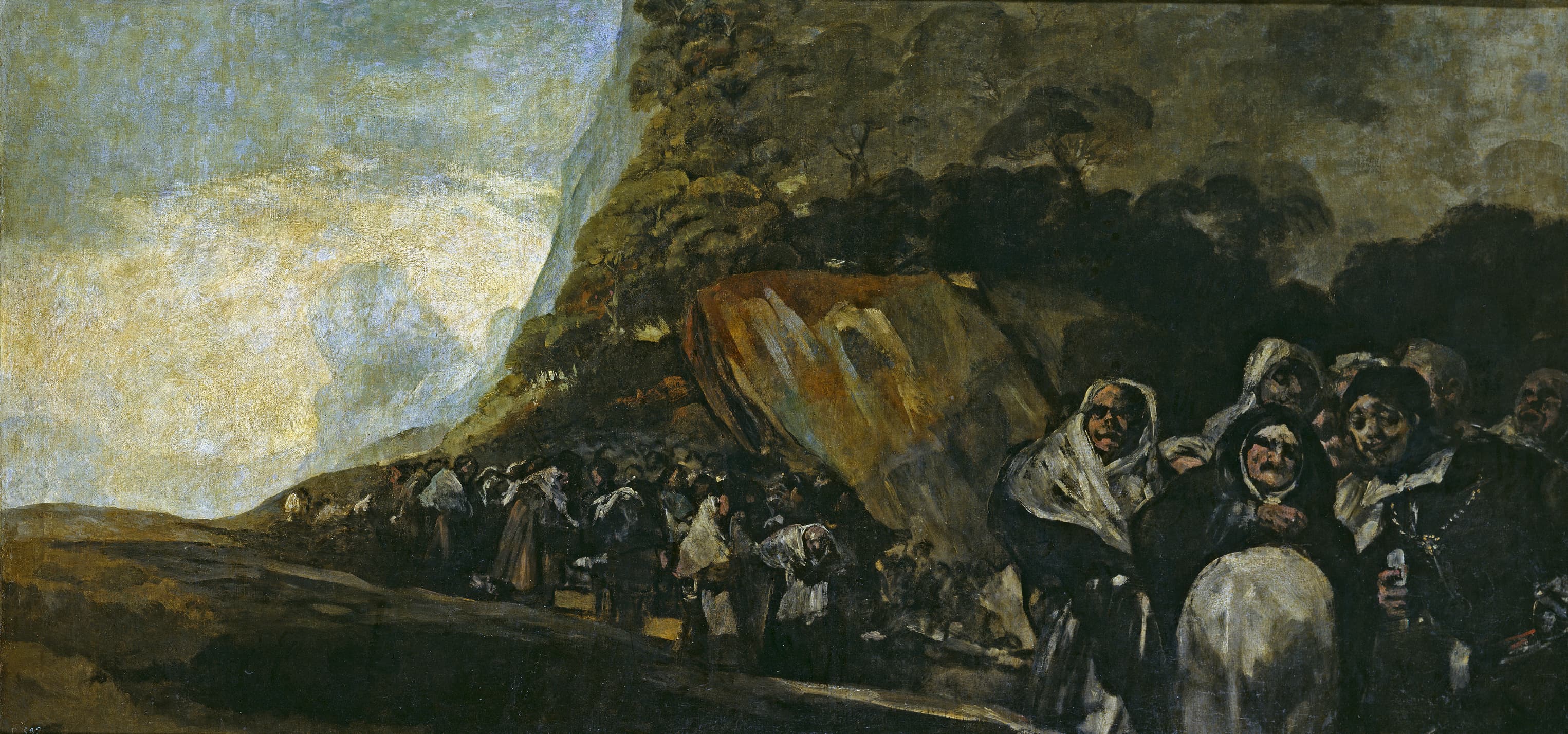
The Holy Office (Pilgrimage to the Fountain of San Isidro)
Francisco Goya · c. 1819–1823
Also painted in 1820
The same year
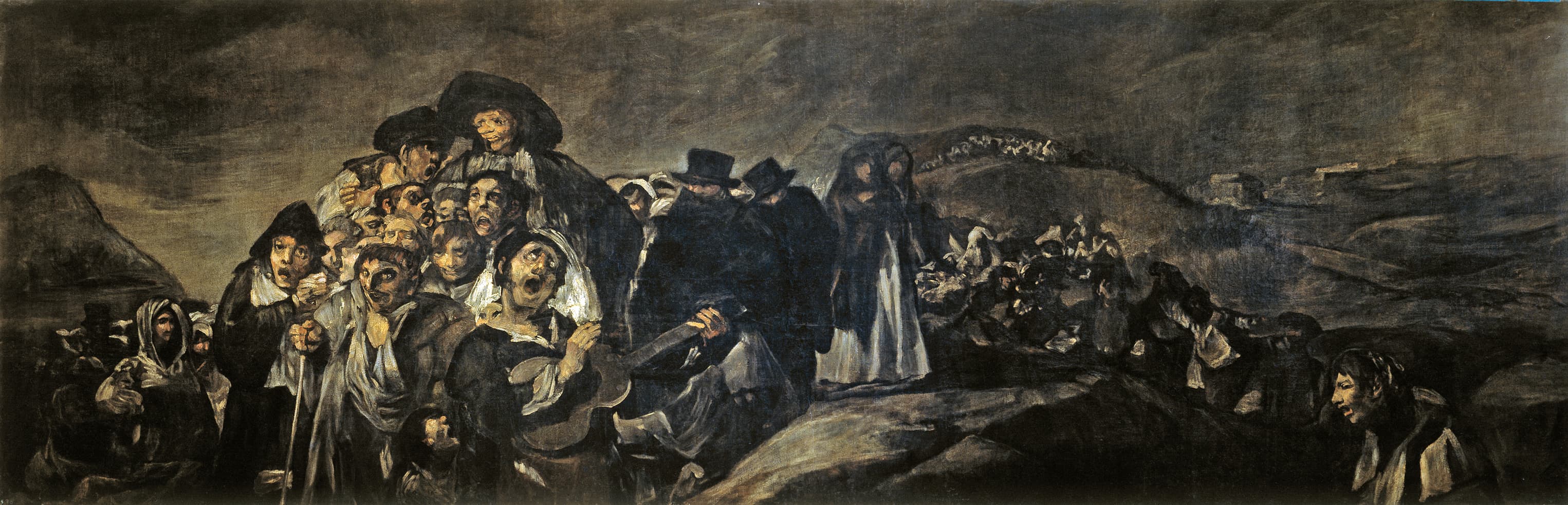
A Pilgrimage to San Isidro
Francisco Goya · c. 1819–1823
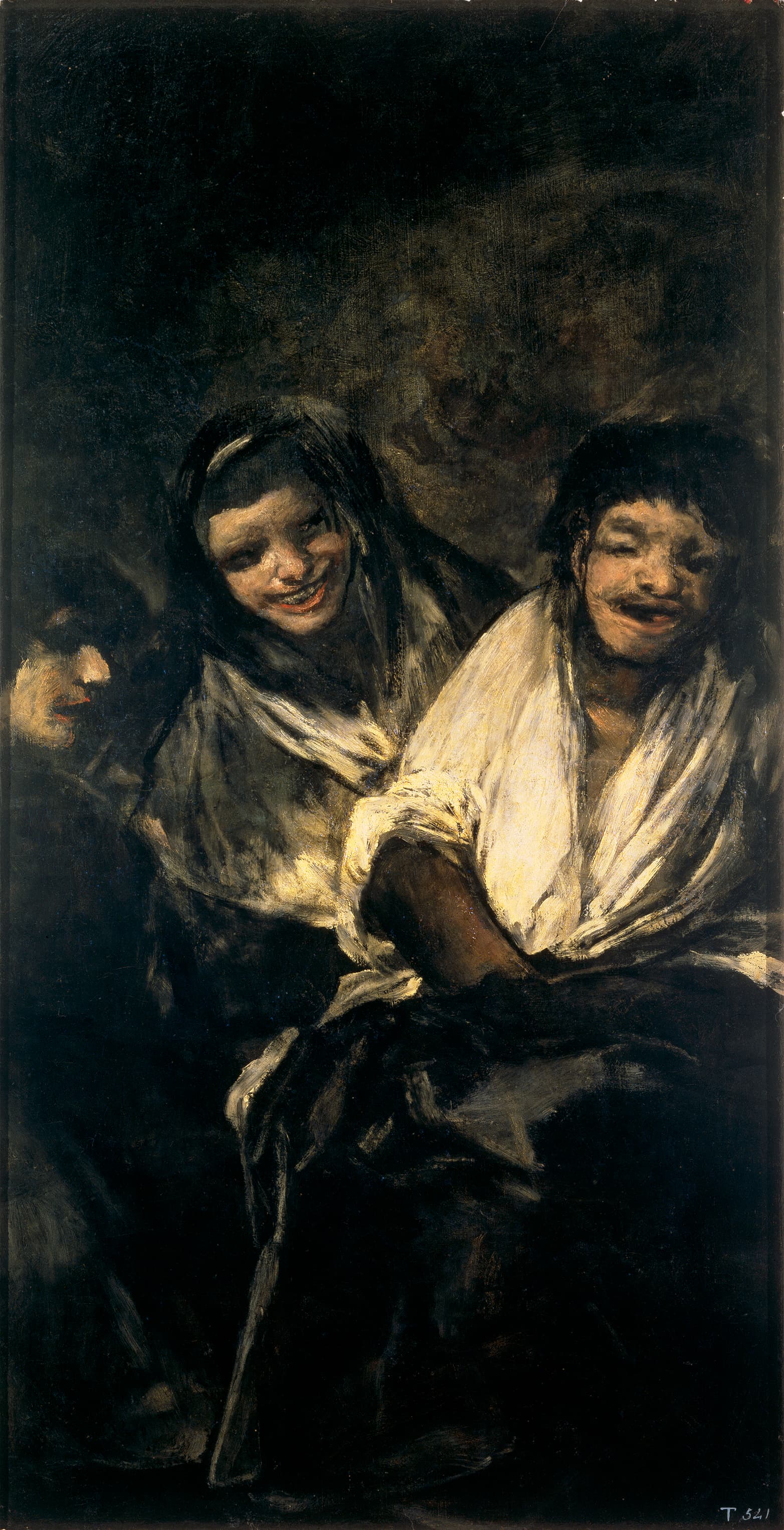
Women Laughing
Francisco Goya · c. 1819–1823
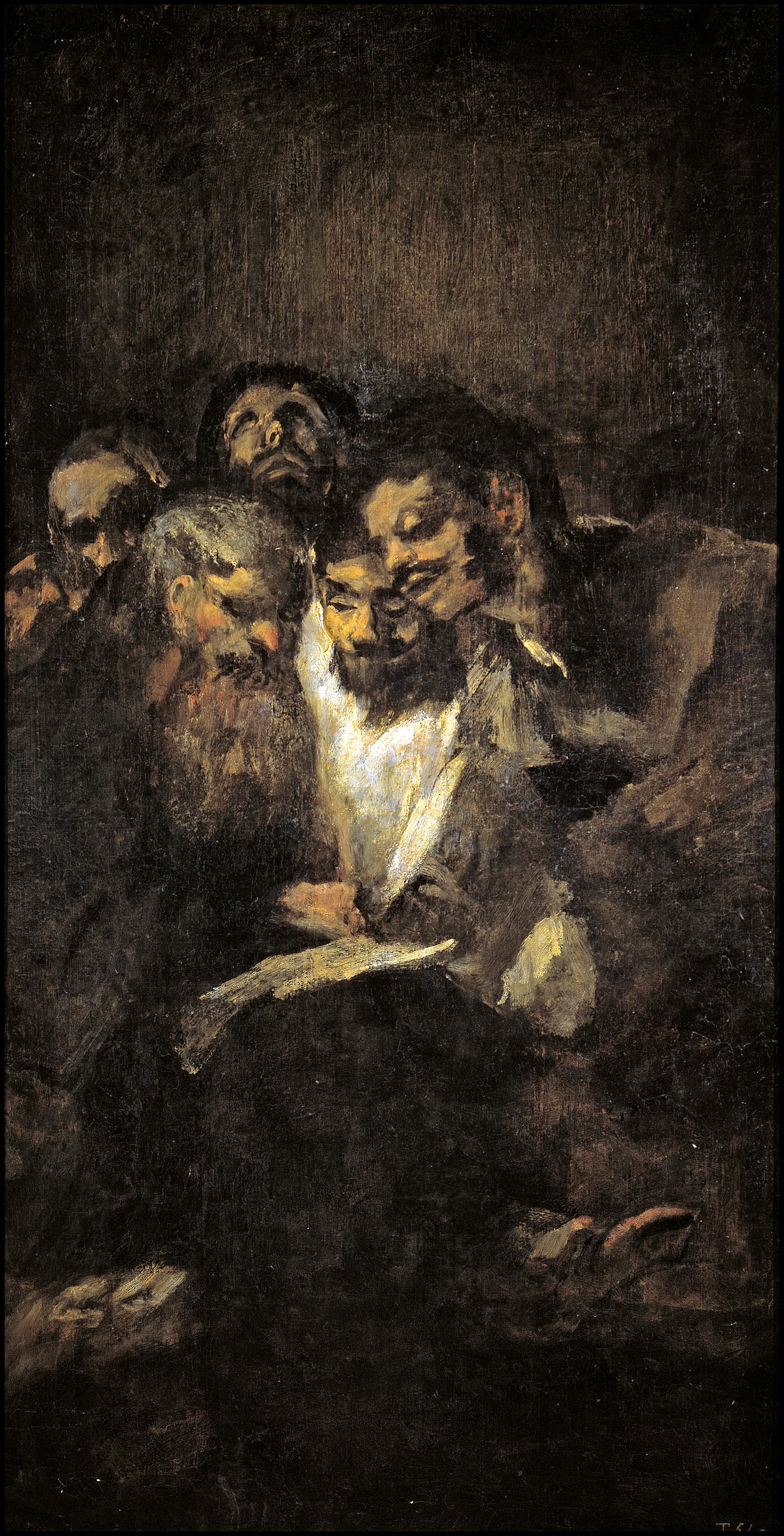
Men Reading
Francisco Goya · c. 1819–1823
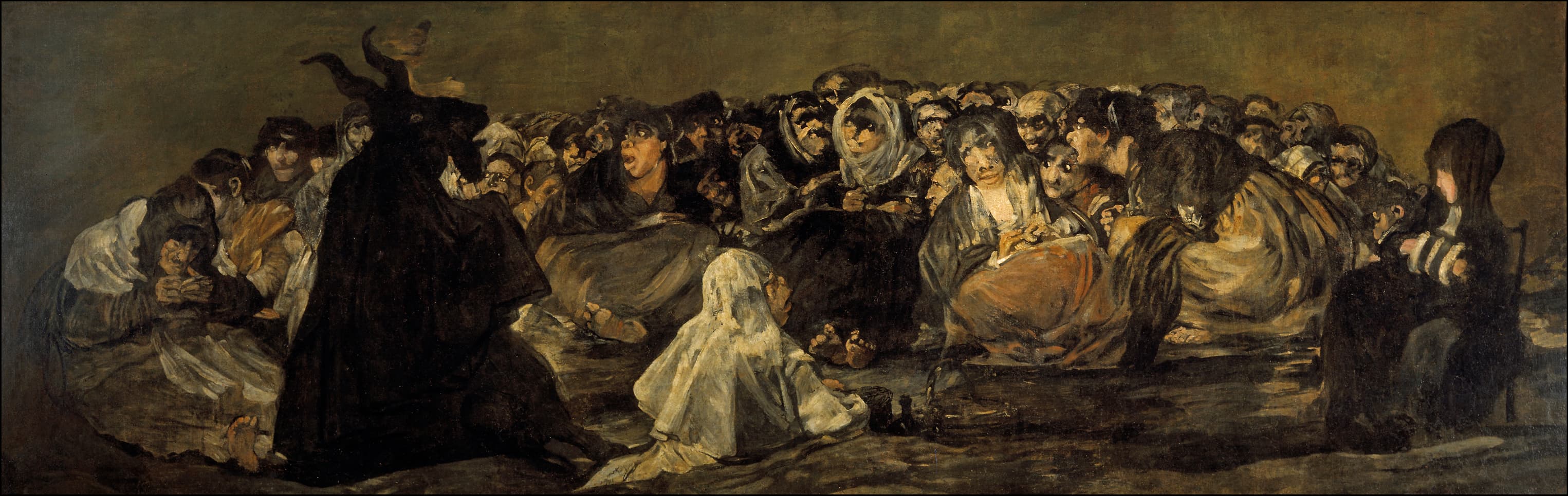
Witches' Sabbath (The Great He-Goat)
Francisco Goya · c. 1819–1823
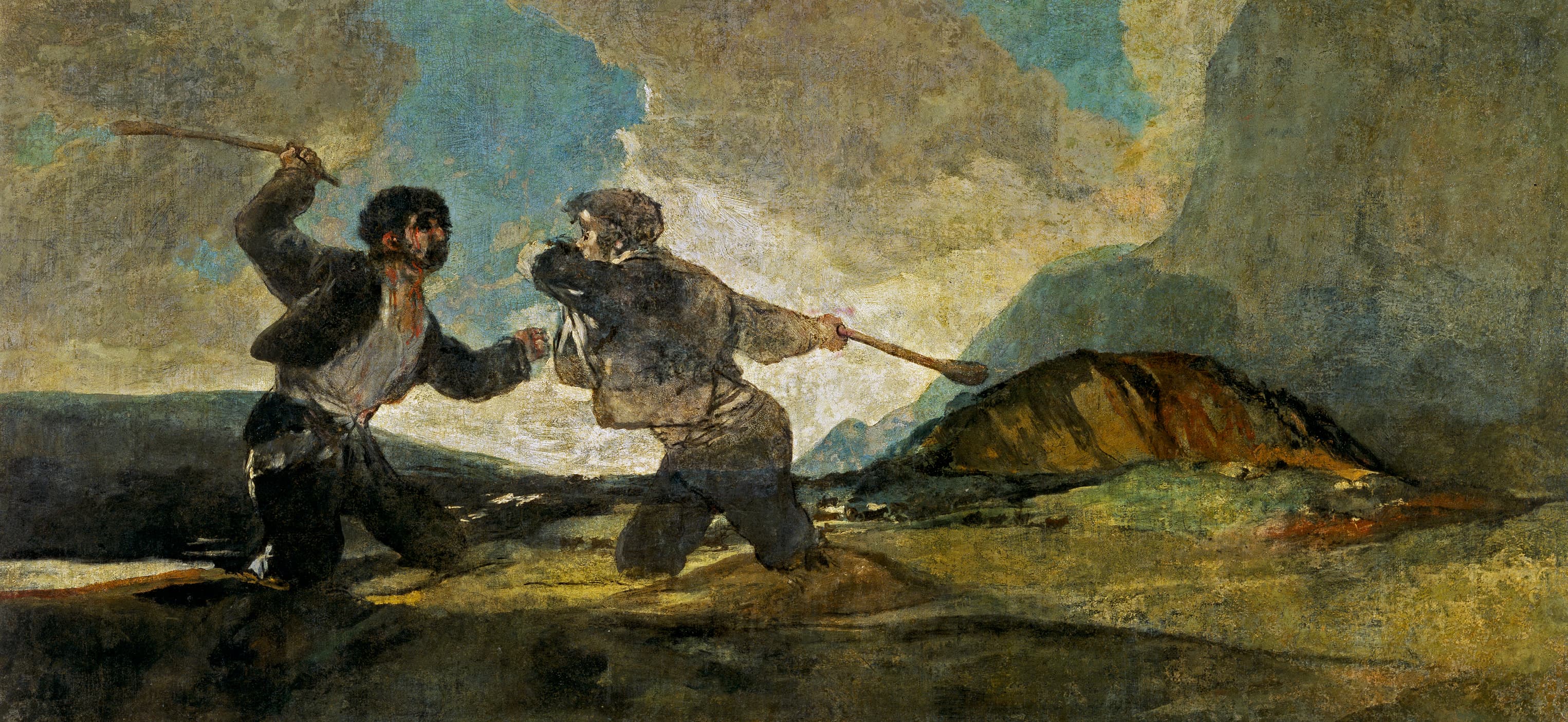
Fight with Cudgels
Francisco Goya · c. 1819–1823
Two Old Men Eating Soup
Francisco Goya · c. 1819–1823
Atropos (The Fates)
Francisco Goya · c. 1819–1823
Kindred works
You may also study
Two Old Men Eating Soup
Francisco Goya · c. 1819–1823
Atropos (The Fates)
Francisco Goya · c. 1819–1823

The Scream
Edvard Munch · 1893
The Thinker
Auguste Rodin · Modeled 1880–82; enlarged 1902–03; this cast 1904

Ophelia
John Everett Millais · 1851–52

Woman with a Parasol – Madame Monet and Her Son
Claude Monet · 1875
Las Meninas
Diego Velázquez · 1656
Lucifer
Franz von Stuck · 1890