The Destruction of Leviathan
Gustave Doré, 1866
The Destruction of Leviathan is a wood engraving after Gustave Doré for his 1866 illustrated Bible (La Grande Bible de Tours). It shows Isaiah 27:1: God descends through the clouds with a sword as the sea monster Leviathan writhes in the waves below.
- Artist
- Gustave Doré
- Date
- 1866
- Medium
- Wood engraving
- Movement
- Romanticism
- Themes
- Religion & Saints, Water & Sea, Angels & Demons, The Macabre, Literature & Poetry
What you are looking at
The lower half of the picture is a sea in uproar. A colossal scaled monster thrashes in it, its body coiled back on itself, a ridge of spiny, fan-like fins rising along its back. Its head is twisted round toward us, the jaws gaping, a long forked tongue curling out over a mouth full of teeth. Its eye is small and round and frightened. On either side, waves rear up as high as the creature's back, their faces engraved in long sweeping white lines.
High above, in a patch of light that breaks through black clouds, a bearded figure in a billowing robe strides down on the air. He carries a long sword point-down in one hand and stretches the other toward the sea. Shafts of light pour diagonally from upper left behind him. There are no wings: this is God himself, coming in judgment.
Between the two, on the horizon, is a second shape that many viewers miss: a long serpentine body arching out of the water in two great loops, its back ridged like the first. It is dark against a low band of light, far off and silent.
The passage: Isaiah 27:1
The plate illustrates a single verse of prophecy. In the King James Version: "In that day the LORD with his sore and great and strong sword shall punish leviathan the piercing serpent, even leviathan that crooked serpent; and he shall slay the dragon that is in the sea."
Leviathan appears several times in the Hebrew Bible: as the untamable sea creature of Job 41, as the many-headed monster whose heads God breaks in Psalm 74, and here as a figure for the powers of chaos and the enemies of God's people that will be destroyed at the end of days. Isaiah's verse is built from parallel phrases, "piercing serpent", "crooked serpent", "dragon that is in the sea". Doré's composition may answer that doubling: the near monster in the waves and the long serpent on the horizon read as two of the verse's creatures, though the plate's title names only one.
How Doré staged it
The striking choice is distance. God and the monster never touch. The sword is not plunged in; it is carried, and the whole story is told by the gap between the calm, lit figure above and the panicked creature below. The monster has turned its head away from God, mouth open, like an animal at bay.
Doré also gave the beast a face. With its pug muzzle, round eye and curling tongue, it is part dolphin, part dragon, part something from a medieval bestiary, and more pitiable than terrifying. The sea around it does the frightening: the walls of water at left and right frame it like the sides of a trap.
The diagonal rays of light are a device Doré used again and again in the Bible to mark a divine presence. Here they also split the picture into two worlds: an upper one made of soft grey tone and a lower one made of hard, churning line.
How it was made
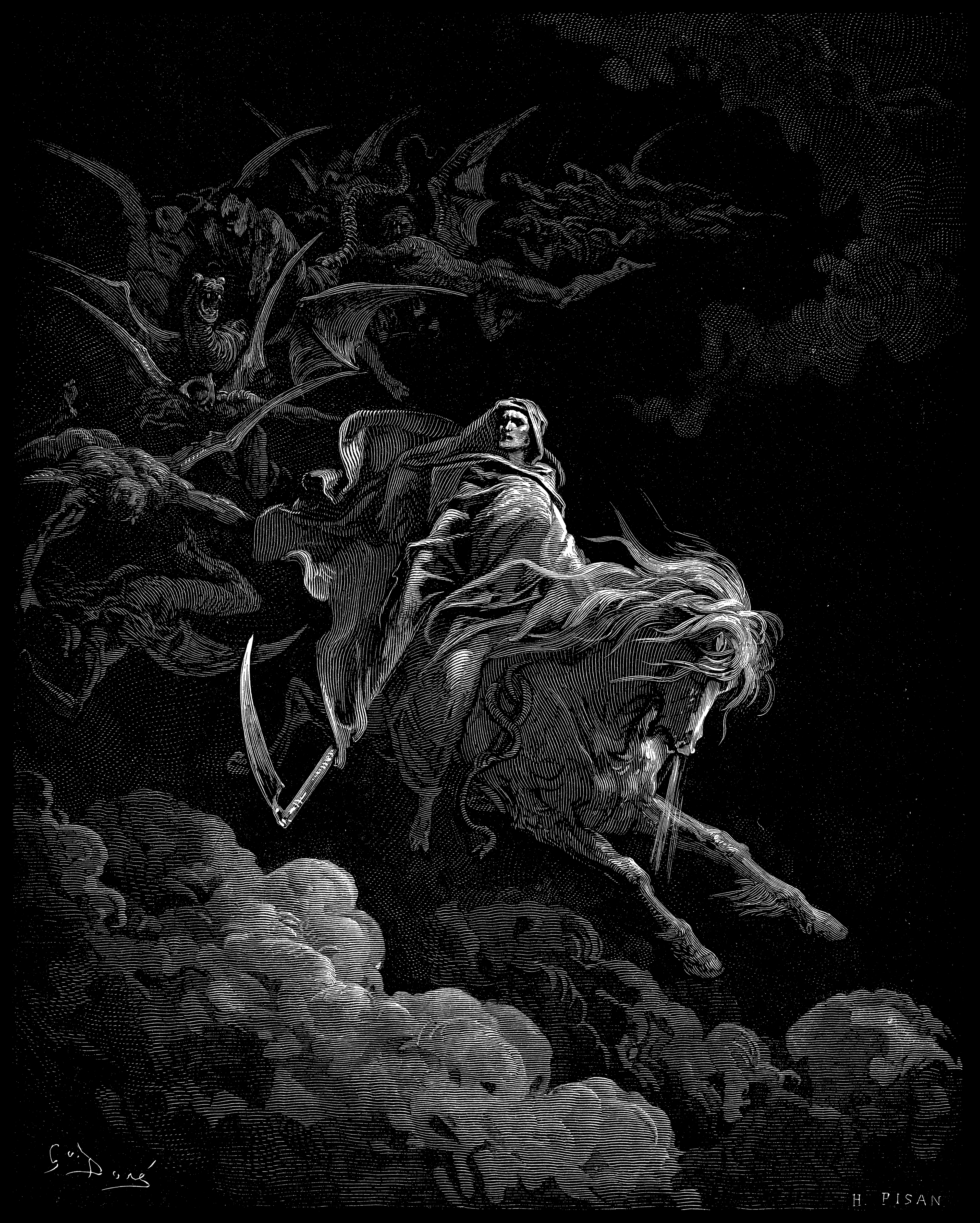
The plate is a wood engraving. Doré drew it on a boxwood block and Héliodore Pisan cut it; "H. Pisan" is at lower right and Doré's "Gve Doré" at lower left. Pisan was one of the engravers Doré trusted most, and he also cut Death on the Pale Horse.
The monster shows off his range. Its body is covered in tiny overlapping curved strokes that read as scales; the fins are long ribbed blades of parallel line; and the water around it moves from blank white spray to dense, swirling black. The figure of God, by contrast, is cut in fine wavy horizontal lines, almost the same as the sky, so that he seems made of light and cloud.
Publication
The engraving belongs to Doré's illustrated Bible, published in Tours by Alfred Mame et Fils in 1866 and known as La Grande Bible de Tours, with an English edition by Cassell, Petter & Galpin. It comes in the run of plates for the prophets. The image shown here is a scan of a later German edition, captioned Untergang des Leviathan; the caption is cropped away. The whole cycle can be followed in the Doré Bible.
Meaning
Isaiah's verse belongs to a long tradition, shared with older Near Eastern myths, in which a god defeats a sea monster that stands for chaos. Christian readers linked it to the dragon of Revelation, the "old serpent" thrown down at the end of time. Doré's plate supports both readings: it is an image of order overcoming chaos and of the final defeat of evil.
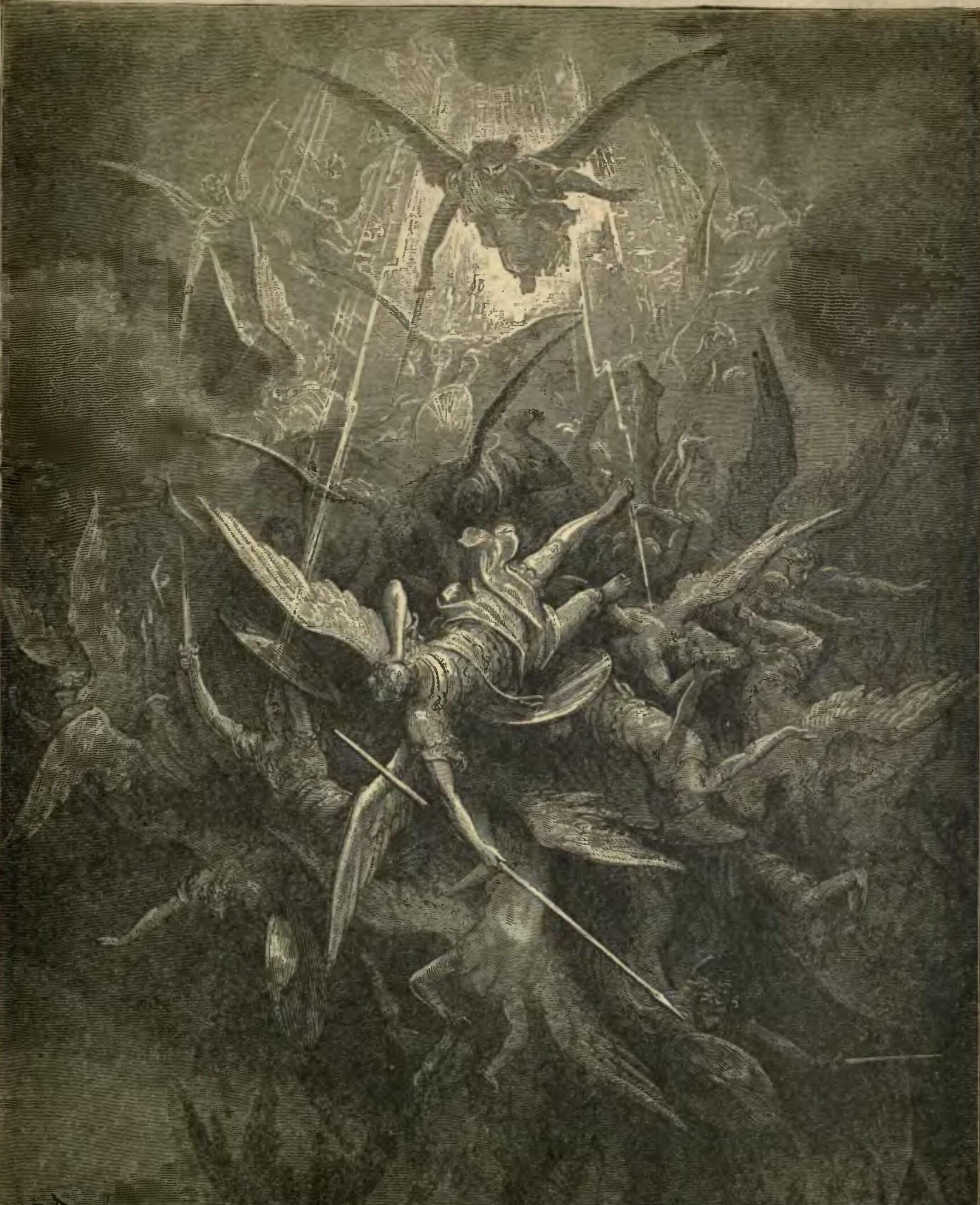
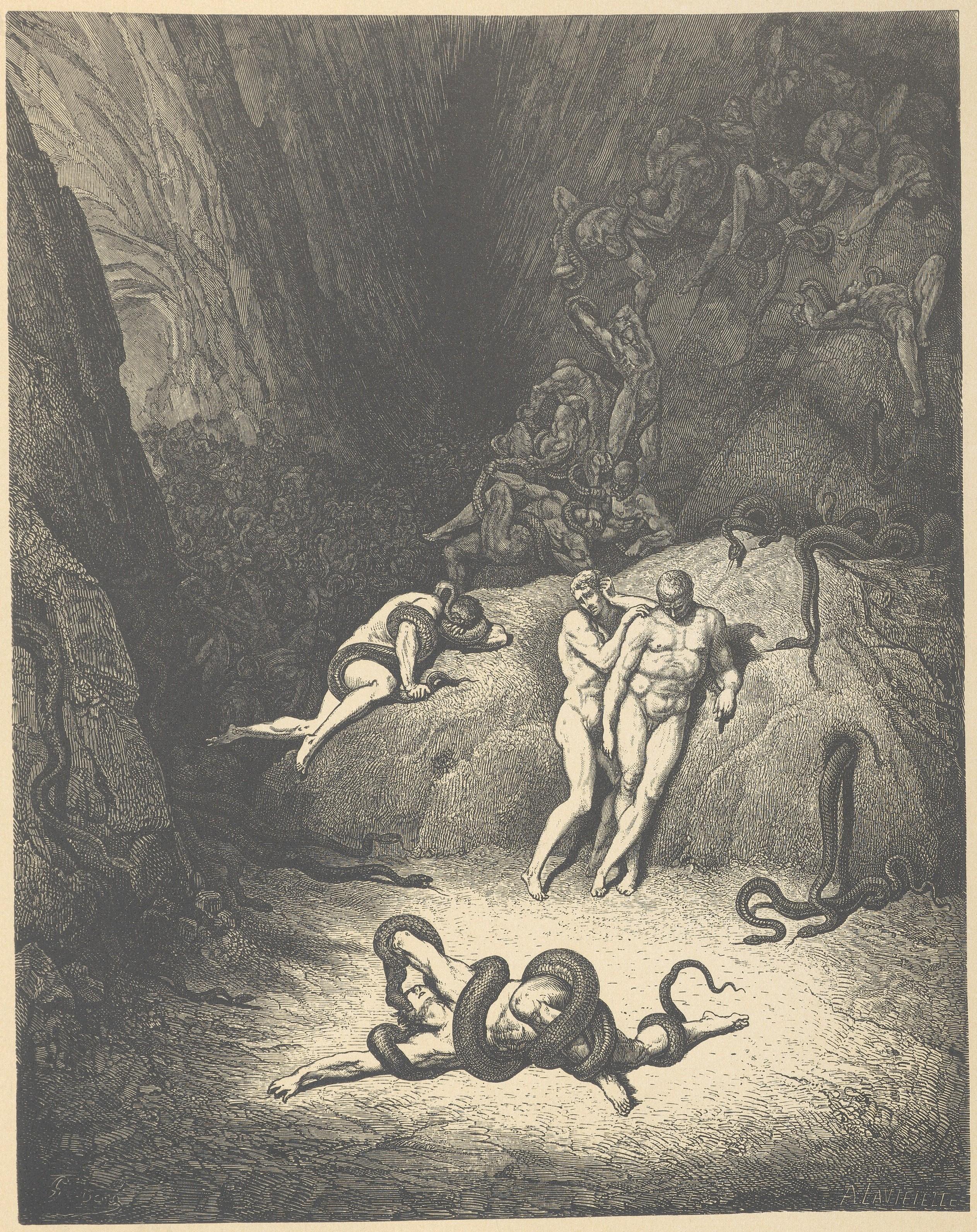
That dragon-and-serpent line runs through his work. Compare the rebel angels hurled out of heaven in Milton's Satan Cast Out of Heaven, or the serpent-tangled sinners of Dante's The Thieves and the Serpents. More monsters and their slayers appear in Angels and Demons in Art, and more of the artist in Gustave Doré.
Questions & answers
What does Doré's Destruction of Leviathan show?
A scaled sea monster with spiny fins and a gaping, tongue-curled mouth thrashes between walls of water while God, bearded and robed, descends through a break in the clouds carrying a sword. A second long serpent arches out of the sea on the horizon, far behind the main creature.
Which Bible verse does The Destruction of Leviathan illustrate?
Isaiah 27:1. In the King James Version: "In that day the LORD with his sore and great and strong sword shall punish leviathan the piercing serpent, even leviathan that crooked serpent; and he shall slay the dragon that is in the sea." The verse is a prophecy of God's final victory over the powers of chaos.
When was The Destruction of Leviathan made?
Doré designed it for his illustrated Bible, published by Mame in Tours in 1866 and known as La Grande Bible de Tours. Cassell, Petter & Galpin issued it in English with the King James text. Some reproductions date the design 1865, while Doré was still working on the cycle.
Who engraved Doré's Leviathan?
Doré drew the design onto a boxwood block and Héliodore Pisan cut it; his signature, "H. Pisan", is at lower right, with Doré's at lower left. Pisan rendered the monster's scales as tiny curved strokes and the figure of God in fine wavy lines, so that God seems made of light.
What does Leviathan symbolize in the Bible and in Doré's plate?
Leviathan is a sea monster that stands for chaos and for the enemies of God, appearing in Job, the Psalms and Isaiah. Christian readers linked it with the dragon of Revelation. Doré shows its destruction as calm divine power facing a cornered, frightened beast across a gap of storm and sea.
More by Gustave Doré
All works →
The Confusion of Tongues
Gustave Doré · 1866
Death on the Pale Horse
Gustave Doré · 1866
Jacob Wrestling with the Angel
Gustave Doré · 1866
The Vision of the Valley of Dry Bones
Gustave Doré · 1866
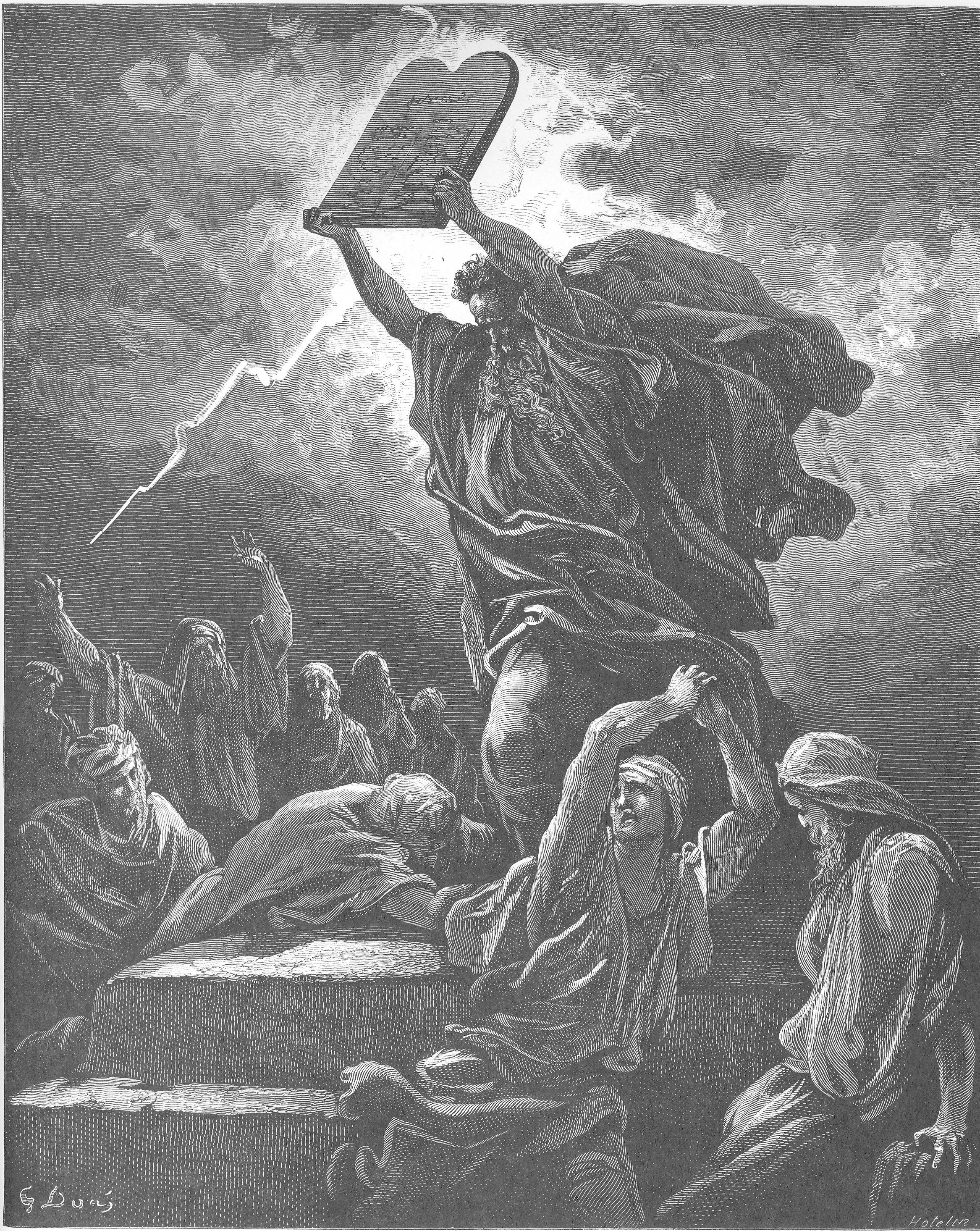
Moses Breaking the Tables of the Law
Gustave Doré · 1866
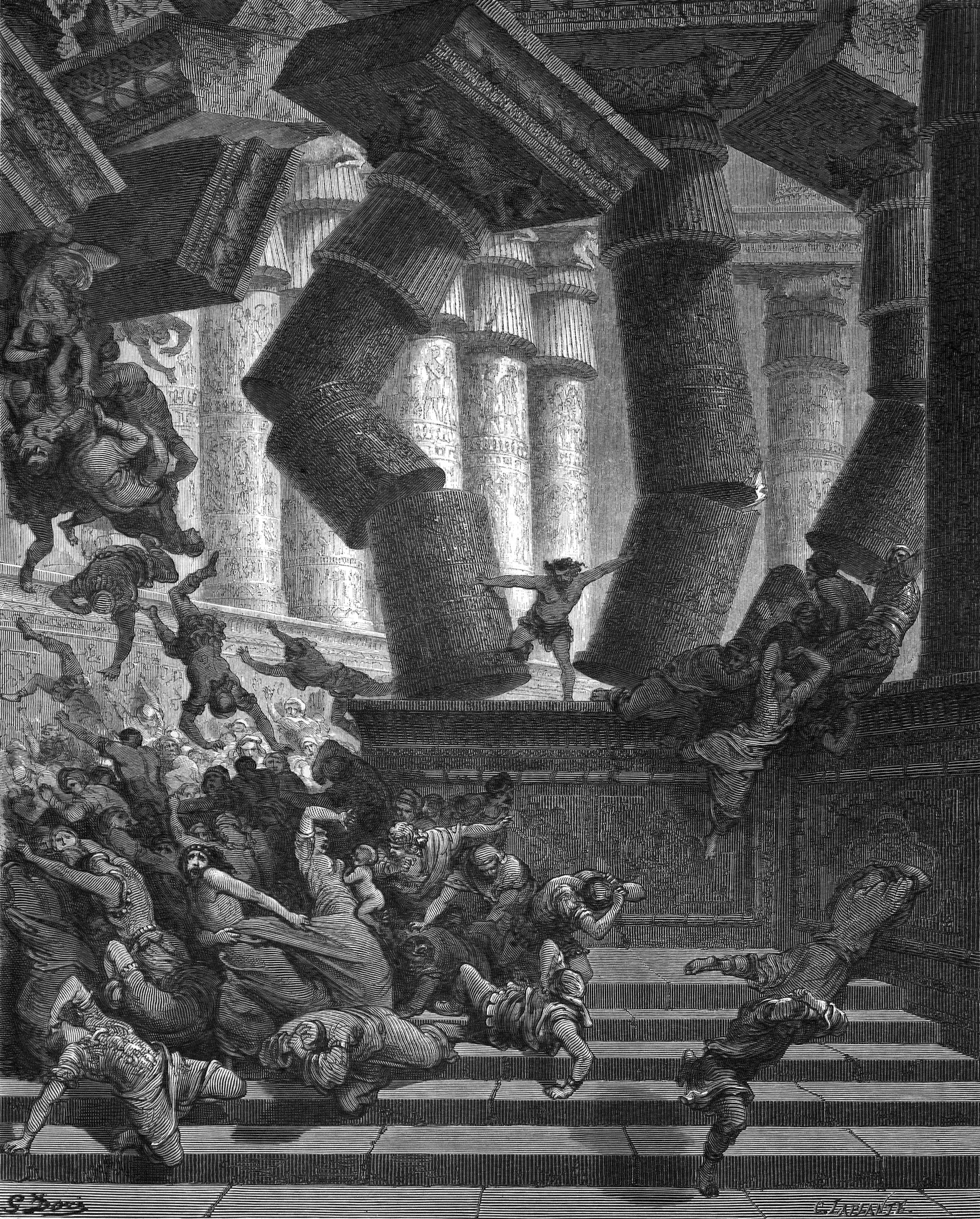
Samson Destroying the Temple
Gustave Doré · 1866
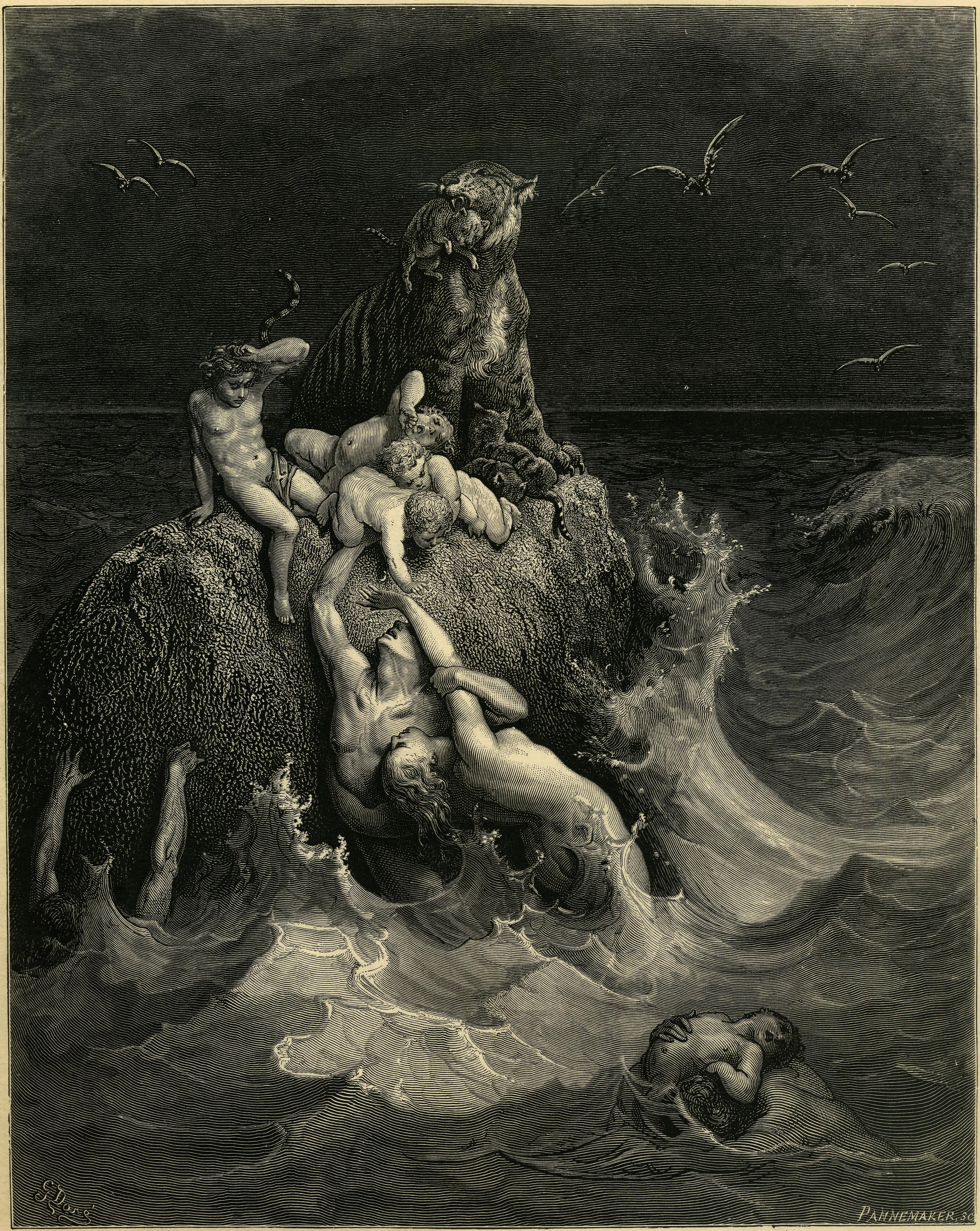
The Deluge
Gustave Doré · 1866
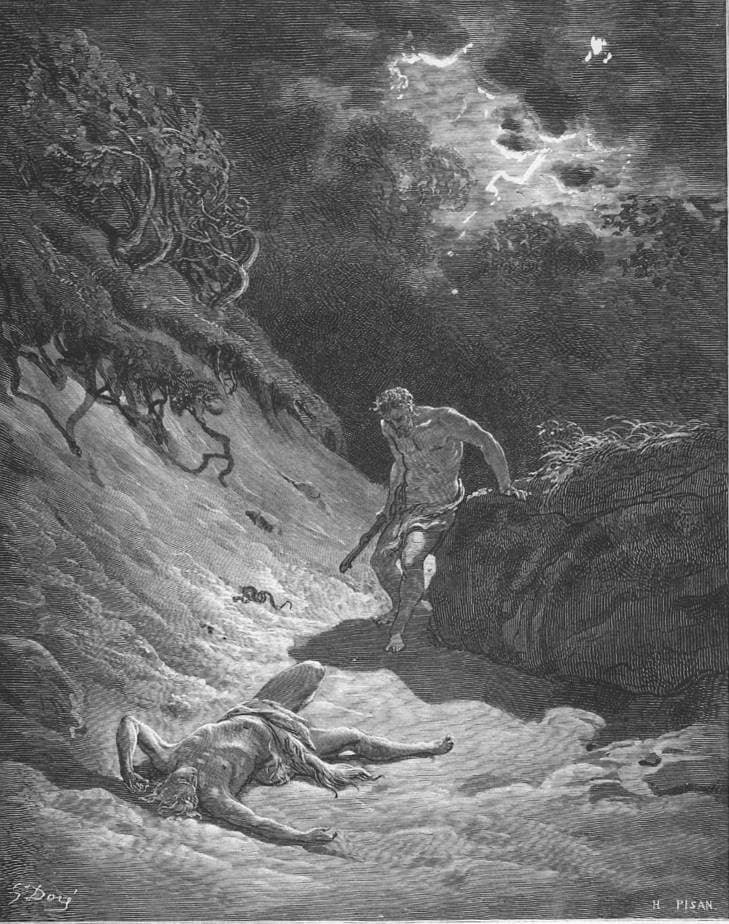
The Death of Abel
Gustave Doré · 1866
Also from 1866
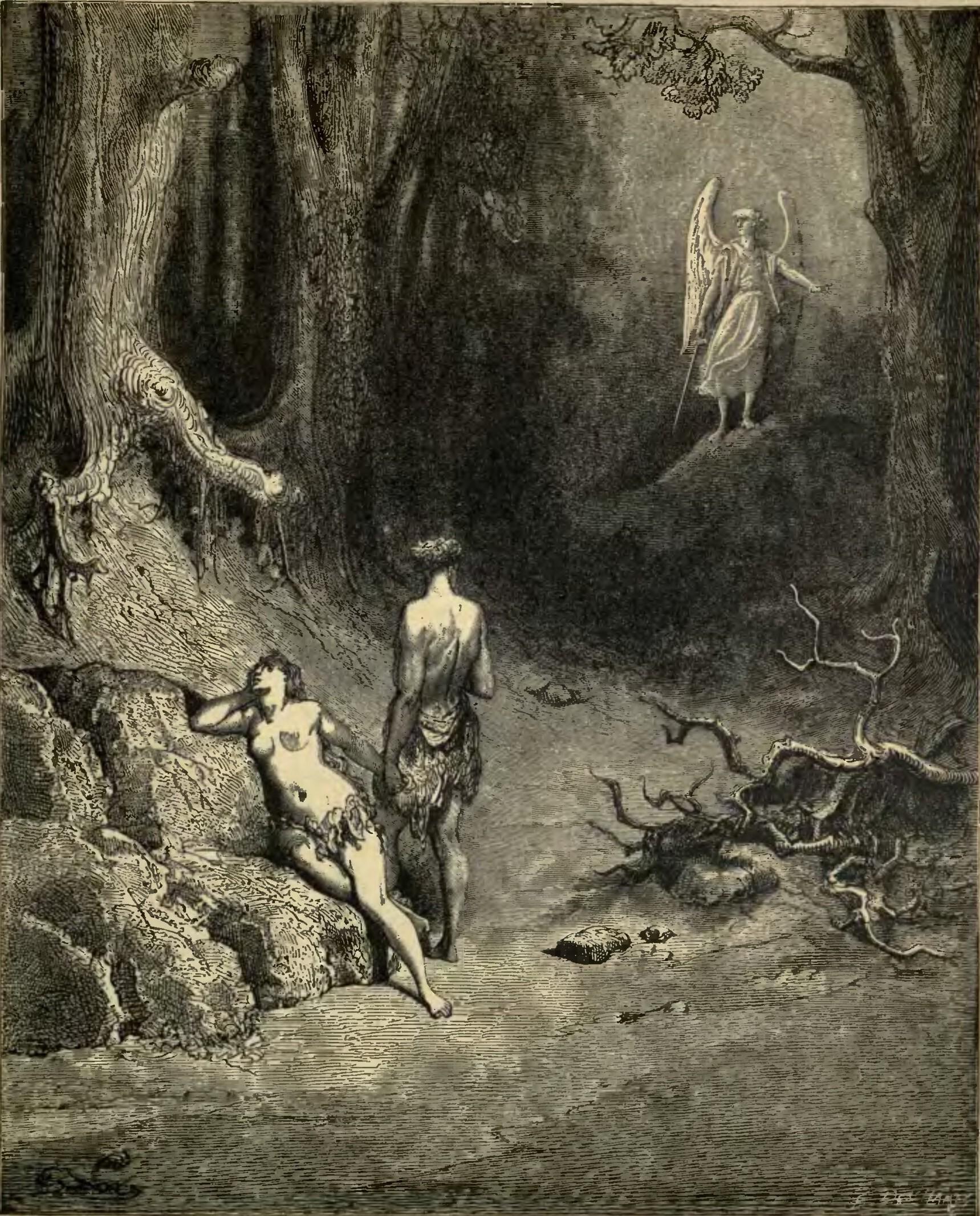
Adam and Eve Expelled from Paradise
Gustave Doré · 1866
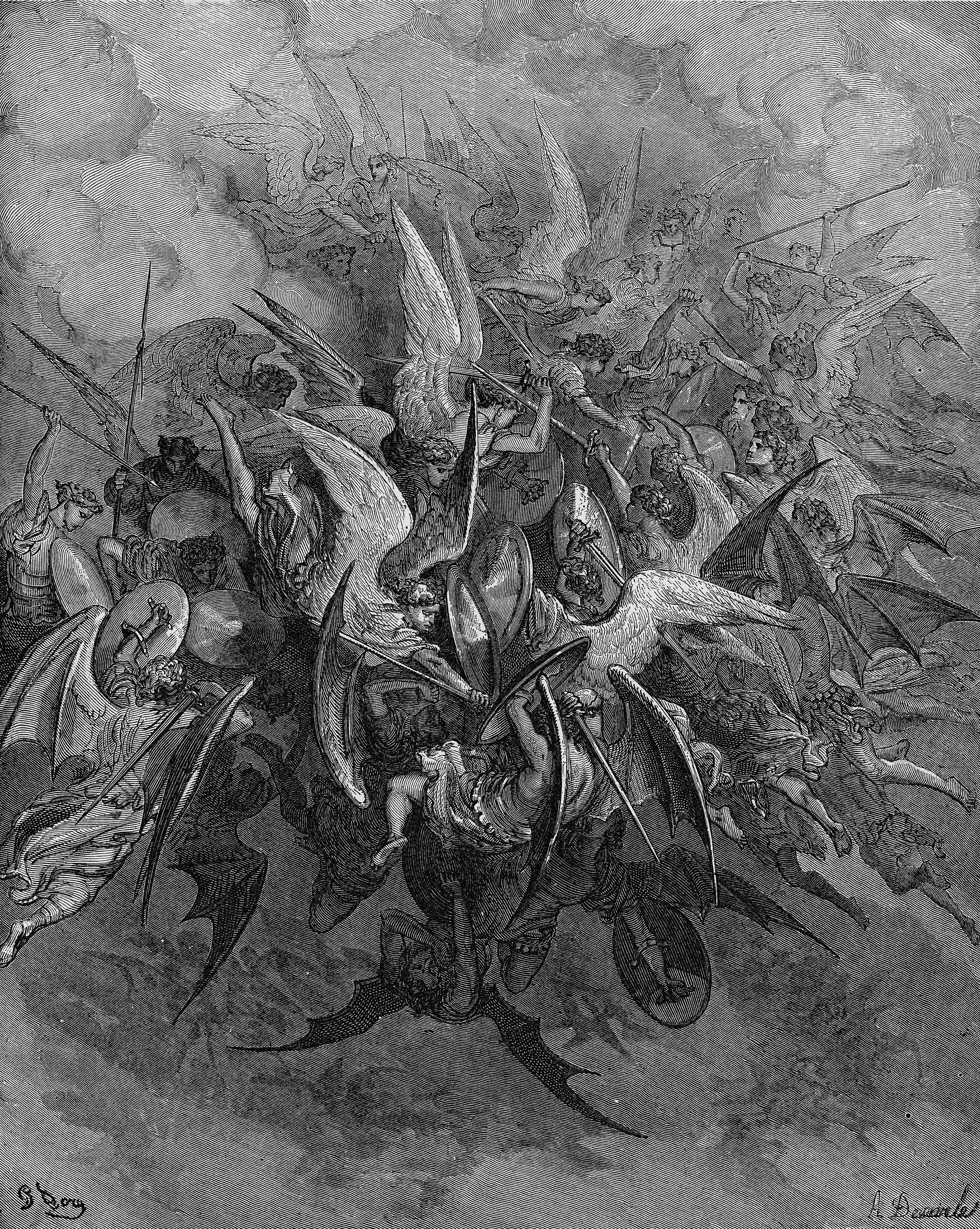
The War in Heaven
Gustave Doré · 1866
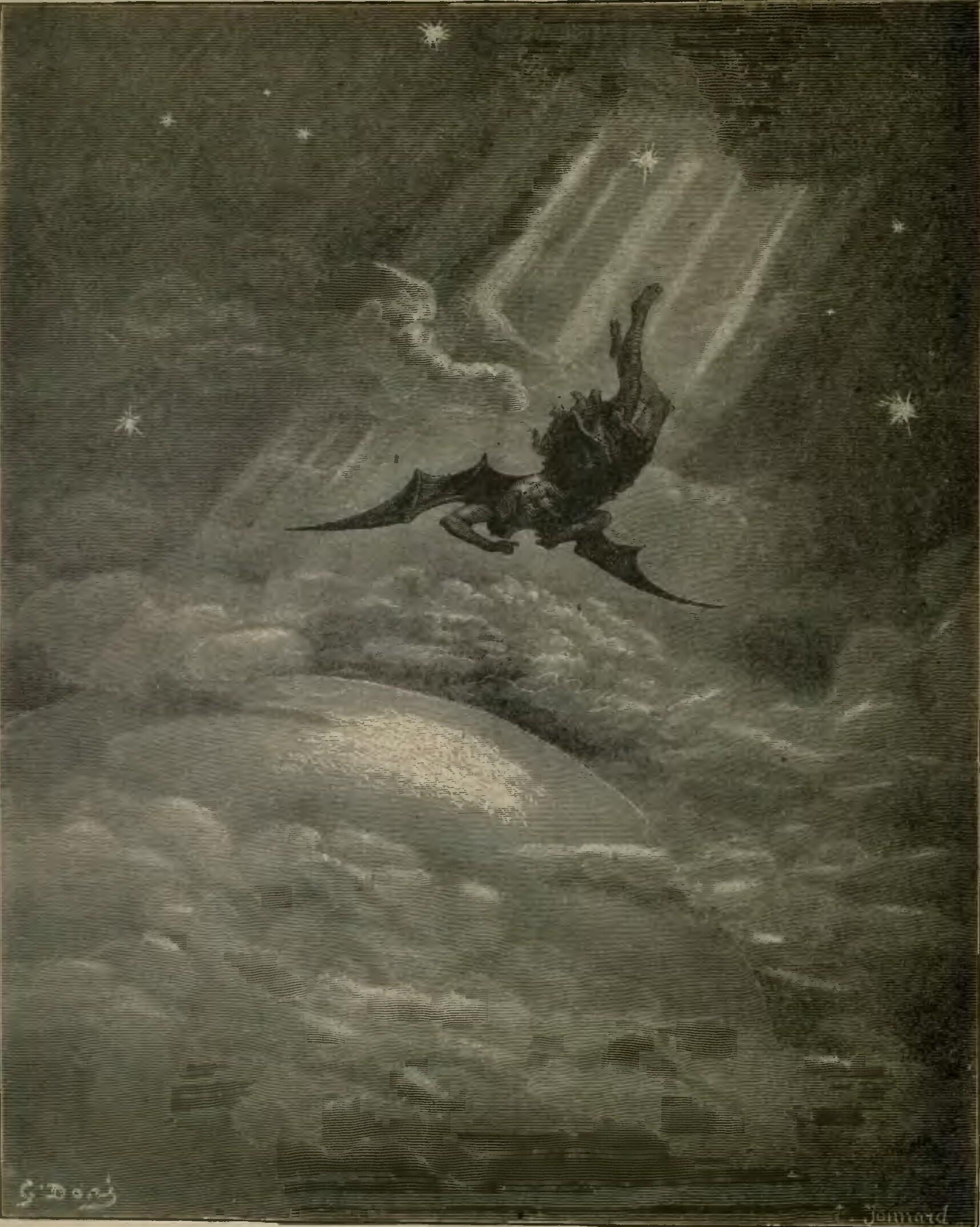
Satan Approaching the Confines of the Earth
Gustave Doré · 1866
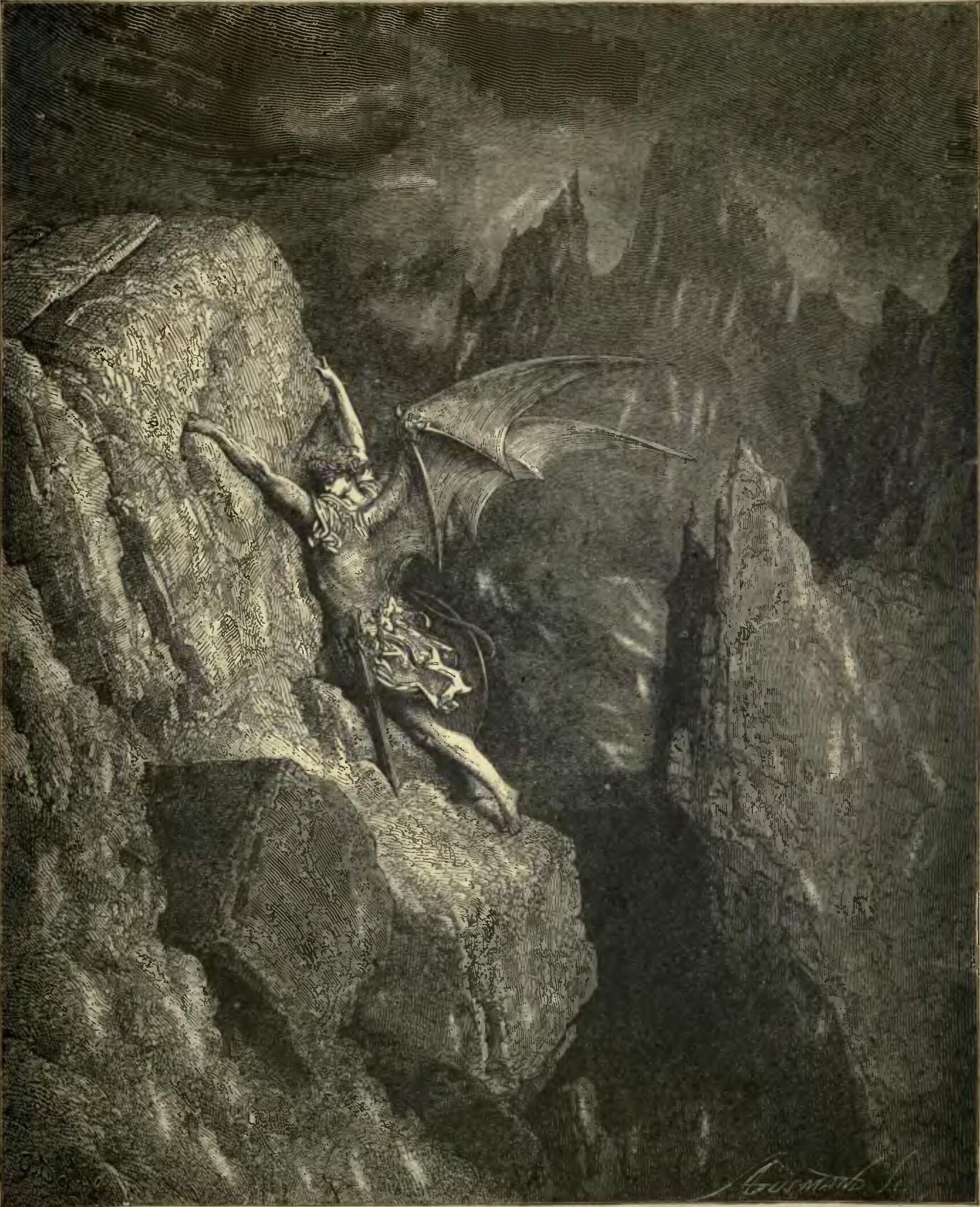
Satan’s Flight Through Chaos
Gustave Doré · 1866
Satan, Sin and Death at the Gates of Hell
Gustave Doré · 1866
Satan in Council
Gustave Doré · 1866
Satan Cast Out of Heaven
Gustave Doré · 1866
Related works
Satan Cast Out of Heaven
Gustave Doré · 1866
The Thieves and the Serpents
Gustave Doré · 1861
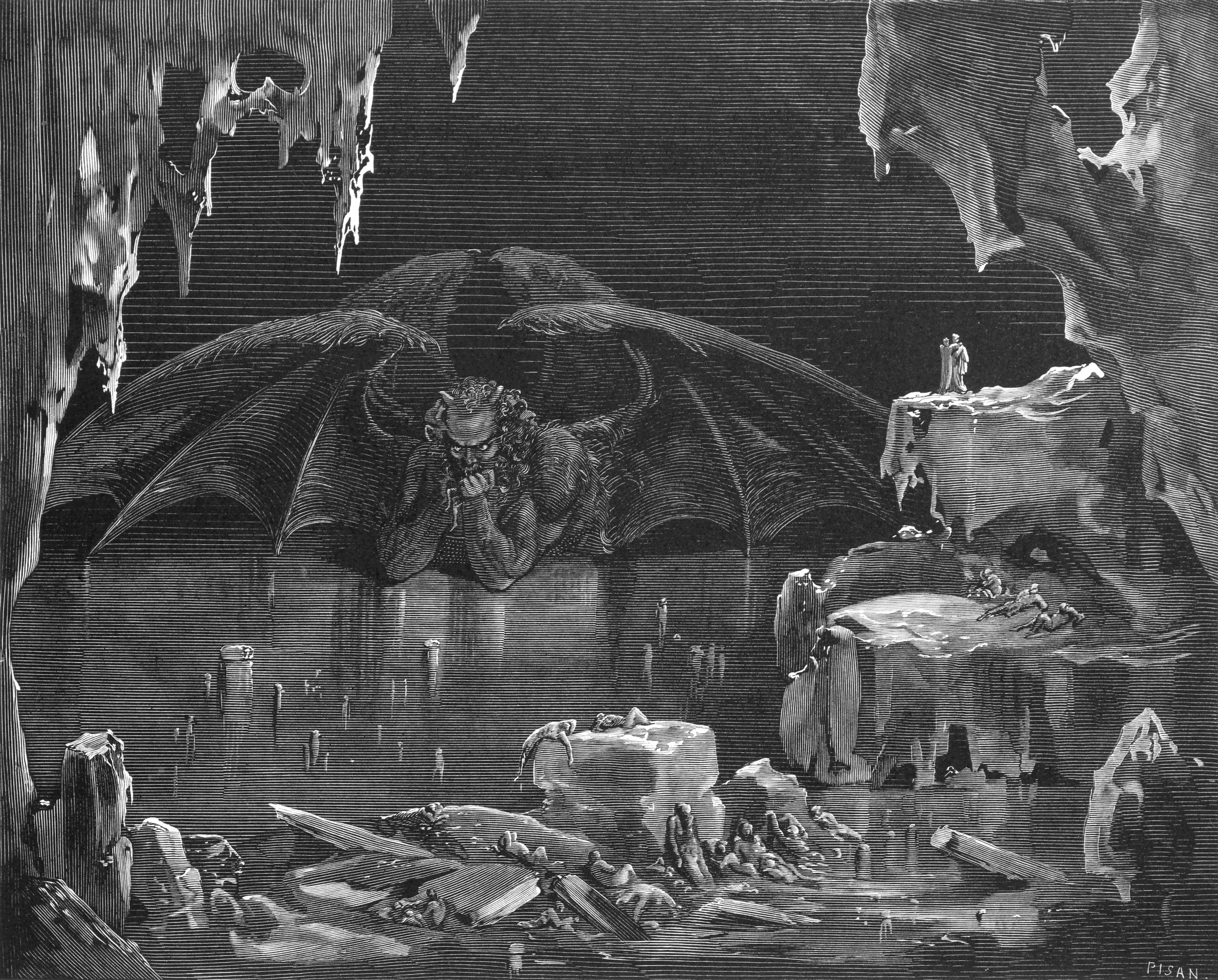
Lucifer, King of Hell
Gustave Doré · 1861
The War in Heaven
Gustave Doré · 1866
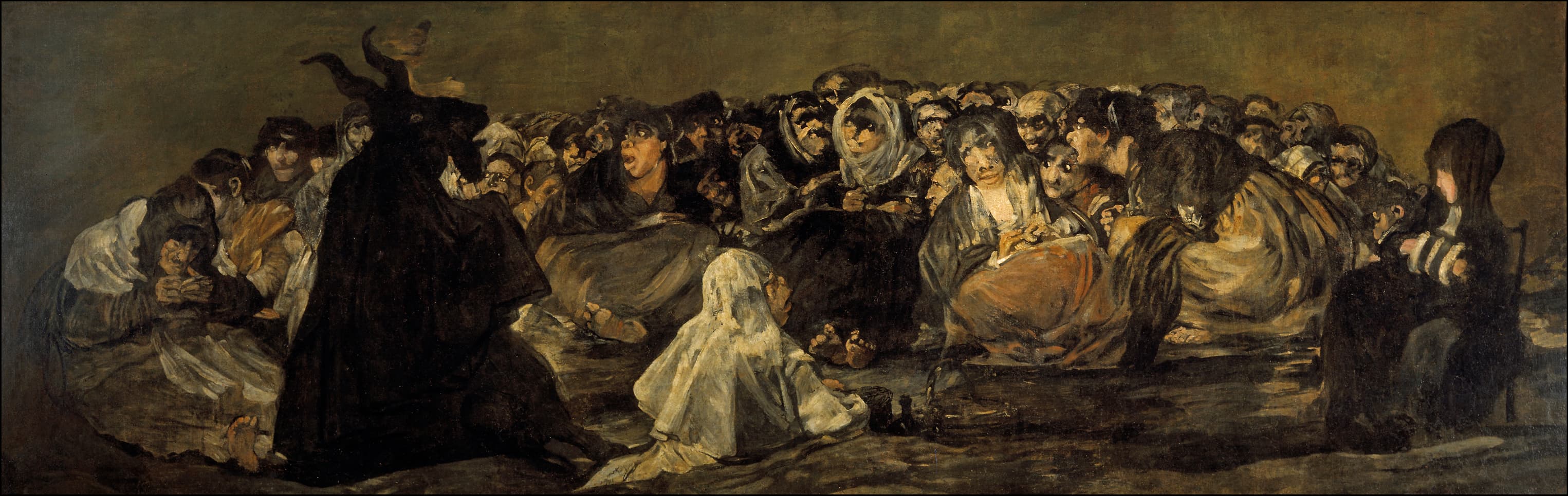
Witches' Sabbath (The Great He-Goat)
Francisco Goya · c. 1819–1823
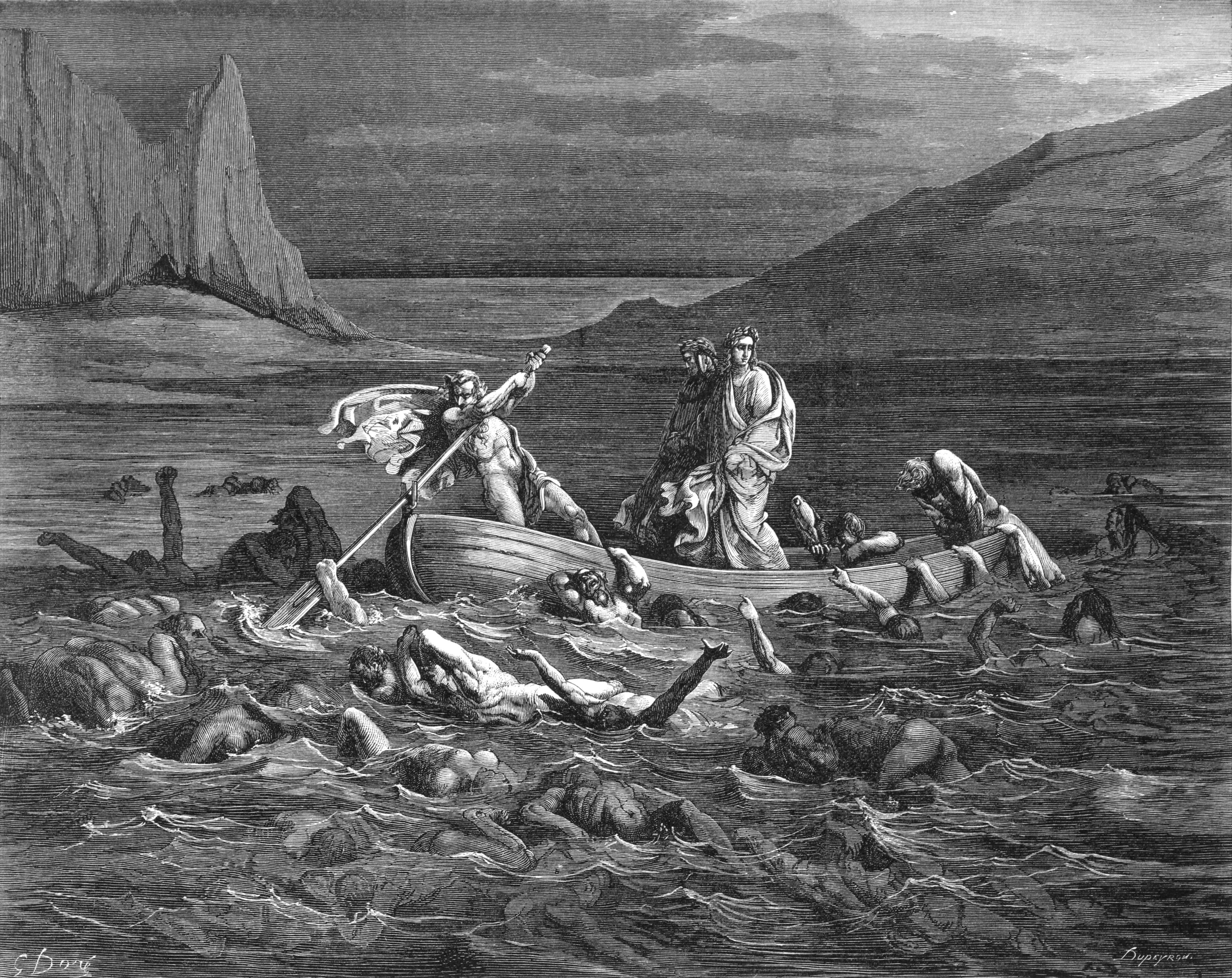
Crossing the Styx (Filippo Argenti)
Gustave Doré · 1861
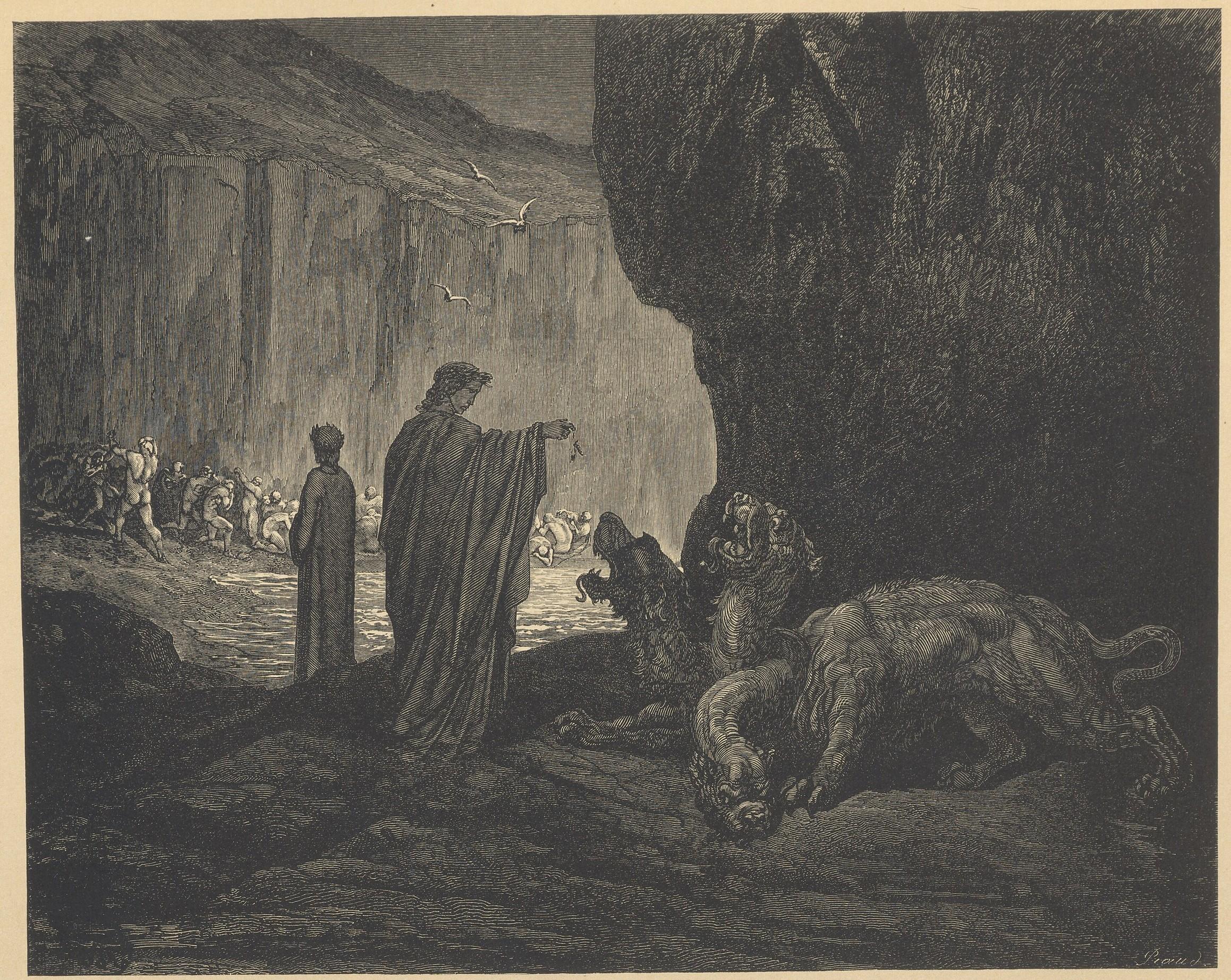
Cerberus
Gustave Doré · 1861
The Malebranche Demons
Gustave Doré · 1861