Death on the Pale Horse
Gustave Doré, 1866
Death on the Pale Horse is a wood engraving after Gustave Doré for his illustrated Bible of 1866 (La Grande Bible de Tours). It shows Revelation 6:8: a hooded Death with a scythe gallops a pale horse through a black sky, a swarm of demons behind him.
- Artist
- Gustave Doré
- Date
- 1866
- Medium
- Wood engraving
- Movement
- Romanticism
- Themes
- Death & Memento Mori, Religion & Saints, Angels & Demons, The Macabre, Literature & Poetry, Night & Dreams
Appears in
What you are looking at
The night is almost solid black. Out of it, from upper left to lower right, comes a single galloping horse, pale as bone, its head thrown down and its mane streaming forward like smoke. Two thin white jets, breath or foam, stream from its muzzle. Under the rider's robe, something like a snake winds across the animal's chest in place of a harness.
The rider is Death. Doré did not draw him as a skeleton. He is a gaunt, hooded man with a hollow face and a dark open mouth, turned to look back over his shoulder at what follows him. One bare foot hangs below the hem of his robe. In his hand, trailing low beside the horse's flank, is a long scythe, its blade the brightest white in the picture.
Behind him the sky is crowded. Bat-winged creatures, half-human figures and a beast with a gaping, roaring maw pour out of the clouds at upper left, some swinging blades of their own. They are cut so finely, in hair-thin grey lines against the black, that at first they read as weather. Only on a second look does the storm turn out to be an army.
Below, banks of cloud roll like surf under the horse's hooves. There is no ground in the picture at all, and no victims. Doré shows the ride, not the harvest.
The passage: Revelation 6:8
The plate illustrates the opening of the fourth seal in the Book of Revelation. In the King James Version: "And I looked, and behold a pale horse: and his name that sat on him was Death, and Hell followed with him. And power was given unto them over the fourth part of the earth, to kill with sword, and with hunger, and with death, and with the beasts of the earth."
The first three seals release riders on white, red and black horses. The fourth is the only one the text names. The Greek word translated "pale" is chlōros, the sickly green-grey of a corpse, which is why Doré's horse is engraved not as clean white but as a ghostly, streaked tone.
How Doré staged it
The text gives Death no weapon. The scythe comes from later European imagery of Death as the reaper, the same tradition behind countless danse macabre prints. Doré's choice makes the rider instantly legible to any nineteenth-century reader, even one who had never opened Revelation.
"Hell followed with him" is where Doré spent most of his invention. Revelation gives Hell no shape at all. He turned it into a swarm, and the roaring beast among them may be his nod to "the beasts of the earth" in the same verse. Earlier artists, from Albrecht Dürer's 1498 woodcut of the Four Horsemen to Benjamin West's vast Death on the Pale Horse (1817, Pennsylvania Academy of the Fine Arts), crowded all four riders together and trampled the living under their hooves. Doré isolates the one rider and empties the earth below, so the dread lies in what is about to happen.
His Death also looks back. It is a small but telling choice: he is not searching for victims ahead but checking on the host behind him, like a general leading a charge.
How it was made
Like every plate in the book, this is a wood engraving. Doré drew the design directly onto a block of end-grain boxwood, and a professional engraver cut it. His signature, "H. Pisan", is at lower right; Doré's own is at lower left. Héliodore Pisan was one of Doré's most trusted engravers and also cut many of the Dante plates.
The technique suits a night scene. Black areas are the uncut surface of the block, which takes the ink; every white or grey is a line gouged away. So the dark sky here is the default, and Pisan "drew" the horse, the robe and the scythe in white, line by parallel line. Look at the robe: its folds are made entirely of swelling and thinning white strokes, with no outline anywhere.
Publication
The plate belongs to Doré's illustrated Bible, La Sainte Bible selon la Vulgate, published by Alfred Mame et Fils in Tours in 1866 and known as La Grande Bible de Tours. It comes near the end of the sequence of some 240 full-page engravings, among the handful Doré gave to Revelation. An English edition using the King James text was issued in London by Cassell, Petter & Galpin from the same year, and the images were copied in Bibles and picture books around the world. The scan shown here comes from a twentieth-century Swedish printing.
You can follow the whole Bible cycle in the Doré Bible, which opens with plates such as The Deluge and The Death of Abel.
Meaning
The Revelation riders are usually read as a chain of disasters: conquest, war, famine and then death in every form. Doré's plate concentrates on the last link. It has none of the Last Judgment's sorting of saved and damned; Death here is simply sent out, and nothing in the picture can stop him.
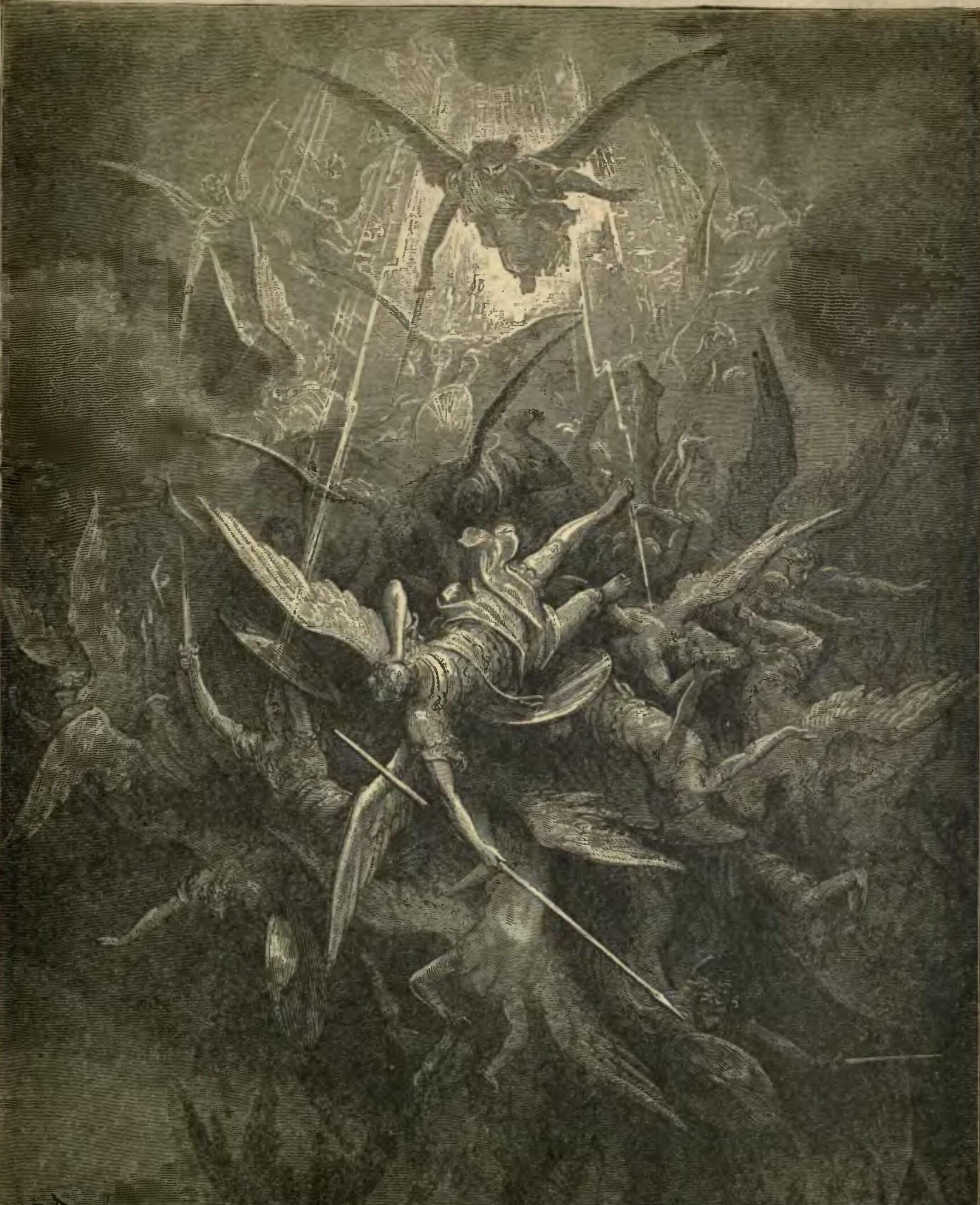
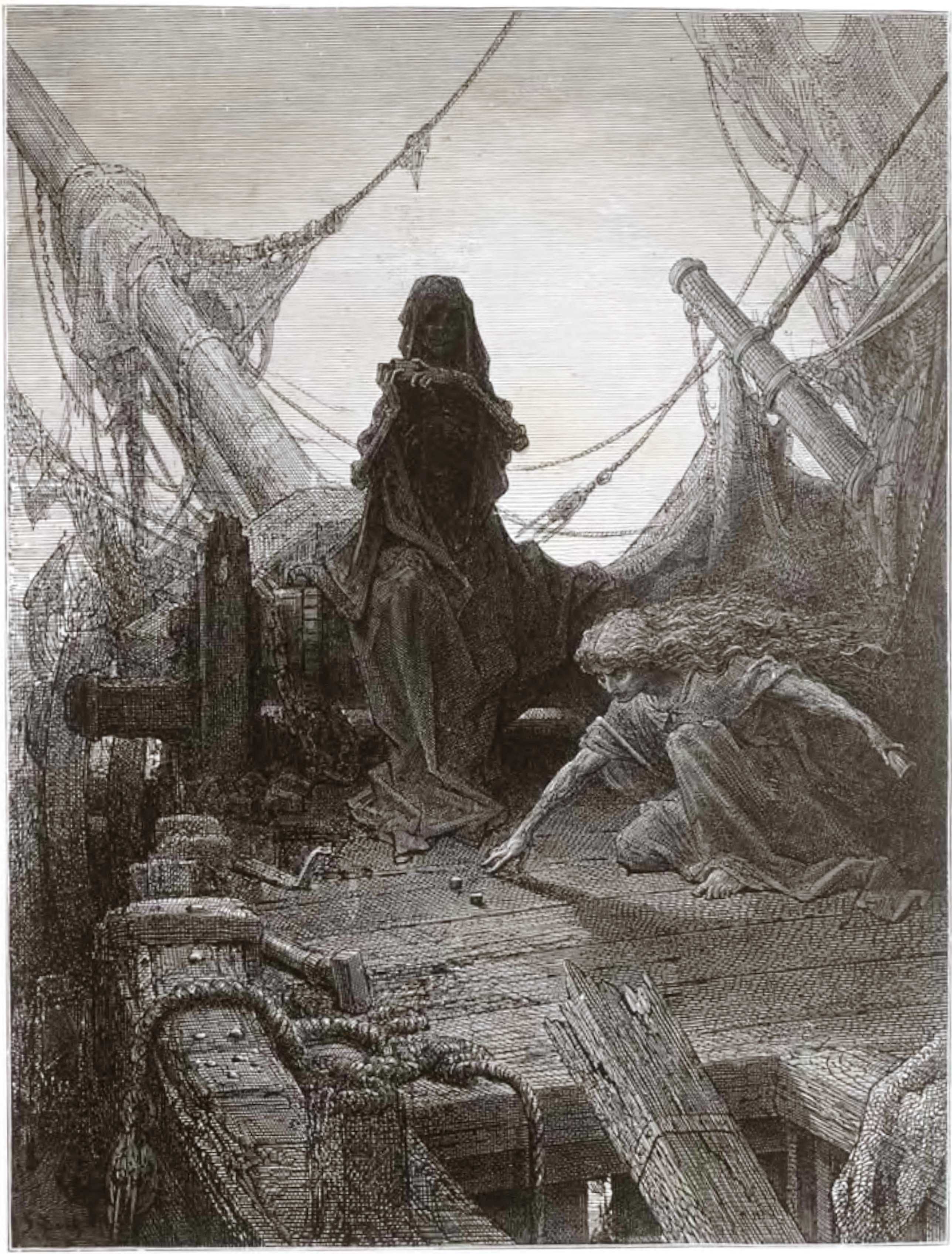
That restraint is what makes the image so durable. The hooded, hollow-faced rider with a scythe became one of the stock pictures of the apocalypse in the century after Doré. Within his own work it has a close cousin in Death and Life-in-Death from The Rime of the Ancient Mariner, another ghostly figure moving across a black sky, and the demon swarm recalls his rebel angels in Satan Cast Out of Heaven.
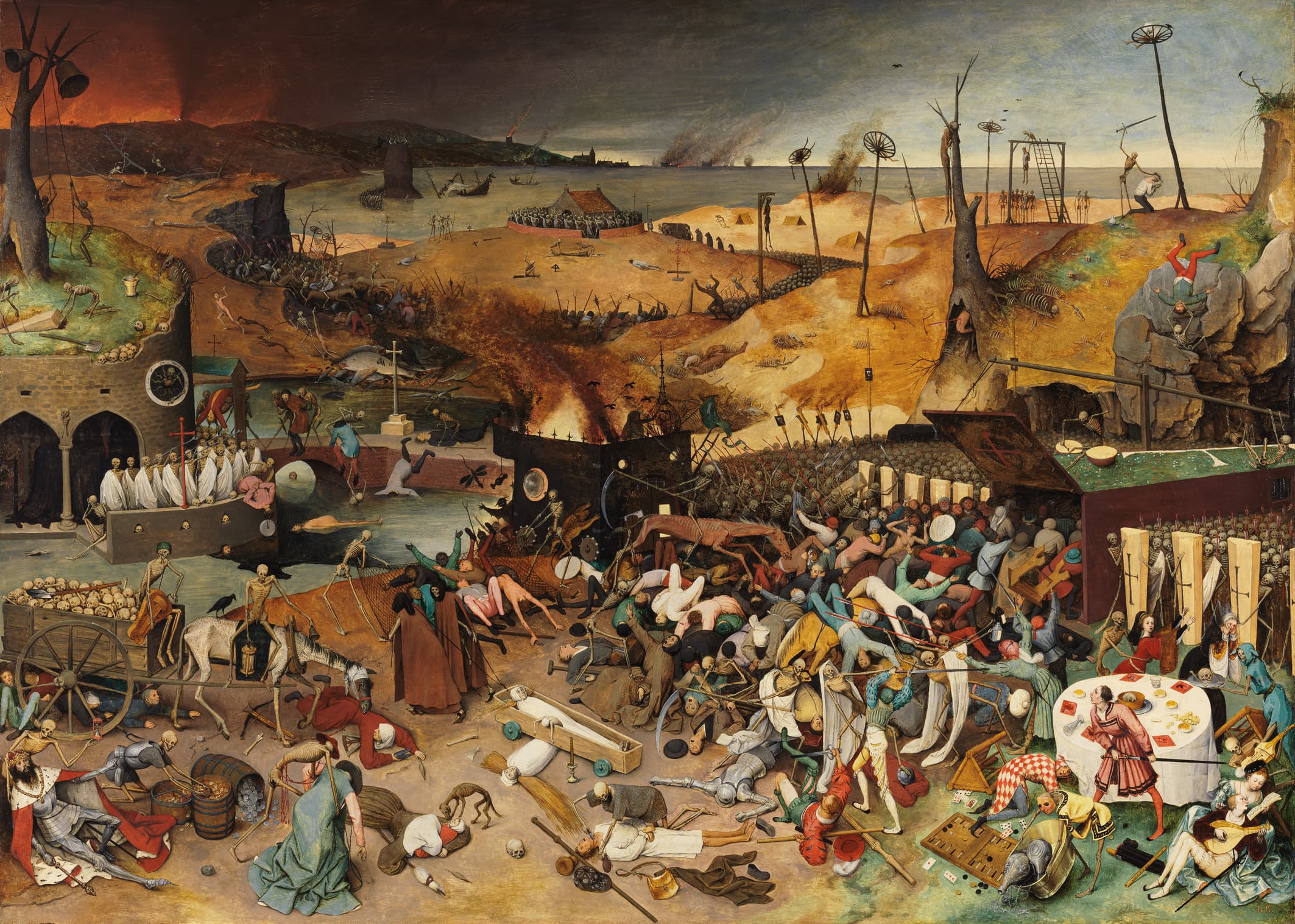
For the older, crowded version of the theme, compare Pieter Bruegel's The Triumph of Death, where a skeleton army sweeps the living off the land. More of the imagery is gathered in Death in Art, and more of the artist's work on the Gustave Doré page.
Questions & answers
What Bible verse does Doré's Death on the Pale Horse illustrate?
Revelation 6:8, the opening of the fourth seal. In the King James Version: "And I looked, and behold a pale horse: and his name that sat on him was Death, and Hell followed with him." Doré shows Death as the rider and turns "Hell" into a swarm of winged demons and beasts pouring out of the clouds behind him.
When was Death on the Pale Horse made?
Doré designed it for his illustrated Bible, published by Mame in Tours in 1866 as La Sainte Bible selon la Vulgate, known as La Grande Bible de Tours. Cassell, Petter & Galpin issued the English edition with the King James text in London. Some reproductions date the design 1865, while Doré was still drawing the cycle.
Who engraved Death on the Pale Horse?
Doré drew the design on a woodblock and the professional wood engraver Héliodore Pisan cut it; his signature, "H. Pisan", is at lower right and Doré's at lower left. Pisan worked from the drawing, cutting away the white lines so that the uncut black wood printed the dark night sky.
Why does Death carry a scythe in Doré's engraving?
Revelation gives Death no weapon. The scythe comes from the late medieval image of Death as the Grim Reaper, harvesting souls like grain, familiar from danse macabre prints. Doré borrowed it so readers would recognize the rider at once, and made the blade the brightest white in the whole plate.
What does the Pale Horse plate mean?
The four horsemen of Revelation are usually read as conquest, war, famine and death. Doré isolates the last and most total of them. By emptying the ground below and filling the sky behind with demons, he makes the plate about the moment before catastrophe, an unstoppable force released on the world.
More by Gustave Doré
All works →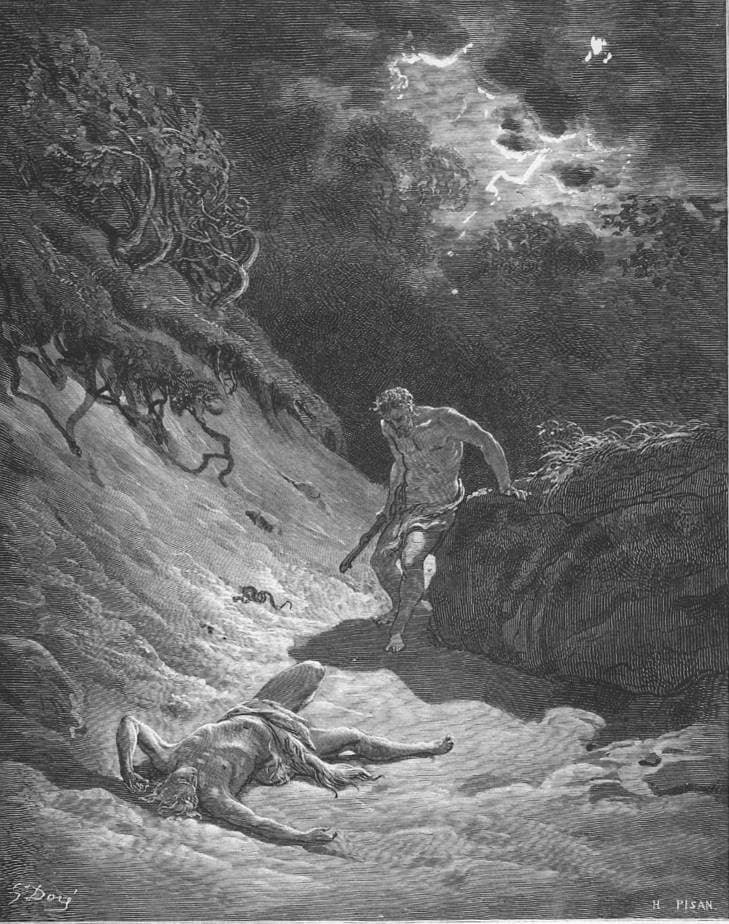
The Death of Abel
Gustave Doré · 1866
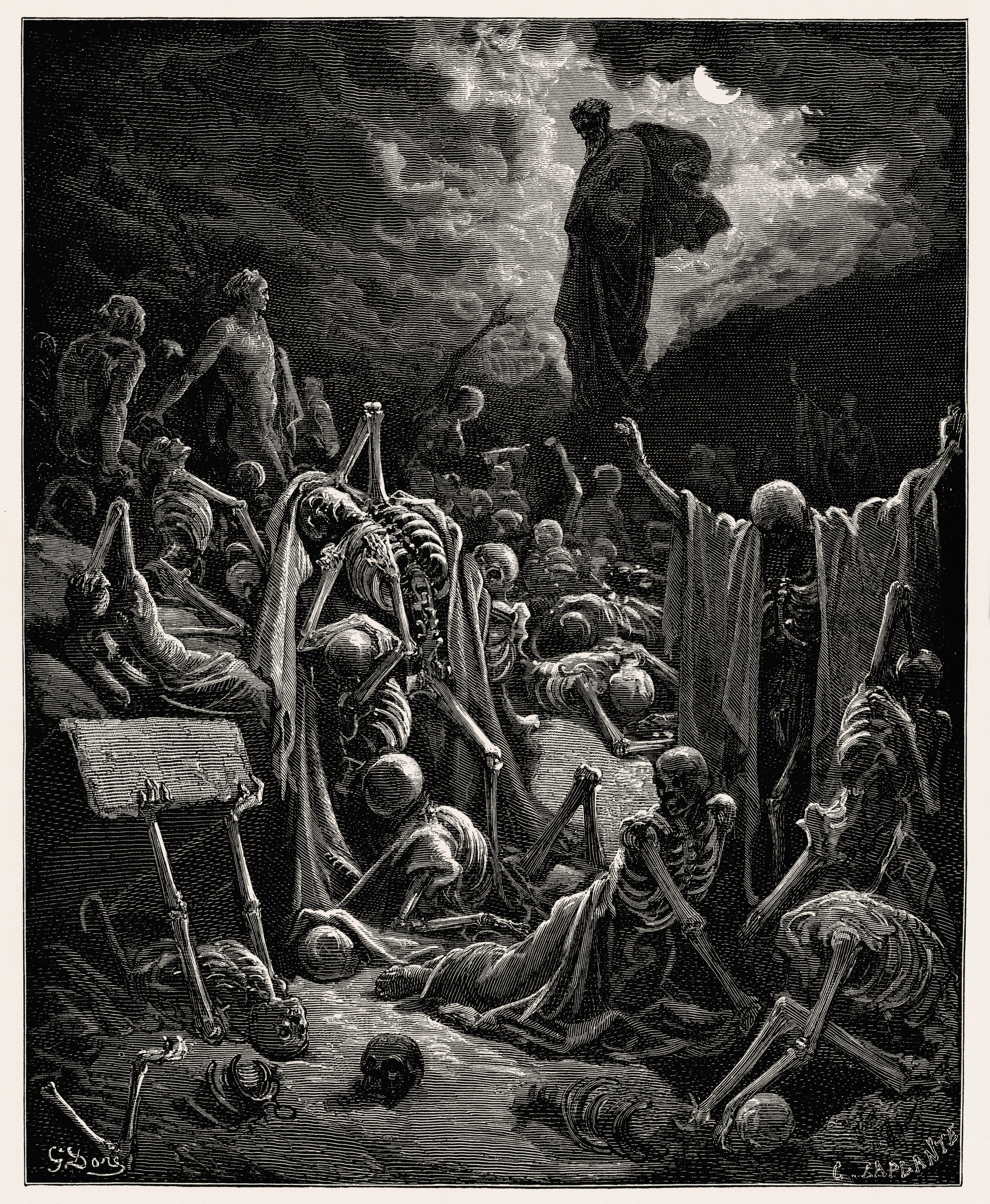
The Vision of the Valley of Dry Bones
Gustave Doré · 1866
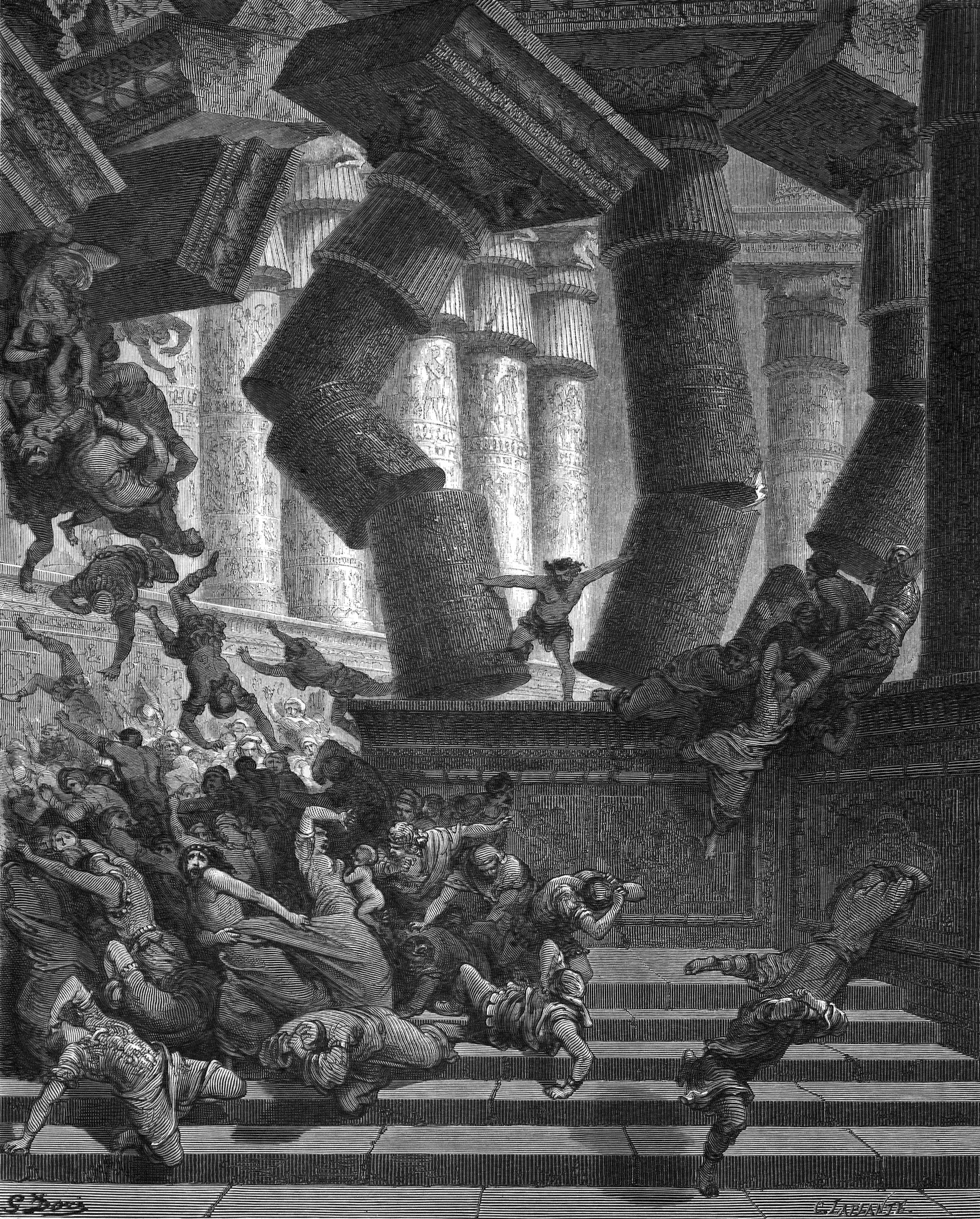
Samson Destroying the Temple
Gustave Doré · 1866
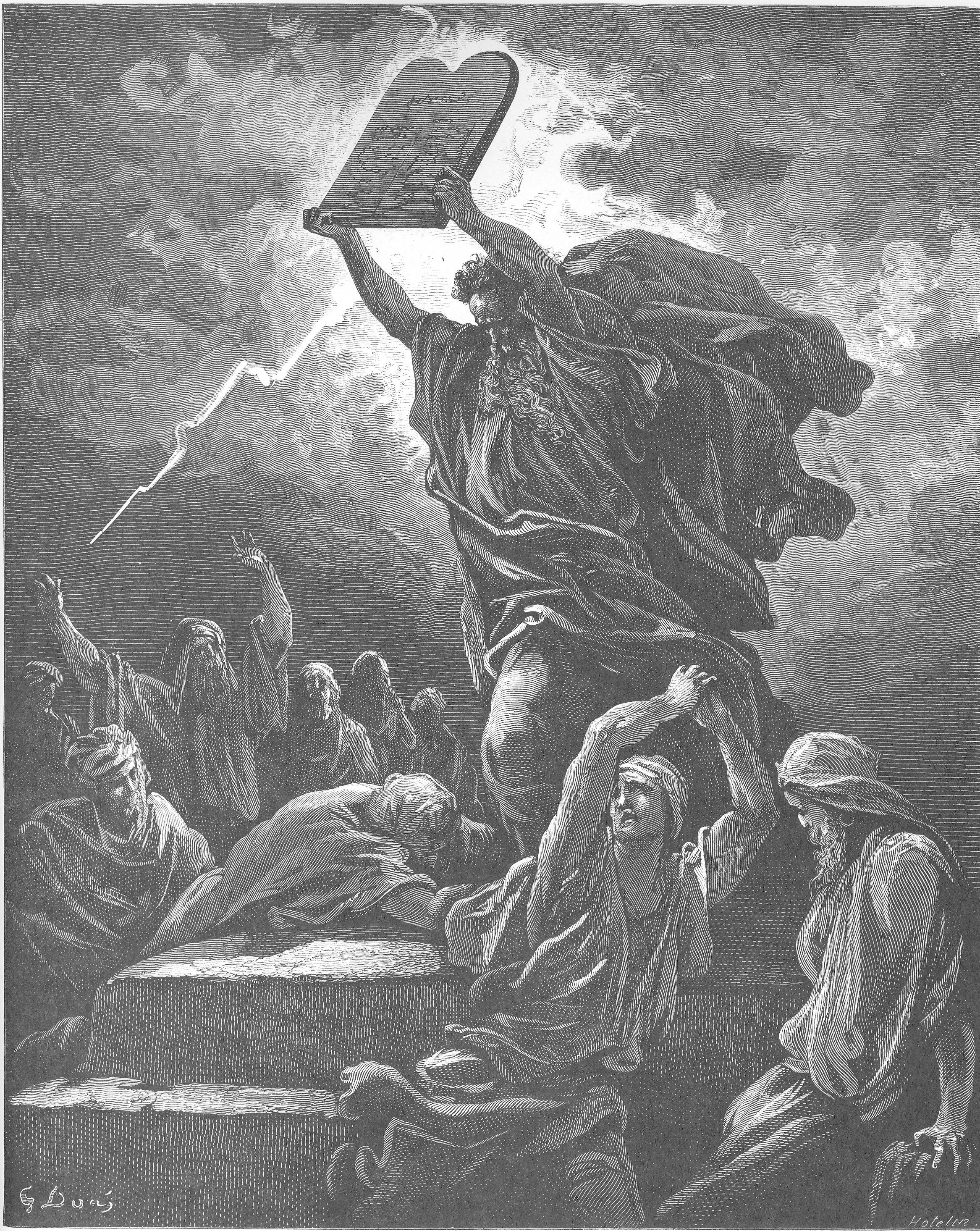
Moses Breaking the Tables of the Law
Gustave Doré · 1866
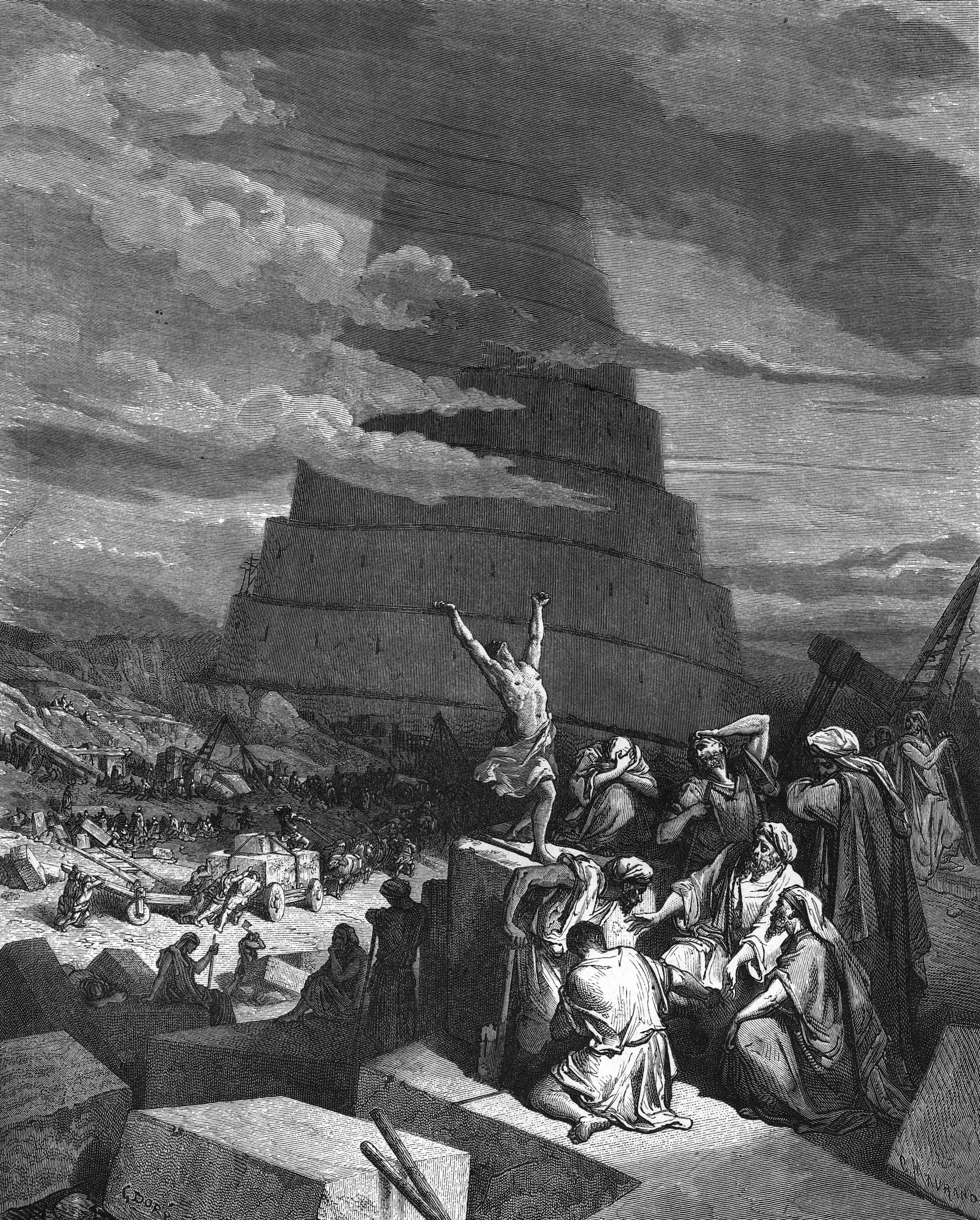
The Confusion of Tongues
Gustave Doré · 1866
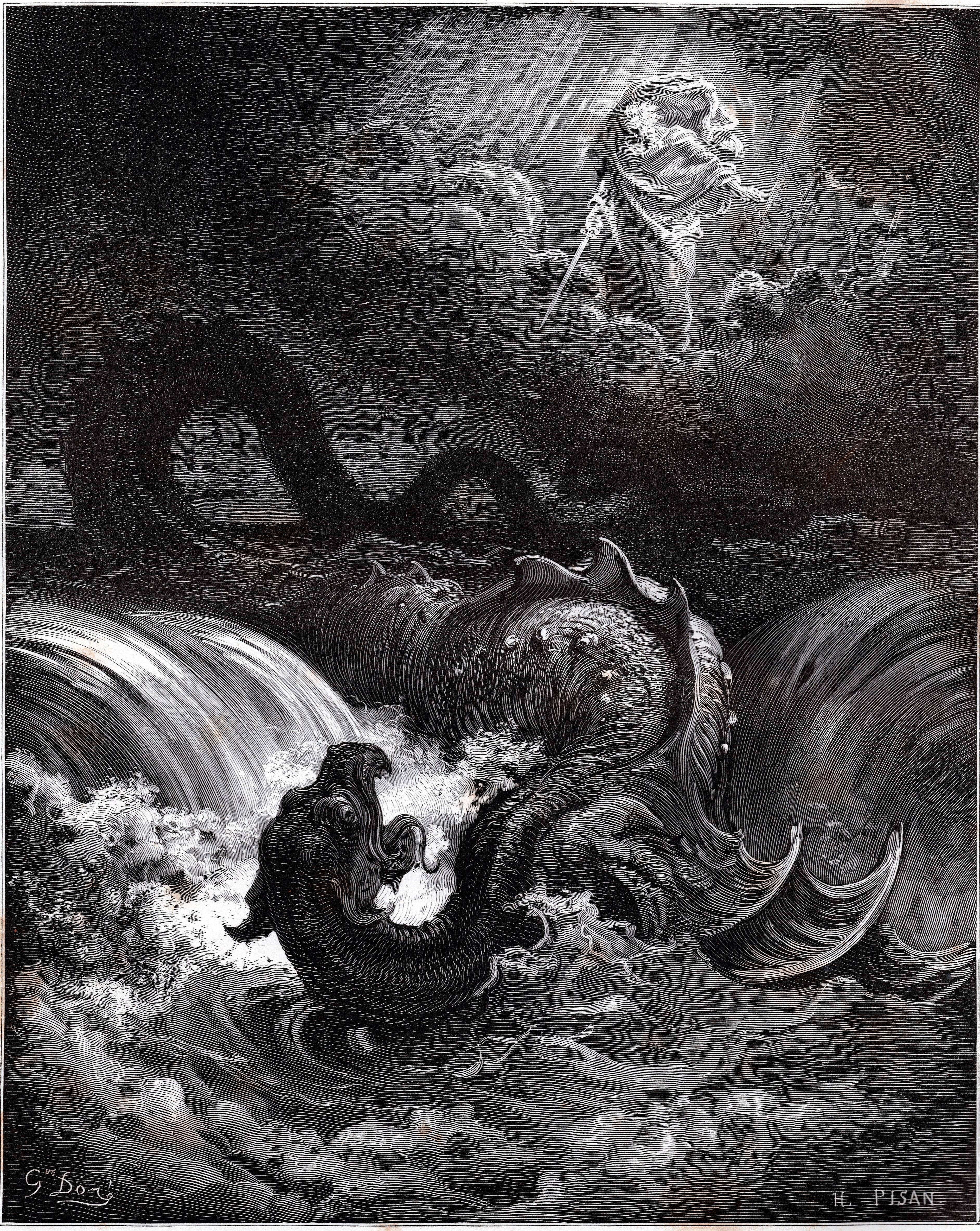
The Destruction of Leviathan
Gustave Doré · 1866
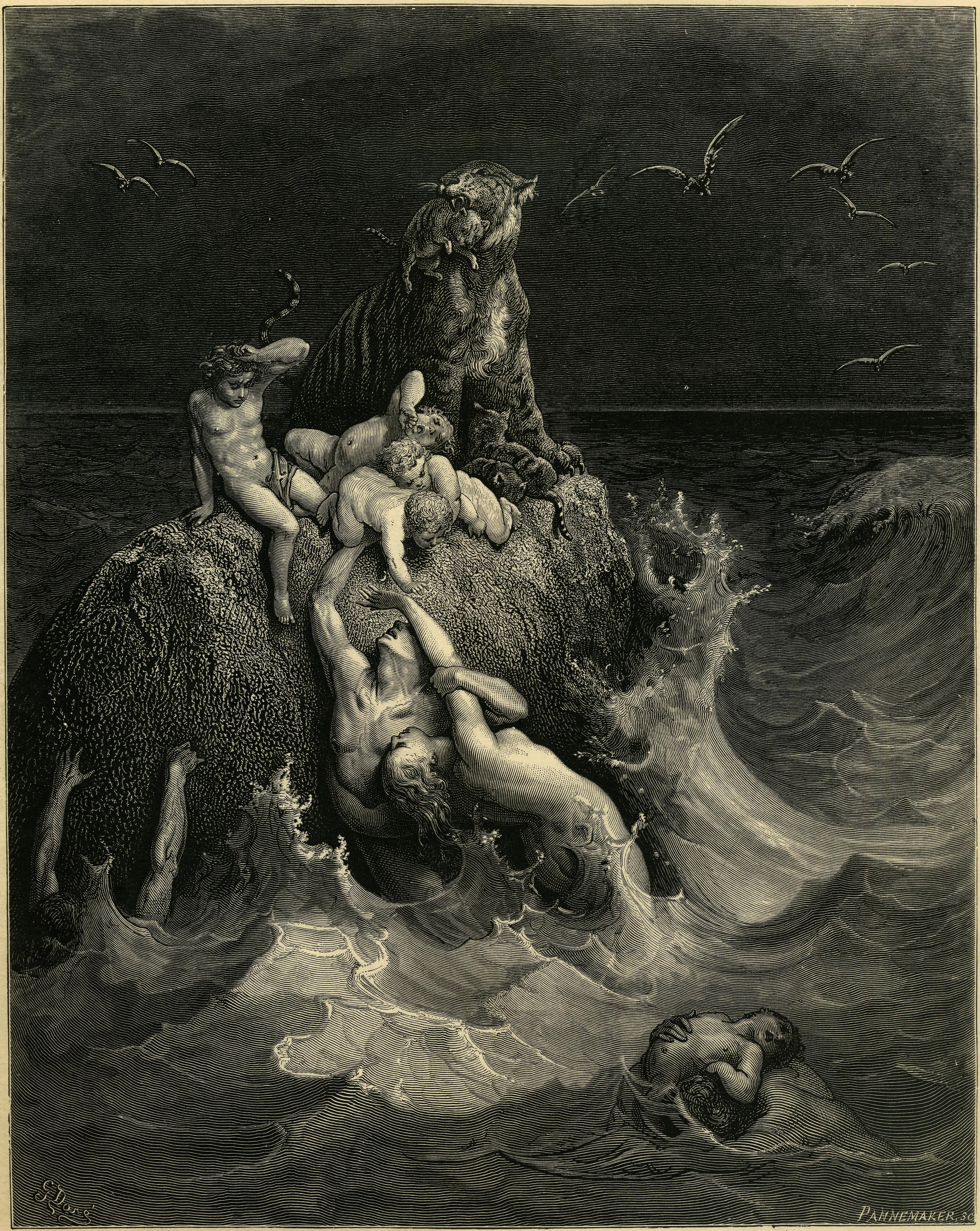
The Deluge
Gustave Doré · 1866
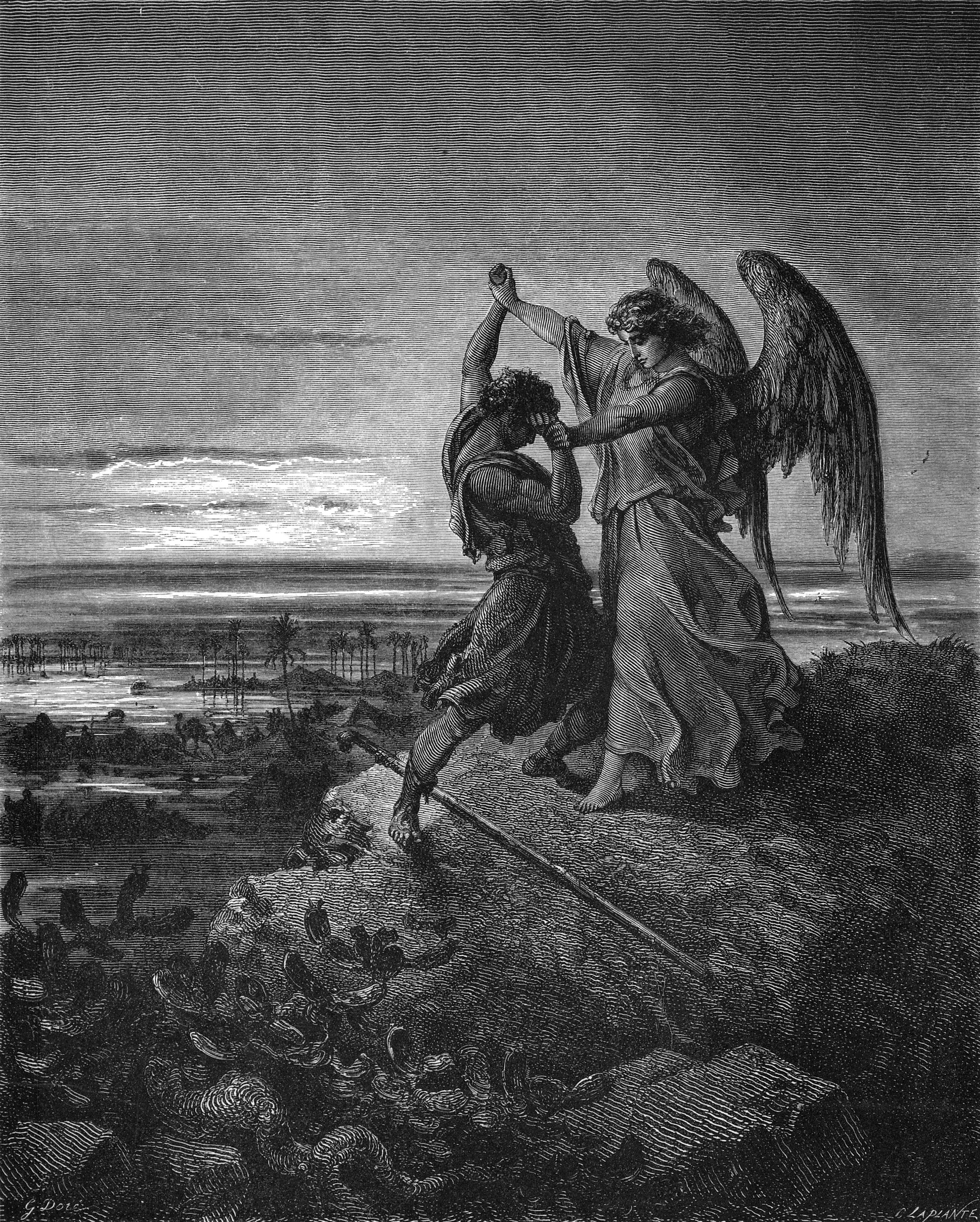
Jacob Wrestling with the Angel
Gustave Doré · 1866
Also from 1866
Adam and Eve Expelled from Paradise
Gustave Doré · 1866
The War in Heaven
Gustave Doré · 1866
Satan Approaching the Confines of the Earth
Gustave Doré · 1866
Satan’s Flight Through Chaos
Gustave Doré · 1866
Satan, Sin and Death at the Gates of Hell
Gustave Doré · 1866
Satan in Council
Gustave Doré · 1866
Satan Cast Out of Heaven
Gustave Doré · 1866
Related works
Death and Life-in-Death
Gustave Doré · 1876
Satan Cast Out of Heaven
Gustave Doré · 1866
The Triumph of Death
Pieter Bruegel the Elder · c. 1562
Witches' Sabbath (The Great He-Goat)
Francisco Goya · c. 1819–1823
Lucifer, King of Hell
Gustave Doré · 1861
Nevermore (The Raven's Shadow)
Gustave Doré · 1884
Satan, Sin and Death at the Gates of Hell
Gustave Doré · 1866
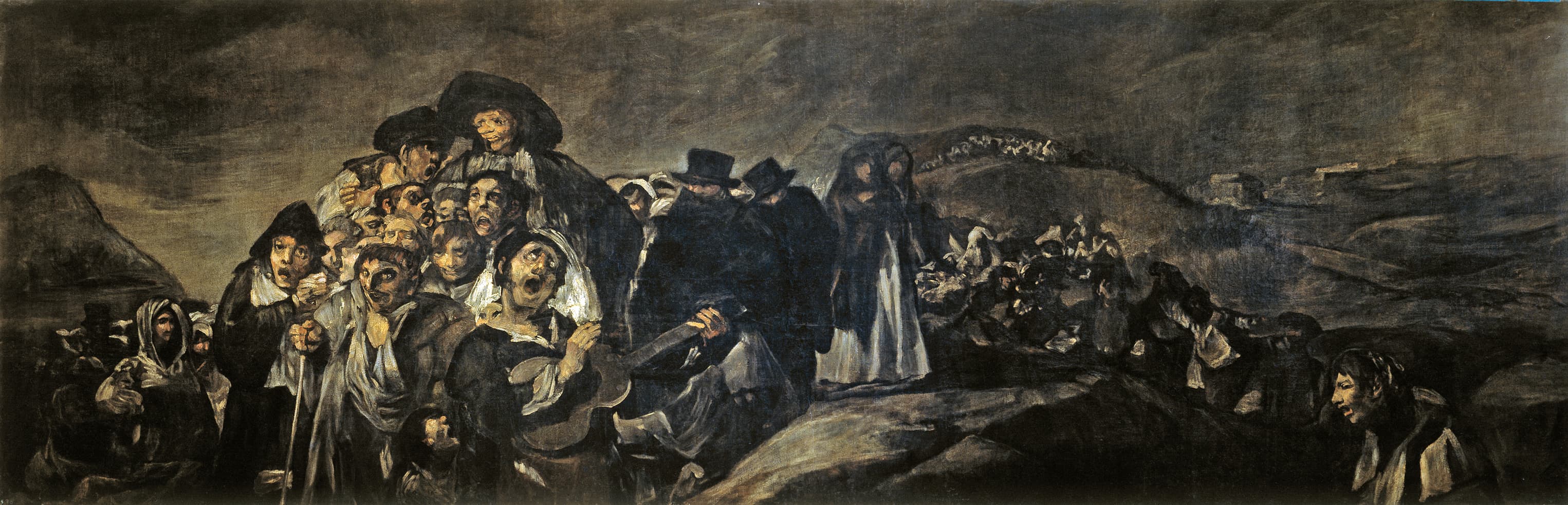
A Pilgrimage to San Isidro
Francisco Goya · c. 1819–1823