Academic art (Beaux-Arts)
Perseus and the Gorgon
Laurent Marqueste, 1875–1903 (series); marbles 1890 and 1903
Perseus and the Gorgon is a marble group by the French sculptor Laurent Marqueste showing the hero about to behead Medusa. Marqueste reworked it from 1875 to 1903; marble versions are in the Musée des Beaux-Arts de Lyon (1890) and the Ny Carlsberg Glyptotek, Copenhagen (1903).
- Artist
- Laurent Marqueste
- Date
- 1875–1903 (series); marbles 1890 and 1903
- Medium
- Marble (versions also in plaster and bronze)
- Collection
- Musée des Beaux-Arts de Lyon (1890 marble); Ny Carlsberg Glyptotek (1903 marble), Lyon / Copenhagen, France / Denmark
- Movement
- Academic art (Beaux-Arts)
What you are looking at
Perseus straddles the fallen Gorgon, one foot planted on the rock and the other knee bent over her back. His left hand has twisted into her hair, the snakes writhing between his fingers; his right hand draws back a curved sword, the harpe, for the stroke that will sever her head. He wears only a winged helmet and a length of cloth falling from his hip. Medusa lies sprawled face down, one arm thrown out to brace herself, small wings sprouting from her shoulders. Her face, turned against the base, is twisted in a scream.
Marqueste freezes the fight a split second before its end. The composition is a spiral: the eye climbs from Medusa's outflung foot along her body, up Perseus's bent leg and torso, and out along the blade. Under raking light, as in this photograph, the polished marble of the two bodies reads as two different materials, the taut hero and the slack, heavy monster.
How the group was made
Marqueste, a Prix de Rome winner trained under François Jouffroy and Alexandre Falguière, first modeled the group in plaster in 1875. A bronze was cast in 1877, but the process damaged the original plaster, so he made a second plaster in 1887 (now in the Musée des Augustins, Toulouse). The French state bought a marble version in 1890; after decades in storage it was shown at the Musée d'Orsay and has been in the Musée des Beaux-Arts de Lyon since 1999. A second marble, finished in 1903, went to the Ny Carlsberg Glyptotek in Copenhagen.
The versions differ mostly in how much drapery Perseus wears. The 1887 plaster shows him fully nude; the 1890 marble adds a flowing cloth; the 1903 marble keeps the cloth but raises it. Like most French sculptors of his generation, Marqueste would have relied on specialist carvers to transfer his model into stone.
The story and its meaning
In Ovid's Metamorphoses, Perseus approaches Medusa using a polished shield as a mirror, since her gaze turns onlookers to stone, and kills her as she sleeps. Marqueste chooses a wrestling match instead, closer to the drama of Baroque sculpture than to the myth's stealth. The precedent every viewer would have had in mind is Benvenuto Cellini's bronze Perseus in Florence, which shows the aftermath, the head held high. Marqueste shows the struggle.
Read in the context of the 1880s Salon, the group is a display piece: a heroic male nude, a female nude in distress, and a virtuoso surface. For a quieter Gorgon, compare Caravaggio's Medusa or the enthroned figure in Medusa On Her Throne.
Where to see it
The 1890 marble is in the former chapel of the Musée des Beaux-Arts de Lyon, and the 1903 marble is in the Ny Carlsberg Glyptotek, Copenhagen. Which of the two appears in this photograph has not been confirmed. For more classical subjects in stone, see Greek mythology in art.
Questions & answers
Where is Perseus and the Gorgon by Marqueste?
Two marble versions survive. The 1890 marble, bought by the French state, is in the Musée des Beaux-Arts de Lyon. A second marble, completed in 1903, is in the Ny Carlsberg Glyptotek in Copenhagen. A plaster of 1887 is in the Musée des Augustins in Toulouse, Marqueste's home city.
How many versions of Perseus and the Gorgon did Marqueste make?
Five, made between 1875 and 1903: a first plaster model (1875), a bronze cast from it (1877), a replacement plaster (1887), and two marbles (1890 and 1903). The versions differ mainly in Perseus's drapery, which is absent in the 1887 plaster and added in the marbles.
What moment does the sculpture show?
It shows Perseus pinning Medusa to the ground by her snake-hair and drawing back his curved sword for the killing blow. Ancient accounts have him strike while she sleeps, using a mirrored shield to avoid her gaze; Marqueste turns the scene into a violent struggle instead.
Kindred works
You may also study
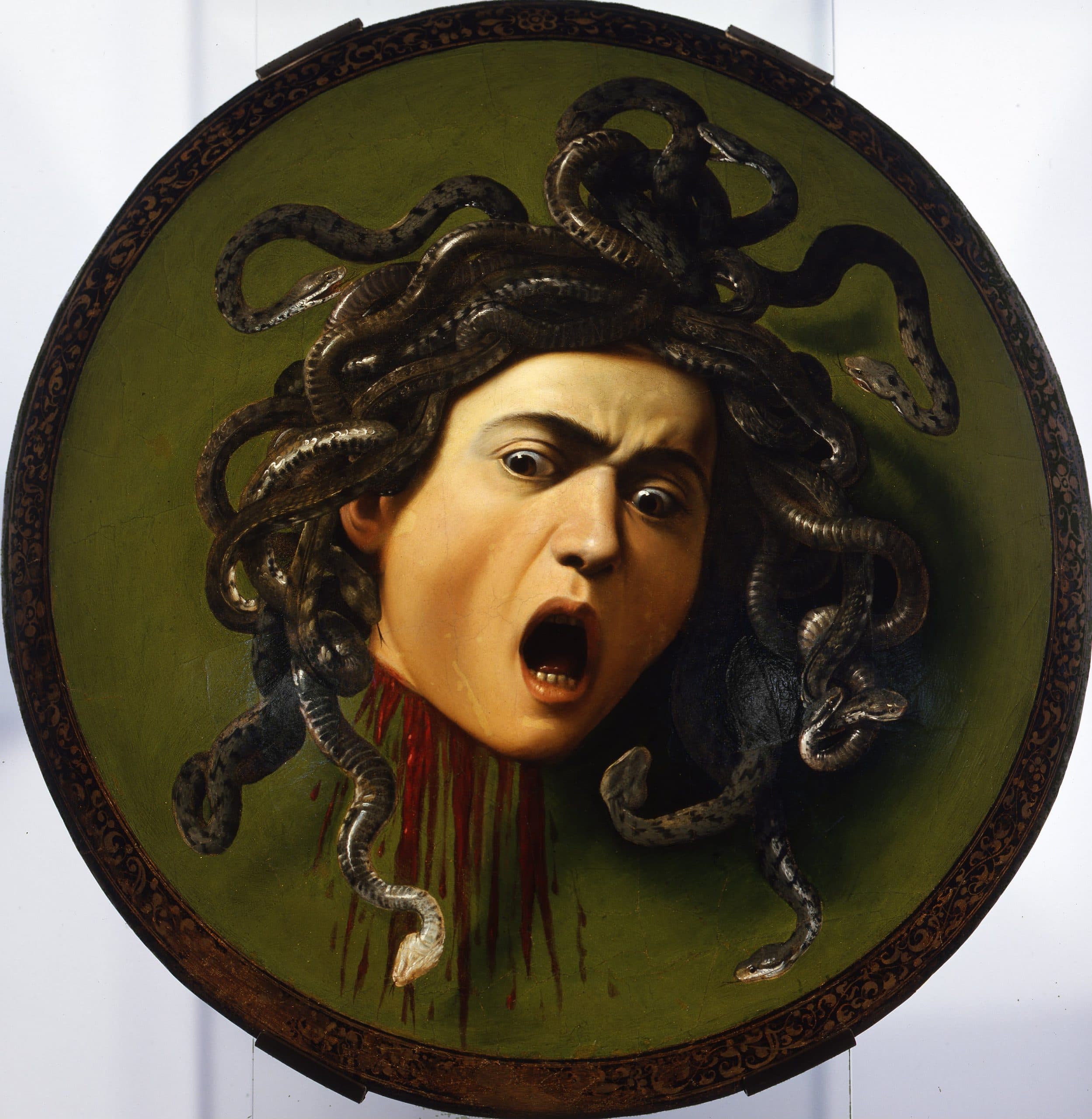
Medusa
Caravaggio · c. 1597–98
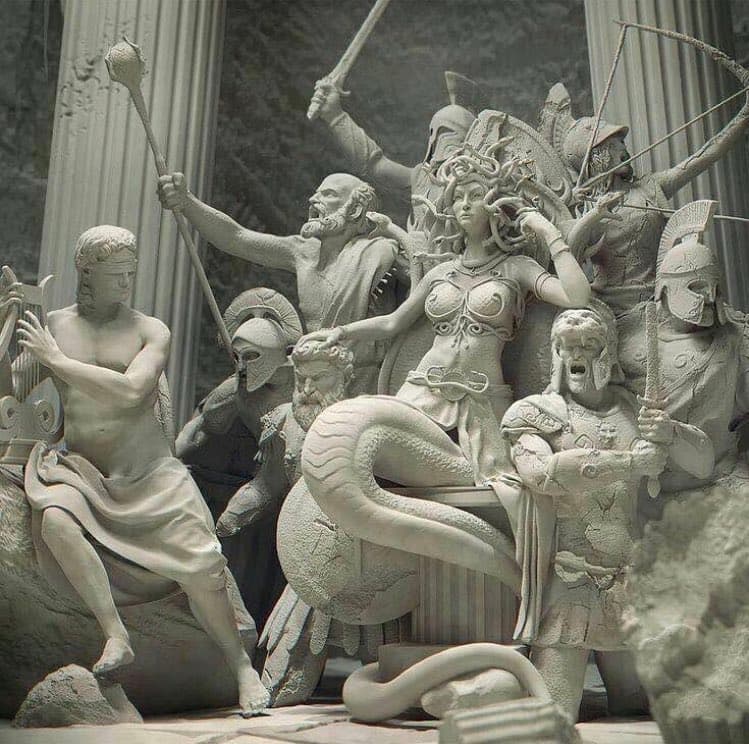
Medusa on Her Throne
Reza Sedghi · 2021
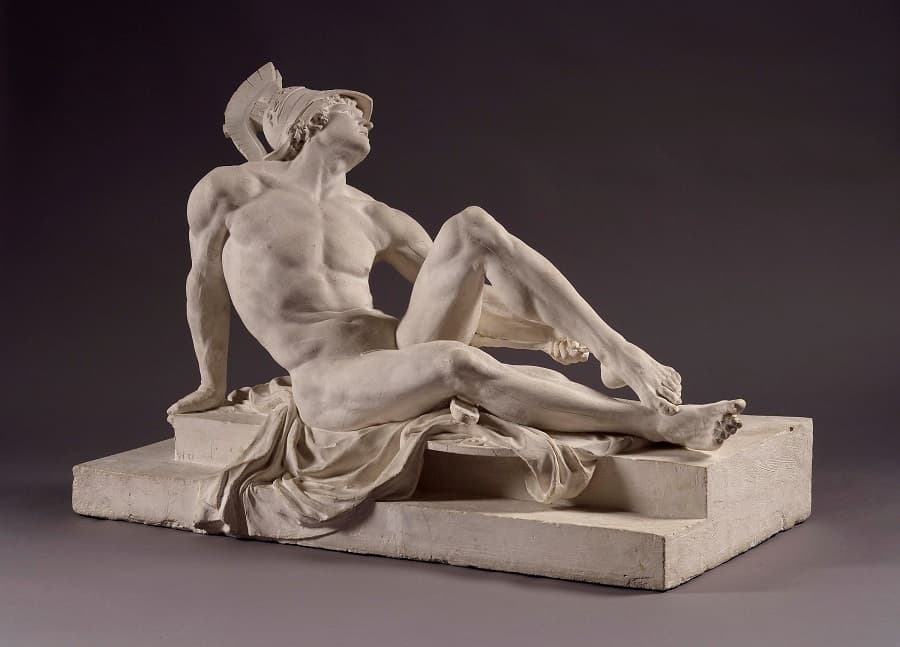
Dying Achilles
Jean-Baptiste Giraud · c. 1788–89

Venus de Milo
Alexandros of Antioch · c. 150–125 BC

Nymphs Dancing to Pan's Flute
Joseph Tomanek

The Scream
Edvard Munch · 1893
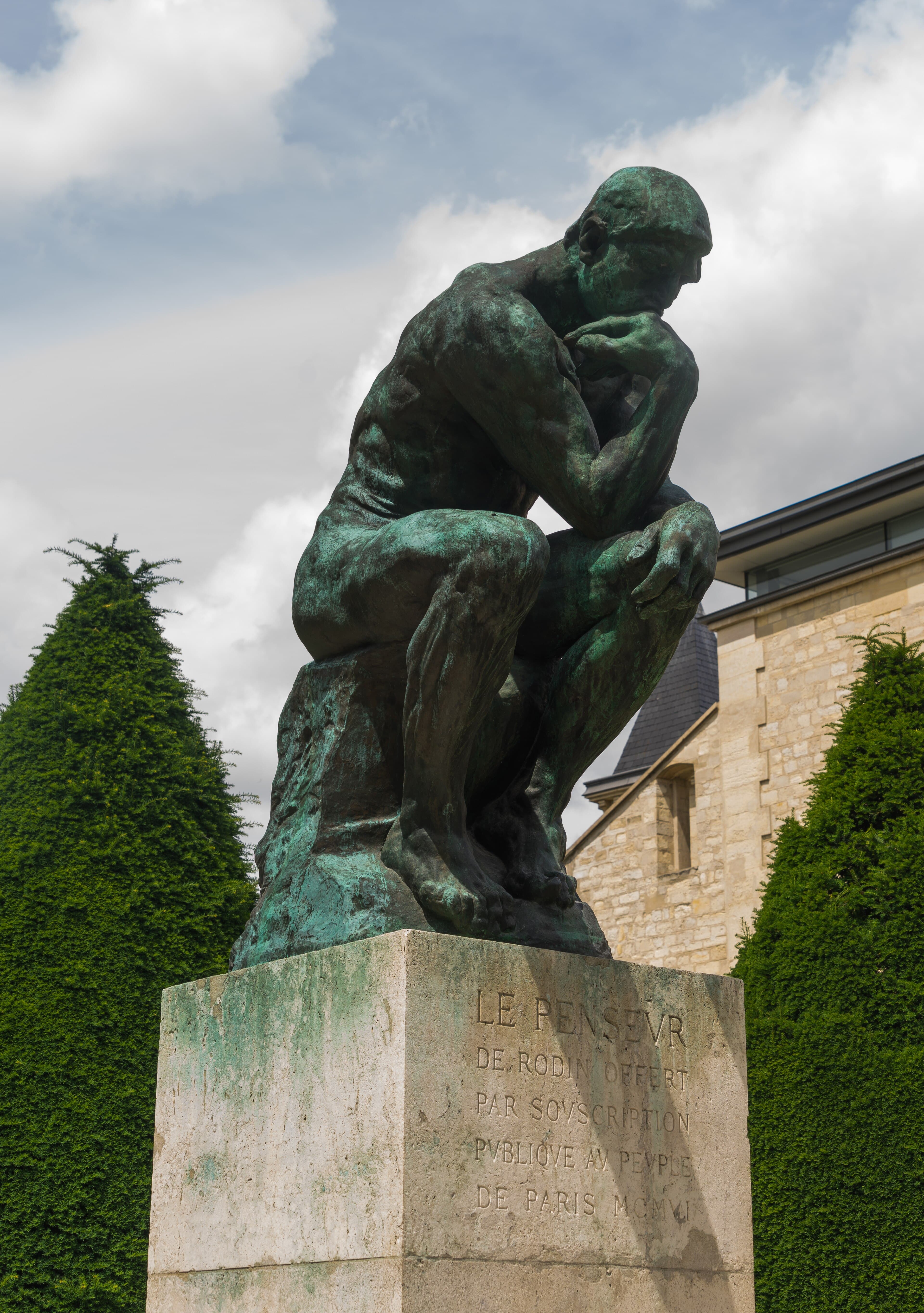
The Thinker
Auguste Rodin · Modeled 1880–82; enlarged 1902–03; this cast 1904

Saturn Devouring His Son
Francisco Goya · c. 1819–1823