The Deluge
Gustave Doré, 1866
The Deluge is a wood engraving after Gustave Doré for his 1866 illustrated Bible (La Grande Bible de Tours). As Noah's Flood rises, people and a tigress with her cubs crowd onto the last rock above the sea, each trying to lift their young to safety.
- Artist
- Gustave Doré
- Date
- 1866
- Medium
- Wood engraving
- Movement
- Romanticism
- Themes
- Religion & Saints, Water & Sea, Death & Memento Mori, Literature & Poetry, The Macabre
What you are looking at
A single rock breaks the surface of a dark, endless sea. It is the last piece of dry land in the picture, and everything still alive has crowded onto it. At the top sits a tigress, her body striped in long ridges of engraved line, holding one cub in her jaws. More cubs huddle against her forepaws. She looks up and out, not down.
Just below her, four human children cling to the stone. One sits apart at left, a hand pressed to his head; three lie heaped together, one of them leaning far over the edge. Beneath them a man hangs from the rock face, half out of the water, straining one arm up toward the children. A long-haired woman clings to his body, and the sea is already pulling at them both.
Breakers climb the rock at right, their crests cut in sharp white flecks. At left two arms rise from the water where someone has gone under. In the lower right corner a small child lies across a floating body, a mother's perhaps, the drowned hair spreading on the swell. Overhead, gulls wheel in the black sky, the only creatures in the picture with nowhere they need to climb.
There is no ark. Noah, the hero of the story, is nowhere to be seen.
The passage: Genesis 7
The plate illustrates the Flood of Genesis 6 to 8, when God sends forty days of rain to destroy a corrupted world and saves only Noah, his family and the animals in the ark. The King James text describes the waters rising over everything: "And the waters prevailed exceedingly upon the earth; and all the high hills, that were under the whole heaven, were covered" (Genesis 7:19). Two verses later comes the sentence Doré is really illustrating: "All in whose nostrils was the breath of life, of all that was in the dry land, died" (Genesis 7:22).
Bible editions caption the plate at different verses. Its subject is not a single line but the condition the chapter describes: the last high ground going under.
How Doré staged it
Doré's choice was to tell the Flood from the point of view of those left outside. He gave the episode more than one plate. In The World Destroyed by Water, crowds of bodies swarm up rocks and trees alongside serpents and beasts, while the ark is a faint shape on the horizon. The Deluge narrows that panorama to a single rock and a handful of figures.
The composition is a pyramid with a tiger at its apex. That placement carries the plate's argument. Human and animal parents do exactly the same thing here: they push their young as high as they can go. The tigress lifting her cub and the father reaching toward the children are mirror images, and neither effort will be enough.
The gulls are a quieter touch. Genesis says the fowl of the air perished too, but for now the birds circle above it all, waiting.
The style owes a debt to the Romantic disaster painting of the generation before Doré, above all Théodore Géricault's The Raft of the Medusa (1818–19), with its pyramid of bodies straining upward on a wreck at sea.
How it was made
This is a wood engraving. Doré drew the design straight onto a boxwood block, and a specialist cut it; the signature at lower right reads "Pannemaker sc." (sculpsit, "cut it"), and Doré's own "G. Doré" is at lower left. The Pannemaker family of engravers cut a great many Doré blocks.
Look at how much of the image is made of parallel line alone. The sea at the bottom is a field of rippling horizontal strokes, swelling and thinning to model each wave. The rock is the opposite: a dense crust of tiny broken marks, so it reads as rough and porous next to the smooth flesh of the figures. The children's bodies are lit by white line, as if a light from somewhere outside the storm falls on them.
Publication
The engraving belongs to Doré's illustrated Bible, published in Tours by Alfred Mame et Fils in 1866 as La Sainte Bible selon la Vulgate and known as La Grande Bible de Tours. Cassell, Petter & Galpin issued the English edition, with the King James text, in London. Cassell chose The Deluge as the frontispiece of its edition, and the scan shown here, captioned "The Deluge" beneath the block, is Plate I of one of those English printings.
It is one of the most reproduced plates in the book, and one of the most frequently copied images of the Flood. Within the Bible cycle it follows The Death of Abel and is followed soon after by The Confusion of Tongues. The full sequence is gathered in the Doré Bible.
Meaning
Read as theology, the Flood is a story of judgment and of the righteous few who are saved. Doré's plate quietly sets that reading aside. Every figure here is guilty by the logic of the text, and yet the scene he chose is made almost entirely of children, mothers and cubs. Doré's biographer Joanna Richardson saw his Old Testament as a book of the God of wrath softened by Victorian sentiment, and this plate holds both at once: the judgment is total, and the picture asks you to look at the children it falls on.
Doré returned to the theme of a lone human facing an overwhelming sea in The Ship in the Ice from The Rime of the Ancient Mariner, and to the Bible's wrath in Death on the Pale Horse. More of his work is on the Gustave Doré page.
Questions & answers
What does Doré's The Deluge show?
It shows Noah's Flood from Genesis 7 from the point of view of those outside the ark. On the last rock above the water, a tigress holds a cub in her jaws, four children cling below her, and a man and woman are dragged by the waves as he reaches toward the children. There is no ark in sight.
Which Bible verse does The Deluge illustrate?
It illustrates the rising of the Flood in Genesis 7. The King James text reads: "And the waters prevailed exceedingly upon the earth; and all the high hills, that were under the whole heaven, were covered" (7:19), and soon after, "All in whose nostrils was the breath of life... died" (7:22).
When was Doré's The Deluge published?
In 1866, in Doré's illustrated Bible published by Mame in Tours, known as La Grande Bible de Tours. Cassell, Petter & Galpin published the English edition with the King James text in London and used The Deluge as its frontispiece, Plate I. Doré turned thirty-four the year it appeared.
Who engraved The Deluge?
Doré drew the design directly on a boxwood block, and an engraver of the Pannemaker family cut it; the block is signed "Pannemaker sc." at lower right, with Doré's signature at lower left. The engraver's job was to translate Doré's washes and pencil into thousands of cut white lines.
Why is there a tiger in The Deluge?
Doré set a tigress at the top of the rock to mirror the humans below. She lifts a cub in her jaws just as the father reaches up toward the children, so animal and human parents make the same doomed effort. The image turns the Flood into a scene of shared, futile protection.
More by Gustave Doré
All works →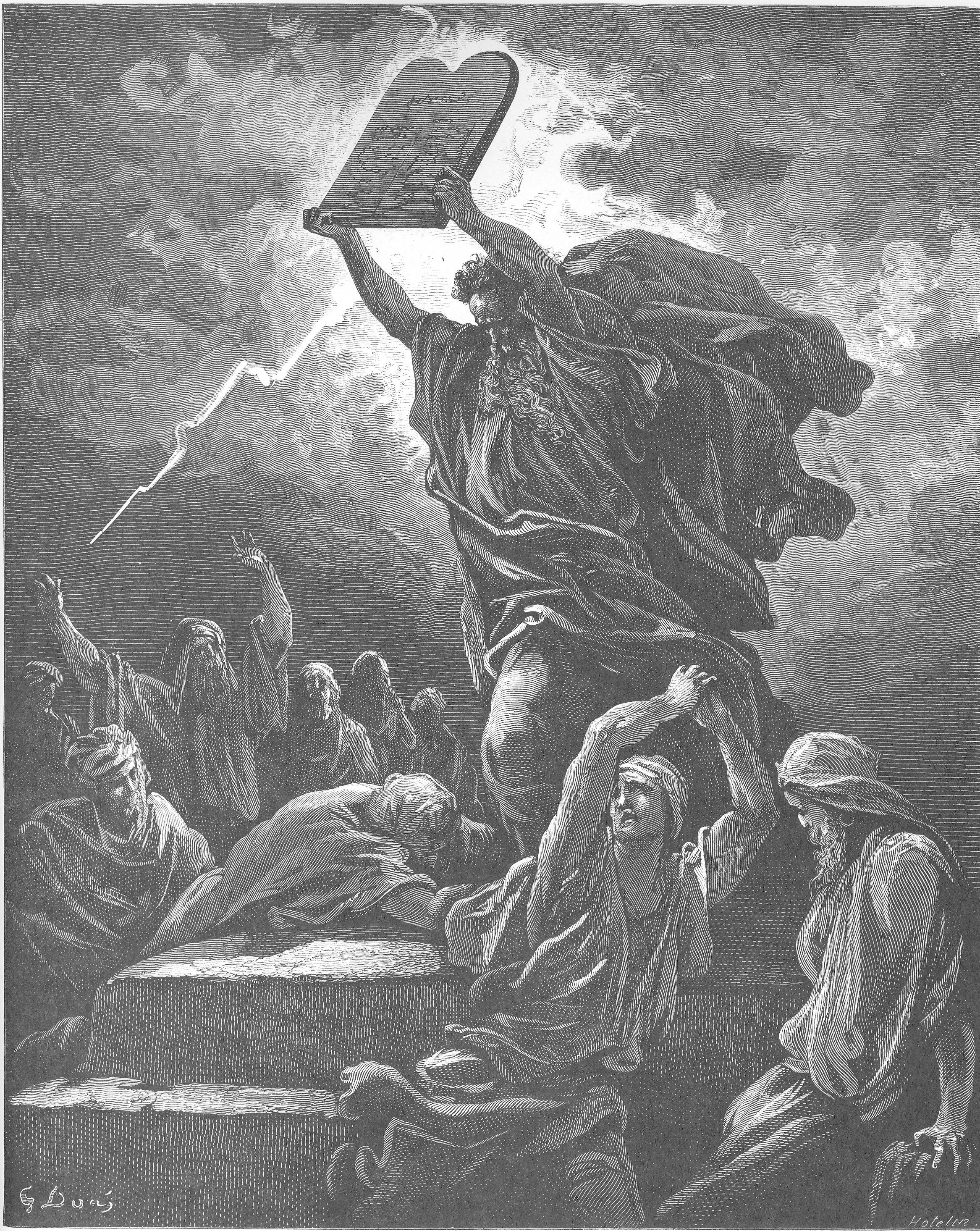
Moses Breaking the Tables of the Law
Gustave Doré · 1866
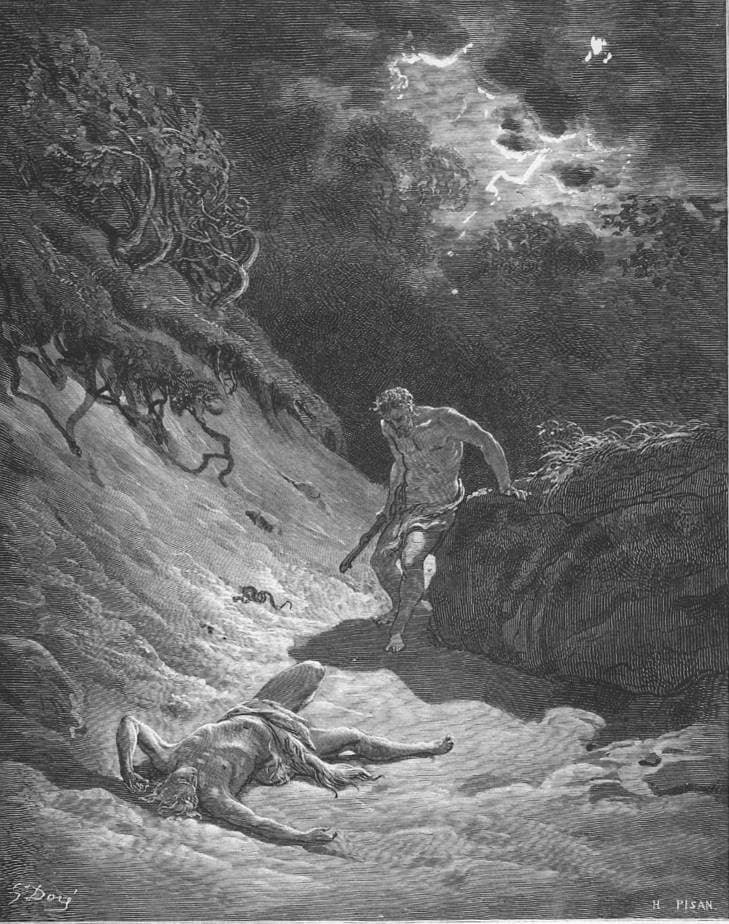
The Death of Abel
Gustave Doré · 1866
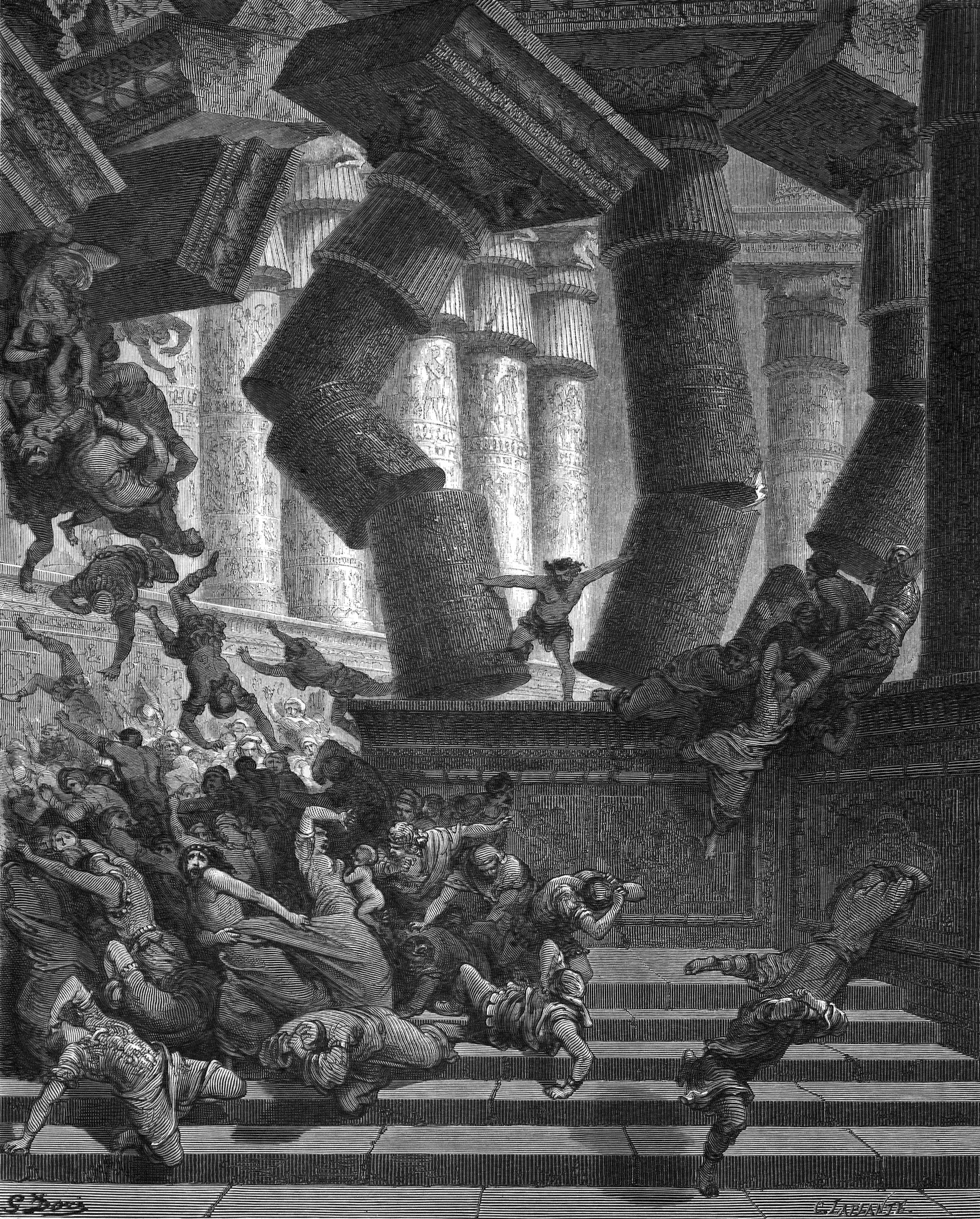
Samson Destroying the Temple
Gustave Doré · 1866
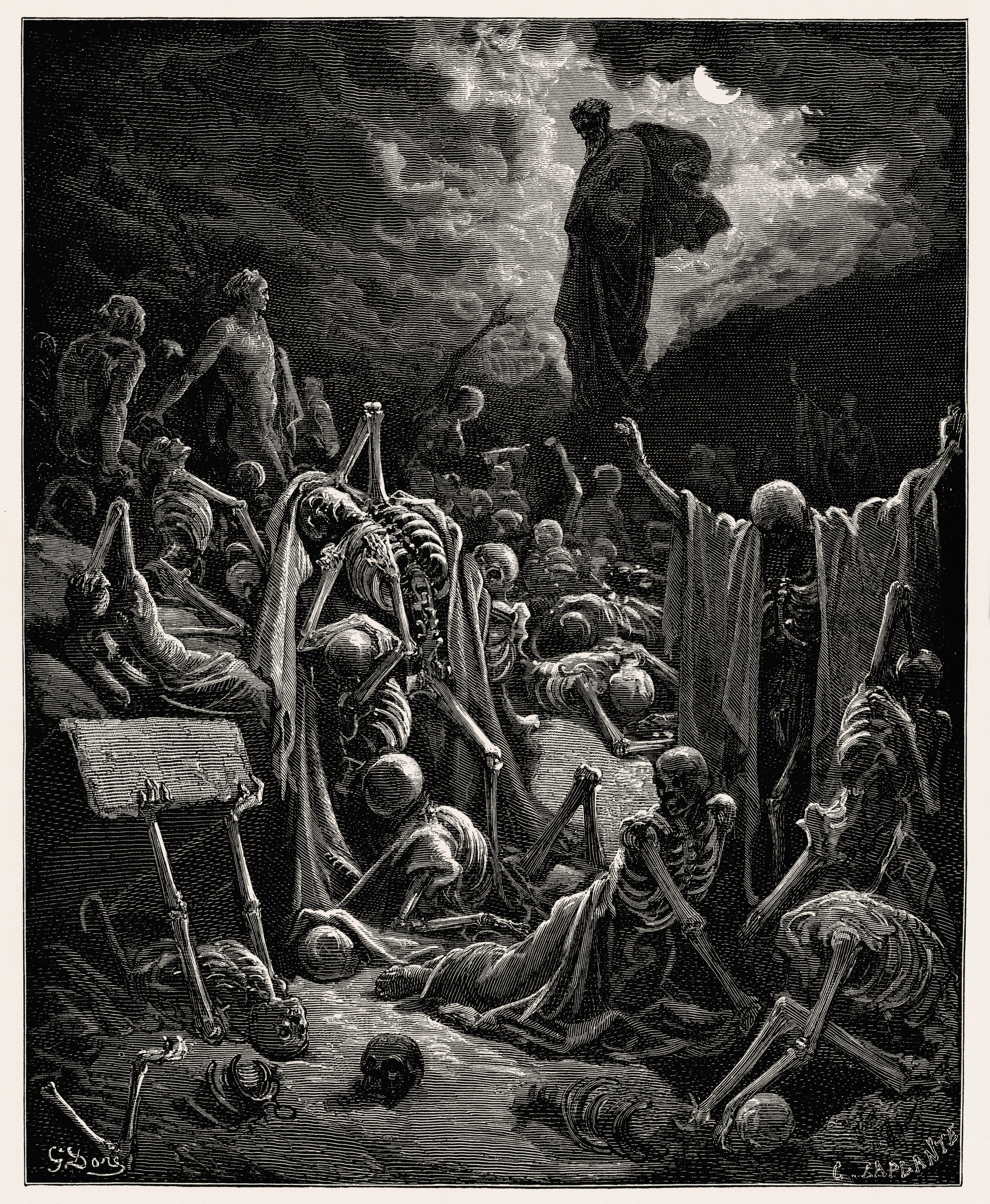
The Vision of the Valley of Dry Bones
Gustave Doré · 1866
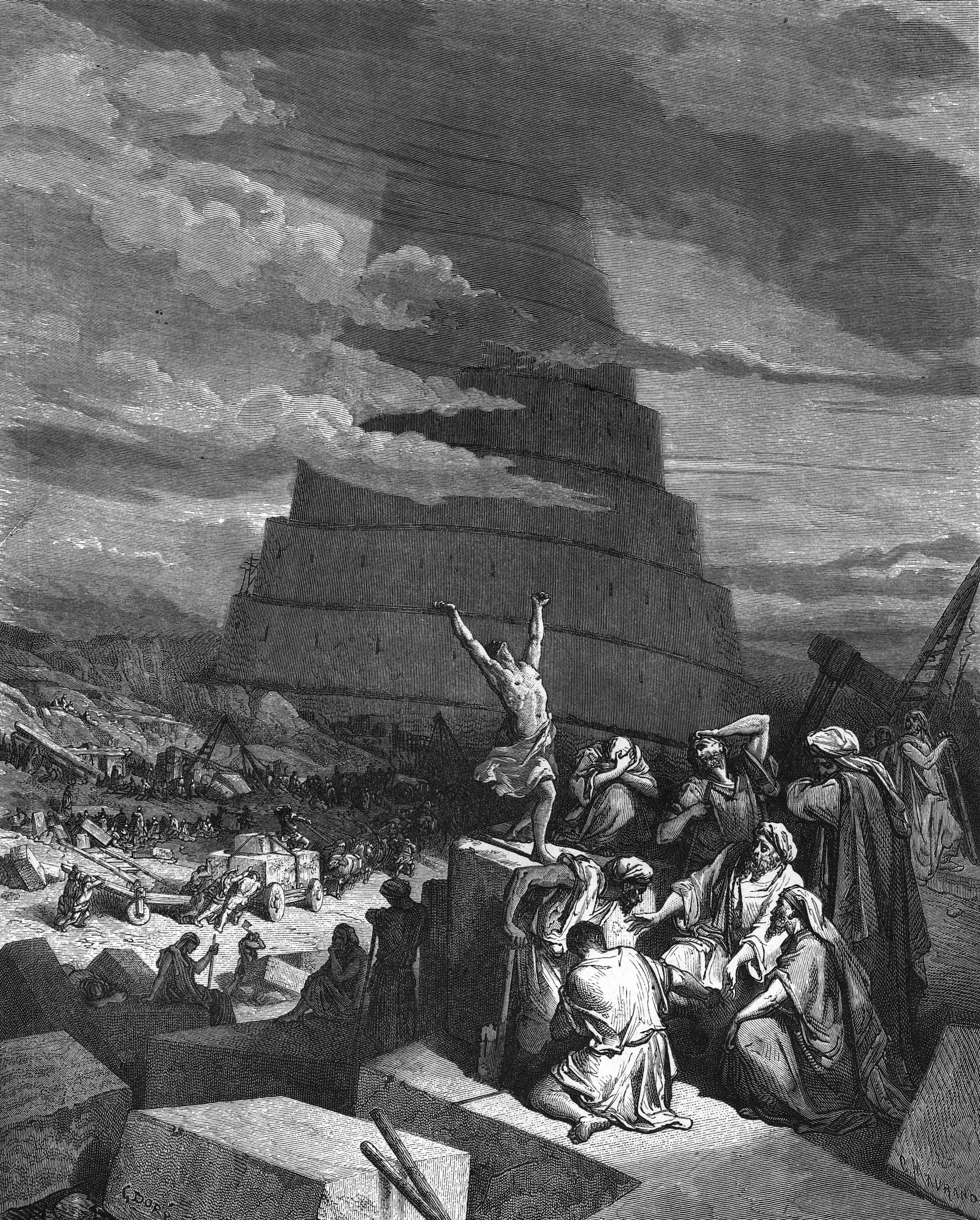
The Confusion of Tongues
Gustave Doré · 1866
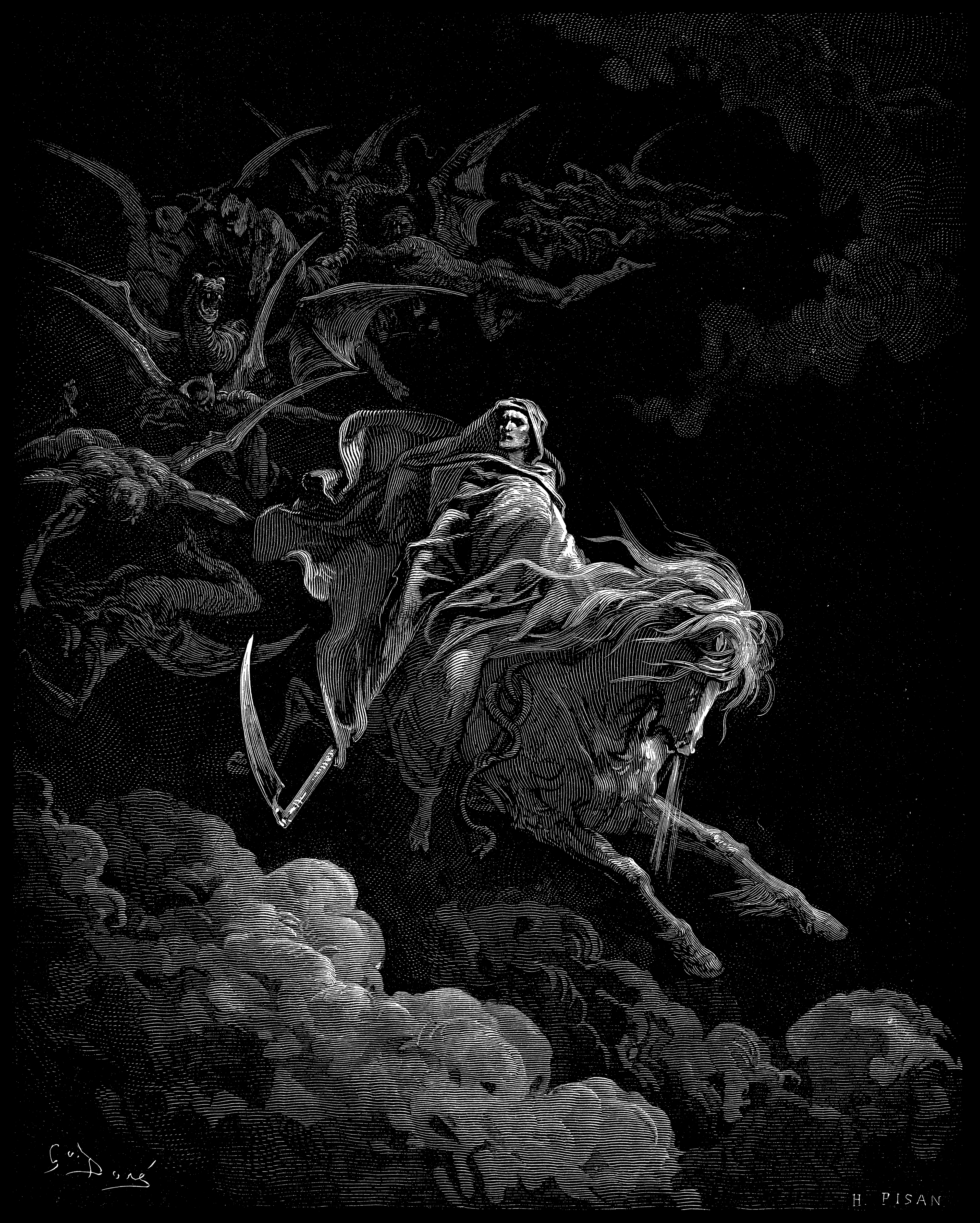
Death on the Pale Horse
Gustave Doré · 1866
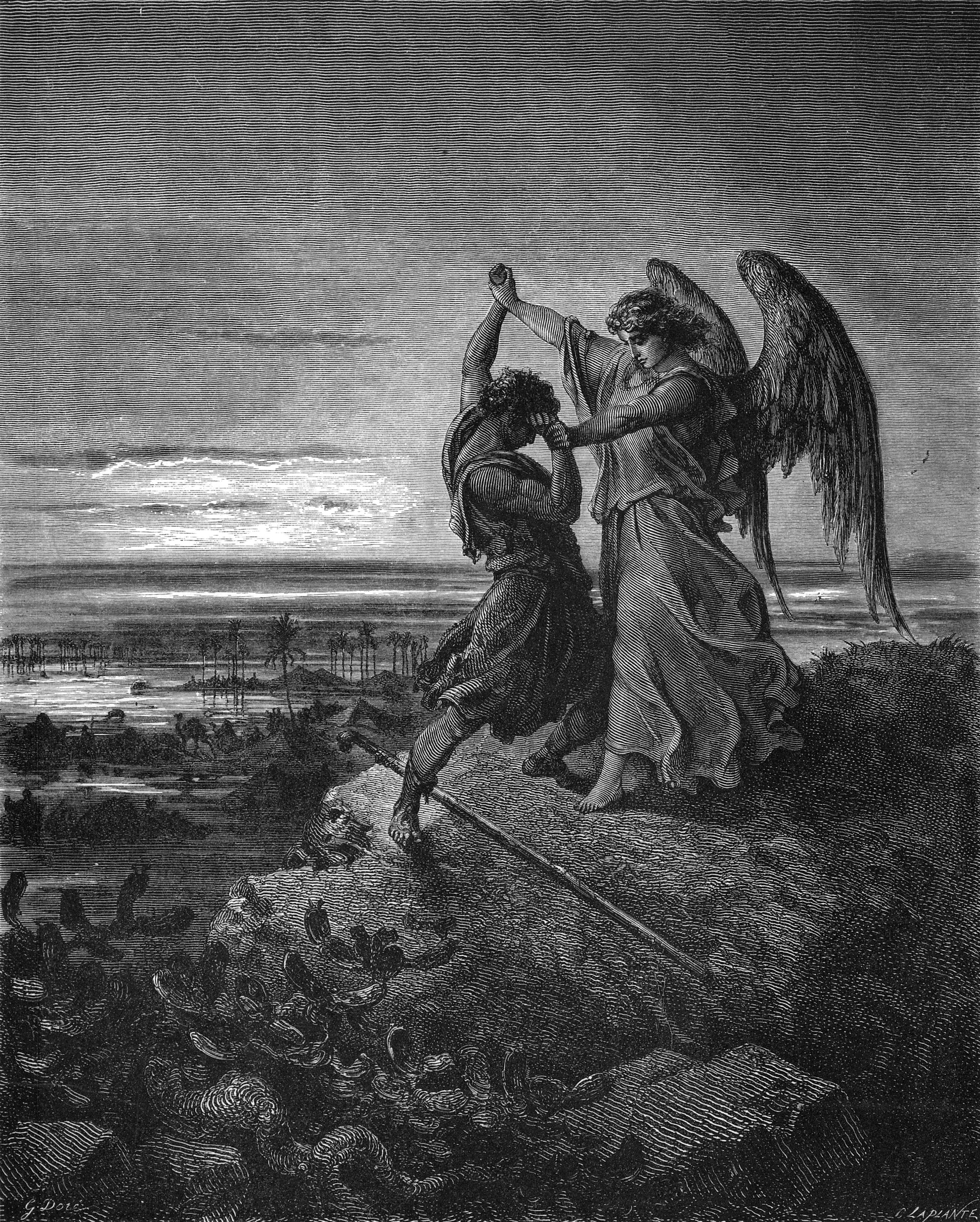
Jacob Wrestling with the Angel
Gustave Doré · 1866
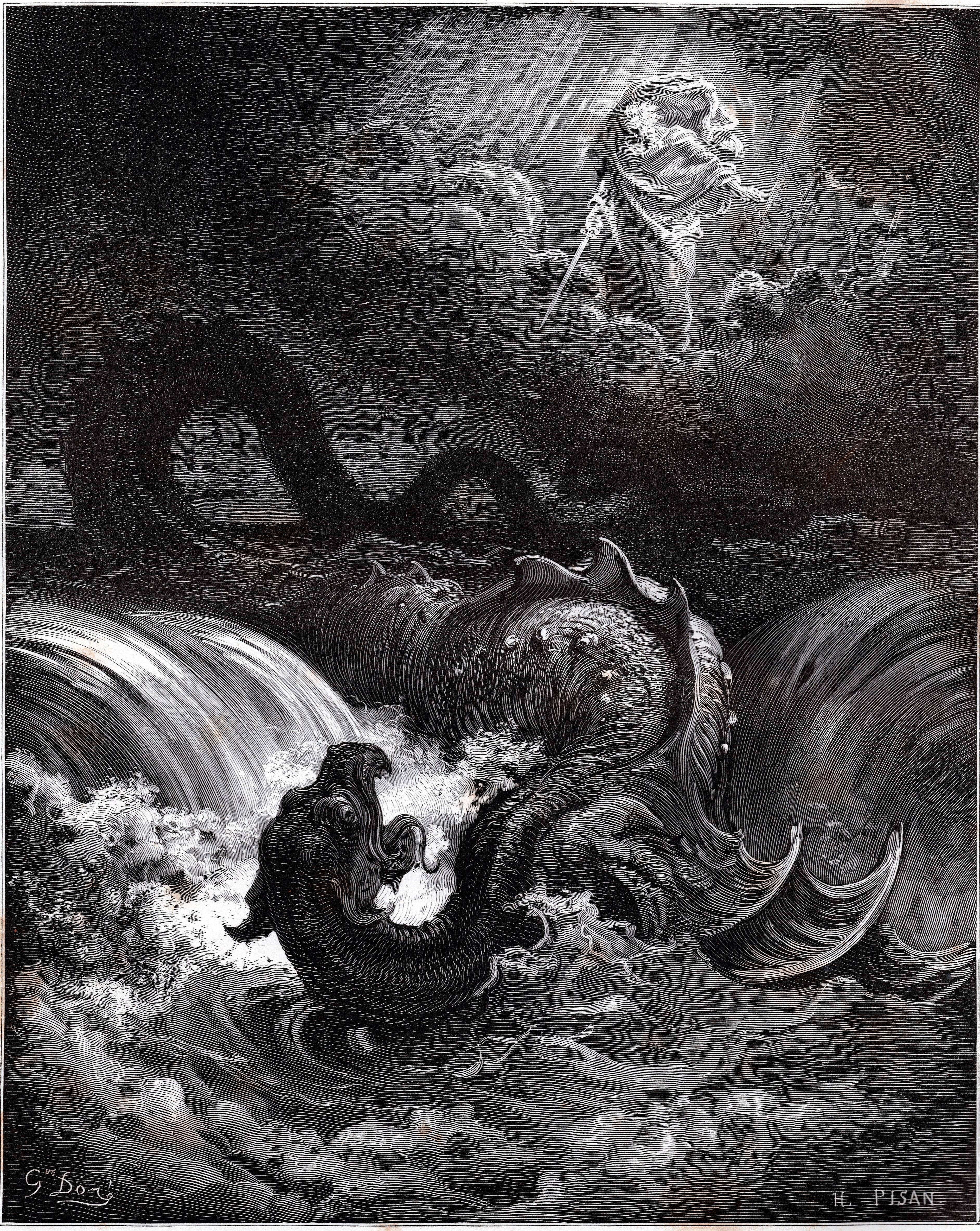
The Destruction of Leviathan
Gustave Doré · 1866
Also from 1866
Adam and Eve Expelled from Paradise
Gustave Doré · 1866
The War in Heaven
Gustave Doré · 1866
Satan Approaching the Confines of the Earth
Gustave Doré · 1866
Satan’s Flight Through Chaos
Gustave Doré · 1866
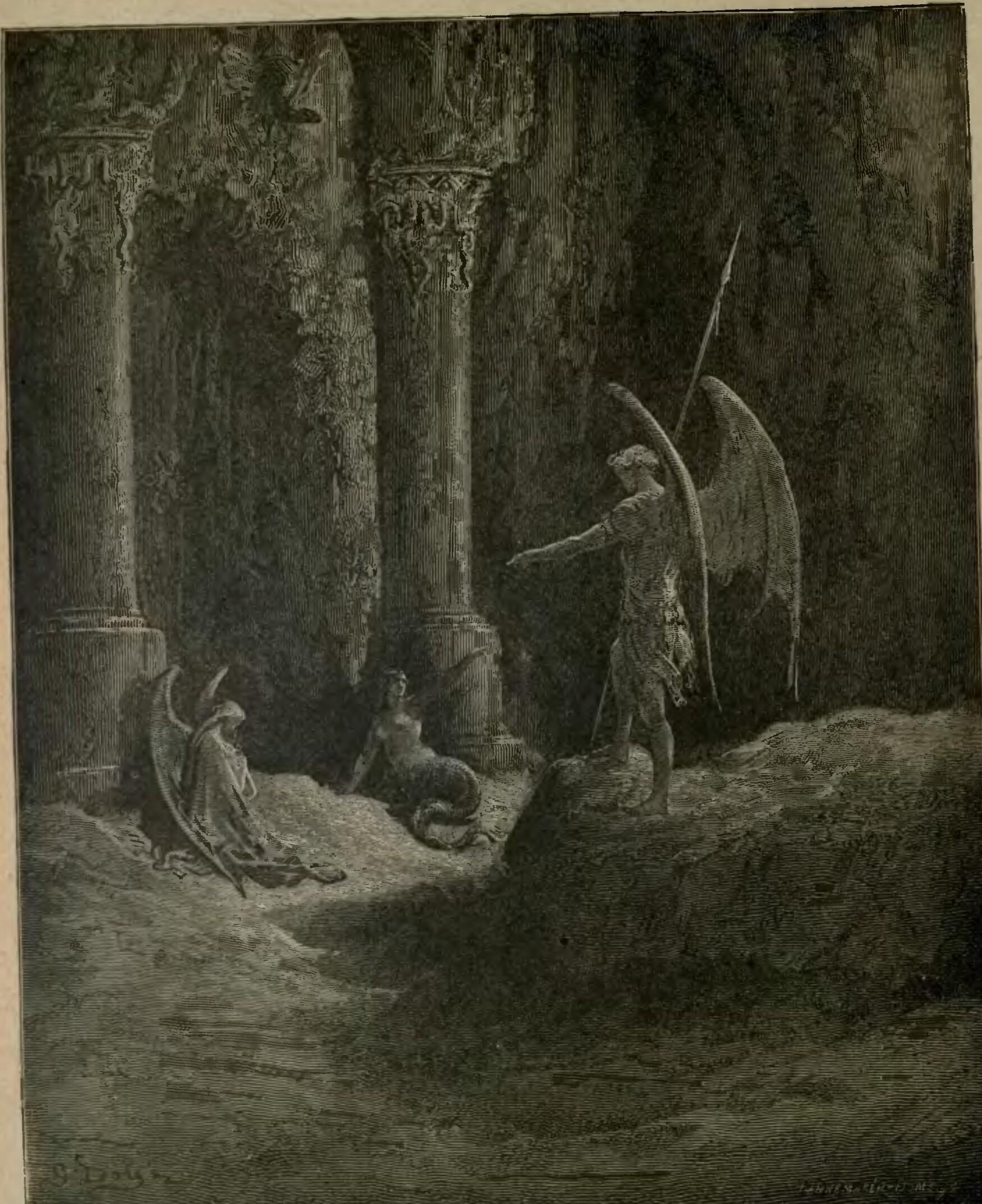
Satan, Sin and Death at the Gates of Hell
Gustave Doré · 1866
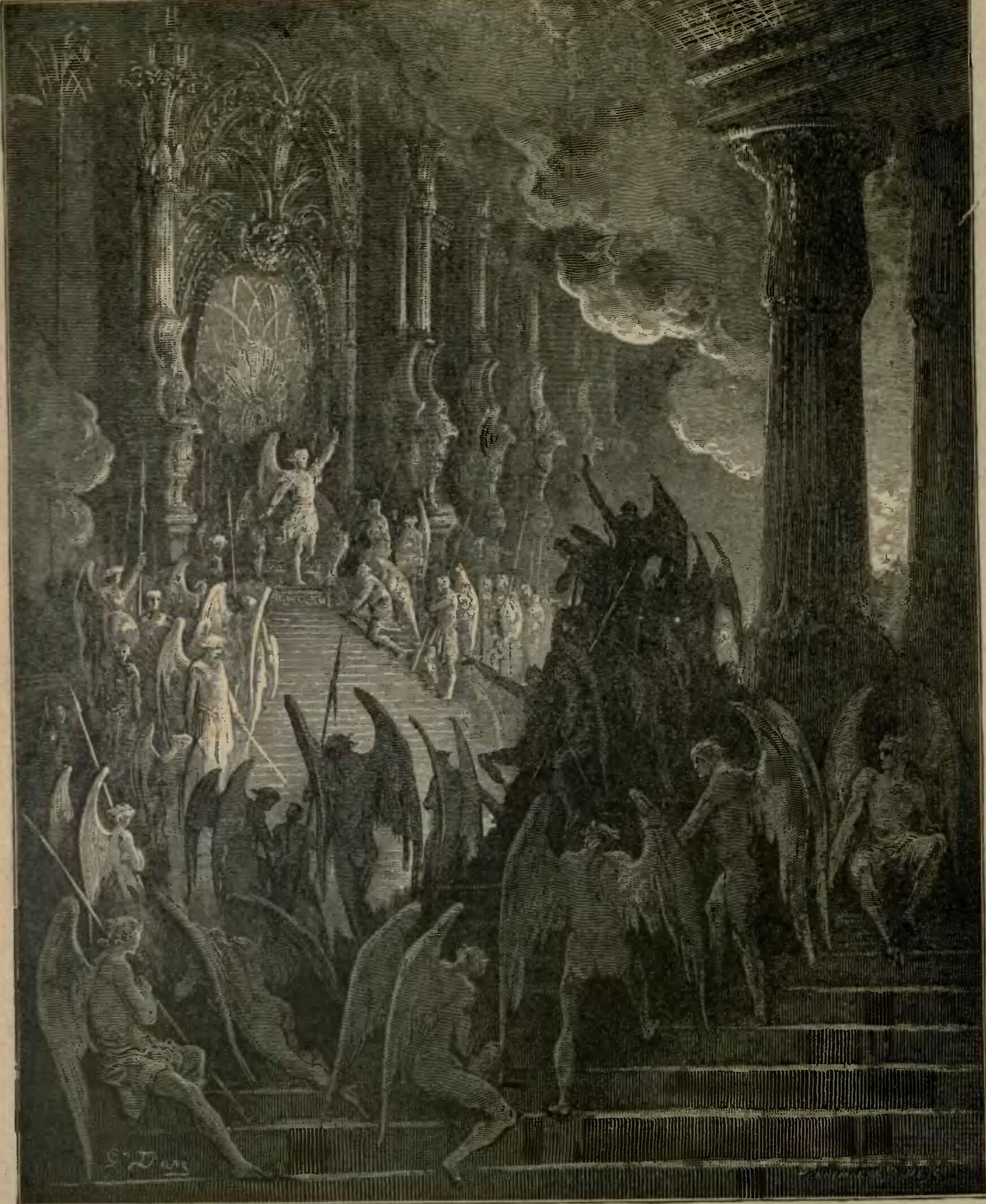
Satan in Council
Gustave Doré · 1866
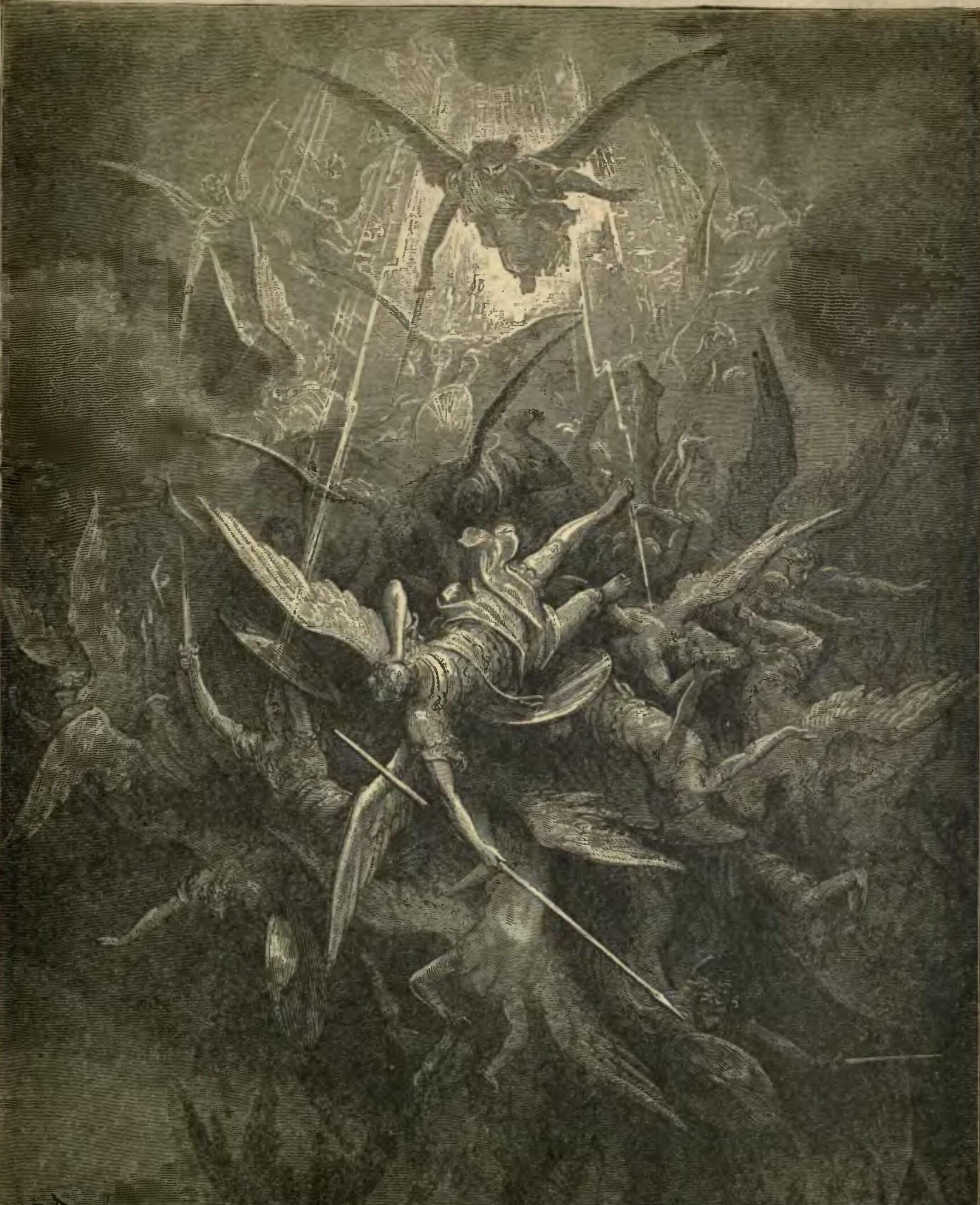
Satan Cast Out of Heaven
Gustave Doré · 1866
Related works
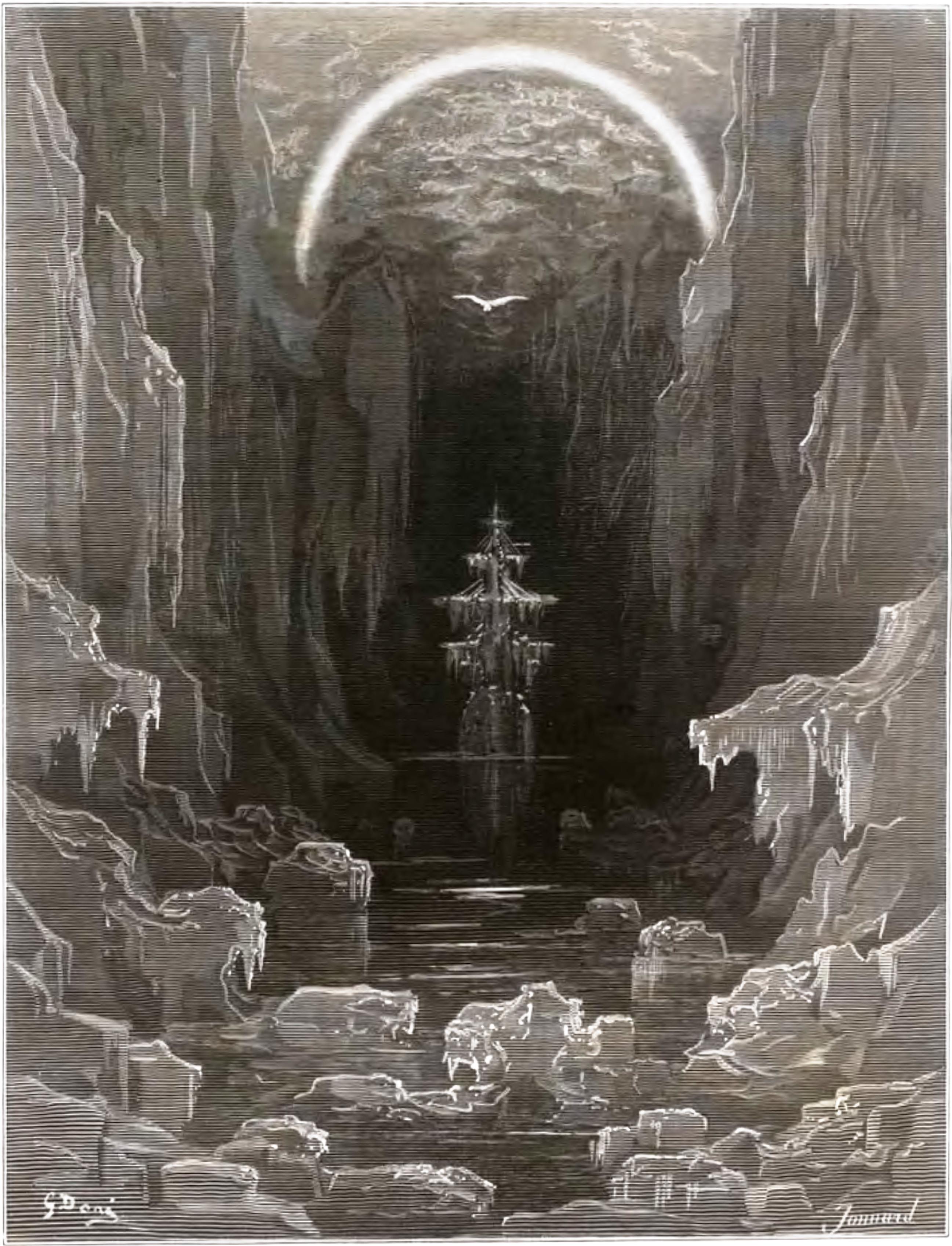
The Ship in the Ice
Gustave Doré · 1876
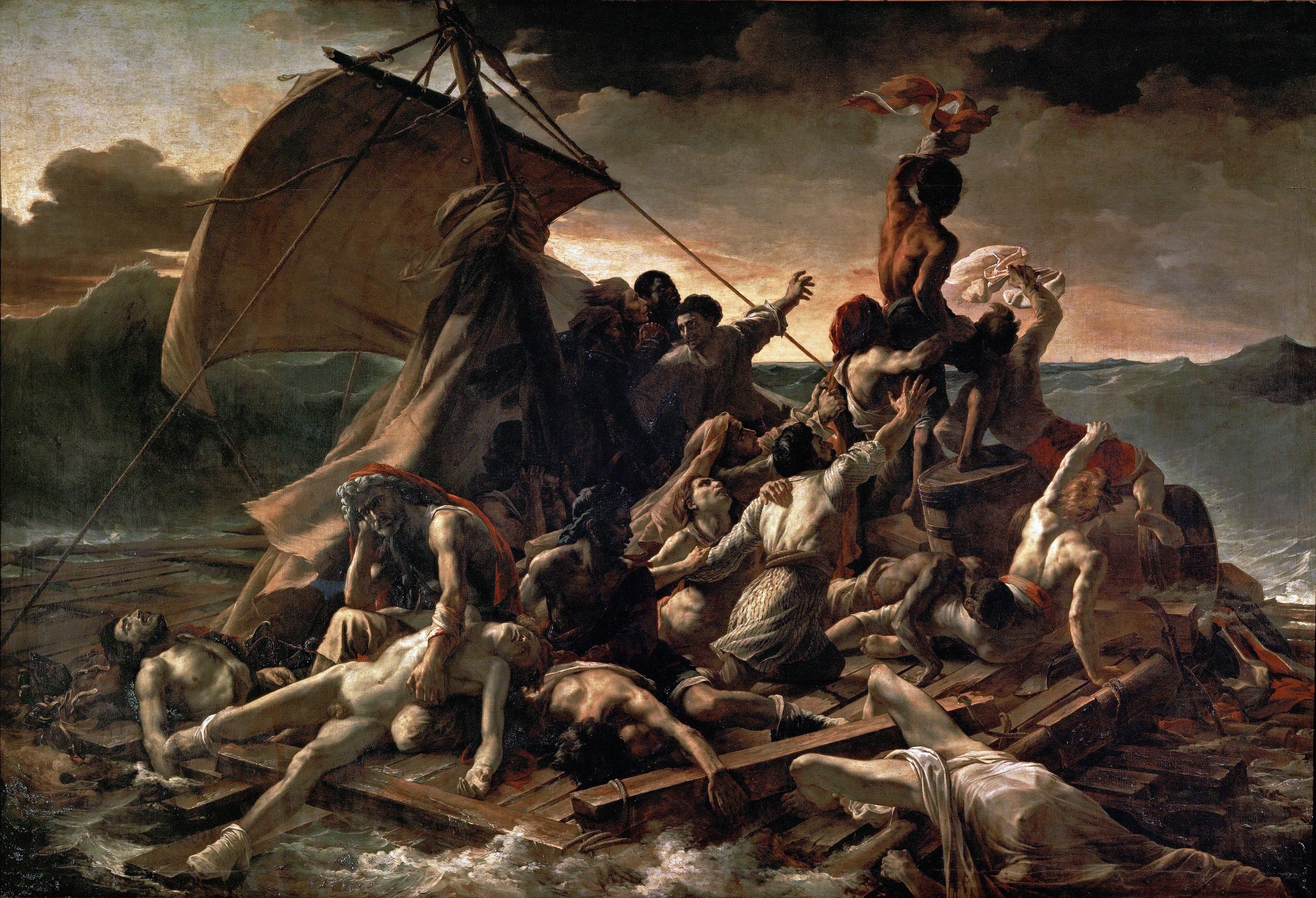
The Raft of the Medusa
Théodore Géricault · 1818–1819
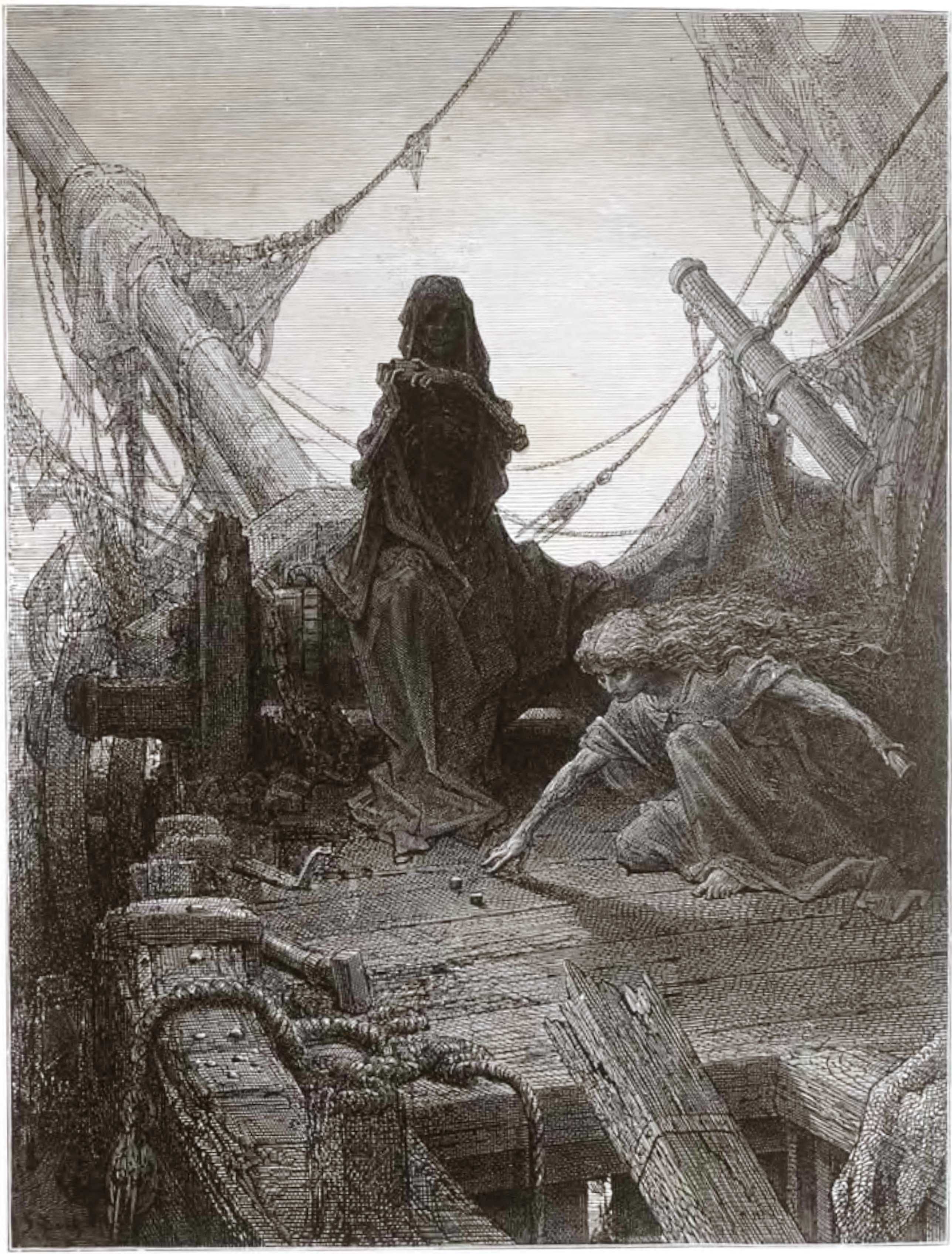
Death and Life-in-Death
Gustave Doré · 1876
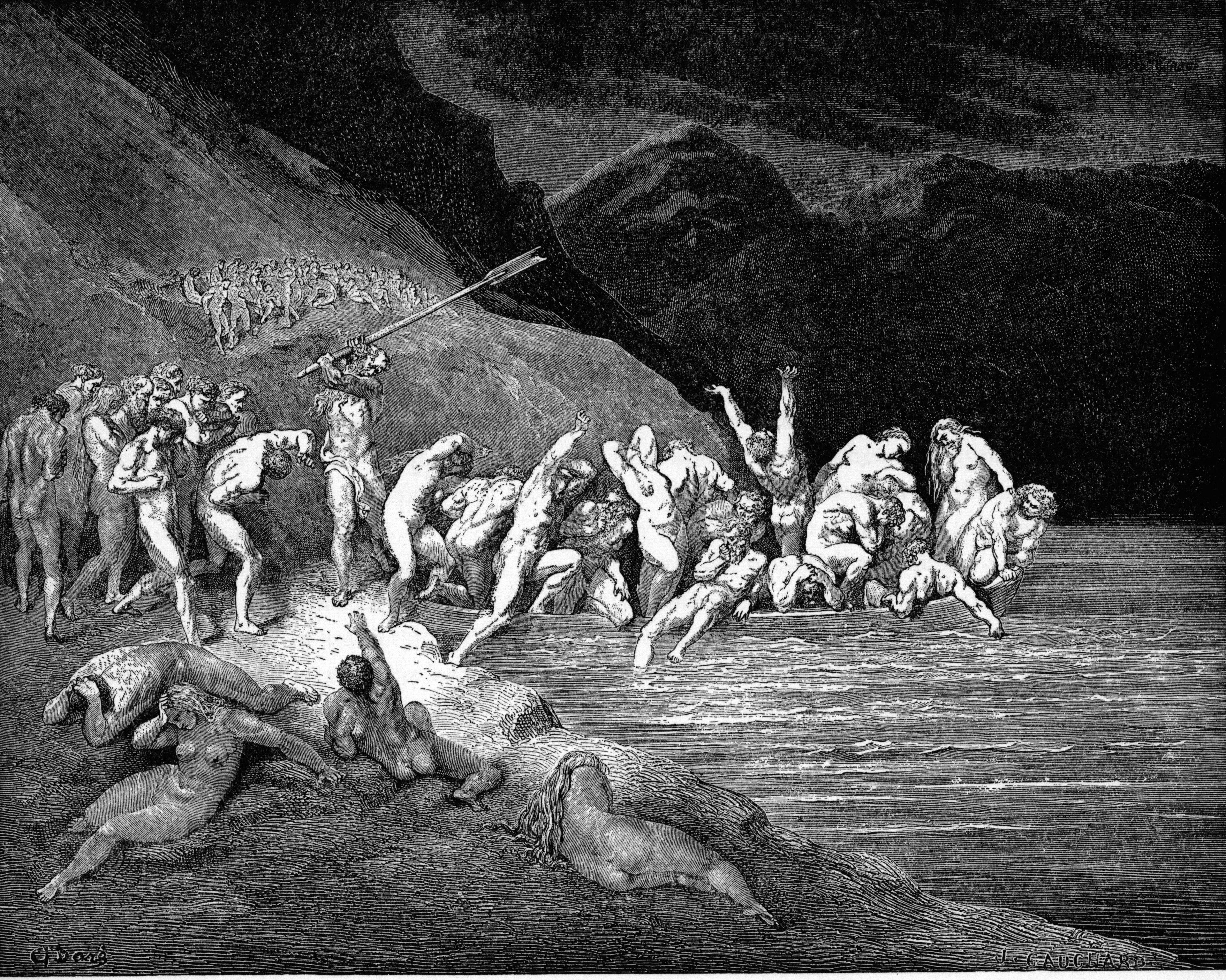
Charon, Ferryman of the Dead
Gustave Doré · 1861
Satan, Sin and Death at the Gates of Hell
Gustave Doré · 1866
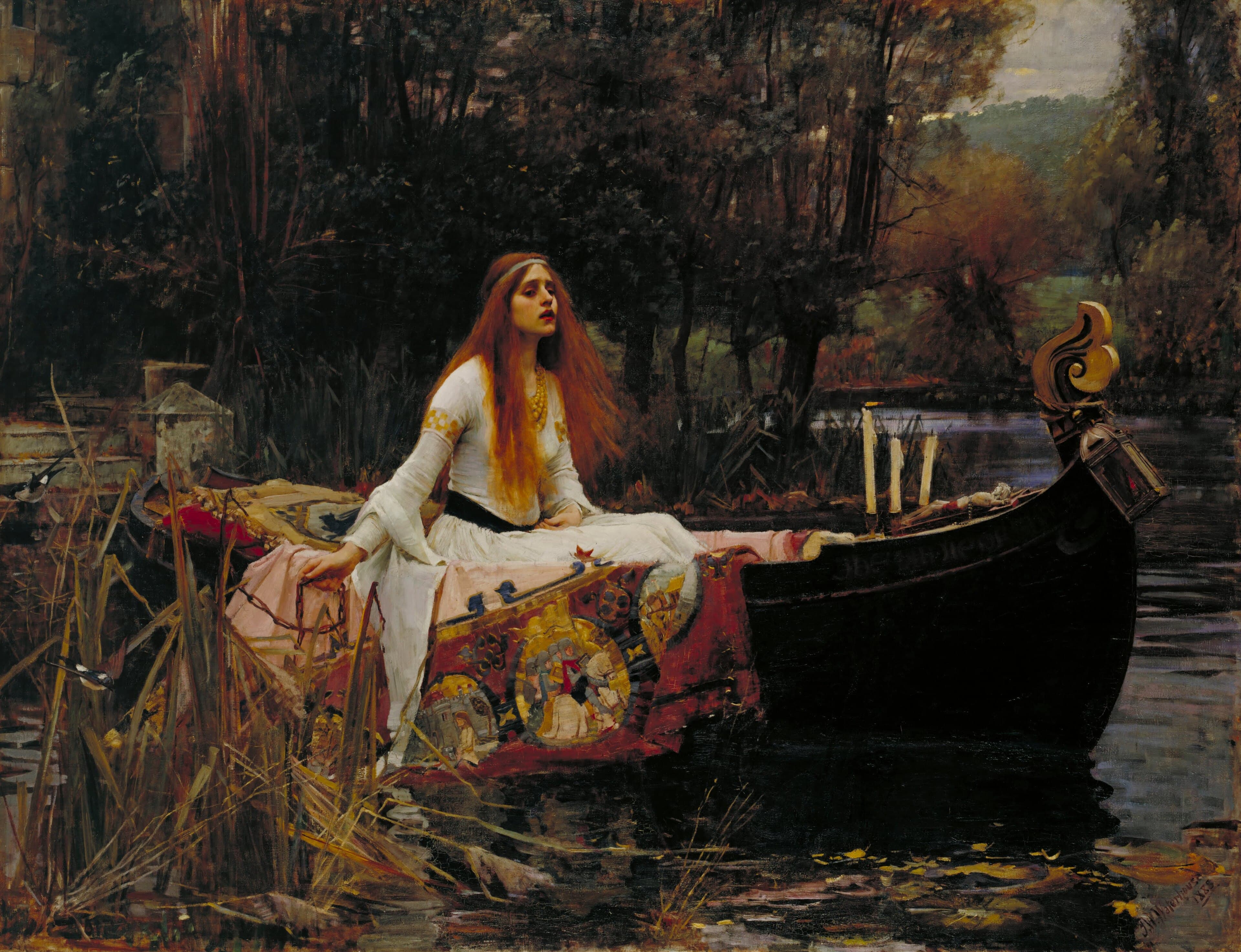
The Lady of Shalott
John William Waterhouse · 1888
Bejeweled Skeleton of Saint Maximus
Paul Koudounaris · Late 17th century (relics acquired 1677)
The Albatross
Gustave Doré · 1876