Impressionism
Rouen Cathedral in Full Sunlight
Claude Monet, 1893
Rouen Cathedral in Full Sunlight (Harmonie bleue et or) is an 1893 painting by Claude Monet of the cathedral's west portal blazing in midday sun against a blue sky. It measures 107 × 73.5 cm (Wildenstein 1360) and is in the Musée d'Orsay, Paris.
- Artist
- Claude Monet
- Date
- 1893
- Medium
- Oil on canvas
- Dimensions
- 107 × 73.5 cm
- Collection
- Musée d'Orsay, Paris, France
- Movement
- Impressionism
- Catalogue
- Wildenstein 1360
More at Monet at the Musée d'Orsay
What you are looking at
Here the portal faces us almost head on and fills the canvas. The sun is high and to the south, striking across the façade, so every projecting pinnacle, gable and buttress is lit cream and gold while the recesses fall into deep shadow. Those shadows are not brown or black but blue: the great arch above the doorway, the hollow of the rose window and the deep cavities beside the portal are painted in ultramarine and cobalt, laid over warmer underlayers. At top center a patch of clear blue sky shows between the lacy gables, and the edge of the Tour Saint-Romain appears at the left, with part of the Tour de Beurre at the right.
The paint is heaped on in thick, granular layers, worked over many sessions until the surface stands up from the canvas like crusted stone. Look at the rose window: a dim blue center with a pale disc below it, the clock-like circle of the tympanum, catching the light. The doorway at the bottom is a dark pointed arch with a warm golden glow inside it. Street level and people are simply omitted. The cathedral is the whole world of the picture.
Notice the long vertical shadows at lower left and right. They are the shadows of the deep buttresses, painted as single dark blue strokes running the full height of the lower façade, and they give the dissolving stone a structure to hang on.
Rouen, 1892–93
From February to April in 1892 and again in 1893, Monet rented rooms opposite the cathedral's west front in Rouen and painted it at every hour, keeping a rack of canvases and switching between them as the light shifted. The work was exhausting; his letters to Alice Hoschedé complain of nightmares in which the cathedral fell on him. He reworked the pictures in Giverny and showed twenty in Paris in May 1895, where buyers paid high prices for them.
How it was painted
The canvas is about 107 by 73.5 centimeters, the standard format of the series. Monet works the light passages in thick, dry strokes of cream, yellow and orange, dragging the brush so that the paint catches only on the ridges of what lies beneath. The shadows are thinner and more fluid. The contrast of textures, as well as of colors, separates lit stone from shade. Under raking gallery light the surface looks almost sculpted, and much of the picture's effect depends on that relief, which no flat reproduction fully captures.
Its place in the series
The series is gathered in our Rouen Cathedral hub. This canvas, with its full sun and strong color contrast, is the most dramatic of the Orsay group. The museum's title, Harmonie bleue et or, describes exactly what it does: a duet of complementary blue and orange-gold. Compare the misty dawn of Effects of Morning Light in the same museum, the softer, pinker frontal view at the Clark, Rouen Cathedral in Sunlight, and the sunset in Moscow, Rouen Cathedral, Evening. Side by side, they show how the hour alone changes every color on the same stones.
Meaning
Claude Monet said he wanted to paint not the cathedral but what lay between him and it, the envelope of light and air. In full sunlight that envelope is at its most intense, and the medieval stone seems almost to burn. Critics have long seen in the series a step toward the dissolution of the solid object in modern painting, and the thick, abstract surfaces of the Rouen canvases fascinated later painters, from the Fauves to the Abstract Expressionists.
Where to see it
The painting is in the Musée d'Orsay, Paris. It came to the French national collections in 1911 with the bequest of Count Isaac de Camondo, along with three other canvases from the series; see our guide to Monet at the Musée d'Orsay.
Questions & answers
Where is Rouen Cathedral in Full Sunlight?
It is in the Musée d'Orsay in Paris. Known as the Harmonie bleue et or (Harmony in Blue and Gold), it was painted in 1893, measures 107 by 73.5 centimeters, is catalogued as Wildenstein 1360, and entered the national collections with the Camondo bequest in 1911.
When and where did Monet paint it?
From rooms facing the west front of Rouen Cathedral in Normandy, during painting campaigns in the late winter and spring of 1892 and 1893. He finished the series in his studio at Giverny and exhibited twenty of the canvases in Paris in May 1895.
Why are the shadows blue in Monet's Rouen Cathedral?
Monet observed that shadows in bright sunlight take on the cool blue of the sky and look bluer still beside warm sunlit stone. He painted the recesses of the portal in ultramarine and cobalt against orange-gold highlights, using complementary colors to intensify both.
How is this Rouen Cathedral different from the others?
It shows the portal head on at midday in full sun, with the strongest contrast of blue shadow and gold light in the series. Other canvases show the façade at dawn in pale mist, in soft afternoon light, or glowing orange at sunset, and some are oblique views including the Tour Saint-Romain.
More by the artist
Claude Monet

Bridge over a Pond of Water Lilies
Claude Monet · 1899

Woman with a Parasol – Madame Monet and Her Son
Claude Monet · 1875

Sunset in Venice
Claude Monet · 1908–12

La Grenouillère
Claude Monet · 1869

Beach in Pourville
Claude Monet · 1882

Springtime
Claude Monet · 1872

Boating on the River Epte
Claude Monet · 1890

The Seine at Asnières (Hermitage)
Claude Monet · 1873
Also painted in 1893
The same year
Kindred works
You may also study
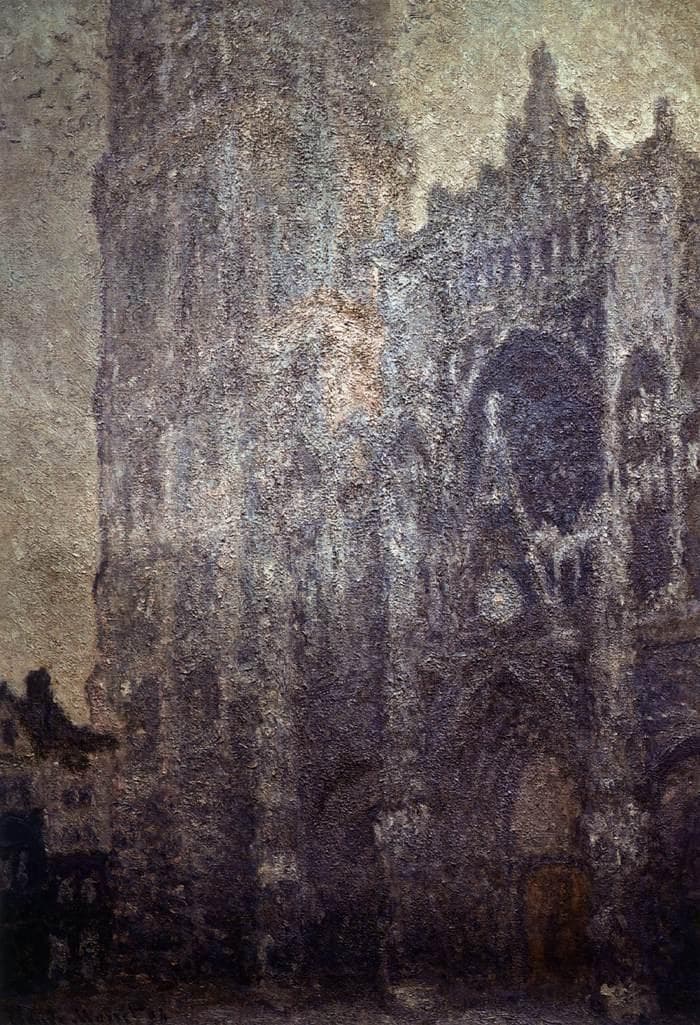
Rouen Cathedral, Effects of Morning Light
Claude Monet · 1893
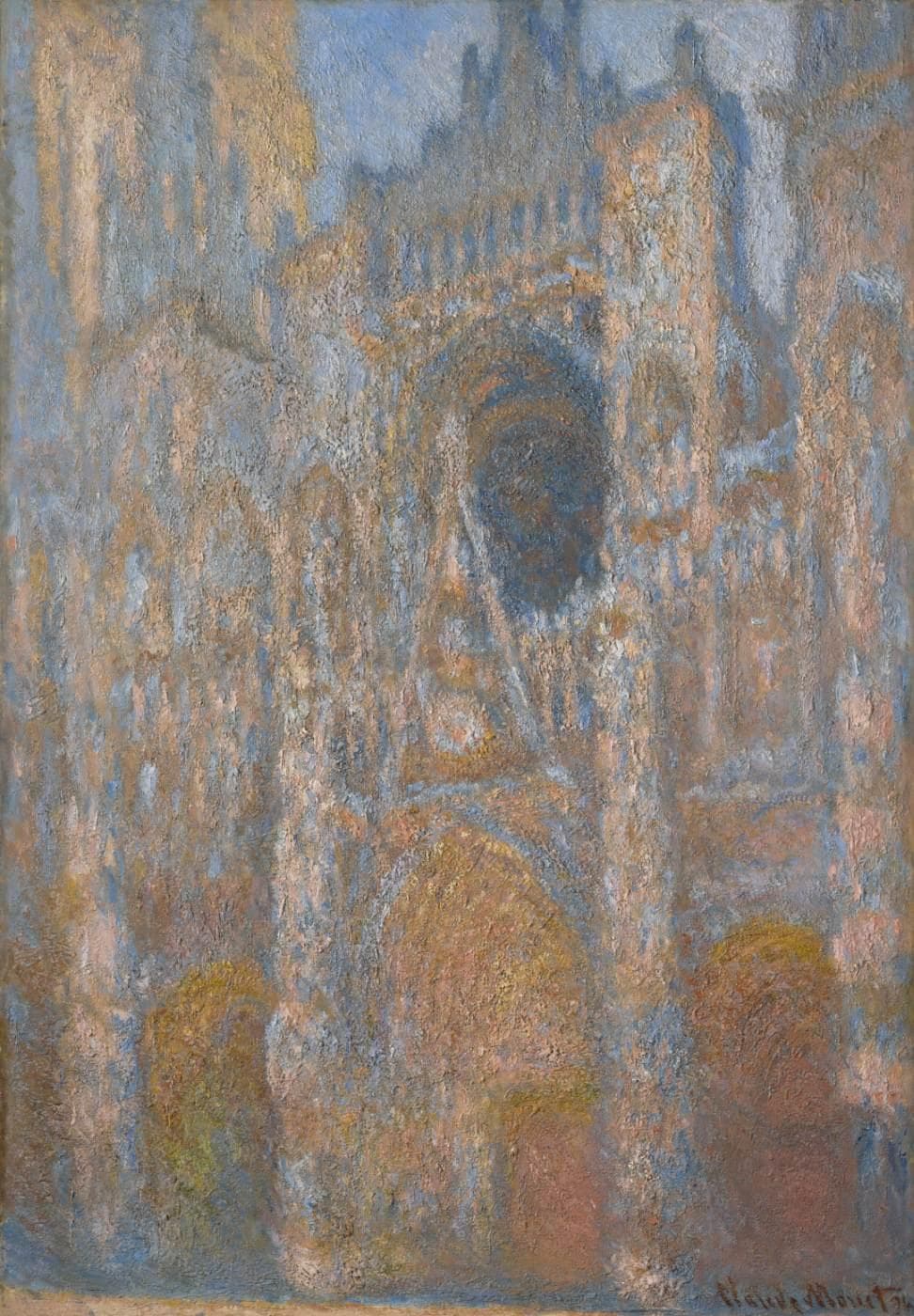
Rouen Cathedral in Sunlight
Claude Monet · c. 1892–94
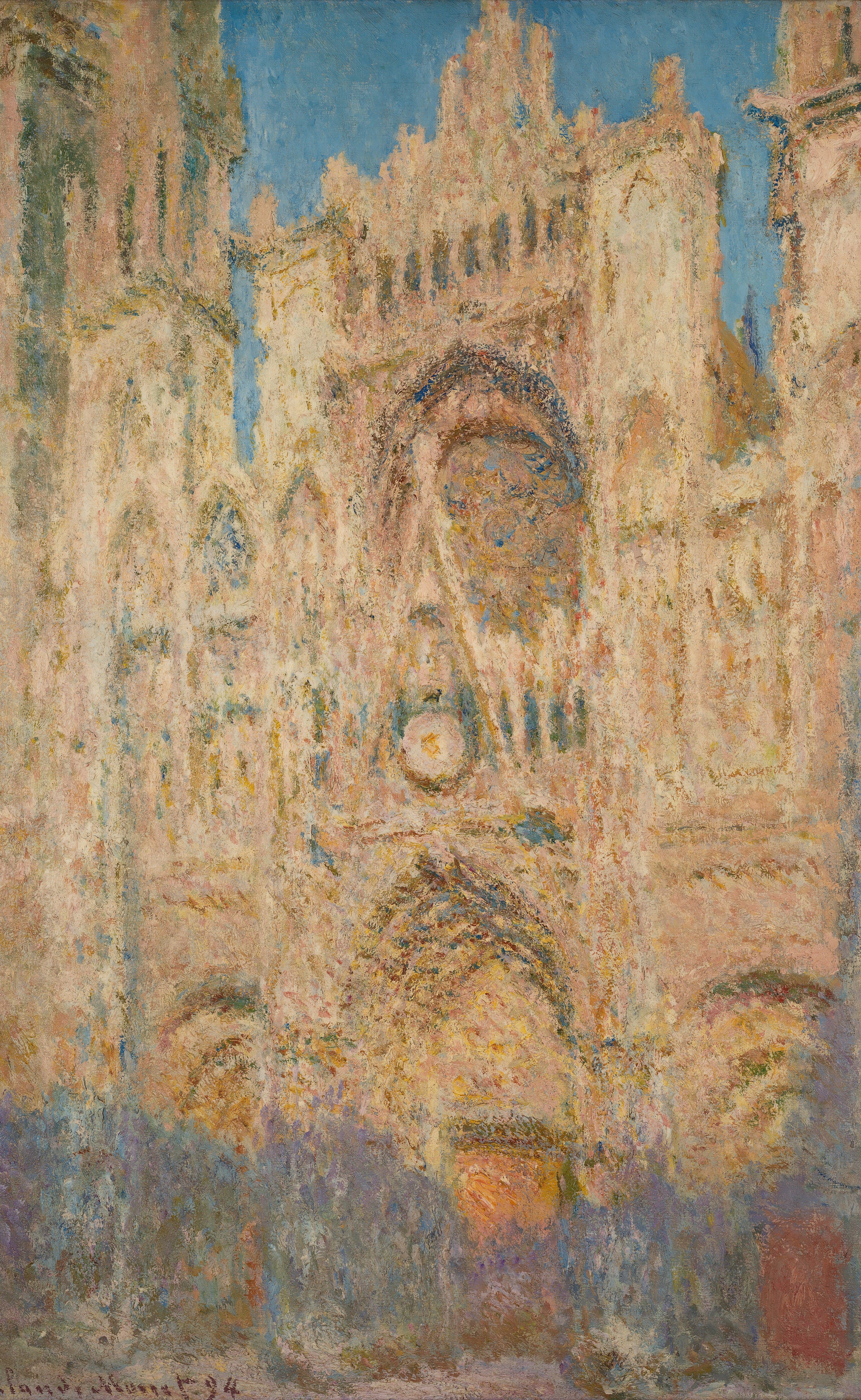
Rouen Cathedral, Evening
Claude Monet · 1894
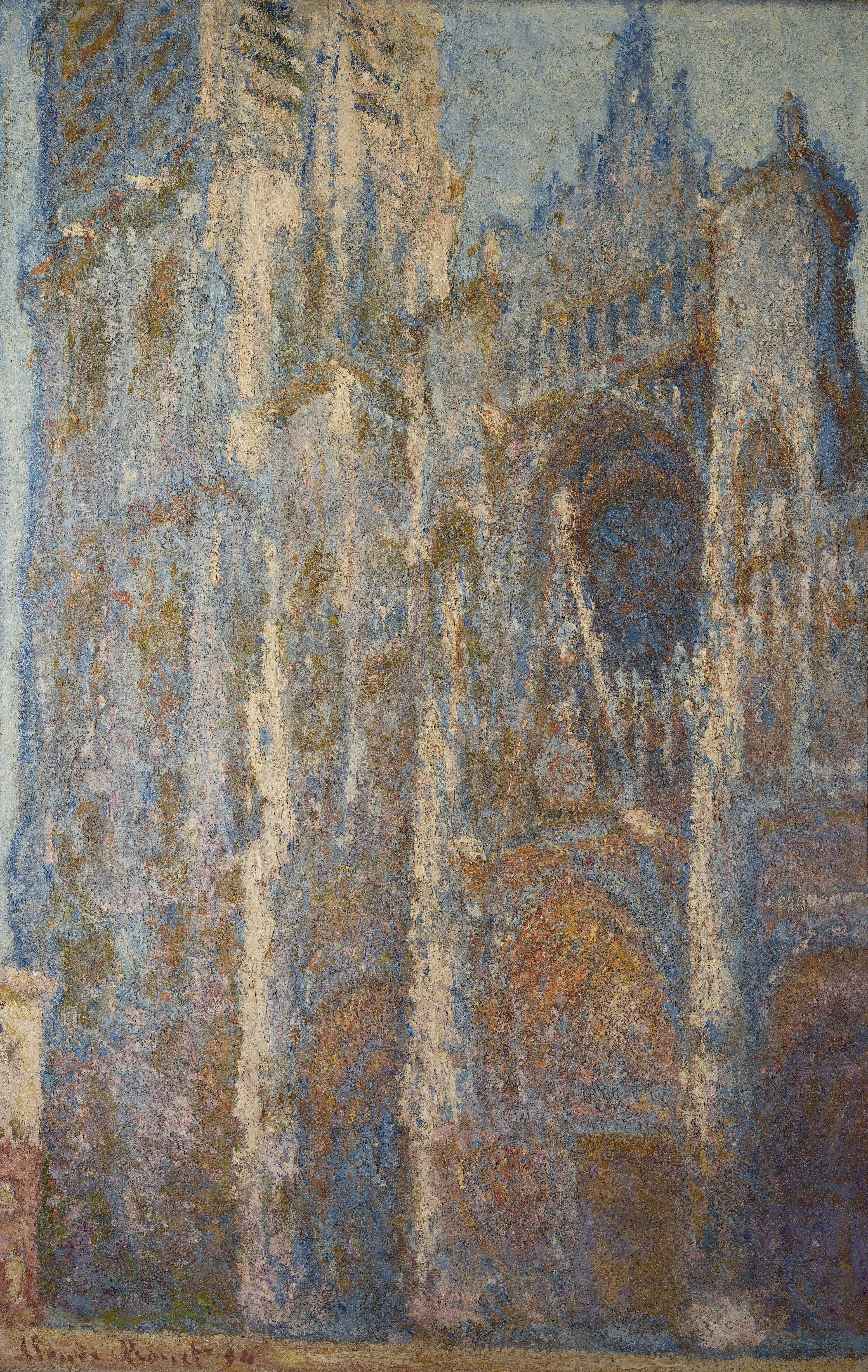
Rouen Cathedral, Portal and Tower d'Albane, Midday
Claude Monet · 1893–94
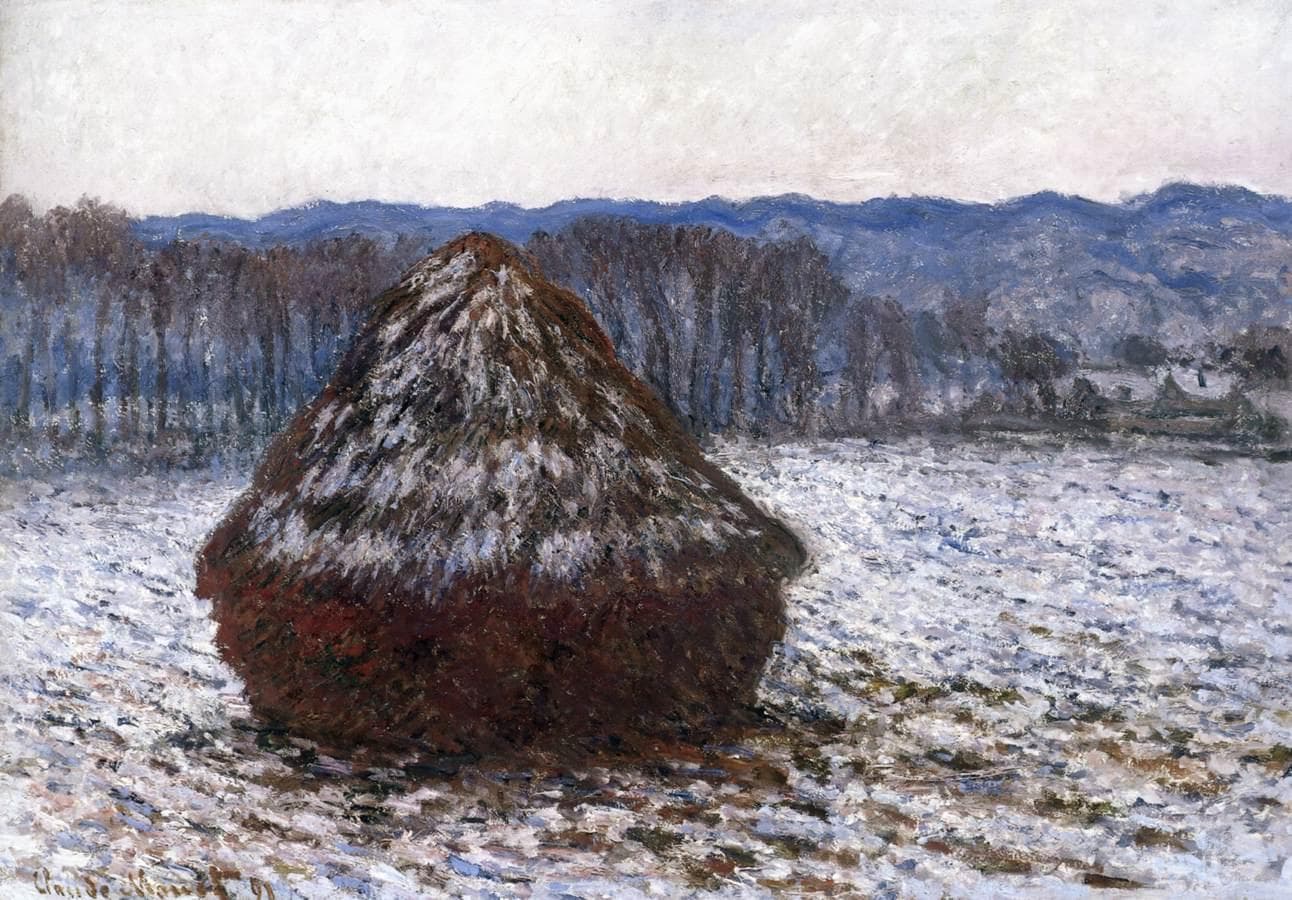
Stack of Wheat
Claude Monet · 1890–91
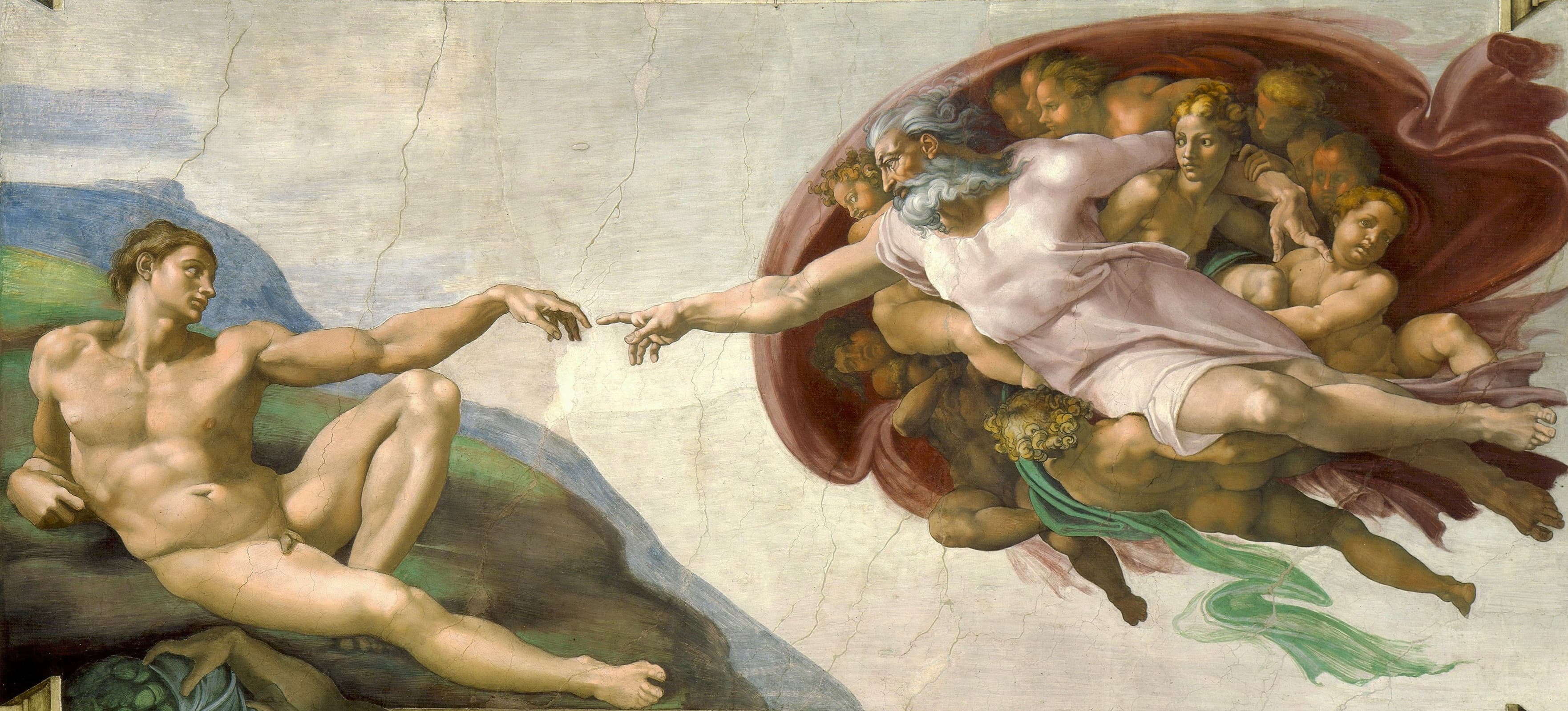
The Creation of Adam
Michelangelo · c. 1511–12
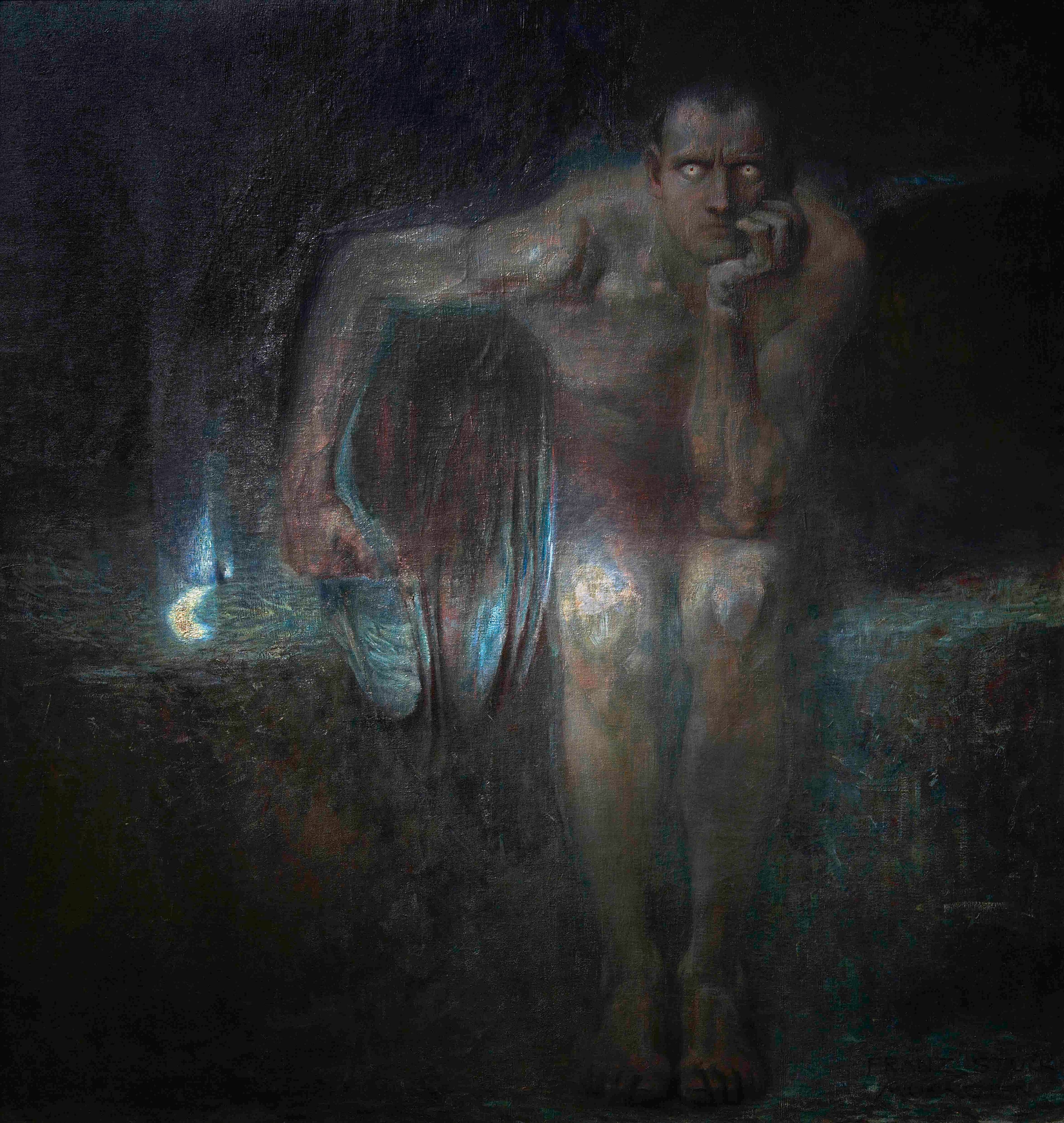
Lucifer
Franz von Stuck · 1890
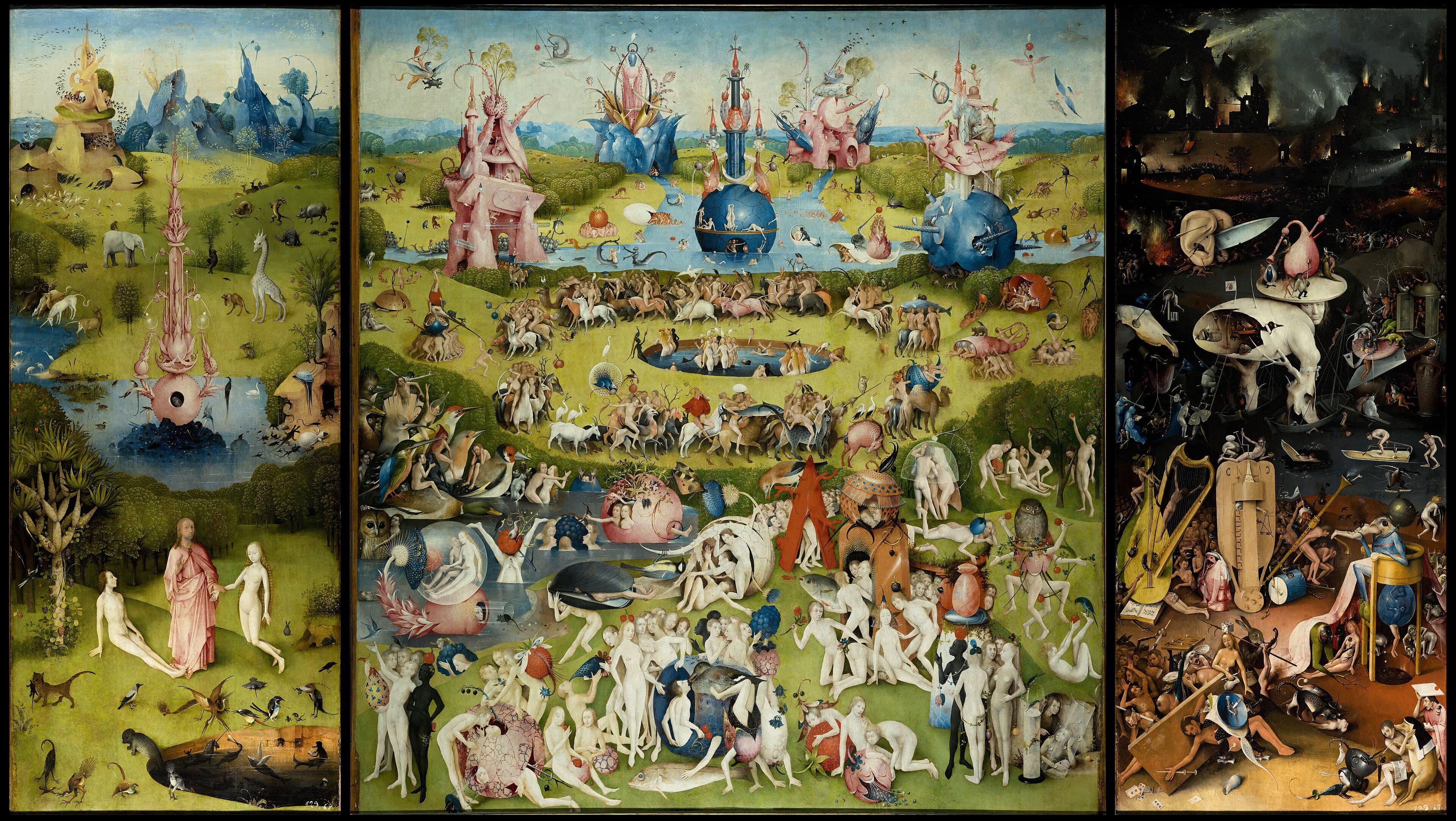
The Garden of Earthly Delights
Hieronymus Bosch · c. 1490–1510