Impressionism
The Four Trees
Claude Monet, 1891
The Four Trees is an 1891 painting from Claude Monet's Poplars series: four tall poplar trunks on the bank of the river Epte, cut off by the top of a square canvas and doubled in the water below. It is in The Metropolitan Museum of Art, New York.
- Artist
- Claude Monet
- Date
- 1891
- Medium
- Oil on canvas
- Dimensions
- 81.9 × 81.6 cm
- Collection
- The Metropolitan Museum of Art, New York, United States
- Movement
- Impressionism
- Catalogue
- Wildenstein 1309
More at Monet at the Met
What you are looking at
Four straight, thin trunks rise from the bottom of a nearly square canvas and run right off the top edge. We never see the crowns of the trees, only their columns, tufted along their length with small clumps of blue-violet foliage. Behind them, a low band of riverbank vegetation in dark purple, plum and green crosses the canvas at mid-height, and beyond that, a second, more distant row of poplars curves away in an S-shape, glowing yellow, orange and pink in the autumn sun. Below, the still water of the river reflects everything: the four trunks continue downward as darker, softer columns, and the warm colors of the distant trees reappear as pale smears in the reflection.
The design is almost a grid. Four verticals, evenly but not quite regularly spaced, cross two horizontals, the bank and its reflection. The square format reinforces the geometry. What keeps it from being rigid is the color: the cool blues and violets of the near trunks against the hot oranges behind them, and the pale lavender and turquoise of the sky laid on in thousands of short, criss-crossing strokes. Monet signed and dated the canvas "Claude Monet 91" at lower left, in the reflection.
Spend a moment on the far trees. Their S-curve, glimpsed between the trunks, is the only movement in a picture otherwise made of straight lines, and it leads the eye back and forth across the surface like a ribbon.
The Poplars series
In the spring of 1891 Monet began painting a row of poplars along the river Epte at Limetz, a short way upstream from his home at Giverny. He worked from a flat-bottomed boat fitted out as a floating studio, moored in the river, which gave him the low viewpoint and the reflections. When the trees were put up for auction by the commune, before he had finished, Monet reportedly arranged with the timber merchant who bought them to pay for the felling to be delayed until his paintings were complete.
Over the following months he painted the trees more than twenty times, at different times of day and in different weather, in two main compositions: views looking along the curving row, like Poplars on the Banks of the River Epte and Poplars, Three Pink Trees, Autumn, and close-up views of a few trunks cut by the frame, like this one and Three Poplars, Summer. The Four Trees is one of the boldest of the close-ups.
Working this way meant racing the light. Monet kept several canvases on the go in the boat and switched between them as the sun moved. The American painter Lilla Cabot Perry, who knew him at Giverny, later recalled him saying that he had worked on one poplar effect for only seven minutes at a time, until the sunlight left a particular leaf, and then had to wait for the next day to continue. The dense, layered surface of The Four Trees, with stroke laid over stroke, records many such sessions as well as later work in the studio.
Fifteen of the Poplars paintings were shown together at Durand-Ruel's gallery in Paris in February–March 1892, the first time Monet exhibited a series devoted to a single motif. They followed the success of his Grainstacks in 1891 and preceded the Rouen Cathedral façades, and they were a critical and commercial triumph.
Meaning: nature as decoration
Poplars were an everyday sight in French river valleys, planted for timber along banks and roads, and they had no grand associations. That was part of their appeal. Monet's subject is not the trees as such but the effect of light, the season and the pattern they make. Critics in 1892 already noticed how decorative the series was, close to the flat patterning of Japanese prints, which Monet collected and which often show trees cropped by the edge of the image. The historian Paul Hayes Tucker has also proposed a patriotic note: poplars were often planted as "liberty trees" after the French Revolution, and the word peuplier echoes peuple, the people. Monet himself never claimed such a meaning.
The Four Trees in particular points forward to abstraction. With its grid of verticals and horizontals and its all-over brushwork, it has been compared to the work of Piet Mondrian, who painted rows of trees in a similar way in the 1900s and 1910s on his path toward pure abstraction.
Where to see it
The Four Trees belongs to The Metropolitan Museum of Art in New York. It came to the museum in 1929 with the H. O. Havemeyer Collection, the bequest of Louisine Havemeyer, one of the great early American collectors of Impressionism. It hangs in the Met's galleries of nineteenth-century European painting when on view. See also famous Monet paintings.
Questions & answers
Where is Monet's The Four Trees?
It is in The Metropolitan Museum of Art in New York, part of the H. O. Havemeyer Collection bequeathed by Louisine Havemeyer in 1929. It is shown in the Met's nineteenth-century European painting galleries when on view.
Where did Monet paint the poplars?
He painted them in 1891 along the river Epte at Limetz, near his home at Giverny in Normandy, working from a boat moored in the river. He paid to delay the felling of the trees until he had finished.
How many Poplars paintings did Monet make?
He painted the poplars on the Epte more than twenty times in 1891. Fifteen were exhibited together at Durand-Ruel's gallery in Paris in 1892, his first exhibition of a series devoted to a single motif.
Why are the tops of the trees cut off?
Monet cropped the trunks with the top edge of the square canvas to turn them into a pattern of verticals crossed by the horizontal riverbank. The effect echoes Japanese prints and looks forward to abstract painting.
More by the artist
Claude Monet

Bridge over a Pond of Water Lilies
Claude Monet · 1899

Woman with a Parasol – Madame Monet and Her Son
Claude Monet · 1875

Sunset in Venice
Claude Monet · 1908–12

La Grenouillère
Claude Monet · 1869

Beach in Pourville
Claude Monet · 1882

Springtime
Claude Monet · 1872

Boating on the River Epte
Claude Monet · 1890

The Seine at Asnières (Hermitage)
Claude Monet · 1873
Also painted in 1891
The same year
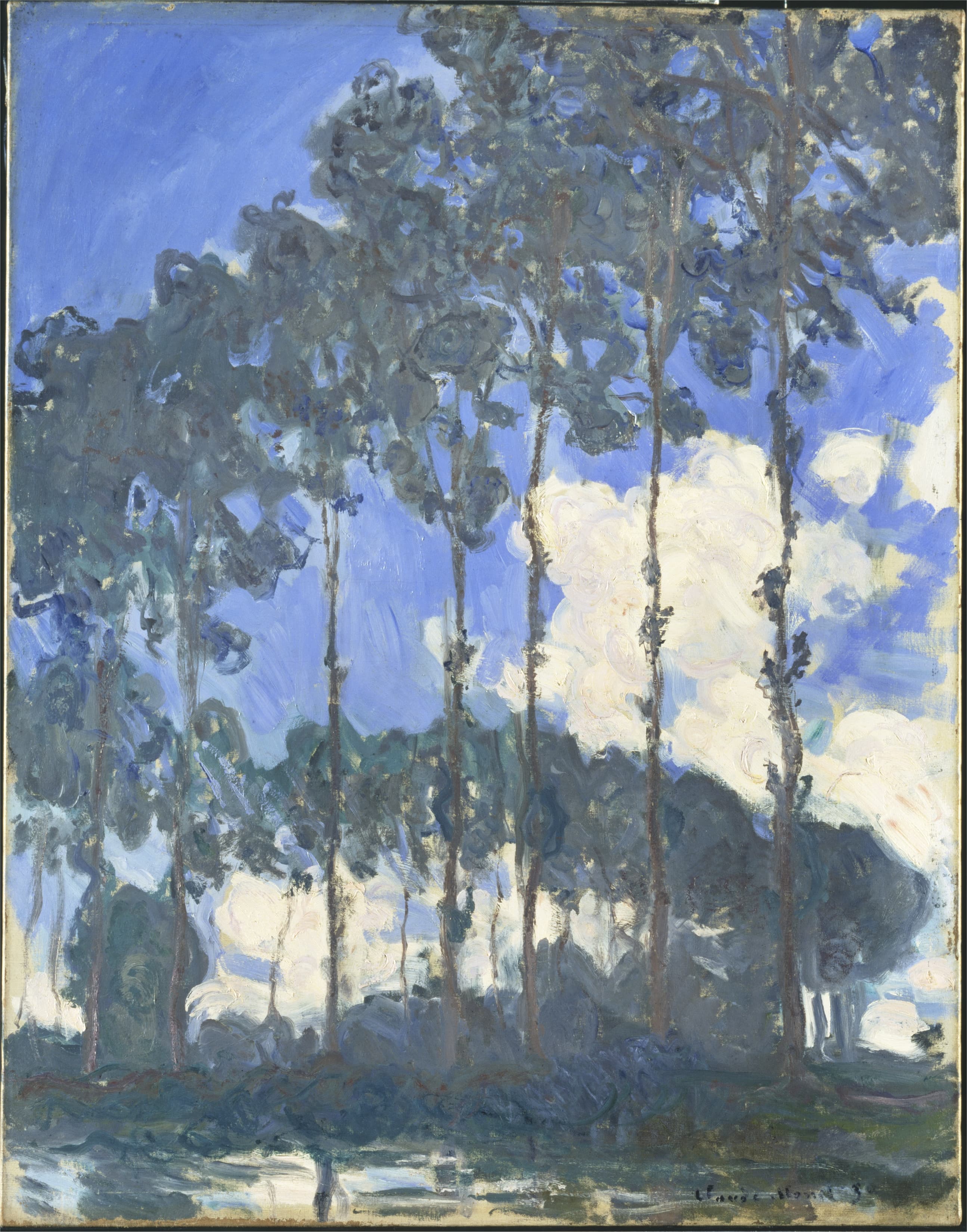
Poplars on the Epte (London)
Claude Monet · 1891
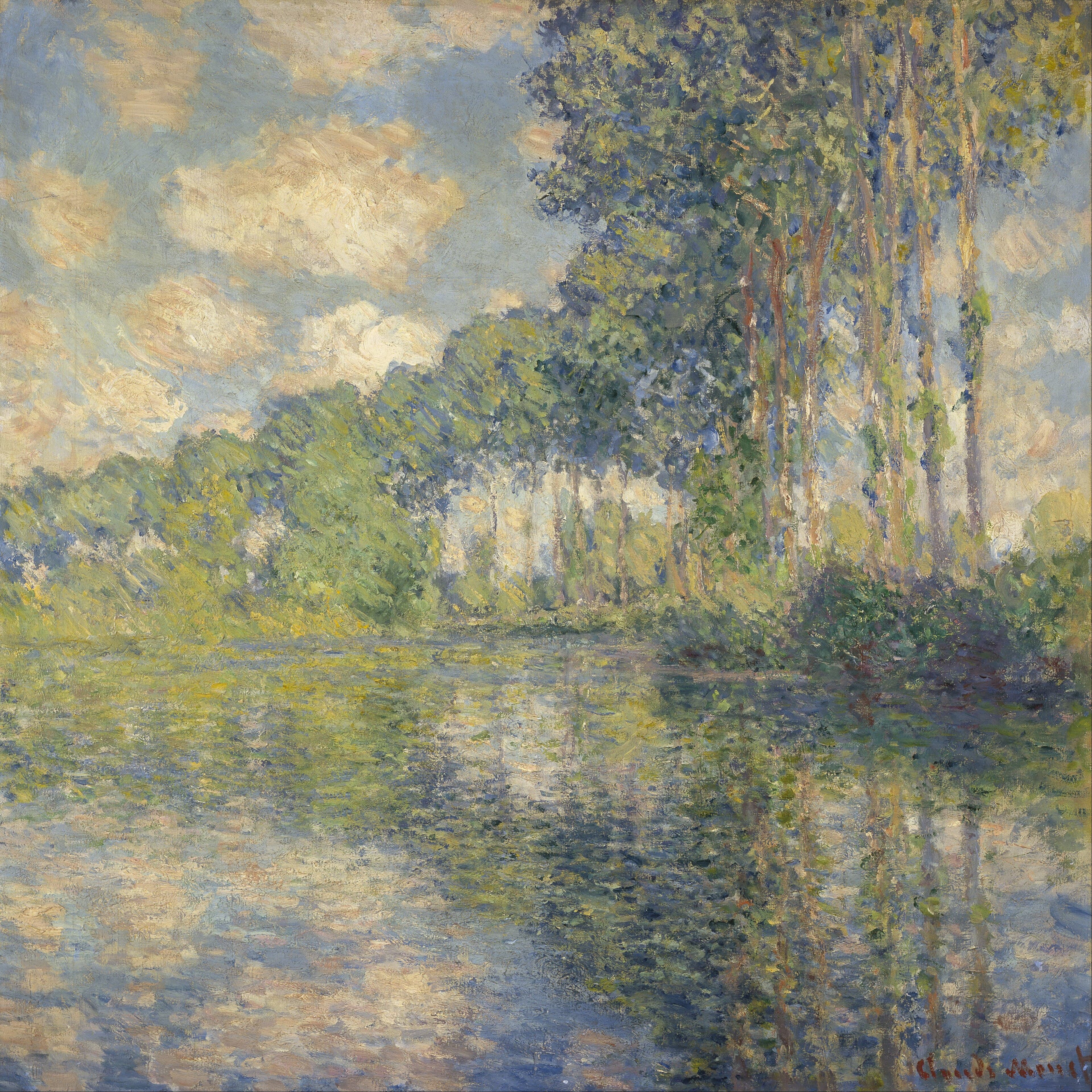
Poplars on the Epte (Edinburgh)
Claude Monet · 1891
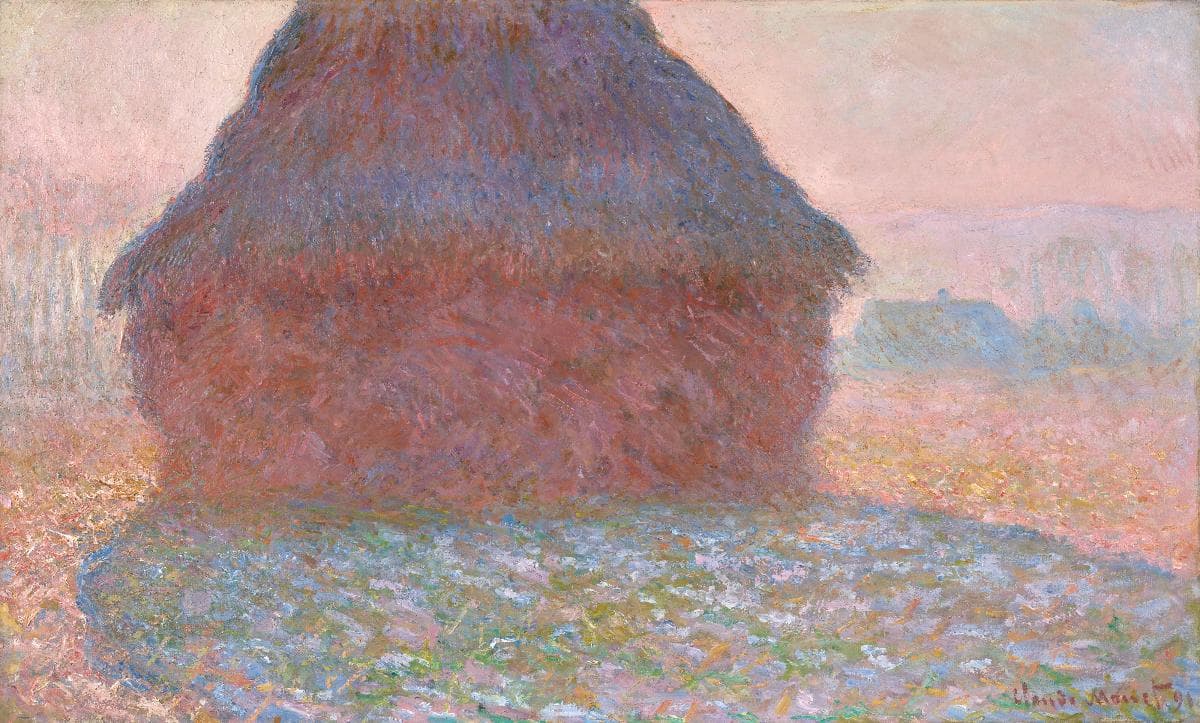
Grainstack in Sunlight
Claude Monet · 1891
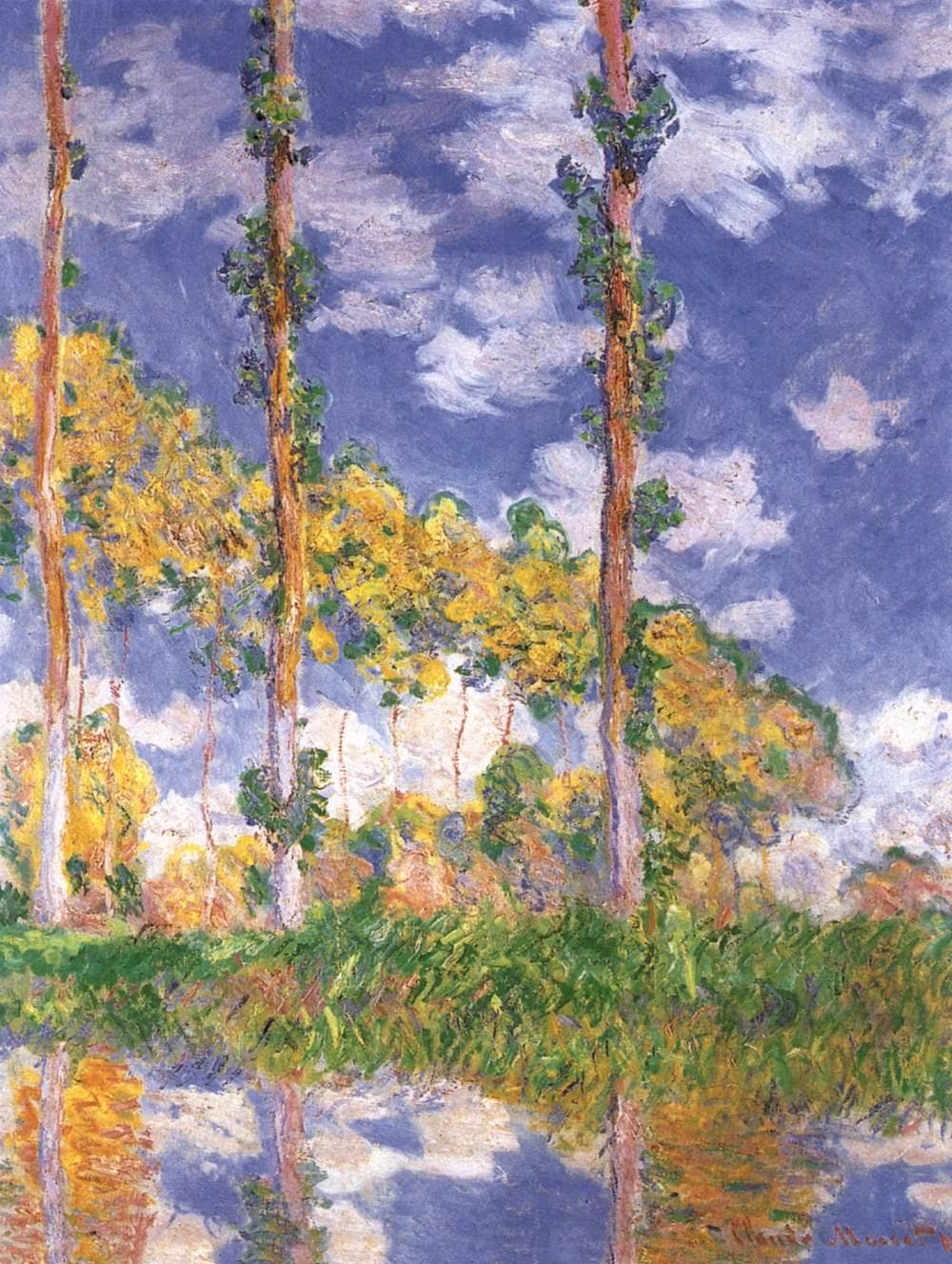
Three Poplars, Summer
Claude Monet · 1891
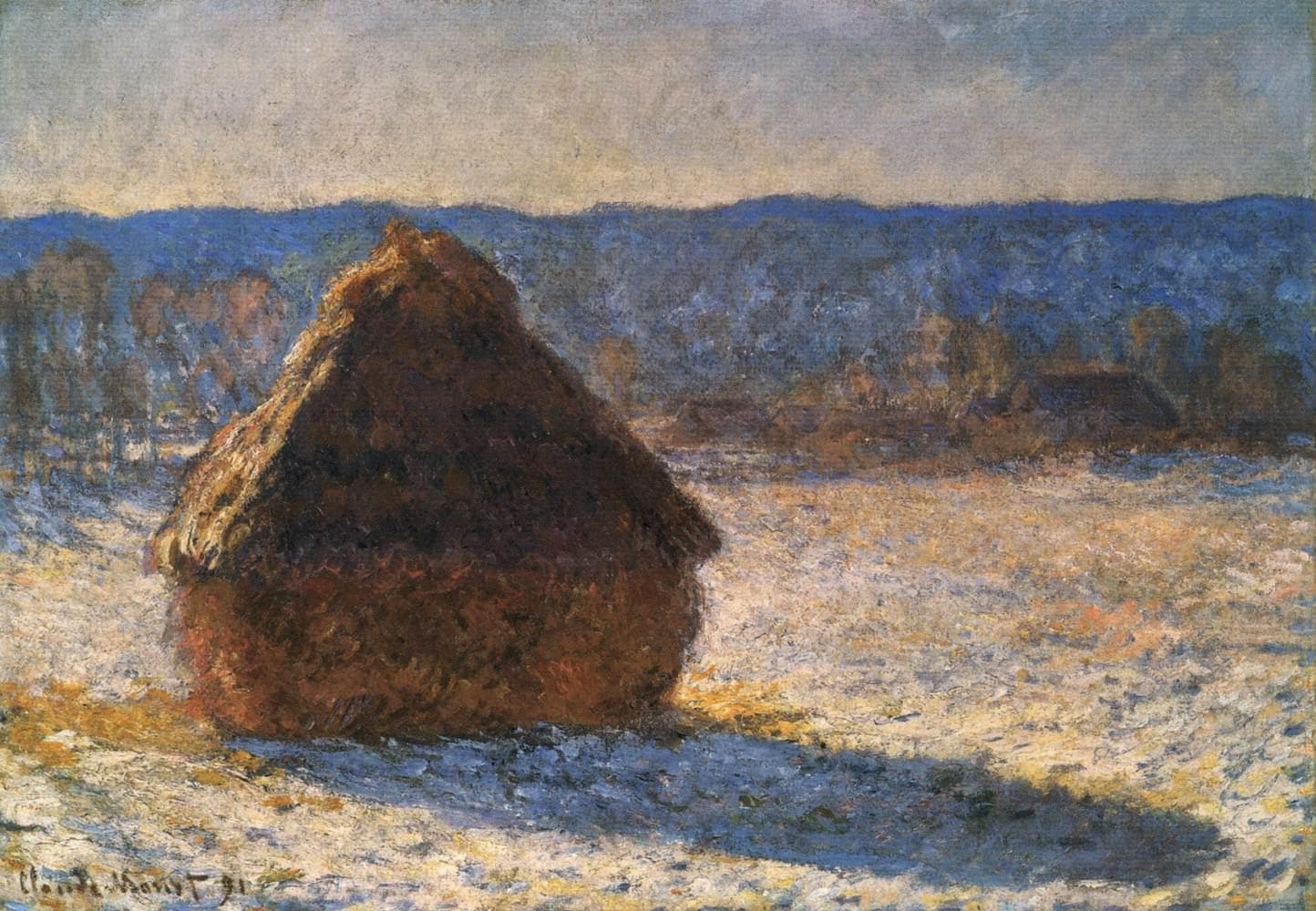
Grainstack (Snow Effect)
Claude Monet · 1891
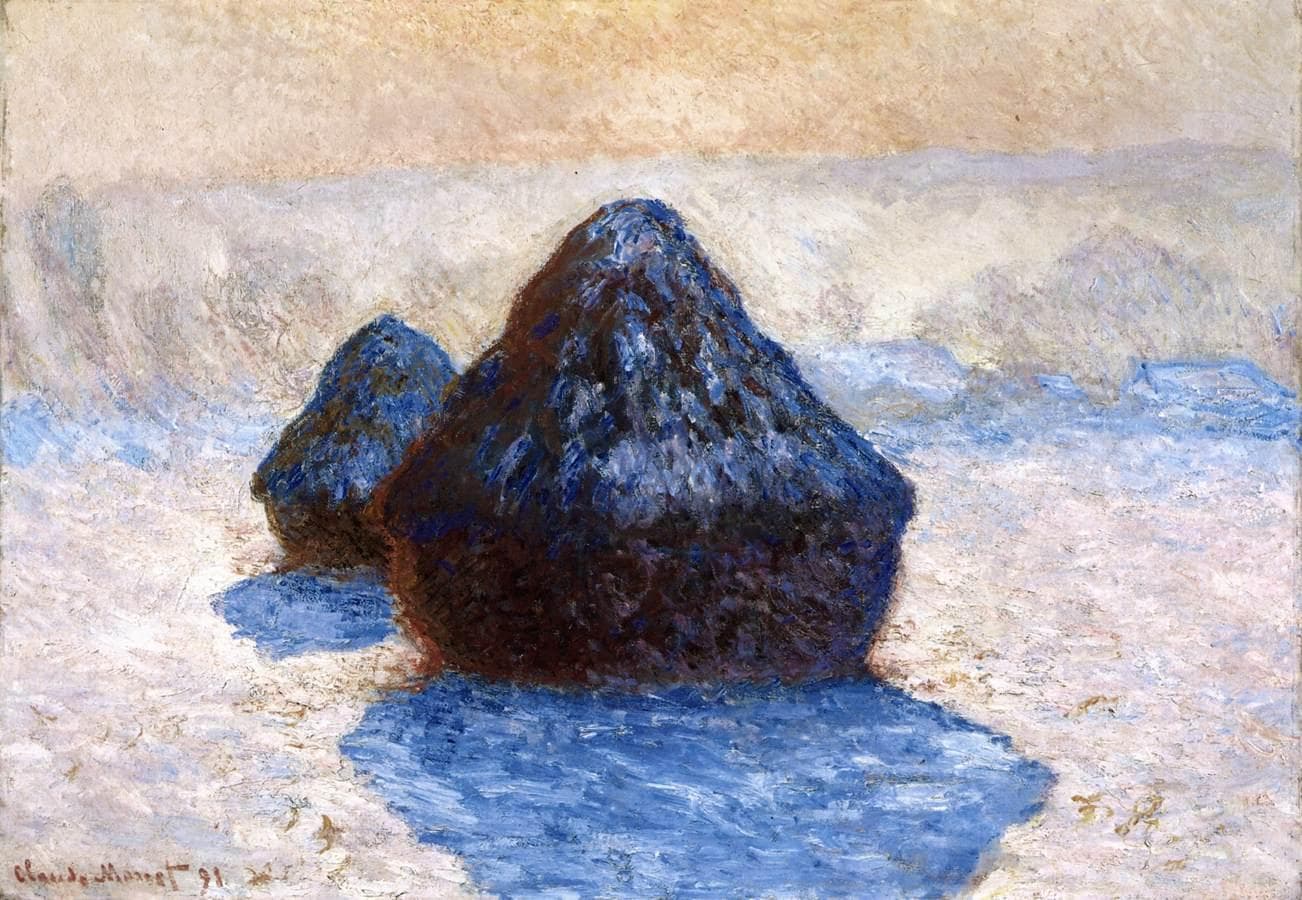
Haystacks, Snow Effect
Claude Monet · 1891
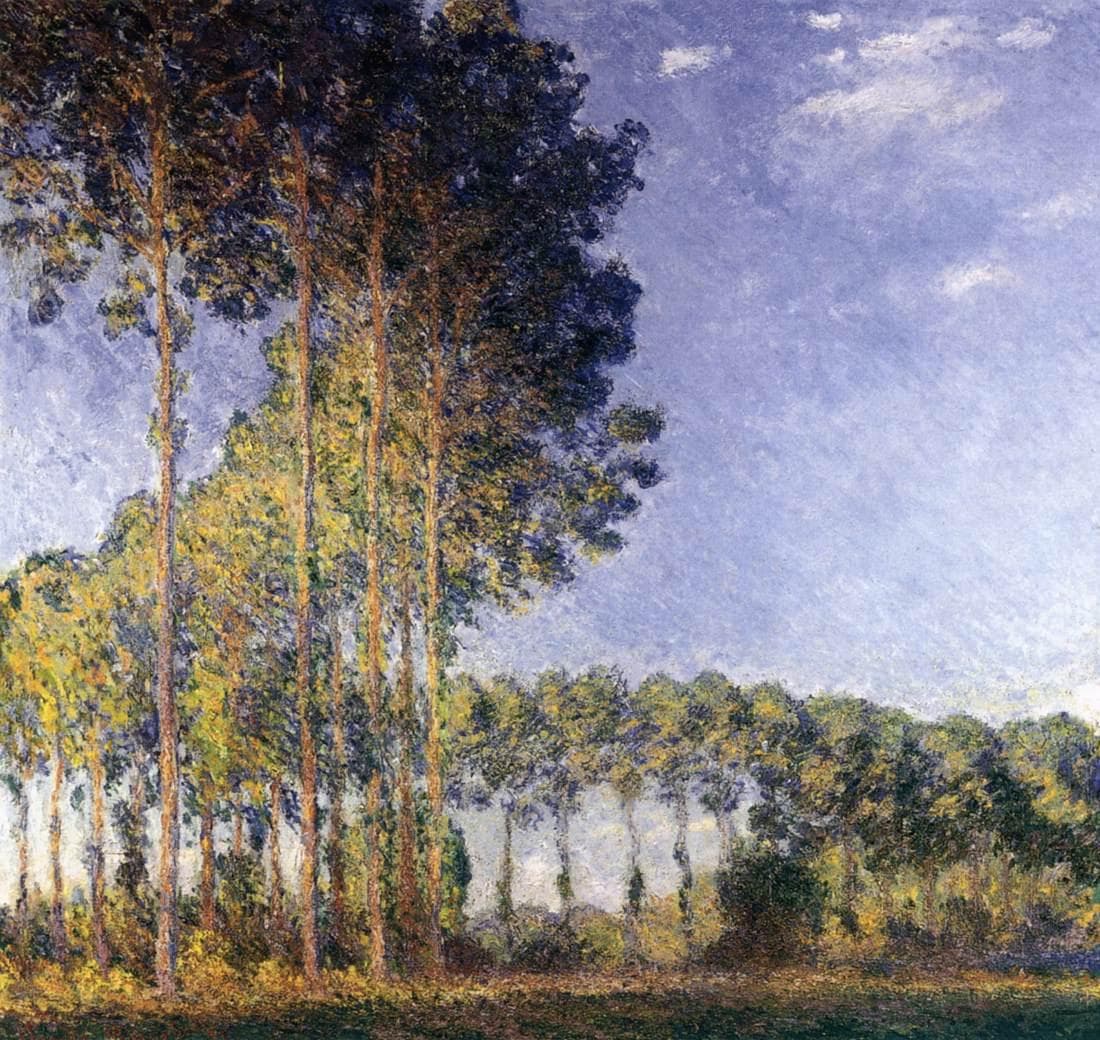
Poplars at the Banks of Epte
Claude Monet · 1891–92
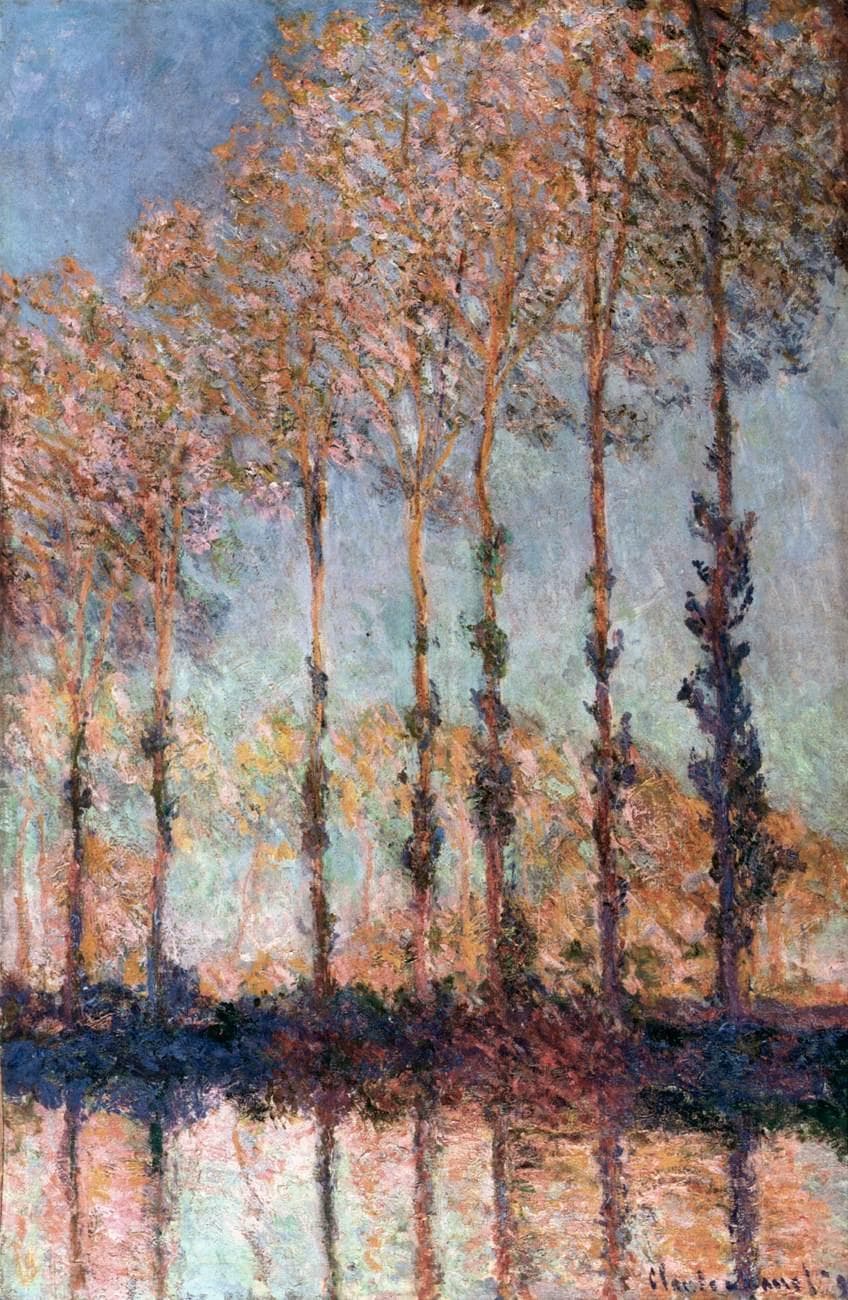
Poplars on the Banks of the River Epte
Claude Monet · 1891
Kindred works
You may also study
Poplars on the Banks of the River Epte
Claude Monet · 1891
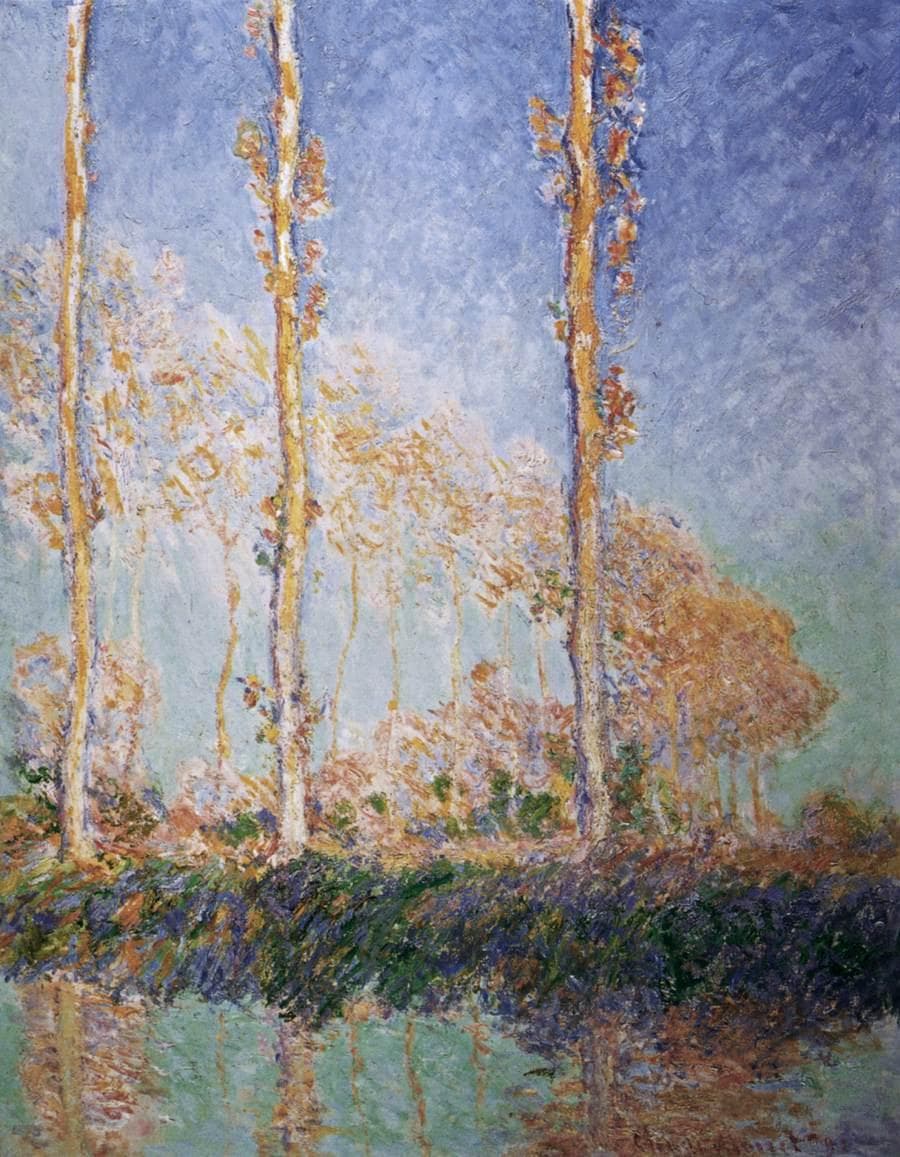
Poplars, Three Pink Trees, Autumn
Claude Monet · 1891
Three Poplars, Summer
Claude Monet · 1891
Poplars at the Banks of Epte
Claude Monet · 1891–92
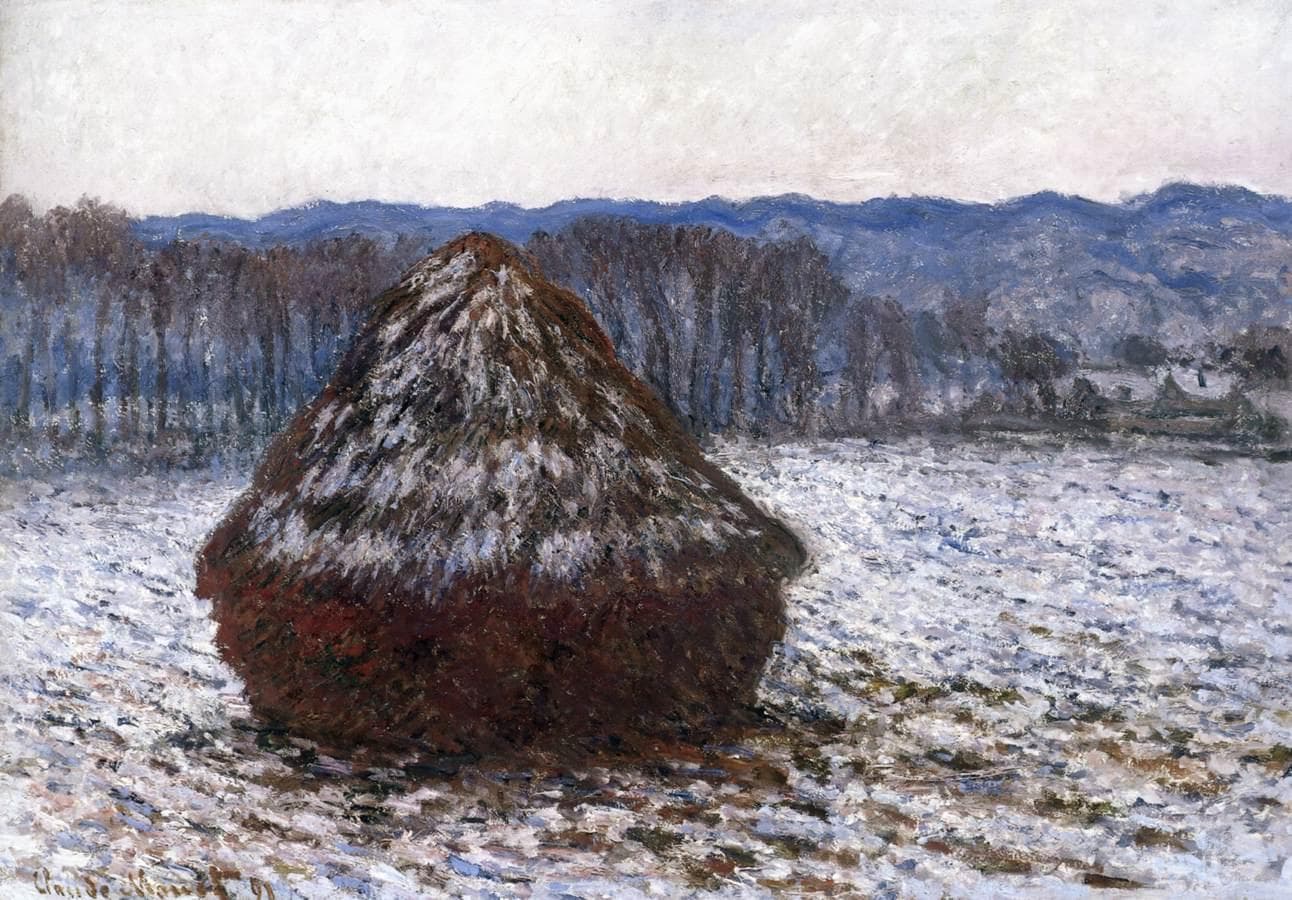
Stack of Wheat
Claude Monet · 1890–91

The Scream
Edvard Munch · 1893

Ophelia
John Everett Millais · 1851–52

The Great Wave off Kanagawa
Katsushika Hokusai · c. 1830–32