Impressionism
The Japanese Bridge
Claude Monet, c. 1923–25
The Japanese Bridge is a late painting by Claude Monet, dated by its museum to about 1923–25, showing the footbridge in his Giverny garden dissolved into thick strokes of red, orange and green. It is in the Minneapolis Institute of Art.
- Artist
- Claude Monet
- Date
- c. 1923–25
- Medium
- Oil on canvas
- Dimensions
- 88.9 × 116.2 cm
- Collection
- Minneapolis Institute of Art, Minneapolis, United States
- Movement
- Impressionism
- Catalogue
- Wildenstein 1931
What you are looking at
At first it is hard to find the bridge. The canvas is a dense weave of thick, scrubbed brushstrokes in rust red, orange, ochre and dark green, with patches of blue and yellow. Then the shape emerges: a low arch across the middle of the picture, its rail a tangle of dark green and blue-black strokes, hung with masses of foliage that must be the wisteria Monet trained over the bridge. Under the arch, a band of glowing yellow and cream suggests light on the far bank.
Beneath it, the water is a mottled field of red, gold and green, with a few horizontal touches of blue. At lower left, a clump of blue and green suggests irises or other plants at the pond's edge; at the right edge, a dark curtain of red-brown strokes hangs down like the fronds of a willow. In the upper left corner a patch of pale pink and white is the only hint of sky. The signature is at lower right.
Claude Monet painted this view of the footbridge in his garden at Giverny in the last years of his life. The Minneapolis Institute of Art dates it to about 1923–25; Wildenstein, who catalogues it as number 1931, places it in the years 1918–24. It measures 88.9 by 116.2 centimeters and came to the museum in 1961 with the bequest of Putnam Dana McMillan.
Where and when
Monet had dug his water garden across the road from his house at Giverny in 1893 and built the arched, Japanese-style footbridge over the pond soon after. He painted it in a famous series in 1899–1900, green and serene, as in The Japanese Footbridge in Washington and Bridge over a Pond of Water Lilies in New York. In those pictures the bridge is a clear shape and the pond is full of lilies. Later a trellis was added over it for wisteria, and Monet's way of painting changed completely. See Giverny: Monet's House and Garden.
By the 1920s he was over 80, widowed (Alice died in 1911) and bereaved of his elder son Jean (1914), and working on the enormous Water Lilies decorations he had promised to the French state for the Orangerie. His sight was clouded by cataracts, which dulled and yellowed his perception of color and blurred detail. He had an operation on his right eye in 1923, followed by a long and frustrating period of adjustment with corrective lenses.
How it was painted
Look at the brushwork. The paint is laid on in thick, looping, almost violent strokes, dragged and layered so the surface is rough and crusted; in places the strokes have been scraped or scrubbed into one another. There is almost no blending and no outline. The color is hot: the cool greens of 1899 have turned to reds and oranges, with green and blue used as accents.
Whether that shift came from his failing eyes, from autumn light and foliage, or from deliberate choice is still debated, and the answer may well be all three. What is clear is that the motif no longer needed to be legible. The bridge is a curve of energy across the canvas, and the pond, the trees and the light around it are a single, continuous surface of paint.
The series and how this version differs
The late bridge pictures, painted between about 1918 and 1924, number more than twenty: see the Japanese Footbridge series. Some are dominated by blue and green, others, like this one, by red and orange; The Japanese Footbridge at the Museum of Modern Art is a close relative. Compare also the late Weeping Willow in the Musée d'Orsay, painted in the same raw, agitated manner.
Long ignored, these late works were rediscovered in the 1950s by American critics and painters, who saw in them a forerunner of Abstract Expressionism and of pictures such as Jackson Pollock's The Deep.
Where to see it
The painting is in the Minneapolis Institute of Art. For other museums with late Monet, see where to see Monet's paintings; for his methods and eyesight, How Monet Painted; and for his life, Claude Monet.
Questions & answers
Where is Monet's late Japanese Bridge in Minneapolis?
It is in the Minneapolis Institute of Art, which received it in 1961 with the bequest of Putnam Dana McMillan. The canvas measures 88.9 by 116.2 centimeters and is catalogued by Wildenstein as number 1931.
When was The Japanese Bridge painted?
The museum dates it to about 1923–25; the Wildenstein catalogue gives 1918–24. Either way it belongs to the last decade of Monet's life, when he painted his garden at Giverny with cataracts clouding his sight.
What does The Japanese Bridge show?
The wooden footbridge over Monet's water lily pond at Giverny, hung with wisteria, rendered in thick, swirling strokes of red, orange, ochre and green, with the pond below and willow fronds at the right.
How is the late Japanese Bridge different from the 1899 versions?
The 1899–1900 pictures show a clear, blue-green bridge over a pond of lilies in cool, even light. The late versions dissolve the bridge into rough, hot-colored brushwork, close to abstraction, reflecting Monet's changing eyesight and style.
More by the artist
Claude Monet

Bridge over a Pond of Water Lilies
Claude Monet · 1899

Woman with a Parasol – Madame Monet and Her Son
Claude Monet · 1875

Sunset in Venice
Claude Monet · 1908–12

La Grenouillère
Claude Monet · 1869

Beach in Pourville
Claude Monet · 1882

Springtime
Claude Monet · 1872

Boating on the River Epte
Claude Monet · 1890

The Seine at Asnières (Hermitage)
Claude Monet · 1873
Kindred works
You may also study
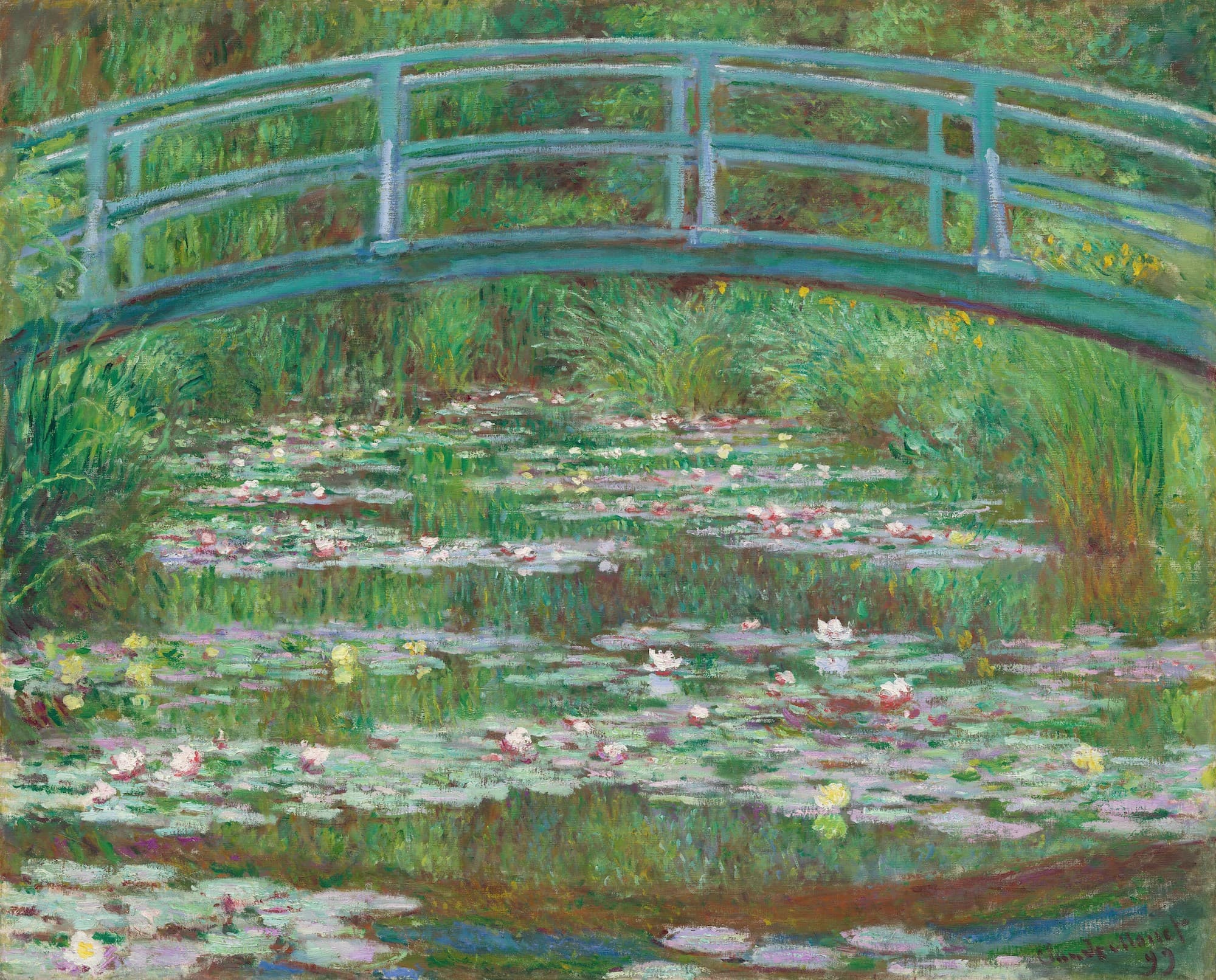
The Japanese Footbridge
Claude Monet · 1899
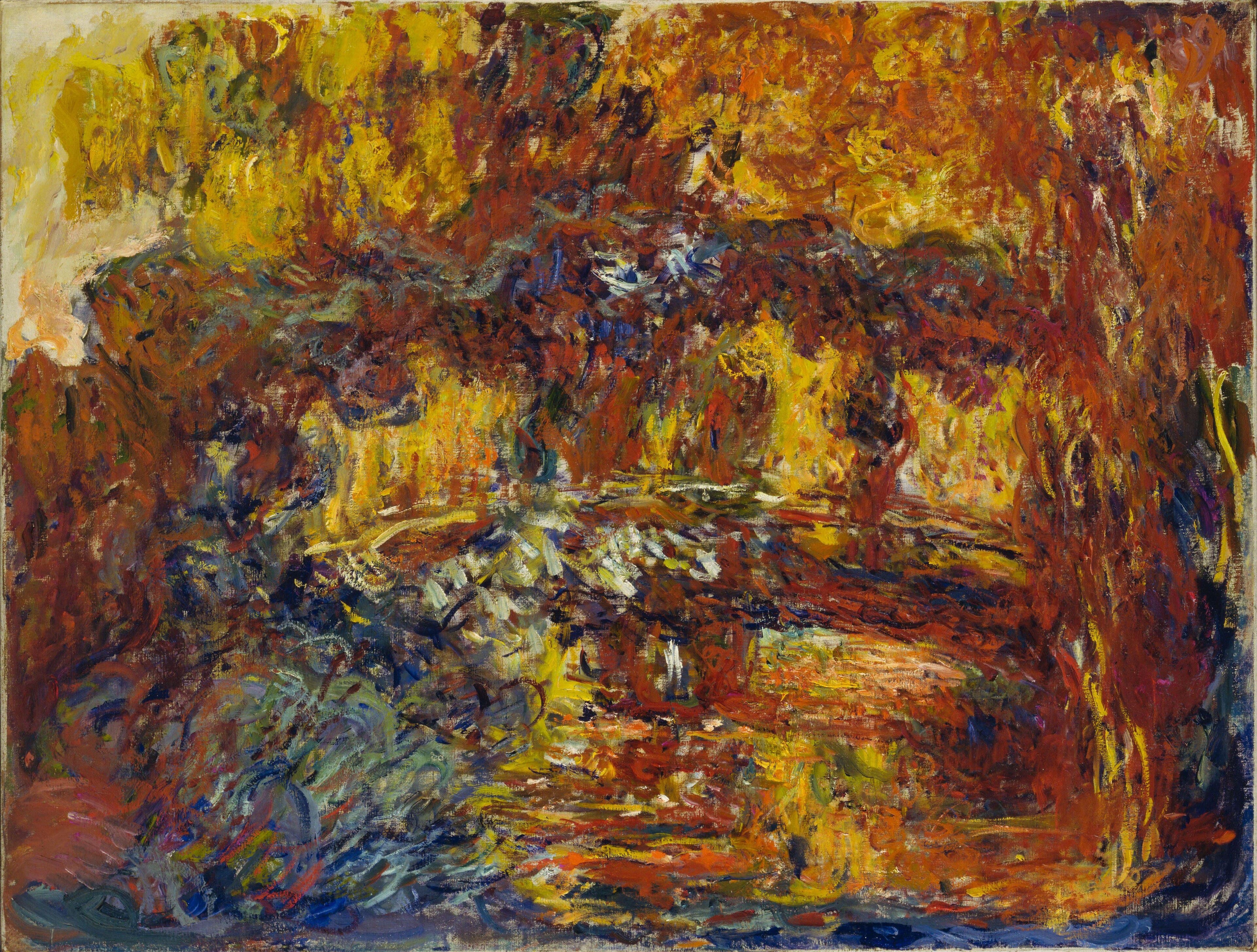
The Japanese Footbridge (MoMA)
Claude Monet · c. 1920–22
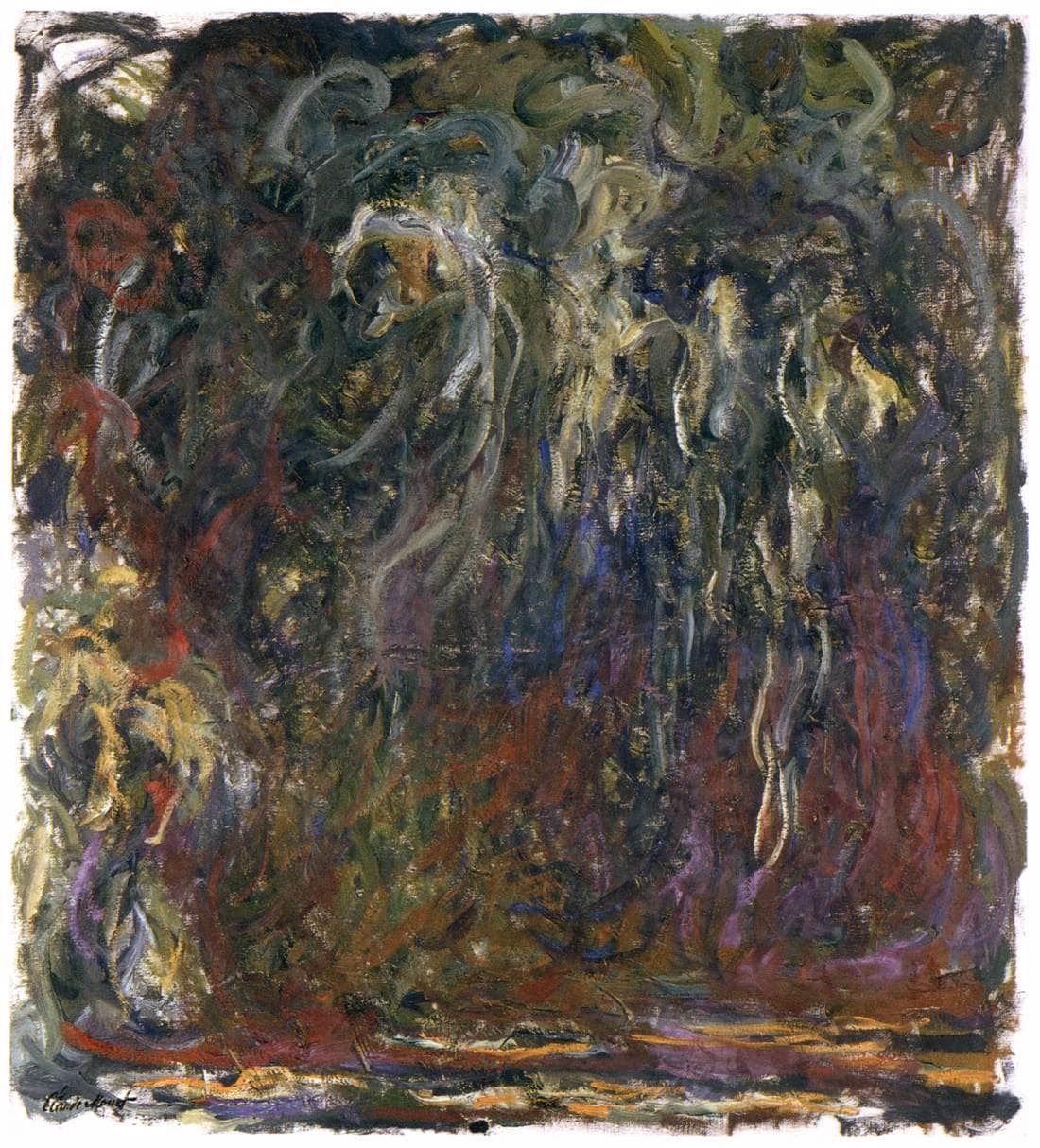
Weeping Willow
Claude Monet · 1920–22
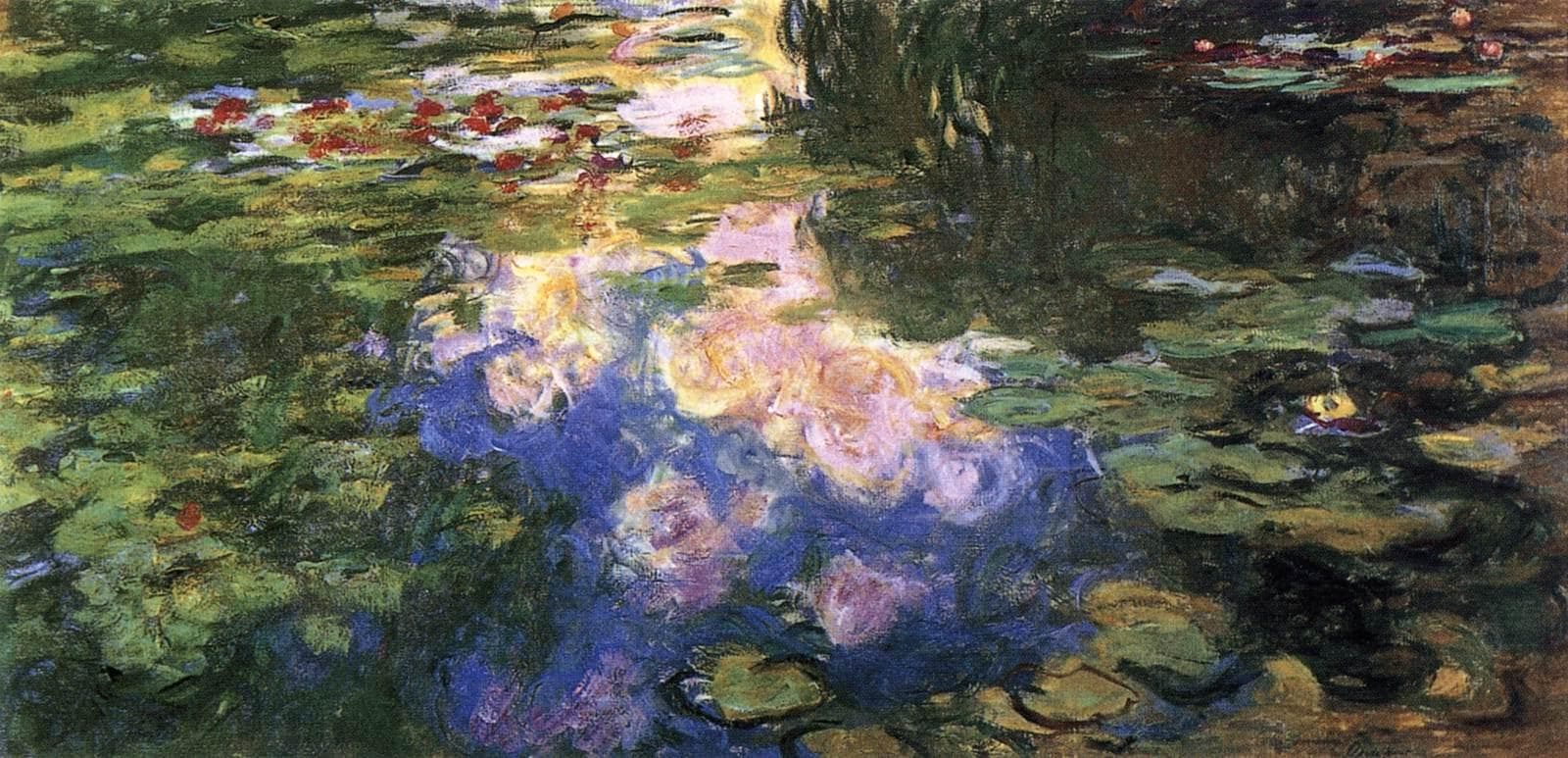
Water-Lily Pond (Le Bassin aux nymphéas), 1917–19
Claude Monet · 1917–19

The Scream
Edvard Munch · 1893

Ophelia
John Everett Millais · 1851–52

The Great Wave off Kanagawa
Katsushika Hokusai · c. 1830–32
The Birth of Venus
Sandro Botticelli · c. 1484–1486