Impressionism
Stacks of Wheat, Sunset, Snow Effect
Claude Monet, 1890–91
Stacks of Wheat (Sunset, Snow Effect) is a painting by Claude Monet from his 1890–91 wheat stacks series: two snow-capped stacks in a frozen field under an orange winter sunset at Giverny. The 65.3 × 100.4 cm canvas (Wildenstein 1278) is in the Art Institute of Chicago.
- Artist
- Claude Monet
- Date
- 1890–91
- Medium
- Oil on canvas
- Dimensions
- 65.3 × 100.4 cm
- Collection
- Art Institute of Chicago, Chicago, United States
- Movement
- Impressionism
- Catalogue
- Wildenstein 1278
What you are looking at
Two stacks of wheat, one large in the center and one smaller behind it to the left, sit in a snowy field as the sun goes down. The sky at upper right burns orange and yellow, while the rest of the picture sinks into lilac, violet and cold blue. The stacks are dark plum and blue against the snow, their caps dusted with white, and long blue-violet shadows run from them across the ground. The far landscape has almost dissolved: the hills and trees are only a hazy band of pinkish blue and grey, and the line between land and sky is lost in the glow.
Monet plays complementary colors against each other. The warm orange of the sky is set beside the violets of the snow, and the edges of the stacks glow faintly where the last light catches them. Look at the snow just below the horizon: it picks up a pinkish reflection, so the ground and the air seem to be made of the same colored light. The upper left corner of the sky is a cooler, greyer violet, so the sunset seems to be happening in one part of the sky only, low and to the right. The signature and date, "Claude Monet 91," are at the lower right.
Giverny, winter 1890–91
Monet painted the stacks in the field next to his house at Giverny from late summer 1890 into the winter, carrying several canvases out at once and switching between them as conditions changed. A sunset effect lasts minutes; in a letter of October 1890 to the critic Gustave Geffroy he complained that the sun was setting so fast he could not keep up with it, and he had to return to such a canvas day after day when the same light came round again. At the Galerie Durand-Ruel in May 1891 he exhibited fifteen stacks, and the show sold quickly.
How it was painted
At 65.3 by 100.4 centimeters, this is one of the wider canvases in the series, a format Monet used for several of the pictures that show two stacks side by side. The paint is thick and crusted in places, built up over many sessions, with strokes of orange dragged across violet so that both colors show. The stacks themselves are the most thinly painted forms, dark and soft-edged, which helps them read as silhouettes against the light. Their shadows are laid over the snow in long, single strokes of blue-violet, and they fall forward and to the left, away from the glow at upper right, which places the sun low on the horizon just where the sky burns brightest.
The series and the Palmers
The series is gathered in our Haystacks hub. This canvas went from Monet to Durand-Ruel in July 1891, then to the dealer's New York branch, and was bought in February 1892 by Potter Palmer of Chicago. Bertha Honoré Palmer and her husband were among the most enthusiastic early buyers of Monet in America, and their collection is the main reason the Art Institute holds so many of the stacks. The Palmer family gave it to the museum in 1922.
In the same rooms you can compare this sunset with the colder light of Stack of Wheat and the grey day of Stack of Wheat, Snow Effect, Overcast Day. For sunlight in a warmer season, see Grainstack in Sunlight in Zurich.
Meaning
Claude Monet's sunsets recur across his career, from Impression, Sunrise to the late London views. Here the event is reduced to its simplest terms: two dark forms, one burning sky, and the snow that carries its color. Critics in 1891 read the stacks variously as images of rural France and as pure studies of light; the painting supports the second reading more than the first.
Where to see it
The painting is on view in the Art Institute of Chicago's Impressionist galleries; see our guide to Monet at the Art Institute of Chicago.
Questions & answers
Where is Stacks of Wheat, Sunset, Snow Effect?
It is in the Art Institute of Chicago. The canvas (Wildenstein 1278) entered the museum in 1922 with the Potter Palmer Collection, assembled by Bertha and Potter Palmer, early American admirers of Monet who bought several of the wheat stacks.
When was it painted?
In the winter of 1890–91, in the field beside Monet's house at Giverny. It is signed and dated '91 at lower right. Monet sold it to his dealer Durand-Ruel in July 1891, and Potter Palmer bought it in New York in February 1892.
What does Monet's haystacks at sunset show?
It shows two snow-capped wheat stacks in a frozen field at Giverny as the winter sun sets. Monet contrasts an orange and yellow sky with violet and blue snow and shadows, so the painting is really about colored light at a single moment of the day.
How big is Stacks of Wheat, Sunset, Snow Effect?
The painting measures 65.3 by 100.4 centimeters (about 25.7 by 39.5 inches). It is one of the wider canvases in the series, a format Monet used for several of the stacks that show two forms side by side.
More by the artist
Claude Monet

Bridge over a Pond of Water Lilies
Claude Monet · 1899

Woman with a Parasol – Madame Monet and Her Son
Claude Monet · 1875

Sunset in Venice
Claude Monet · 1908–12

La Grenouillère
Claude Monet · 1869

Beach in Pourville
Claude Monet · 1882

Springtime
Claude Monet · 1872

Boating on the River Epte
Claude Monet · 1890

The Seine at Asnières (Hermitage)
Claude Monet · 1873
Also painted in 1890
The same year
Kindred works
You may also study
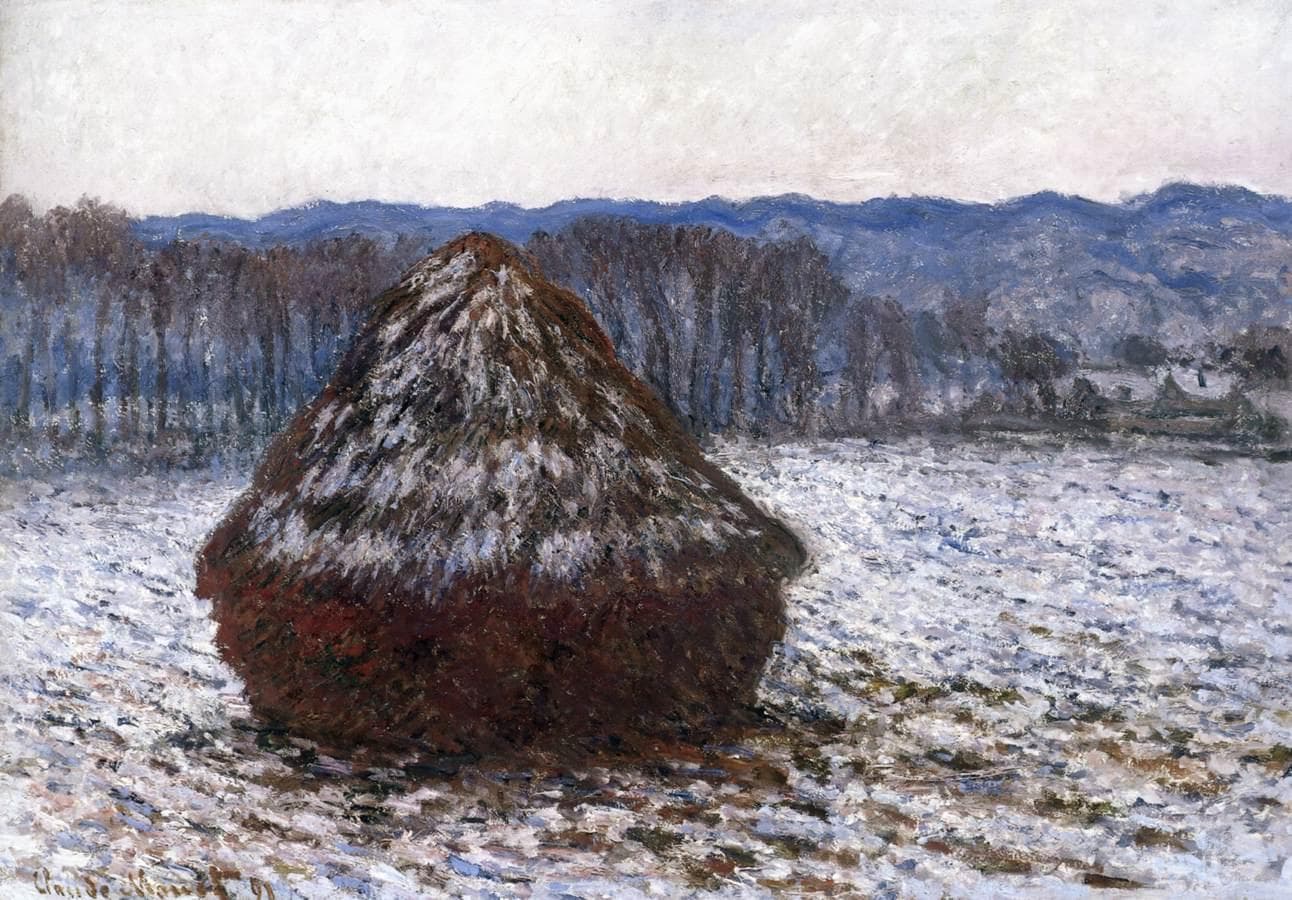
Stack of Wheat
Claude Monet · 1890–91
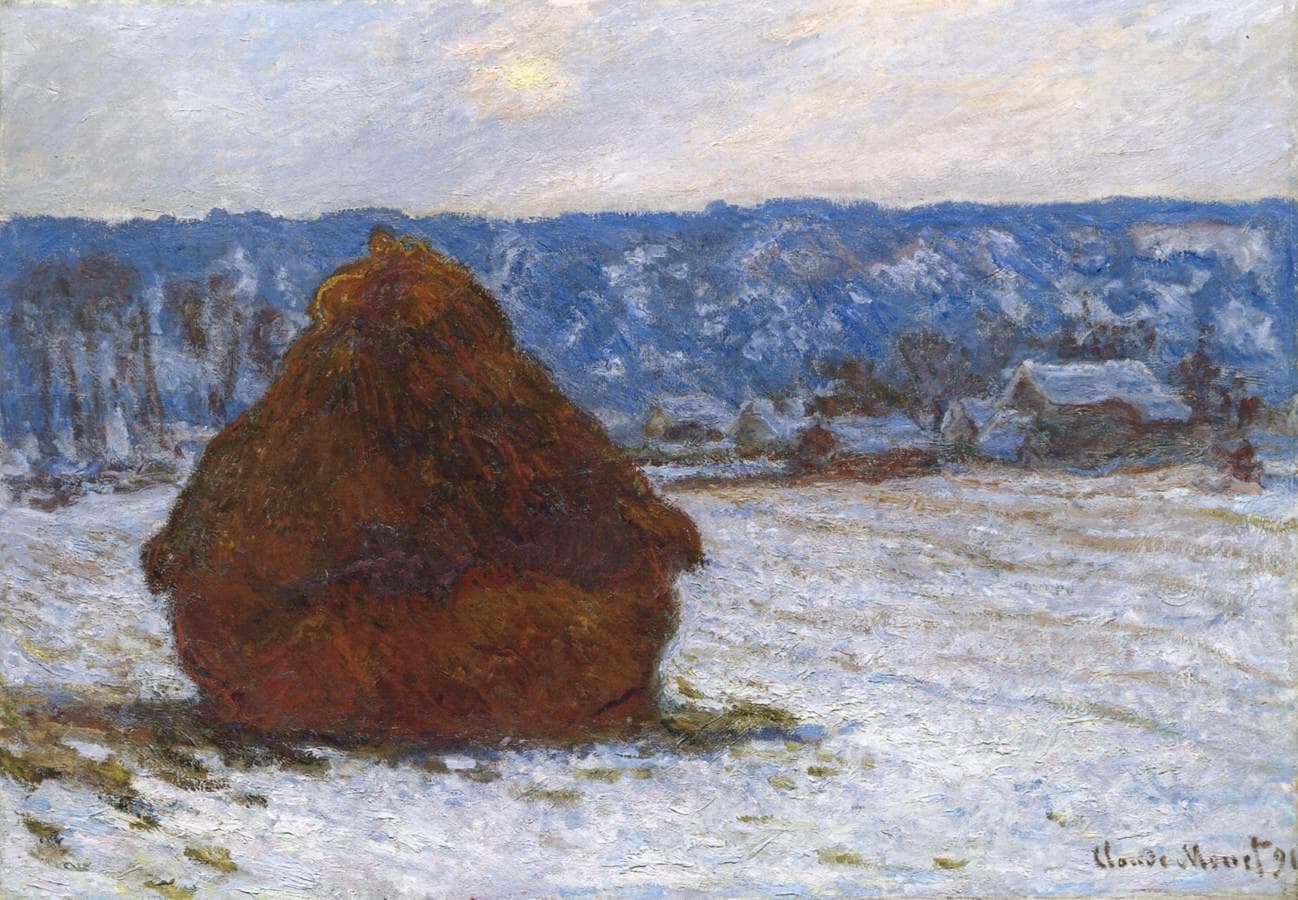
Stack of Wheat, Snow Effect, Overcast Day
Claude Monet · 1890–91
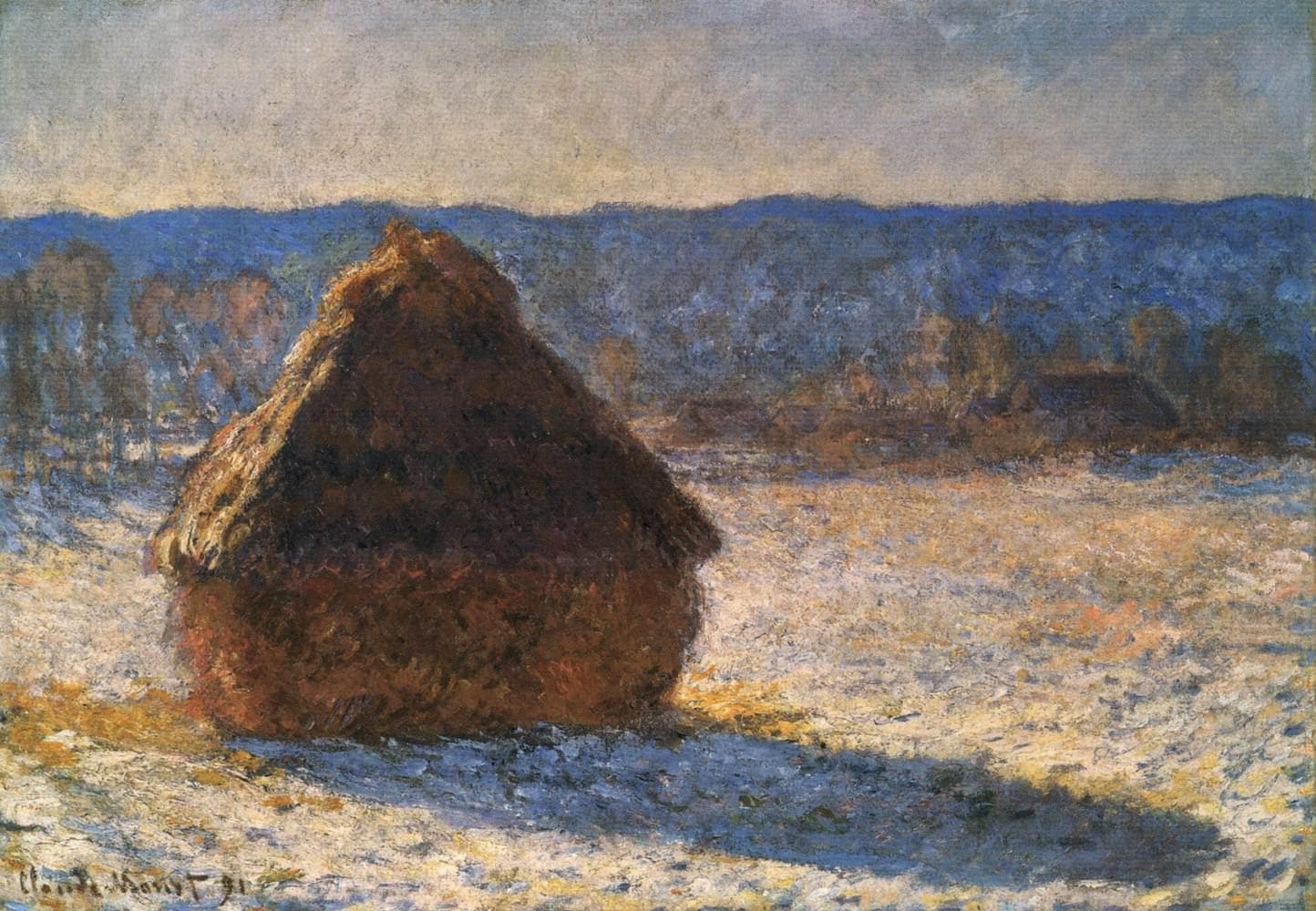
Grainstack (Snow Effect)
Claude Monet · 1891
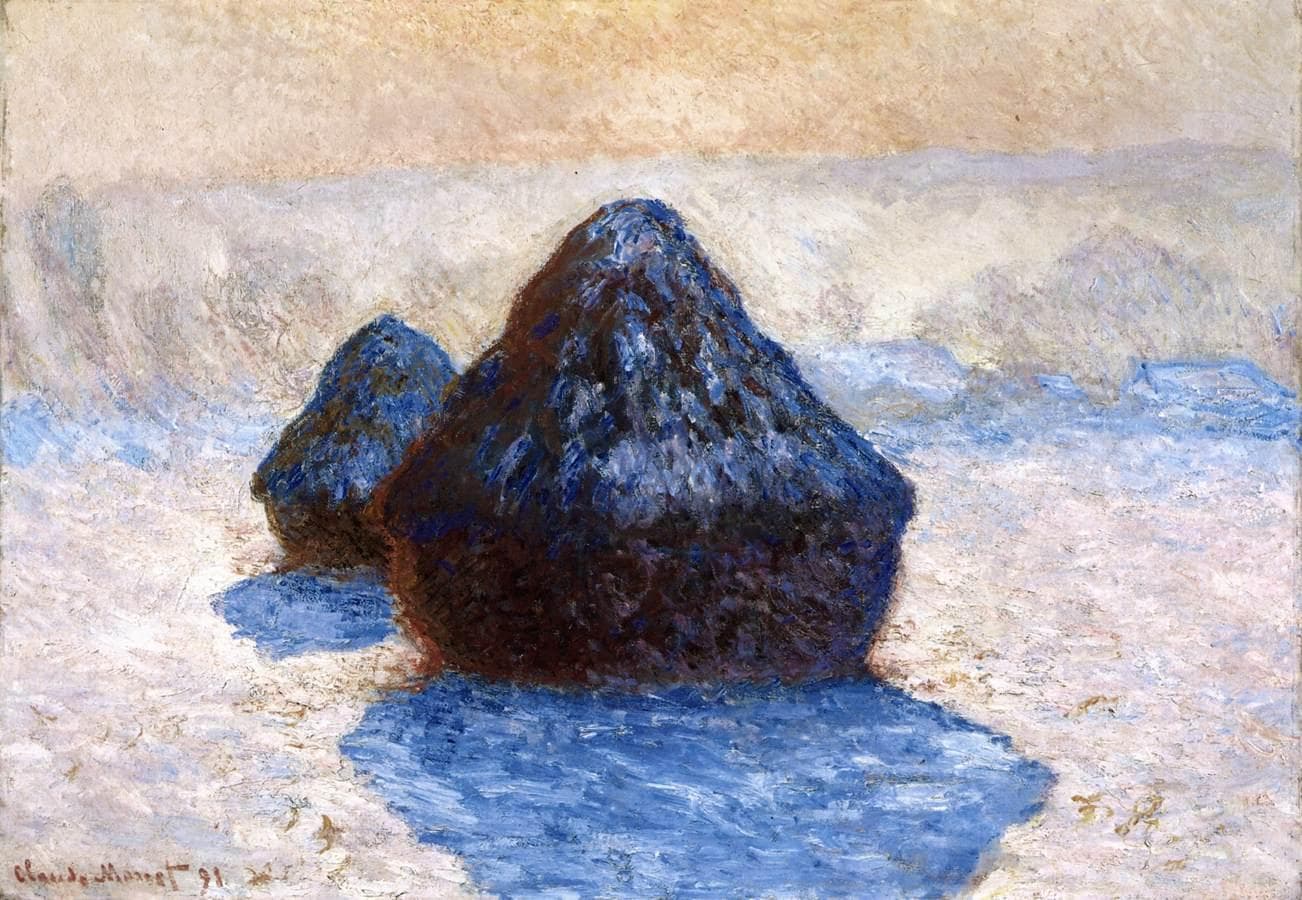
Haystacks, Snow Effect
Claude Monet · 1891
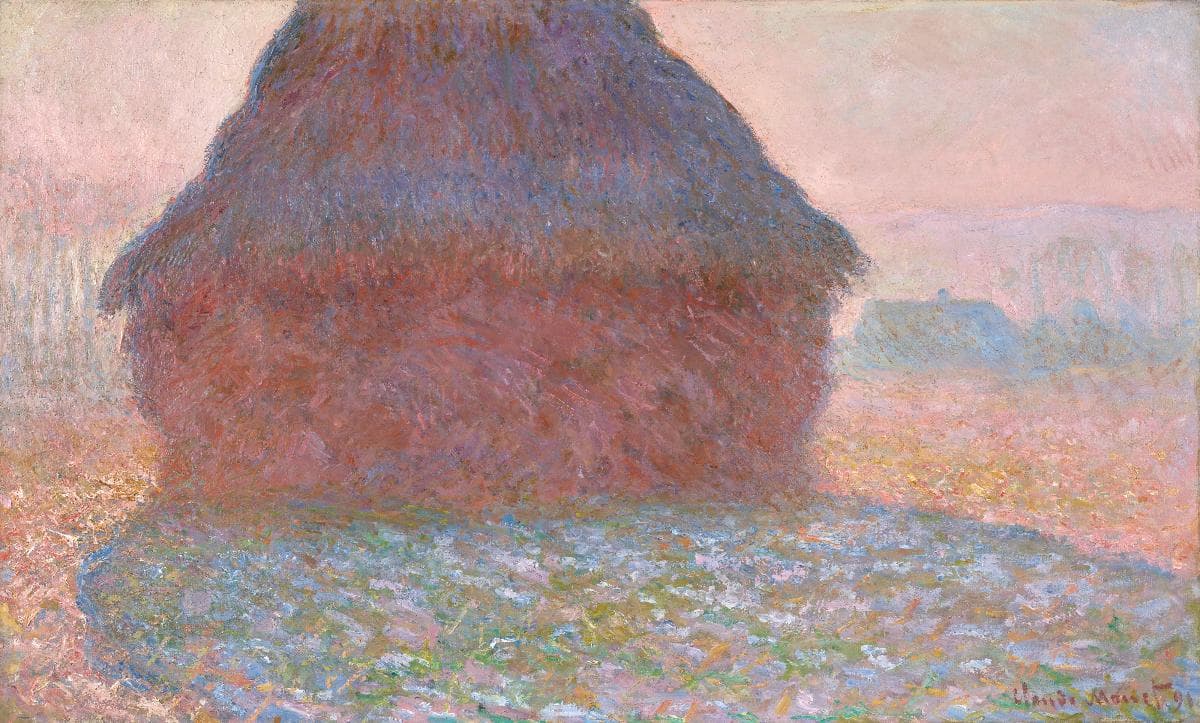
Grainstack in Sunlight
Claude Monet · 1891

The Scream
Edvard Munch · 1893

Ophelia
John Everett Millais · 1851–52

The Great Wave off Kanagawa
Katsushika Hokusai · c. 1830–32