Impressionism
Rouen Cathedral, Effects of Morning Light
Claude Monet, 1893
Rouen Cathedral, Effects of Morning Light (Harmonie blanche) is an 1893 painting by Claude Monet of the cathedral's west portal and the Tour Saint-Romain in pale early light, from his Rouen Cathedral series. It measures 106 × 73 cm (Wildenstein 1346) and is in the Musée d'Orsay, Paris.
- Artist
- Claude Monet
- Date
- 1893
- Medium
- Oil on canvas
- Dimensions
- 106 × 73 cm
- Collection
- Musée d'Orsay, Paris, France
- Movement
- Impressionism
- Catalogue
- Wildenstein 1346
More at Monet at the Musée d'Orsay
What you are looking at
The tall canvas is filled almost edge to edge with stone. On the left the massive square Tour Saint-Romain rises out of the top of the picture; to its right is the central portal of the west front, its pointed gable and pinnacles just visible against the sky, the great rose window a shadowy circle and the doorway below a dark recess. At the far lower left a sliver of the houses on the square appears in deep shadow, the only thing in the picture that is not cathedral. The sky is a strip of warm, dusty grey-green at upper left and right, barely distinguishable from the stone.
The light comes from behind the building, from the east, so the façade is in shade and reads almost as a silhouette washed in mist. Monet paints it in whites, pale lilacs, blue-greys and faint pinks, with only a little warmth on the tower, a patch of apricot about a third of the way down, where the sun is beginning to reach. The surface is extraordinarily thick: layer after layer of dry, crusted paint, dragged and dabbed until it has the roughness of weathered limestone. Up close the carving disappears into texture. At a distance the portal swims back into focus.
Look at the doorway at the bottom right. In the gloom of the recess a faint warm brown shows through: the wooden doors, the darkest and warmest note in a picture otherwise made of cool, pale air.
Rouen, 1892–93
Monet worked on the series in Rouen, the Norman city on the Seine downstream from Giverny, in the late winter and spring of 1892 and again in 1893. He painted from rented upstairs rooms on the square facing the west front, only a few meters from the façade, so close that the building fills every canvas. He kept many canvases going at once and changed from one to another as the light moved, sometimes within minutes. Back in his studio at Giverny he reworked them, and he dated most of them 1894. Twenty were exhibited at Durand-Ruel's gallery in Paris in May 1895.
How it was painted
This is one of the tall canvases, about 106 by 73 centimeters, that make up most of the series. The paint was applied over many sessions and in many layers; in places it is so thick that the canvas weave has disappeared entirely under a crust of dry, granular strokes. That surface was part of the point. The stone of the cathedral is rendered not by drawing its carving but by building up paint until the canvas itself feels like weathered stone.
Its place in the series
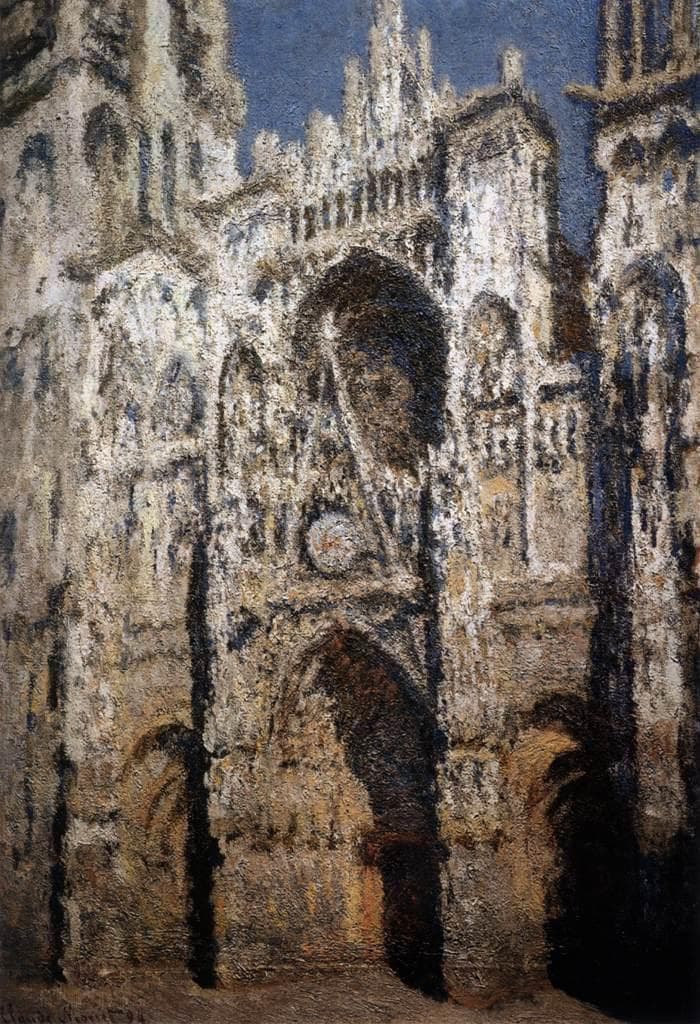
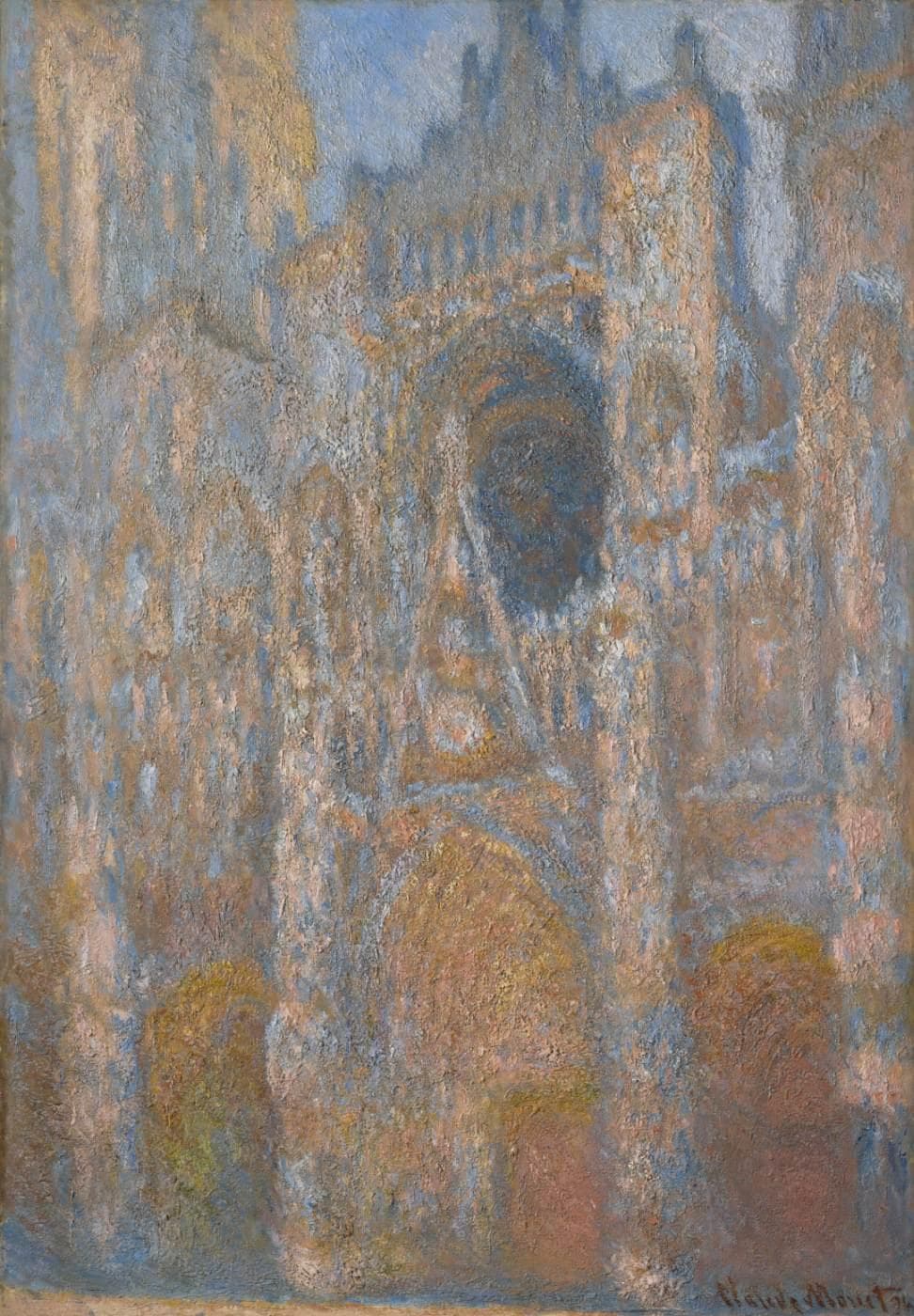
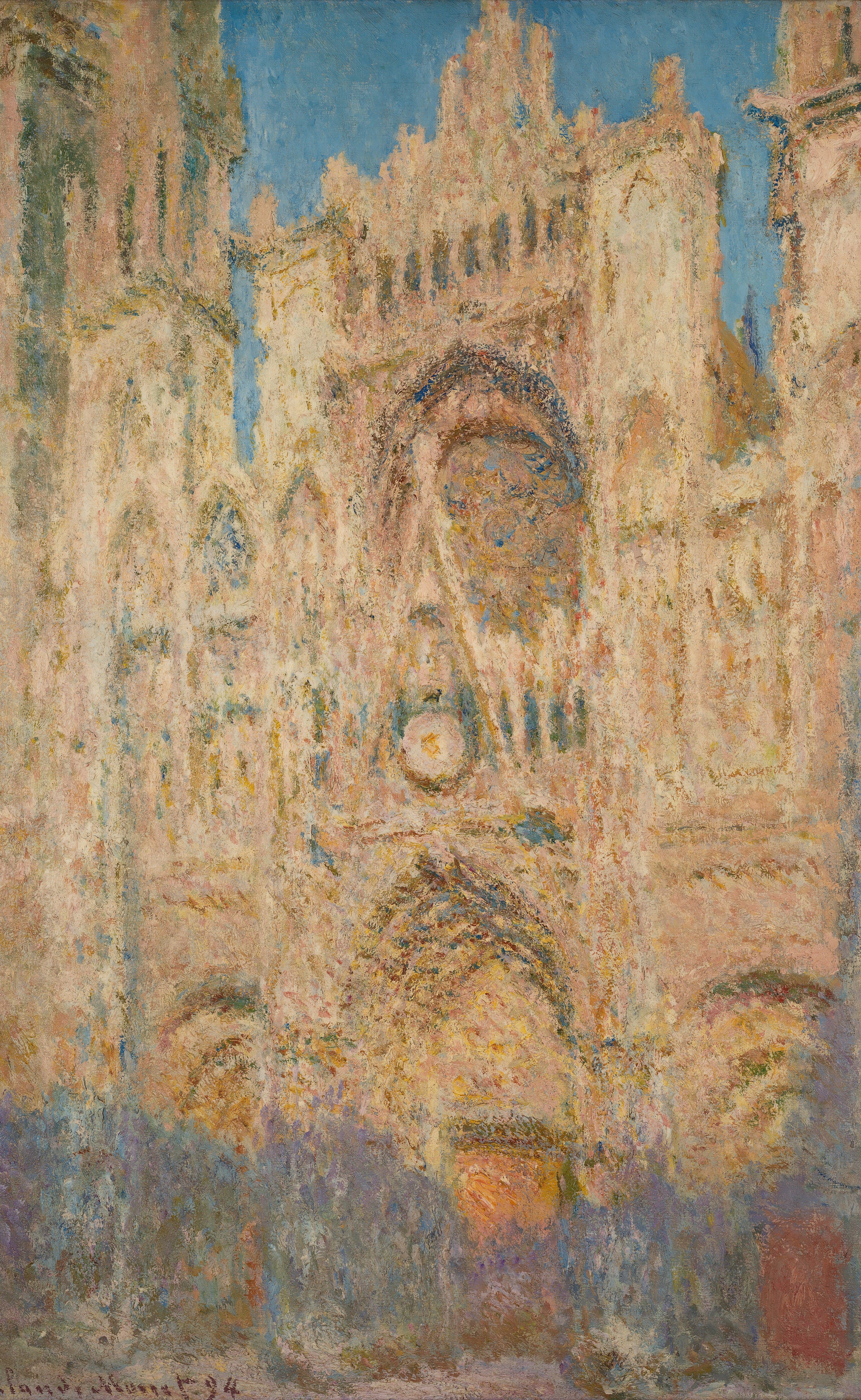
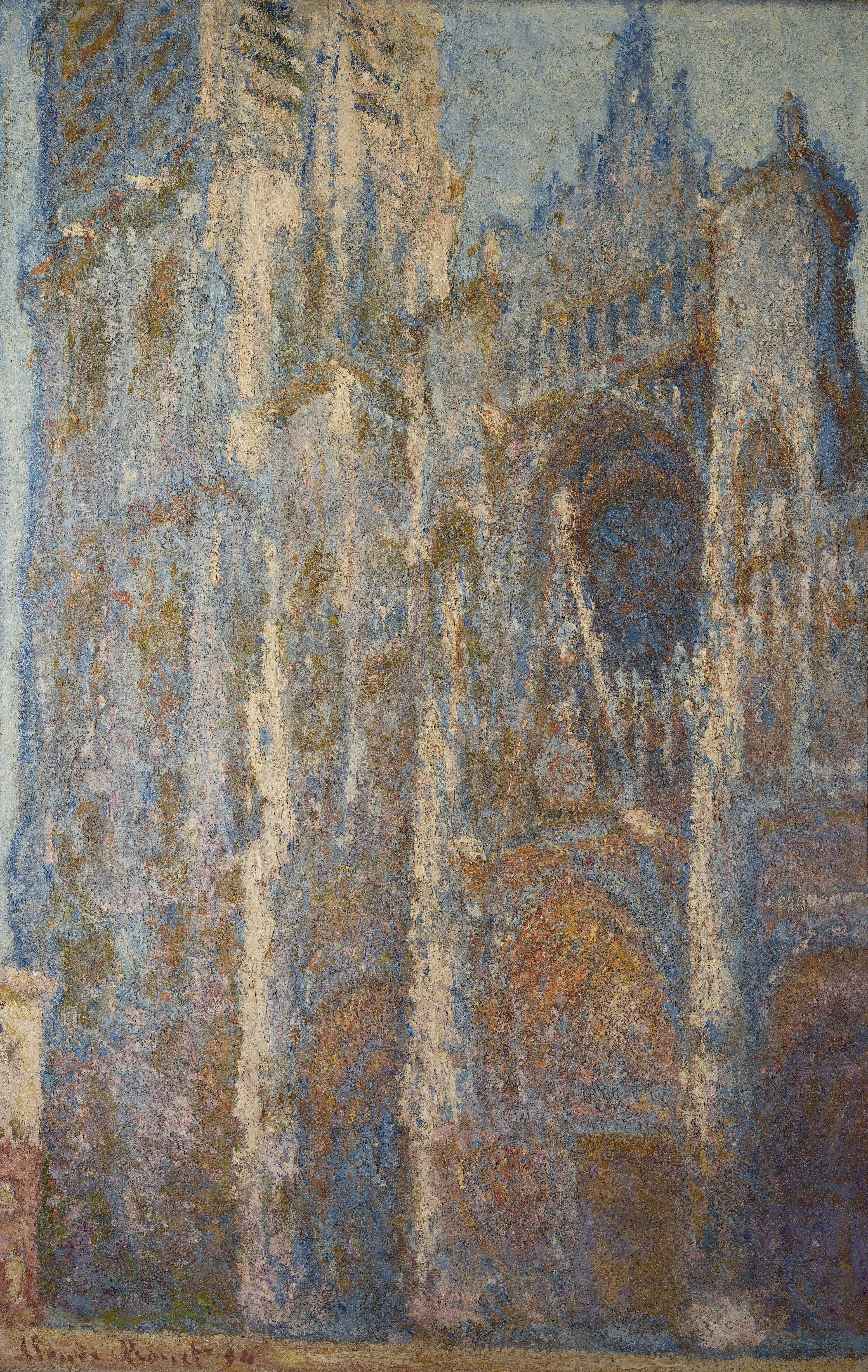
The series is gathered in our Rouen Cathedral hub. Wildenstein groups the canvases by viewpoint: frontal views of the portal, and oblique views like this one, with the Tour Saint-Romain on the left. Monet gave the Paris canvases musical-sounding titles, and this one became known as the Harmonie blanche. Compare the noon blaze of Rouen Cathedral in Full Sunlight (Harmonie bleue et or), also in the Orsay; the frontal view at the Clark, Rouen Cathedral in Sunlight; the sunset in Moscow, Rouen Cathedral, Evening; and the oblique noon view in Moscow, Portal and Tower d'Albane, Midday.
Meaning
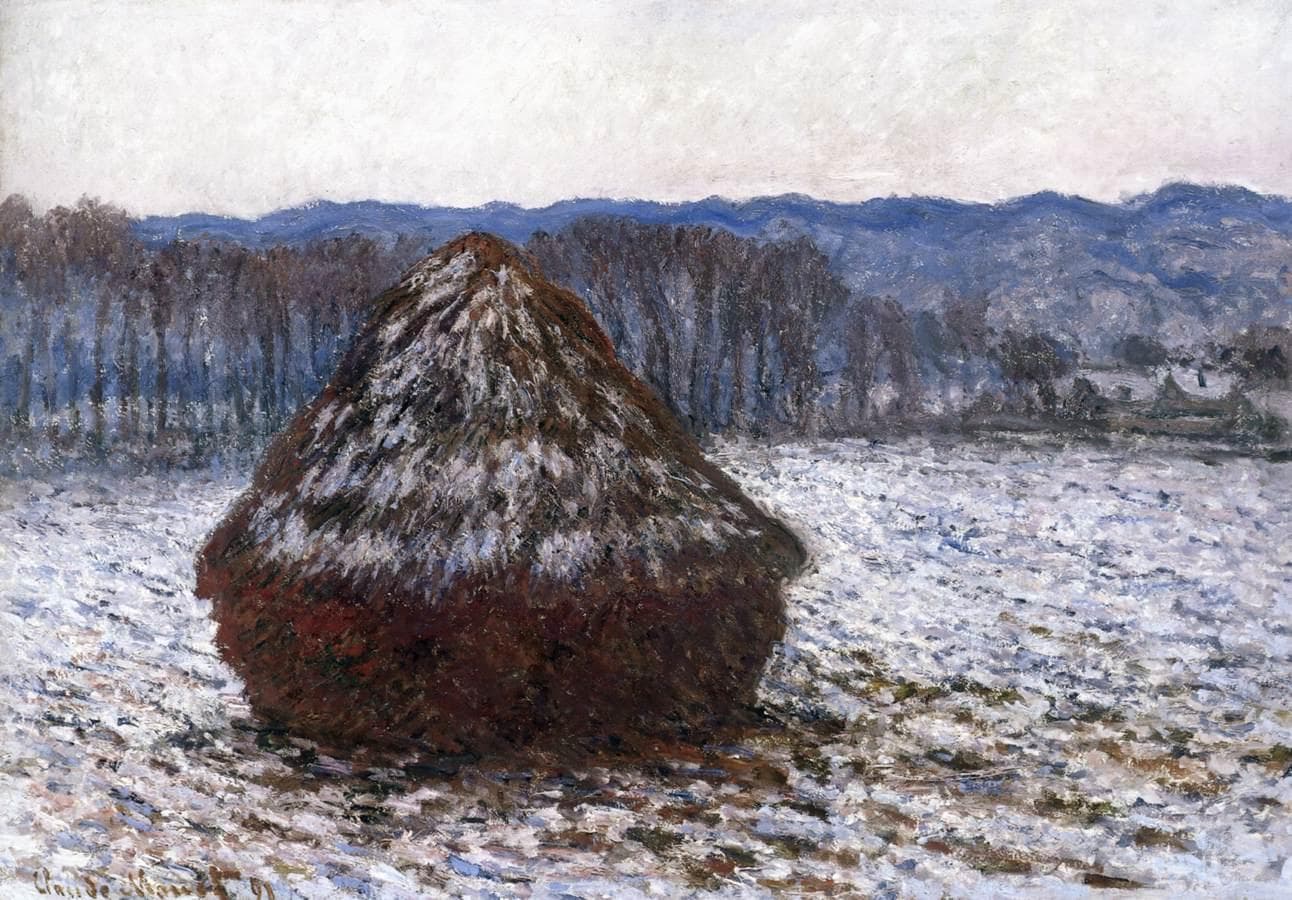
A Gothic cathedral was among the most symbolic buildings in France, a monument of faith and national history. Claude Monet treats it as a surface that receives light, no more and no less than a stack of wheat in a field. His friend Georges Clemenceau wrote an enthusiastic article on the series in May 1895, describing the cathedral in all the moods of the day and urging the state to buy the canvases as a group. The state did not, and the series was dispersed.
Where to see it
The painting is in the Musée d'Orsay, Paris, which owns five canvases from the series, four of them from the bequest of Count Isaac de Camondo in 1911; see our guide to Monet at the Musée d'Orsay.
Questions & answers
Where is Rouen Cathedral, Effects of Morning Light?
It is in the Musée d'Orsay in Paris, which holds five of Monet's Rouen Cathedral paintings. This one, painted in 1893 and known as the Harmonie blanche (Harmony in White), measures 106 by 73 centimeters, is catalogued as Wildenstein 1346 and came with the Camondo bequest in 1911.
When and where was it painted?
Monet painted the cathedral from rooms facing its west front in Rouen in the late winter and spring of 1892 and 1893, then reworked the canvases at Giverny. This canvas is dated 1893. Twenty from the series were exhibited in Paris in May 1895.
Why is the cathedral so pale in this painting?
In the morning the sun rises behind the cathedral, so the west front is in shade and seen through haze. Monet renders this as a range of pale whites, lilacs and blue-greys, with a touch of warmth only where light catches the tower.
How many Rouen Cathedral paintings did Monet make?
More than thirty views of the west front, painted in 1892 and 1893 and mostly dated 1894. They divide into frontal views of the portal and oblique views, like this one, that include the Tour Saint-Romain. They are now spread across museums in France, the United States, Russia and elsewhere.
More by the artist
Claude Monet

Bridge over a Pond of Water Lilies
Claude Monet · 1899

Woman with a Parasol – Madame Monet and Her Son
Claude Monet · 1875

Sunset in Venice
Claude Monet · 1908–12

La Grenouillère
Claude Monet · 1869

Beach in Pourville
Claude Monet · 1882

Springtime
Claude Monet · 1872

Boating on the River Epte
Claude Monet · 1890

The Seine at Asnières (Hermitage)
Claude Monet · 1873
Also painted in 1893
The same year
Kindred works
You may also study
Rouen Cathedral in Full Sunlight
Claude Monet · 1893
Rouen Cathedral in Sunlight
Claude Monet · c. 1892–94
Rouen Cathedral, Evening
Claude Monet · 1894
Rouen Cathedral, Portal and Tower d'Albane, Midday
Claude Monet · 1893–94
Stack of Wheat
Claude Monet · 1890–91
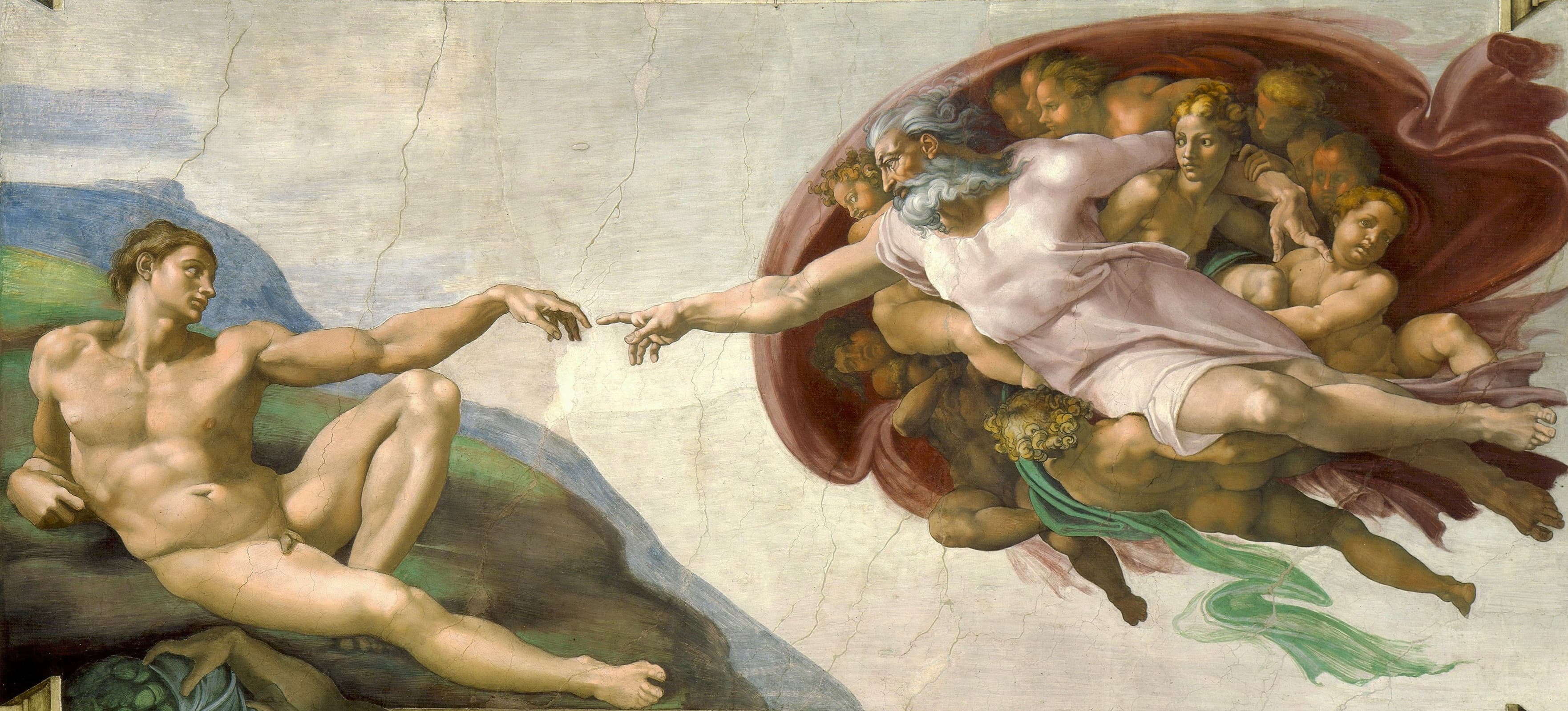
The Creation of Adam
Michelangelo · c. 1511–12
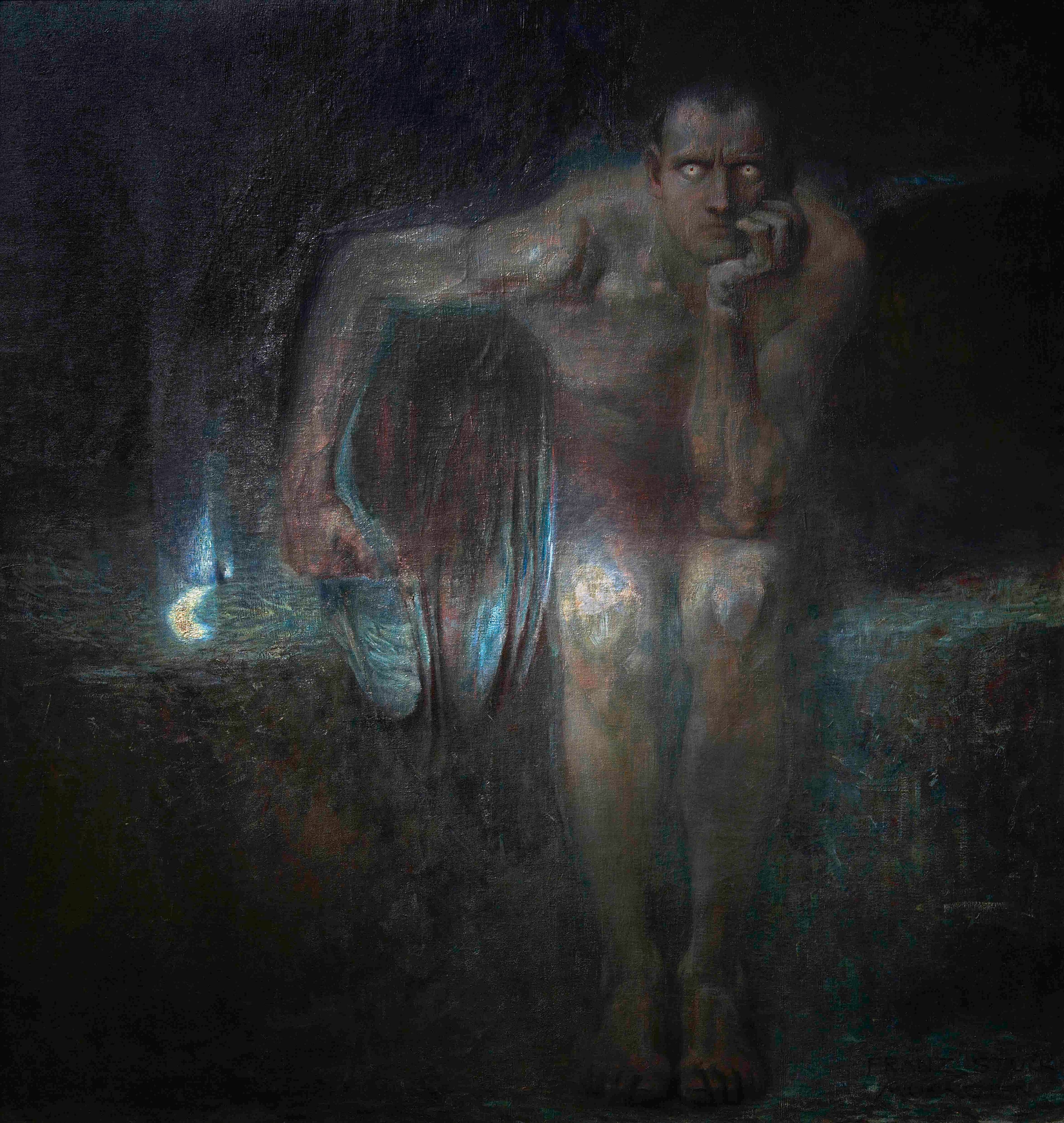
Lucifer
Franz von Stuck · 1890
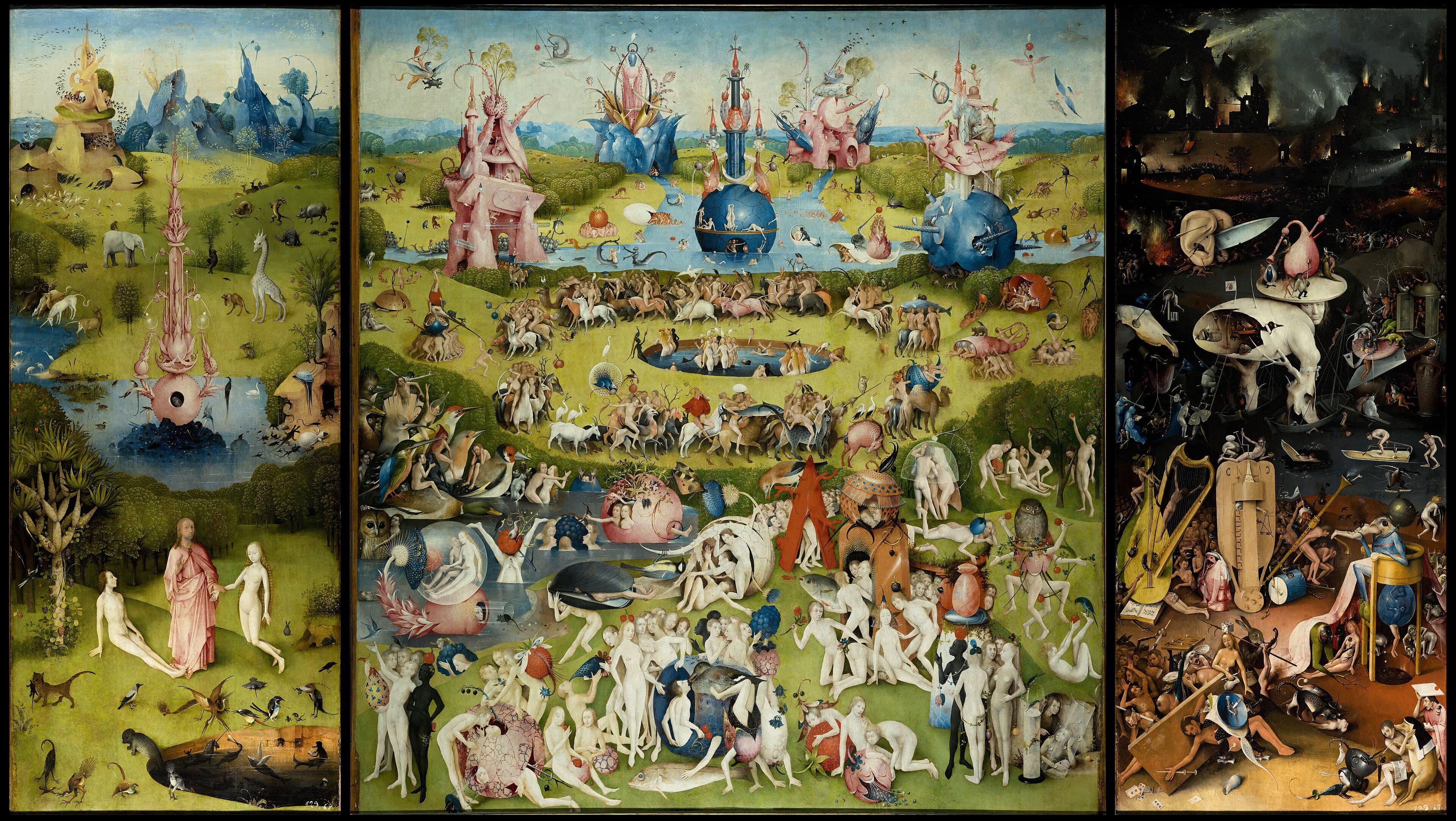
The Garden of Earthly Delights
Hieronymus Bosch · c. 1490–1510