Impressionism
Waterloo Bridge, Effect of Fog
Claude Monet, 1903
Waterloo Bridge, Effect of Fog is a 1903 painting by Claude Monet of London's Waterloo Bridge veiled in pink and lilac fog, part of his London series. It is in the State Hermitage Museum, Saint Petersburg.
- Artist
- Claude Monet
- Date
- 1903
- Medium
- Oil on canvas
- Dimensions
- 65.3 × 101 cm
- Collection
- State Hermitage Museum, Saint Petersburg, Russia
- Movement
- Impressionism
- Catalogue
- Wildenstein 1580
Painted at Monet in London
What you are looking at
Fog fills the canvas. Waterloo Bridge stretches across the middle as a row of low arches, its stone dissolved into the same lilac, pink and blue as the air. Under the arches, pockets of warm light glow orange and rose.
Behind the bridge, on the south bank, the tall chimneys of factories stand up faintly, and smoke drifts across the upper part of the sky. Two small boats with dark figures float on the river, one under the left arch and one in the foreground. The signature and the date 1903 appear at lower right.
There is no edge anywhere in the picture. Bridge, water, chimneys and sky all share one atmosphere, and the eye has to work to separate them.
Painting London fog
Claude Monet had first painted London in 1870–71, as a refugee from the Franco-Prussian War; see The Thames below Westminster. He returned three times, in the autumn of 1899 and in the late winters of 1900 and 1901, staying at the Savoy Hotel on the Embankment. From his window and balcony he painted Waterloo Bridge, downstream to the east, and Charing Cross Bridge, upstream to the west, while the views of the Houses of Parliament were made from St Thomas' Hospital across the river. London fog, thick with coal smoke, was his real subject. The full story is told on Monet in London.
He worked on many canvases at once, switching between them as the light changed, and finished them over several years at Giverny. This canvas, listed by Wildenstein as W.1580, is dated 1903. In May 1904 Durand-Ruel exhibited thirty-seven of the London pictures in Paris, and they sold well.
How it was painted
Monet builds the picture with layers of short, dry, crisscrossing strokes, so the surface has a woven, fibrous texture, especially in the sky. The sky and the river are painted in almost the same pink-lilac, which erases the horizon and makes the bridge float.
The bridge's arches are drawn not with lines but with slightly darker strokes of blue and violet. Look below them: the warm patches are where weak sunlight reaches the water through the haze. On the far bank, the chimneys are only a few vertical strokes of gray-violet, the industrial city reduced to a shadow. The boats, by contrast, are touched in with firmer dark marks, so they read as the nearest things in the picture.
Notice how little contrast there is. The darkest note, the foreground boat, is only a few shades deeper than the bridge, and the lightest, the glow under the arches, barely brighter than the sky. Monet compresses the whole tonal range into a narrow band, which is exactly how dense fog behaves. Monet once remarked that without fog London would not be beautiful; here he paints almost nothing else, and the bridge becomes a pretext for the air in front of it.
The Waterloo Bridge series and how this one differs
Monet painted Waterloo Bridge more than forty times, in fog, in sun and at dusk; the series is gathered on Waterloo Bridge. Some versions, like the sunlit canvases in Chicago and Denver, are brighter and sharper, with sparkling reflections and a bridge that reads as solid stone. This one is among the most veiled. The bridge has nearly vanished and the chimneys of Lambeth hang in the sky like ghosts.
Set it beside the companion series of Charing Cross Bridge and the Houses of Parliament, for instance The Houses of Parliament, London, and the logic of the campaign becomes clear: one city, three motifs, endless weather.
Provenance and where to see it
The painting came to Russia in the early twentieth century, when Moscow collectors were buying heavily from Durand-Ruel, and it is generally recorded as coming from the collection of Ivan Morozov, nationalized after the revolution. It is now in the State Hermitage Museum, Saint Petersburg (ГЭ-6545). For other museums that hold London views by Monet, see Where to See Monet's Paintings.
Questions & answers
Where is Waterloo Bridge, Effect of Fog?
It is in the State Hermitage Museum in Saint Petersburg, Russia (ГЭ-6545). It reached Russia in the early twentieth century through the Moscow collections nationalized after 1917. The canvas measures about 65 by 101 centimeters and is signed and dated 1903.
Where did Monet paint Waterloo Bridge from?
From his room at the Savoy Hotel on the north bank of the Thames, during visits in 1899, 1900 and 1901. Looking east he saw Waterloo Bridge, and looking west, Charing Cross Bridge. He then finished many of the canvases in his studio at Giverny, dating this one 1903.
What does the painting show?
Waterloo Bridge almost dissolved in pink and lilac fog, with warm light glowing under its arches, factory chimneys faint on the south bank and two small boats on the river. The subject is the fog itself, which merges bridge, water and sky into a single atmosphere.
How many Waterloo Bridge paintings did Monet make?
More than forty, which makes it the largest of his three London series. They show the bridge in fog, sun, overcast and dusk. Durand-Ruel exhibited a selection of the London pictures in Paris in 1904, and versions are now in museums across Europe and North America.
More by the artist
Claude Monet

Bridge over a Pond of Water Lilies
Claude Monet · 1899

Woman with a Parasol – Madame Monet and Her Son
Claude Monet · 1875

Sunset in Venice
Claude Monet · 1908–12

La Grenouillère
Claude Monet · 1869

Beach in Pourville
Claude Monet · 1882

Springtime
Claude Monet · 1872

Boating on the River Epte
Claude Monet · 1890

The Seine at Asnières (Hermitage)
Claude Monet · 1873
Kindred works
You may also study
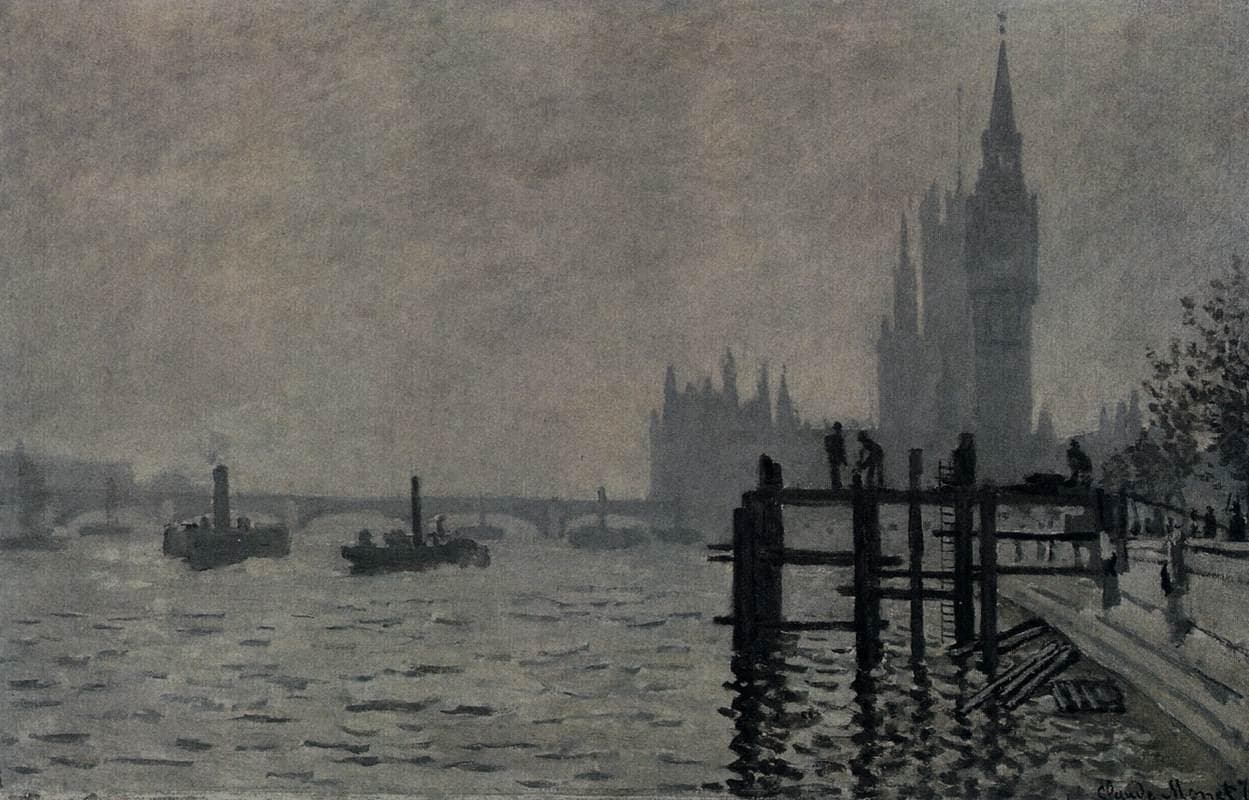
The Thames below Westminster
Claude Monet · c. 1871
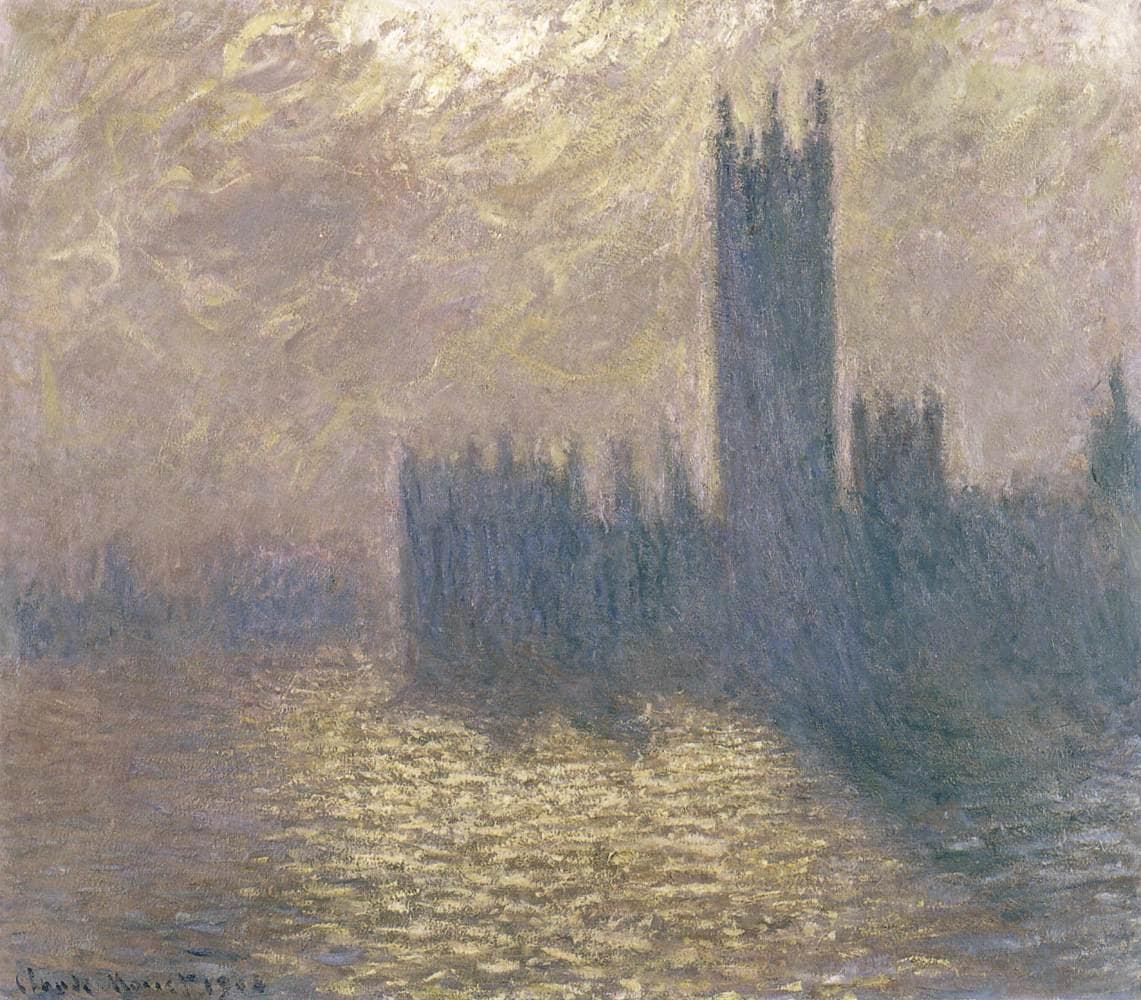
The Houses of Parliament, London
Claude Monet · 1904
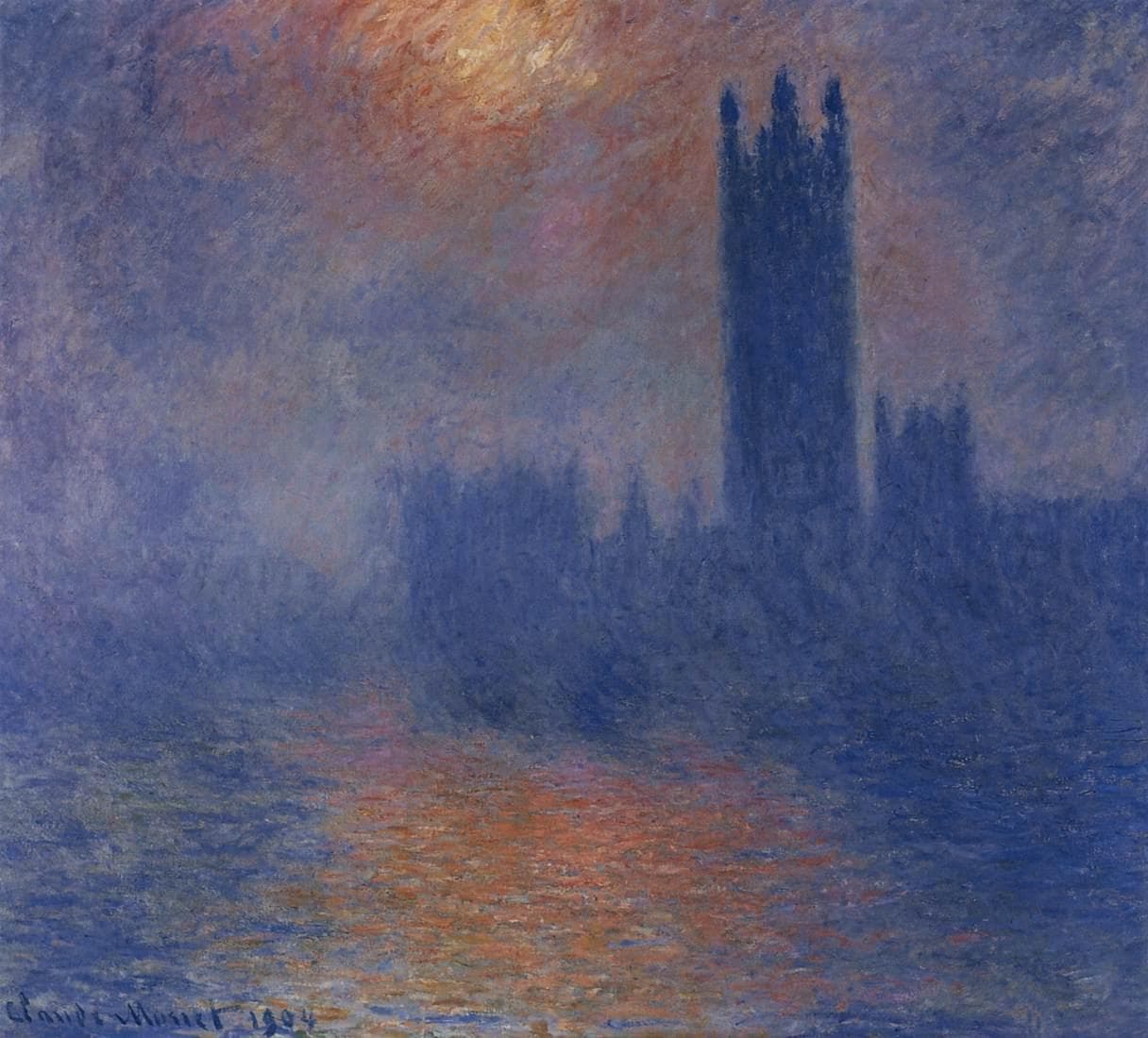
The Houses of Parliament in London
Claude Monet · 1904
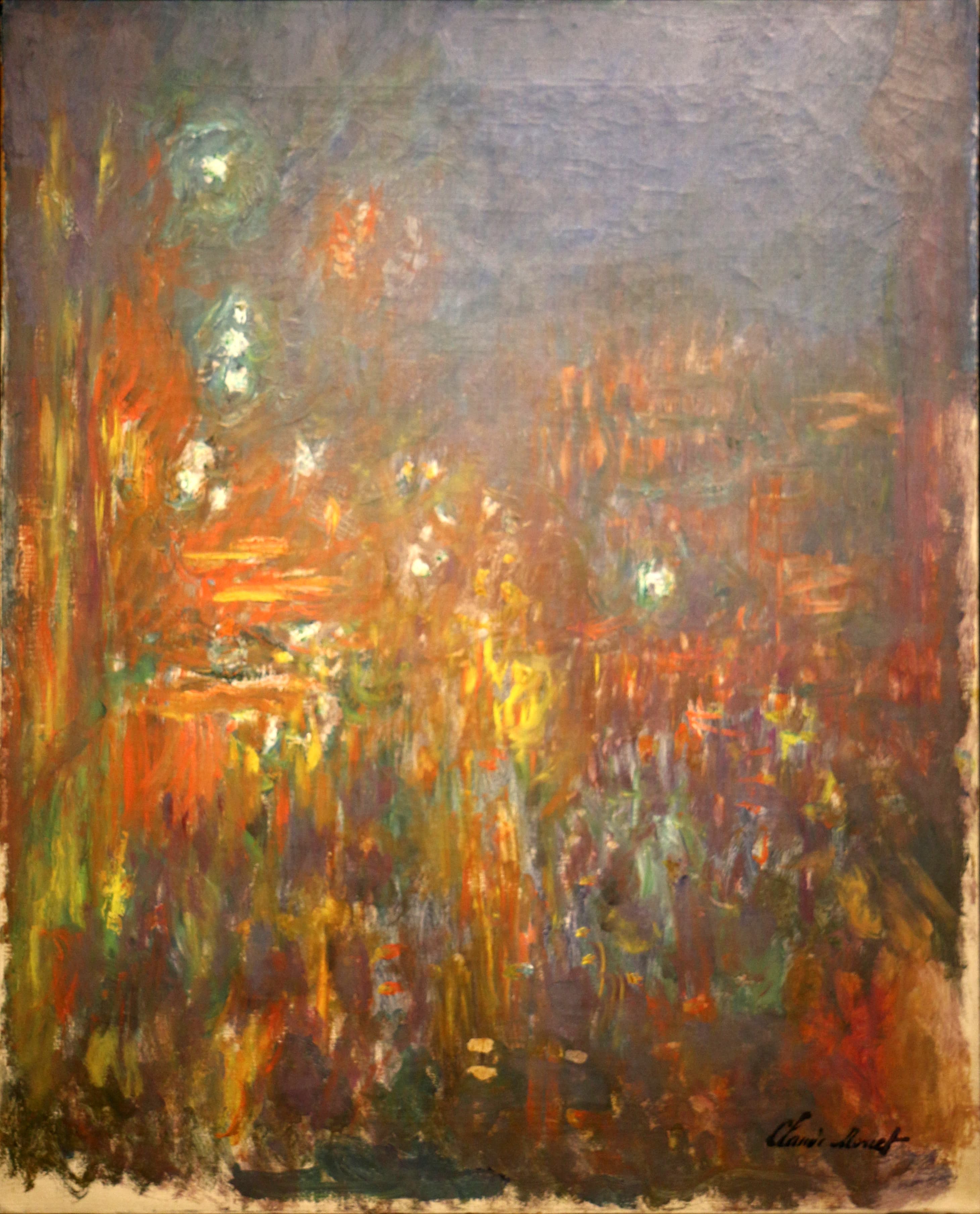
Leicester Square, by Night
Claude Monet · 1901
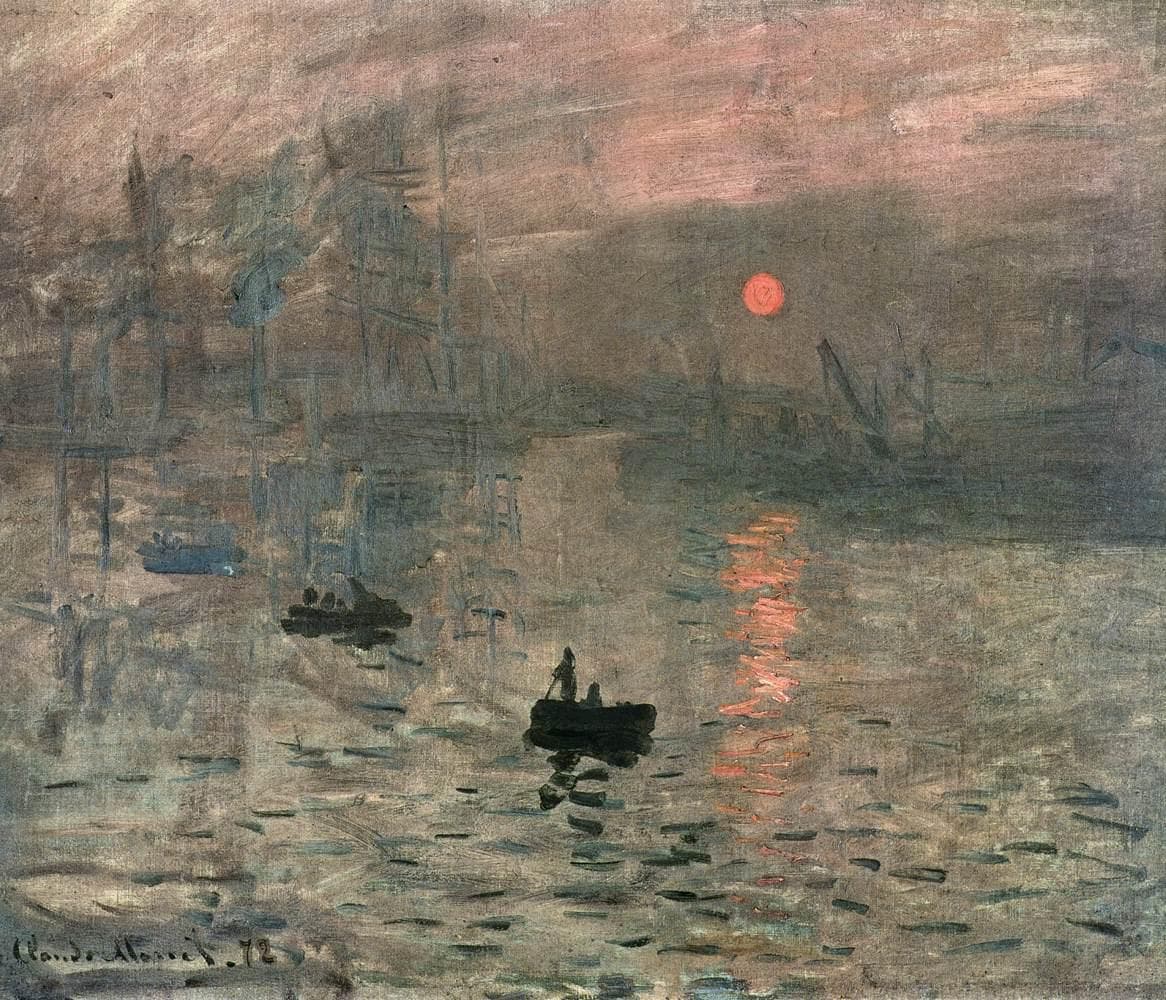
Impression, Sunrise
Claude Monet · 1872

Ophelia
John Everett Millais · 1851–52

The Great Wave off Kanagawa
Katsushika Hokusai · c. 1830–32
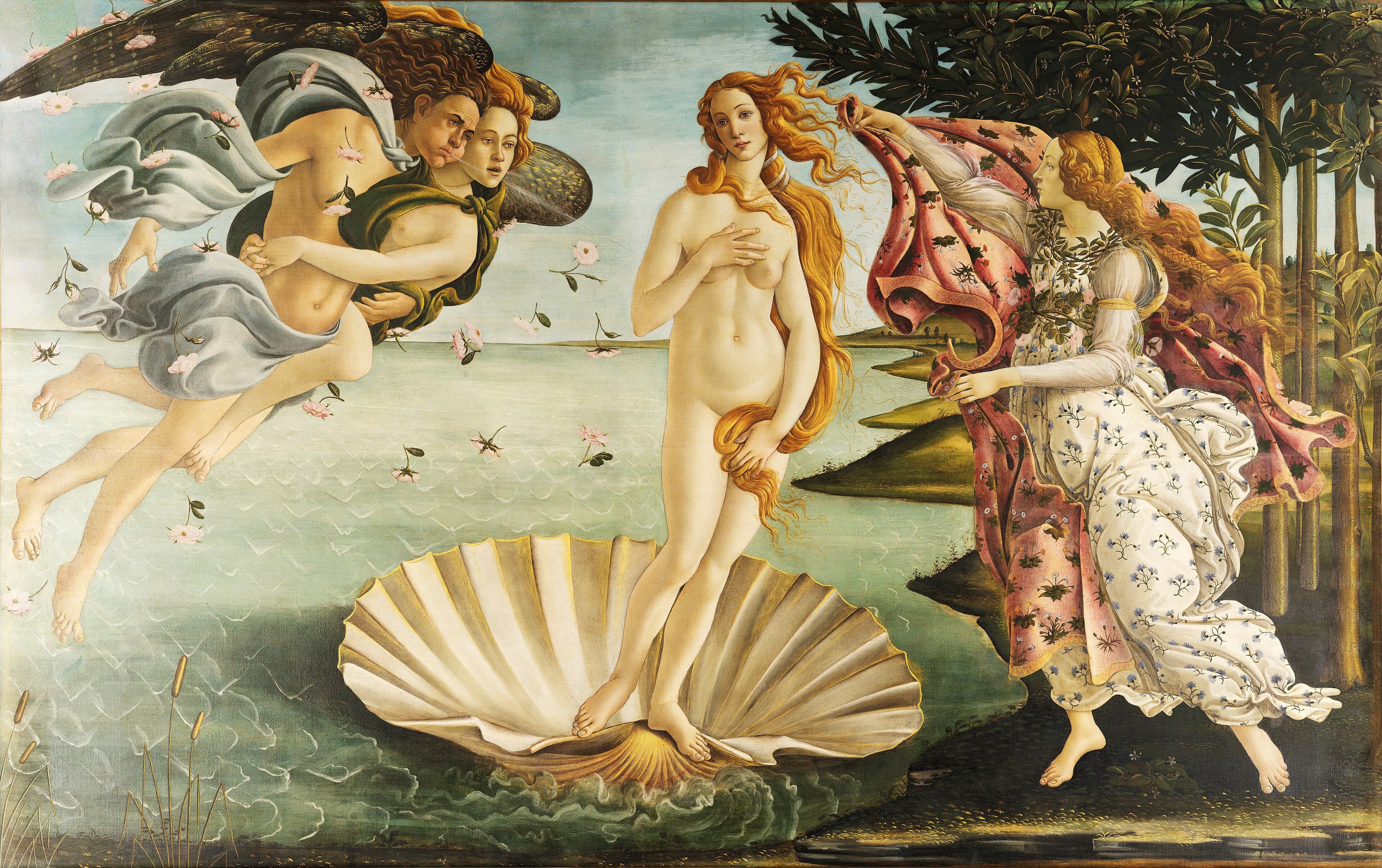
The Birth of Venus
Sandro Botticelli · c. 1484–1486