Series
Rouen Cathedral by Monet: The Facade Series of 1892–94
More than thirty views of one Gothic west front, from cold morning gray to blue and gold at noon and orange at dusk.
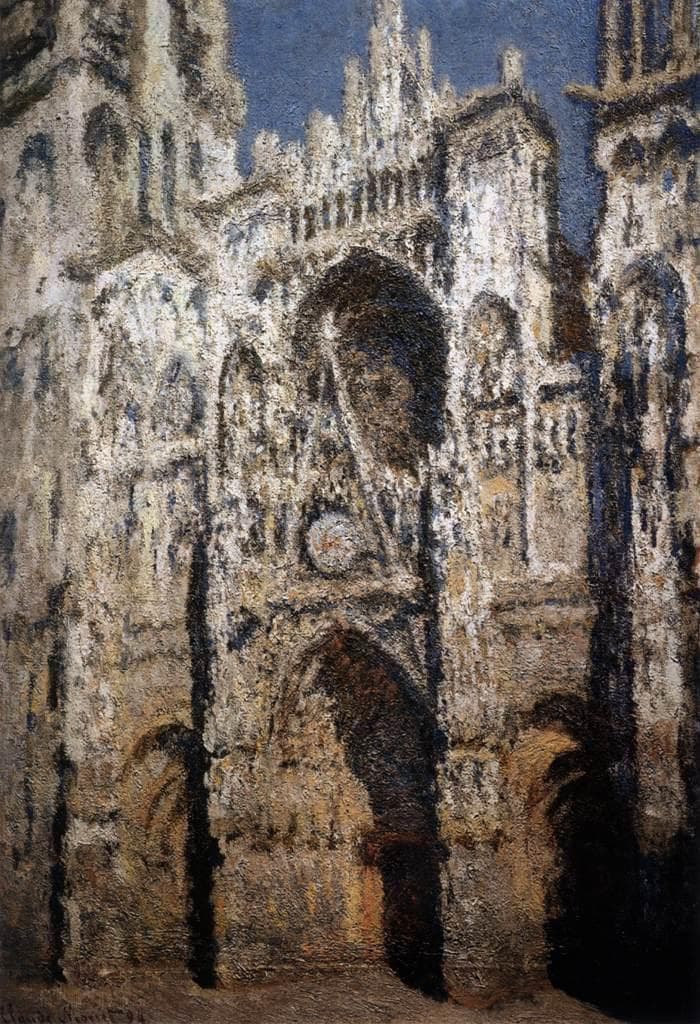
Monet's Rouen Cathedral series is a group of more than 30 paintings of the west facade of Notre-Dame de Rouen in Normandy, painted from rented rooms opposite the cathedral in the late winter and spring of 1892 and 1893 and finished in his studio at Giverny in 1894. Each canvas shows nearly the same view of the portals and towers, close up and cropped, under a different light.
In May 1895 Monet showed 20 of them together at Durand-Ruel's gallery in Paris. Today the largest group, five canvases, is in the Musée d'Orsay, Paris; others are in the Pushkin Museum in Moscow, the Musée des Beaux-Arts de Rouen, the Musée Marmottan Monet, the Metropolitan Museum, the National Gallery of Art in Washington, the Clark Art Institute, the Getty, the Museum of Fine Arts, Boston, National Museum Cardiff, the Beyeler Foundation and the Folkwang Museum in Essen, with several in private collections.
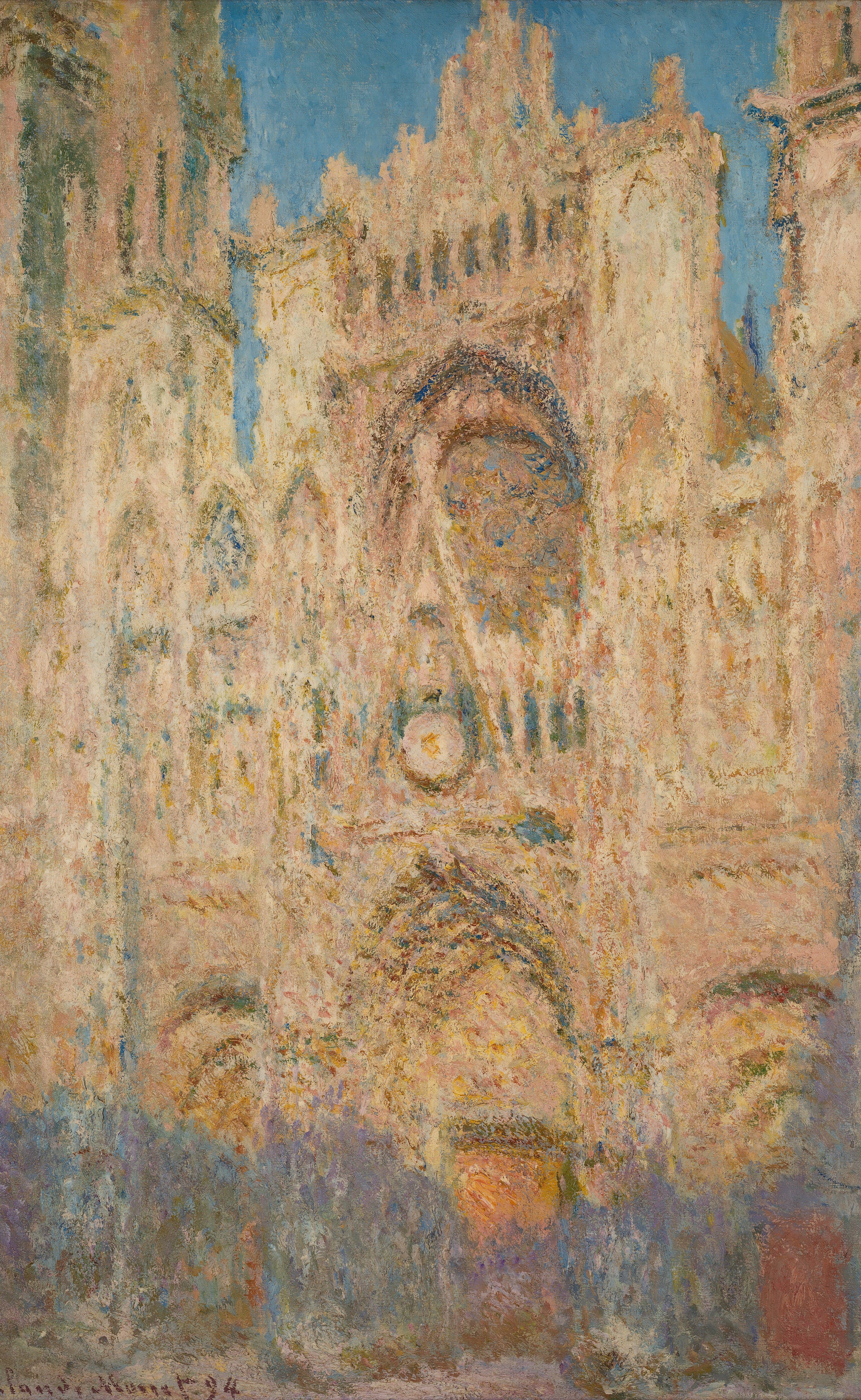
The complete set
All 29 known canvases
From the catalogue raisonné. Works with a full close reading are marked ✦.
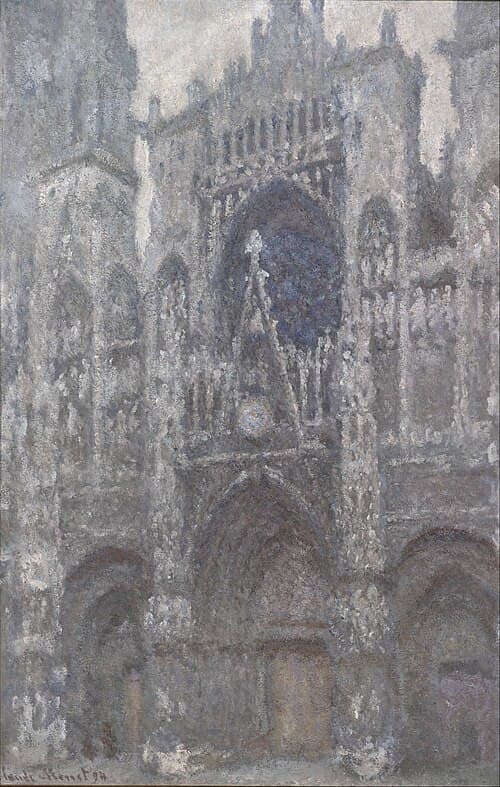
Rouen Cathedral, Portal, Cloudy Weather
1892 · Musée d'Orsay
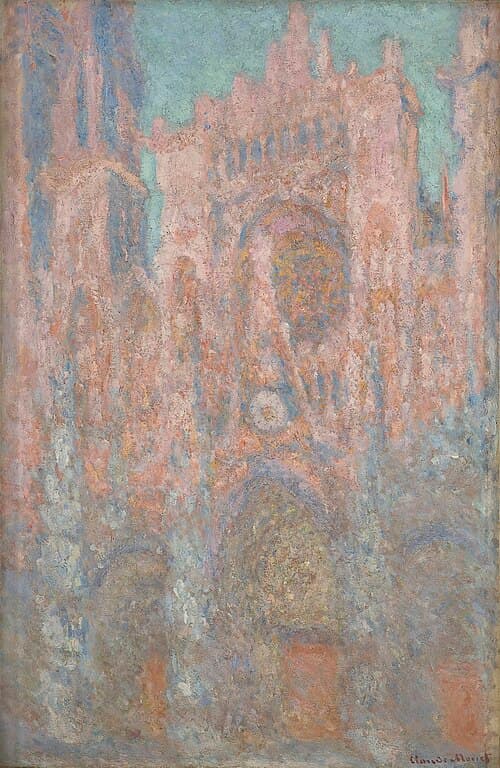
Rouen Cathedral
1892 · National Museum of Serbia
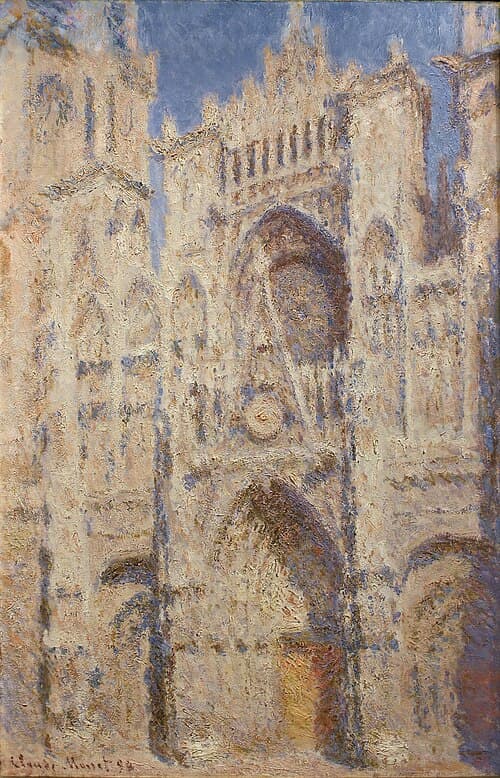
Rouen Cathedral: The Portal (Sunlight)
1892 · Metropolitan Museum of Art
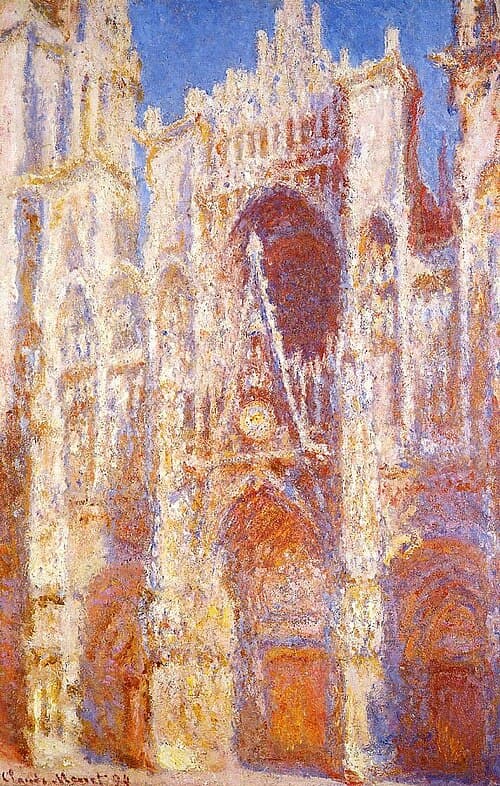
Rouen Cathedral, Portal, Sunlight
1892
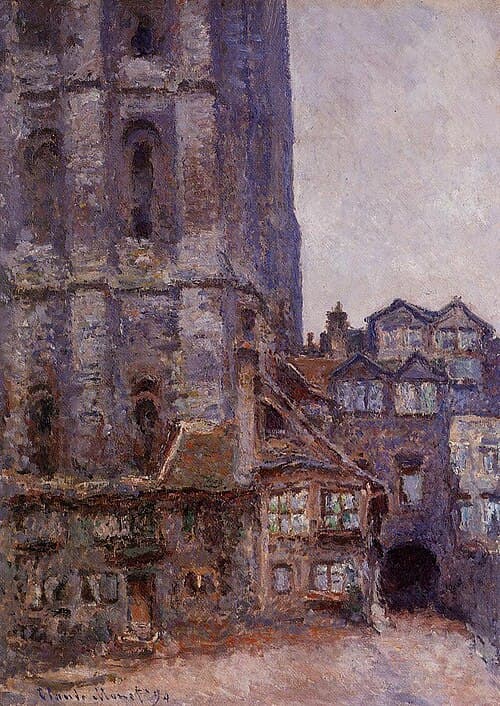
La Cour d'Albane, temps gris
1892
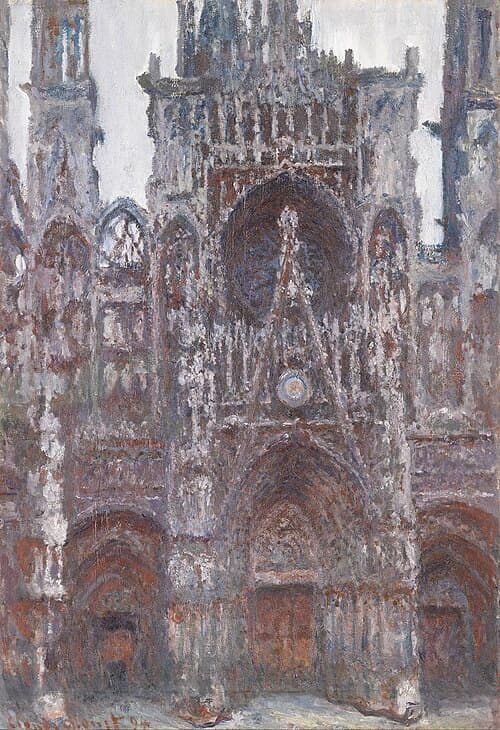
Rouen Cathedral, Portal, Front View
1892 · Musée d'Orsay
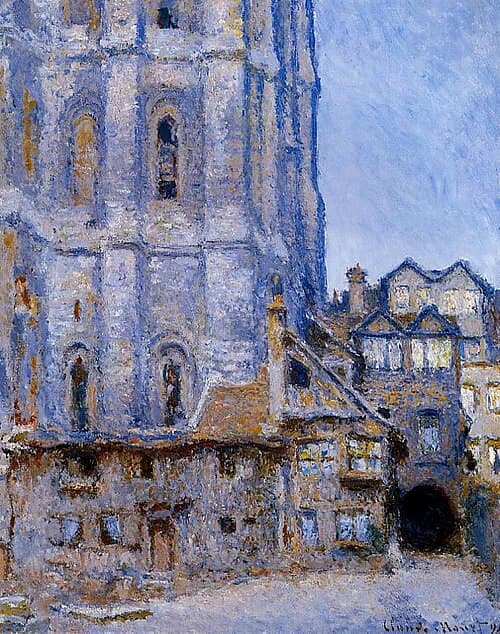
La Cour d'Albane, Rouen
1892 · Smith College Museum of Art
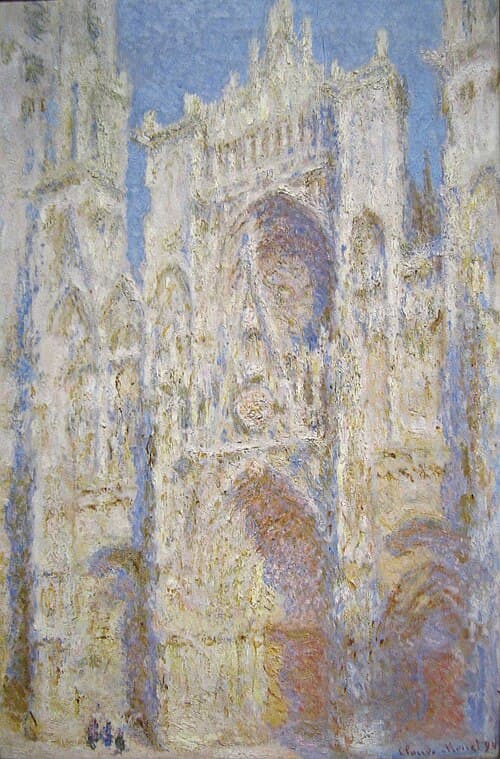
Rouen Cathedral, Portal, Sunlight
1892 · National Gallery of Art
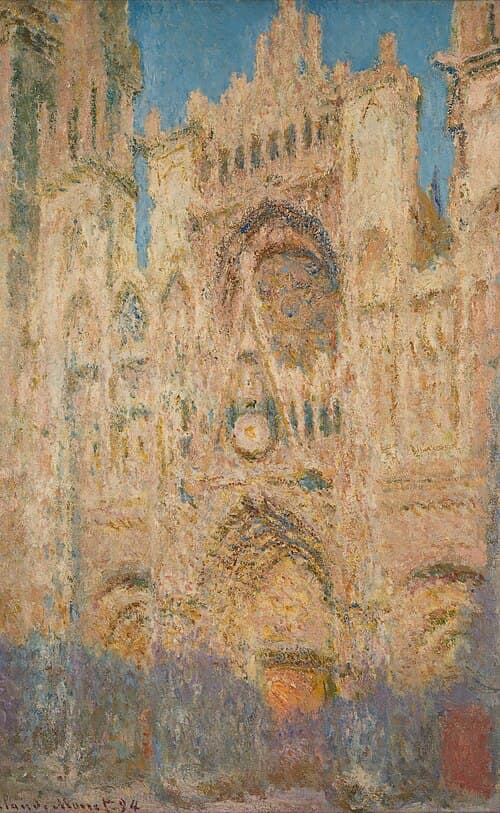
✦Rouen Cathedral, End of the Day
1892 · Pushkin Museum of Fine Arts
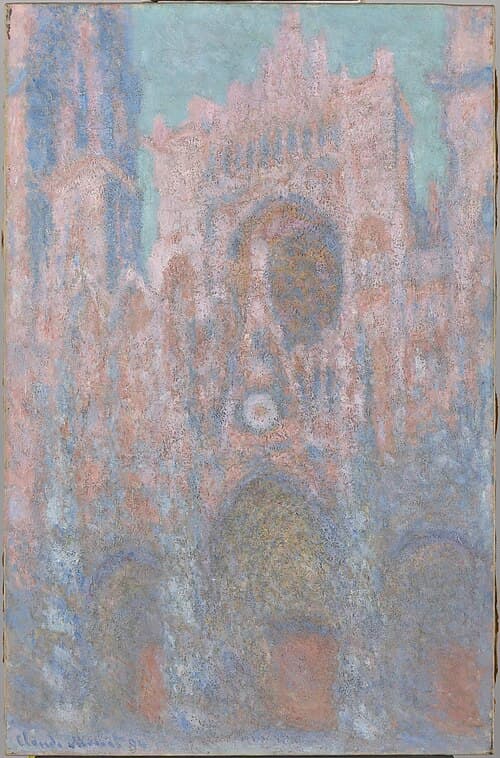
Rouen Cathedral, Symphony in Grey and Pink
1892 · Amgueddfa Cymru – Museum Wales
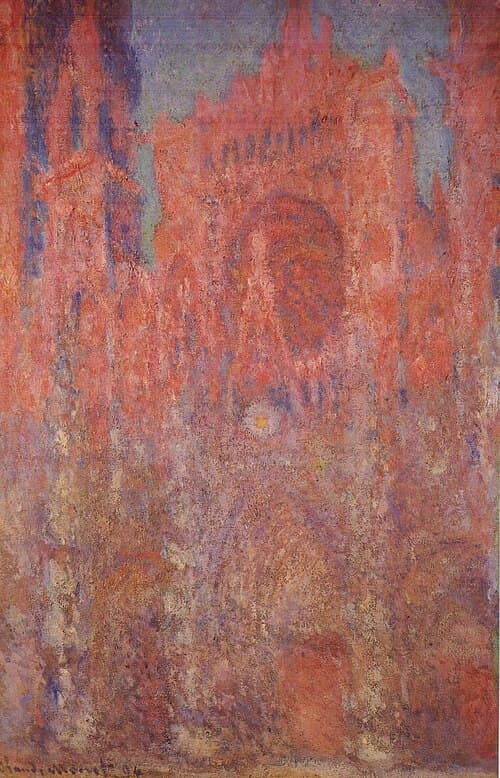
Rouen Cathedral, Portal
1892 · Pola Museum of Art
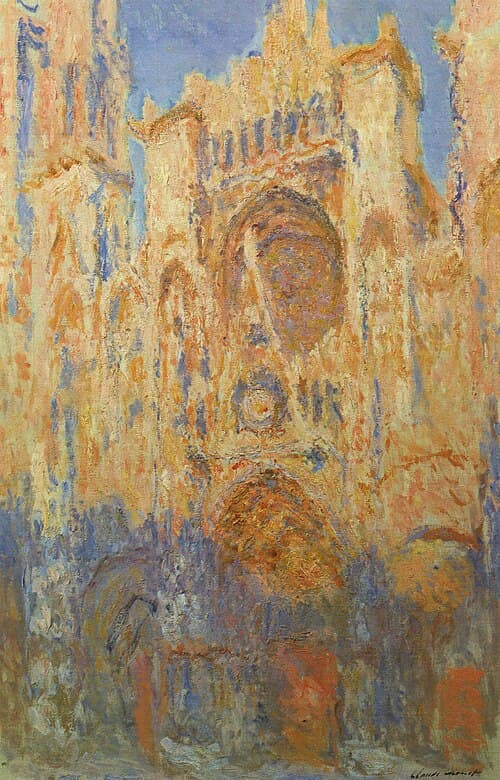
Rouen Cathedral, Portal, Sunlight, End of the Day
1892 · Musée Marmottan Monet
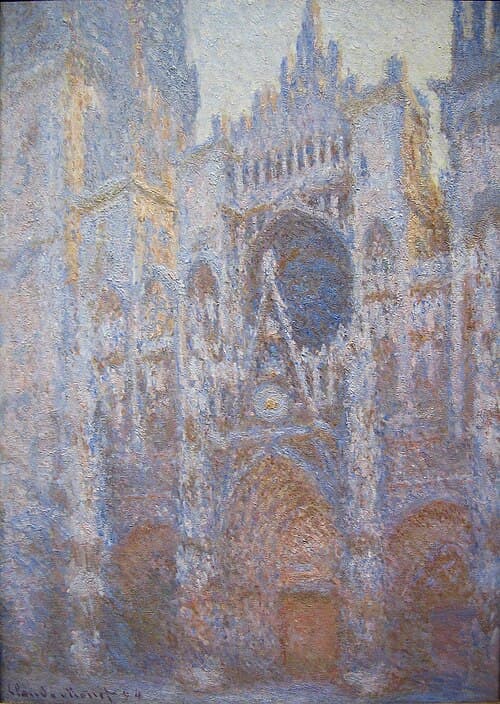
Rouen Cathedral, Portal
1893 · National Gallery of Art
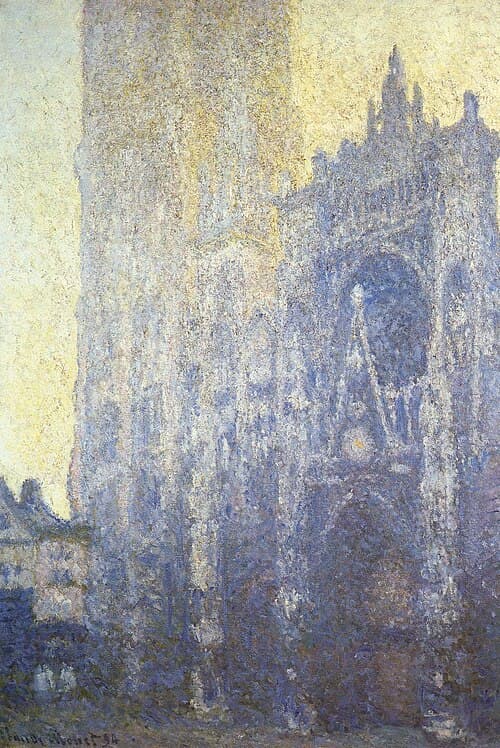
Rouen Cathedral, Portal, Morning Light
1893 · Beyeler Foundation
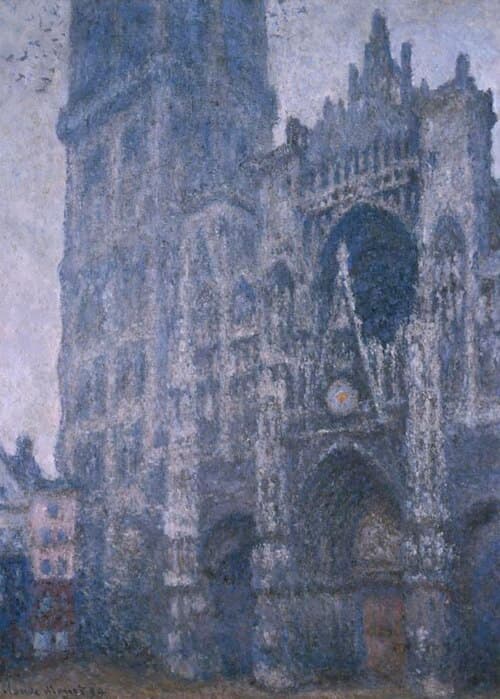
Rouen Cathedral, Portal and Tower d'Albane, Cloudy Weather
1893 · Musée des Beaux-Arts de Rouen
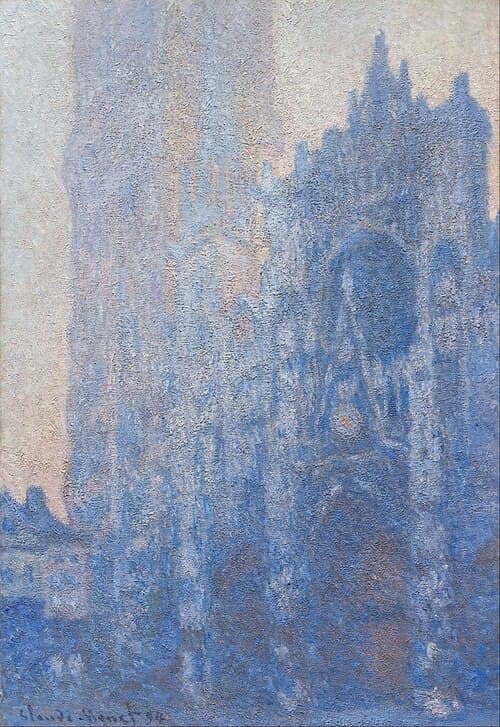
Rouen Cathedral, Portal and Tower d'Albane, Dawn
1893 · Museum of Fine Arts Boston
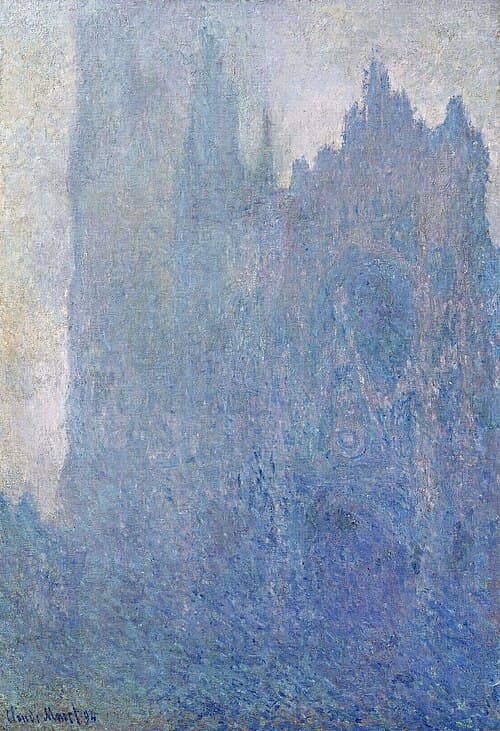
Rouen Cathedral, Fog
1893
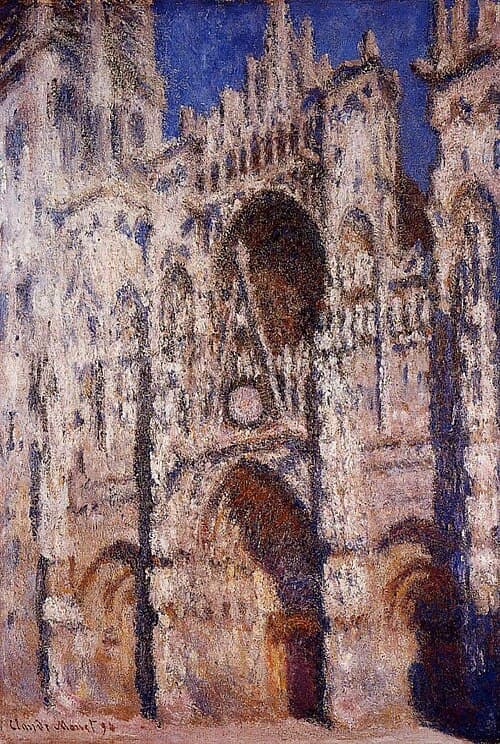
Rouen Cathedral
1893
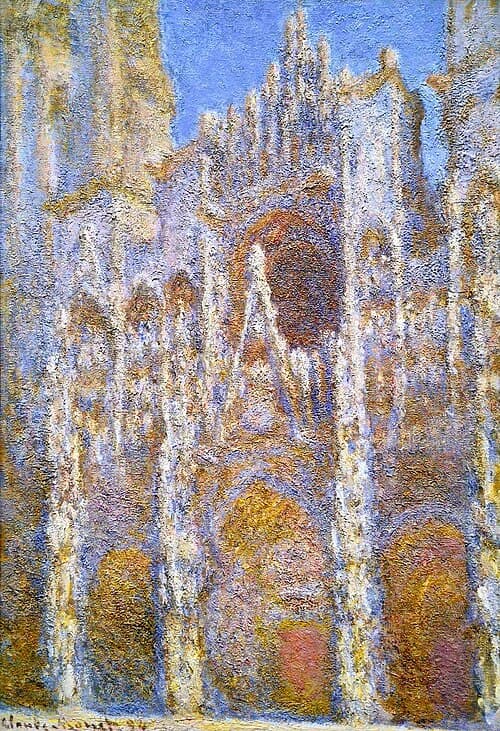
Rouen Cathedral, Façade
1893 · Museum of Fine Arts Boston
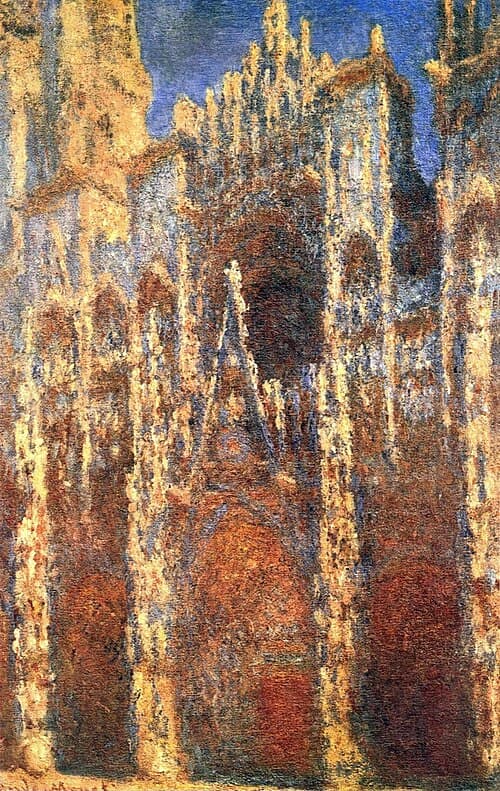
Rouen Cathedral, Portal
1893
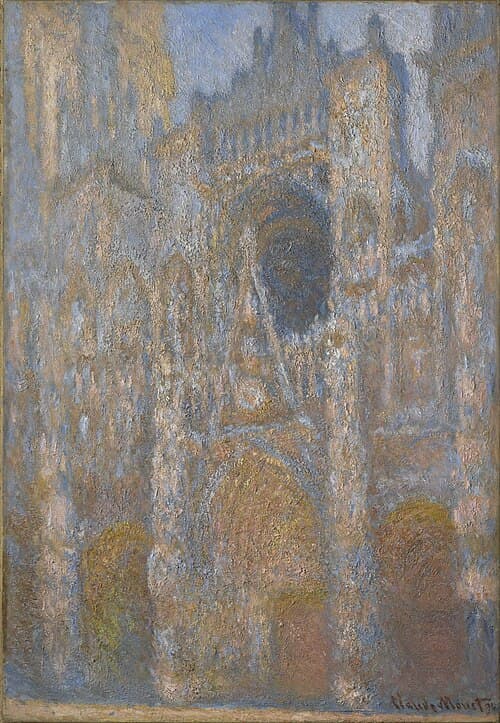
✦Rouen Cathedral, the Façade in Sunlight
1893 · Clark Art Institute
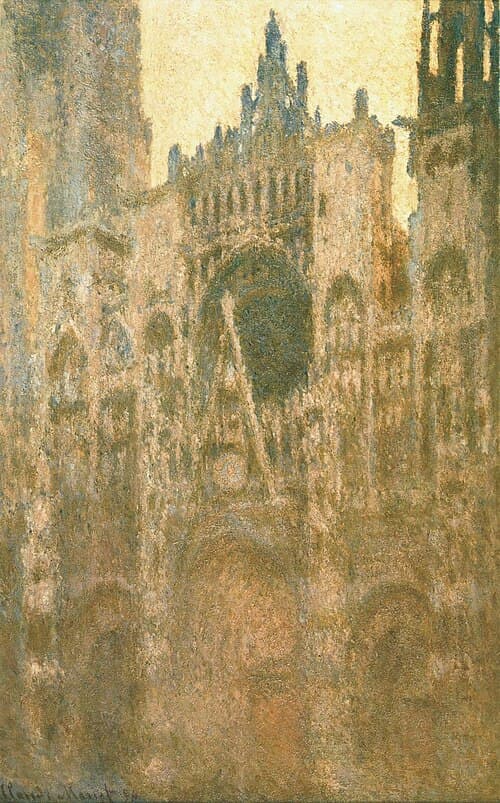
Rouen Cathedral, Portal, Morning Light
1893 · Basil and Elise Goulandris Foundation
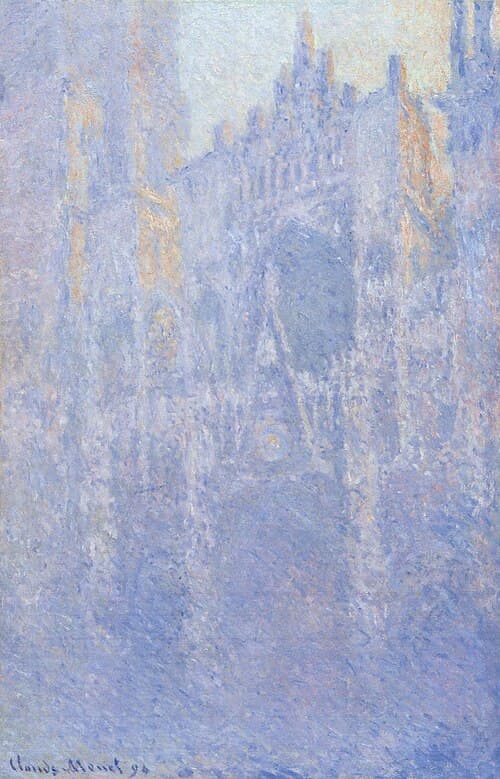
Rouen Cathedral, Portal, Morning Fog
1893 · Museum Folkwang
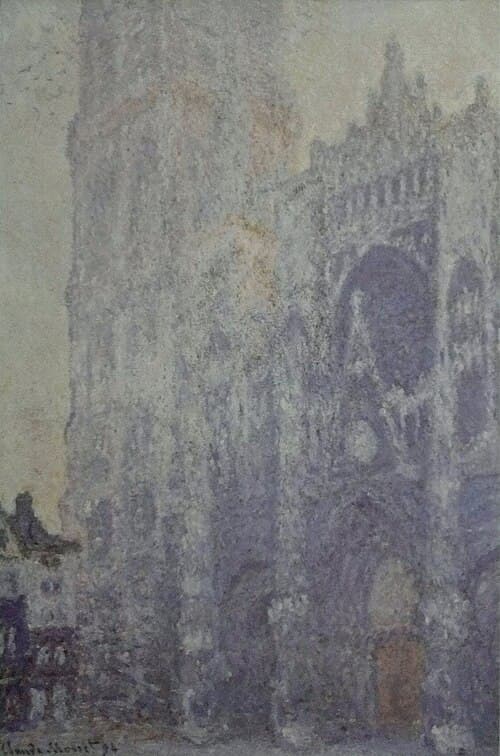
✦Rouen Cathedral, Portal and Tower Saint-Romain, Morning Light
1893 · Musée d'Orsay
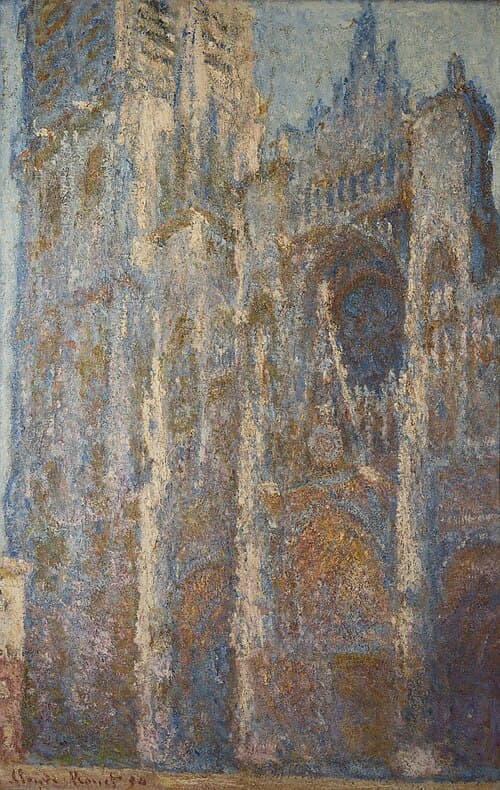
✦Rouen Cathedral, Portal and Tower d'Albane, Midday
1893 · Pushkin Museum of Fine Arts
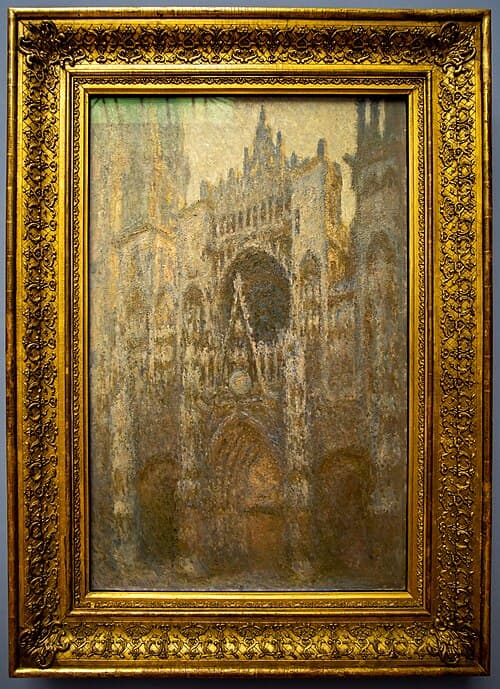
Rouen Cathedral, Portal
1893 · Schloss Weimar
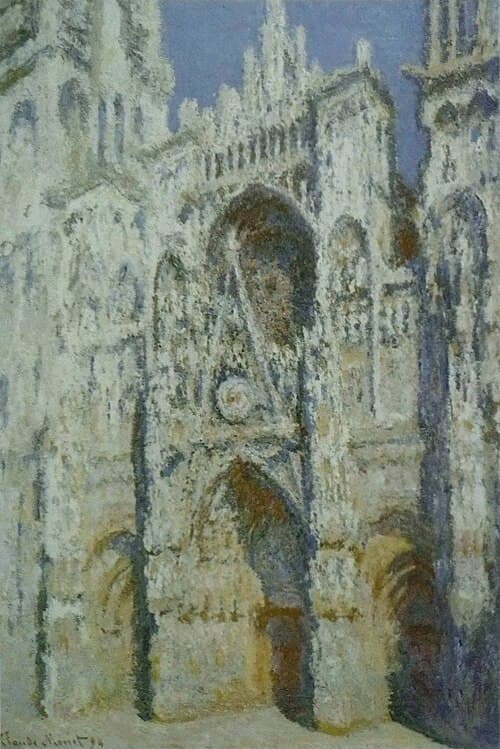
✦Rouen Cathedral, Portal and Tower Saint-Romain in the Sun
1893 · Musée d'Orsay
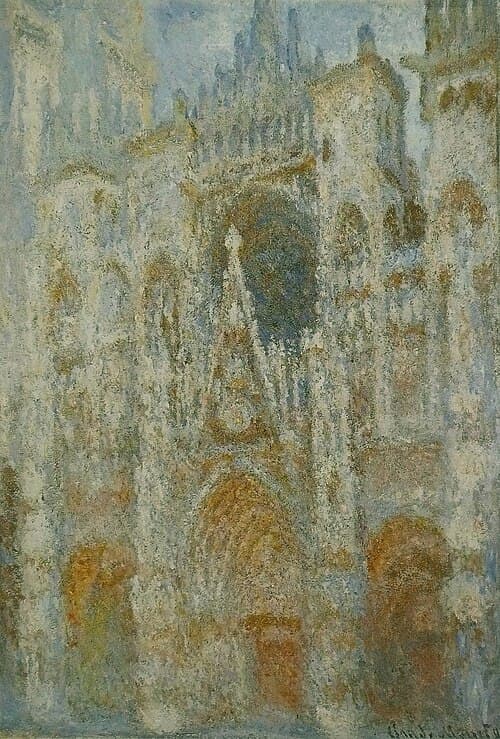
Rouen Cathedral, Portal, Morning Sun
1893 · Musée d'Orsay
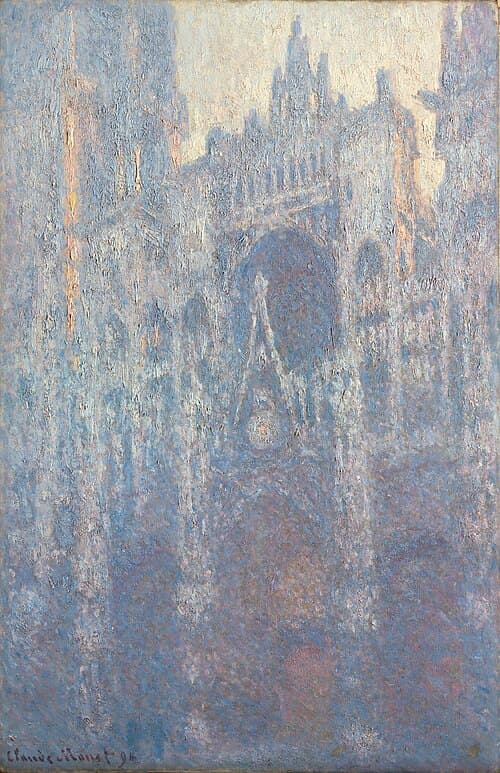
Rouen Cathedral, Portal, Morning Light
1894 · J. Paul Getty Museum
What the Rouen Cathedral paintings show
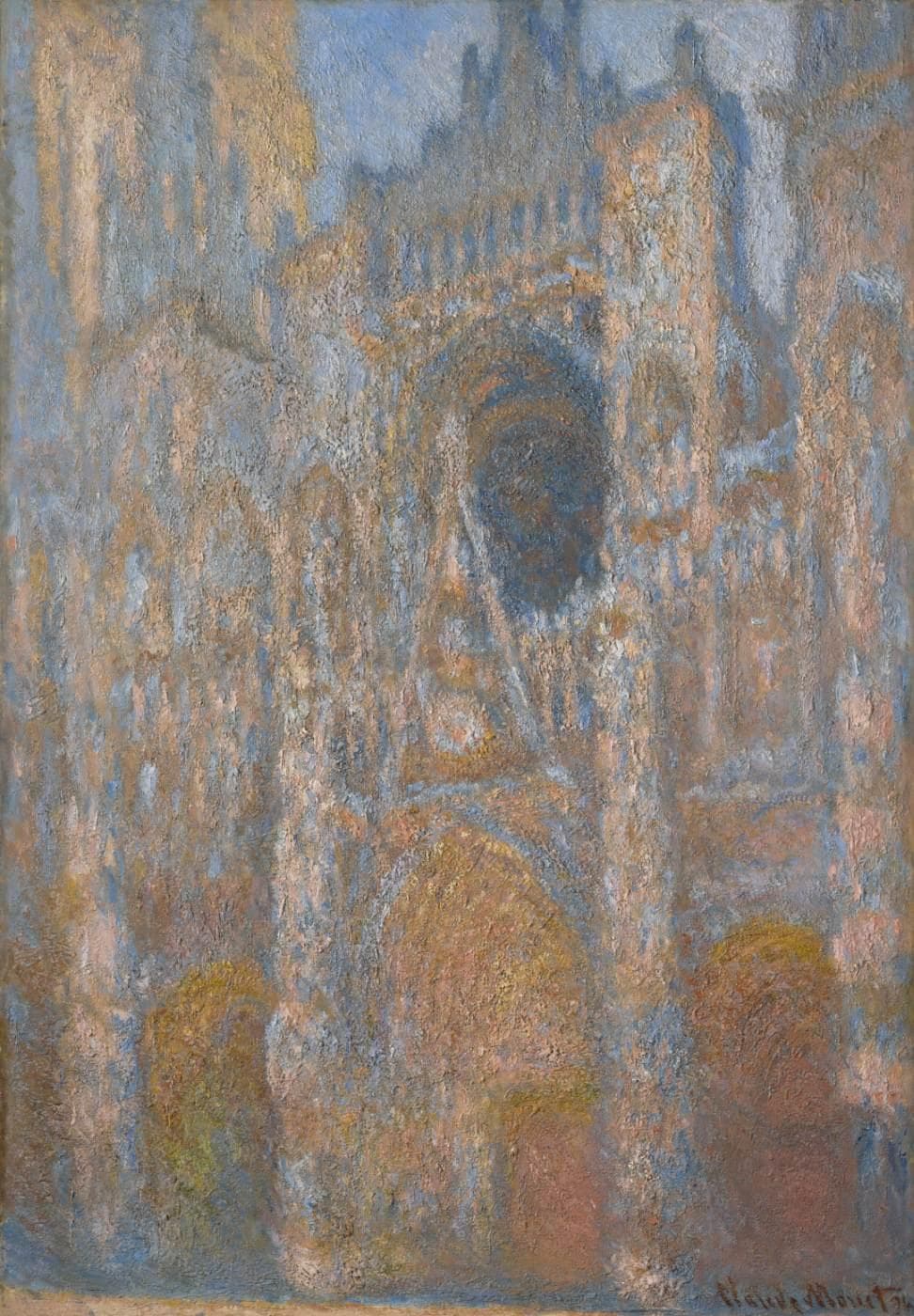
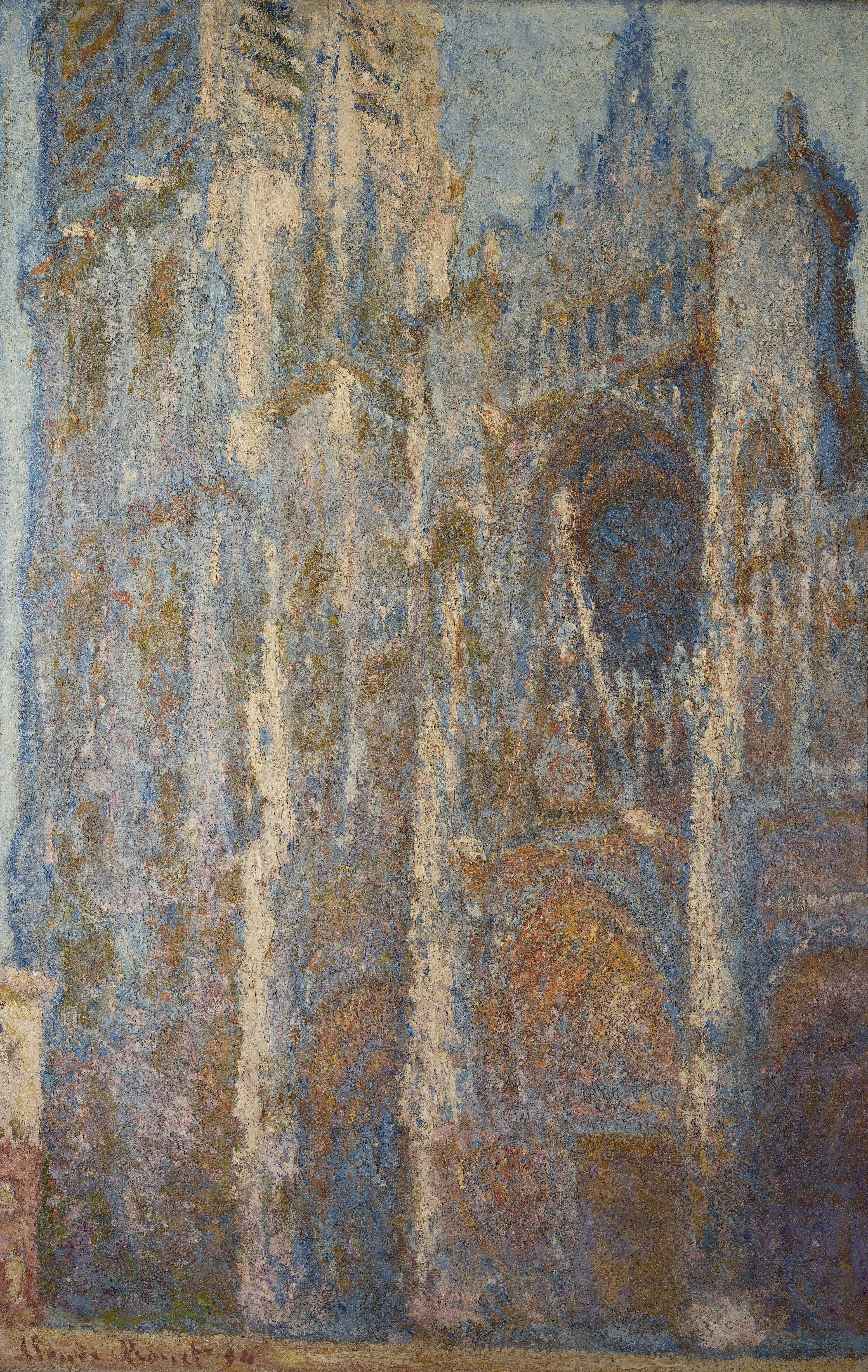
Every canvas in the series is a close-up of the cathedral's west front: the deep central portal, the lacy Gothic tracery above it, and on the left the Tour Saint-Romain, the oldest of its towers. Monet set his easel so close that the building overflows the canvas. There is almost no sky, only a strip of blue, gray or orange at the top, and no square or street at the bottom. The cathedral becomes a wall of carved stone filling the whole picture.
The canvases are tall, about 100 by 65 centimeters or slightly larger, and that upright format adds to the sense of looking up at a cliff. Monet chose a façade, not an interior or a view across the city, because stone with deep recesses catches light in a thousand gradations: the portals go dark while the pinnacles glow, and the same carving reads as pale gray at dawn and as burning orange at sunset.
Where and when Monet painted them
Monet arrived in Rouen in February 1892. He knew the city well; his brother Léon lived nearby, and he had painted the Seine there in the 1870s, as in Seine at Rouen. He rented a room on the upper floor of a building across the square from the cathedral, then moved to a second room nearby, which gave him a slightly different angle. That is why the series has two main viewpoints, one more frontal and one more oblique, with the Tour d'Albane, which rises behind the Saint-Romain tower, appearing in some versions, as in Portal and Tower d'Albane, Midday.
He worked until April 1892 and came back for the same months of 1893. As with the Haystacks, he had many canvases on the go, each tied to a particular hour, and switched between them as the sun moved round. His letters to Alice Hoschedé, whom he married in July 1892, record exhaustion and despair: the light changed faster than he could paint, and he dreamed at night that the cathedral was falling on him.
How the versions differ
The light runs through the day from east to west, because the facade faces west.
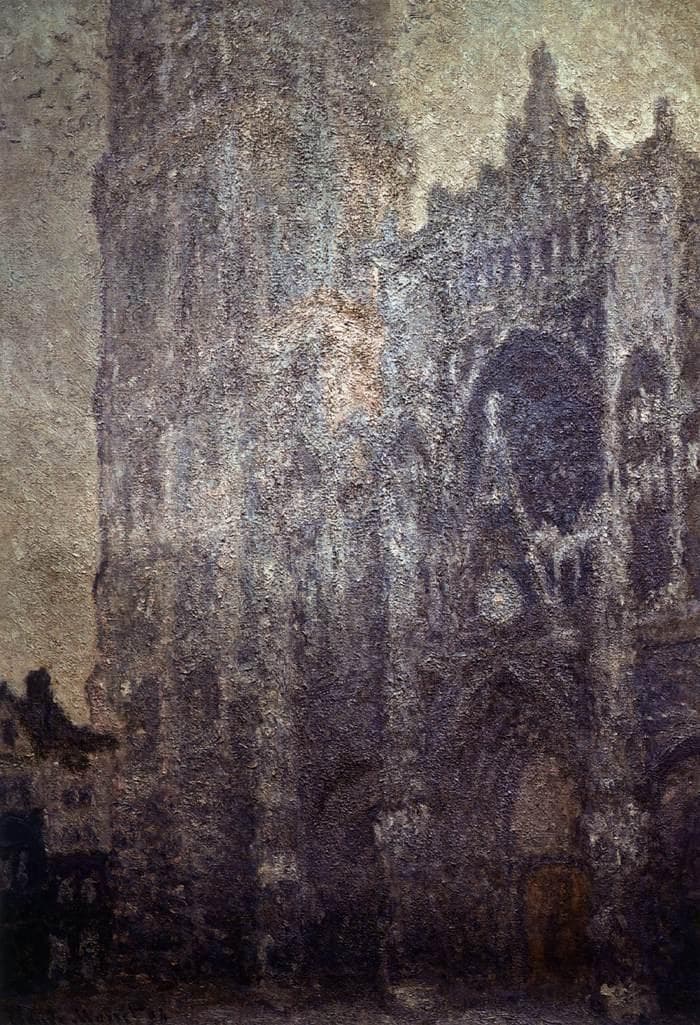
- Morning: the front is in shadow, with the sun behind the cathedral. Colors are cool, blue-gray and white, as in Effects of Morning Light (Harmonie blanche).
- Midday: sun strikes the stone from above, and the façade becomes gold and cream against a blue sky, with violet shadows in the portals. The Orsay's Rouen Cathedral in Full Sunlight (Harmonie bleue et or) is the best-known example.
- Afternoon: warm pinks and apricots, as in the Clark's Rouen Cathedral in Sunlight.
- Evening: the last light turns the stone orange and brown, and the portals sink into deep blue, as in Rouen Cathedral, Evening in Moscow.
- Gray days: a few canvases show overcast or misty weather, in which the facade is almost colorless and the carving barely visible.
Monet gave many of them titles that sound like music: harmonie blanche, harmonie bleue et or, harmonie brune. The titles tell you that the subject is the color chord, not the building.
How they were made: paint like stone
Look at any of these pictures from the side and you see a thick, dry, rough crust of paint, built up in many layers with a loaded brush, scraped and painted over again. In places it is almost a relief. The texture imitates the weathered surface of the limestone, and it records the long process: these are not quick impressions but canvases worked over two seasons on site and then for months in the studio at Giverny in 1894, where Monet adjusted them as a set.
The density of the paint is part of why critics compared them with masonry. It also explains why they look so different in reproduction and in the gallery, where the raking light of a museum lamp brings out every ridge.
The 1895 exhibition and what it meant
Monet chose the 20 canvases he thought best and showed them at Durand-Ruel's in May 1895, alongside other recent work. Several sold before the exhibition closed. Georges Clemenceau, then a journalist and later Prime Minister, published an article titled "The Revolution of the Cathedrals," imagining the canvases hung together in a sequence and urging the state to buy the whole set. It did not, though Clemenceau remained Monet's closest friend and later arranged the Orangerie Water Lilies.
The choice of subject drew comment. A Gothic cathedral was a national monument, and the 1890s saw a Catholic revival in France and fierce debate between church and republic. Some historians read the series as a statement about French heritage; others stress that Monet treated the cathedral exactly like a haystack, as a surface for light. Either way, painting a sacred building twenty times as a study of color was a provocation, and many visitors found it baffling.
Legacy
The series confirmed Monet's method of the 1890s, between the Poplars of 1891 and the Mornings on the Seine and London views that followed. Its insistence that the same object never looks the same twice was taken up by later artists, from Roy Lichtenstein, who made pop-art prints of the cathedral in 1969, to the many painters who adopted serial work.
Where to see Monet's Rouen Cathedral paintings
The Musée d'Orsay in Paris holds five, four of them from the collection of Isaac de Camondo, who left them to the state in 1911. The Musée des Beaux-Arts in Rouen has one, so you can see a painting and then walk to the façade itself, still standing on the Place de la Cathédrale. Two are in the Pushkin Museum, Moscow, one each in the Marmottan, the Metropolitan Museum, the National Gallery of Art in Washington, the Clark Art Institute in Williamstown, the Getty and the Museum of Fine Arts, Boston; others are in Cardiff, Weimar, Essen, Basel (Beyeler), Hakone and private collections. For more, see Where to See Monet's Paintings and Claude Monet.
Questions & answers
How many Rouen Cathedral paintings did Monet make?
Monet painted more than 30 views of Rouen Cathedral's west façade, working in Rouen in February–April 1892 and again in 1893, and finishing them at Giverny in 1894. He exhibited 20 of them, the ones he thought best, at Durand-Ruel's gallery in Paris in May 1895.
Where are Monet's Rouen Cathedral paintings?
The Musée d'Orsay in Paris has five, the largest group. Others are in the Pushkin Museum in Moscow, the Musée des Beaux-Arts de Rouen, the Musée Marmottan, the Met, the National Gallery of Art in Washington, the Clark, the Getty, the MFA Boston, Cardiff, the Beyeler Foundation and private collections.
Why did Monet paint Rouen Cathedral so many times?
He wanted to show how light and atmosphere transform one unchanging subject. The carved stone of the façade breaks light into countless tones, so it changes color through the day. Painting it at every hour and in every weather made the light itself the subject.
Where did Monet paint Rouen Cathedral from?
From rooms he rented on the upper floors of buildings across the square from the cathedral's west front in Rouen. He used two nearby viewpoints, which is why some canvases look straight at the portal and others are seen at a slight angle.
Can you still see the façade Monet painted?
Yes. Rouen Cathedral still stands in central Rouen, about 75 minutes from Paris by train. On summer evenings a light show is sometimes projected on the façade that recalls Monet's colors, and the Musée des Beaux-Arts nearby owns one of the paintings.