Impressionism
Le Déjeuner sur l'Herbe (two surviving fragments)
Claude Monet, 1865–66
Claude Monet's Le Déjeuner sur l'herbe (1865–66) was a huge outdoor picnic scene he never finished. Damaged by damp, he cut it up; two fragments, the left (418 × 150 cm) and central (248 × 217 cm) parts, are in the Musée d'Orsay, Paris.
- Artist
- Claude Monet
- Date
- 1865–66
- Medium
- Oil on canvas
- Dimensions
- Left fragment 418 × 150 cm; central fragment 248 × 217 cm
- Collection
- Musée d'Orsay, Paris, France
- Movement
- Impressionism
- Catalogue
- Wildenstein 63
More at Monet at the Musée d'Orsay
What you are looking at
The image here reunites two surviving pieces of one enormous painting. On the left, a tall narrow strip: a man in a dark suit and bowler hat stands under a canopy of beech leaves, beside two women in voluminous crinolines, one in grey trimmed with red, the other in a creamy brown, seen from behind. On the right, the central fragment: a white cloth spread on the grass with bread, a pie, fruit, bottles and plates; a bearded man in black reclining at its edge; a woman in a spotted white dress seated on the ground reaching for a plate; and behind them a woman lifting her arm and a tall bearded man in a grey suit and hat. Sunlight breaks through the leaves and lands in bright patches on the cloth and the dresses.
The grey areas in the composite mark what is missing. The original canvas was about 4 by 6 meters, one of the largest paintings of its time by a young artist.
Monet's ambition
In 1863 Édouard Manet had caused a scandal with his own Déjeuner sur l'herbe, which put a naked woman among clothed men at a picnic. Monet, then in his mid-twenties, answered it in 1865 with a picnic of entirely clothed, fashionable modern people, painted life-size and out of doors. His aim was to bring the scale of history painting to an everyday scene and to show real sunlight falling through real trees. He intended it for the Salon of 1866.
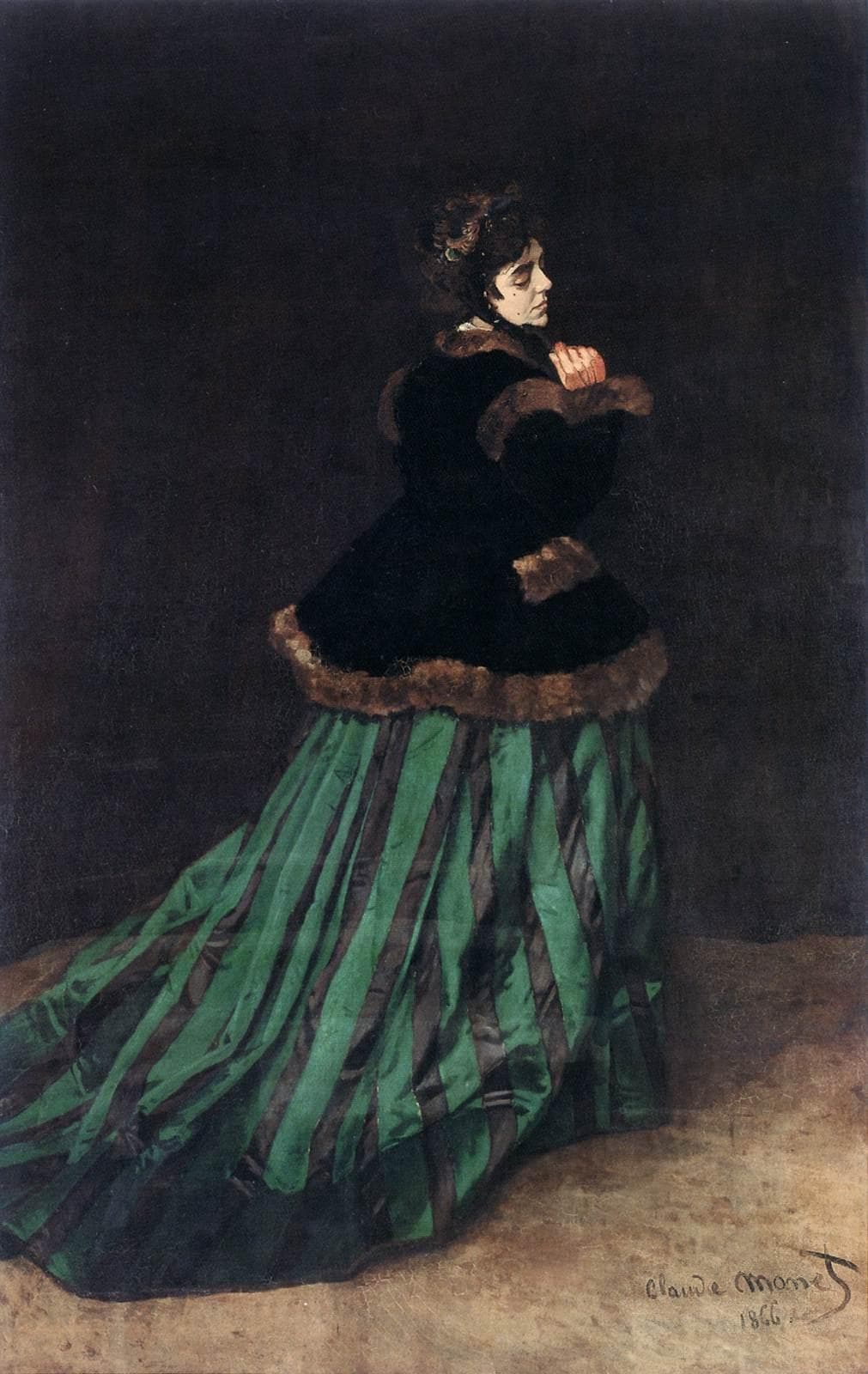
He worked in the forest of Fontainebleau near Chailly, making studies from life, and then transferred them to the vast canvas in the studio. His friend the painter Frédéric Bazille posed for several of the men; Camille Doncieux, later Monet's wife, posed for women in the group. The bearded man reclining at the center has traditionally been identified with Gustave Courbet, who visited Monet while he worked. Monet underestimated the task; the painting was not ready in time, and he sent instead the portrait Camille (Woman in the Green Dress), which was a success.
Why it is in pieces
The unfinished canvas came with Monet to Argenteuil. Short of money in 1878, he left it with his landlord as security against unpaid rent. When he was able to recover it, years later, it had been rolled up in a damp cellar and was badly damaged by mold.
Monet cut away the ruined parts and kept the best-preserved sections. Two fragments survive: the left part and the central part. The right section is lost.
A smaller version in the Pushkin Museum in Moscow, once thought to be a preparatory sketch and now considered a later repetition, shows how the complete composition looked, with about a dozen figures. It is the best guide to what is missing.
Close looking
The light is the revolution here. Look at the tablecloth: it is not white but a field of pale blue shadows with bright, almost yellow patches where the sun breaks through. The woman in the spotted dress sits partly in shade and partly in light, and Monet paints the spots in both conditions with different colors. In the left fragment, the leaves overhead are laid in with thick, flat strokes of green and yellow, a sign of the broad, quick handling that would become Impressionism.
The still life is a pleasure in its own right: a pie with a browned crust, a basket, peaches and grapes, dark wine bottles throwing reflections onto the cloth. Then notice the figures' poses: they are caught mid-gesture, turning, reaching, talking, without the arranged quality of a Salon composition.
Reading the two fragments together
Seen side by side, as in the image on this page, the two fragments show how Monet staged the scene. The left strip is mostly vertical: tall trunks, standing figures, the long fall of the crinolines. The central fragment spreads out horizontally along the white cloth. The figures in the left fragment have their backs to us or look away, as though just arriving, while those in the center are settled, eating and talking. Between them the original painting had a gap of grass and trees, now lost, and the Pushkin version shows a second group to the right, including a figure leaning against a tree.
The fragments also show the canvas's history. Their edges are cut straight through figures and foliage, and parts of the surface still bear the scars of damp and paint loss, reminders that this ambitious picture survived only by being cut apart.
Legacy
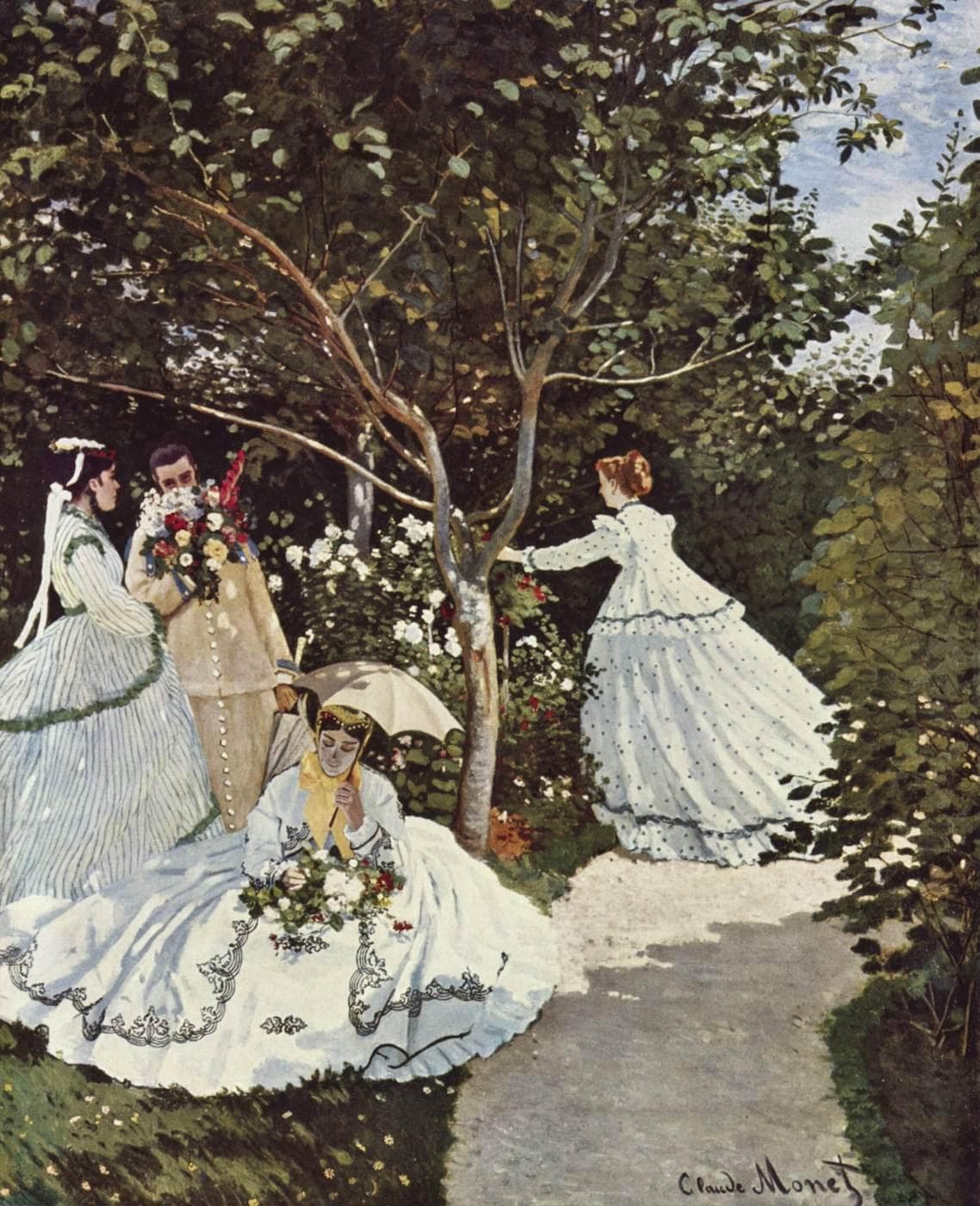
Although it failed in its own time, the project changed Monet's direction. The lessons he learned about painting figures in sunlight went straight into Women in the Garden (1866), which he painted outdoors in a trench so he could reach the top of the canvas. Art historians now treat the fragments as one of the founding works of Impressionism.
Related works
See the catalogue's pages on the central fragment, Picnic (detail) and The Picnic, and the wider selection in Famous Monet Paintings.
Where to see it
Both fragments are in the Musée d'Orsay in Paris, where they are usually displayed together in the Impressionist galleries so visitors can imagine the original scale.
Questions & answers
Why is Monet's Le Déjeuner sur l'herbe in pieces?
Monet left the unfinished canvas with his landlord in Argenteuil as security for unpaid rent in 1878. When he got it back years later, it had been stored in a damp cellar and was damaged by mold, so he cut out and kept the best-preserved parts. Two fragments survive.
Where is Monet's Le Déjeuner sur l'herbe?
The two surviving fragments, the left part (418 × 150 cm) and the central part (248 × 217 cm), are in the Musée d'Orsay in Paris. A smaller complete version of the composition is in the Pushkin Museum in Moscow.
Who are the people in Monet's Déjeuner sur l'herbe?
Monet's friend Frédéric Bazille posed for several of the men, and Camille Doncieux, later Monet's wife, for women in the group. The reclining bearded man at the center has traditionally been identified with the painter Gustave Courbet.
How is Monet's Déjeuner different from Manet's?
Manet's 1863 painting placed a nude woman among clothed men in an artificial studio setting. Monet answered in 1865–66 with a life-size picnic of fully dressed, fashionable Parisians, painted to capture real sunlight filtering through the trees of Fontainebleau.
More by the artist
Claude Monet

Bridge over a Pond of Water Lilies
Claude Monet · 1899

Woman with a Parasol – Madame Monet and Her Son
Claude Monet · 1875

Sunset in Venice
Claude Monet · 1908–12

La Grenouillère
Claude Monet · 1869

Beach in Pourville
Claude Monet · 1882

Springtime
Claude Monet · 1872

Boating on the River Epte
Claude Monet · 1890

The Seine at Asnières (Hermitage)
Claude Monet · 1873
Also painted in 1865
The same year
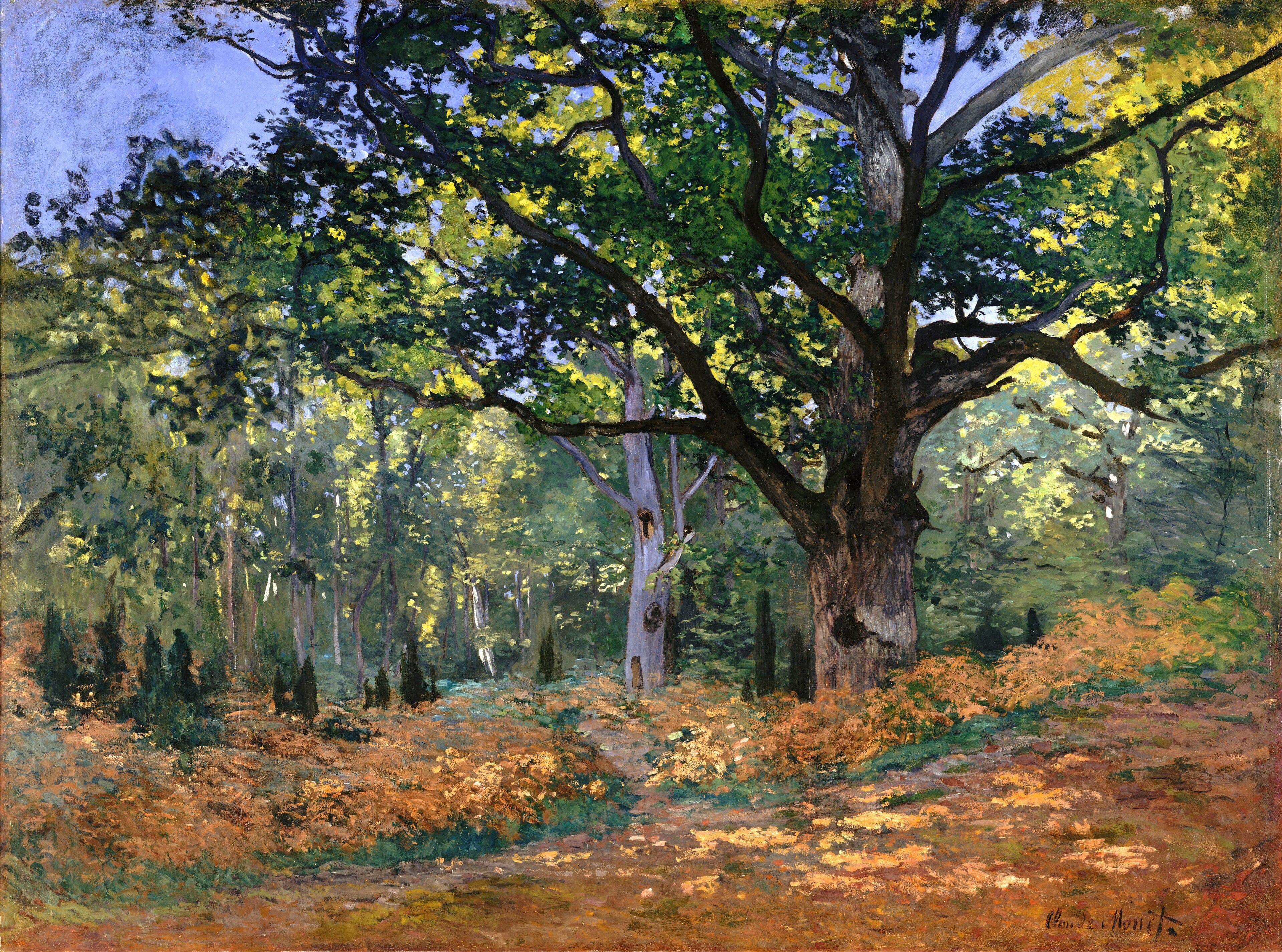
The Bodmer Oak, Fontainebleau Forest
Claude Monet · 1865
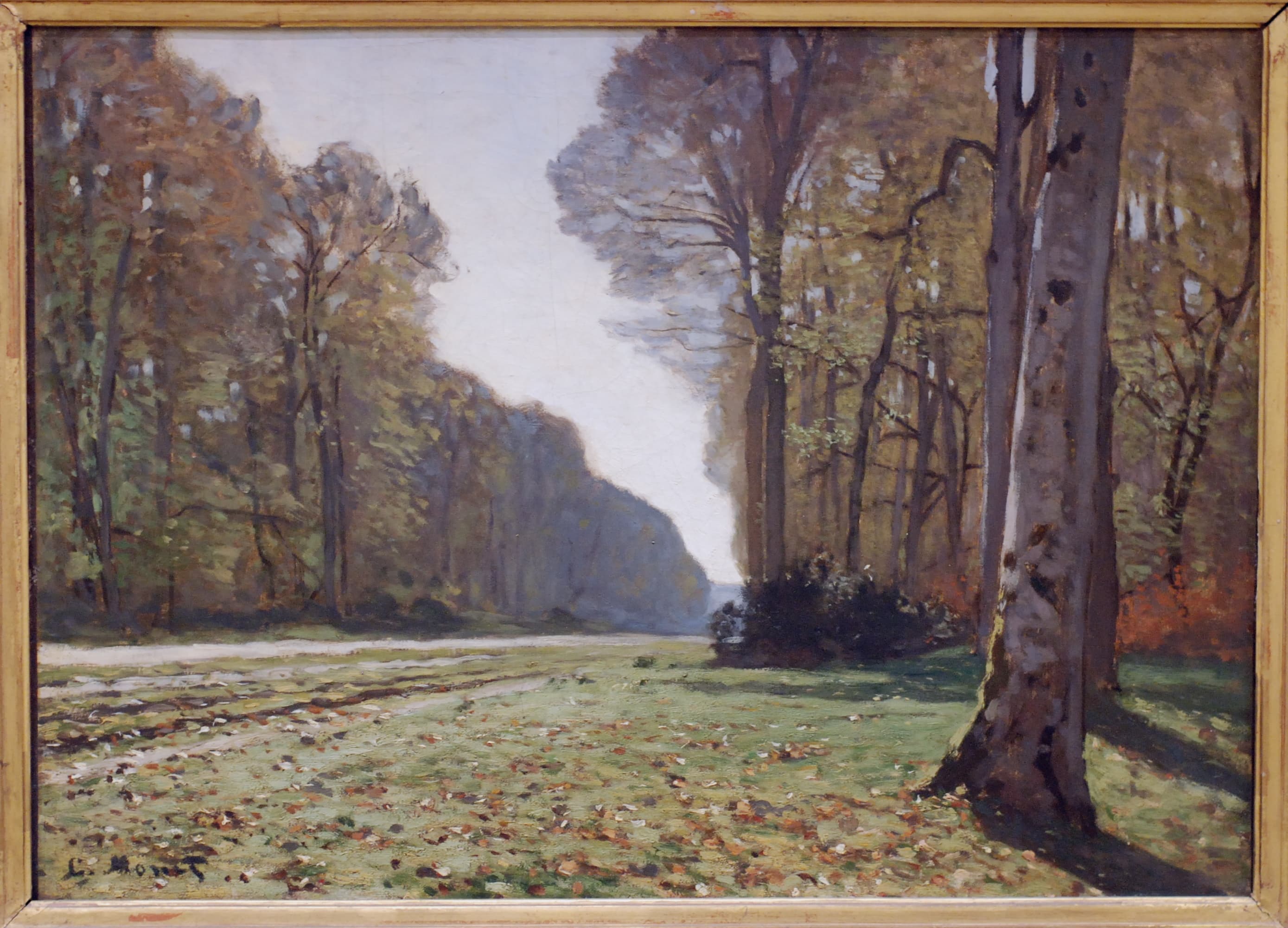
Le Pavé de Chailly
Claude Monet · c. 1865
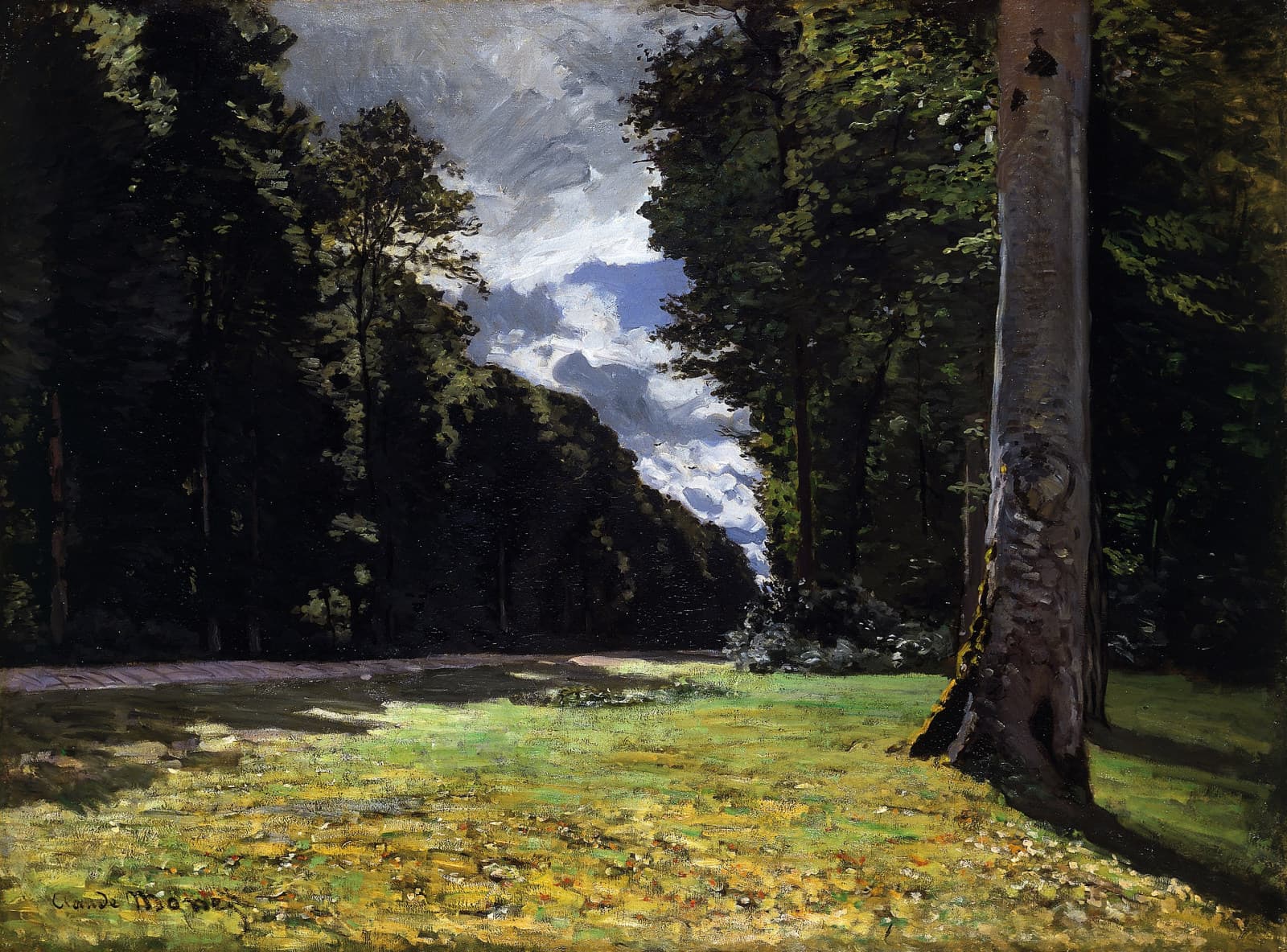
The Pavé de Chailly in the Forest of Fontainebleau
Claude Monet · 1865
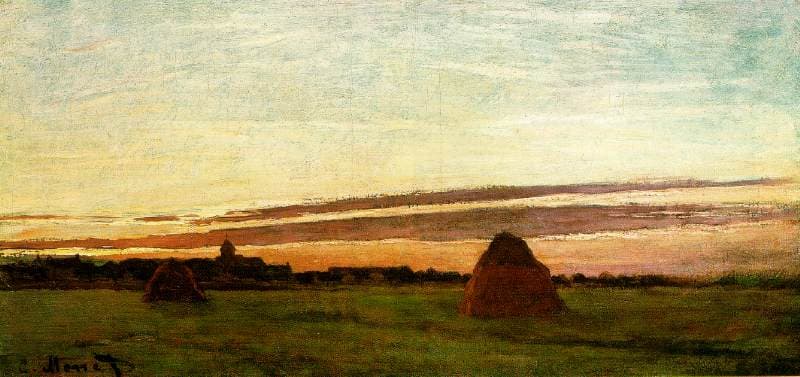
Haystacks at Chailly at Sunrise
Claude Monet · 1865
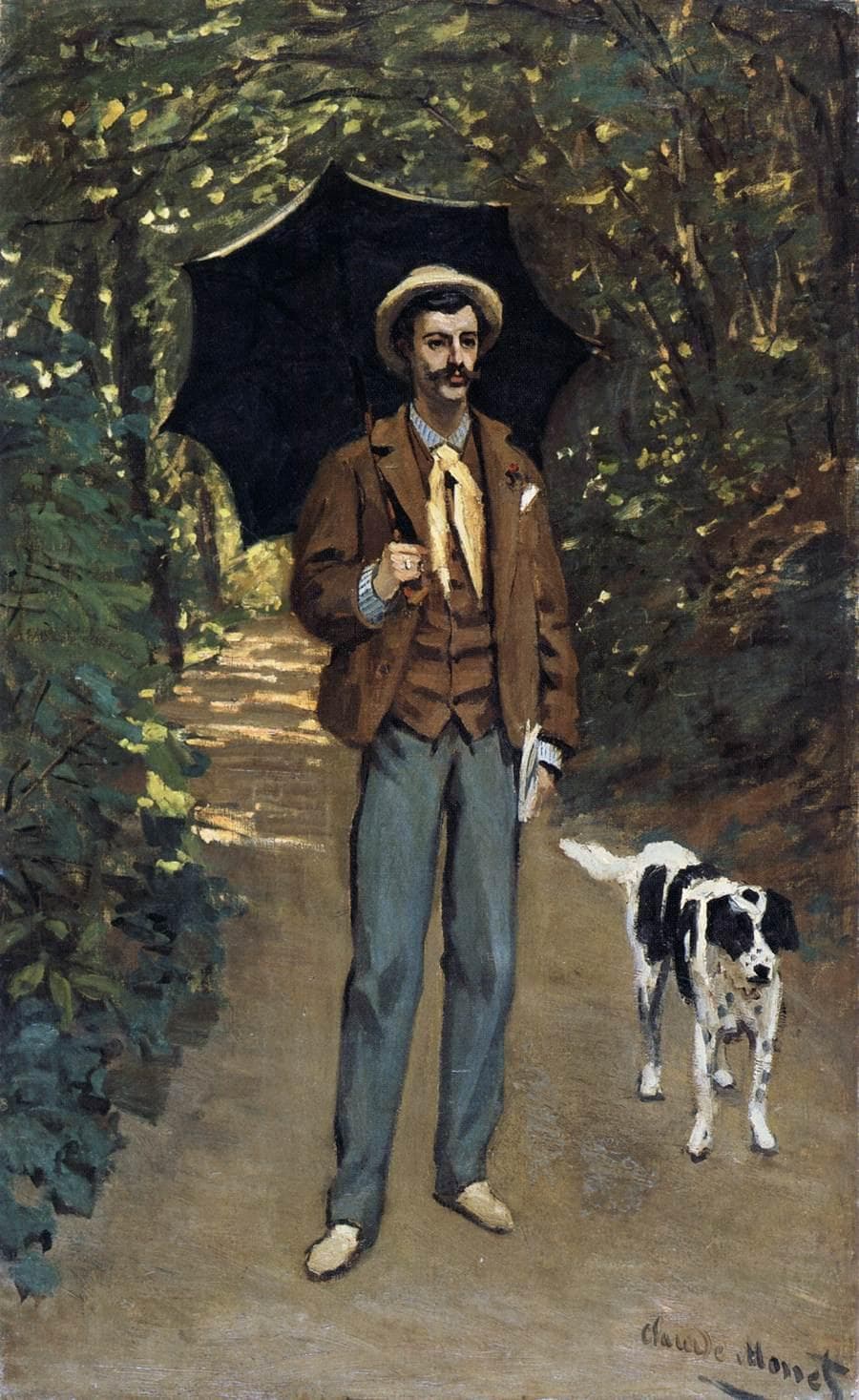
Man with a Parasol (Portrait of Victor Jacquemont)
Claude Monet · 1865–67
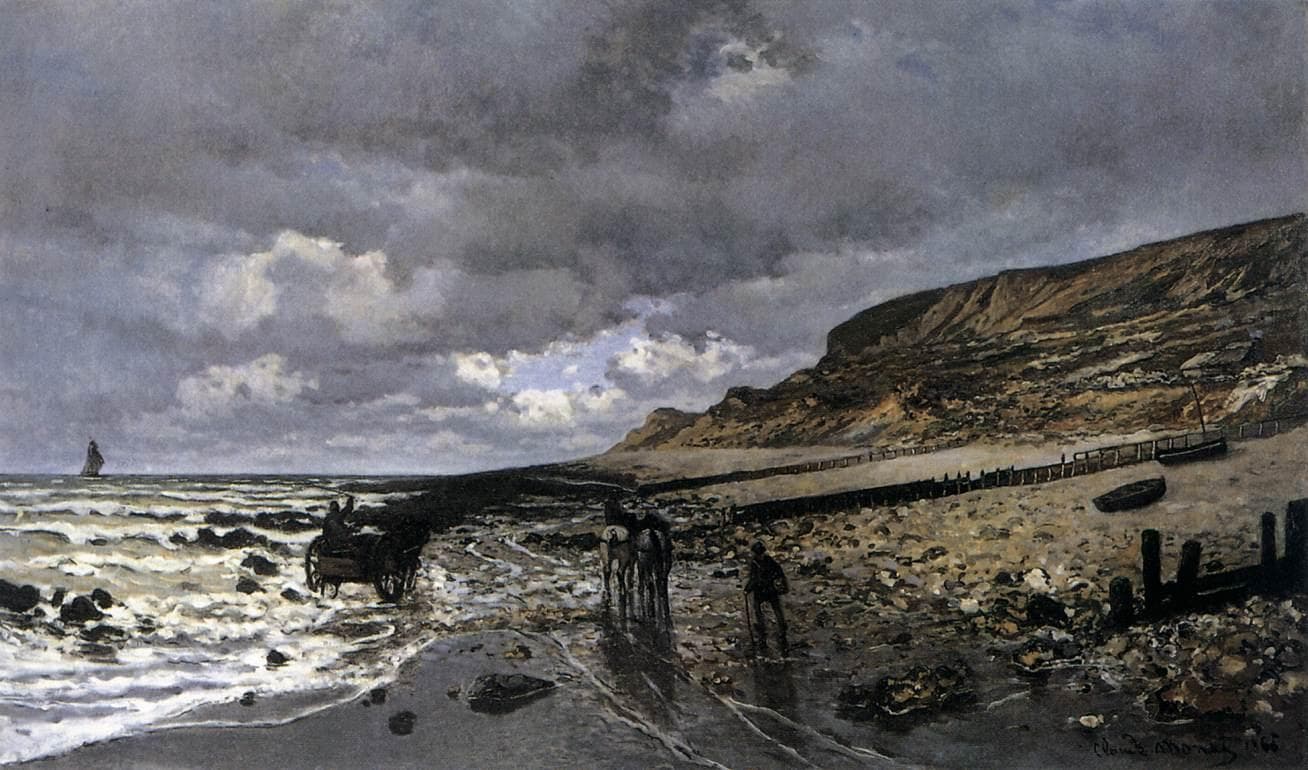
La Pointe de la Hève at Low Tide
Claude Monet · 1865
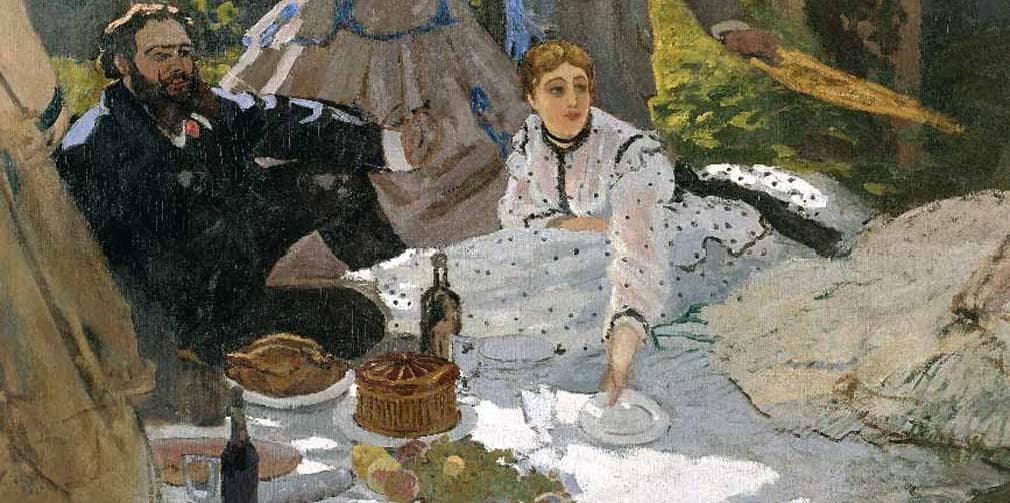
Picnic (detail)
Claude Monet · 1865–66

Setting Sun (Nightfall)
Claude Monet · c. 1865
Kindred works
You may also study
Picnic (detail)
Claude Monet · 1865–66
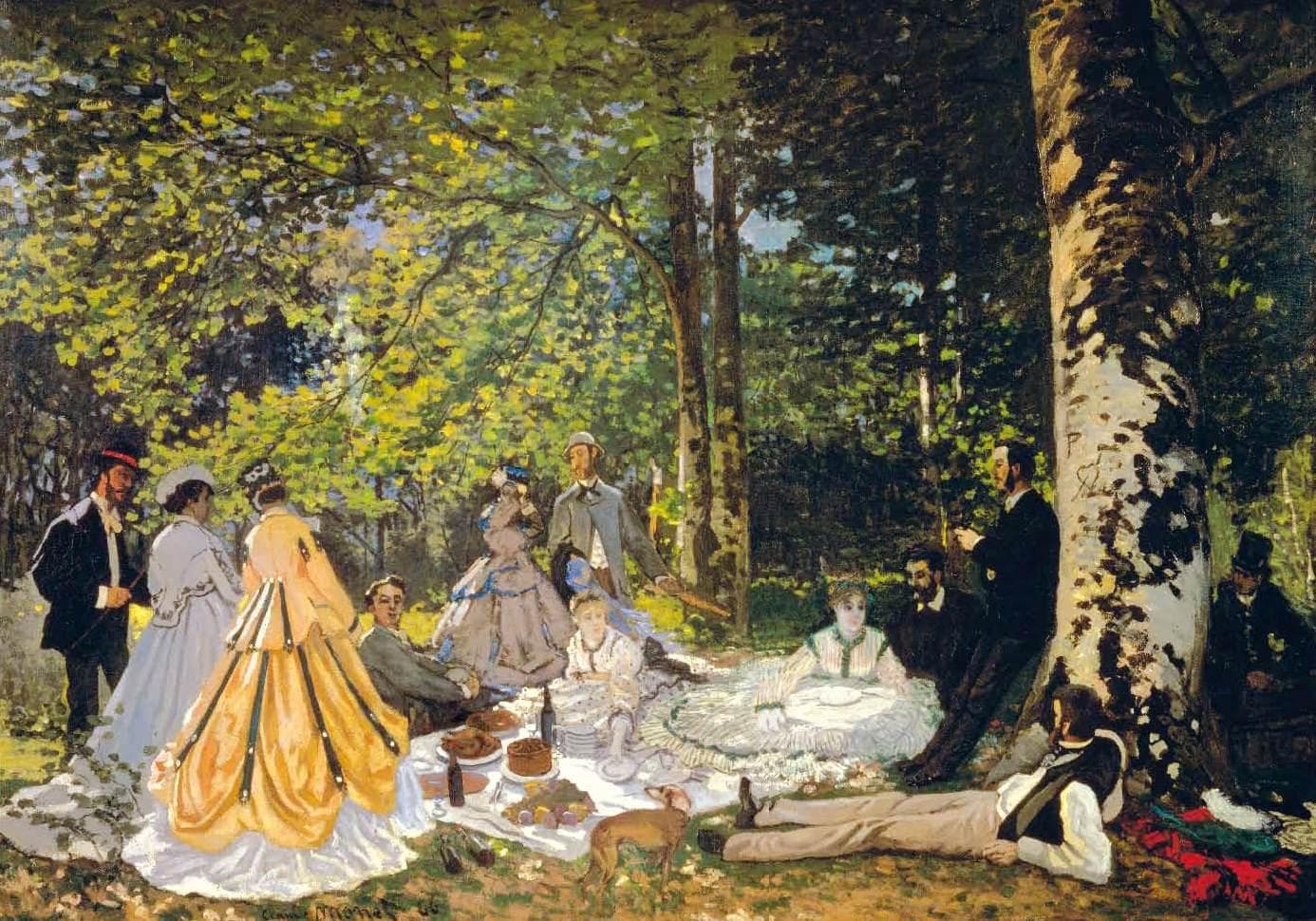
The Picnic
Claude Monet · 1865–66
Women in the Garden
Claude Monet · 1866–67
Camille (The Woman in the Green Dress)
Claude Monet · 1866

Venus de Milo
Alexandros of Antioch · c. 150–125 BC

The Scream
Edvard Munch · 1893

Ophelia
John Everett Millais · 1851–52

The Great Wave off Kanagawa
Katsushika Hokusai · c. 1830–32