Impressionism
Camille Monet on Her Deathbed
Claude Monet, 1879
Camille Monet on Her Deathbed is Claude Monet's 1879 portrait of his wife Camille, painted at Vétheuil on the day she died aged 32. The oil on canvas is in the Musée d'Orsay, Paris.
- Artist
- Claude Monet
- Date
- 1879
- Medium
- Oil on canvas
- Dimensions
- 90 × 68 cm
- Collection
- Musée d'Orsay, Paris, France
- Movement
- Impressionism
- Catalogue
- Wildenstein 543
Painted at Monet at VétheuilMore at Monet at the Musée d'Orsay
Camille Monet on Her Deathbed is the portrait Claude Monet painted of his first wife, Camille Doncieux, in their house at Vétheuil on 5 September 1879, the day she died. She was thirty-two. The canvas, 90 by 68 centimeters, is in the Musée d'Orsay in Paris. It is one of the most private paintings Monet ever made, and he kept it with him for the rest of his life.
Camille had been his model and companion since the mid-1860s. She is the woman in green in Camille (Woman in Green Dress), the figure on the hillside in Woman with a Parasol – Madame Monet and Her Son, and the smiling blonde-wigged performer of La Japonaise. This is the last time he painted her.
What you are looking at
Camille lies with her head on a pillow, turned slightly to the left, her eyes closed and her mouth just open. A pale veil or shroud has been drawn around her face, and a small spray of flowers rests on her breast. The rest of the picture is barely there: bed linen, pillow and background are woven together out of fast, looping strokes of blue-grey, violet and white, so that the figure seems to sink into the surrounding paint.
There is almost no color in the usual sense. The palette is a cold scale of bluish whites, lilac and steely grey, warmed only by a faint yellow near the face and a few touches of rose in the flowers. The brushwork is extraordinary even for Monet. Strokes slash downward across the canvas like falling rain or snow, and they cover the body as though the painting itself were drawing a veil over her.
Look at the face, though, and the handling changes. Here the paint is smoother and more careful, and Monet records the slack cheeks, sunken eye sockets and thin lips of someone who had been ill for months. It is unsentimental and very close.
How it was made
Camille had been seriously ill since the birth of the couple's second son, Michel, in March 1878. The family, together with Alice Hoschedé and her six children, had moved to Vétheuil on the Seine that year, and money was scarce. The exact nature of Camille's illness is not known; suggestions in the literature include uterine cancer and complications after childbirth, but no diagnosis is documented with certainty.
Monet painted the portrait quickly, almost certainly within hours of her death, in the half-light of the room. That speed explains the open, unblended brushwork, and the light of an early autumn morning may explain the cold, silvery tonality.
What Monet said about it
Years later, Monet described the experience to his friend Georges Clemenceau. According to Clemenceau's recollection, published in his 1928 book on Monet, the painter confessed that while sitting by his dead wife he had caught himself automatically noting the shifting colors that death was bringing to her face: blues, yellows, greys. He described it as a kind of compulsion, a reflex of the eye he could not switch off, and he was disturbed by it.
That story is often quoted as evidence of a cold, purely optical temperament. Read alongside the painting, it suggests the opposite: grief expressed in the only language Monet fully trusted, which was looking.
Meaning and interpretation
Deathbed portraits have a long history in European art, from medieval tomb effigies to the posthumous portraits and photographs common in the nineteenth century. Monet's picture belongs to that tradition of remembrance but breaks with its conventions. There is no candle, no crucifix, no mourning figure, no attempt to make the dead look peaceful or beautiful.
Instead, critics and historians have read the swirling, veil-like strokes as a visual image of dissolution: the body passing out of the visible world. Some see in it a turning point in Monet's art. After 1879 his figure paintings become rarer, and he turns increasingly to landscape, to motifs painted again and again in changing light. Whether or not Camille's death caused that change, the portrait marks the end of the period when she was the human center of his work.
The years at Vétheuil
The painting belongs to the hardest period of Monet's life. At Vétheuil the two families, his own and that of the bankrupt collector Ernest Hoschedé, shared a rented house on the Seine. Monet wrote begging letters to friends and patrons, and Camille's care fell increasingly to Alice Hoschedé, who would later become Monet's second wife. The landscapes he painted there, including the frozen river of the winter after Camille's death, are among the bleakest in his work. Seen beside The Church in Vétheuil in Winter or the ice floe pictures of 1879–80, the deathbed portrait's icy palette looks less like an isolated experiment and more like the color of a whole season of grief.
Where to see it
The painting is in the Musée d'Orsay in Paris and is periodically on display in the Impressionist galleries. It was not shown publicly during Monet's lifetime. For other works on mortality in the catalogue, see Death in Art and Memento Mori & Vanitas.
Questions & answers
Where is Camille Monet on Her Deathbed today?
The painting is in the Musée d'Orsay in Paris. Monet kept it privately for the rest of his life, and it was never exhibited while he was alive. It now hangs, when on view, among the museum's Impressionist collection alongside other portraits of Camille.
How did Camille Monet die?
Camille Doncieux died at Vétheuil on 5 September 1879, aged thirty-two, after a long illness that followed the birth of her second son, Michel, in 1878. The exact cause is not documented; uterine cancer and childbirth complications are both suggested in the literature.
Why did Monet paint his wife on her deathbed?
Monet never fully explained it. He later told Georges Clemenceau that at her bedside he caught himself studying the changing colors of her face, almost against his will. The portrait is both an act of mourning and a record of that compulsive way of seeing.
What does Camille Monet on Her Deathbed mean?
It is a private memorial. The veil of blue-grey brushstrokes that covers the body is often read as an image of the body fading from sight, while the carefully painted face keeps her present. Many historians see it as the end of Camille's role as Monet's central model.
More by the artist
Claude Monet

Bridge over a Pond of Water Lilies
Claude Monet · 1899

Woman with a Parasol – Madame Monet and Her Son
Claude Monet · 1875

Sunset in Venice
Claude Monet · 1908–12

La Grenouillère
Claude Monet · 1869

Beach in Pourville
Claude Monet · 1882

Springtime
Claude Monet · 1872

Boating on the River Epte
Claude Monet · 1890

The Seine at Asnières (Hermitage)
Claude Monet · 1873
Also painted in 1879
The same year
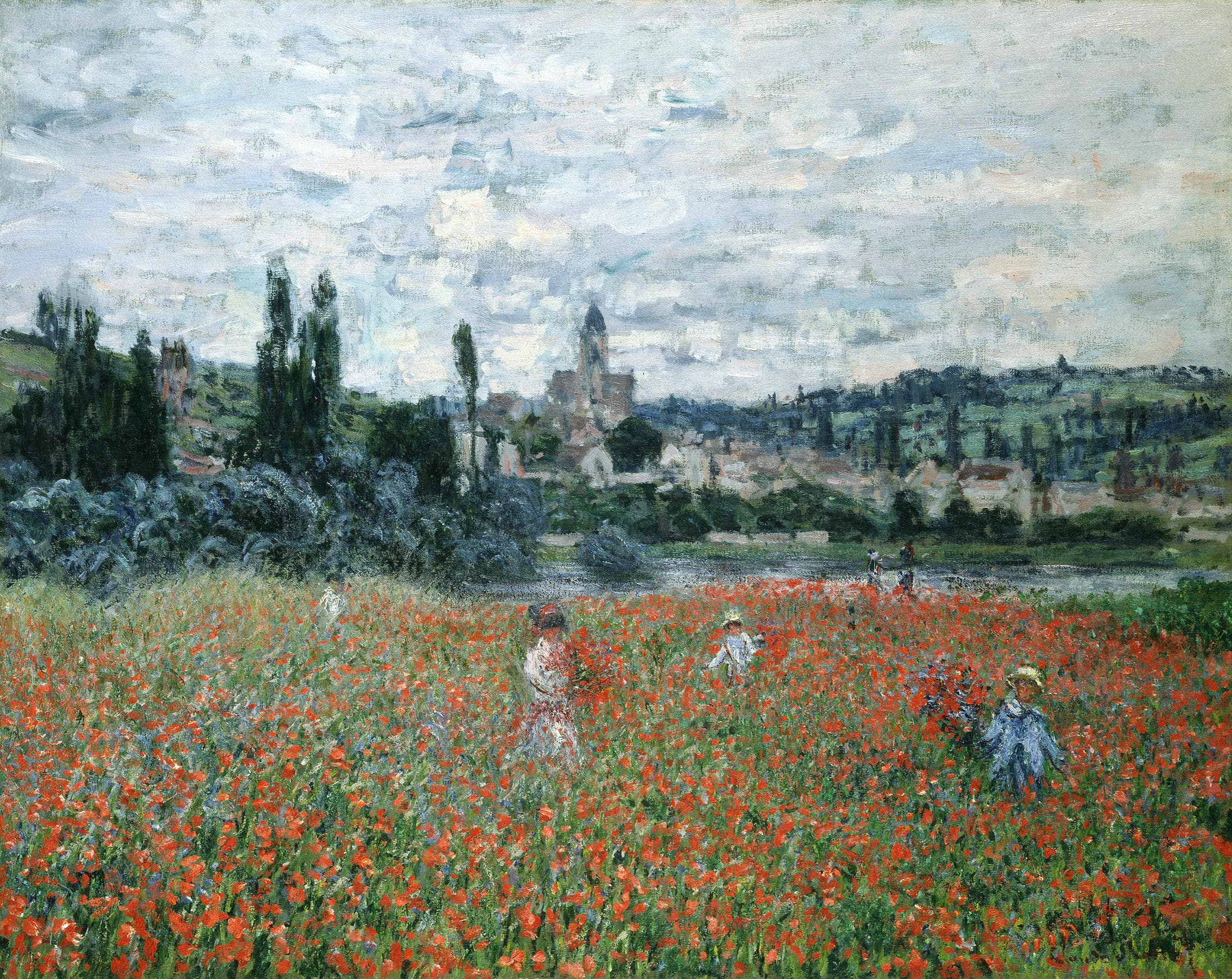
Poppy Field near Vétheuil
Claude Monet · c. 1879
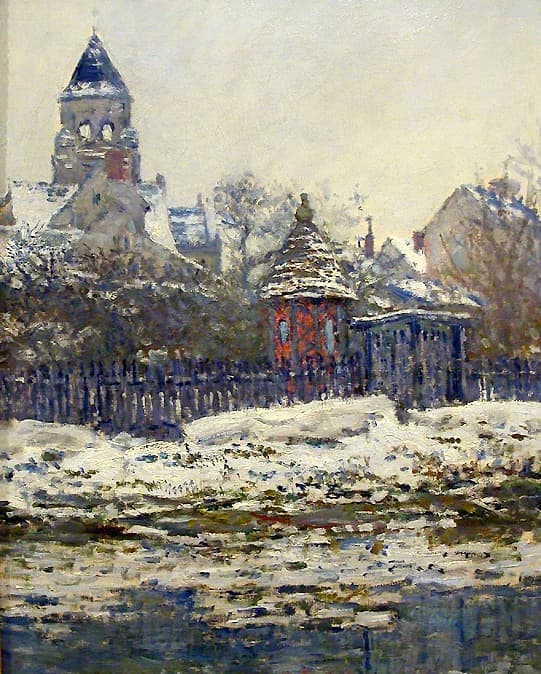
Vétheuil Church
Claude Monet · 1879
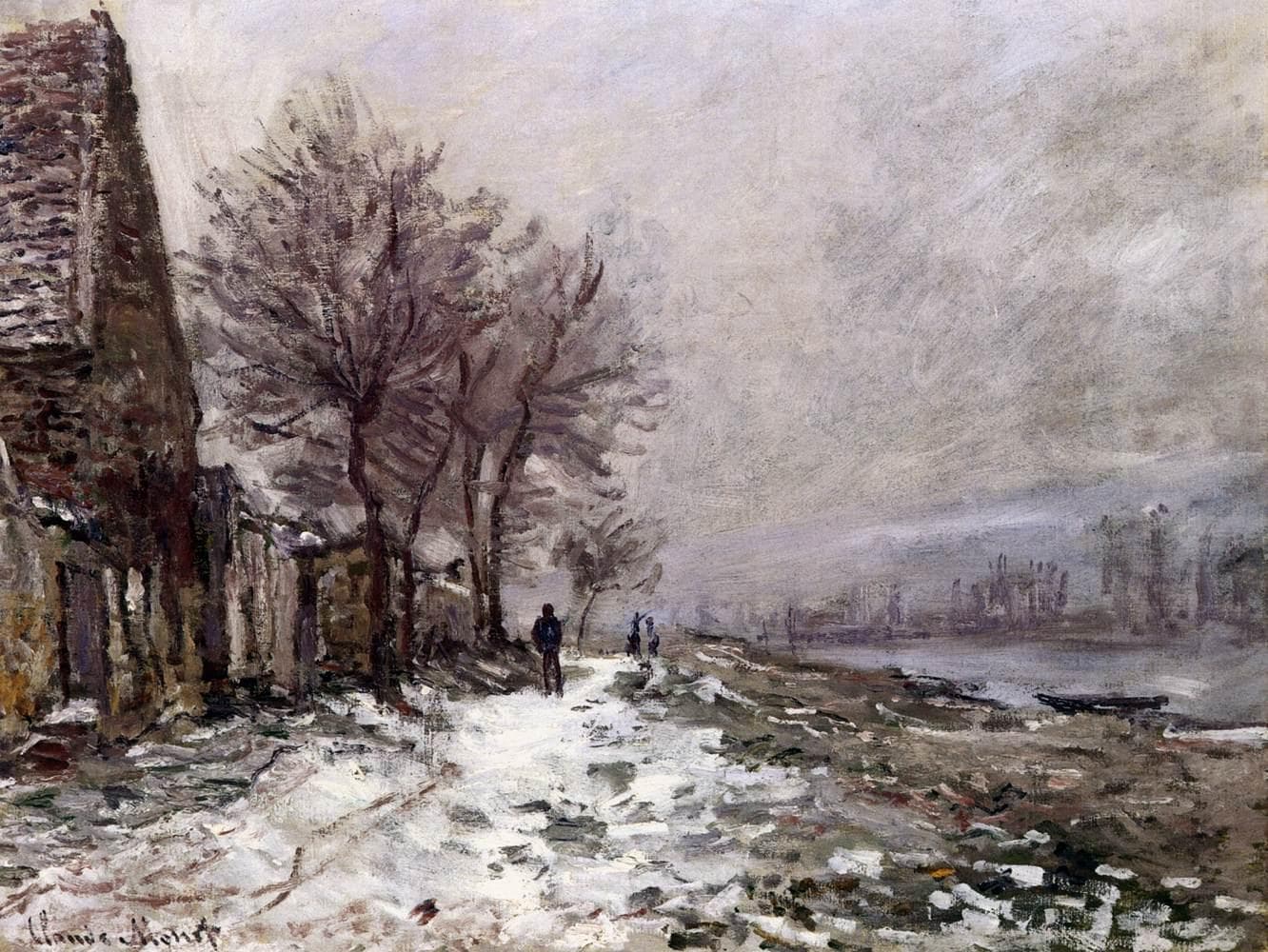
Lavacourt in Winter
Claude Monet · 1879
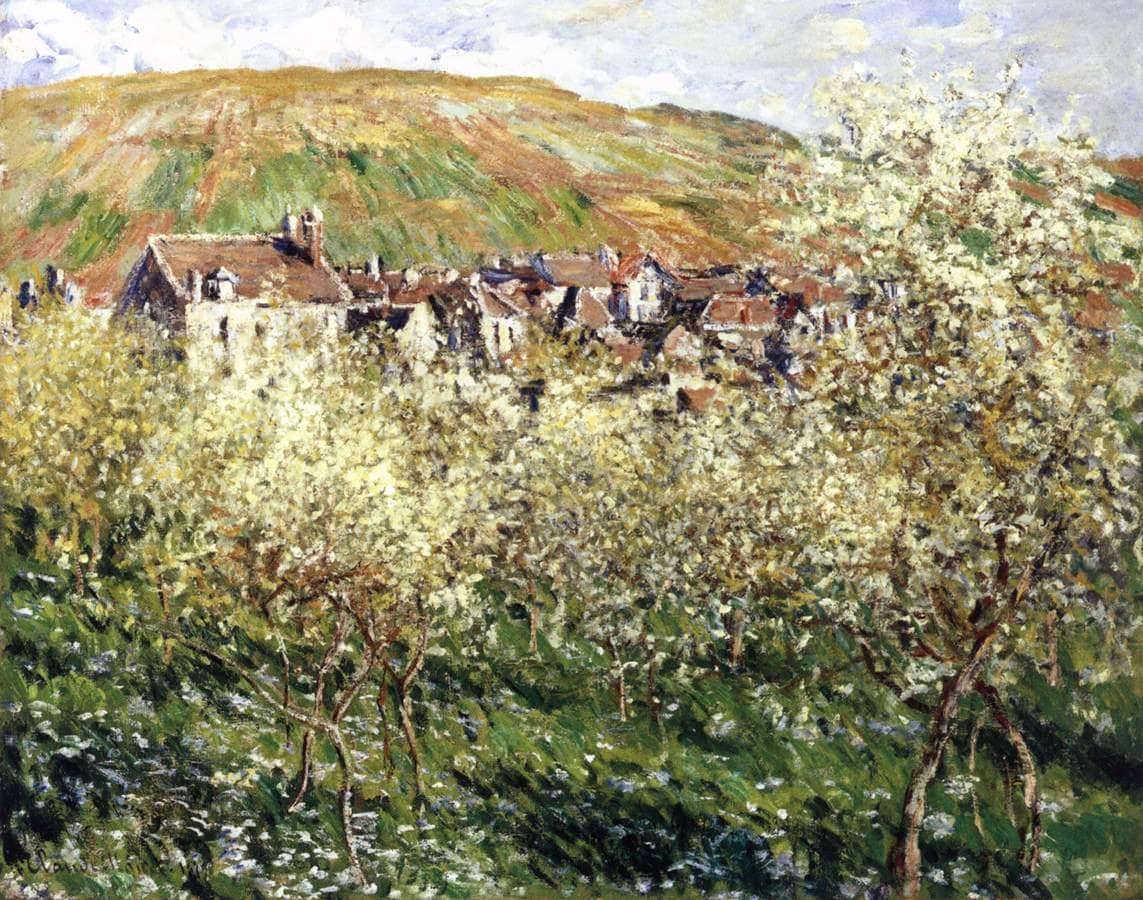
Plum Trees in Bloom
Claude Monet · 1879
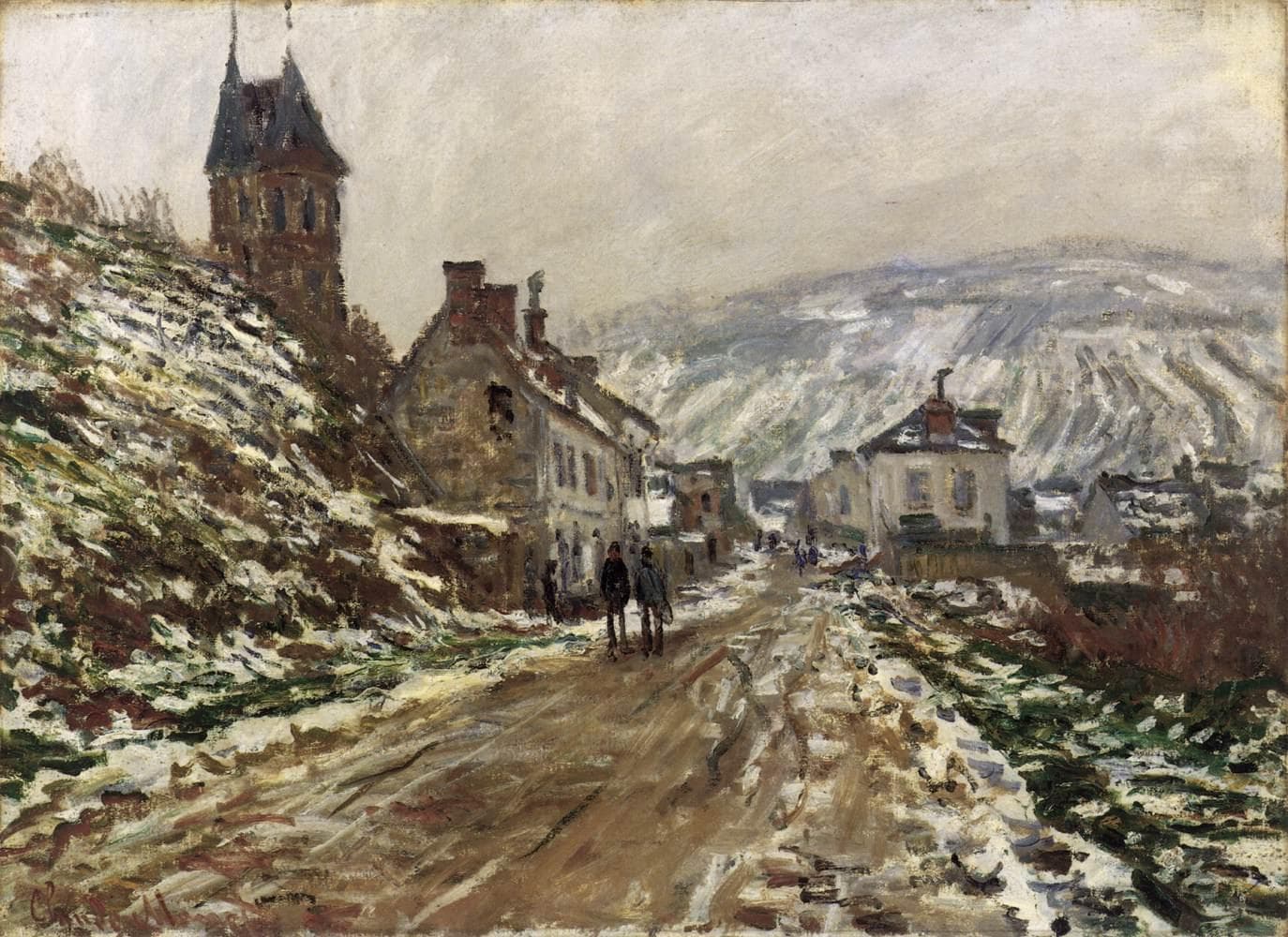
Road into Vétheuil in Winter
Claude Monet · 1879
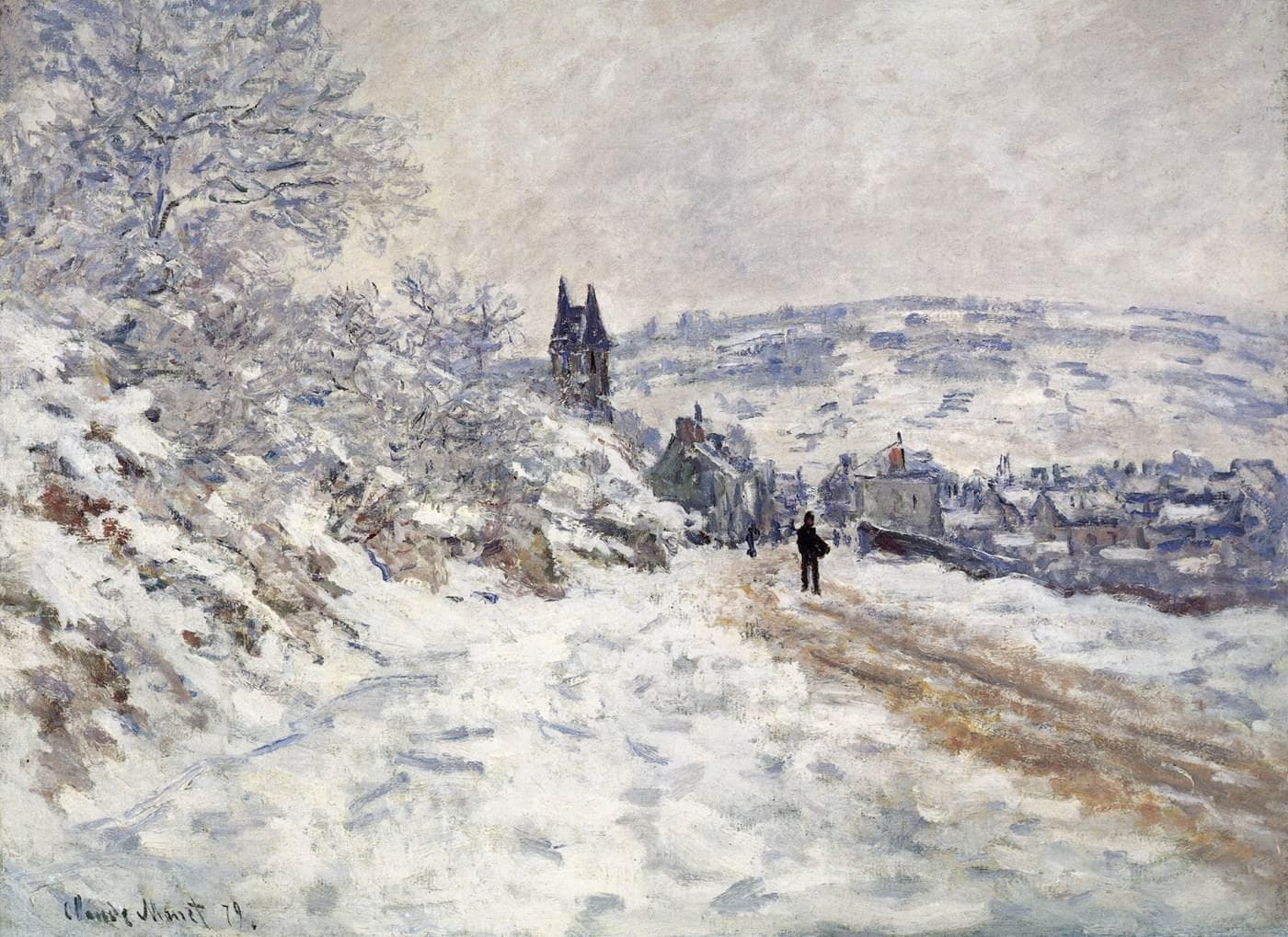
Road to Vétheuil, Snow Effect
Claude Monet · 1879
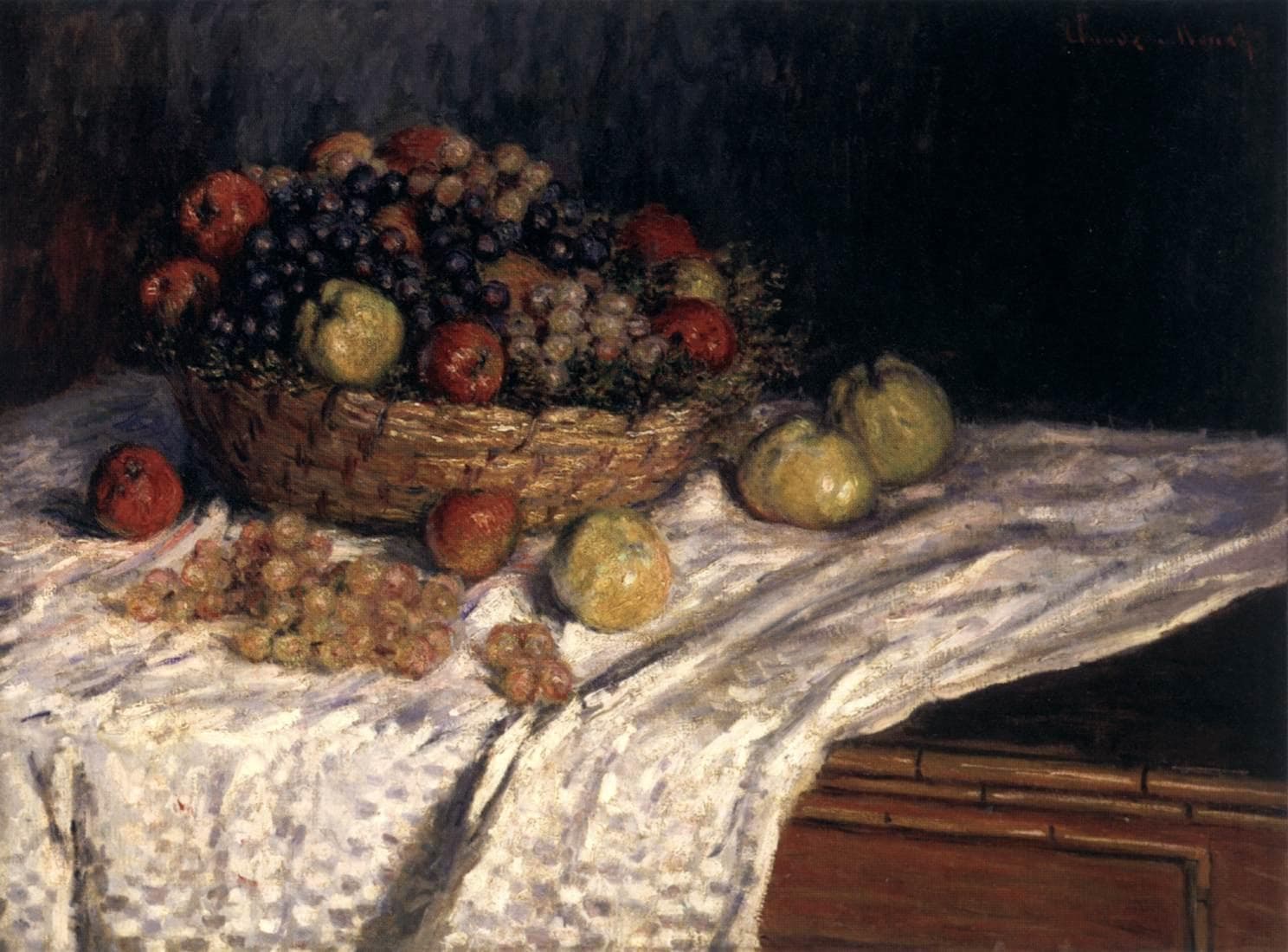
Still-Life with Apples and Grapes
Claude Monet · 1879–80
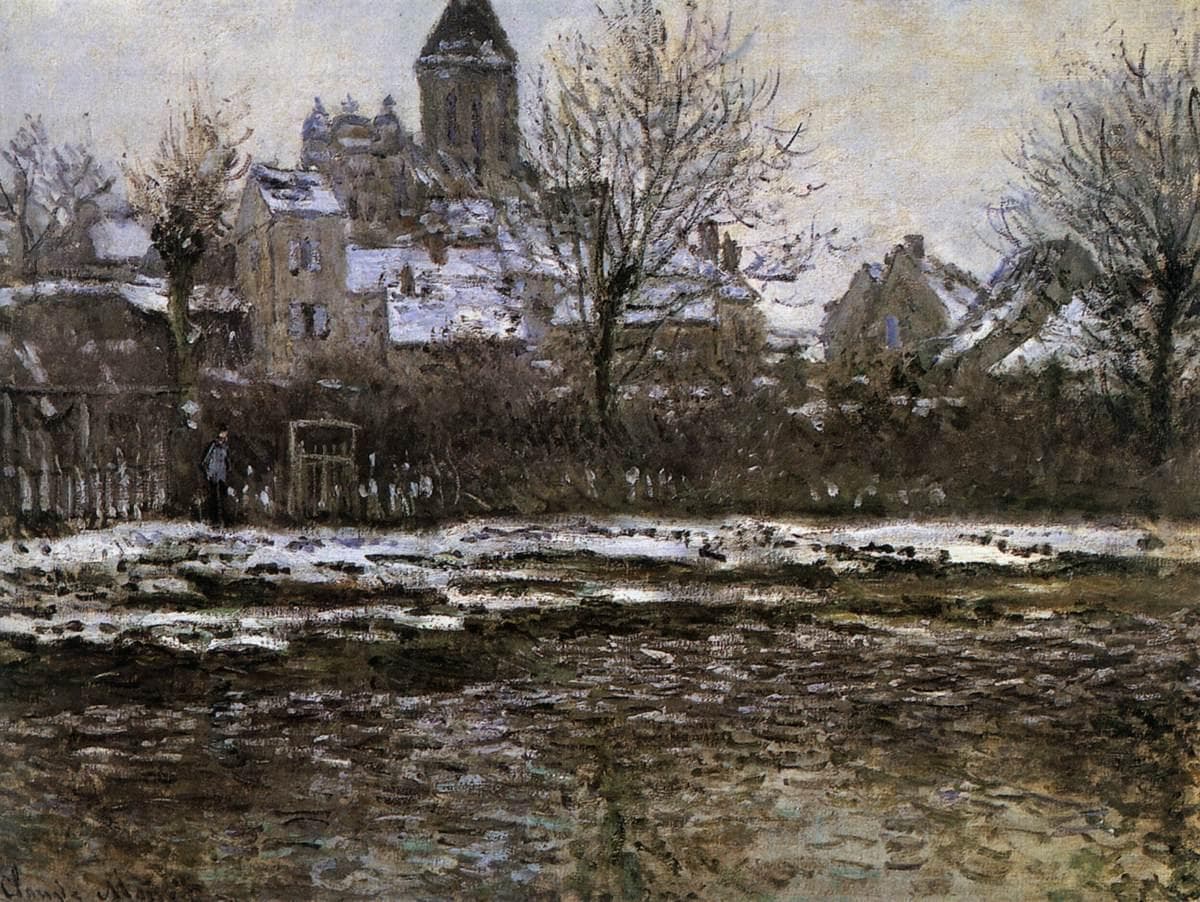
The Church in Vétheuil in Winter
Claude Monet · 1878–79
Kindred works
You may also study
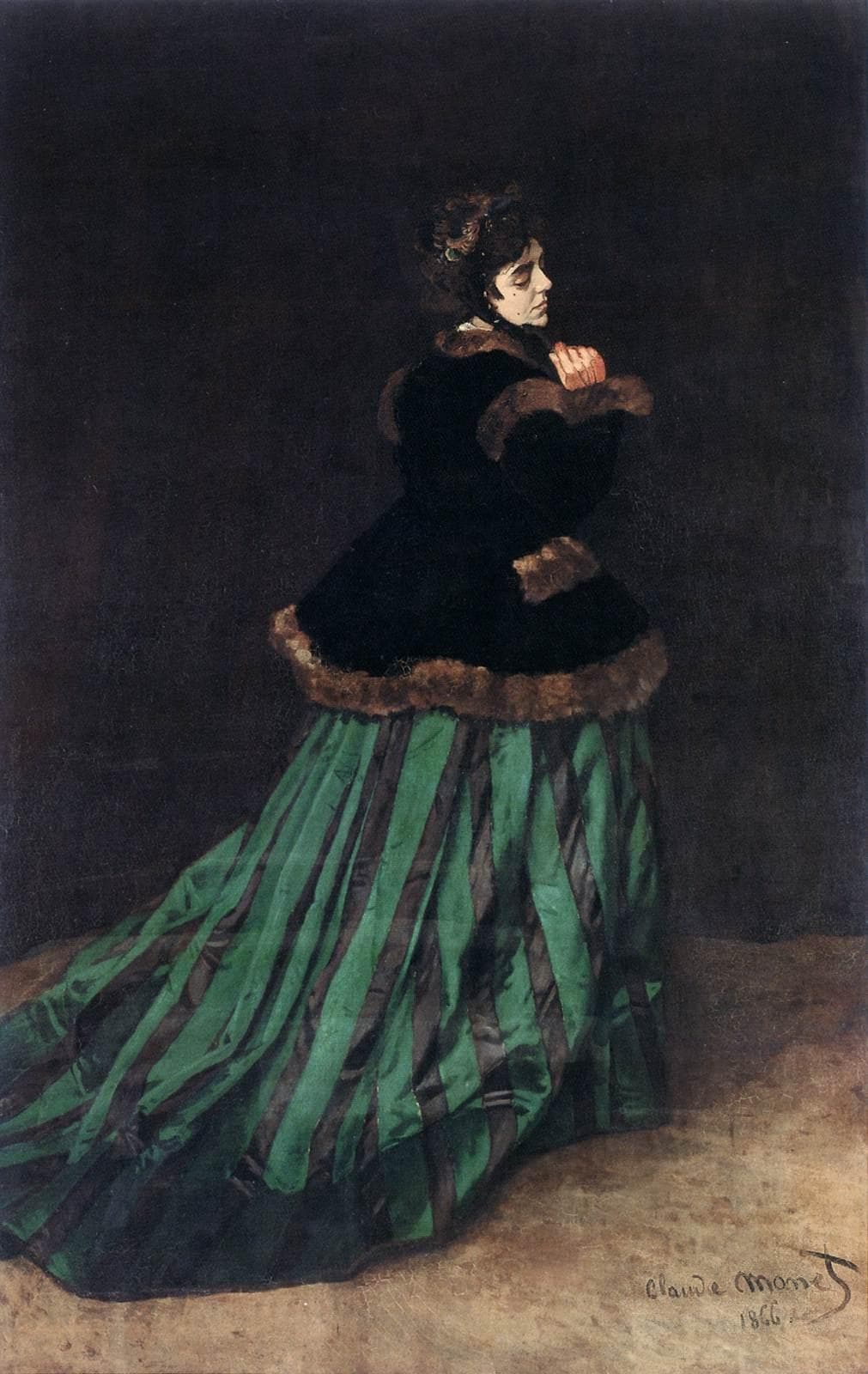
Camille (The Woman in the Green Dress)
Claude Monet · 1866
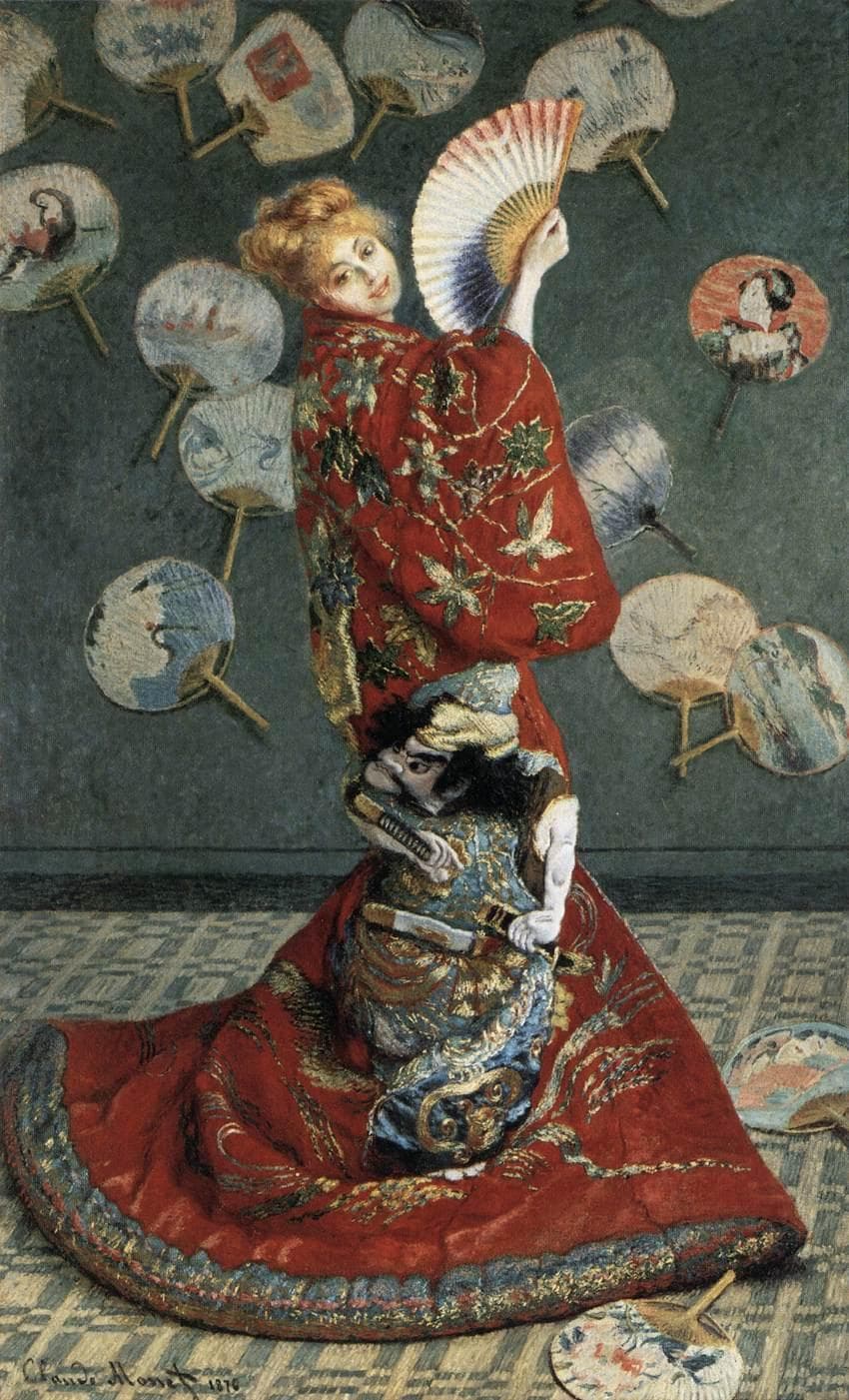
La Japonaise (Camille Monet in Japanese Costume)
Claude Monet · 1876
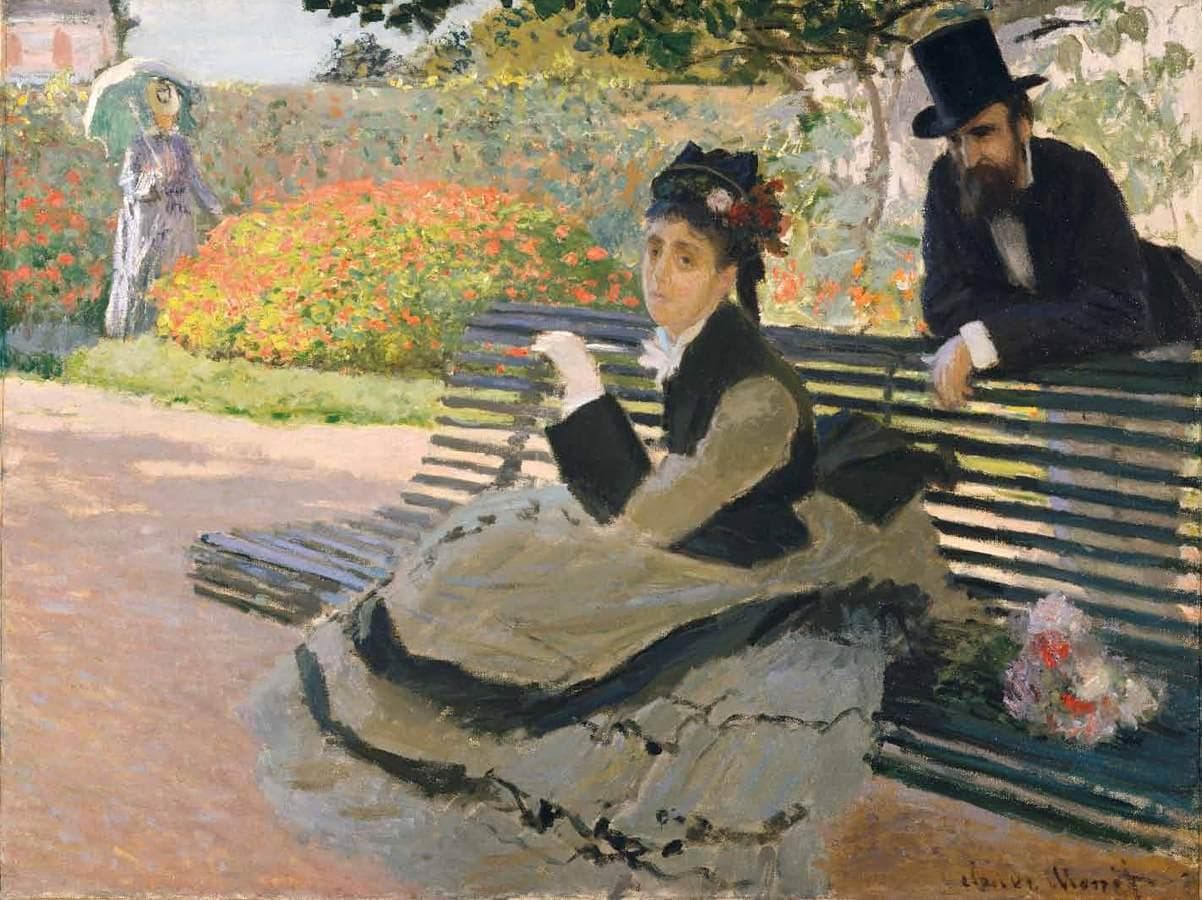
Camille Monet on a Garden Bench
Claude Monet · 1873
The Church in Vétheuil in Winter
Claude Monet · 1878–79

Venus de Milo
Alexandros of Antioch · c. 150–125 BC

The Scream
Edvard Munch · 1893

Saturn Devouring His Son
Francisco Goya · c. 1819–1823

Ophelia
John Everett Millais · 1851–52