Realism
Camille (The Woman in the Green Dress)
Claude Monet, 1866
Camille, or The Woman in the Green Dress, is Claude Monet's life-size 1866 portrait of Camille Doncieux in a striped green silk gown, his first success at the Paris Salon. It is in the Kunsthalle Bremen, Germany.
- Artist
- Claude Monet
- Date
- 1866
- Medium
- Oil on canvas
- Dimensions
- 231 × 151 cm
- Collection
- Kunsthalle Bremen, Bremen, Germany
- Movement
- Realism
- Catalogue
- Wildenstein 65
Camille, better known as The Woman in the Green Dress, is the painting that first made Claude Monet's name. He painted the life-size portrait of Camille Doncieux, then his companion and later his wife, in Paris in 1866 and showed it at the Salon that spring to wide praise. The canvas, 231 by 151 centimeters and number 65 in Wildenstein's catalogue, is in the Kunsthalle Bremen in Germany.
What you are looking at
Camille is seen in profile, turned away from us toward the right, as if she had just stepped past and paused. Her head is lowered slightly and her hands are raised to her throat, tying or adjusting the ribbons of her collar. She wears a short jacket of black velvet edged with thick brown fur at the collar, cuffs and hem, and a small ornament in her dark hair.
Below the jacket is the subject of the picture: a vast skirt of green and black striped silk, its train sweeping out behind her across the floor to the left and catching the light in long, liquid highlights. There is no setting. The background is a deep olive-brown, nearly black, and the floor is a pale strip of brownish tone, so the figure stands out like an image from a fashion plate. The figure is placed slightly right of center, and the empty dark space at the left is filled only by the train, which gives the composition its sense of movement. The signature and date, "Claude Monet 1866", are written large at lower right.
How it was painted
The handling owes much to Gustave Courbet and Édouard Manet: broad areas of tone, a dark ground and a strong, simple silhouette. The silk is the bravura passage. Monet paints its folds with long, loaded strokes of emerald, black and white, letting the brush follow the fall of the fabric so that each stripe bends and catches the light differently. The fur, by contrast, is dabbed and broken, and the face is modeled softly in a few warm tones. According to an often-repeated story, he finished the picture in only four days.
The pose is unusual for a formal portrait. We hardly see Camille's face; the picture is about a woman in motion and about her clothes. That interest in modern dress and the way it moves is a theme Monet would carry into Women in the Garden the following year.
Why it was painted
In 1865–66 Monet had been working on an enormous open-air picnic scene, the Déjeuner sur l'herbe, intended for the Salon. When it became clear he could not finish it in time, he painted Camille instead, as a quicker, safer submission. It worked. Critics singled it out; the young Émile Zola praised its energy and truth, and caricaturists parodied the dress. The abandoned picnic survives only in pieces, such as the Déjeuner sur l'herbe fragment in the Musée d'Orsay, and in the smaller sketch The Picnic in Moscow.
Camille went on to pose for Women in the Garden, La Japonaise, which deliberately echoes this picture's size and turning pose ten years later, and many other works before her early death in 1879. For the arc of these years, see Monet's life in paintings.
Where to see it
The Kunsthalle Bremen bought the painting in 1906, one of the earliest acquisitions of a Monet by a German museum, and it is a centerpiece of the museum's French collection. In 1911 the same museum's purchase of Van Gogh's Poppy Field set off a public quarrel among German artists about museums buying modern French painting, a reminder of how bold such acquisitions still were. Bremen is not one of the major Monet museums, so it is a pilgrimage worth planning; our guide to where to see Monet's paintings lists other collections. More portraits of women are gathered in famous paintings of women. More on Claude Monet.
Questions & answers
Where is Monet's Woman in the Green Dress?
The painting, titled Camille, is in the Kunsthalle Bremen in northern Germany, which acquired it in 1906. It is one of the museum's most important works and one of the few major early Monet figure paintings held outside France and the United States.
When was Camille (The Woman in the Green Dress) painted?
Monet painted it in Paris in early 1866 and showed it at the Salon that spring. It was a quick substitute for his huge Déjeuner sur l'herbe, which he could not finish in time; the story goes that he painted Camille in four days.
Who is the woman in the green dress?
She is Camille Doncieux, who was about nineteen when she posed in 1866. She became Monet's companion and model, bore their son Jean in 1867, and married Monet in 1870. She died in 1879 at the age of 32 and appears in dozens of his paintings.
Why is Camille (Woman in the Green Dress) important?
It was Monet's first major success. Accepted at the 1866 Paris Salon, it won praise from critics including Émile Zola and established him as a promising young painter, eight years before the first Impressionist exhibition. It shows his early debt to Courbet and Manet before he turned to open-air landscape.
More by the artist
Claude Monet

Bridge over a Pond of Water Lilies
Claude Monet · 1899

Woman with a Parasol – Madame Monet and Her Son
Claude Monet · 1875

Sunset in Venice
Claude Monet · 1908–12

La Grenouillère
Claude Monet · 1869

Beach in Pourville
Claude Monet · 1882

Springtime
Claude Monet · 1872

Boating on the River Epte
Claude Monet · 1890

The Seine at Asnières (Hermitage)
Claude Monet · 1873
Also painted in 1866
The same year
Kindred works
You may also study
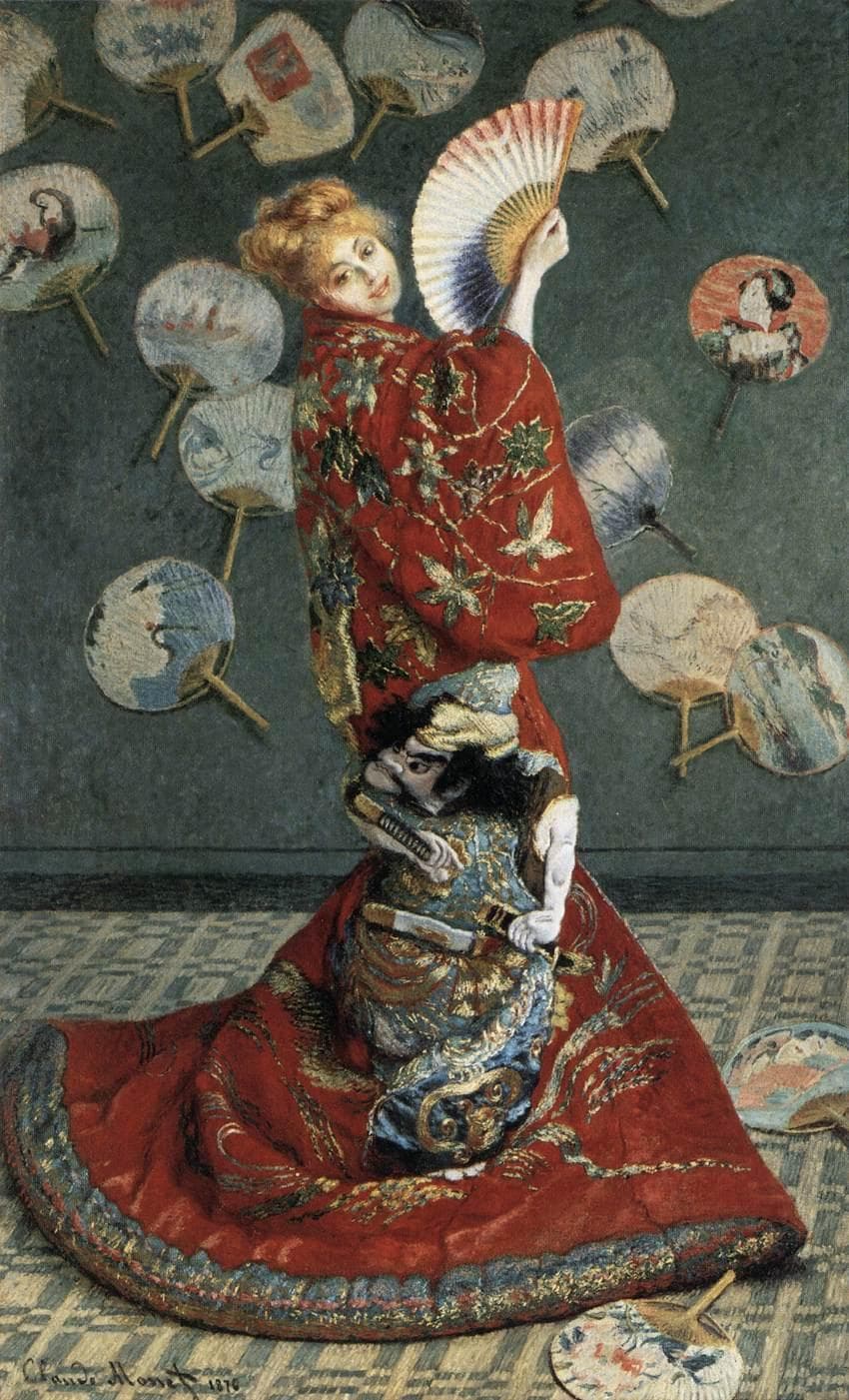
La Japonaise (Camille Monet in Japanese Costume)
Claude Monet · 1876
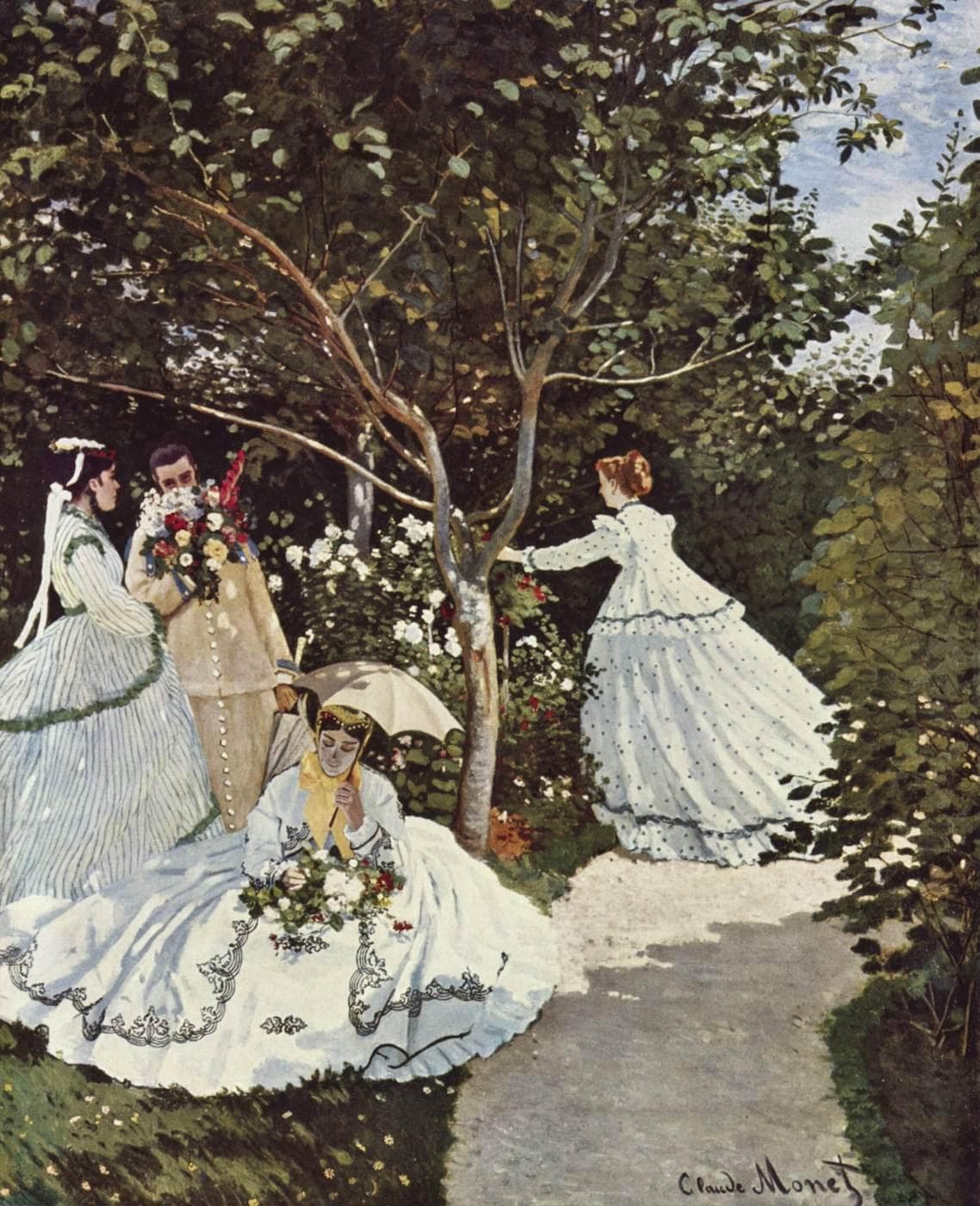
Women in the Garden
Claude Monet · 1866–67
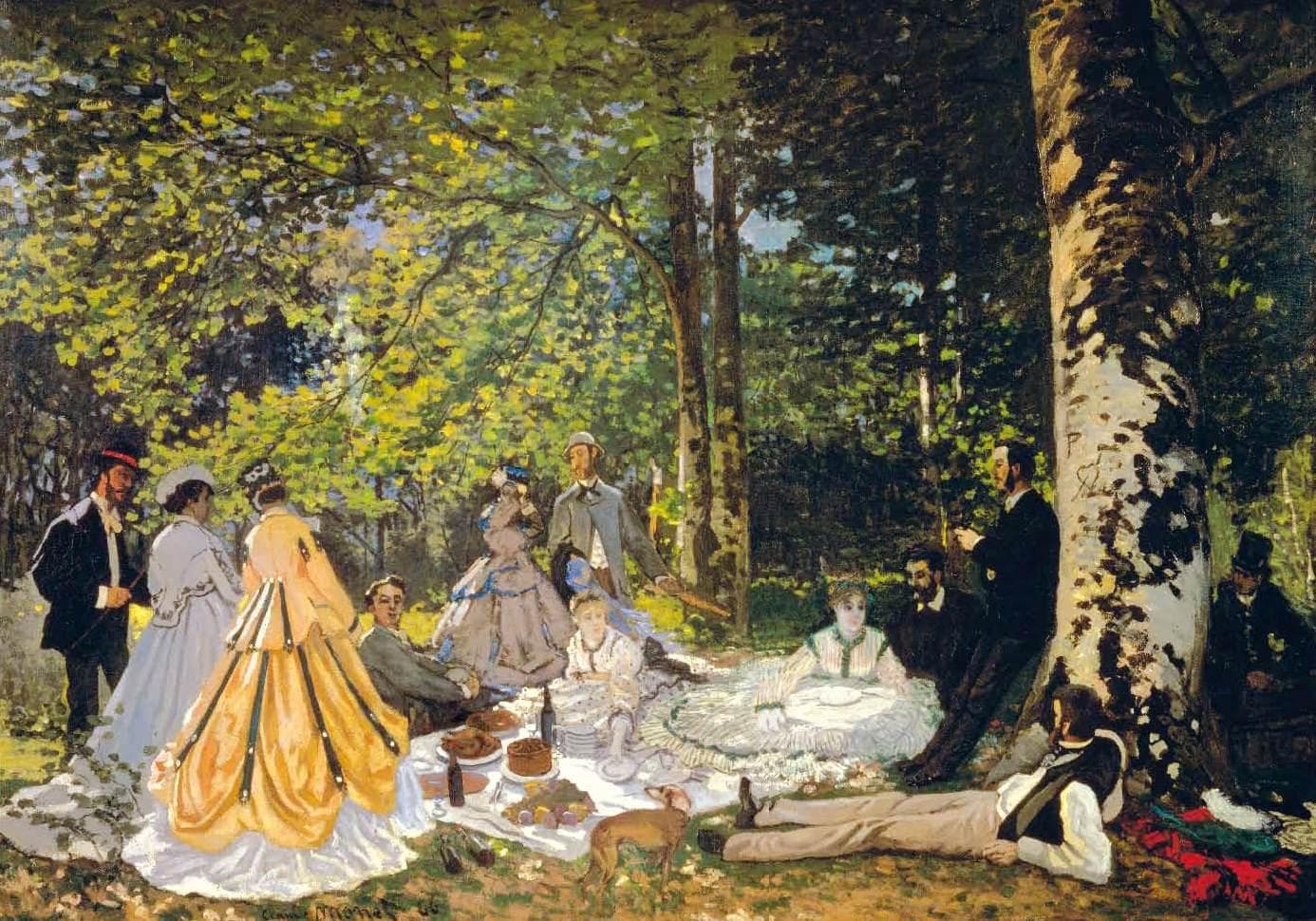
The Picnic
Claude Monet · 1865–66
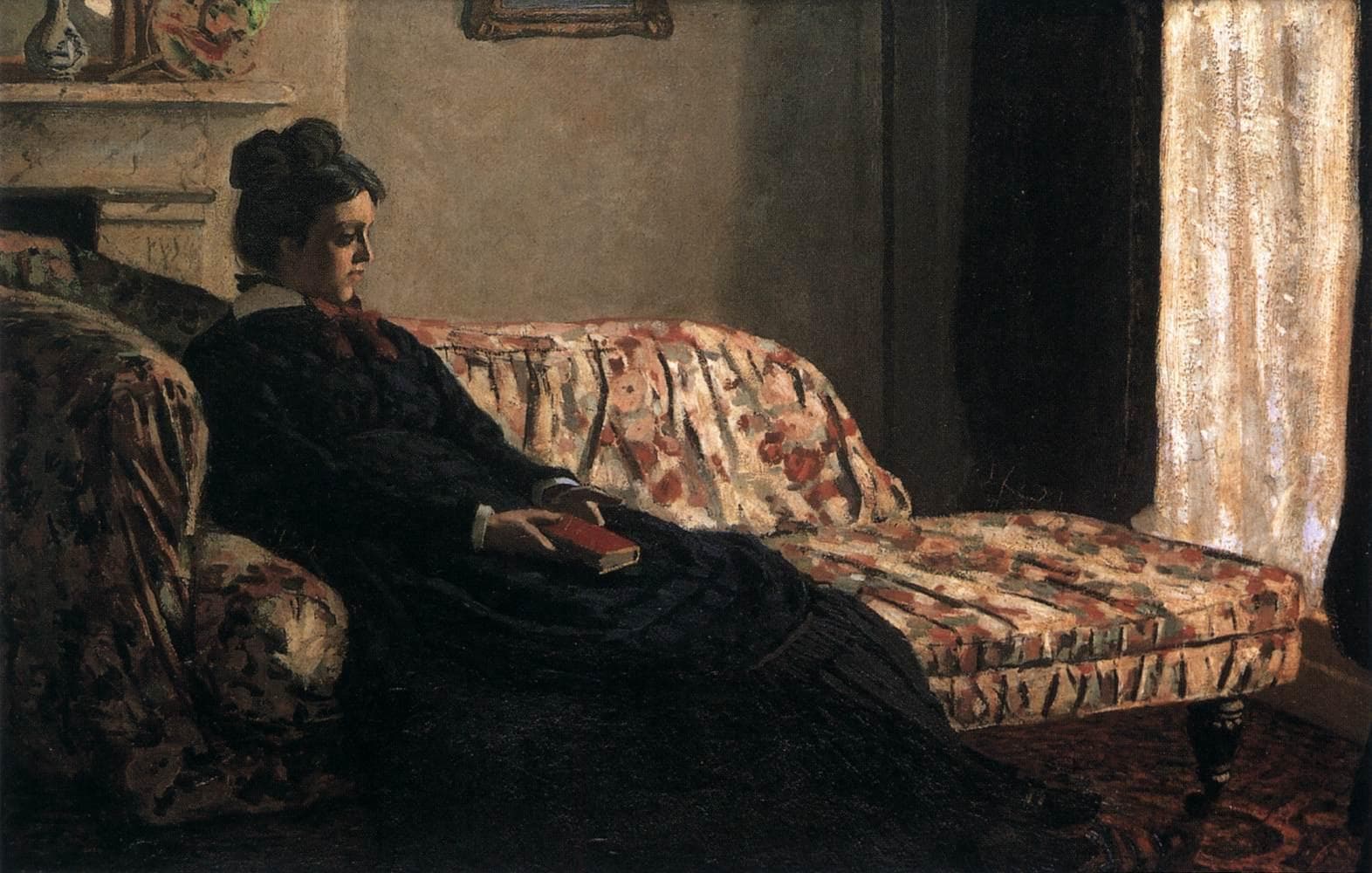
Meditation (Madame Monet on the Sofa)
Claude Monet · c. 1871
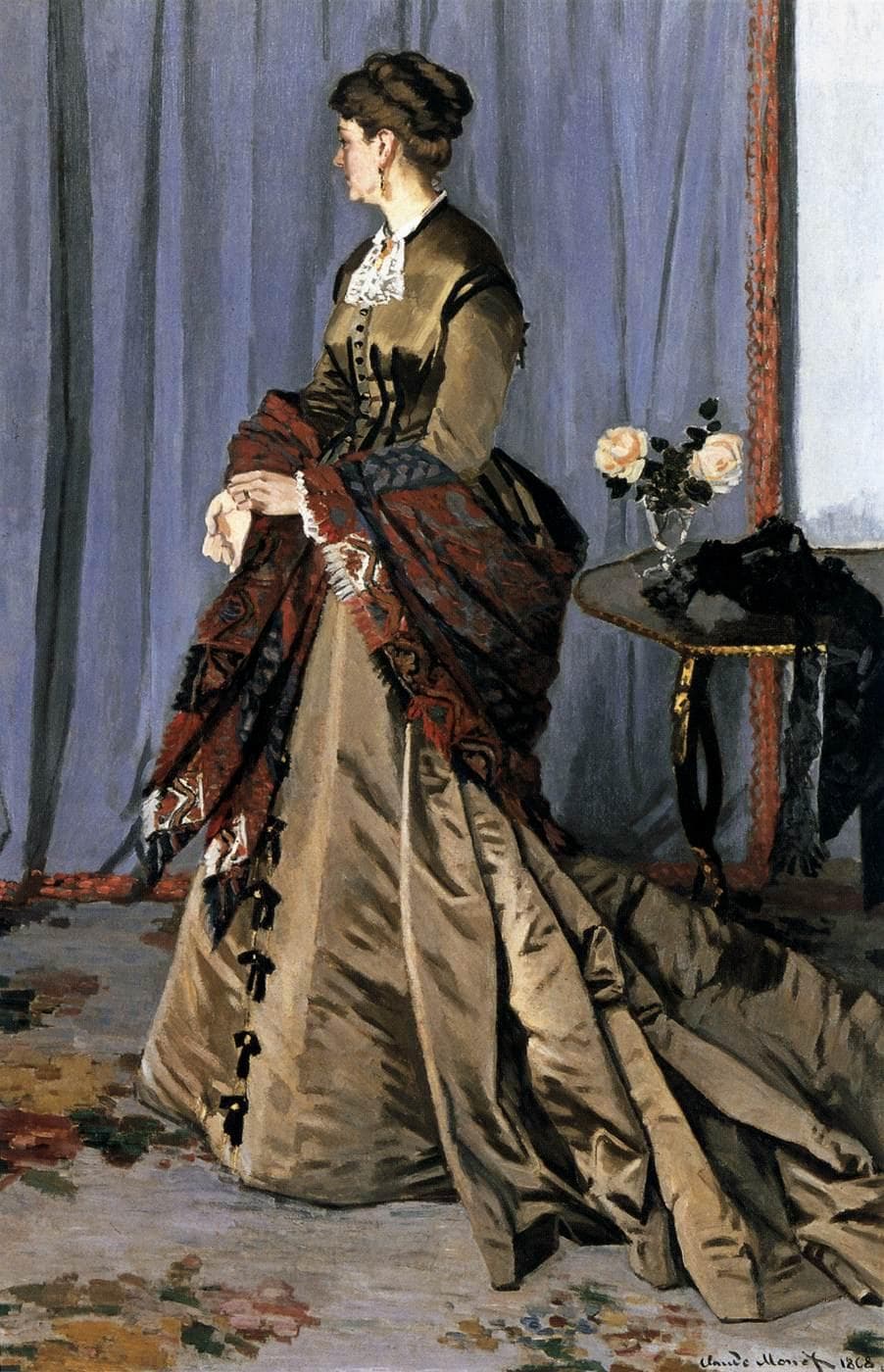
Madame Louis Joachim Gaudibert
Claude Monet · 1868

Venus de Milo
Alexandros of Antioch · c. 150–125 BC

Ophelia
John Everett Millais · 1851–52
Las Meninas
Diego Velázquez · 1656