Impressionism
Women in the Garden
Claude Monet, 1866–67
Women in the Garden (Femmes au jardin) is a monumental 1866–67 painting by Claude Monet of four women in summer dresses in a sunlit garden, painted largely outdoors at Ville-d'Avray. Rejected by the 1867 Salon, it is now in the Musée d'Orsay in Paris.
- Artist
- Claude Monet
- Date
- 1866–67
- Medium
- Oil on canvas
- Dimensions
- 255 × 205 cm
- Collection
- Musée d'Orsay, Paris, France
- Movement
- Impressionism
- Catalogue
- Wildenstein 67
More at Monet at the Musée d'Orsay
What you are looking at
Four young women in pale summer dresses gather in a garden on a bright day. In the foreground one sits on the grass in a vast white crinoline trimmed with black arabesques, a parasol tilted over her head so that her face falls into a cool shadow and a yellow ribbon glows at her neck; a bunch of flowers lies in her lap. Behind her, a woman in a cream dress buttoned down the front buries her face in a bouquet of red and white flowers, and beside her another, in a long dress striped green and white, stands in profile. On the right, a fourth woman in white with black dots hurries along a sunlit path and reaches up to pull at a branch of the tree, her back half turned. A slender tree trunk divides the canvas, its leaves forming a canopy across the top, and the gravel path curves away into the light.
The canvas is enormous: 255 cm high and 205 cm wide, with figures life-size. What Monet wants you to see is not the women's faces, which are barely described, but the light. Sun falls through the leaves in patches; it bleaches the path almost white; it makes the white dresses blaze where they are struck and turn blue-gray where they are shaded. Look at the seated woman's skirt: the shadow of the parasol lies across it as a band of cool blue, while its edge flares bright in the sun. Shadows here are colored, not brown or black, one of the key discoveries of Impressionism.
The dresses are worth a close look too. Their cut and trimmings follow the fashion plates of the mid-1860s, and scholars have noted that Monet may have used fashion magazines as well as models for the poses.
How Monet painted it
Monet began the picture in the spring of 1866 in the garden of a house he rented at Ville-d'Avray, west of Paris, and continued it the following year. His aim was radical: to paint a large figure composition entirely in the open air, under real daylight, rather than in the studio. To reach the upper part of the tall canvas without moving it indoors, he had a trench dug in the garden and lowered the canvas into it with a system of pulleys, so that he could work on the top while standing at ground level.
According to a story later told by Monet, Gustave Courbet visited him at work one day and was surprised to find him idle; Monet explained that he was waiting for the sun to return, because he would only paint the leaves in the right light. Camille Doncieux, Monet's companion and later his wife, posed for several of the figures. Because the picture could not be finished entirely outdoors, Monet completed parts of it in his studio in Honfleur.
The Salon rejection
Monet submitted Women in the Garden to the Salon of 1867, and the jury rejected it. One juror is reported to have complained that too many young painters were going down this road and it was time to stop them. The visible brushwork, the flat patches of light and the faces without detail all broke with academic standards of finish.
The rejection was a blow to the impoverished painter. His friend Frédéric Bazille, a wealthier fellow artist, bought the canvas for 2,500 francs, paid in monthly installments, to help Monet financially. Bazille was killed in the Franco-Prussian War in 1870, and the painting later returned to Monet, who kept it for decades.
Meaning and legacy
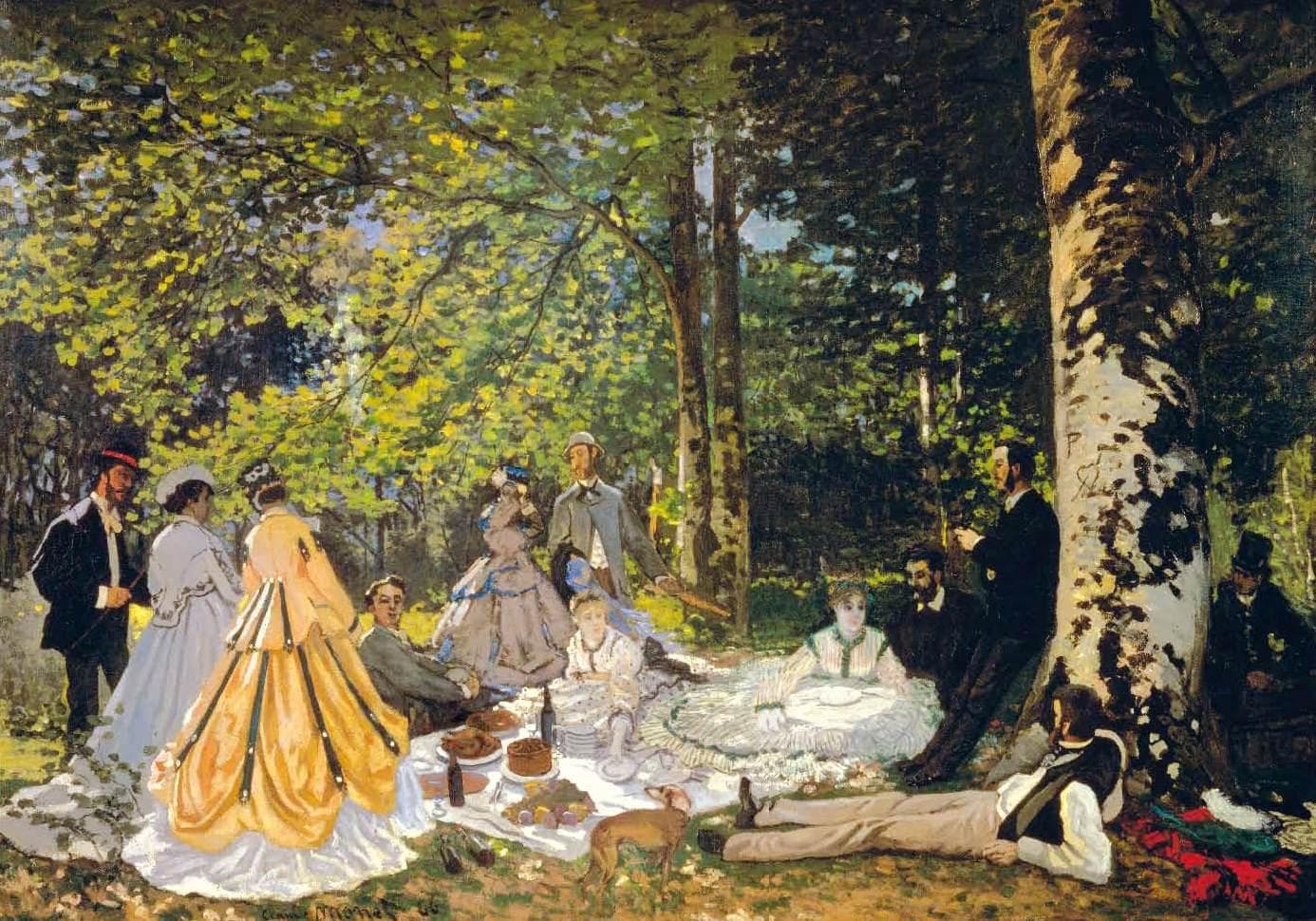
Women in the Garden is a manifesto. It takes the format of a Salon history painting and fills it with an ordinary modern scene and with sunlight, the subject that would define Impressionism. It grew out of Monet's earlier, unfinished picnic project, Le Déjeuner sur l'herbe, and solved some of its problems by working outdoors from the start. After it Monet gave up such huge figure canvases, but the lessons about light and color carried through all his later work, from Camille Monet on a Garden Bench to Woman with a Parasol.
In 1921, at the height of his fame, Monet sold the painting to the French state for 200,000 francs, a striking reversal for a canvas that had once found a buyer only as an act of friendship. It entered the national collections, was later shown at the Louvre and the Jeu de Paume, and moved to the Musée d'Orsay when it opened in 1986. For a closer look at the canvas, see Women in the Garden (detail).
Where to see it
Women in the Garden hangs in the Musée d'Orsay in Paris, in the galleries devoted to early Impressionism, near the two fragments of Monet's Déjeuner sur l'herbe. See also Impressionism and famous paintings of women.
Questions & answers
Where is Monet's Women in the Garden?
It is in the Musée d'Orsay in Paris. Monet sold it to the French state in 1921, and it now hangs in the museum's galleries of early Impressionism, near the fragments of his Déjeuner sur l'herbe.
Who posed for Women in the Garden?
Camille Doncieux, Monet's companion and later his wife, posed for several of the women. The figures are not portraits, though; their faces are barely described, and Monet may also have drawn on fashion magazines for the dresses and poses.
Why was Women in the Garden rejected by the Salon?
The 1867 Salon jury disliked its visible brushwork, flat patches of light and unfinished-looking faces, which broke with academic standards. One juror reportedly said it was time to stop young painters going down this road.
How did Monet paint such a large canvas outdoors?
He had a trench dug in the garden at Ville-d'Avray and lowered the canvas into it with pulleys, so he could paint the top while staying outdoors in the same light.
More by the artist
Claude Monet

Bridge over a Pond of Water Lilies
Claude Monet · 1899

Woman with a Parasol – Madame Monet and Her Son
Claude Monet · 1875

Sunset in Venice
Claude Monet · 1908–12

La Grenouillère
Claude Monet · 1869

Beach in Pourville
Claude Monet · 1882

Springtime
Claude Monet · 1872

Boating on the River Epte
Claude Monet · 1890

The Seine at Asnières (Hermitage)
Claude Monet · 1873
Also painted in 1866
The same year
Kindred works
You may also study
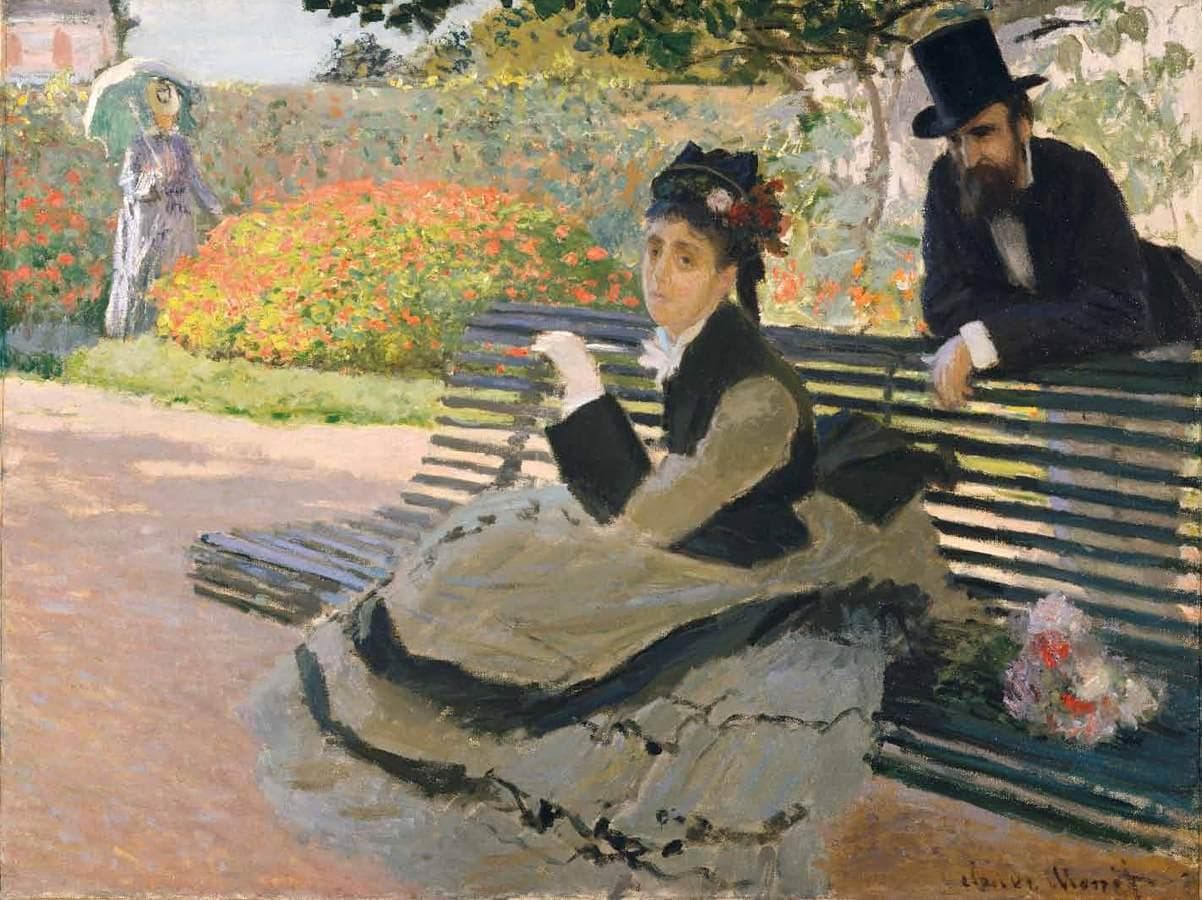
Camille Monet on a Garden Bench
Claude Monet · 1873
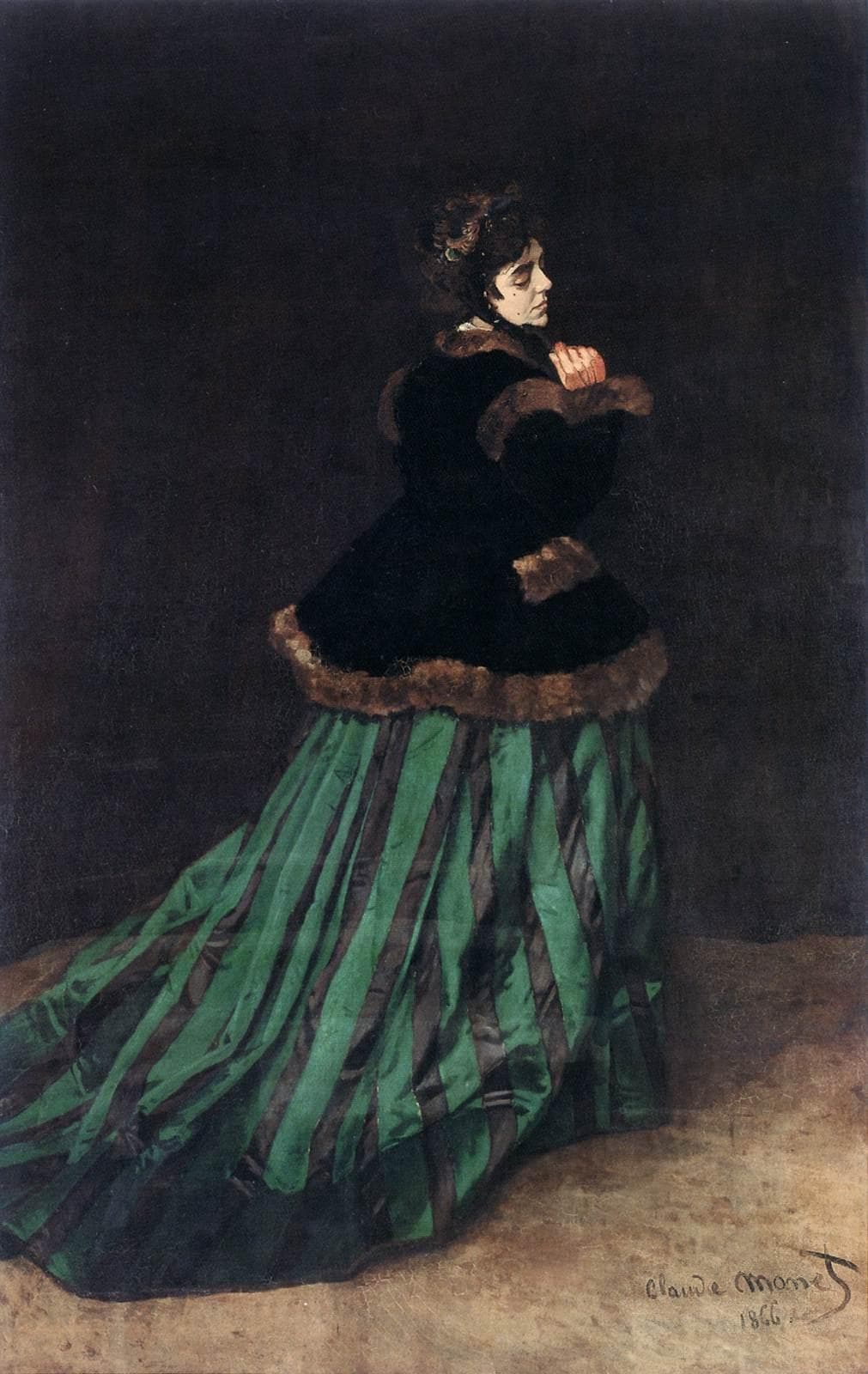
Camille (The Woman in the Green Dress)
Claude Monet · 1866

Venus de Milo
Alexandros of Antioch · c. 150–125 BC

The Scream
Edvard Munch · 1893

Ophelia
John Everett Millais · 1851–52

The Great Wave off Kanagawa
Katsushika Hokusai · c. 1830–32
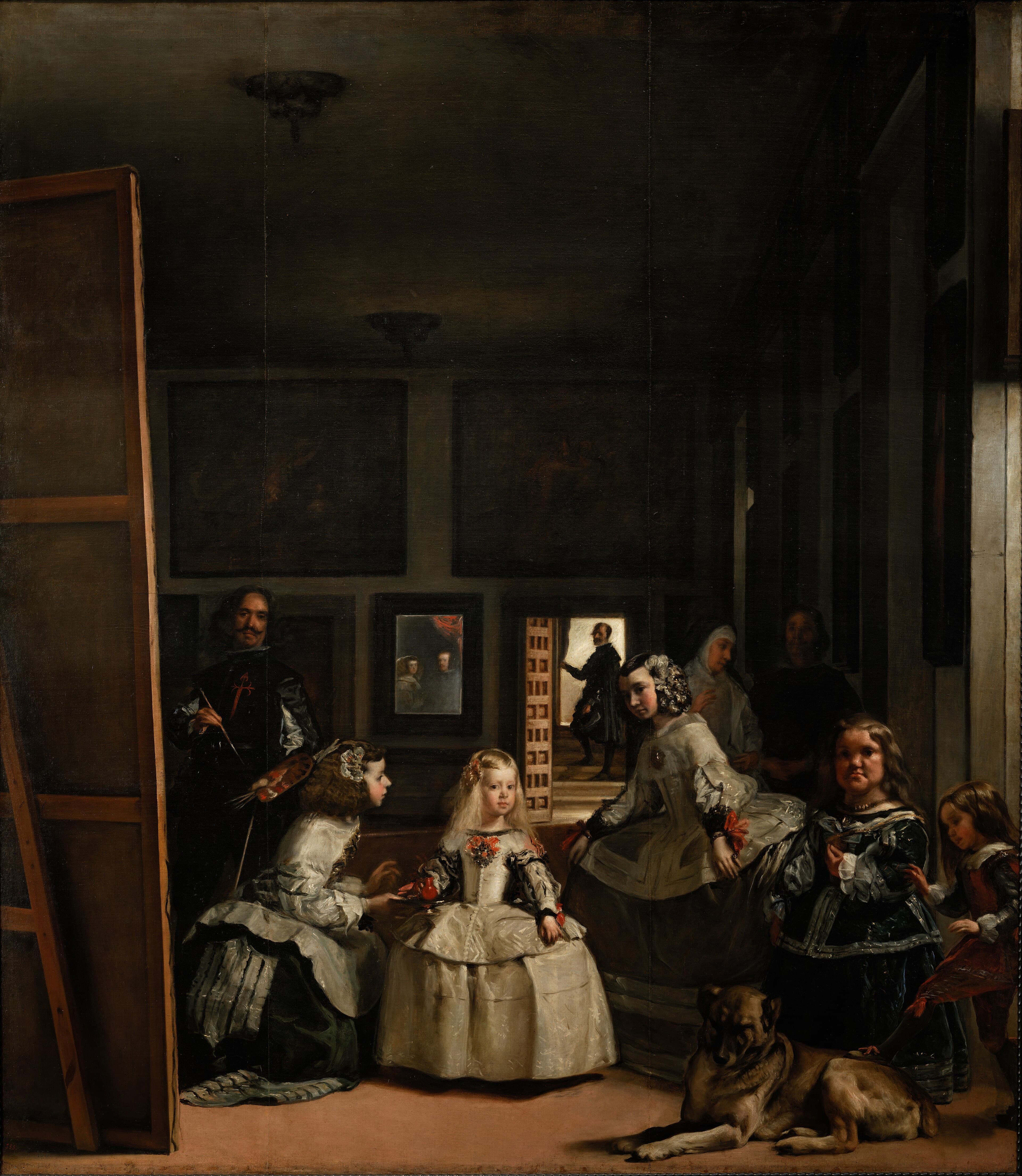
Las Meninas
Diego Velázquez · 1656
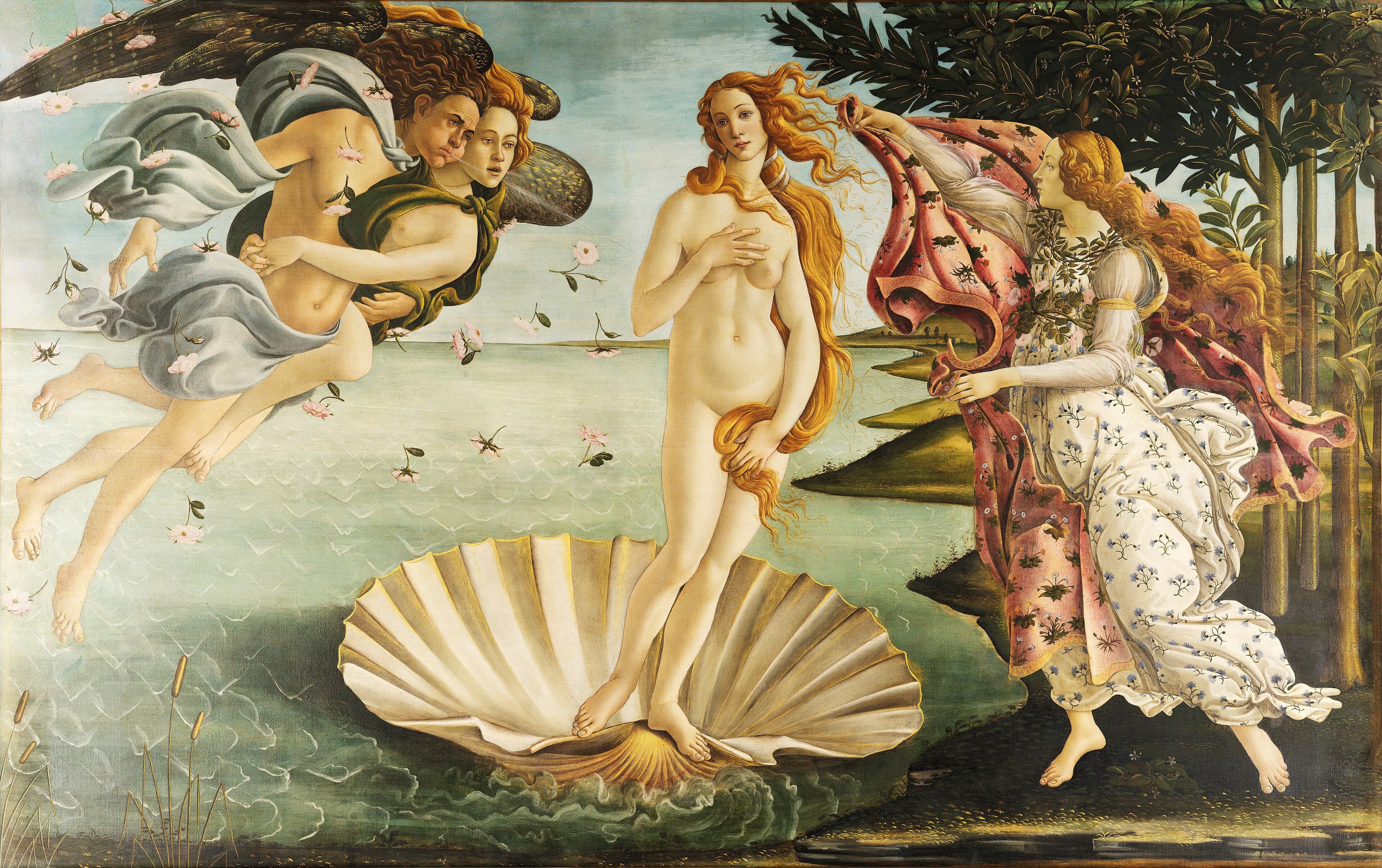
The Birth of Venus
Sandro Botticelli · c. 1484–1486