Movement
Impressionism Art: Light, Weather and Modern Life
How a group of rejected painters, a hostile critic and a hazy sunrise over Le Havre changed the way the world sees color.
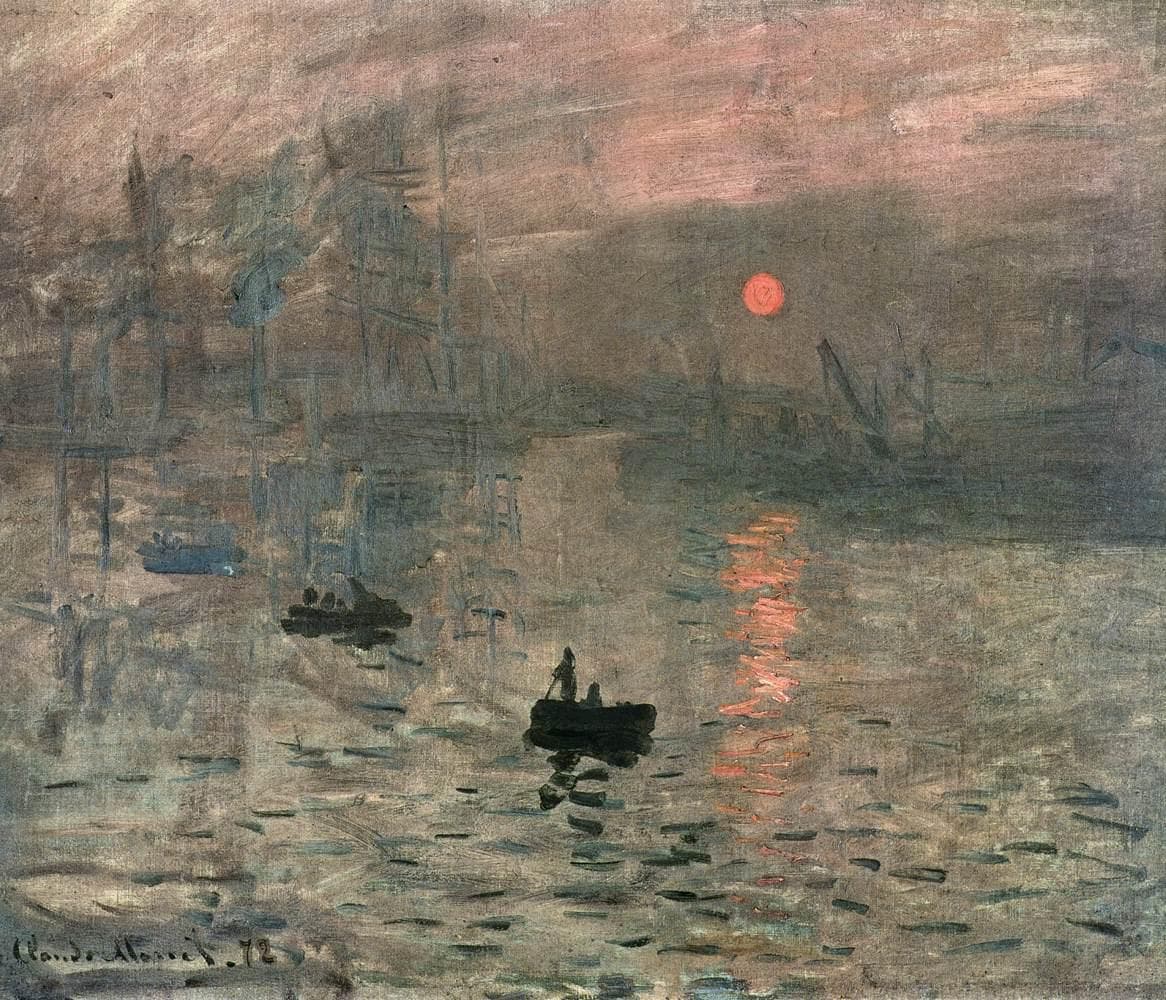
Impressionism art is the movement founded in Paris in the 1870s by Claude Monet, Pierre-Auguste Renoir, Edgar Degas, Camille Pissarro, Berthe Morisot, Alfred Sisley and their circle, who painted the fleeting effects of light, weather and modern life in quick, visible brushstrokes and bright, unmixed color. Its name came from Monet's Impression, Sunrise, which a critic mocked after the group's first independent exhibition in 1874.
Impressionism was the first great rebellion of modern art. Its painters left the studio to work outdoors, abandoned smooth academic finish and the brown shadows of the Old Masters, and chose as subjects not gods and heroes but railway stations, boulevards, riverside cafés and their own gardens. This page explains how the movement began, what made its technique so new, how Monet carried it to its limits in his series and water lilies, and where to see the works. Our collection, rich in Monet, follows below.
Impression, Sunrise
Claude Monet · 1872

Woman with a Parasol – Madame Monet and Her Son
Claude Monet · 1875
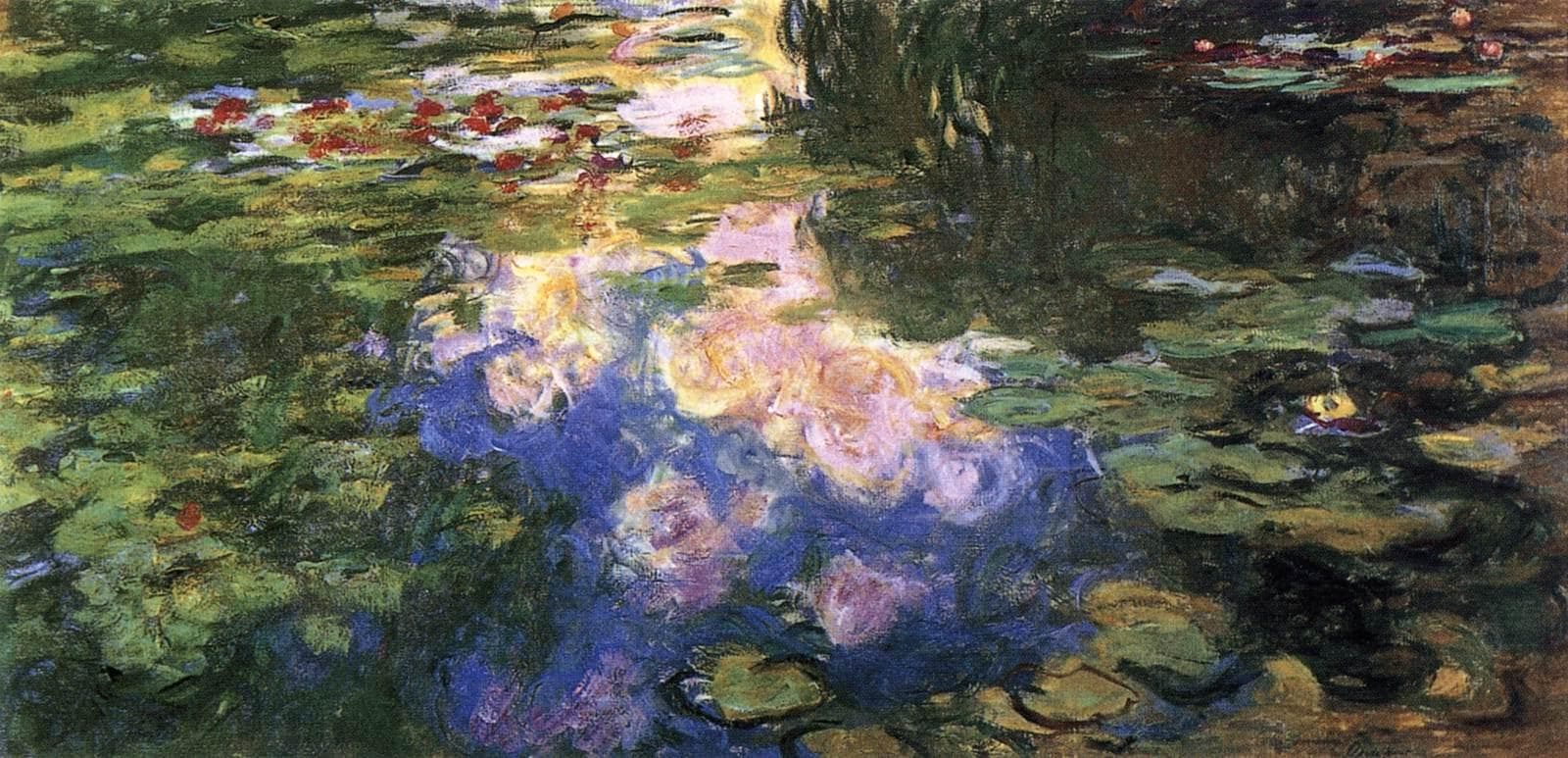
Water-Lily Pond (Le Bassin aux nymphéas), 1917–19
Claude Monet · 1917–19
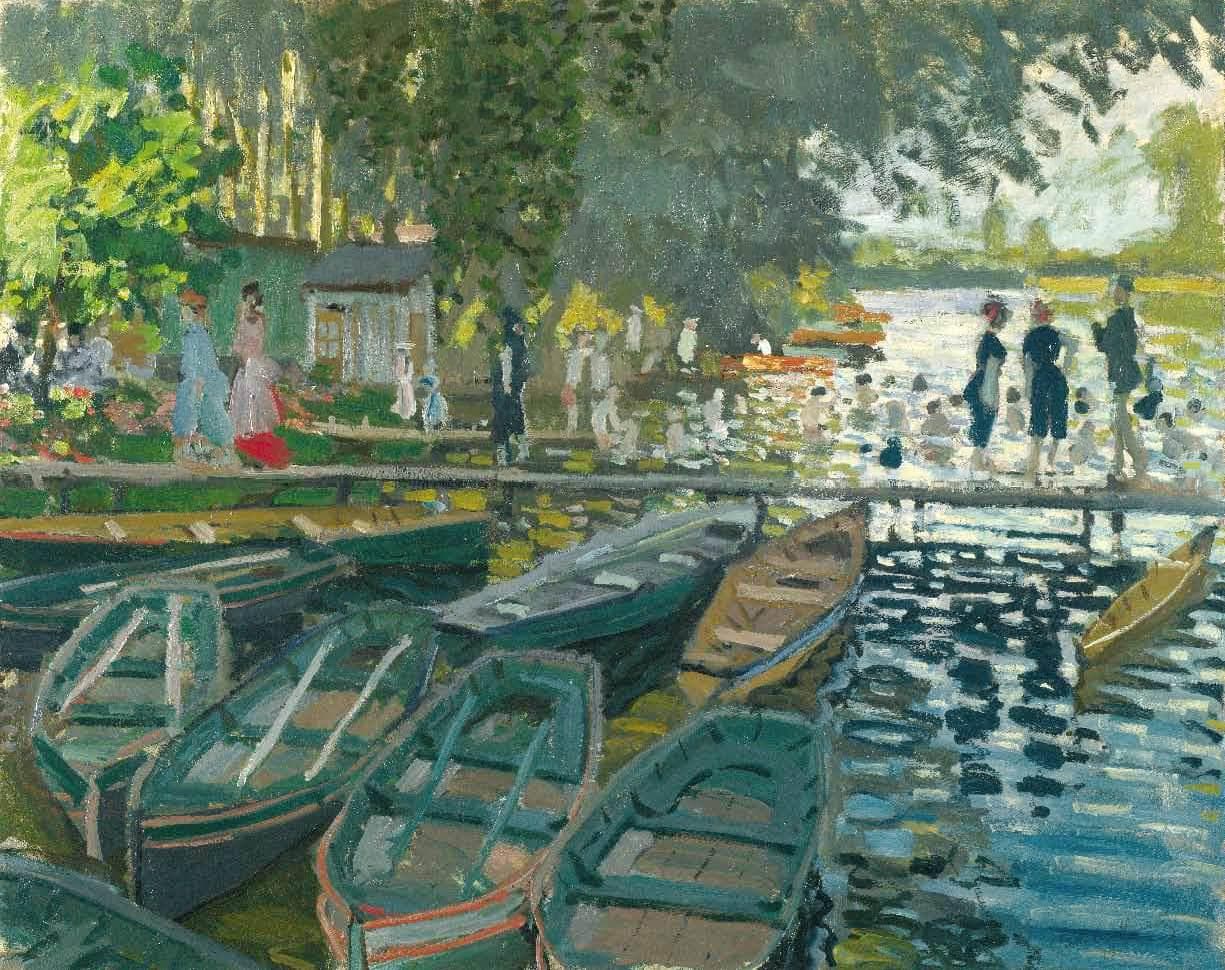
Bathers at La Grenouillère
Claude Monet · 1869
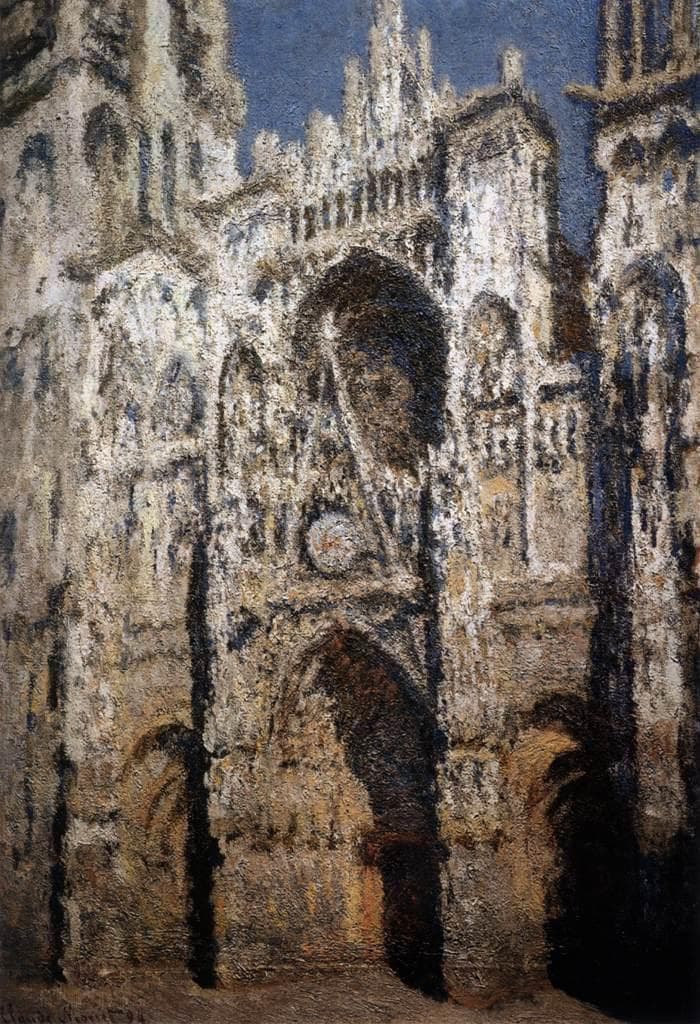
Rouen Cathedral in Full Sunlight
Claude Monet · 1893
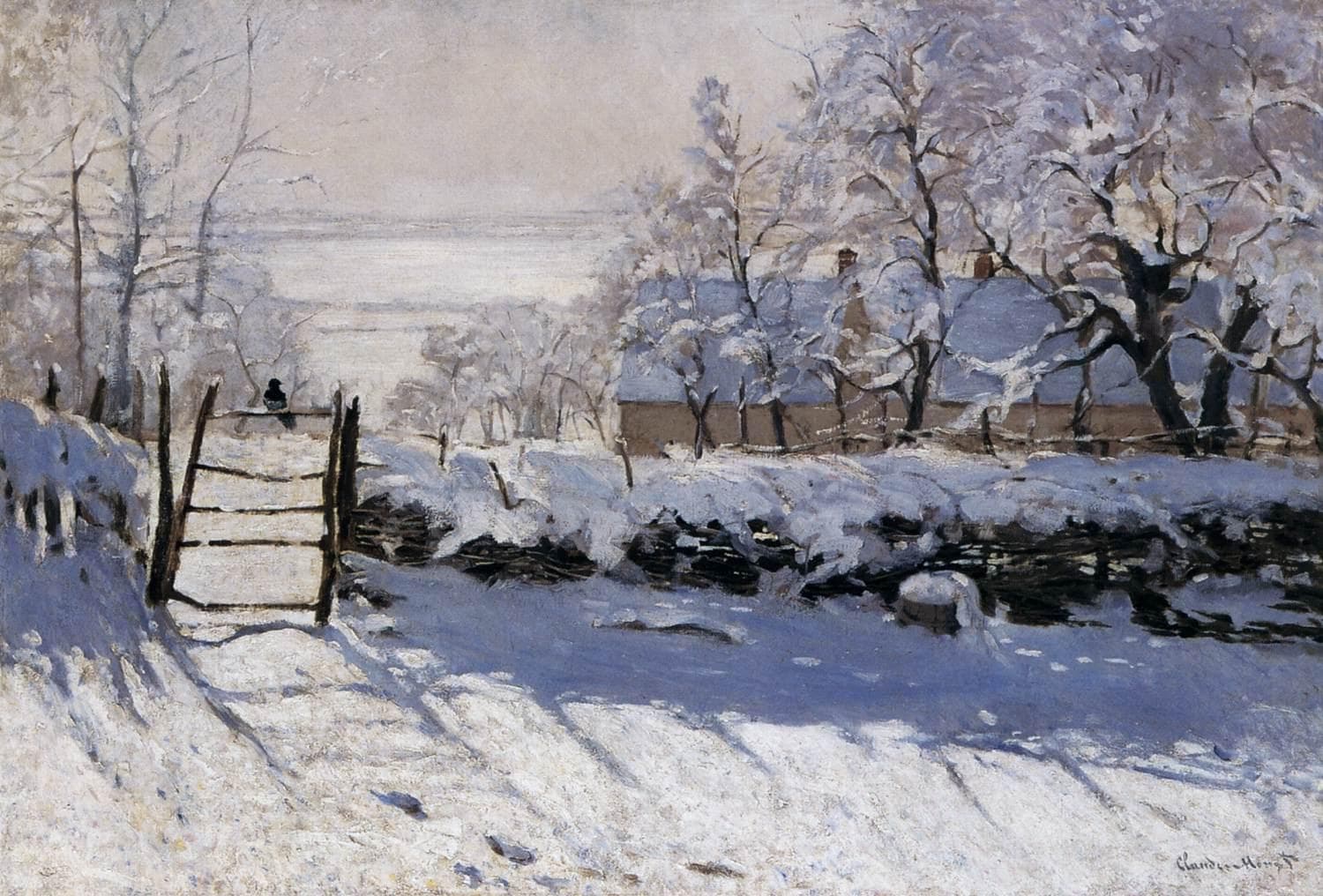
The Magpie
Claude Monet · 1868–69
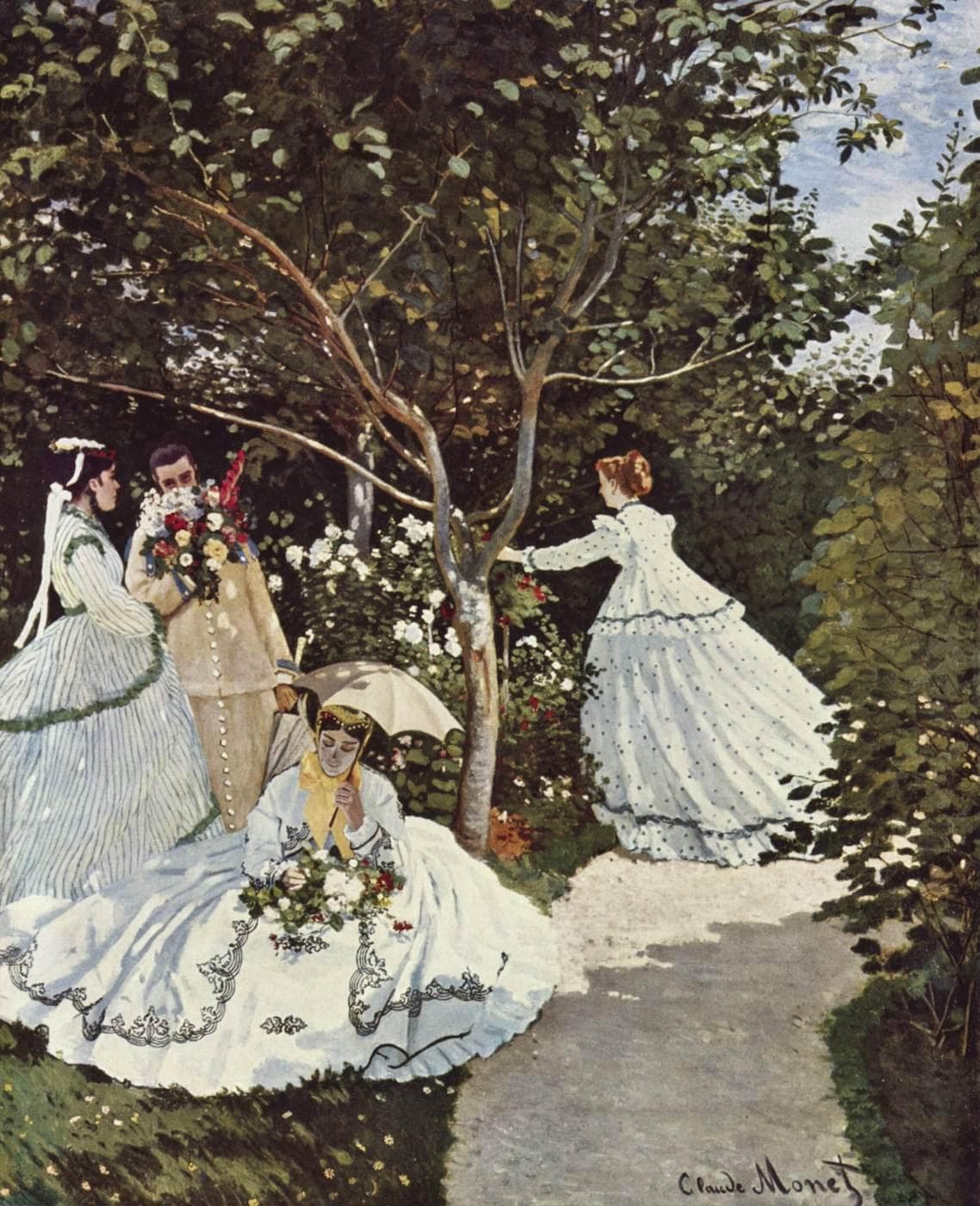
Women in the Garden
Claude Monet · 1866–67
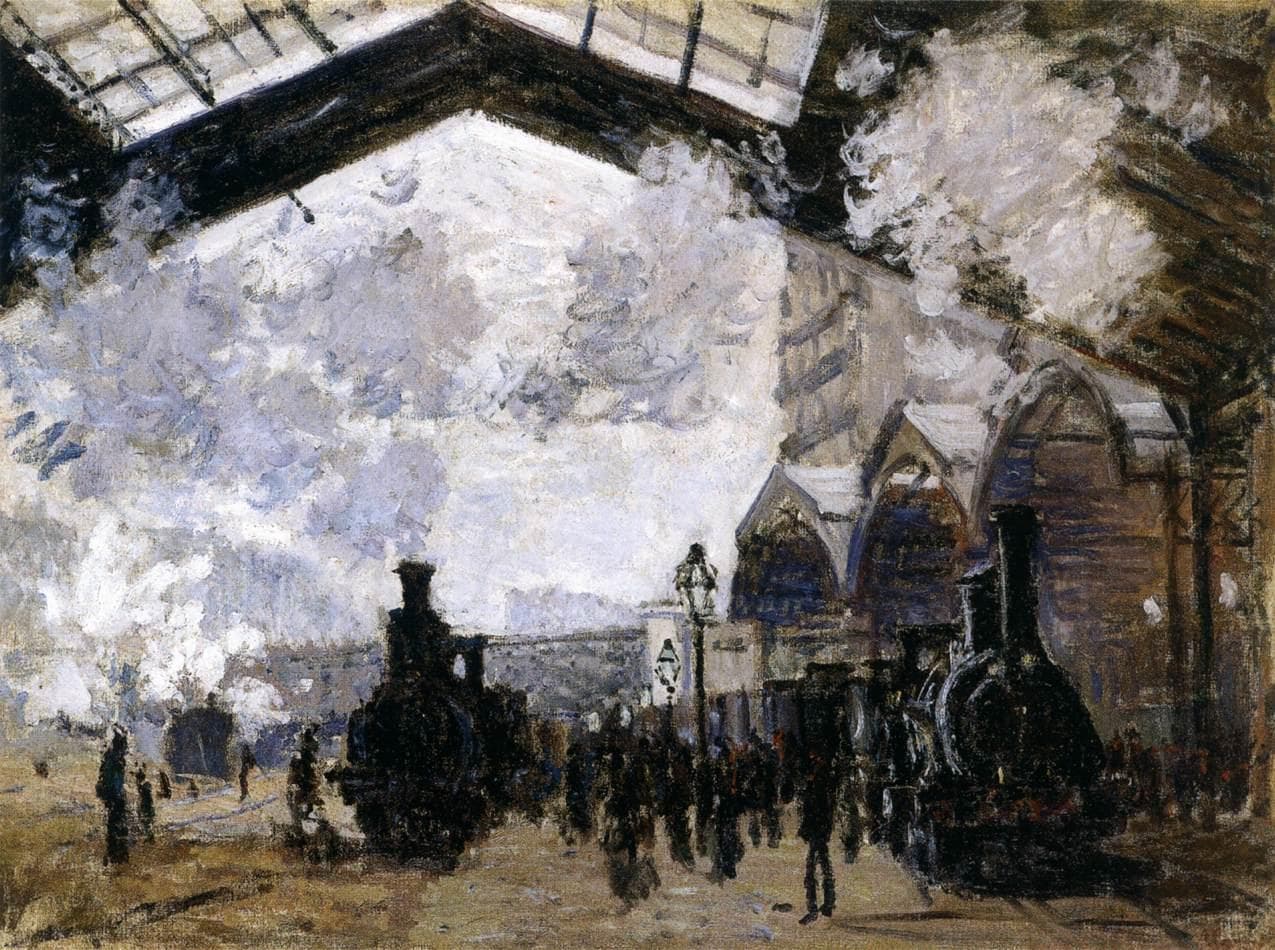
The Gare Saint-Lazare
Claude Monet · 1877
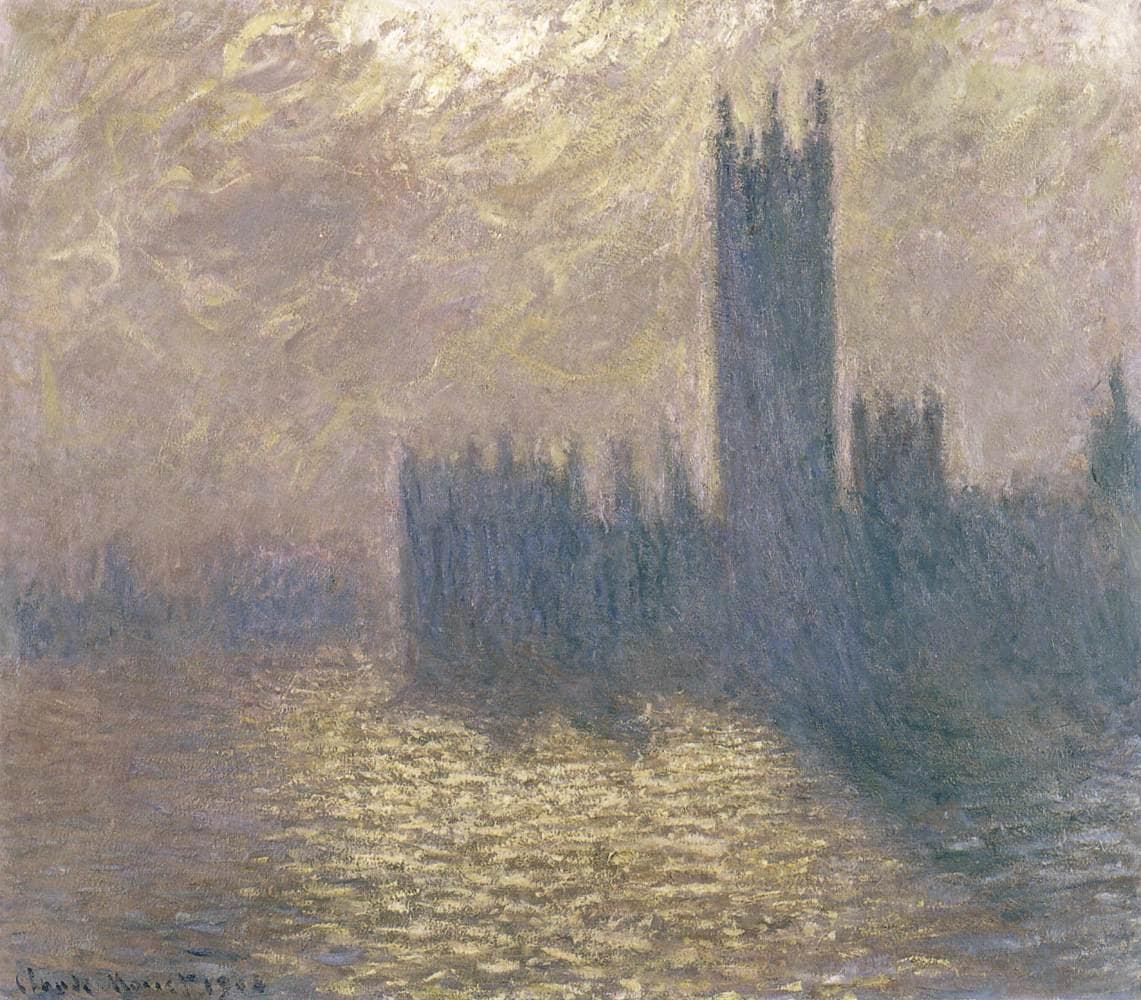
The Houses of Parliament, London
Claude Monet · 1904
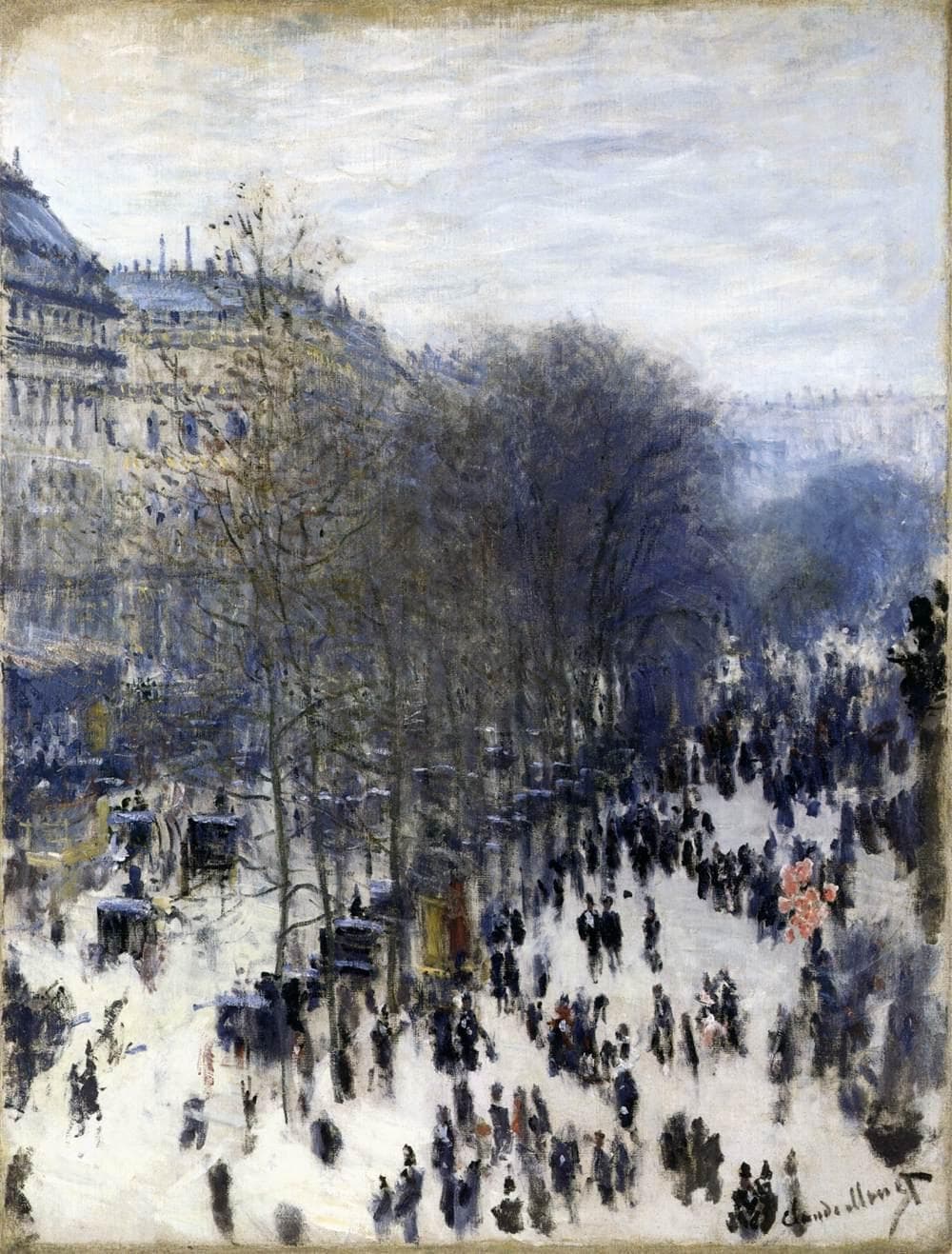
Boulevard des Capucines
Claude Monet · 1873–74
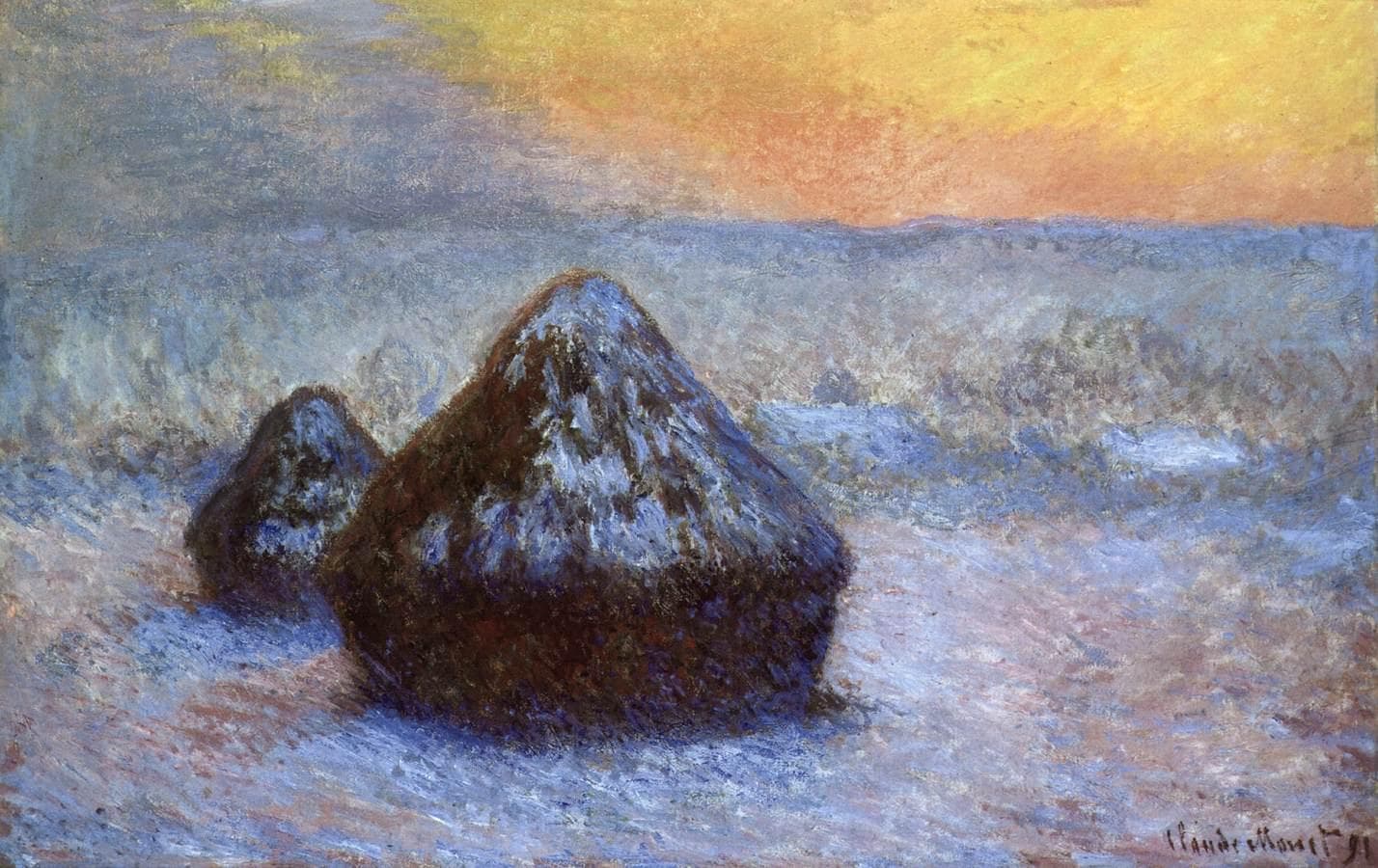
Stacks of Wheat, Sunset, Snow Effect
Claude Monet · 1890–91
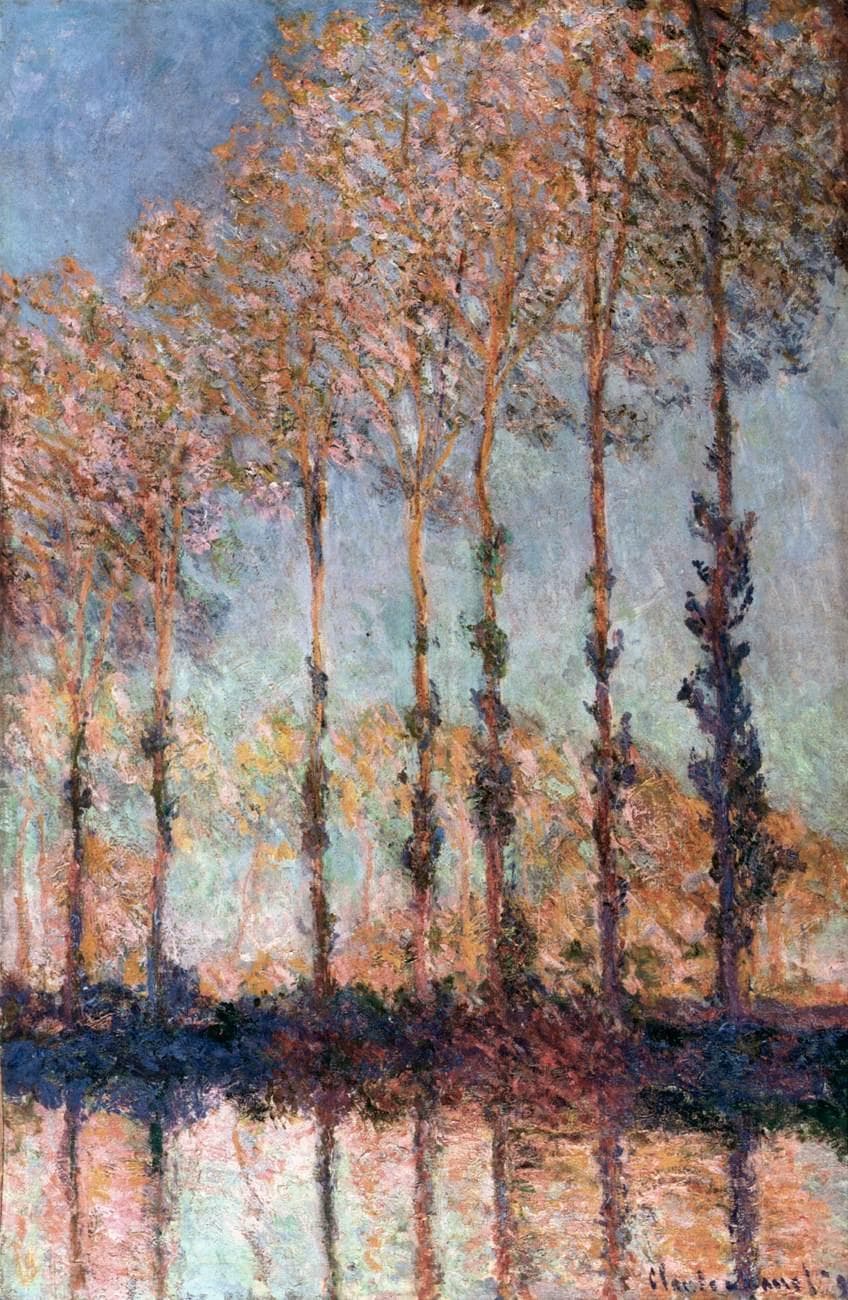
Poplars on the Banks of the River Epte
Claude Monet · 1891
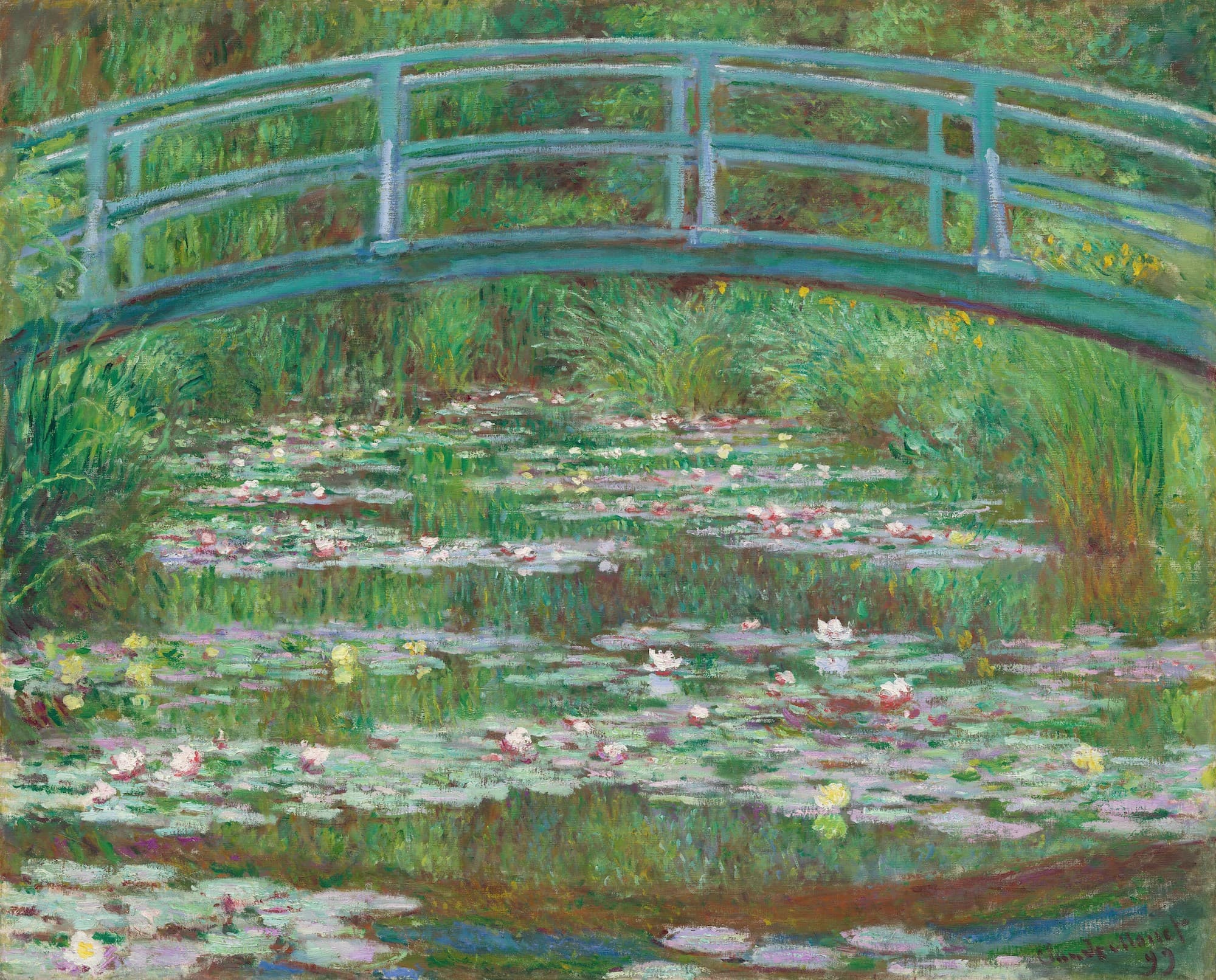
The Japanese Footbridge
Claude Monet · 1899
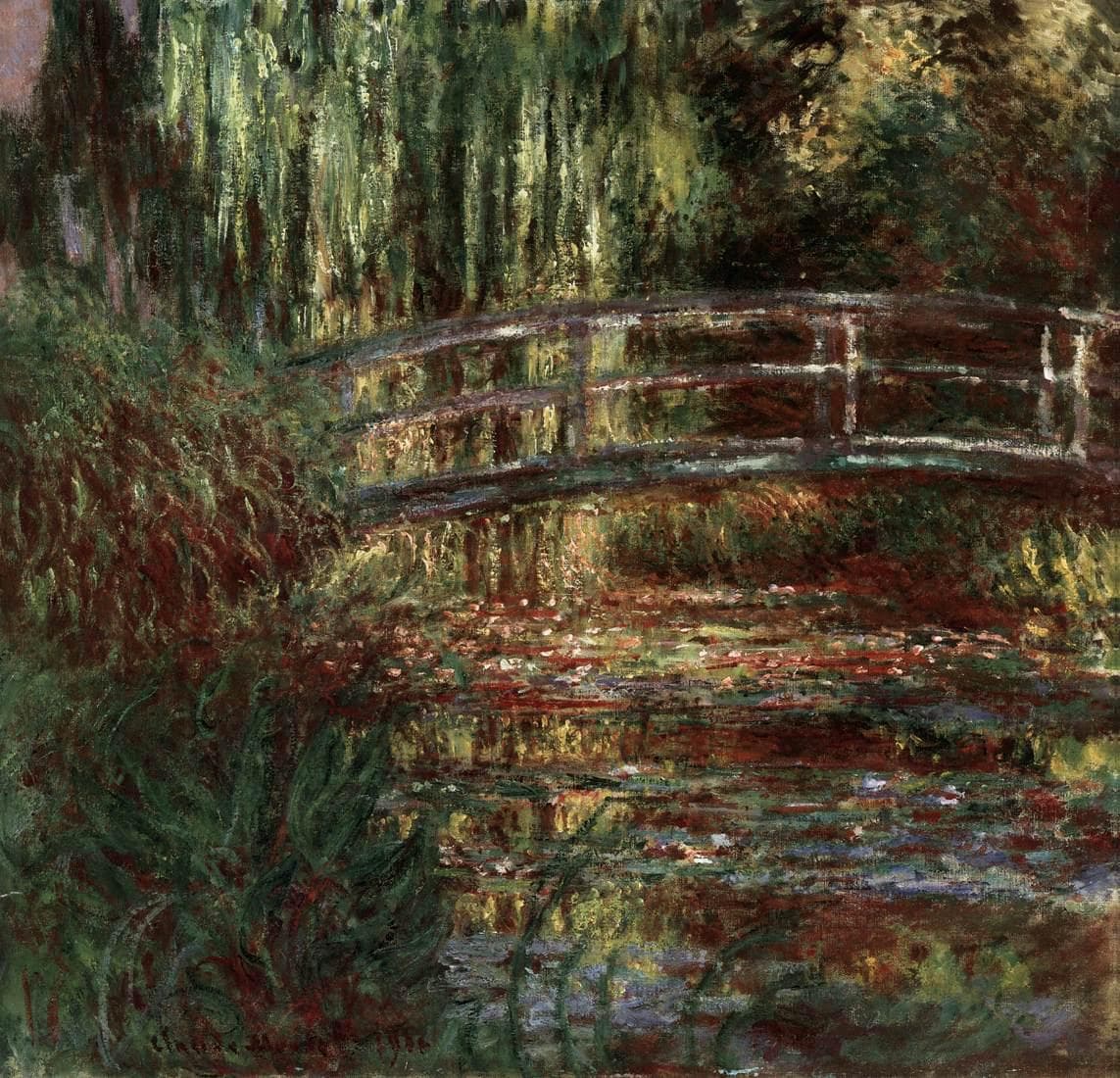
The Water Lily Pond
Claude Monet · 1900
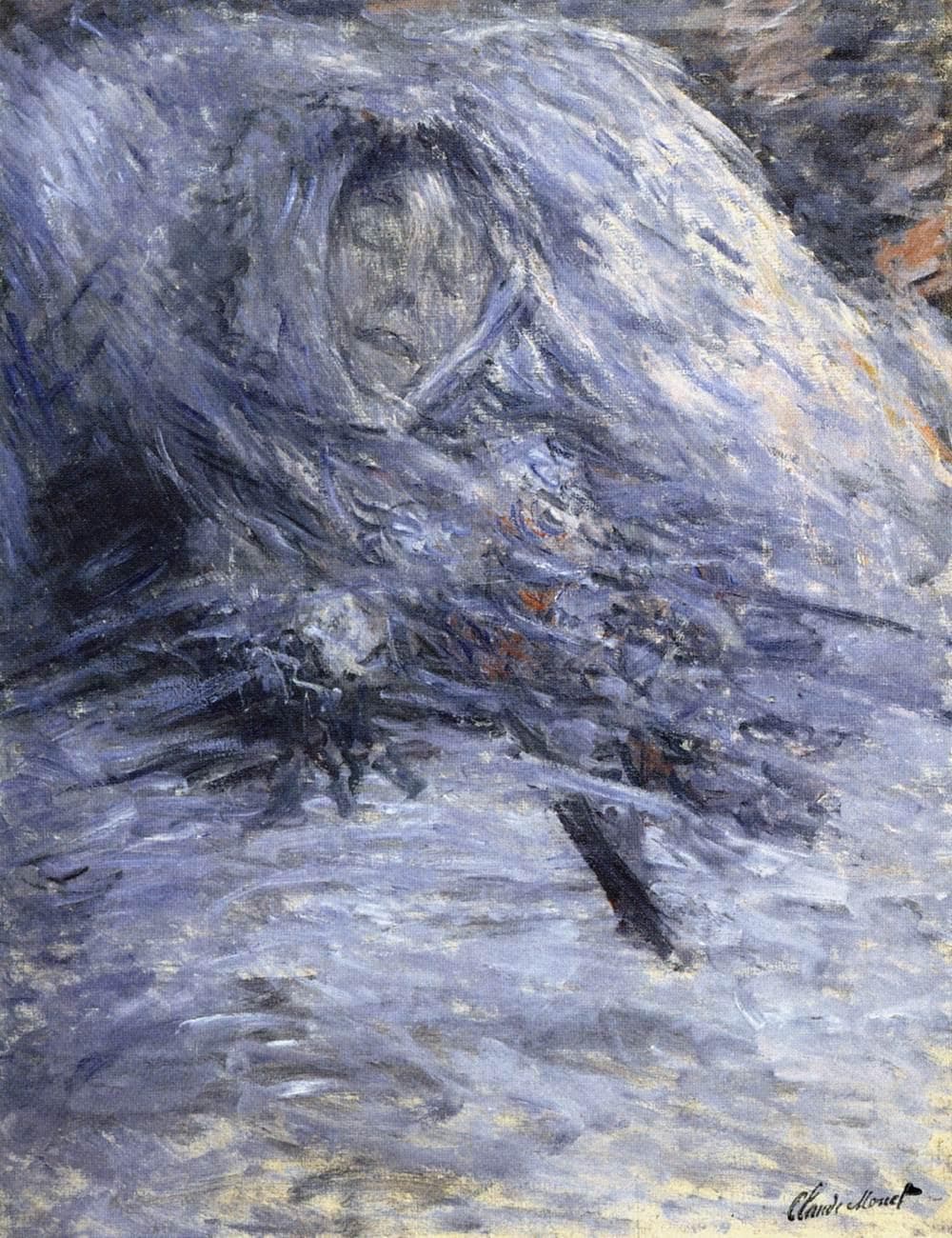
Camille Monet on Her Deathbed
Claude Monet · 1879
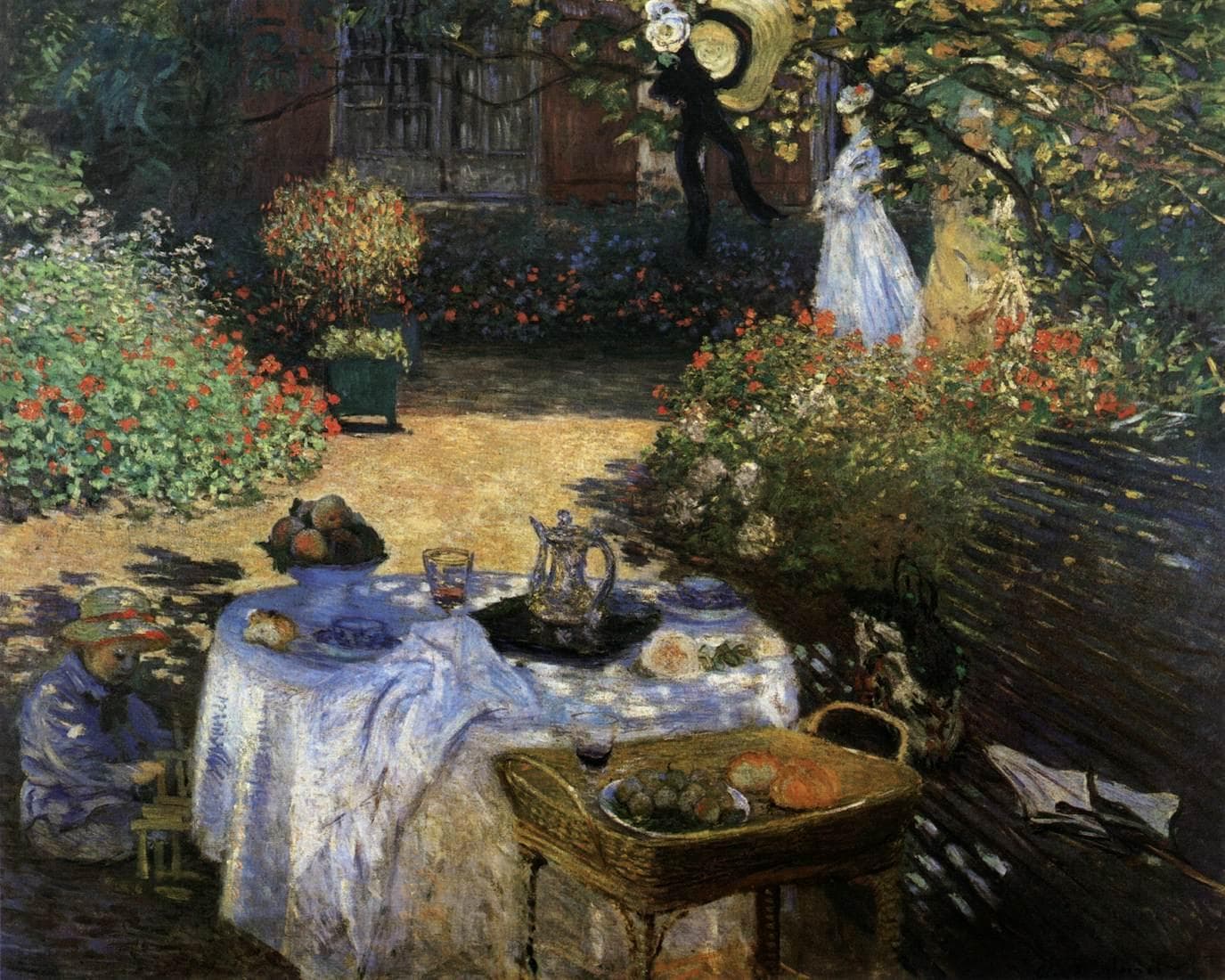
The Luncheon (Monet's Garden at Argenteuil)
Claude Monet · c. 1873
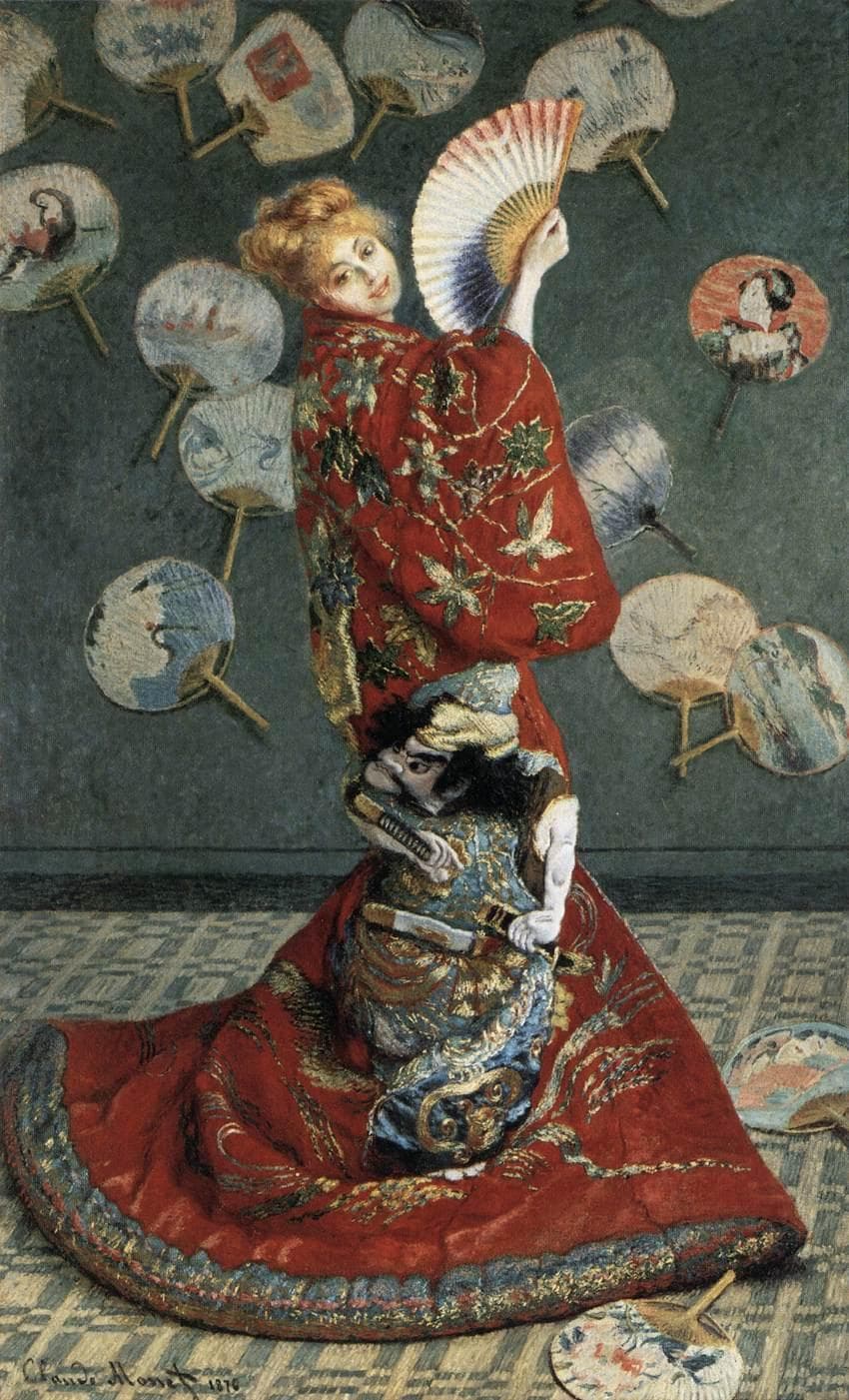
La Japonaise (Camille Monet in Japanese Costume)
Claude Monet · 1876
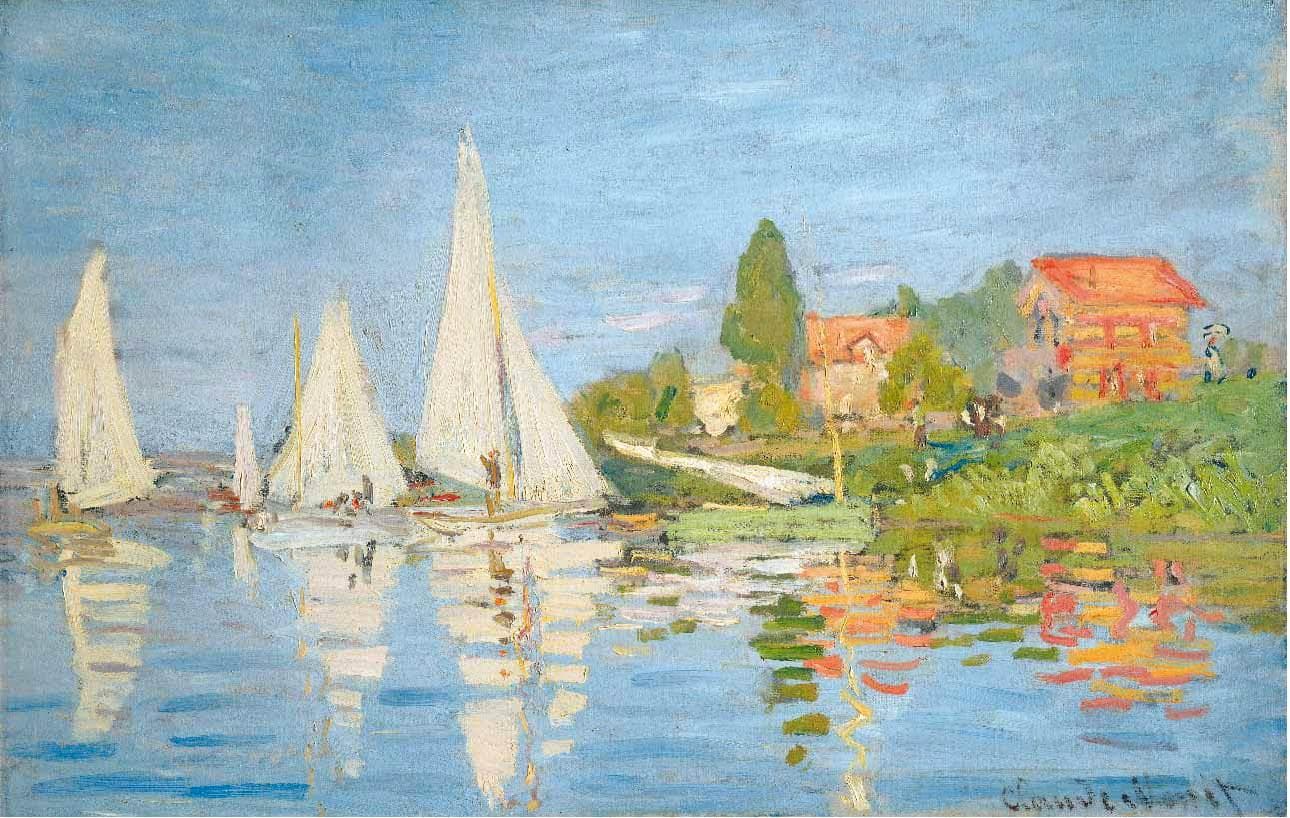
Regatta at Argenteuil
Claude Monet · c. 1872
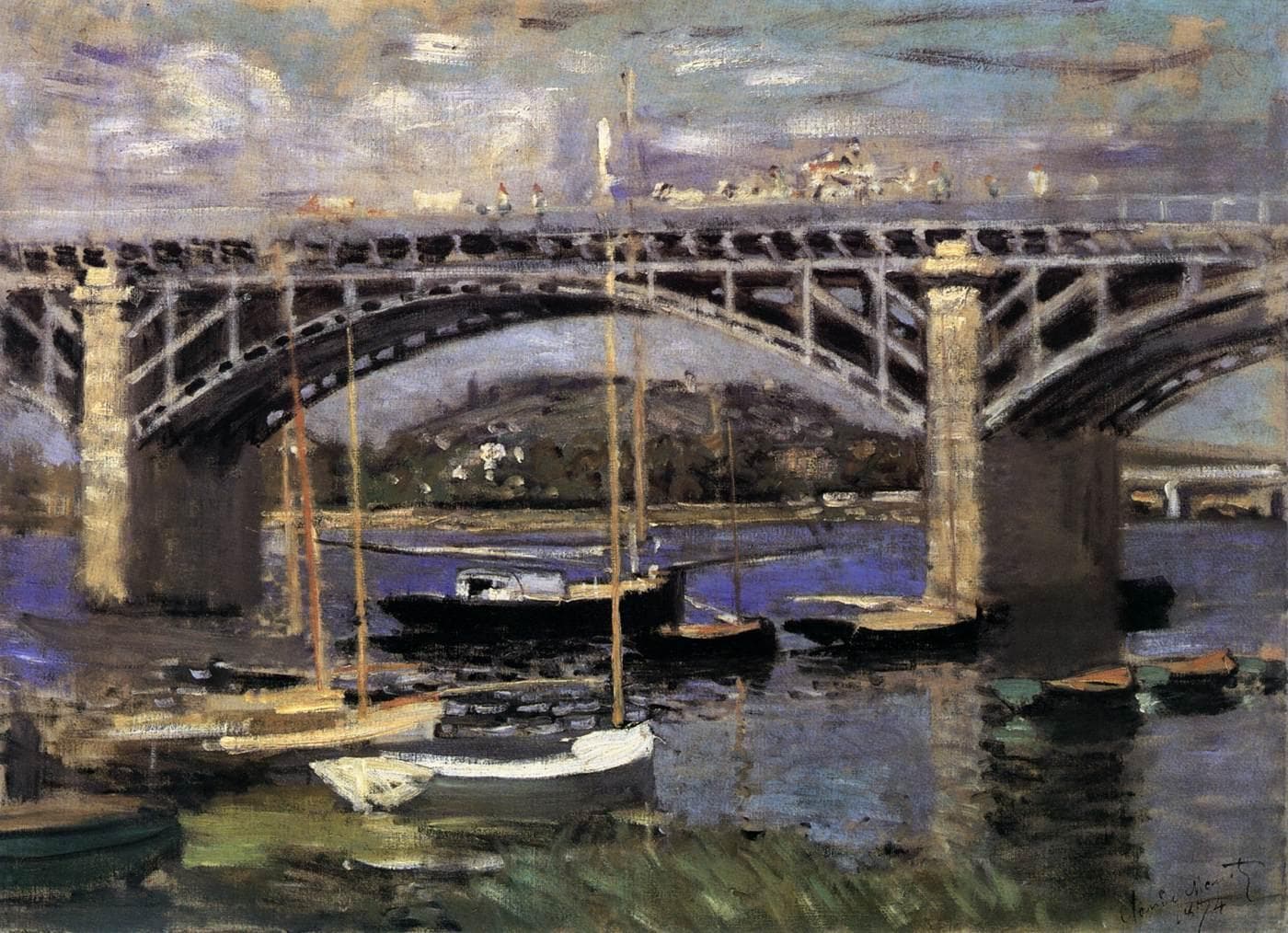
The Bridge at Argenteuil
Claude Monet · 1874
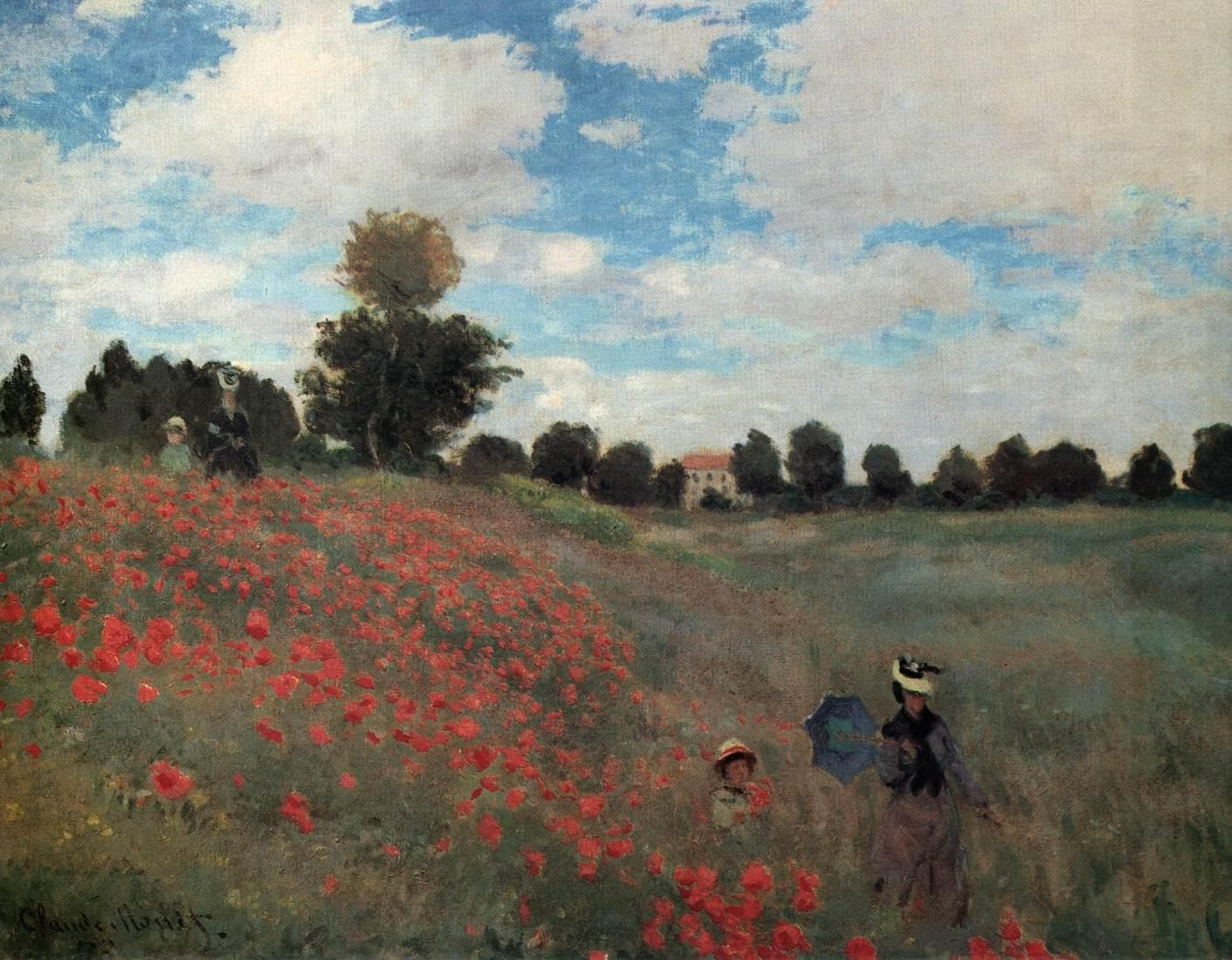
Poppy Field (Poppies at Argenteuil)
Claude Monet · 1873
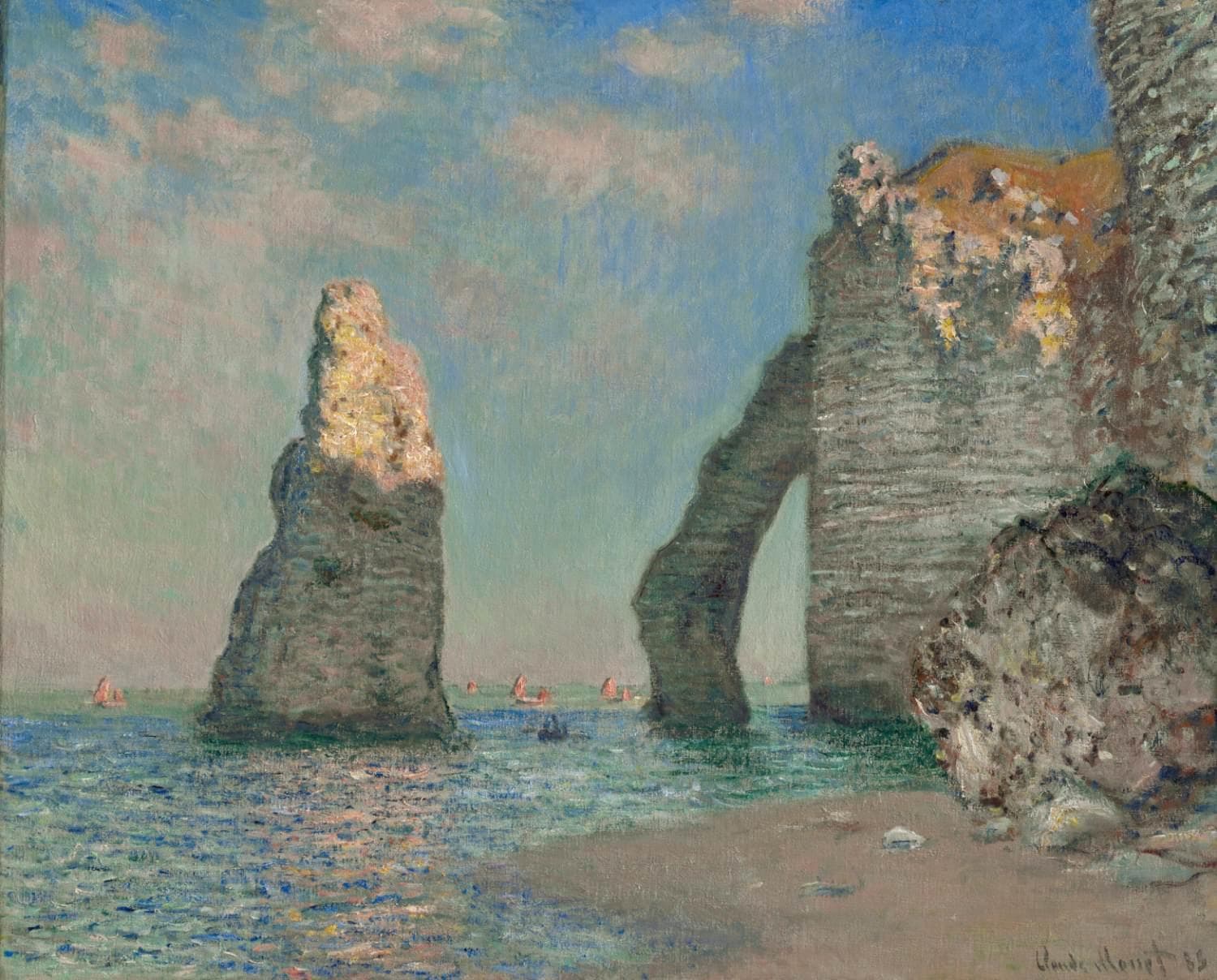
The Cliffs at Étretat
Claude Monet · 1885
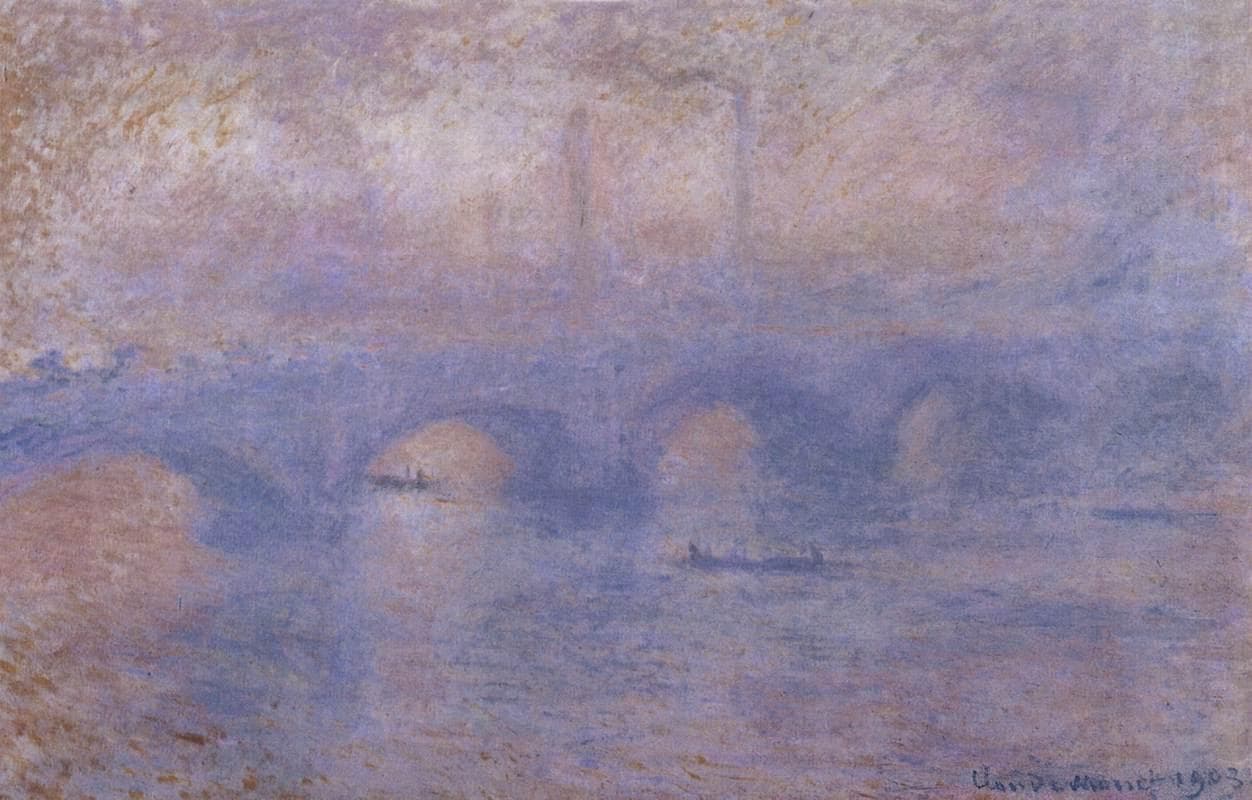
Waterloo Bridge, Effect of Fog
Claude Monet · 1903
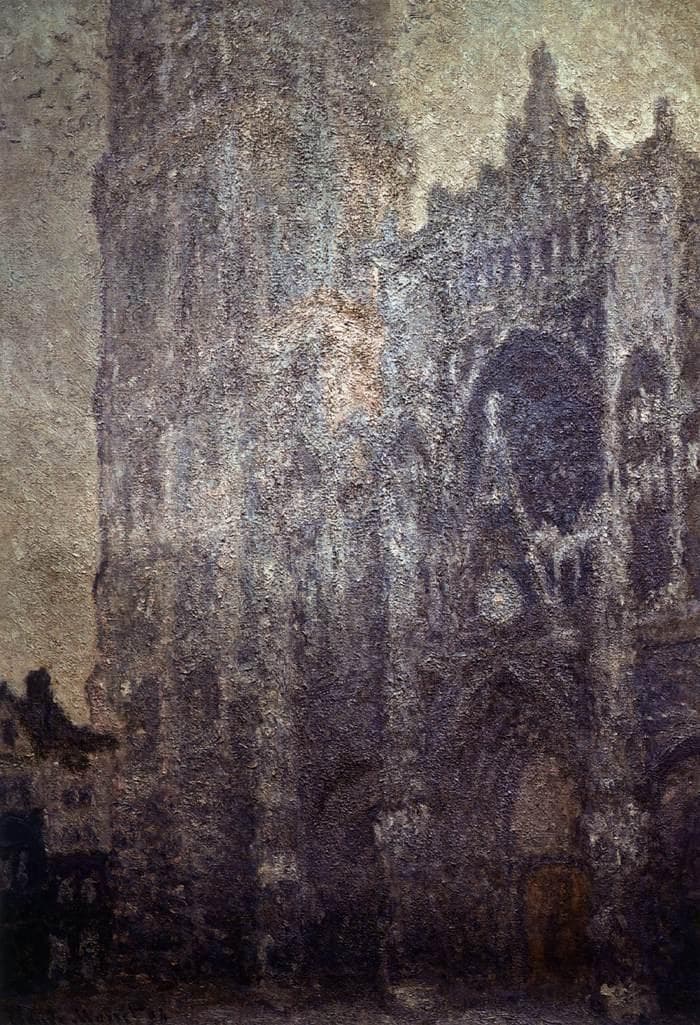
Rouen Cathedral, Effects of Morning Light
Claude Monet · 1893
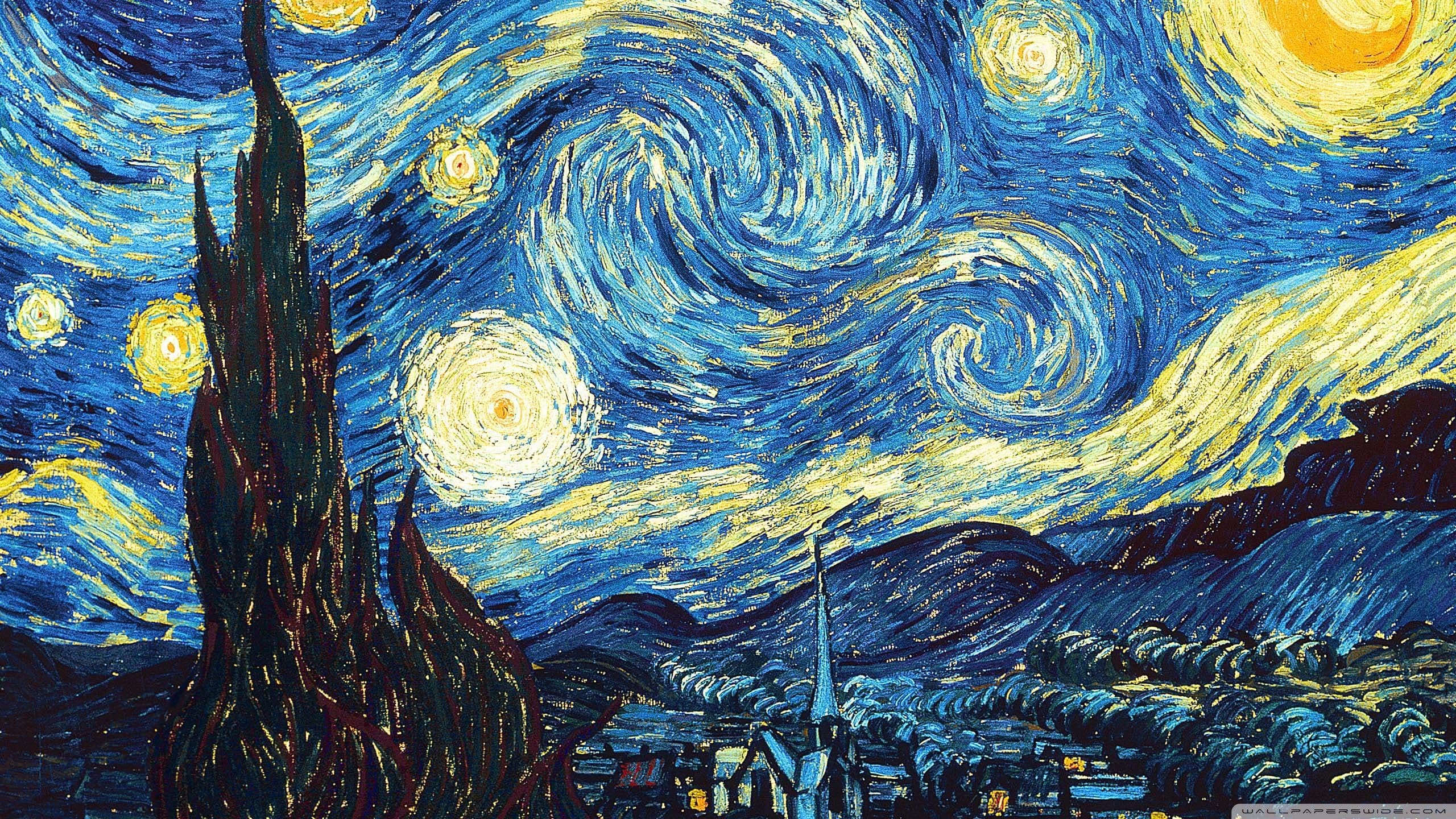
The Starry Night (van Gogh)
Vincent van Gogh · 1889
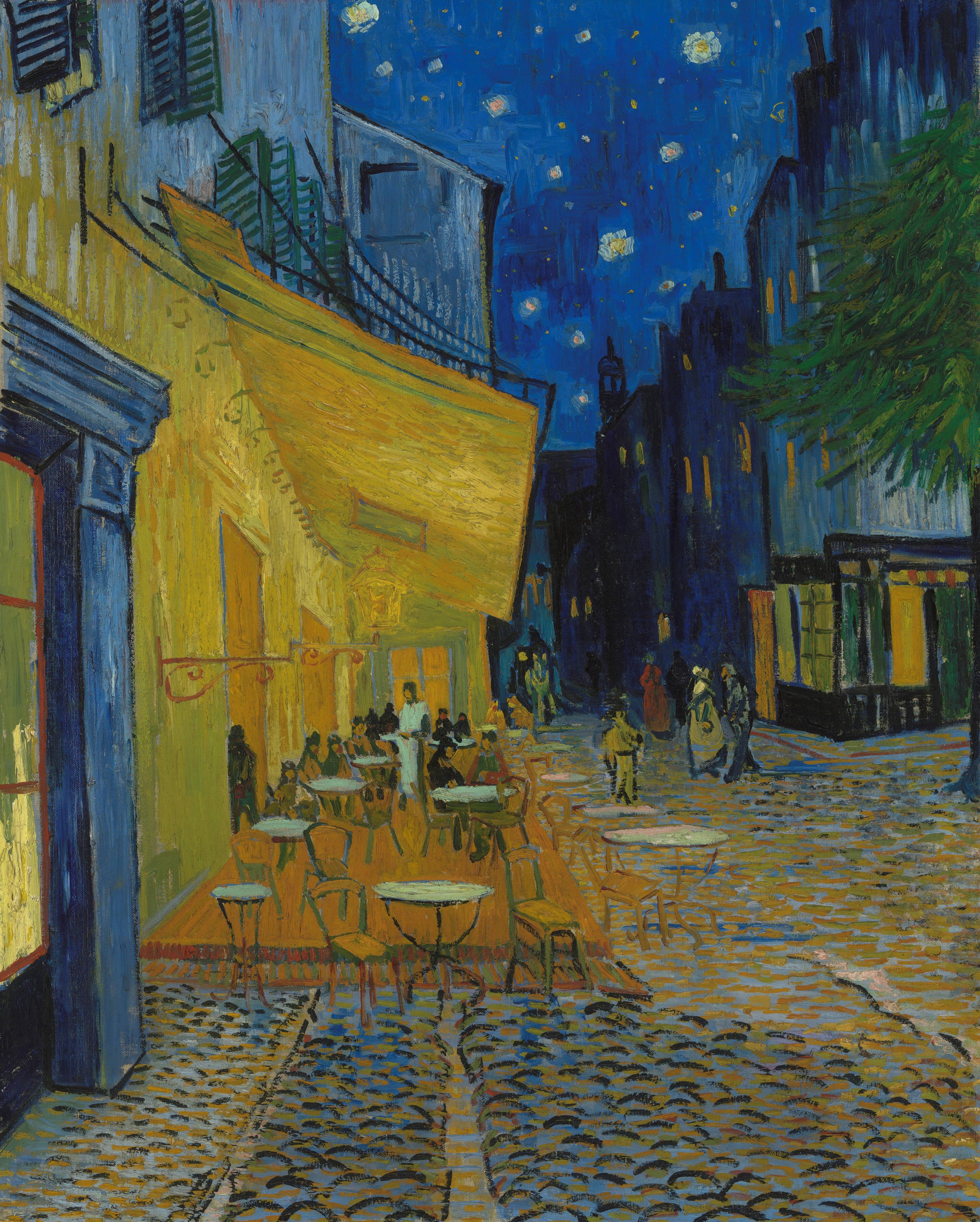
Café Terrace at Night
Vincent van Gogh · September 1888
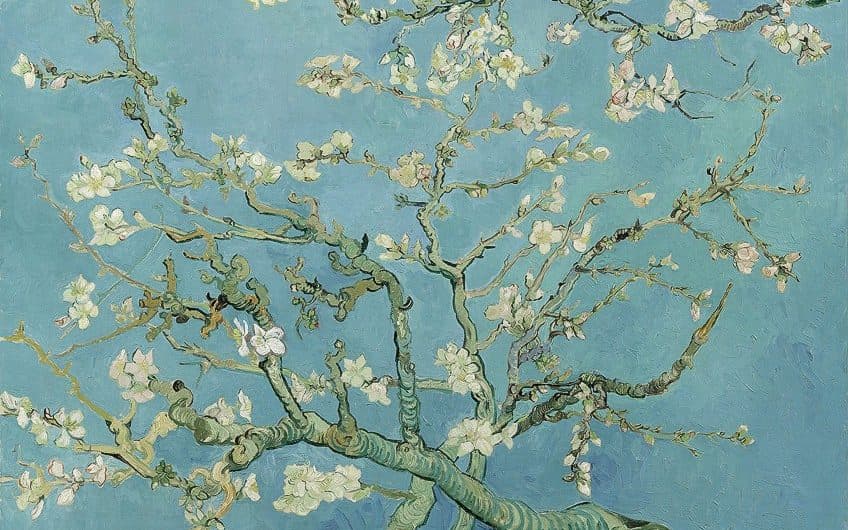
Almond Blossom
Vincent van Gogh · 1890
How Impressionism began
In the 1860s the path to a career as a painter in France ran through the Salon, the official annual exhibition run by the Académie des Beaux-Arts. Its juries favored history paintings, polished surfaces and approved subjects. A group of young painters, many of whom met in the studio of Charles Gleyre or at the Café Guerbois in Paris, found their work rejected again and again.
In 1874 they took matters into their own hands. Calling themselves the Société Anonyme des Artistes Peintres, Sculpteurs, Graveurs, they held their own exhibition, opening on 15 April in the former studio of the photographer Nadar at 35 boulevard des Capucines. Thirty artists took part. Among Monet's entries was a small view of the harbor at Le Havre at dawn, which he titled Impression, Sunrise (1872, Musée Marmottan Monet, Paris).
The critic Louis Leroy, writing in the satirical paper Le Charivari, titled his review "Exhibition of the Impressionists" and joked that wallpaper in its early stages was more finished. The insult became the name. The group held eight exhibitions between 1874 and 1886.
What was new about Impressionist painting
Painting outdoors. Working en plein air was not new as a way of sketching, but the Impressionists made finished pictures outside. New collapsible tin paint tubes, invented in 1841, and portable easels made this practical.
Capturing a moment. They tried to record how a scene looked at a particular hour and in particular weather, working fast before the light changed.
Broken color. Rather than blending colors smoothly on the palette, they laid strokes of pure color side by side, letting them mix in the viewer's eye from a distance.
Colored shadows. Shadows are not brown or black but blue, violet or green, reflecting the sky and surrounding colors. Black largely disappeared from their palettes.
Visible brushwork. Every stroke shows, giving the surface a lively, sketch-like quality academic critics found unfinished.
Modern subjects. Railway stations, boulevards, cafés, boating parties, suburban gardens and the leisure of the new middle class.
Before 1874: the road to the first exhibition
Monet and Renoir set up their easels side by side in the summer of 1869 at La Grenouillère, a bathing and boating resort on the Seine near Bougival. Their paintings of the spot, with its flickering water, little round island and crowds of day-trippers, are often seen as the birth of the Impressionist method; Monet's version is in the Metropolitan Museum of Art. Two years earlier, Monet's large Women in the Garden (1866, Musée d'Orsay) had been rejected by the Salon of 1867. To paint it outdoors at full scale, he had a trench dug in the garden so the canvas could be lowered and raised on pulleys while he worked on the top.
In The Magpie (1868–69, Musée d'Orsay), also rejected by the Salon, a single black bird perches on a wattle gate in a snowy field. The real subject is the snow itself, painted not white but in creamy yellows, lilacs and the blue shadows cast by the fence. It is a perfect lesson in what the Impressionists saw that others had not.
The heart of the movement
Each of the core painters took Impressionism in a different direction. Renoir painted people at leisure, as in Bal du moulin de la Galette (1876, Musée d'Orsay), with dappled sunlight falling through trees onto dancers' clothes. Edgar Degas, who disliked the word Impressionist and preferred to call himself a Realist, painted ballet dancers, laundresses and racehorses from unusual, cropped angles influenced by photography and Japanese prints.
Camille Pissarro, the oldest and the group's mentor, painted villages and fields and later the boulevards of Paris from hotel windows. Berthe Morisot and the American Mary Cassatt painted the private worlds of women and children with a lightness of touch few could match. Gustave Caillebotte, wealthy enough to buy his friends' work, painted Paris's new streets and bridges.
Monet painted modern Paris too. In 1877 he obtained permission to paint inside the Gare Saint-Lazare and made a dozen canvases of steam, iron and glass, including the famous views now in the Musée d'Orsay and the Art Institute of Chicago.
Monet and the series paintings
From the 1880s Monet, living at Giverny from 1883, pushed Impressionism to its logical end. If a scene changes with every hour and every season, why not paint it again and again? His Haystacks (1890–91), Poplars (1891), Rouen Cathedral (1892–94) and Houses of Parliament (1900–05) series show the same motif under dozens of conditions. More than thirty canvases record the west façade of Rouen Cathedral alone, among them Rouen Cathedral in Full Sunlight, in which the stone seems to melt into thick crusts of gold, blue and pink paint. He painted the façade from rooms rented across the square, moving from canvas to canvas as the light shifted.
The water lilies
At Giverny Monet built a flower garden and a water garden with a Japanese footbridge, diverting a branch of the river Epte to feed the pond. For the last quarter century of his life, the pond was his main subject. He painted around 250 Water Lilies, growing larger and more abstract as his eyesight was clouded by cataracts. His final project, a cycle of enormous panels, was installed in two oval rooms of the Musée de l'Orangerie in Paris, opening to the public in 1927, a few months after his death.
A painter's grief
The most moving picture in the collection is also the most private. When his first wife, Camille, died in 1879 at the age of 32, Monet painted Camille Monet on Her Deathbed (Musée d'Orsay), her face half dissolved in a veil of blue, gray and violet strokes. Years later he told his friend Georges Clemenceau that he had caught himself, at her bedside, automatically analyzing the colors that death was imposing on her face. Impressionism's habit of looking had become a reflex he could not switch off.
After Impressionism
By the mid-1880s younger artists were reacting against Impressionism's focus on surface appearance. Georges Seurat systematized broken color into Pointillism; Paul Cézanne sought structure and solidity; Paul Gauguin and Vincent van Gogh pushed color toward emotion and symbol. These artists are grouped as the Post-Impressionists. Van Gogh's Starry Night and Café Terrace at Night, both in the collection below, would be unimaginable without the Impressionist liberation of color.
How to recognize an Impressionist painting
- Short, visible brushstrokes of bright color laid side by side.
- Light as the real subject: sun on water, mist, snow, dappled shade, smoke.
- Colored shadows, with little or no black.
- Everyday modern subjects and landscapes rather than history or myth.
- Open compositions that feel cropped or casual, like a glimpse.
- A sketch-like finish that resolves into clarity from a few steps back.
Where to see Impressionist art
The Musée d'Orsay in Paris has the world's greatest collection, and the Musée Marmottan Monet and the Orangerie complete the Monet pilgrimage. Monet's house and garden at Giverny are open from spring to autumn. Outside France, the Art Institute of Chicago, the Metropolitan Museum of Art, the National Gallery of Art in Washington, the Museum of Fine Arts in Boston and the National Gallery in London all hold outstanding Impressionist collections.
Questions & answers
What is Impressionism in art?
Impressionism is a nineteenth-century art movement that began in Paris in the 1870s. Its painters, including Monet, Renoir, Degas, Pissarro and Morisot, tried to capture fleeting effects of light and atmosphere and scenes of modern life, using quick, visible brushstrokes, bright unmixed colors and often painting outdoors.
Why is it called Impressionism?
The name comes from Claude Monet's painting Impression, Sunrise (1872), shown at the group's first independent exhibition in Paris in 1874. The critic Louis Leroy used it mockingly in his review titled Exhibition of the Impressionists, and the artists soon adopted the label themselves.
Who are the most famous Impressionist artists?
The core Impressionists were Claude Monet, Pierre-Auguste Renoir, Edgar Degas, Camille Pissarro, Alfred Sisley, Berthe Morisot, Mary Cassatt and Gustave Caillebotte. Édouard Manet was closely associated with them and influenced them deeply, but he never exhibited in their group shows, preferring to fight for recognition at the official Salon.
What are the characteristics of Impressionist paintings?
Impressionist paintings feature short, visible brushstrokes, bright pure color, colored rather than black shadows, a focus on changing light and weather, everyday modern subjects, open and casual compositions, and a loose, sketch-like finish. Many were painted entirely or partly outdoors.
What is the most famous Impressionist painting?
Monet's Impression, Sunrise is the most historically important, since it gave the movement its name. Among the best-loved are Monet's Water Lilies and Woman with a Parasol, Renoir's Bal du moulin de la Galette and Luncheon of the Boating Party, and Degas's ballet scenes.