Impressionism
Grainstack (Snow Effect)
Claude Monet, 1891
Grainstack (Snow Effect), also called Haystack in the Snow, Morning, is a painting by Claude Monet of a single wheat stack in a thinly snowed field at Giverny, dated 1891. It is in the Museum of Fine Arts, Boston.
- Artist
- Claude Monet
- Date
- 1891
- Medium
- Oil on canvas
- Dimensions
- 65.4 × 92.4 cm
- Collection
- Museum of Fine Arts, Boston, Boston, United States
- Movement
- Impressionism
- Catalogue
- Wildenstein W 1280
More at Monet at the MFA Boston
Grainstack (Snow Effect) is a painting by Claude Monet of one stack of wheat standing in a snowy field near his house at Giverny, part of his famous series of 1890–91. Signed and dated "91" at lower left, it measures 65.4 by 92.4 centimeters and has been in the Museum of Fine Arts, Boston, since 1970 (accession 1970.253). Wildenstein's catalogue lists it as number 1280, Meule, effet de neige, le matin, which is why it is also known as Haystack in the Snow, Morning.
What does Grainstack (Snow Effect) show?
A single stack stands left of center, much larger than the farm buildings behind it. Its base is a thick drum and its top a sloping, thatched cap that juts out like the eaves of a roof. The body is a warm mass of brown, red and orange, and its outline glows: along the top and the left edge, Monet runs a rim of bright straw-yellow where low sunlight catches the loose stalks.
The sun sits low and slightly behind the stack, so its shadow does not fall neatly to one side. Instead, a long band of blue-violet runs from its base across the bottom of the canvas to the right edge, the coolest and darkest area of the snow.
Beyond the stack, the field stretches back to a cluster of farm buildings with dark roofs at right of center, half lost in a warm haze. A line of bare trees at the left is painted in rusty pinks and oranges, as if lit from within. Behind them rises a long band of blue hills, and above that a pale sky of gray, gold and lilac.
The colors of morning snow
The snow is thin. In the foreground, patches of yellow-brown stubble push through, especially at the lower left, where they catch the light in a ragged golden strip. Elsewhere, the snow is made of cream, pink, pale yellow and lilac strokes, cooler and bluer as it recedes, and warmer where the sun strikes it directly.
Compared with the Edinburgh canvas Haystacks, Snow Effect, where the stacks are dark silhouettes against a glaring sky, this is a calmer picture. The stack has volume and warmth, the background is legible, and the light feels like the first sun of a cold day rather than the last.
How it was painted
Monet painted the stacks from the field next to his property, which he had bought in November 1890. He worked on several canvases at a time, changing from one to the next as the light shifted, and his stepdaughter Blanche Hoschedé helped carry them out. The winter of 1890–91 was unusually cold, giving him weeks of snow and frost.
The brushwork follows the forms: curved and dense around the stack, horizontal across the field, short and vertical in the trees and hills. Many layers are visible, including dry, broken strokes dragged over earlier paint in the sky. Like the rest of the series, the canvas was reworked in the studio before Monet showed it.
The Haystacks series and Boston
Fifteen stack paintings were exhibited at Durand-Ruel's gallery in Paris in May 1891 and sold quickly, many eventually to American collectors. Boston was among the first American cities to take up Monet, and the MFA now owns more than one canvas from the series, including a Grainstack (Sunset) of 1891. You can follow the group in our Haystacks series hub and the museum's wider holdings in Monet at the MFA Boston.
Other winter versions in the catalogue include Stack of Wheat, Snow Effect, Overcast Day and Stacks of Wheat, Sunset, Snow Effect, both in Chicago. For a summer view of the same motif, see Grainstack in Sunlight.
Where to see Grainstack (Snow Effect)
The painting is in the Museum of Fine Arts, Boston, in the museum's Impressionist galleries when on view. The fields where Monet worked are described in our page on Giverny, and his career is told on our Claude Monet page.
Questions & answers
Where is Monet's Haystack in the Snow, Morning?
It is in the Museum of Fine Arts, Boston, under the title Grainstack (Snow Effect), accession number 1970.253. The museum acquired it in 1970. Dated 1891, it shows a single wheat stack in a thinly snowed field at Giverny, with farm buildings and blue hills behind.
When and where did Monet paint Grainstack (Snow Effect)?
He painted it at Giverny in the winter of 1890–91, in a field next to the house he had just bought, and dated it 1891. Wildenstein's catalogue calls it a morning effect. Monet worked on it outdoors among several canvases at once and finished it in the studio.
Why is the snow pink and blue in Monet's painting?
Monet painted the colors that light gave the snow rather than the white people expect. Low morning sun warms the lit snow to pink, cream and yellow, while the shadows take on the blue and violet of the sky. He laid these colors in small separate strokes that blend at a distance.
How does this version differ from Monet's other snow haystacks?
It shows one stack lit from low and slightly behind, with a clear background of farm buildings, trees and hills. The Edinburgh Haystacks, Snow Effect shows two dark stacks against a glaring sky, and the Chicago snow versions show overcast light and sunset. Each canvas records a different hour and weather.
More by the artist
Claude Monet

Bridge over a Pond of Water Lilies
Claude Monet · 1899

Woman with a Parasol – Madame Monet and Her Son
Claude Monet · 1875

Sunset in Venice
Claude Monet · 1908–12

La Grenouillère
Claude Monet · 1869

Beach in Pourville
Claude Monet · 1882

Springtime
Claude Monet · 1872

Boating on the River Epte
Claude Monet · 1890

The Seine at Asnières (Hermitage)
Claude Monet · 1873
Also painted in 1891
The same year
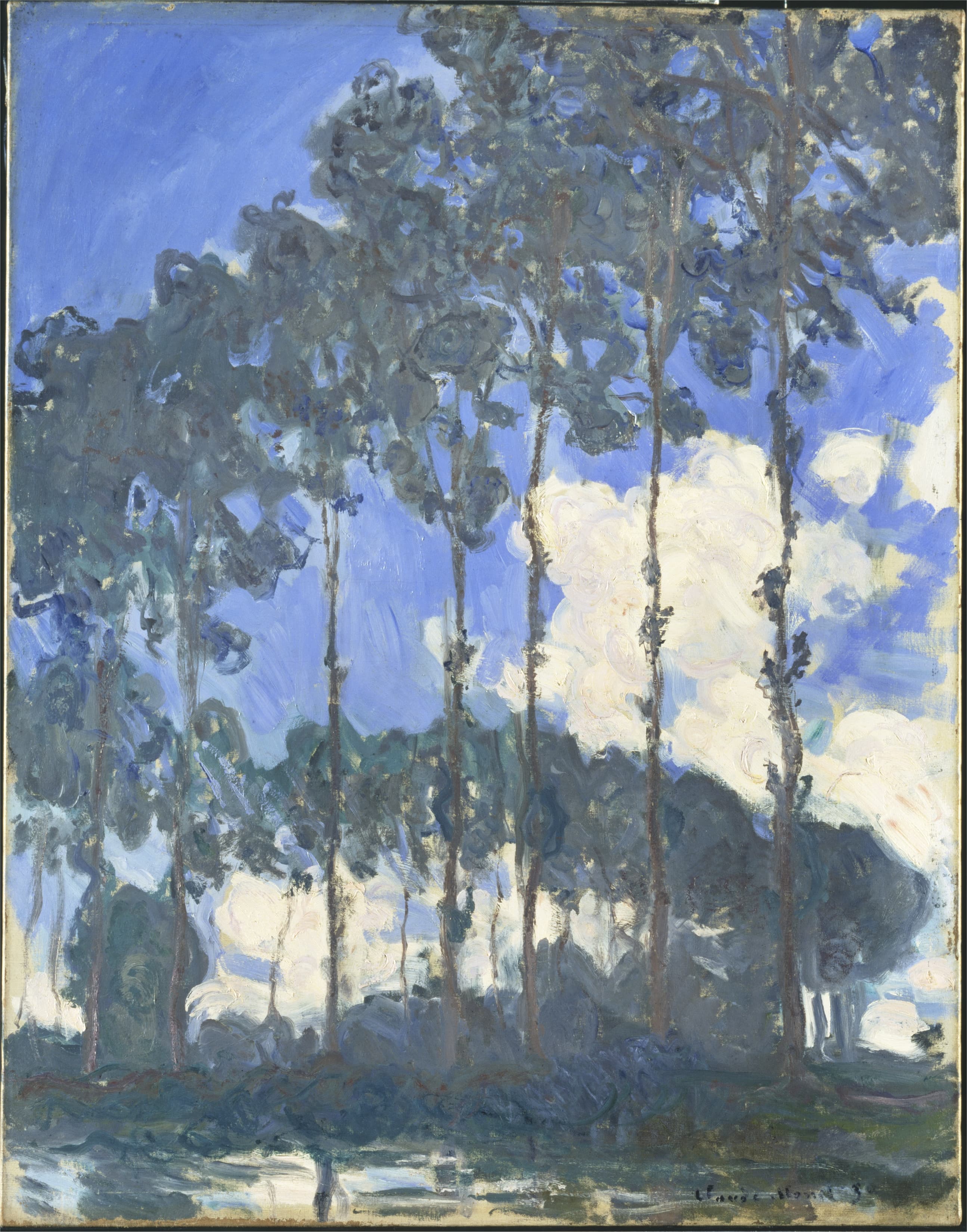
Poplars on the Epte (London)
Claude Monet · 1891
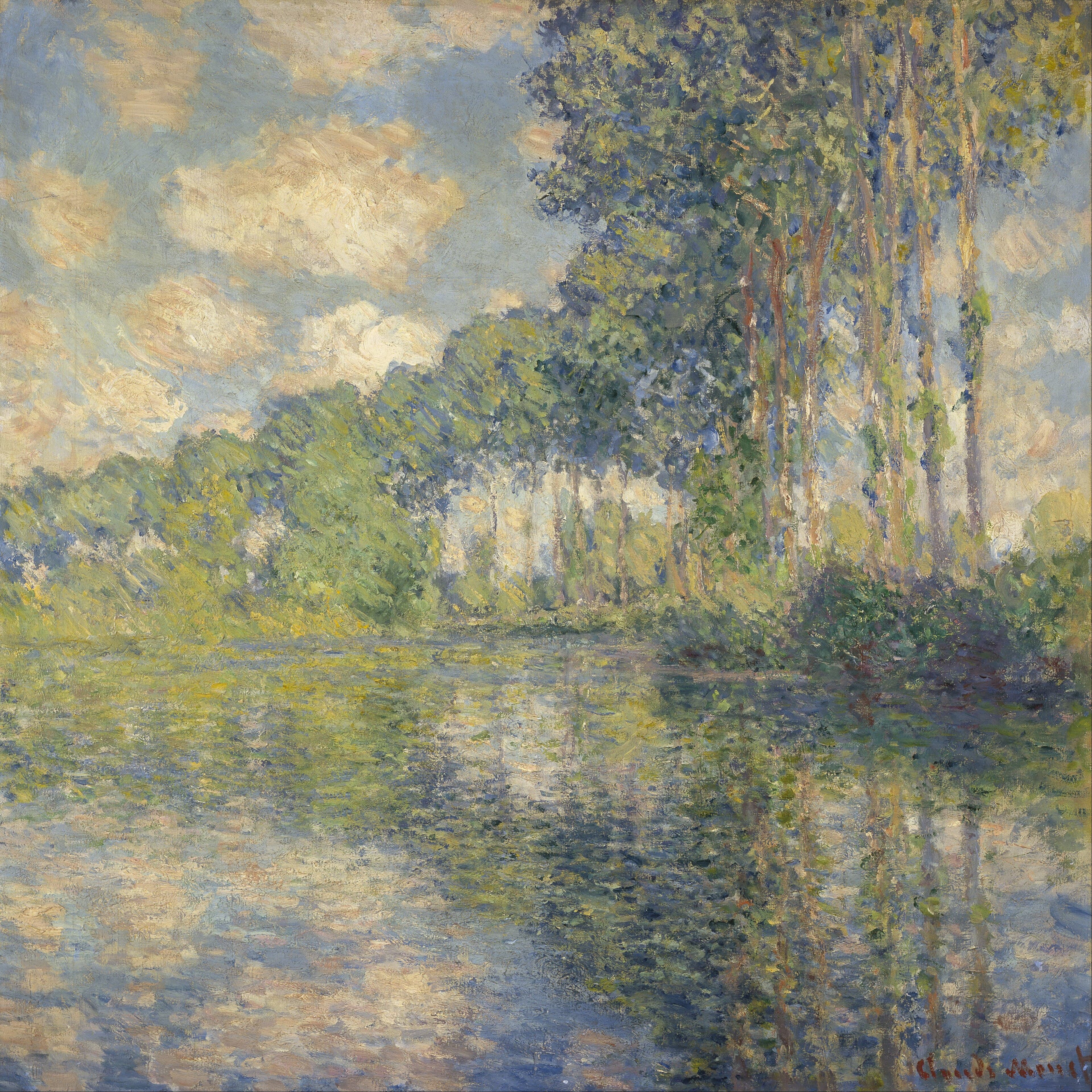
Poplars on the Epte (Edinburgh)
Claude Monet · 1891
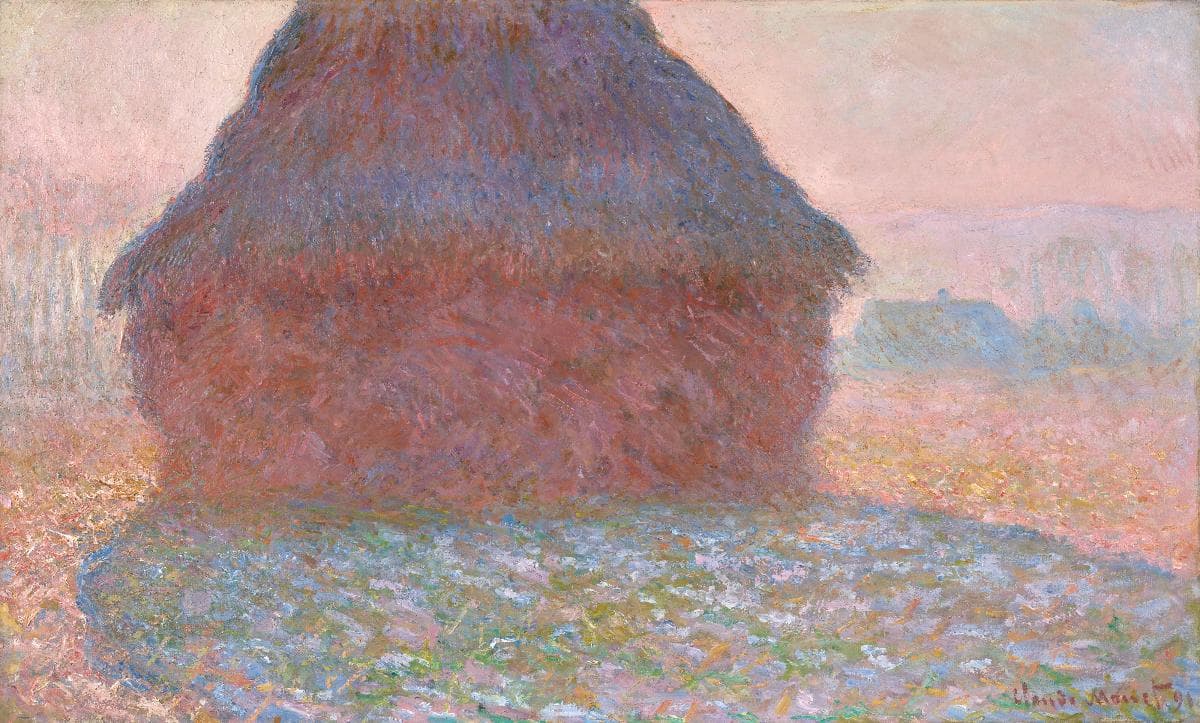
Grainstack in Sunlight
Claude Monet · 1891
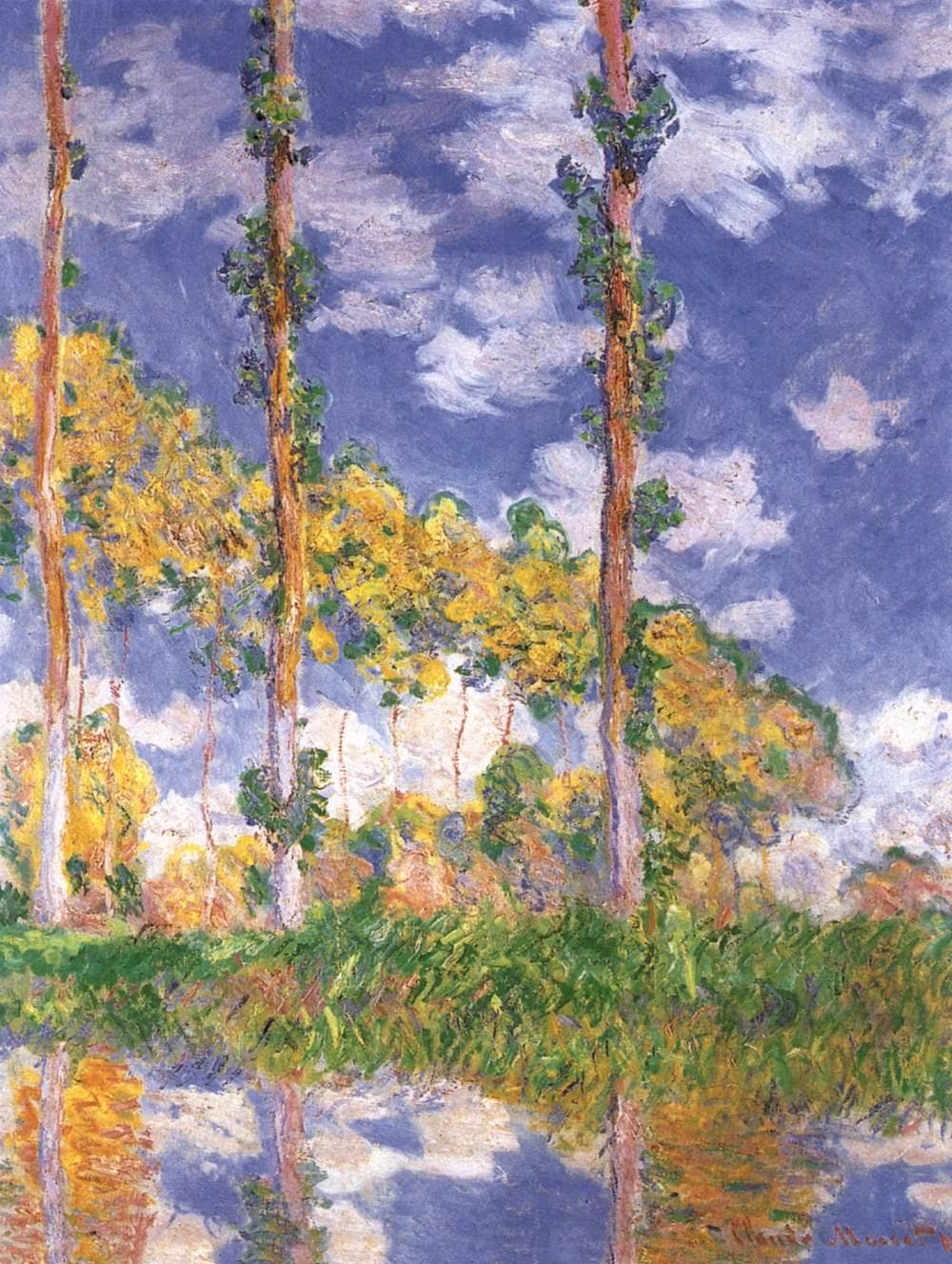
Three Poplars, Summer
Claude Monet · 1891
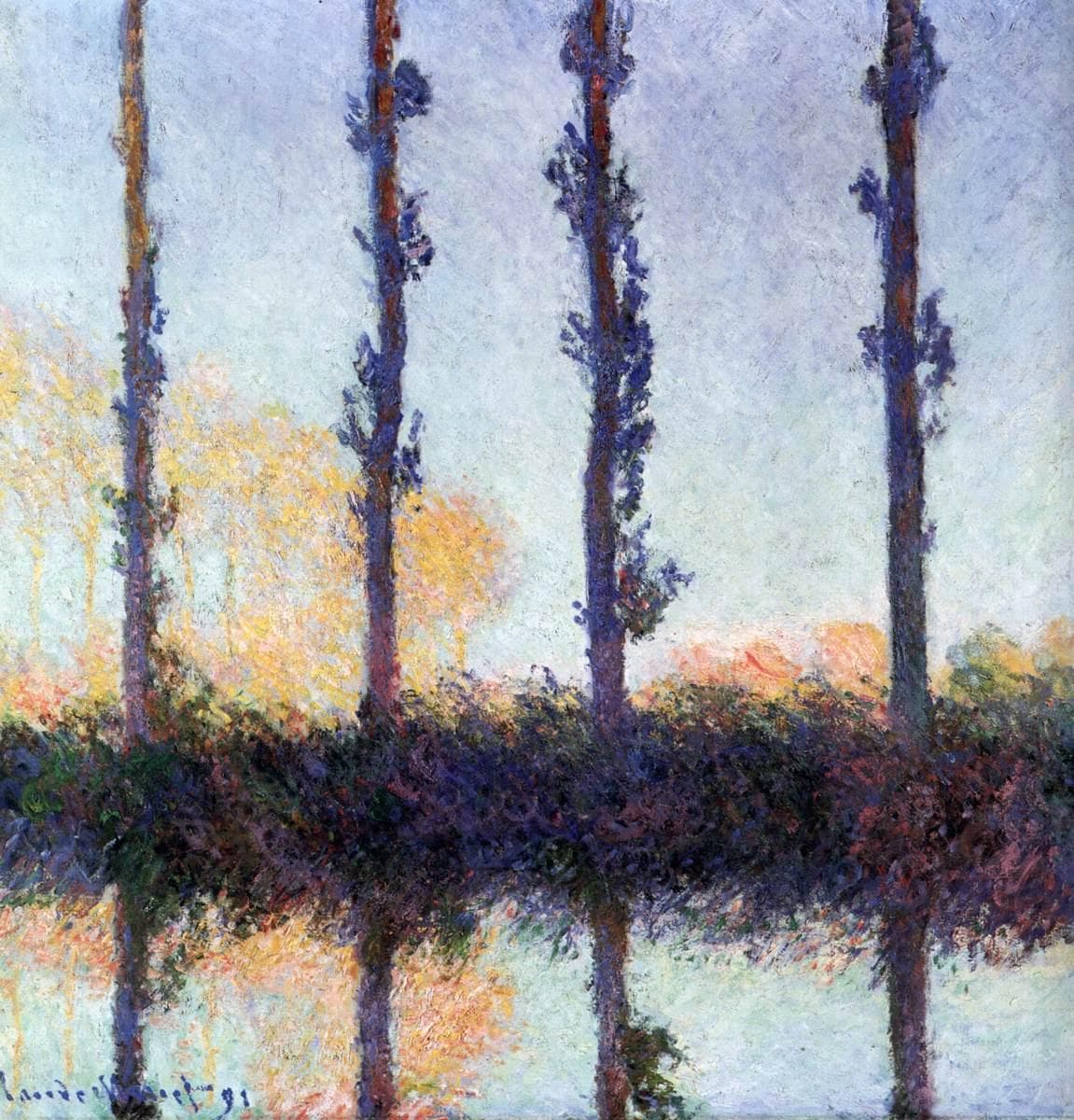
The Four Trees
Claude Monet · 1891
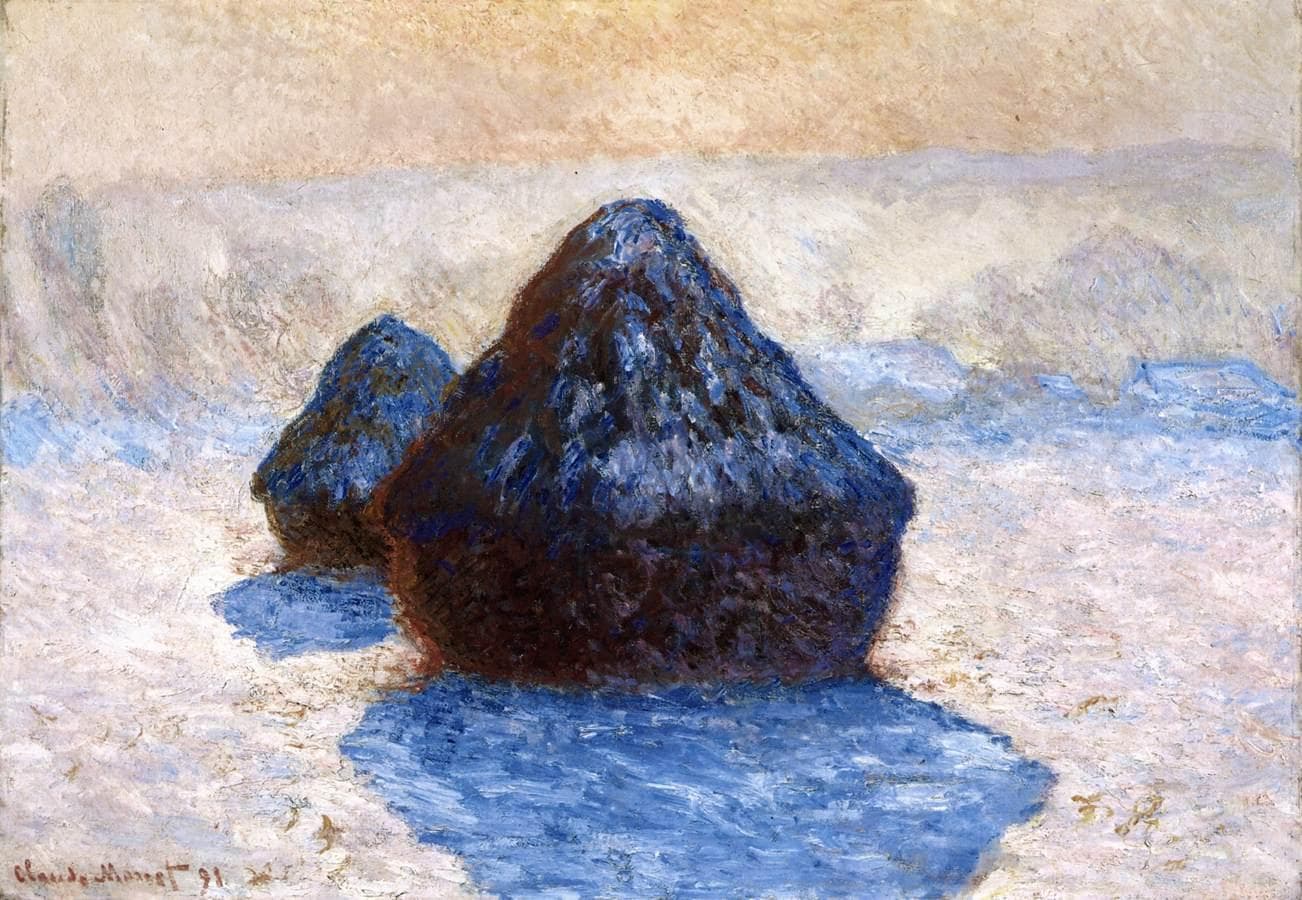
Haystacks, Snow Effect
Claude Monet · 1891
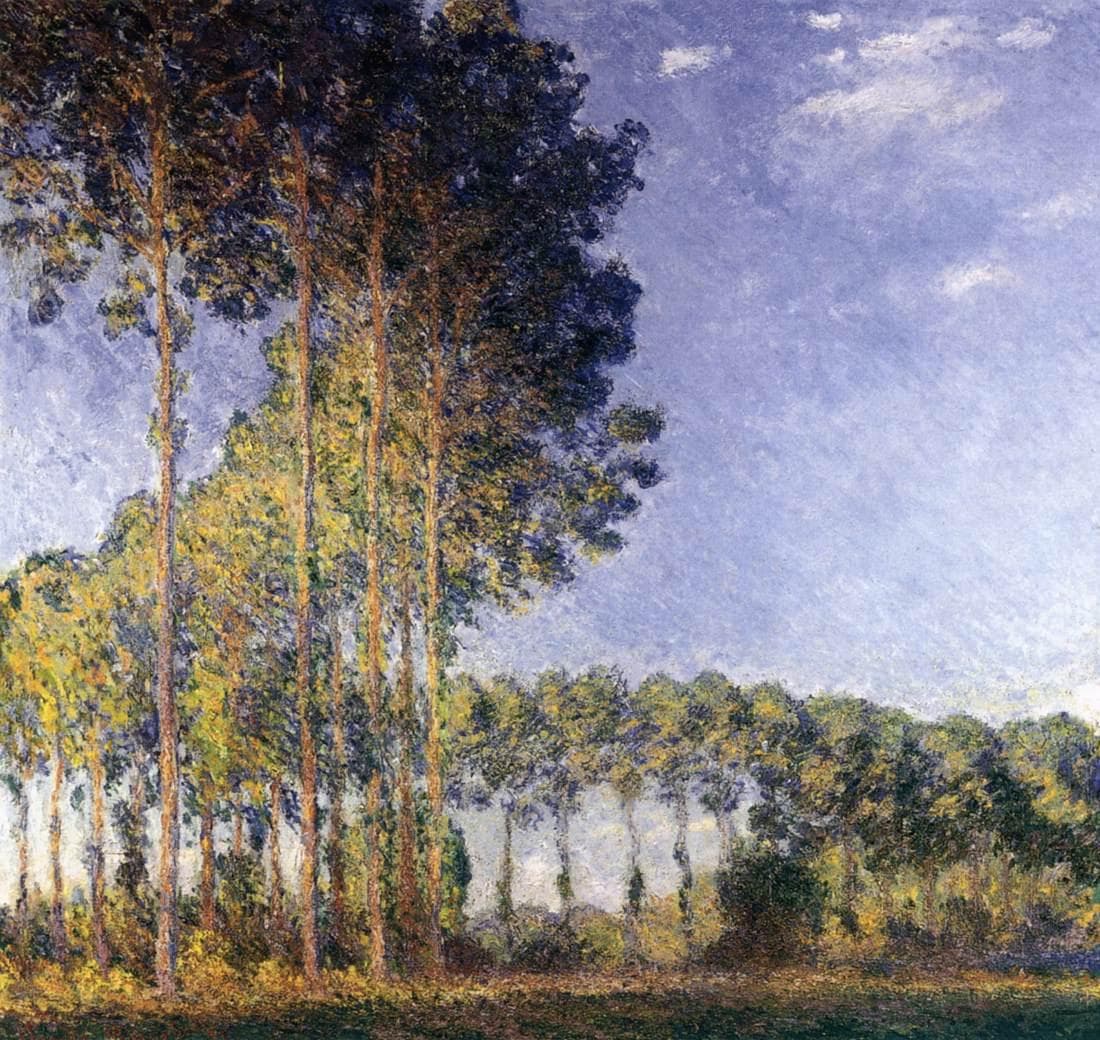
Poplars at the Banks of Epte
Claude Monet · 1891–92
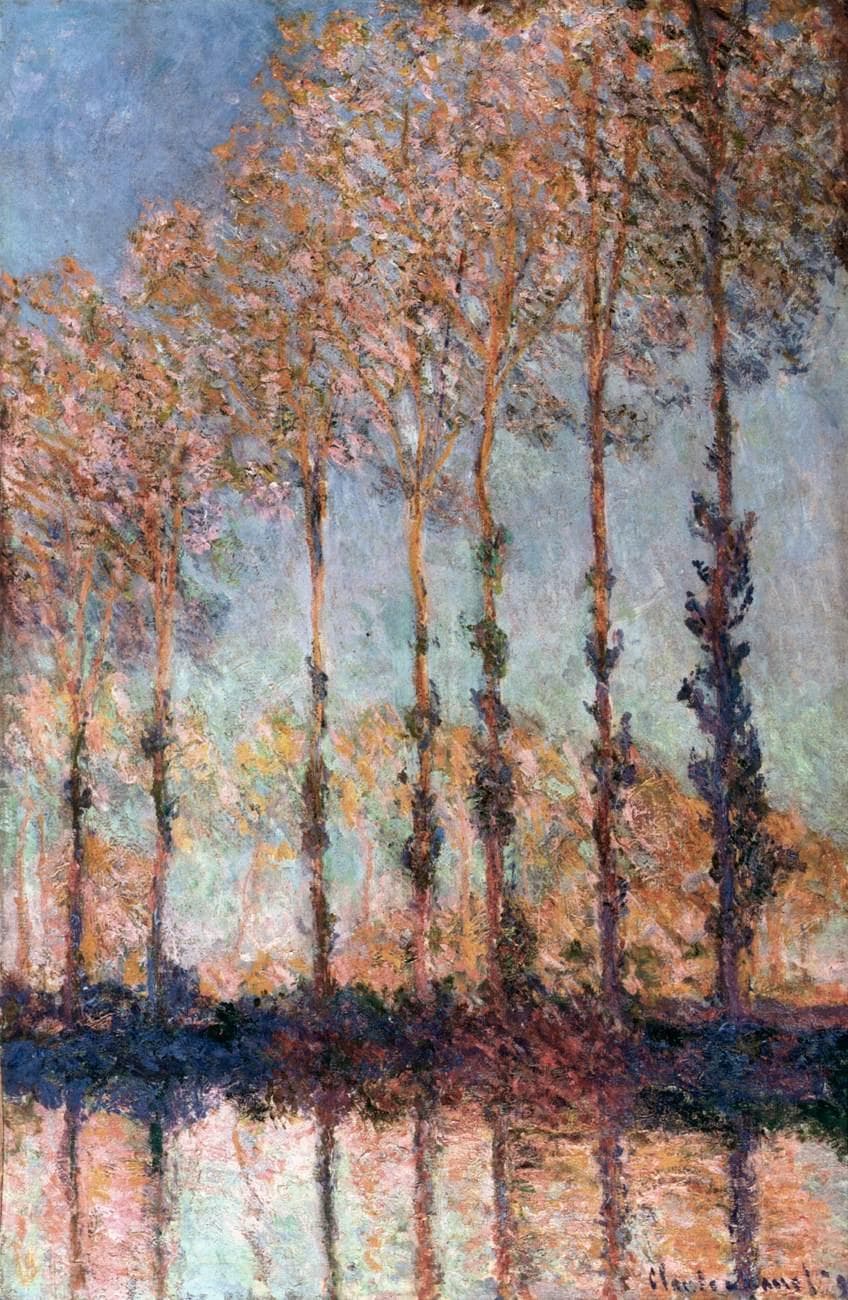
Poplars on the Banks of the River Epte
Claude Monet · 1891
Kindred works
You may also study
Haystacks, Snow Effect
Claude Monet · 1891
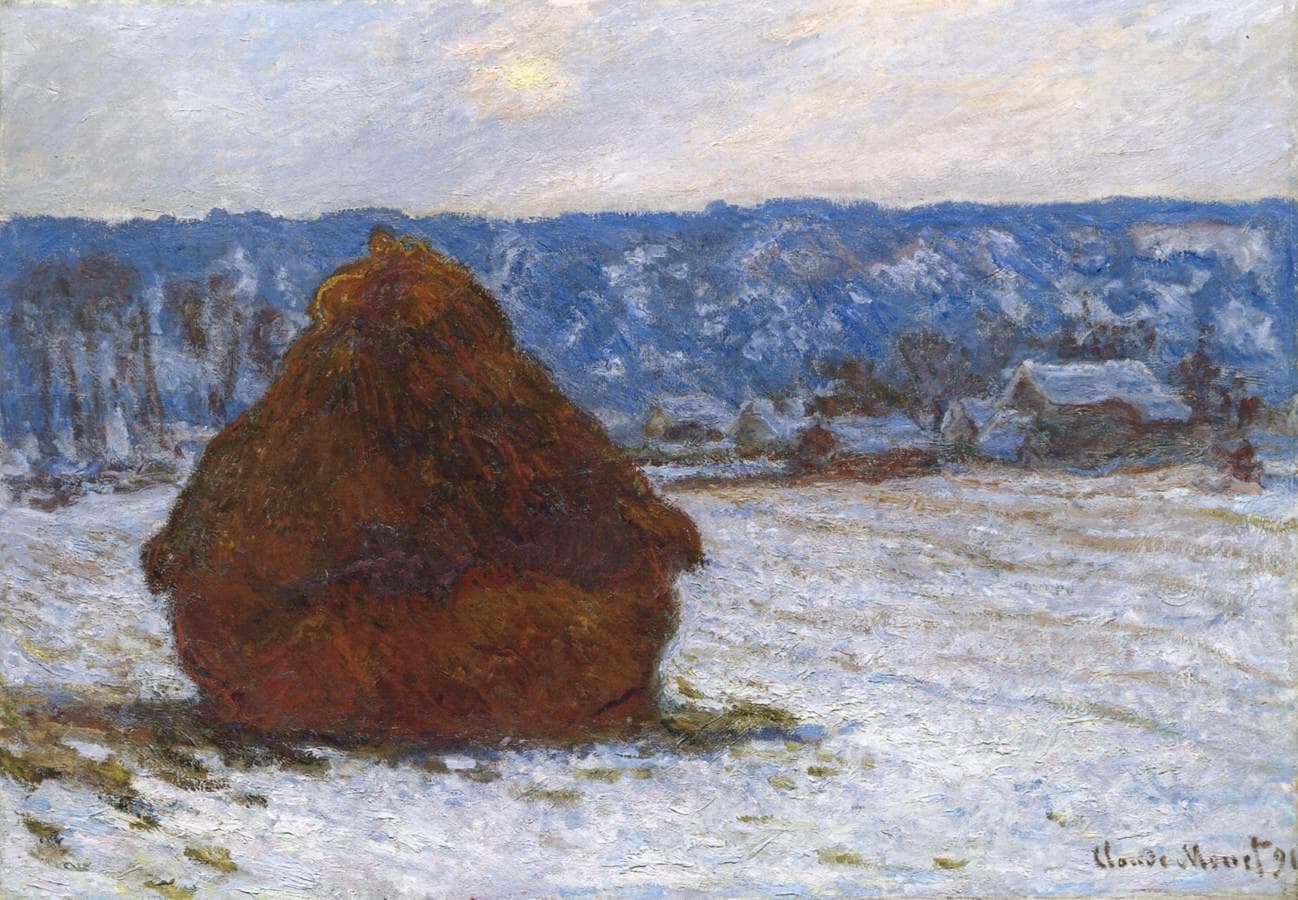
Stack of Wheat, Snow Effect, Overcast Day
Claude Monet · 1890–91
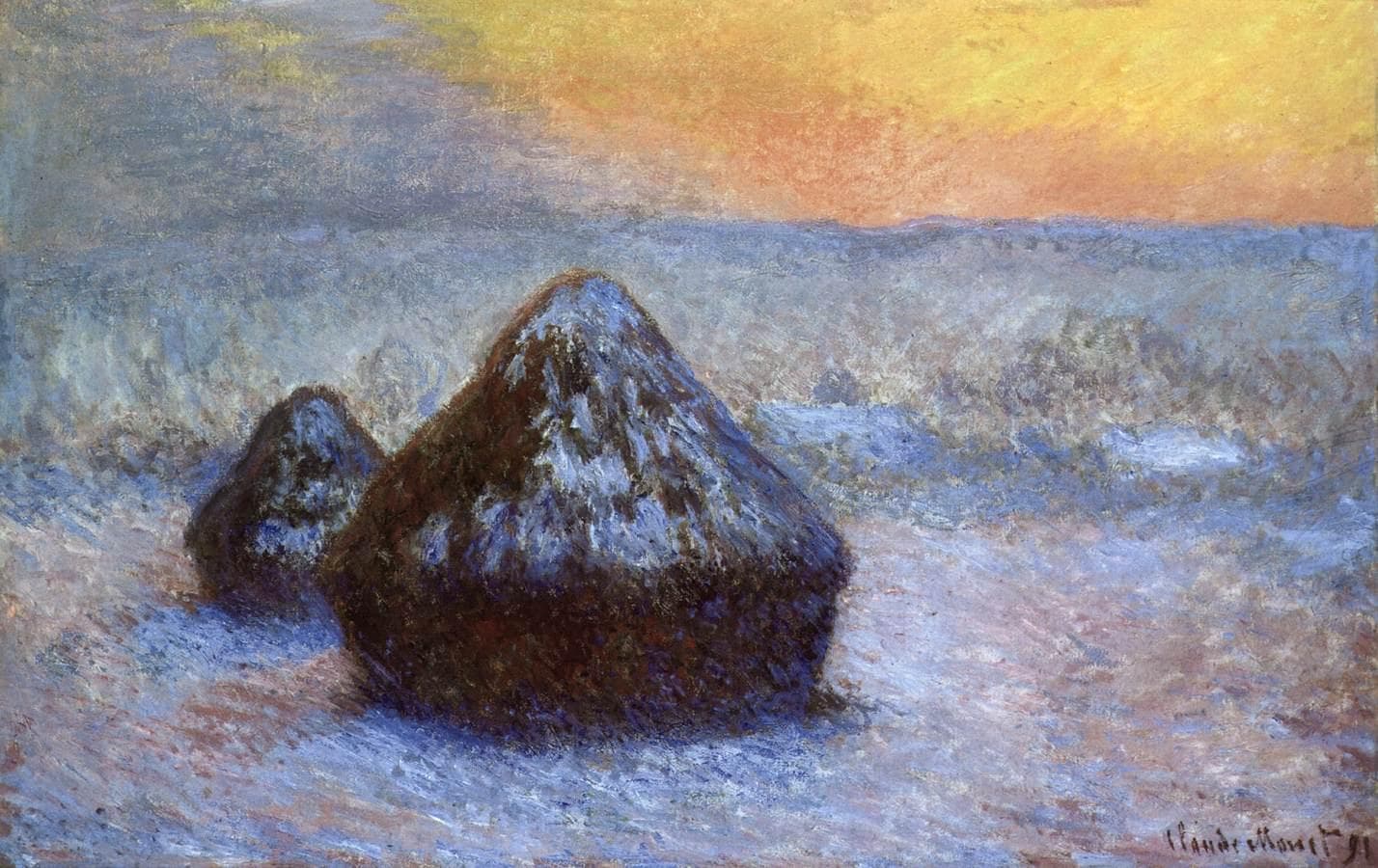
Stacks of Wheat, Sunset, Snow Effect
Claude Monet · 1890–91
Grainstack in Sunlight
Claude Monet · 1891
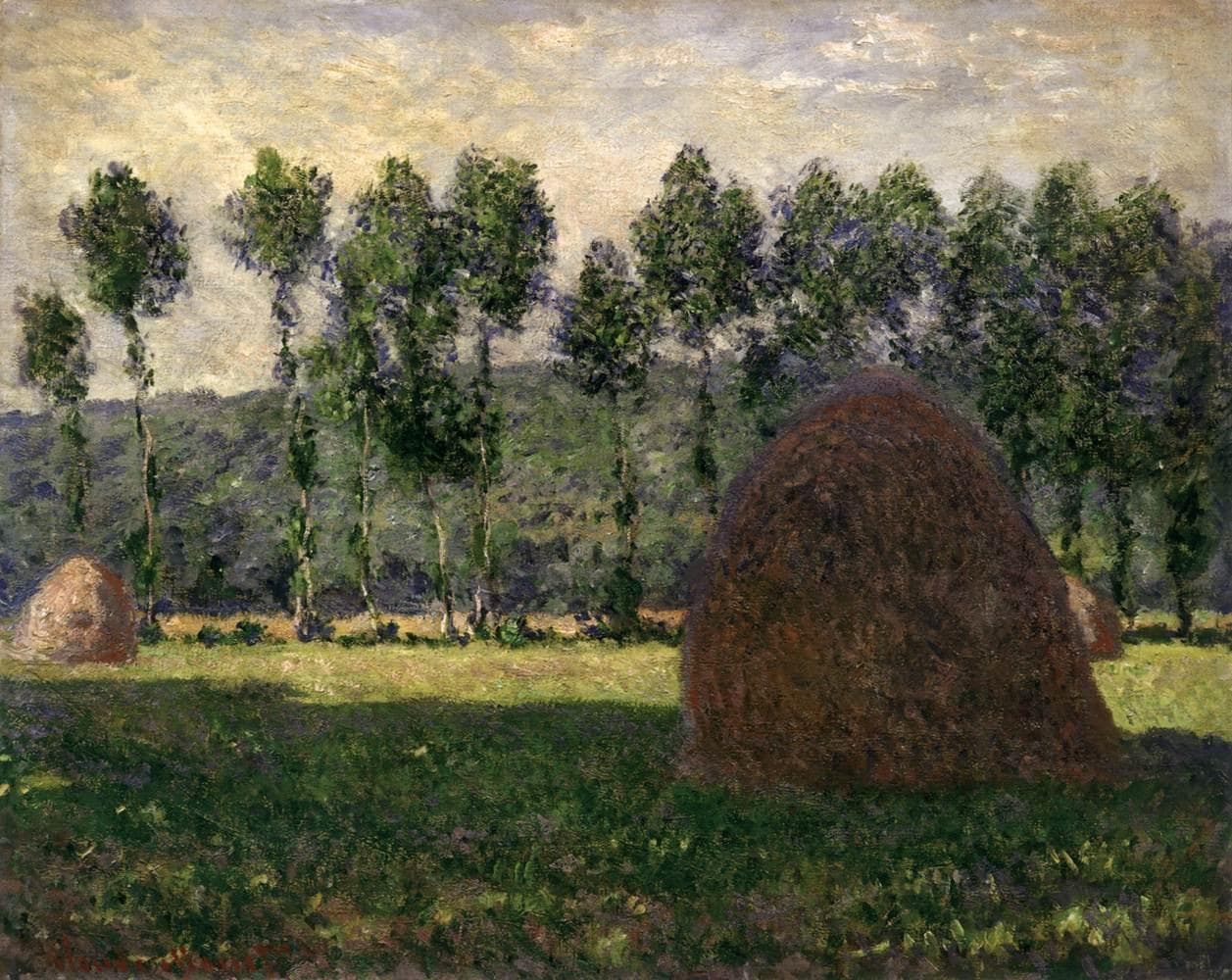
Haystack near Giverny
Claude Monet · 1884–89
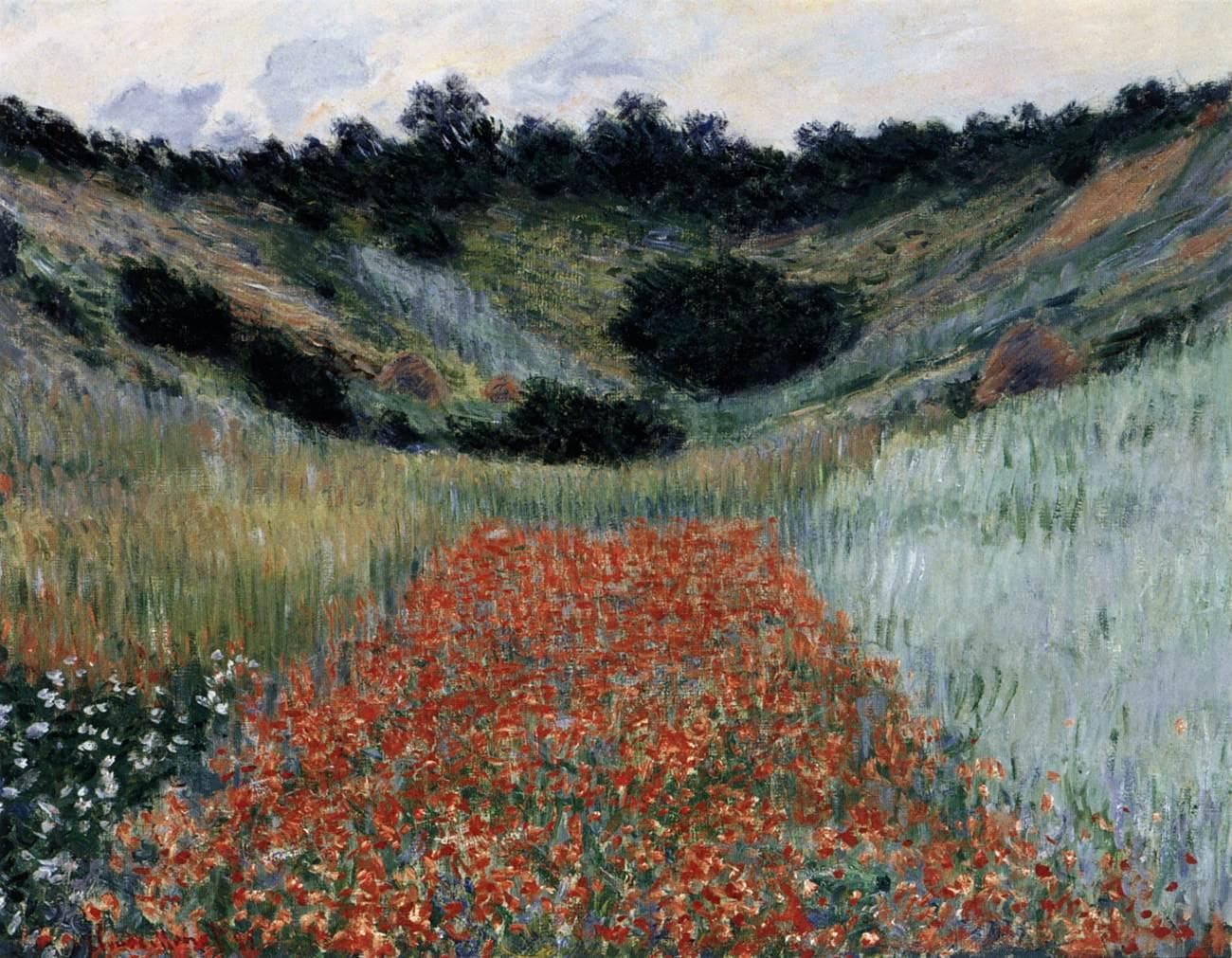
Poppy Field in a Hollow near Giverny
Claude Monet · 1885

The Scream
Edvard Munch · 1893

Ophelia
John Everett Millais · 1851–52