Impressionism
La Japonaise (Camille Monet in Japanese Costume)
Claude Monet, 1876
La Japonaise is Claude Monet's life-size 1876 portrait of his wife Camille in a red Japanese kimono, holding a fan against a wall of Japanese fans. It is in the Museum of Fine Arts, Boston.
- Artist
- Claude Monet
- Date
- 1876
- Medium
- Oil on canvas
- Dimensions
- 231.8 × 142.3 cm
- Collection
- Museum of Fine Arts, Boston, Boston, United States
- Movement
- Impressionism
- Catalogue
- Wildenstein 387
More at Monet at the MFA Boston
La Japonaise, or Camille Monet in Japanese Costume, is Claude Monet's largest figure painting of the 1870s: a full-length, life-size picture of his wife Camille in a theatrical red kimono. Painted in 1875–76 and dated 1876, the canvas measures 231.8 by 142.3 centimeters (Wildenstein 387) and belongs to the Museum of Fine Arts, Boston.
What you are looking at
Camille stands on a straw mat, her body twisting away from us while she turns her head back over her shoulder with a bright, posed smile. She wears a blond wig, which makes the point that she is a Parisian dressing up, not a Japanese woman. In her raised right hand she holds an open folding fan painted in bands of blue, white and red, the colors of the French flag.
The real subject is the costume. It is a heavy uchikake, the padded over-robe worn by actors and courtesans, in scarlet silk embroidered with gold leaves and flowers. Its train spreads across the floor in a great pool of red edged with a band of blue and gold. Near her knees the embroidery becomes a warrior: a samurai with a fierce painted face, gripping the hilt of his sword, so vividly rendered that he seems to climb out of the cloth (see the detail of the samurai). On the gray-blue wall behind, round uchiwa fans float like moons, painted with landscapes, birds and, at upper right, a Japanese woman's face that answers Camille's. More fans lie on the floor.
How it was painted
The handling changes with each material. The robe is painted thickly, with heavy strokes of red and touches of gold that sit up on the surface; the samurai's face and costume are worked more tightly than anything else in the picture. The wall and fans are thinner and flatter, the mat a loose grid of yellow and gray. The scale, the theatrical lighting and the finish are those of a Salon picture, quite unlike the open-air landscapes Monet was making at the same time in Argenteuil.
Japonisme and the market
In the 1870s Paris was in the grip of japonisme, the craze for Japanese prints, ceramics and textiles that followed the opening of Japan to Western trade. Monet himself collected woodblock prints all his life, and they still hang in his house at Giverny. But La Japonaise is less a study of Japan than a showpiece aimed at buyers. Monet was short of money, and he made a big, colorful, crowd-pleasing figure painting in the manner of fashionable pictures by artists such as Alfred Stevens and James Tissot.
It worked. Shown at the second Impressionist exhibition in April 1876, it drew attention and sold for 2,000 francs, a large sum for Monet then. Late in life he reportedly dismissed it as rubbish, painted only to please, but it remains one of his most famous pictures. Two years later he made the flower another sign of the same fashion in Chrysanthemums.
Camille as model
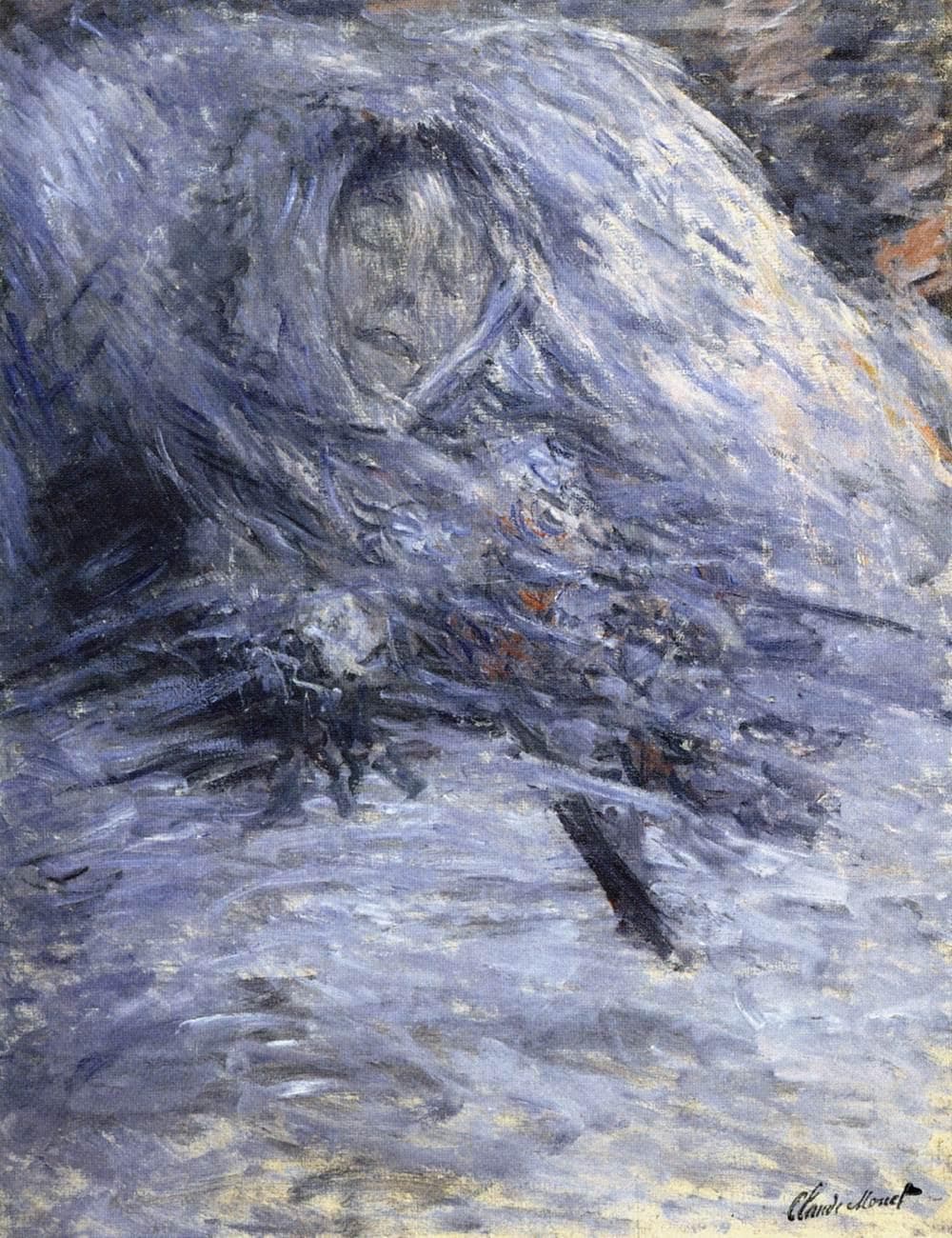
Camille Doncieux posed for many of Monet's early figure pictures, from the grand Camille (The Woman in the Green Dress) of 1866, which this picture deliberately echoes in its size and turning pose, to Woman with a Parasol of 1875. The Monets were then living at Argenteuil, the subject of our hub on Monet at Argenteuil. Camille died in 1879, and Monet painted her one last time in Camille Monet on Her Deathbed.
Where to see it
The painting has been in the Museum of Fine Arts, Boston, since 1956, bought through the museum's 1951 Purchase Fund. A conservation treatment in the late 2010s removed discolored varnish and brightened the reds considerably. In 2015 a museum program that invited visitors to try on a replica kimono in front of the painting drew protests and was changed, a sign of how the picture's play with cultural costume is read today. It also appears on our list of famous paintings of women. More on Claude Monet.
Questions & answers
Where is Monet's La Japonaise?
La Japonaise is in the Museum of Fine Arts, Boston, which bought it in 1956. It is one of the museum's best-known Impressionist paintings. A conservation treatment that removed old discolored varnish has made the reds and golds of the kimono much brighter than in older reproductions.
When and where was La Japonaise painted?
Monet painted it in 1875–76, while living at Argenteuil, and dated it 1876. He showed it at the second Impressionist exhibition in Paris in April 1876, where it sold for 2,000 francs.
Who is the woman in La Japonaise?
The model is Camille Monet, born Camille Doncieux, the painter's first wife. She wears a blond wig, which emphasizes that she is a Parisian woman in costume. Camille posed for many of Monet's figure paintings before her early death in 1879 at the age of 32.
What is the meaning of La Japonaise?
The painting plays on the 1870s Parisian fashion for Japanese art and objects, known as japonisme. With the blond wig, the French-colored fan and the theatrical kimono with its embroidered samurai, it is a picture about Western fantasy of Japan and about dressing up, painted partly to attract buyers.
More by the artist
Claude Monet

Bridge over a Pond of Water Lilies
Claude Monet · 1899

Woman with a Parasol – Madame Monet and Her Son
Claude Monet · 1875

Sunset in Venice
Claude Monet · 1908–12

La Grenouillère
Claude Monet · 1869

Beach in Pourville
Claude Monet · 1882

Springtime
Claude Monet · 1872

Boating on the River Epte
Claude Monet · 1890

The Seine at Asnières (Hermitage)
Claude Monet · 1873
Also painted in 1876
The same year
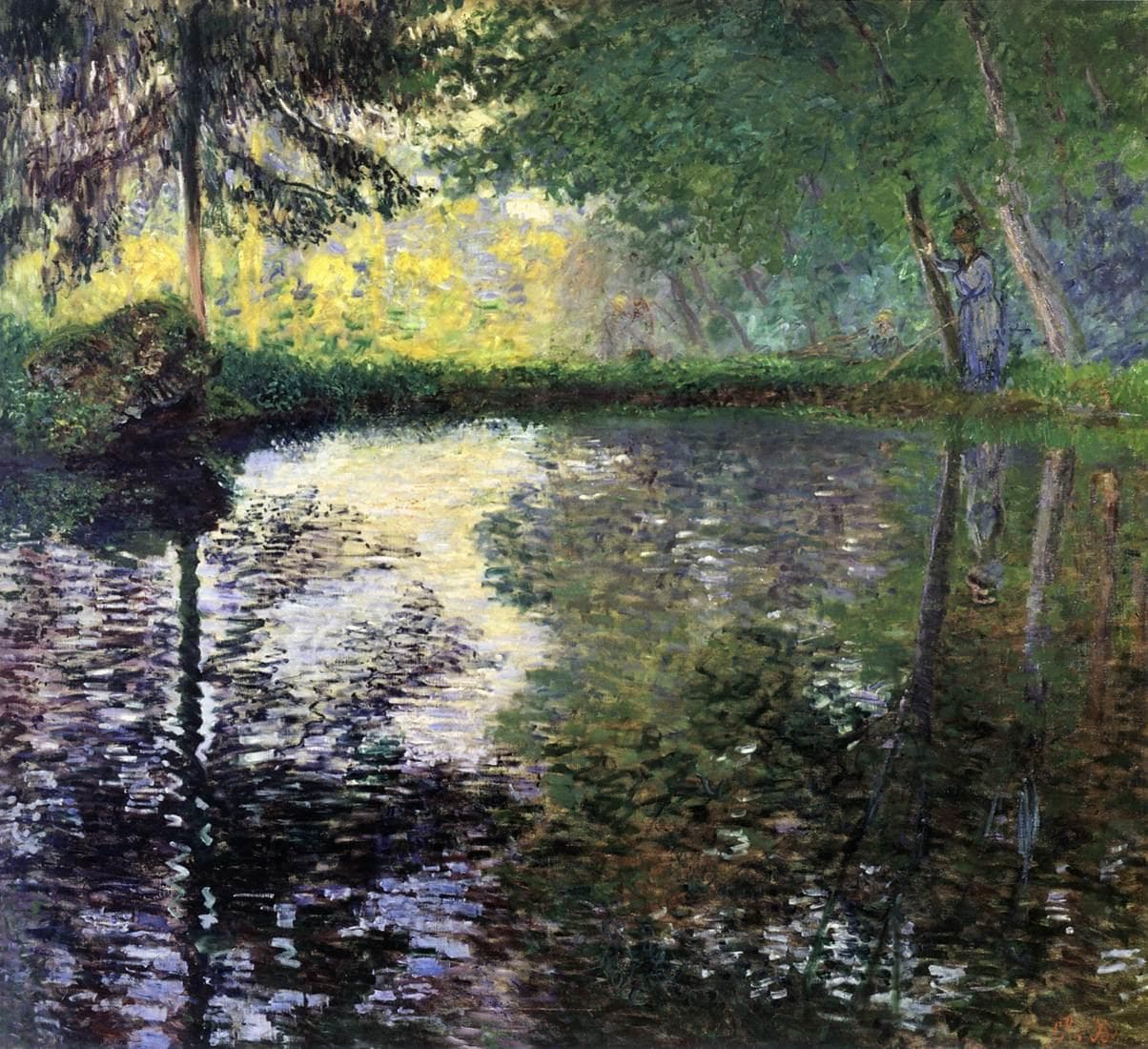
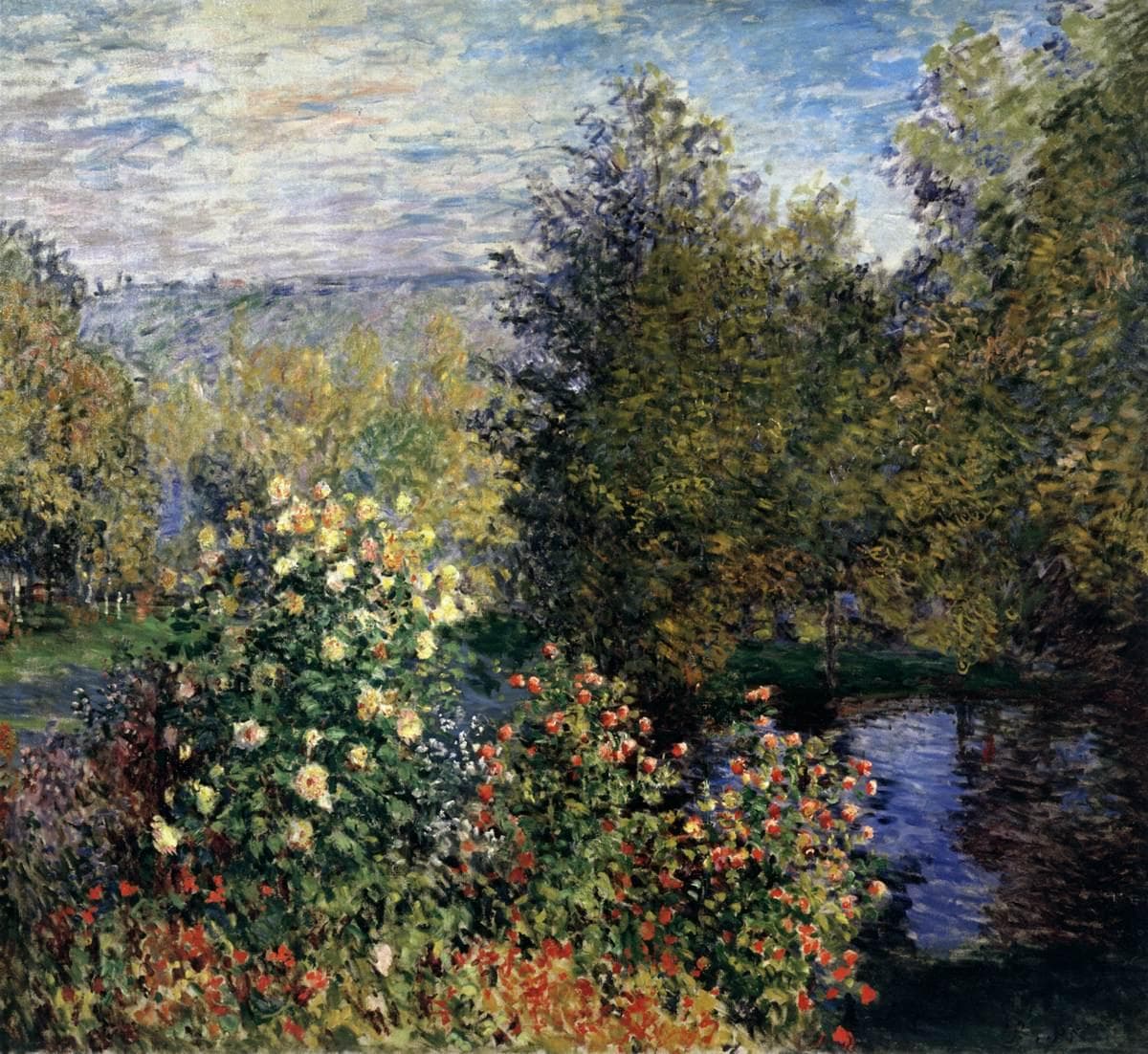
Kindred works
You may also study
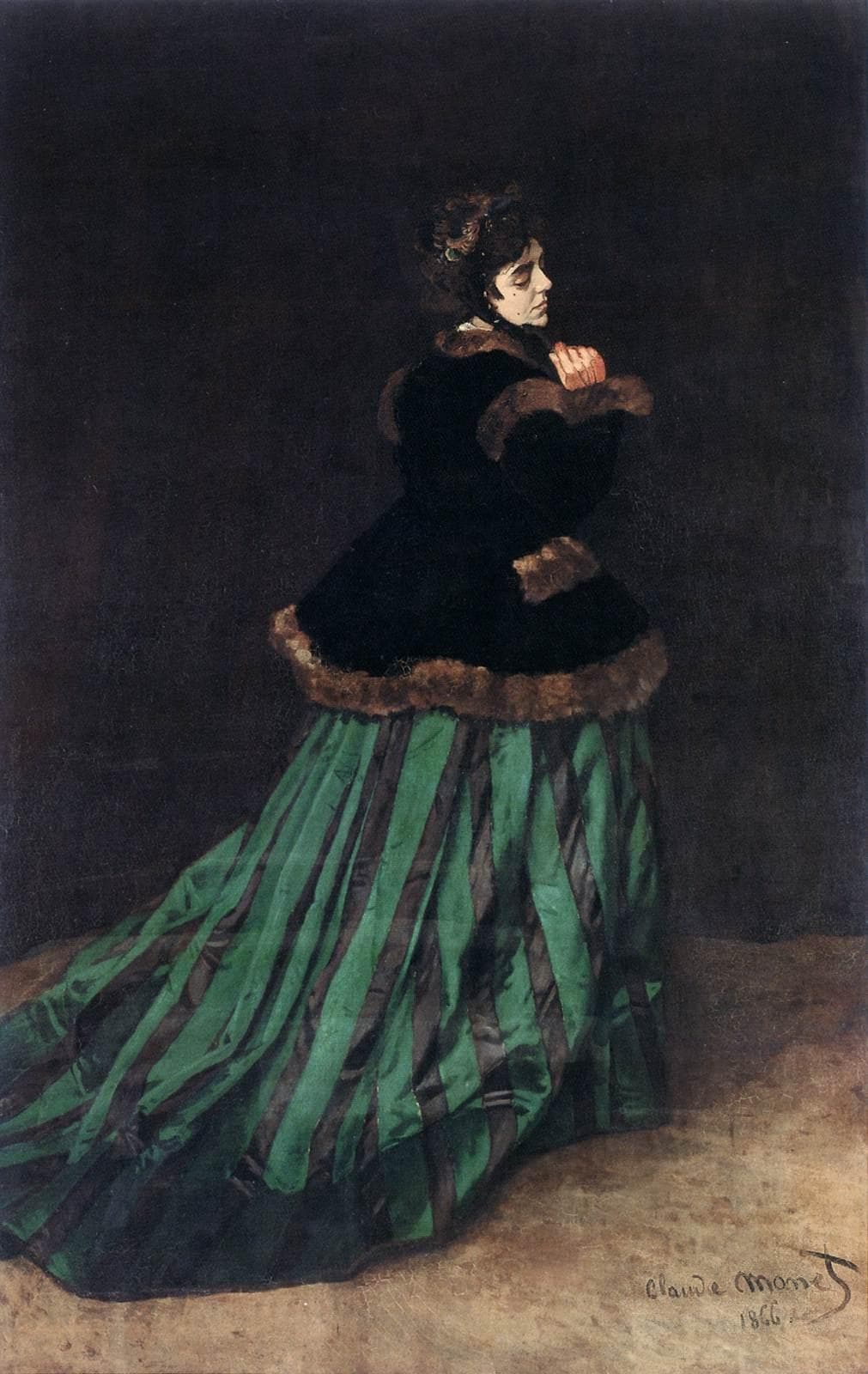
Camille (The Woman in the Green Dress)
Claude Monet · 1866
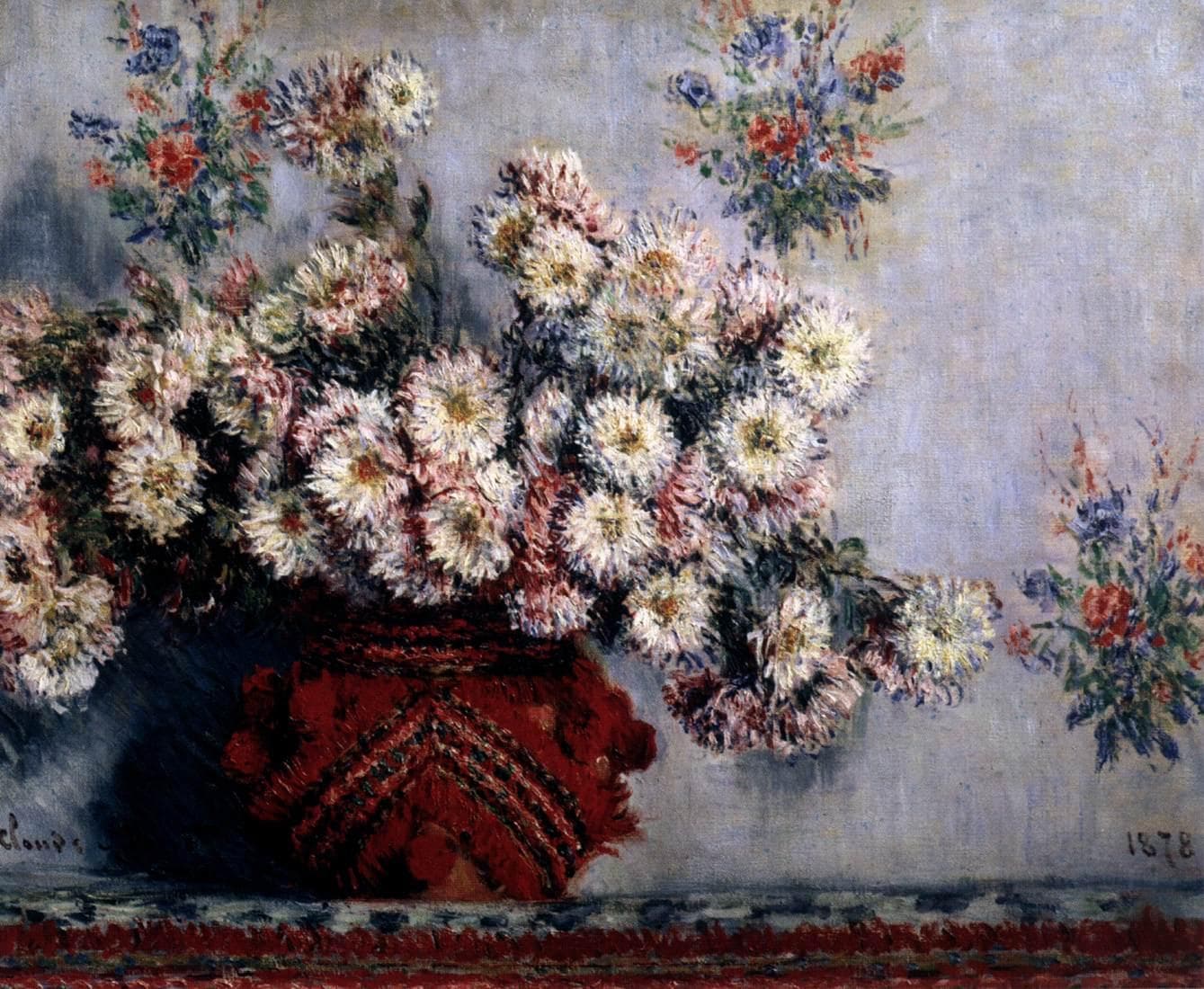
Chrysanthemums
Claude Monet · 1878
Camille Monet on Her Deathbed
Claude Monet · 1879

Venus de Milo
Alexandros of Antioch · c. 150–125 BC

Ophelia
John Everett Millais · 1851–52
Las Meninas
Diego Velázquez · 1656
The Birth of Venus
Sandro Botticelli · c. 1484–1486
The School of Athens
Raphael · 1509–1511