Impressionism
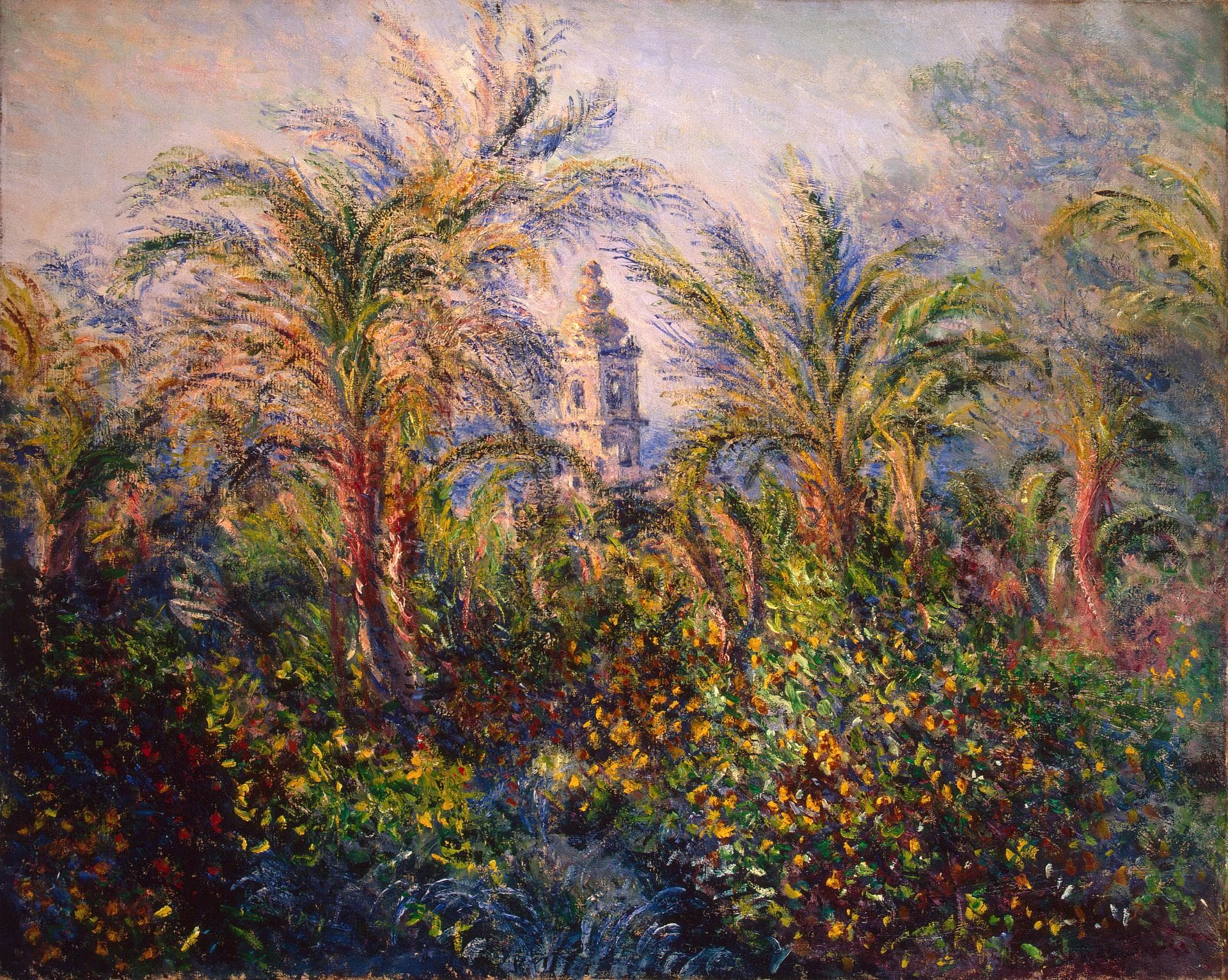
Palm Trees at Bordighera
Claude Monet, 1884
Palm Trees at Bordighera is an 1884 oil painting by Claude Monet, made on the Italian Riviera during a three-month stay. It shows a thicket of palms beneath lilac mountains and belongs to The Metropolitan Museum of Art in New York.
- Artist
- Claude Monet
- Date
- 1884
- Medium
- Oil on canvas
- Dimensions
- 64.8 × 81.3 cm
- Collection
- The Metropolitan Museum of Art, New York, United States
- Movement
- Impressionism
- Catalogue
- Wildenstein 877
Painted at Monet on the MediterraneanMore at Monet at the Met
What you are looking at
The picture is built in two bands. Across the lower half, a dense thicket of palms fills the canvas from edge to edge: feathery date palms with drooping, silvery lower fronds, and higher crowns that catch the sun in yellow and acid green. Above them, beyond a thin strip where the white and ochre houses of the town and a glint of blue sea can just be made out, rise the mountains behind Bordighera, painted in lilac, blue and rose and fading into a pale green-white sky. There is no figure and no single focal point. The eye moves across a screen of curving strokes, each frond set down in a few quick touches of the brush.
The palette is what most viewers notice. Compared with Monet's Normandy pictures of the same years, the color is keyed high and slightly unreal: shadows in the palms are blue-violet rather than dark green, the dead lower fronds are pink and gray, and the mountains seem made of light rather than rock. Monet complained in his letters that he could hardly find colors bright enough for the Riviera. "One would need a palette of diamonds and jewels," he wrote, and here he pushes his pigments toward that intensity while keeping the whole surface soft and hazy.
Look at the bottom left corner, where Monet signed and dated the canvas "Claude Monet 84" in red. The signature sits among the fronds almost as if it were another stroke of foliage. And note how little ground there is: the palms are seen from above, from a terrace or slope, so they read as a single tossing mass rather than as individual trees.
The canvas measures 64.8 × 81.3 cm, a standard size Monet used constantly in the 1880s, and the painting has been in the Met since 1967.
How it was made
Monet first saw Bordighera in December 1883, on a short trip along the Mediterranean coast with Pierre-Auguste Renoir. He came back alone in January 1884, wanting, as he wrote to his dealer Paul Durand-Ruel, to work without a companion, and stayed until April. In those three months he painted dozens of canvases of the town, its gardens and the coast.
Many of them were painted in the garden of Francesco Moreno, a wealthy landowner whose estate was famous for its palms and olive trees, which Monet praised extravagantly in his letters. The difficulty he faced was the opposite of his usual one. In Normandy he struggled with changing weather; on the Riviera he struggled with too much light and too much detail. Paintings like this one show him solving the problem by flattening space, letting the palms form an all-over decorative pattern beneath the mountains, much as a Japanese print would.
He also wrote to Alice Hoschedé, his future wife, almost every day. Those letters record his anxieties about the work, his frustration at the dazzling light and his delight at the palms, and they are the main source for how the Bordighera pictures were made.
Context
The Bordighera campaign belongs to Monet's travels of the 1880s, when he sought out dramatic and unfamiliar coasts: the cliffs of Étretat, the rocks of Pourville, Belle-Île in Brittany, and in 1888 Antibes. Each trip tested his painting against a new kind of light. At Bordighera that light was southern and almost tropical, and the experience left a mark on his color for the rest of his career.
Monet was careful about how the pictures were seen. Several Bordighera canvases were shown at Durand-Ruel's gallery and sold well, helping to stabilize his finances in the mid-1880s.
Meaning
The painting does not tell a story, and Monet did not explain it. What it records is a painter's encounter with the exotic. For a northern French artist, palms were a sign of the South, of holiday and of a kind of Eden, and Bordighera was in the 1880s a fashionable winter resort for British and northern European visitors. Scholars often read the Bordighera pictures as part of that tourist imagination, while noting that Monet carefully avoided the hotels, villas and visitors and painted only the vegetation and the sea.
There is also a formal reading. The tangle of fronds in the lower half is close to abstraction, a field of strokes with no single object to hold on to. It anticipates the all-over surfaces of the late Water Lilies.
Reception and legacy
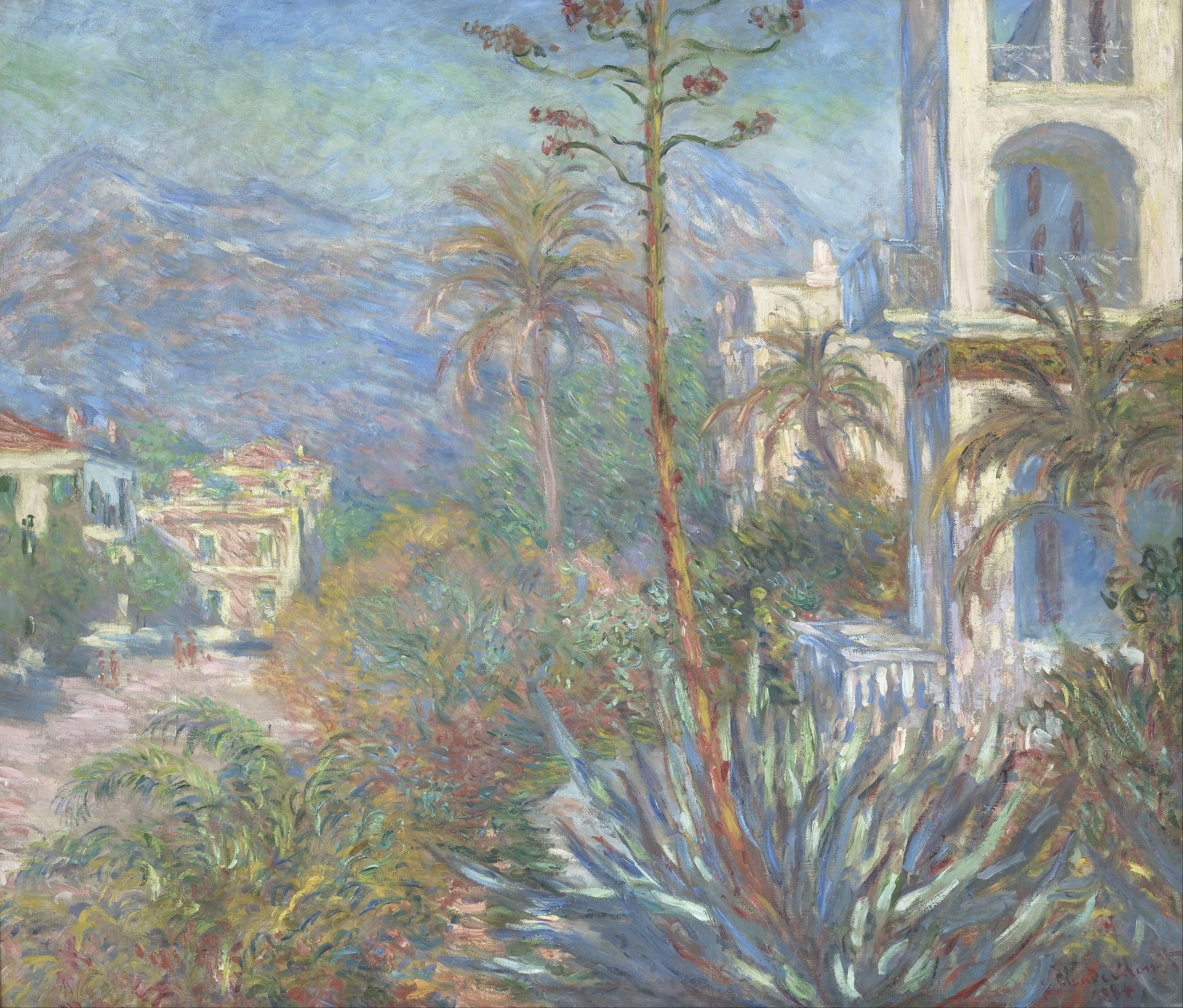
The Bordighera pictures were well received from the start and helped consolidate Monet's reputation with collectors in France and America. Today they are spread among museums worldwide; related views in this catalogue include Bordighera in the Art Institute of Chicago and Villas in Bordighera. Four years later Monet went south again, to Antibes, producing pictures such as Cap d'Antibes.
Where to see it
Palm Trees at Bordighera belongs to The Metropolitan Museum of Art, New York, bequeathed by Adelaide Milton de Groot in 1967. It is hung in the nineteenth-century European paintings galleries when on view.
Questions & answers
Where is Palm Trees at Bordighera by Monet?
It is in The Metropolitan Museum of Art in New York, which received it in 1967 from the bequest of Adelaide Milton de Groot. It is shown in the museum's galleries of nineteenth-century European painting when on view.
Where is Bordighera?
Bordighera is a resort town on the Italian Riviera in Liguria, a few kilometers east of the French border at Menton. In the 1880s it was a fashionable winter destination famous for its palm trees.
When did Monet go to Bordighera?
Monet first visited with Renoir in December 1883 and returned alone in January 1884, staying until April. He painted dozens of canvases there, many in the garden of the landowner Francesco Moreno.
Why are Monet's Bordighera paintings so colorful?
The bright Mediterranean light pushed Monet to key his colors higher than in Normandy, with blue-violet shadows and lilac mountains. In his letters he complained that he would need 'a palette of diamonds and jewels' to capture it.
More by the artist
Claude Monet

Bridge over a Pond of Water Lilies
Claude Monet · 1899

Woman with a Parasol – Madame Monet and Her Son
Claude Monet · 1875

Sunset in Venice
Claude Monet · 1908–12

La Grenouillère
Claude Monet · 1869

Beach in Pourville
Claude Monet · 1882

Springtime
Claude Monet · 1872

Boating on the River Epte
Claude Monet · 1890

The Seine at Asnières (Hermitage)
Claude Monet · 1873
Also painted in 1884
The same year
Kindred works
You may also study
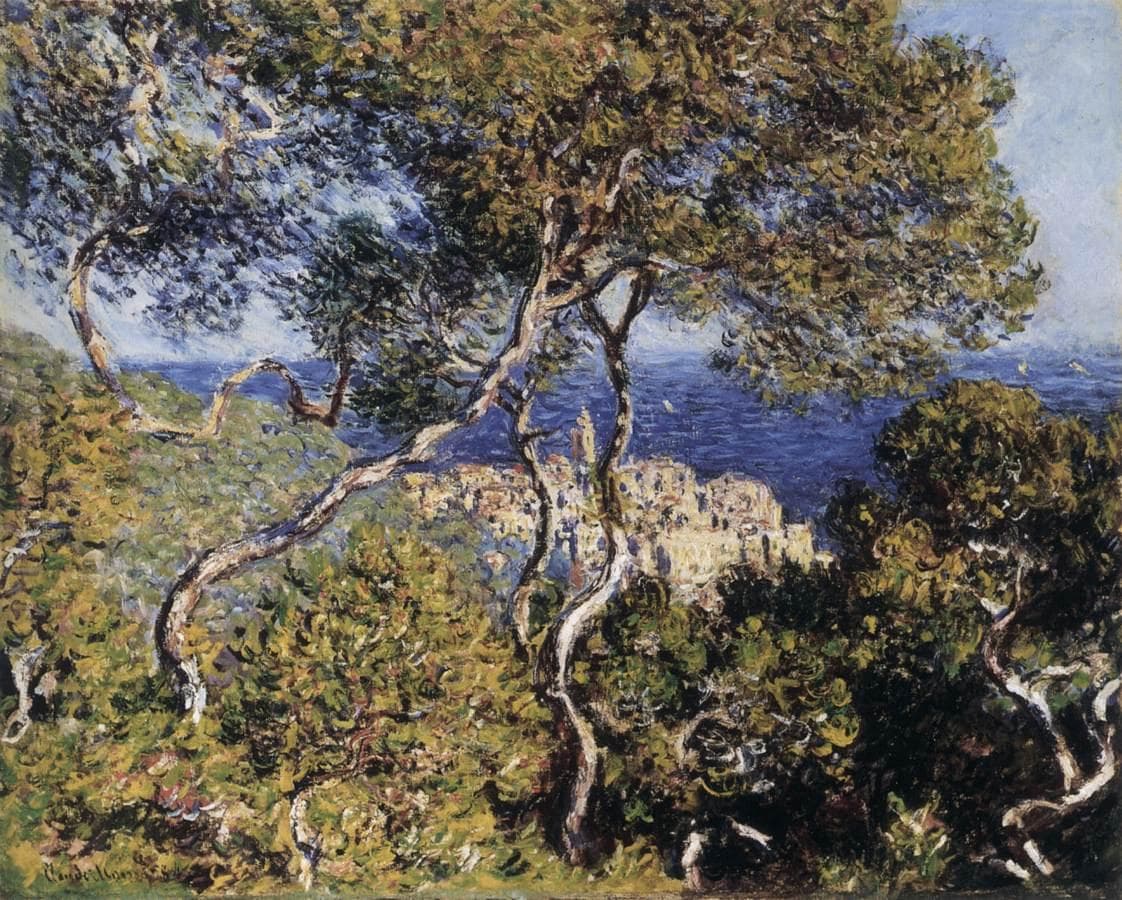
Bordighera
Claude Monet · 1884
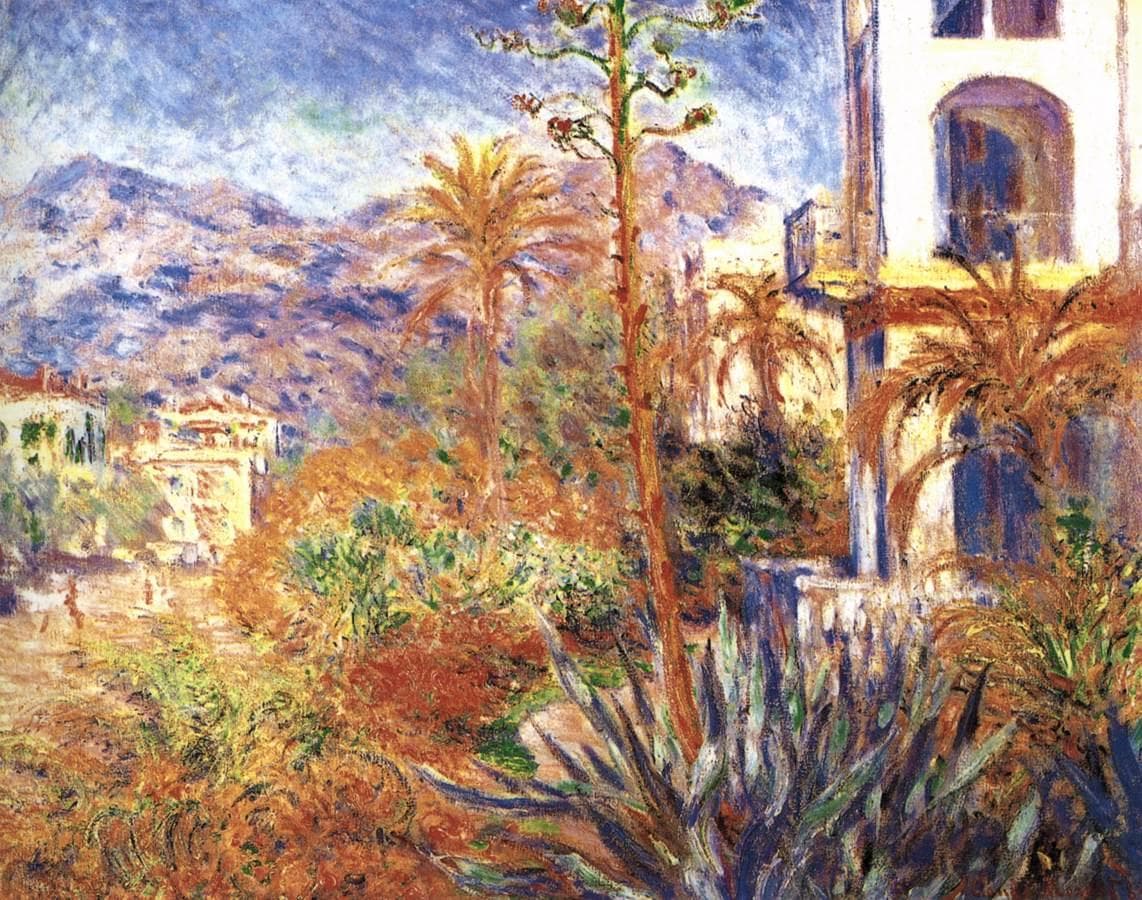
Villas in Bordighera
Claude Monet · 1884
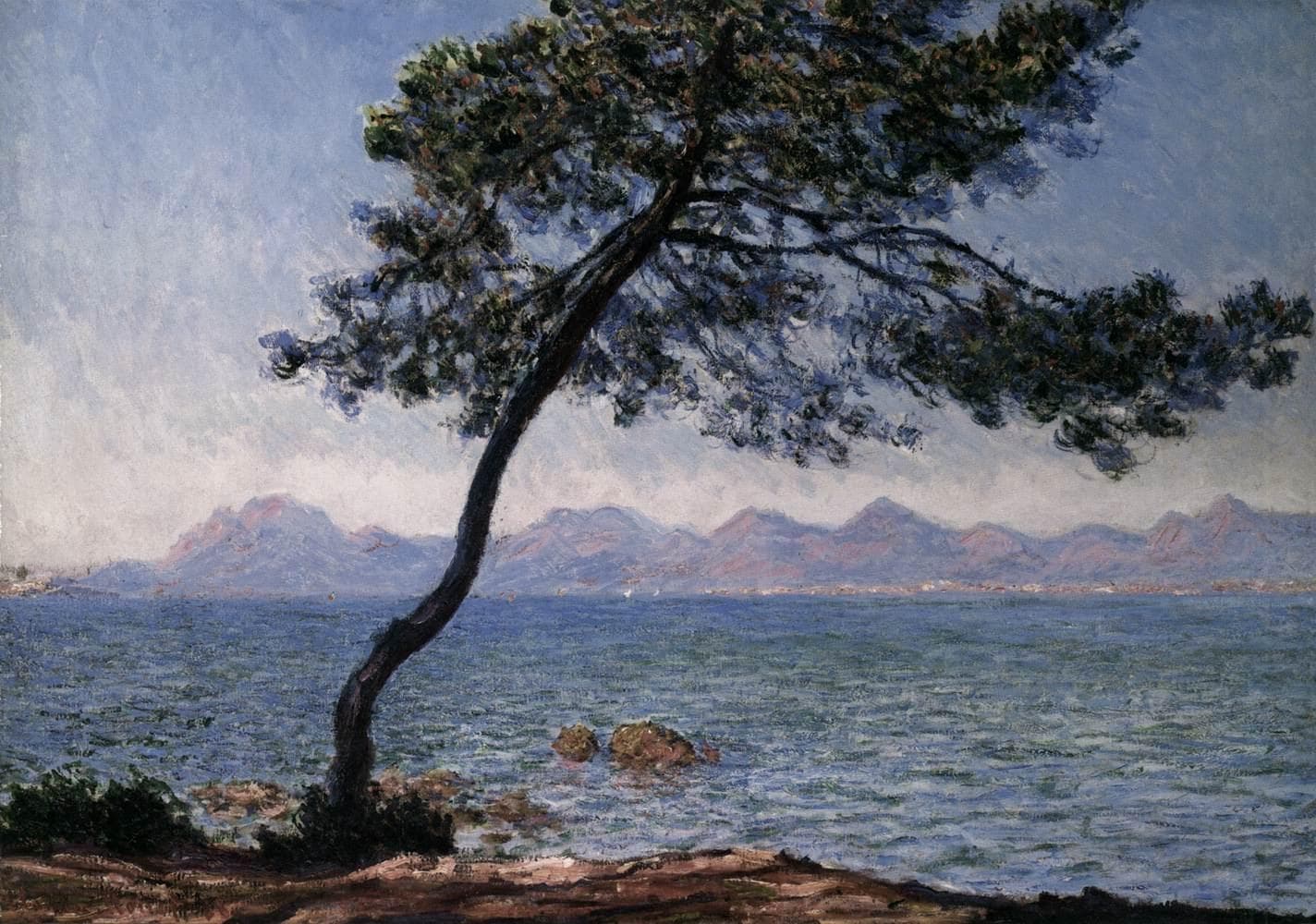
Antibes
Claude Monet · 1888
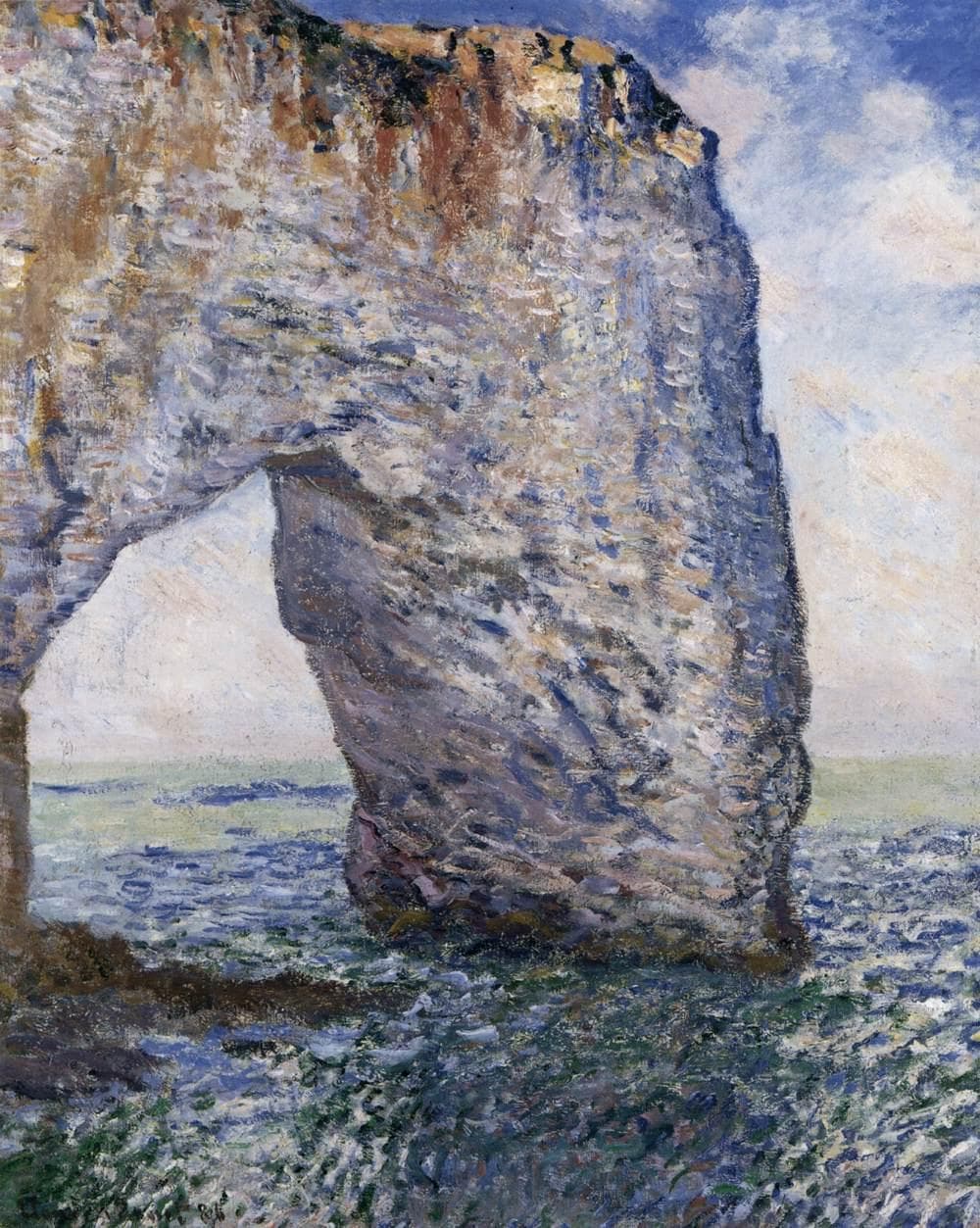
The Manneporte near Étretat
Claude Monet · 1886
Water-Lily Pond (Le Bassin aux nymphéas), 1917–19
Claude Monet · 1917–19

The Scream
Edvard Munch · 1893

Ophelia
John Everett Millais · 1851–52

The Great Wave off Kanagawa
Katsushika Hokusai · c. 1830–32